Architecture05 mins. read
Mecanoo’s Natural History Museum Abu Dhabi stages a stroll through geological time
by Pia BhatiaAug 24, 2026



by Pranjal MaheshwariPublished on : Mar 07, 2026
When Prophet Mohammed was persecuted from Mecca, he was said to have found refuge in an oasis, rich in ecology and commerce, set amongst volcanic hills and basaltic lava fields: Medina (al-Madīnah in Arabic, for ‘the city’). His arrival established the Al-Masjid al-Nabawī, the Prophet’s Mosque, turning the city into Islam’s second-holiest site and now a global hotspot for religious tourism.
Over the centuries, the city has seen widespread urban development with the Mosque as its nucleus. With Saudi Arabia’s Vision 2030 opening the city to non-Muslim visitors as well, Medina has witnessed even more rapid tourism-oriented urban development, with plazas, high-rise hotels and transport hubs popping up around the mosque and haram. Within this highly dynamic context, the As Safiyyah Museum and Park is envisioned as a cultural centre set to translate the city’s local identity into global appeal.
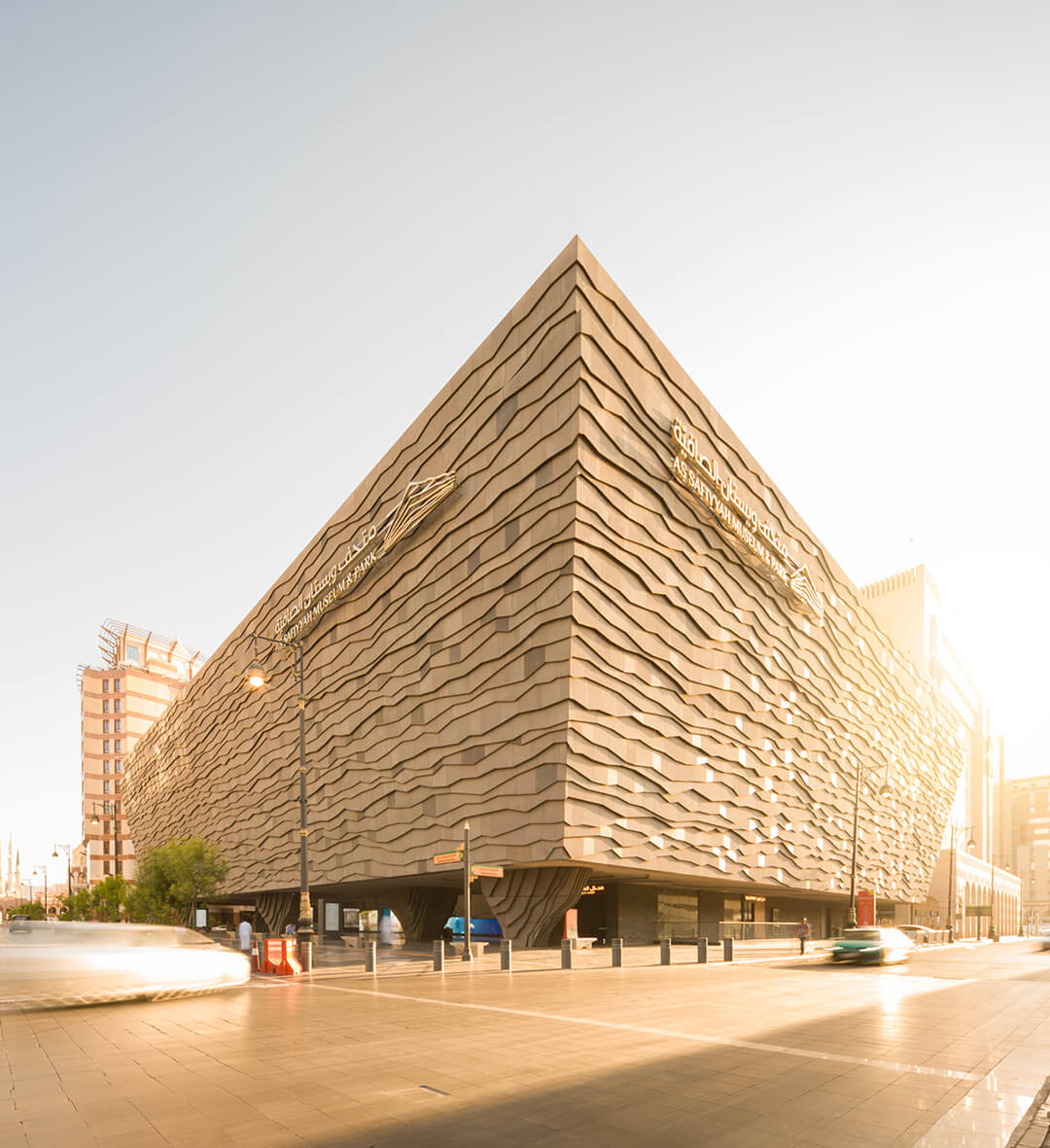
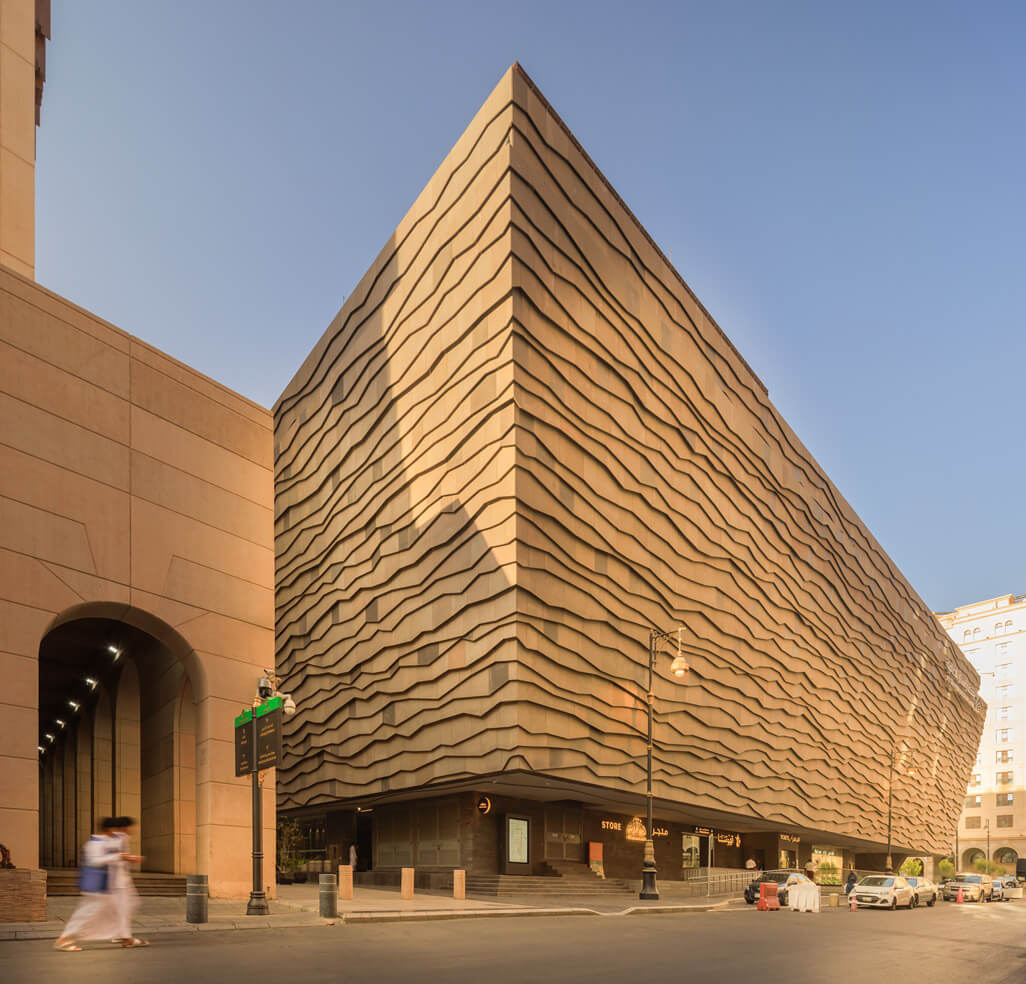
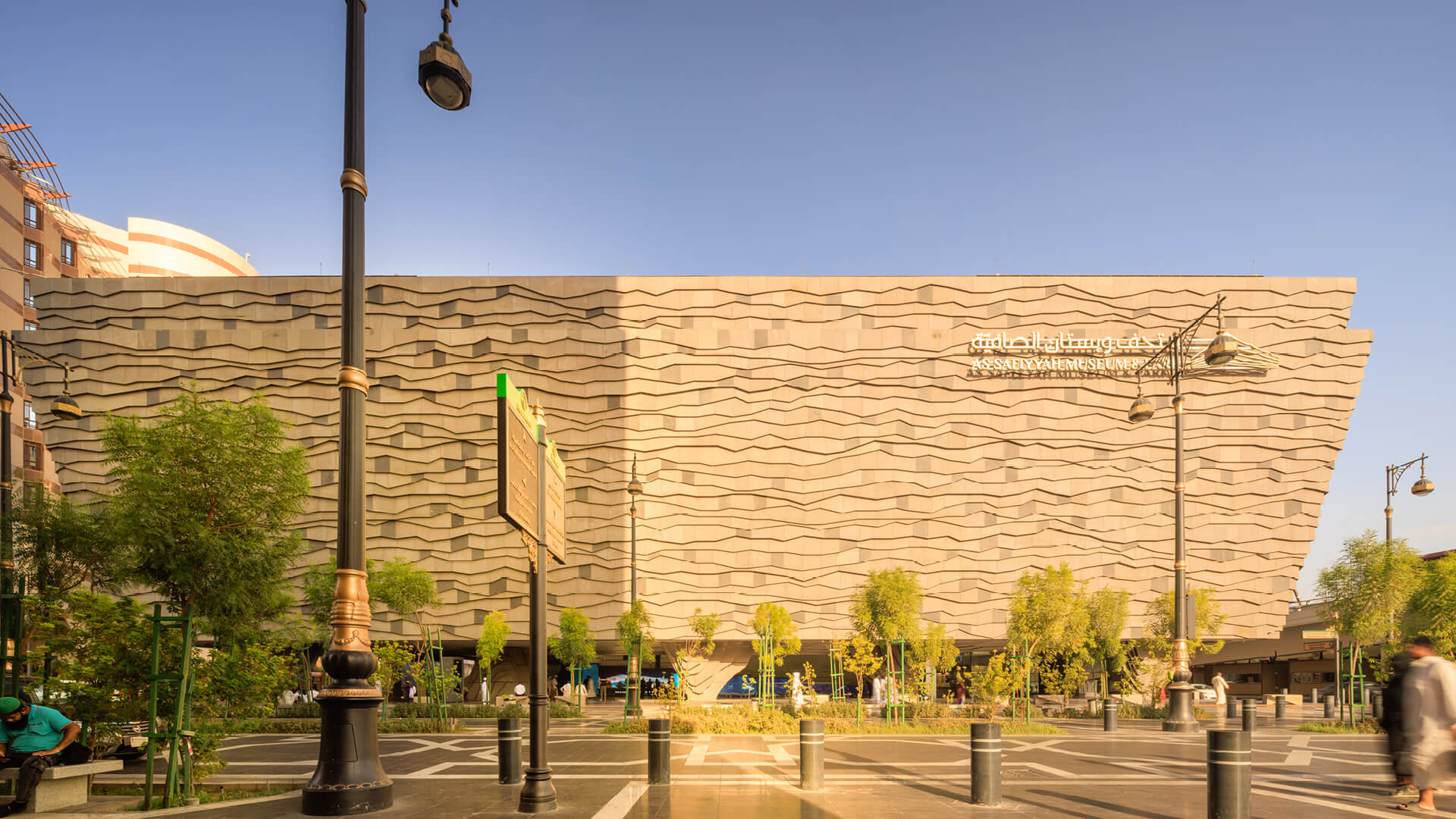
Designed by Dubai-based X Architects, the museum building is set out as a negotiation between deep cultural and religious prominence and a fairly globalised urban morphology. Situated to the south of the Prophet’s Mosque, the site faces the Bab Al-Salam, one of the main historic gates used by pilgrims. “The proximity to the Prophet’s Mosque meant that every design decision carried a deep sense of responsibility and humility,” Ahmed Al Ali, founding partner at X Architects, shares with STIR. “The museum sits within the wider sacred atmosphere of Medina, so the architecture could not be loud, iconic for its own sake or driven by commercial spectacle. At the same time, the modern pilgrim is more curious and connected than ever before; beyond prayer and religious duties, they want to understand Medina as a city, its history and its place in the story of Islam.”
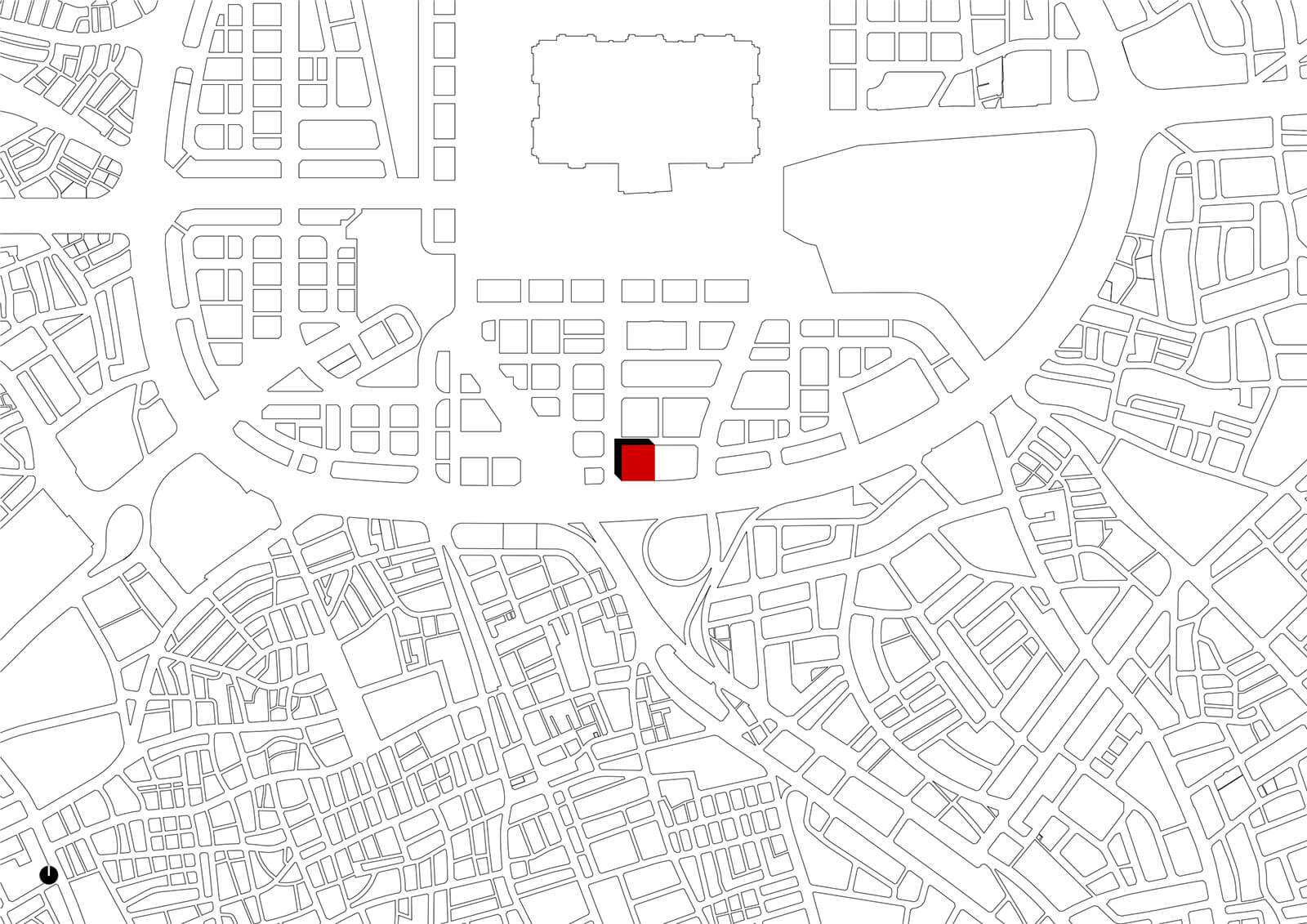
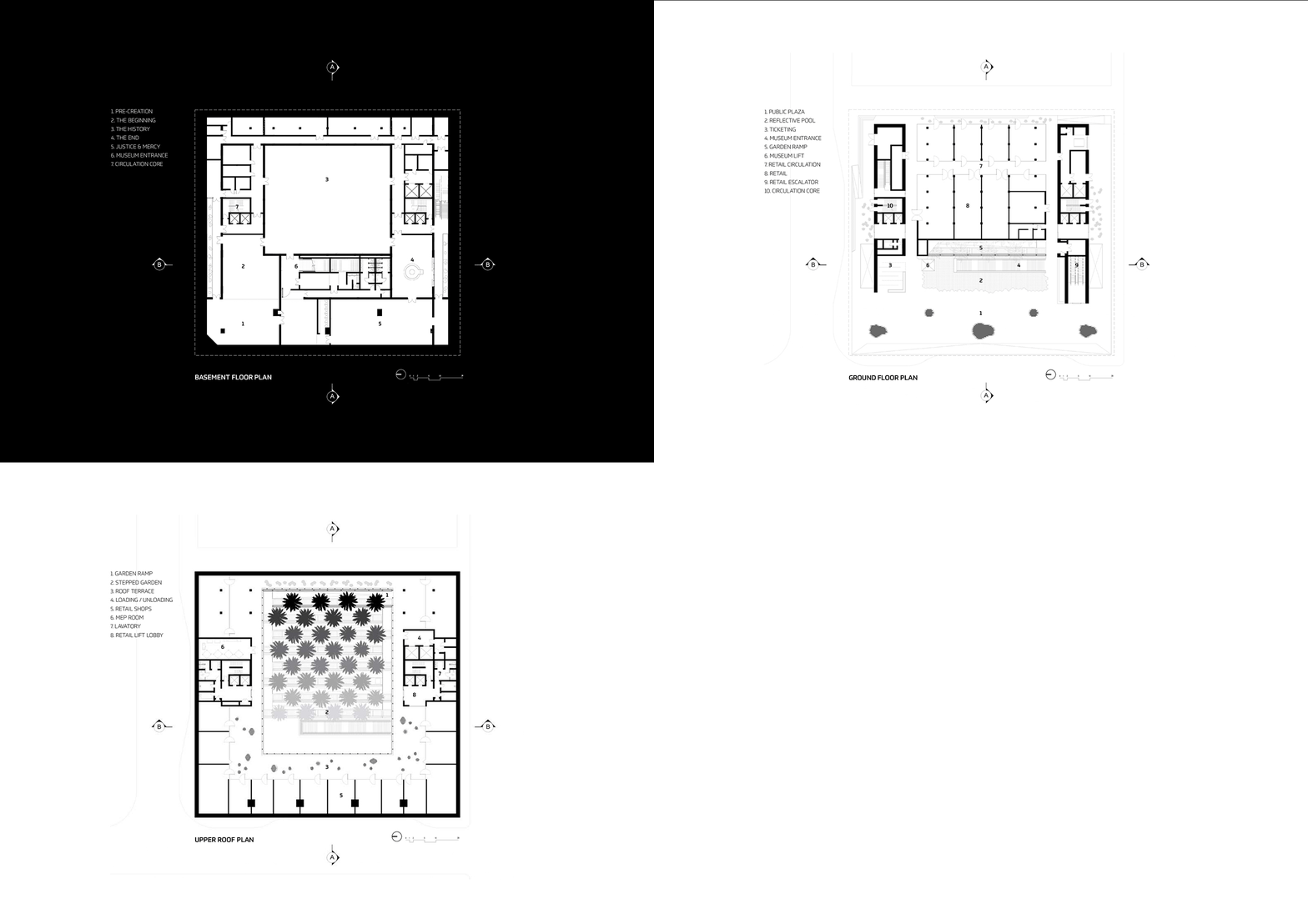
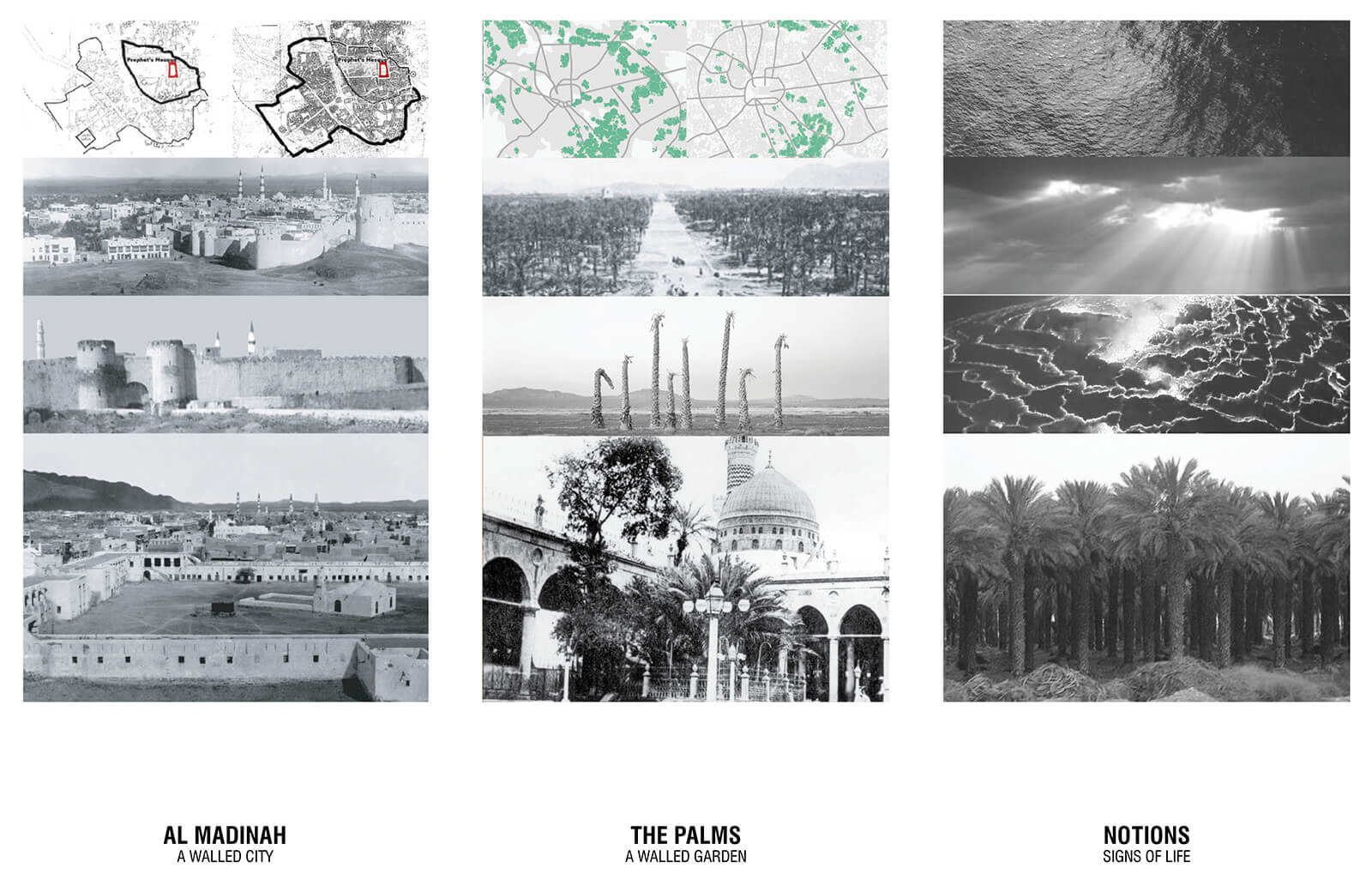
The current 20,000 sq m complex is composed of a public garden, a cultural museum, a multi-purpose hall and commercial stores, including cafes and souvenir shops, to steer the flow of visitors. It borrows its cultural identity from Al-Safia, a former palm garden that offered respite to pilgrims amid the harsh, arid climate. “The former Safiyyah palm gardens and the memory of the inner oasis gave us an emotional and historical anchor, allowing us to translate reverence into spatial experience—shade, enclosure, water and moments of pause—rather than into literal symbolism”, Ali notes. The project uses its landscape design and architectural narrative as manifestations of reverence and memory to define a new civic hub for pilgrims, residents and tourists, along with seeking to establish Medina’s central role in the evolution of Saudi Arabia’s new economic landscape.
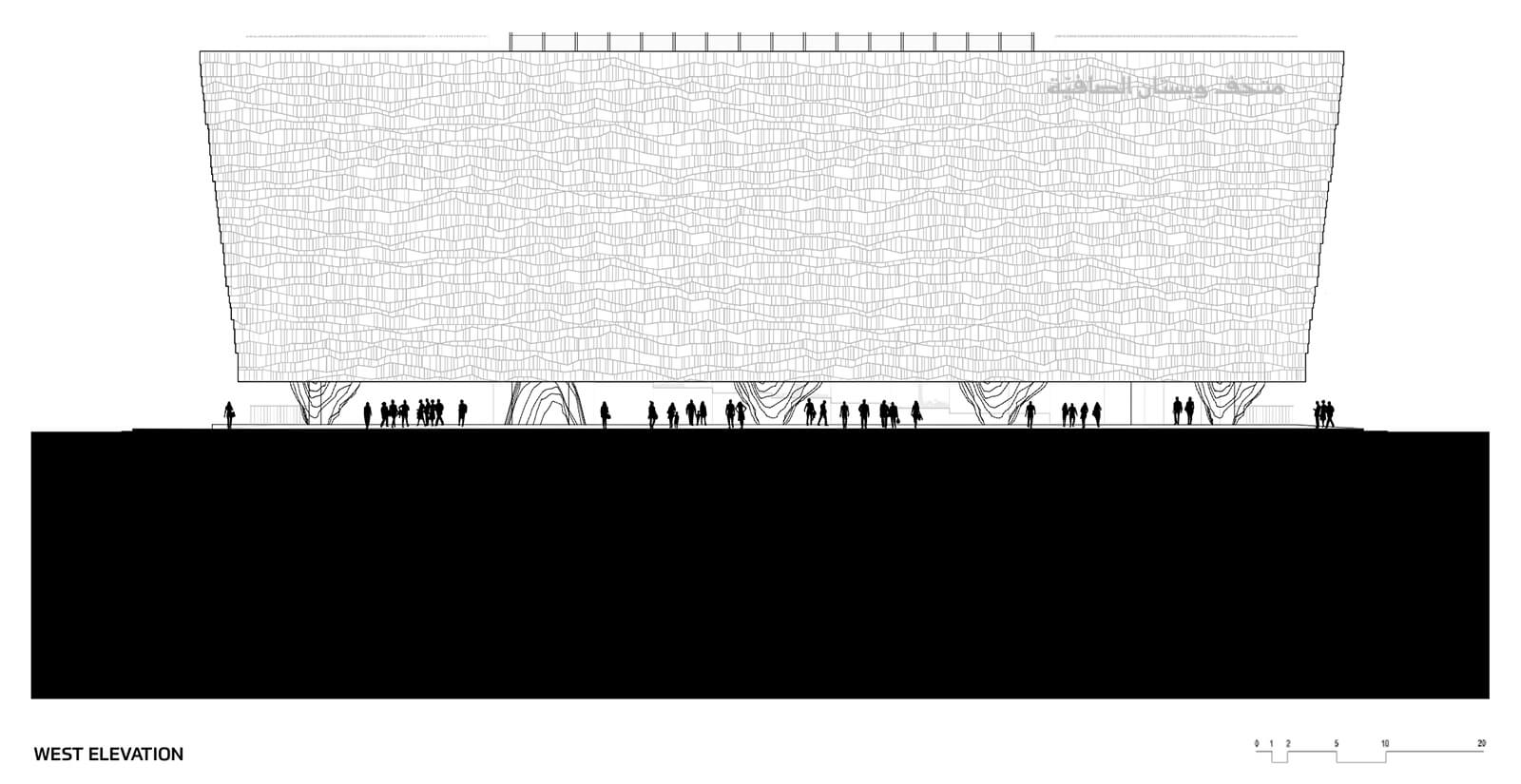
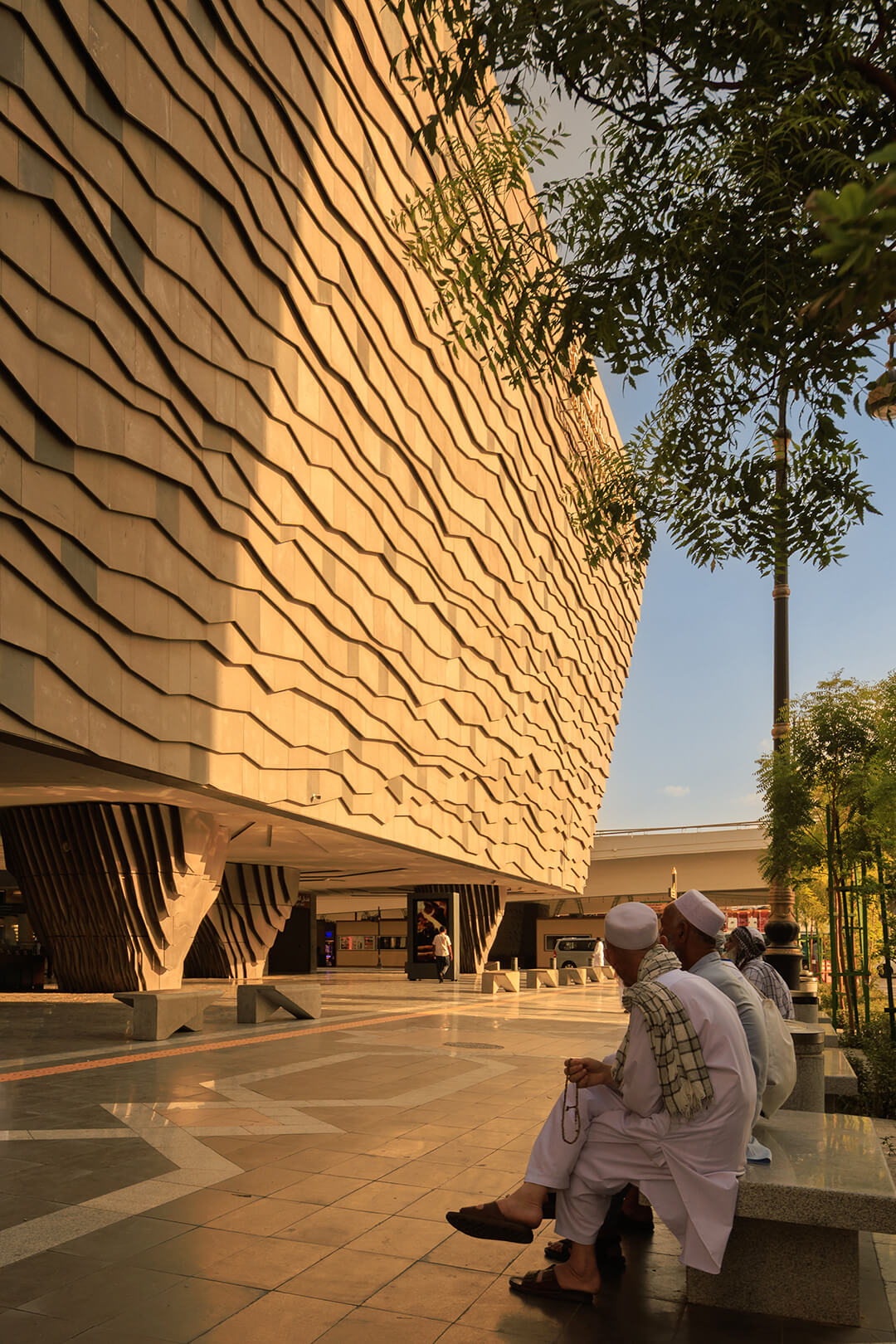
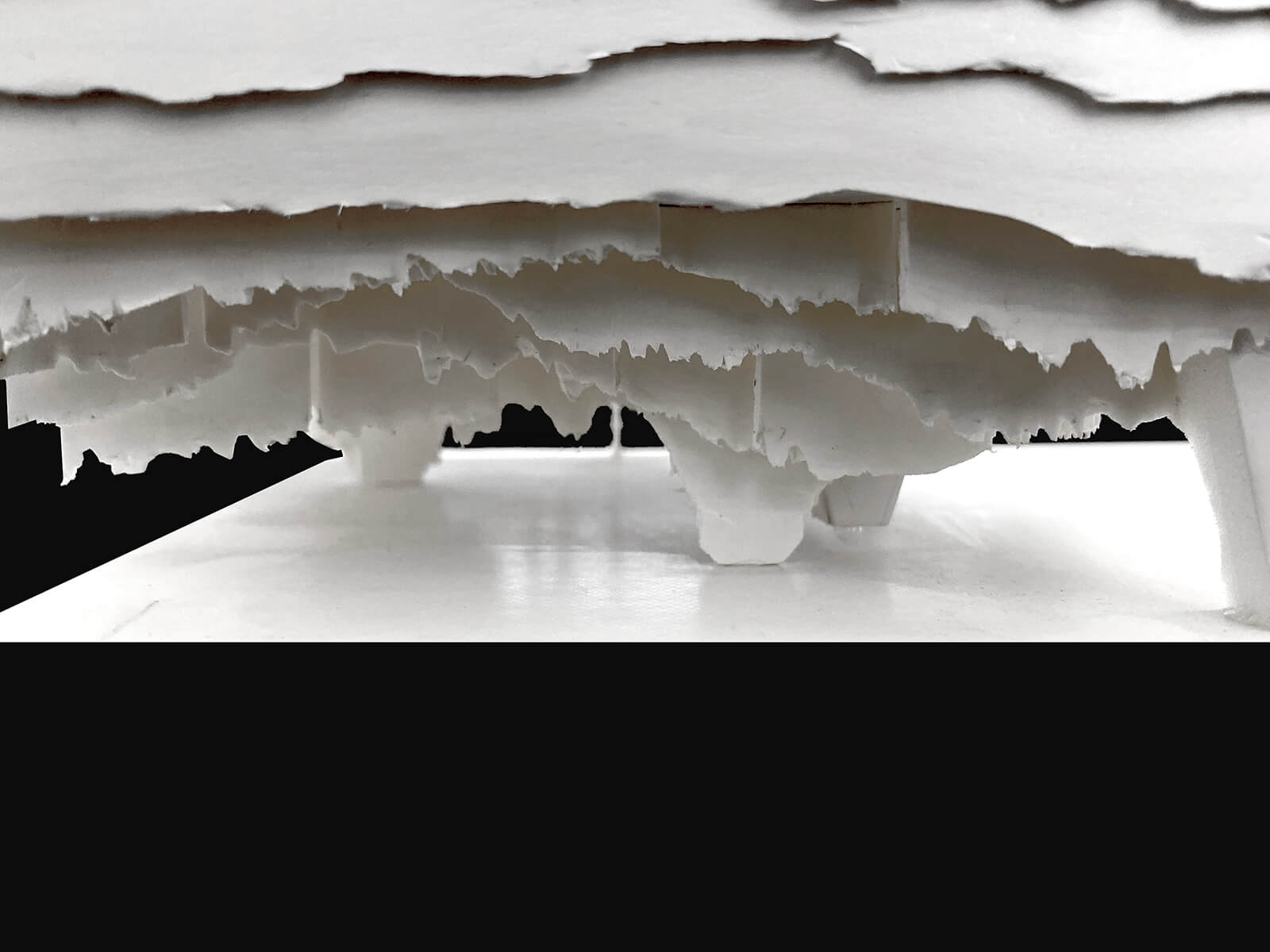
The development situates itself amid high-rise glass facades in the area that are increasingly redefining the traditional Islamic architectural urbanscape into a globally leaning metropolis. The architects, on account of that, decided to root the project’s materiality in its geological context formed of basaltic stone, prominent in the region. The stone is used for the floors and internal walls of the structure, while the facade design features a thick skin composed of irregular stone slabs, creating a tactile envelope characterised by deep shadows and a high thermal mass.
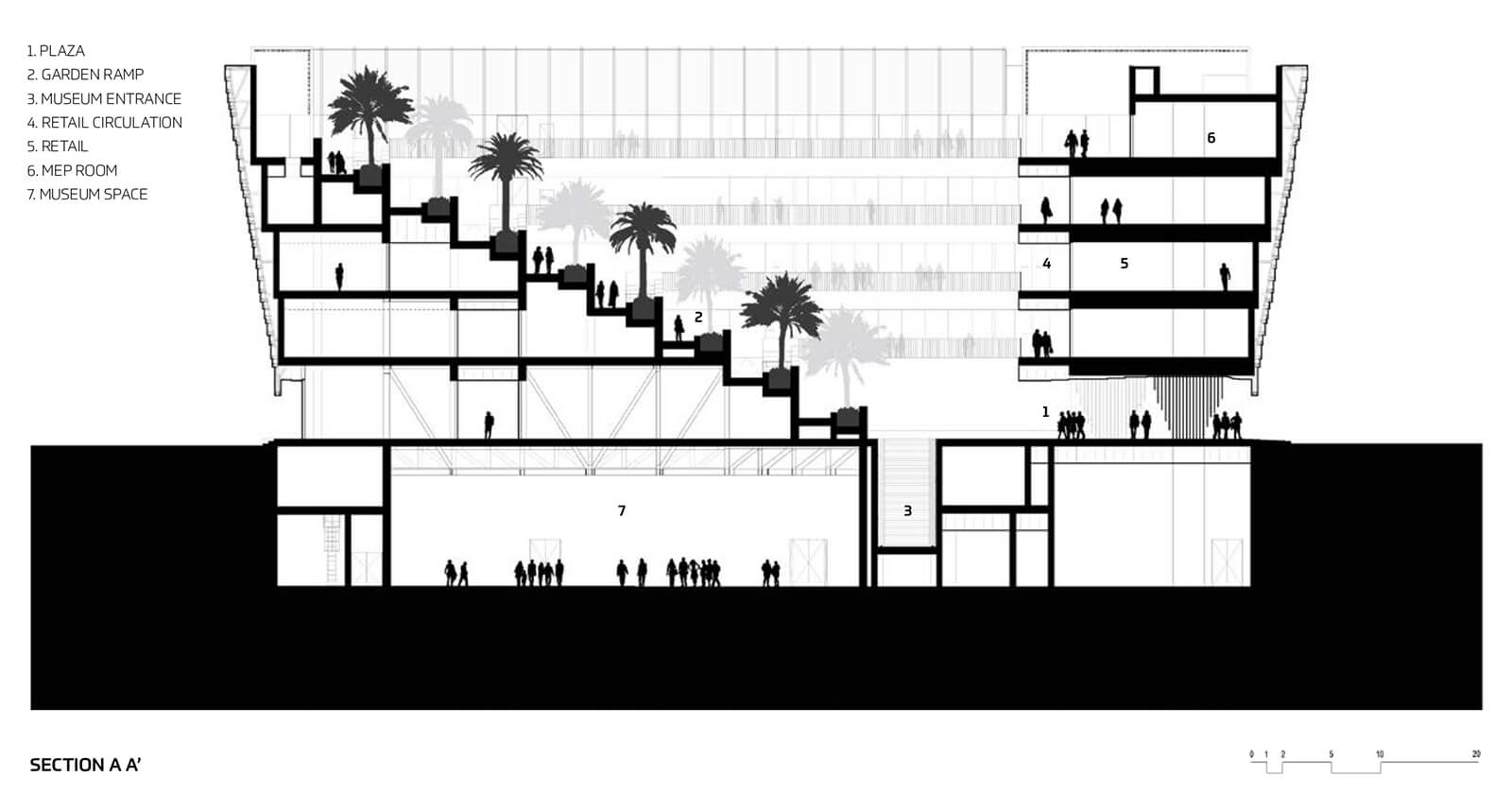
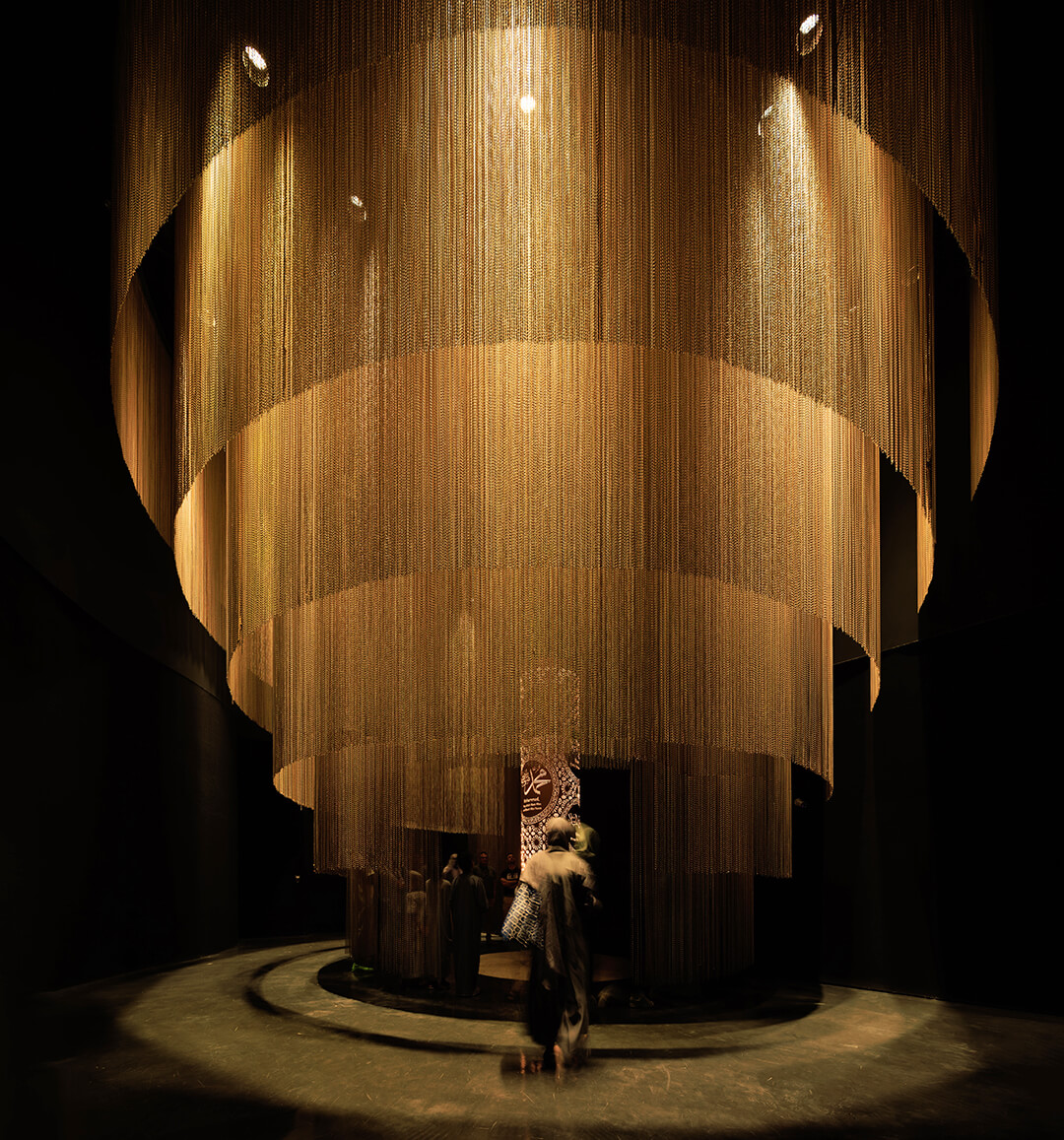
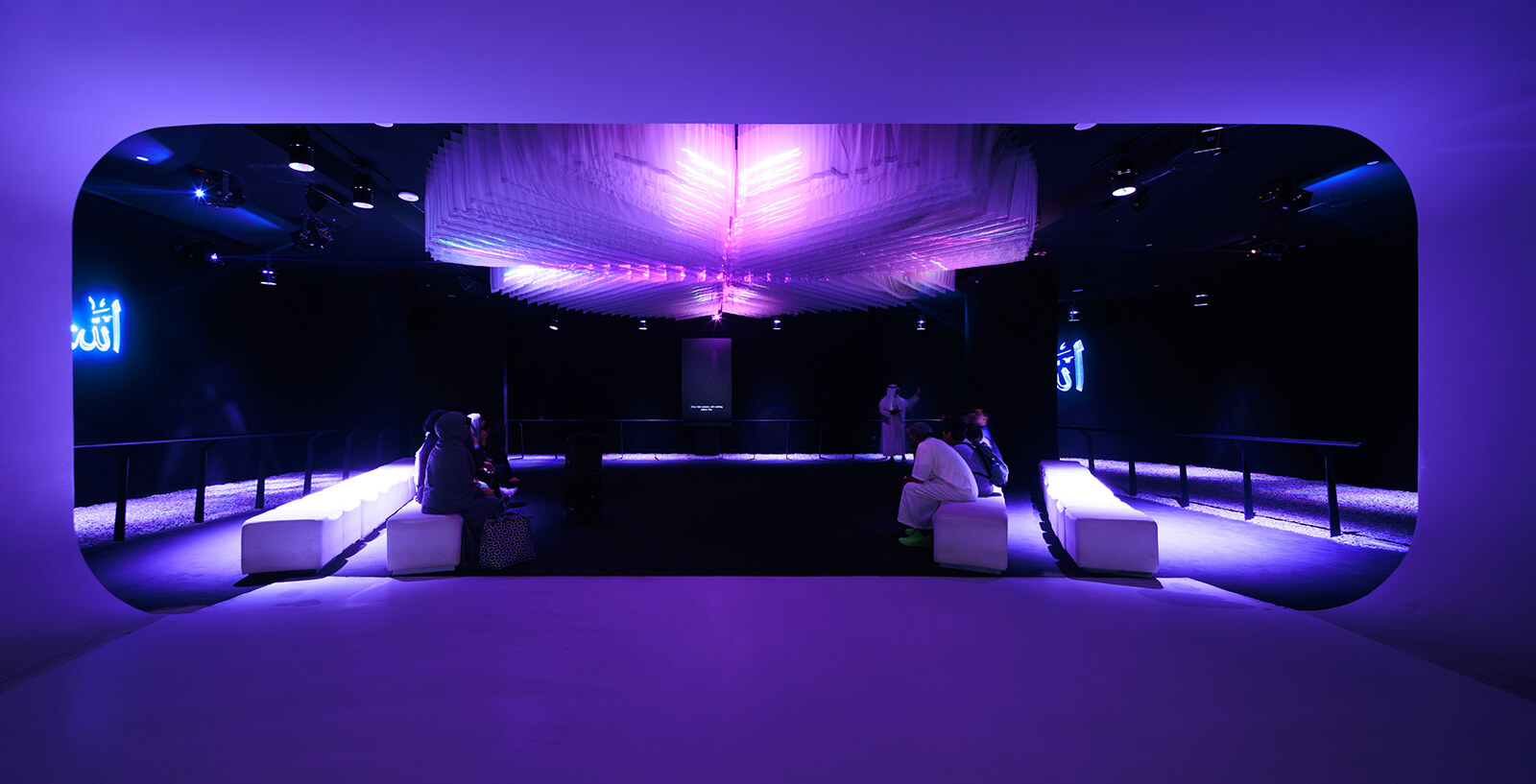
At the core of the building complex, two storeys beneath the garden, lies the museum, which narrates the story of creation from Islamic culture. Through shifts in spatial volumes, heights, light and acoustic qualities, the museum architecture divides the story of the genesis of the world and mankind into five chapters: Pre-creation, the Beginning of Creation, the History of Creation, the End of the Universe and Absolute Justice & Ultimate Mercy. The narrative is hence complemented by shifts in spatial perception—from bright and airy spaces into more contemplative and controlled environments—translating stimulating cosmological theories into physical experience.
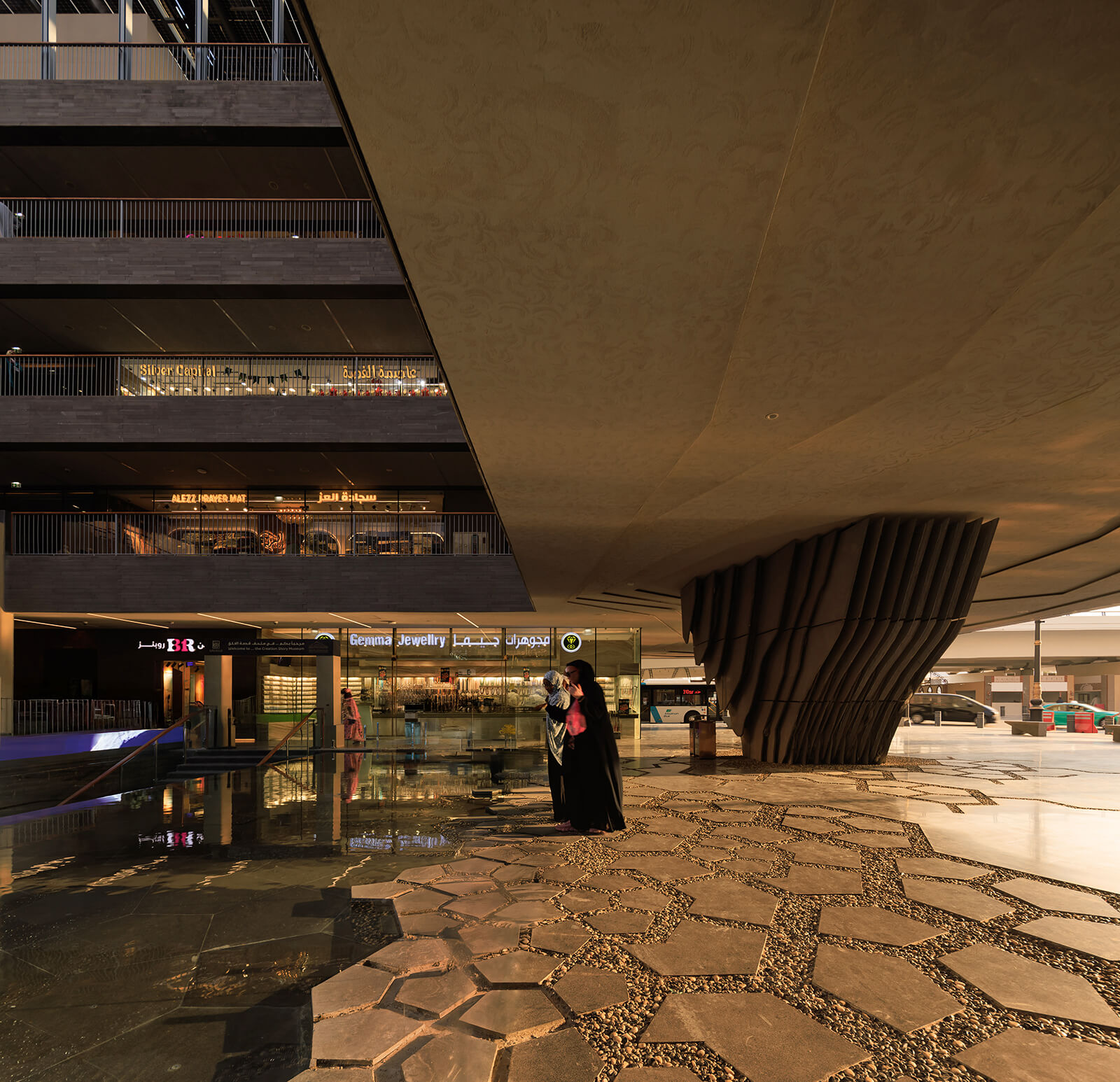
The rest of the five-storey structure is a series of retail spaces cascading down from the rooftop through the stepped public garden, enclosed by a thick boundary wall as a buffer from the intense urban sprawl outside—a reflection of the historic character of Medina’s walled core. The design of the garden is meant to be an ode to the oasis that the city once was, lost over the last few decades to drought and development, revering the elements of water and Earth through terraces adorned with palm trees, stepped planters, courts and water basins to offer rest and respite.
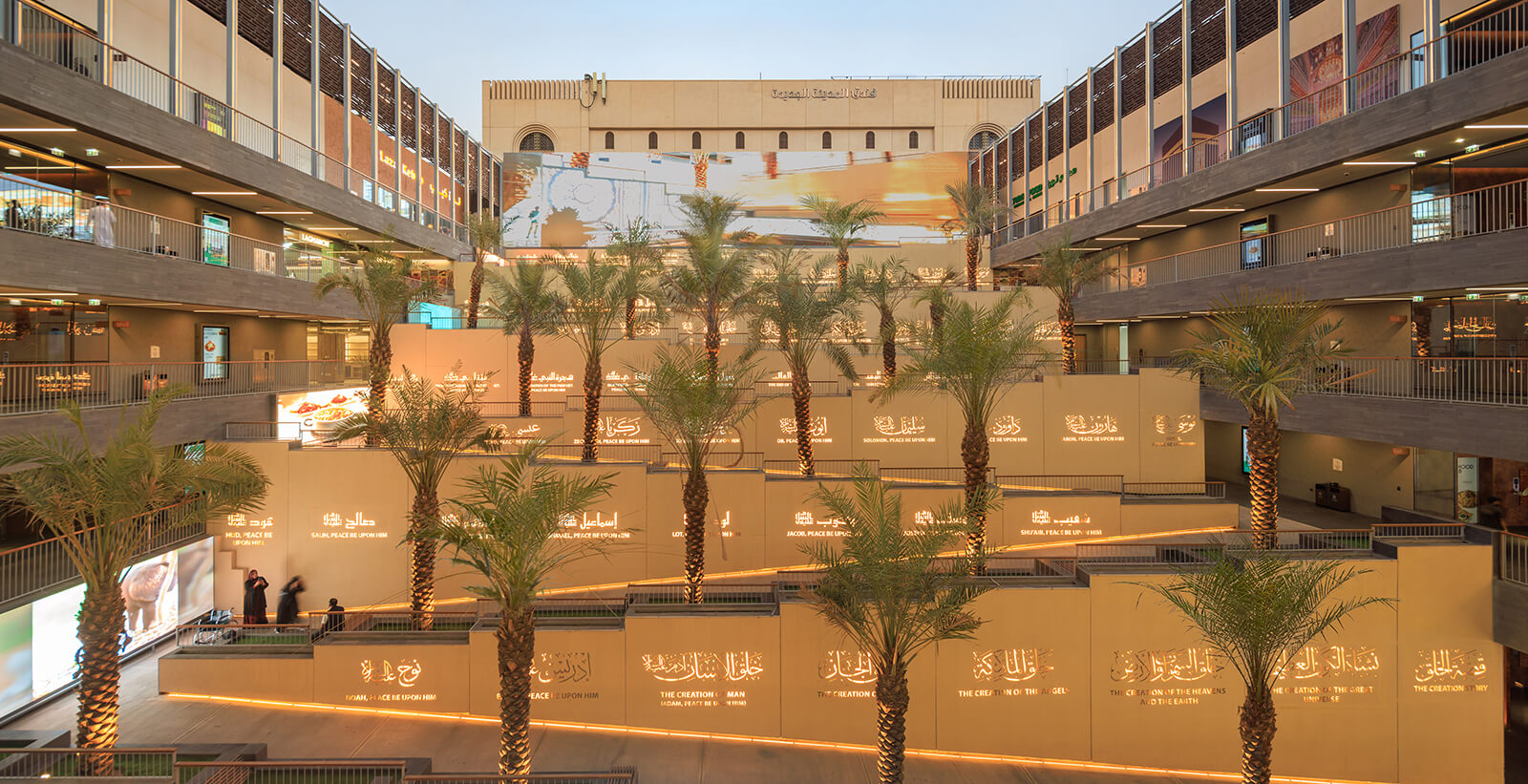
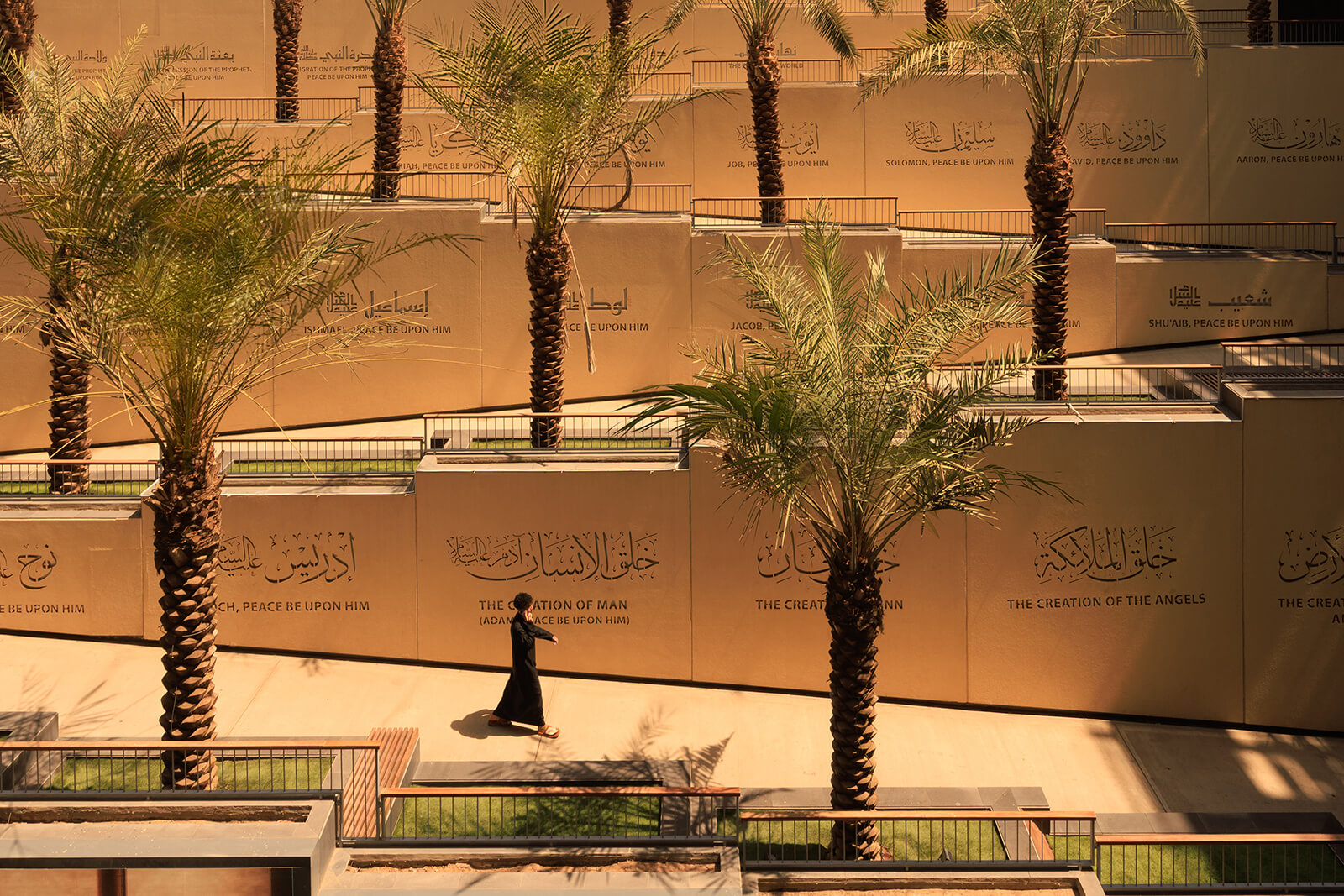
While many developments around the globe seek to balance a profoundly cultural (or culturally profound) landscape with wider appeal and commercial tourism, the dilemma often comes to be a choice between unfettered consumption and fixed reverence; between accounting for global comforts while not just introducing a new culture, but also inspiring similar reverence for it. “For us, the most important decision was to avoid adding another object to the skyline and instead choreograph a landscape that holds together mosque, city and geology,” Ali shares. The As Safiyyah Museum and Park contributes to the debate by offering a slow transition from its urban context—a walk through history, memory, shade and stone—before gently engaging the visitor with culture and commerce in varying measures. “The thick basalt wall, the introverted courtyard and the stepped oasis all work together to hold back the chaos of the street and resist the temptation of pure retail frontage. Inside, the museum tells the story of creation through spatial design rather than literal scenography,” Ali continues. “I believe these decisions create a third condition—not sacred monument, not generic retail, but a grounded civic landscape that is a negotiation between the two.”
Name: As Safiyyah Museum & Park
Location: Medina, Saudi Arabia
Typology: Museum, Retail, F&B, Park
Client: Al Madinah Region Development Authority, Samaya Holding
Architect: X Architects
Area: 20,821 sq m
Year of Completion: 2023
by Pranjal Maheshwari Oct 19, 2026
The Mumbai-based architects integrate courtyards, mesh screens and north light trusses to create a dining space that doubles up as a community hub at SR University, Warangal.
by Mrinmayee Bhoot Oct 17, 2026
The Rotterdam-based institute centres the Indian Ocean as a network for exploring material histories and transnational links shaping coastal cultures, positing them as future models.
by Pranjal Maheshwari Oct 16, 2026
At the 2026 Stirling Prize ceremony, Mary Duggan with RUFF Architects, MAKER Architecten and Nakshabid Architects were felicitated for proffering quality housing and social equity.
by Mrinmayee Bhoot Oct 12, 2026
The new Centre for Contemporary Arts, fostering public engagement with art in Uzbekistan, is housed in a tram depot refurbished by the French studio, emulating local craftsmanship.

make your fridays matter with a well-read weekend
Enter your details to sign in
Don’t have an account?
Sign upOr you can sign in with
a single account for all
STIR platforms
All your bookmarks will be available across all your devices.
Stay STIRred
Already have an account?
Sign inOr you can sign up with
Verification link sent to check your inbox or spam folder to complete sign up process
Tap on things that interests you.
Select the Conversation Category you would like to watch
Please enter your details and click submit.
Enter the 6-digit code sent at


At As Safiyyah Museum & Park, X Architects mediate between reverence and commerce
by Pranjal Maheshwari | Published on : Mar 07, 2026


 Sign in with Google
 Sign in with email
What do you think?