Architecture07 mins. read
Inside RIBA's 2025 Stirling Prize shortlist: big, beautiful architecture, but rarely bold
by Bansari PaghdarSep 11, 2025



by Pranjal MaheshwariPublished on : Jun 30, 2026
The name Ercolina is said to have roots in Ercole, which is in turn the Italian name for Herakles/ Hercules, the legendary demigod from Greek mythology associated with bravery and strength. As the legends travelled through Italy, the name was adapted to local culture and varied uses, including Ercolina, a diminutive endearment, which roughly translates to ‘brave little one’. This etymological evolution suggests that strength and resilience might not always require grand, elaborate personas to embody them. They can also reside alongside features like softness, comfort and sensitivity, irrespective of scale. Winchester and London-based architecture studio McLean Quinlan’s first project in Italy may embody that interpretation in its architecture. Over the last two decades, the practice has emphasised on creating warm, personable and ‘homely’ spaces—produced through an understanding of local landscapes, regional materials and vernacular traditions. Blended almost entirely with the Tuscan countryside, somewhere in the verdant landscapes of Maremma, Ercolina is a continuation of this ideal.
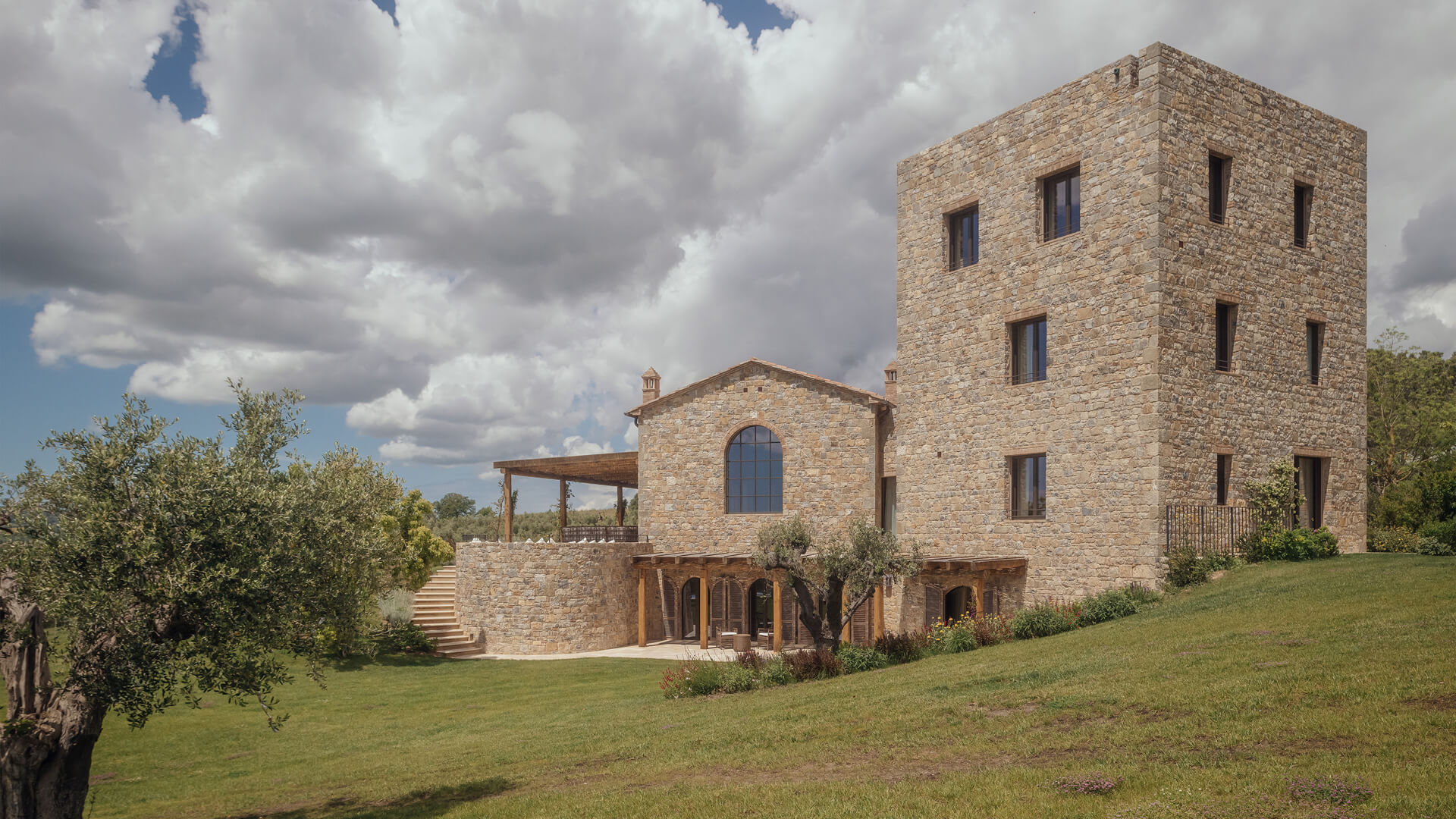
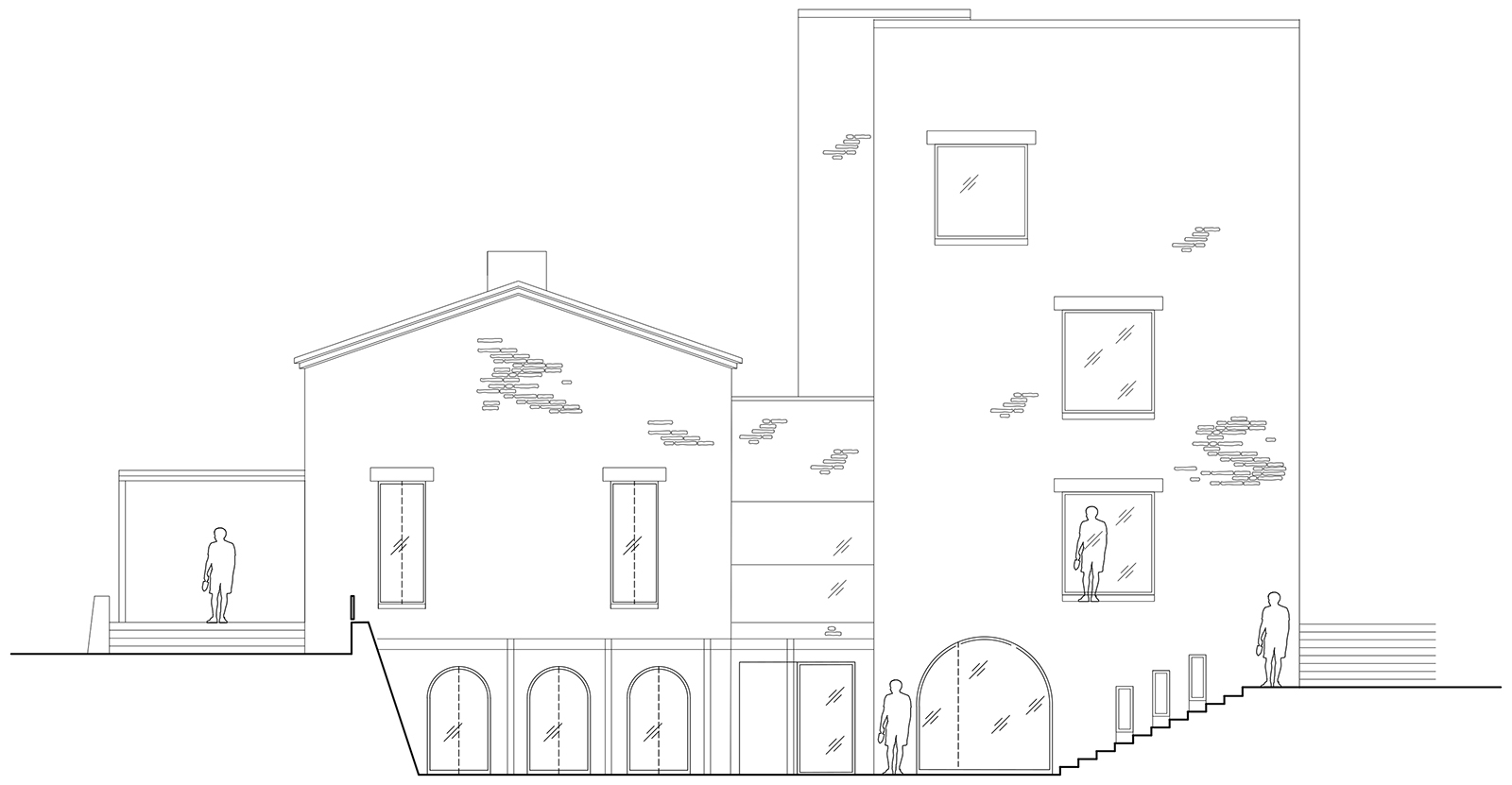
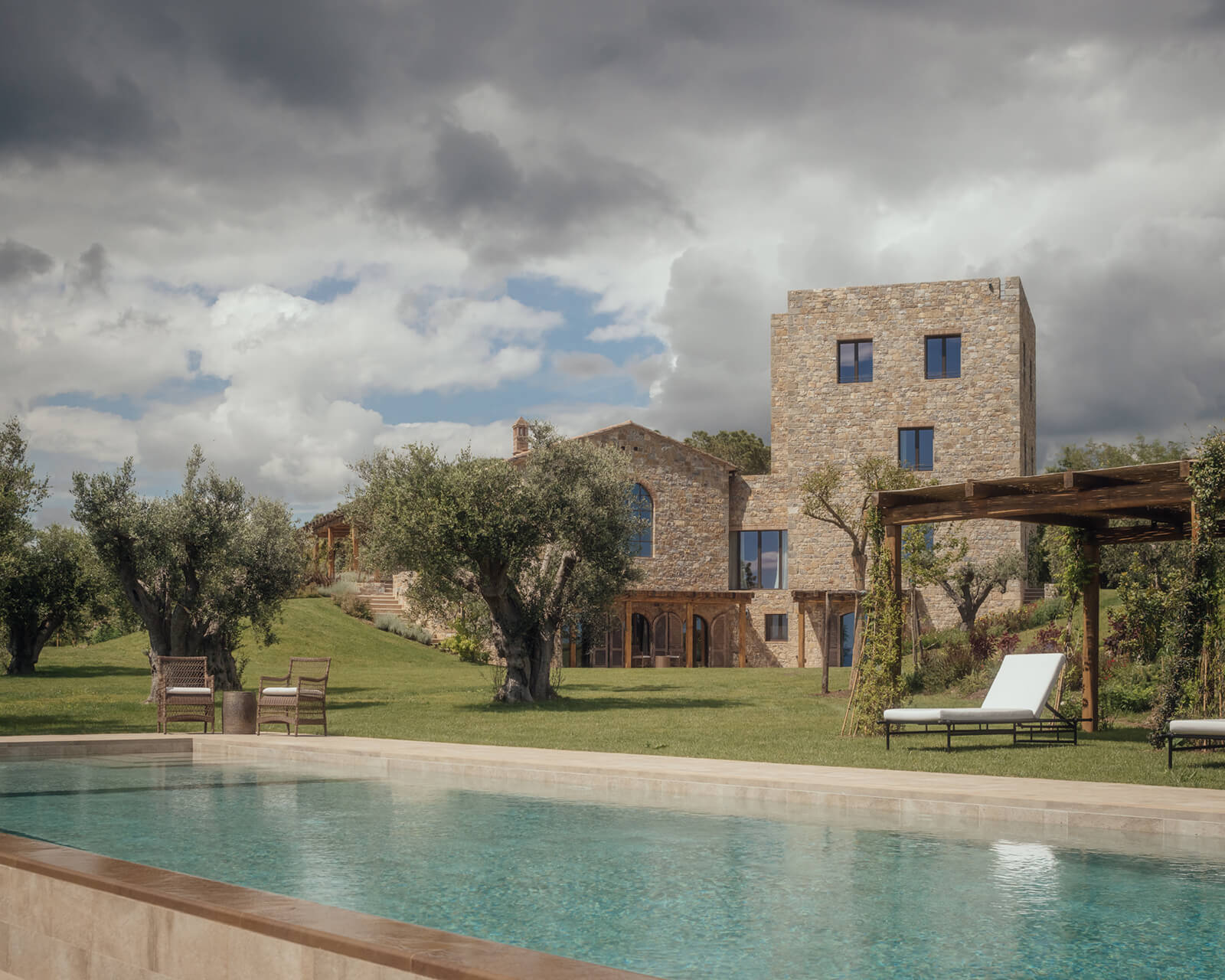
The project brief carried a personal significance for the clients: residential quarters for a family residing overseas, seeking a long-term association with their Italian roots. Their private 30-hectare estate—comprising two hills dotted with ruins surrounding an old farmhouse—enjoys expansive views of the Orbetello lagoon and the Argentario peninsula. The project required resolution at different scales: masterplanning, landscape design, architecture and interiors. McLean Quinlan started by studying the site’s topography and the architectural context of its surroundings, both informed by the Tuscan vernacular and the sturdy stonework of local historic structures, including the fortifications around the nearby Magliano commune. The spatial programme hence manifested in three distinct structures: the tower (and residence), the barn and the guesthouse, placed atop the two hills along existing access routes and vegetation, emulating the traditional hilltop placements prevalent in central Italy. Additionally, the vantage offered the most generous views of the surroundings that could be afforded by the site.
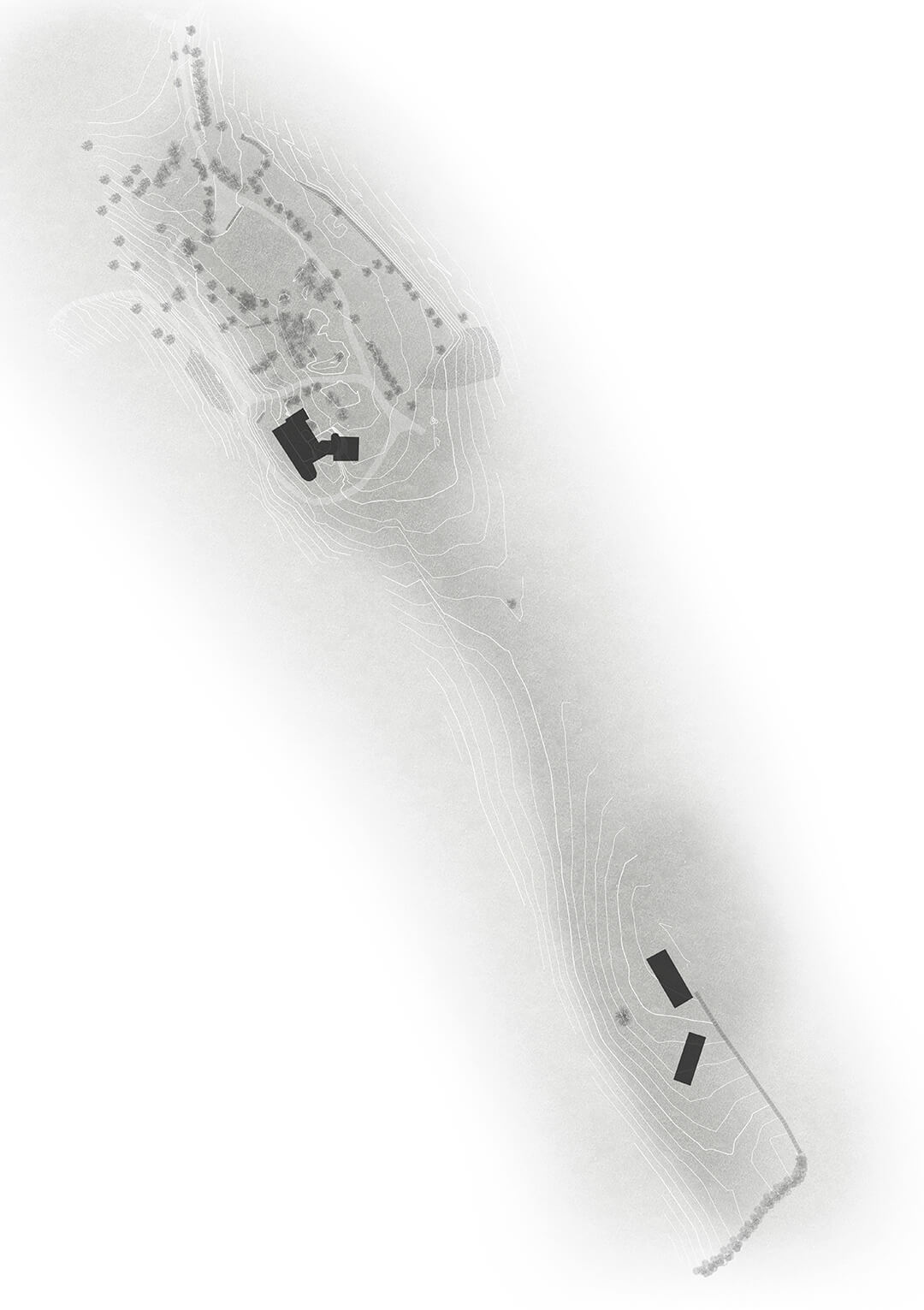
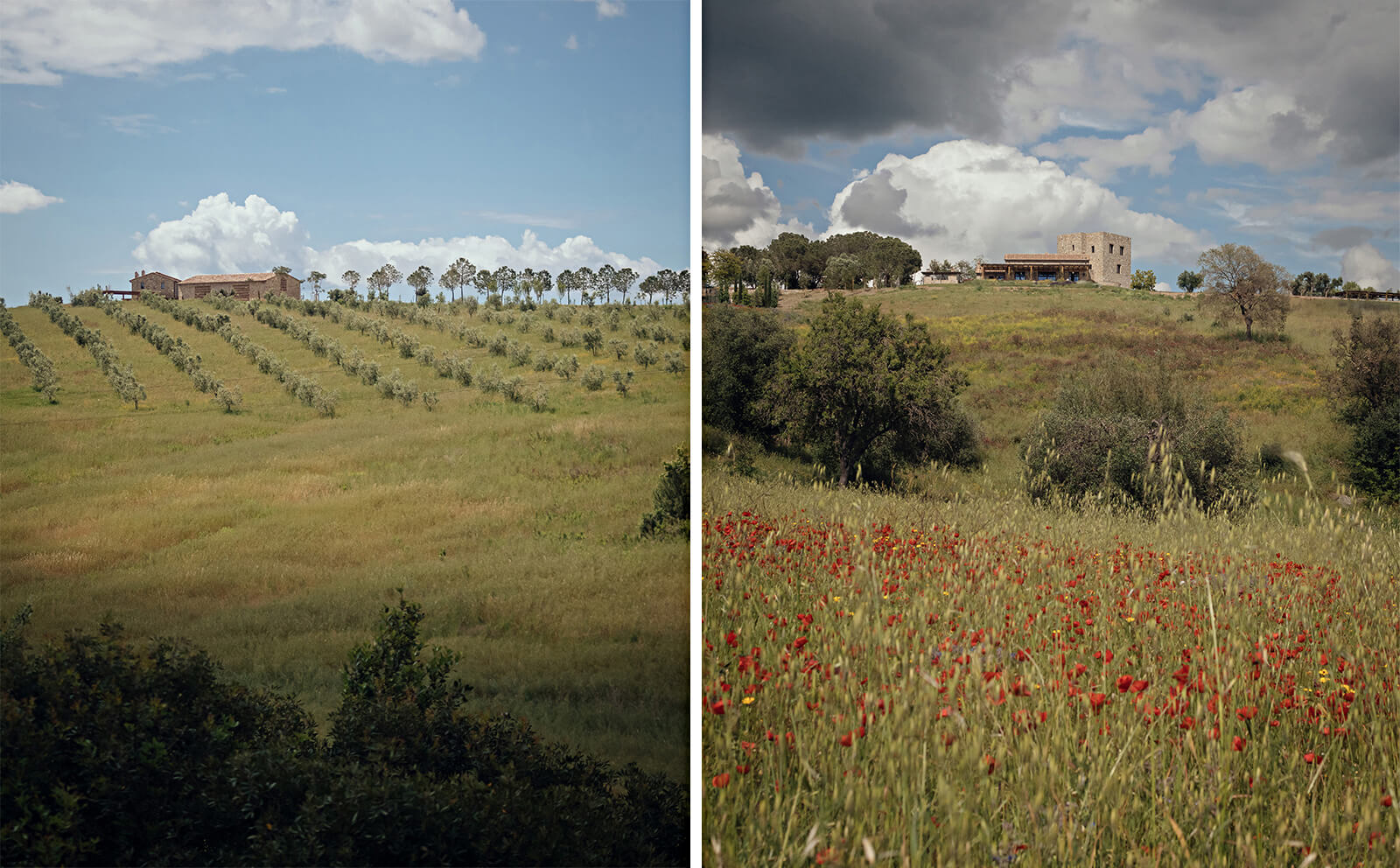
The proposed locations of the built elements were also assessed in juxtaposition with the ‘unbuilt’ landscape. From the project’s conception, the architects collaborated with Italian garden and landscape designers Gaia Chaillet Giusti and Stefano Baccari to develop both the proposed structures and the landscape simultaneously. Local vegetation, including umbrella pine trees, olive trees and lavender plantations, was introduced in several areas of the site.
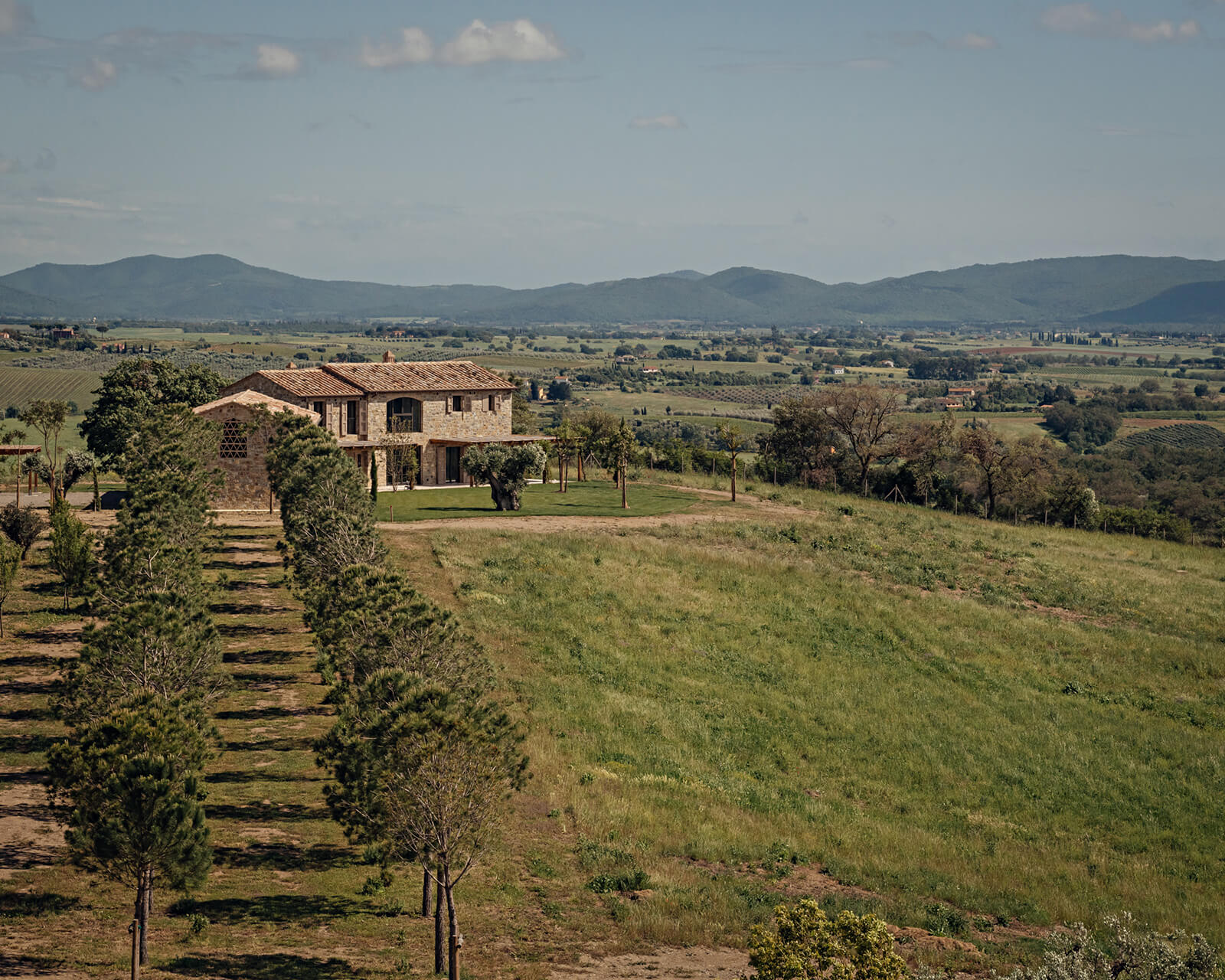
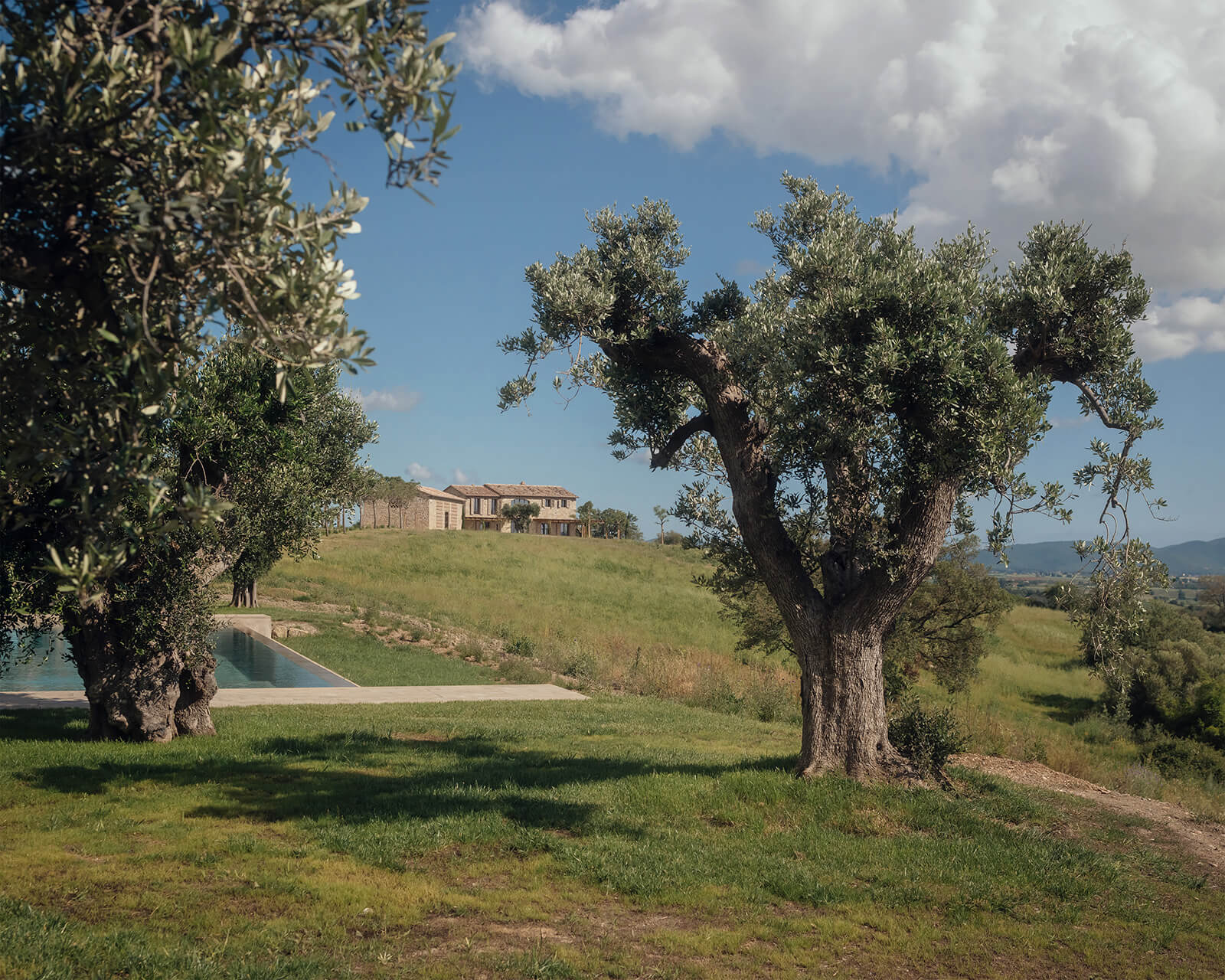
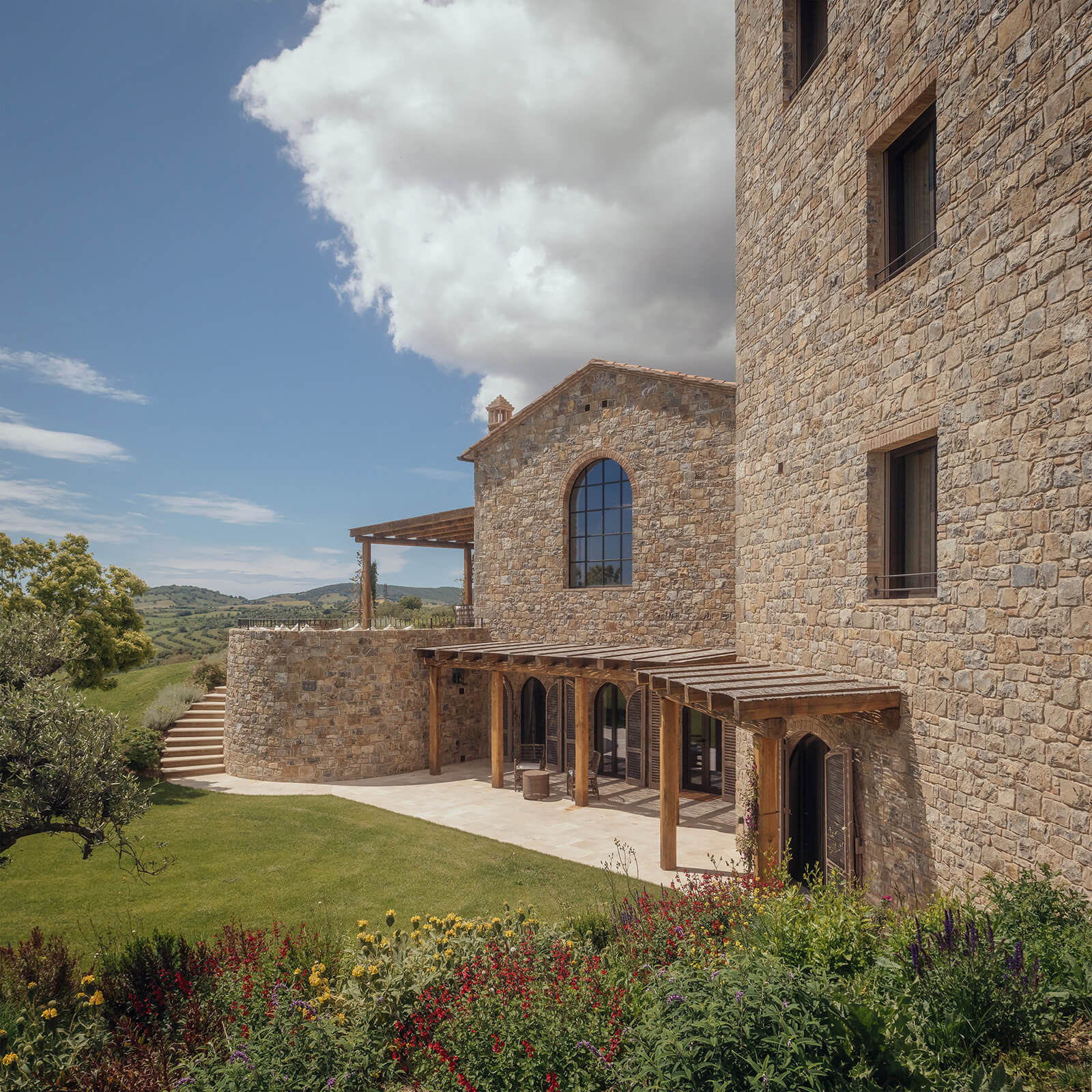
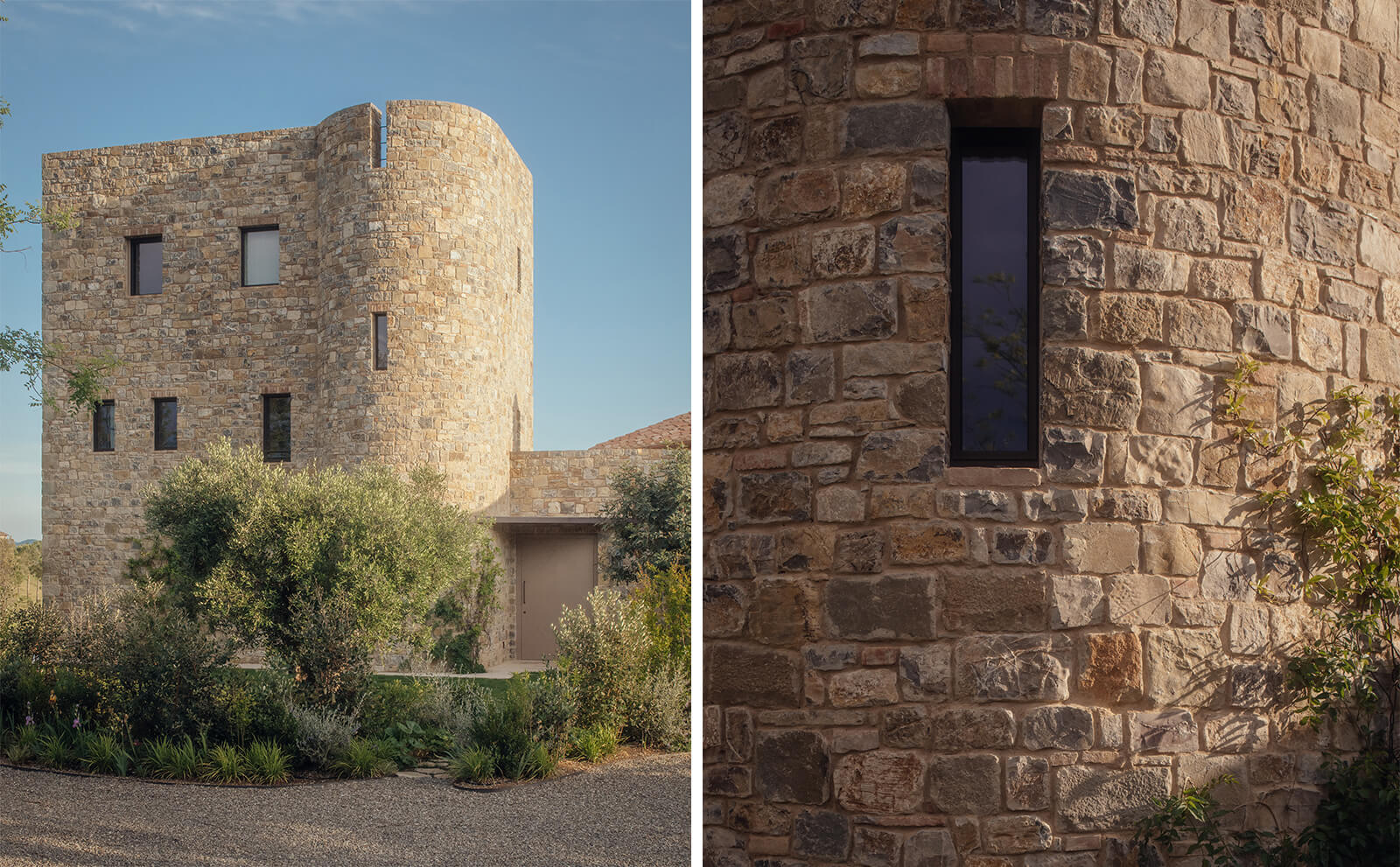
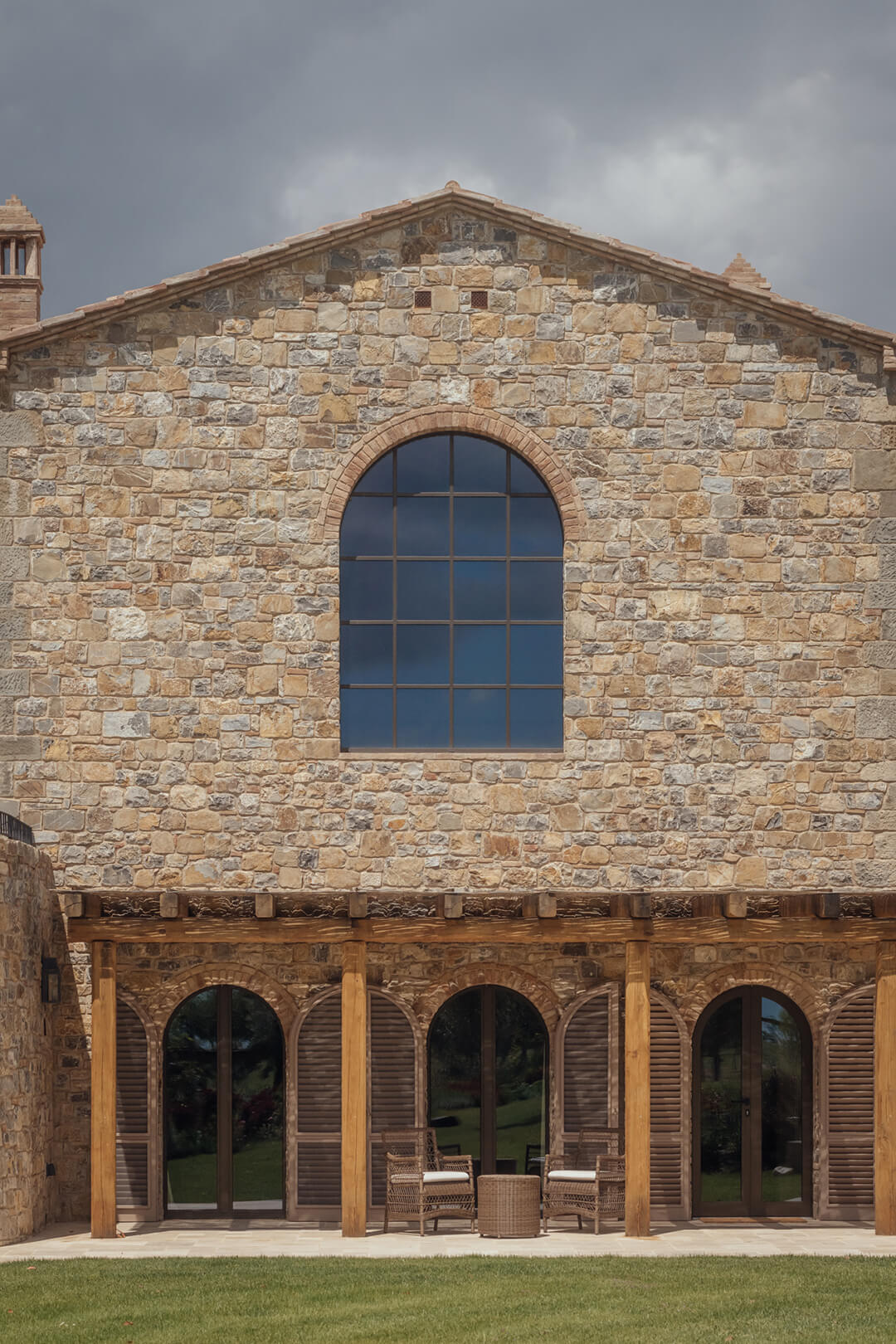
The architectural expression across all blocks conjures the image and materiality of traditional countryside dwellings. The basal form references vernacular architecture, while the occasionally curved corners are reminiscent of the defence towers. The material palette comprising stone, timber and terracotta exudes familiarity, to be further refined with age, rather than attempting to emulate the ‘clean’, plain aesthetics typical of modern construction. The blocks are enveloped in masonry walls made of stone extracted from the estate grounds, and, except for the tower, are all topped with shallow-sloped roofs covered in terracotta tiles. The transition from the open landscape to the interiors is carried out gently and sequentially, through loggias, or shaded corridors surrounding the dwelling blocks, covered with sturdy timber roofs.
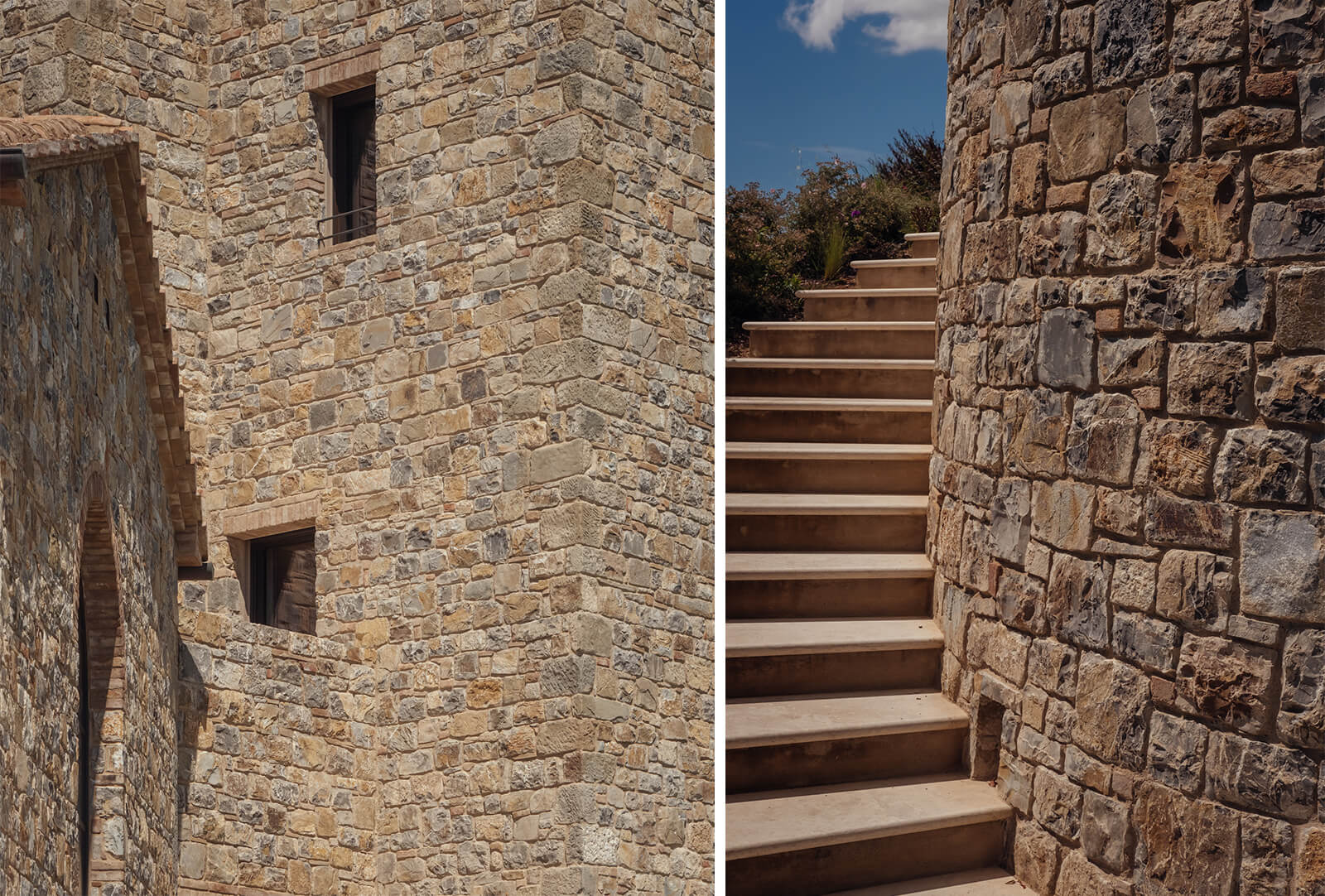
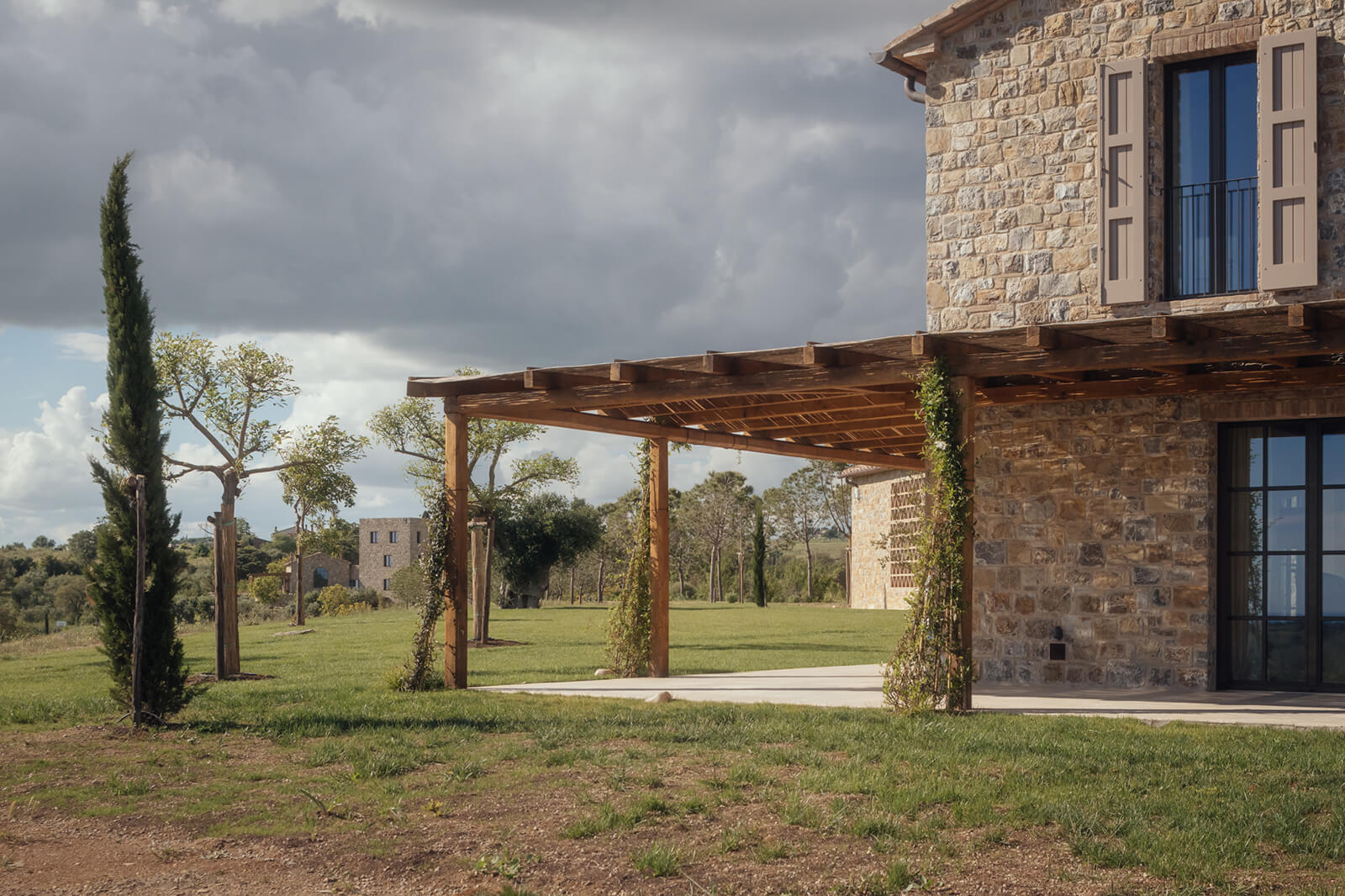
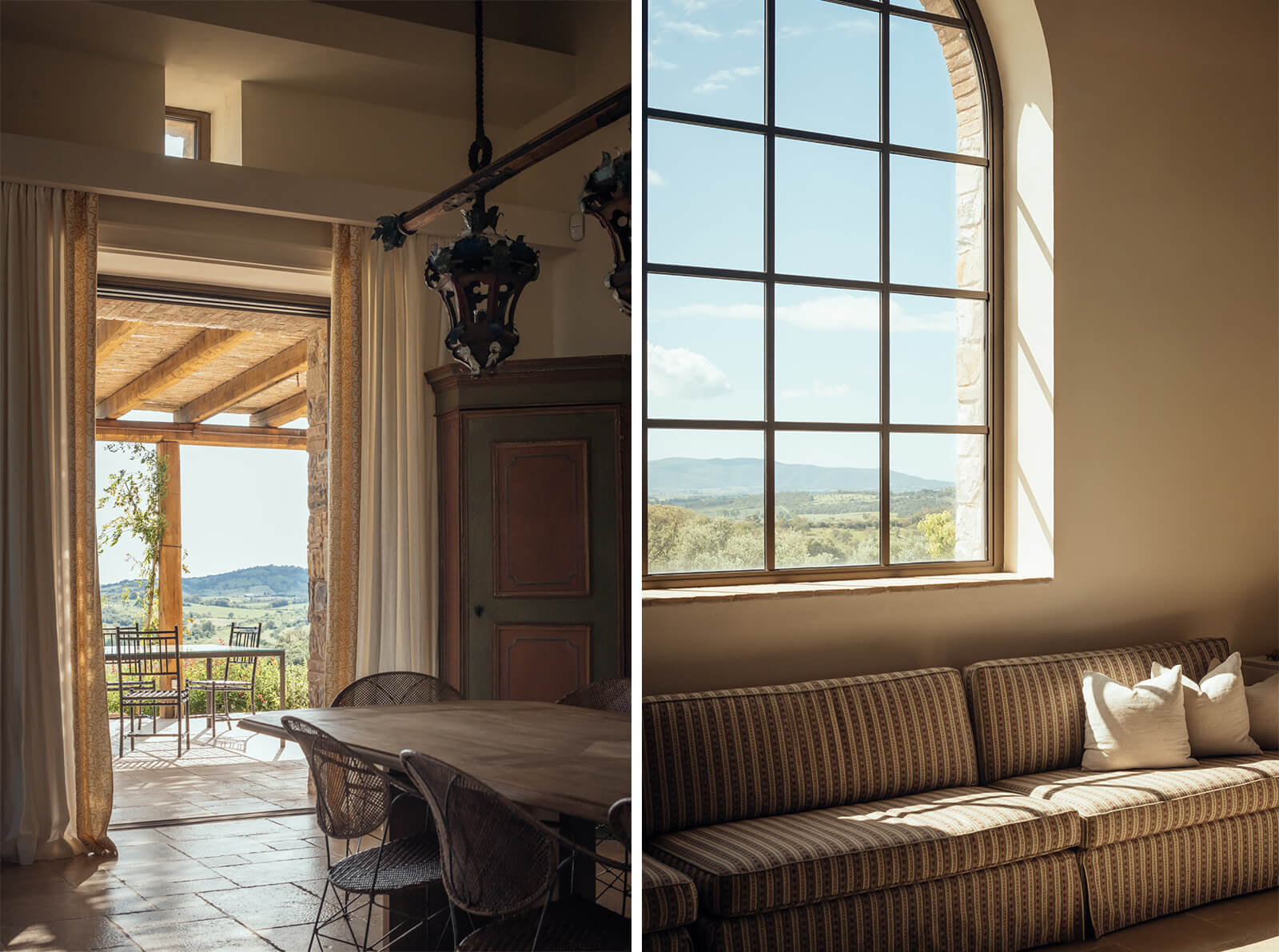
The balance exercised by the existing landscape influences the proportions of the interventions similarly. The sudden verticality of the tower block, which references the iconic torris in Italy, is tempered by the adjoining two-storey residential block. The land formerly housed a chicken coop and was already sensitised to natural surroundings and nearby trees for shade and comfort. The intervention simply leverages the existing features without widely disrupting them. The exterior walls of the residence are punctuated by traditional archways, while the window sizes—including the wide arched glazing that defines its south-east facade—are a negotiation between the grandeur exuded by historic proportions and the updated requirements of natural light, ventilation and expansive views. In deference to a more contemporary lifestyle, the block is fronted by an infinity pool, its span marked by a peek of the other two prominent buildings on one side and a seemingly infinite green landscape on the other.
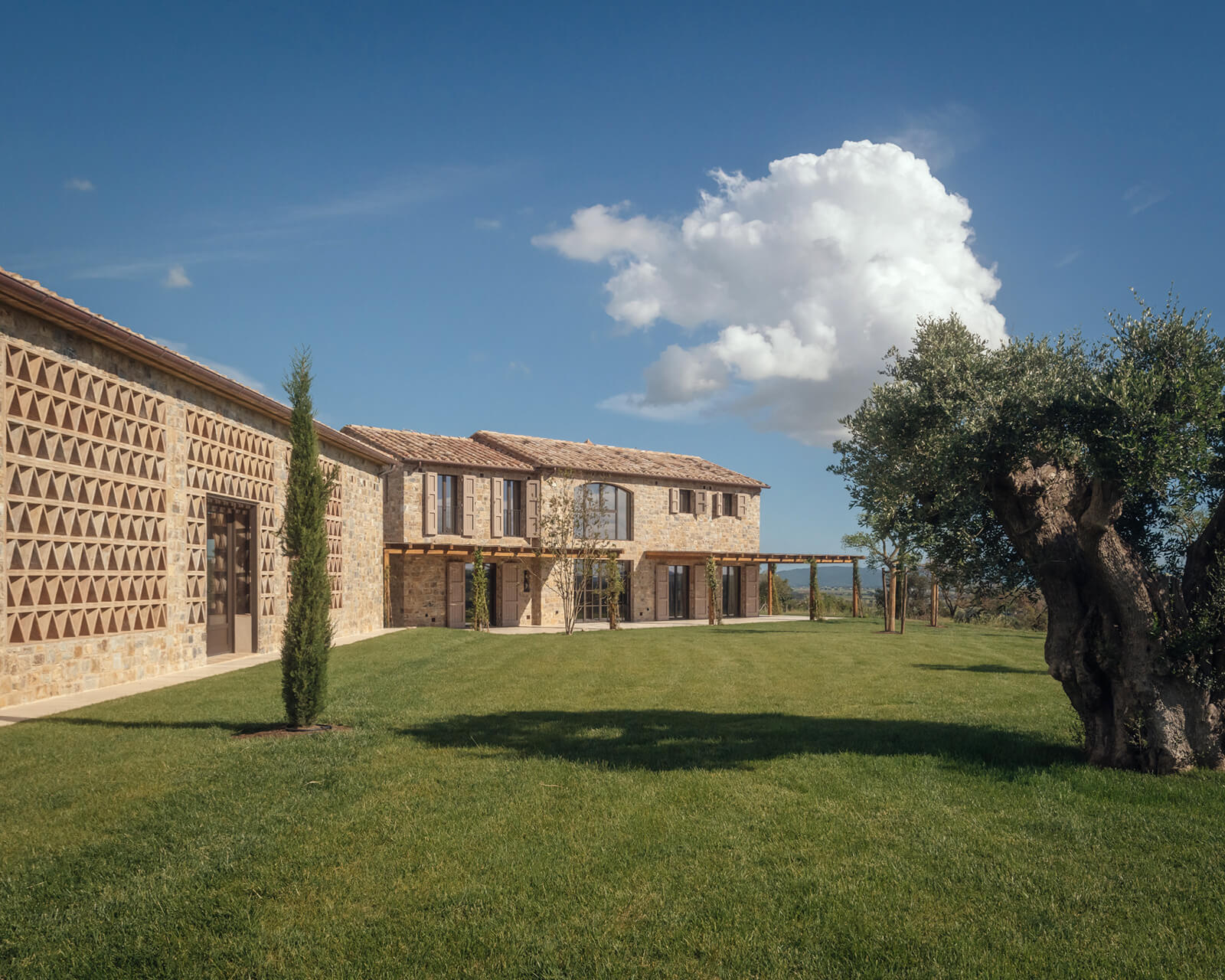
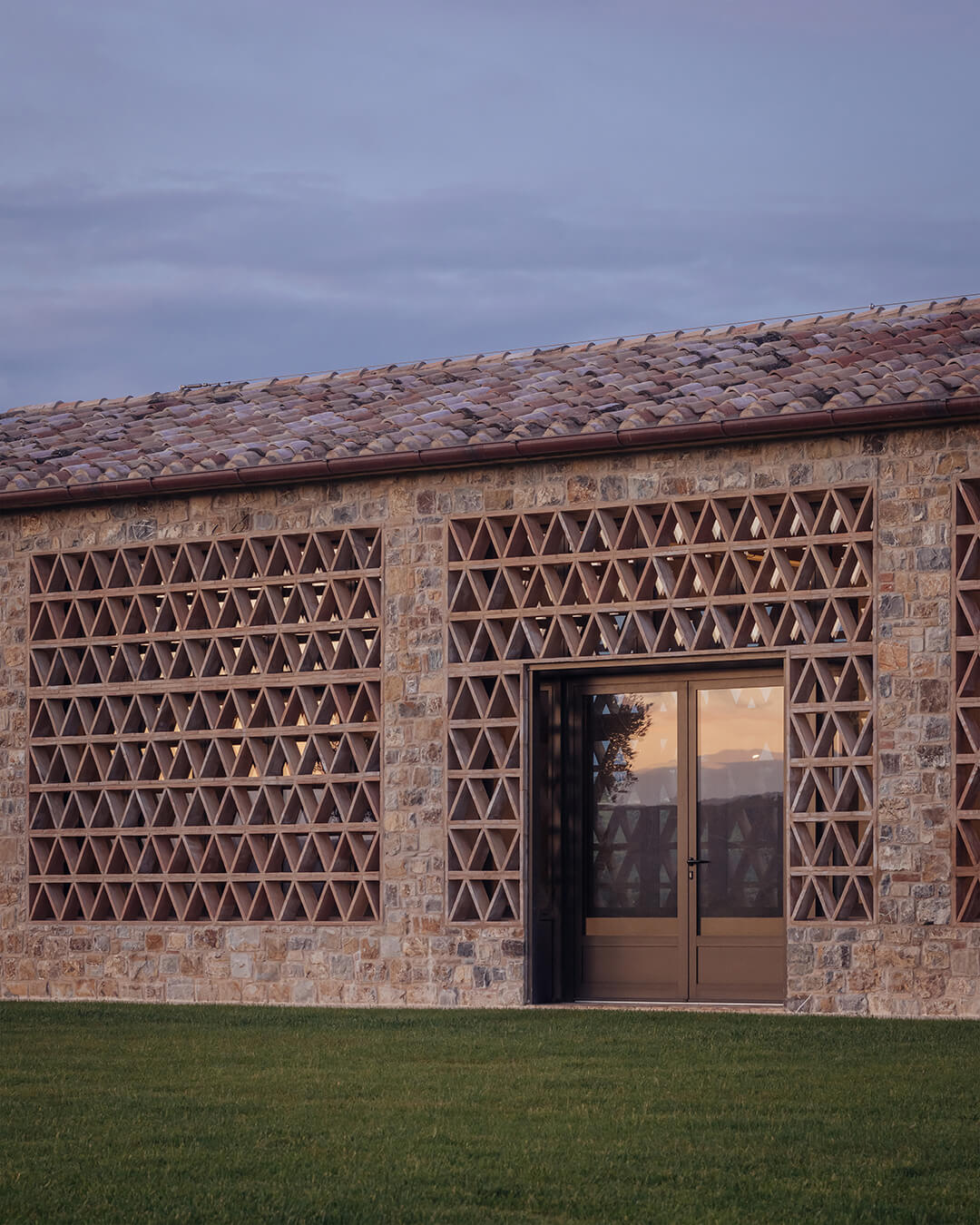
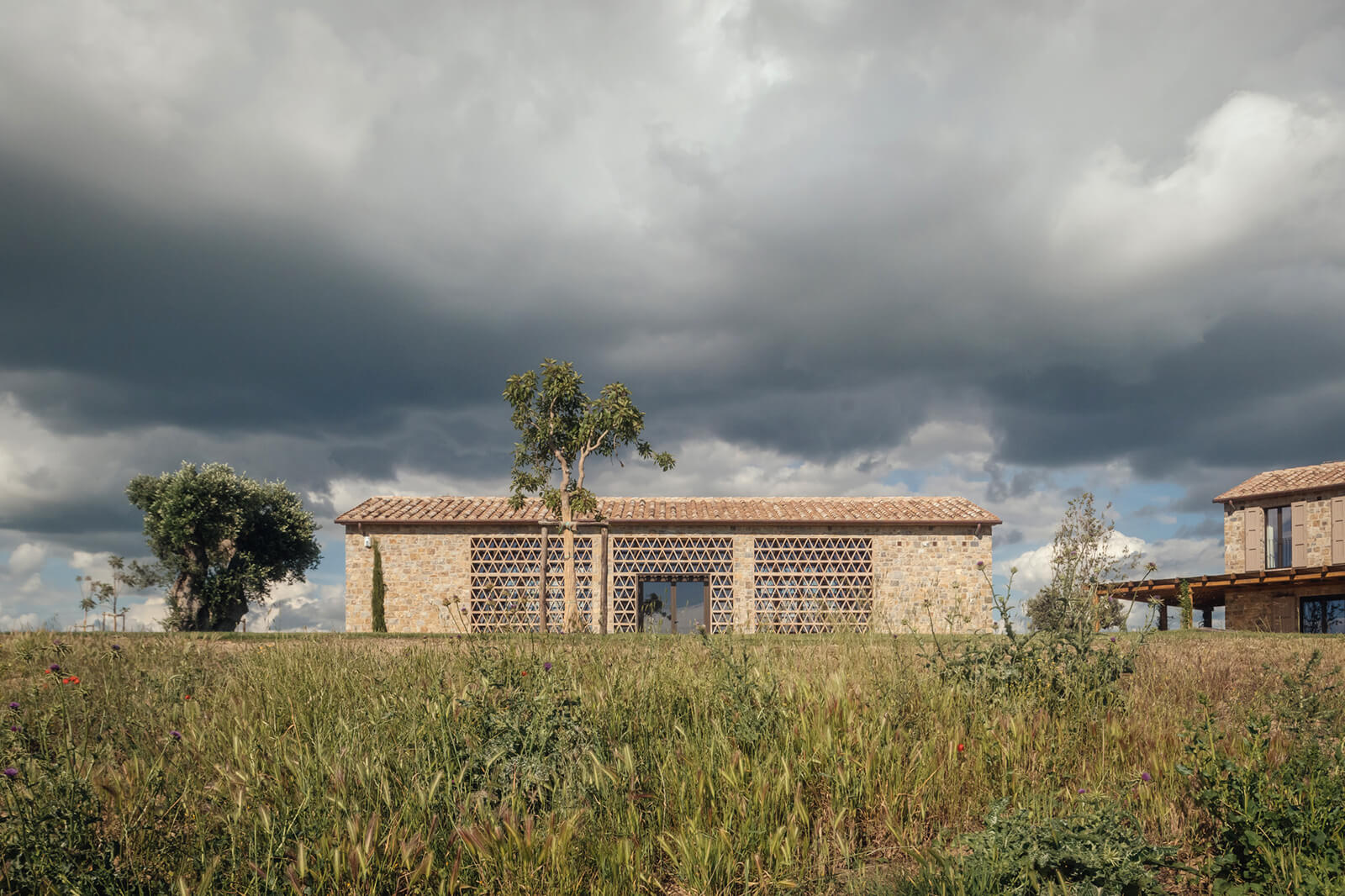
On the sister hill, approaching the block through the umbrella pine avenue, the otherwise solid building silhouette is punctured by an angled-tiled lattice, a regional feature adopted from Italian architecture. The lattice forms a definitive element for the barn, rendering its front facade with a gradient scale that turns from opaque at the extremes to partially transparent in the middle. The barn, in line with Tuscan tradition, supports the production of organic extra-virgin olive oil while offering a large flexible space for a private gym and for any social events hosted by the resident family. The adjacent guest house is designed as an informal, sociable counterpart to the residence block, its double-storey structure comprising bedrooms, a kitchen and a living room overlooking the tranquil natural expanse to the south.
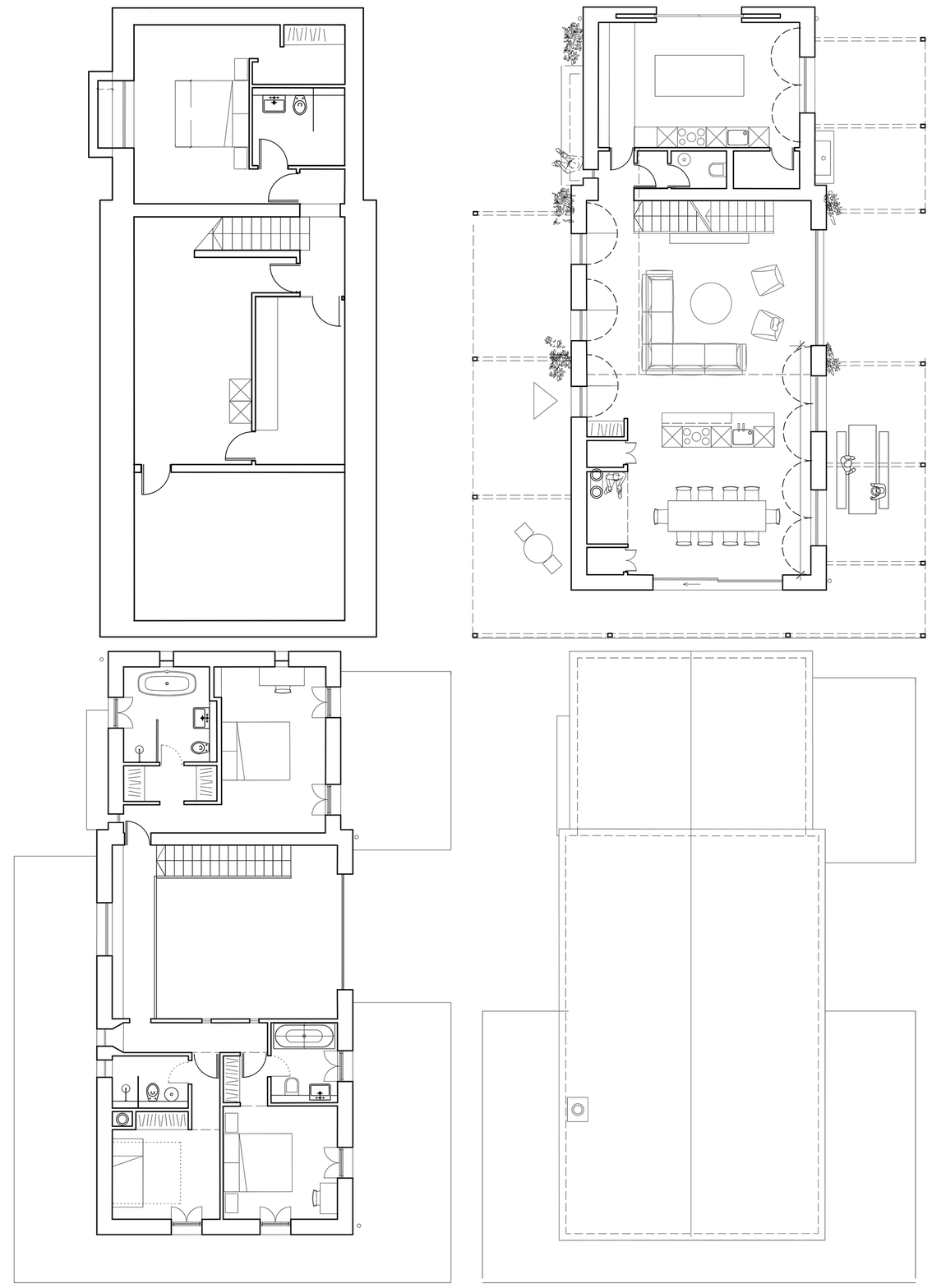
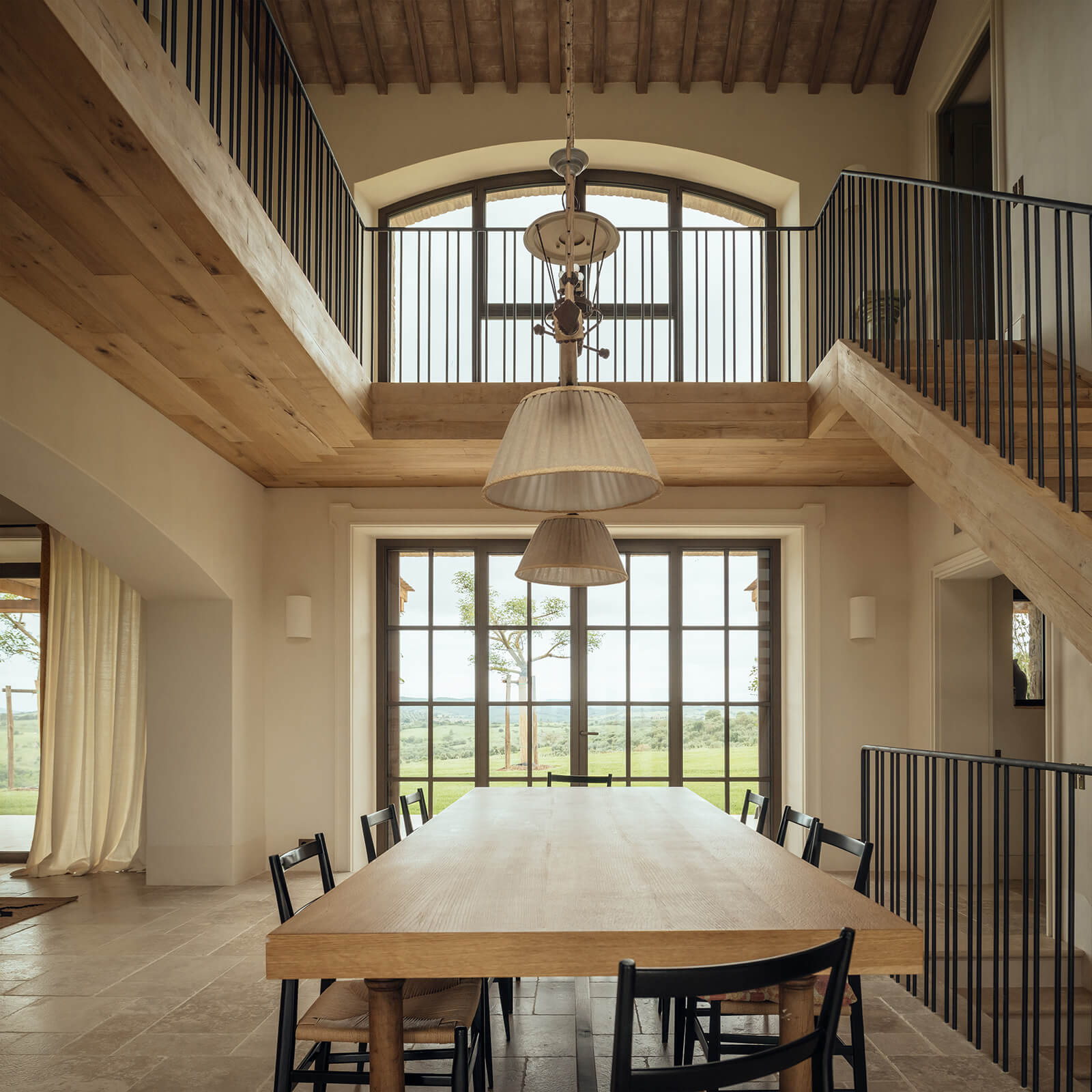
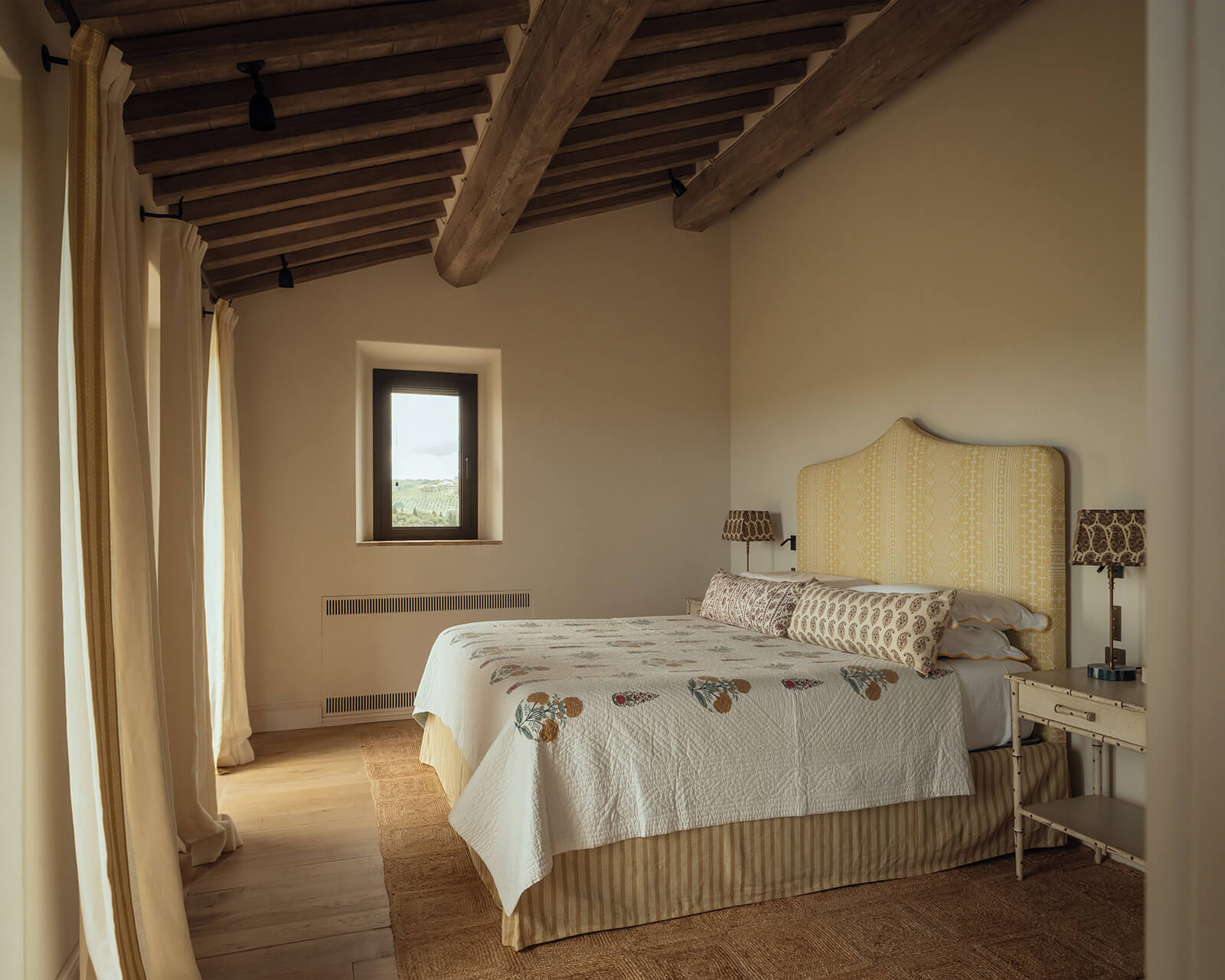
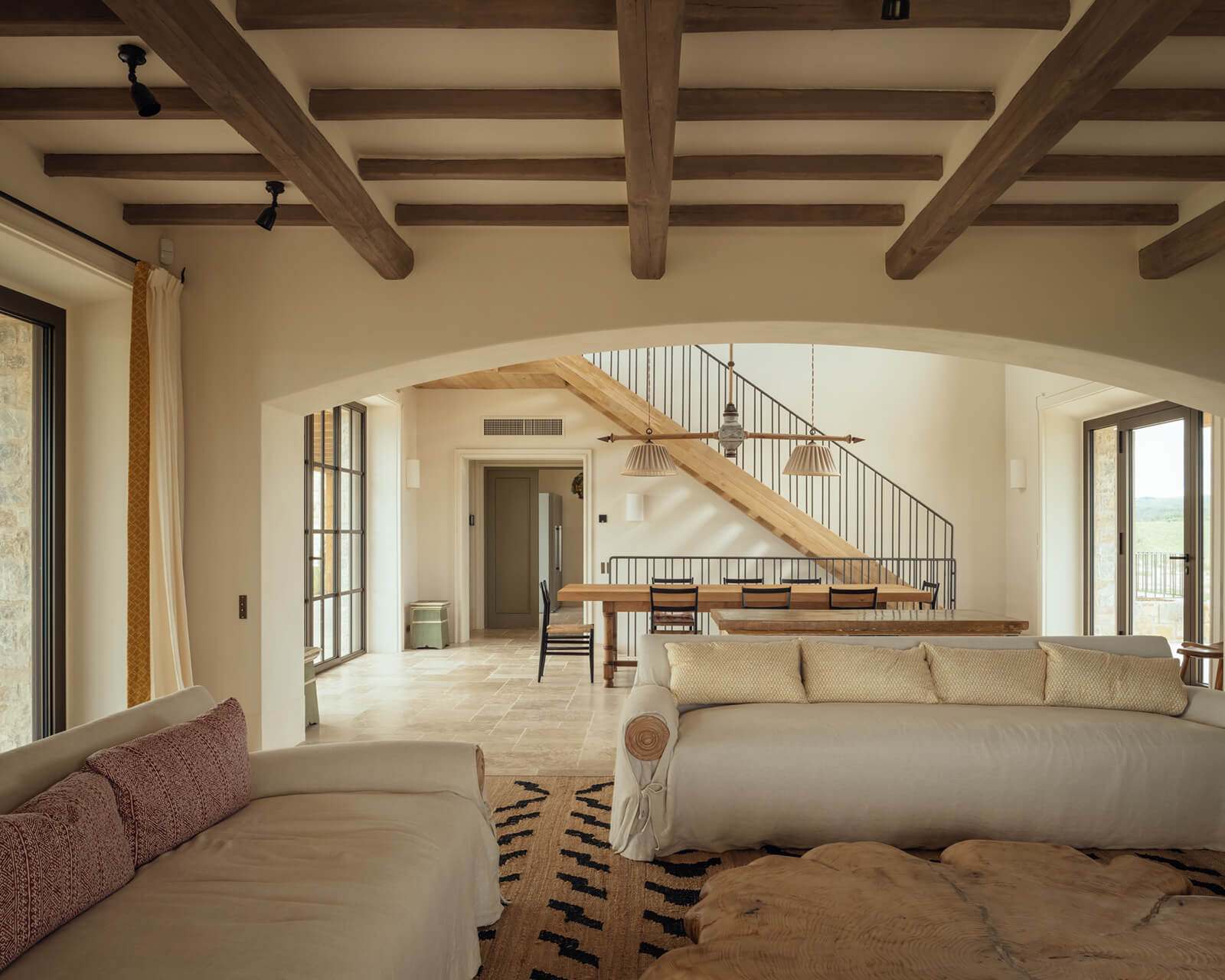
The interiors of the spatial volumes across the estate—11 en-suite bedrooms, two kitchens, covered terraces and a tennis court, among others—offer a slightly distinct expression from their rough-textured exteriors. Their organisational layouts are dictated by contemporary open-plan lifestyles facilitated through large fenestrations, terraces, shaded courtyards and al fresco dining areas. The interior scheme, developed with Italian architects and interior designers Tommaso Ziffer and Studio GAA Architects, pairs the antique furniture placed throughout the property with frescoed doors and ceilings. The otherwise monochromatic finishes across the walls are accented by the warm shades of timber and wooden furnishings, their conglomeration framing views of the surrounding landscape.
The design of the Italian residential estate comes informed by the ethos of the English architectural studio in interesting ways, manifested in spaces that seem to have been developed with the idea of an inevitable flux and entropy in mind, even if gradual. The approach involves a restraint on certain tendencies typical of contemporary architectural design. Often, architecture attempts to reach beyond its brief to introduce additional influences or concepts in search of novelty in the outcome. In many others, it expresses reverence to the past through stringent replication. At Ercolina, architecture stands purely as a response: to its terrain, its cultural context and its contemporary needs, without attempting to be rigidly extravagant or adherent.
Name: Ercolina
Location: Tuscany, Italy
Typology: Residential
Client: Private Family
Architect: McLean Quinlan
Collaborators: Studio GAA (Executive Architect); Spanish interior design studio (Interior Designers); Tommaso Ziffer (Interior Concepts); Studio Associato RCC (Surveyor); Studio Baccari and Gaia Chaillet Giusti (Landscape consultants); Baglioni Costruzioni (Primary Contractor)
Project Size: 1600 sq m

by Pranjal Maheshwari Oct 06, 2026
With a programme focused on biodiversity, accessibility and safety, the Rotterdam-based architects help the neighbourhood reclaim a barren landscape as an integral social node.
by Pia Bhatia Oct 02, 2026
Located in the Al Bridi Reserve in Sharjah, the project didactically projects its purpose of studying African ecosystems through local structures marked as ‘sculptural presences’.
by Pranjal Maheshwari Sep 30, 2026
The new cultural centre by Blight Rayner Architecture and Snøhetta envelopes world-class facilities in a sinuous glass facade, alluding to the theatrical rhythms of the performing arts.
by Pranjal Maheshwari Sep 29, 2026
The one-of-its-kind music centre in Apple’s six-storey Battersea Station space in London houses world-class facilities for live performance and worldwide broadcast.

make your fridays matter with a well-read weekend
Enter your details to sign in
Don’t have an account?
Sign upOr you can sign in with
a single account for all
STIR platforms
All your bookmarks will be available across all your devices.
Stay STIRred
Already have an account?
Sign inOr you can sign up with
Verification link sent to check your inbox or spam folder to complete sign up process
Tap on things that interests you.
Select the Conversation Category you would like to watch
Please enter your details and click submit.
Enter the 6-digit code sent at


At Ercolina, McLean Quinlan frames the Tuscan countryside in terracotta and stone
by Pranjal Maheshwari | Published on : Jun 30, 2026


 Sign in with Google
 Sign in with email
What do you think?