Architecture05 mins. read
This hotel by STUDIO A+ harbours serenity amidst the urban bustle
by Anushka SharmaMay 25, 2024



by Pranjal MaheshwariPublished on : Feb 21, 2026
Can an urban fabric always only consist of a figure-or-ground duality, a black-or-white landscape where the ‘figures’ are blocks, and urban life can only flow between them? Can a figure, a building, allow the stream to pass through, presenting a choice: whether to engage or to withhold?
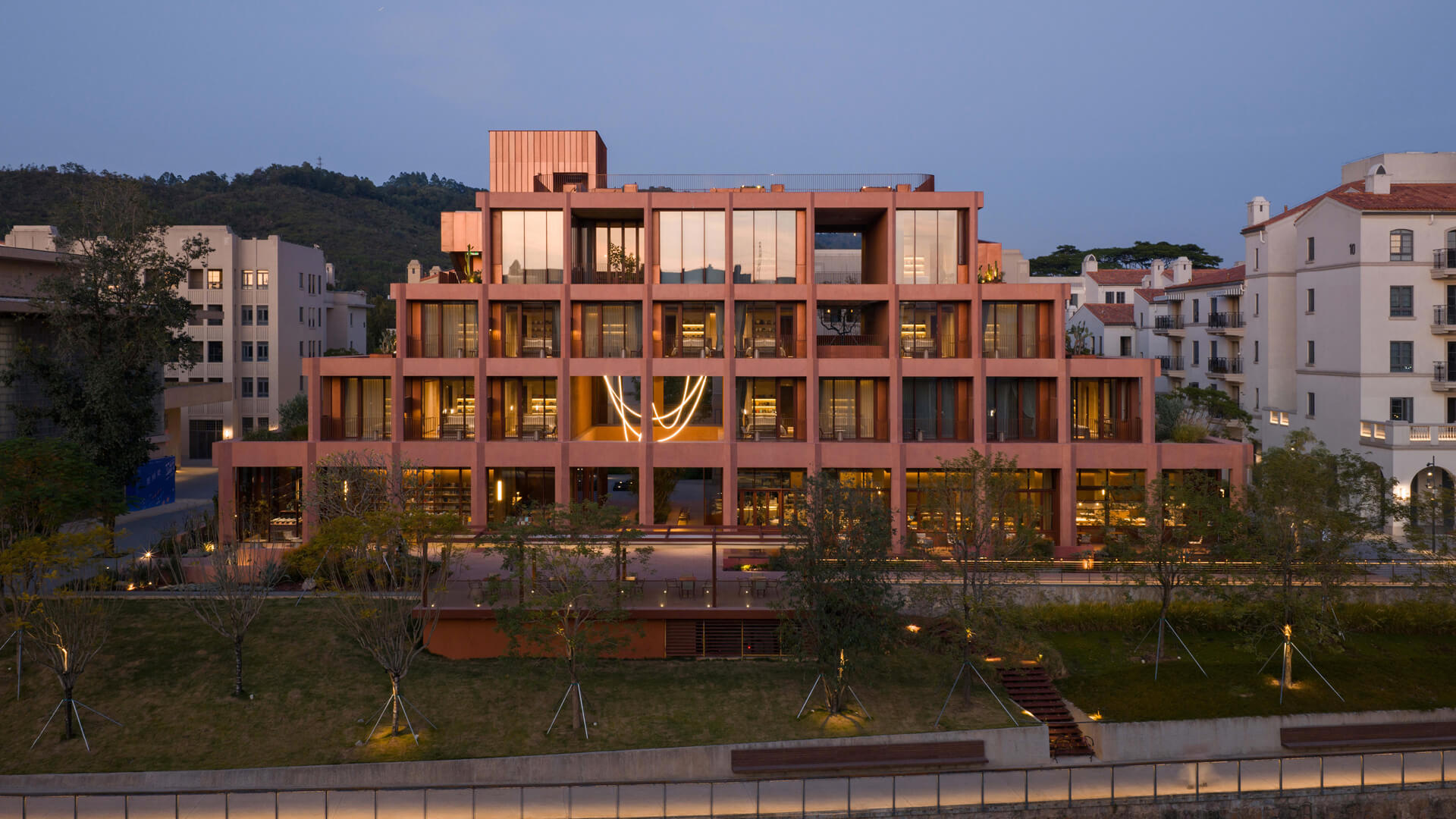
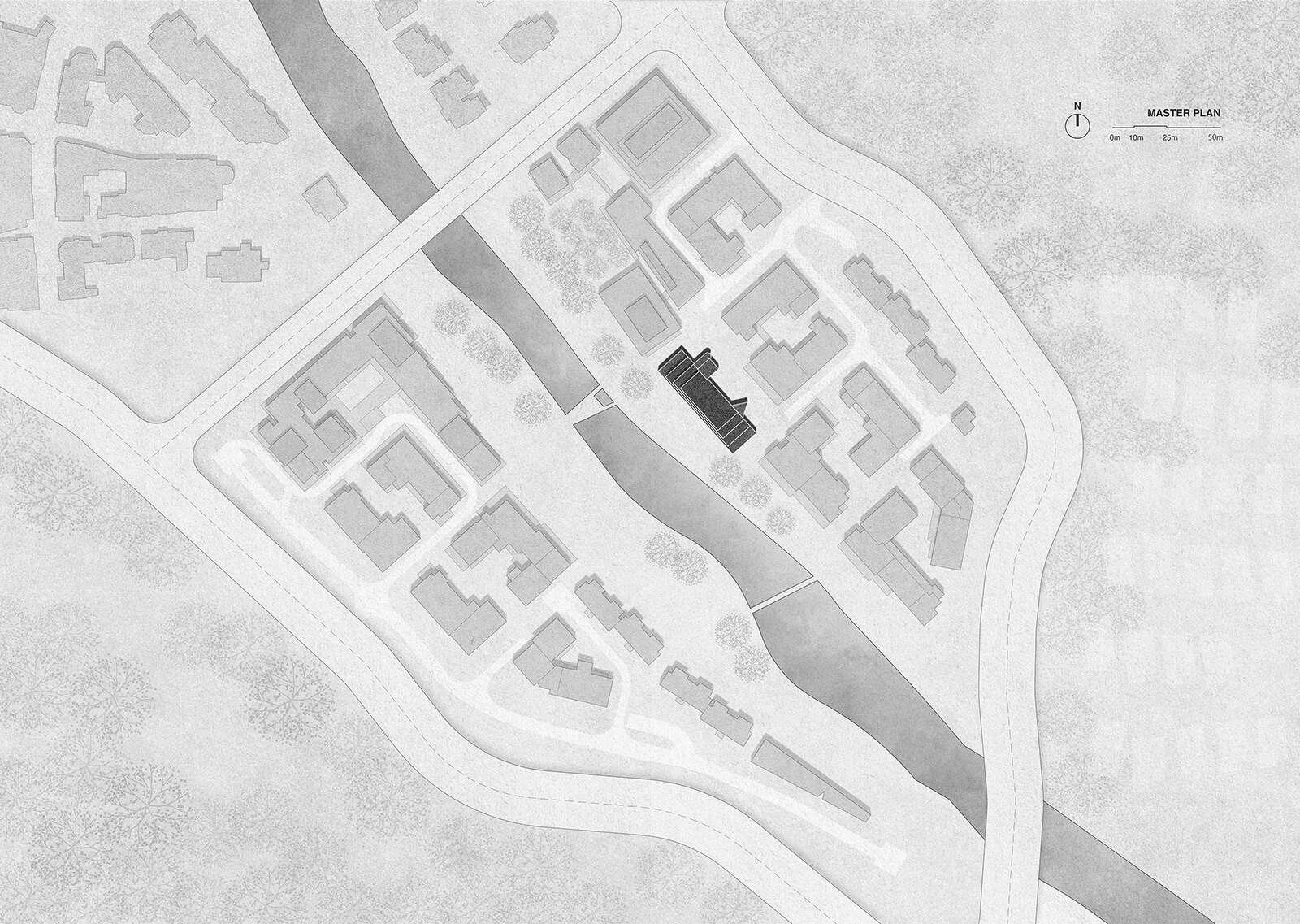
At an hour’s drive from downtown Guangzhou, along Aranya Jiulong Lake at the eastern riverside of the town lies the site for naive IMAGINIST’s Author's Room Hotel. Backed by pristine mountain forests and lake landscapes, and nestled beside the community art museum and canteen, the hotel, designed by BLUE Architecture Studio, is imagined as a hybrid cultural space including a bookstore, cafe, light dining and accommodation, all in a singular destination.
The building’s design references Guangzhou's traditional arcades, specifically the Qilou style of Chinese architecture, which emerged as a response to the multicultural lifestyle of the trading class in the Lingnan region in the 19th Century. It comprised low-rise residential buildings with commercial establishments on the ground floor, flanked by continuous colonnaded streets. The exterior was a blend of European aesthetic influences, with motifs borrowed from styles such as Baroque and Renaissance, while the interior spaces resonated distinctly with the local culture. The vertical distinction between public and private life, along with the addition of colonnades, allowed commerce, living and circulation to flourish along the same streets, even in the sub-tropical climate of Guangzhou. The hotel design utilises this traditional spatial sequence and adapts it for contemporary functions and sensibilities.
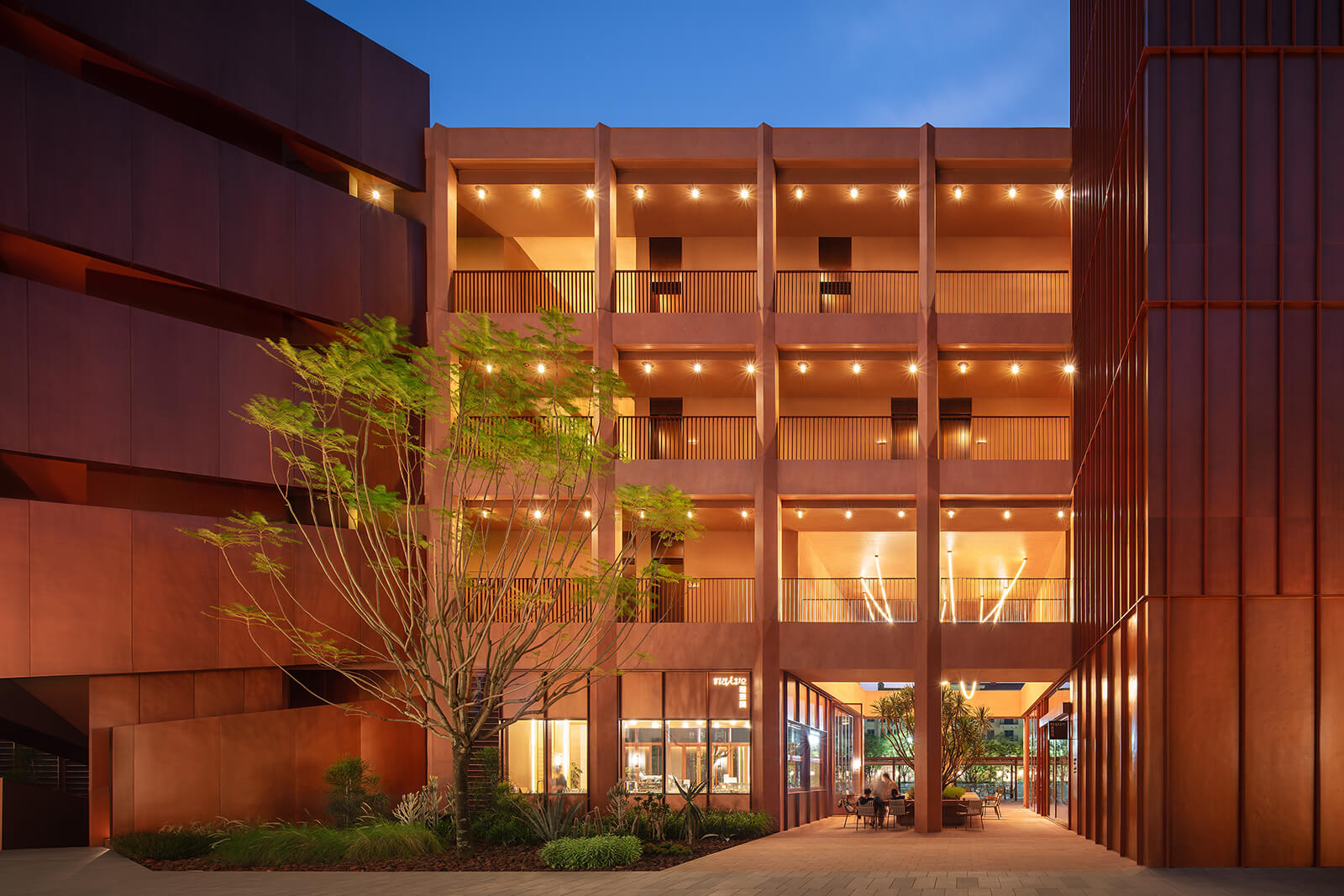
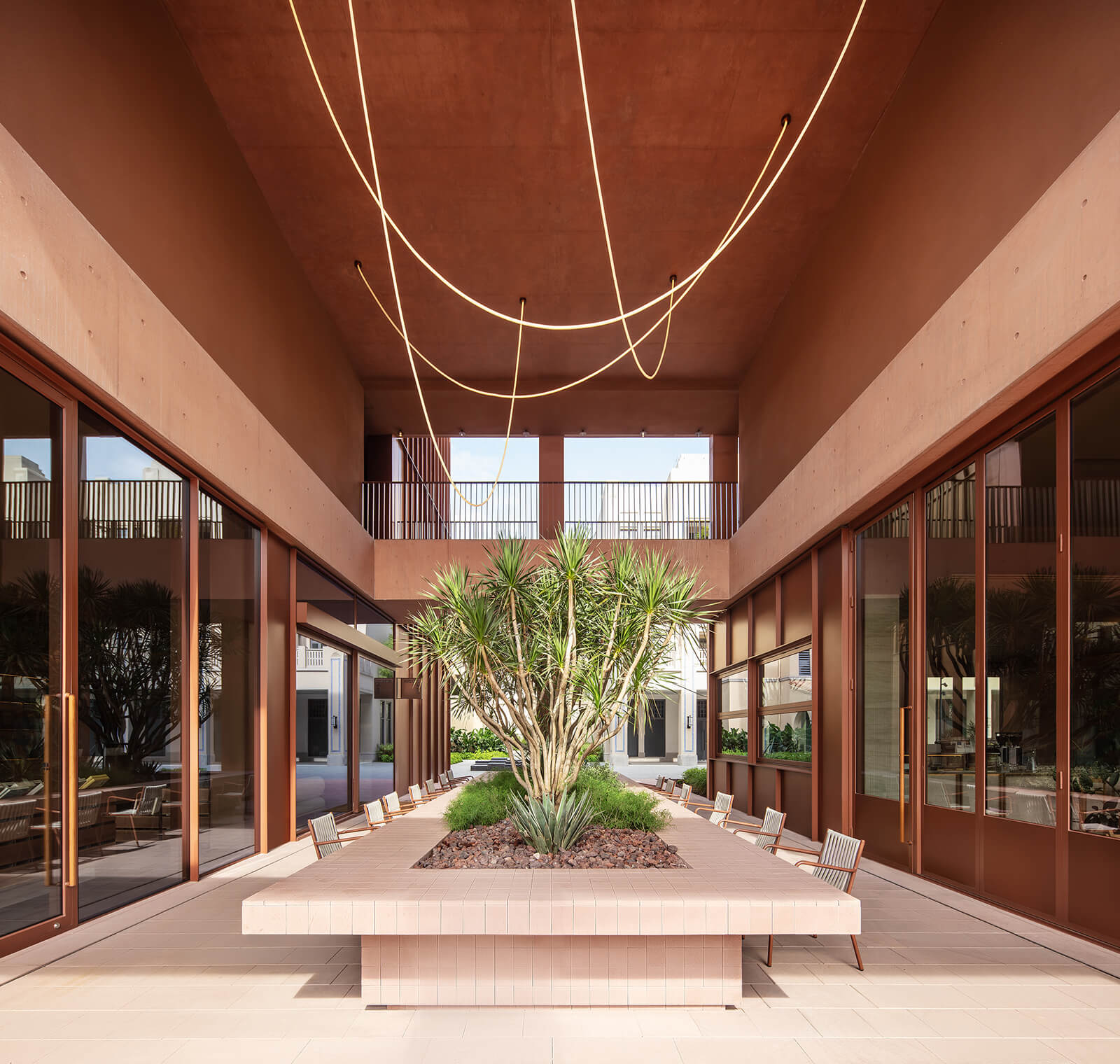
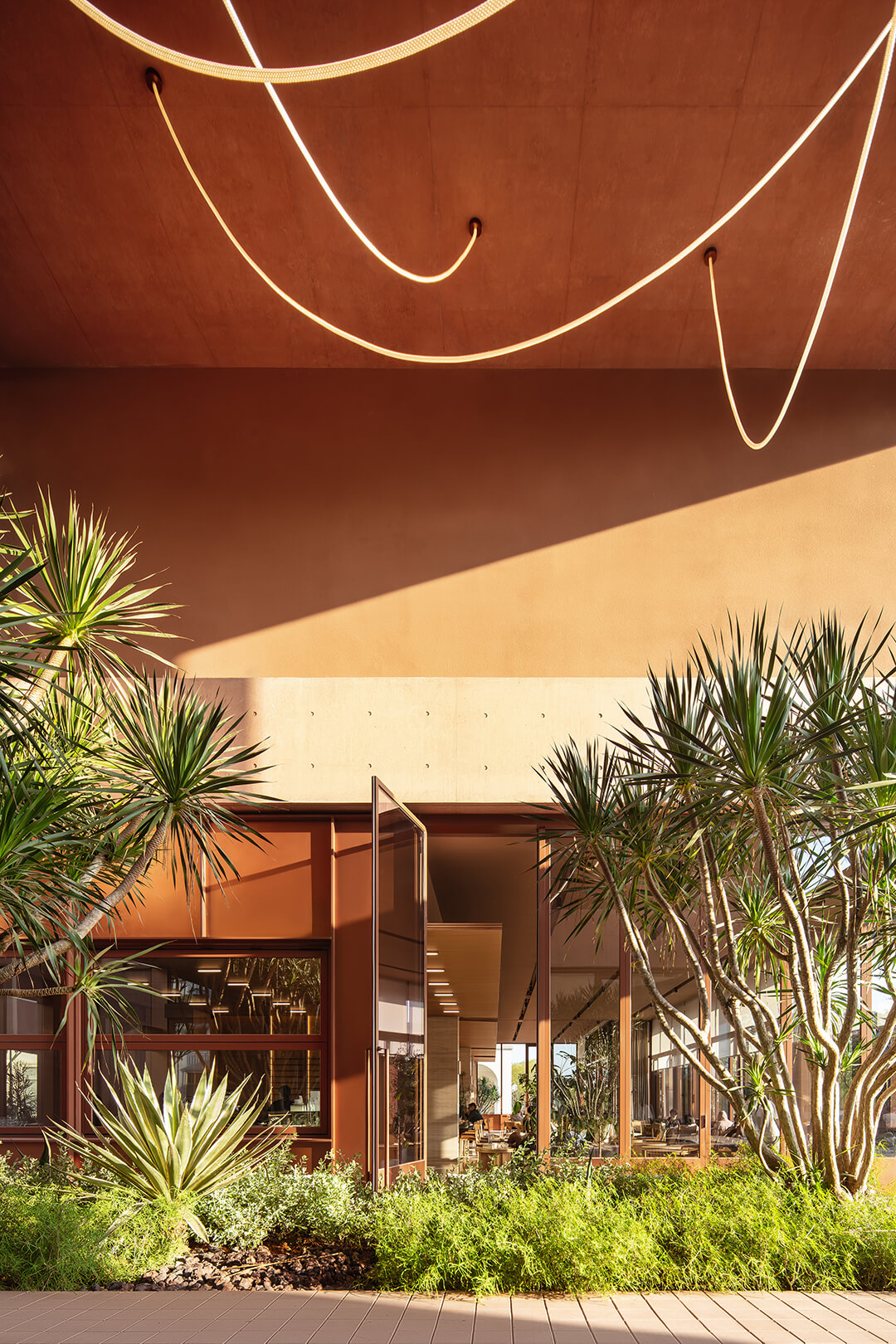
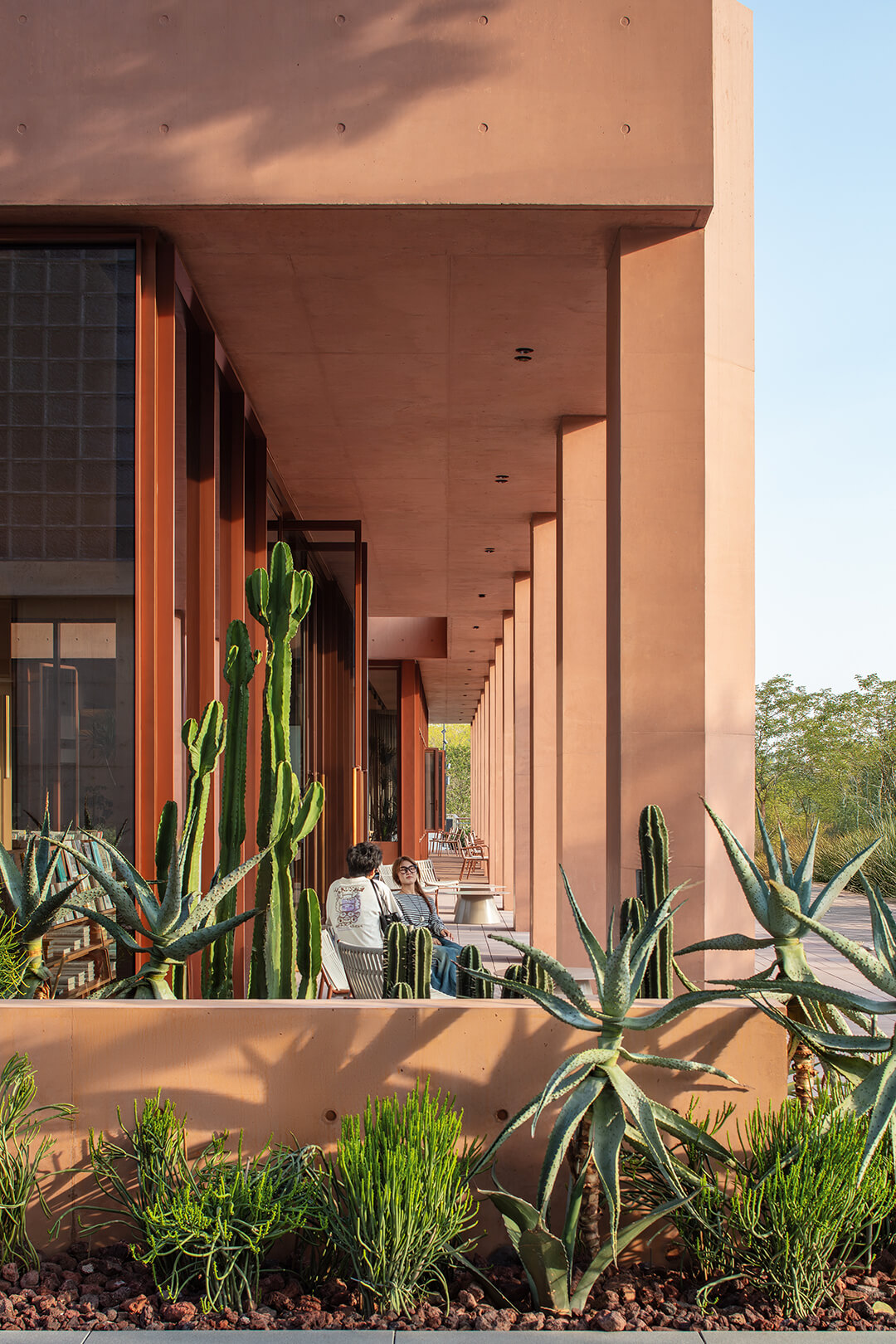
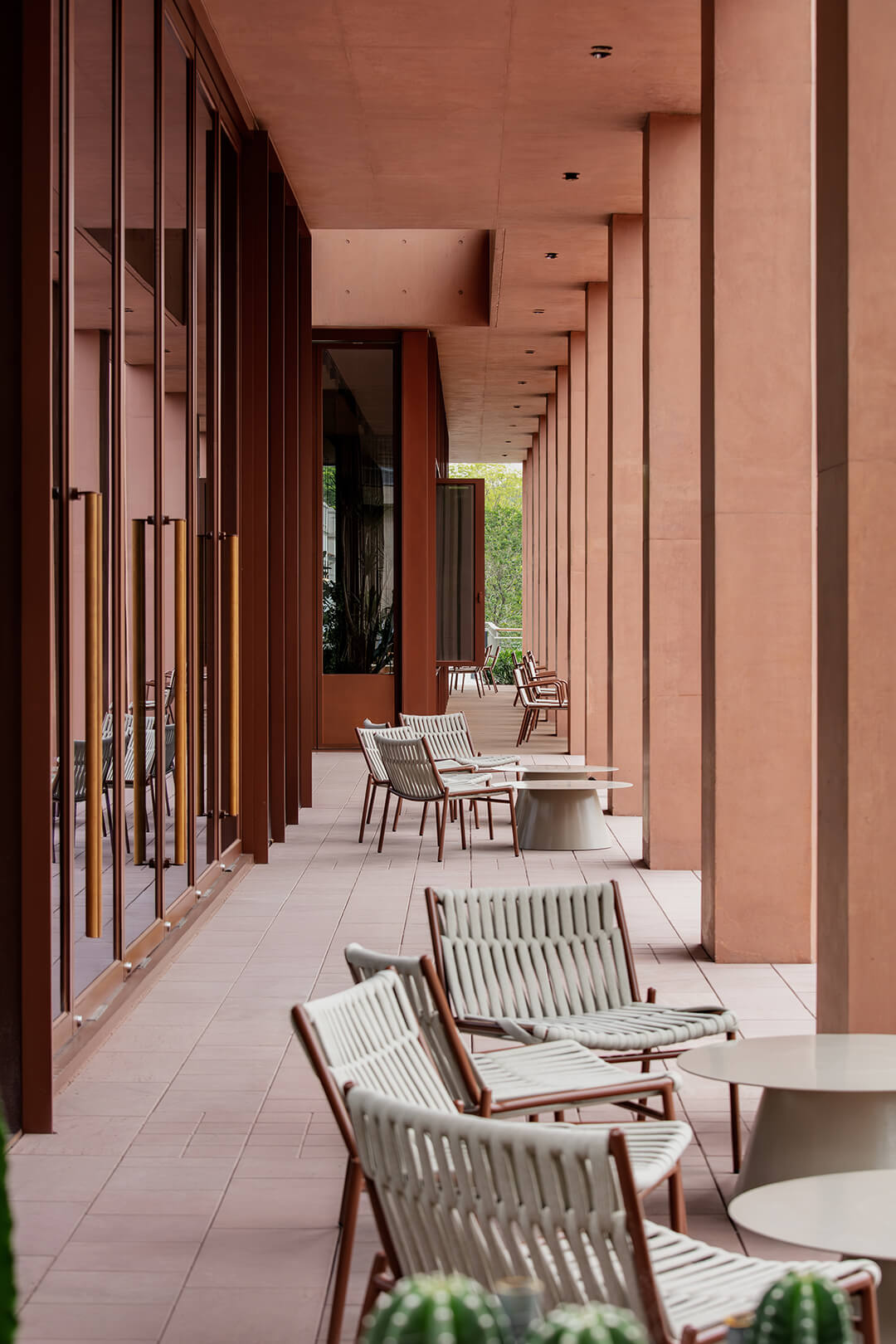
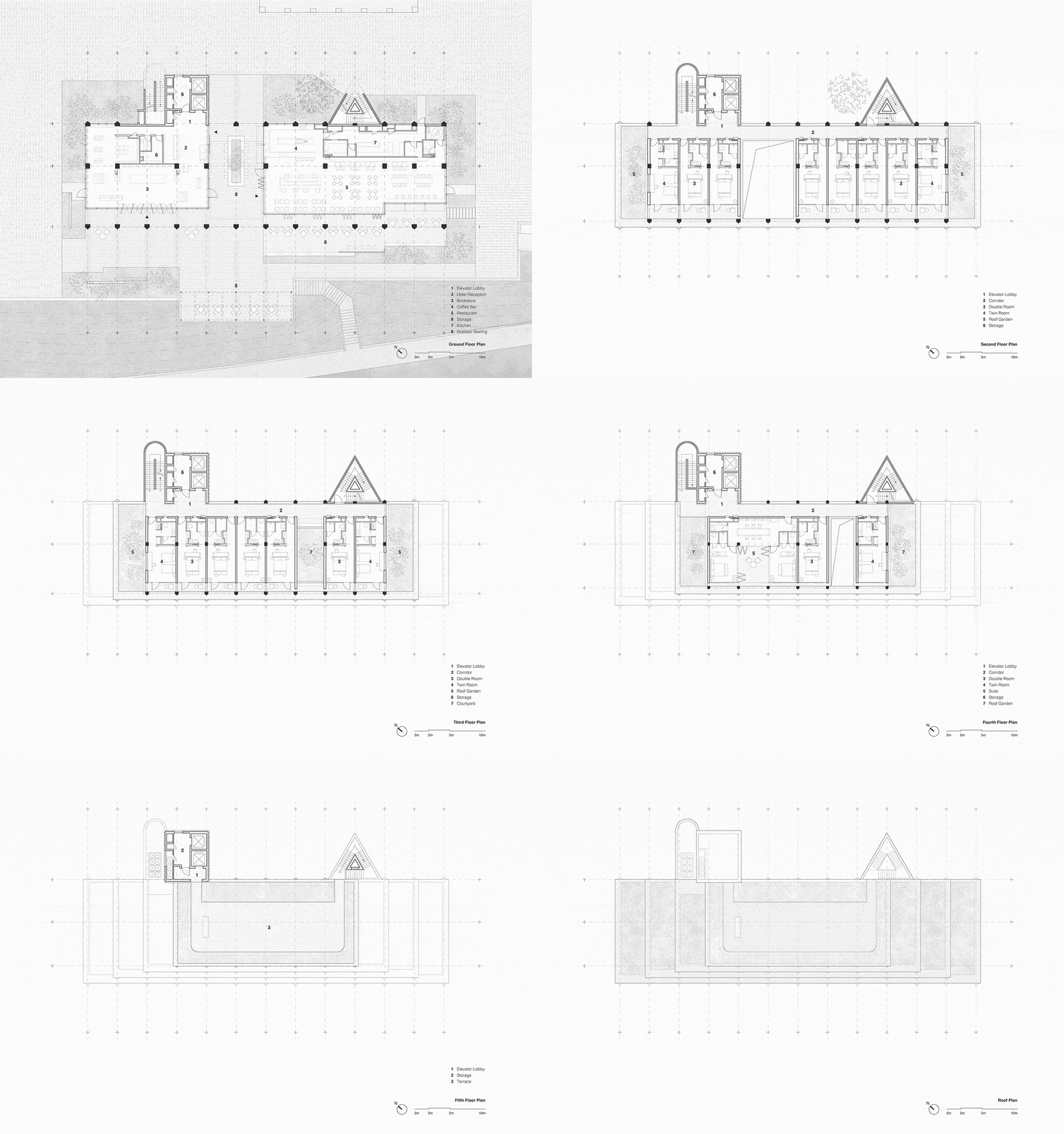
The hotel’s ground floor comprises a publicly accessible common space that includes a bookstore, cafe and light dining. The surrounding series of polygonal columns form a colonnade that connects to the surrounding streetscape through a continuous public pedestrian zone. A double-height courtyard connects the store, the dining area and the pedestrian walkways on both sides of the building, allowing the sprawl to wander through from any direction. This porous threshold between the interior and exterior allows pedestrians and passers-by from the neighbourhood a much-needed shaded space and opportunities to encounter the bookstore and cafe with a sense of discovery, thus engaging with its immediate context by incorporating it into the building’s function.
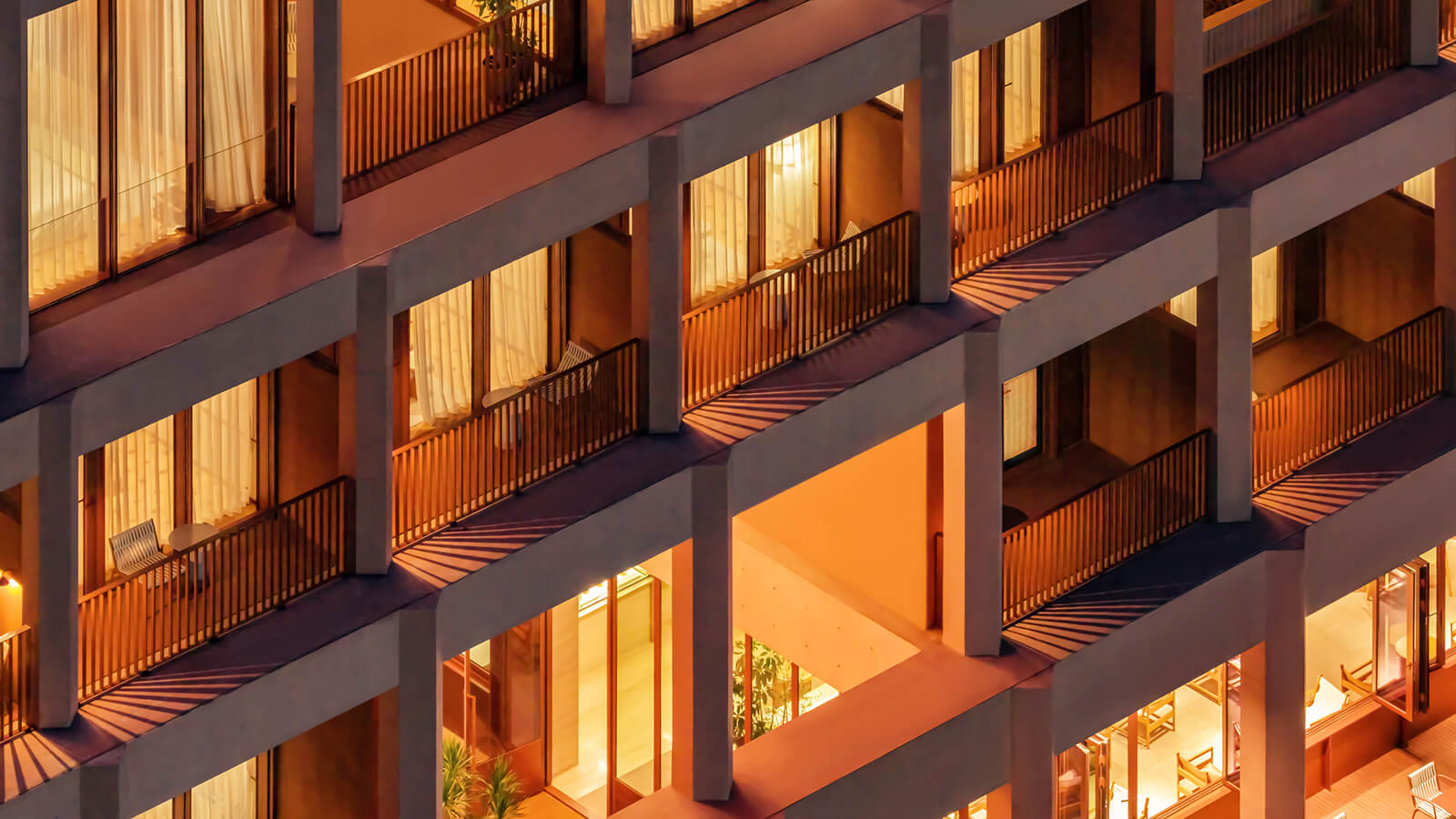
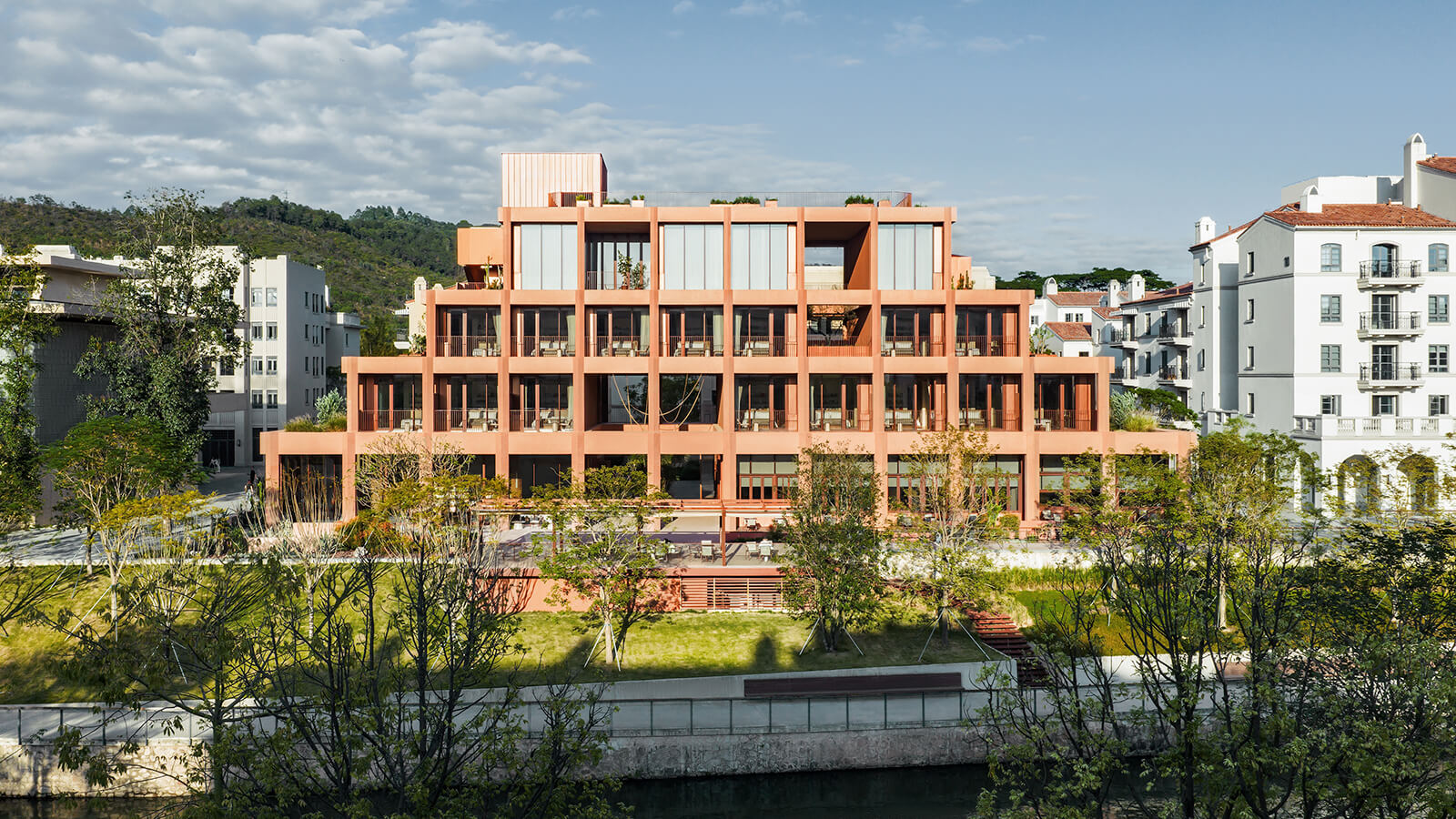
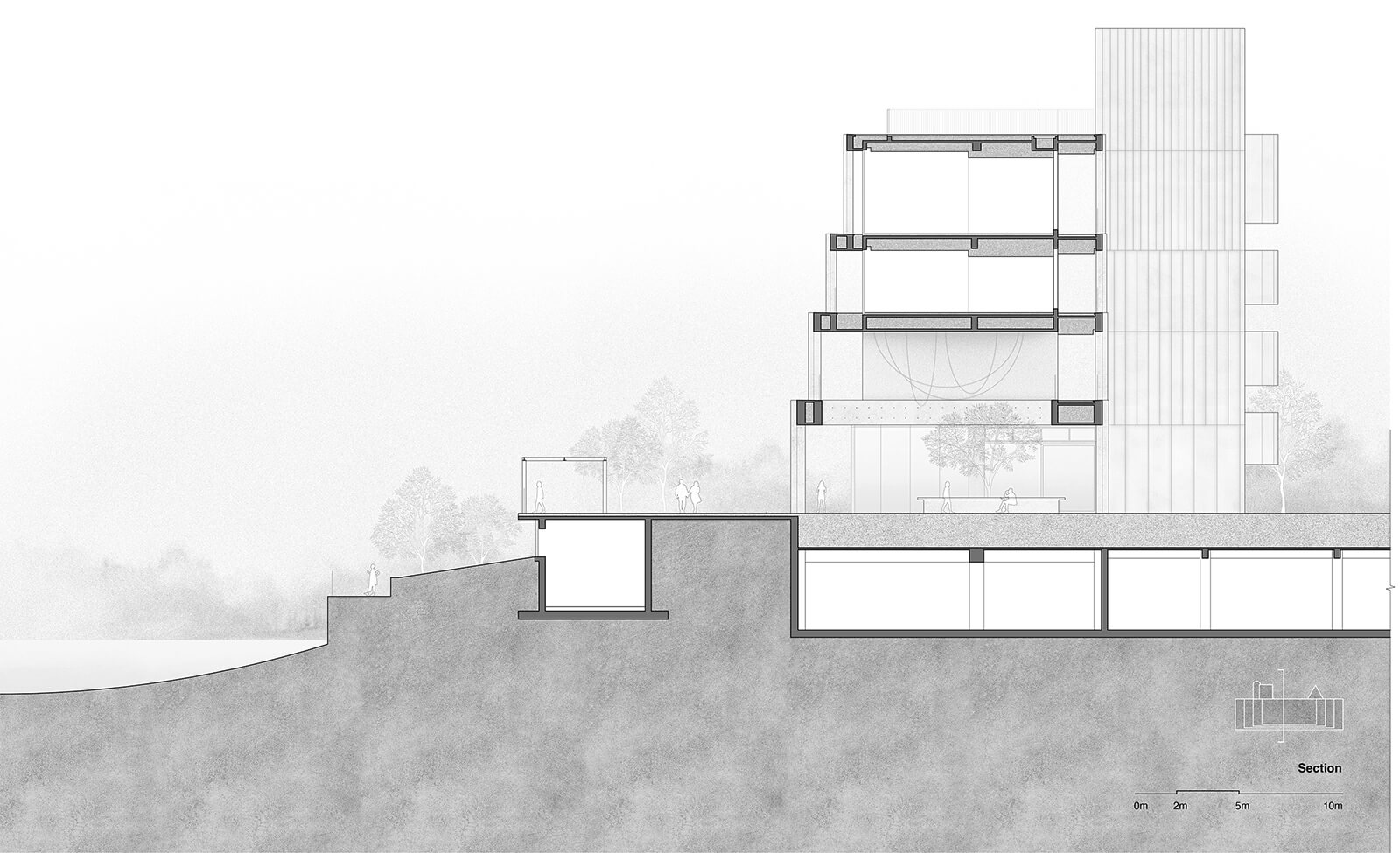
The upper levels form the residential zone of the building housing 18 river-facing guest rooms, including double rooms, twin rooms and a suite. Here too, a courtyard punctuates the third and fourth floors. Coupled together, these courtyards ensure daylight penetration and greenery deep throughout the building. Outside, the colonnade seems to project itself on the upper floors, mediating between the private rooms and the surrounding landscape. The achieved mass acts as a shade to the semi-private, sunlit terraces that overlook the river.
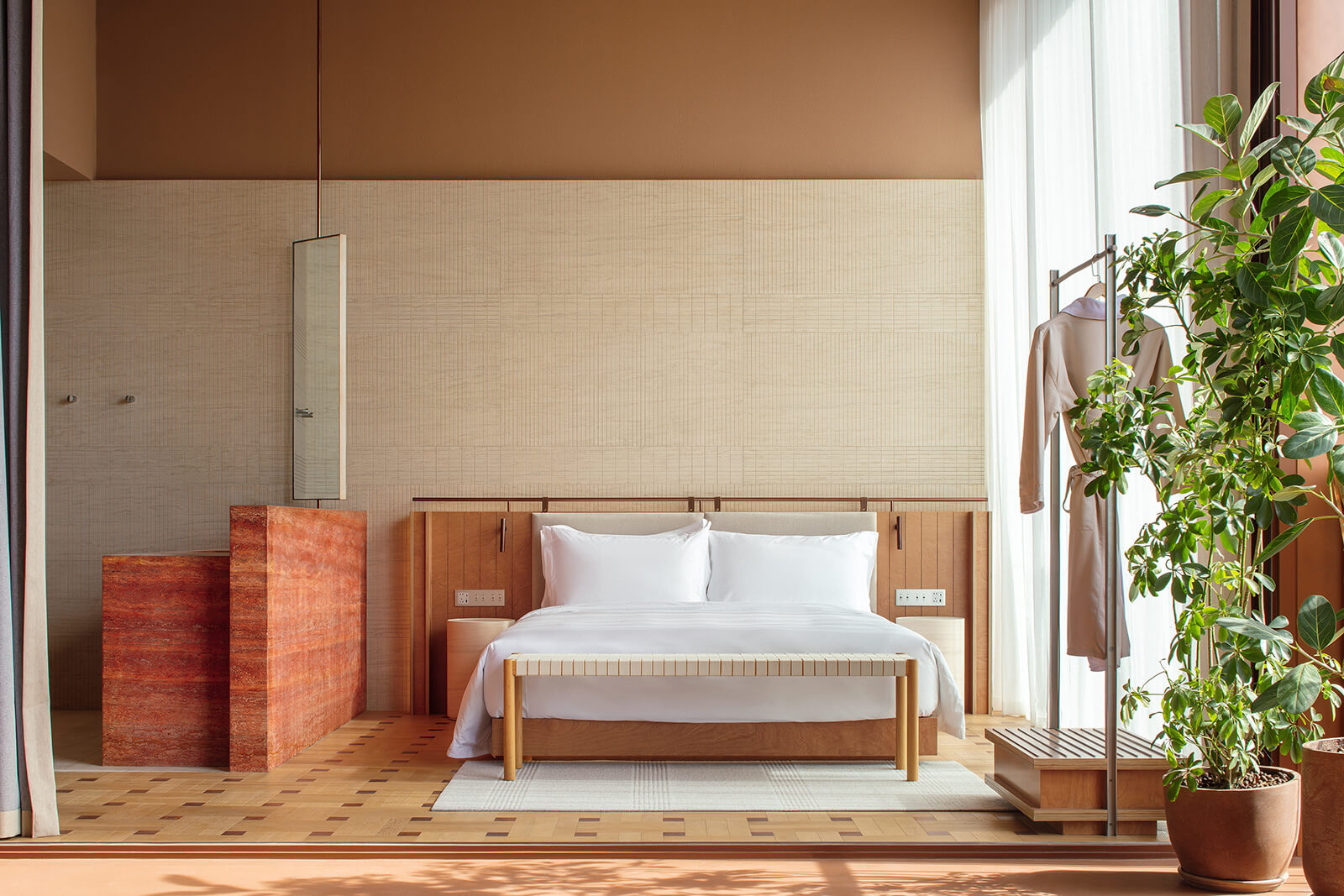
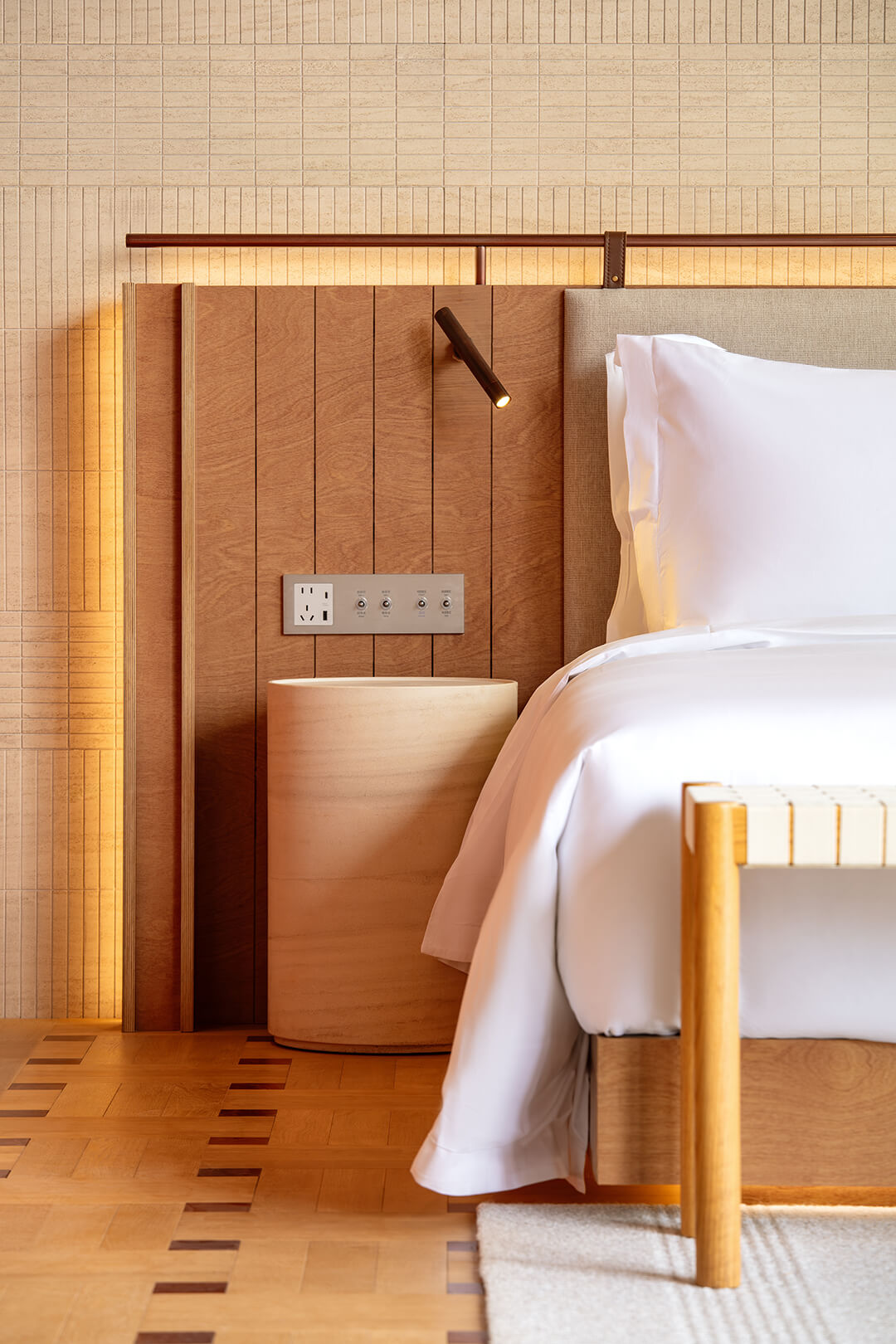
The rooms’ interiors are designed with traditional Chinese sensibilities manifested through warm-toned materials like red travertine, red plywood, wood-grain stone and concrete brick. Selected walls and floor areas are highlighted through patterned timber, terrazzo inlays and mosaic stone tiles, recalling traditional Lingnan aesthetics.
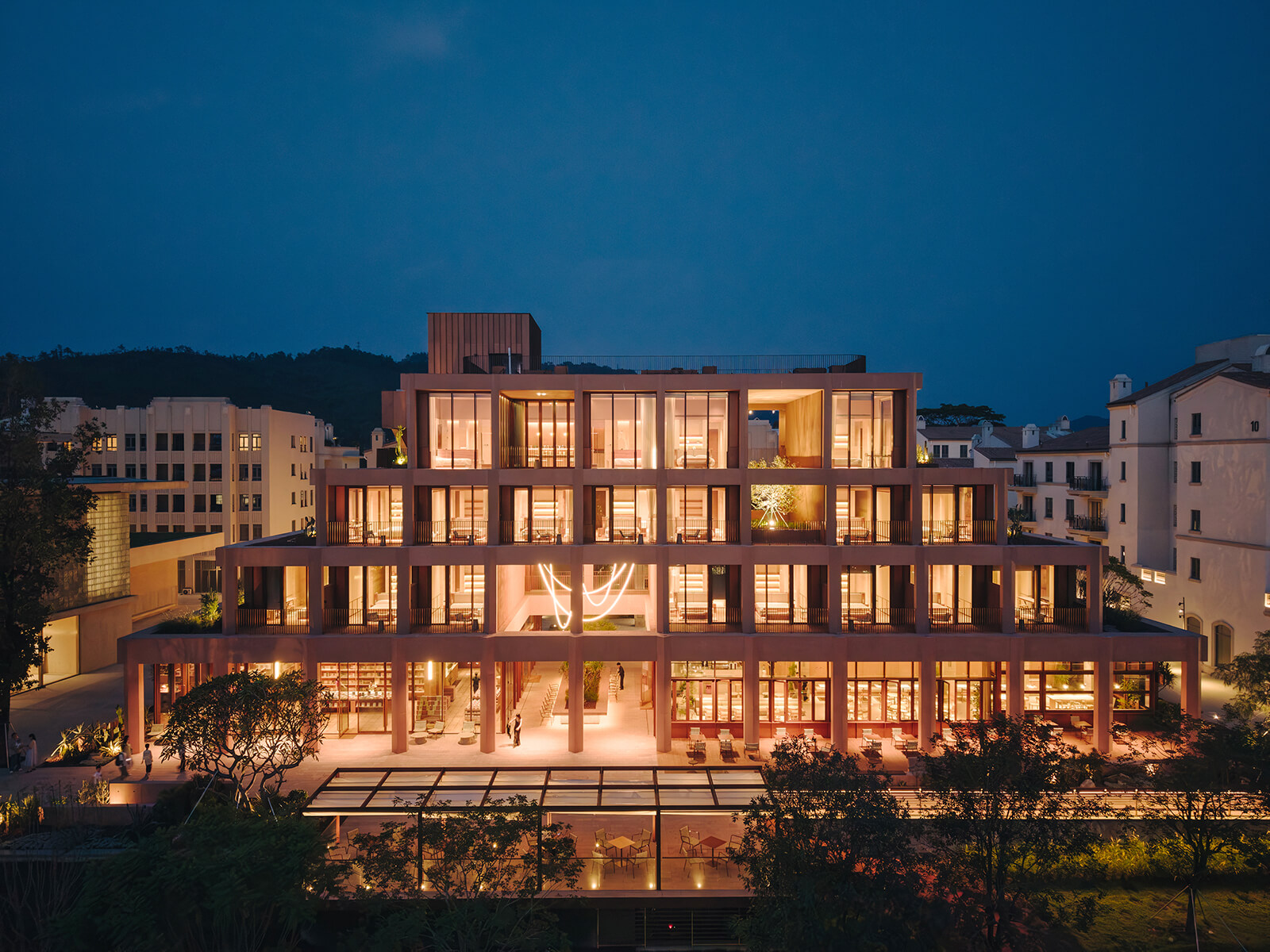
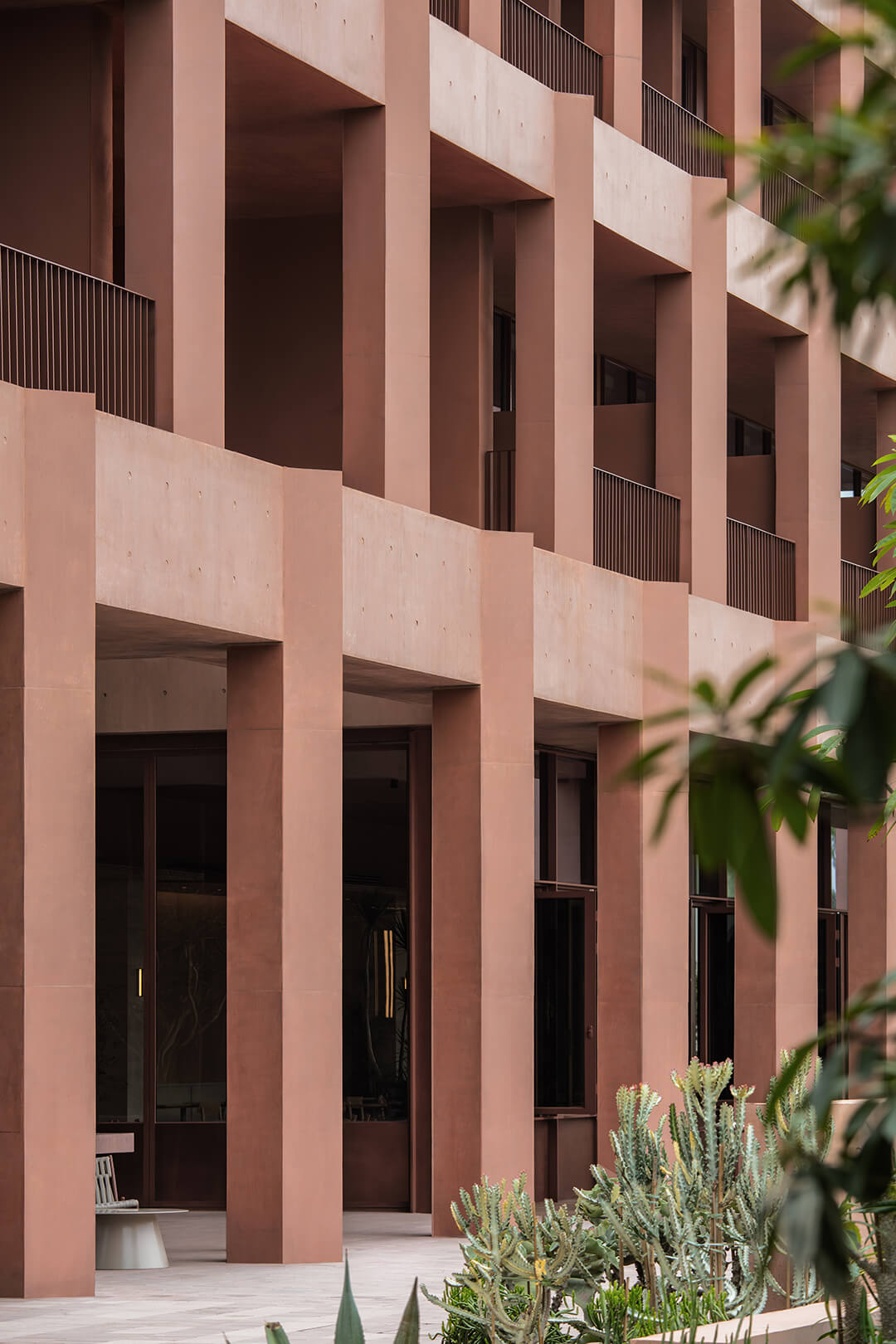
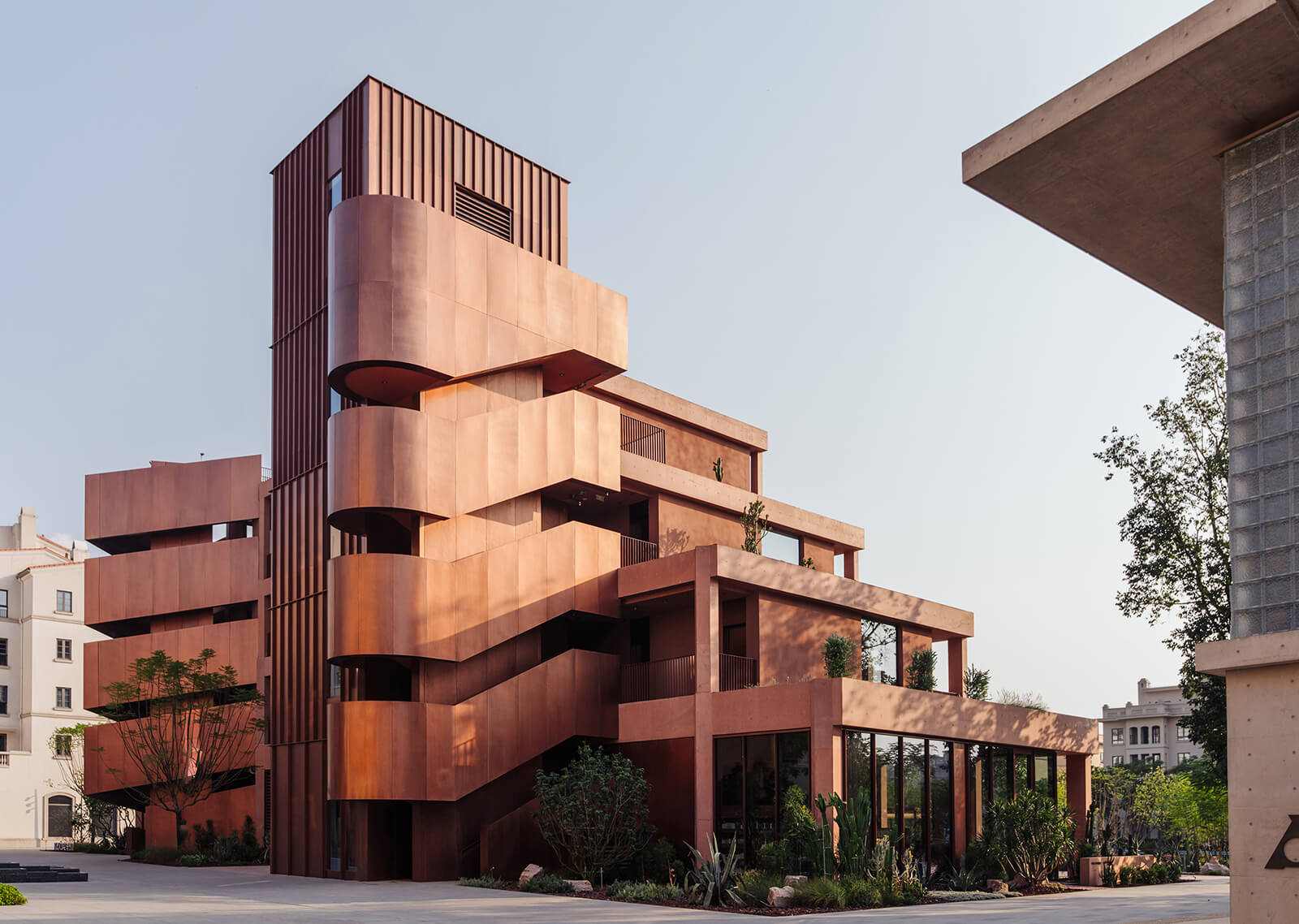
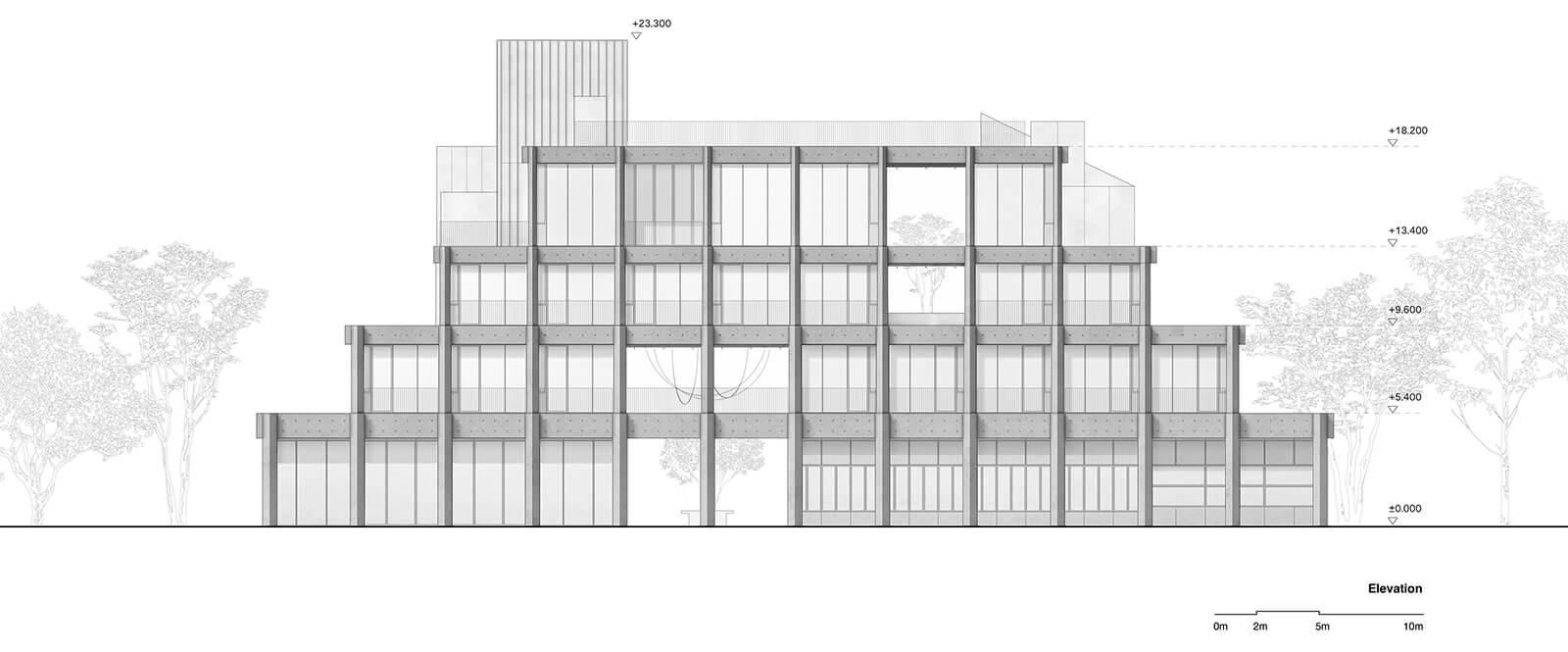
The structural framework of the building becomes its most defining aesthetic—a linear, orthogonal configuration of the building’s structural elements, lending a simple, open characteristic while allowing the built mass to appear relatively lighter. The hotel’s facade is then defined by a series of polygonal columns, cast in red fair-faced concrete, rendering it with depth and perspective, especially when viewed from different angles. The low-saturation red of the concrete is complemented by patterned red copper panels clad over the external escape stairs and service cores.
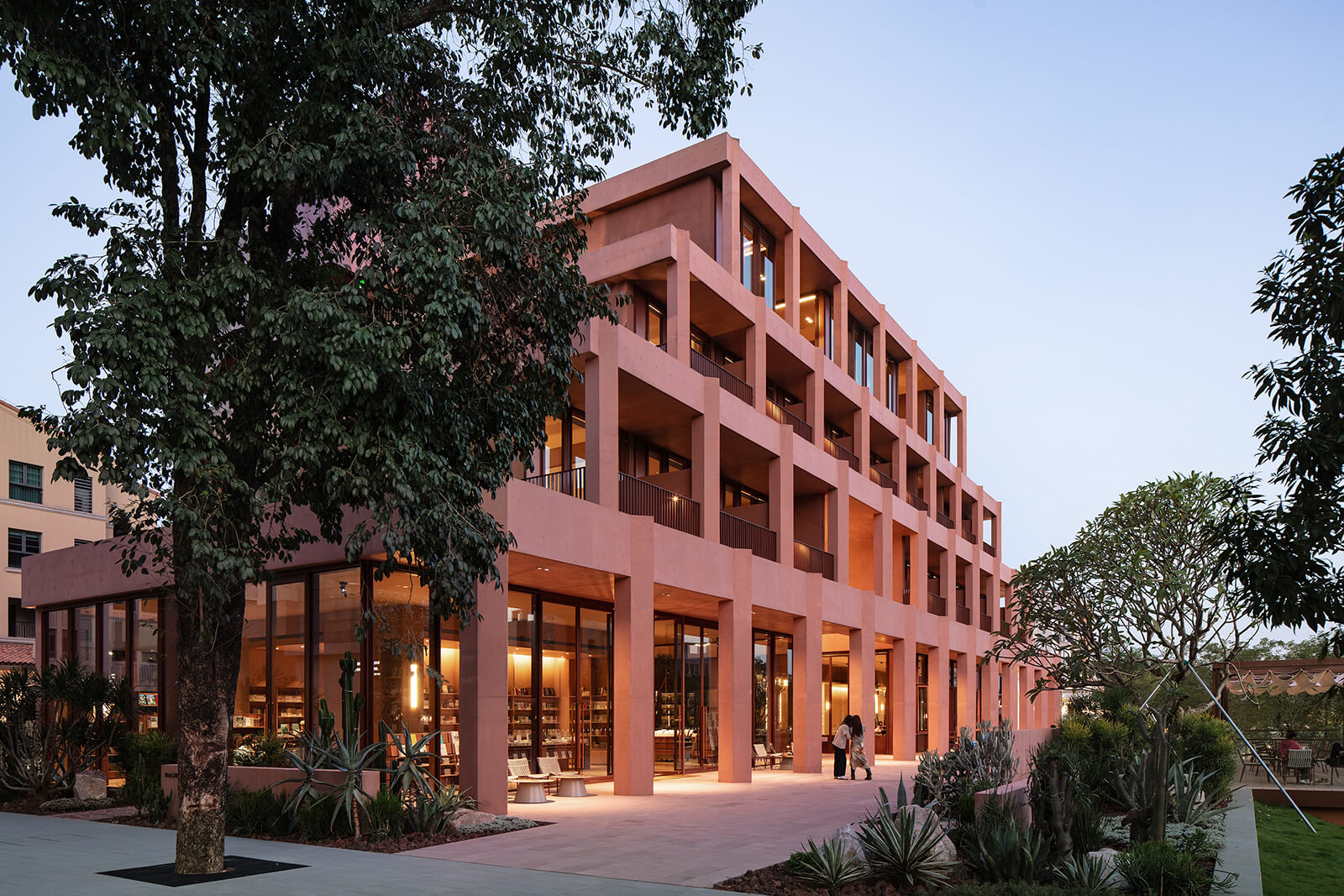
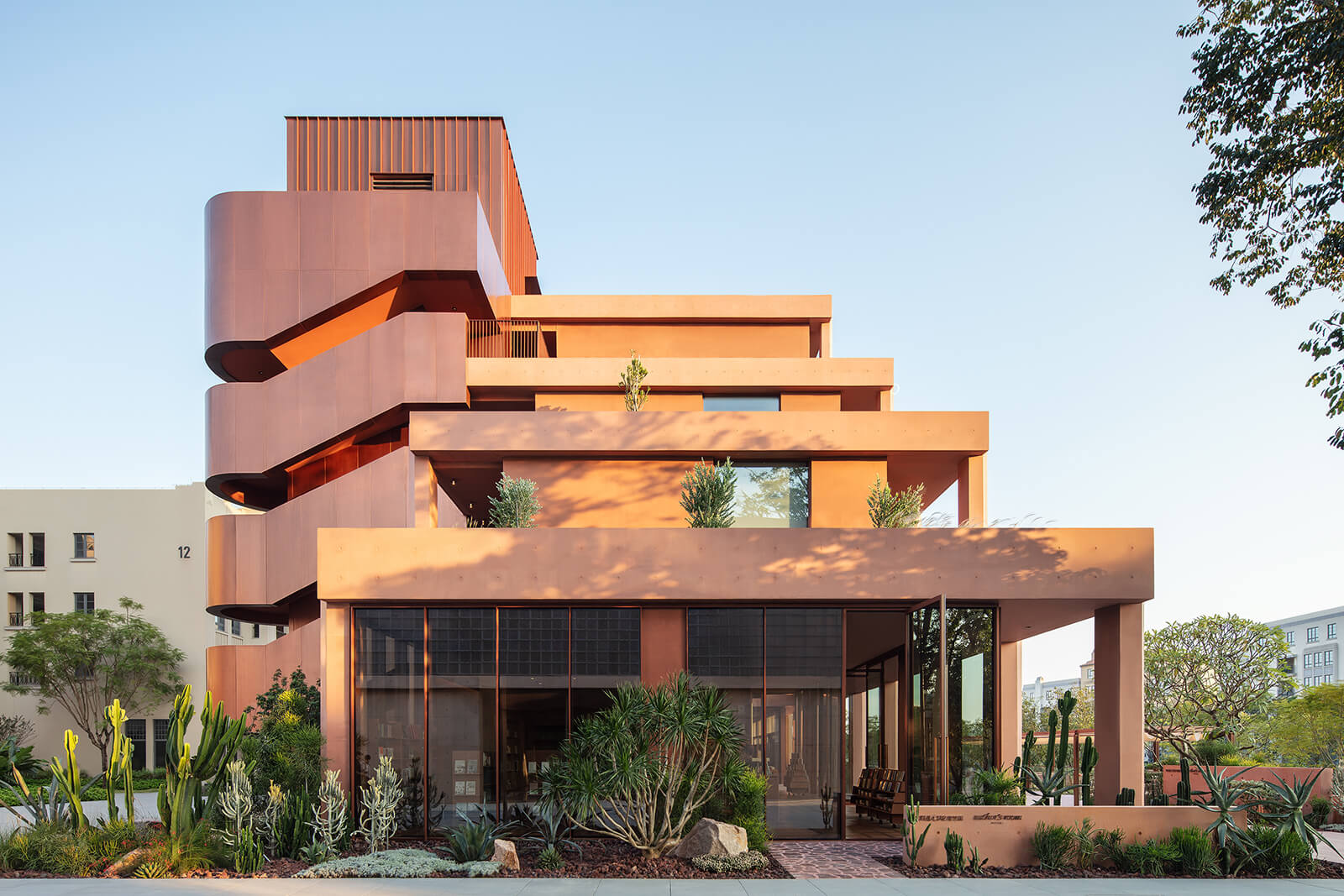
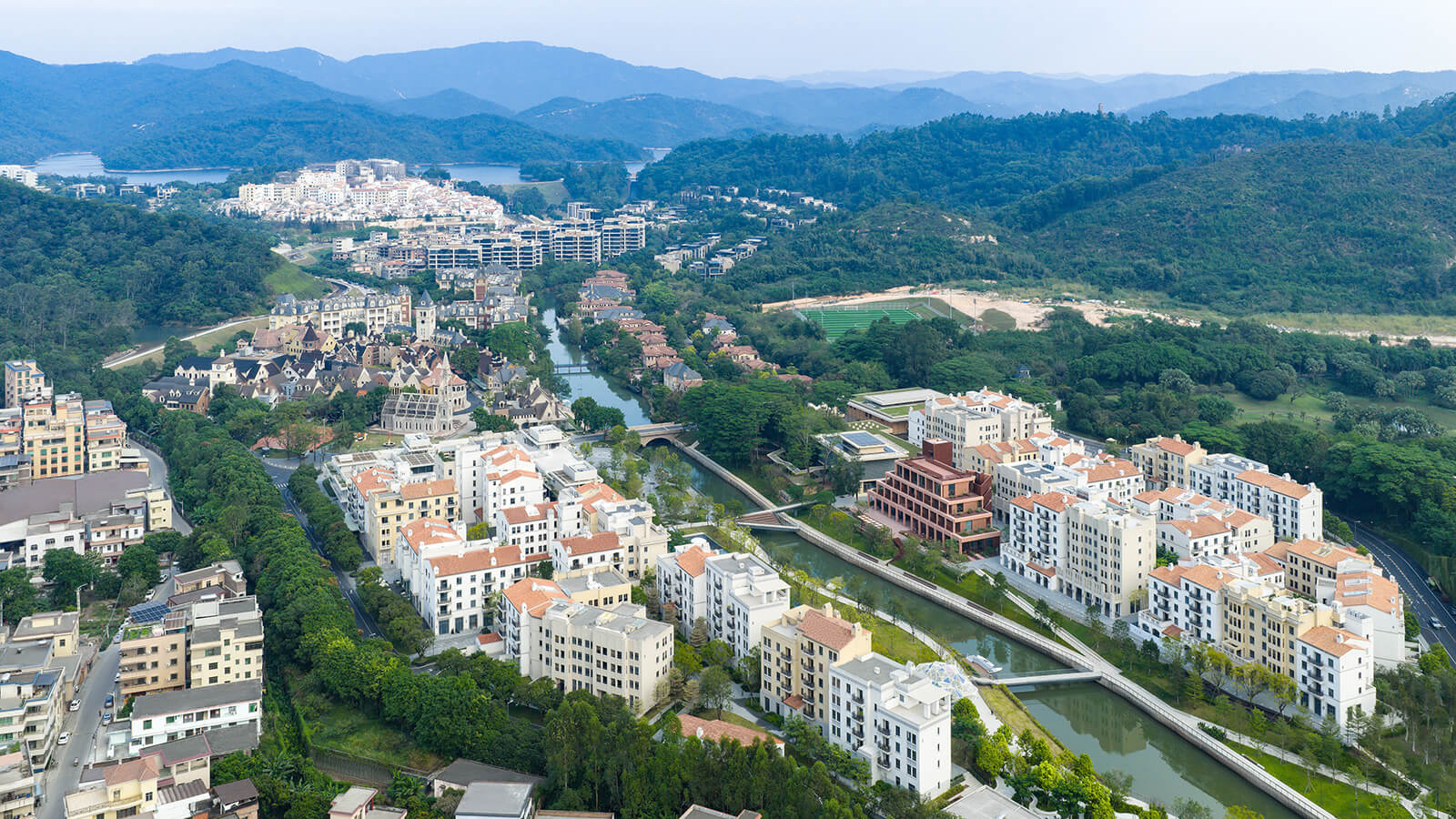
The floors recess inwards as they progress, giving way to a stepped terrace design along the shoreline, shedding the perceived mass of the building. The distinct form and tone lend a reflective character to the building amidst the mountainous landscape.
The Author’s Room Hotel negotiates between the public realm, nature and the urban by both capitalising on its location and context, as well as maintaining active linkages with them. It breaks away from the figure-ground dichotomy by establishing a spatial dialogue between solid and void. Instead of presenting a sealed facade that people simply walk past, it opens up through continuous colonnades and elevated courtyards, transforming the project from a conglomerated footprint on a singular site to be part of a larger, porous, urban field.
Name: Author’s Room Hotel, Aranya Jiulong Lake
Location: China
Typology: Hospitality
Client: Guangzhou Jiulong Lake Real Estate Development Co, Ltd
Architect: BLUE Architecture Studio
Collaborators: Shenzhen Huasen Architecture & Engineering Design Consulting Co. Ltd., Z’scape (Landscape), HDA LIGHTING, A & P Architectural Lighting Design (Lighting), Shenzhen Tesion Facade consulting co. Ltd. (Facade), Lacer Space (Signage)
Area: 2315.36 sq m
Year of Completion: 2025

by Pranjal Maheshwari Oct 19, 2026
The Mumbai-based architects integrate courtyards, mesh screens and north light trusses to create a dining space that doubles up as a community hub at SR University, Warangal.
by Mrinmayee Bhoot Oct 17, 2026
The Rotterdam-based institute centres the Indian Ocean as a network for exploring material histories and transnational links shaping coastal cultures, positing them as future models.
by Pranjal Maheshwari Oct 16, 2026
At the 2026 Stirling Prize ceremony, Mary Duggan with RUFF Architects, MAKER Architecten and Nakshabid Architects were felicitated for proffering quality housing and social equity.
by Mrinmayee Bhoot Oct 12, 2026
The new Centre for Contemporary Arts, fostering public engagement with art in Uzbekistan, is housed in a tram depot refurbished by the French studio, emulating local craftsmanship.

make your fridays matter with a well-read weekend
Enter your details to sign in
Don’t have an account?
Sign upOr you can sign in with
a single account for all
STIR platforms
All your bookmarks will be available across all your devices.
Stay STIRred
Already have an account?
Sign inOr you can sign up with
Verification link sent to check your inbox or spam folder to complete sign up process
Tap on things that interests you.
Select the Conversation Category you would like to watch
Please enter your details and click submit.
Enter the 6-digit code sent at


Author’s Room Hotel reinterprets Lingnan arcades into a contemporary cultural hub
by Pranjal Maheshwari | Published on : Feb 21, 2026


 Sign in with Google
 Sign in with email
What do you think?