Architecture05 mins. read
Wallmakers' Toy Storey is a museum of a house preserving 6200 plastic toys
by Zohra KhanMar 19, 2024



by Bansari PaghdarPublished on : Jan 20, 2026
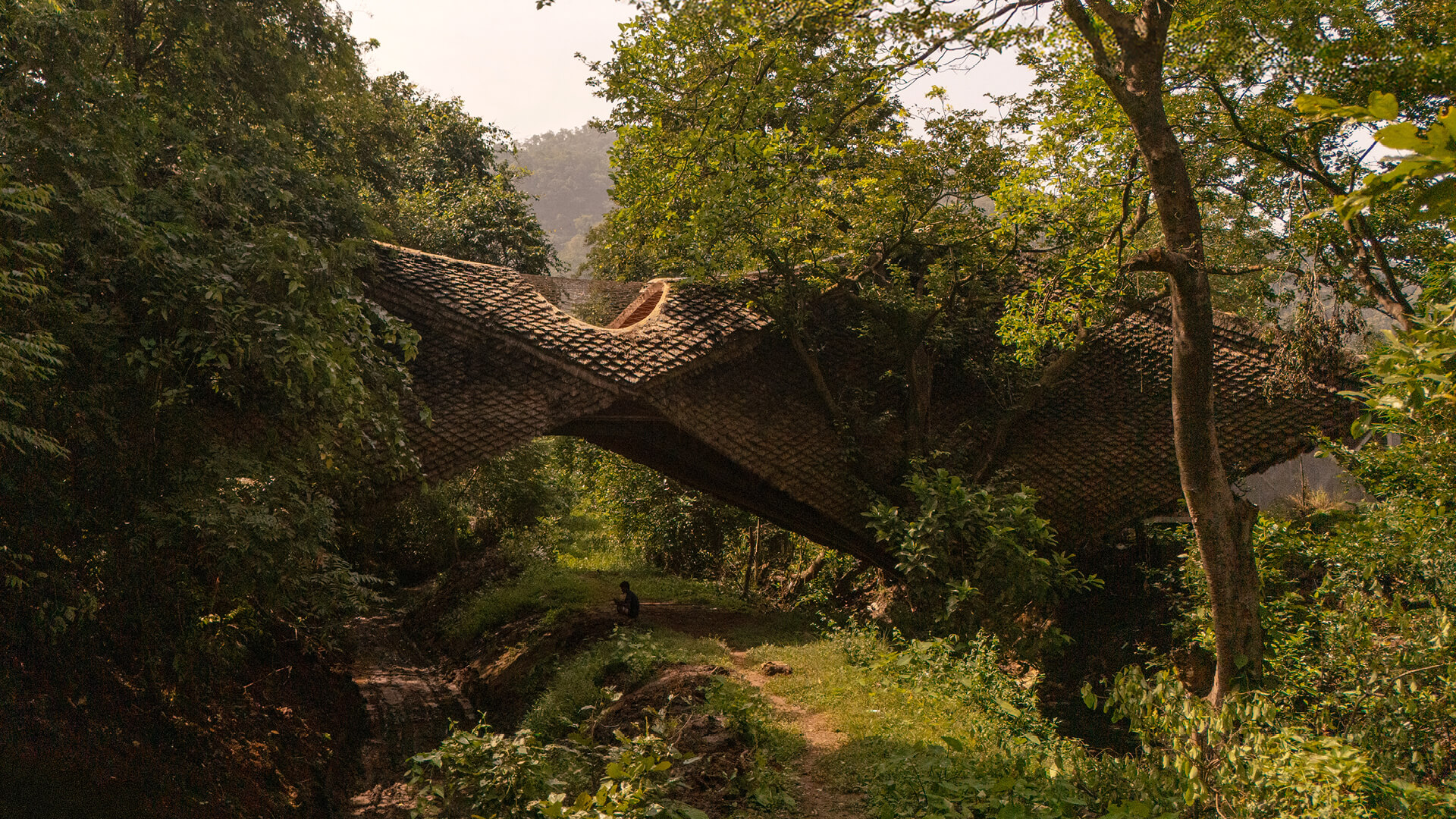
Against the rain-soaked backdrop of Sahyadri mountains in Karjat, Maharashtra—a verdant getaway near Mumbai—a large floating cocoon camouflages itself within a dense natural landscape. Bridge House, designed by Indian architecture practice Wallmakers, is a home born out of numerous topographic constraints and an approach that prioritised problem-solving while being mindful of ecology. It is through these challenges that the project perseveres and emerges, wielding a distinct form and acting as a bridge between natural and built environments.
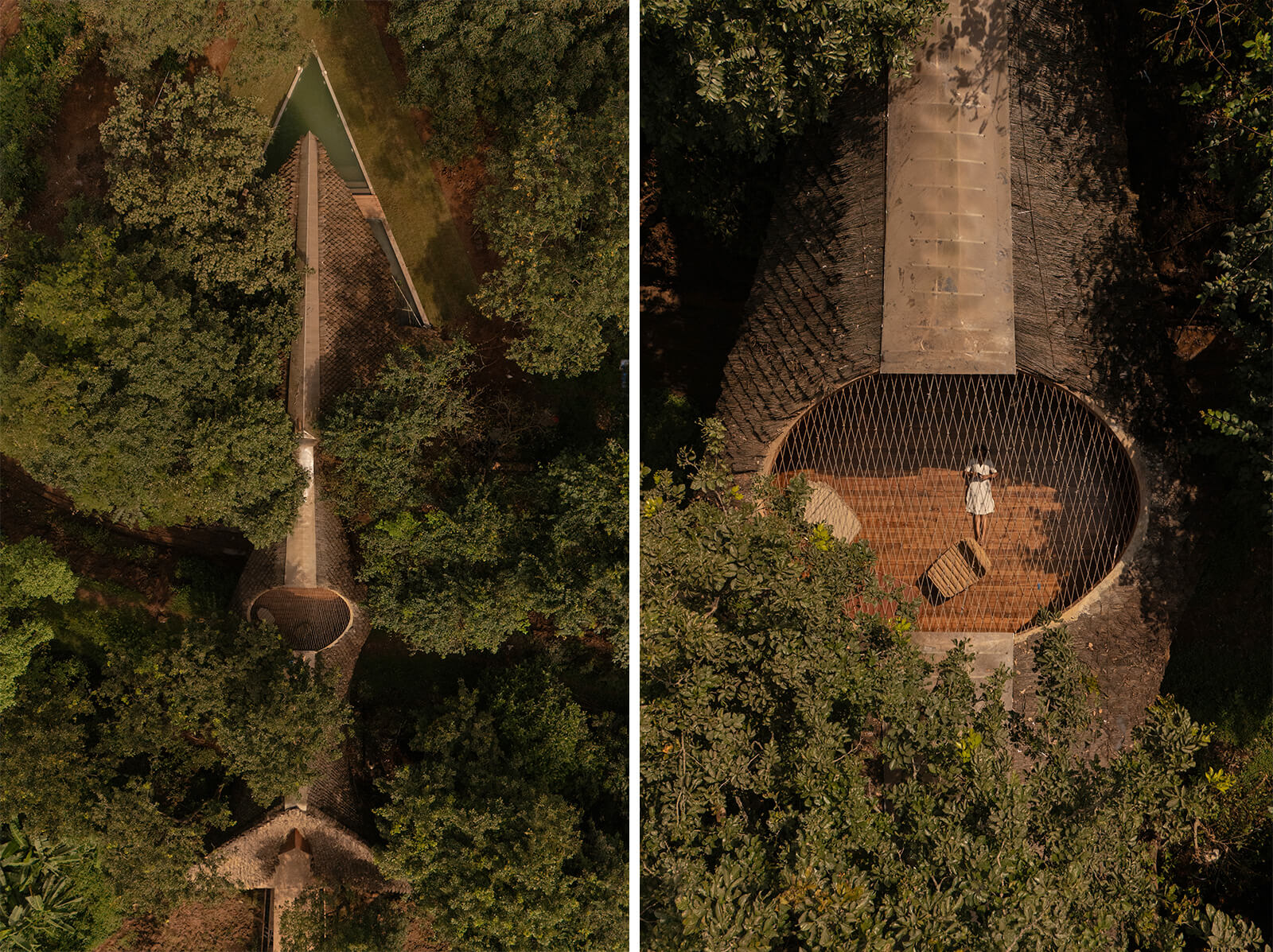
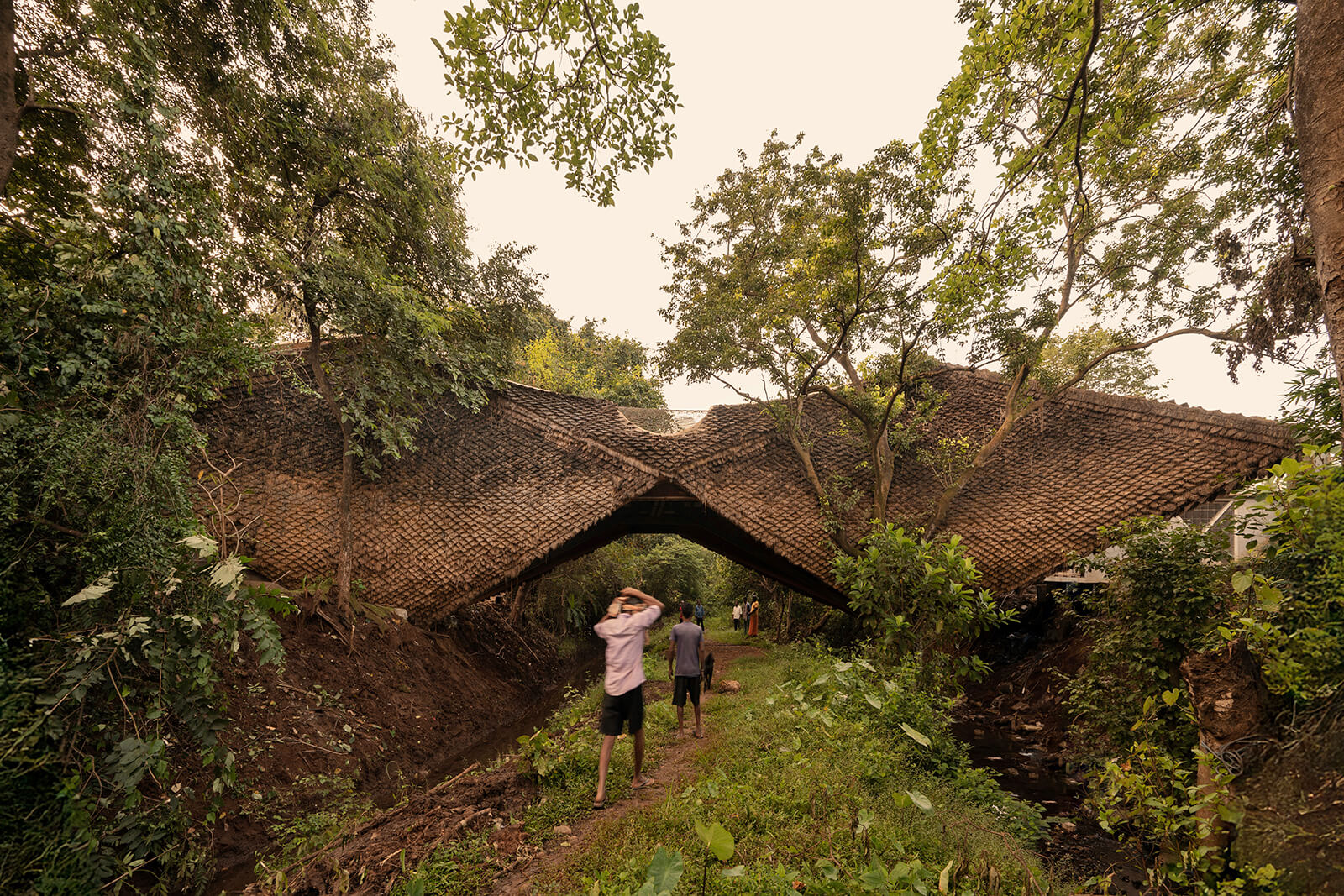
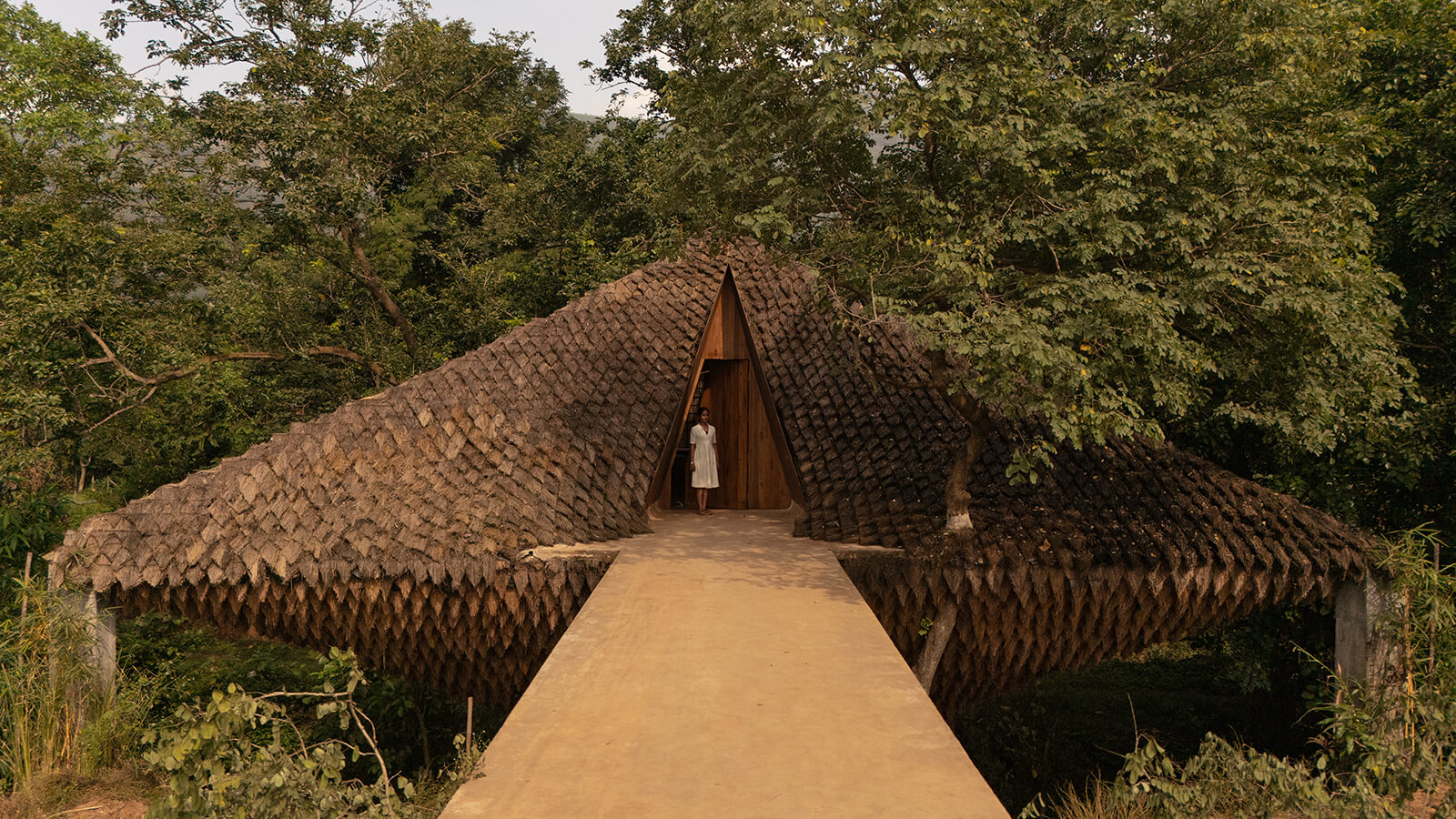
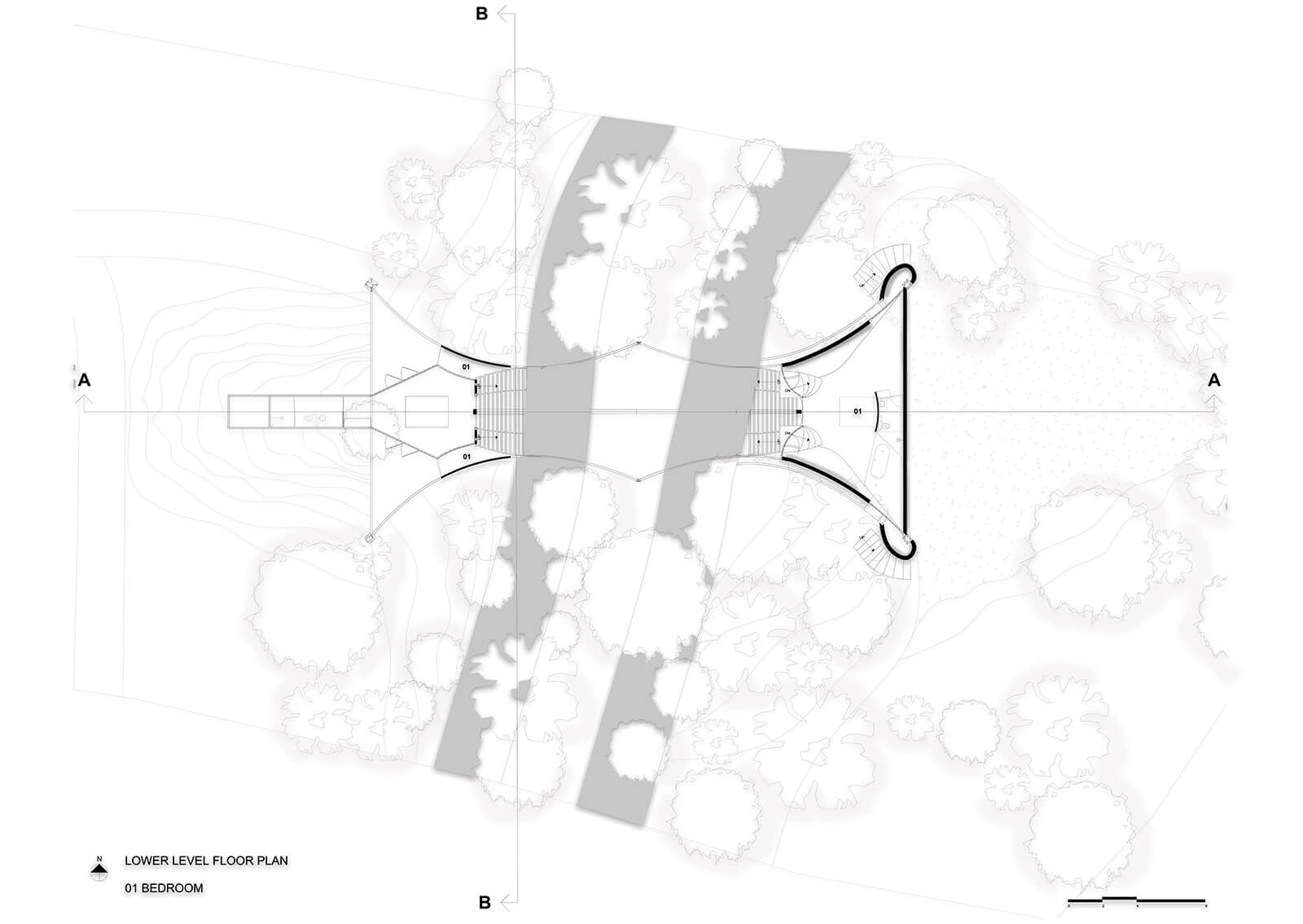
The project’s first challenge emerged when the practice, led by Indian architect Vinu Daniel, had to connect two parcels of land without any foundations to rest within the 100-feet-wide spillway. The architects decided to build a 100ft suspension bridge of four hyperbolic parabolas, ensuring sufficient clearance over a seven-metre-deep central gorge. The intersection of these forms shaped unpredictable corners and curves inside the structure, creating pockets that allow spontaneous interactions with the built mass while evoking wonder and curiosity for the visitors. Without windows, the habitable bridge opens at its centre, where a vast skylight—referred to as an ‘oculus’ by the architects—floods the space with natural light and frames expansive views, offering residents an immersive experience of the surrounding weather. Spatially, the house prioritises collective experience over compartmentalisation, where the shared habitable zone becomes both a threshold and a space for social gatherings and organic interactions.
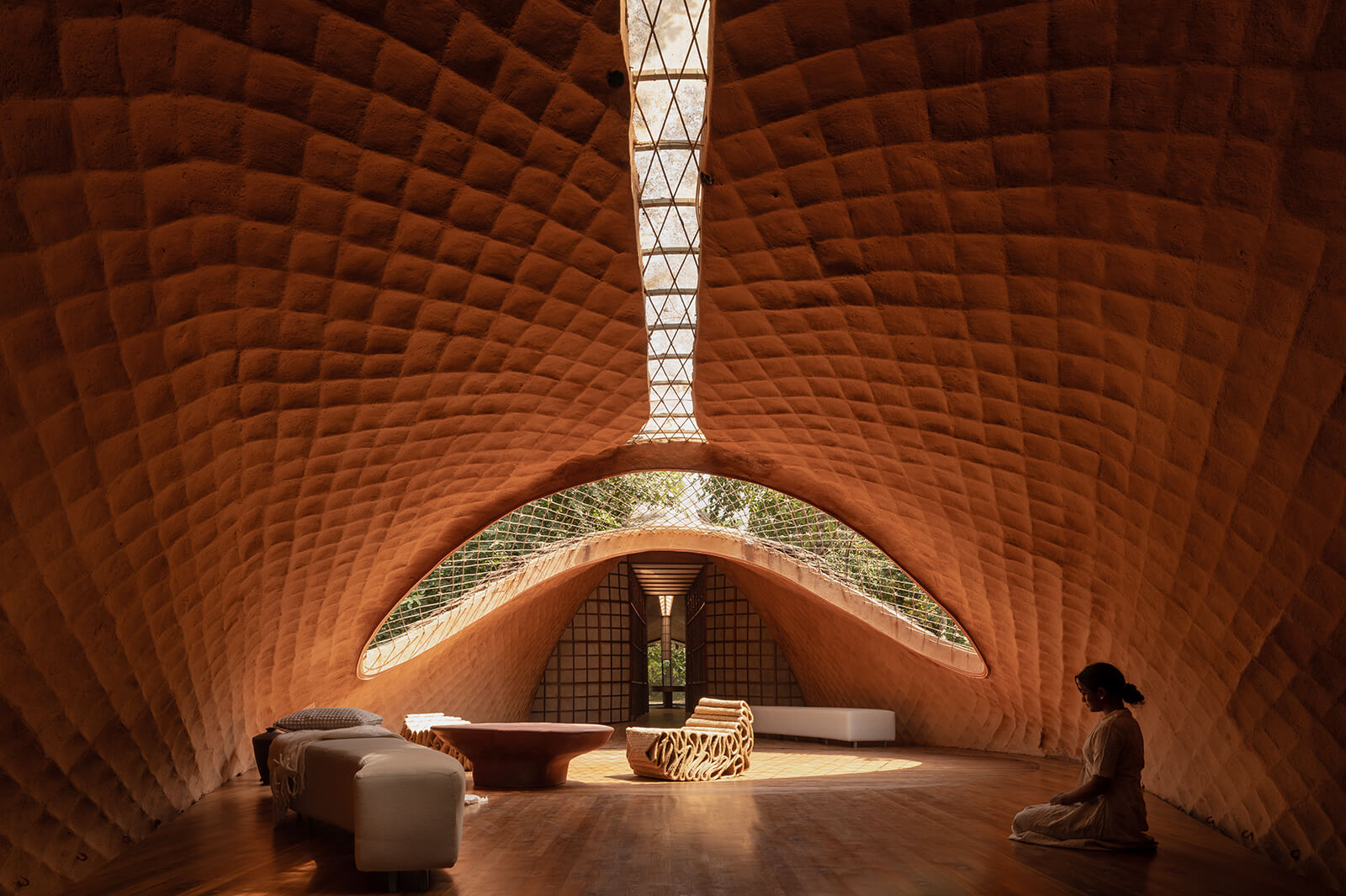
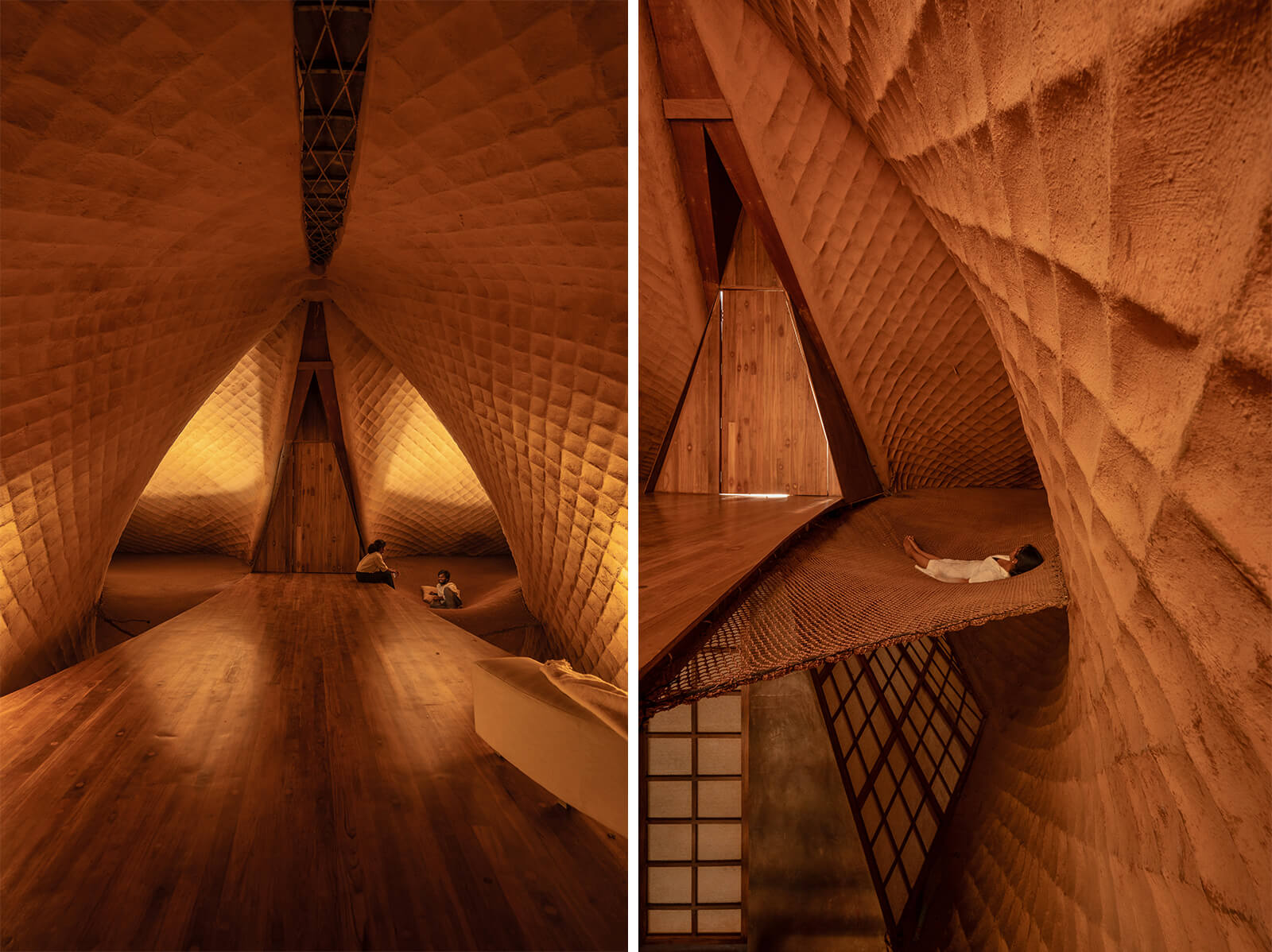
“The Government constructed a canal that divided the land into parcels and rendered one side of the site inaccessible , therefore a bridge was necessary to even access the other parcel of land . What we did was combine the client’s two different needs for a bridge and house into one keeping in mind the constraints: the two parcels of land had to be connected, but the foundations couldn’t rest within the 100ft width of the spillway; we could make a bridge, but there had to be enough clearance for a JCB to clean the 2 streams underneath,” the architects tell STIR, expounding the brief and the conception of the project.
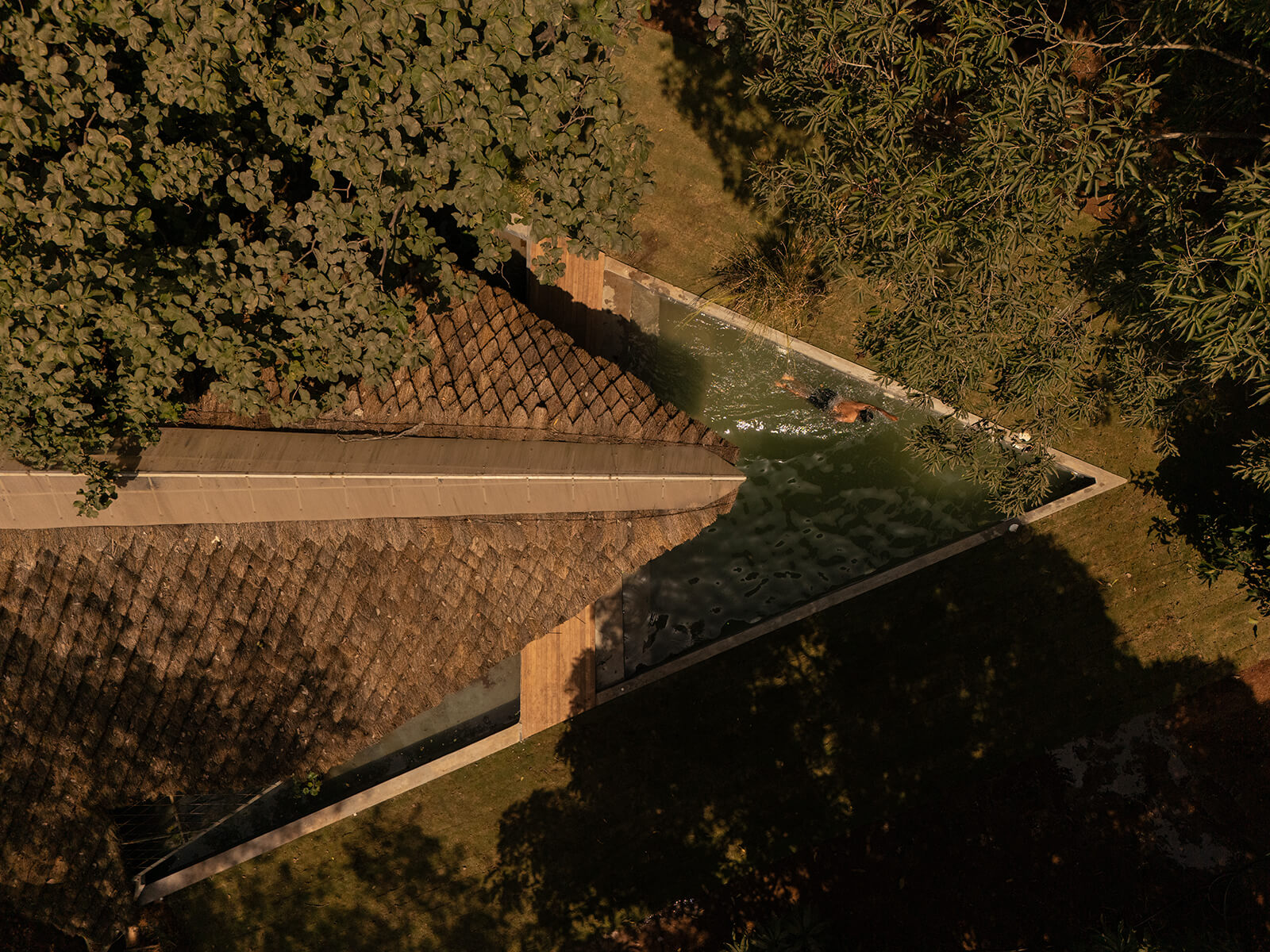
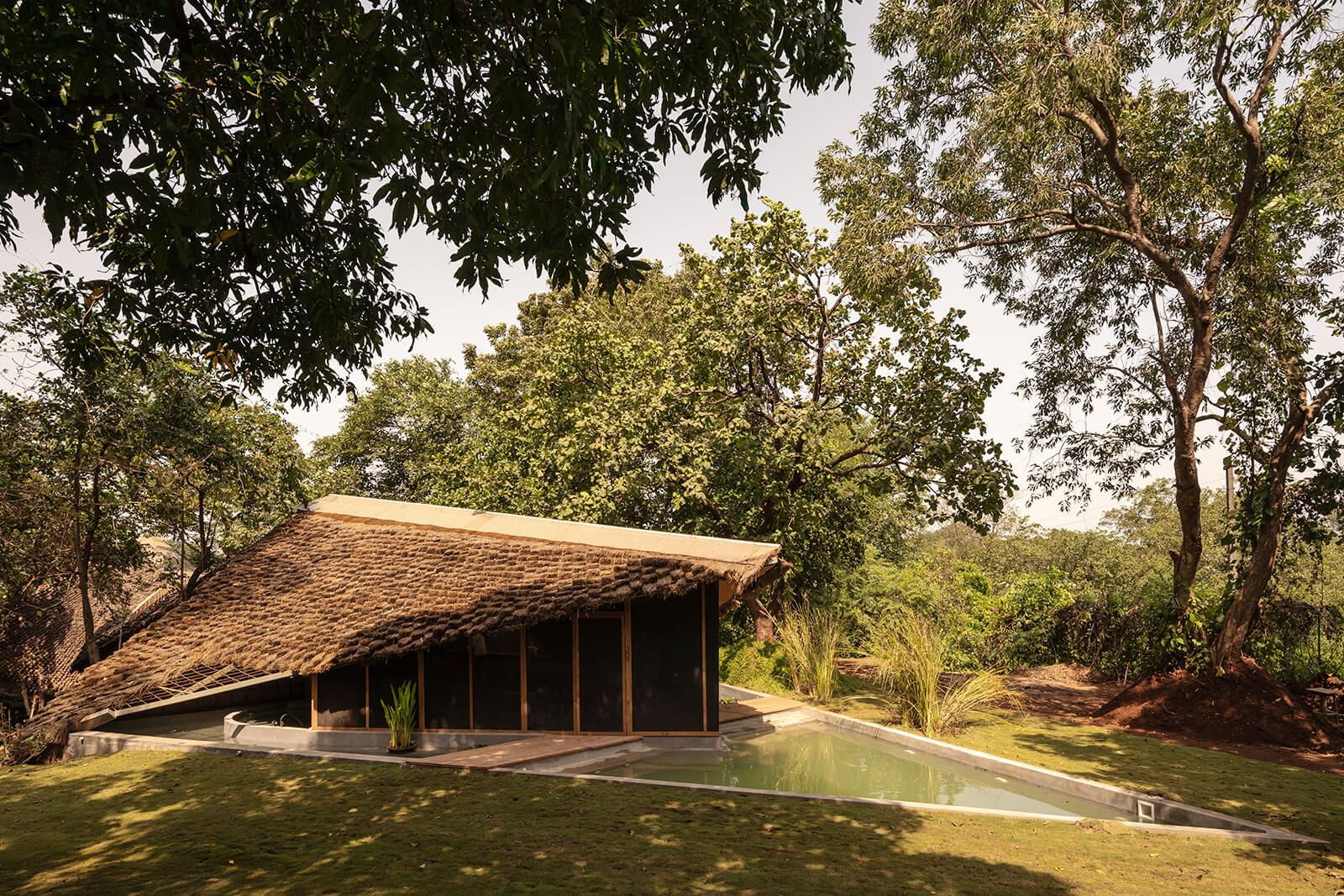
According to the design team, the parabolas derive their tensile strength from a minimal use of steel pipes and tendons, while the thatch-mud composite above provides compressive strength. Inspired by the scales of a pangolin, the thatch layer further provides thermal insulation whereas the mud plaster layer ensures protection from rodents and pests so that they don’t burrow their way inside. The extensive use of locally available, low-embodied-energy materials anchors the project in regional building traditions while their processing and application are articulated through a contemporary design approach. These materials are not deployed nostalgically but performatively, offering a climate-responsive design in a region marked by heavy monsoons and fluctuating temperatures. The layered envelope acts as both a climate moderator and a visual camouflage, allowing the structure to recede into the landscape with a temporal flow.
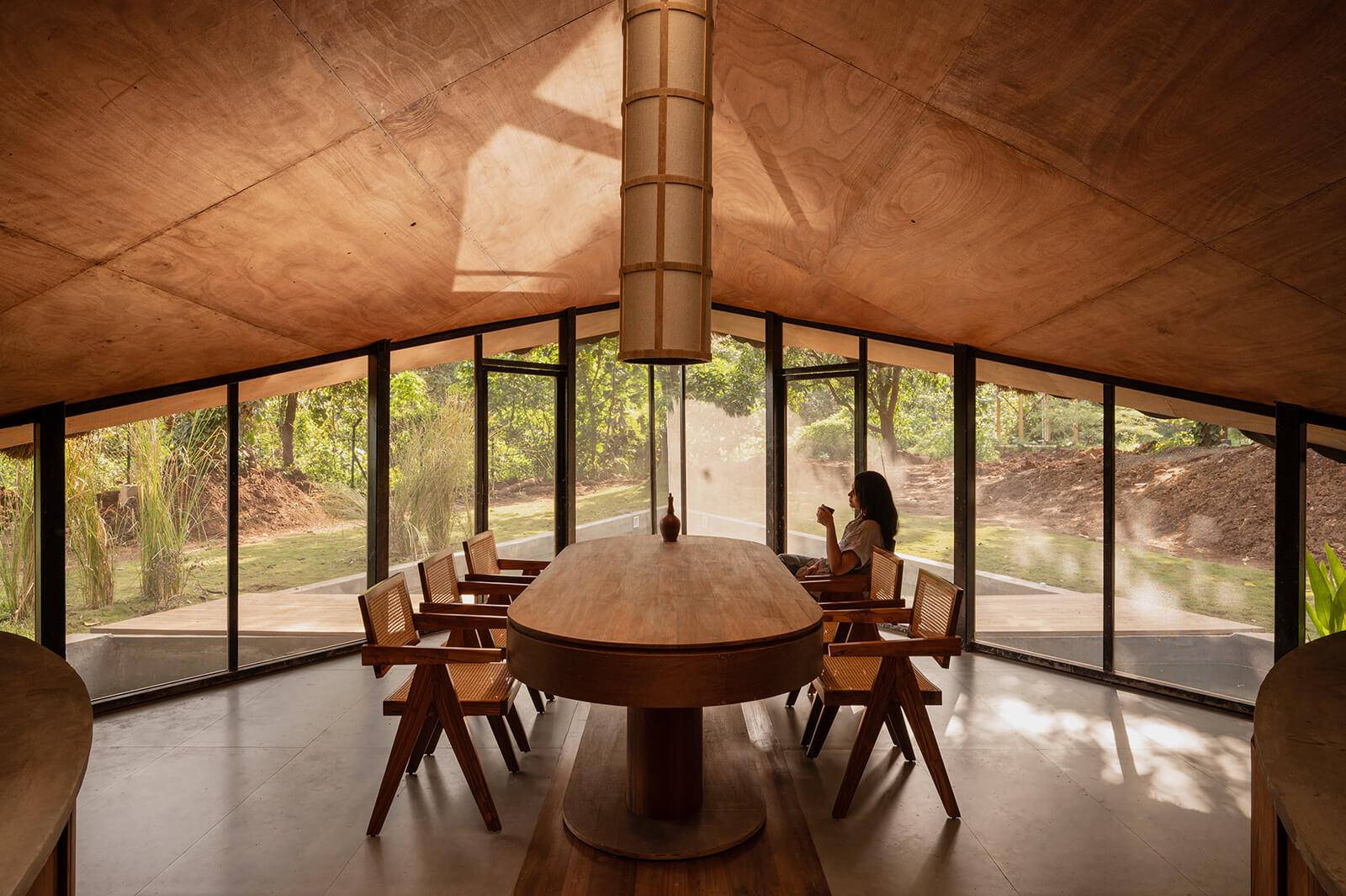
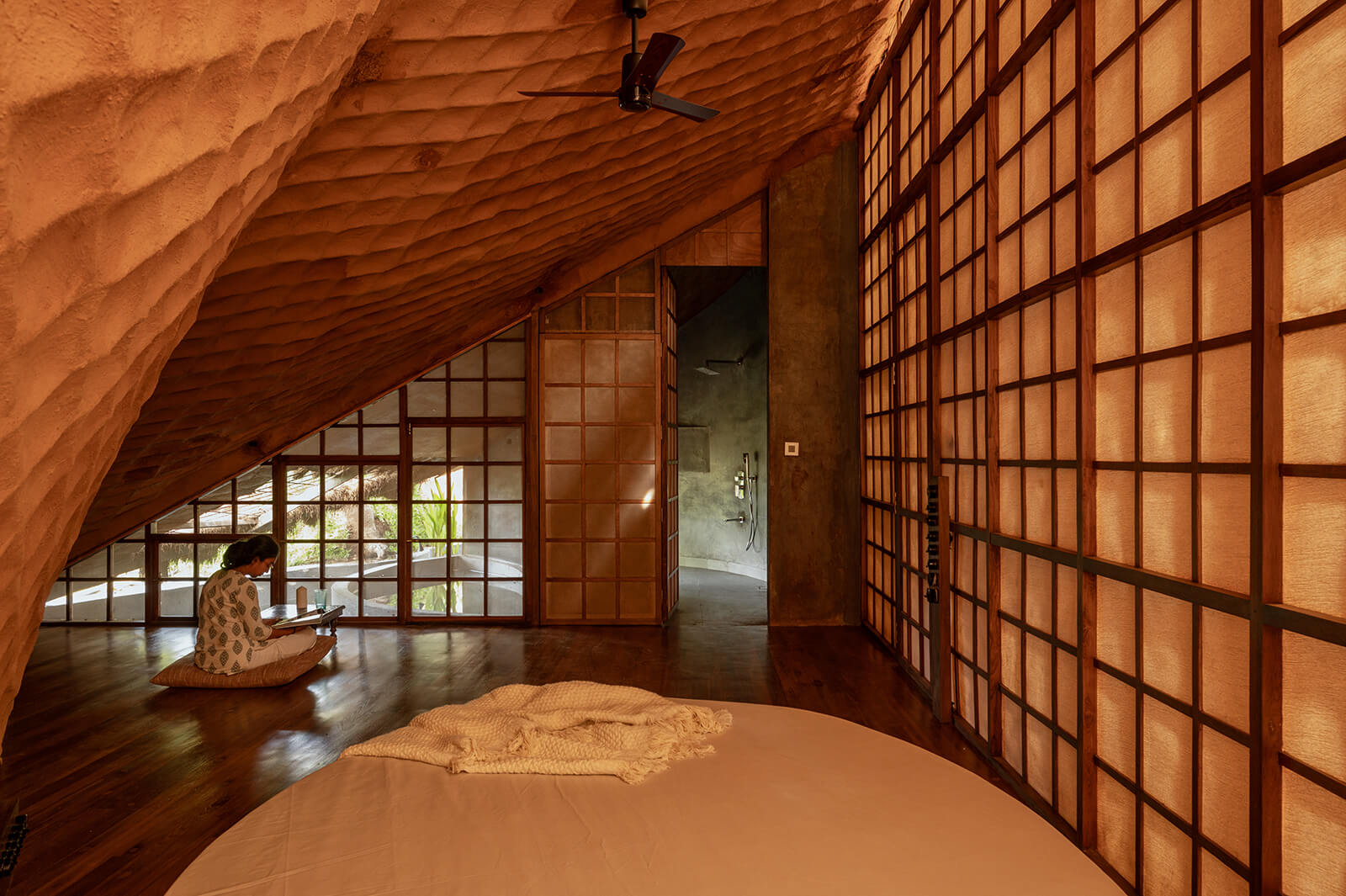
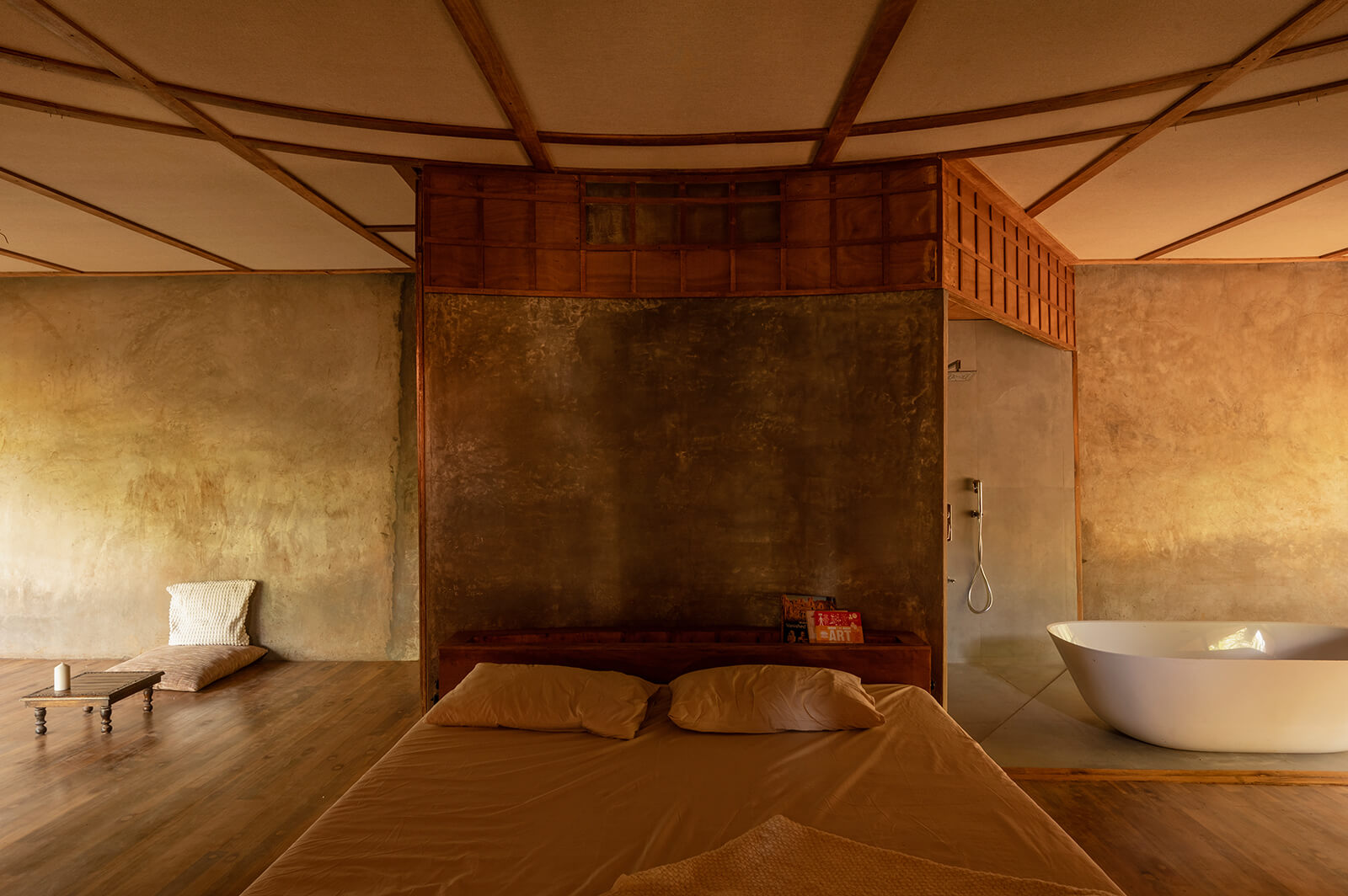
The two built masses on the land, comprising four bedrooms, feature jute and mesh screens alongside reclaimed wooden flooring sourced from ship decks. A vast common area on the upper level spills over to the surroundings through a triangular-shaped pool. In the absence of a vertical suspension pillar and the use of four minimal footings, the bridge becomes a safe haven for the residents to inhabit without disturbing the natural ecosystem they are a part of.
“The conventional practice of cutting and filling any ‘difficult’ site has to stop. We need to explore ways in which structurally and functionally we can rethink the way we design so that we don’t just permanently alter the terrain, watershed and vegetation of every site we get. Architecture or building is an invasive process, but if we are able to consciously design, we can still manage to let natural ecosystems coexist with comfortable human living conditions,” the architects tell STIR.
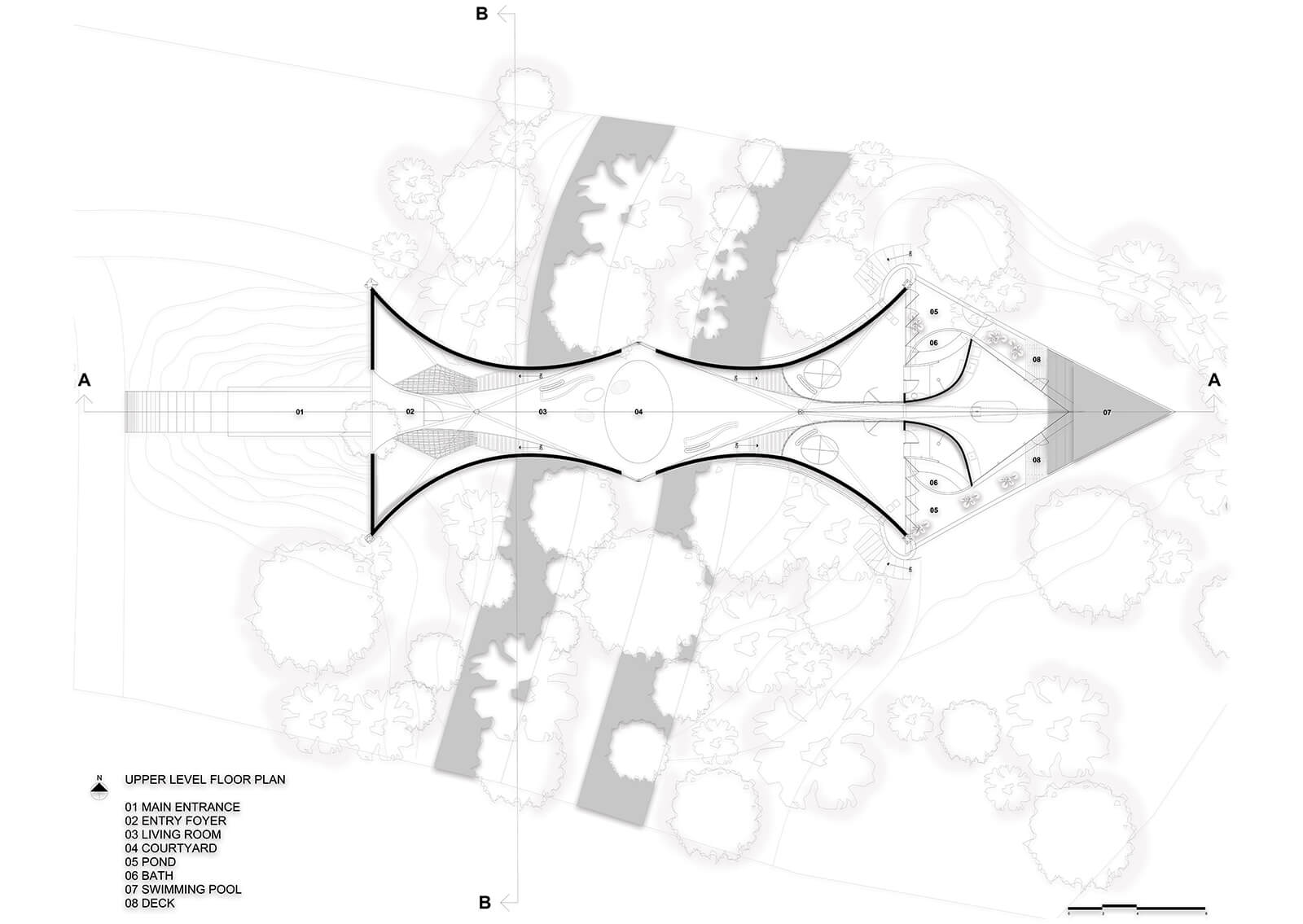
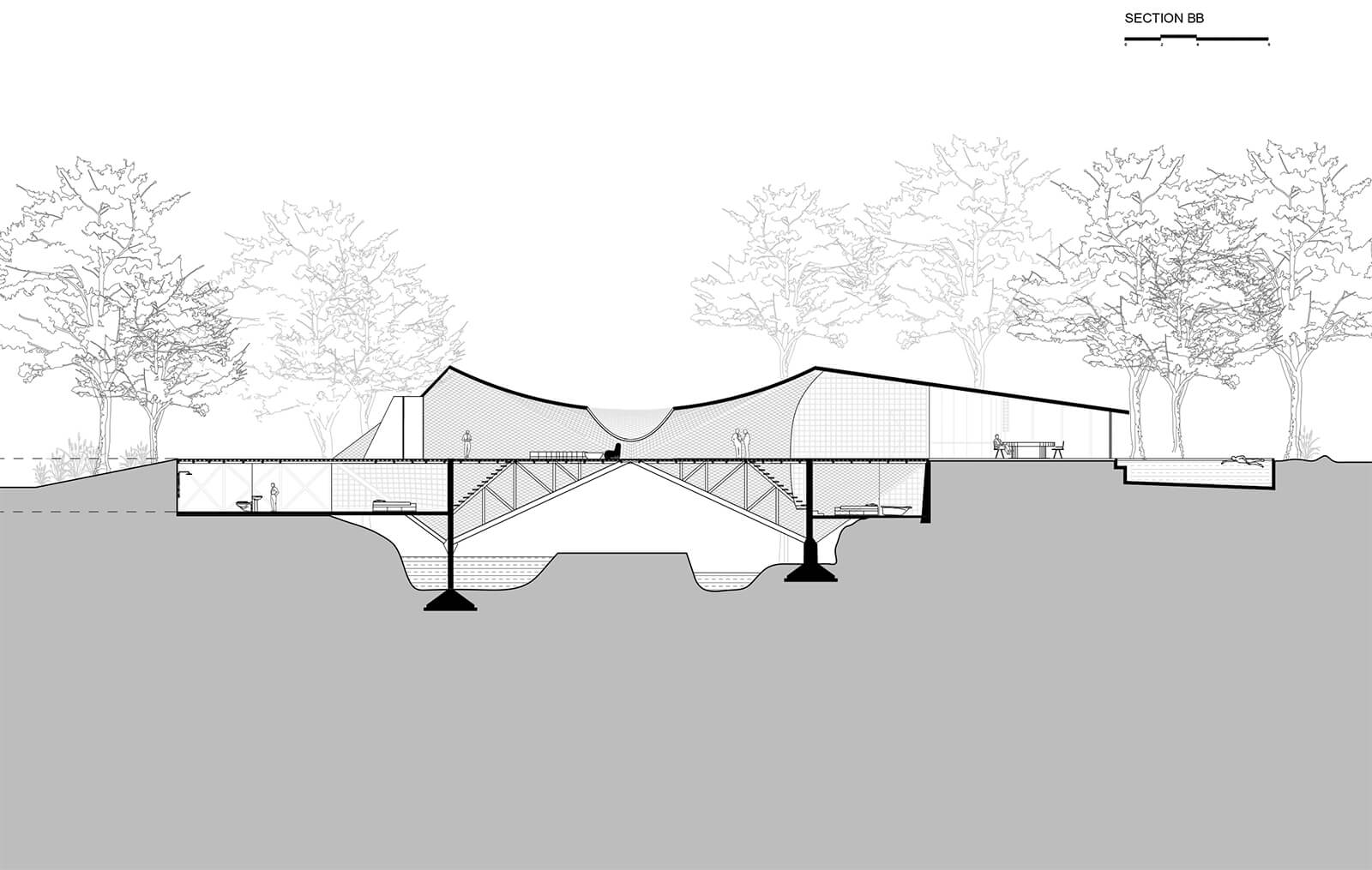
Bridge House articulates a residential architecture that is as much about restraint as it is about innovative design. Wallmakers’ approach resists the impulse to dominate the site; instead, the house negotiates coexistence through lightness and minimal contact with the land. The decision to suspend the primary living volume is also an ethical manoeuvre and not just a structural one, foregrounding an architecture that acknowledges ecological thresholds and legal constraints as generative design inputs and not limitations to overcome. The architecture that emerges is audacious in form yet considerate by nature and is in constant dialogue with the natural surroundings.
Name: Bridge House
Location: Karjat, Maharashtra, India
Architects: Wallmakers
Built-up area: 4,500 sq ft
Year of Completion: 2025

by Pranjal Maheshwari Oct 19, 2026
The Mumbai-based architects integrate courtyards, mesh screens and north light trusses to create a dining space that doubles up as a community hub at SR University, Warangal.
by Mrinmayee Bhoot Oct 17, 2026
The Rotterdam-based institute centres the Indian Ocean as a network for exploring material histories and transnational links shaping coastal cultures, positing them as future models.
by Pranjal Maheshwari Oct 16, 2026
At the 2026 Stirling Prize ceremony, Mary Duggan with RUFF Architects, MAKER Architecten and Nakshabid Architects were felicitated for proffering quality housing and social equity.
by Mrinmayee Bhoot Oct 12, 2026
The new Centre for Contemporary Arts, fostering public engagement with art in Uzbekistan, is housed in a tram depot refurbished by the French studio, emulating local craftsmanship.

make your fridays matter with a well-read weekend
Enter your details to sign in
Don’t have an account?
Sign upOr you can sign in with
a single account for all
STIR platforms
All your bookmarks will be available across all your devices.
Stay STIRred
Already have an account?
Sign inOr you can sign up with
Verification link sent to check your inbox or spam folder to complete sign up process
Tap on things that interests you.
Select the Conversation Category you would like to watch
Please enter your details and click submit.
Enter the 6-digit code sent at


Bridge House by Wallmakers utilises site constraints as generative design inputs
by Bansari Paghdar | Published on : Jan 20, 2026


 Sign in with Google
 Sign in with email
What do you think?