Architecture04 mins. read
Animated by interstices, Casa nnCLP by nnarquitectos is a linear concrete monolith
by Bansari PaghdarApr 16, 2025



by Aarthi MohanPublished on : Jan 17, 2026
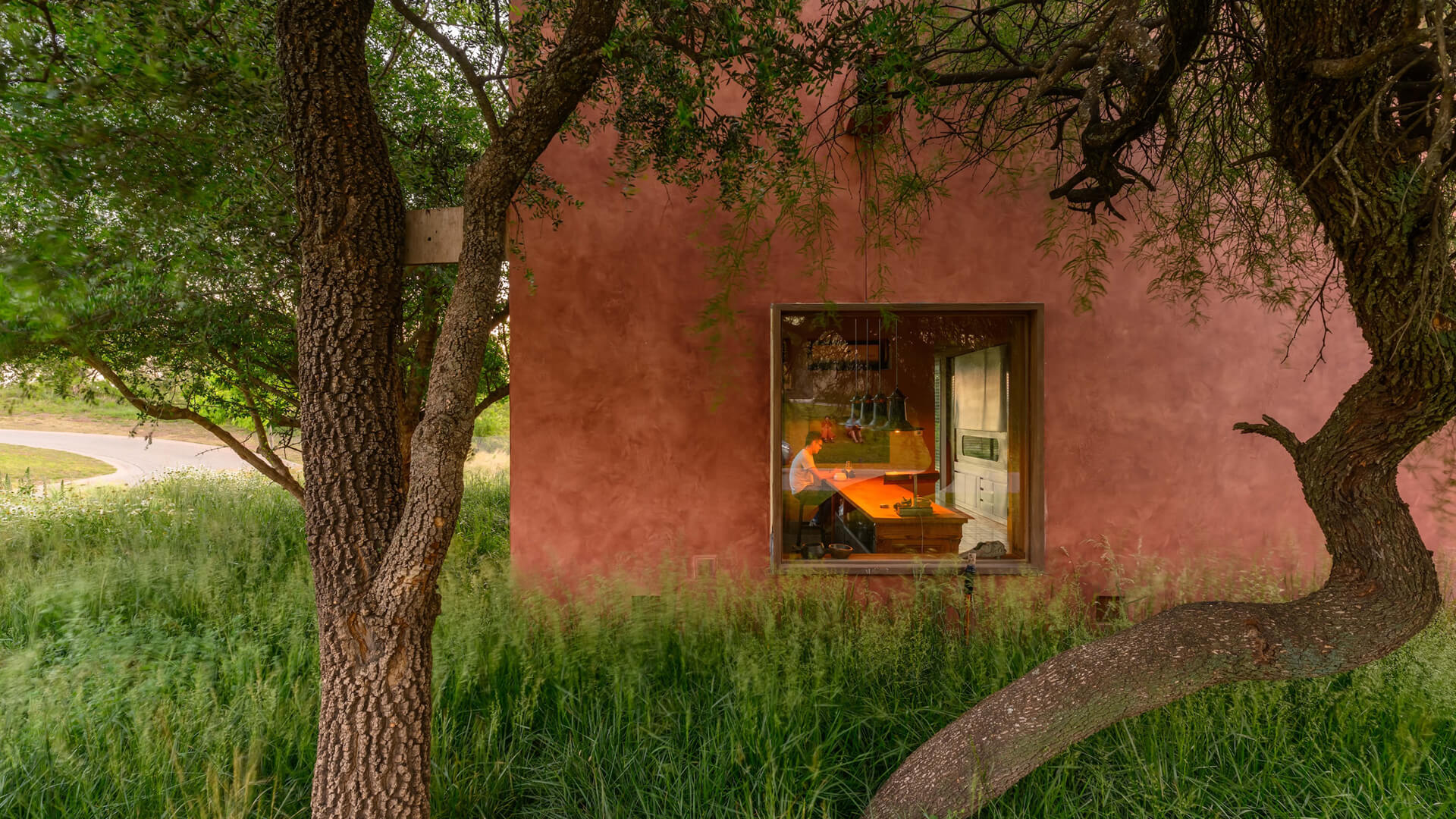
At first glance, Casa BP does not announce itself. Set against the wide rural horizon of Córdoba, Argentina, the house reads less as a singular entity and more as a calibrated adjustment to its surroundings shaped by open fields, low native vegetation and a distant Serrano horizon. From afar, its presence is quiet, almost reticent, defined not by spectacle but by proportion, material weight and an attentive reading of topography. The residential architecture takes shape through a series of deliberate decisions that position the building low and elongated against the land, allowing form, orientation and spatial experience to be guided by the site itself.
Designed by Santiago Bertotti, the house reflects many of the recurring concerns present in his broader body of work. An Argentinian architect and interior designer, Bertotti leads an independent practice that operates at the intersection of architecture, interior space and material expression. His approach is marked by an attention to tactile surfaces, carefully calibrated thresholds and a strong continuity between interior life and the surrounding environment. In Casa BP, these tenets are evident in the way solid walls alternate with permeable edges in the emphasis on material weight and texture and in the gradual transitions between enclosed rooms, shaded galleries and open landscape. Rather than relying on formal gestures, the project expresses Bertotti’s architectural language through restraint, material consistency and a measured relationship between shelter and openness.
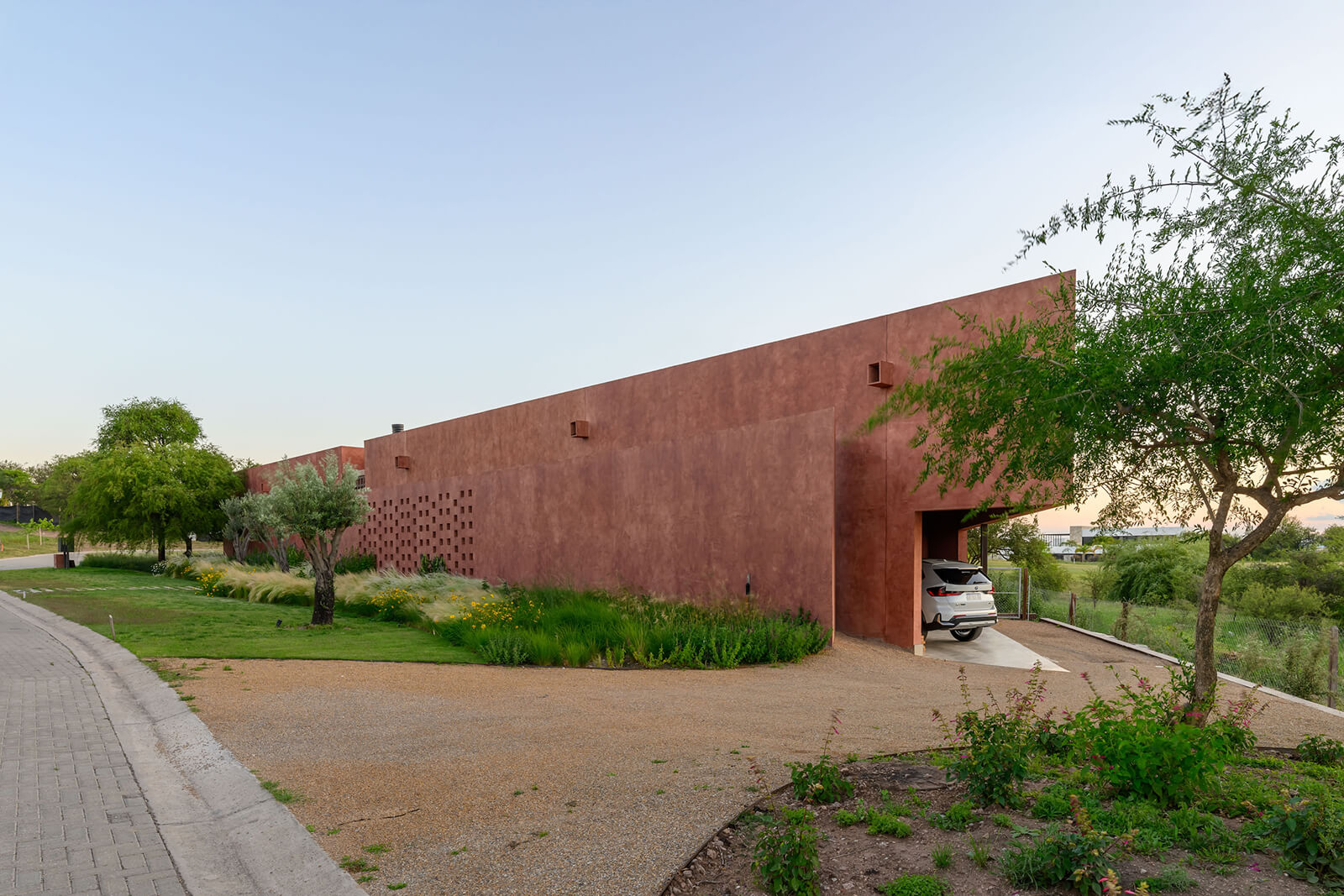
Set within a wide rural landscape of open fields and distant hills, the site is defined by its gentle topography and uninterrupted views across the surrounding countryside. Rather than imposing a levelled platform or a dramatic intervention, the house follows a gradual ascent. Its elevated position is not a symbolic gesture of dominance but a technical response, enabling the building to sit comfortably within the terrain while opening outward toward the horizon. The residential building unfolds as a strictly longitudinal composition, aligned with the site’s dominant boundaries. Its linear organisation is anchored by a landscaped ground plane that runs beneath and alongside the building, connecting the architecture directly to the soil and tracing the land’s natural contours, reinforcing the idea of the house as a continuation of the ground rather than an interruption.
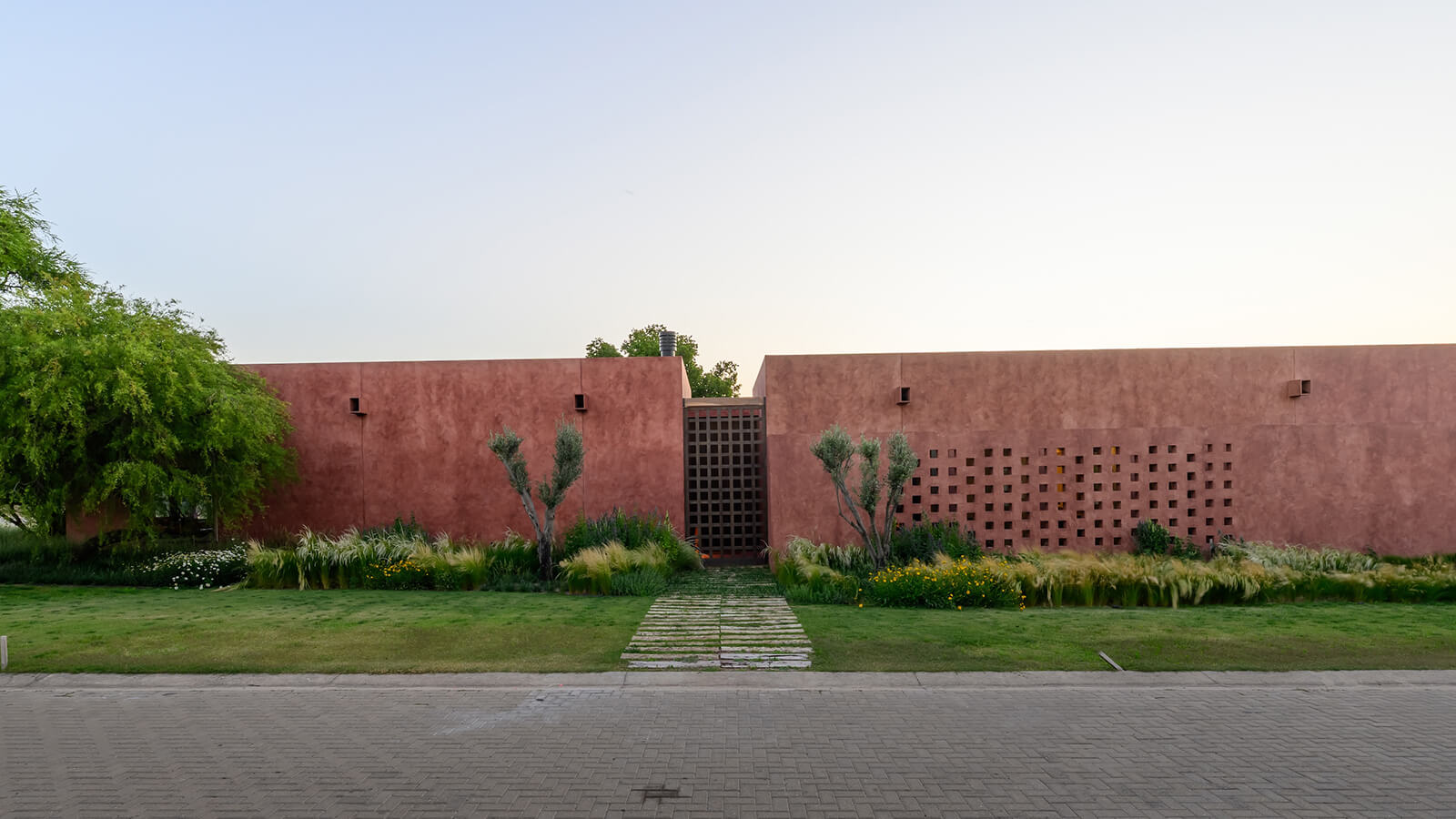
Bertotti’s architectural strategy is articulated through two parallel design approaches. The primary volume presents itself as a monolithic body defined by continuous, earth-toned walls. Toward the vehicular access, this volume is deliberately opaque and introverted, offering a contained, almost protective face to the arrival sequence. In contrast, the elevation facing the landscape is fully permeable, dissolving into openings, galleries and shaded thresholds that frame the rural expanse beyond. This contrast between enclosure at the point of access and openness toward the views establishes the house’s core spatial organisation and environmental response.
Complementing this heavy, grounded mass is a secondary pavilion that introduces a lighter and more contemporary expression to the built form. Subtly detached from the main body, this support volume is defined by black-framed glazing, expansive glass surfaces and horizontal sun-shading elements. Where the primary volume relies on mass and opacity, the pavilion operates through transparency and modulation, filtering light and views while maintaining environmental control. Together, the two structures establish a dialogue between solidity and lightness, permanence and adaptability.
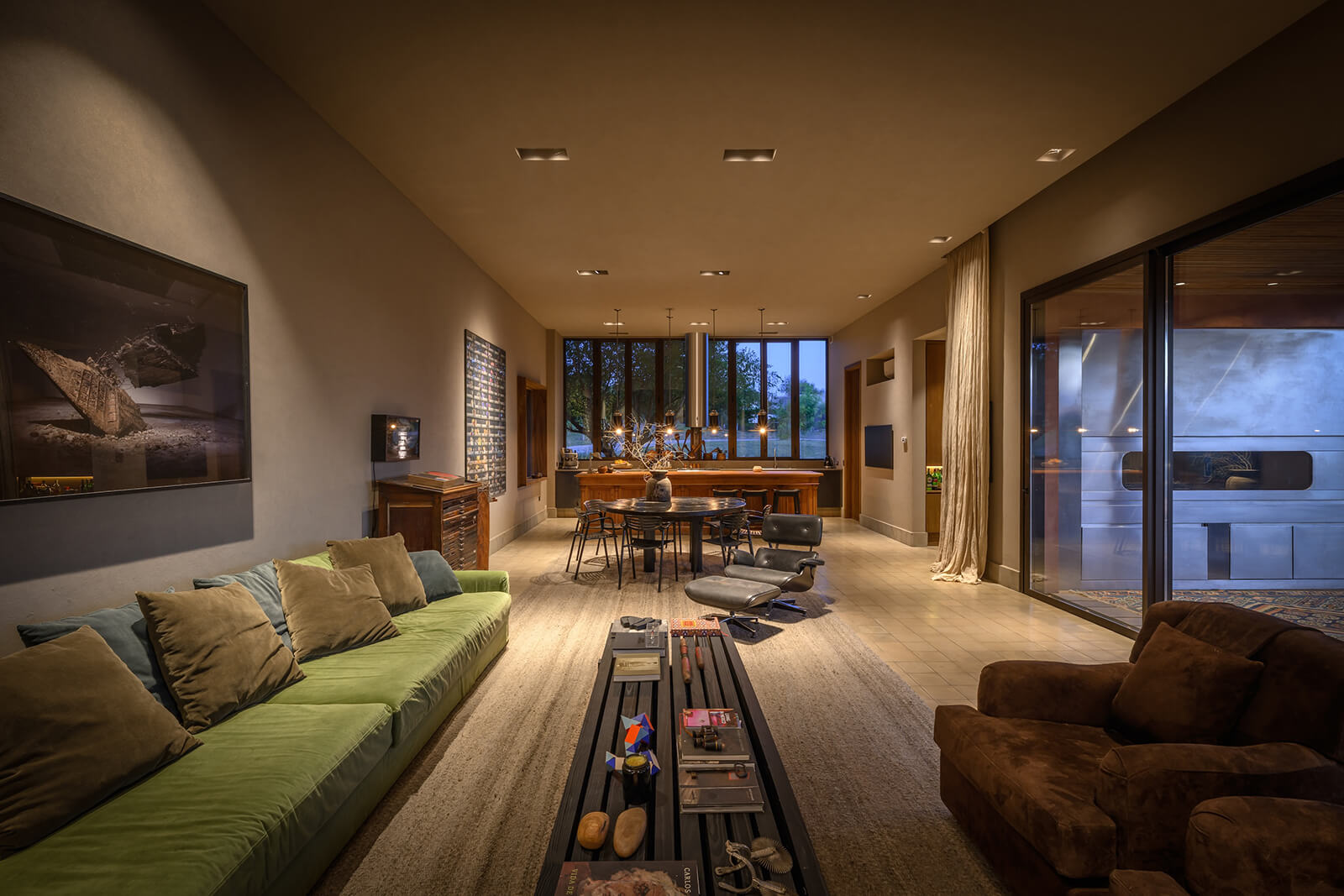
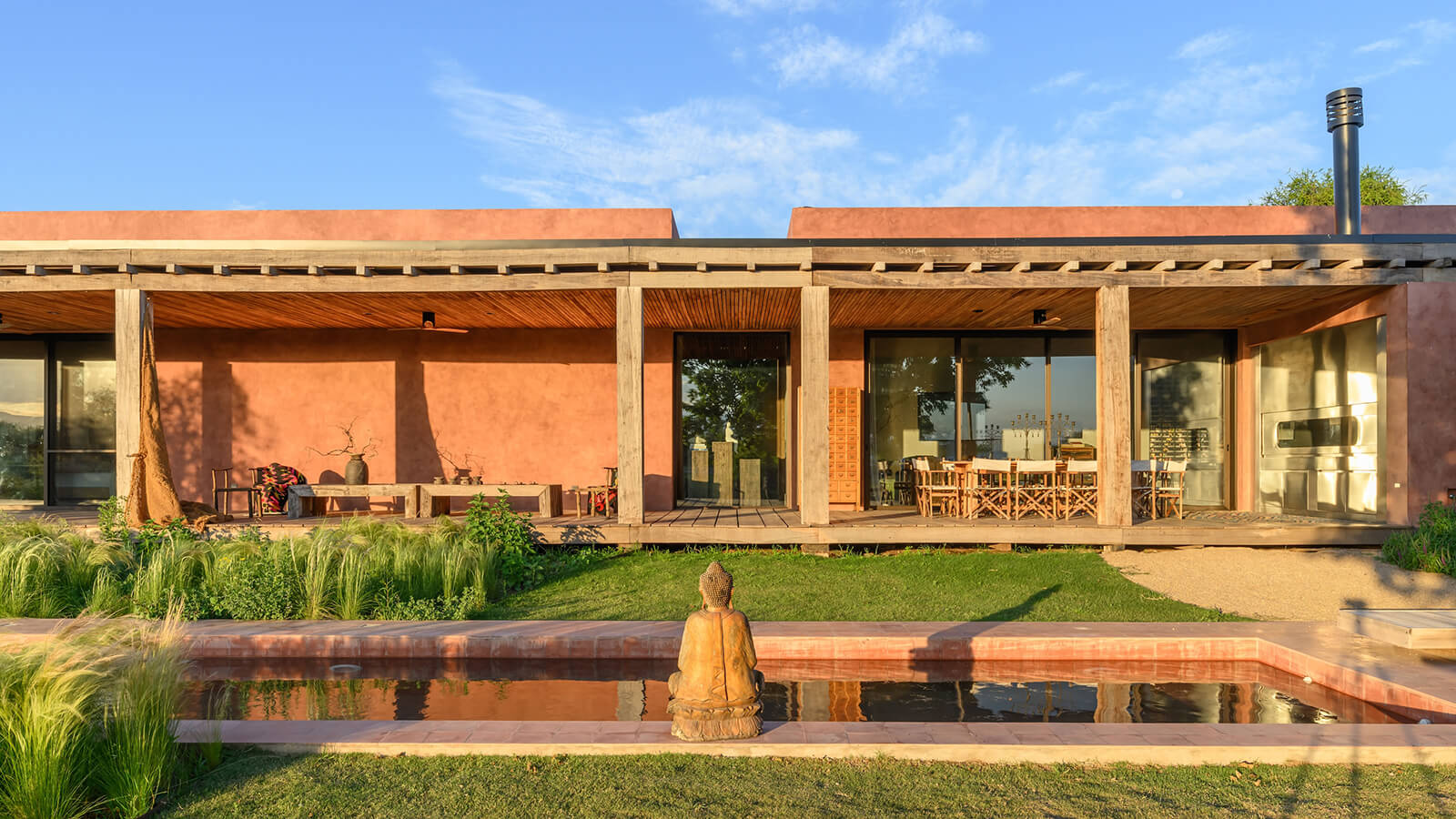
Internally, the house is organised with a clarity that reinforces its linear concept. The social life of the dwelling is concentrated at its core, where the living room, dining area and kitchen form a single, continuous space. Rather than being compartmentalised, these functions flow into one another, allowing for flexibility in use and movement. This central nucleus connects directly to a parallel longitudinal gallery that runs alongside the main volume. Carefully oriented and generously open, the gallery acts as an intermediary zone, where daily activities extend outward, shaded and protected, yet visually connected to the natural landscape.
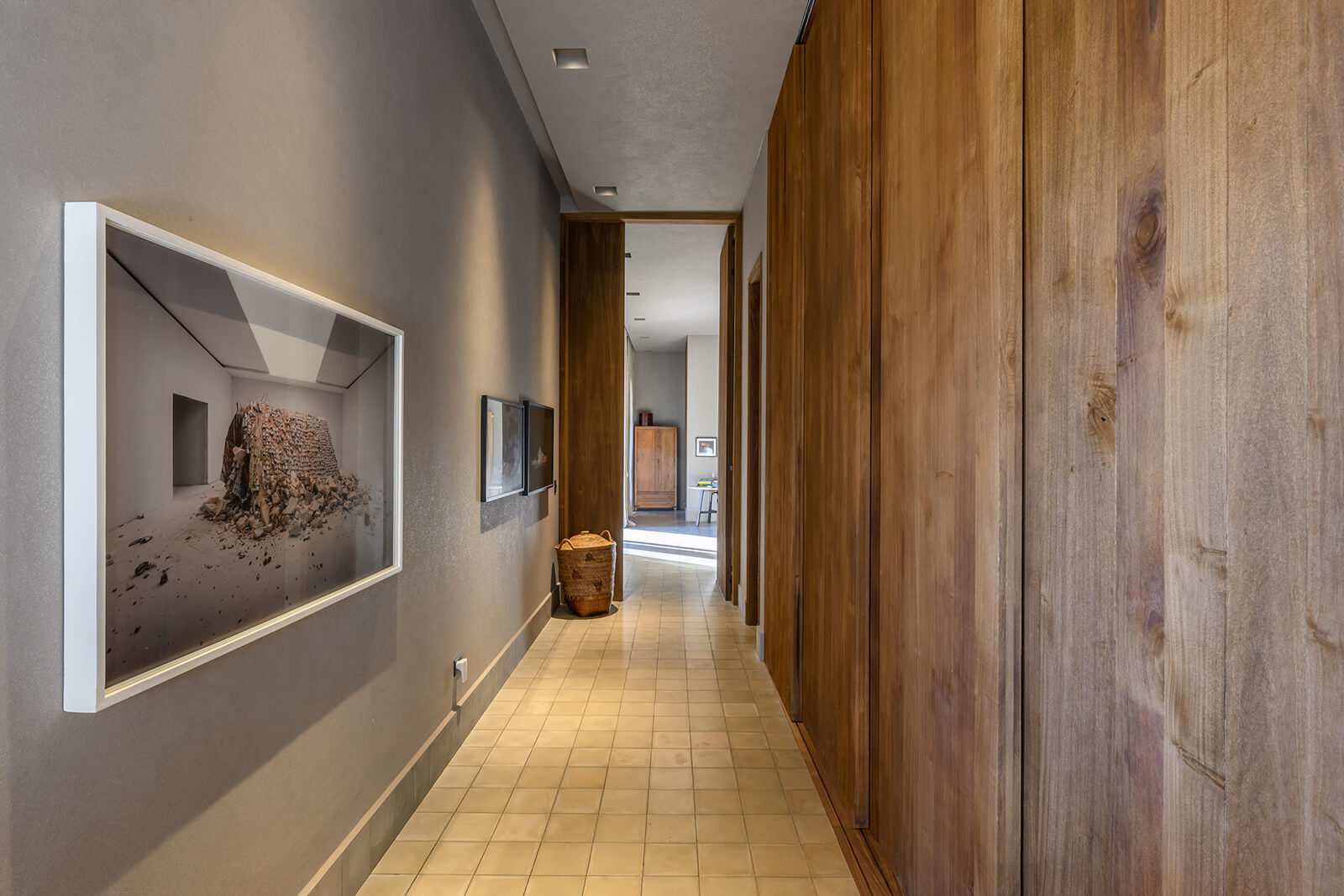
The private sector occupies the right wing of the house, where the bedrooms are arranged along a linear corridor. Here, the architecture becomes more introspective. The thick external walls provide thermal mass, buffering the residential interiors from temperature fluctuations while reinforcing a sense of enclosure. Openings are precisely calibrated, balancing daylight and ventilation with privacy and climatic stability. Rather than expansive glazing, the bedrooms rely on controlled apertures that frame specific views and regulate exposure, ensuring comfort without sacrificing connection to the surroundings.
The complementary pavilion, slightly removed from the main volume, introduces a distinct spatial character. Its metal structure and sun-shading devices create a layered envelope where light is filtered rather than admitted directly. This modulation produces subtle variations throughout the day, reinforcing the pavilion’s role as a flexible, adaptive space within the overall composition.

Landscape design plays a crucial role in grounding the project within its context. The garden is composed exclusively of native species such as grasses, herbaceous plants and local shrubs arranged in a loose, naturalistic manner. This approach avoids ornamental excess, instead treating the landscape as an extension of the Serrano ecosystem: a terrain characteristic of central Argentina’s hilly regions. The ecosystem belongs to a transitional dry woodland and grassland bioregion and is shaped by seasonal dryness, strong solar exposure and thin, mineral-rich soils. The selected plant communities reflect these conditions, reinforcing ecological continuity while ensuring resilience and low maintenance over time. The planting reinforces existing topography, softening the transition between built form and terrain while allowing the house to recede visually into its environment.
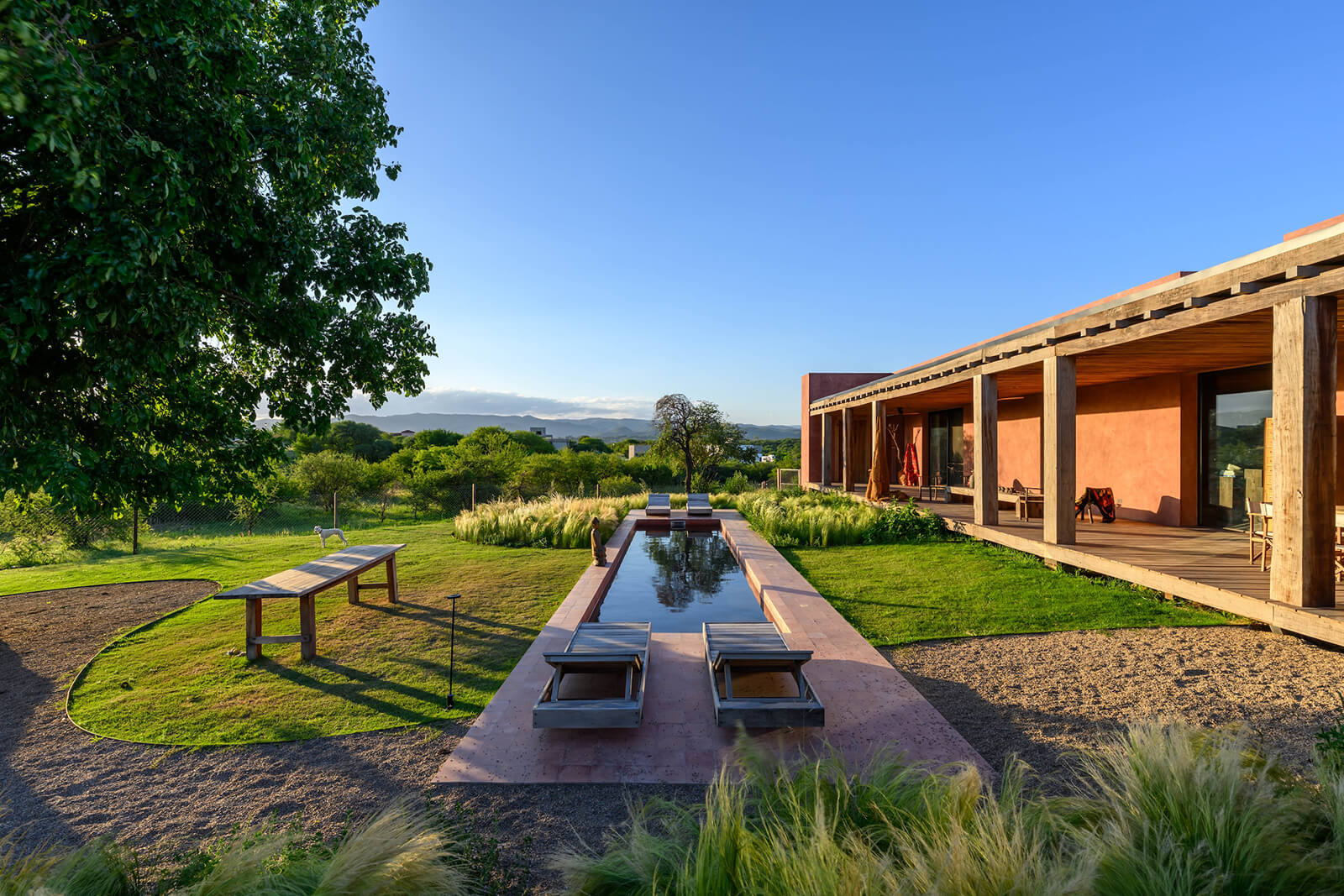
Running parallel to the gallery, a linear pool introduces a controlled horizontal element into this otherwise organic setting. Its reflective surface extends the geometry of the house outward, establishing a visual dialogue with the surrounding vegetation and amplifying the sense of continuity between architecture and landscape.
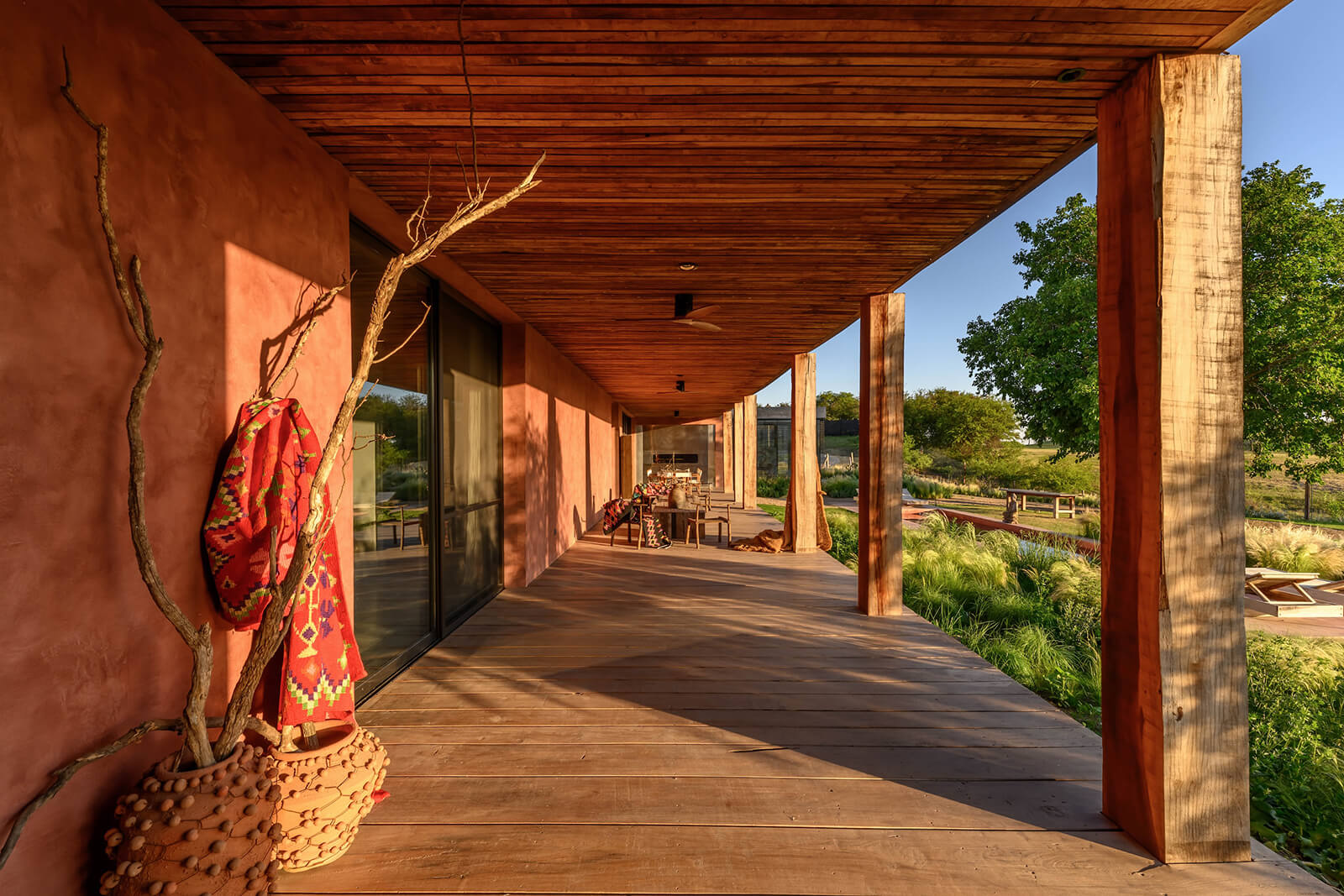
Material choices throughout Casa BP are both contextual and performative. The primary volume is finished in pigmented cement render and applied with a handcrafted texture and mineral finish that gives the walls depth and chromatic unity. These surfaces respond sensitively to changing light conditions like absorbing warm hues at sunrise, deepening into ochres at sunset and flattening into a matte presence on overcast days. The effect is not decorative but temporal, allowing the building to register shifts in climate and atmosphere.
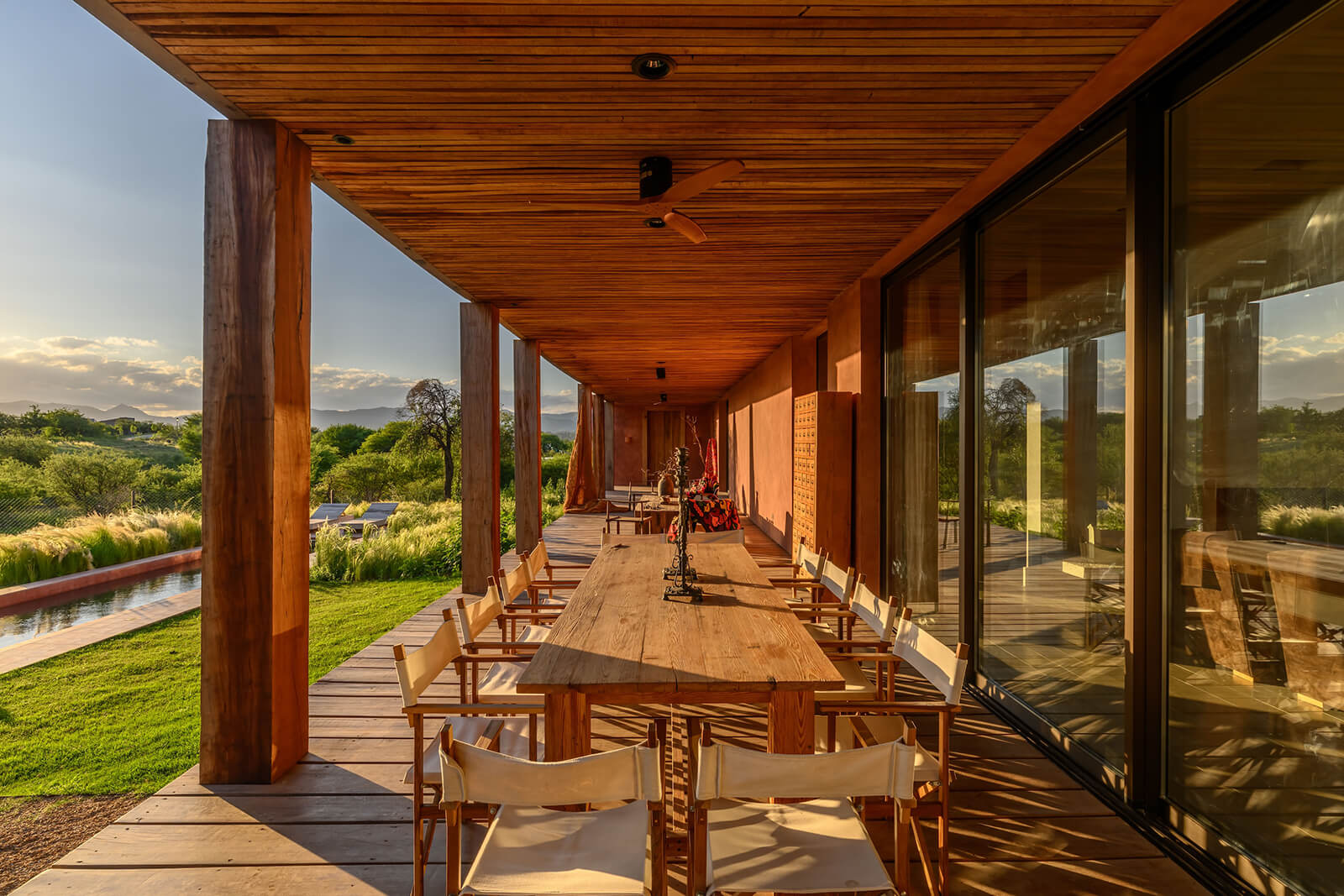
In the main gallery, a solid wood structural system is expressed through irregular columns and continuous slatted ceilings—interventions that introduce warmth and tactility while counterbalancing the mineral heft of the walls. Black metal and glass define the complementary pavilion, where transparency is carefully moderated by sun shades and adjustable louvres, ensuring comfort without visual excess.
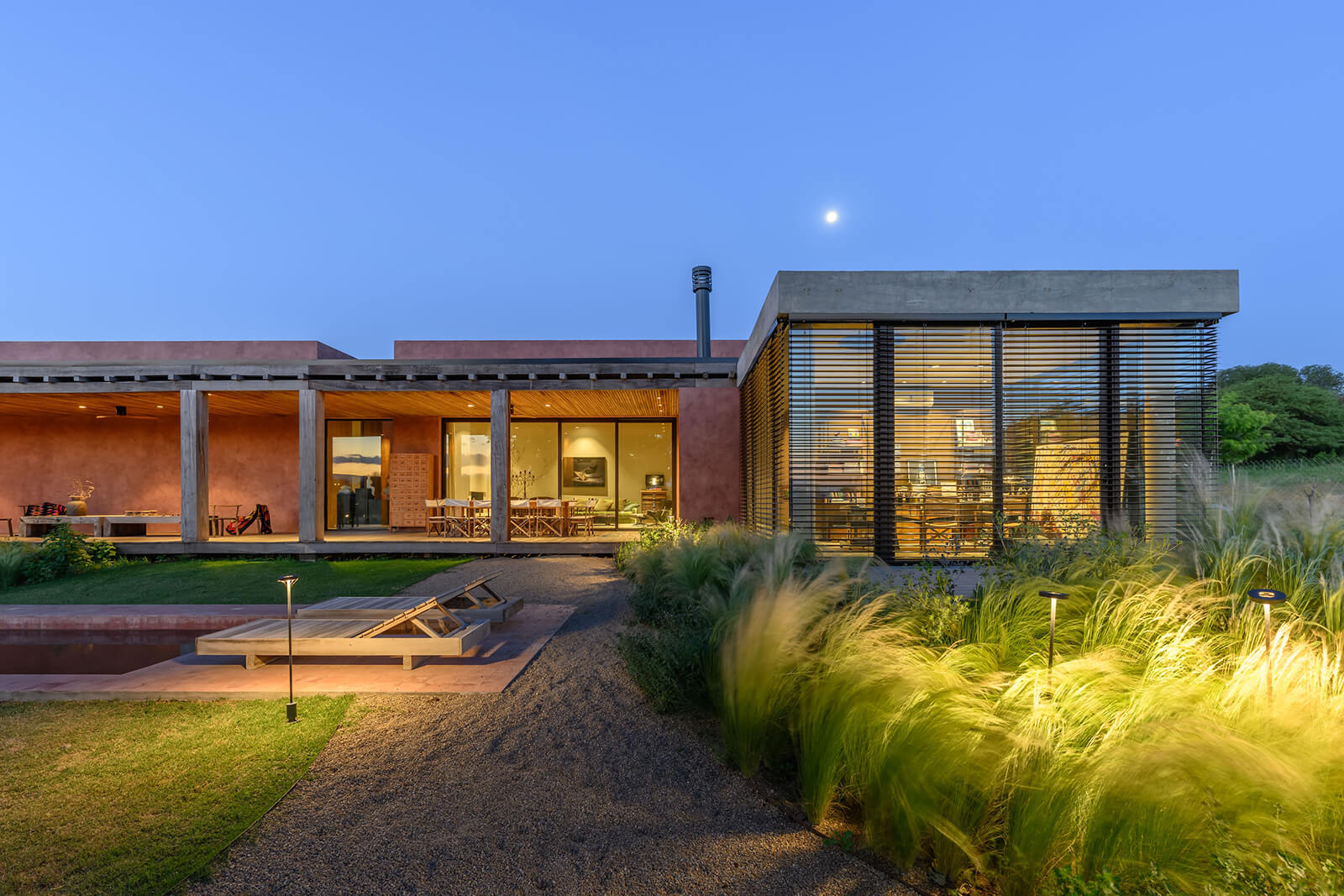
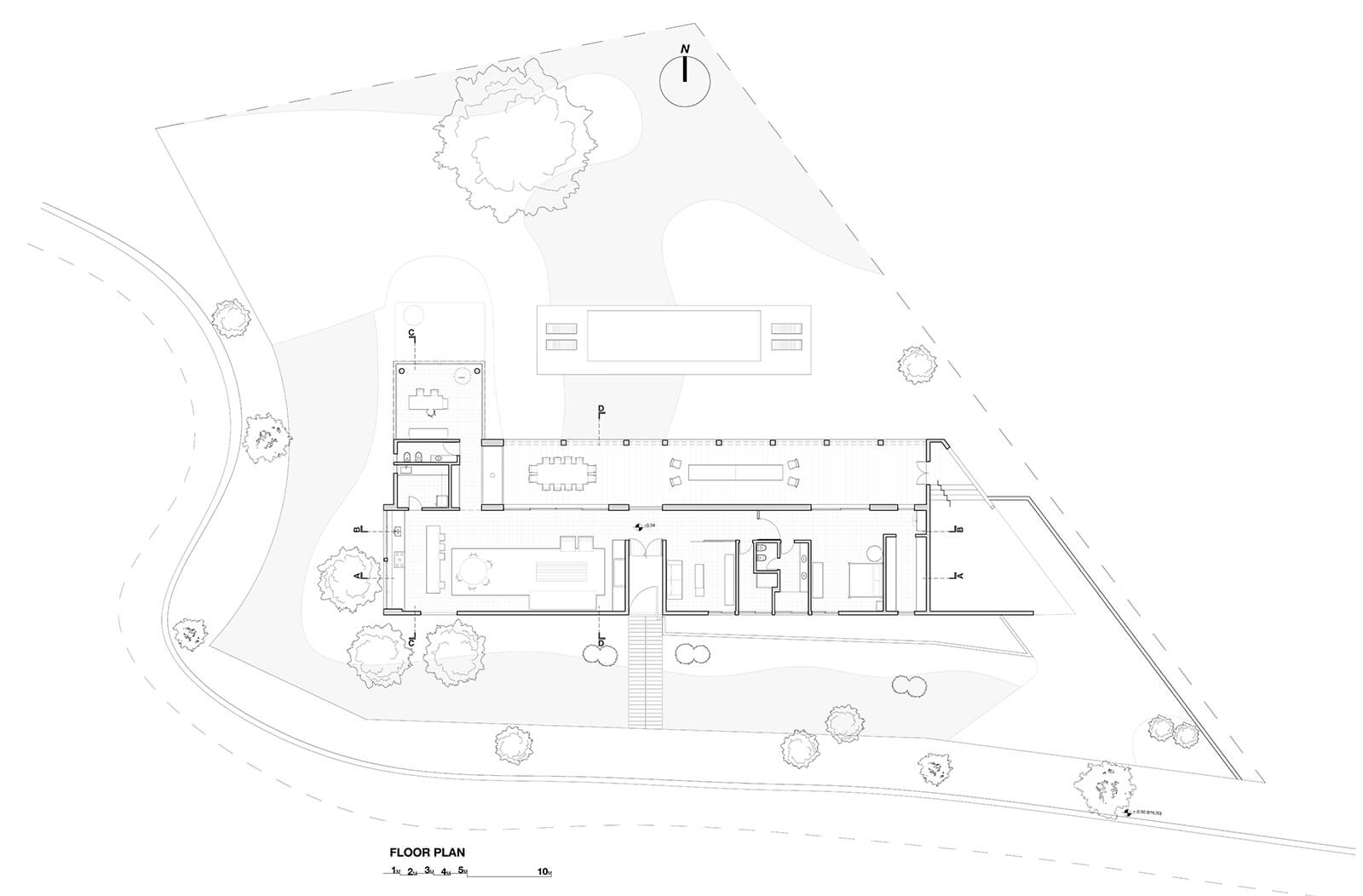
Conceptually, Casa BP can be understood as a linear incision in the landscape; precise, restrained and responsive. It is austere and opaque at its point of access, open and expansive toward the view. Its architecture emerges from the tension between mass and void, protection and openness, solidity and permeability. Rather than asserting itself as an isolated object, the house operates territorially, reading and amplifying the qualities of its site.
In doing so, the project avoids picturesque gestures or superficial contextualism. Its tonal character arises from a deeper engagement with soil, climate and time. Anchored to the land through material, form and orientation, the house does not compete with its surroundings; it listens to them. The result is an architecture that feels both deliberate and inevitable, quietly inhabiting its place and allowing the landscape to remain the dominant presence.

by Pranjal Maheshwari Oct 19, 2026
The Mumbai-based architects integrate courtyards, mesh screens and north light trusses to create a dining space that doubles up as a community hub at SR University, Warangal.
by Mrinmayee Bhoot Oct 17, 2026
The Rotterdam-based institute centres the Indian Ocean as a network for exploring material histories and transnational links shaping coastal cultures, positing them as future models.
by Pranjal Maheshwari Oct 16, 2026
At the 2026 Stirling Prize ceremony, Mary Duggan with RUFF Architects, MAKER Architecten and Nakshabid Architects were felicitated for proffering quality housing and social equity.
by Mrinmayee Bhoot Oct 12, 2026
The new Centre for Contemporary Arts, fostering public engagement with art in Uzbekistan, is housed in a tram depot refurbished by the French studio, emulating local craftsmanship.

make your fridays matter with a well-read weekend
Enter your details to sign in
Don’t have an account?
Sign upOr you can sign in with
a single account for all
STIR platforms
All your bookmarks will be available across all your devices.
Stay STIRred
Already have an account?
Sign inOr you can sign up with
Verification link sent to check your inbox or spam folder to complete sign up process
Tap on things that interests you.
Select the Conversation Category you would like to watch
Please enter your details and click submit.
Enter the 6-digit code sent at


Casa BP by Santiago Bertotti is a rural home shaped by Córdoba's terrain
by Aarthi Mohan | Published on : Jan 17, 2026


 Sign in with Google
 Sign in with email
What do you think?