Design06 mins. read
Labor & Adornment at Superhouse positions craft as a radical act
by Chahna TankApr 21, 2026



by Sunena V MajuPublished on : Nov 08, 2025
What does it mean to restore a building, or an idea, without violating its essence? American artist Donald Judd posed that question, in his own way, in a 1983 essay titled Art and Architecture, where he critiqued the disconnect between historical integrity and contemporary design excess. He wrote, “The relation of art and architecture to the past is crucial, again, especially now, when historical styles are being so outrageously debased by the architects who build unnecessary skyscrapers. The question of the past very much connects to belief and to understanding exactly what it is you know. There is the old question of function in architecture and of suitability in art. My aphorism is not that form follows function but that it never violates it. Or common sense, for that matter. And there is the relationship, which doesn’t exist now, between art and architecture.”
Judd’s reflections on architecture and function weren’t just philosophical musings; they were a kind of blueprint for how he lived, built and preserved. Best known for his minimalist ‘boxes, stacks, progressions’ and minimalist furniture, Judd emerged from New York’s rapidly evolving art scene in the 1960s and 70s. But as the scene grew increasingly commercial and fleeting, he began to feel weary with its pace and impermanence. In 1971, that search for something slower, more grounded and lasting took him to the high desert of far West Texas, to a small town called Marfa. It was there that Judd found the physical and philosophical space to pursue a different kind of practice—one rooted in scale, light, material and, most of all, time.
This marked the beginning of what would become ‘Judd’s Marfa’. Over the years, he acquired and transformed about 22 buildings in and around the town, not just installing art inside them, but restoring them with purpose and precision. The key structures include The Block, the Art Studio, Cobb House, the Print Building, the Whyte Building and the Ranch Office—each becoming a permanent installation, embodying his belief that art and architecture should speak directly to their environments, without excess or spectacle.
As Flavin Judd, Donald Judd’s son and the artistic director of the Judd Foundation, shared with STIR, “The town has changed more than Don's work has. When he was alive, the town was very much an economically depressed cattle town, with its best days probably in the early 1950s or World War II. Now, Marfa has self-awareness about design because of what Don did. So in a certain way, Don's work within the town, which would have been new and radical in 1980, is looking old and canonical now. The town is now a tourist destination, which obviously it never was when Don was alive.”
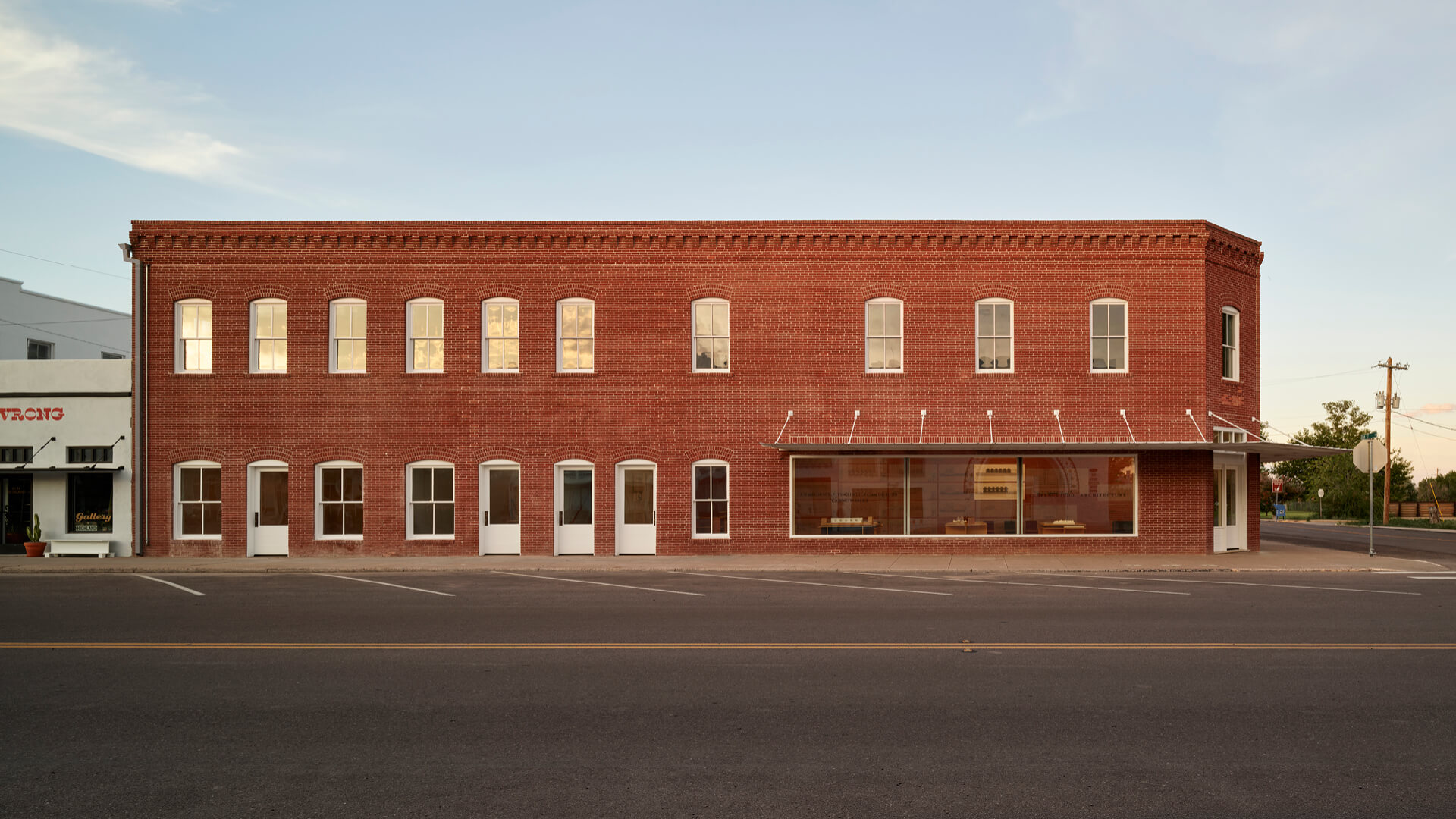
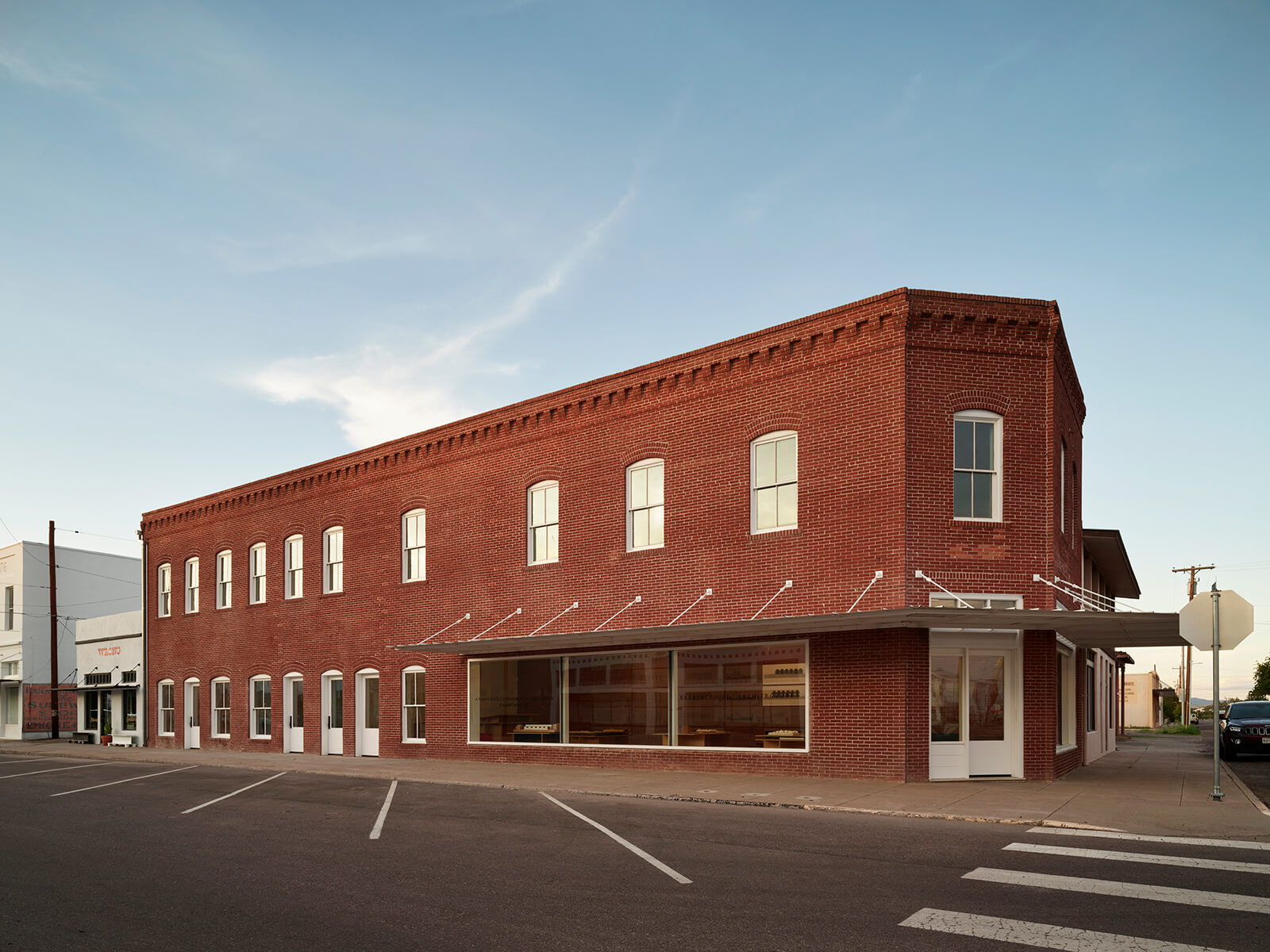
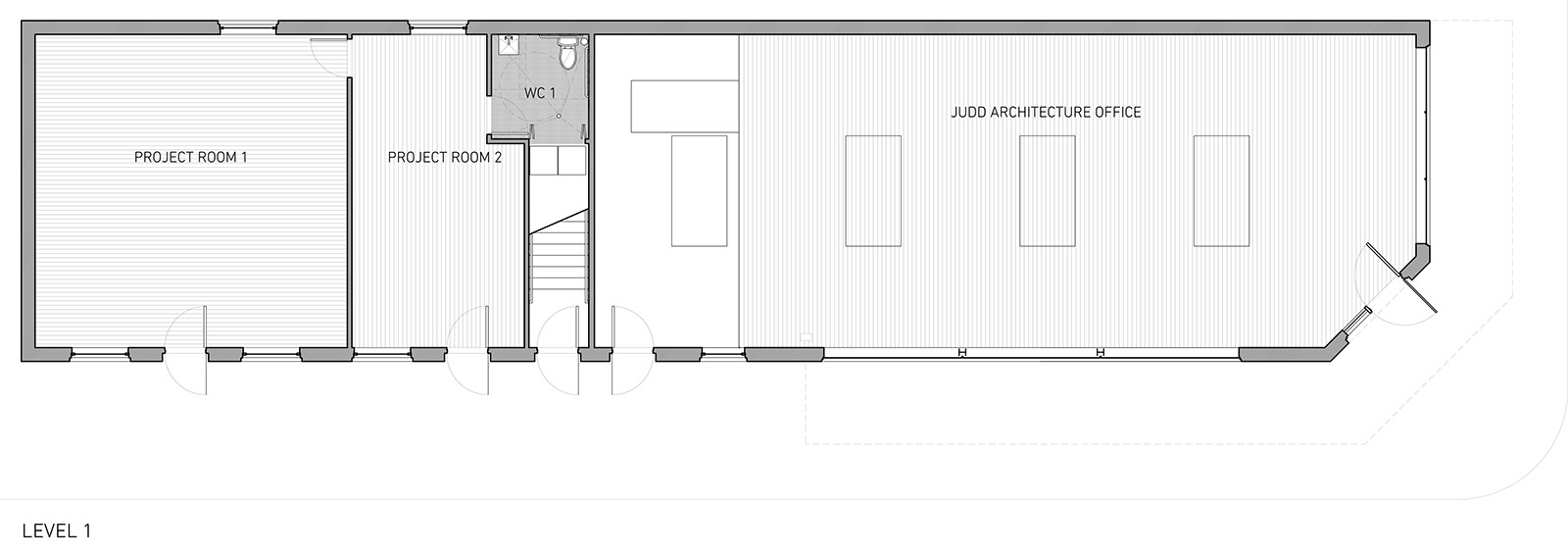
After Judd’s death in 1994, the Judd Foundation took on the responsibility of preserving these spaces, not as static museum spaces, but as working environments, living archives and ongoing conversations with the past. One of the most significant of these is the Architecture Office, a 5000 sq ft structure Judd purchased in 1990 and adapted for his own use. Built at the turn of the 20th century, the two-story building originally operated as a general store and later housed various commercial businesses. It sits directly across the street from Judd’s Architecture Studio and stands as a primary example of his approach to reimagining existing structures, not as blank slates, but as complete systems worthy of attention and care.
In 2018, the Foundation launched a long-term restoration of the Architecture Office with architects Troy Schaum and Rosalyne Shieh of Texas-based Schaum Architects. Their work built on Judd’s own effort to return the building to its original condition. “A lot of the work we do with Rainer Judd, Flavin Judd, the foundation and our larger design team centres on what I would call a kind of ‘property of restraint’. Much of Donald Judd’s work that we are learning from and engaging with involves undoing previous interventions and revealing what is already there,” Schaum explained to STIR. “We try to carry that ethos forward, this idea of restraint and revelation. That often means returning to first principles: of energy and environment, of building envelope or structure. We ask ourselves, how can we do this with less material, with less intervention?”
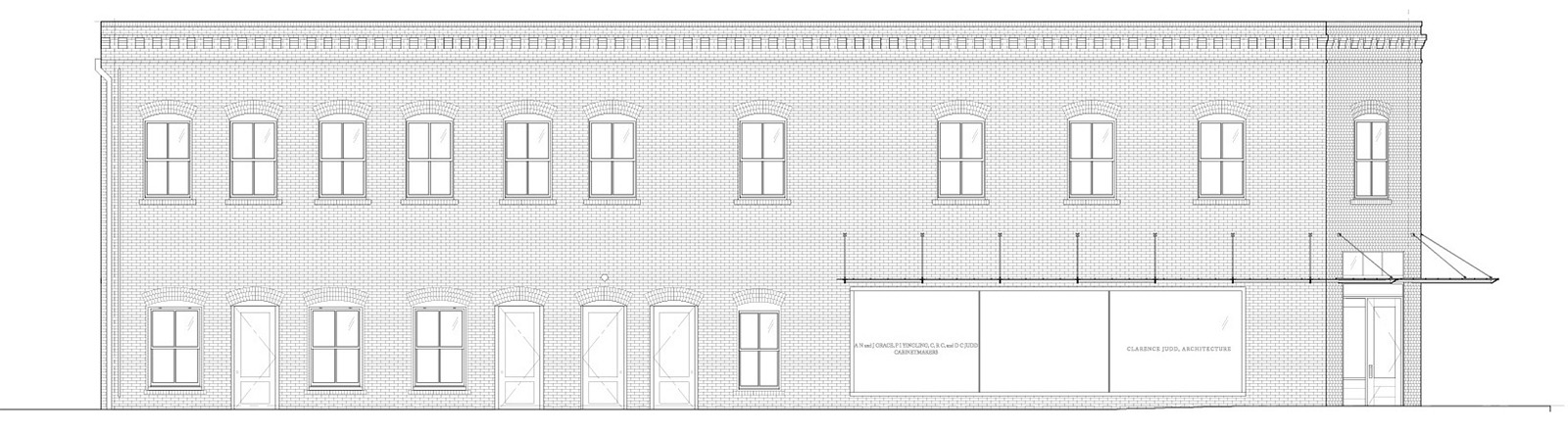
The first phase of the restoration began in 2018 and focused on the building envelope. Traditional masonry techniques were used to repair and repoint the brick façade. All exterior wood windows and historic wood-and-copper storefronts were rebuilt by hand while original brass door and window hardware were refinished and reinstalled. Energy-efficient glazing was introduced in addition to maintaining the original appearance and function of the windows and woodwork. The second phase, which began in 2020, turned inward, preparing the interiors for the safe reinstallation of artworks, furniture and design objects, as well as for public access.
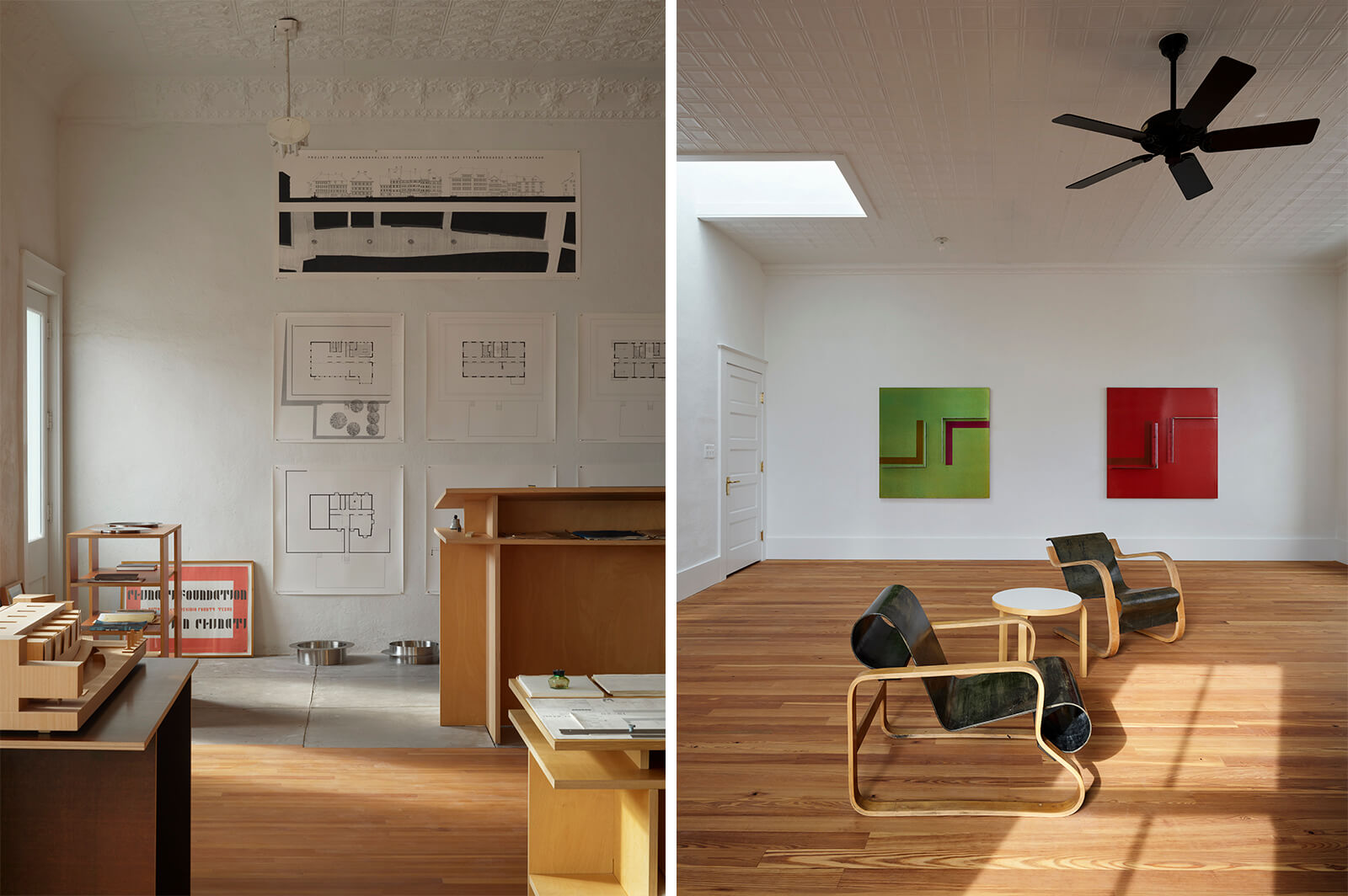
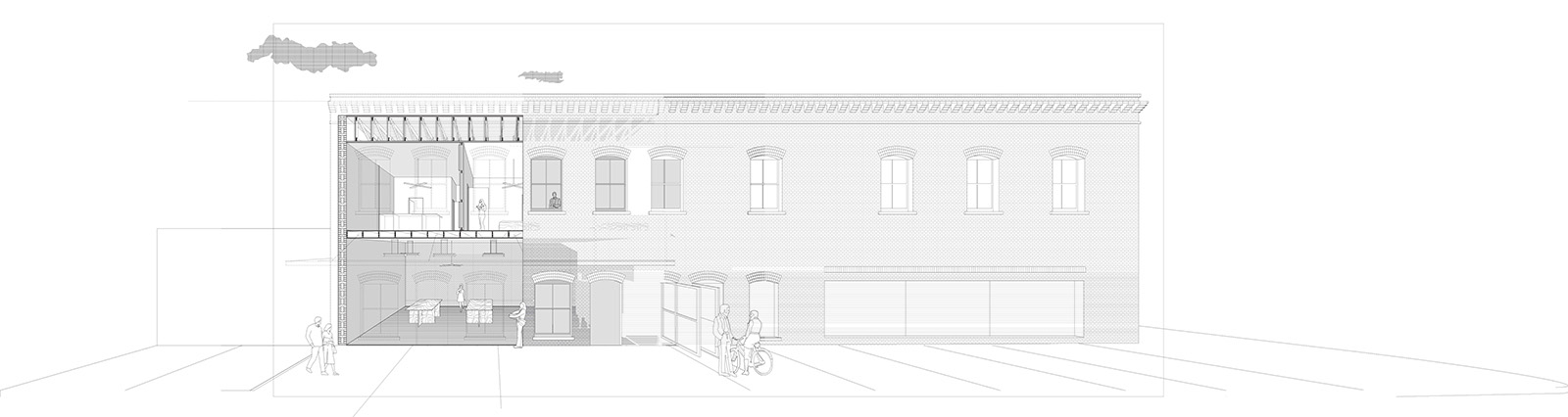
In 2021, however, just as progress was building, a fire tore through the structure, destroying much of its central interior and roof. The project halted, not indefinitely, but with a new sense of complexity and urgency. As they restarted, the team leaned deeper into Judd’s principle of treating buildings as complete systems, integrating sustainability strategies that responded to the whole structure rather than isolated elements.
“Older buildings like this often collapse inward during fires because of how the wood framing was detailed against the brick walls,” Schaum told STIR. “This building didn’t collapse, but when we rebuilt it, we incorporated a more contemporary system of framing behind the walls. If anything like this ever happens again, the building will be much more stable, protected and structurally sound than it ever was before.”
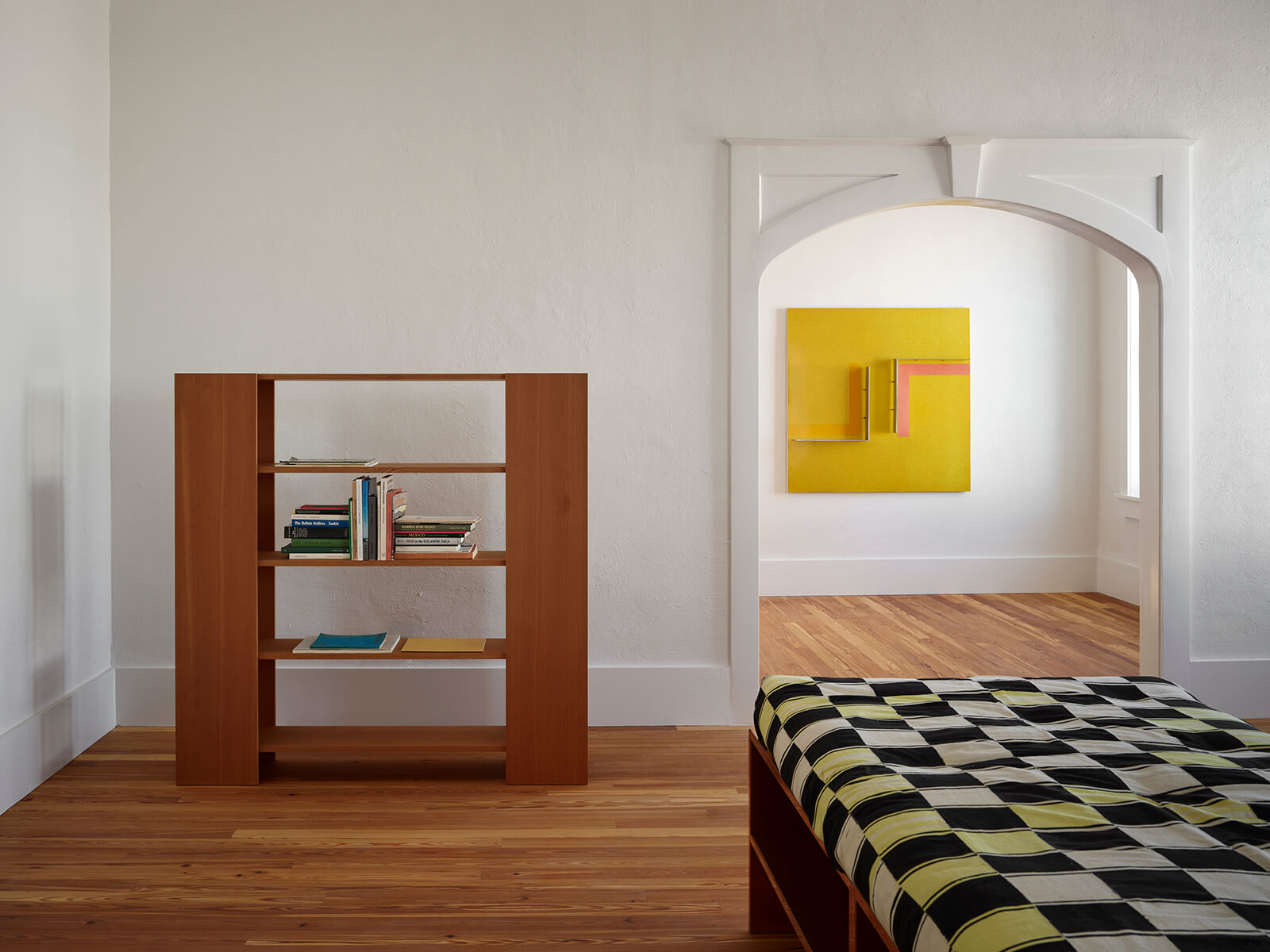
As Schaum relays, the building had been extensively documented before the fire. Every surface—from ceiling panels to dyes and plaster types—had been catalogued. The team even reunited with craftspeople from the original restoration, like Method Construction, who understood the building’s quirks, cracks, and gradual shifts over time. Local craftsman Jon Antonides of High Desert Woodworks was brought in to rebuild many of the windows.
You could argue that Donald Judd’s work on the building was, in a sense, a kind of restoration. In a way, what we are doing now is a restoration of a restoration of a building that was originally constructed at the turn of the century. – Troy Schaum
The rebuilt structure doesn’t just reflect Judd’s philosophy; it extends it. Insulated low-emissivity glazing systems were integrated into restored wood-sash windows. A new steel canopy was added, matching the historic proportions of the original. Climate-neutral materials, such as recycled denim insulation, improve energy efficiency while maintaining the building’s material honesty.
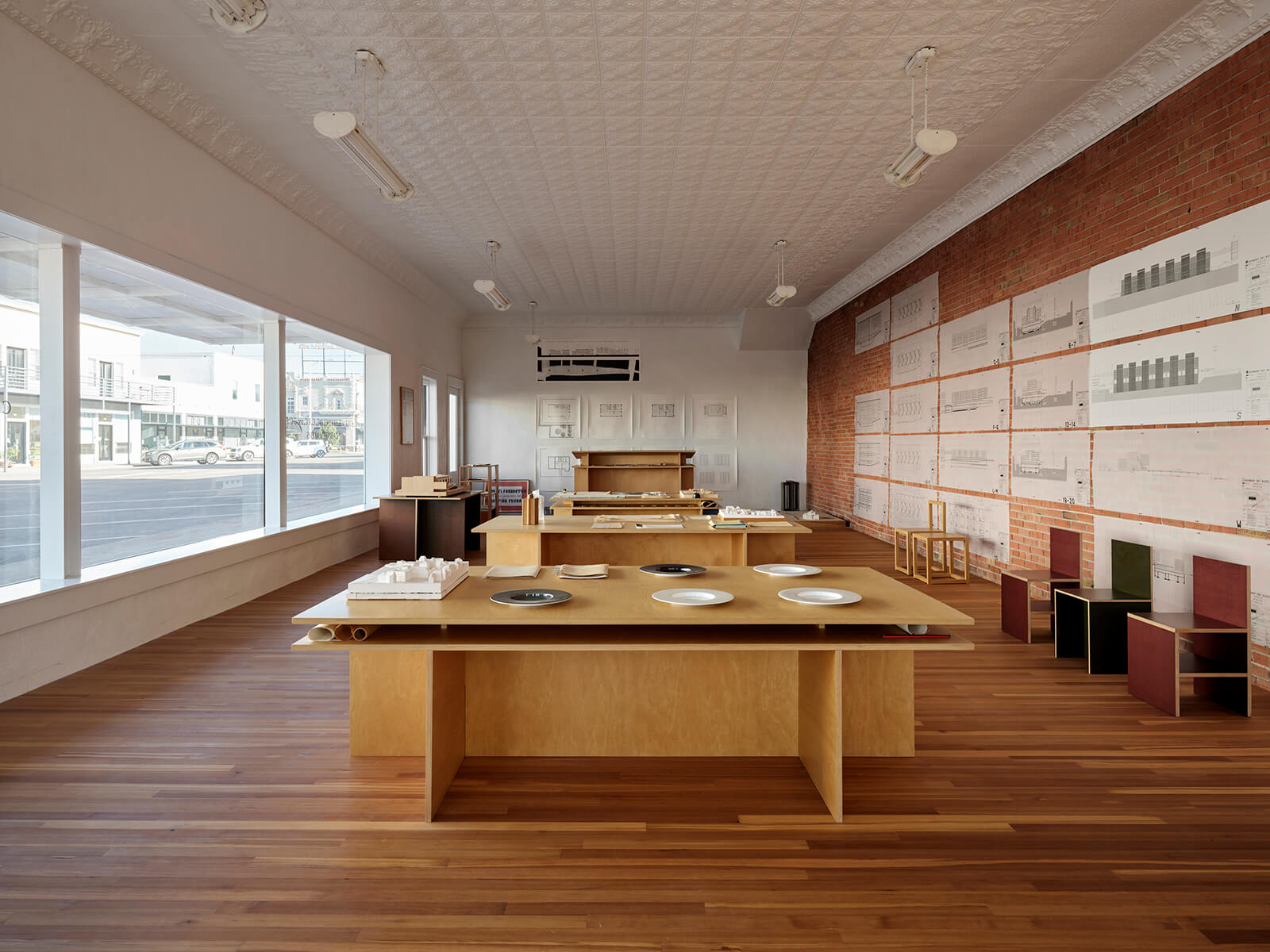
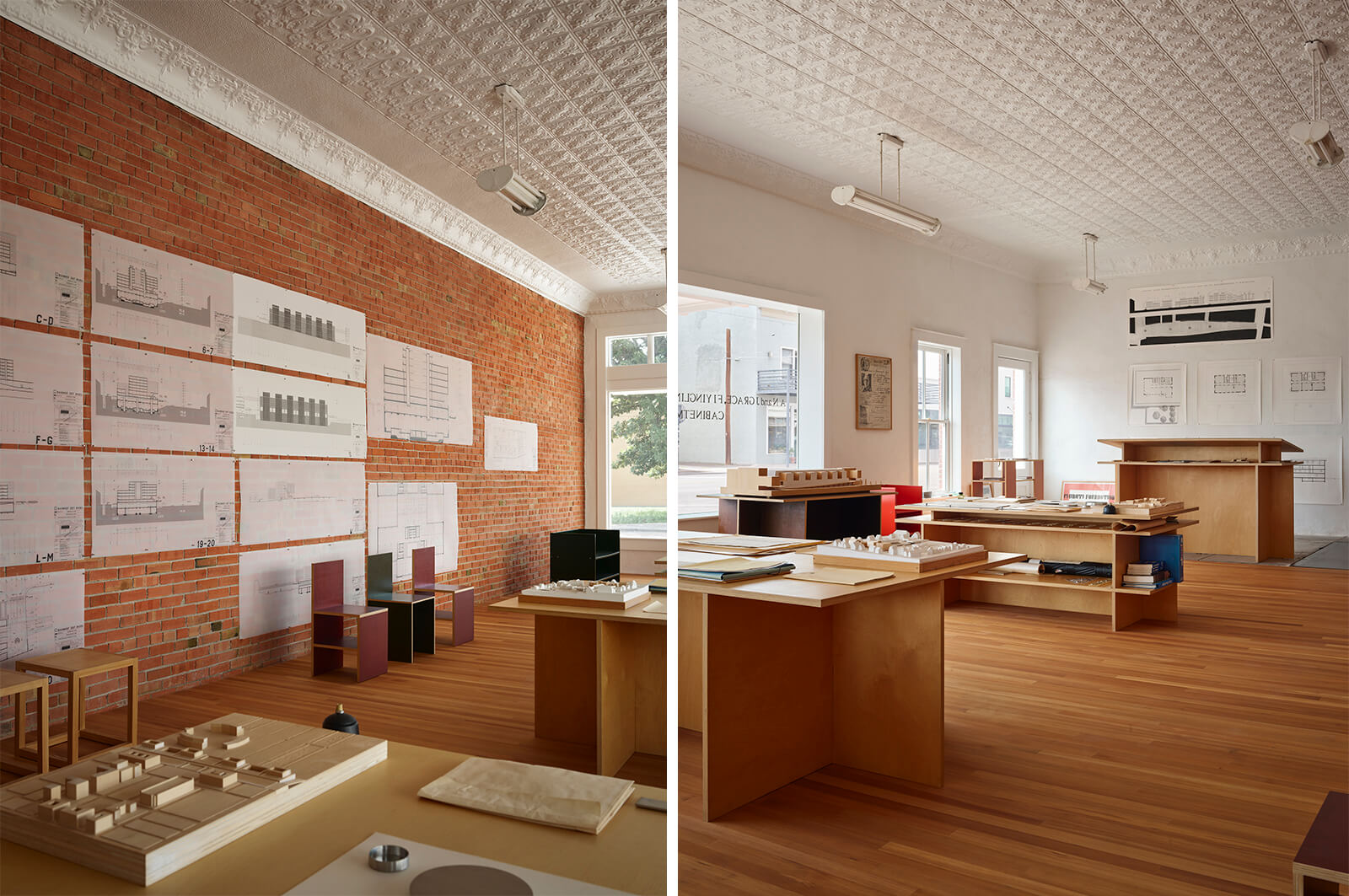
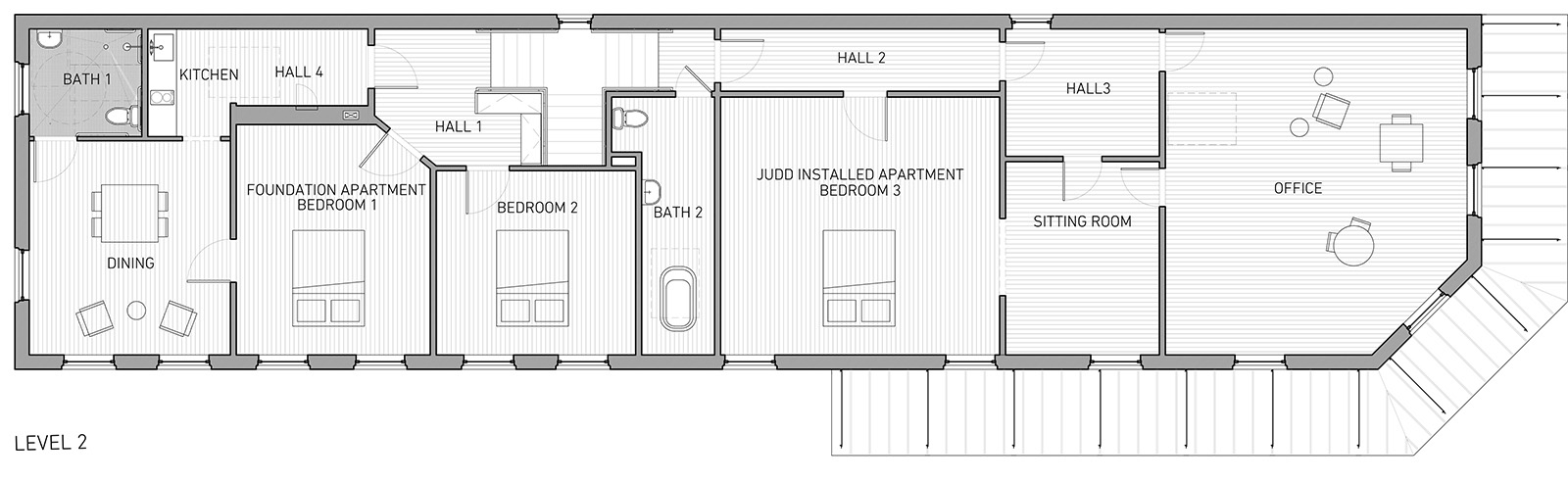
Inside, the ground-floor office now houses Judd’s plywood and metal furniture, along with models, drawings, and prototypes. The second floor, known as the Architecture Apartment, includes multi-room living spaces furnished by Judd, with paintings by John Chamberlain and designs by Alvar Aalto. The building also includes new program spaces for the Foundation and accommodations for visiting researchers.
“We used one room for our own purposes, for offices or whatever else we might need,” Flavin Judd explained. “But anything Don did to the building, we restored it exactly as it was. We only repurposed areas he hadn’t touched. The project really embodies Don’s principle of doing less rather than more. He bought an old building that nobody wanted and restored it for his own purposes, instead of tearing it down and building something new.”
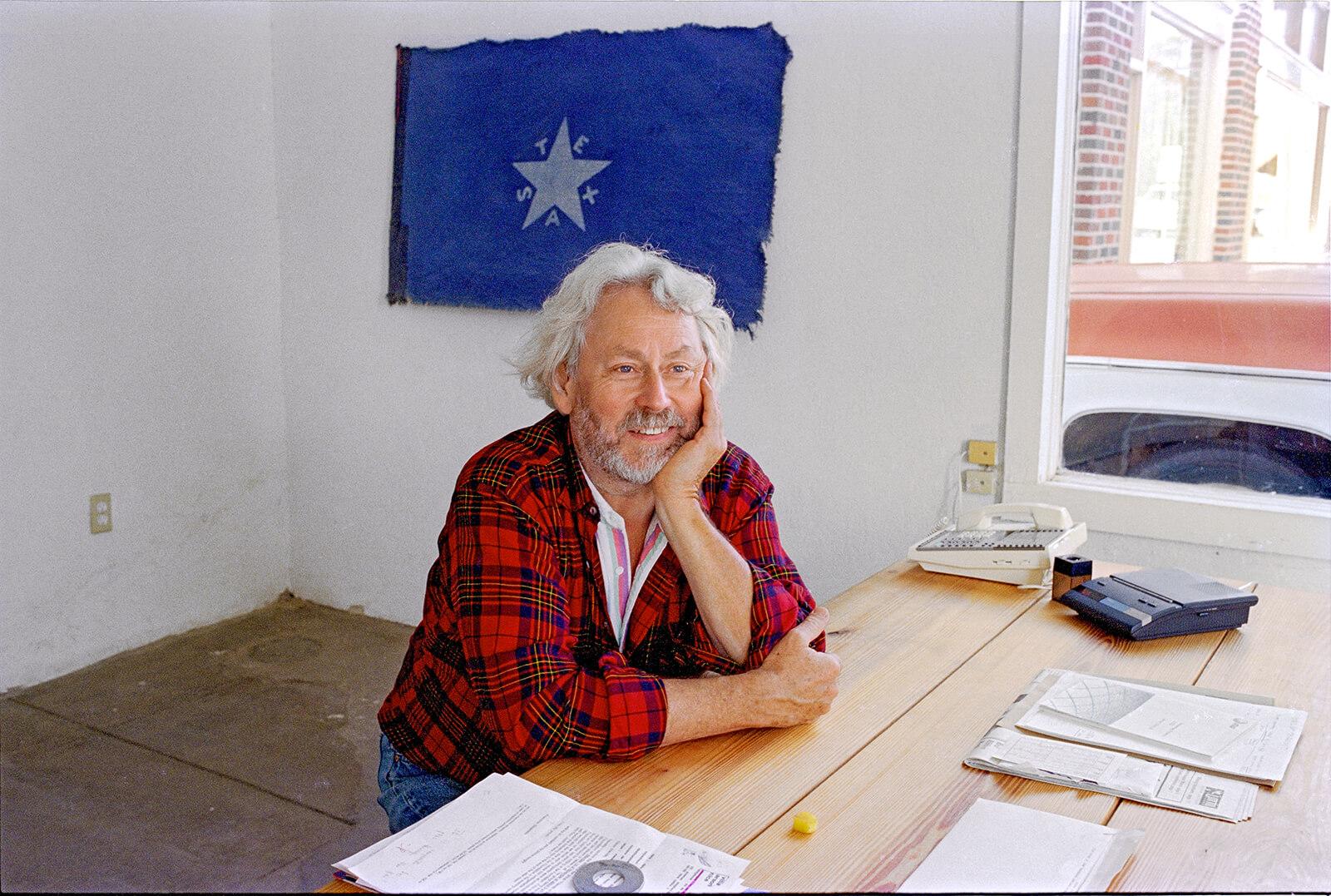
Judd’s vision for Marfa unfolded gradually. To put it romantically, he saw the desert and fell in love with its silence, its space and its possibilities. While surely it isn’t as simple as it looks, one wants to believe it anyway. To some, Judd was “stern taskmaster, a little scary, serious, fierce,” to others, he was “humorous, shy, friendly.” But none of his installations or designs ever quite revealed who he was. However, Marfa feels like a longer story. The fuller picture, one that comes with more questions.
In conversation with STIR, Schaum shared a moment from early stages of the project. “When I first started working on this, I was supposed to meet Flavin for the first time in Marfa. I was thinking about logistics, where we would meet, how we would find each other, and what the schedule would be. Then Flavin just texted, ‘Troy, it’s Marfa, we will find each other.’ I had barely been parked for fifteen minutes when I saw this tall guy, about six-two, wearing a cowboy hat, walking across the street. I thought, ‘That’s got to be him.’ I called out, ‘Are you Flavin?’ And we just kind of ran into each other. That moment says a lot about Marfa. It has this very intimate sense of community and an informality that’s rare. I think that’s part of what drew Donald Judd to live there. Of course, it’s a very different place now than it was in his time, but it still holds onto that small-town spirit of connection.”
Schaum’s anecdote painted a picture of contemporary Marfa and one of the younger leaders taking Judd’s ethos forward. With that mental picture, it is easier to imagine Judd’s Marfa, the small Texan desert town that still holds the many layers of an artist and his life.
by Pranjal Maheshwari Oct 19, 2026
The Mumbai-based architects integrate courtyards, mesh screens and north light trusses to create a dining space that doubles up as a community hub at SR University, Warangal.
by Mrinmayee Bhoot Oct 17, 2026
The Rotterdam-based institute centres the Indian Ocean as a network for exploring material histories and transnational links shaping coastal cultures, positing them as future models.
by Pranjal Maheshwari Oct 16, 2026
At the 2026 Stirling Prize ceremony, Mary Duggan with RUFF Architects, MAKER Architecten and Nakshabid Architects were felicitated for proffering quality housing and social equity.
by Mrinmayee Bhoot Oct 12, 2026
The new Centre for Contemporary Arts, fostering public engagement with art in Uzbekistan, is housed in a tram depot refurbished by the French studio, emulating local craftsmanship.

make your fridays matter with a well-read weekend
Enter your details to sign in
Don’t have an account?
Sign upOr you can sign in with
a single account for all
STIR platforms
All your bookmarks will be available across all your devices.
Stay STIRred
Already have an account?
Sign inOr you can sign up with
Verification link sent to check your inbox or spam folder to complete sign up process
Tap on things that interests you.
Select the Conversation Category you would like to watch
Please enter your details and click submit.
Enter the 6-digit code sent at


Donald Judd’s Marfa: a fire, a philosophy, a restoration of a restoration
by Sunena V Maju | Published on : Nov 08, 2025


 Sign in with Google
 Sign in with email
What do you think?