Architecture06 mins. read
Five sequentially staggered volumes shape The Lake House retreat
by Pooja Suresh HollannavarNov 26, 2024



by Aarthi MohanPublished on : Oct 22, 2025
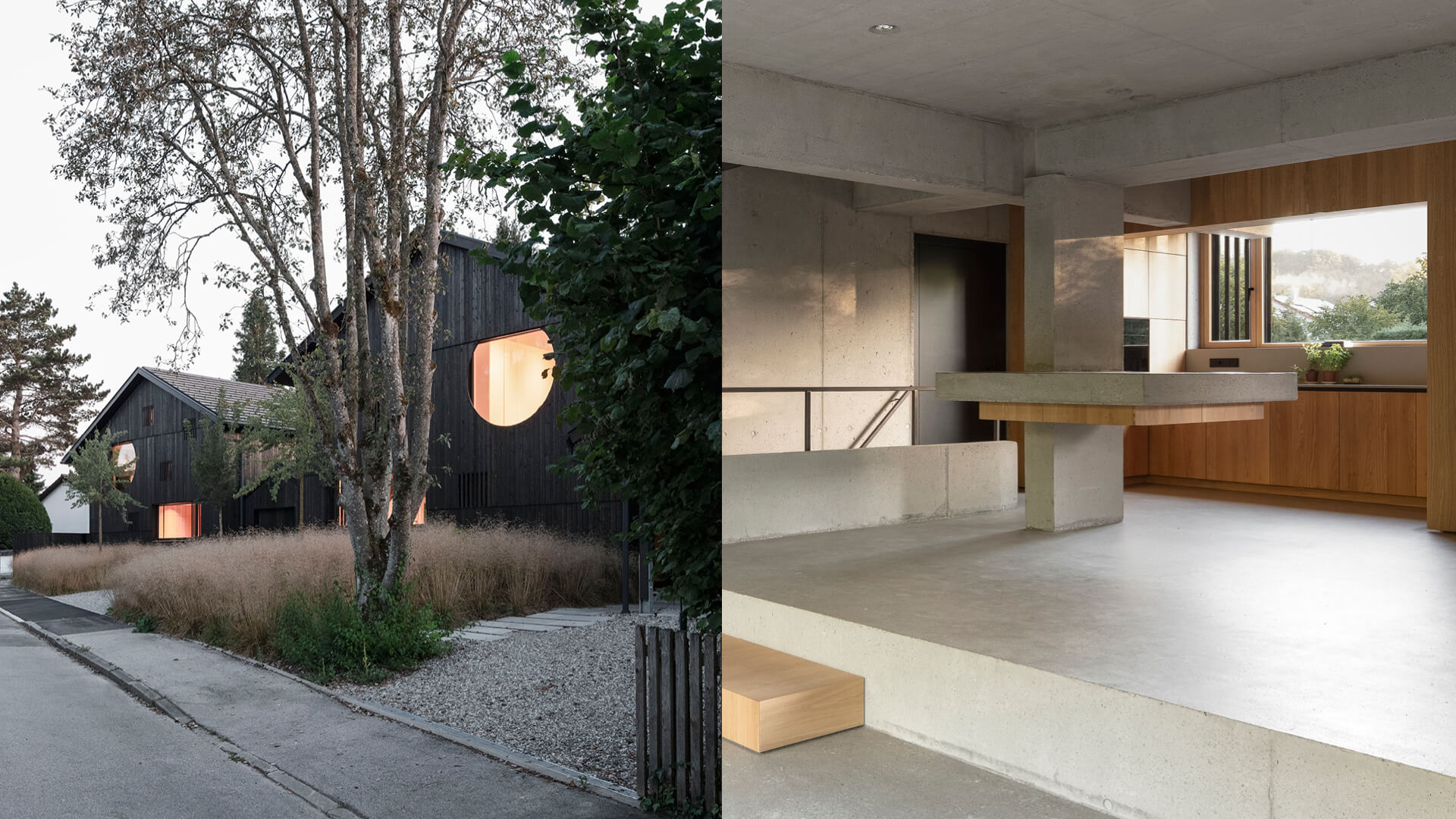
At first glance, the two houses that rise quietly on a leafy street in Söcking, near Lake Starnberg, in Bavaria, Germany appear modest. Their charred timber façades—punctuated by circular openings—recall the agricultural barns scattered across the Bavarian foothills that are marked by elongated, gabled silhouettes with weathered timber cladding. Commissioned by a multigenerational family, comprising a father and his son, along with the latter's wife and children, the House with one Pillar explores how compact plots can be transformed into generous, thoughtfully designed homes. Behind the subdued exterior lies an experiment in simplicity in the form of two private residences designed by Munich-based architect Fabian Wagner.

The residential architecture sits within a post-war neighbourhood on the outskirts of Starnberg, 20 kilometres south of Munich. Developed in the 1950s, the area is marked by large plots occupied by small, low-quality houses that have largely survived in their original form. In recent years, the local municipality explored ways to densify such neighbourhoods under the “Vision Starnberg 2025” plan. Although the initiative was eventually dropped, its spirit of inner densification quietly informed the approach of Wagner who heads Buero Wagner—a practice distinguished for its pared-back, materially honest buildings that seek clarity of form while engaging carefully with their contexts.
The site originally housed a deteriorating structure that Wagner chose to demolish rather than refurbish, due to its poor construction and central placement on the plot. Materials salvaged from the original house—including concrete, timber, and metal fixtures—were recycled on site, clearing the way for two new homes: one for the father and another for his son and young family. By opting for demolition and rebuilding, Wagner was able to create more generous living arrangements without expanding into undeveloped land, demonstrating that densification could happen within the existing suburban fabric.
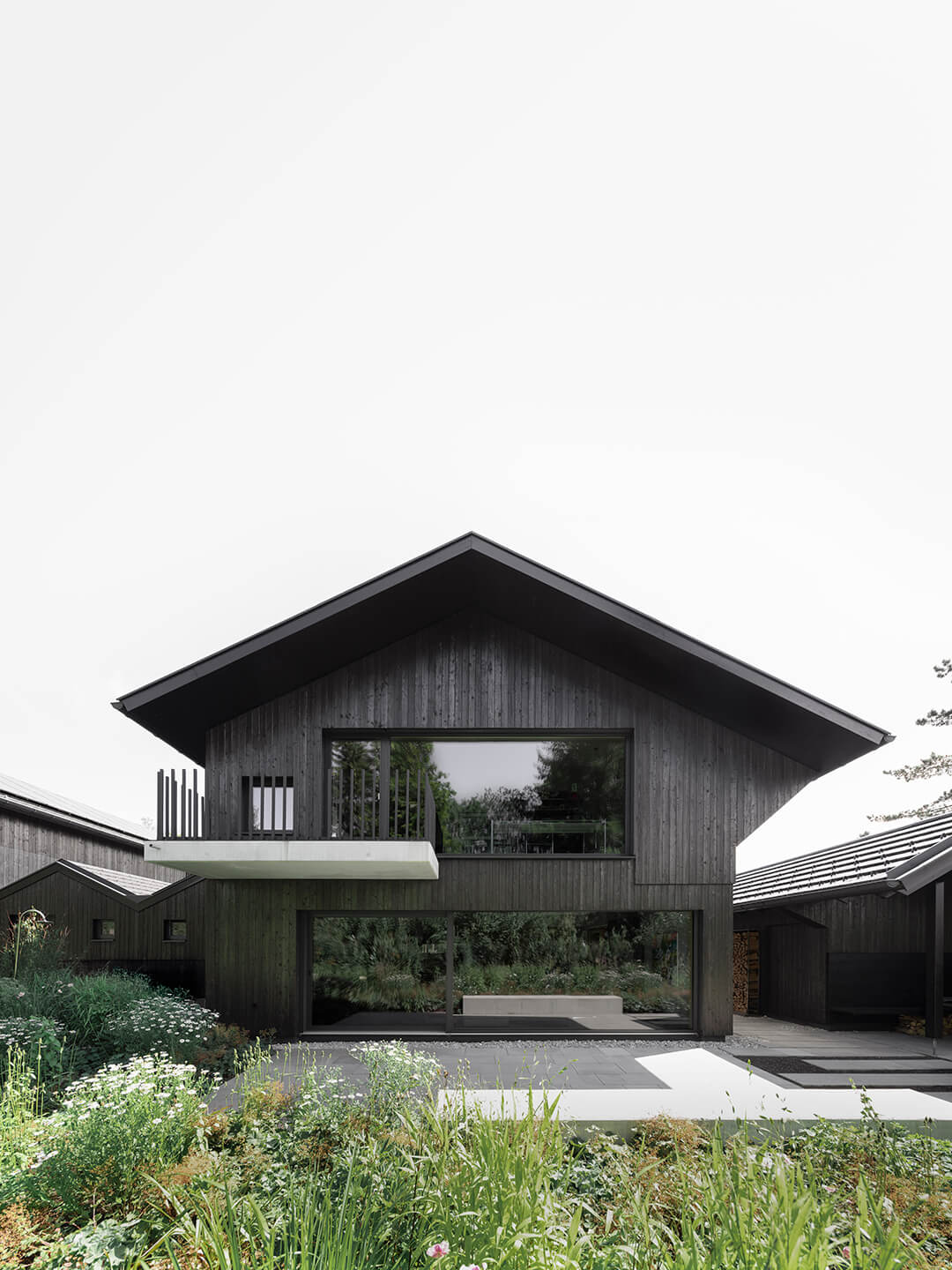
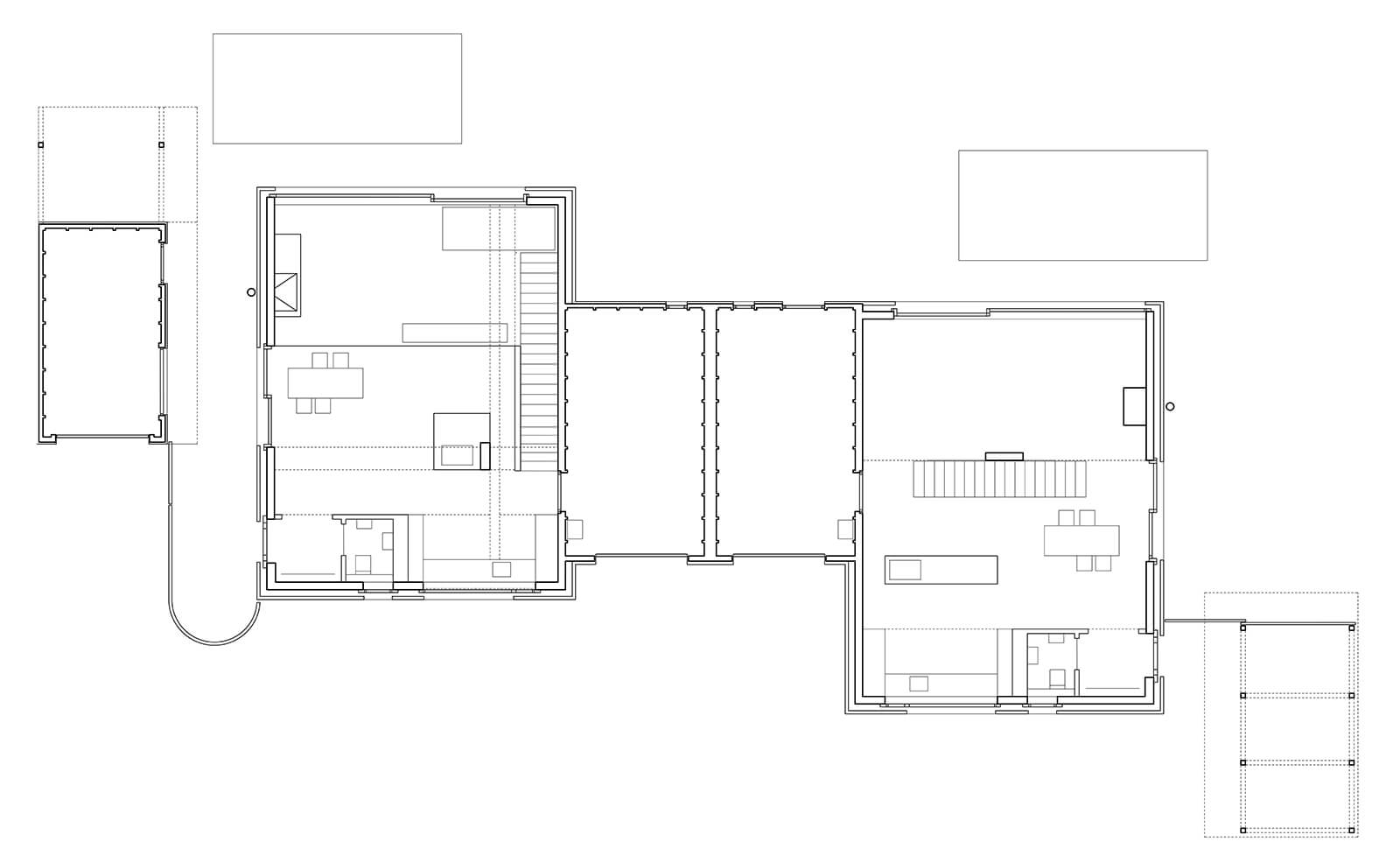
Both new houses are aligned with the street along their gable ends, echoing the orientation of surrounding barns. A small setback makes space for front gardens that soften the built environment's transition to the street and creates a meeting point for fellow dwellers. In much of suburban Starnberg, tall hedges and dense planting create opaque barriers between houses and the public space, reinforcing a sense of separation. Wagner deliberately rejected this convention, instead emphasising openness and visibility.The entrances are sheltered by large canopies, which, together with adjoining garages, form intermediate spaces. From here, one moves through a layered sequence of thresholds, passing into private gardens at the rear end of the site. Inside, the kitchen faces the street as a more public, communal space, while living rooms are directed toward the quieter garden side. Bedrooms and studies retreat to the upper levels, ensuring privacy for each generation of the family.
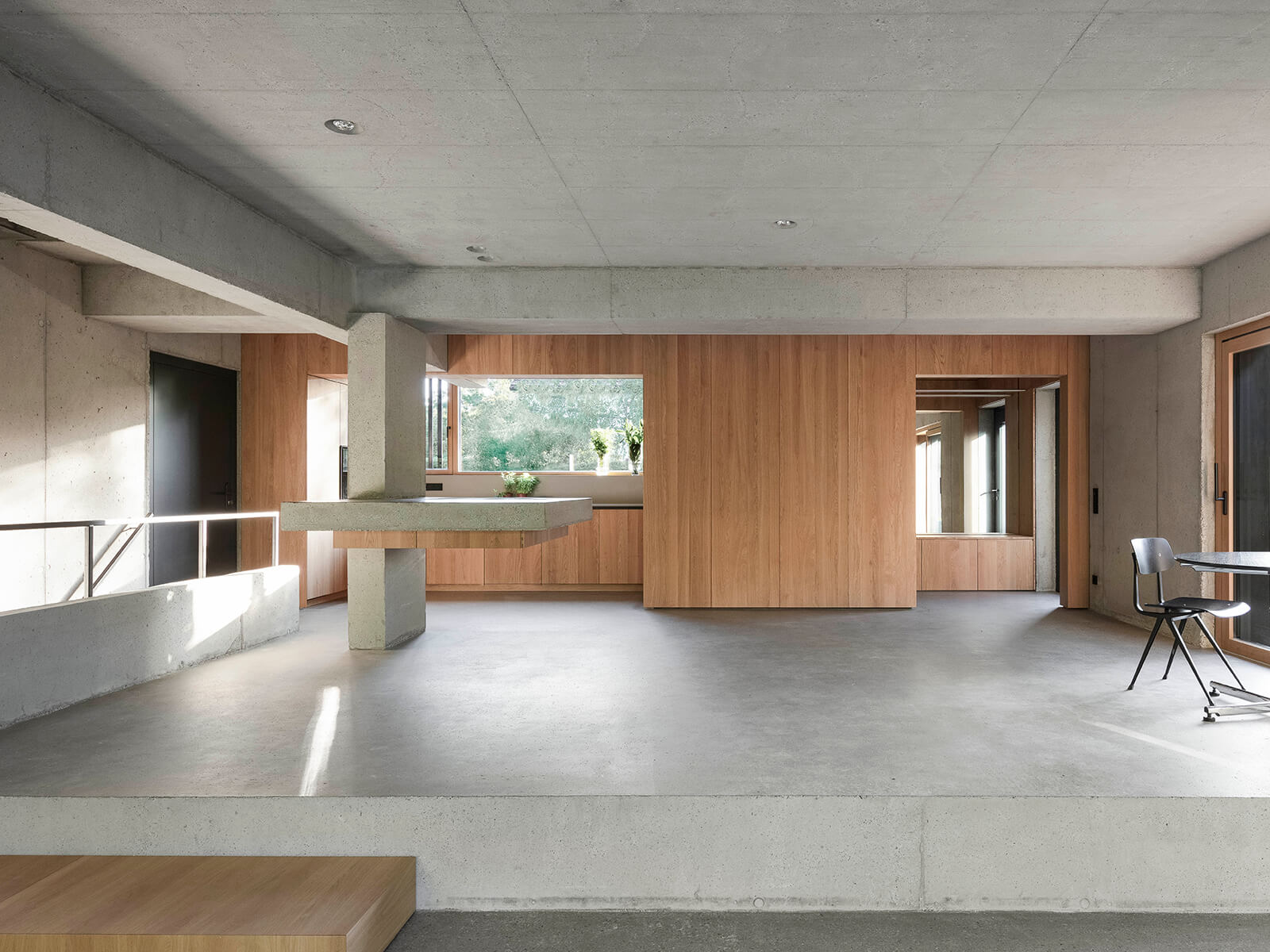
The houses are modest in scale, with floor areas of only 90 square metres each. Local planning rules imposed strict height limits, making it necessary to place ancillary functions such as storage and technical rooms in the basement. To maximise the sense of a space above, Wagner made a radical choice where the first floor of each house is conceived as one large open room, supported only by a single pillar. “The idea of a single load-bearing column was driven by the desire for simplicity and clarity,” the German architect told STIR. “It anchors the house while allowing the interior to remain open and flexible.”
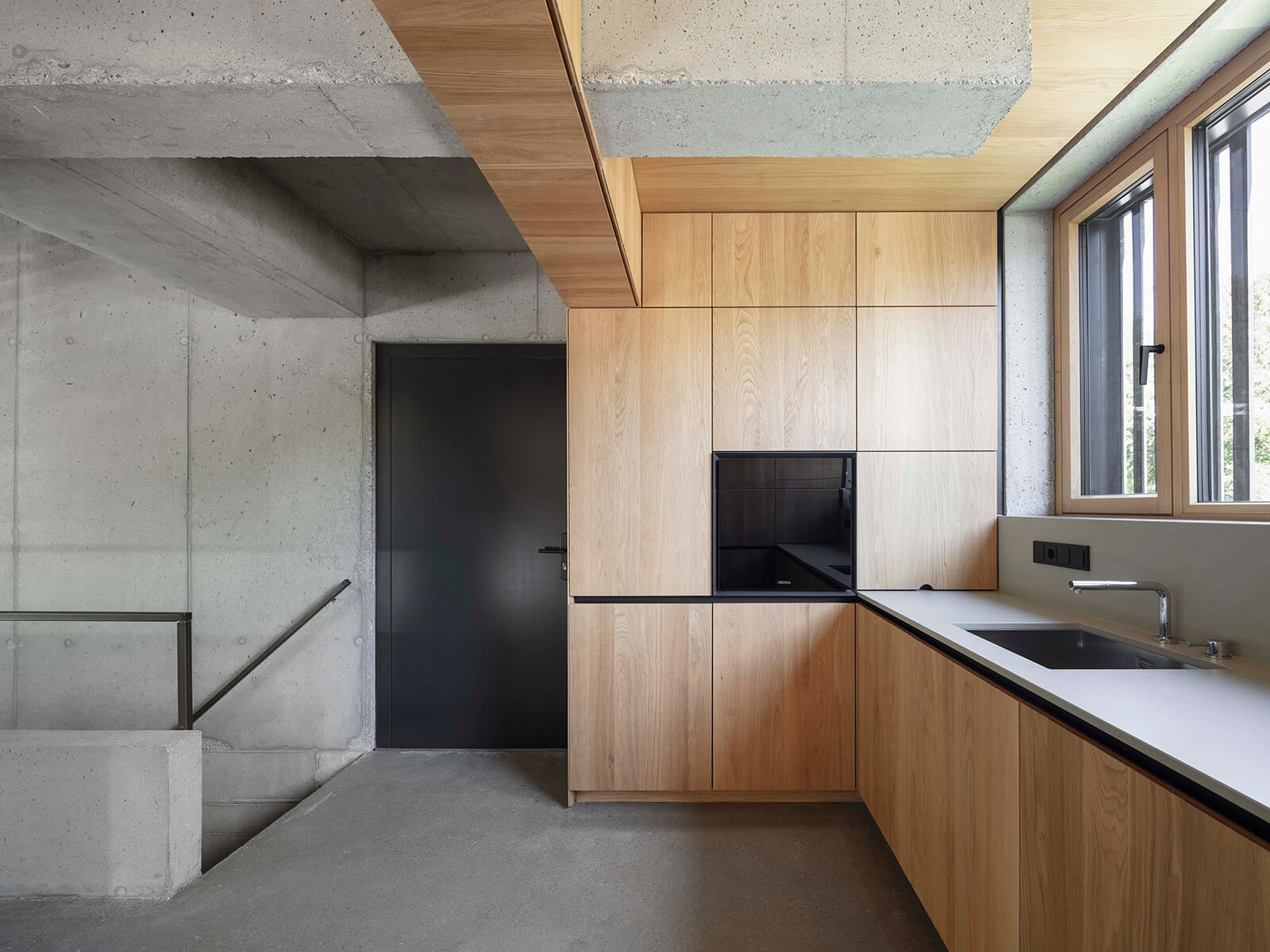
This single structural column supporting the first floor defines the spatial experience of the home, giving a sense of stability while allowing activities to freely flow around it. A wooden box inserted at the rear end of the residence houses the entrance, kitchen, and a small WC. Beyond it, the space opens dramatically. Slight variations in floor and ceiling levels delineate pockets for cooking, dining, and living without any need for partitions. A large window facing the garden extends this openness outward, reinforcing a feeling of generosity within a compact footprint.
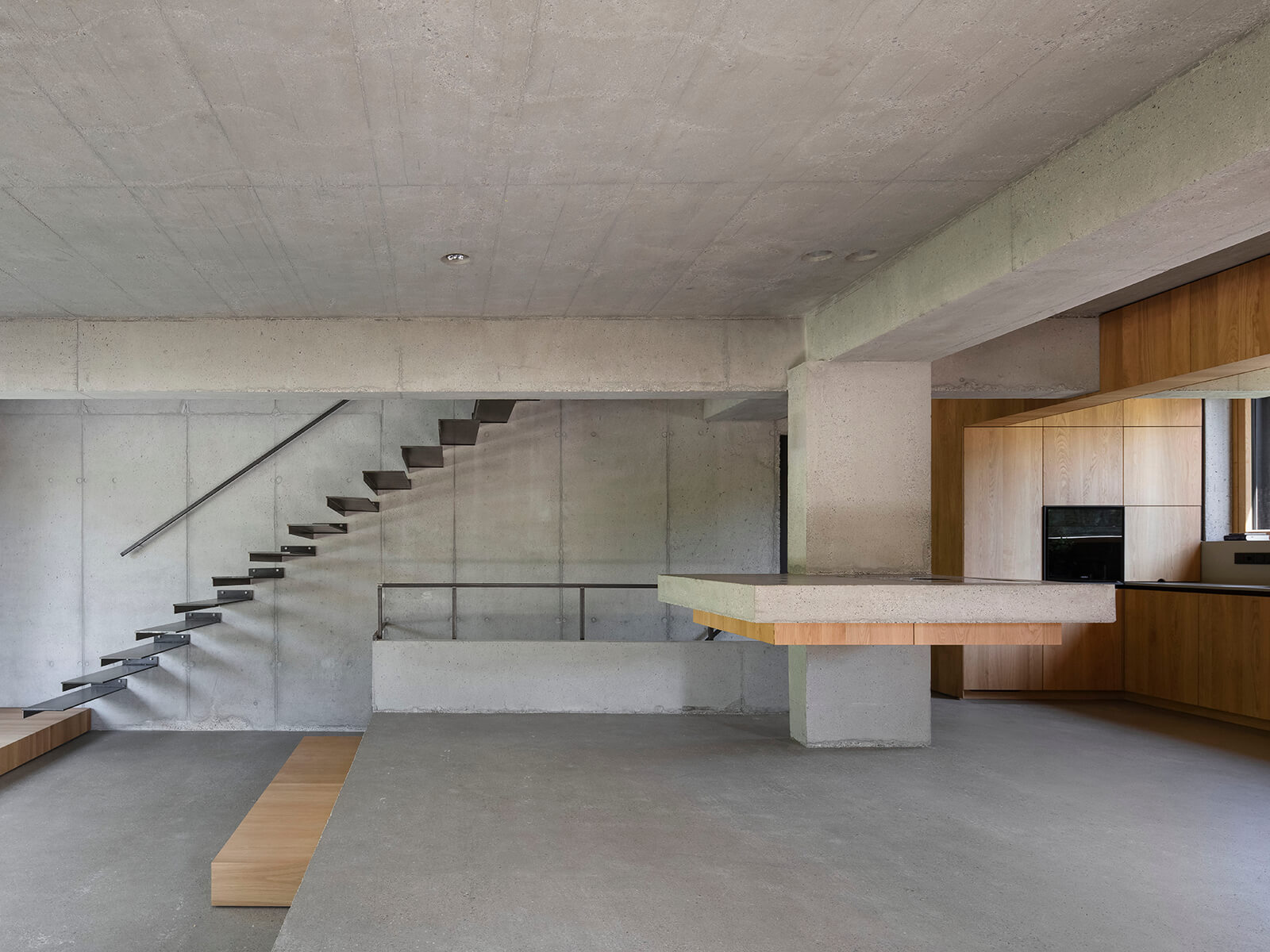
The column does more than hold up the house. Wagner casted the kitchen worktop directly into the concrete pillar, turning the structural element into a piece of furniture. The intervention is both pragmatic and symbolic as the column becomes the literal and emotional centre of the home, grounding family life around its core. Built-in oak elements reinforce the integration of structure and domesticity, connecting functional furniture with architectural form. The cloakroom, kitchen fittings, and stair landings are seamlessly tied into the wooden box, doubling as storage. Cantilevered steps and steel railings were custom-designed, as was the fireplace, so that each house feels like a unified whole, where even details belong to the architecture.
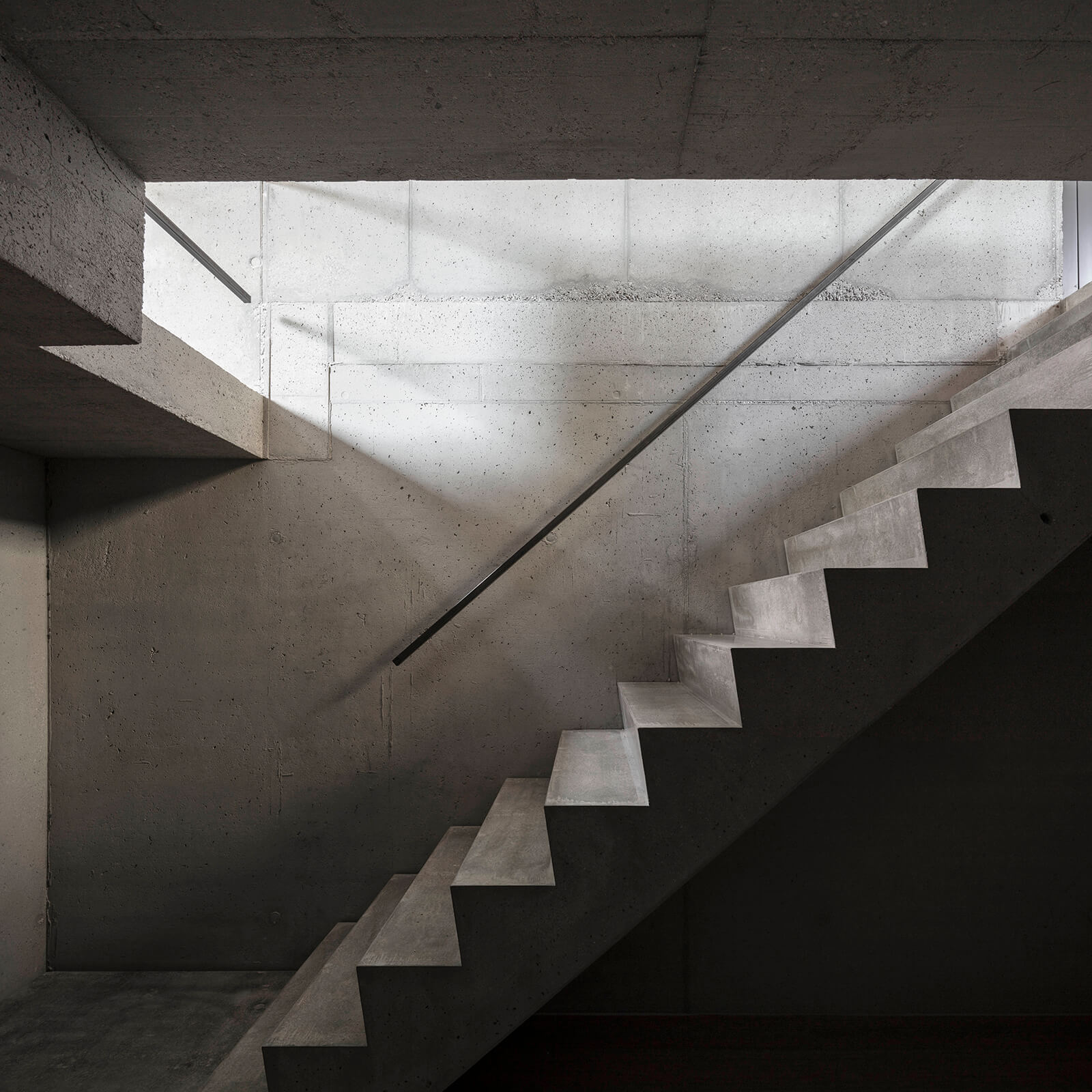
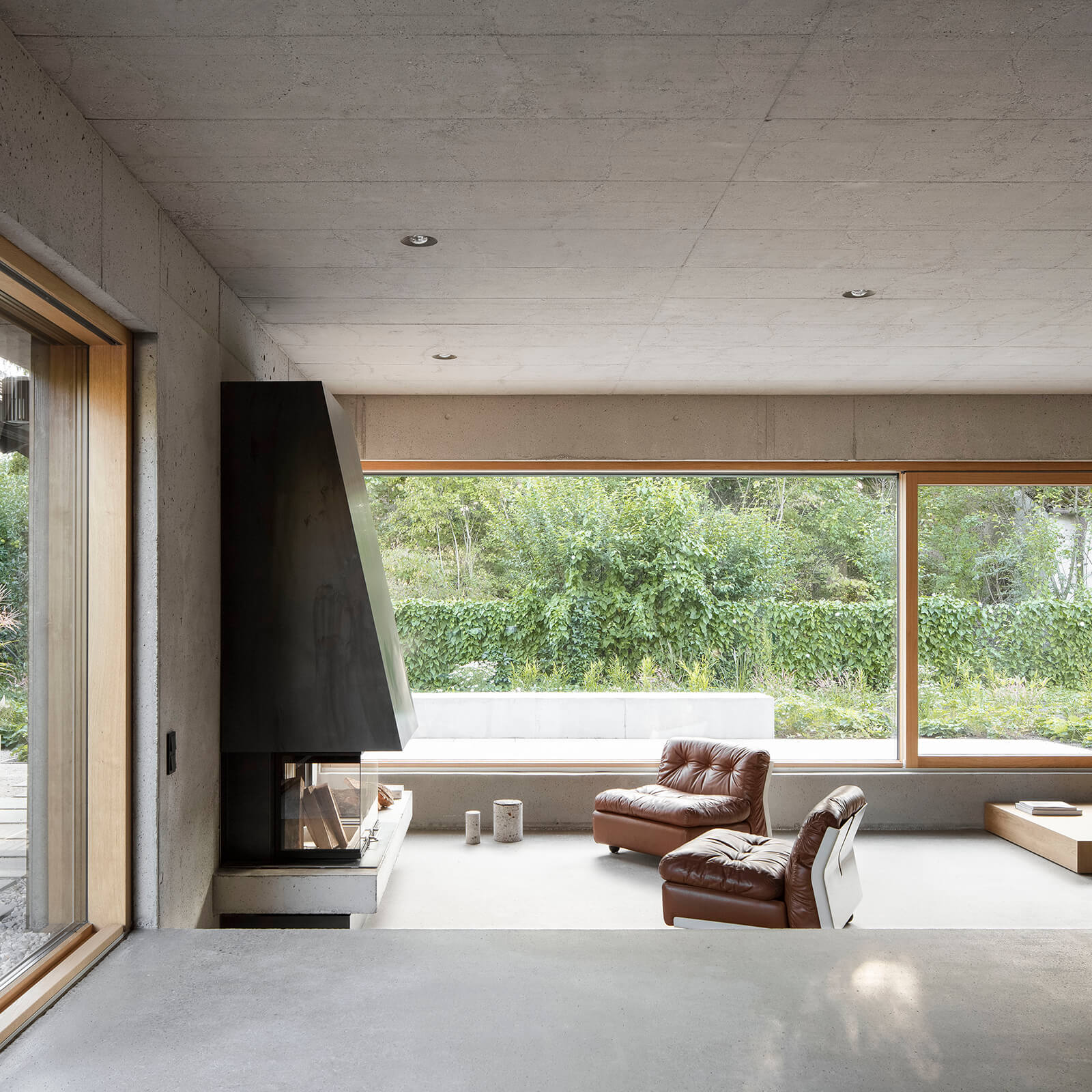
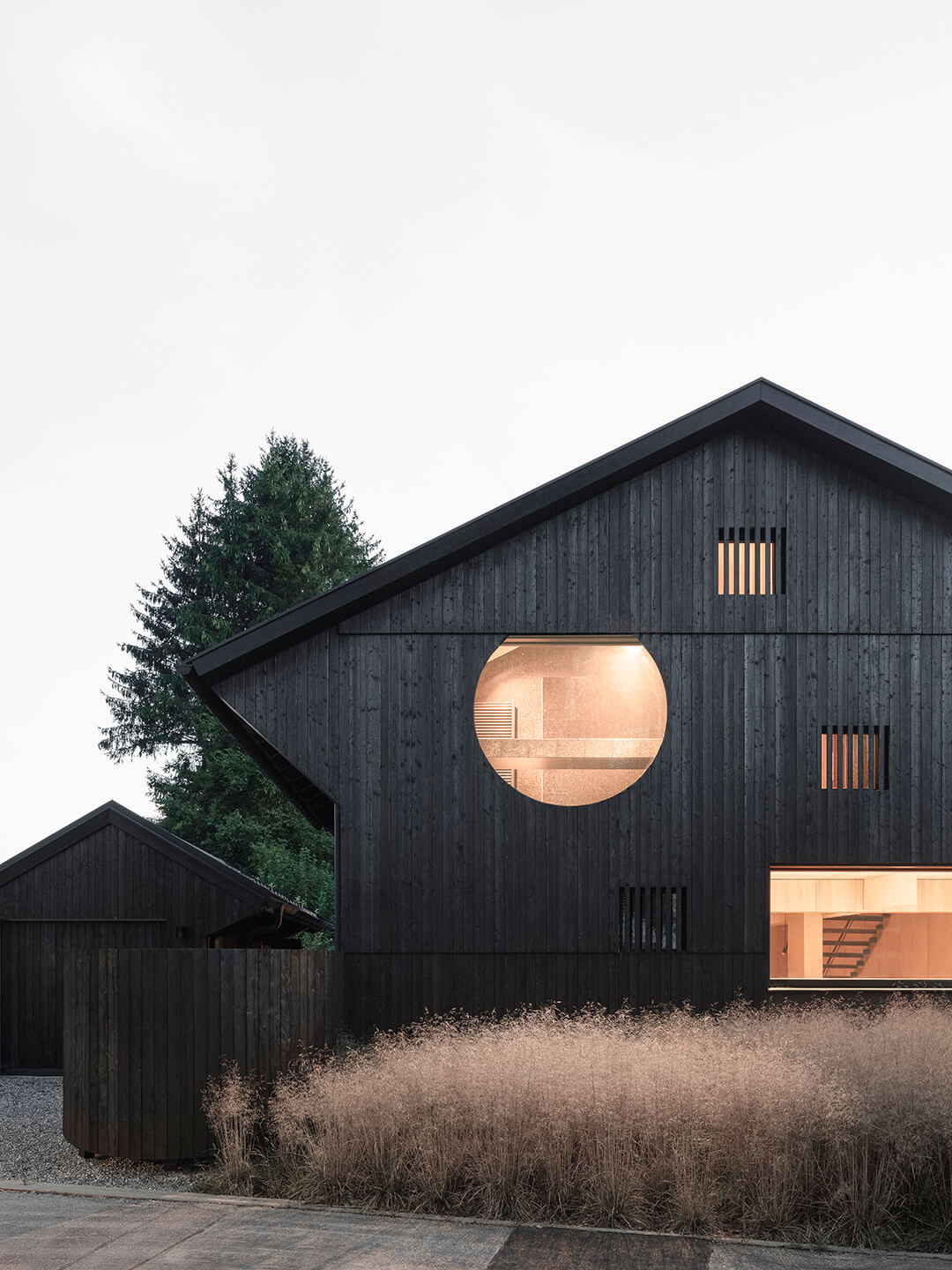
Material choices follow a similarly direct logic. The basements and partially underground first floors are cast in solid concrete, their surfaces sandblasted to achieve a soft texture. Floors were ground and sealed, remaining monolithic without additional cladding. The first floors above are built in solid timber, echoing regional construction methods while creating warmer, more intimate residential interiors. The design approach has been to keep the materials visible. Concrete and wood walls are exposed, their raw character forming the atmosphere of the interior. Bio-based insulation was used for exterior walls and the roof, which are cladded with charred timber boards. The offsets visible in the façade are not decorative but a result from the limited lengths of the wooden boards. As with traditional barns, the formwork is scaled from top to bottom to prevent water from lingering on exposed end grain.
The painstaking material honesty that Wagner evokes in this project is also a recurring tenet one finds in his larger oeuvre. For instance, in the Campana del Rey rum bar in Munich, he combined historic brick walls with concrete and metal detailing, creating an intimate yet expressive interior—marked by a sensitivity to texture and atmosphere that resonates with the Söcking houses.
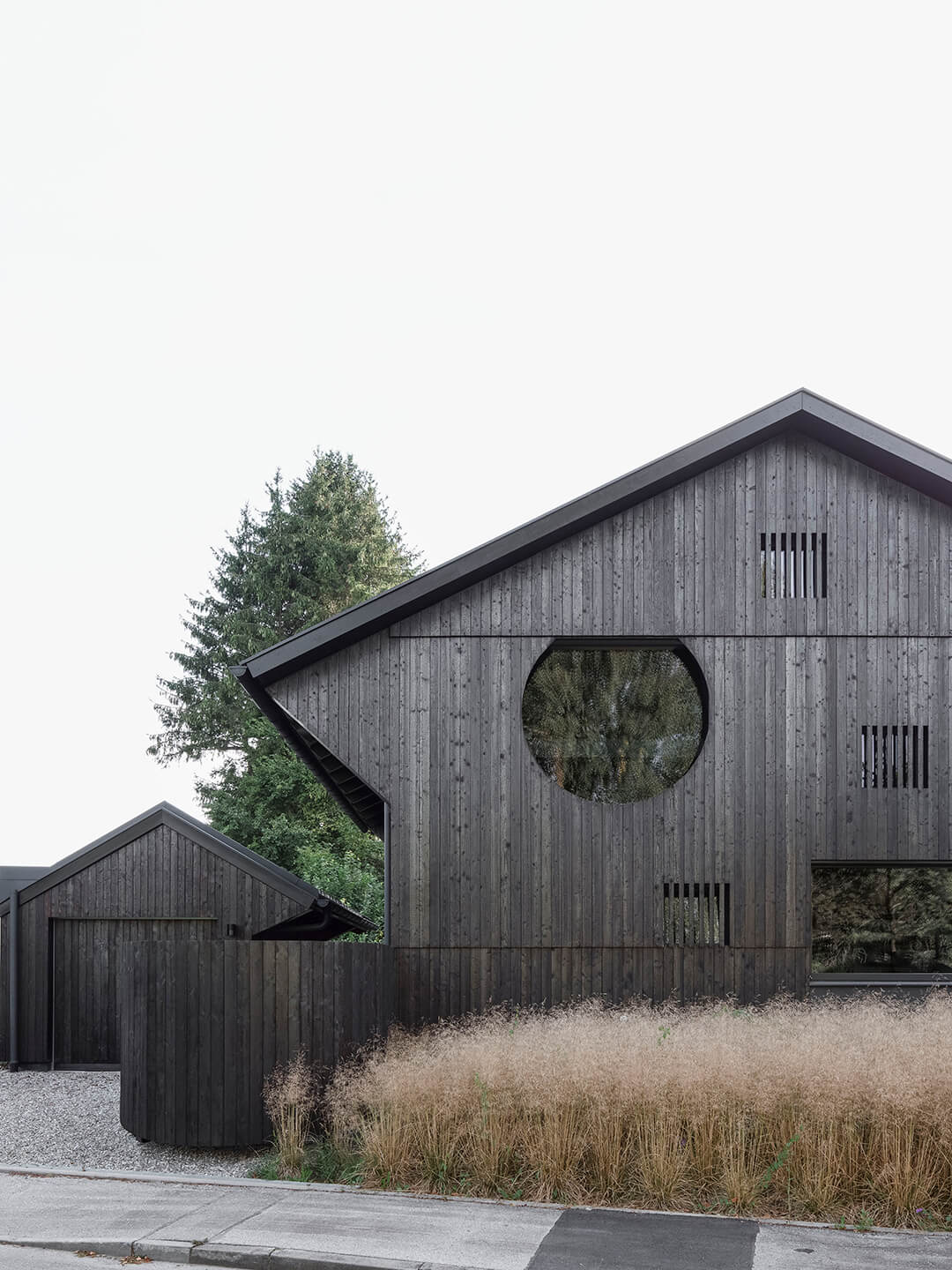
The façades are punctuated with vertical slits that conceal protected windows, ensuring privacy from the street. In contrast, large circular openings cut into the blackened wood give the residential design a distinctive face, allowing glimpses of treetops from the inside and anchoring the buildings in the streetscape. At once discreet and expressive, the openings capture Wagner’s balance of restraint and character.
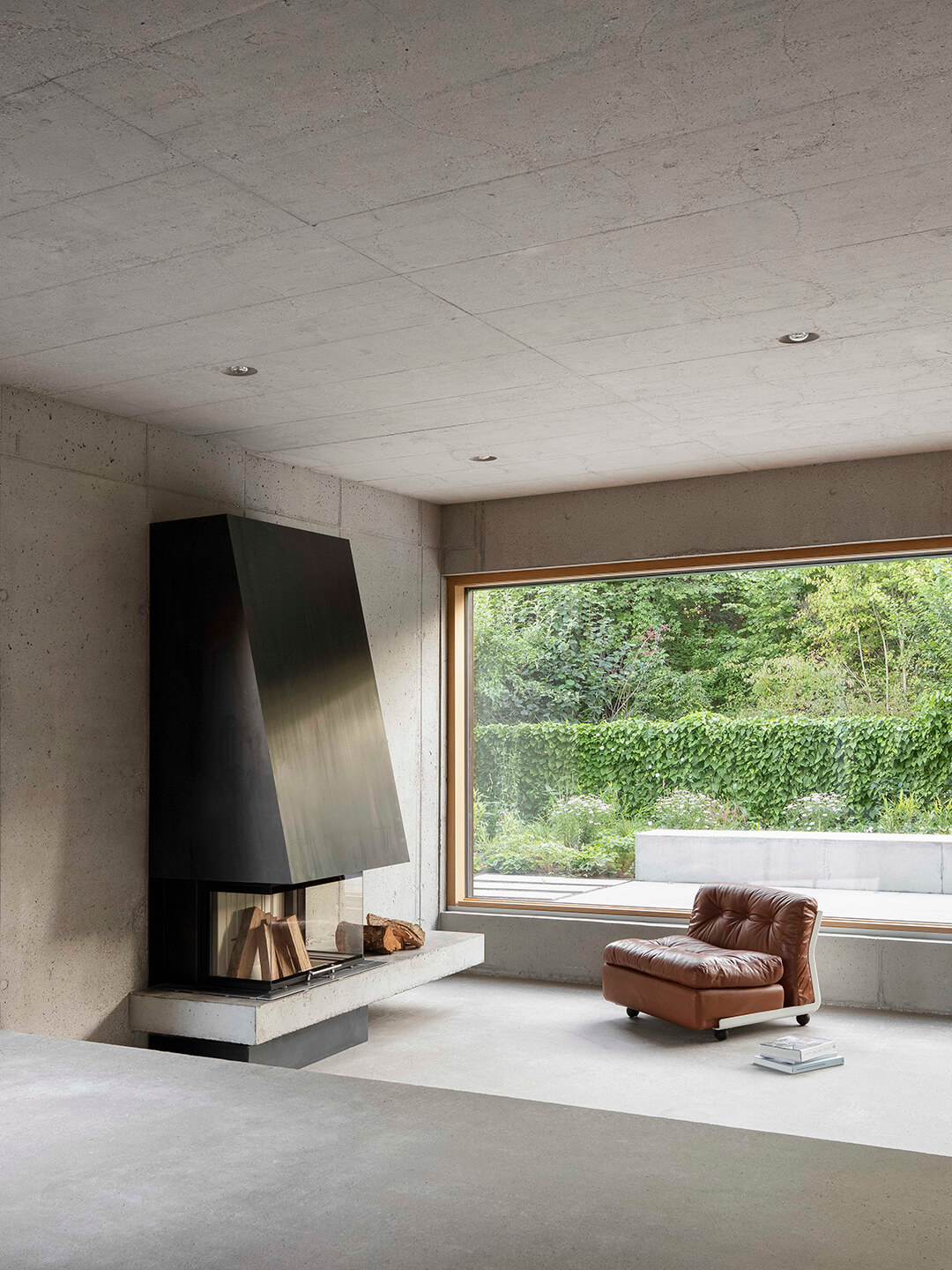
Despite their almost identical appearance, the interiors of the two houses diverge. Although outwardly similar, the houses were tailored to different households. The adaptable open plan, together with the clarity of the structural system, allows each household to shape its environment while remaining part of a shared family compound.
Speaking with STIR, Wagner explained his aim behind balancing solidity with freedom. He said, “I wanted the space to feel timeless and stable, with a monolithic structure for calmness and strength, and at the same time, it had to adapt to the evolving needs of the family.” This duality defines the lived experience of the houses that is at once rooted and flexible, protective yet open, and is capable of holding the daily rhythms of three generations under one roofline.
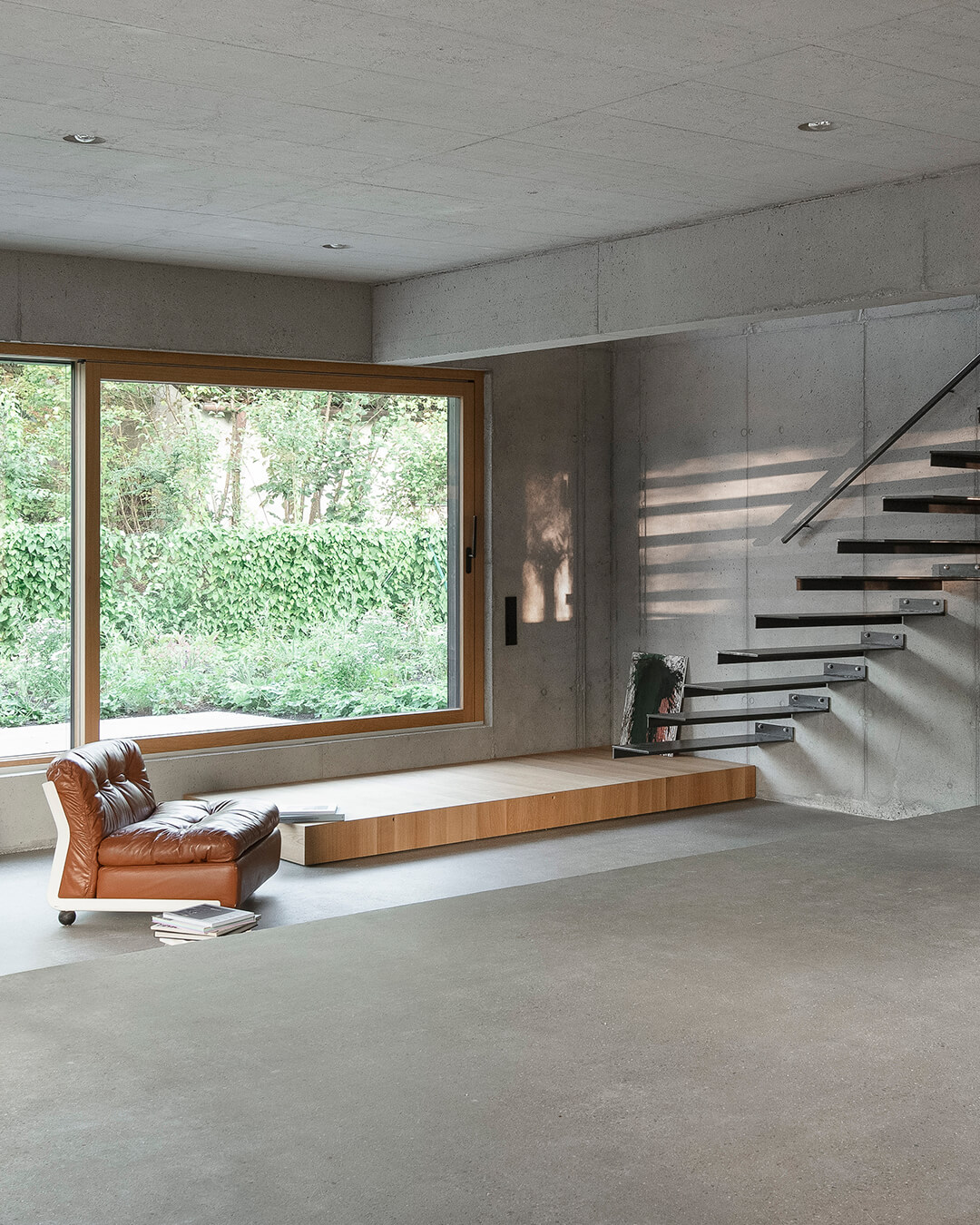
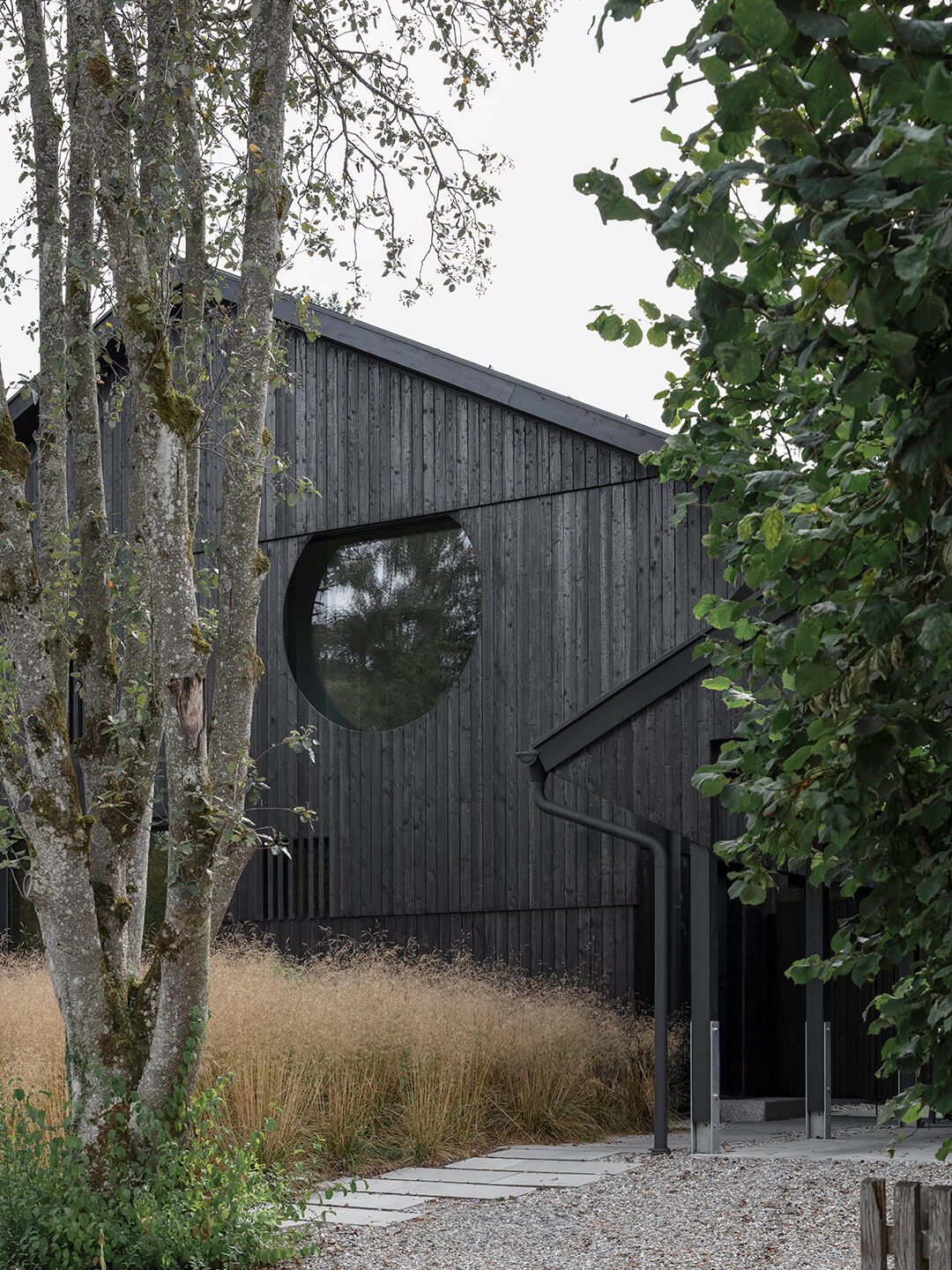
The project demonstrates how architectural restraint can yield generosity. Within compact footprints, the decision to build around a single column opened up possibilities for flexible use and an expansive perception of space. By integrating construction and furnishing, exposing materials rather than hiding them, and aligning new structures with the spirit of their surrounding, Wagner created a home that is clear in form and rich in life. This is a house that neither dominates its context nor retreats into anonymity. Instead, it offers a model for how densification can unfold with dignity and precision, where modest scale gives rise to an enduring character of the built environment.
Name of the project: Houses with one pillar
Location: Starnberg am Starnbergersee, Bavaria, Germany
Architect: Buero Wagner, Munich
Design Team: Fabian A. Wagner, Edwin Hoffman, Louise Daussy, David Lachermeier
Gross Floor Area: 660 sqm
Structural engineer: Karl Wagner
Technical Building Services: Gipser Haustechnik GmbH, Elektro Stürzer GmbH
Landscape Architect: Landschaftsarchitektur Meyer-Fey
Year of Completion: 2025

by Pranjal Maheshwari Oct 19, 2026
The Mumbai-based architects integrate courtyards, mesh screens and north light trusses to create a dining space that doubles up as a community hub at SR University, Warangal.
by Mrinmayee Bhoot Oct 17, 2026
The Rotterdam-based institute centres the Indian Ocean as a network for exploring material histories and transnational links shaping coastal cultures, positing them as future models.
by Pranjal Maheshwari Oct 16, 2026
At the 2026 Stirling Prize ceremony, Mary Duggan with RUFF Architects, MAKER Architecten and Nakshabid Architects were felicitated for proffering quality housing and social equity.
by Mrinmayee Bhoot Oct 12, 2026
The new Centre for Contemporary Arts, fostering public engagement with art in Uzbekistan, is housed in a tram depot refurbished by the French studio, emulating local craftsmanship.

make your fridays matter with a well-read weekend
Enter your details to sign in
Don’t have an account?
Sign upOr you can sign in with
a single account for all
STIR platforms
All your bookmarks will be available across all your devices.
Stay STIRred
Already have an account?
Sign inOr you can sign up with
Verification link sent to check your inbox or spam folder to complete sign up process
Tap on things that interests you.
Select the Conversation Category you would like to watch
Please enter your details and click submit.
Enter the 6-digit code sent at


Generosity and restraint define Fabian Wagner’s twin homes in Söcking
by Aarthi Mohan | Published on : Oct 22, 2025


 Sign in with Google
 Sign in with email
What do you think?