Architecture11 mins. read
Architectural Fantasies: An alt-stream of idiosyncratic American architecture
by Jincy IypeAug 27, 2026




by Bansari PaghdarPublished on : Nov 12, 2025
Located at the intersection of Allen Parkway and Montrose Boulevard, the Ismaili Centre Houston overlooks Buffalo Bayou Park and serves as a place of religious congregation for the Ismaili community, as well as a public gathering space for all. The United States’ first Ismaili civic and cultural complex, the building is designed by British architect Farshid Moussavi, in collaboration with landscape architect Thomas Woltz of Nelson Byrd Woltz Landscape Architects. The 44,000 sqm centre was inaugurated on November 6, 2025, by Mayor John Whitmire, in the presence of the spiritual leader of the global Shia Ismaili Muslim community, His Highness Prince Rahim Aga Khan V. The project is the seventh of its kind in the world, following centres in London (1985), Vancouver (1985), Lisbon (1998), Dubai (2008), Dushanbe (2009) and Toronto (2014).
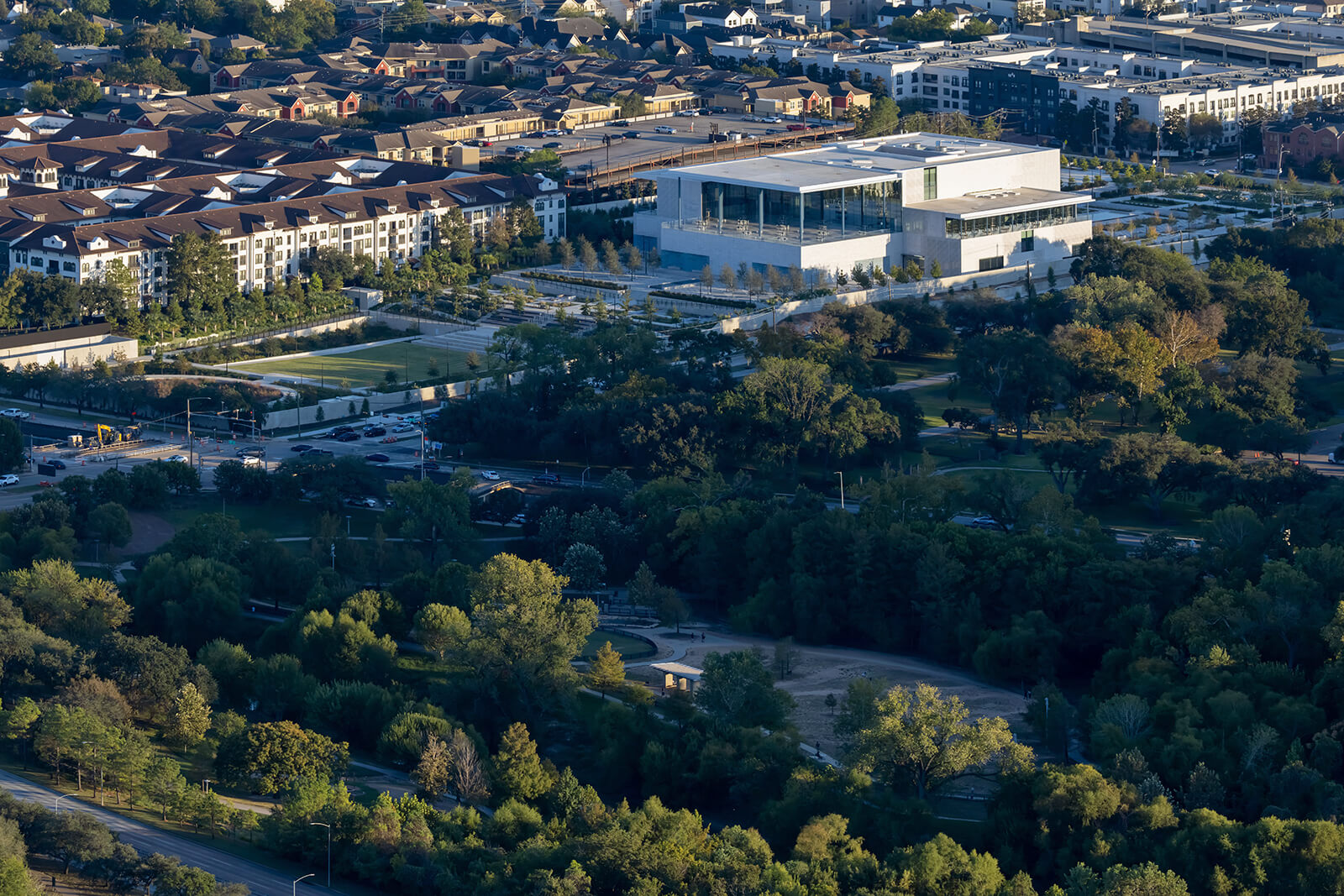
"The relationships between Ismailis and the communities in which they live have always been grounded in understanding and common purpose. Today, we honour that tradition, extending the hand of friendship to all, regardless of background or faith. This building may be called an Ismaili Center, but it is not here for Ismailis only. It is for all Houstonians to use; a place open to all who seek knowledge, reflection and dialogue,” relayed His Highness Prince Rahim Aga Khan V in the official release. “Now that it’s complete, it stands as a new monument along the Allen Parkway corridor, and a beacon of light surrounded by some of our most treasured neighbourhoods and cultural institutions,” stated the Mayor.
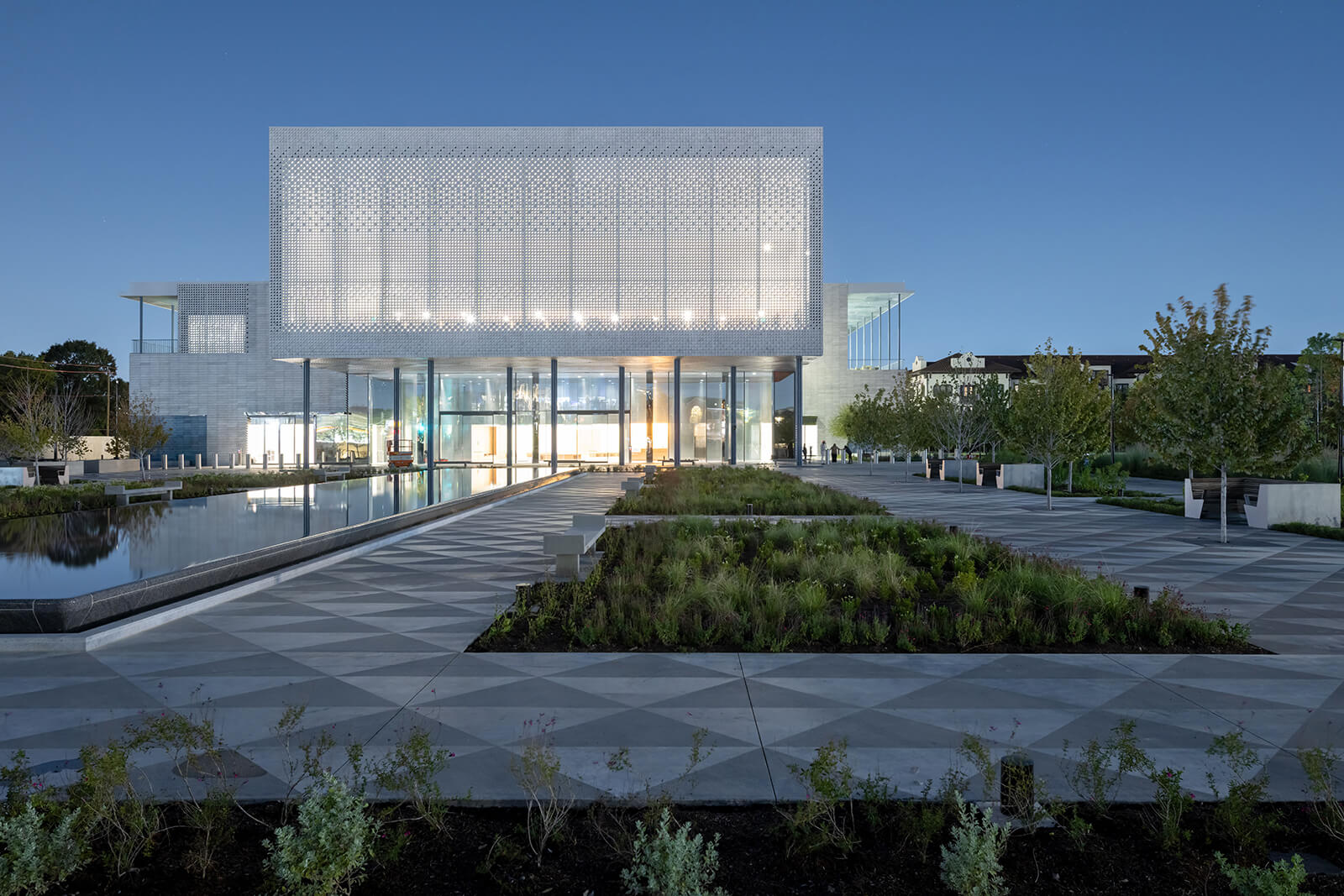
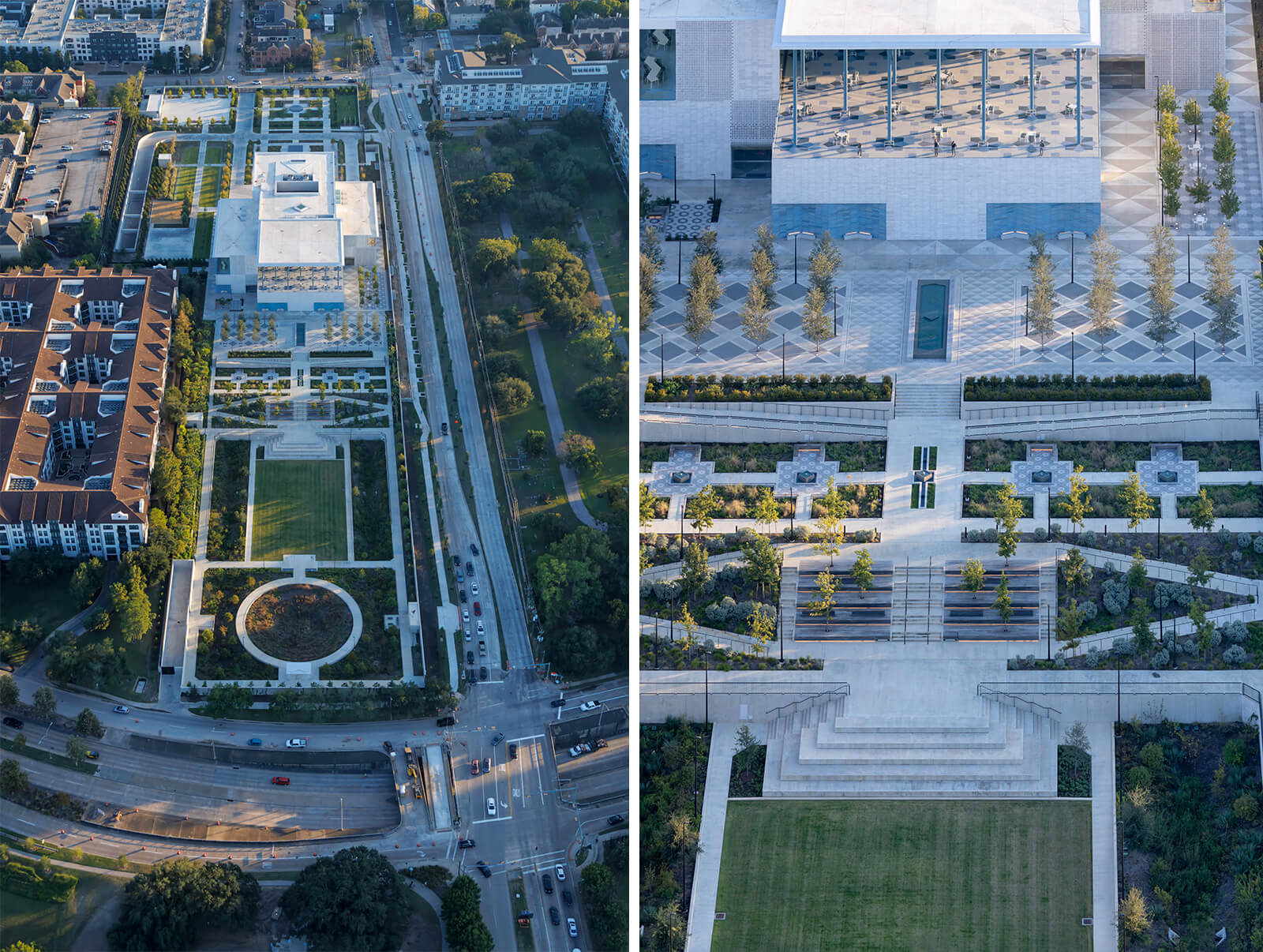
The centre features over nine acres of gardens and courtyards placed around the main building. A promenade, lined with trees and water features, defines the main entrance to the building, embodying the Ismaili ethos of “harmony between people, place and culture,” as stated in an official release. The civic architecture itself does not seek to replicate traditional styles; instead, it focuses on contemporary architectural translations—ranging from reimagining ‘structure as legible order, ornament as human scale, repetition as unity and light as material’. The interventions also draw from Persian spatial elements such as a porous sequence of eivans (verandas) and perforated stone screens—threads that also respond well to the climate of Houston and the site’s geography.
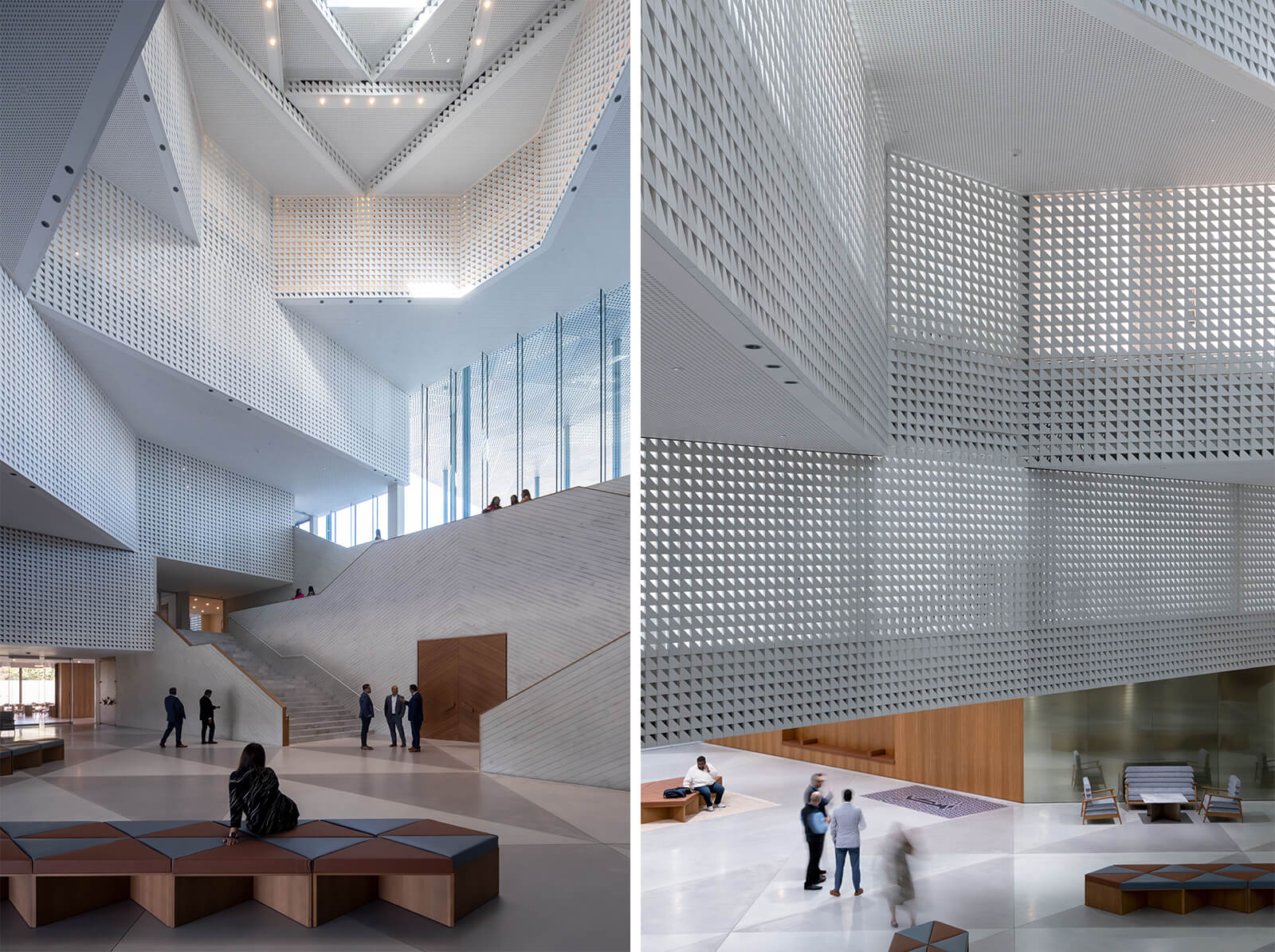
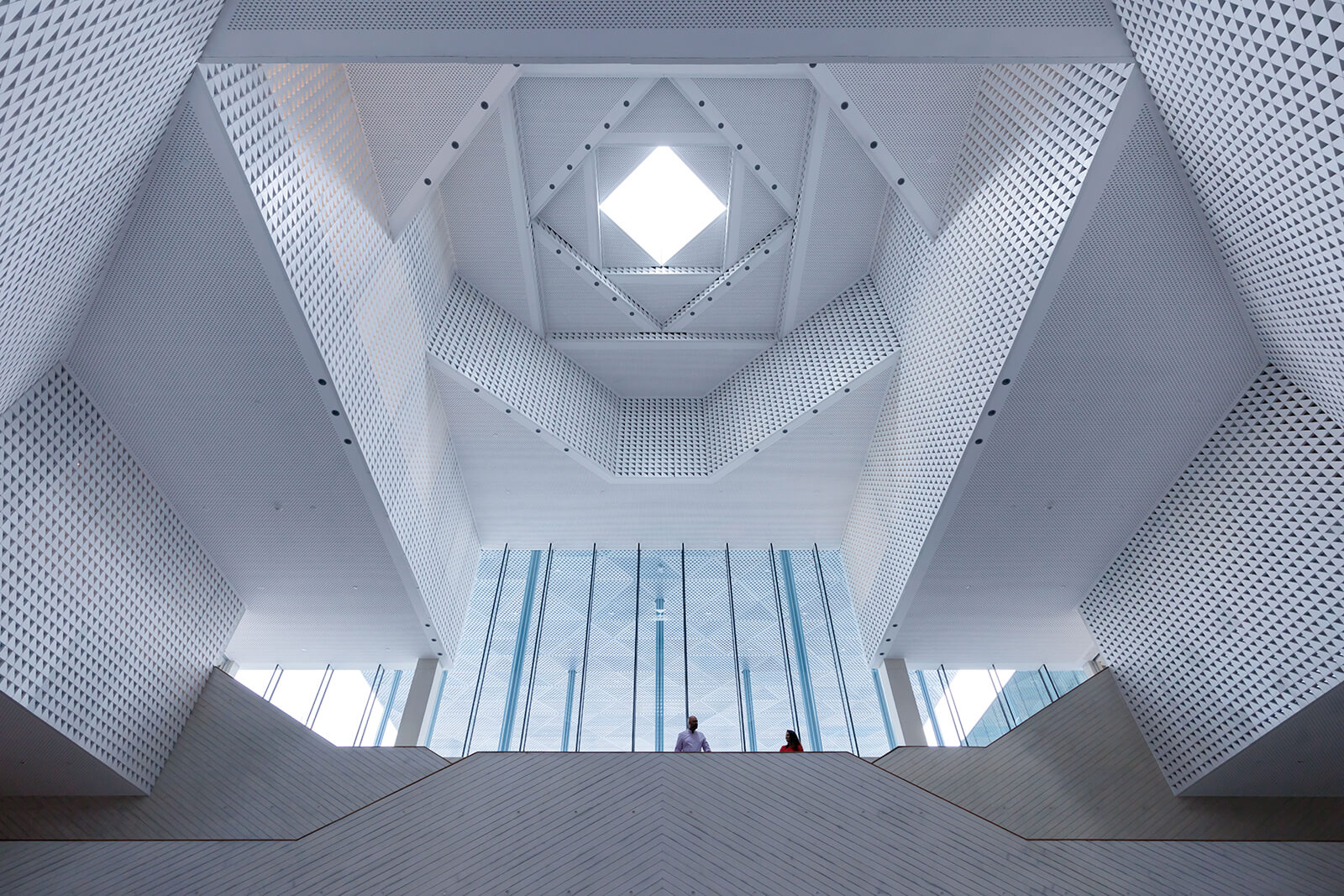
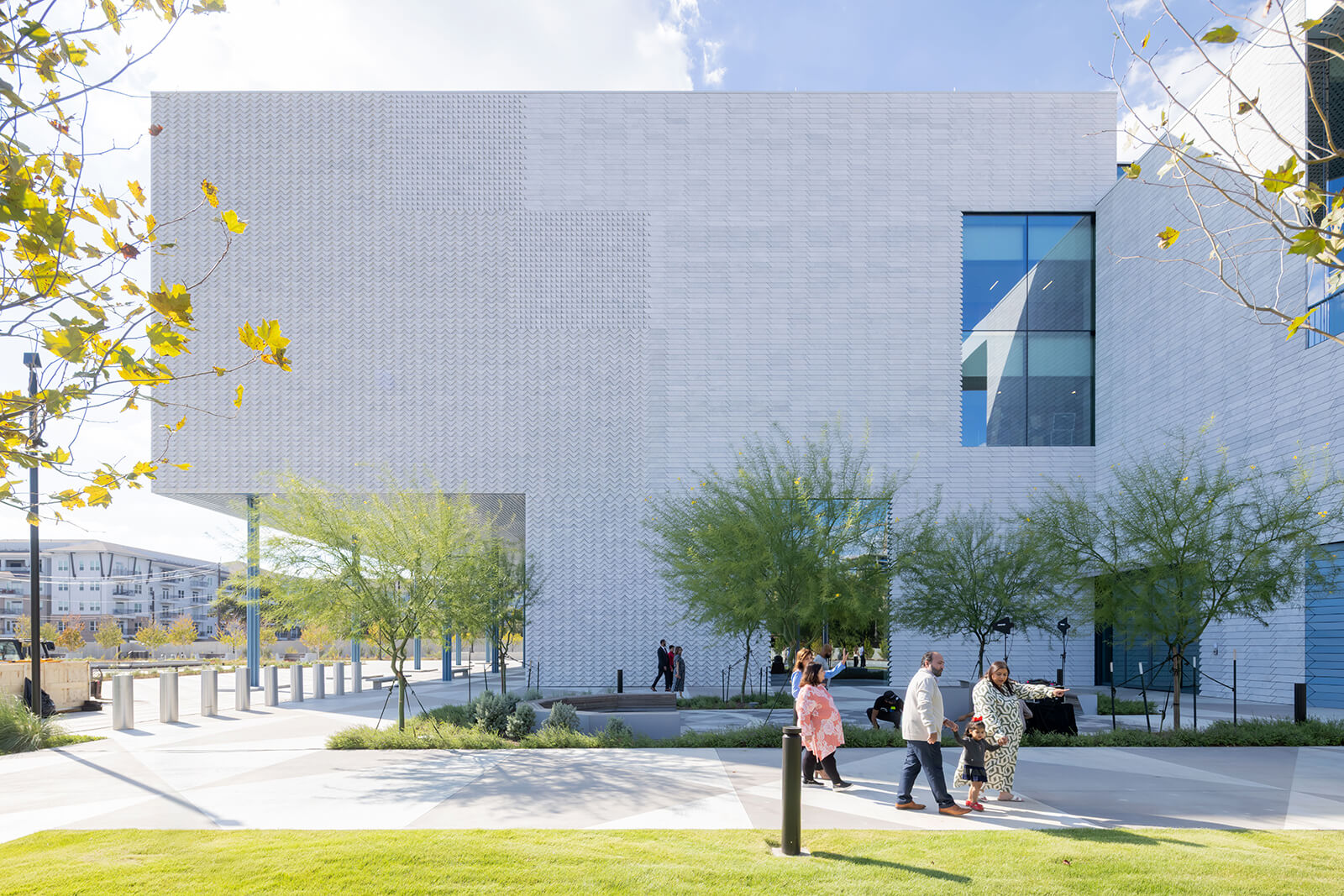
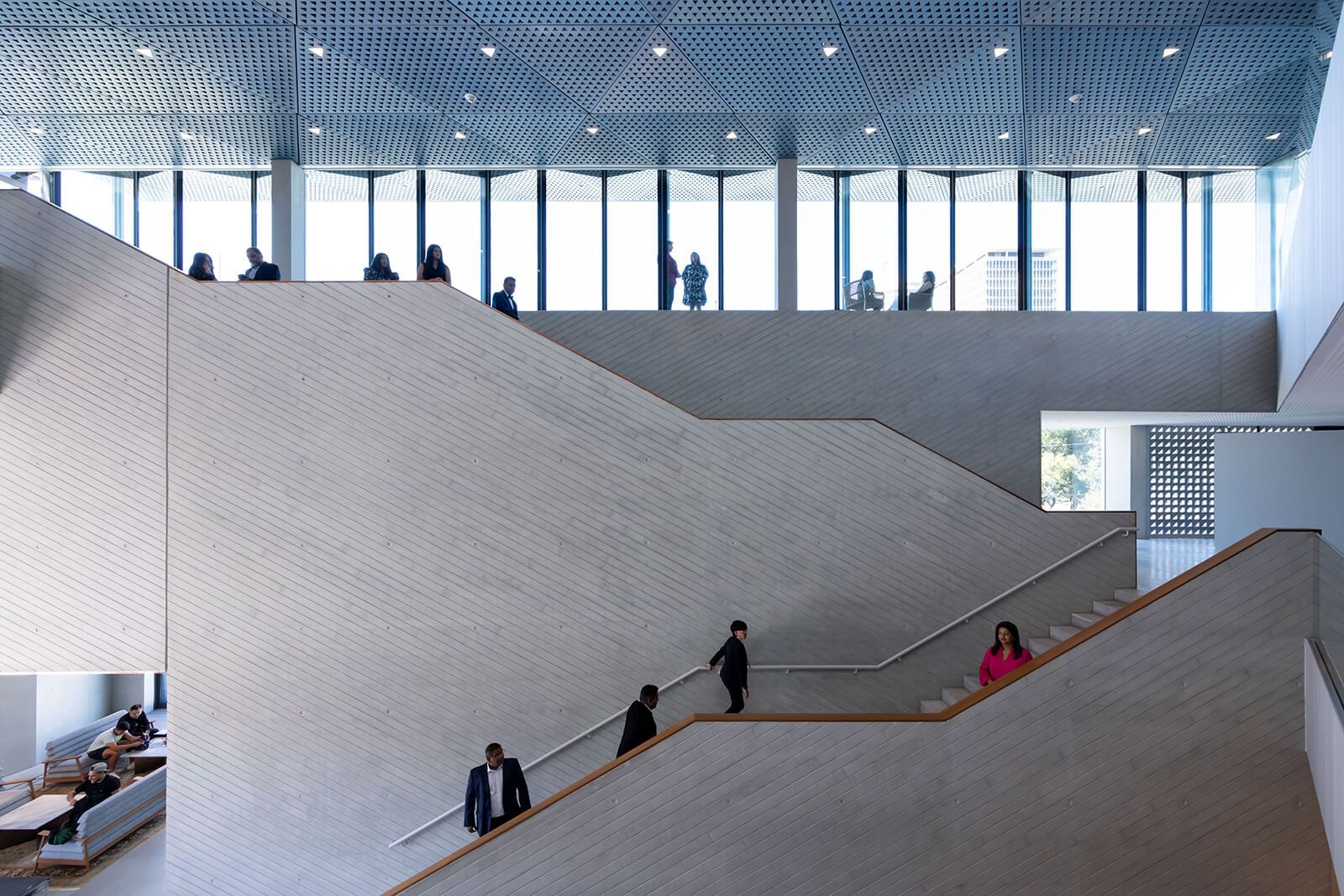
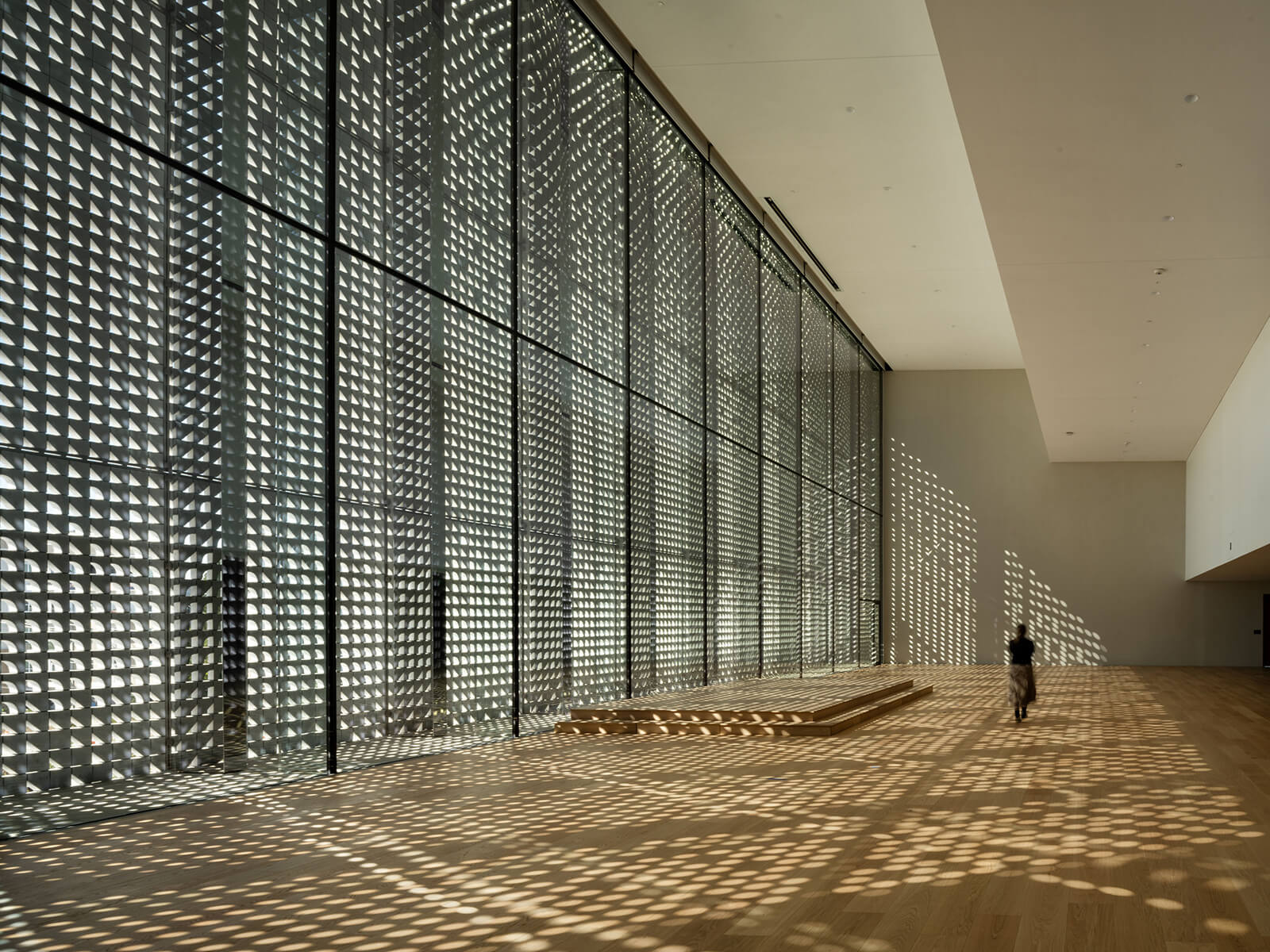
The facade design reveals a combination of stone tiles featuring triangular apertures and subtle scallops that regulate the amount of natural light filtering into the spaces while offering views of the landscape. The interior spaces feature steel, wood, silk-laminated glass and ultra-high-performance concrete, assembled in a unifying geometry. Creating a profound sense of connection to the divine, the central atrium is crowned by a geometrically layered skylight that merges sky and structure into a single, luminous composition.

The landscape architecture is informed by Woltz’s decade-long research on the contemporary relevance of historical landscapes in Islamic architecture. A result of a comprehensive study of historic sites in Spain, Egypt and India, the project marks the landscape practice’s fourth project with the Aga Khan Development Network. Incorporating elements such as the sound of water, the architecture explores the spatial, sensory, and multicultural dimensions that define the contemporary evolution of Islamic architecture. The landscape design features terraced lawns, flood-adaptive gardens and water bodies, arranged in a geometric grid that aligns multiple architectural and landscaping elements in a quiet harmony.
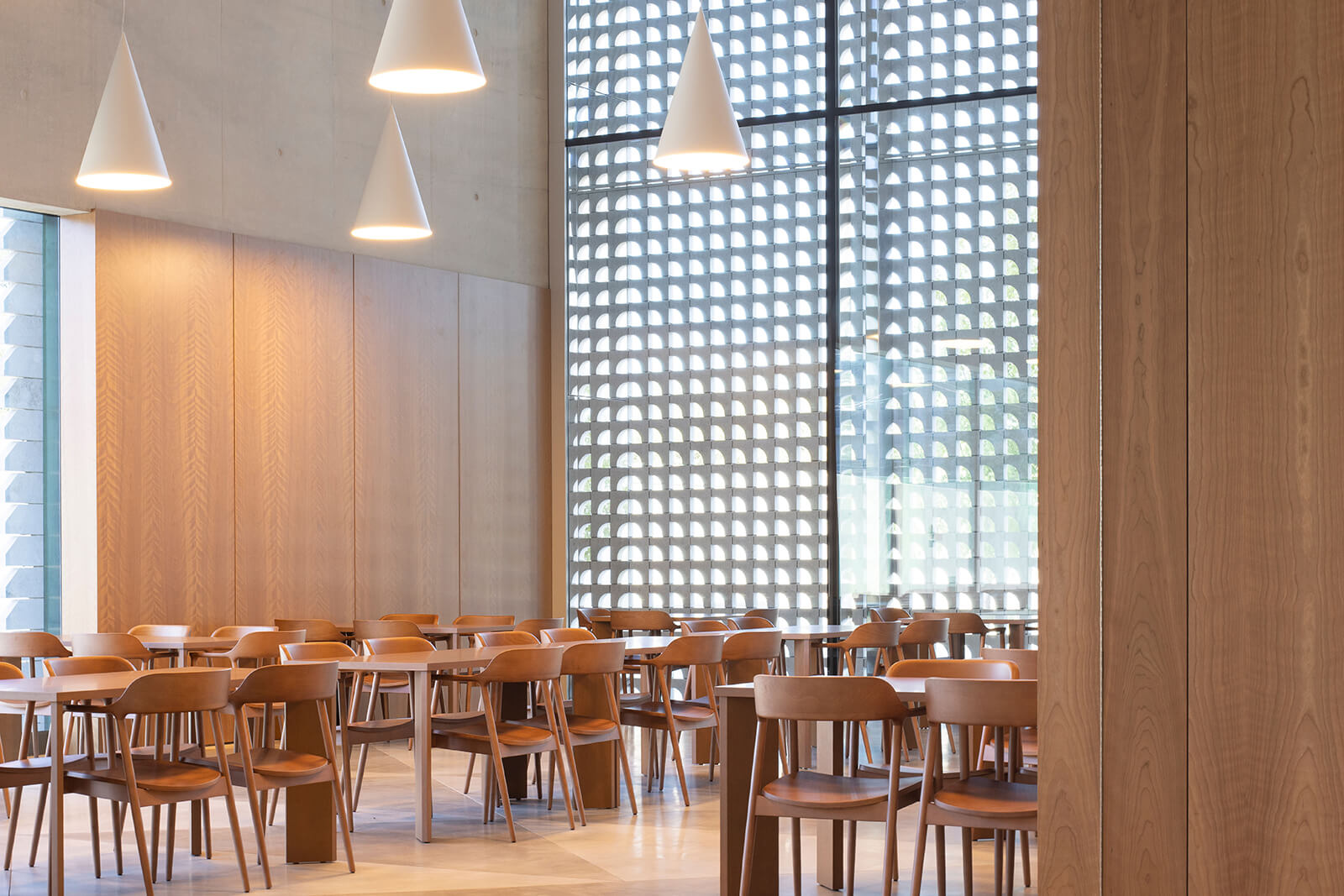
The centre comprises a black box theatre, function rooms, administrative offices, classrooms, a prayer hall and a cafe, all staffed largely by volunteers. It also offers access to spaces for meetings, lectures, conferences, performances and various events, and will hold permanent and temporary art exhibitions in the future. Moreover, welcome events for community partners and neighbours are set to take place on December 12 – 13, 2025.
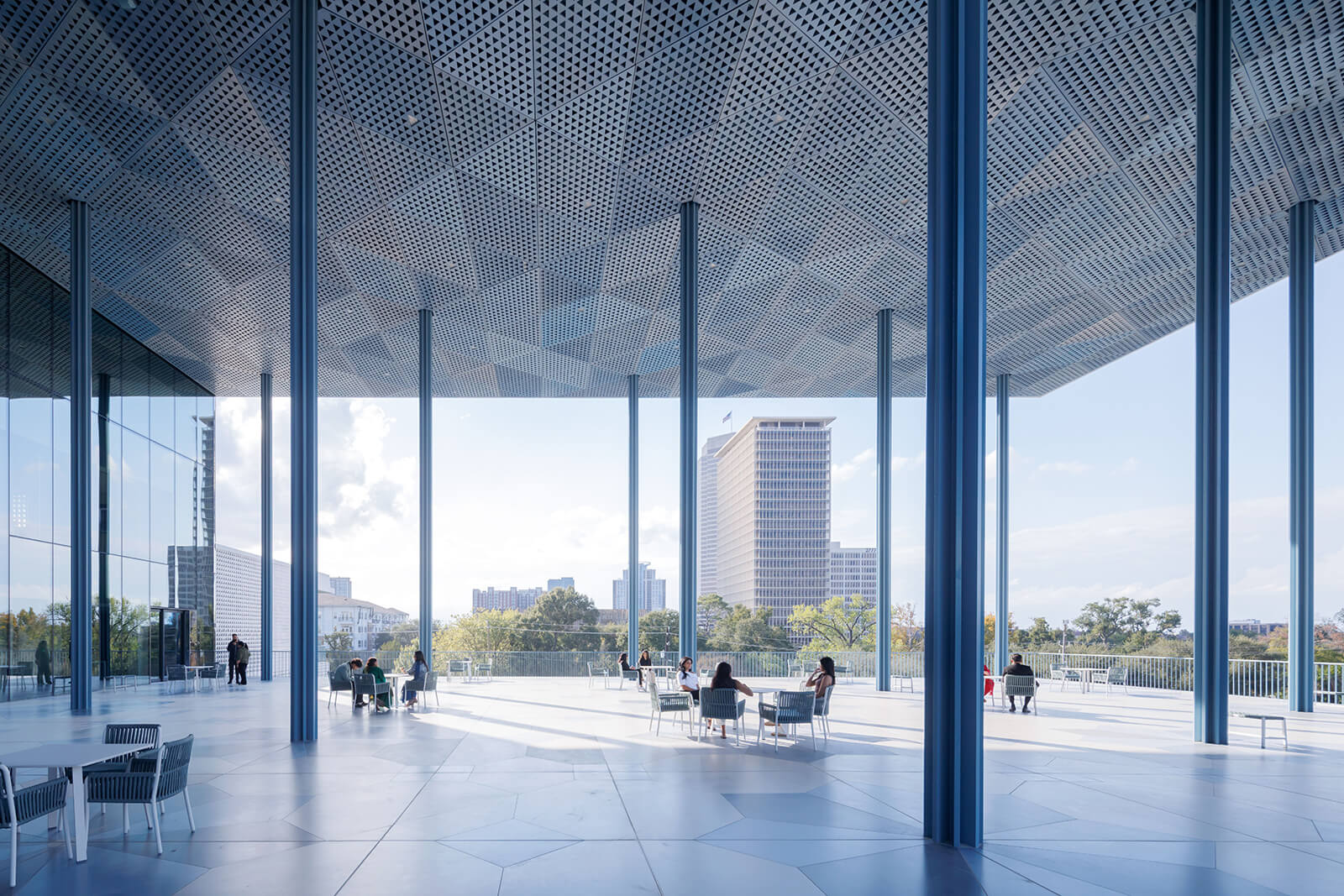
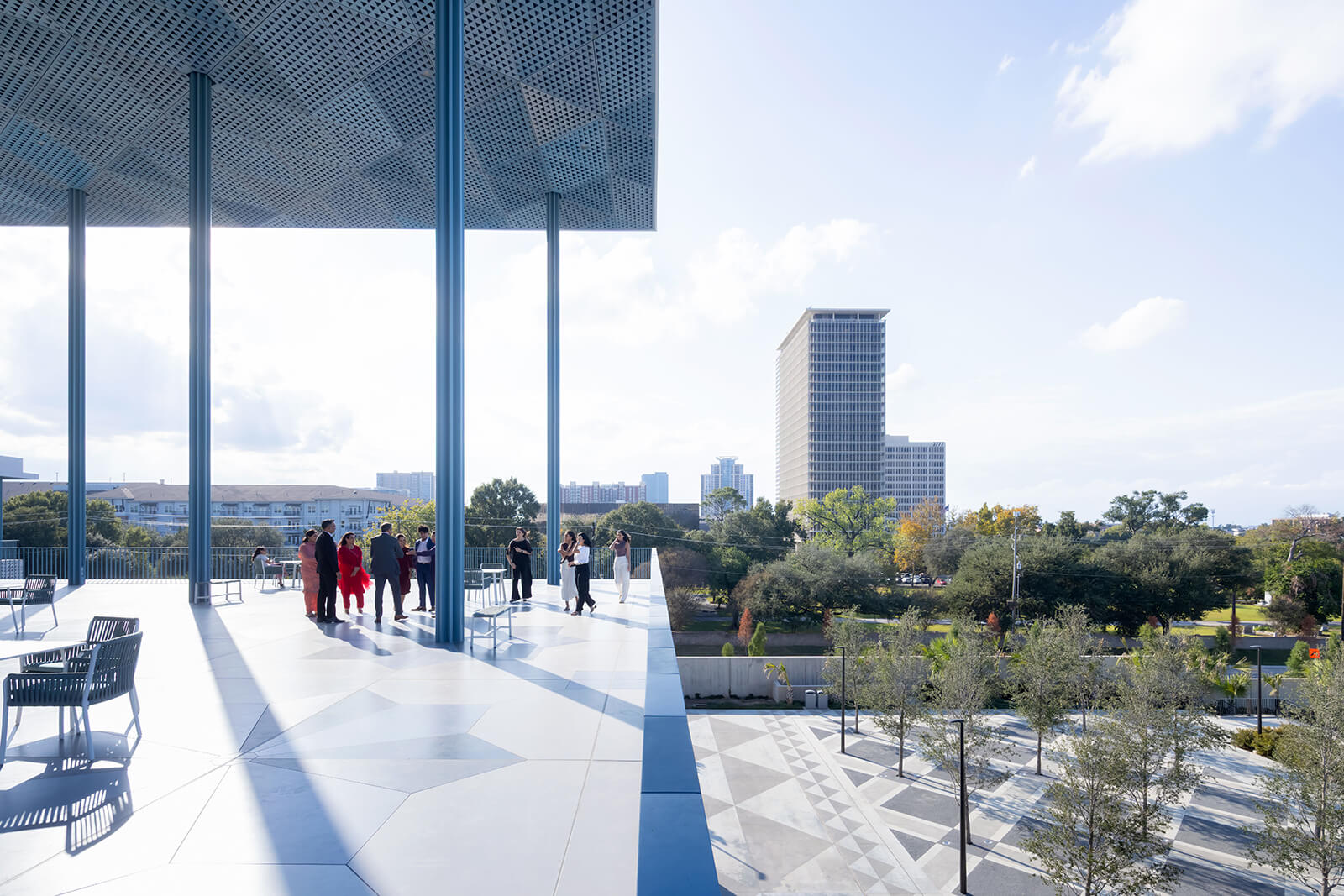
The Ismaili Center welcomes people with diverse backgrounds to come together and explore the intersections of faith, culture and civic life. The centre in Houston hopes to become a melting pot of education, art, music, performing arts and discourse and a space to promote social equity, environmental awareness, public health, and the common good—essentially nurturing ideas that foster quality civic life. The project, while translating communal harmony into the spatial dimension, is poised to become a major resource for the nonprofit and cultural sectors of Houston inspiring values of shared existence.

by Pranjal Maheshwari Oct 19, 2026
The Mumbai-based architects integrate courtyards, mesh screens and north light trusses to create a dining space that doubles up as a community hub at SR University, Warangal.
by Mrinmayee Bhoot Oct 17, 2026
The Rotterdam-based institute centres the Indian Ocean as a network for exploring material histories and transnational links shaping coastal cultures, positing them as future models.
by Pranjal Maheshwari Oct 16, 2026
At the 2026 Stirling Prize ceremony, Mary Duggan with RUFF Architects, MAKER Architecten and Nakshabid Architects were felicitated for proffering quality housing and social equity.
by Mrinmayee Bhoot Oct 12, 2026
The new Centre for Contemporary Arts, fostering public engagement with art in Uzbekistan, is housed in a tram depot refurbished by the French studio, emulating local craftsmanship.

make your fridays matter with a well-read weekend
Enter your details to sign in
Don’t have an account?
Sign upOr you can sign in with
a single account for all
STIR platforms
All your bookmarks will be available across all your devices.
Stay STIRred
Already have an account?
Sign inOr you can sign up with
Verification link sent to check your inbox or spam folder to complete sign up process
Tap on things that interests you.
Select the Conversation Category you would like to watch
Please enter your details and click submit.
Enter the 6-digit code sent at


Geometry articulates multiple dimensions in Farshid Moussavi’s Ismaili Center Houston
by Bansari Paghdar | Published on : Nov 12, 2025


 Sign in with Google
 Sign in with email
What do you think?