Art11 mins. read
Amin Jaffer on curating the India Pavilion at the 2026 Venice Biennale
by Ranjana DaveFeb 13, 2026



by Bakul PatkiPublished on : May 29, 2026
Wander deep into the Arsenale in Venice, and you will find a ghost. Suspended within the Indian Pavilion is the spectre of the home that artist Sumakshi Singh grew up in. Or rather, what remains of it...Memories.
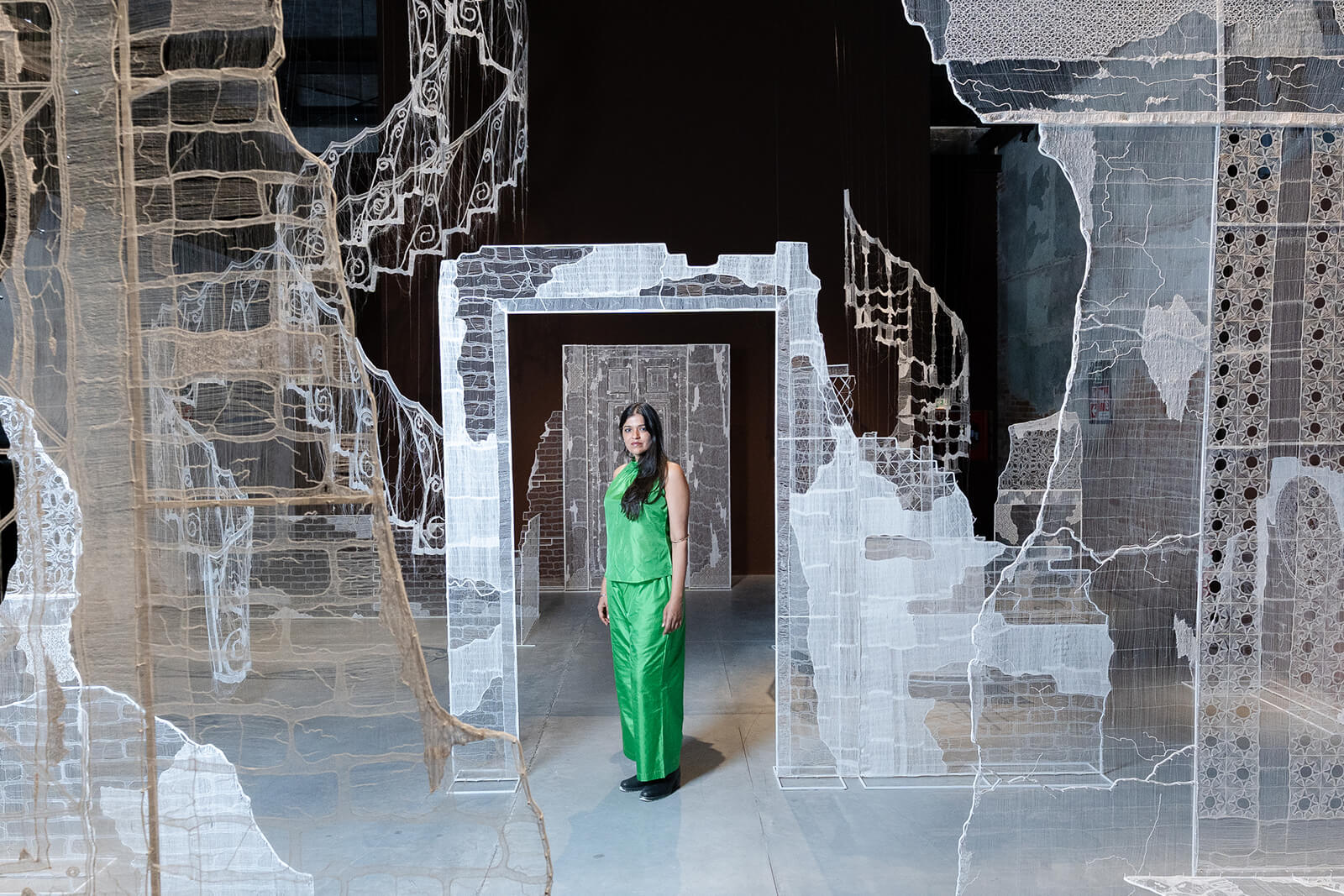
Built entirely from thread—ethereal, almost weightless, but very much present—is a life-size, full-scale replica of the house the artist’s grandparents built in Delhi, as refugees of Partition. Permanent Address is the physical embodiment of Singh’s emotional connection to her family home, which was destroyed 74 years after it came into being.
The memorial is one of five striking responses by five different artists to the Pavilion of India’s theme, Geographies of Distance: remembering home.
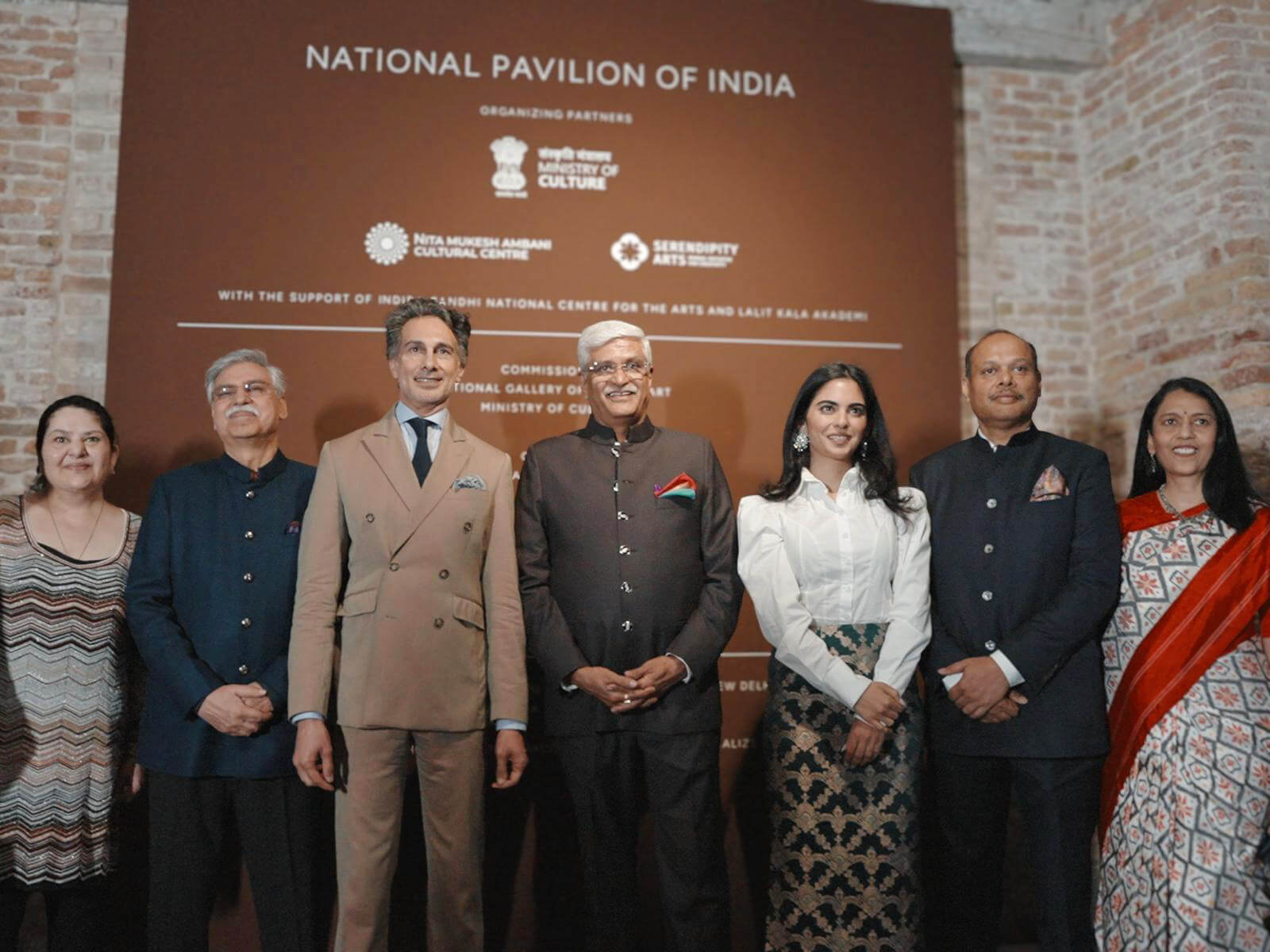
Curated by Dr Amin Jaffer, director of The Al Thani Collection and former senior curator at the V&A, the exhibition marks India’s return to the Venice Art Biennale after a seven-year hiatus. Presented by the Ministry of Culture in partnership with the Nita Mukesh Ambani Cultural Centre (NMACC) and Serendipity Arts, it invites emerging and established artists from different parts of the country to explore what home means.
The exhibition begins from a premise familiar to anyone who has ever felt between worlds: that for people whose lives are shaped by change or distance, home becomes less a fixed address and more a portable condition—part memory, part material, part ritual, part personal mythology. As someone who has often been asked, with various degrees of tact, “No, but where are you really from?”—and as someone who is lucky to feel connected to several geographies and cultures—that premise resonated on a very personal level.
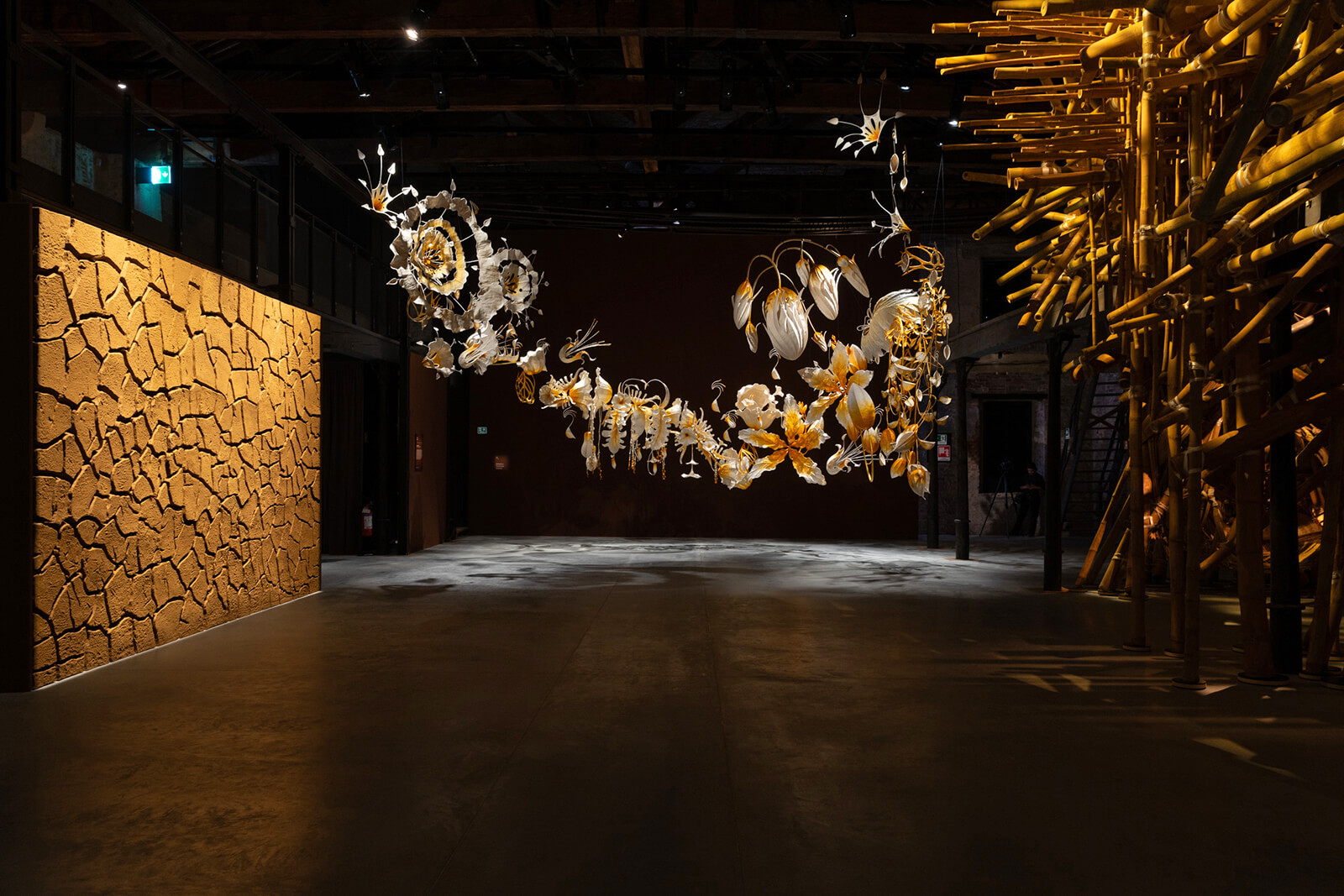
In terms of its broader resonance, the exhibition’s theme is very much rooted in India’s specific context as a country in the midst of rapid and vertiginous transformation—where cities expand at a pace that remakes entire neighbourhoods within a single generation, and people are more mobile than ever, both economically and geographically.
The pavilion explores home not as a fixed physical location, but as an emotional space carried within the self, a repository of culture, personal mythology and emotion. – Dr Amin Jaffer
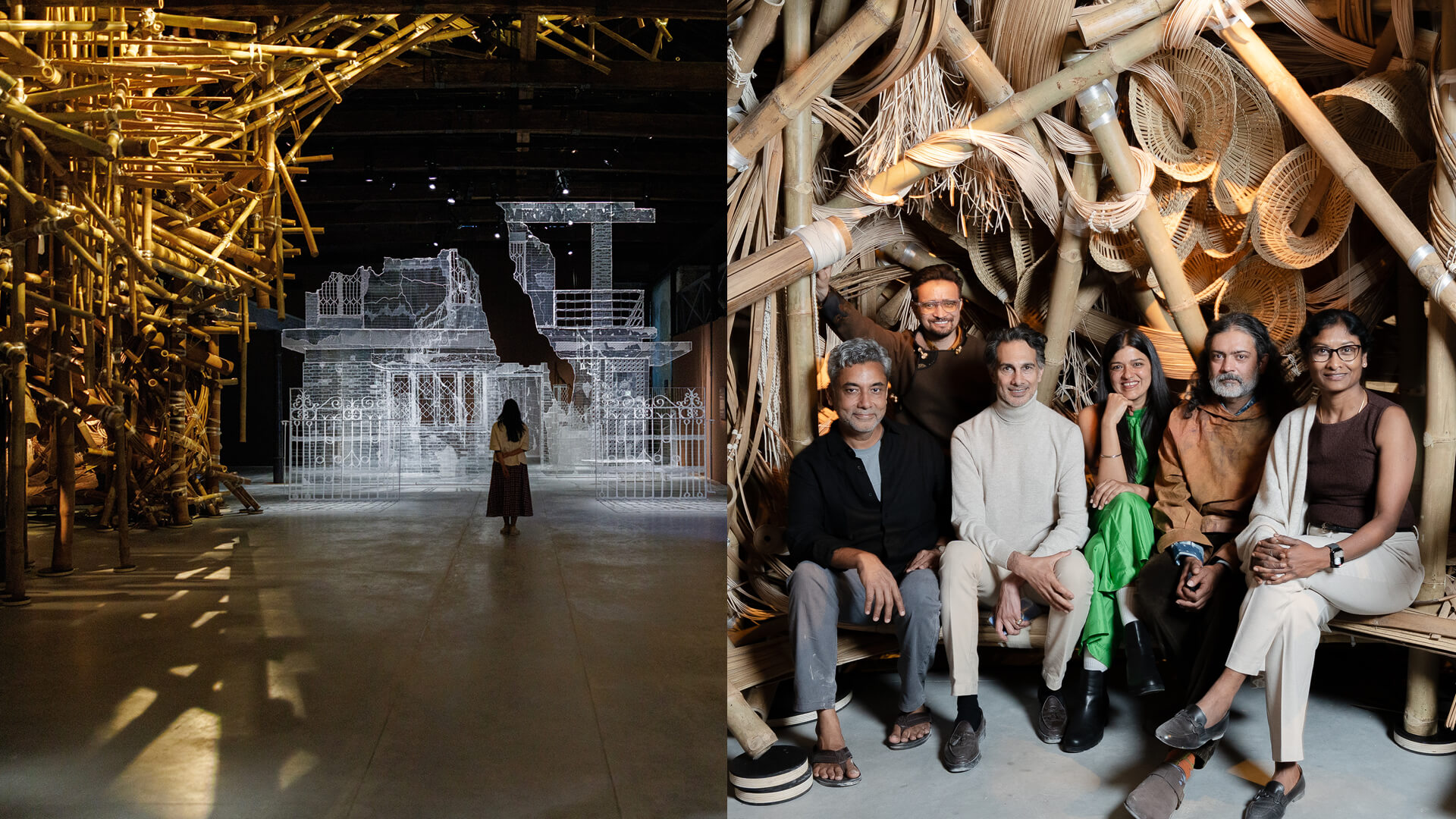
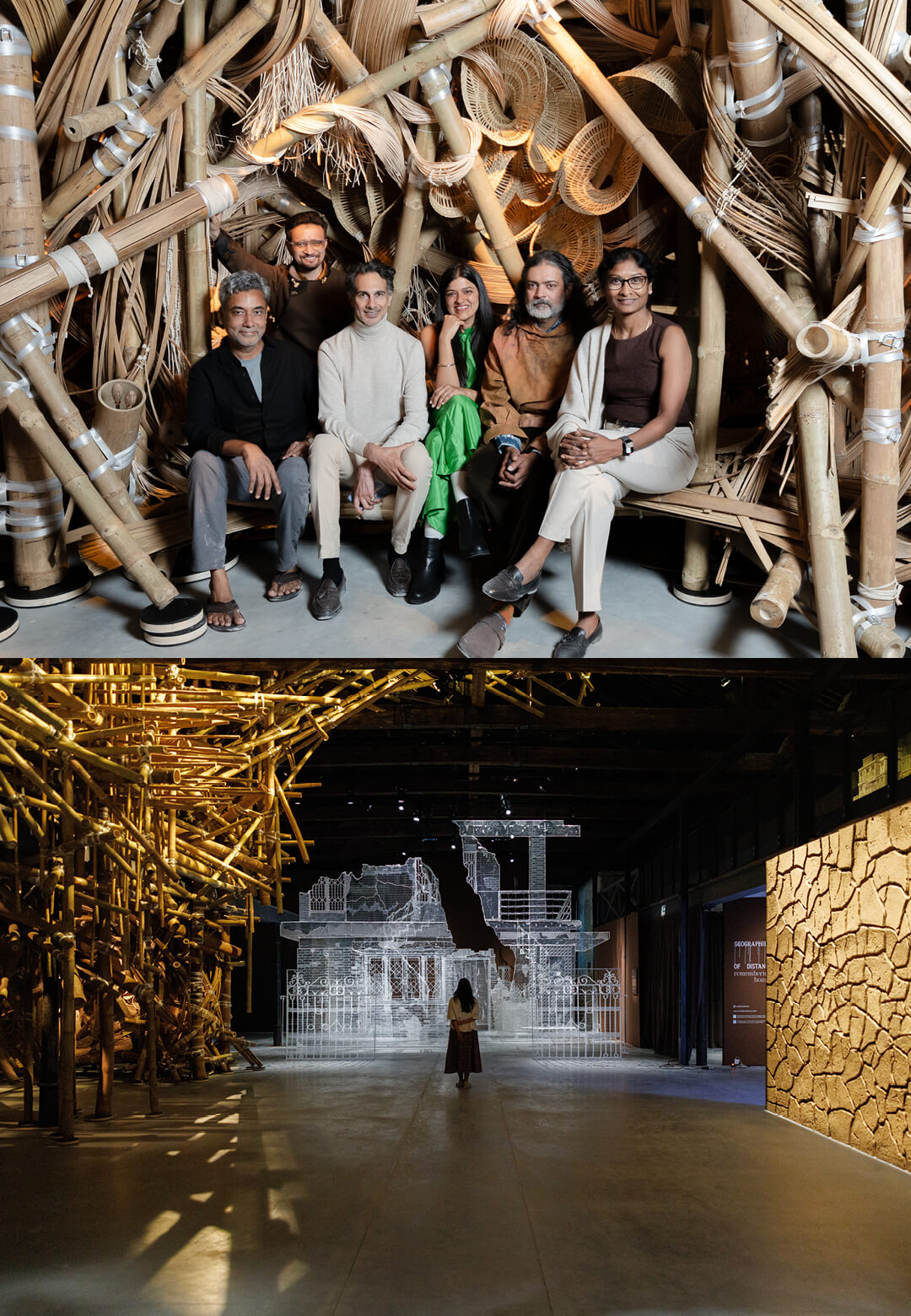
The representing artists, Alwar Balasubramaniam (Bala), Ranjani Shettar, Singh, Skarma Sonam Tashi and Asim Waqif, not only come from different parts of India, but also work in different registers. However, they all share an interest in materiality—clay, thread, bamboo, papier-mâché—each medium carrying deep connections to the country’s heritage.
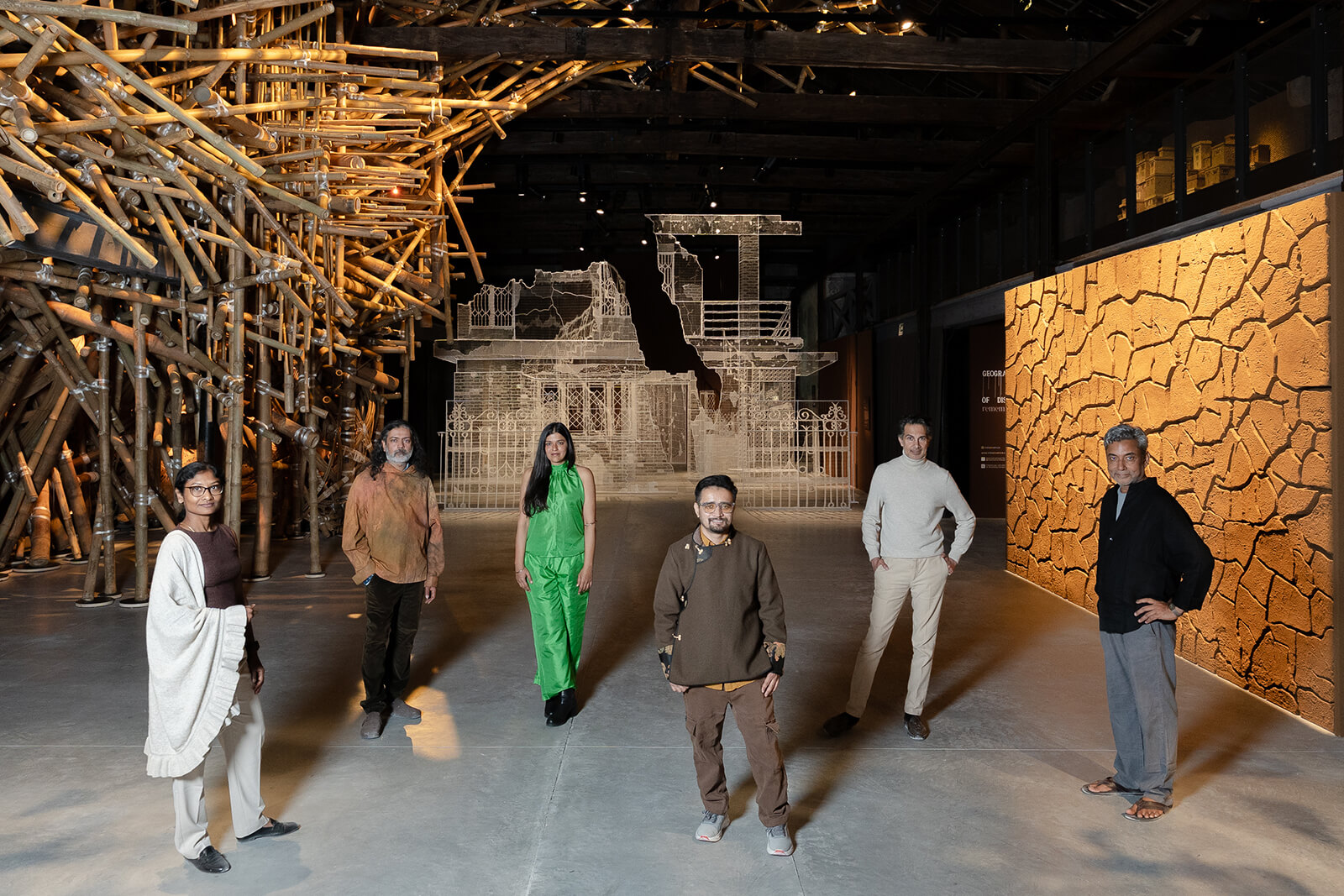
Brought together by Jaffer, these five artists—with practices so anchored in the physical, and works presented here at an architectural scale—make Pavilion of India one of the most impressive national presentations at Venice Art Biennale 2026.
Of the exhibition, Jaffer said, “The pavilion explores home not as a fixed physical location, but as an emotional space carried within the self, a repository of culture, personal mythology and emotion. Using fragile, organic materials and deeply personal narratives, the artists reflect on how memory, migration and change shape our understanding of belonging.”
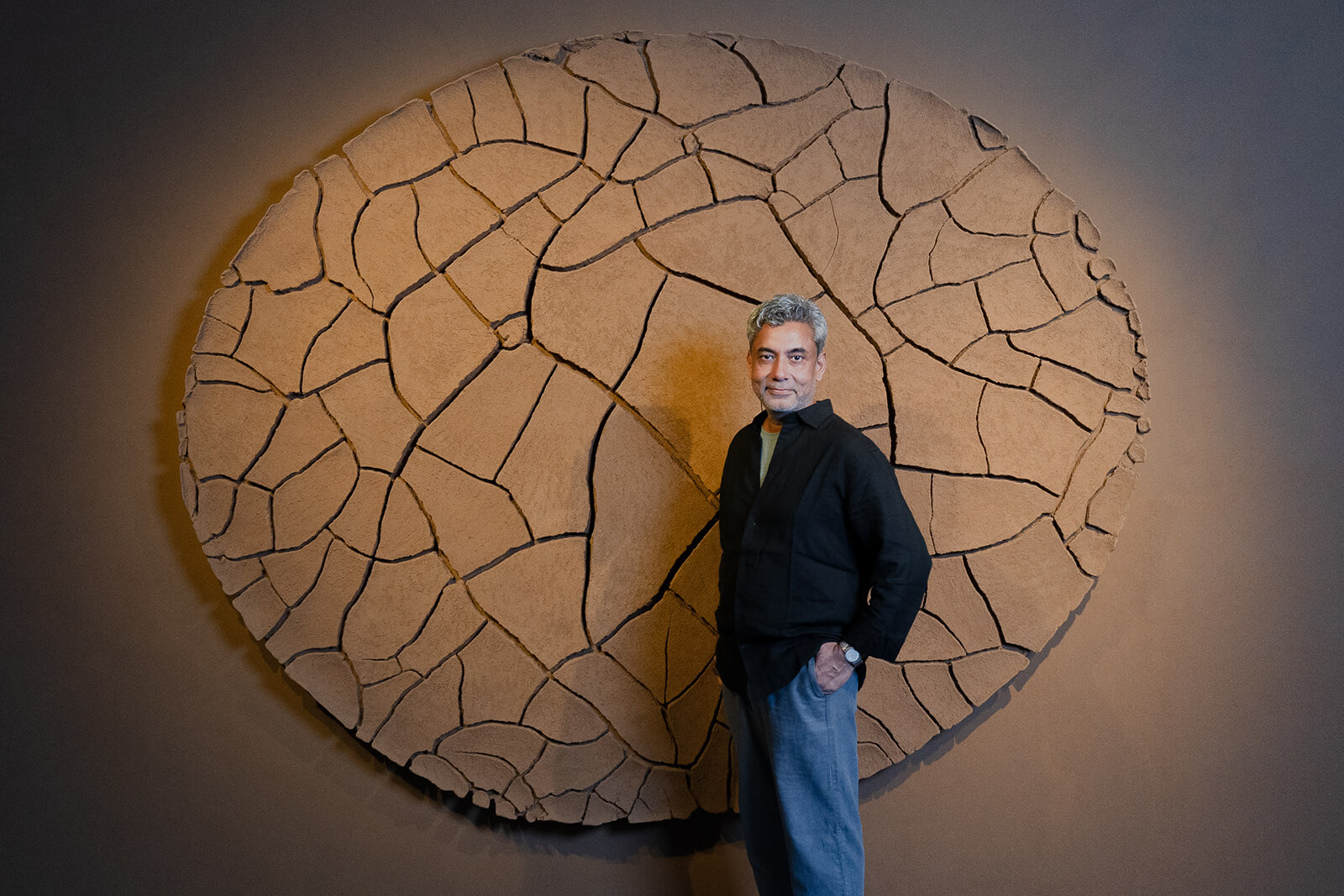
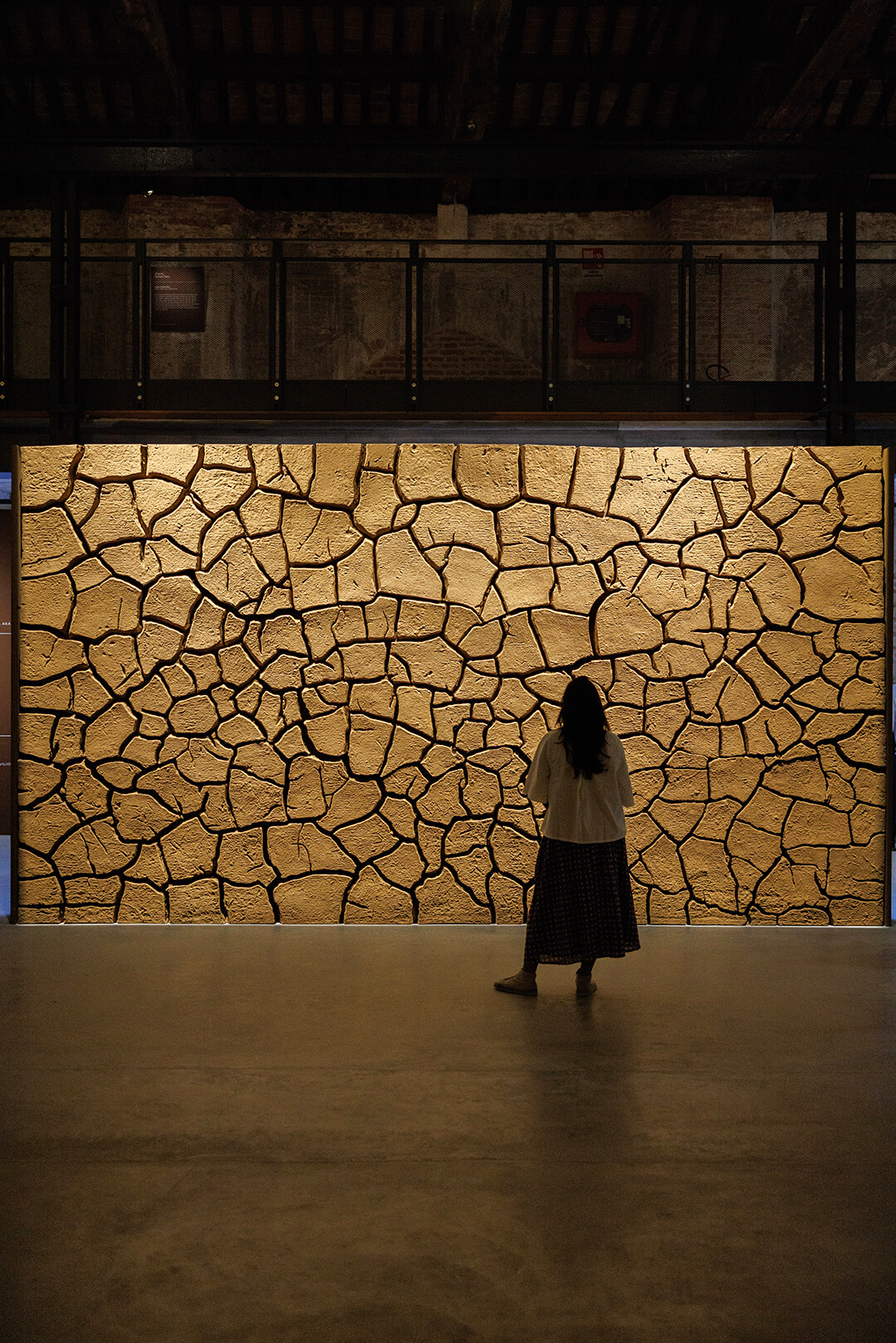
Balasubramaniam’s work, Not Just for Us, comprises sculptural panels made from the clay and soil of rural Tamil Nadu, where the artist lives and works. Surfaces fissure naturally—marking time and the environmental pressure of their journey to Venice. There’s something particularly affecting about this work being presented in a city whose foundations are so precarious—as if the installation’s cracked earth is a reminder of how fragile our relationship to landscapes that formerly seemed so permanent can be. “The Pavilion’s theme, Geographies of Distance: remembering home, resonates strongly with my practice because it reflects on home not simply as a physical structure, but as something carried through the rhythms of the natural world. In the spirit of In Minor Keys, I hope the work encourages a quiet, introspective reflection on impermanence, belonging and the fragile relationship between ourselves and the world beneath our feet,” Balasubramaniam tells STIR.
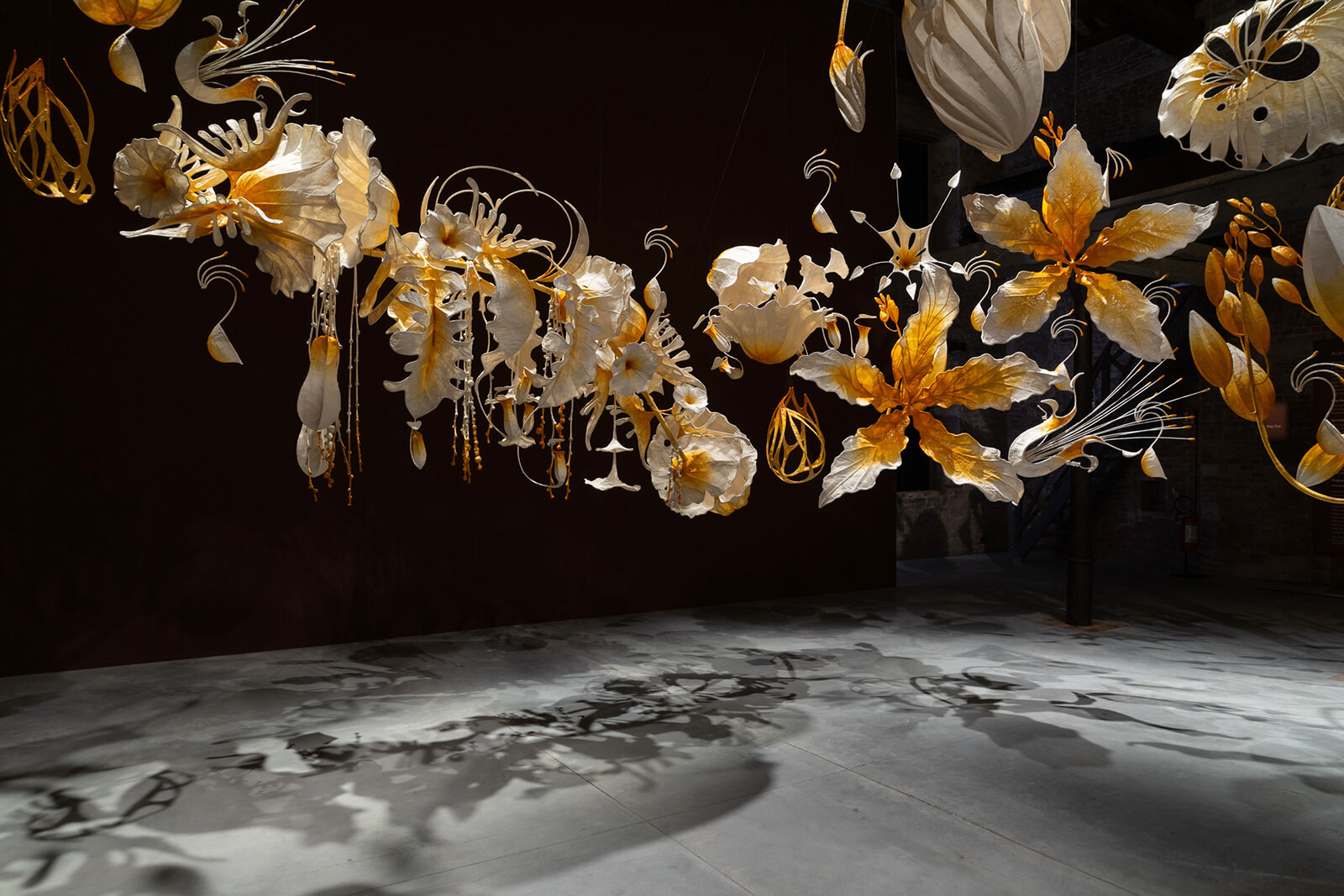
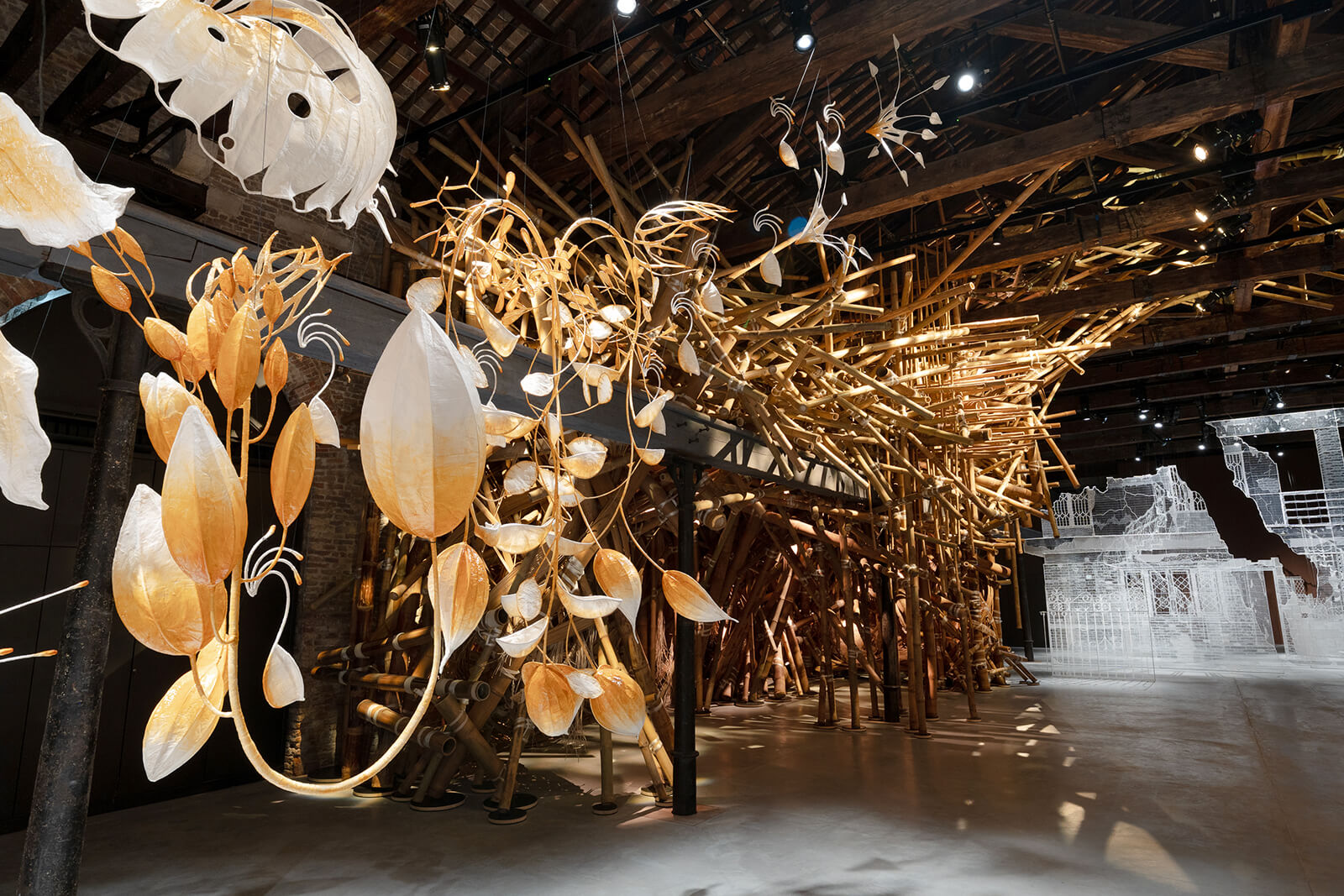
Shettar’s Under the same sky, sees the artist handcraft enormous floral forms through traditional techniques. Her practice reflects the rhythms of making and tending, positioning nature and craft as integral to the emotional landscape of home. This large-scale installation, floating in the air, makes for a welcome and rather breathtaking ‘invasion’ of the nature that has always inspired the artist, into the otherwise industrial space.
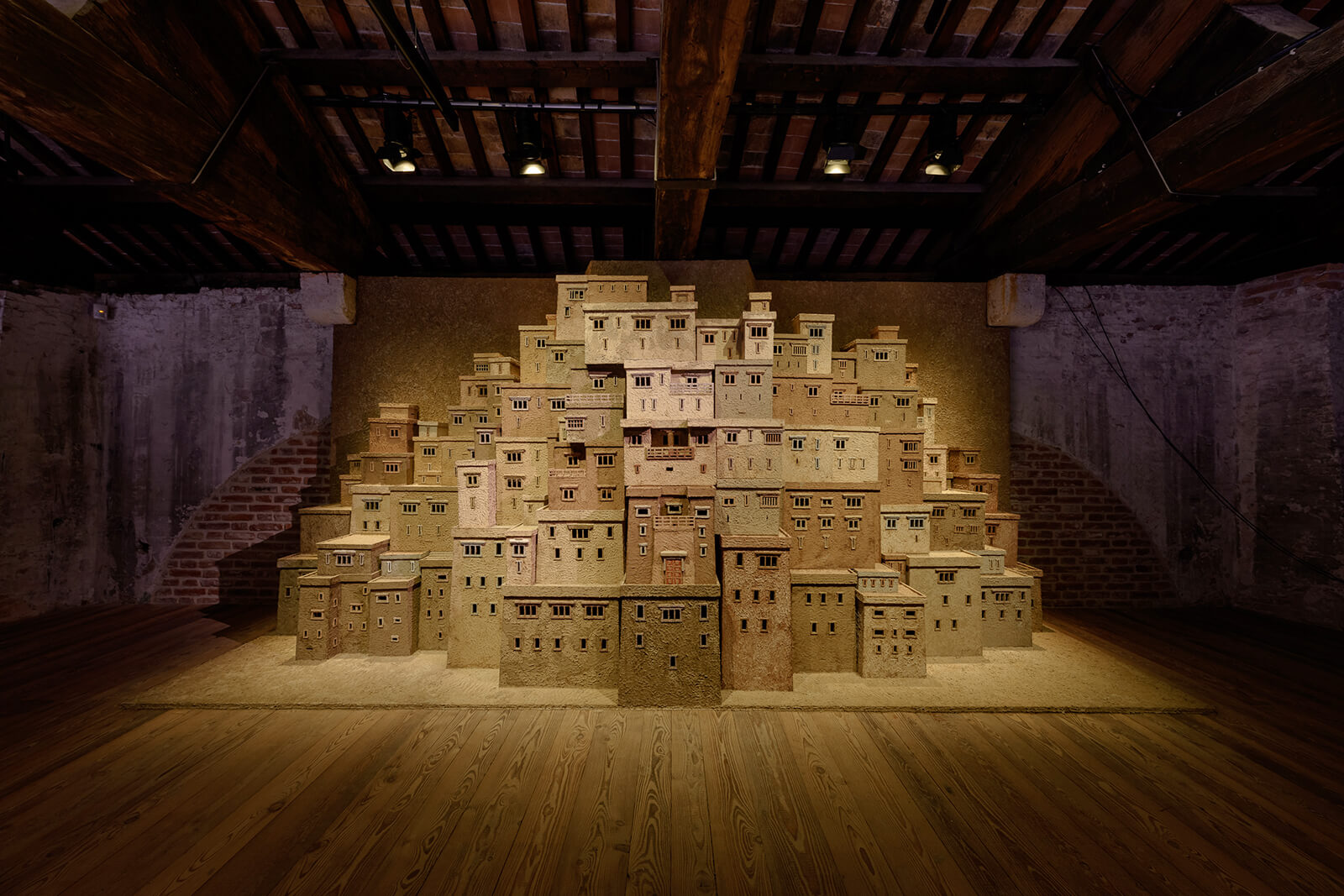
Sonam Tashi, who, at 27, is the youngest artist in the exhibition, works with papier-mâché to create sculptures of the traditional dwellings found in his native Ladakh—structures increasingly threatened by climate change and rapid modernisation. His installation, Echoes of Home, carries the particular weight of work made by someone watching the place they grew up become somewhere else. It is tender, precise, urgent and unsettling.
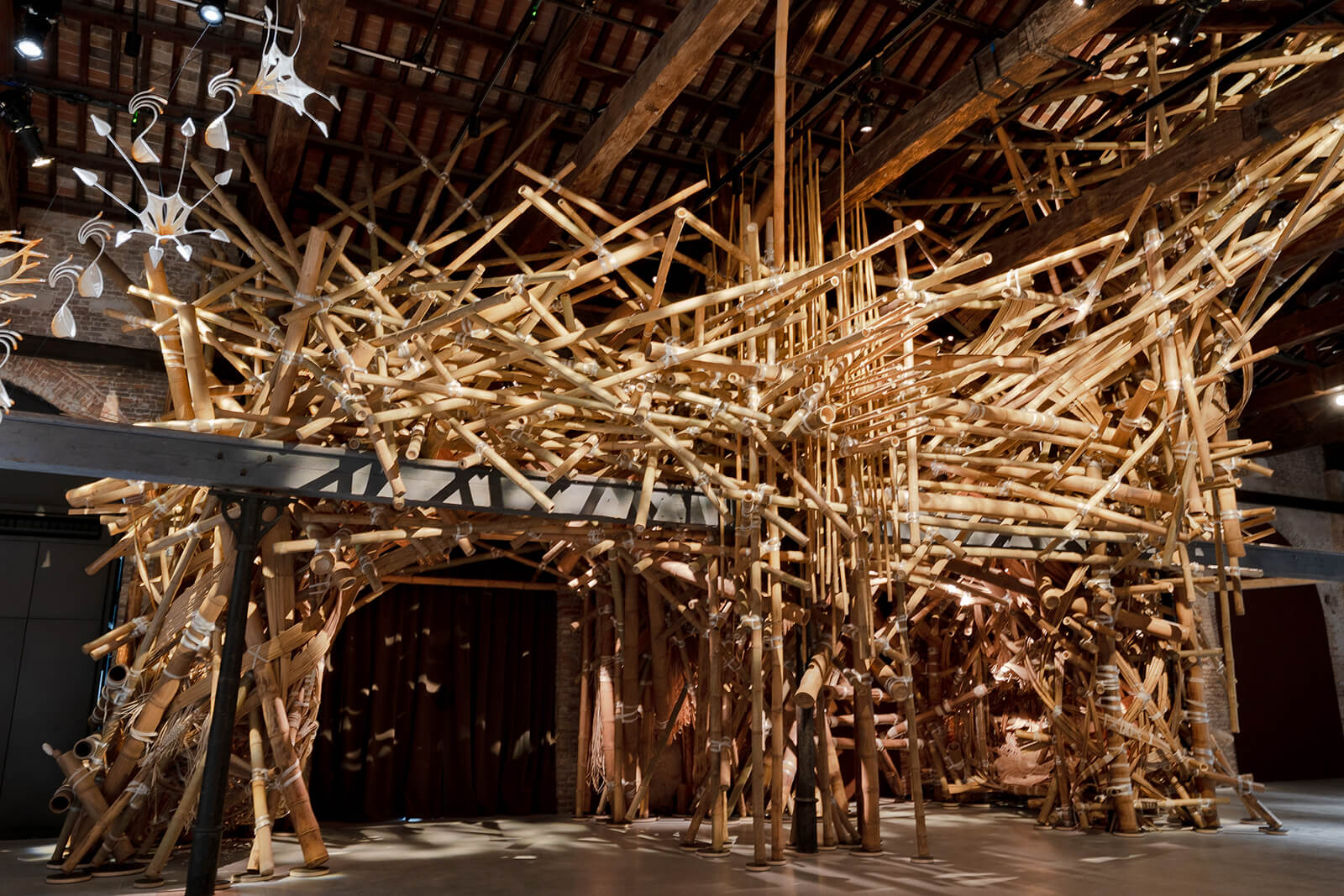
Waqif’s Chaal, a large-scale bamboo installation, draws on the visual language of scaffolding found at construction sites across Indian cities—a material long embedded in vernacular architecture that is turned, through this work that suggests a structure in the process of becoming, into something that reads as architecture in perpetual transition. It signals both renewal and disruption, foregrounding the inevitability of change in the urban environment.
Minor keys have a slight haunting beauty to them. They’re melancholy, and they tend to linger longer in your subconscious, through poetic persistence. – Sumakshi Singh
All five works are impressive and call for time to be spent with them, but it was Singh’s Permanent Address that I found particularly poignant—and hard to step away from. Its inherent beauty means the full weight of what you are looking at takes a moment to arrive. “Five generations of us lived there”, Singh shared at the opening event, “and after the death of my grandparents, the house was demolished. What remains is something that once felt so solid and so sheltering and so permanent, but is rendered now almost ghostlike, like a memory of a memory.”
The Biennale’s overarching theme this year is In Minor Keys, conceived by the late, great and greatly missed Koyo Kouoh, who tragically and suddenly passed away a year before the exhibition was realised. When asked how her work relates to this theme, Singh may have had the best response: “Minor keys have a slight haunting beauty to them,” she says. “They’re melancholy, and they tend to linger longer in your subconscious, through poetic persistence.” That is exactly what Singh’s work does, and the Pavilion of India as a whole, which grabs your attention and, for me at least, has not yet let go.
The Indian Pavilion, ‘Geographies of Distance: remembering home’, is presented by the Ministry of Culture in partnership with the Nita Mukesh Ambani Cultural Centre (NMACC) and Serendipity Arts. An extended performance programme produced by Serendipity Arts will activate the Pavilion and the city of Venice through music, movement, storytelling and interdisciplinary interventions throughout the Biennale from May to November 2026.
The 61st International Art Exhibition of La Biennale di Venezia, 'In Minor Keys’, curated by Koyo Kouoh, runs from May 09 – November 22, 2026, at the Giardini and the Arsenale venues, as well as various other locations around Venice. To read STIR’s exclusive coverage, conversations and highlights from the biennale, click here.
by Srishti Ojha Oct 21, 2026
Increasingly, artists, filmmakers and activists are turning to VR to create more personal, tangible accounts of the climate emergency and its impact on vulnerable communities.
by Mirra Lynn Oct 20, 2026
The Indian artist paints the old wadas of central Pune, capturing the traces of everyday life that cling to these structures, battered by time but unbowed.
by Anmol Ahuja Oct 15, 2026
How do heaps of souvenirs and relics with racist Aboriginal motifs and features become art? MCA Sydney’s winter showcase—the artist’s largest to date—beckons a possibility.
by Srishti Ojha Oct 14, 2026
The first Dutch publication on the Turkish artist, the eponymous book centres on Refik Anadol: Latent City, his living data sculpture of Bruges, exhibited at BRUSK gallery.

make your fridays matter with a well-read weekend
Enter your details to sign in
Don’t have an account?
Sign upOr you can sign in with
a single account for all
STIR platforms
All your bookmarks will be available across all your devices.
Stay STIRred
Already have an account?
Sign inOr you can sign up with
Verification link sent to check your inbox or spam folder to complete sign up process
Tap on things that interests you.
Select the Conversation Category you would like to watch
Please enter your details and click submit.
Enter the 6-digit code sent at


India Pavilion at Venice Biennale 2026 draws distance between here and home
by Bakul Patki | Published on : May 29, 2026


 Sign in with Google
 Sign in with email
What do you think?