Architecture08 mins. read
Songzhuang Z Museum: A Quartet of tiered terraces and a colour-shifting woven skin
by Jincy IypeAug 27, 2025



by Mrinmayee BhootPublished on : Nov 05, 2025
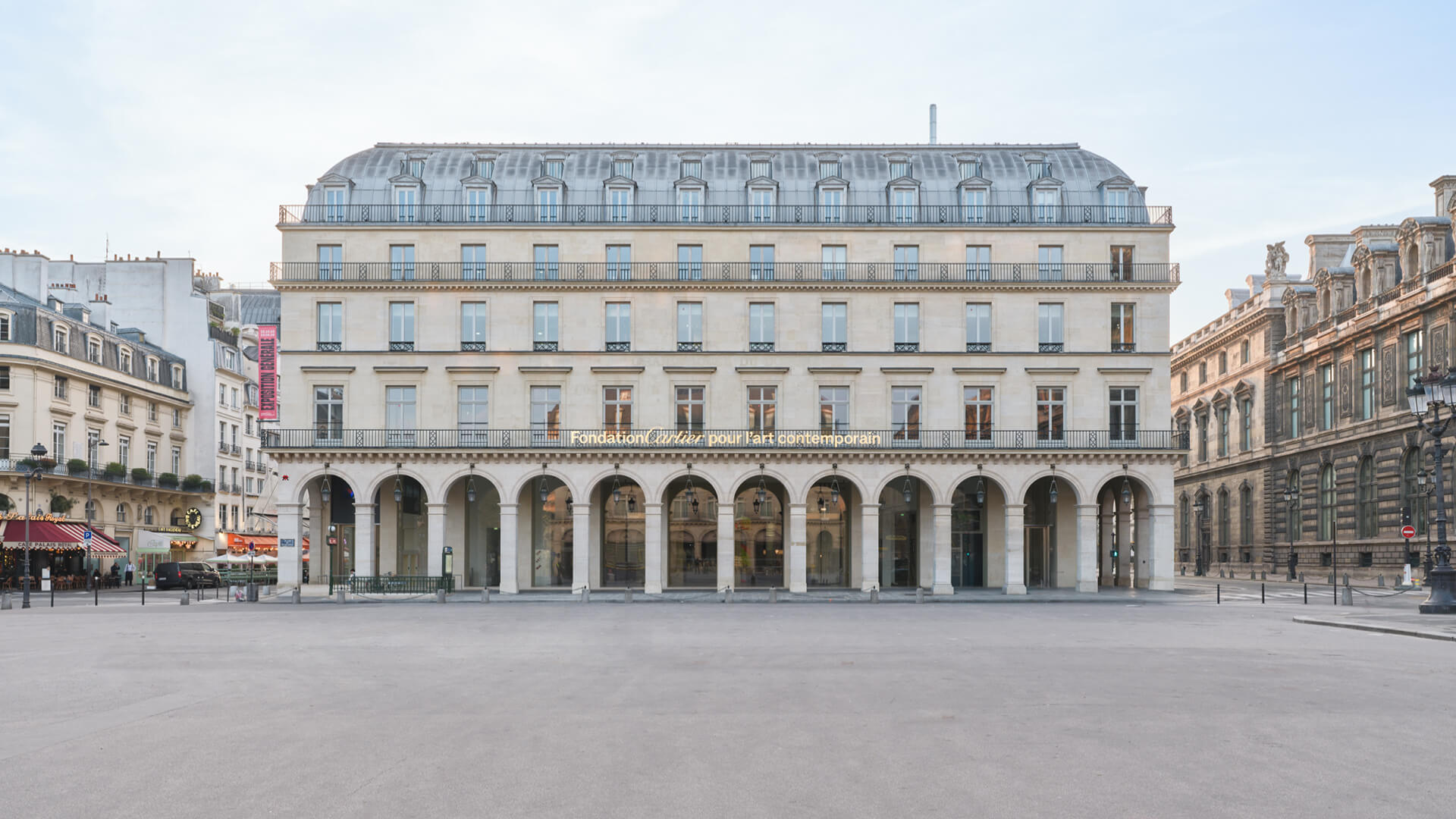
A new premise for the Fondation Cartier for Contemporary Art was recently unveiled to the public in the heart of Paris. On October 25, 2025, the institution dedicated to the dissemination of contemporary art and culture inaugurated their new exhibition spaces at 2 Place du Palais-Royal, designed by Jean Nouvel, whose collaboration with the foundation has spanned nearly 40 years. The project by Nouvel incorporates the renovation of an existing Haussmannian building from 1855, retrofitted with five mechanical platforms that serve as dynamic galleries for the museum. Heralding the new cultural building’s opening, a showcase titled Exposition Générale, featuring a selection of seminal projects and installations commissioned by the foundation, offers a glimpse of their vast collection.

The move from Fondation Cartier’s previous headquarters on the Boulevard Raspail (also designed by Nouvel’s atelier) to the drastically different setting in the heart of the neoclassical city opposite the Louvre underscores Fondation Cartier’s commitment to fostering spaces for artistic dialogue and experimentation. Marking the cultural institution’s 40th anniversary, Alain Dominique Perrin, president, and Chris Dercon, managing director of the Fondation Cartier note of the institute’s architectural alliances in an official release, “The Fondation Cartier has always placed the practice of architecture at the heart of its programming, considering it to be a vector for interdisciplinary dialogue…merging with public space, past and future coexist in a building that is at once an extension of the urban landscape, a reflection of its history and the perfect application of a dynamic architecture at the service of a cultural institution.”
Before their current location in Palais-Royal, the Fondation Cartier building in Montparnasse similarly reflected the institution’s goals to actively engage with the public through architecture and cultural programming. The museum on Boulevard Raspail, completed in 1994, was defined by glass and steel, echoing Nouvel’s previous and subsequent preoccupations with a precise industrial mannerism—minimalist in its materiality—beginning with a 1986 design for a building integrated into the landscape of the Montcel Estate in Jouy-en-Josas and culminating in 2018 as an extension of the Raspail site. Expanding on his insistence on transparency and ephemerality in architecture, the French architect conceives of his latest cultural design as “a kind of mechanical thing”, as noted by the design team in the official release. Inverting the transparency of the previous edifice’s design, here the team completely preserves the closed-off neoclassical facade of the building which previously housed the Grand Hôtel du Louvre (1855 – 1887), then the Grands Magasins du Louvre (1887 – 1974) and finally the Louvre des Antiquaires (1978 – 2019)—a facsimile reproduction of historicity.
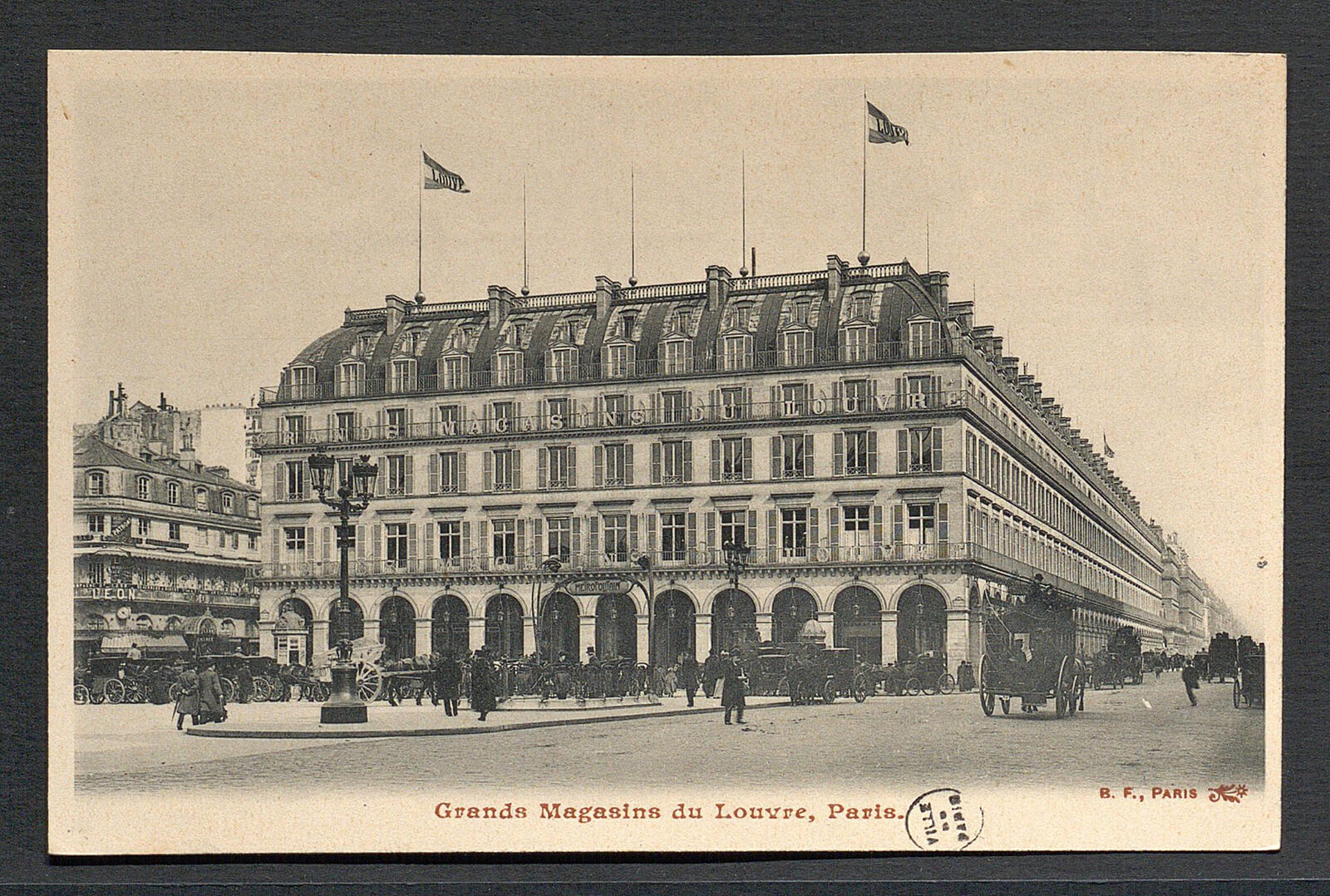
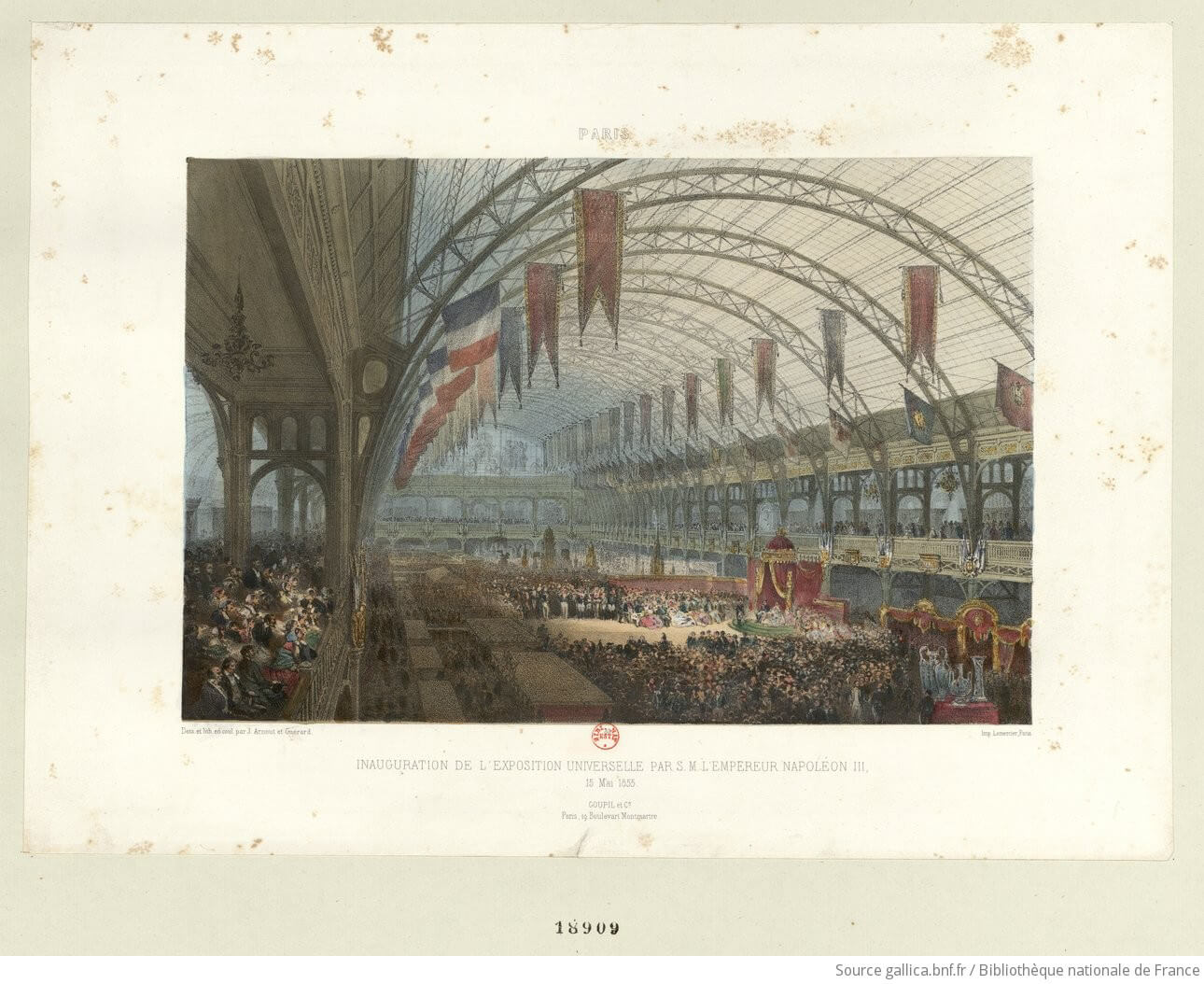
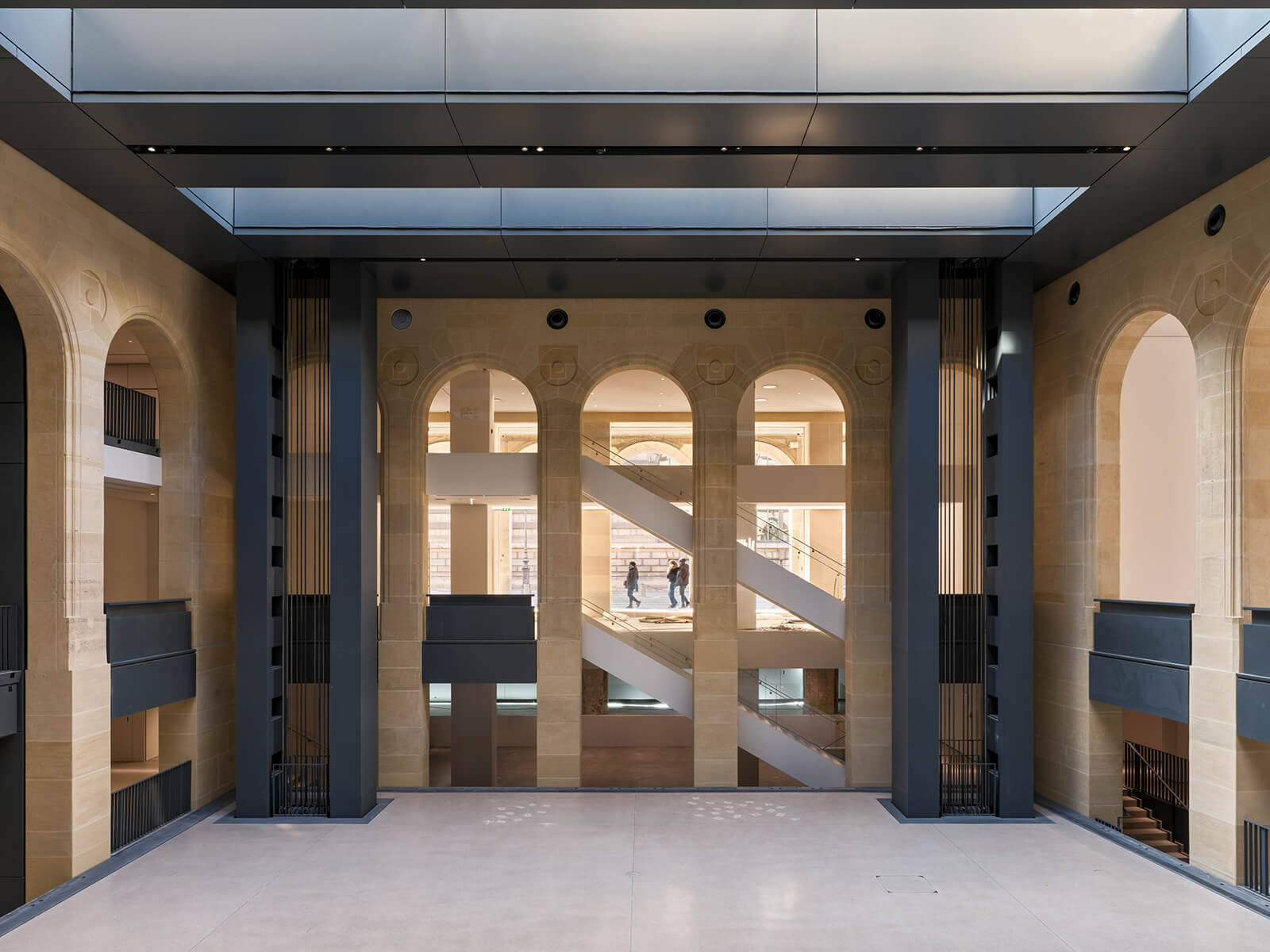
While keeping the cake-frosting-like facade of the building intact—in itself representative of a vital trajectory in the history of commercial exhibitions—the design’s intention was to emphasise dialogue, between the built and void, artefact and public. “Everything must be removed, all that we can, except for the essential load bearers. It must be possible for the gaze to pass through an unobstructed space,” Nouvel states in a release, expanding on the design concept. In this vein, the ground floor features fully glazed walls, allowing visitors to get a visual sense of the gallery spaces from the street itself. Such an arrangement also ends up reinforcing the classical form of the arcade, a reflection of the historic urban context. The transparency of glass is similarly stressed in the building’s cover, construing a boundless space—sans walls, sans floor, sans roof. Nouvel notes of the renovation, "The focus of the architectural approach was to unveil the void—its depth, its height, its presence…The concept is no longer about constructing a space, but of building inside space itself."
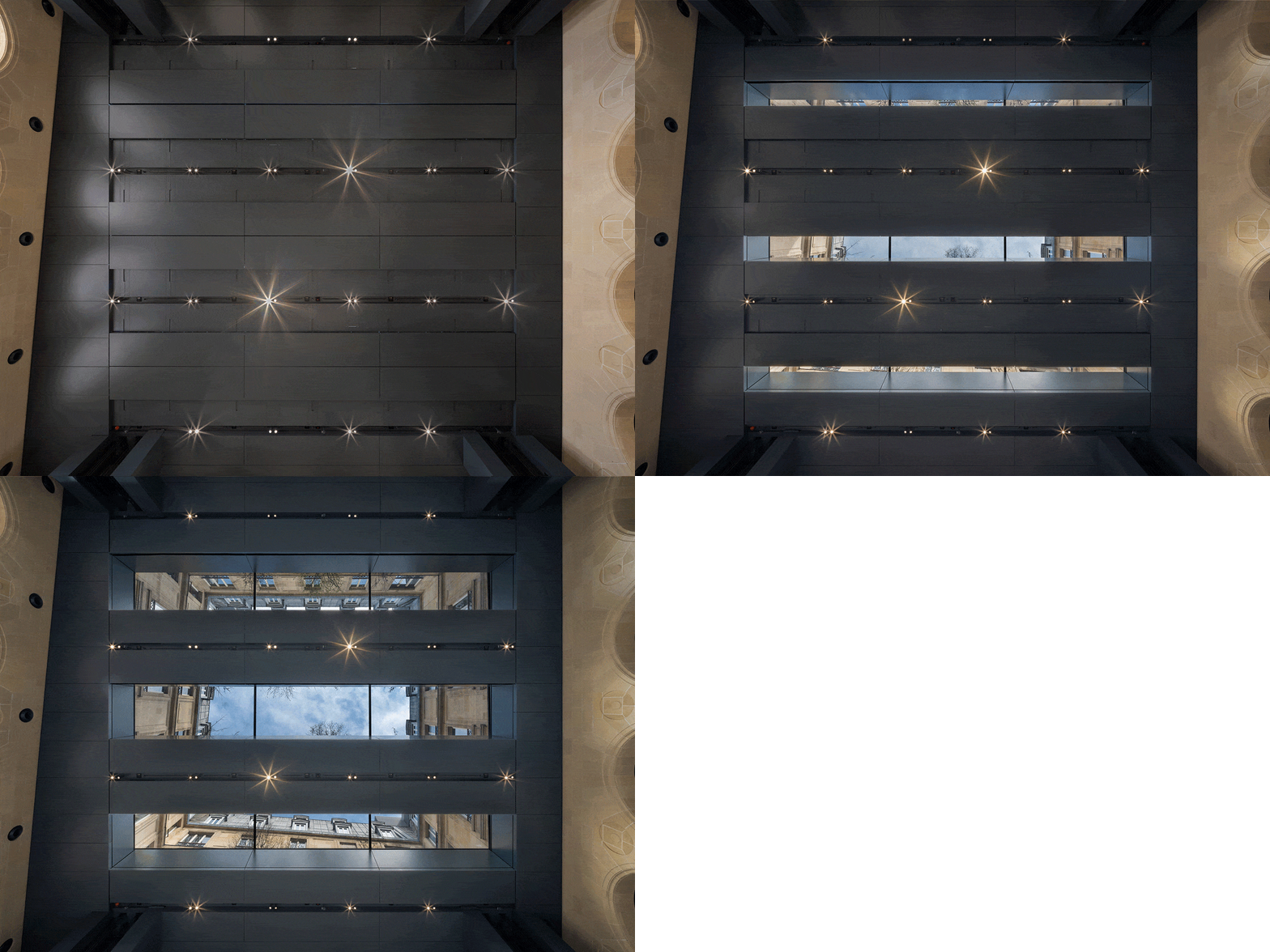
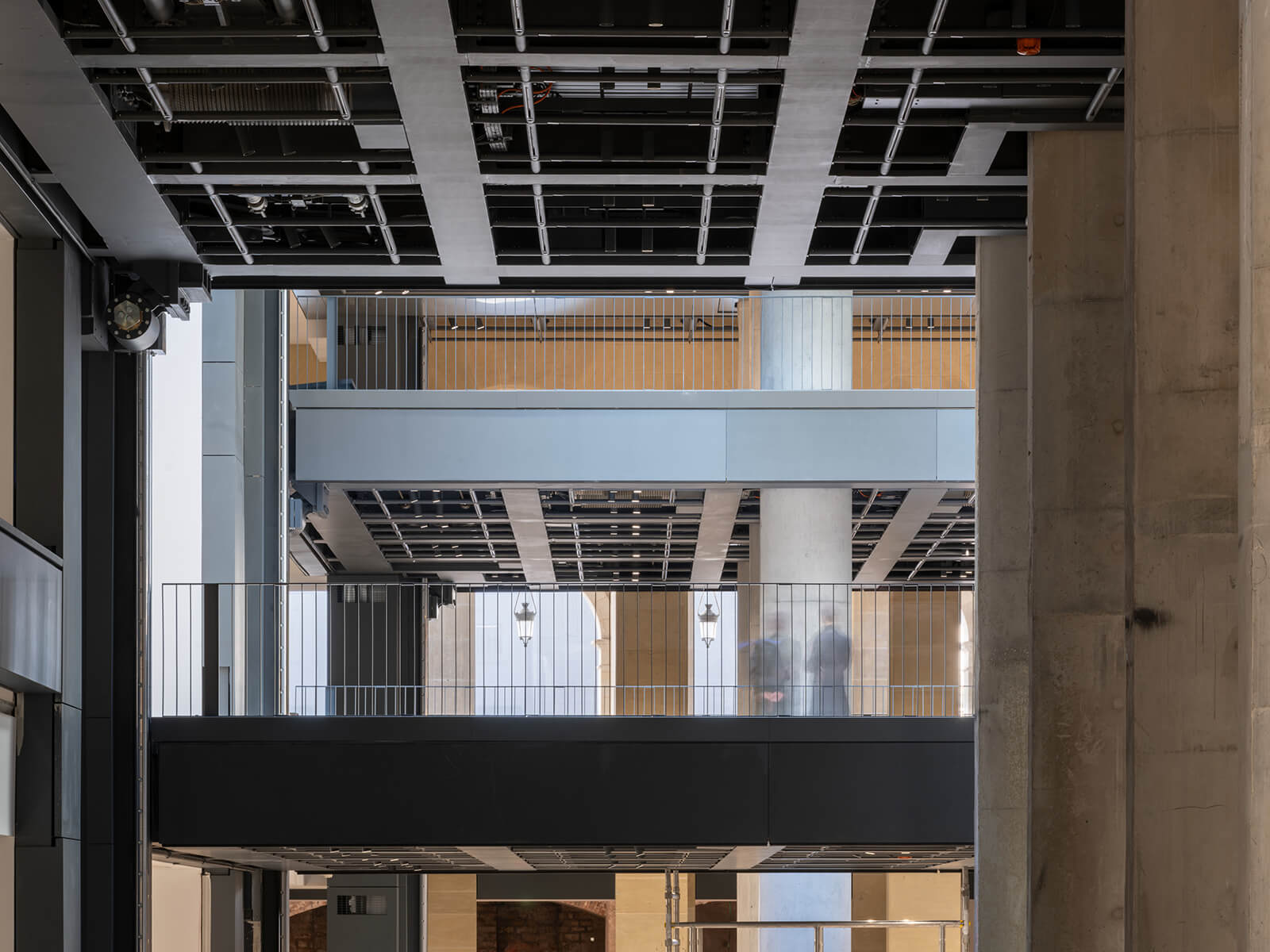
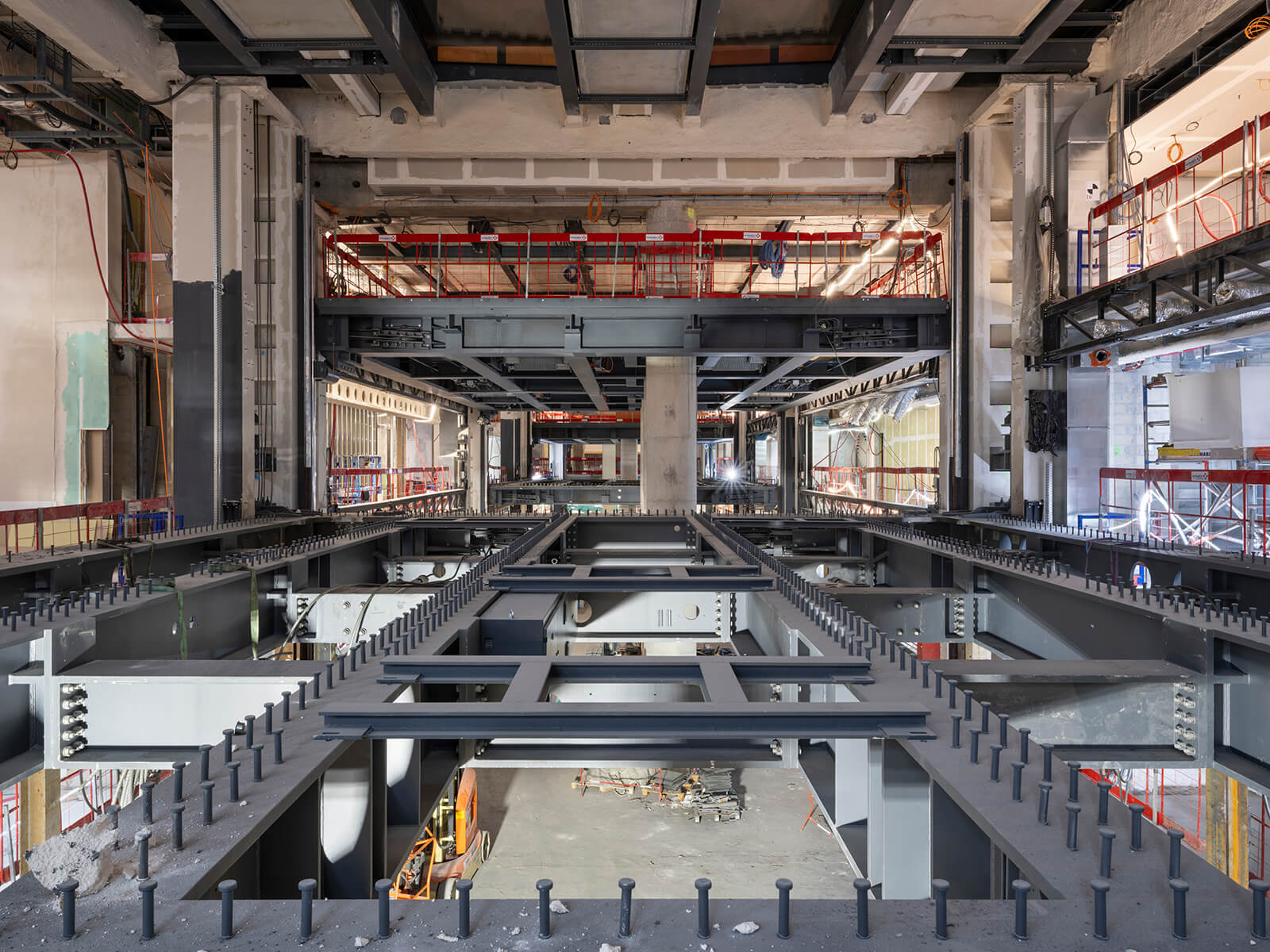
The major intervention in the galleries—the five movable platforms that define the exhibition space—allow the museum architecture to shift and adapt to changing programmatic needs. A sense of the unexpected is heightened in the building, with a new range of volumes, voids and spaces in which to traverse endlessly made possible through the 'modular' design. This play on dynamism in the interior spaces brings to mind not only an expansion in the architectural thinking of transparency in Nouvel’s museum designs, but on the idea of architecture as theatrical scenography, which played a role in the Haussmannisation of Paris. The architecture, with its infinitely movable parts and possibilities, becomes a constantly evolving stage; much akin to the city becoming spectacle.
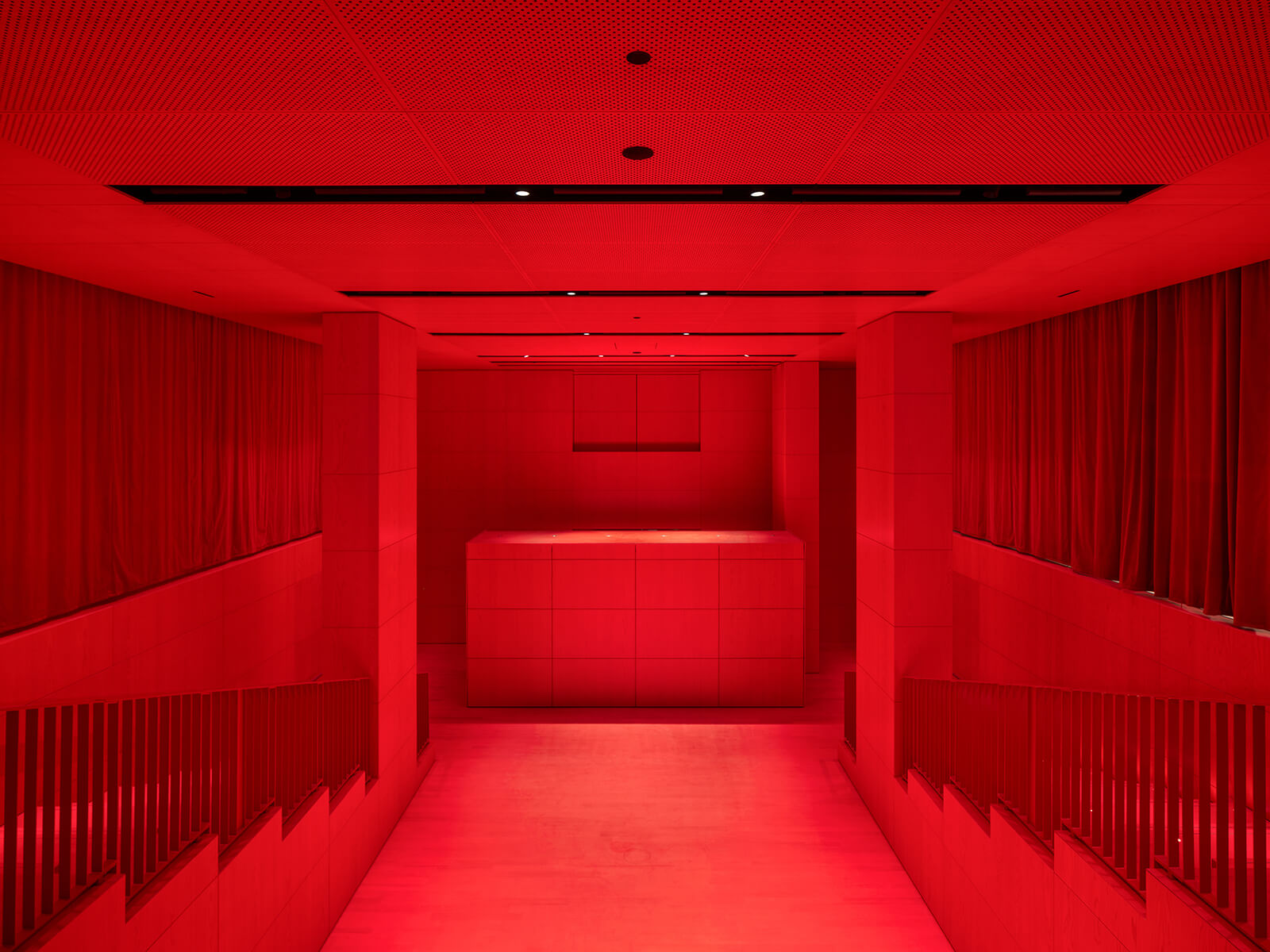
On the other hand, the stark industrial character of the studio’s intervention within the shell of the cultural architecture contrasts well with the neoclassical exterior. In some sense, the adherence to this nimble aesthetic becomes a means for the design to recede in the imagination, the artefacts taking centre stage. Spanning 8500 sq m of exhibition space, the institution envisions that the museum will host a wide spectrum of visual arts, photography, film, craft, science, performance and live shows on the premises. The exhibition currently on view, for instance, categorically traces the history of Fondation Cartier’s engagement with culture, displaying nearly 600 works by over 100 artists.
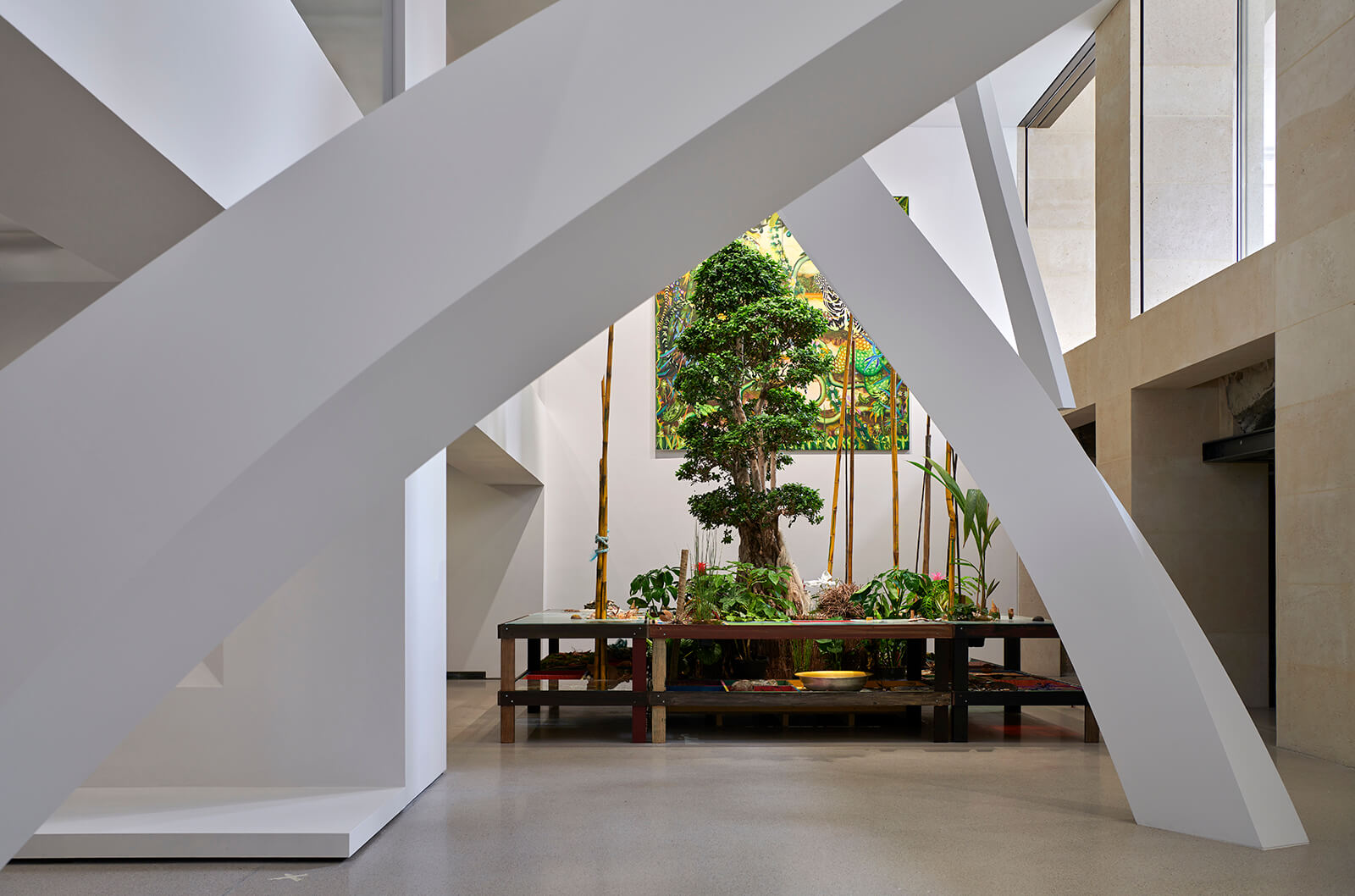
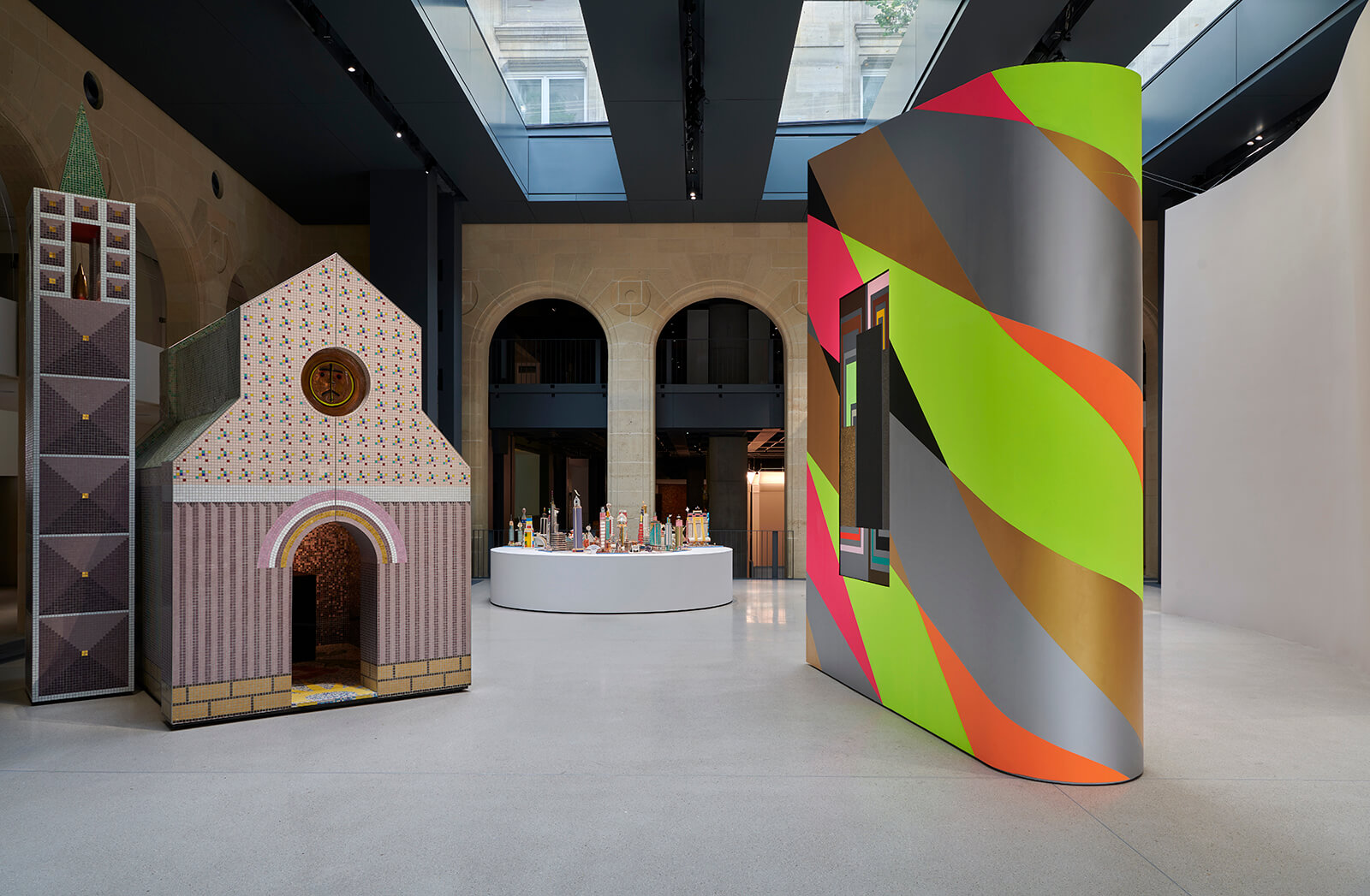
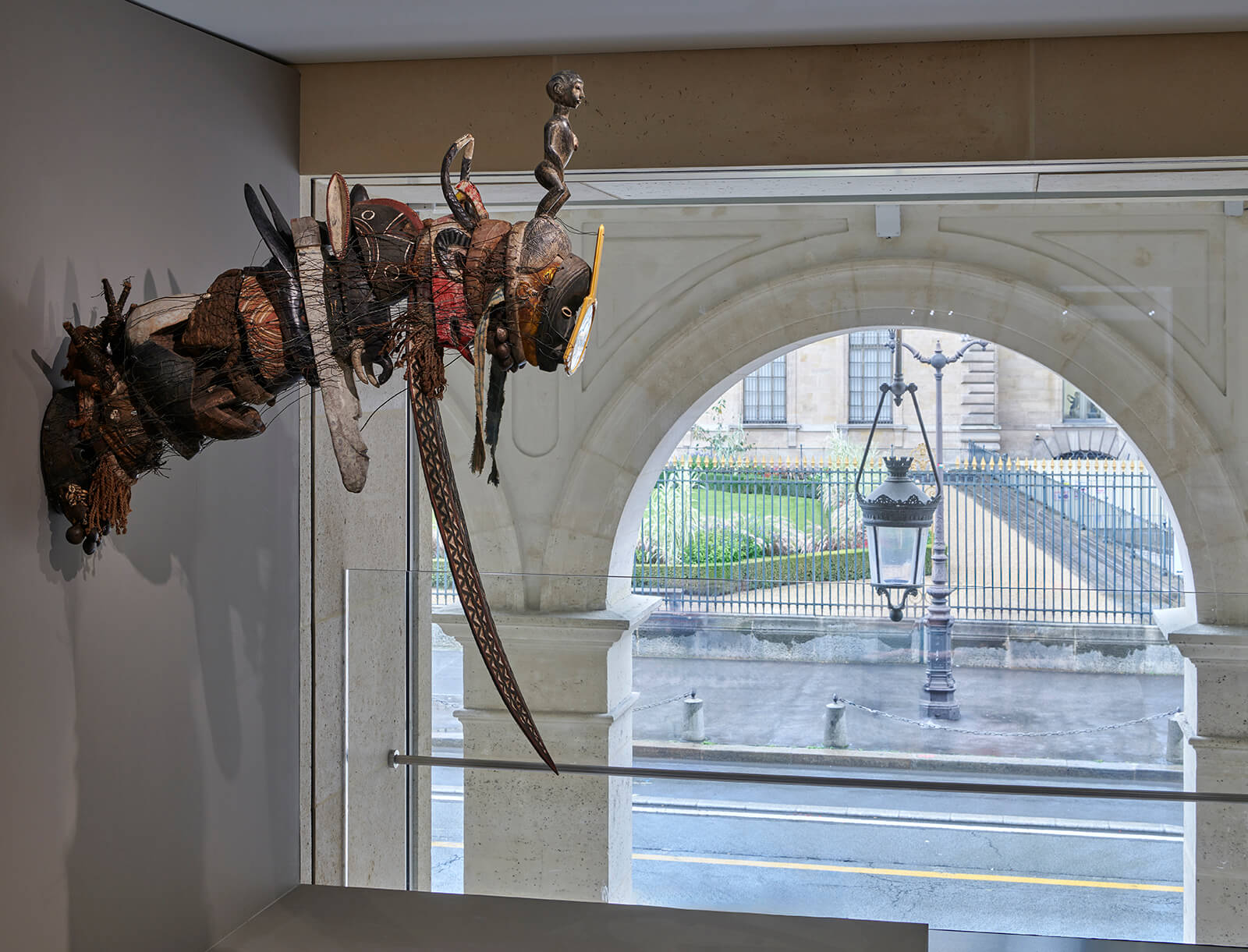
The exhibition design for the showcase was conceived by Italian design studio Formafantasma and is organised around four broad themes, reinterpreting the encyclopaedic model of museum organisation. Machines d’architecture features utopian and alternative readings of the city through models, drawings and speculative propositions such as Chapel of Valley by architect Junya Ishigami or the bird’s-eye urban landscapes of Mamadou Cissé, while Être nature reflects on natural landscapes and human understandings of nature featuring artists such as Solange Pessoa and Robert Adams. Making Things offers novel engagements with materials through craft and technology such as in the work of Issey Miyake, Andrea Branzi, Damien Hirst and Joan Mitchell. Un monde réel depicts the relationship between science, fiction and artistic creation with works by Indian artist Shantaram Chintya Tumbada, the dreamlike drawings of Mœbius or Paul Virilio’s photography series.
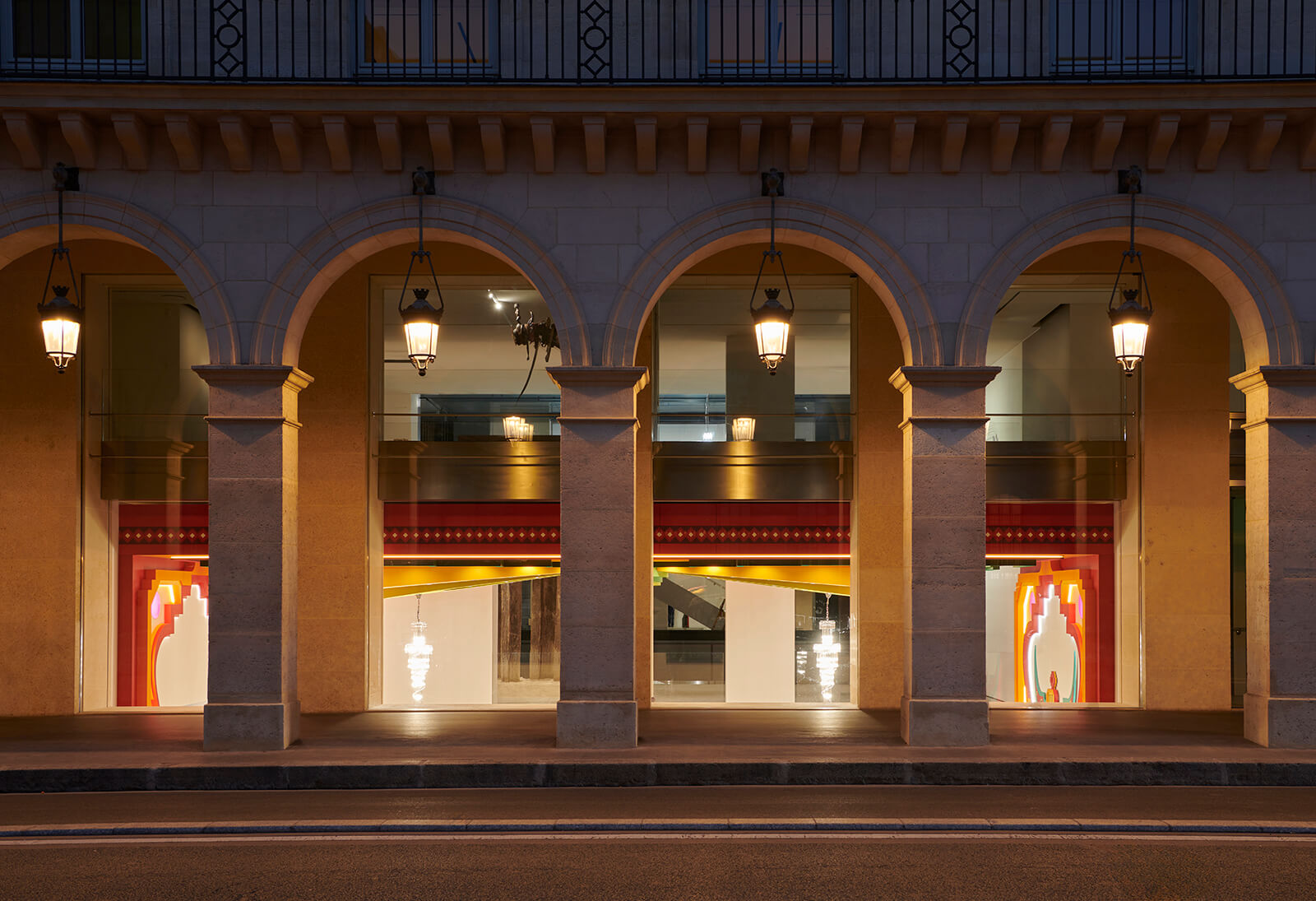
The showcase is enlivened by the architectural intervention, and the subsequent public programming. To accommodate this, the adaptive reuse project also ensures generous public spaces for visitor interactions, including a 300 sq m space, La Manufacture, for education about art and through art, an auditorium and a new bookstore. Rethinking what artistic engagement can look like, the project has been described as a manifesto of Nouvel’s signature approach and progression of a museum architecture that immerses people and blurs distinctions between what is display and who is the observer. Speaking of the dynamic design, Nouvel observes, "It is vital to keep pace with the spirit of our time, to be fully immersed in the art of the moment.” Calling back to the aesthetics and ideologies of the modernist past as ‘spirit’, be that the instigation of architecture as machine or architecture as stage, seems to call into question the urgency and vitality of a contentious present for meaningful architectural production.

by Pranjal Maheshwari Oct 24, 2026
A consortium of Copenhagen’s 3XN, Toronto’s B+H Architects and Shenzhen’s Zhubo Design has designed the museum to mimic the surrounding riverscape, topped with a public park.
by Pranjal Maheshwari Oct 19, 2026
The Mumbai-based architects integrate courtyards, mesh screens and north light trusses to create a dining space that doubles up as a community hub at SR University, Warangal.
by Mrinmayee Bhoot Oct 17, 2026
The Rotterdam-based institute centres the Indian Ocean as a network for exploring material histories and transnational links shaping coastal cultures, positing them as future models.
by Pranjal Maheshwari Oct 16, 2026
At the 2026 Stirling Prize ceremony, Mary Duggan with RUFF Architects, MAKER Architecten and Nakshabid Architects were felicitated for proffering quality housing and social equity.

make your fridays matter with a well-read weekend
Enter your details to sign in
Don’t have an account?
Sign upOr you can sign in with
a single account for all
STIR platforms
All your bookmarks will be available across all your devices.
Stay STIRred
Already have an account?
Sign inOr you can sign up with
Verification link sent to check your inbox or spam folder to complete sign up process
Tap on things that interests you.
Select the Conversation Category you would like to watch
Please enter your details and click submit.
Enter the 6-digit code sent at


Jean Nouvel’s Fondation Cartier building fabricates avenues for the unexpected
by Mrinmayee Bhoot | Published on : Nov 05, 2025


 Sign in with Google
 Sign in with email
What do you think?