Architecture06 mins. read
The Ray evokes a sensorial paradox between 'losing' oneself and 'finding' space
by Dhwani ShanghviNov 14, 2023



by Pranjal MaheshwariPublished on : Jul 22, 2026
Nature takes its time. The process of 'designing' a natural landscape, in its virtue, extends beyond the mere resolution of ideas. Their execution is then only the genesis of long-winded journey. The 'designer', the interventionist, simply plants the seeds.
Sixteen years since the Mumbai-based landscape architect Kunaal Maniar’s eponymous studio planted Sky Garden at the terrace of a high-rise development—the CJ House in Mumbai—the landscape design has unfolded in dramatic, exciting ways. For Maniar, the growth has been both anticipated and organic, revealing the deep and graceful enrichment that is characteristic of natural processes, onset with the passage of time.
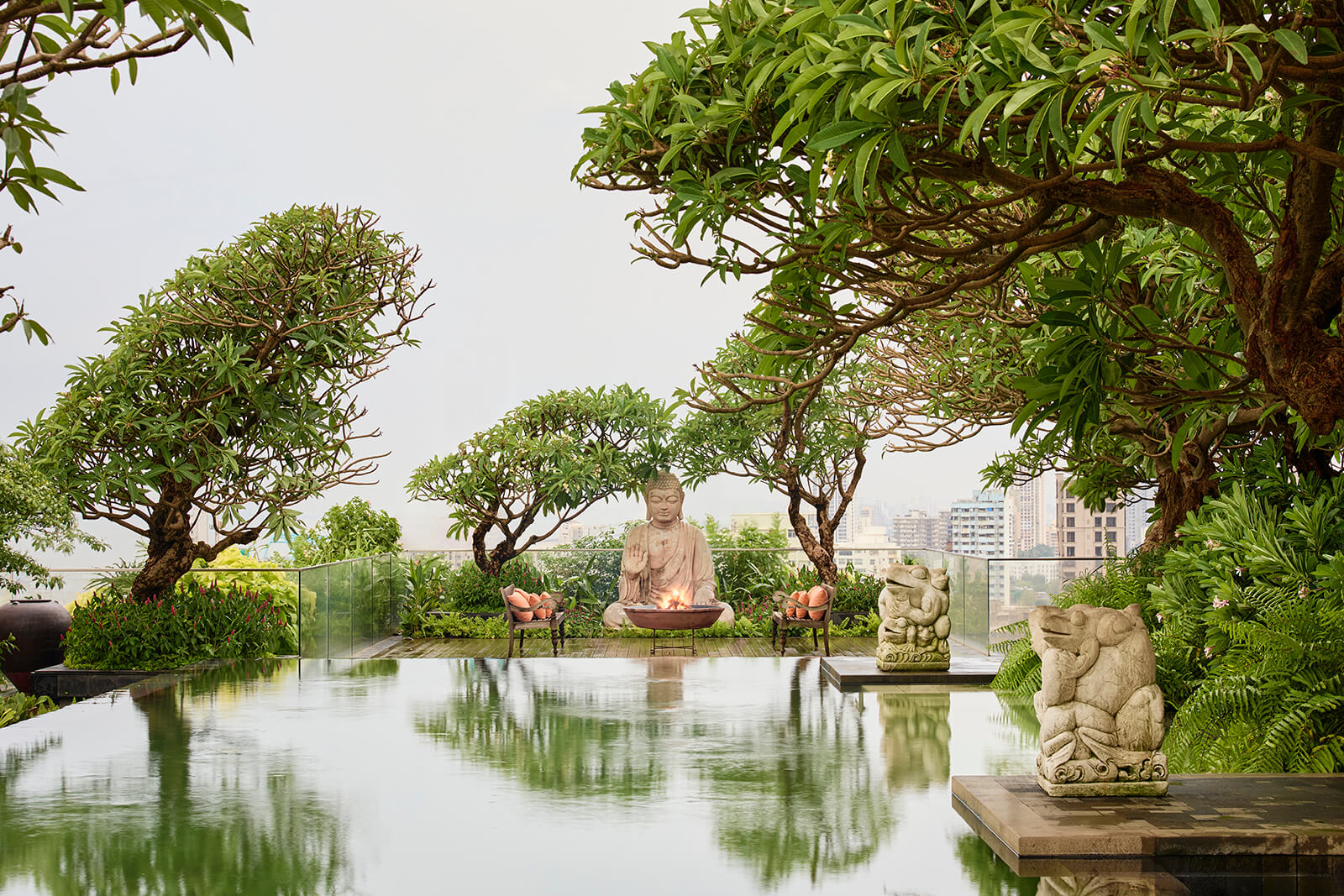
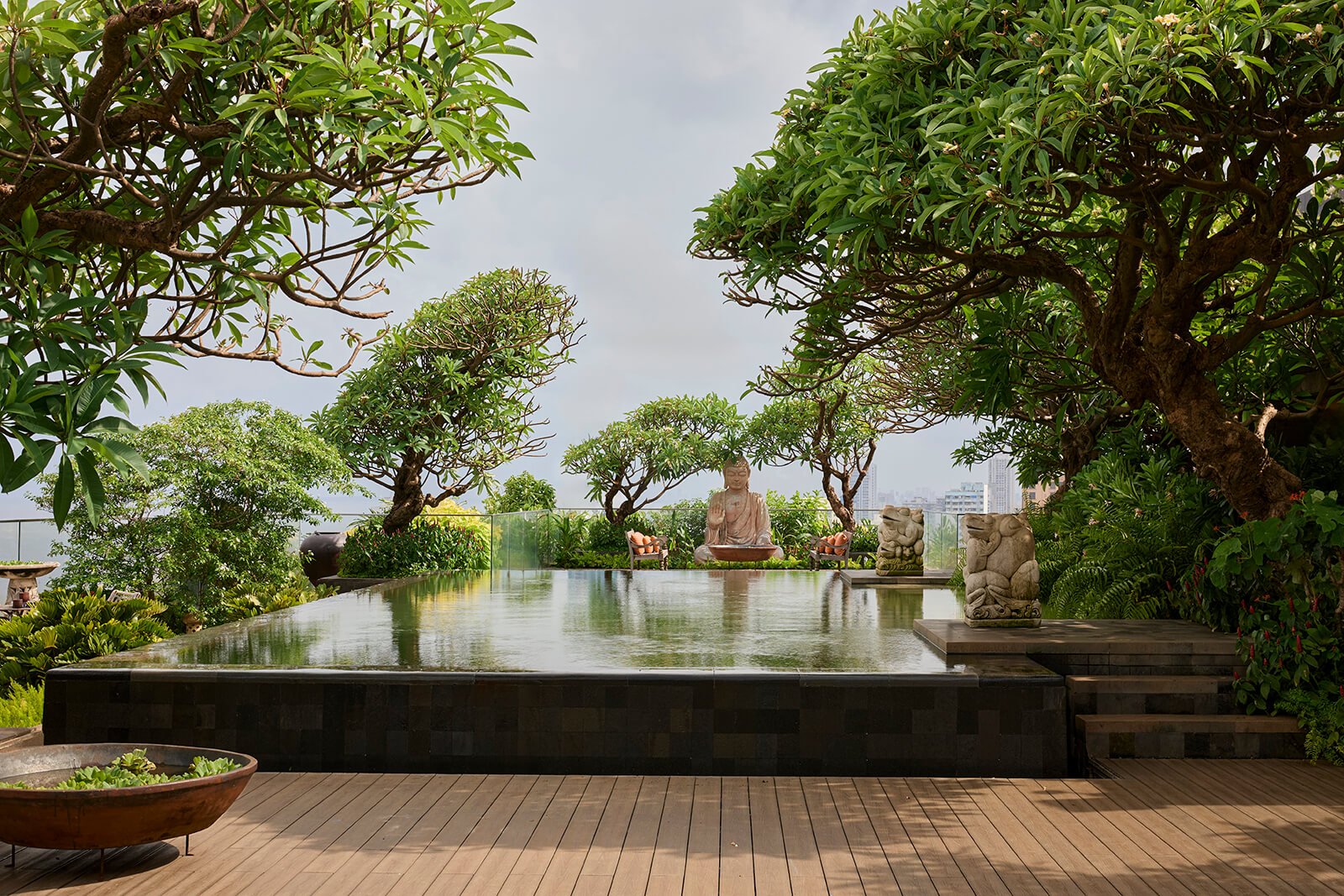
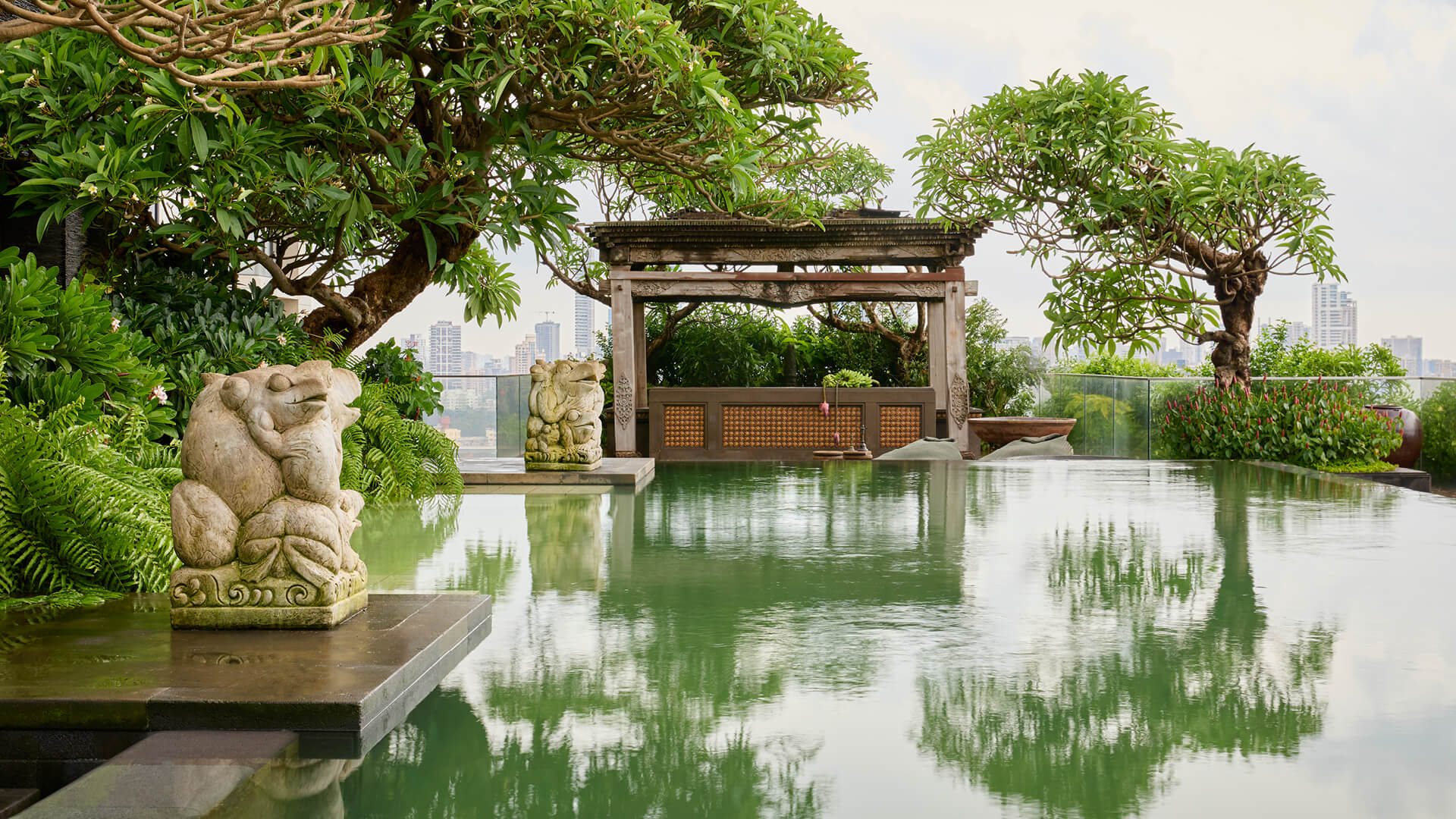
The garden design—conscious of its position and the spatial dichotomy between sky and earth—was conceived as an exploration of the idea of a ‘borrowed landscape’. It stems from an attempt to create a space that feels rooted despite its vertical disposition. Originally developed in collaboration with Indian architect Vistasp Kharas, during his tenure with Talati and Panthaky, both the landscape and the architecture display a responsiveness to their surrounding context—dynamic and ever-changing as is to be expected from Mumbai—emerging foregrounded to the Arabian Sea.
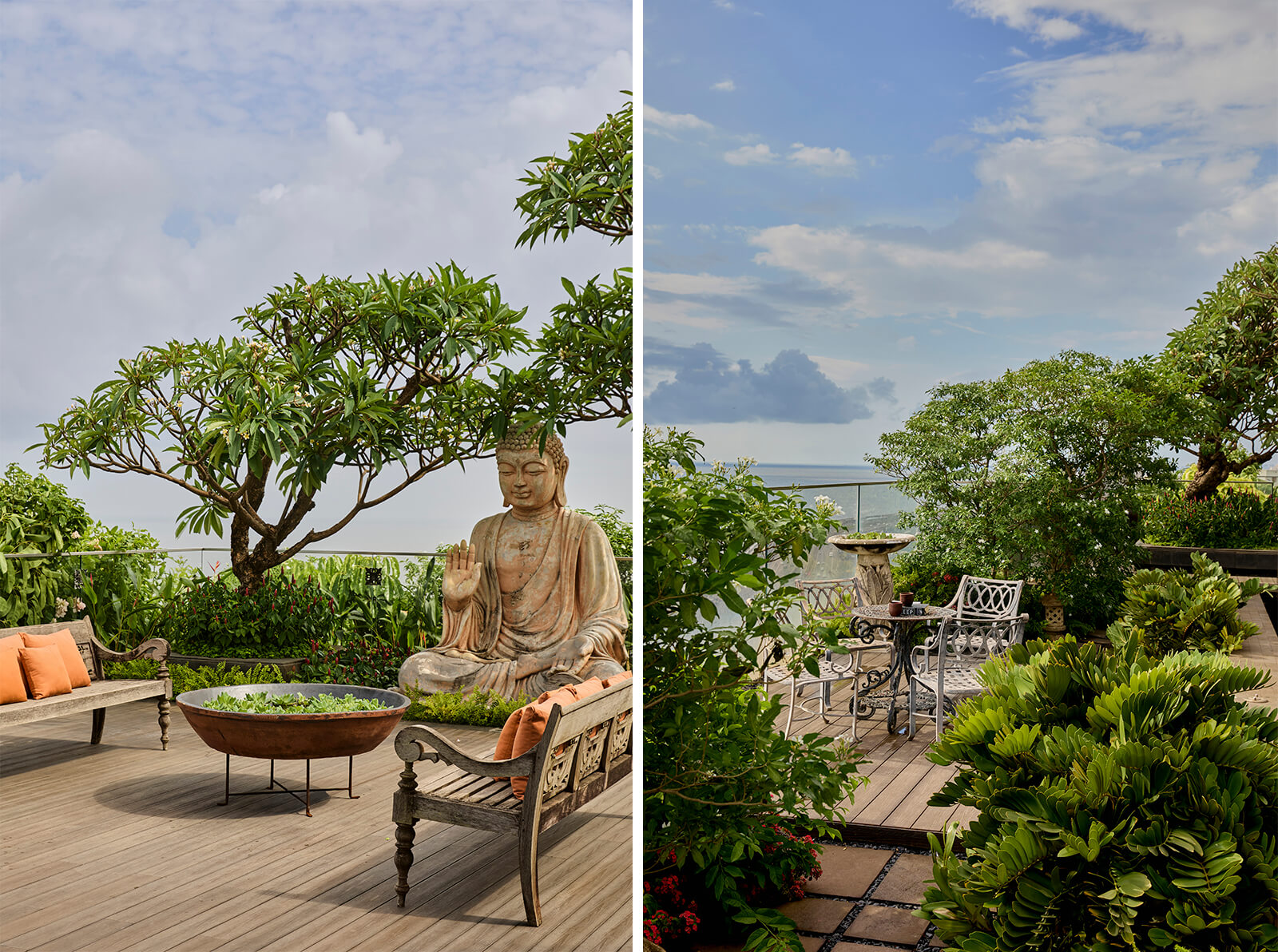
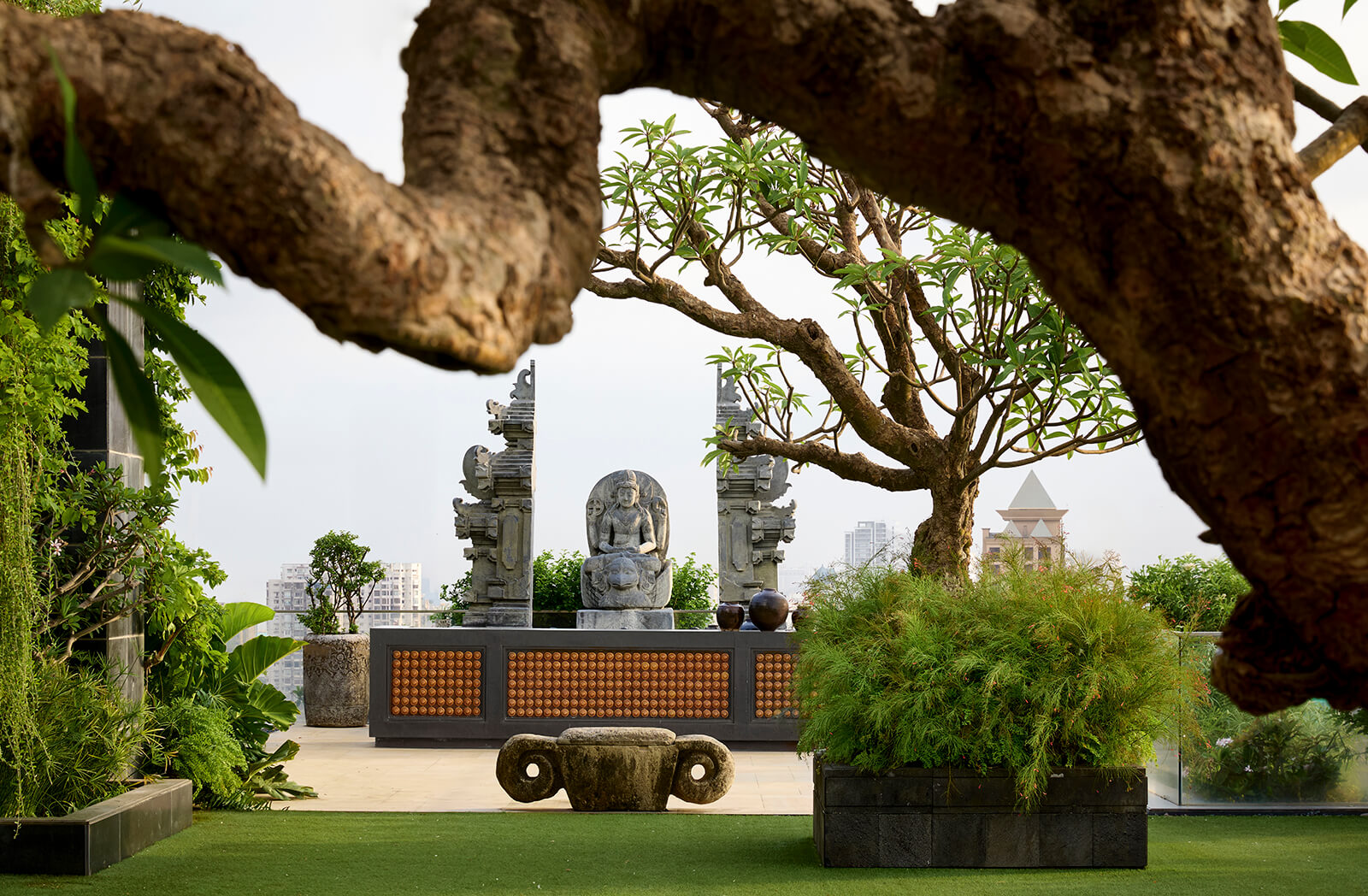
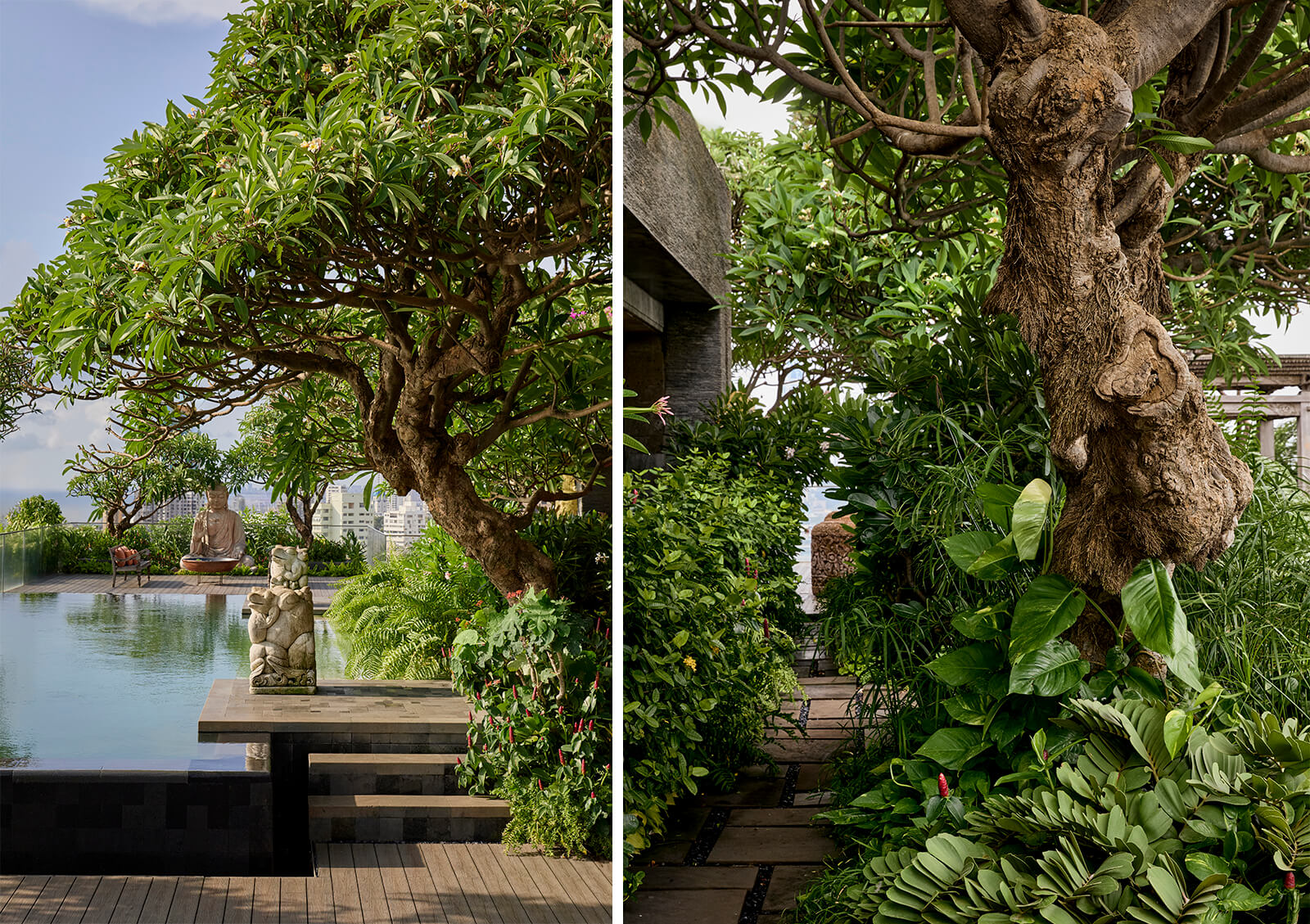
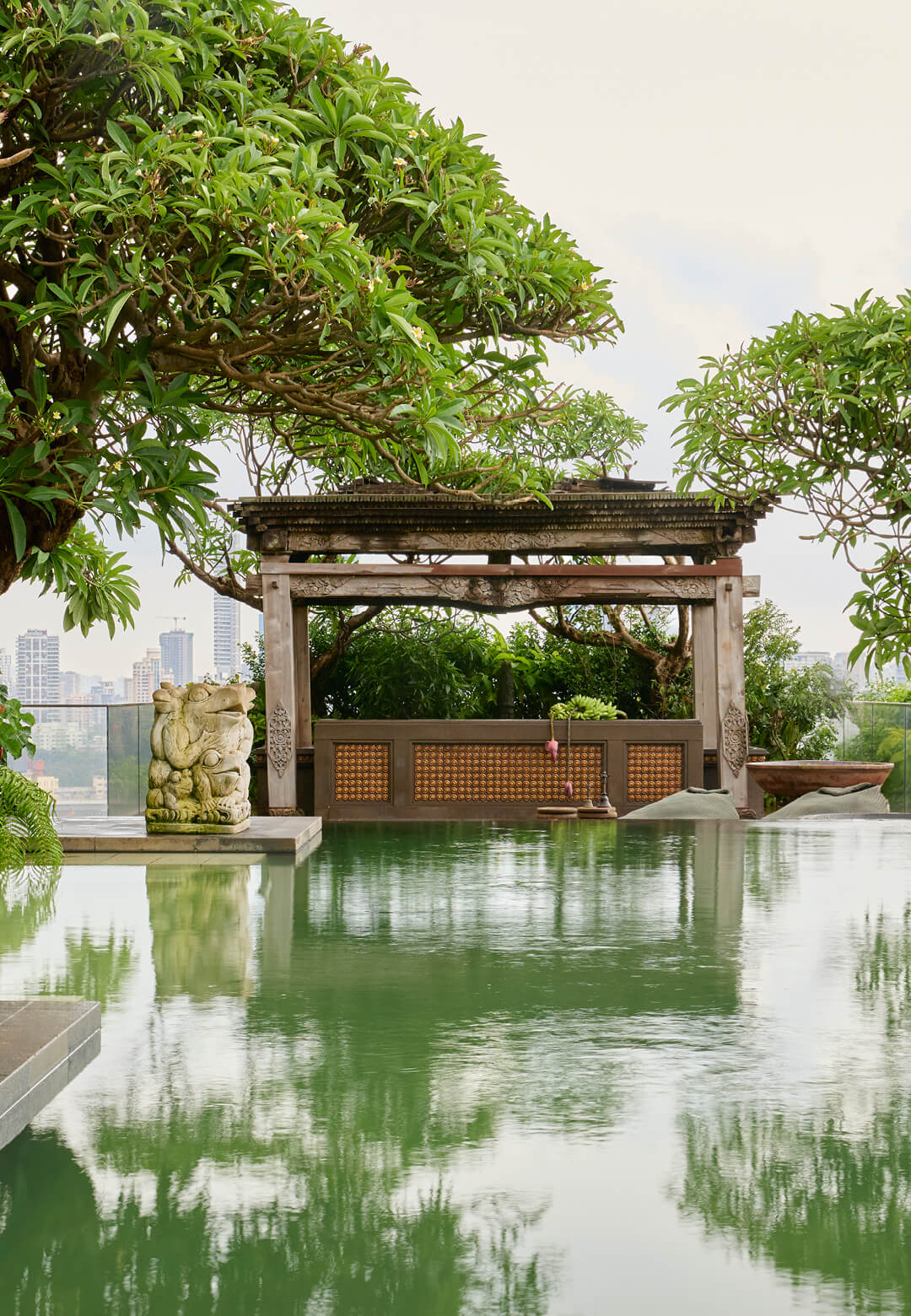
Smaller elements of the overall landscape design scheme evoke Balinese traditions, featuring a rich palette of tropical plants and moss-laden decor elements that mediate between the built and the unbuilt, between enclosure and exposure. “Rather than recreating a Balinese garden, we translated its spirit—harmony with nature, sensory richness and a strong sense of place,” Maniar tells STIR. “We used generous soil depths, sunken slabs and a carefully selected plant palette to establish a sense of permanence and ecological richness,” he continues. The landscape is designed to subtly frame the surrounding seascape, especially over time, while the central pool serves as a gradual visual transition between the garden and the sea beyond.
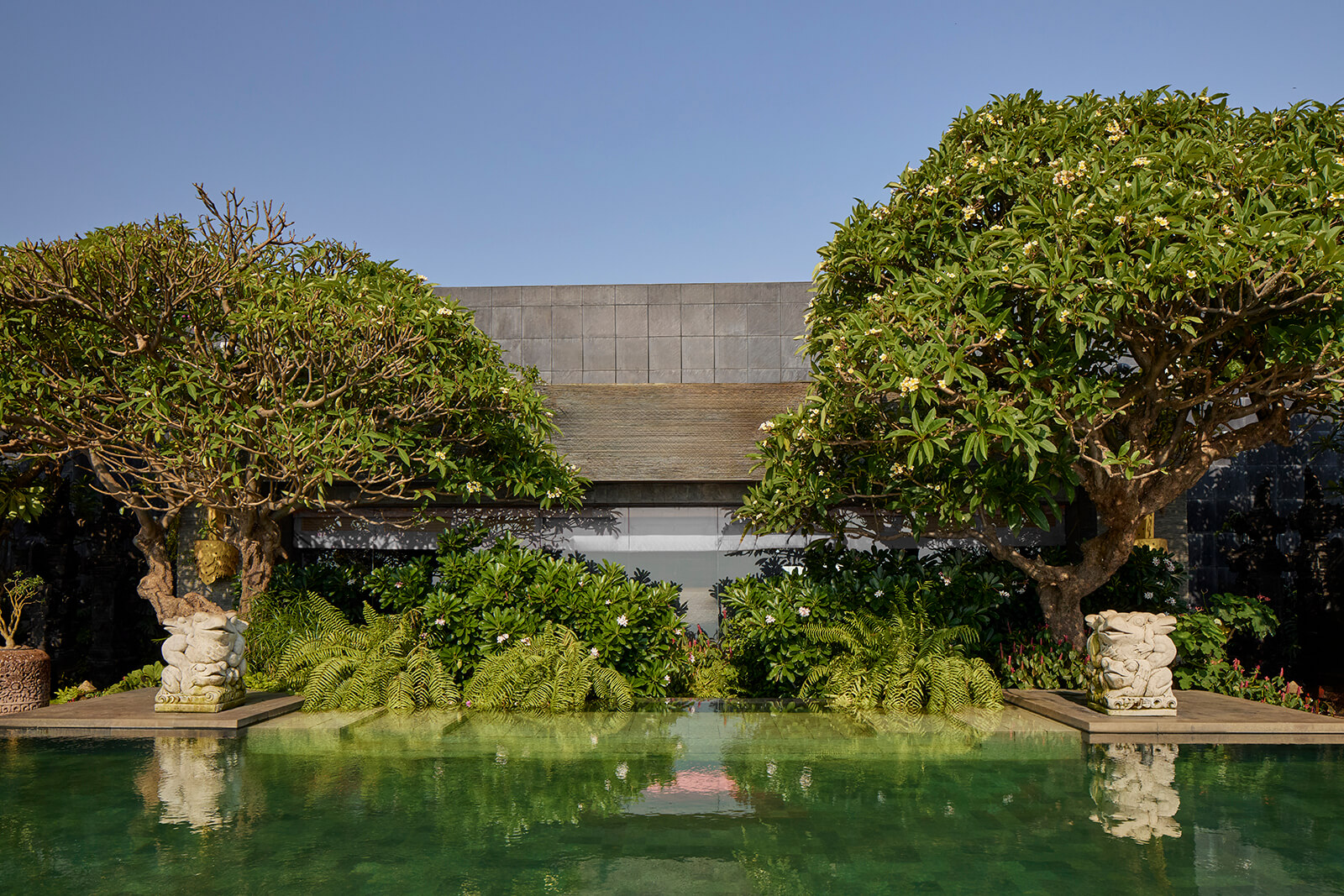
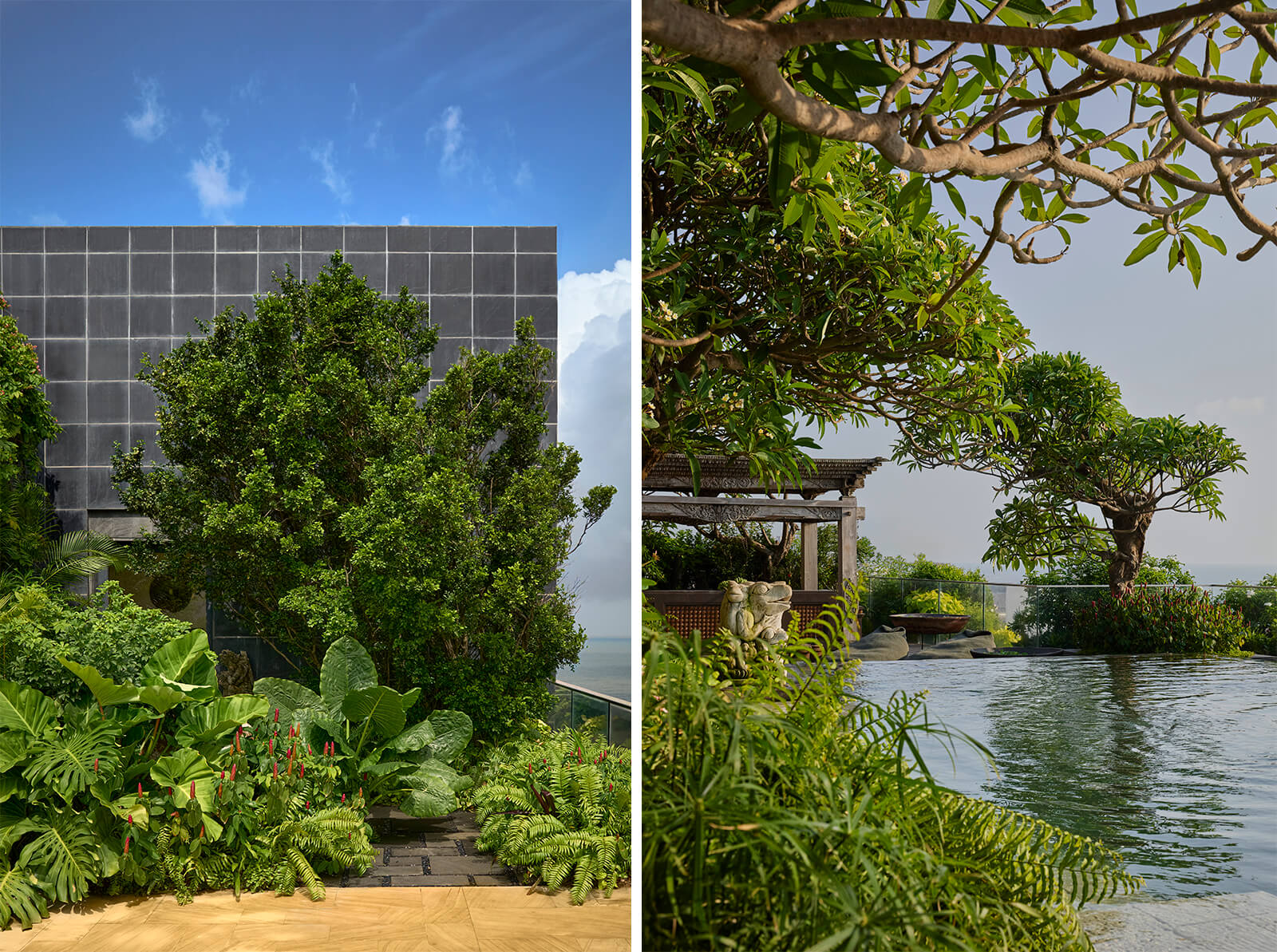
The configuration of the open space is defined by mature frangipani trees, originally transplanted to the terrace as physical and symbolic anchors of the garden—a reverence to the spirit of Sri Lankan architect Geoffrey Bawa’s immersive landscapes. The feat also exemplifies the merits of incorporating discussions on landscape planning as part of the early design development stages, an approach that facilitated various structural provisions, including sunken slabs that were specially designed for bearing the weight and growth of the mature trees. “Transplanting trees weighing up to 1,500 kg onto the rooftop required close coordination with structural engineers to ensure the building could support the loads”, Maniar remarks, “while detailed wind studies informed anchoring systems and planting strategies that would allow the trees to thrive despite increased wind exposure at that height.”
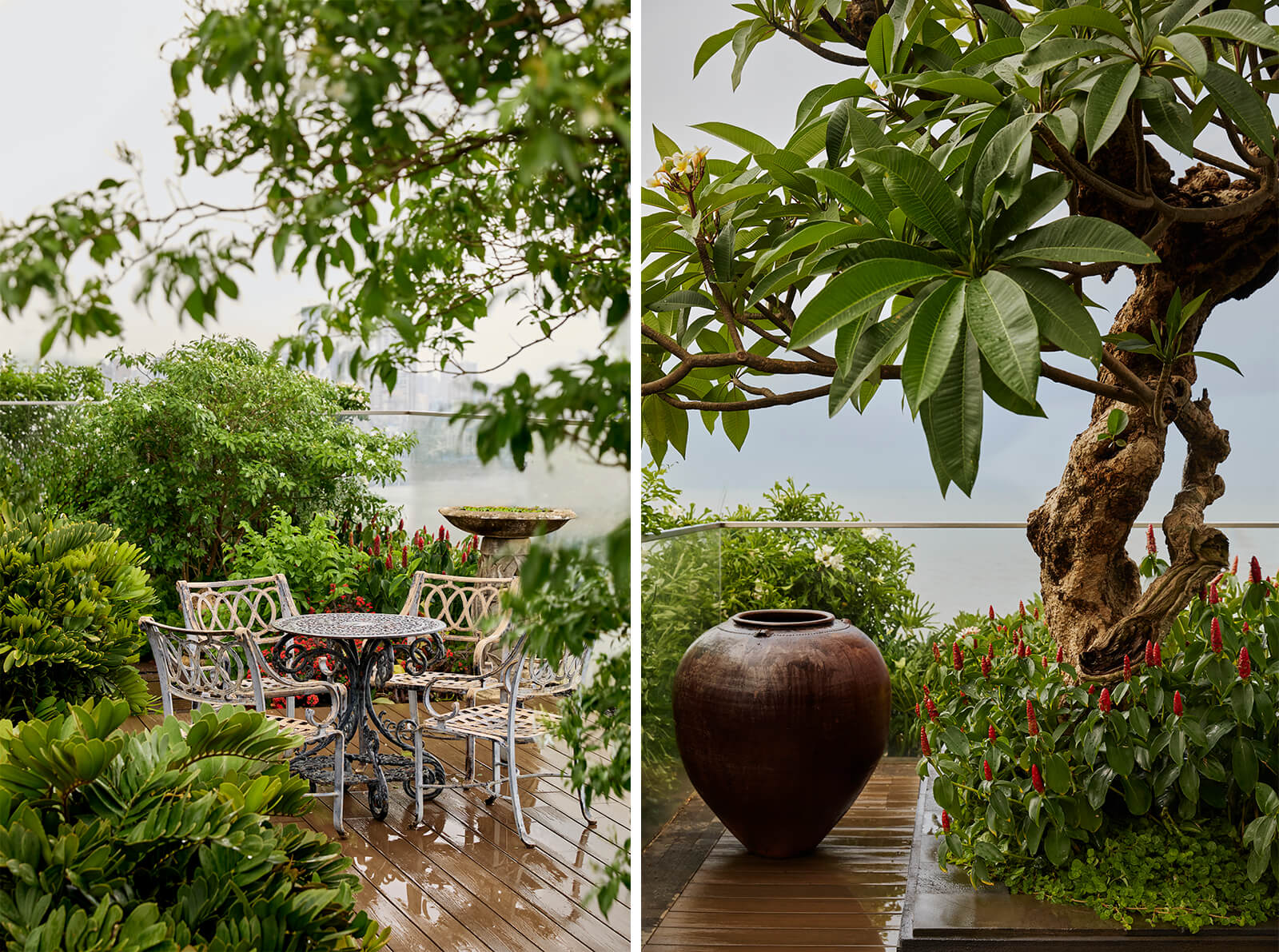
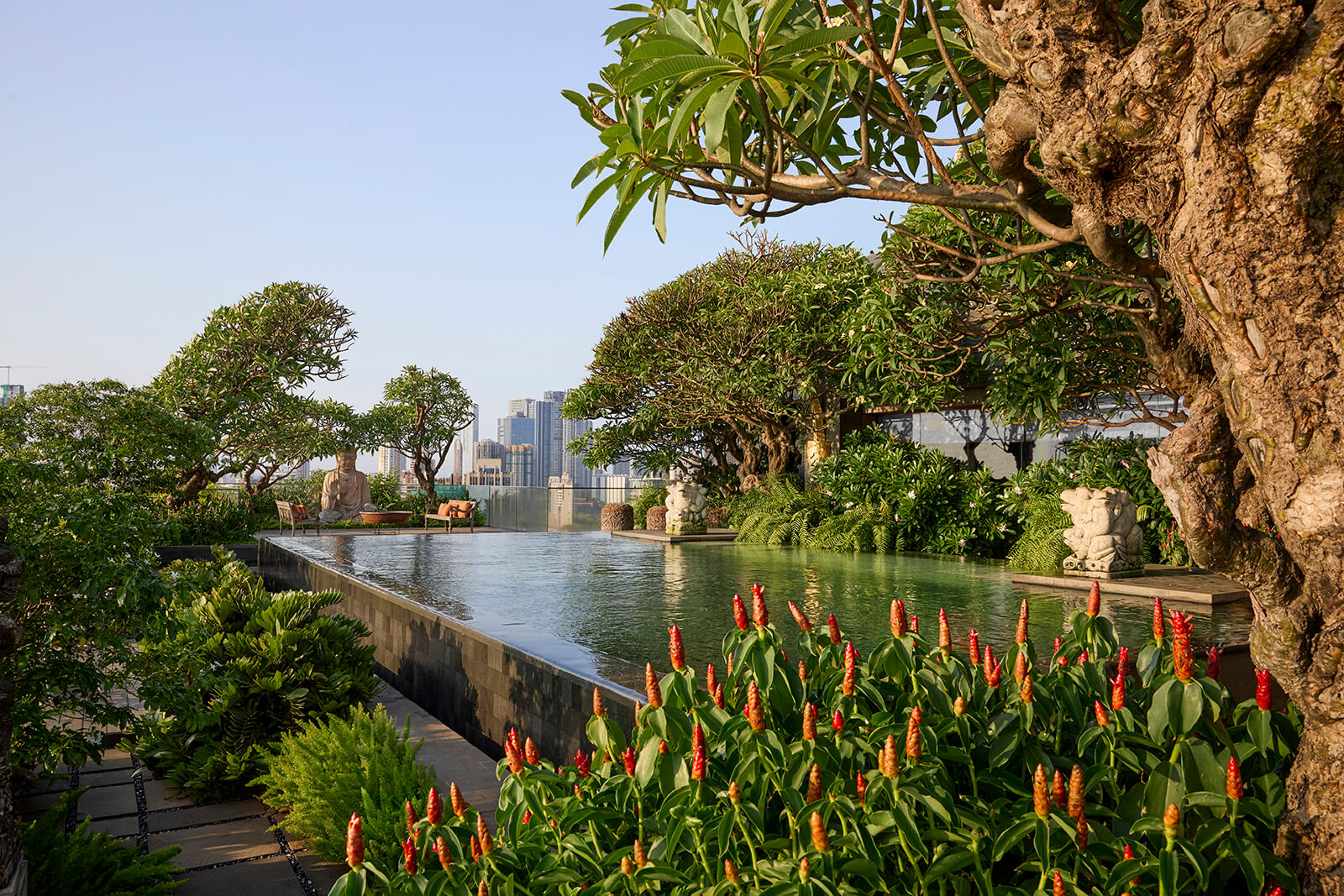
Nature’s organicity is fundamental to the discipline of landscape architecture. By virtue of careful planning and foresight, Sky Garden by Kunal Maniar and Associates manages to envelope a similar range of variances despite being somewhat restricted by the stringent built mass of the high-rise construction, typical of Mumbai's urbanscape. “Sixteen years on, the garden has reaffirmed that landscapes are shaped as much by time as by design,” Maniar shares with STIR. “While we anticipated the growth of the planting, what has been most rewarding is seeing how the garden has evolved in ways we could never fully predict—developing its own ecological relationships, character and rhythms. It serves as a reminder that the role of the designer is not to control nature, but to create the conditions for it to thrive.”
Name: Sky Garden
Location: Mumbai
Typology: Terrace Garden
Architect: Kunal Maniar and Associates
Collaborators: Vistasp Kharas (architectural design)

by Mirra Lynn Oct 10, 2026
The Shanghai-based architecture practice’s intervention in Suzhou transforms three abandoned houses into a bookstore, café, library and homestay.
by Pranjal Maheshwari Oct 09, 2026
The eighth edition of the international architecture and urban design showcase, themed How Much?, explores diverse implications of social, ecological and economic ‘cheapness’.
by Pranjal Maheshwari Oct 06, 2026
With a programme focused on biodiversity, accessibility and safety, the Rotterdam-based architects help the neighbourhood reclaim a barren landscape as an integral social node.
by Pia Bhatia Oct 02, 2026
Located in the Al Bridi Reserve in Sharjah, the project didactically projects its purpose of studying African ecosystems through local structures marked as ‘sculptural presences’.

make your fridays matter with a well-read weekend
Enter your details to sign in
Don’t have an account?
Sign upOr you can sign in with
a single account for all
STIR platforms
All your bookmarks will be available across all your devices.
Stay STIRred
Already have an account?
Sign inOr you can sign up with
Verification link sent to check your inbox or spam folder to complete sign up process
Tap on things that interests you.
Select the Conversation Category you would like to watch
Please enter your details and click submit.
Enter the 6-digit code sent at


Landscape as an art of slow returns: Sky Garden by Kunaal Maniar, sixteen years on
by Pranjal Maheshwari | Published on : Jul 22, 2026


 Sign in with Google
 Sign in with email
What do you think?