Art12 mins. read
KNMA's The Meeting Ground brings diverse art histories into conversation
by Vandana KalraAug 17, 2026



by Rosalyn D`MelloPublished on : Jun 05, 2026
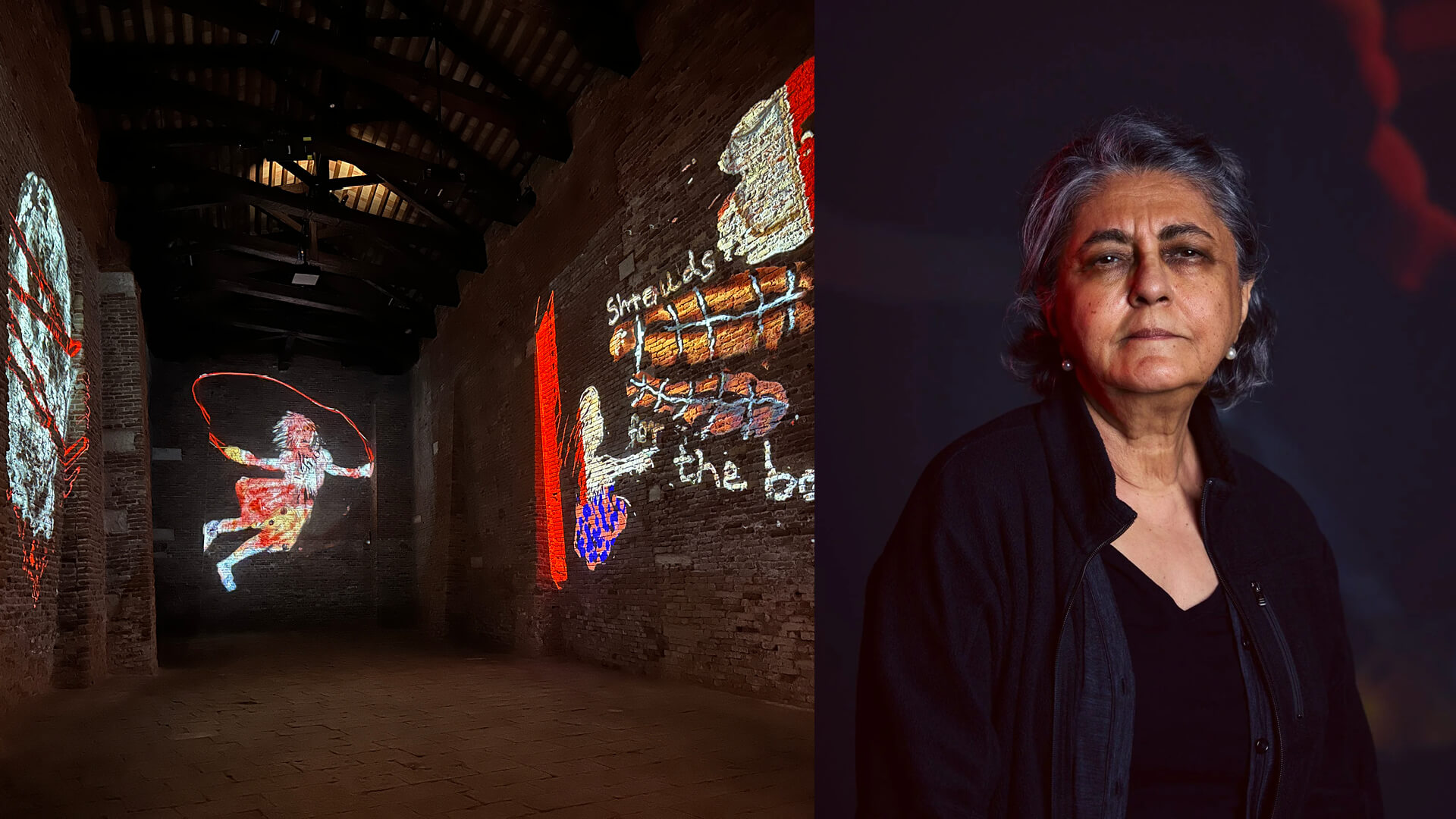
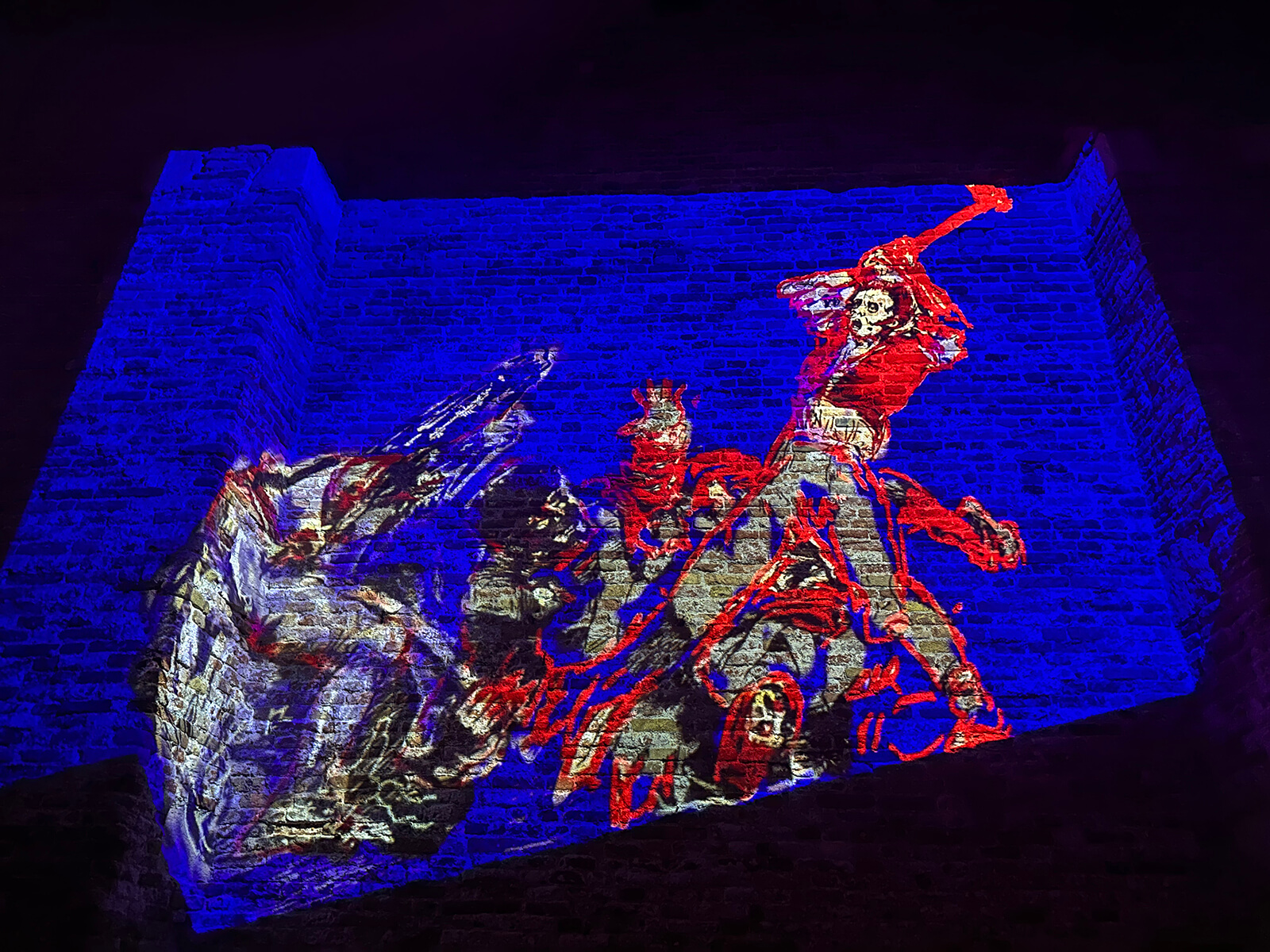
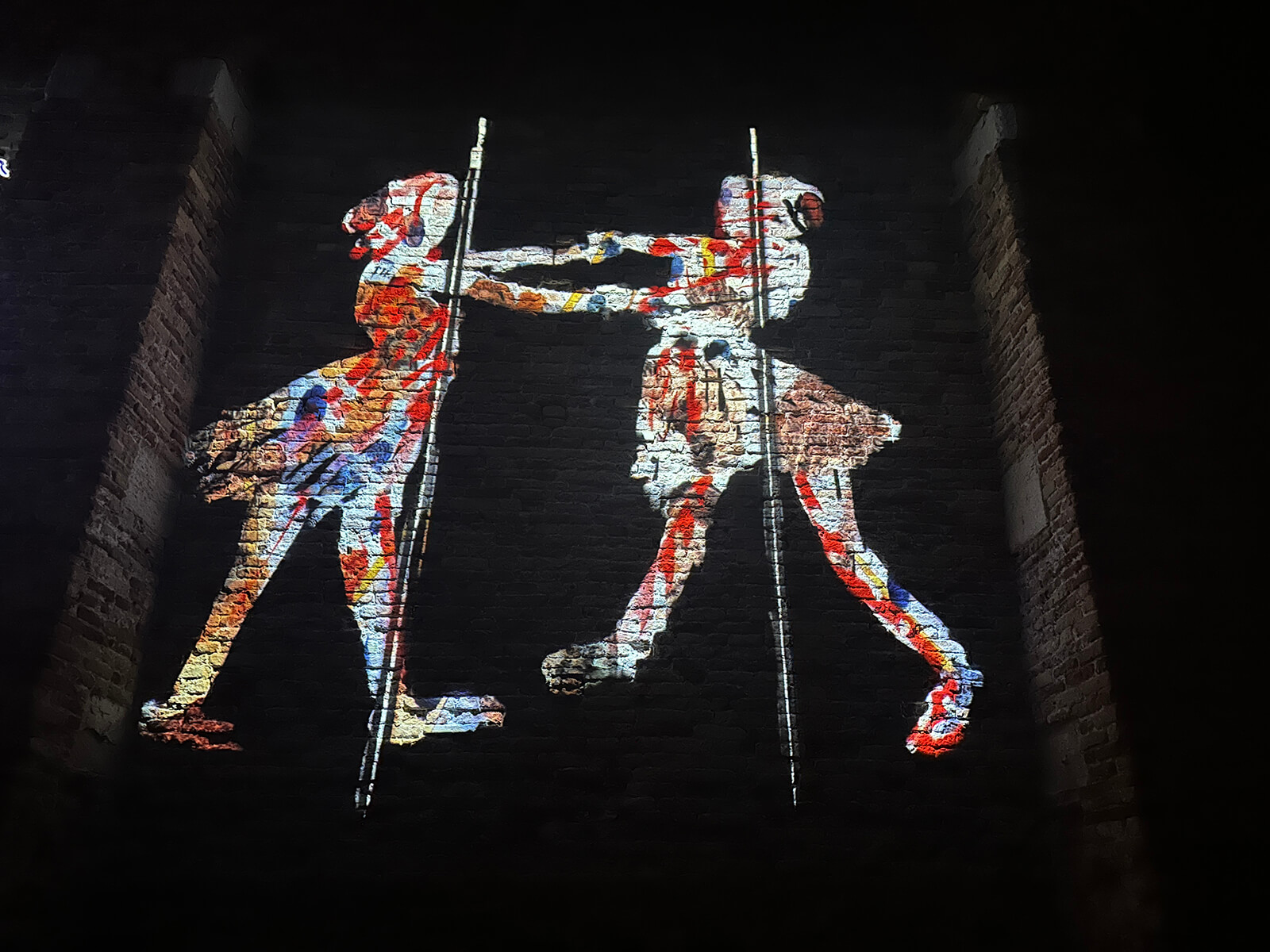
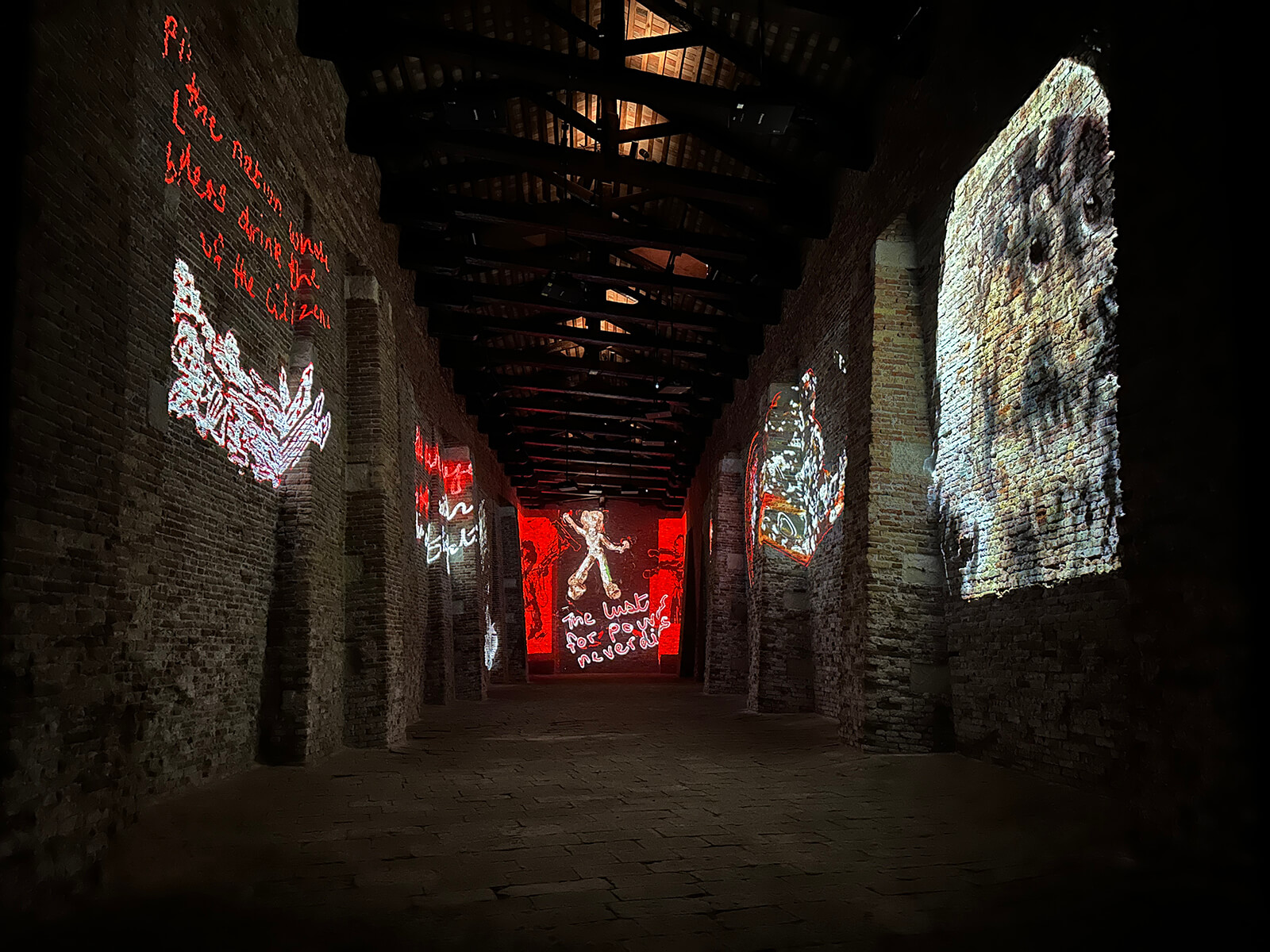
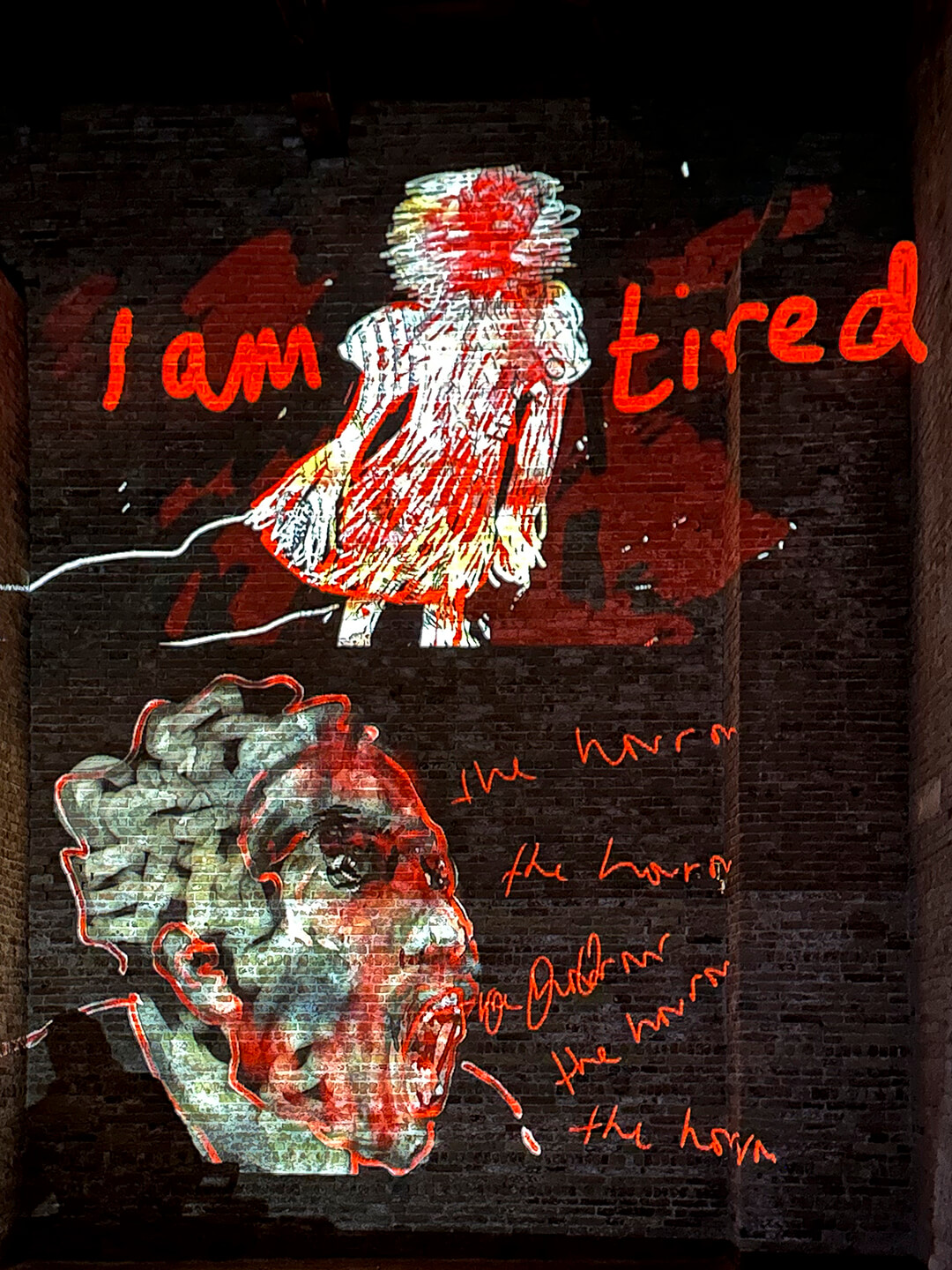
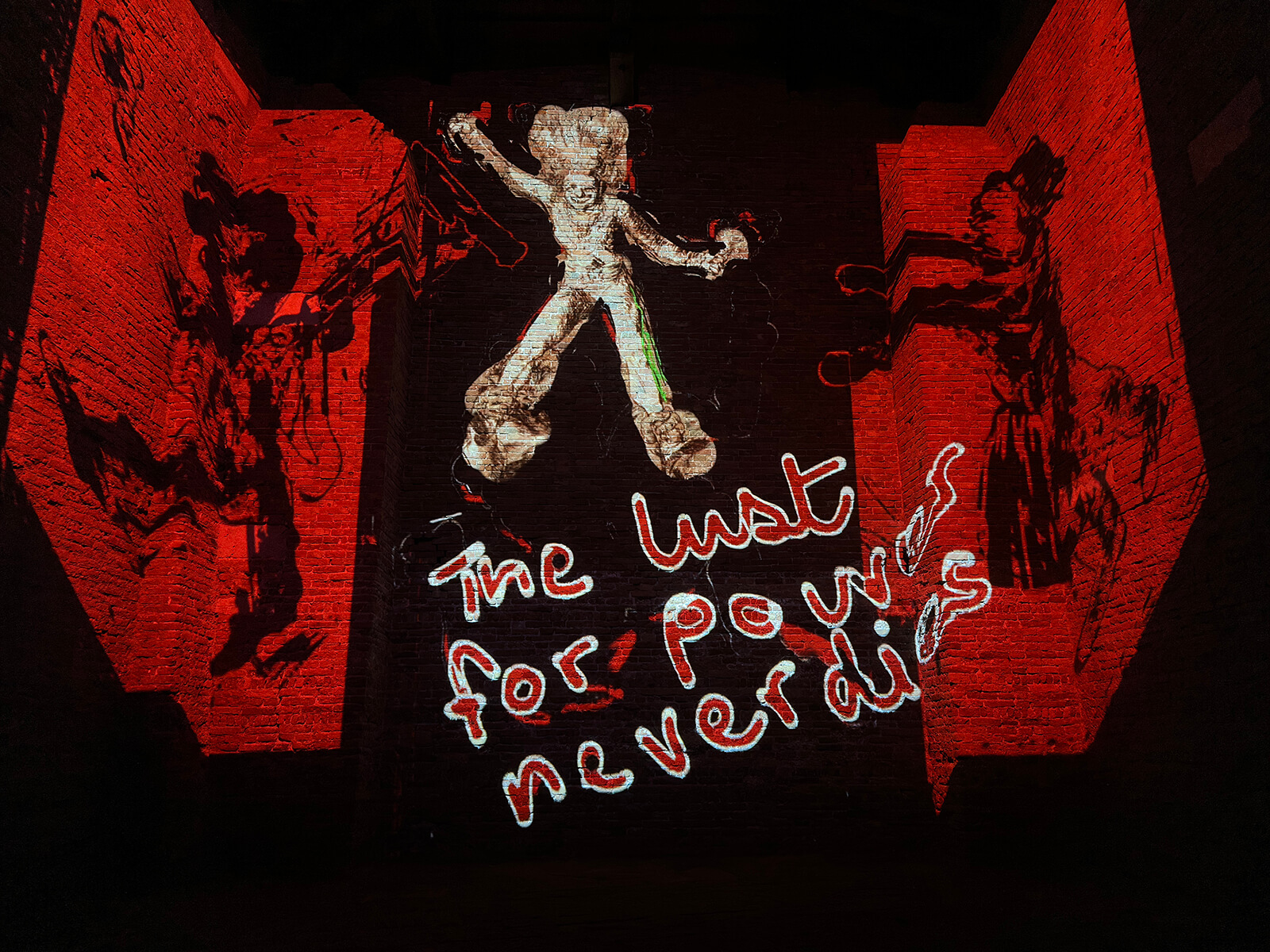
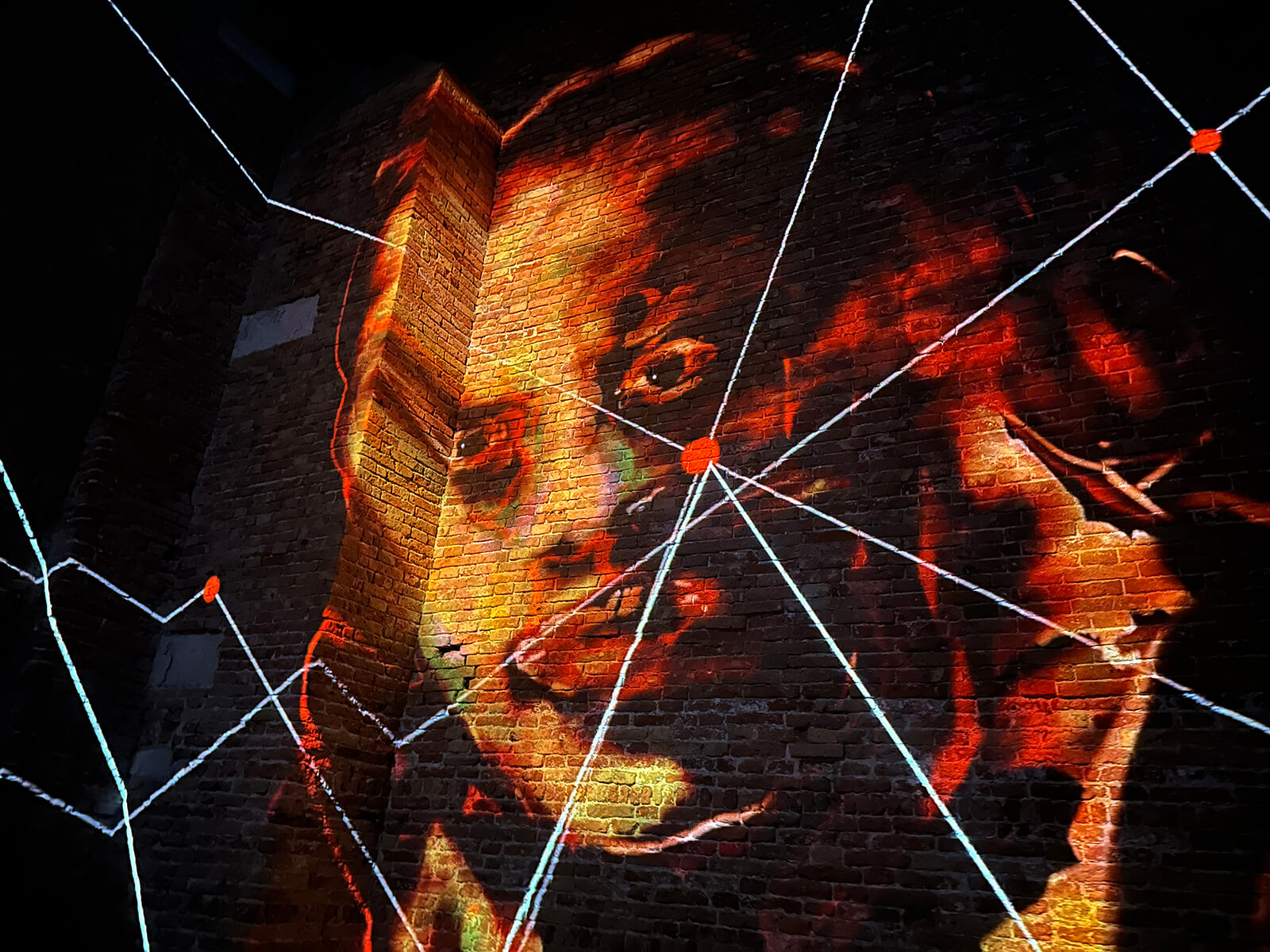
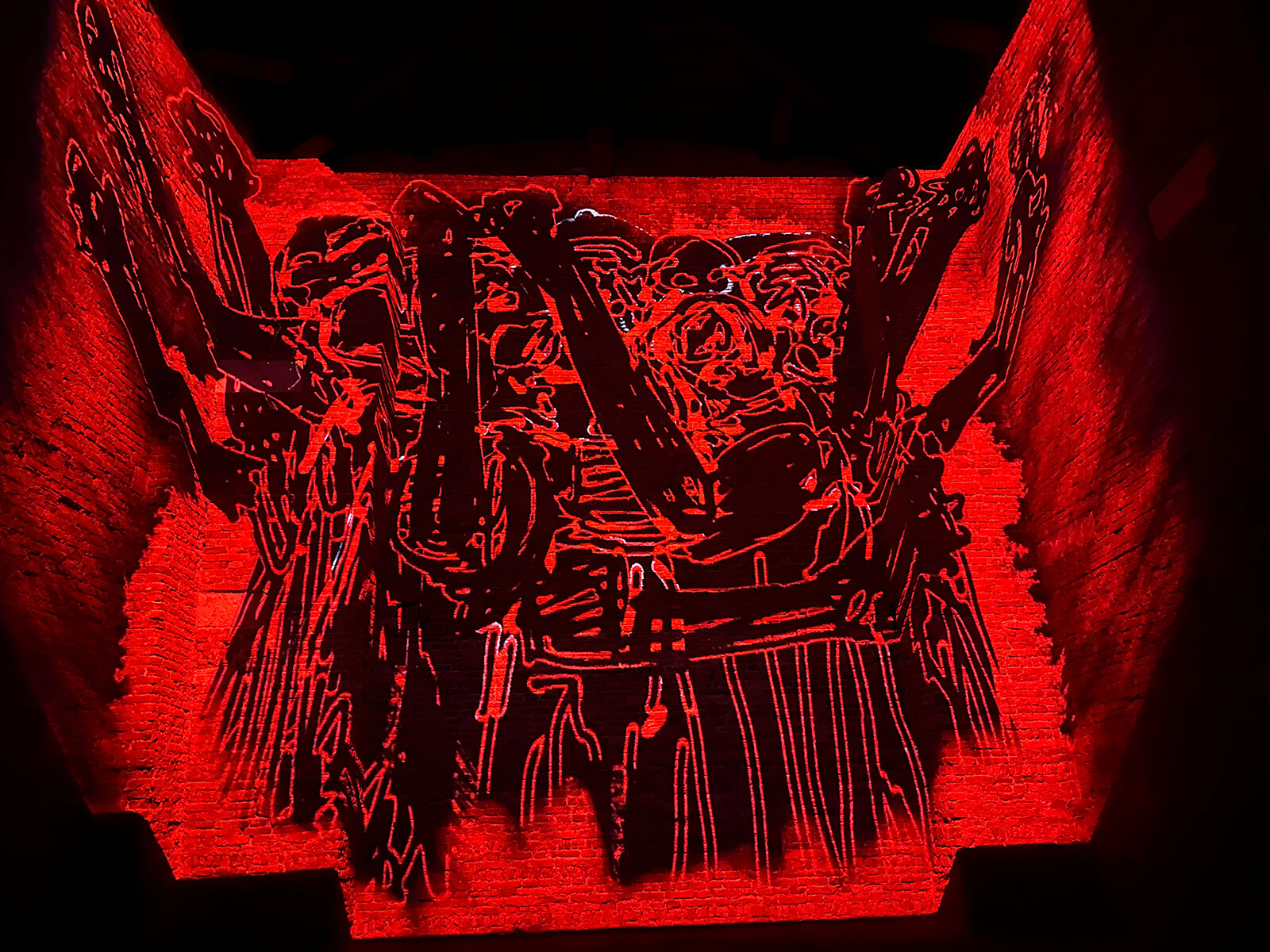
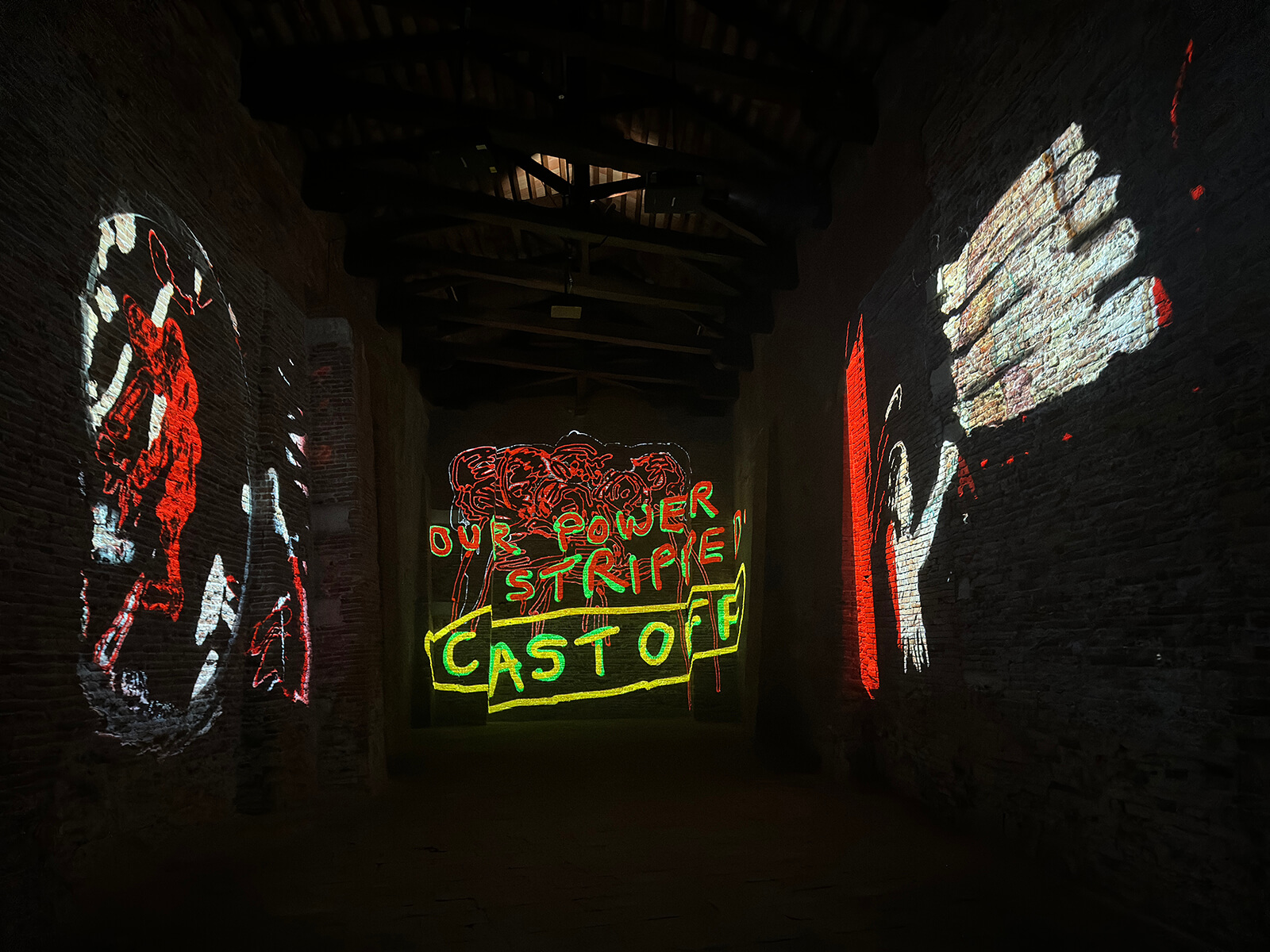
An erstwhile Venetian salt warehouse is the holding ground for Nalini Malani’s latest animation chamber, Of Woman Born, a collateral event of In Minor Keys, the 61st edition of the Venice Biennale, presented by India’s Kiran Nadar Museum of Art (KNMA). Darkness transforms the empty, cathedral-like space into a womb-like cavern upon whose walls Malani’s countless finger-drawn iPad animations are cast. Visitors might be forgiven for confusing the space with an escape room. The clearly demarcated entrance and exit notwithstanding, it’s hard not to feel trapped within the uterine interior or be unmoored by the phantasmagoria of flickering light amid an unsettling soundscape that flits between lullaby, shriek, doomsday oracle and survivor testimonials at a war crimes trial. Echoes of ‘The horror, the horror’ resound, triggering recall of the storied ending of Joseph Conrad’s novella The Heart of Darkness (1899) as well as its film adaptation Apocalypse Now (1979). The work not only mirrors the morbid realities of our collective present, entangling it within mythology and past events, but also illuminates the state of our own consciousness that has been hijacked by the military-industrial complex. The continued undermining of female and other agencies and the savage nature of the cruelties reserved especially for children—the most innocent among us—occupy centre stage as overlying themes.
There’s no mistaking that Of Woman Born is made by a woman whose four-chambered heart has nurtured life. The title itself is a nod to feminist Adrienne Rich’s 1977 eponymous book, subtitled Motherhood as Experience and Institution. This new work—produced over the last two years—encompasses and emanates maternal rage against an anti-natalist world, centring anger, grief, mourning and fatigue. It is embedded within the vast spectrum of maternal fury and features her unique marrying of Greek mythology and the vocalising of marginalised subjectivities. The story of The Eumenides is Malani’s grist. Told in the third tragedy of the Oresteia trilogy by Aeschylus, the underground identity of the Furies or the Eumenides is the subtext. Originally earth deities, born of night, the goddess Athena placed the Furies under the earth, below the city of Athens, after acquitting Orestes of matricide. The Greek protagonist’s impunity is brought under purview as Malani compels us to think about the weaponisation of the concept of religious duty in shaping ongoing world conflicts.
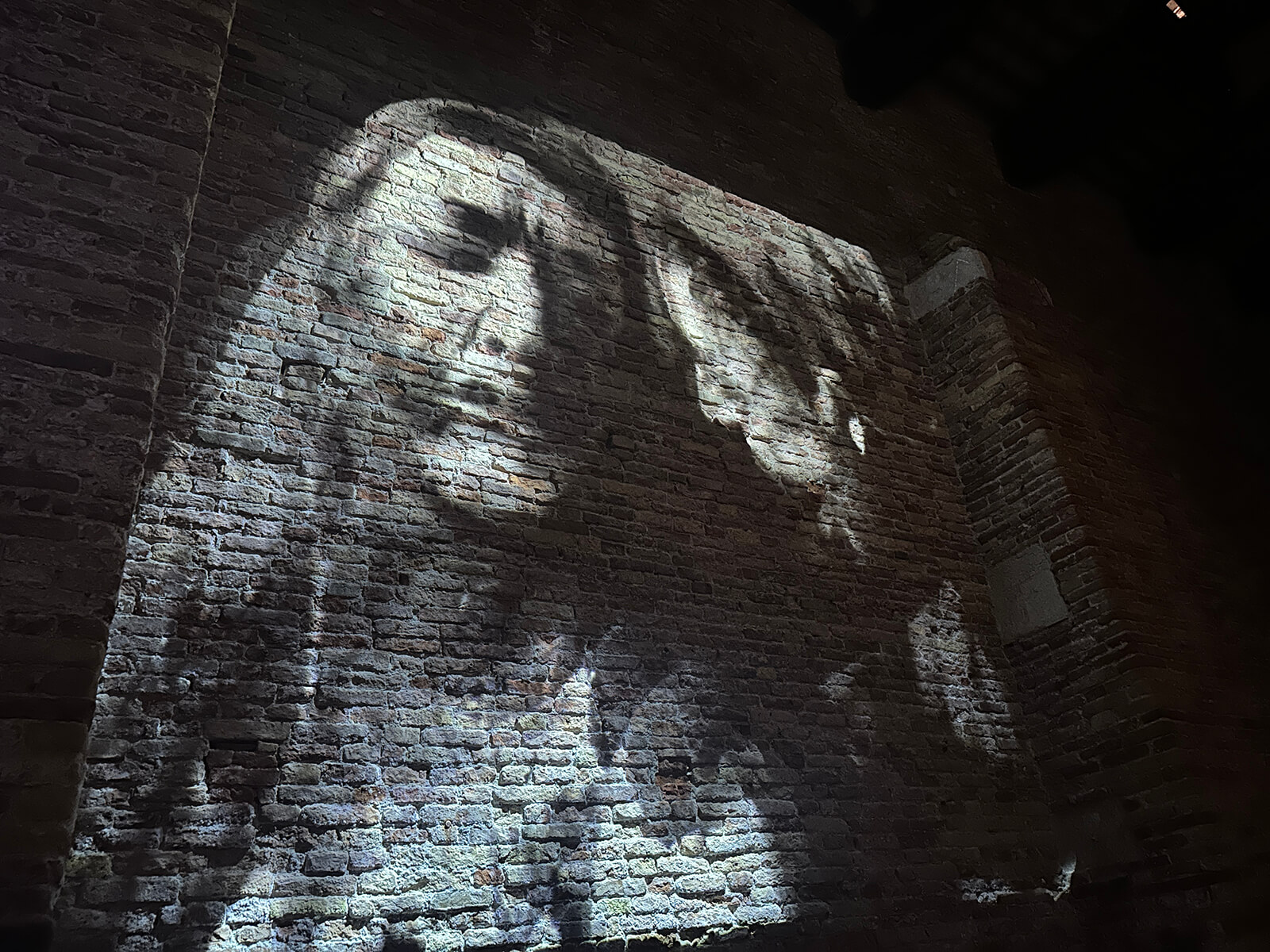
Darkness was indeed the starting point for the animation chamber, as curator Roobina Karode elucidates. “She had been talking to me for the last few months about brutalities, about all that she’s been reading, all that she’s been thinking about. She told me that the more she worked with mythology, the more she realised that women were treated the same everywhere, whether it’s Greek mythology or Hindu mythology. The stories are talking about the same thing—how women have been treated, how women have been punished, how women have had no voice,” Karode told STIR at the press preview.
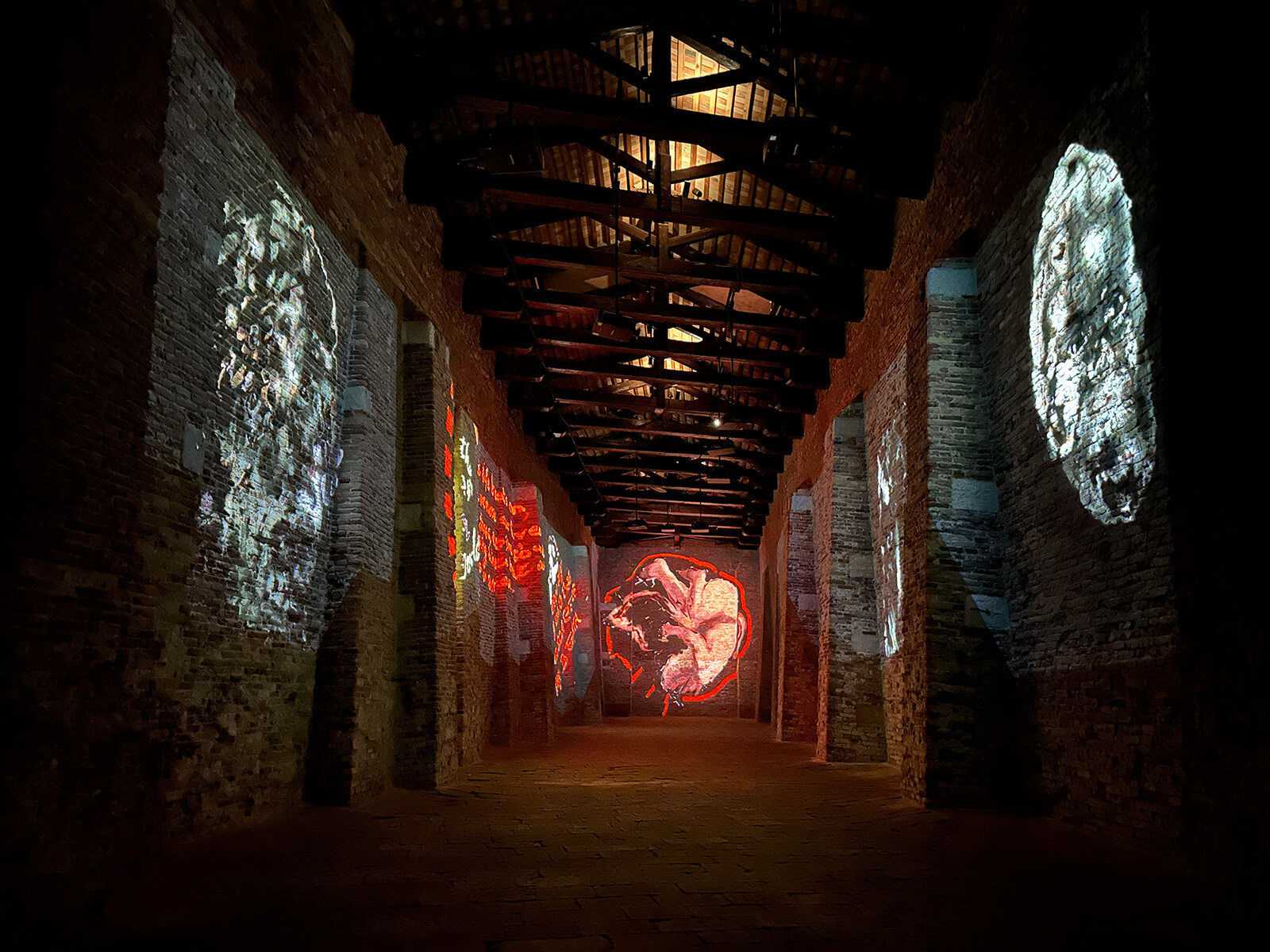
Occupying the altar-like apex of the church-like space is Malani’s skipping girl, a recurring motif in her practice. “I’m tired,” she says at some point in the narrative; a confession that resonates with the curatorial statement of the late Koyo Kouoh, whose vision continued to be the enveloping framework for this 61st edition that was posthumously staged by her chosen team of curators who referred to themselves as her squad. The curatorial statement was released while Malani was at work on the show. Karode recounts receiving an excitable call from the artist, who was invariably struck by the serendipitous resonance: “She told me that in the 1990s, I made drawings of a skipping girl saying, ‘I’m tired!’ And then she said, this is going to be my starting image, okay?” According to Karode, beyond the obvious symbolism of innocence and freedom, the skipping girl—whose high-resolution image Malani has generously made available to download through QR codes all over Venice—also embodies the emotional and physical labour of constant repetition and reiteration. “For 50 years, Nalini has been doing the same thing, asking the same questions…It takes a tremendous amount of resilience to really endure this, and to be restating it and restaging it—and I think there is so much restaging that she does in her work. Nothing is left behind. Cassandra comes again. Sita comes again,” she continues.
Karode’s own maternal investment in the work comes through the contribution of her daughter Neha Karode’s vocal rendition. Neha Karode—who has been working on Malani’s soundtracks for years—transforms T.S. Eliot’s haunting oracle from the closing lines of the poem The Hollow Men (1925) into a lullaby— “This is the way the world ends/ This is the way the world ends/ This is the way the world ends/ Not with a bang but a whimper.”
“The piece starts from a kind of exhaustion,” Karode says. “When the woman in question is being questioned about being a woman, and whose side she is on. Slowly, frustration comes in, desperation comes in, anger comes in. And then she’s narrating the story of how women have been treated through those assemblages of quotes that she has plotted. And then, finally, it comes to the lullaby, to the child who is saying the world will end with a whimper. It’s incredibly powerful.”
Incidentally, roughly around that crescendo moment, when the eerie lullaby haunted the dark-chambered space, my one-year-old fell asleep in his stroller. His well-timed decision to repose allowed me the luxury of a brief conversation with Malani, whom I was beyond excited to see. The last time we’d hung out was in pre-pandemic Mumbai, over bun maska and chai at Kyanis. “You were a child when I met you last,” she says. I could see her point, considering that at the moment of our current encounter, I’m a mother of two kids under five years old. I appreciate her remark because my decision to embrace motherhood from a feminist perspective had so much to do with our past conversations, when she always reiterated the radical feminism inherent in the act of mothering. This spontaneous conversation, along with STIR’s founder, Amit Gupta—the edited transcripts of which follow below—took place on May 06, 2026, during the press preview of Of Woman Born in the Magazzini del Sale, in a crowded room, amid a colossal gathering of people, the reverberation of ambient music and the drumming of late-spring, Venetian rain.
Rosalyn D’Mello: When did you begin making this work?
Nalini Malani: I started working on this two years ago. This was a good opportunity to show it. Even in the case of Can You Hear Me (2017 – 2020), I had already begun work when the rape of a minor girl took place. I was so angry. And I thought, how do I contain this anger? Being an artist, I had to find a form for it.
Of Woman Born started because of the wailing of the women, babies dying, babies being mutilated, the mowing down of schools. Recently, again, in the West Bank, they've mowed down a school. A 14-year-old child has been shot dead. Now, which religion permits this? No god allowed this.
Nobody asks the women! What about their destinies? All of this was getting me really, very upset. That’s how it began.
Rosalyn: How did you weave such a richly layered visual narrative?
Nalini: For me, the church-like structure of the space offered the concept. As you walk, the images reveal themselves. They appear like stained glass. As you go forward, towards the nave, you see images of the young, the baby in the womb, etc. The work unfolds itself, buttress after buttress, very differently from Can You Hear Me?, where everything was sort of juxtaposed and superimposed over the other. Here, I also have moments of relief—‘I've lost my head,’ for example—it's not all doomsday.
You might have seen the scenes on Al Jazeera; there's rubble everywhere due to bomb explosions, and then you see children picking up a pipe and turning it into a seesaw. They’re children, they have to find a way to survive. They've lost their parents, they've lost their siblings, and yet…
You want to weep. But you also think that if there's hope, it's in the children. And a child cannot be born through a man. Every child is born through a woman, lest we forget.
Amit Gupta: On International Women's Day, STIR shared a video byte from your speech at the Common Room at Al Serkal, Dubai. In it, you speak about how it’s not about gender…
Nalini: I believe that very strongly. I'm not the origin of that thought. It stems from Veena Das, an anthropologist who inspires me a lot. She speaks about the feminine regions of the self, which could reside both in men and in women. I would go even further and say that if what is on the two sides is the black and the white, the feminine and the masculine, then there are always the greys, which are as important. That's how we should really be thinking. That's the way to move forward. This idea exists in Eastern philosophies as well as in Christianity. The gentleness of the female gender in Christ is so poignant. Unfortunately, all religions are being weaponised, including Christianity. People forget what is in the Bible.
Amit: Are you mourning the death of the Furies? Or are the Furies still part of your work?
Nalini: The Furies were not dead. They were underground. The goddesses are beneath the earth. Sita finally went into Avni, the goddess of the earth. And Sita was born from the earth. Athena placed the Furies as Eumenides, under the ground. So that's the space in which they are now. They have to crawl out.
Amit: So, the Furies are still part of your work.
Nalini: Yes. The Furies are the people protesting. The women who are protesting.
Rosalyn: There is a darkness in the work which completely mirrors the darkness around us. And there is no escaping that. Like, the relentless nature of the way we're exposed to the cruelty, through images on social media…
Nalini: We forget Sudan.
Rosalyn: Yeah, it’s ongoing.
Nalini: Yeah, exactly.
Rosalyn: Some people say you don't look for hope, you embody hope. But, formally, within the work, how did you find yourself embedding hope?
Nalini: That’s where the skipping girl comes in—she is my tag. I’ve been making stop-motion animations of the skipping girl ever since 2010. She appeared in my drawings and Mutant series in the 1990s. She is my symbol of hope. She embodies play, but also a kind of hysteria. She goes really crazy sometimes and cries out, ‘I'm tired.’ I made that animation before Kouoh said ‘I'm tired’ in her curatorial note.
My work asks questions. I don't have answers. I also feel that it's about time all of us spoke. We are surrounded by too much silence, and there is some kind of fear, fear of being ostracised. Who can bear to see children being killed? How can we accept that? The child is totally innocent. They just want their parents and their little cosy family around. Sadly, a whole generation of children is going to grow up with a very distorted idea of the world. That is a tragedy. If children are not taken care of, our future's gone.
Rosalyn: A final question. I'm currently in the intense throes of postpartum maternal subjectivity. You, on the other hand, are in your eighties—you've seen it all, and you're watching your children excel. How has your relationship with your work and your practice evolved, and how do your children fit within your artistic imagination? Also, do you give yourself more space to rest?
Nalini: For me, work is like oxygen. I'm useless without work. I work at my own pace. With my children, it's very gratifying. They're adults, and they're my best critics. I really appreciate what they say. Even when they pan what I do, I'm happy to hear them out, because what they have to say is never destructive. It's always lovingly constructive.
The 61st International Art Exhibition of La Biennale di Venezia, ‘In Minor Keys’, curated by Koyo Kouoh, runs from May 09 – November 22, 2026, at the Giardini and the Arsenale venues, as well as various other locations around Venice. To read STIR’s exclusive coverage, conversations and highlights from the biennale, click here.

by Srishti Ojha Oct 27, 2026
The 13th edition of the Gyeonggi Ceramics Biennale in South Korea, Earth Makes, explores ceramics from around the world, spanning ancient traditions and contemporary experimentation.
by Srishti Ojha Oct 26, 2026
The Taiwan-based artist shares his opinion on exhibition rituals, protests and his search for ‘fragmented beauty’.
by Srishti Ojha Oct 21, 2026
Increasingly, artists, filmmakers and activists are turning to VR to create more personal, tangible accounts of the climate emergency and its impact on vulnerable communities.
by Mirra Lynn Oct 20, 2026
The Indian artist paints the old wadas of central Pune, capturing the traces of everyday life that cling to these structures, battered by time but unbowed.

make your fridays matter with a well-read weekend
Enter your details to sign in
Don’t have an account?
Sign upOr you can sign in with
a single account for all
STIR platforms
All your bookmarks will be available across all your devices.
Stay STIRred
Already have an account?
Sign inOr you can sign up with
Verification link sent to check your inbox or spam folder to complete sign up process
Tap on things that interests you.
Select the Conversation Category you would like to watch
Please enter your details and click submit.
Enter the 6-digit code sent at


Nalini Malani’s Of Woman Born harvests darkness as medium and metaphor
by Rosalyn D`Mello | Published on : Jun 05, 2026


 Sign in with Google
 Sign in with email
What do you think?