Art06 mins. read
At the Hayward Gallery, Yoshitomo Nara asks you to feel what cannot be seen
by Zohra KhanJun 13, 2025



by Zohra KhanPublished on : Feb 26, 2026
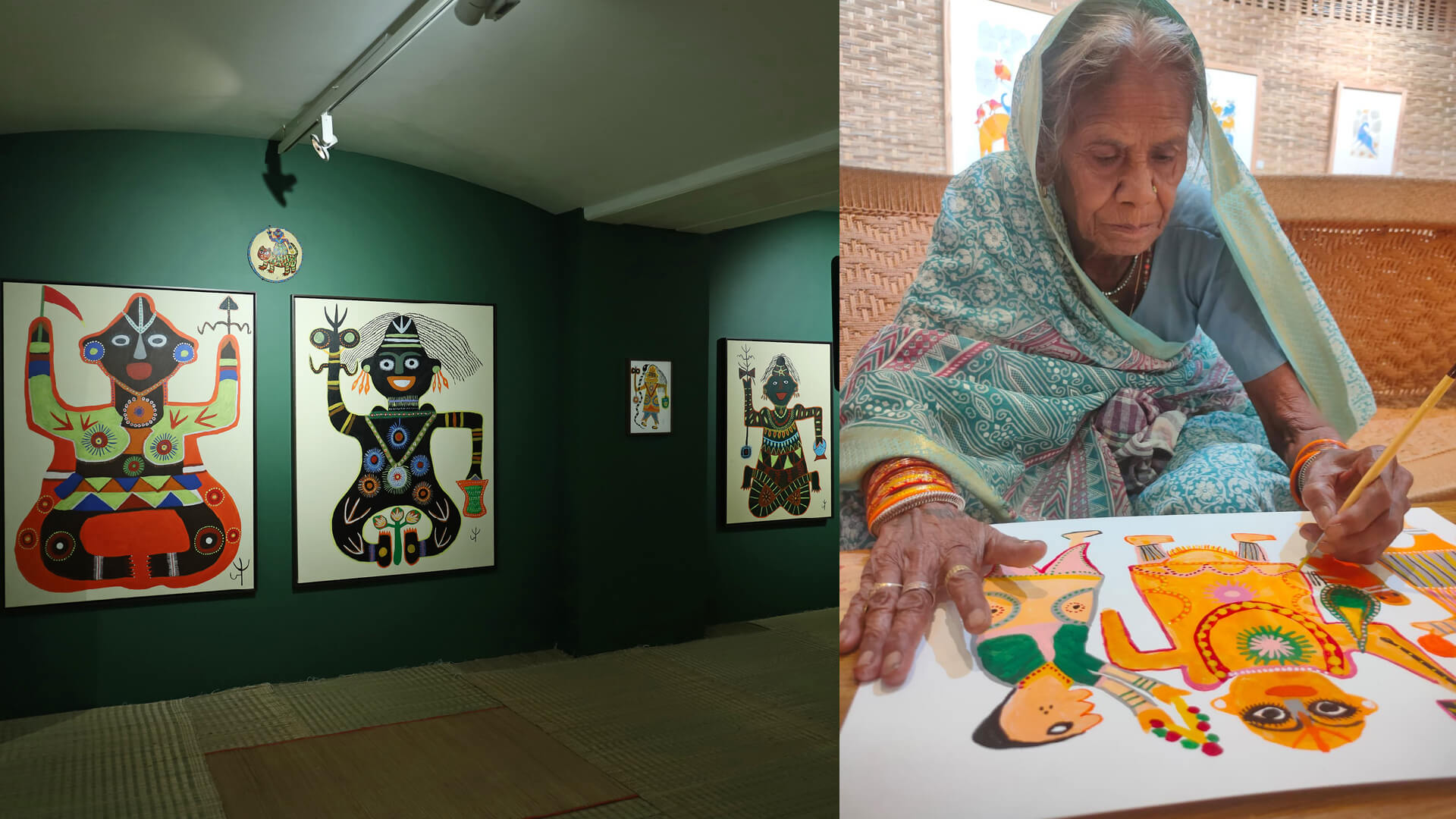
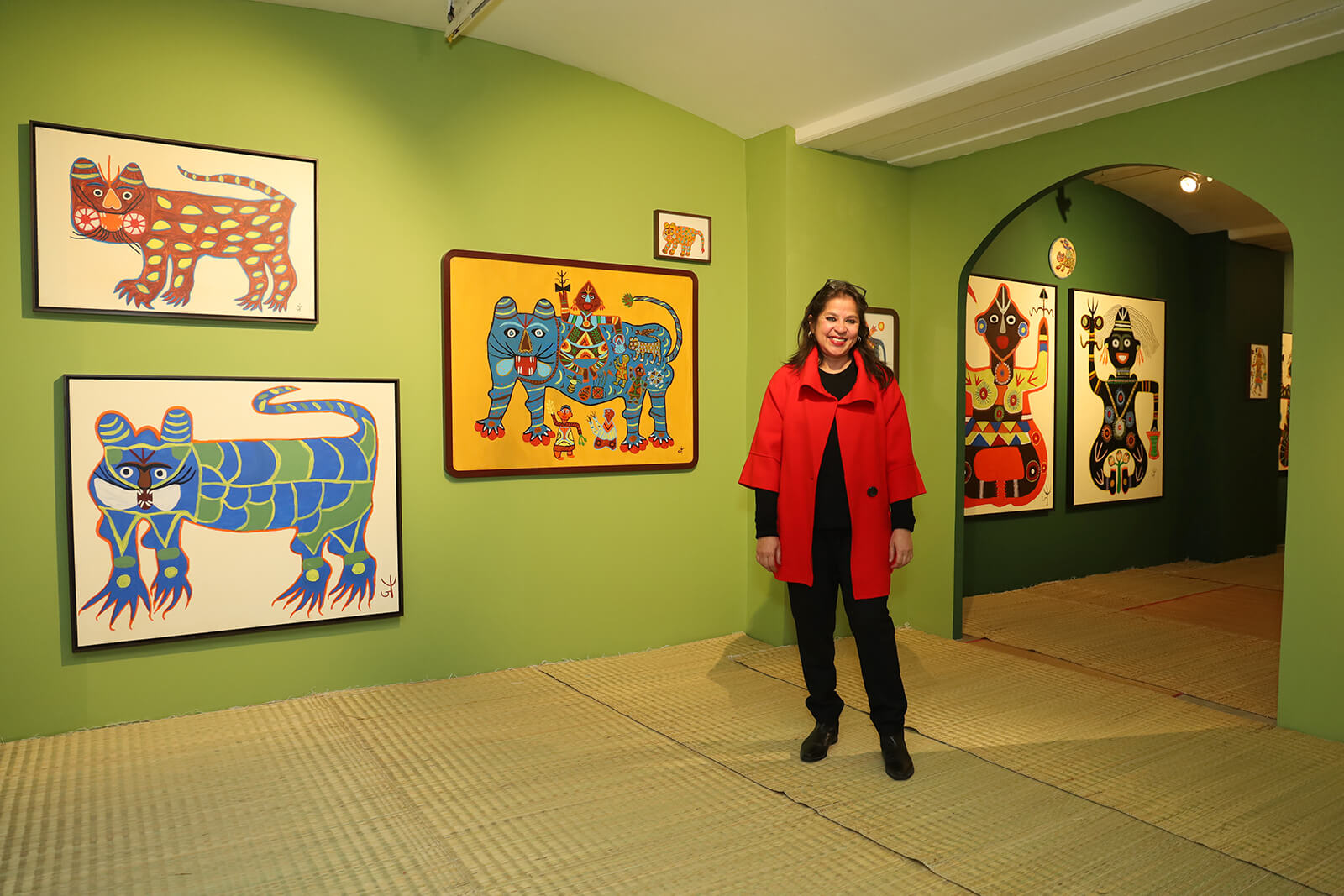
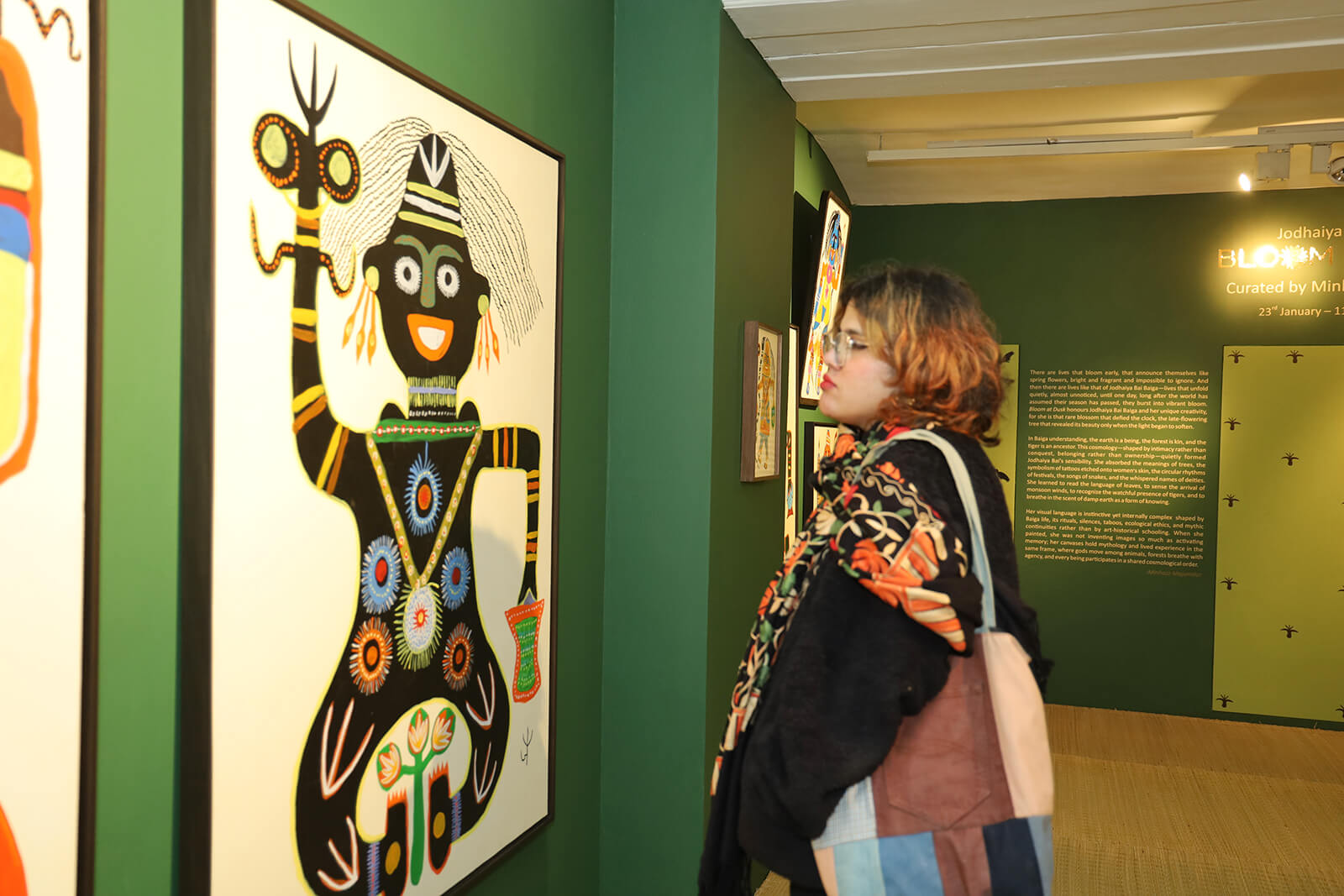
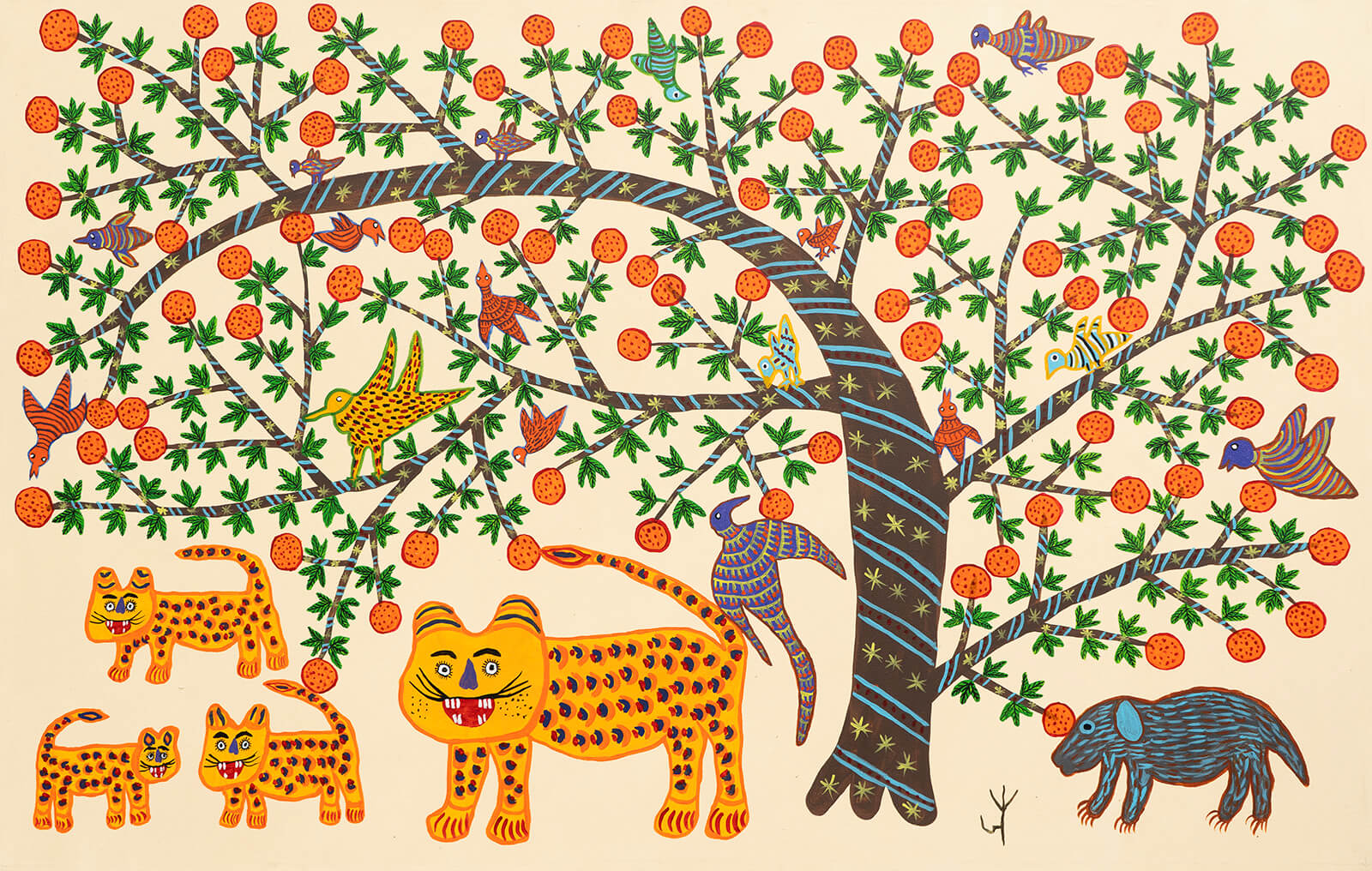
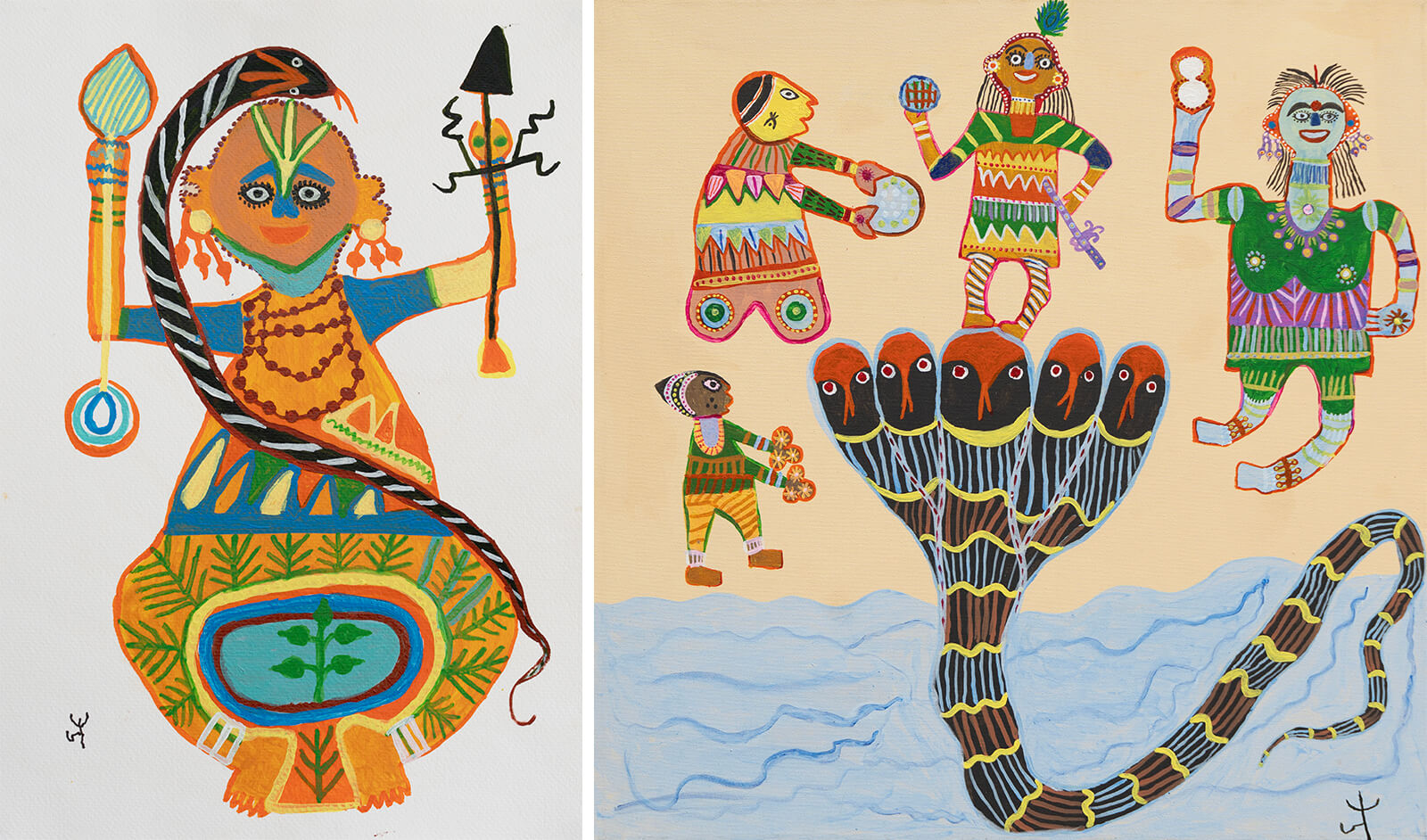
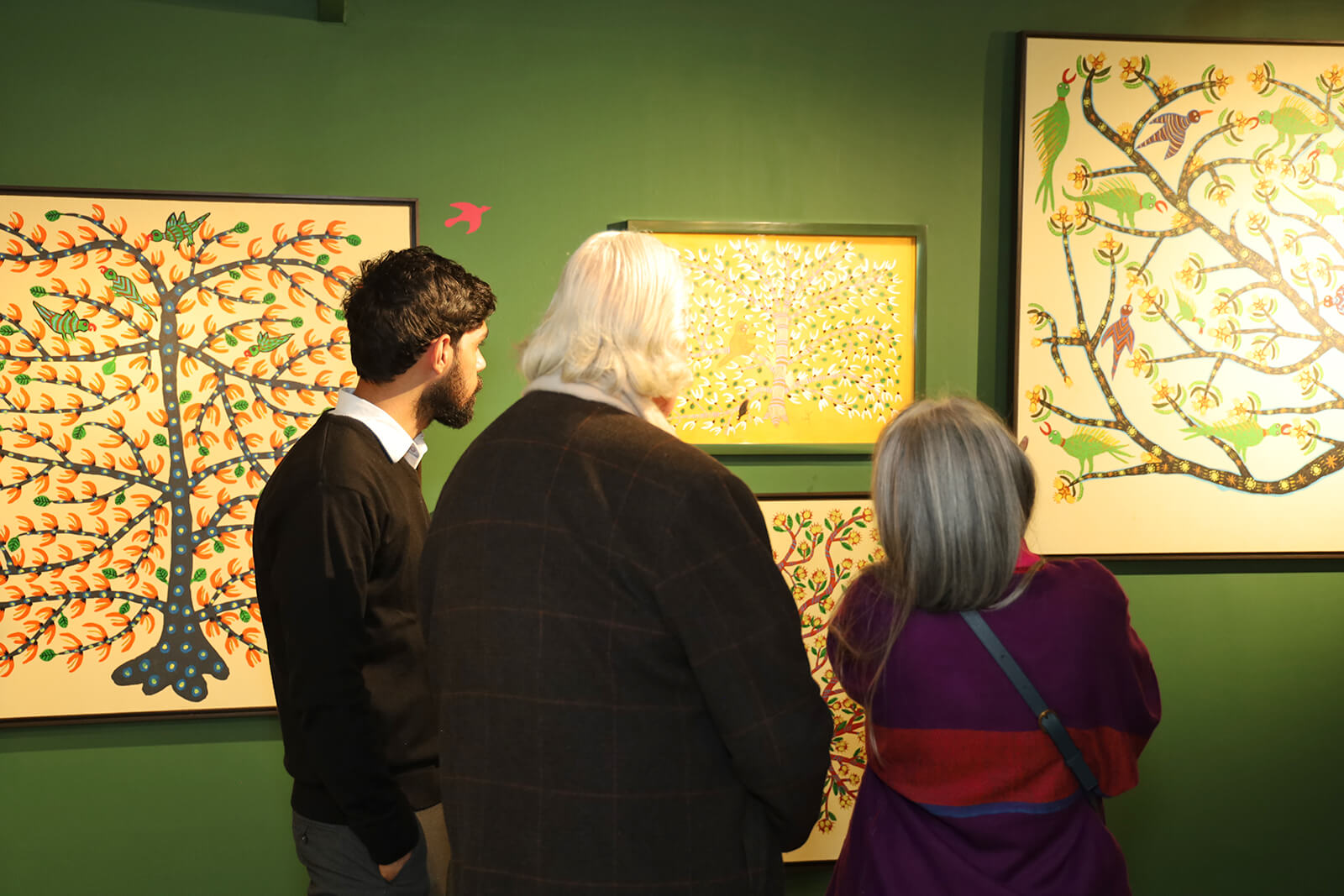
An entangled mix of slowness and celebration underscores forest rituals and tribal festivals in the works of self-taught indigenous artist Jodhaiya Bai Baiga (1938 – 2024), whose artistic journey is the focus of an exhibition at Ojas Art in New Delhi. More than 50 paintings—depicting her worldview, where trees, animals, farming and festivals collide with folk deities, ancestral spirits and cosmic patterns—take up space at the gallery, inviting reflections on the enduring journey of an artist who began creating art in her late 60s. Curated by Minhazz Majumdar, Bloom at Dusk is the first major solo retrospective of Jodhaiya Bai, honouring her vision and legacy.
Baiga hailed from the forests of Umaria in the Indian state of Madhya Pradesh, whose imagery would become a central motif in her works. A life immersed in the tribal Baiga community, gathering firewood, collecting forest produce and working as an agricultural labourer to make ends meet was lived in close observation of the cycles of nature, ritual and community. Her creative voice, first articulated through shaping clay, paintings on gourds and paper mâché plaques, slowly transitioned to acrylic on paper and canvas. It was the encouragement of artist Ashish Swami (1962 – 2021), who set up an arts centre near her home, that pushed Baiga to practice painting, a pursuit she considered similar to flying like a bird. Her rich body of work has received recognition, including the Nari Shakti Puraskar (2022) and the Padma Shri (2023).
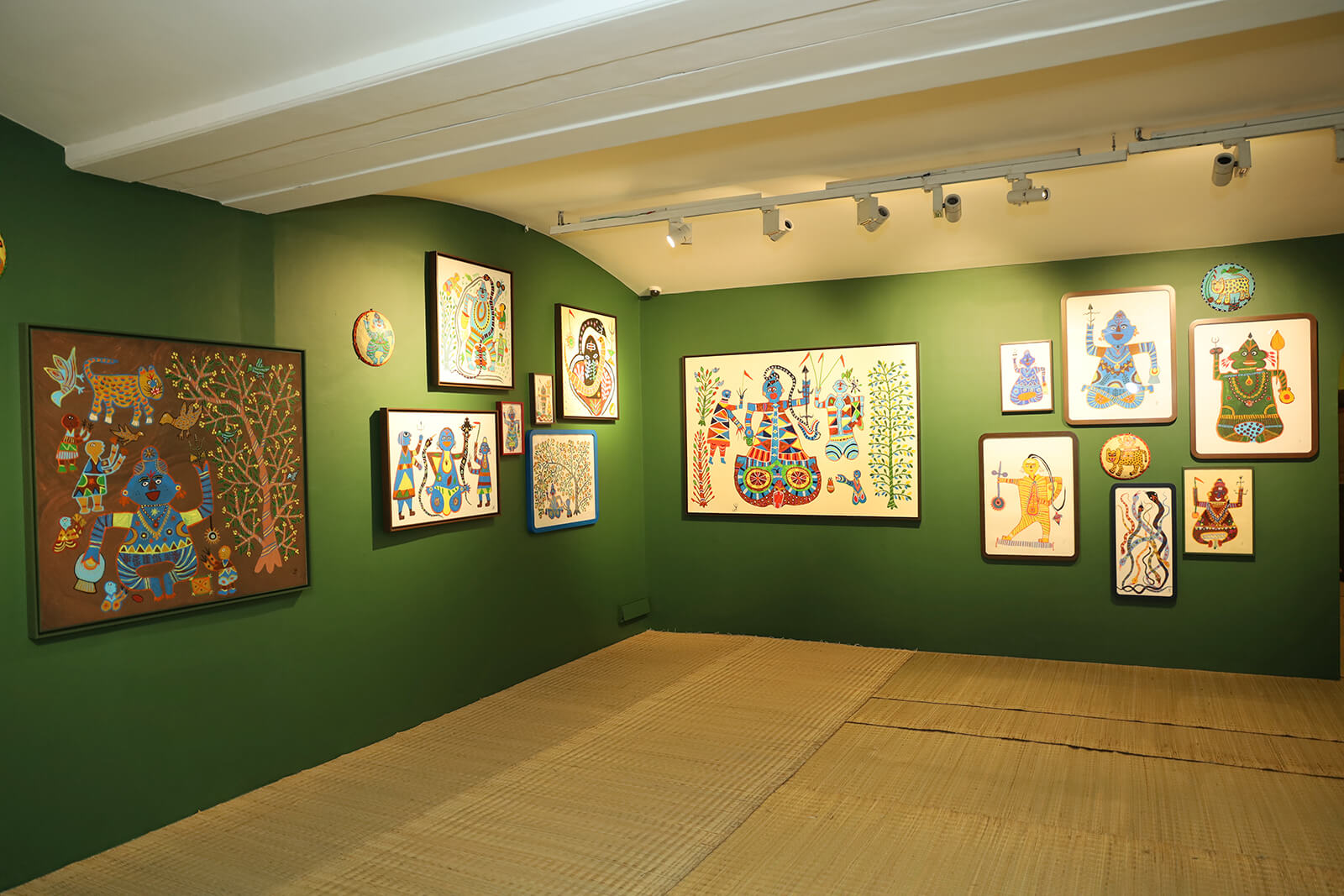
Bloom at Dusk takes a closer look at an oeuvre in which ancestral memory and symbolism meet contemporary reflection. Anchoring Baiga’s compositions are recurring motifs such as the mahua tree, the tiger god Baghesur and deities such as Lord Bholenath, scenes of forest fires, prayer ceremonies, sacred groves and mythical stories.
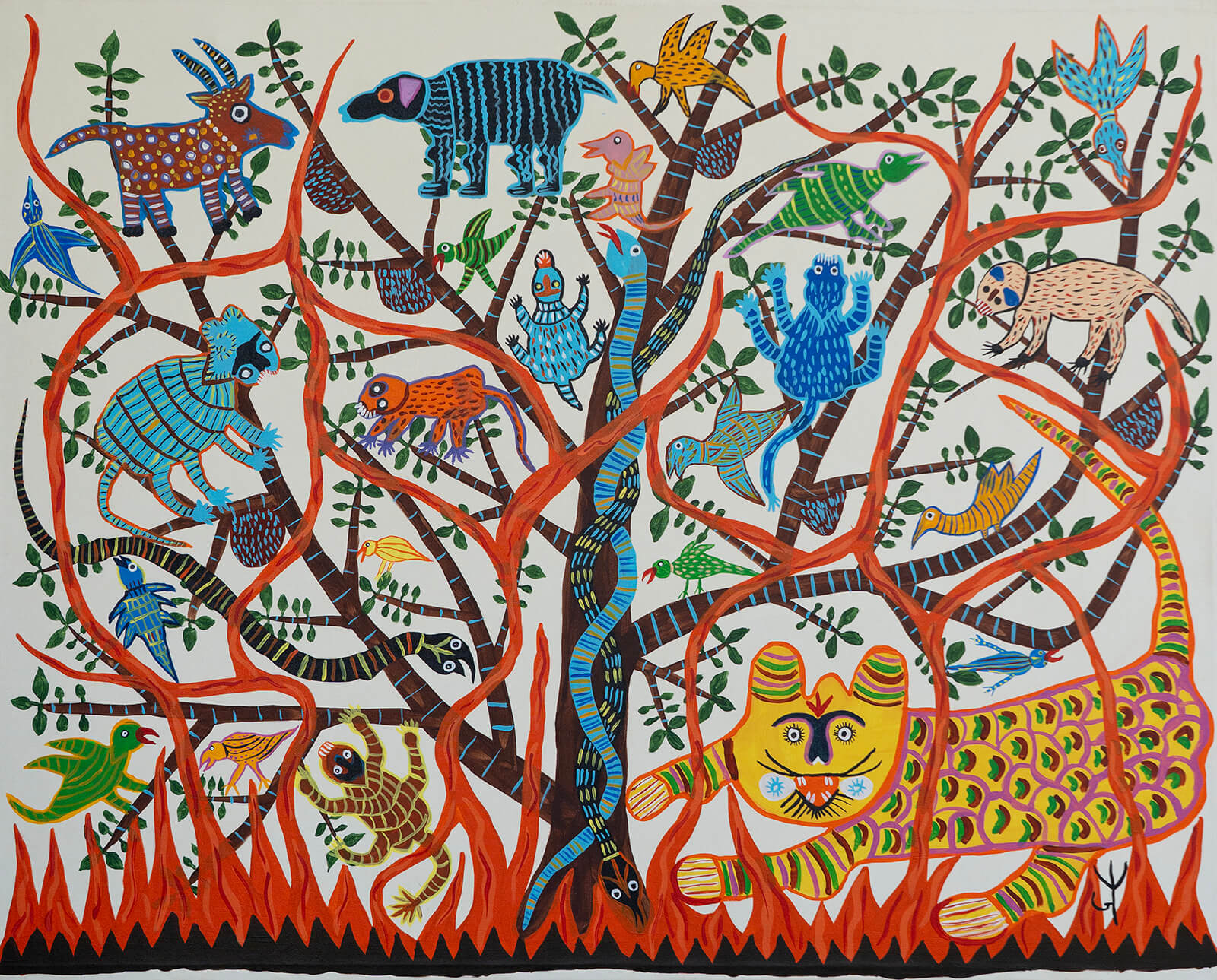
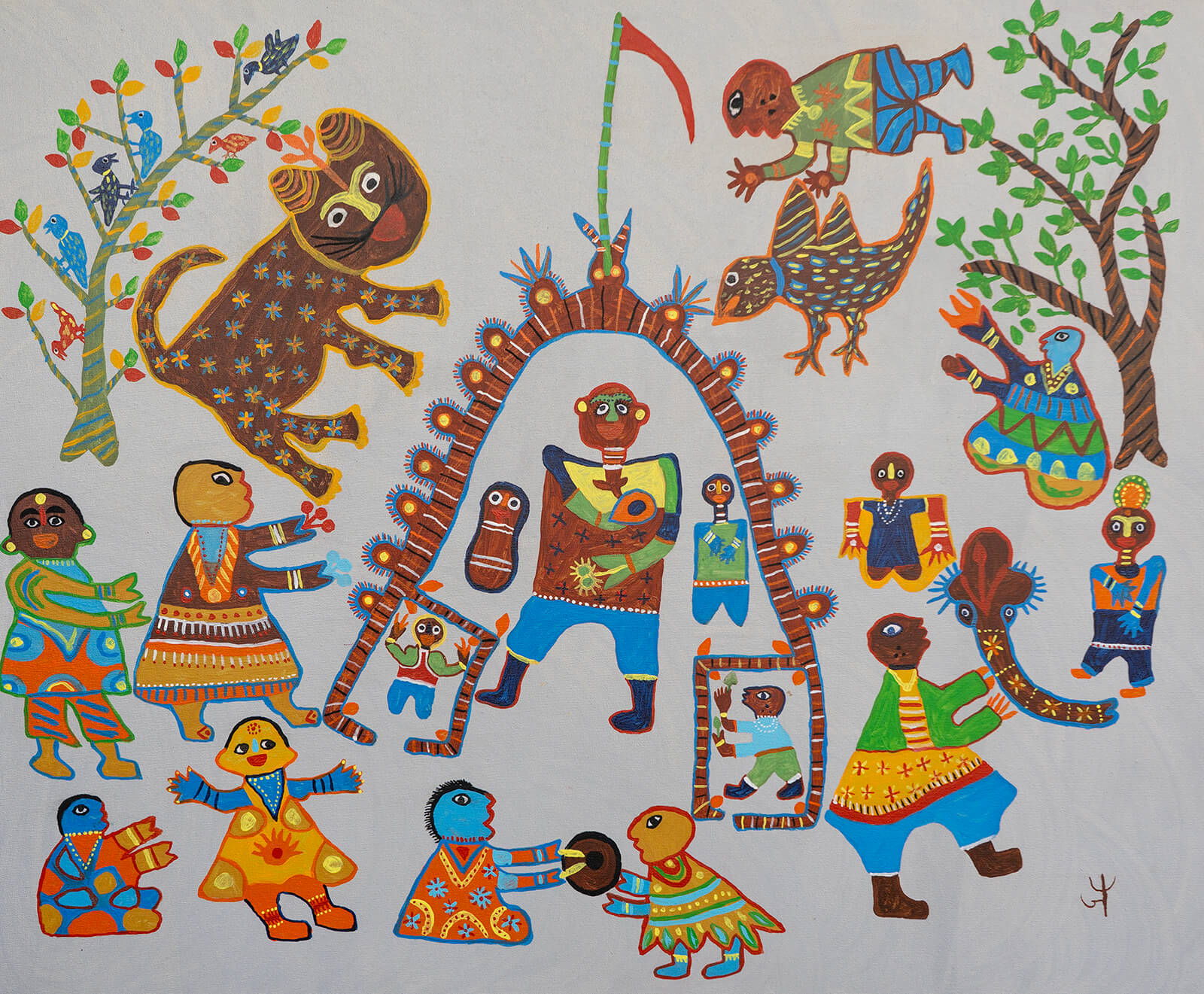
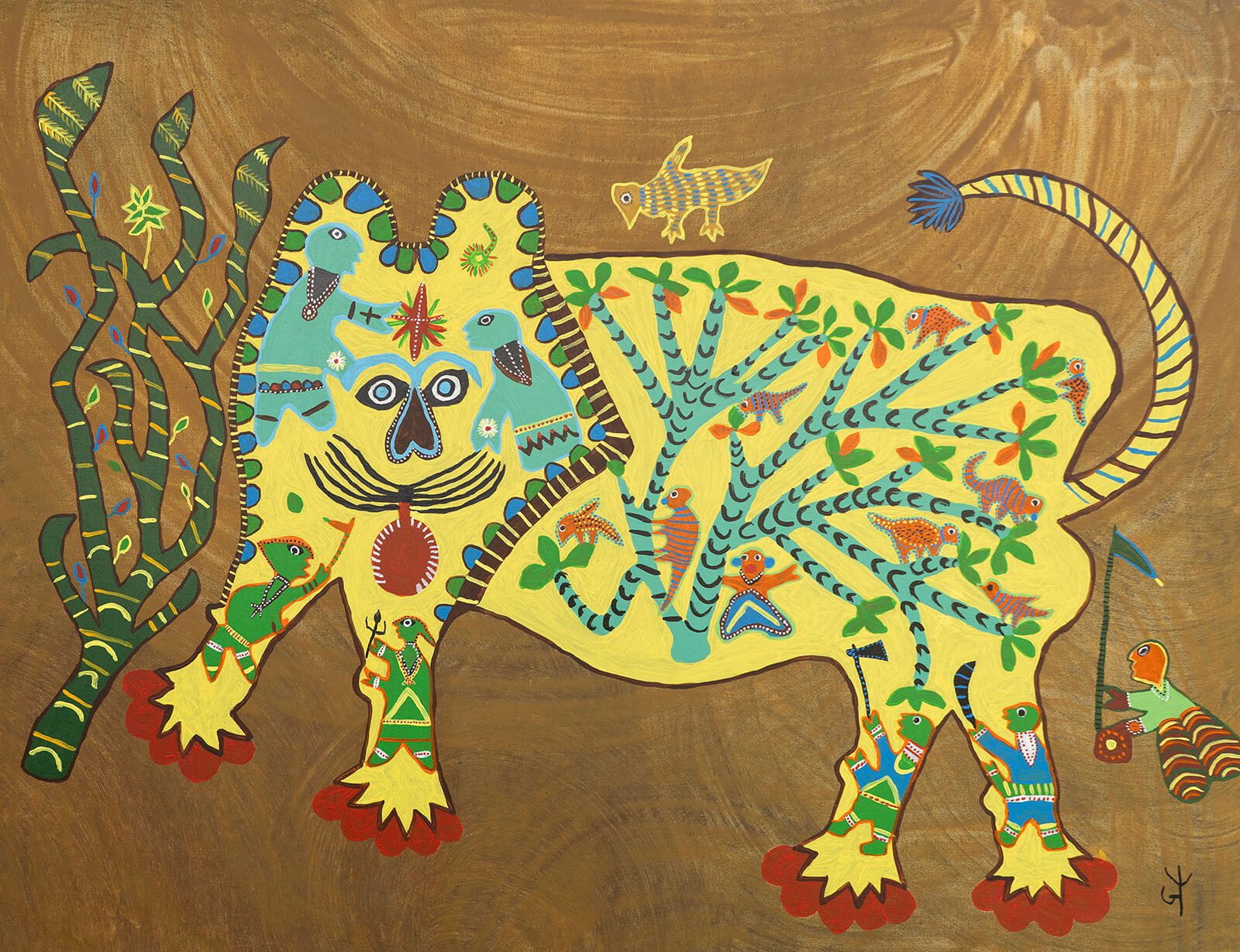
In Bandhavgarh ka Jalta Jungle (The Burning of Bandhavgarh), the devastation of forest fires emerges through sinuous lines, rhythmic patterning and vivid colours. Flames engulf trees while animals scatter, yet the forest remains charged with a spiritual presence. In Bada Dev Ki Pooja (The Great God’s Worship), ceremonial processions unfold amid richly patterned landscapes, and concentric dots and geometric forms link human devotion to cosmic order. Across Jodhaiya Bai’s oeuvre, dots, lines and geometric patterns dissolve boundaries between figure and environment, producing a meditative visual rhythm that mirrors the interconnectedness central to Baiga cosmology.
STIR spoke with Majumdar to discuss her approach to presenting Jodhaiya Baiga’s work. The following are excerpts from the conversation.
Zohra: Jodhaiya Bai Baiga began her artistic practice later in life, and her work sits at the intersection of lived experience, spirituality and ecology. How did you approach curating a retrospective that honours both the timeline of her artistic awakening and the depth of cultural knowledge embedded in her work?
Minhazz: I approached the retrospective not as a linear career survey, but as a journey shaped by memory and lived experience. Although Jodhaiya Bai began painting later in life, the knowledge she draws upon is lifelong—rooted in Baiga cosmology, forest life and spiritual practice. The exhibition allows her artistic awakening to unfold gently, while foregrounding the depth of cultural understanding that had always been present. For me, it was important to show that her work did not suddenly appear, but emerged from a long internal gestation.
Zohra: Many of the works draw from Baiga cosmology and sacred forest life, yet they also speak powerfully to contemporary concerns like environmental loss. How did you balance presenting her work as rooted in an indigenous worldview while also framing it within a contemporary art discourse?
Minhazz: I was careful not to frame her work as either timeless folklore or as overt environmental commentary. Jodhaiya Bai paints from within a Baiga worldview, where the forest is a living, sentient presence. At the same time, she was deeply aware of the changes around her—the loss of forest cover, the threat of fires. By allowing both aspects to coexist, the exhibition positions her work as grounded in indigenous knowledge while remaining unmistakably contemporary, speaking to ecological concerns that resonate far beyond her immediate context.
Zohra: As a curator working with the legacy of an artist who is no longer alive, particularly one from a marginalised indigenous community, what ethical or emotional considerations shaped your curatorial decisions, and were there any moments during the process that changed how you understood her work?
Minhazz: Working with Jodhaiya Bai’s legacy required a deep sense of responsibility and attentiveness. Ethically, it was important to avoid romanticisation or simplification, and to let her work speak on its own terms. Emotionally, there were moments—especially while revisiting certain paintings—when I became more aware of the quiet urgency in her work, particularly her concern for the forest. These moments reshaped my understanding of her not only as a bearer of tradition but as an artist acutely aware of the present and its vulnerabilities.
‘Jodhaiya Baiga: Bloom at Dusk’ will remain on view from January 23 – March 11, 2026, at Ojas Art gallery in New Delhi.

by Srishti Ojha Oct 21, 2026
Increasingly, artists, filmmakers and activists are turning to VR to create more personal, tangible accounts of the climate emergency and its impact on vulnerable communities.
by Mirra Lynn Oct 20, 2026
The Indian artist paints the old wadas of central Pune, capturing the traces of everyday life that cling to these structures, battered by time but unbowed.
by Anmol Ahuja Oct 15, 2026
How do heaps of souvenirs and relics with racist Aboriginal motifs and features become art? MCA Sydney’s winter showcase—the artist’s largest to date—beckons a possibility.
by Srishti Ojha Oct 14, 2026
The first Dutch publication on the Turkish artist, the eponymous book centres on Refik Anadol: Latent City, his living data sculpture of Bruges, exhibited at BRUSK gallery.

make your fridays matter with a well-read weekend
Enter your details to sign in
Don’t have an account?
Sign upOr you can sign in with
a single account for all
STIR platforms
All your bookmarks will be available across all your devices.
Stay STIRred
Already have an account?
Sign inOr you can sign up with
Verification link sent to check your inbox or spam folder to complete sign up process
Tap on things that interests you.
Select the Conversation Category you would like to watch
Please enter your details and click submit.
Enter the 6-digit code sent at


Ojas Art’s Bloom at Dusk stirs up the silent resilience of Jodhaiya Bai Baiga’s art
by Zohra Khan | Published on : Feb 26, 2026


 Sign in with Google
 Sign in with email
What do you think?