Art08 mins. read
Many voices, many routes: Serendipity Arts Festival 2025
by Srishti OjhaJan 02, 2026



by Srishti OjhaPublished on : Jun 15, 2026
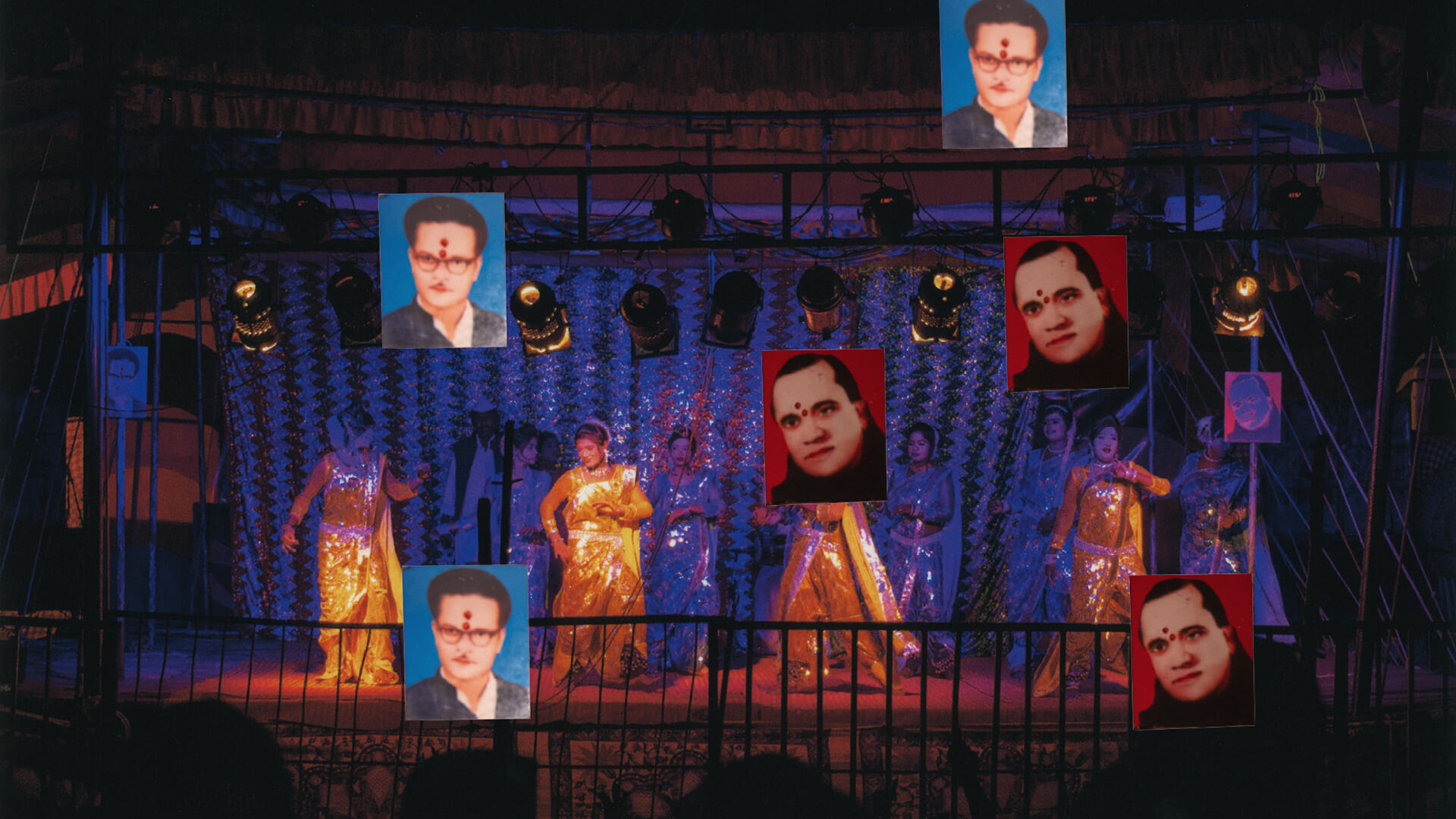
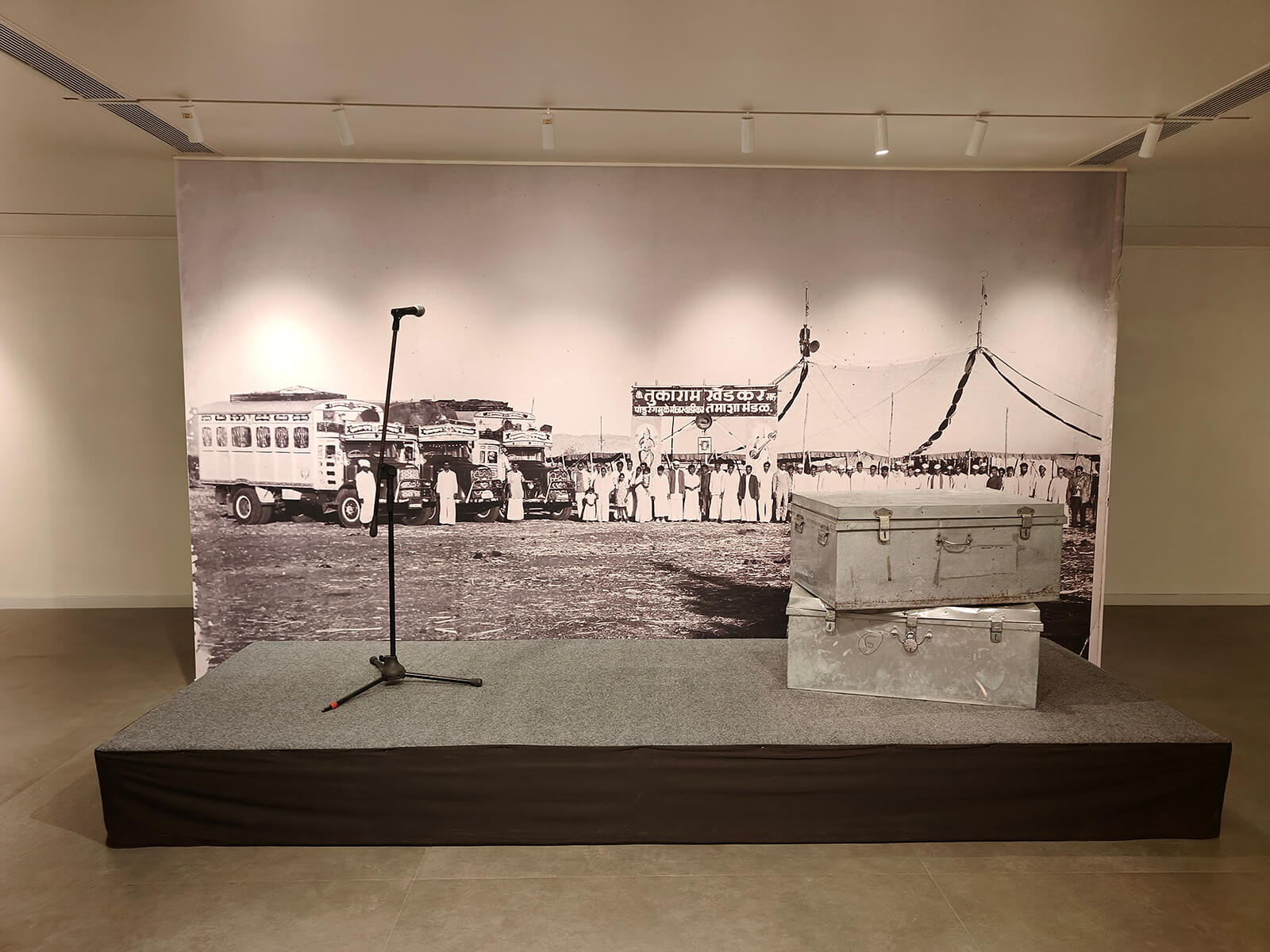
The Dilip Piramal Art Gallery at the National Centre for the Performing Arts (NCPA) in Mumbai, one of the city’s only remaining galleries dedicated solely to photography, recently concluded Tamasha, a solo exhibition of photographs by Abhishek Khedekar, curated by Indian contemporary artist and curator Bharat Sikka. Tamasha is named for a hybrid folk art form which blends Marathi culture, literature, music, dance, satire and theatre into popular entertainment. A stage with a printed background, mic stands and metal trunks recreated the setting of a Tamasha performance, creating a sense of anticipation and opportunity in the space, while colourful, intimate photographs lined the walls. The photo series is born from the New Delhi-based photographer’s time travelling with Tamasha—a 100-person family (also known as Lokkalawant) that performs the Tamasha folk art form across Maharashtra, India, living a nomadic lifestyle. The series puts a spotlight on a community of often marginalised Indian artists who perform Tamashas regularly while facing discrimination and prejudicial treatment, which in turn plagues the now-fading performing arts tradition.
Khedekar bends documentary photography to the task of capturing the vivid, rich lives of this troupe, onstage and offstage, culminating in a docu-fiction series. In a conversation with STIR, the photographer explained this fused approach, saying, “The more time I spent with the performers, the more I realised that performance was already embedded in everyday life. Because of this, a purely documentary approach felt limiting. Some photographs are observational, while others are staged or developed through conversations and shared ideas. The work moves between fiction and documentary, getting closer to expressing truths that a straightforward photograph can’t.”
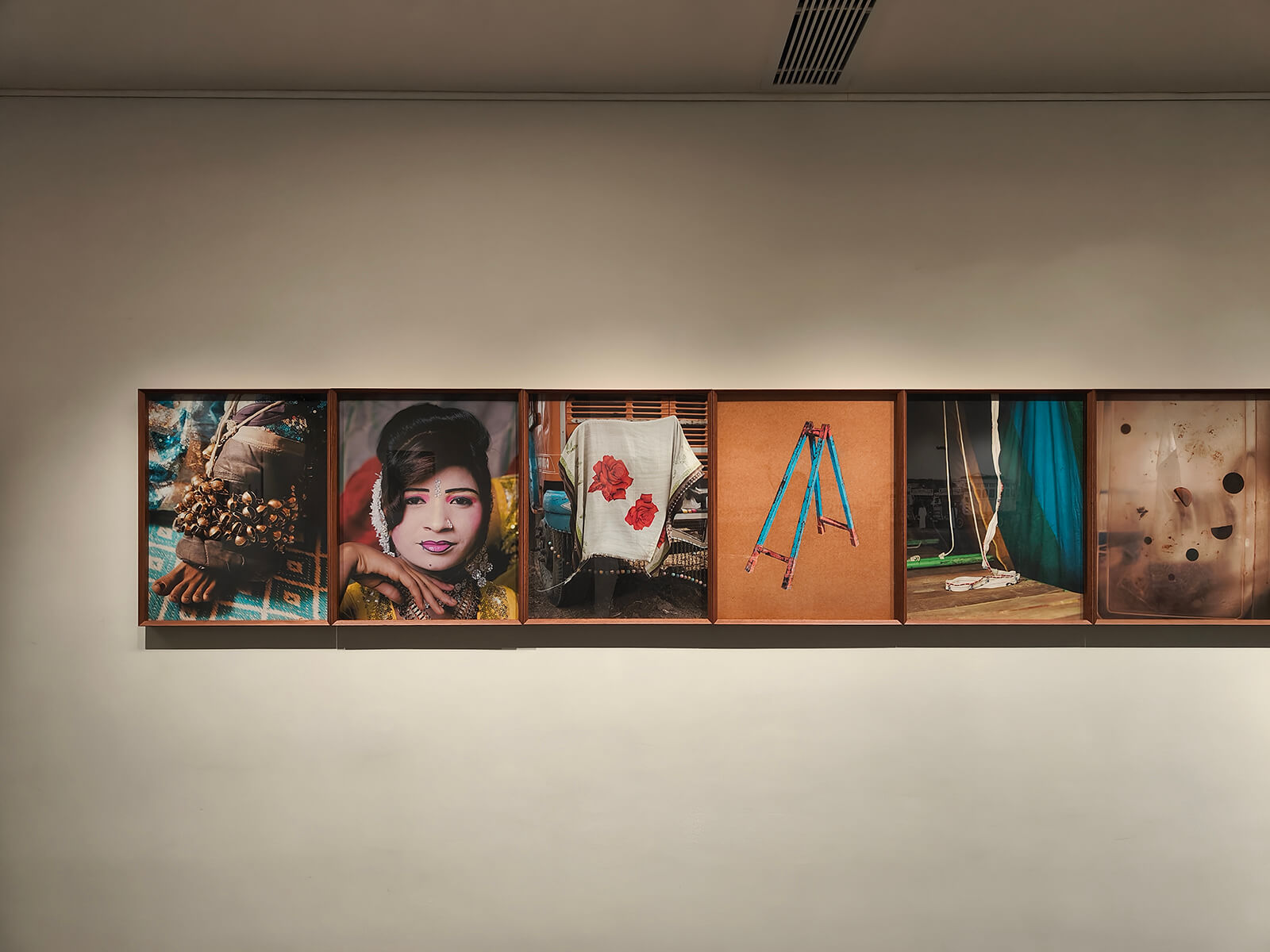
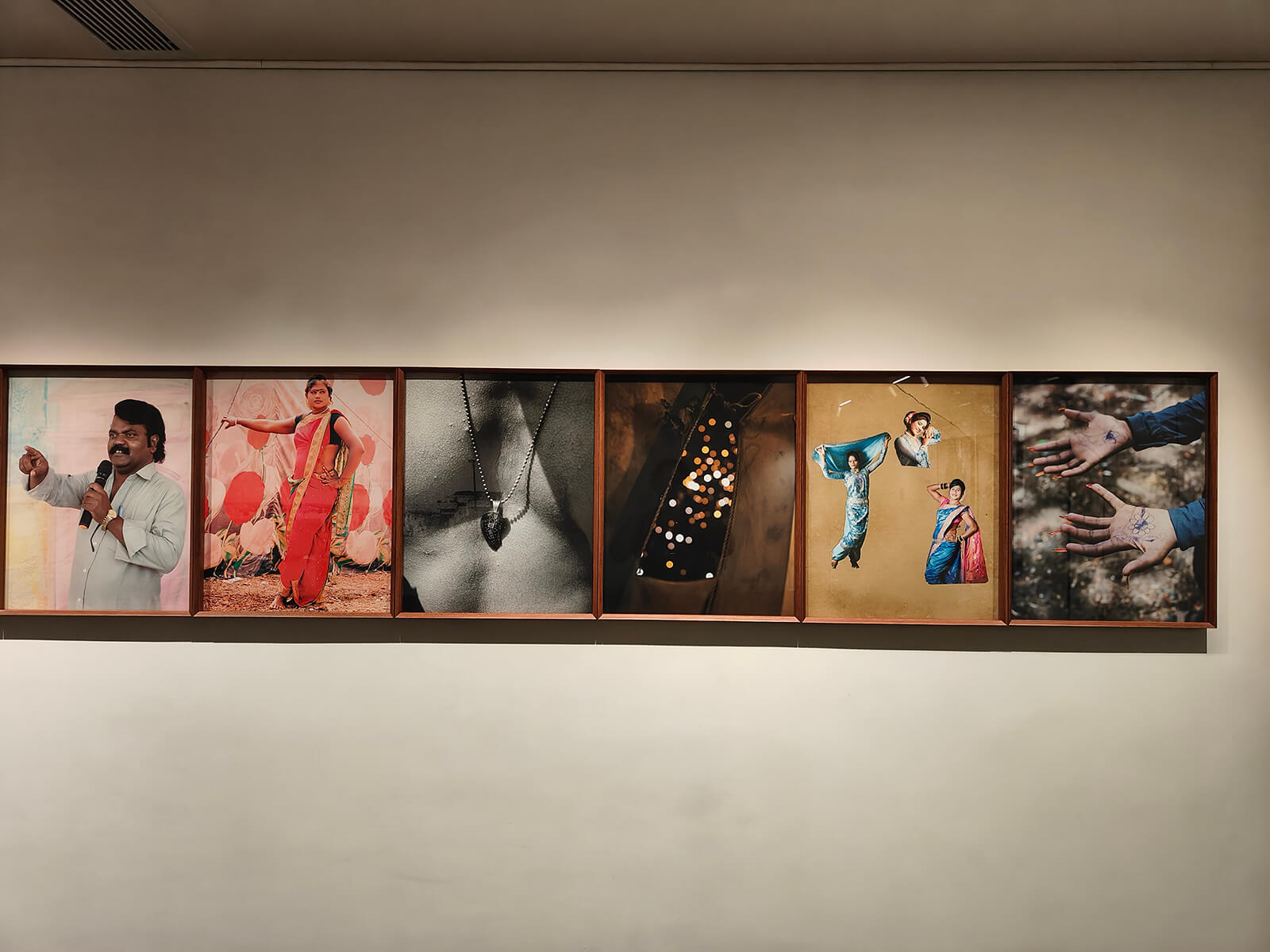
In the quiet, white gallery space, Khedekar’s photographs seem like a rabbit hole à la Alice in Wonderland—a portal to a larger-than-life world, shimmering with sequins and lights, resounding with singing, laughter and the sound of feet hitting a stage in rhythm. “Many of the photographs grew out of everyday moments, conversations and stories people shared with me over the years. Some were made during performances, while others came from memories, personal experiences or ideas we developed together,” said Khedekar. Tamasha is shaped in large part by this relational approach—he spent six months living with the Tamasha family in 2016, with several additional trips following in 2022 and 2023. What began as an academic study of a traditional art form evolved into an immersive photo series that presents the lives of performers, continuous with their artistic practice. Today, Khedekar’s series and Tamasha itself stand as illustrations of the survival of indigenous performance and visual art forms amid discrimination and mainstream disregard.
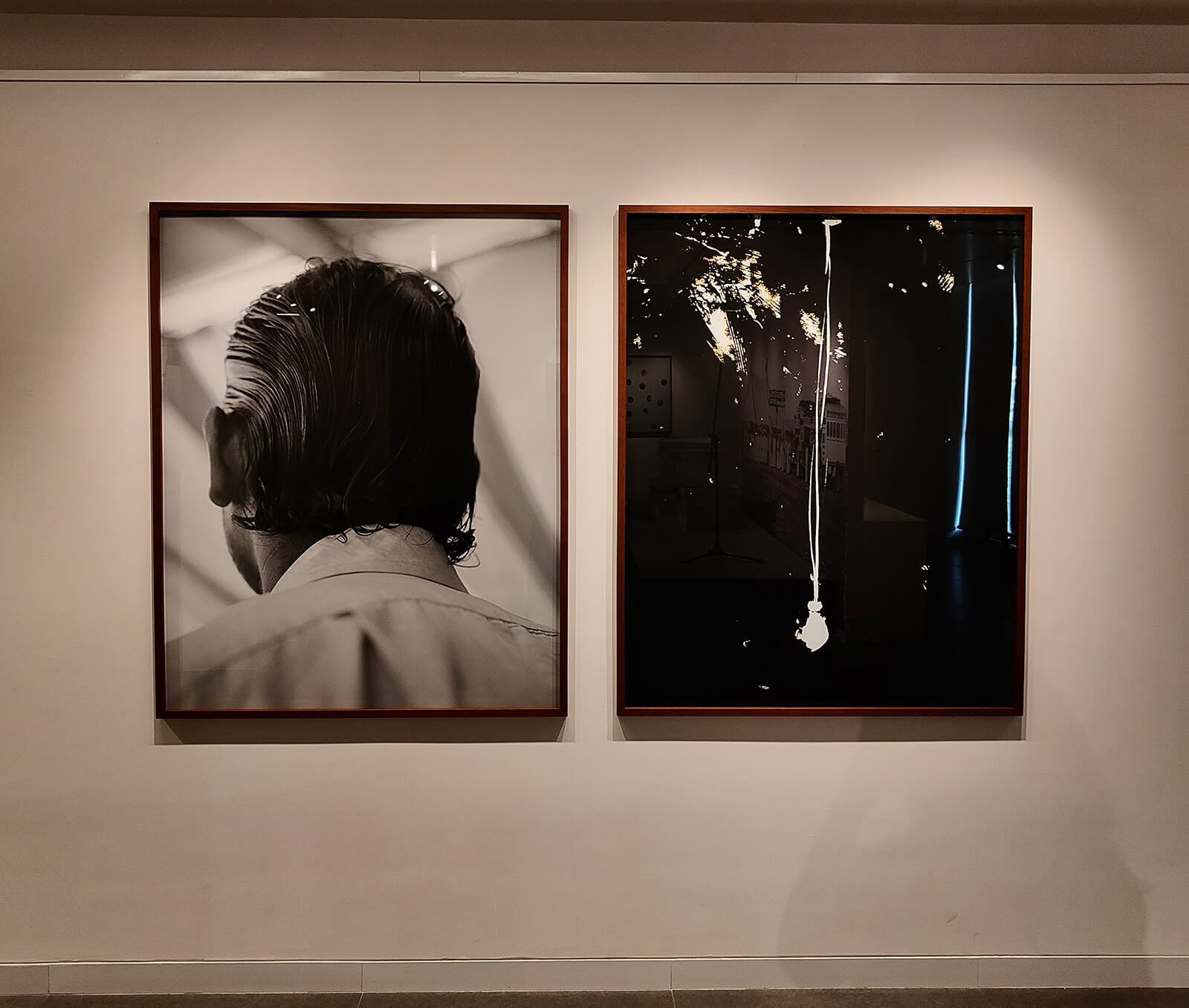
A Tamasha performance usually comprises Lavni—an artistic, semi-erotic blend of music and dance; Wag—a play that employs mythological tales and themes as a framework for satire and ribaldry; and verse composed by a Shayar, or poet. Tamasha’s signature play with eroticism, mysticism and political satire and its historical ties to lower-caste communities, has exposed the form and its artists to prejudice. In a nation increasingly desperate to sanitise and rewrite its history, art forms like Tamasha that challenge the dominant social order and its prescribed values of cohesion and purity face a lonely battle against extinction. Already, the number of Tamasha theatres in Maharashtra has dwindled from hundreds down to a few, a result of a lack of funding, awareness and access to the mainstream.
Speaking about representation and the care required when bringing the stories and art of a marginalised community to the mainstream, Khedekar said, “I am cautious about the idea that photography can offer a complete or objective representation of someone's life. Rather than claiming authenticity, I try to be transparent about my position as a photographer and about the constructed nature of the image…Building relationships changes everything. When people know you and trust you, the photograph becomes less about observation and more about exchange. For me, that trust is just as important as the photographs themselves."
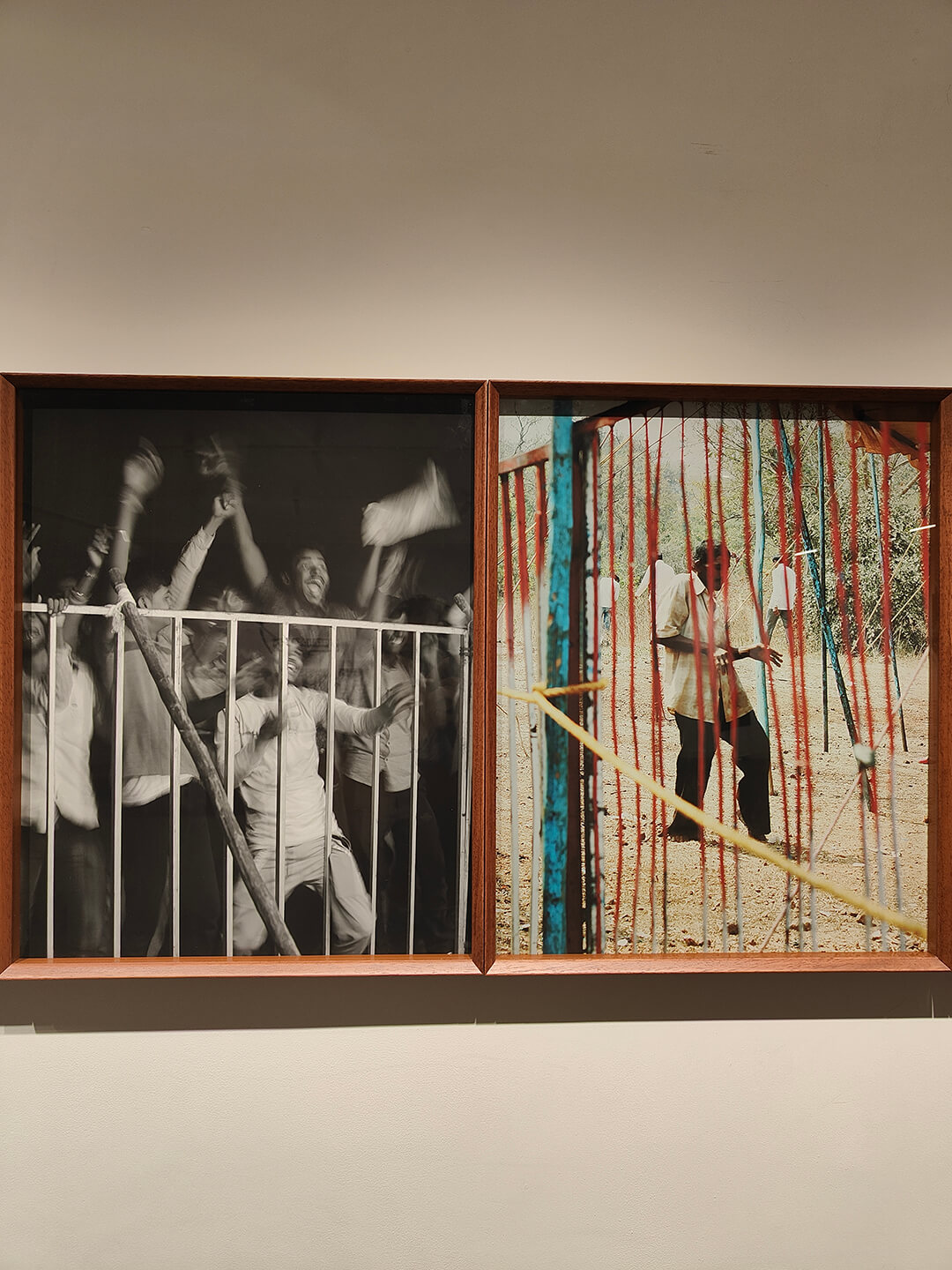
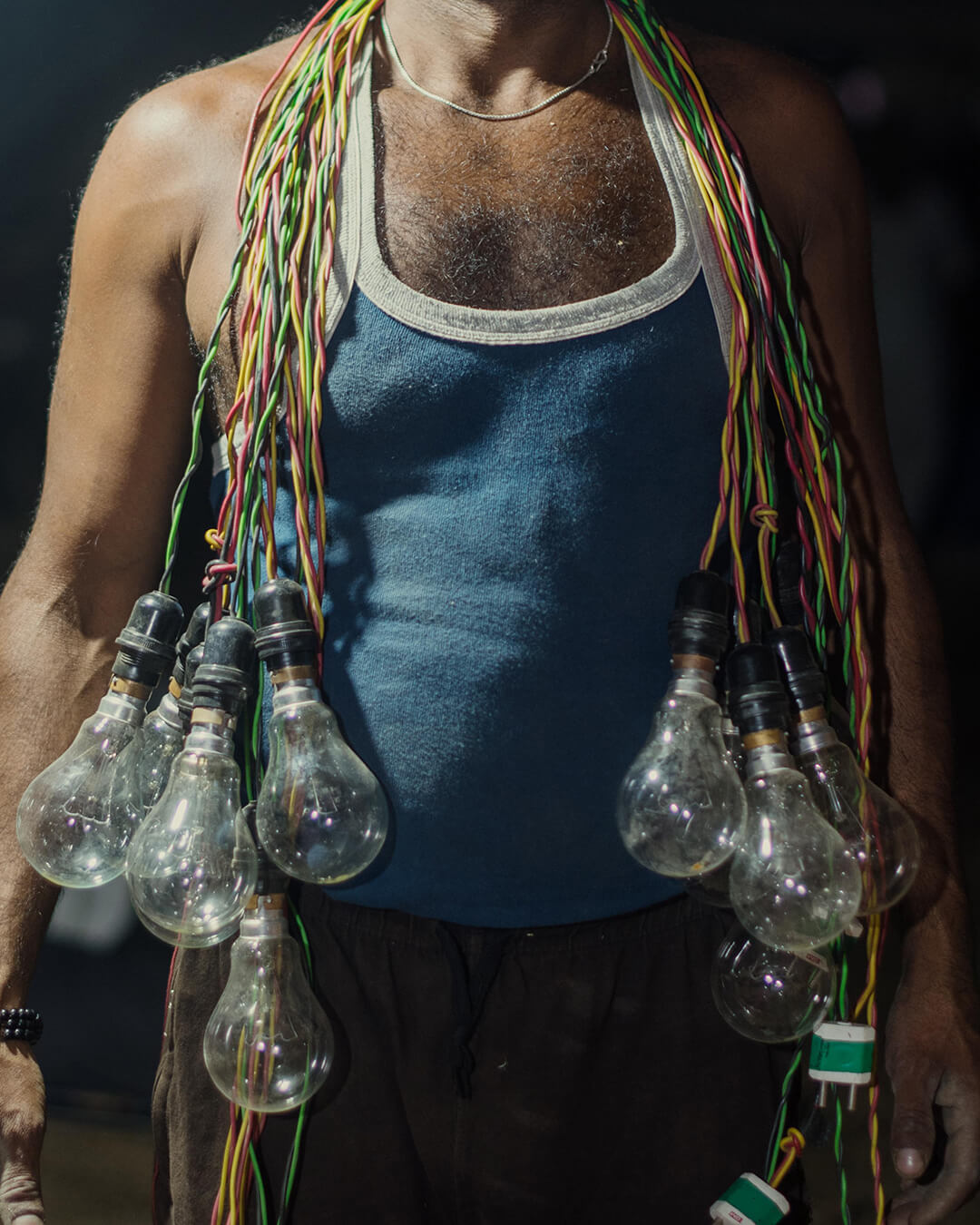
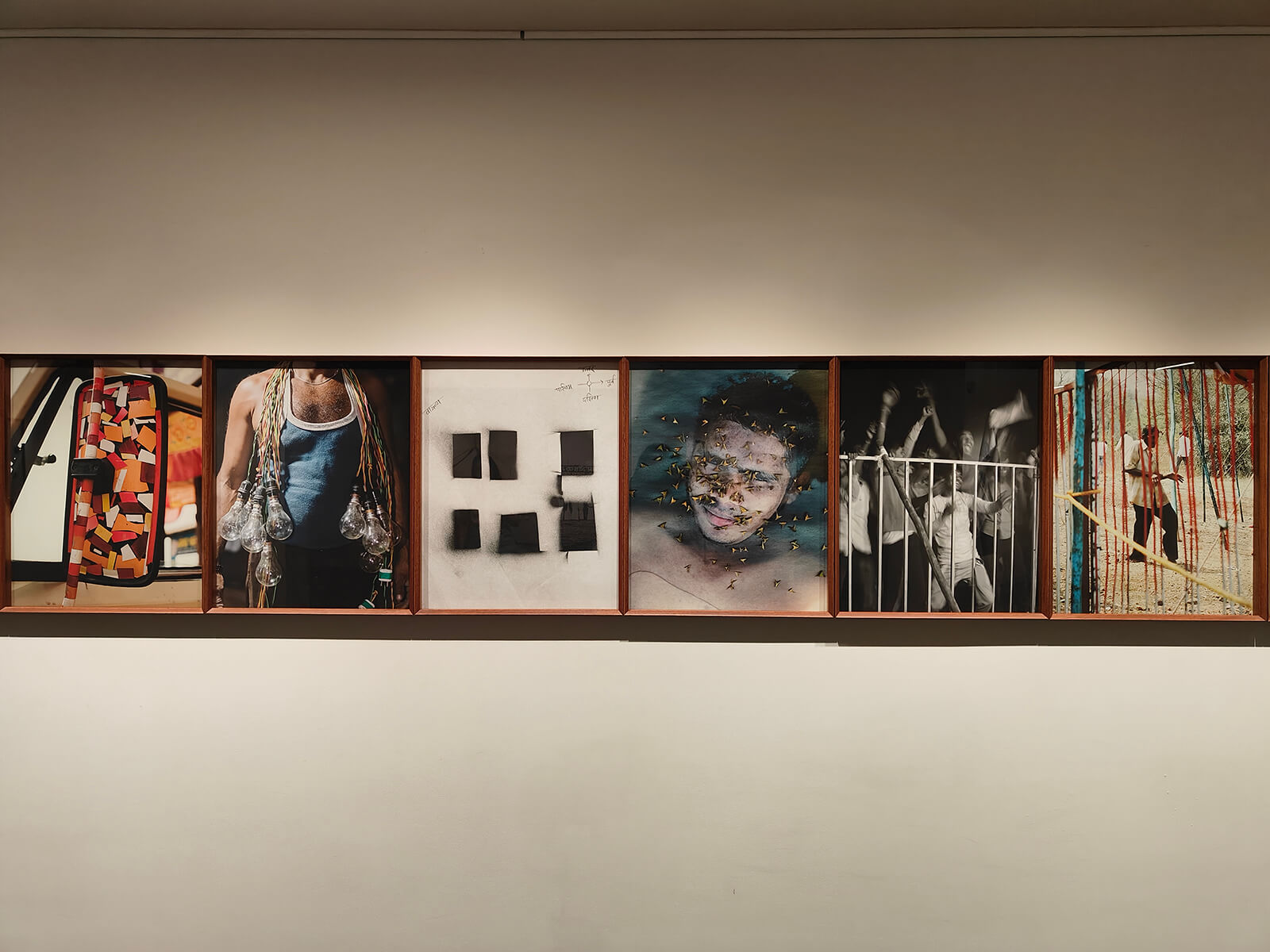
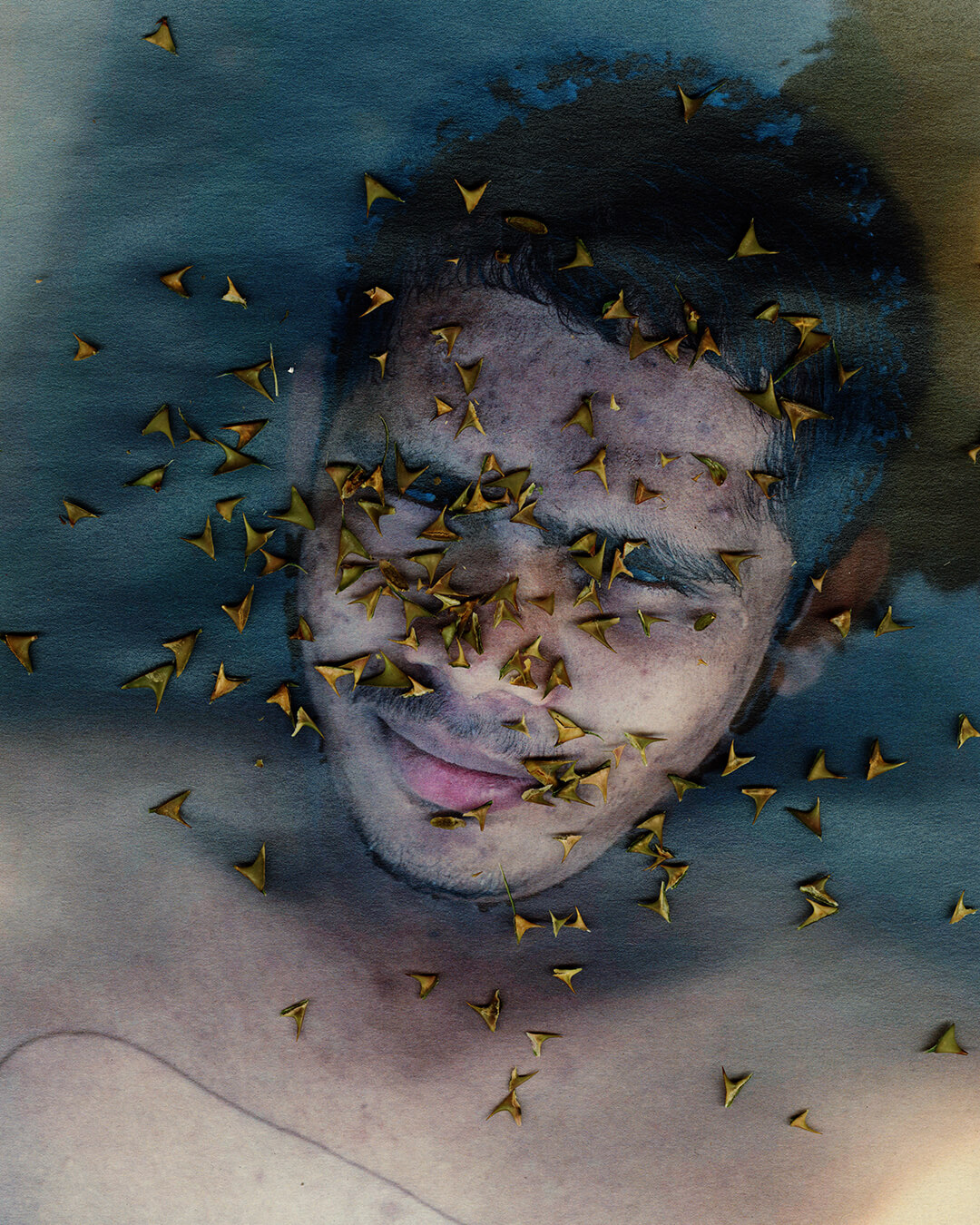
This earned trust emanates through the images in small, everyday moments and subjects who are open, candid and relaxed. A man is caught mid-dance, walking behind a curtain of streamers; a raucous crowd, blurred with the force of laughter and dance; a young man’s face is captured, submerged under water, relaxed; another carries lightbulbs, strung around his neck like a heavy, electric garland. “One photograph that stays with me is of Vinod backstage during a performance,” Khedekar recalled. “He suddenly asked me to take his photograph. It wasn't my idea, and I hadn't even asked him to pose. After I showed him the image, he looked at it and asked me to take another from the other side because he felt he looked better from that angle. For me, that moment says a lot about the project. As a performer, he was already aware of the image he wanted to present. In a way, he was performing for the camera and directing the photograph as much as I was making it.”
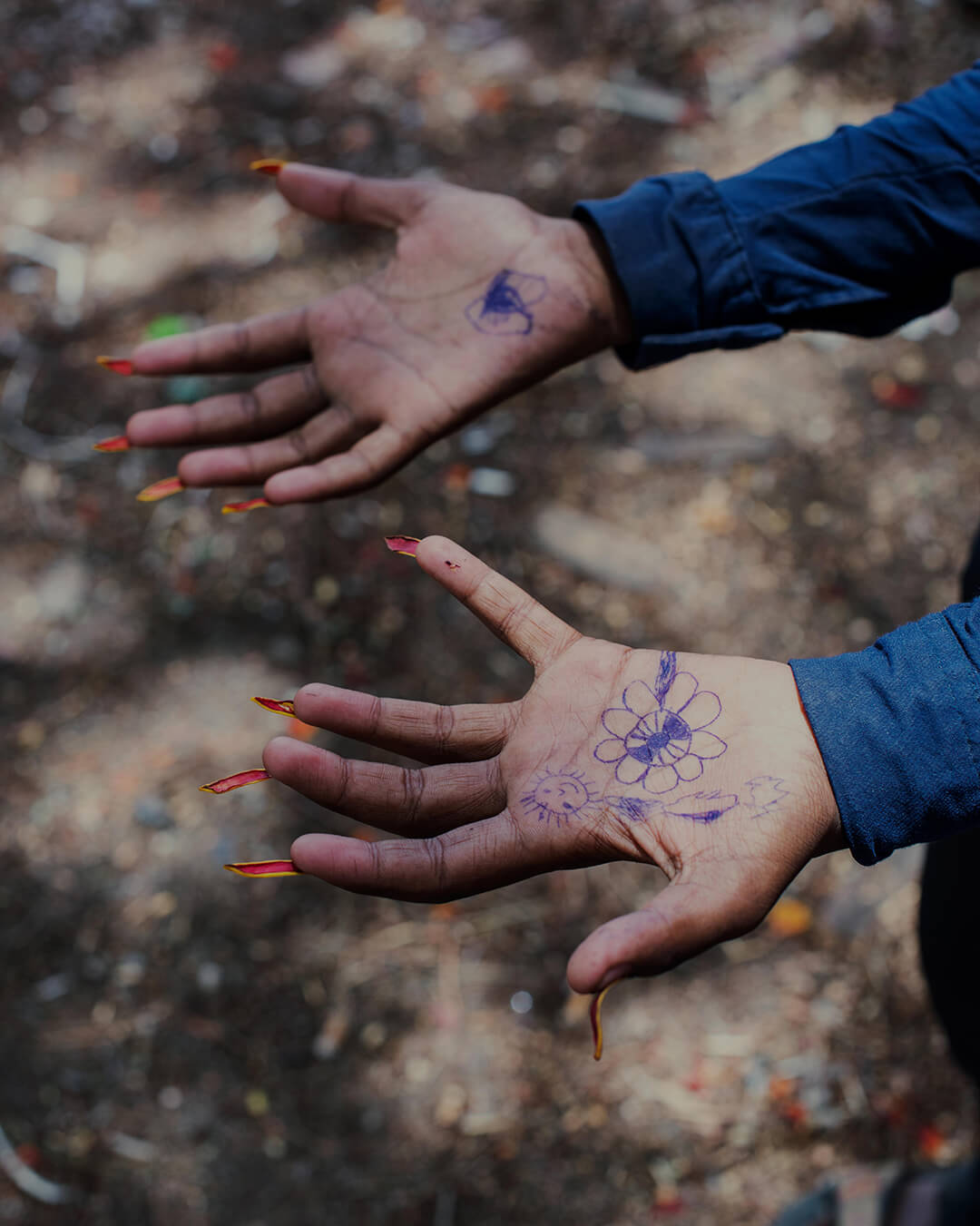
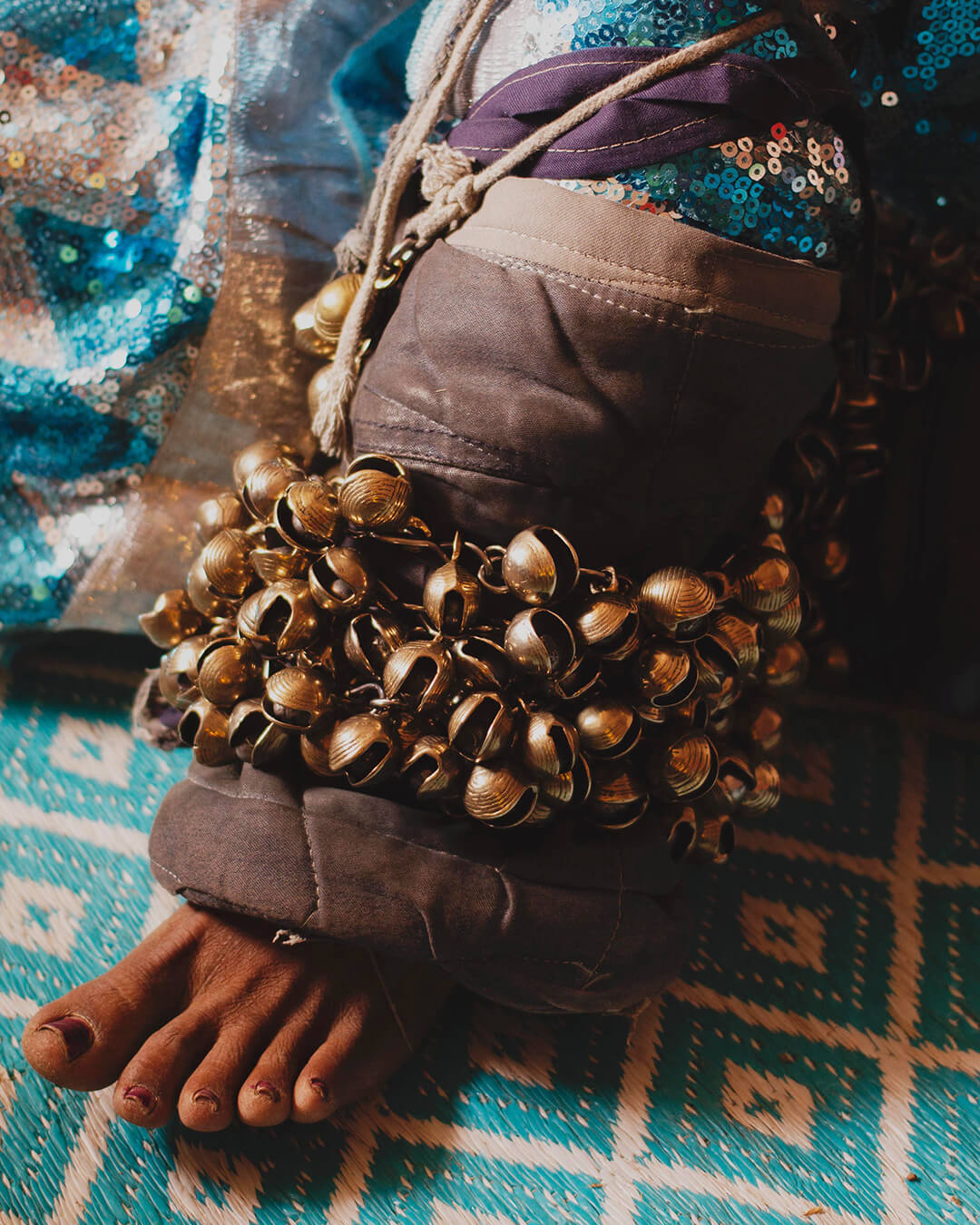
In other photographs, Khedekar employs synecdoche—implying a performer and an art form through quiet, extreme close-ups—splayed hands decorated with childlike ballpoint-pen drawings and flower-petal nails, feet wrapped in ghungroos, half of a best-friend necklace dangling over a monochrome, bare chest. “I'm often drawn to these small moments because they reveal something larger about performance, self-representation and agency. Rather than illustrating a single story, the photographs work as fragments that come together to form a broader picture of the world around Tamasha,” said Khedekar.
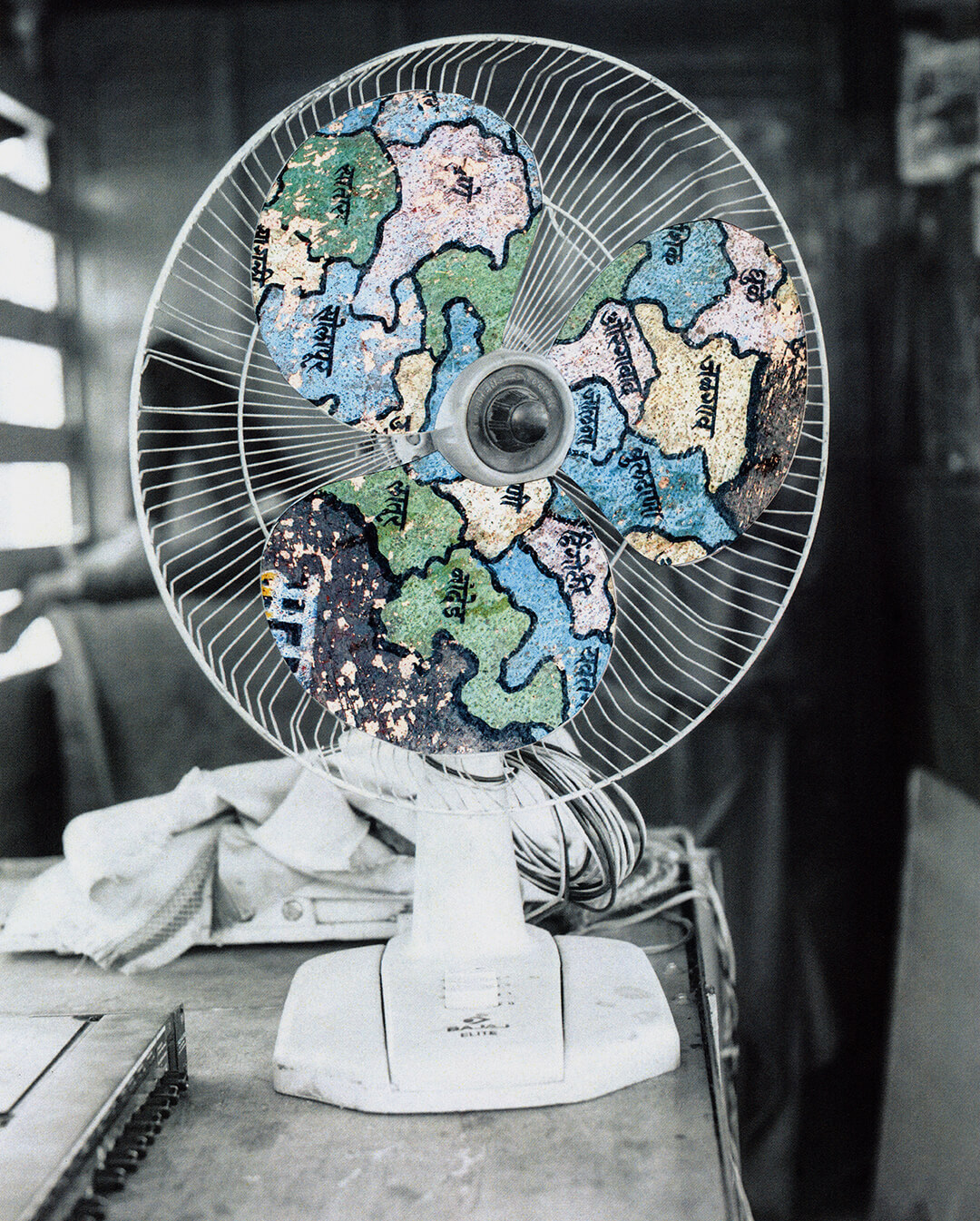
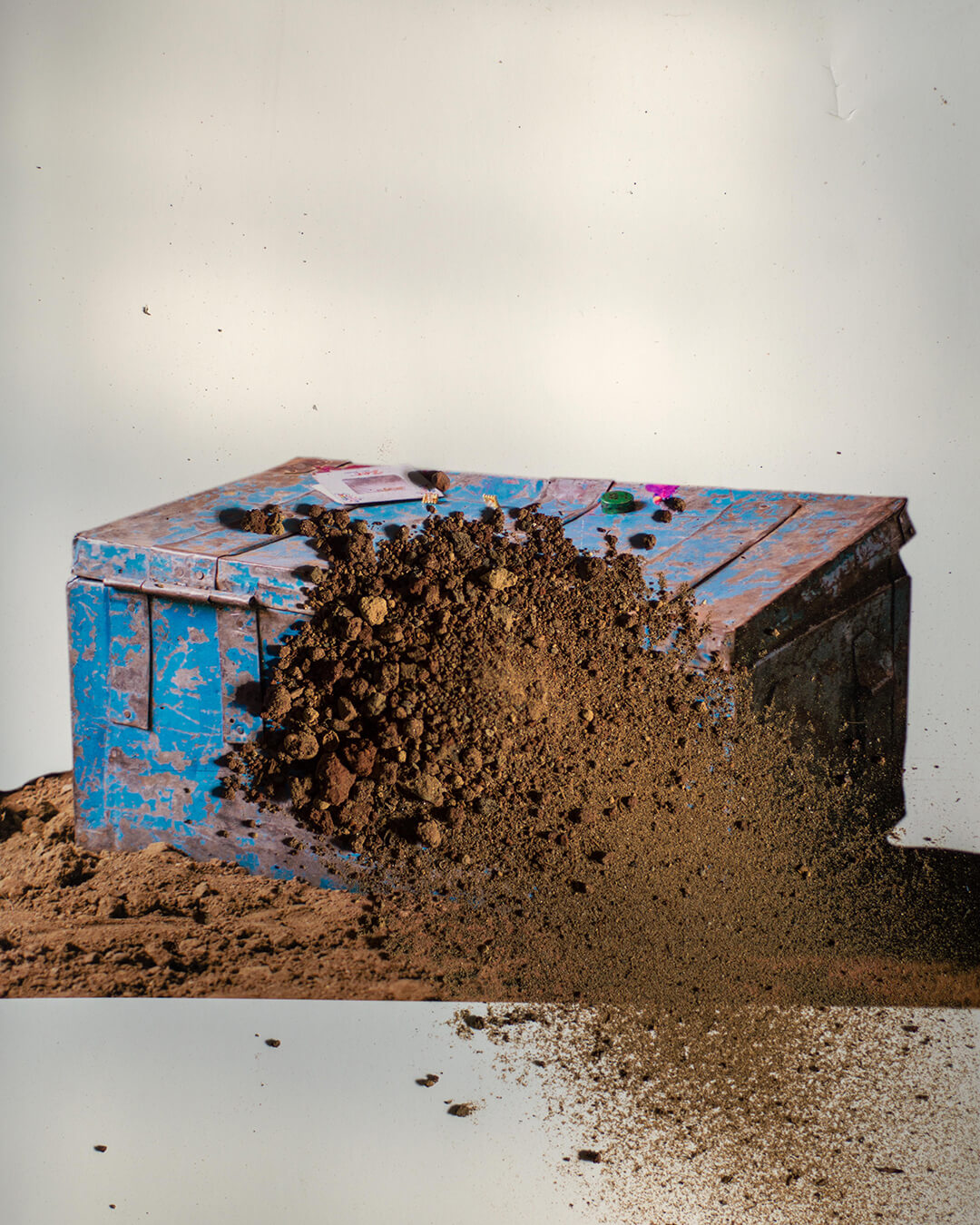
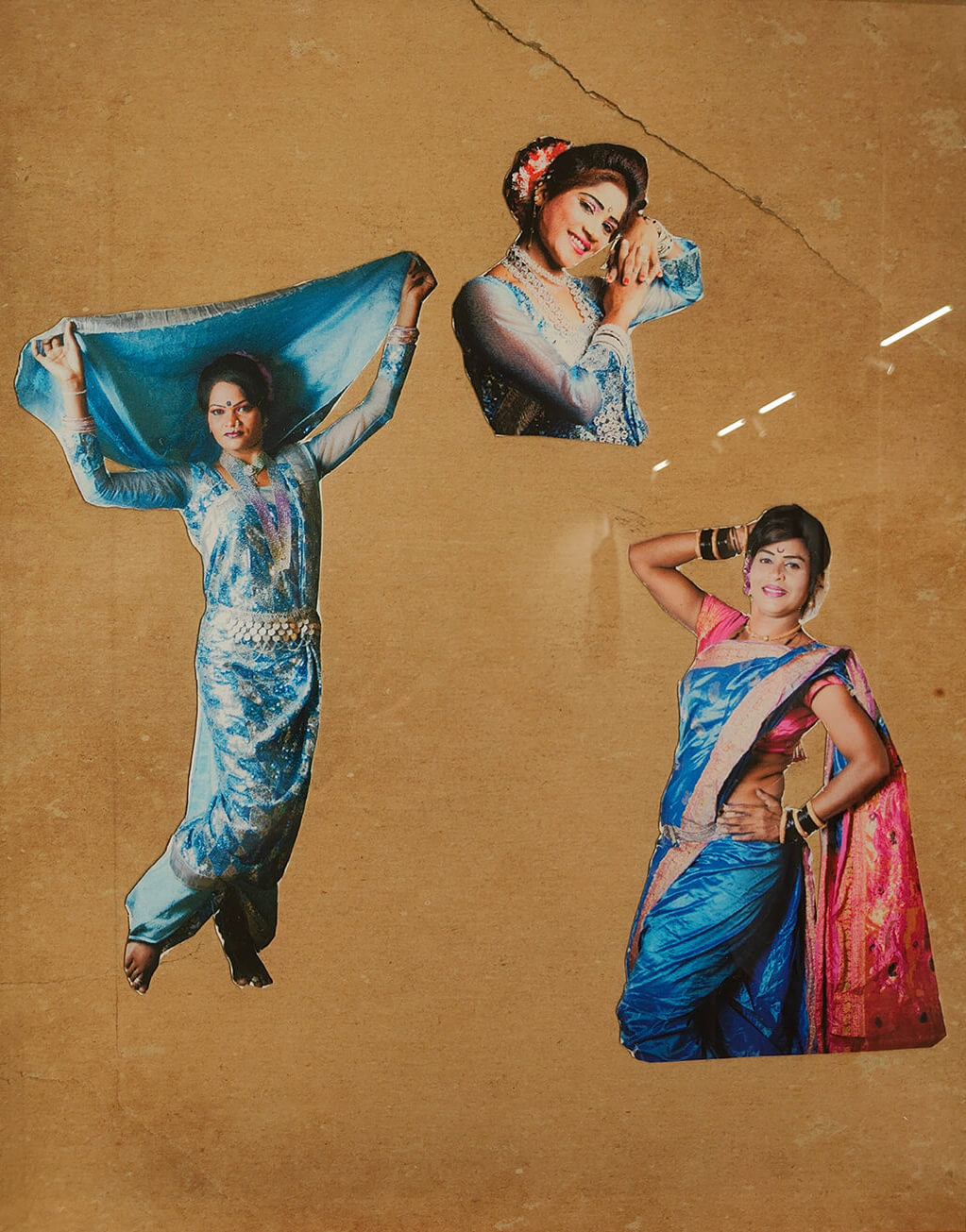
Khedekar also draws on his experience working with collage to tell a story, superimposing little portraits of people on white backgrounds and on photos of performances; cutting and pasting photos of a performer in three different poses onto a midtone background; or a flag of Maharashtra over the blades of a portable fan. In some images, he uses this technique to create a trompe l’oeil effect—a photograph of a blue chest with dirt scattered over the physical print is photographed once again, piercing the boundary of image and frame.
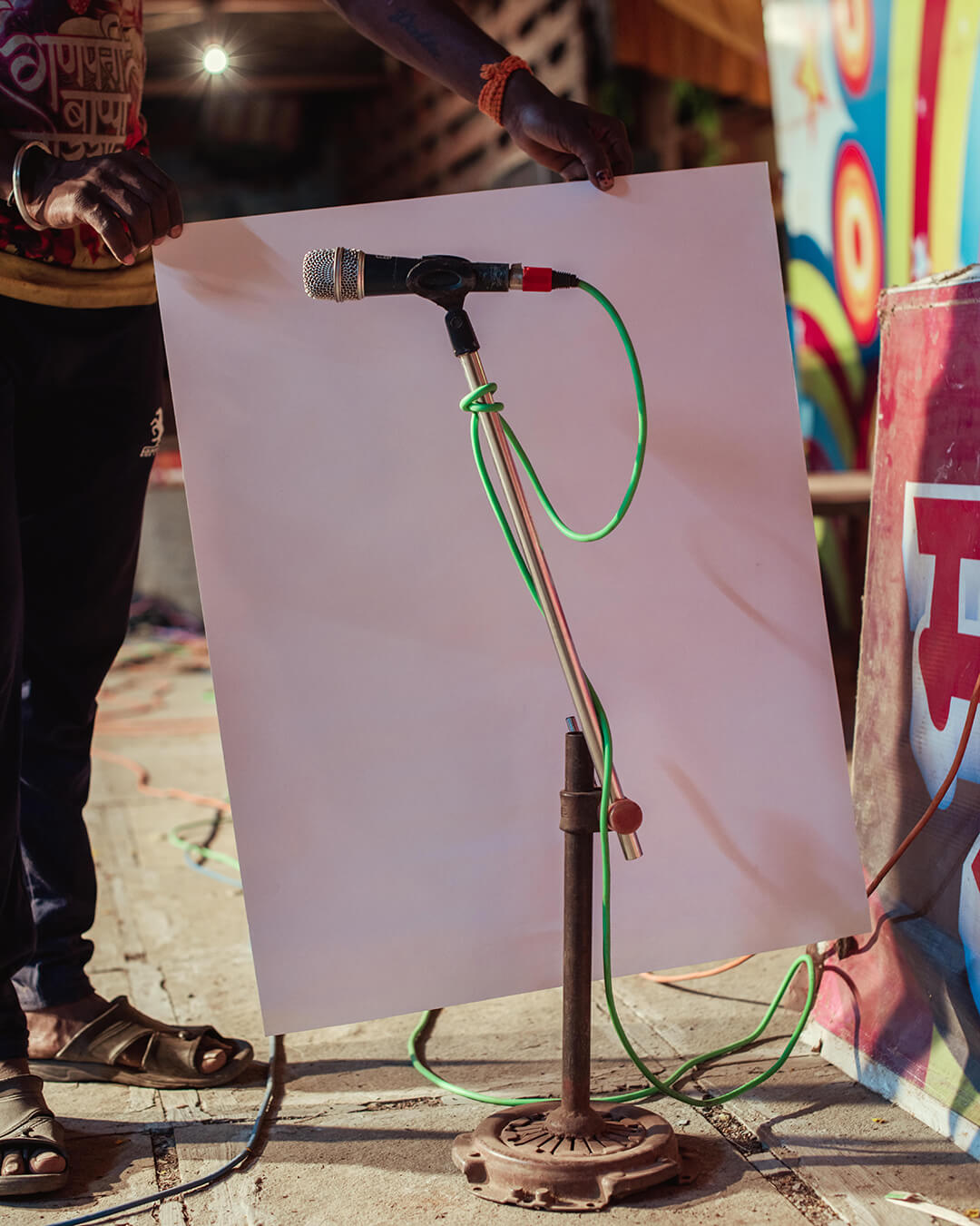
One of the most exciting and visually striking uses of collage is in a large photographic print on a wall that faces viewers as they enter the gallery—a mic, framed by a large, pink square, its clean geometry against the chaotic background making it appear to be a postproduction addition borrowing from the visual language of graphic design. A closer look reveals a figure at the side of the frame, his hands holding up a paper or cardstock square in real-life, framing the mic in a kind of illusion that blurs the lines between what is a photograph and what is real-life.
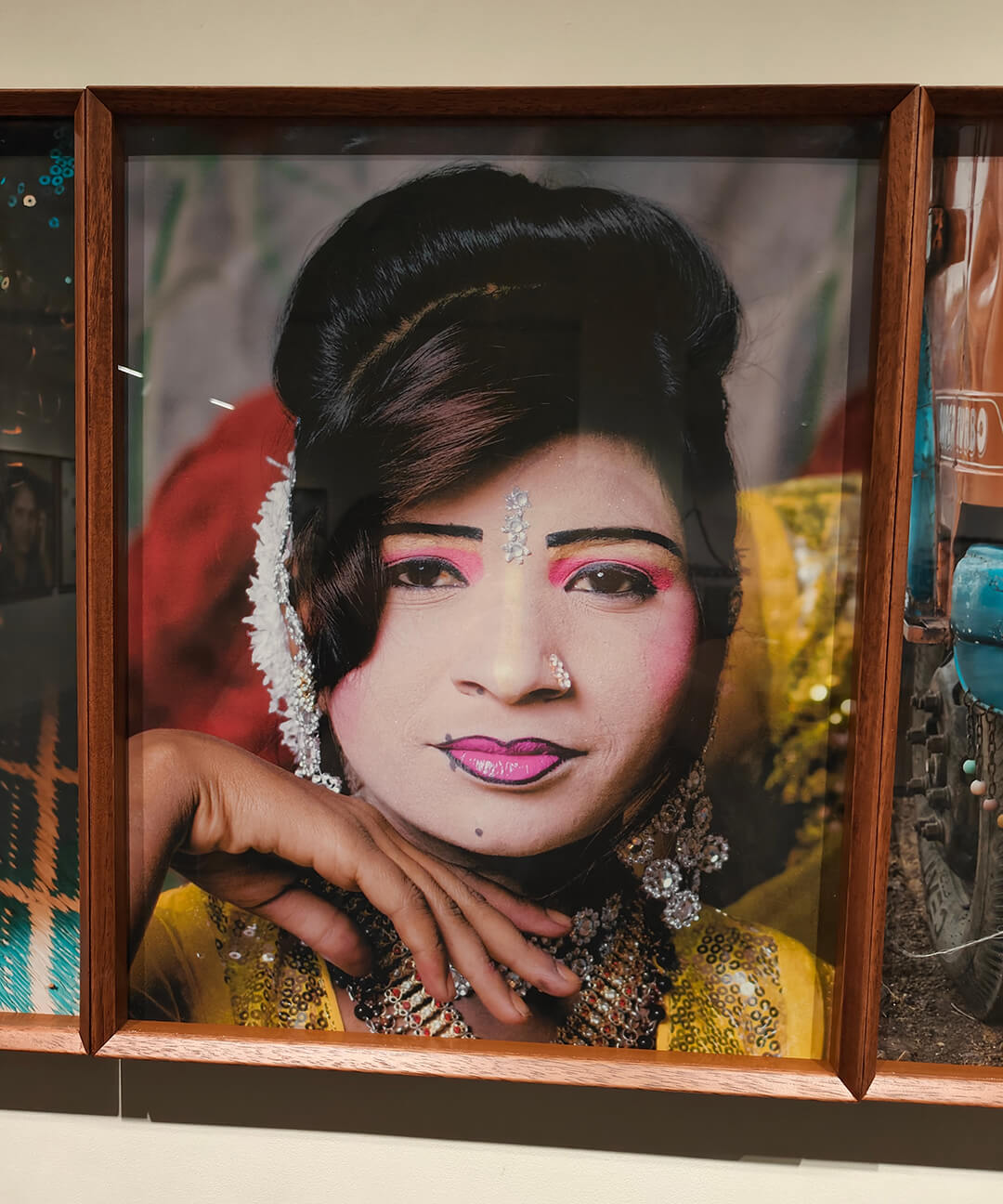
This tension between artwork and real-life, documentary and fiction, performance and lived reality animates Tamasha just as it does the lives of the people Khedekar photographs. “Since many of the people I photographed are performers themselves”, he explained, “they are already conscious of how they present themselves to an audience. I found that acknowledging this performative aspect, rather than hiding it, led to a more honest and collaborative process.” One photograph is a close-up portrait of a performer in full, bold stage makeup—pink eyeshadow in block shapes, thin, dark eyebrows and graphic, hot-pink lips that resemble (and predate!) the avant-garde makeup of European fashion runways and editorial photographs. It is impossible to imagine a way of working where the performers, so committed to how they present and are perceived, were not involved.
There is an ethical dimension to this, as with all photography, but especially pertinent when photographing a marginalised group as someone from outside their community. Khedekar does more than his due diligence by ingratiating himself within the Tamasha family over the years, but where he and Tamasha truly triumph is in the moments where the subjects are allowed to cross the lakshman rekha (red line) that divides being in front of the camera and being behind it. The creative influence and the aesthetic of this community permeate the images and the exhibition, bringing the culture of Tamasha alive at NCPA, a fitting venue for a series that is not just a tribute but an extension of a performance culture that needs urgent dissemination, attention and long-overdue respect.
by Anmol Ahuja Oct 15, 2026
How do heaps of souvenirs and relics with racist Aboriginal motifs and features become art? MCA Sydney’s winter showcase—the artist’s largest to date—beckons a possibility.
by Srishti Ojha Oct 14, 2026
The first Dutch publication on the Turkish artist, the eponymous book centres on Refik Anadol: Latent City, his living data sculpture of Bruges, exhibited at BRUSK gallery.
by Vandana Kalra Oct 14, 2026
With his latest exhibition as a point of departure, the modernist discusses his decades-long practice, the spontaneity of drawing and the social responsibility of artists.
by Srishti Ojha Oct 09, 2026
In his ongoing exhibition, the South African artist creates two post-apocalyptic futures to explore society’s relationship with textiles, patterns and technology.

make your fridays matter with a well-read weekend
Enter your details to sign in
Don’t have an account?
Sign upOr you can sign in with
a single account for all
STIR platforms
All your bookmarks will be available across all your devices.
Stay STIRred
Already have an account?
Sign inOr you can sign up with
Verification link sent to check your inbox or spam folder to complete sign up process
Tap on things that interests you.
Select the Conversation Category you would like to watch
Please enter your details and click submit.
Enter the 6-digit code sent at


Performance and lived reality animate Abhishek Khedekar’s Tamasha at NCPA
by Srishti Ojha | Published on : Jun 15, 2026


 Sign in with Google
 Sign in with email
What do you think?