Art10 mins. read
Experimenter Curators’ Hub and the new, rhizomatic structures of the art world
by Srishti OjhaJul 10, 2026



by Vandana KalraPublished on : Aug 17, 2026
There are some artworks that reveal the mind of the artist more immediately to viewers and then there are some that urge for a much longer deliberation. The exhibition The Meeting Ground: Scenes from the KNMA Collection is rich with artworks from the latter category and that is reflected from the very beginning of the display. Greeting viewers is a brooding dreamscape that features numerous shadowed figures and mythical creatures. This is K Ramanujam's untitled 1968-70 ink on paper, with a scene that might seem far from reality but feels emotionally familiar nevertheless.
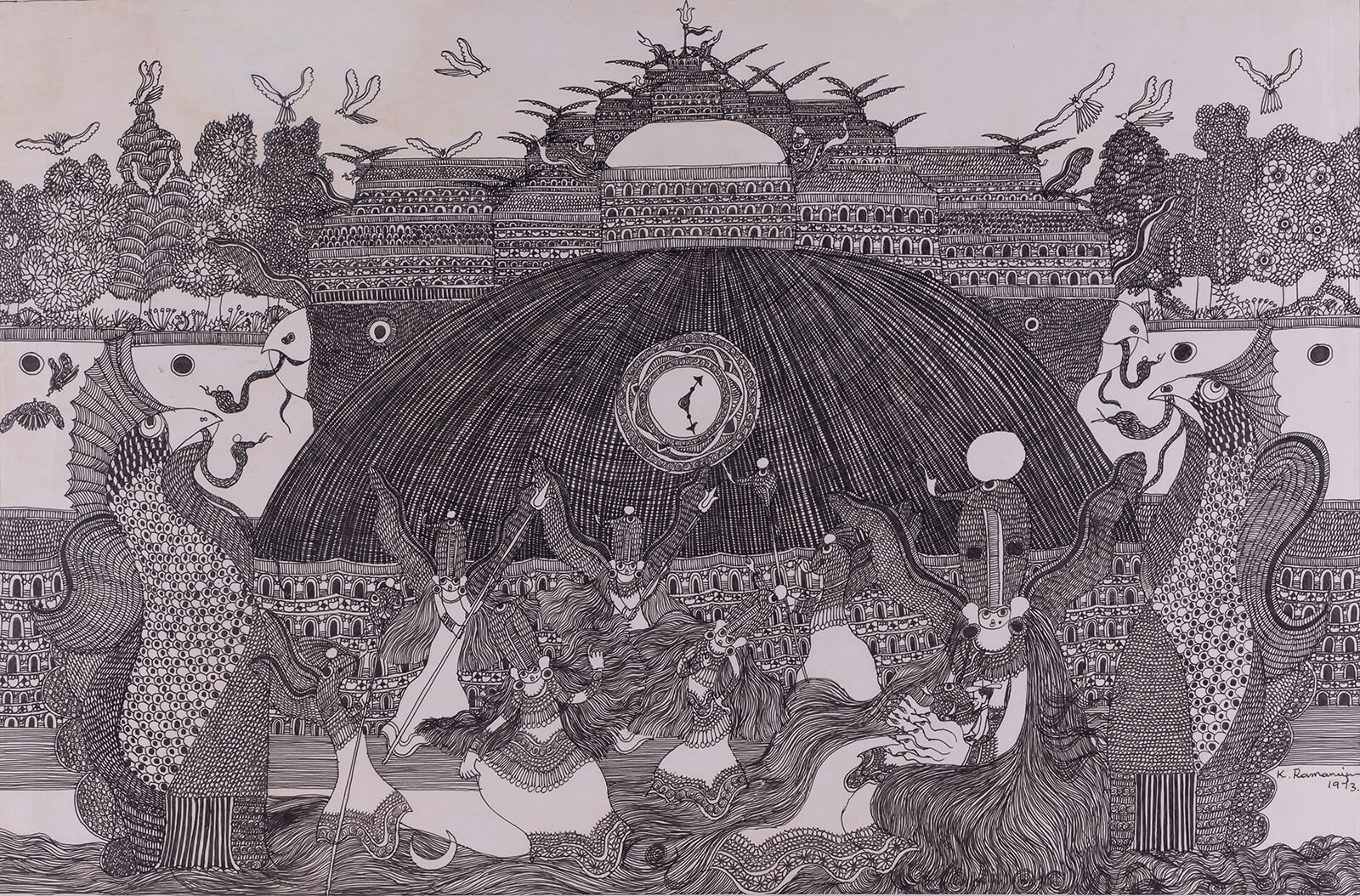
One of the most enigmatic figures of Indian modernism, Ramanujam died at just 33, but in compositions such as this he built a visual language that appeared to emerge as much from dreams as from his experiences, expressing how modern Indian art did not evolve along a single path but through varied influences and references. That thought continues in the rest of the exhibition at Christie's in London, which also marks the first time the auction house has dedicated its summer exhibition to South Asia and a single institution.
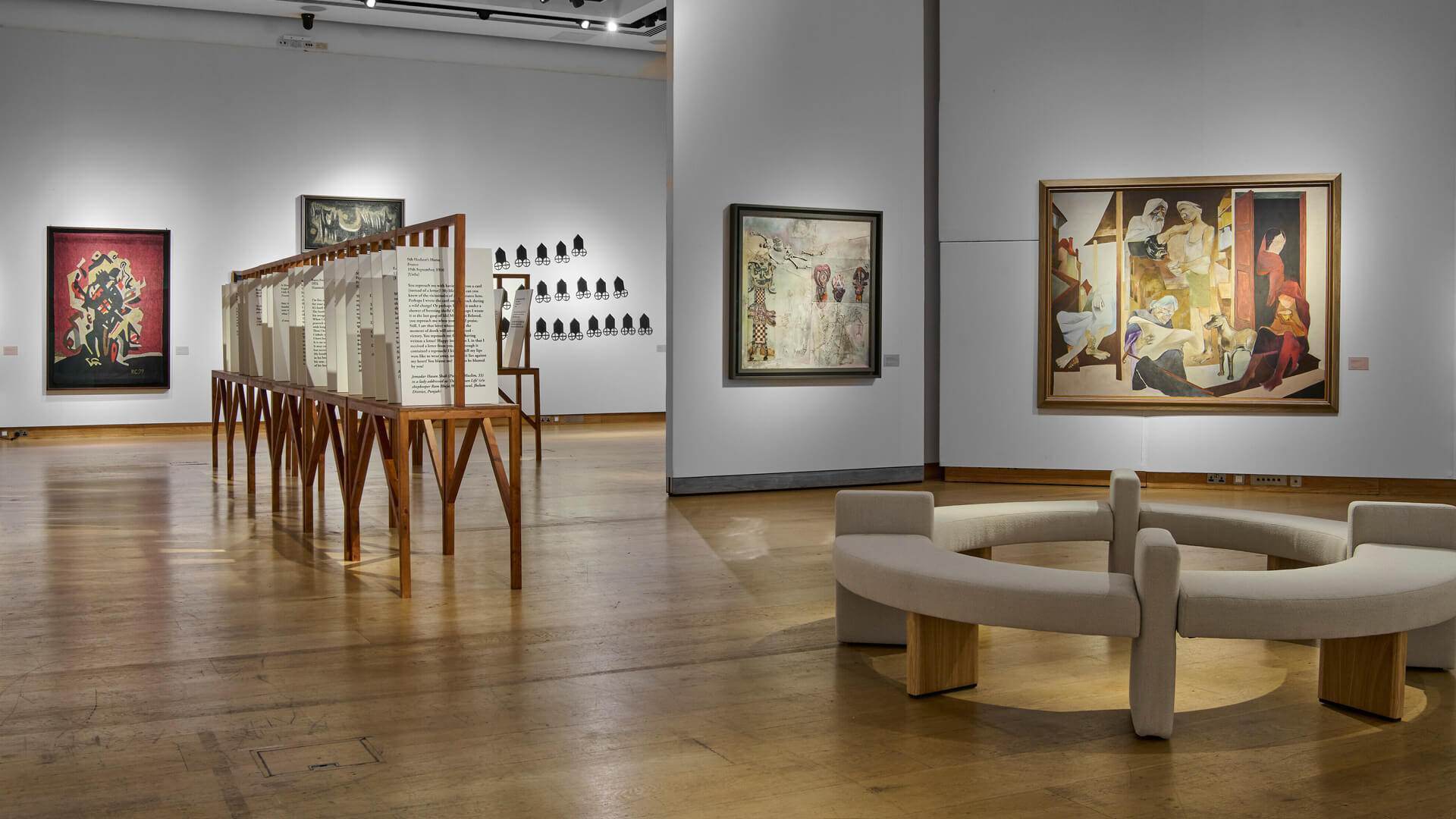
Resisting a singular narrative, the showcase brings together more than a century of artistic practice, focusing not on chronology but a series of thematic encounters where modernists meet contemporaries, paintings converse with photography, installations, sculpture, textile works and found objects, among others. Speaking to STIR, Akansha Rastogi, lead curator of the exhibition and Associate Director, Visual Arts, KNMA, stated: "We were inspired by how artists’ personal experiences shape their politics of art, and how that, in turn, holds the power to shape the institutional. The exhibition becomes a meeting ground for various schools of thought and differences that not only share stories but also listen and absorb. A very conscious effort was made not to see the works in the collection as products or endpoints, but to locate them in the journeys of the artists who made them, and also in those of peer-artists with whom they resonate, and further understand how and why those resonances happened. The contextualisation is visual and historical, allowing viewers to also feel those connections and build conversations." She added that the intention was to create not a single authoritative narrative on South Asia, but a complex conversation broken into granular moments that bring together individual and collective stories. The five scenes unfolding the exhibition are therefore proposed as scaffoldings to help viewers navigate the display.
The title reflects this intention as does the very first of the exhibition's scenes that seeks affinities and where memory does not elicit nostalgia but appears as a constant that continues to shape and inform the present. Here some of India's most prominent art collectives are celebrated through the works of its members. If representing the Cholamandal Artists' Village are artists such as KCS Paniker and Ramanujam, the radical experiments of Group 1890 are revisited through works such as Jeram Patel's trademark blow torch on wood and a Himmat Shah ceramic. Works by Nalini Malani and Nasreen Mohamedi are also situated in the context of Akbar Padamsee's Vision Exchange Workshop from the late '60s, where filmmakers, artists and photographers were encouraged to explore moving images. Evoking the legacy of Kasauli Art Centre are KP Krishnakumar's ink works and NN Rimzon's significant installation Thousand Stories and a Cloth Bundle (1986) that weaves histories and memories to respond to instances of campus violence in India.
We were inspired by how artists’ personal experiences shape their politics of art, and how that, in turn, holds the power to shape the institutional. The exhibition becomes a meeting ground for various schools of thought and differences that not only share stories but also listen and absorb. – Akansha Rastogi, lead curator of the exhibition
Some of the significant works by members of the formidable Progressive Artists' Group form part of a wider conversation, from Krishen Khanna's 1979 Ramu Ka Dhaba, which is part of a series where the banker-turned-artist explored roadside eateries as a haunt for conversations, to Akbar Padamsee's 1959 Cityscape from the grey period. Particularly moving is Vivan Sundaram's 2008 video Barefoot with Husain, a homage to Indian painter M.F. Husain, that was created in solidarity during the latter's years in exile, which the catalogue describes as embodying the ethos of "artists standing up for other artists".
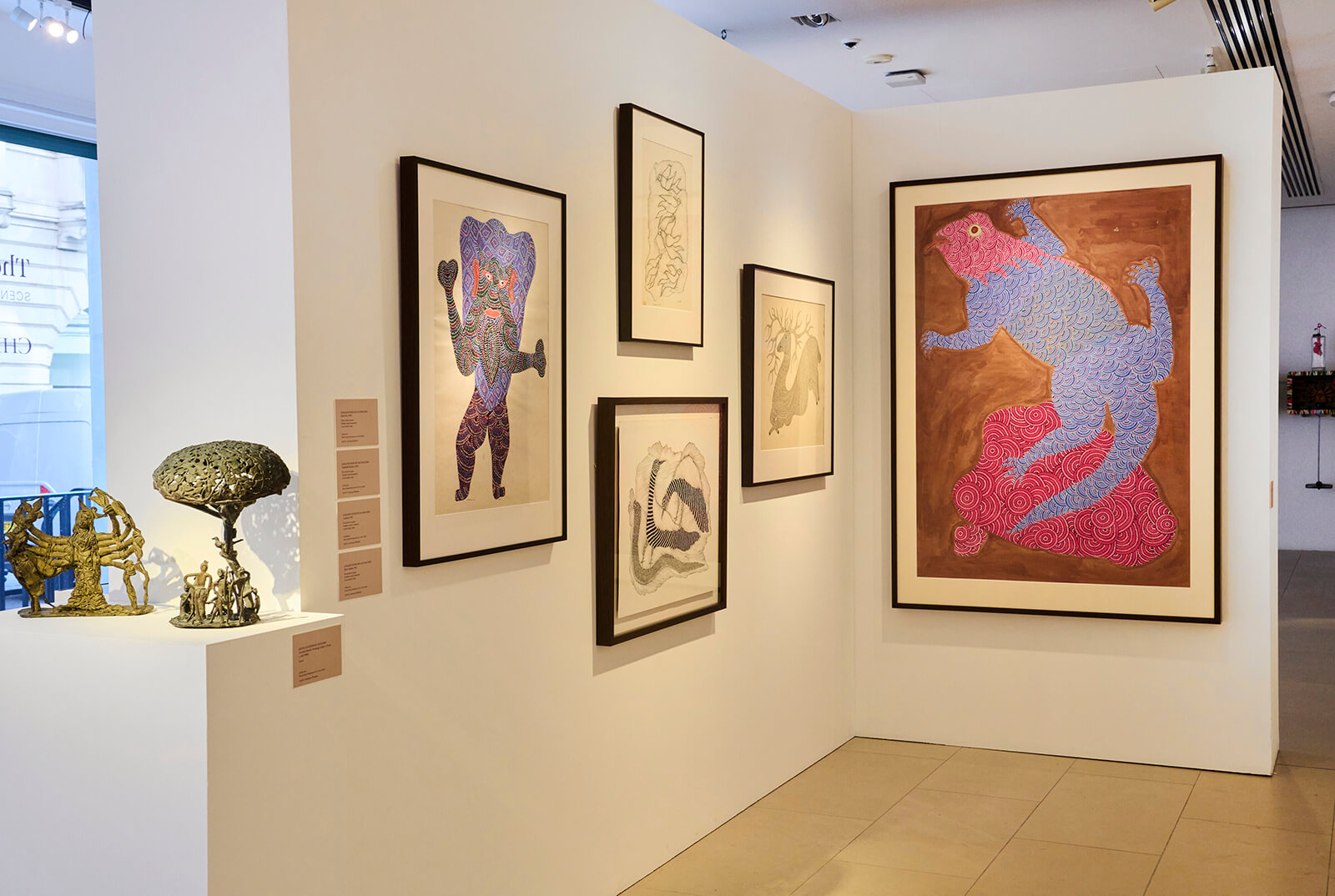
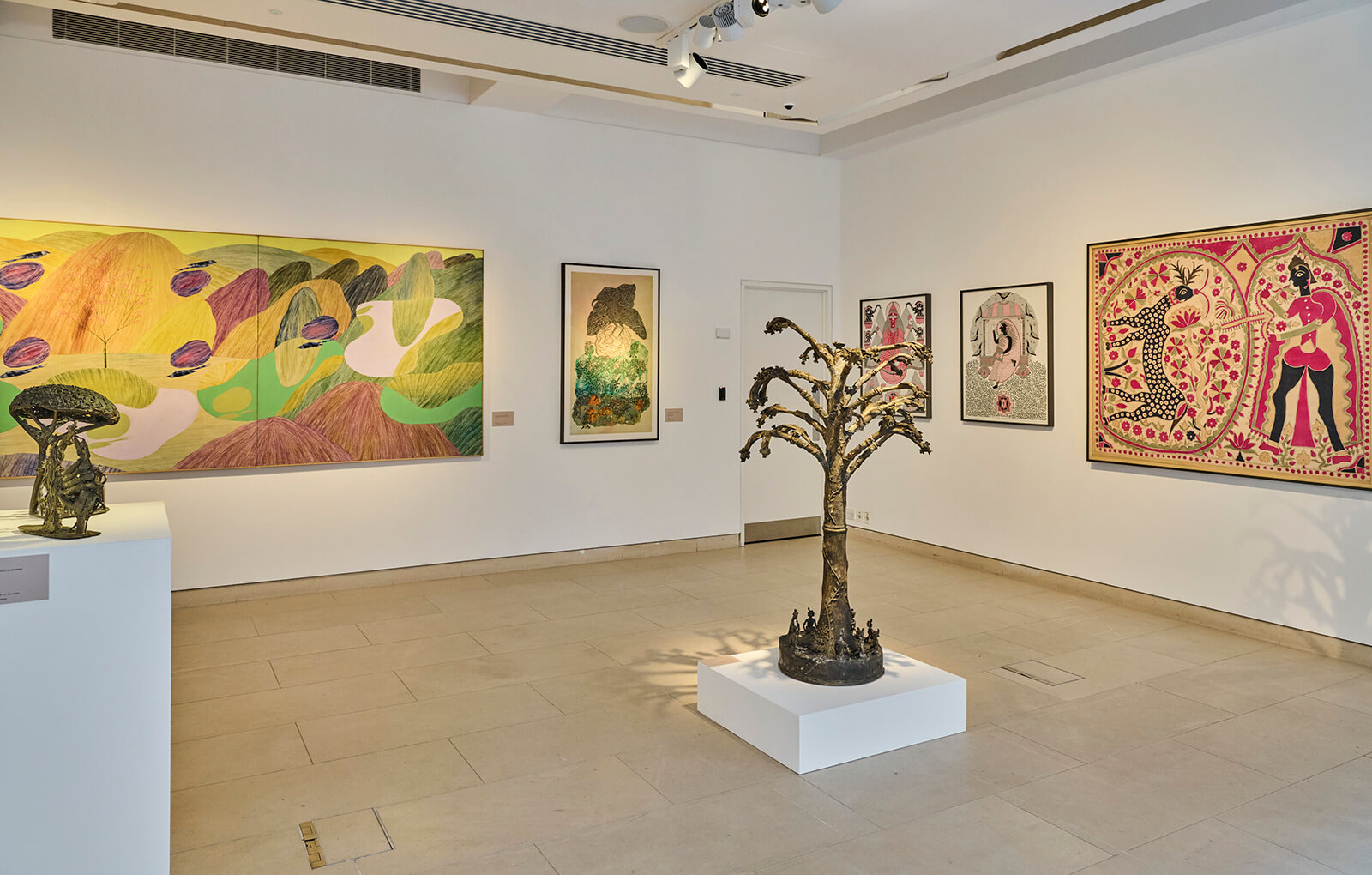
One of the exhibition's most compelling interventions, however, is how it also positions indigenous artistic traditions as part of modernism. So there is Jagdish Swaminathan's Homage to Solzhenitsyn (1973)—from his celebrated Bird-Tree-Mountain series, with varied forms floating in fields of colour—alongside Jangarh Singh Shyam's Bada Dev, celebrating the Gond deity in Shyam's characteristic patterns and fine dots. Meera Mukherjee's untitled bronze from the 1980s is in dialogue with Bastar metal sculptor Jaidev Baghel's Tree of Life—also areminder of the time Mukherjee spent in the tribal-rich district of Bastar in Chhattisgarh, India, to learn the craft of metal casting. If Haku Shah's canvas from the Gandhi series is juxtaposed with nomadic bard Ganesh Gopal Jogi's paper work, artist-pedagogue KG Subramanyan—whose art aligned the traditional with the contemporary—finds place with Santhal scrolls that narrate the birth of Santhal ancestors by Thakur Jiu, considered the supreme creator in Santhal tradition. Speaking to STIR about the scene, Preeti Bahadur Ramaswami, Senior Curator and Head of Classical Indian, Folk and Tribal Arts, KNMA, stated, "It speaks of relationships that are forged between rural and urban worlds. There is an acknowledgement that the relationships spanning these different worlds are a meeting ground of possibilities. We see intersections and entanglements that were never smooth, but were built through various mediations and ideologies. The indigenous and the vernacular are not presented as siloed but as part of contemporary and modernist histories. While the vernacular was absorbed into modern art, the converse is also true. Artists from indigenous communities were also responding to the contemporary moment and producing narratives that speak to the present with creative agency." While there were direct collaborations in some instances, at other times the influence was more inspirational.
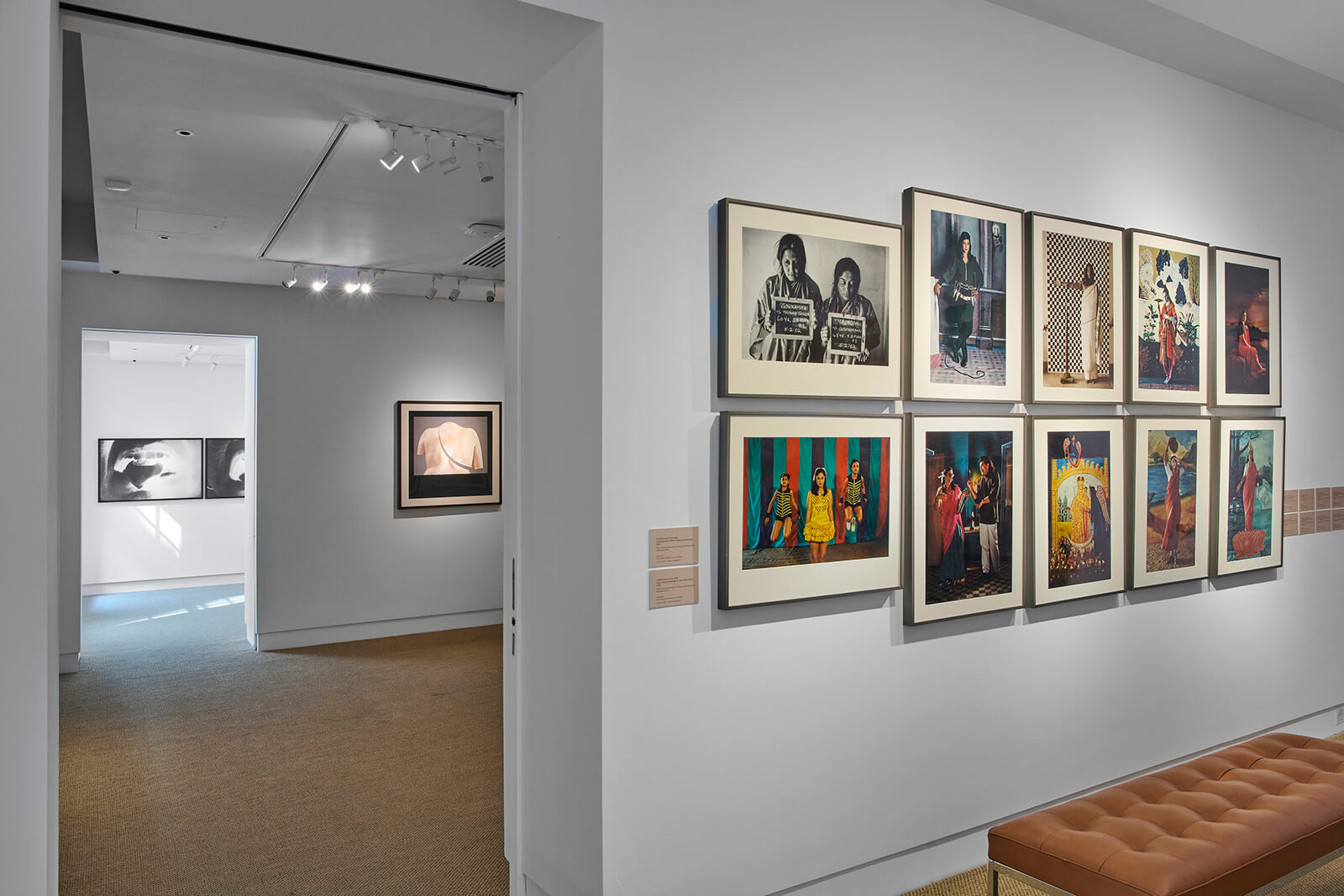
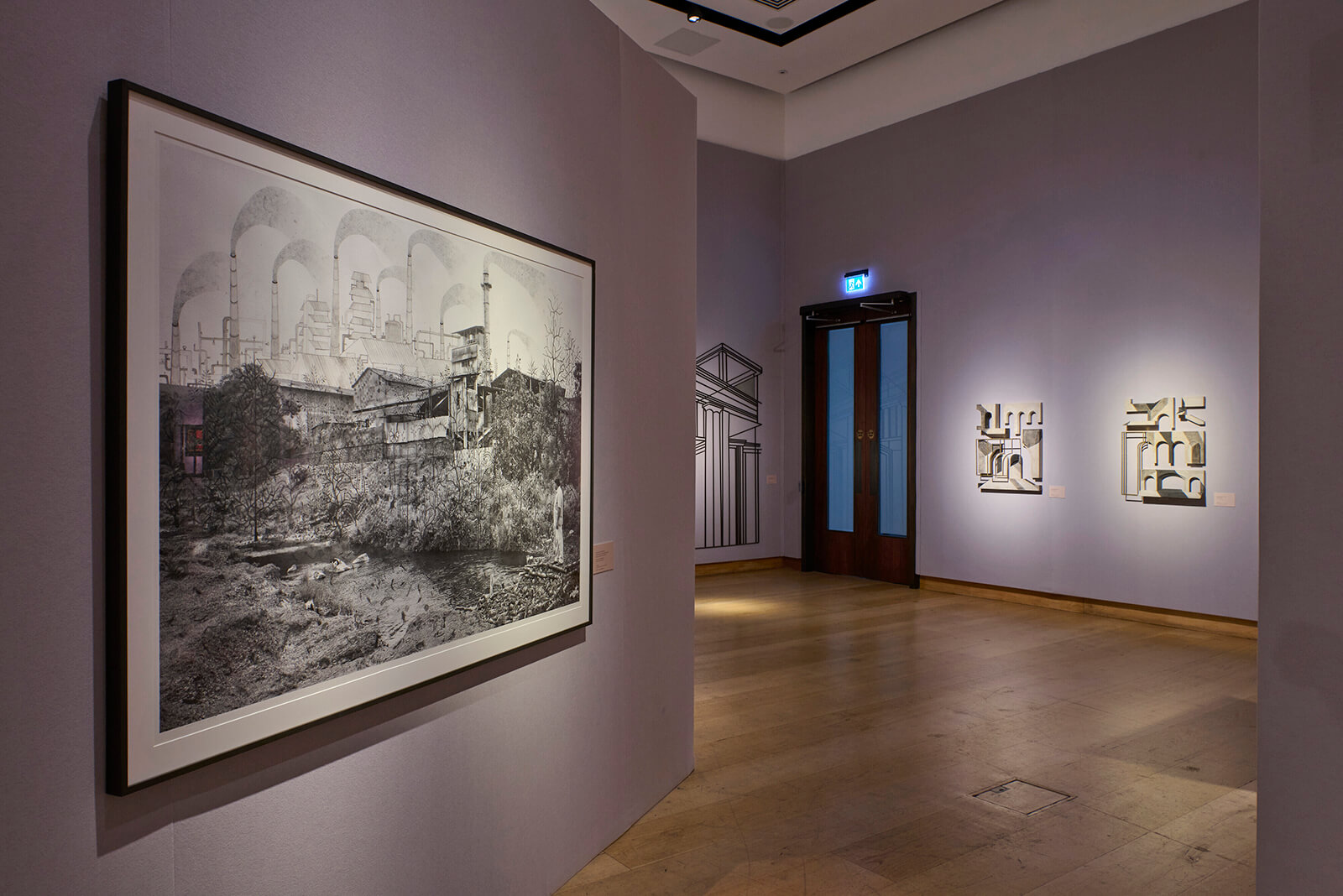
If Seeking Affinities explores relationships between artists and artistic traditions, in Regions of Remembrance, curated by Avijna Bhattacharya, linked histories and contested terrains are explored. In the catalogue, Bhattacharya frames the section through three simple questions: "Who are we? How do we remember? What do our memories make us?" The answers emerge not through statements and words but a section populated with landscapes, absences and works in varied materials. If works by Rina Banerjee, Anant Joshi and NS Harsha reflect on migration and postcolonial identities, Jayashree Chakravarty's layered paper and cotton work Lost Lake Under the City and Rathin Barman's concrete and brass Partition II excavate the ecological and architectural scars left by the Partition. Elsewhere, Shambhavi Singh's Fallen Palm Leaves/Taard ka Patta (2023) in iron and Manjunath Kamath's canvas Alternative Layers (2022) remind viewers that much is forgotten by memory.
What makes the curation engaging is how no single reading is insisted upon and conversations are allowed to unfold effortlessly. Rather than explaining the evolution of art in South Asia, The Meeting Ground invites viewers to ponder its complexities and make their own discoveries. Incidentally, it also intends to give a glimpse into KNMA's new 1,00,000-plus square-metre art and cultural center currently under construction in Delhi.
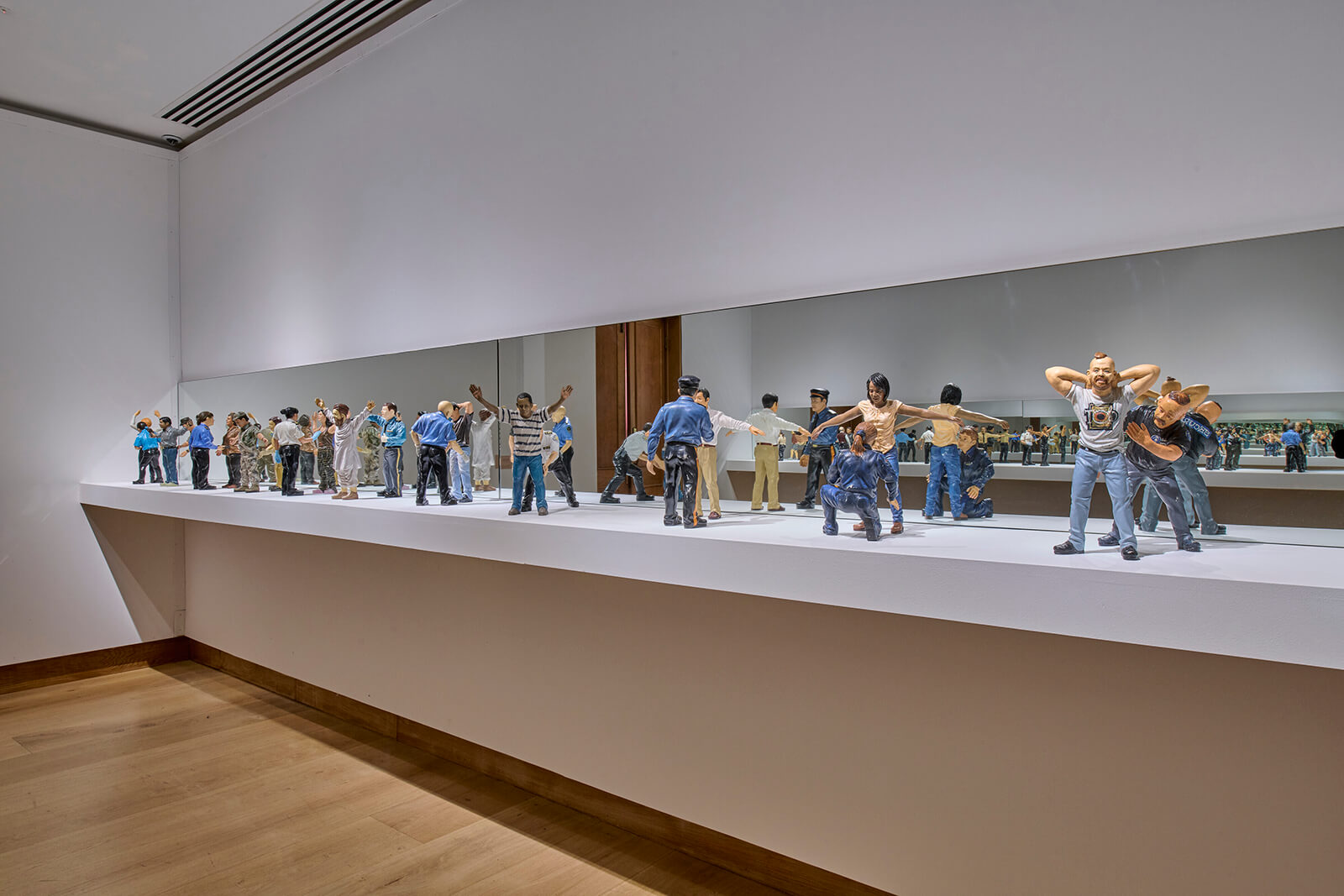
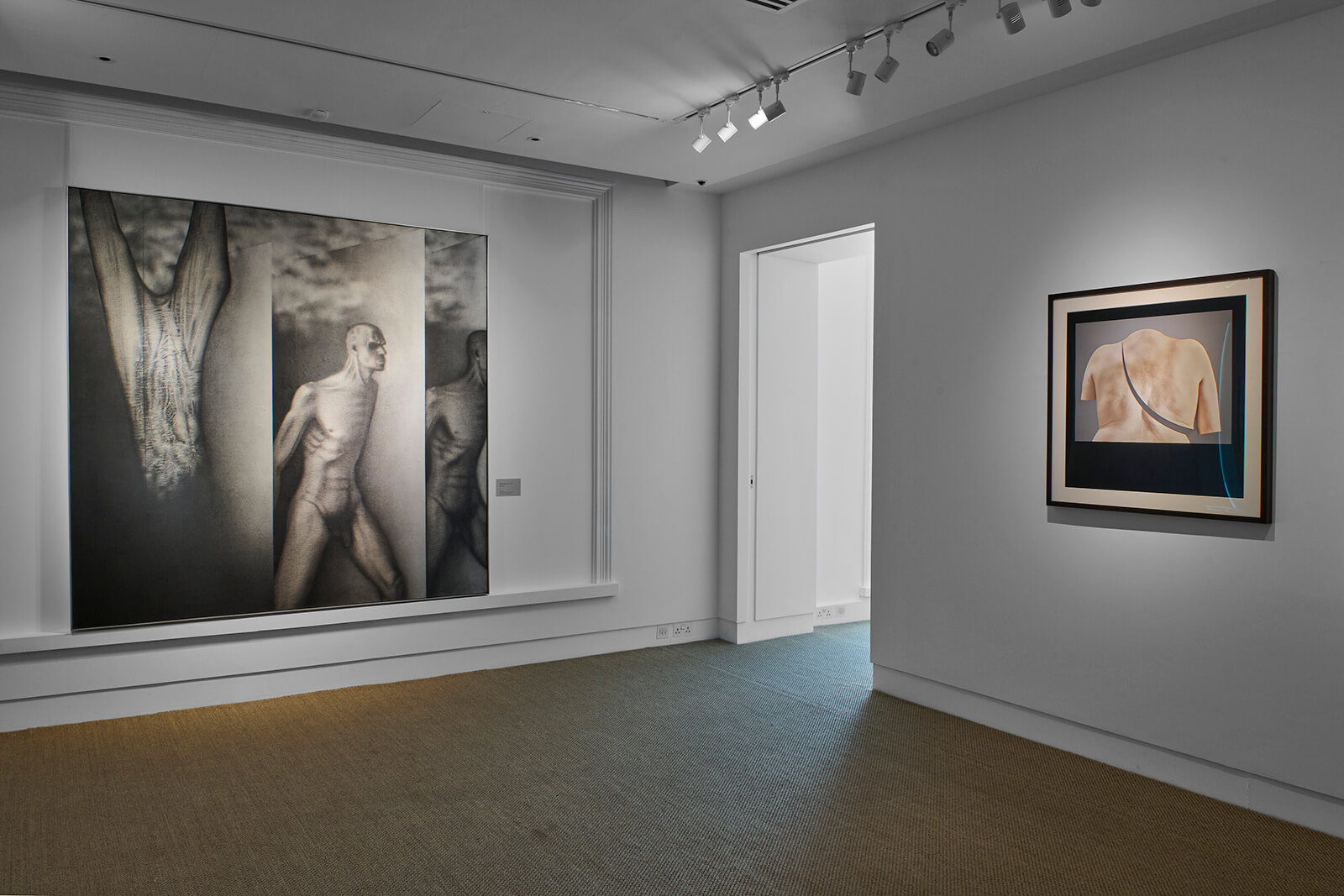
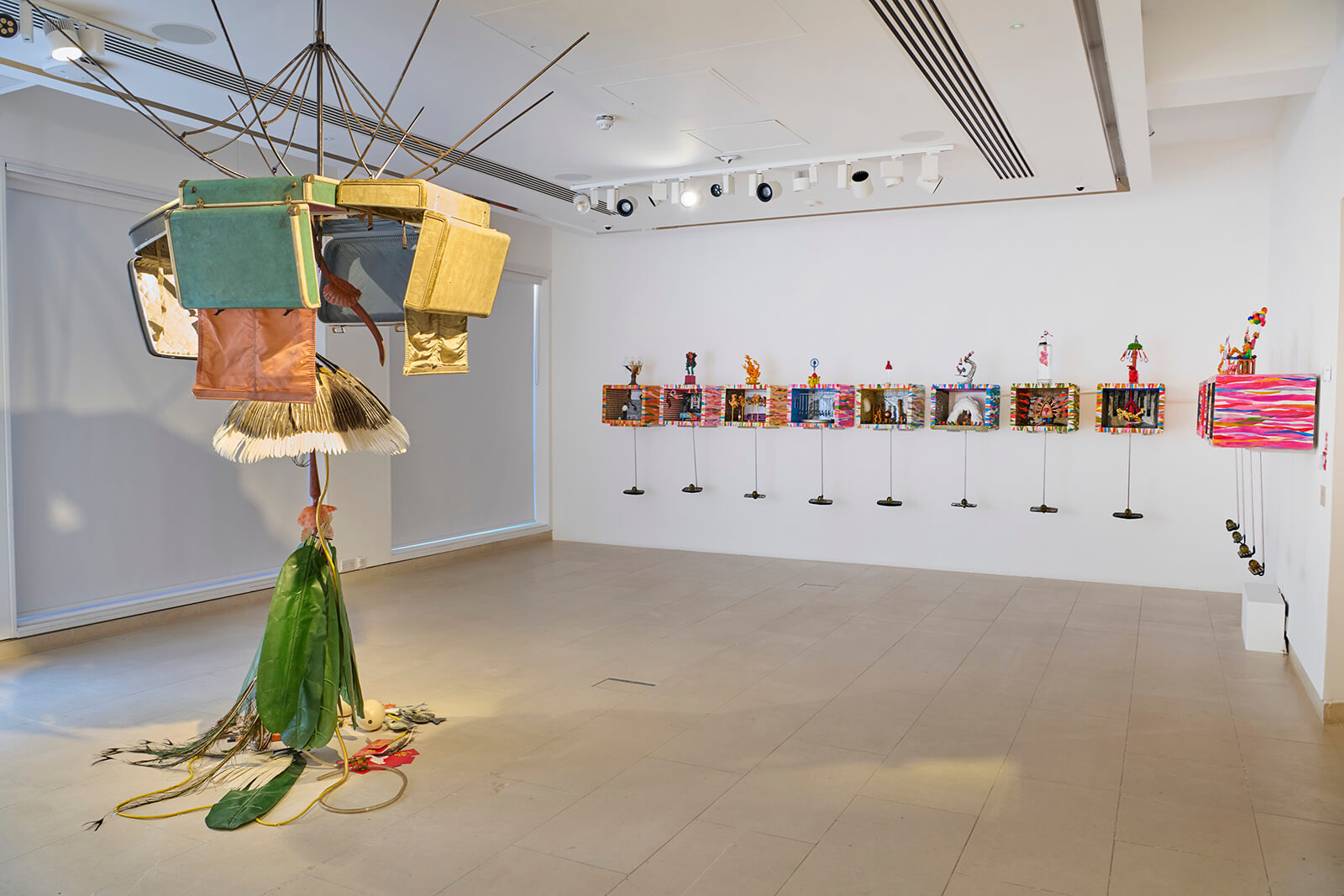
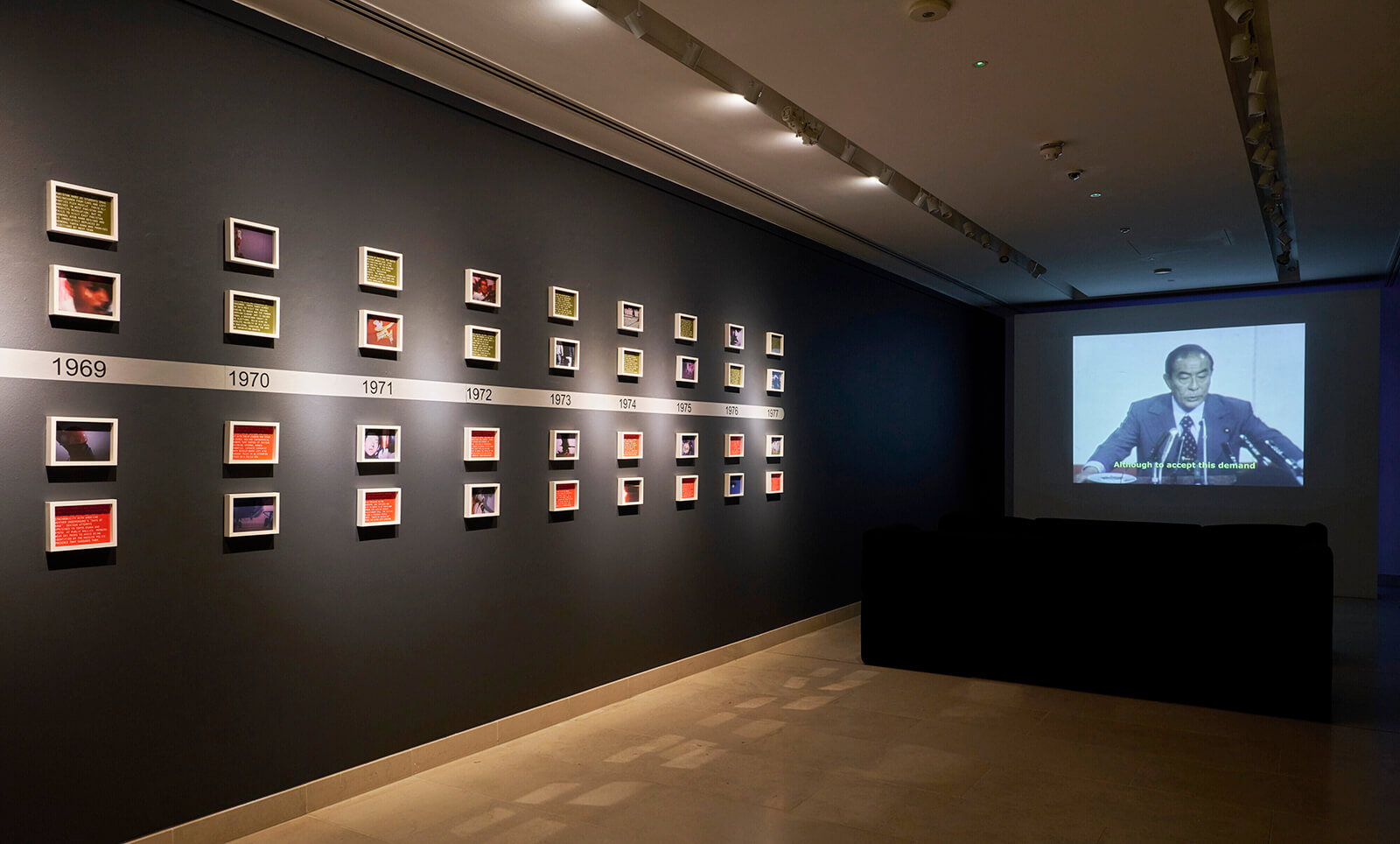
While memories from the past seem to form the emotional centre of the exhibition, the body too is explored more closely in Body: Present Continuous. Speaking to STIR,Srinivas Aditya Mopidevi, Curator, Visual Arts at KNMA, stated, "The body becomes a site of inquiry and works in the collection encompass concerns about gender and social identity, as well as community and belonging."So Raghu Rai's Confessions of a Wall, with school boys posing in front of a bare wall, reminds viewers that walls, streets and public spaces absorb political histories. Nearby, Jitish Kallat's Circadian Rhyme 2 (2012-13) has tiny human figures rotating slowly, exploring themes of surveillance and borders. A distinctive Shilpa Gupta split-flap display announces "we are closer than you even imagined," sharing ideas of proximity and distance that gained particular urgency during COVID-19. Anoli Perera's 2010 monochrome I Let My Hair Loose (Protest Series), Mopidevi points out, "deliberately tries to invert the male gaze that is often put on native women in the context of colonial photography". This is presented alongside Rameshwar Broota's Runners (1982), which addresses the fragility of the male body, and is also famously among the early works acquired by KNMA’s founder and chairperson Kiran Nadar when she began building her collection in the '80s.
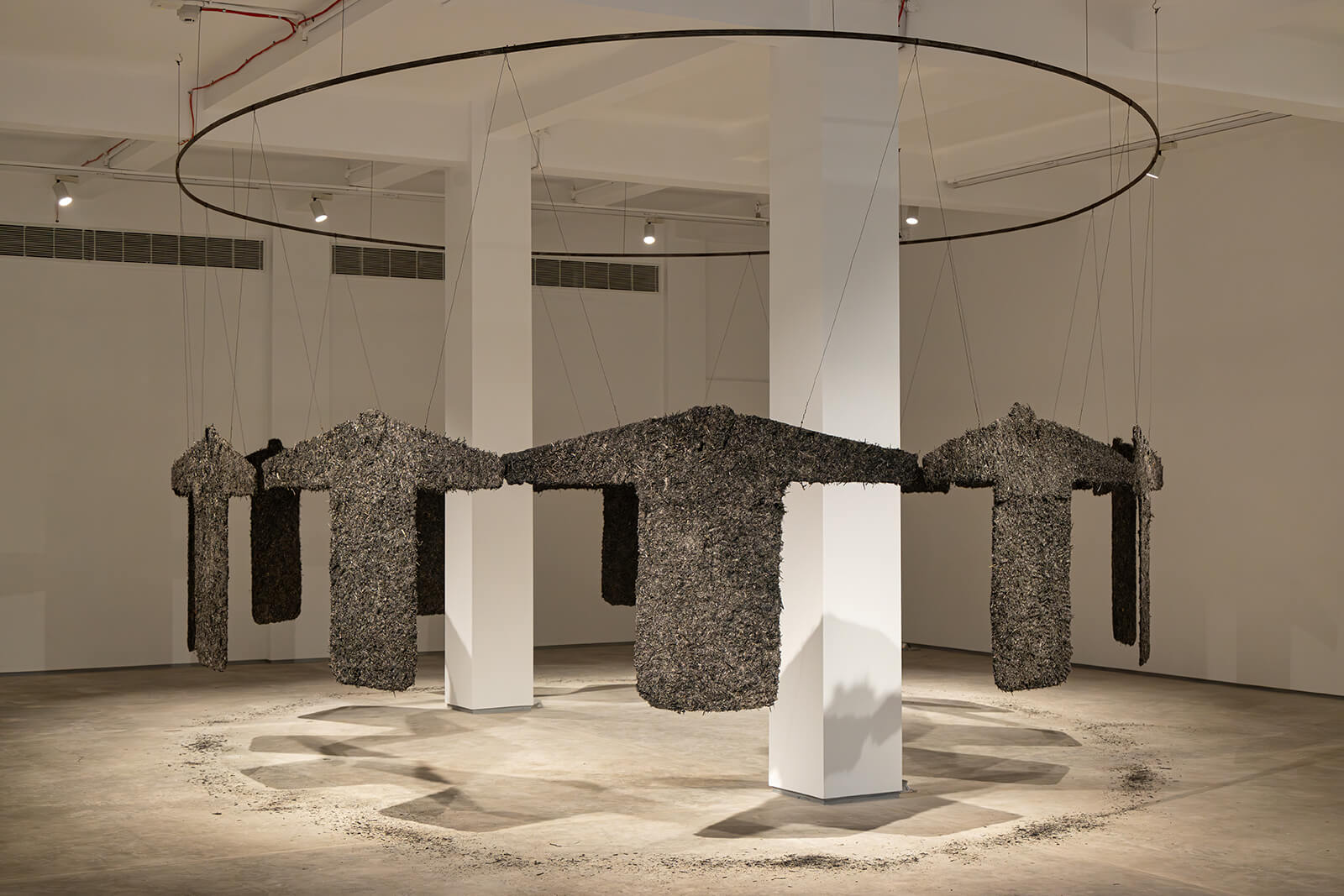
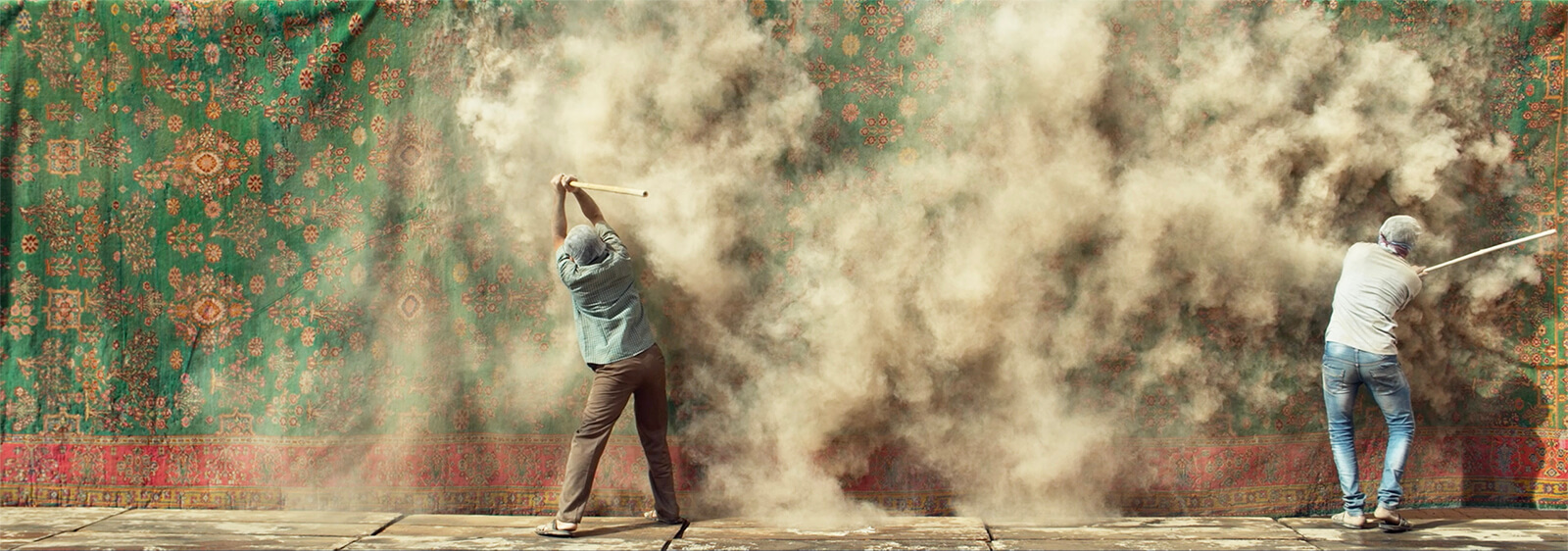
The sense of unease and unpredictability is carried forward in Clearing, that Rastogi describes in the catalogue as "a rough, intense, maybe a violent process that makes the contours, contradictions, and conditions of The Meeting Ground visible". Rather than addressing issues such as environmental destruction, political violence or displacement directly, here artists approach the questions more obliquely. Kulpreet Singh’s installation Indelible Black Marks has kurtas covered in ash gathered from stubble burning in the farmlands of Punjab and wooden stoves at farmers’ protests near Delhi. In black and grey, Prabhakar Pachpute's Counter Table of the Blackyard (2017) explores coal mining and industrialisation, and LN Tallur's video Interference sees workers use a stick to remove dust from a late 19th century carpet woven by inmates of Junagadh Central Jail to reconsider the several meanings of historical objects.
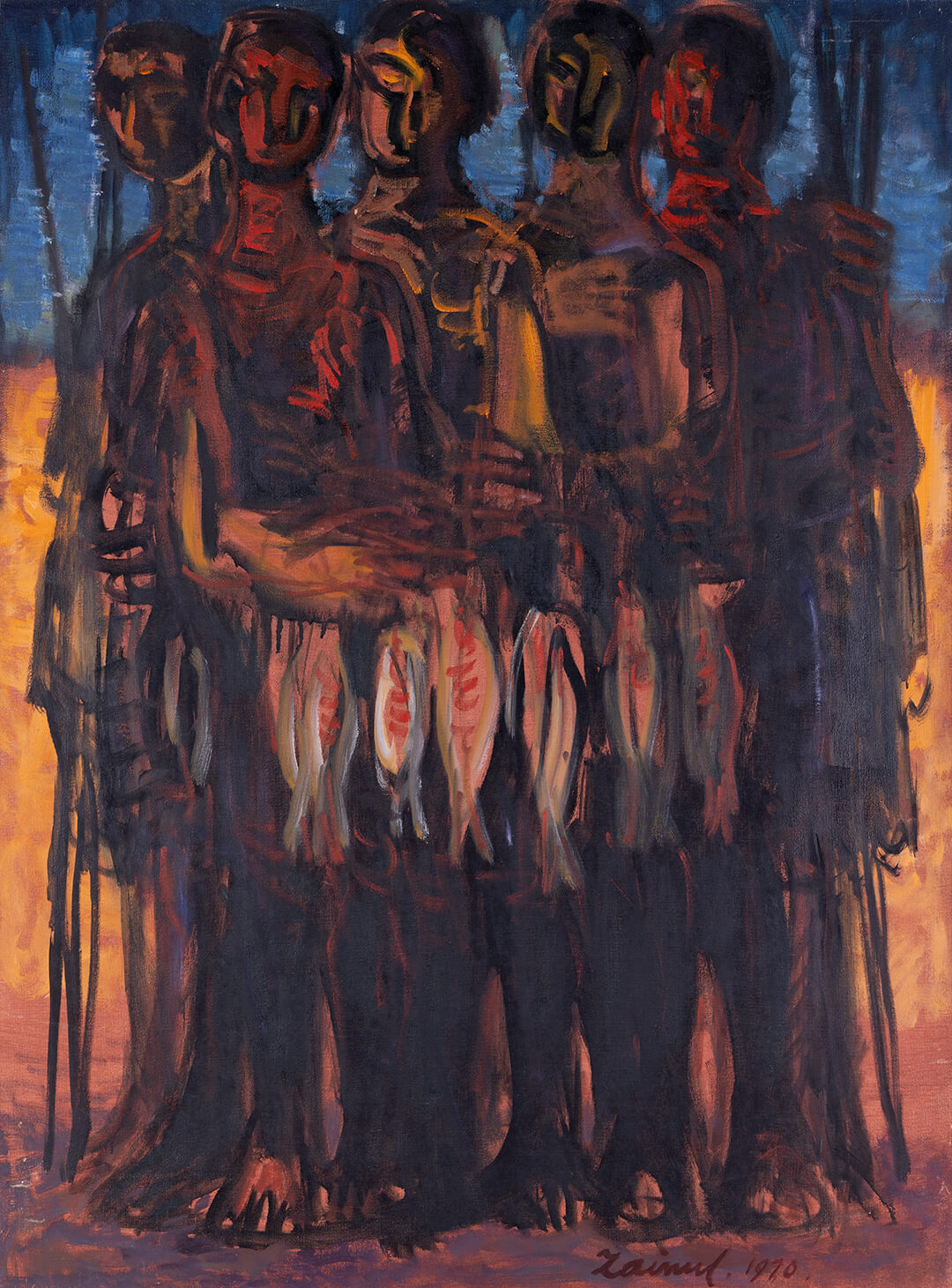
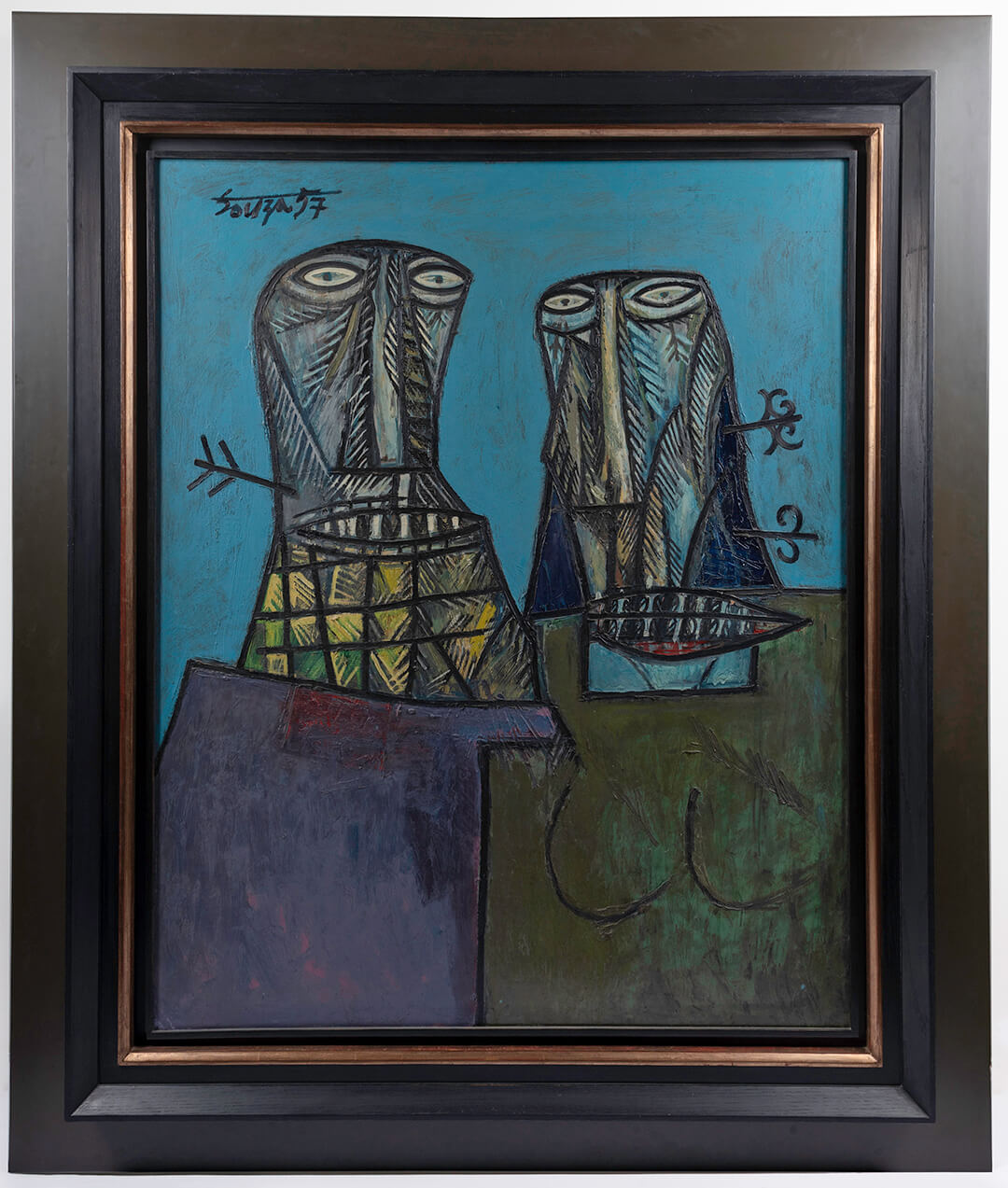
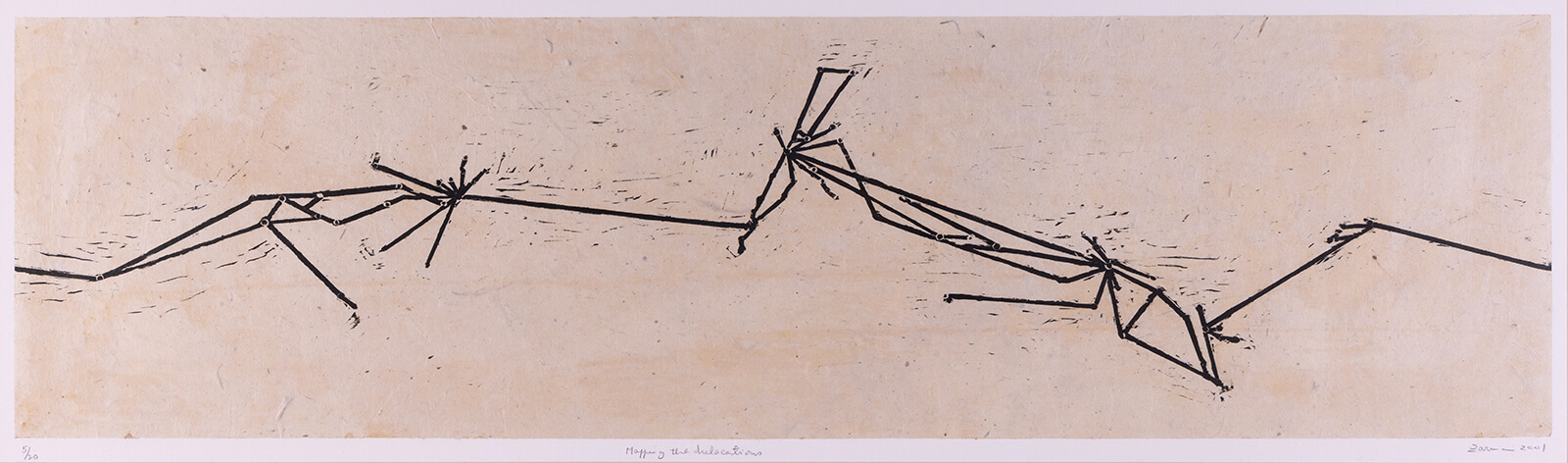
The exhibition concludes with Unfinished Homelands, a meditation on exile, migration and belonging, curated by Premjish Achari, Senior Curator, KNMA. Centred on Zainul Abedin’s canvas Fishermen, painted a year before the formation of Bangladesh, it captures a dramatic landscape that emphasises collective labour. In the painting titled Red Road, FN Souza paints his homestate Goa, and Zarina Hashmi's woodcut Mapping the Dislocations reflects her longstanding engagement with migration following the Partition. The complexity of the India-Pakistan relationship is also evidenced in Bani Abidi’s trilogy of short videos Mangoes, Anthems and The News. Made in the years when Abidi was a student at the School of the Art Institute in Chicago and immediately after, these use satire, referencing songs, films and news to emphasise the deep cultural similarities and national divisions. Together, the selection of artworks in the section speak of the complexities of home and homeland at a time like the present, where its connotations, meanings and references are in a state of constant flux as is the notion of belonging. "We were looking at the curatorial potential of crafting intergenerational dialogues that create atmospheres for richer conversations within the collection," adds Rastogi.
As art from South Asia is setting new records and attracting global attention with several museum surveys and extensive exhibitions, what sets this showcase apart is perhaps how it presents the region not as a fixed geography but a fluid cultural landscape that is constantly evolving and imbibing influences, being shaped by migration, collaboration, conflict and exchange, among others. Much like Ramanujam's small ink on paper, the meanings could be multiple.
The exhibition is on at KNMA, Christie's, King Street, London, from 16 July to 21 August.
by Anmol Ahuja Oct 15, 2026
How do heaps of souvenirs and relics with racist Aboriginal motifs and features become art? MCA Sydney’s winter showcase—the artist’s largest to date—beckons a possibility.
by Vandana Kalra Oct 14, 2026
With his latest exhibition as a point of departure, the modernist discusses his decades-long practice, the spontaneity of drawing and the social responsibility of artists.
by Srishti Ojha Oct 14, 2026
The first Dutch publication on the Turkish artist, the eponymous book centres on Refik Anadol: Latent City, his living data sculpture of Bruges, exhibited at BRUSK gallery.
by Srishti Ojha Oct 09, 2026
In his ongoing exhibition, the South African artist creates two post-apocalyptic futures to explore society’s relationship with textiles, patterns and technology.

make your fridays matter with a well-read weekend
Enter your details to sign in
Don’t have an account?
Sign upOr you can sign in with
a single account for all
STIR platforms
All your bookmarks will be available across all your devices.
Stay STIRred
Already have an account?
Sign inOr you can sign up with
Verification link sent to check your inbox or spam folder to complete sign up process
Tap on things that interests you.
Select the Conversation Category you would like to watch
Please enter your details and click submit.
Enter the 6-digit code sent at


KNMA's The Meeting Ground brings diverse art histories into conversation
by Vandana Kalra | Published on : Aug 17, 2026


 Sign in with Google
 Sign in with email
What do you think?