Art08 mins. read
India Art Fair 2026 and more in Delhi: The STIR list of must-see exhibitions
by Srishti OjhaFeb 04, 2026




by Srishti OjhaPublished on : Feb 10, 2026
The 2026 edition of the India Art Fair, along with booths featuring global exhibitors displaying works by renowned artists, also brought a series of special projects to the NSIC Exhibition Grounds in New Delhi.
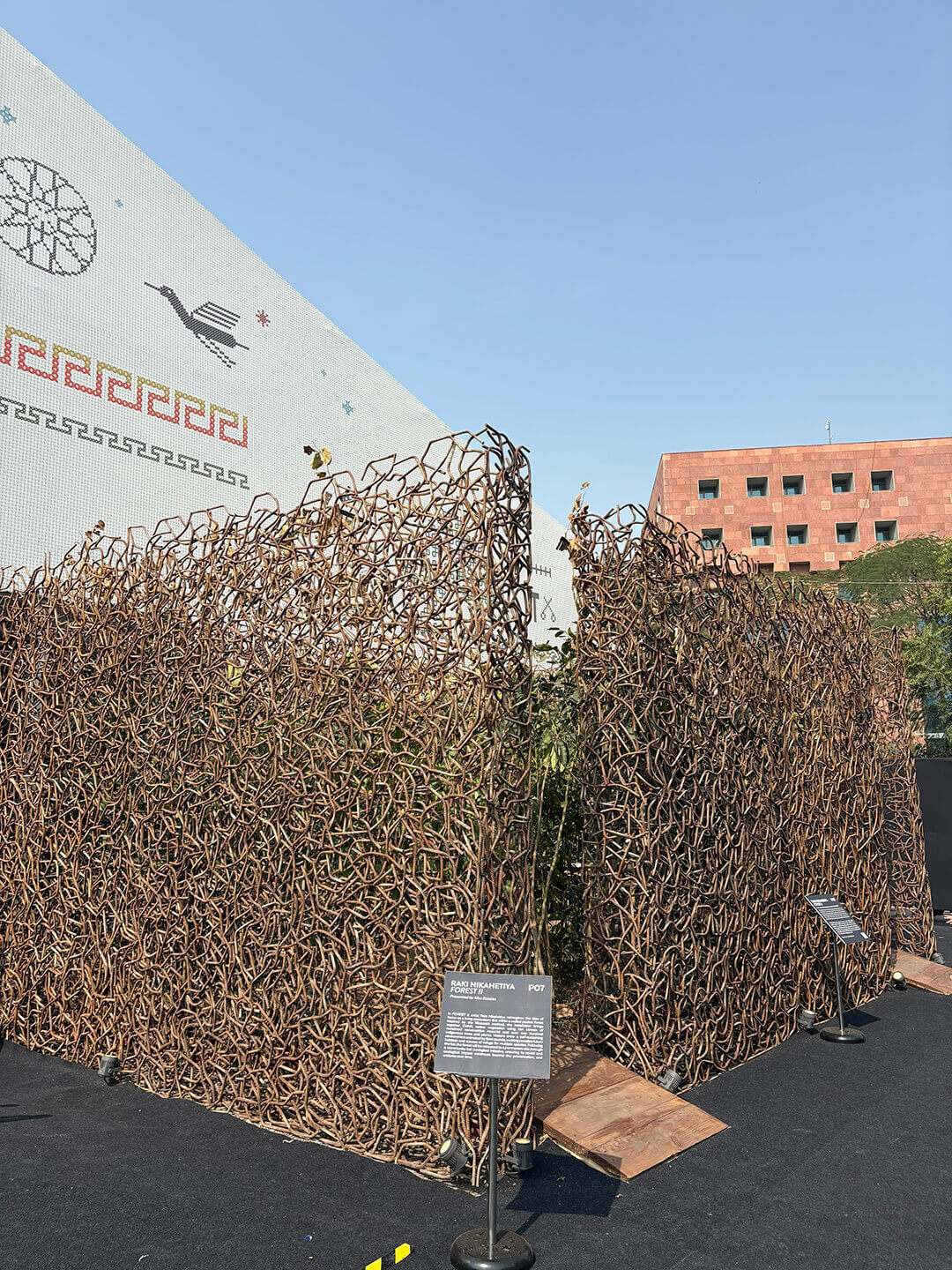
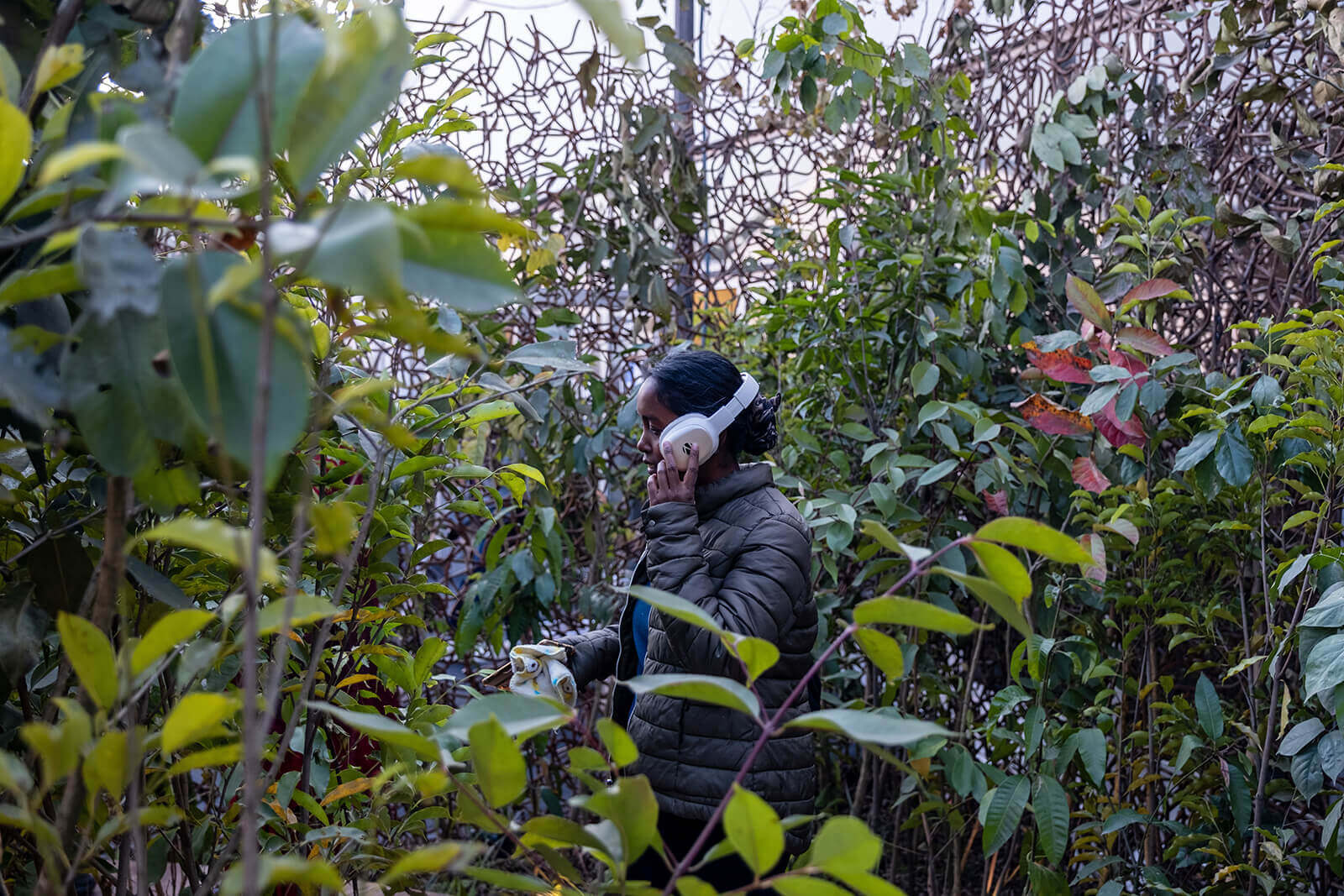
Raki Nikahetiya blurred the line between art installation and ecosystem with Forest II, a dense, compact habitat created using over 200 native plants and trees that are adapted to New Delhi’s urban environment. Based on Japanese botanist Akira Miyawaki’s ‘pocket forest’ model, the self-sustaining installation is expected to grow with time, providing shade, habitat for local fauna and anti-greenhouse effects like cooling and carbon-sequestering. Forest II was created in collaboration with Max Estates, who provided the reclaimed construction metal for the installation’s enclosing sculptural boundary.
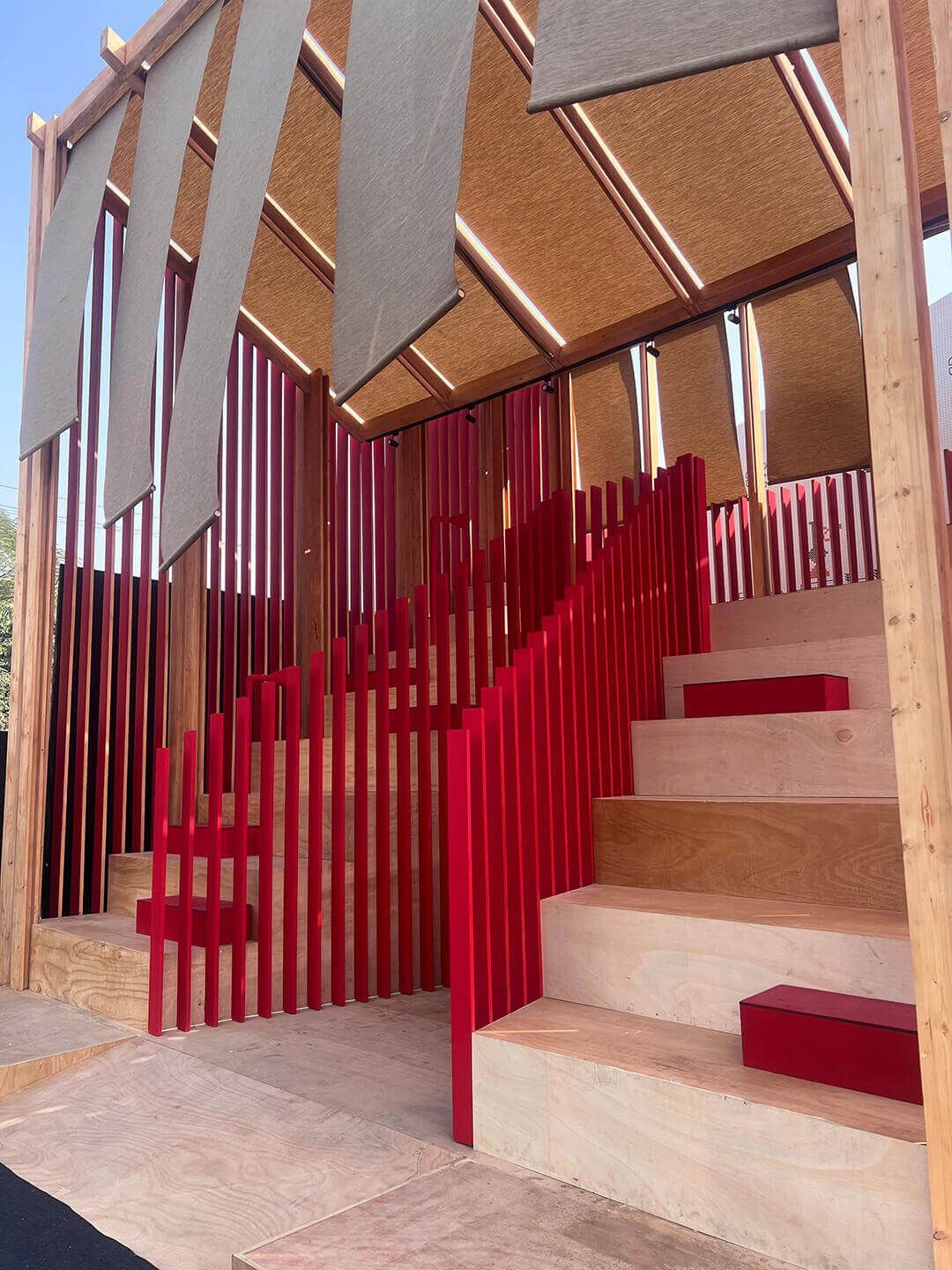
UHA’s Pentad Pavilion reimagined parliament and modes of communication and civic participation in an open, outdoor installation. Two interconnecting chambers featured different formats of congregation – circular, semicircular, horseshoe, opposing benches and a classroom. The adaptable space is designed to change with use and participation from the community. The project, part of the Jaquar Pavilion Park, came to the event following its debut at ADFF:STIR Mumbai 2026.
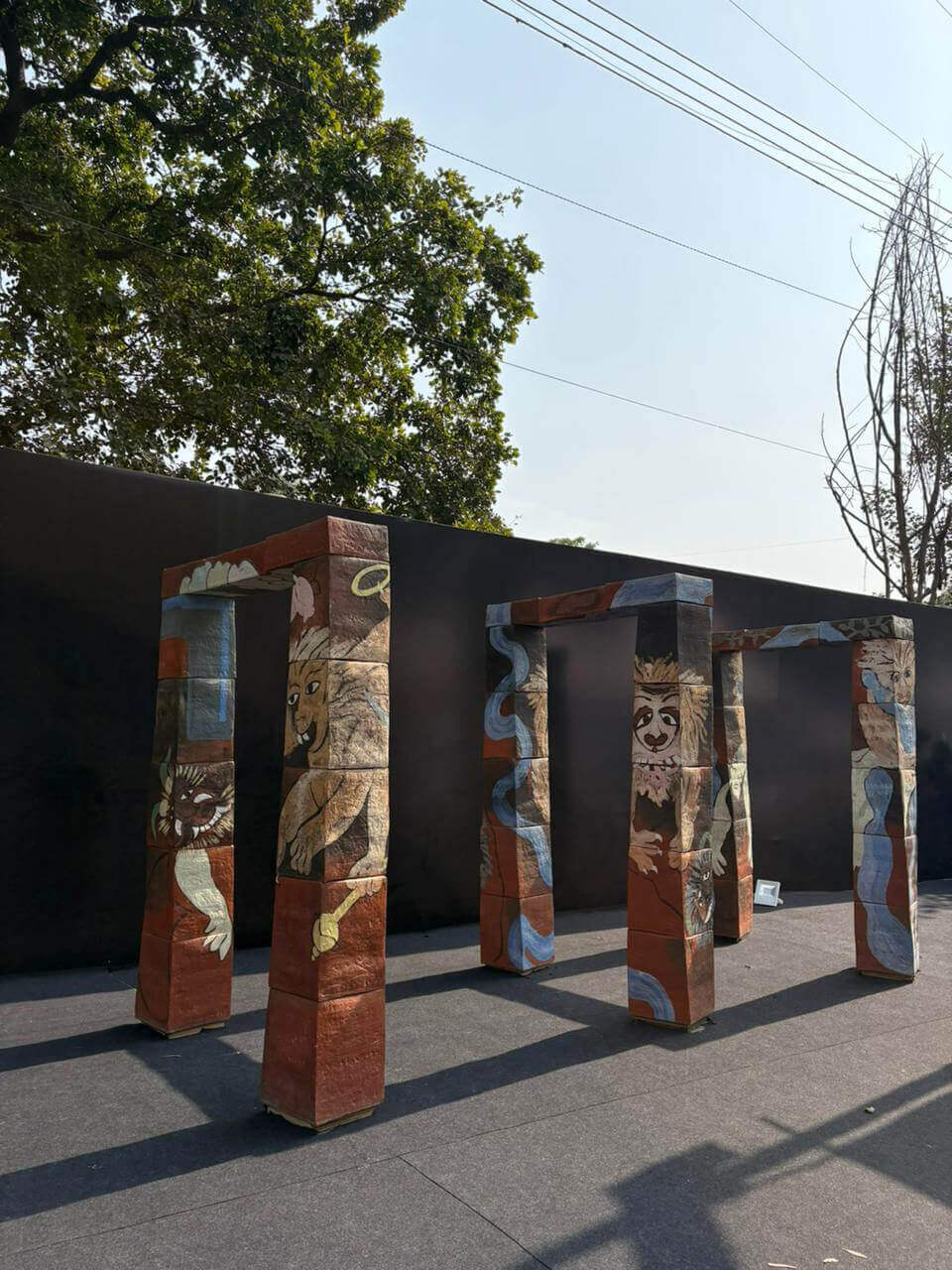
Multimedia artist Aarti Vir’s Shadow Crossing is a series of life-sized doorways that invite visitors to pause, reflect and take notice of unnoticed liminal spaces, transitions and changes that thresholds represent. The project was created with the support of the Indian Ceramics Triennale.
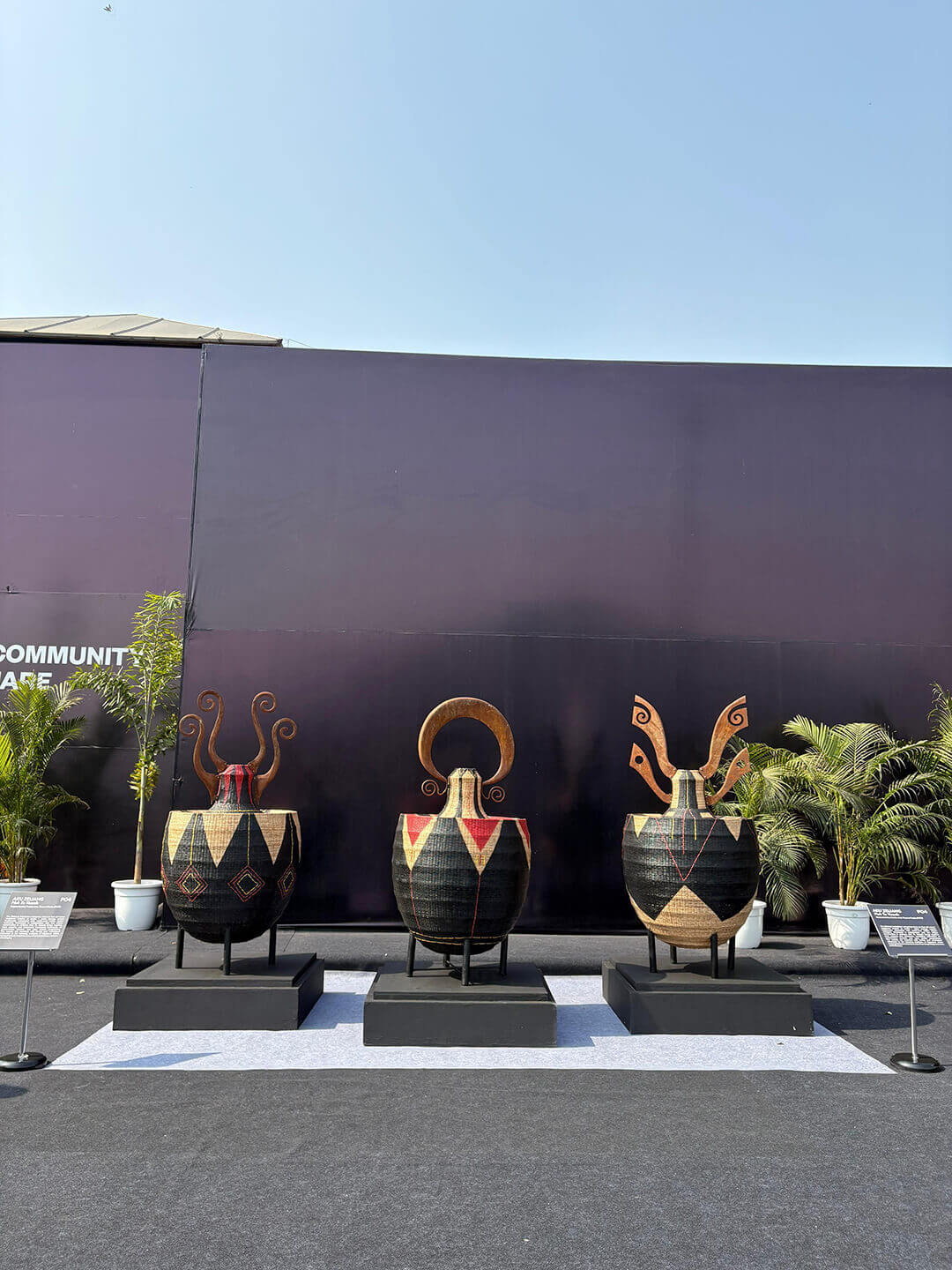
Emerging from Jodhpur Arts Week 2025, Huh Tu Vessels is a large-scale installation of three, six-foot-tall water storage vessels crafted with cane and metal. Aku Zeliang, an artist and designer from Nagaland, collaborated with artisan clusters from Jodhpur, Rajasthan, to create vessels modelled after traditional Rajasthani ‘surahi’ with patterns inspired by the tattoo traditions of Nagaland. The installation creates a dialogue between the two Indian art traditions and puts a contemporary spin on indigenous designs and materials.
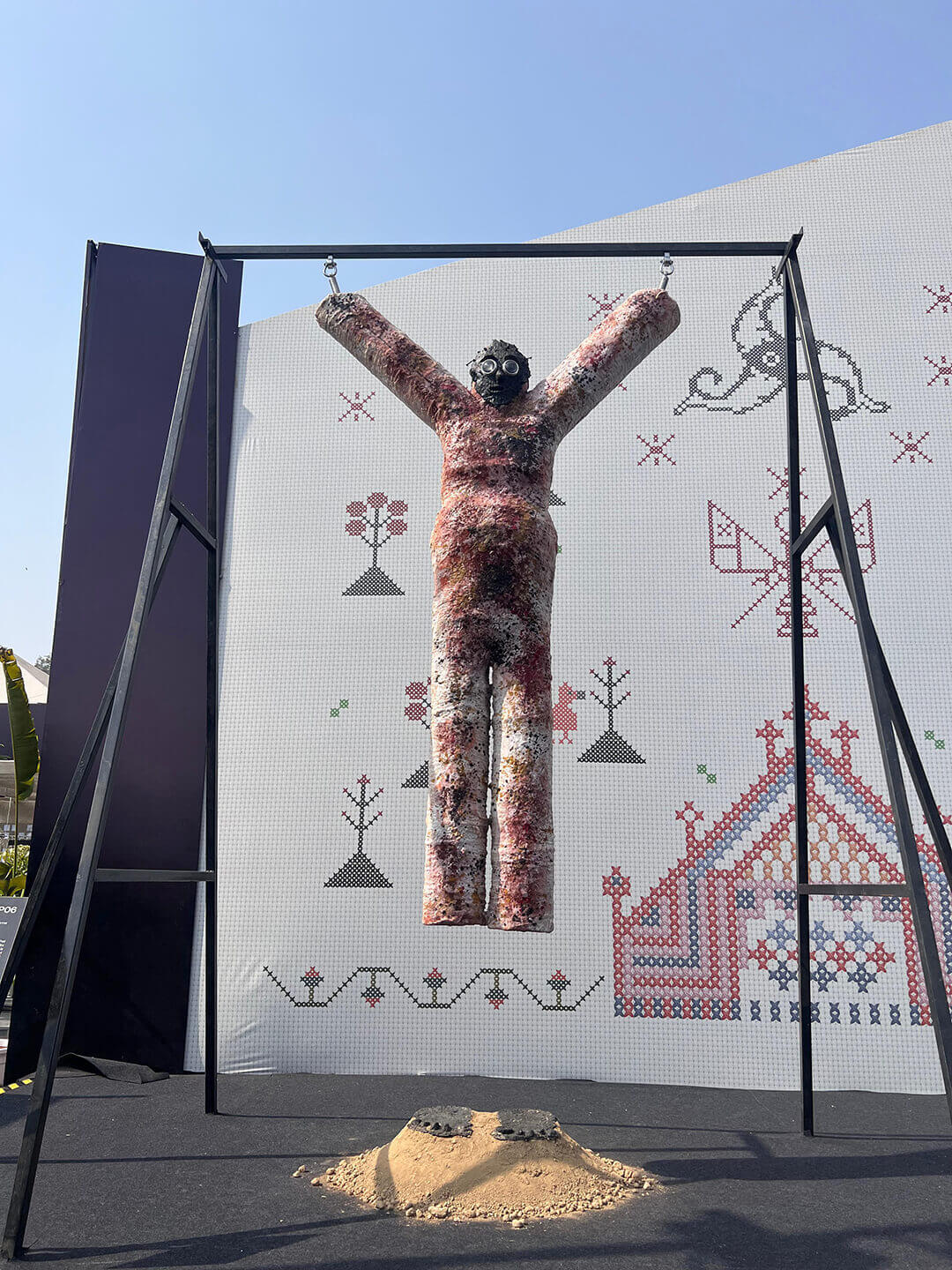
Interdisciplinary artist Arun B. presented Duration, a formidable 15-foot-tall sculpture of an acrobat frozen in time. A human figure created using metal, chicken wire and wax is suspended three feet above ground from a rod overhead, capturing tension, movement and process, heightening viewers’ awareness of the human body as it exists in time.
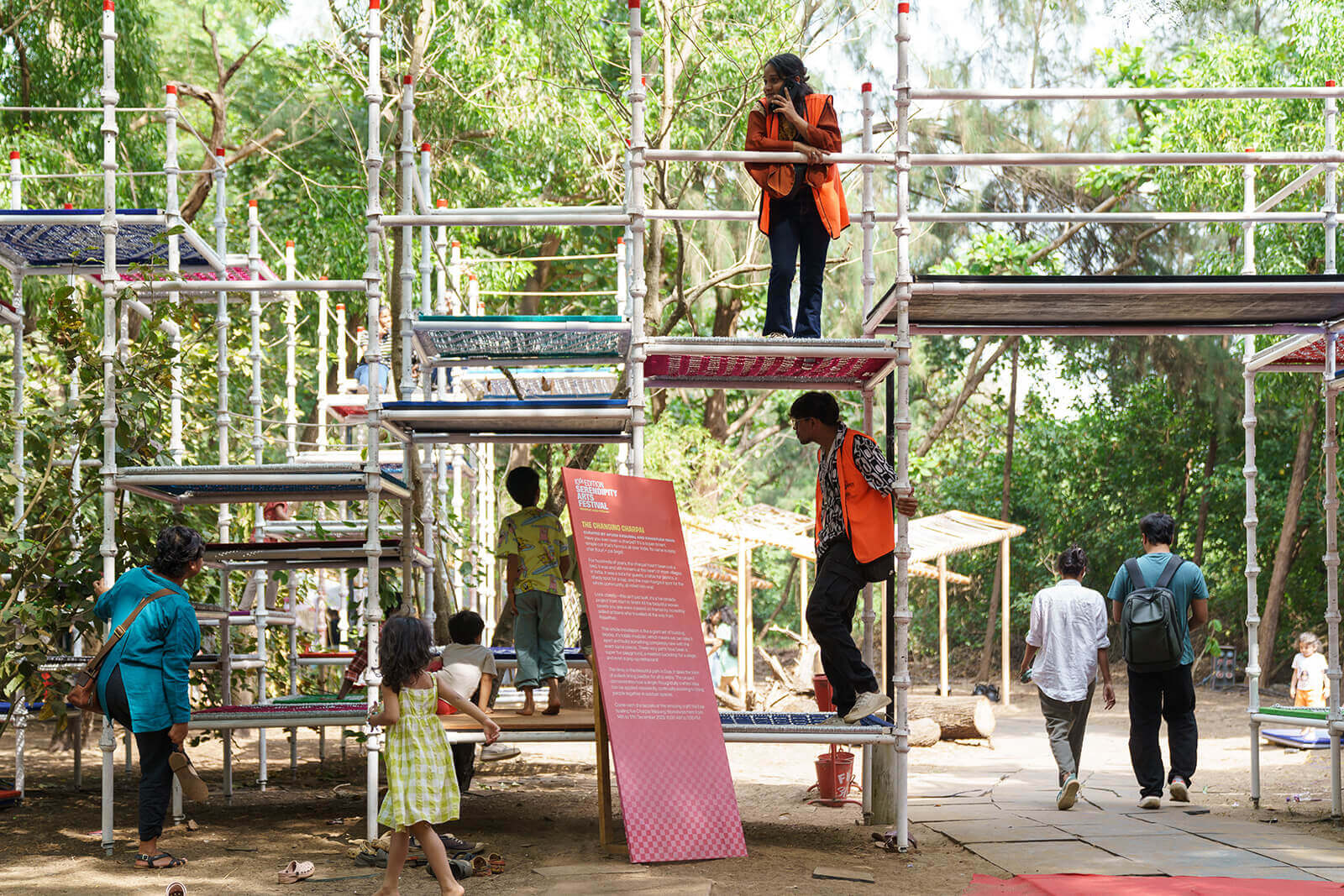
The Charpai Project is an interactive installation riffing on shared spaces and climate-resistant communities using stacked and layered charpais created using recycled materials. First conceptualised by Ayush Kasliwal for the Serendipity Arts Festival 2018 in Goa, the project found new life at IAF through collaboration with new media artist, Goji, who used AI to enmesh narrative into the work.
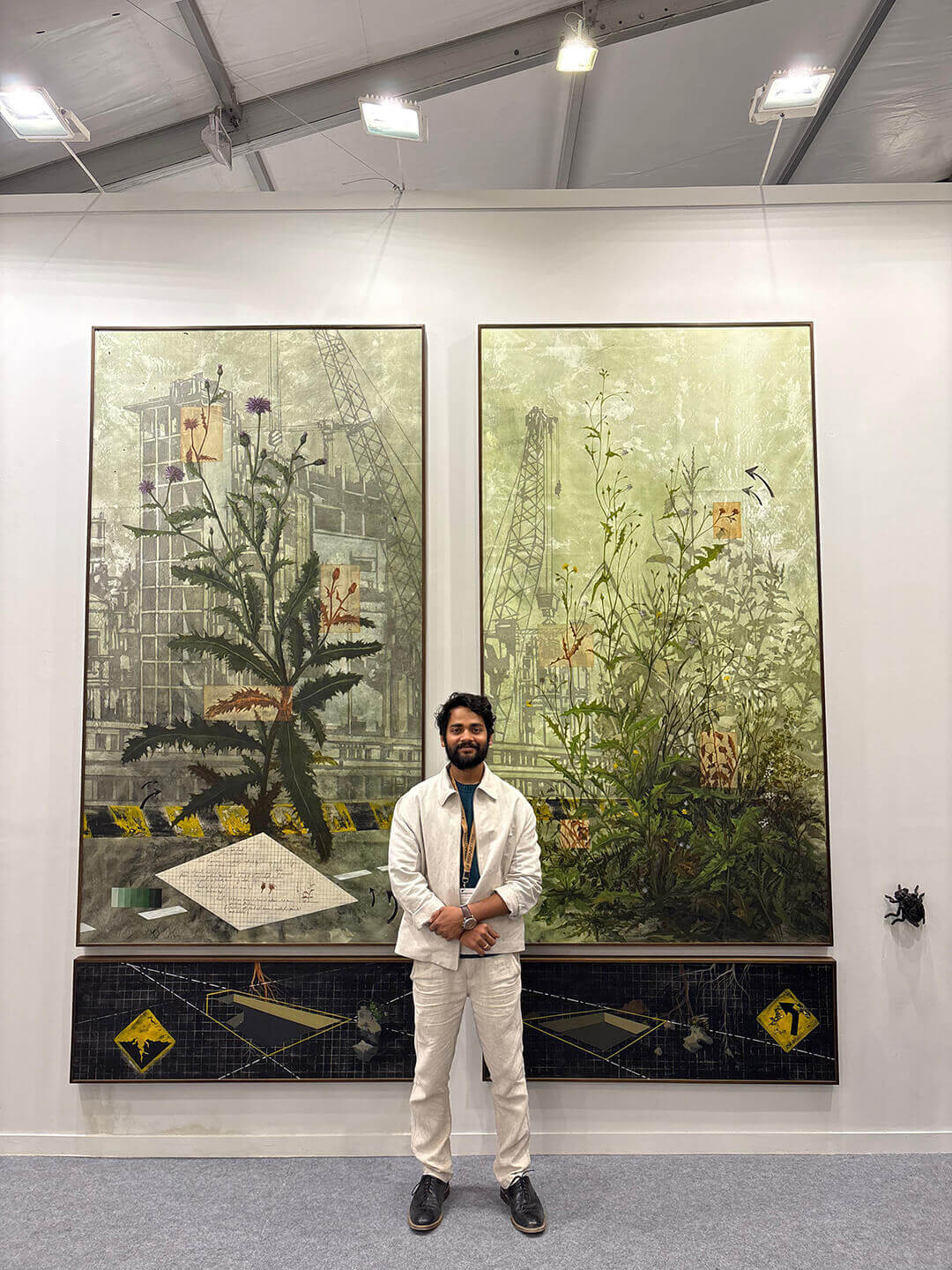
In Breathing Space, Deepak Kumar recasts abandoned construction sites as spaces reclaimed by nature. The structures in his paintings are foregrounded by weeds, spontaneous plant growth and the accumulation of life in the form of flora, insects, birds and regenerating soil. Kumar depicts how spaces humans think of as abandoned or neglected are often important ecological hotspots in urban environments.
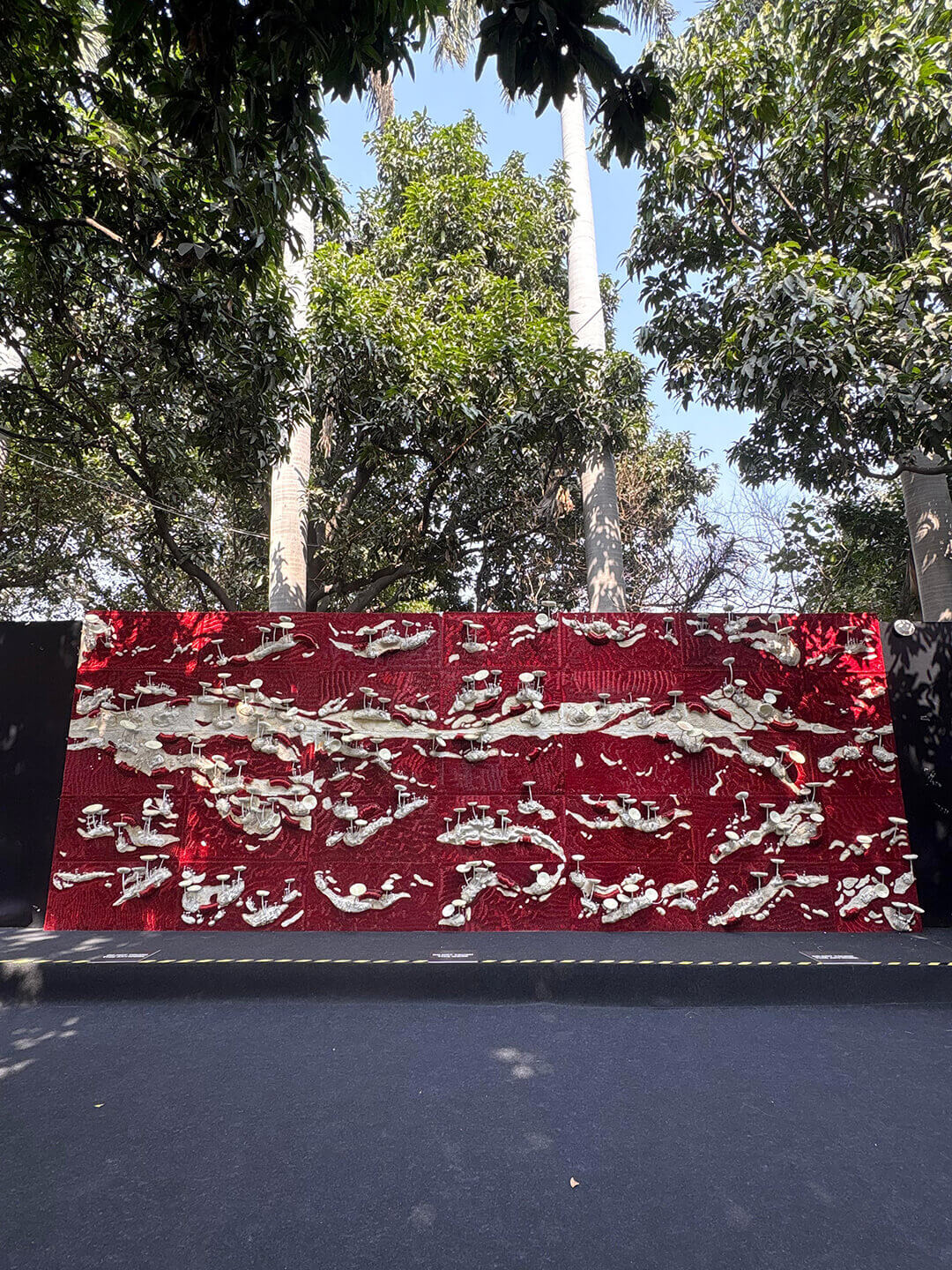
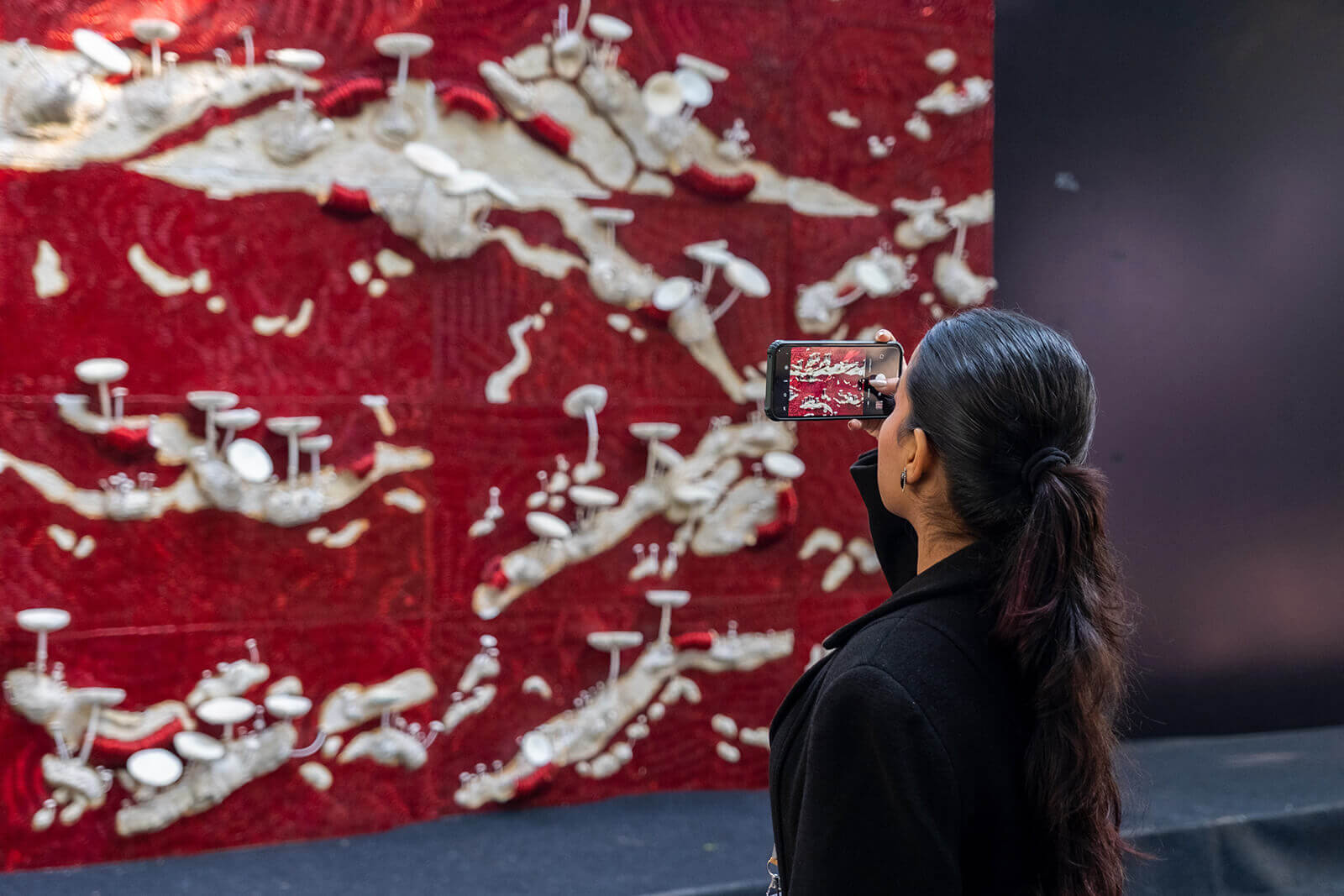
A massive wall of red, populated thickly with white mushroom clusters, at a closer look, reveals itself to be made of carefully layered broken glass bangles. Soft Armours, created by Dumiduni Illangasinghe as part of the IAF Artist-in-Residence Programme, reclaimed the inauspicious connotation of broken, especially red, bangles in South Asian culture by juxtaposing them with mushrooms, which symbolise resilience and quiet growth. In this work, vulnerability became a mode of regeneration and strength rather than a source of shame.
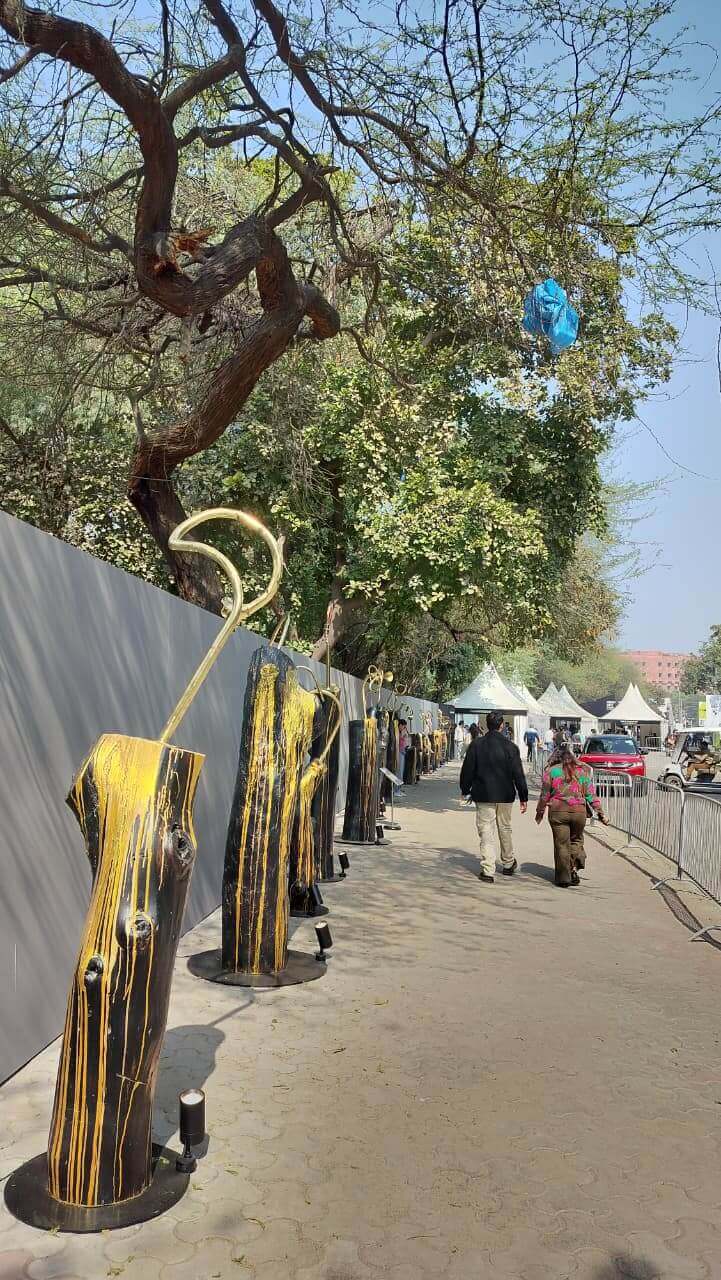
Black wooden stumps in a line dripping with gold, golden rods rising out of them in abstract shapes. Recycle of Life by Paresh Maity was inspired by Indian street hawkers who barter in metal, telling the story of environmental crises met with human ingenuity and the spirit of renewal. Maity’s sculptures gave new life to charred wood and recycled metal rods, becoming a metaphor for ecosystems of careful coexistence.
These projects and many more at India Art Fair 2026 reimagined local materials and techniques to create public installations that respond to issues like climate change and the loss of spaces that foster connection, community and biodiversity.
by Srishti Ojha Oct 21, 2026
Increasingly, artists, filmmakers and activists are turning to VR to create more personal, tangible accounts of the climate emergency and its impact on vulnerable communities.
by Mirra Lynn Oct 20, 2026
The Indian artist paints the old wadas of central Pune, capturing the traces of everyday life that cling to these structures, battered by time but unbowed.
by Anmol Ahuja Oct 15, 2026
How do heaps of souvenirs and relics with racist Aboriginal motifs and features become art? MCA Sydney’s winter showcase—the artist’s largest to date—beckons a possibility.
by Vandana Kalra Oct 14, 2026
With his latest exhibition as a point of departure, the modernist discusses his decades-long practice, the spontaneity of drawing and the social responsibility of artists.

make your fridays matter with a well-read weekend
Enter your details to sign in
Don’t have an account?
Sign upOr you can sign in with
a single account for all
STIR platforms
All your bookmarks will be available across all your devices.
Stay STIRred
Already have an account?
Sign inOr you can sign up with
Verification link sent to check your inbox or spam folder to complete sign up process
Tap on things that interests you.
Select the Conversation Category you would like to watch
Please enter your details and click submit.
Enter the 6-digit code sent at


Renewal, care and community in the outdoor projects at India Art Fair 2026
by Srishti Ojha | Published on : Feb 10, 2026


 Sign in with Google
 Sign in with email
What do you think?