Art10 mins. read
Lubaina Himid’s British Pavilion on creating home against the odds
by Srishti OjhaJun 16, 2026



by Srishti OjhaPublished on : May 15, 2026
What does it mean for a nation to acknowledge that its cultural foundations were built through erasure as much as creation? How do we look at images of survival without turning them into consumable narratives of resilience? And perhaps most unsettlingly, what responsibilities do viewers carry when confronted with histories that are still actively shaping the present? The Brazilian Pavilion at the 61st Venice Biennale does not answer these questions. It leaves them suspended, like threads still being woven.
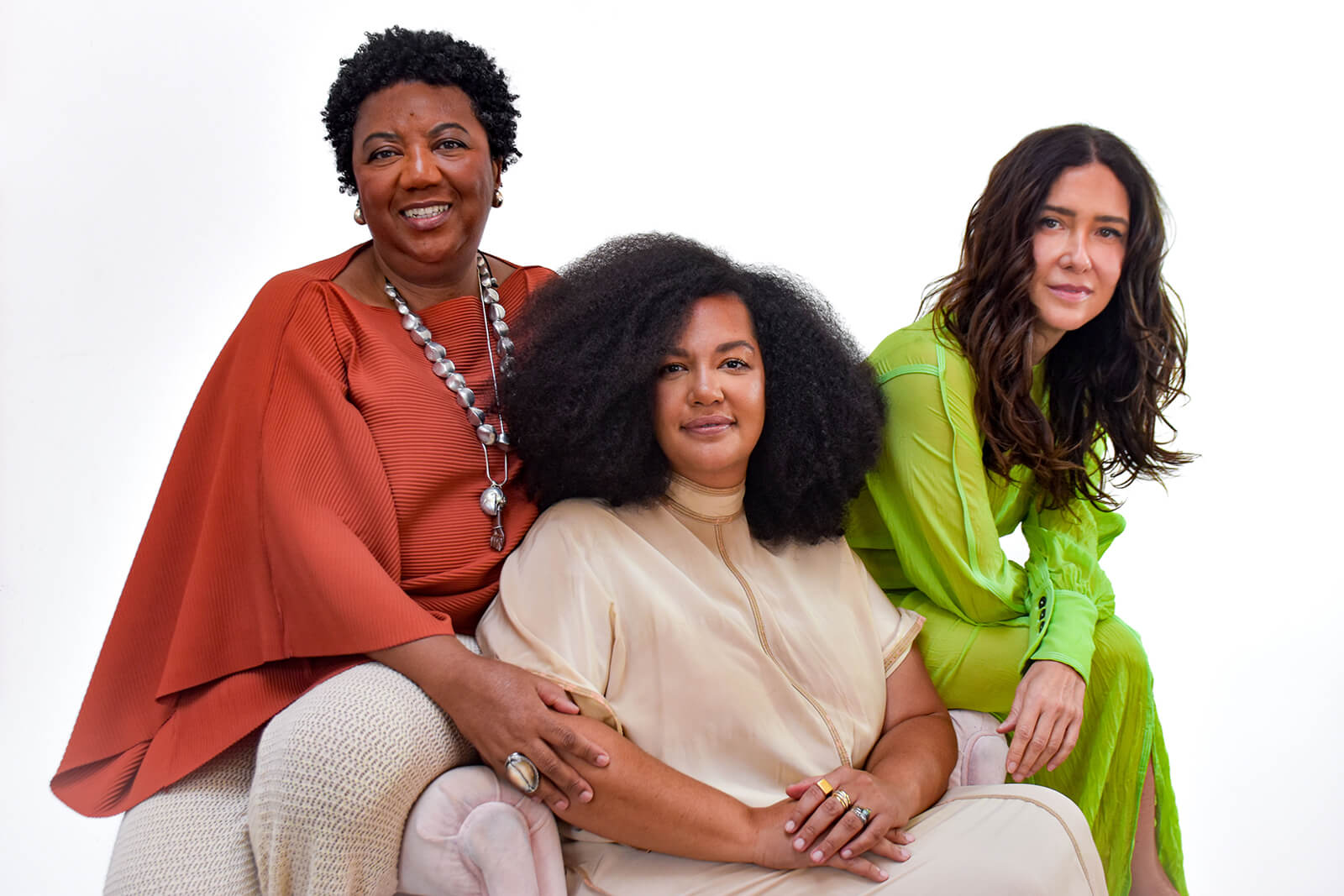
“Black women are really the seeds, the veins, the columns and the structure of Brazilian society,” were the parting words that Diane Lima, the curator of the Pavilion, left me with at the end of our conversation discussing the exhibition. It is a fitting place to begin understanding this edition of the Pavilion, which marks many historical firsts—Brazil’s first time hosting a Black curator and a Black artist, as well as one of the first times showing two artists—Rosana Paulino and Adriana Varejão—in a united exhibition which extends out of the building and into the gardens around. The exhibition, Comigo ninguém pode, is aware of these firsts and not afraid to push the boundaries of representation for Black and Indigenous Brazilian art and ideas even further. The exhibition is named after a Brazilian Portuguese poisonous, protective native plant with great spiritual significance. Lima gives me her translation of the name, saying, “[It means] ‘Don’t touch me. Don’t mess with me. There is nobody that can handle me.’[...]It is a really strong statement from a Pavilion that has three women. There is a strong feminist approach.”
The Pavilion is filled to the brim with the works of the two contemporary artists, combining Paulino’s more figurative, fabulatory works with Varejão’s often abstract, material approach. “I wanted to see which artists could expand and challenge our history and could bring to Venice Brazil’s historical approach to race and address questions of justice in the present. Of course, when we talk about the rewriting of history, colonial history, relations with trauma, scientific racism, etc., it's unavoidable to go to the names of Paulino and Varejão,” said Lima.
“We have this strong history of colonisation, which means that all the time Brazil sees itself as this underdeveloped, minor nation that always has to pay tribute to Europe or the United States. If you look at Brazilian artists or Brazilian art history, there’s always an attempt to be far away from Brazilian native communities or Black communities and be closer to the white heritage. So I think our presence in the Pavilion tries to expand and challenge the representation in the history of art in the Brazilian context,” Lima notes while explaining the Brazilian context.
Paulino is a Brazilian artist who works with drawing, painting, embroidery, collage, sculpture and a host of other mediums to explore memory, legacy and the history of racial violence and slavery in the country, with a focus on Black female psychology. In many of her works, Paulino locates nature as a site to examine the persecutory treatment and classification of Indigenous and Black communities at the hands of colonisers. Her Assentamento series of lithographs shows almost anatomical portraits of Black women, realism fading into watercolour at the edges, as bodies shift into flora and impersonal anatomy gives way to the individual. The visual column of the woman’s figure is the centre of the work and reflects their invaluable role in society. Paulino’s work gestures to the racial science of the time, used to dehumanise Black people and justify slavery, critiquing it by depicting a unity with nature that predates manmade classifications.
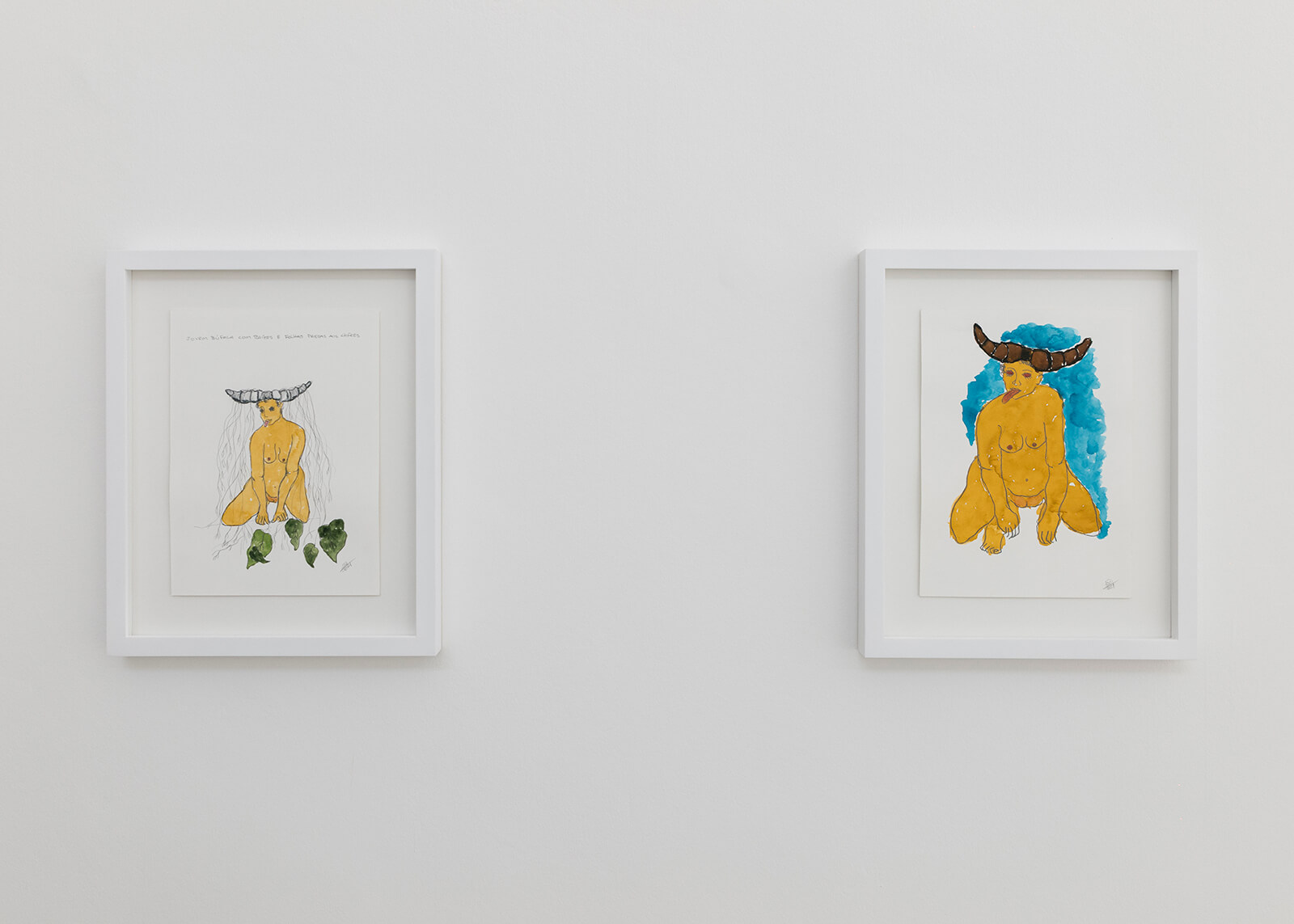
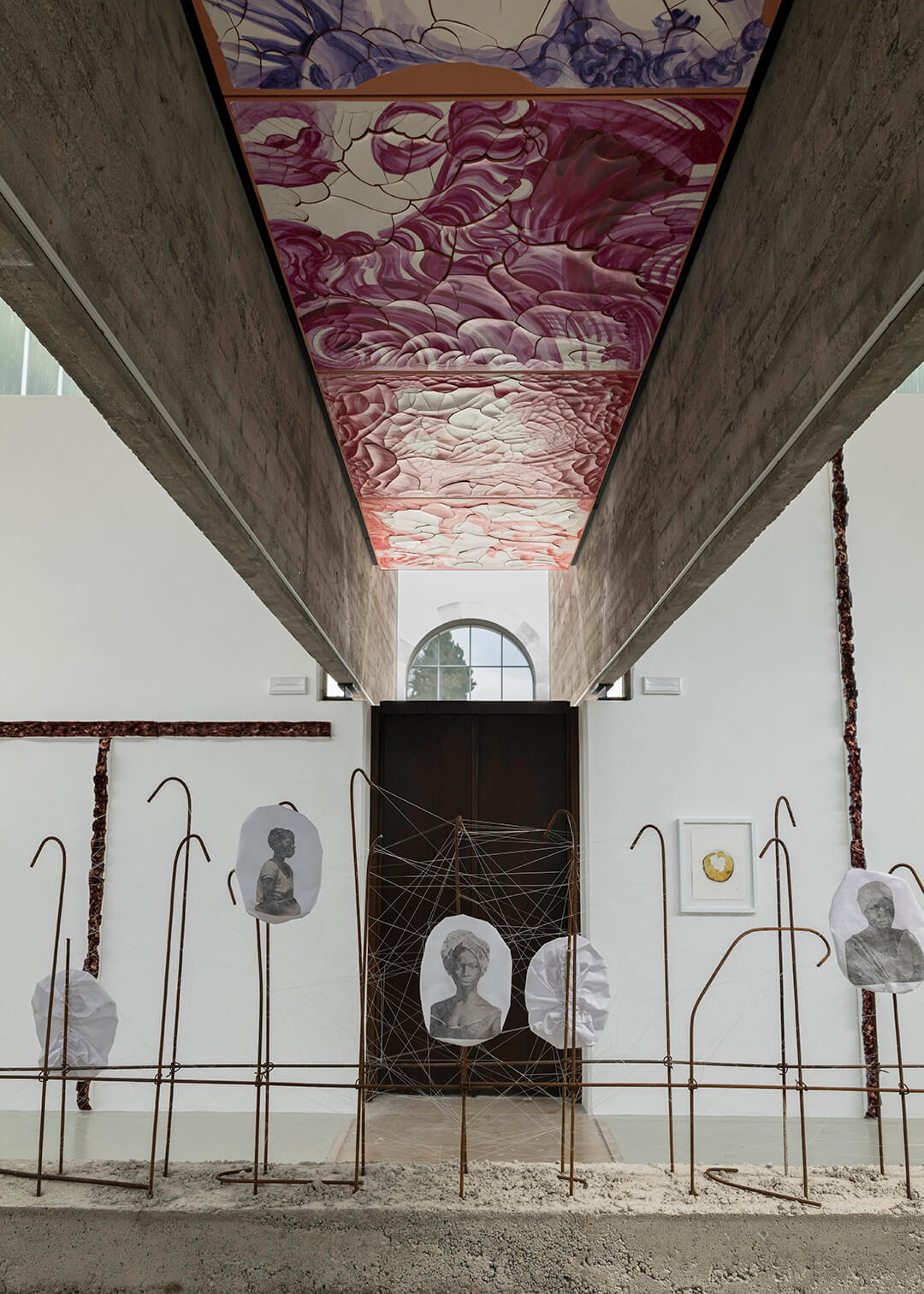
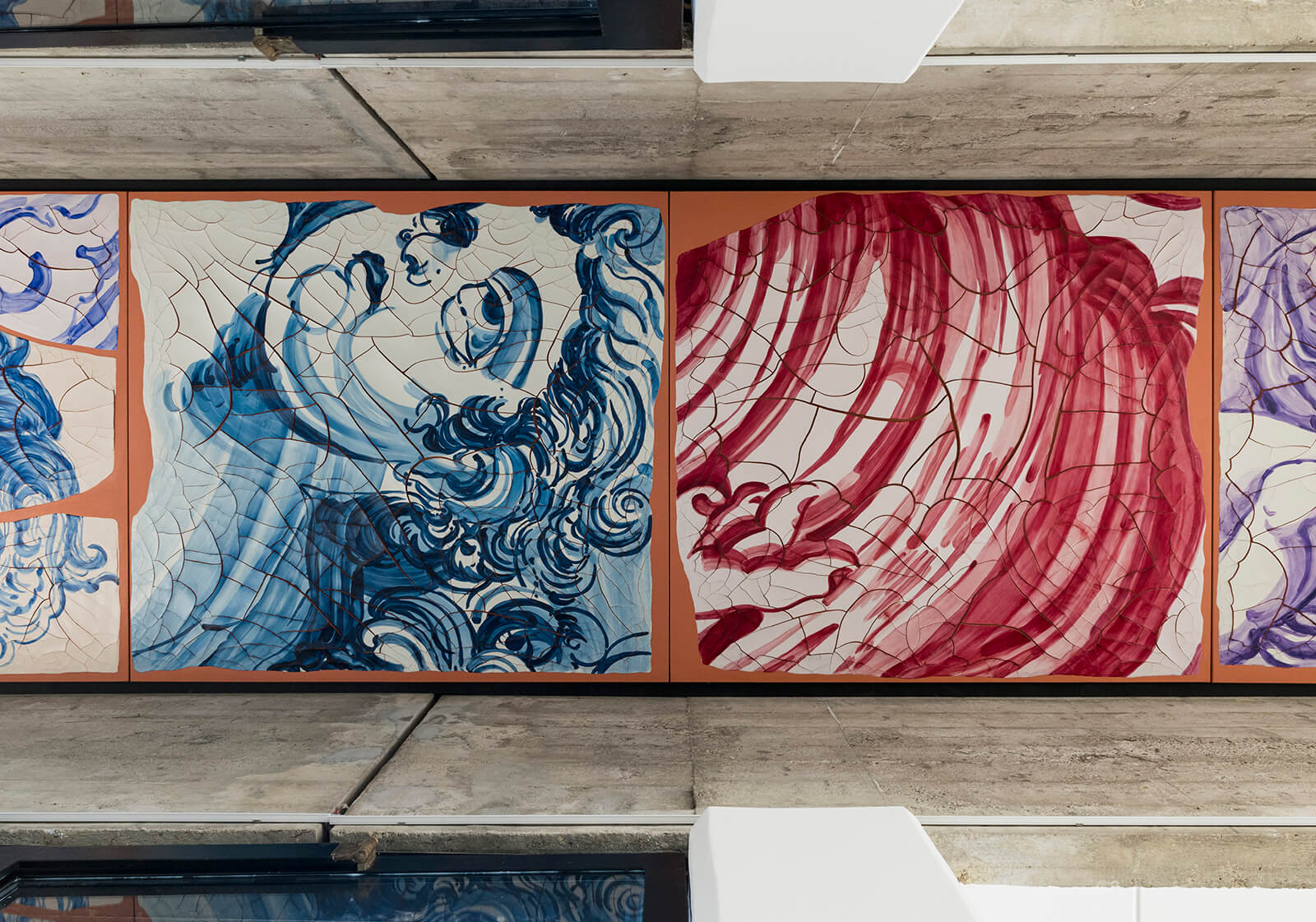
Lima explains the cultural significance of the titular plant while talking through resonances between her concept and Paulino’s ongoing series of paintings—Senhora das Plantas (Lady of Plants), which features women caught between goddess/human/plant, their limbs turning to branches and trunks, the flowers, tendrils and buds of Brazilian flora wrapping around their bodies and emerging from their faces—saying, “Comigo ninguém pode, the plant, has an ambiguity—it comes with the belief of protection and toxicity at the same time. It’s very common to see this as a kind of ward in gardens in front of houses, you can see them everywhere. Paulino has a series of works where a figure of a woman is becoming the plant. I thought, that’s exactly the energy I want. The energy that people try to bring through their doors and houses is what I wanted to bring to the Pavilion. It’s a very syncretic way to approach spirituality more than religion.” On the roof of the Pavilion, Varejão's work with azulejos—glazed terracotta tiles that are a form of folk art and are used widely in many South American and Southern European countries as decoration—depicts angels and images from Christian iconography in bright blue and red tile, the craquelure and historical style drawing attention to the history of the Catholic Church and its implication in colonial violence behind a popular faith in modern-day Brazil.
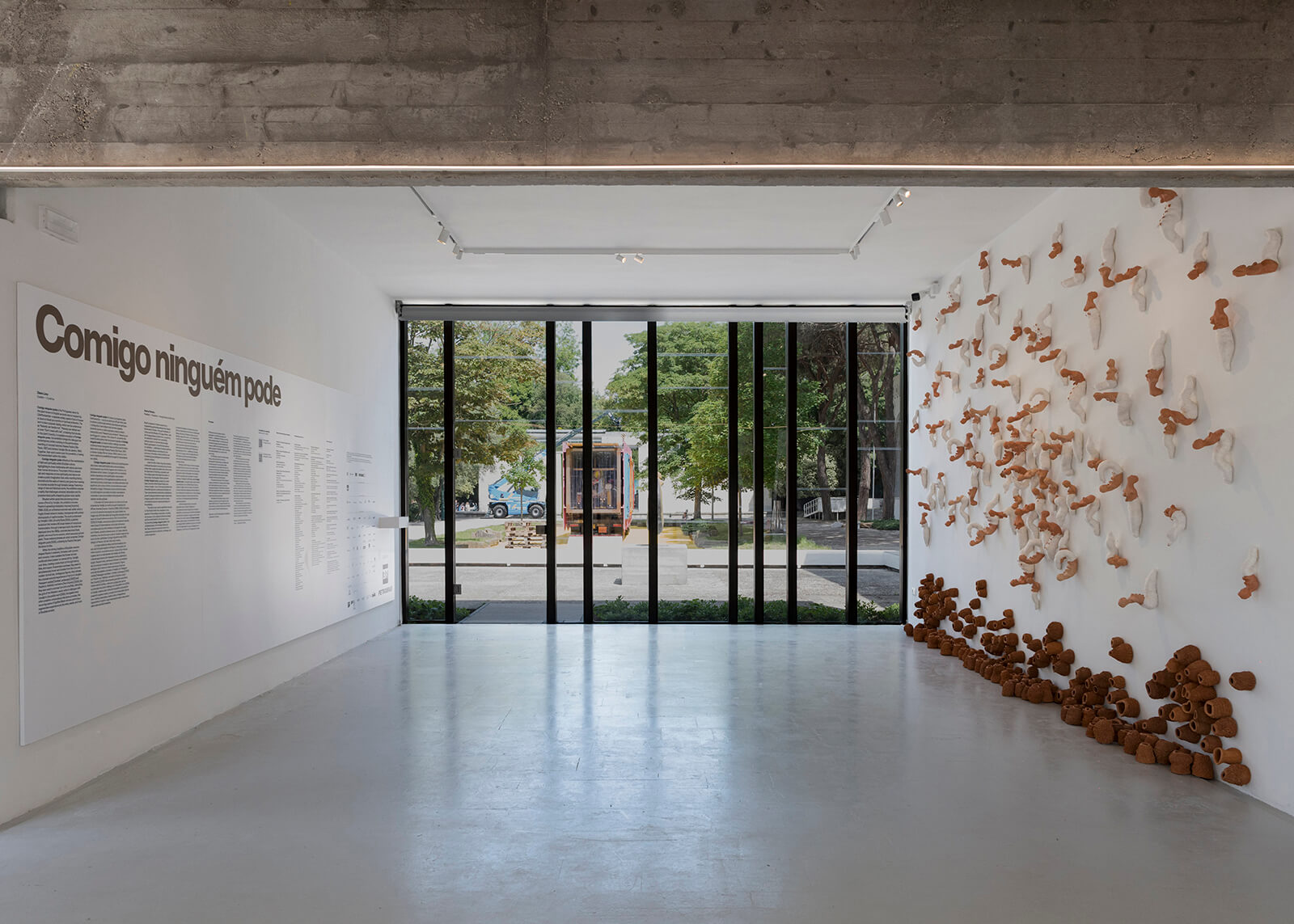
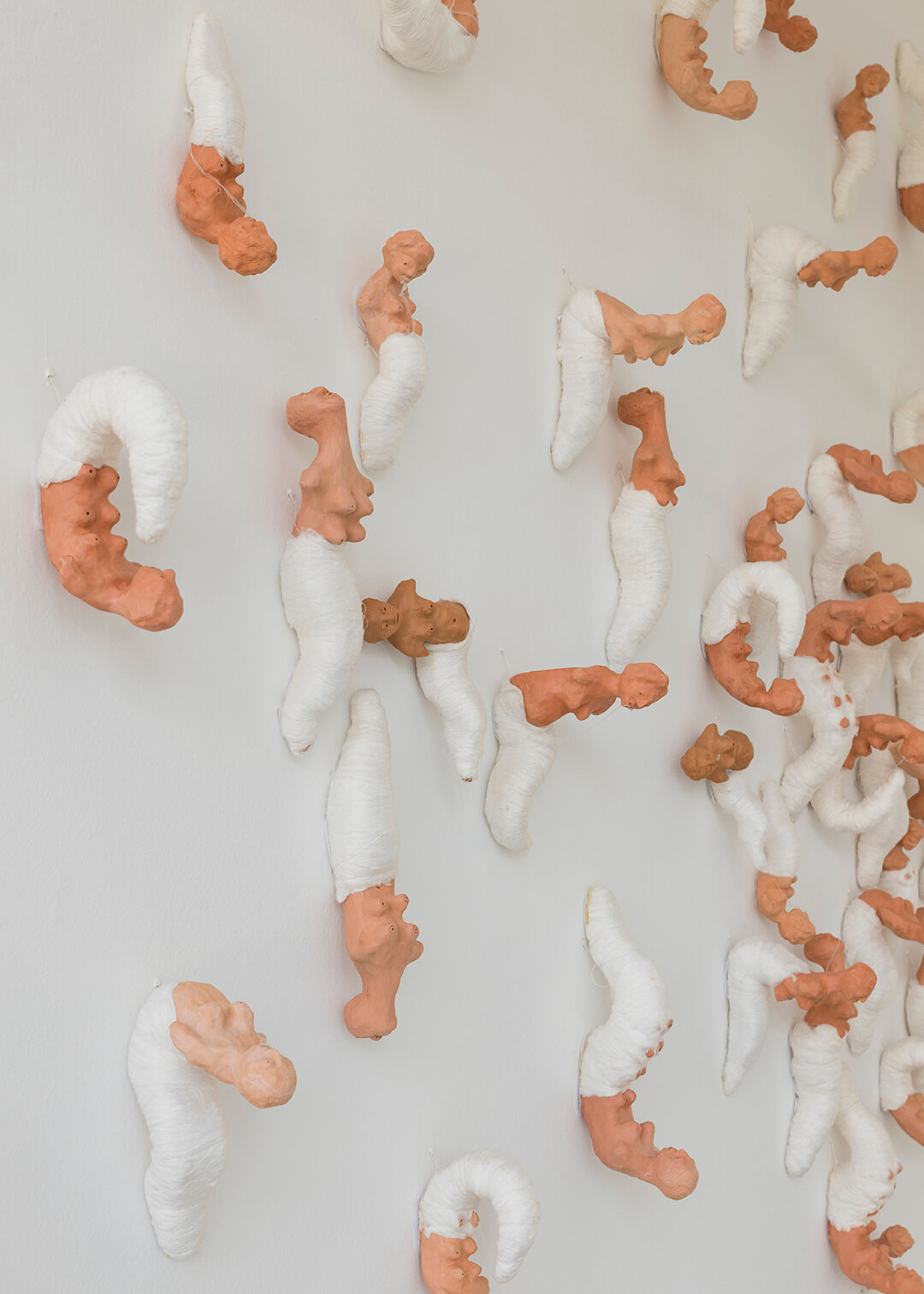
In a small, populous group emerging from one wall are sculptures depicting women with human upper halves and insect-like lower halves. These are the weavers of Paulino’s Tecelãs (2003) artwork, which depicts the survival strategies of Black women in Brazil, producing threads of safety, protection and change from within themselves to weave protective cocoons that shield and nurture community. This is also symbolic of the need for constant metamorphosis and adaptation necessitated by their circumstances. Transformation and hybridity are leitmotifs in Paulino’s fantastical visual worlds that reject anthropocentrism, where unity with nature is a source of empowerment and exaltation, especially for marginalised groups, rather than a tool for dehumanisation.
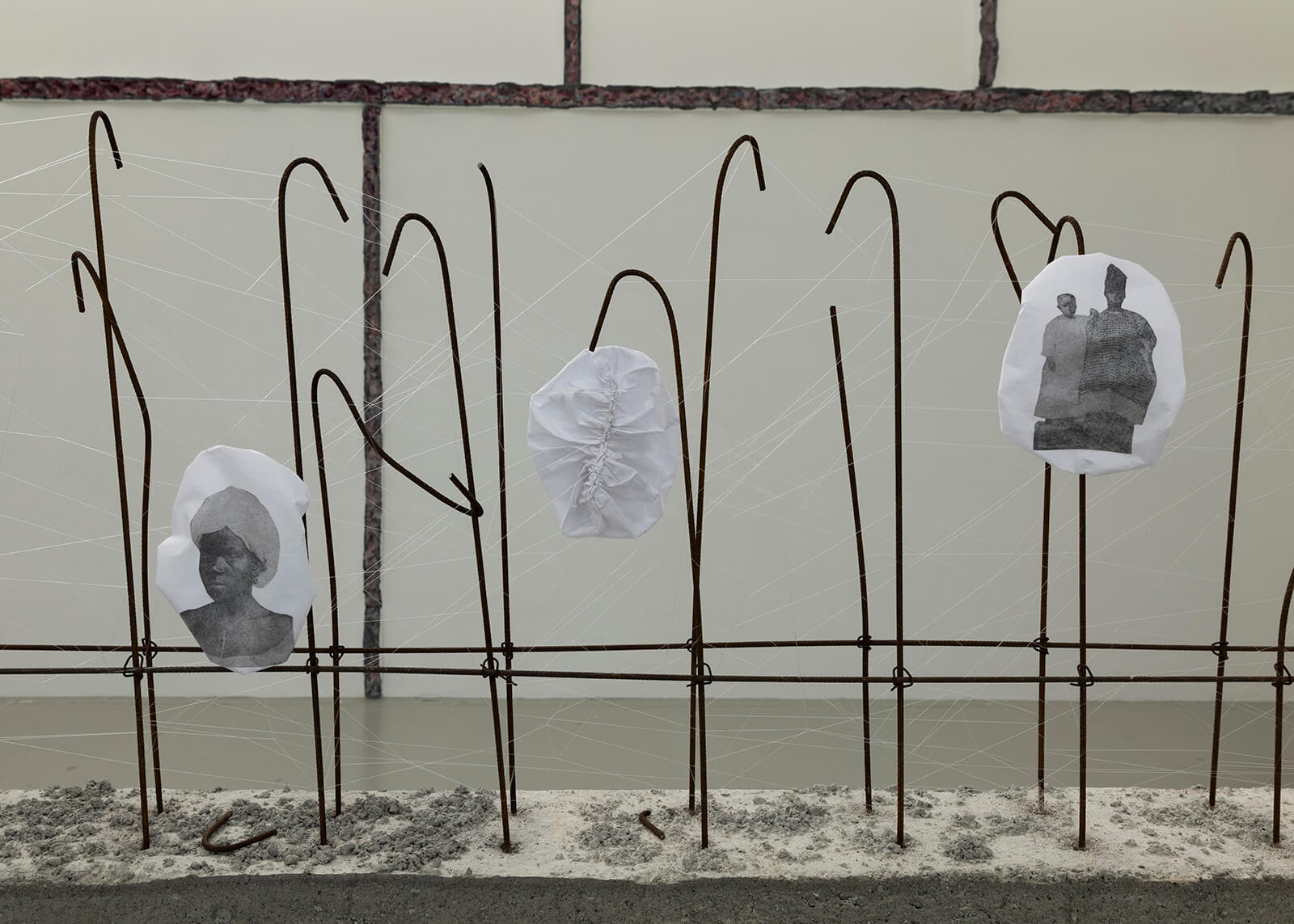
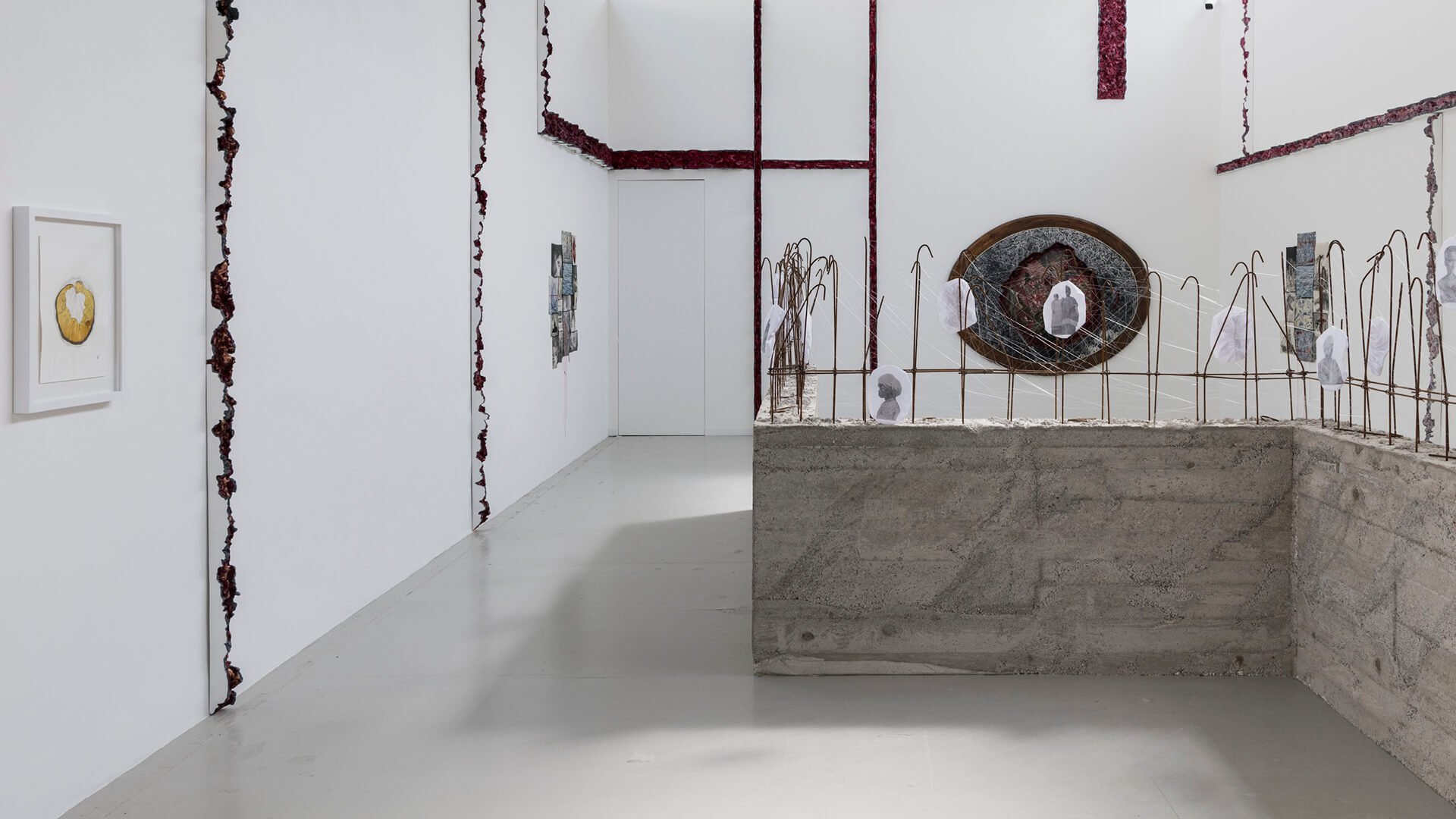
Weaving is also incorporated into another of Paulino’s pieces, Aracnes (1996 – 2026), a new commission for the Pavilion. Lima describes it, saying, “It’s a huge concrete wall that will be in the centre of the larger room. Iron comes out from the walls, and she threads the lines in that structure with the faces of formerly enslaved people.” The work acts as a folk history-keeper and storyteller for individuals whose lives and stories were erased by Eurocentric history and the economic engine of colonialism that funnelled wealth, natural resources, voice and personhood away from South America and Africa to Europe.
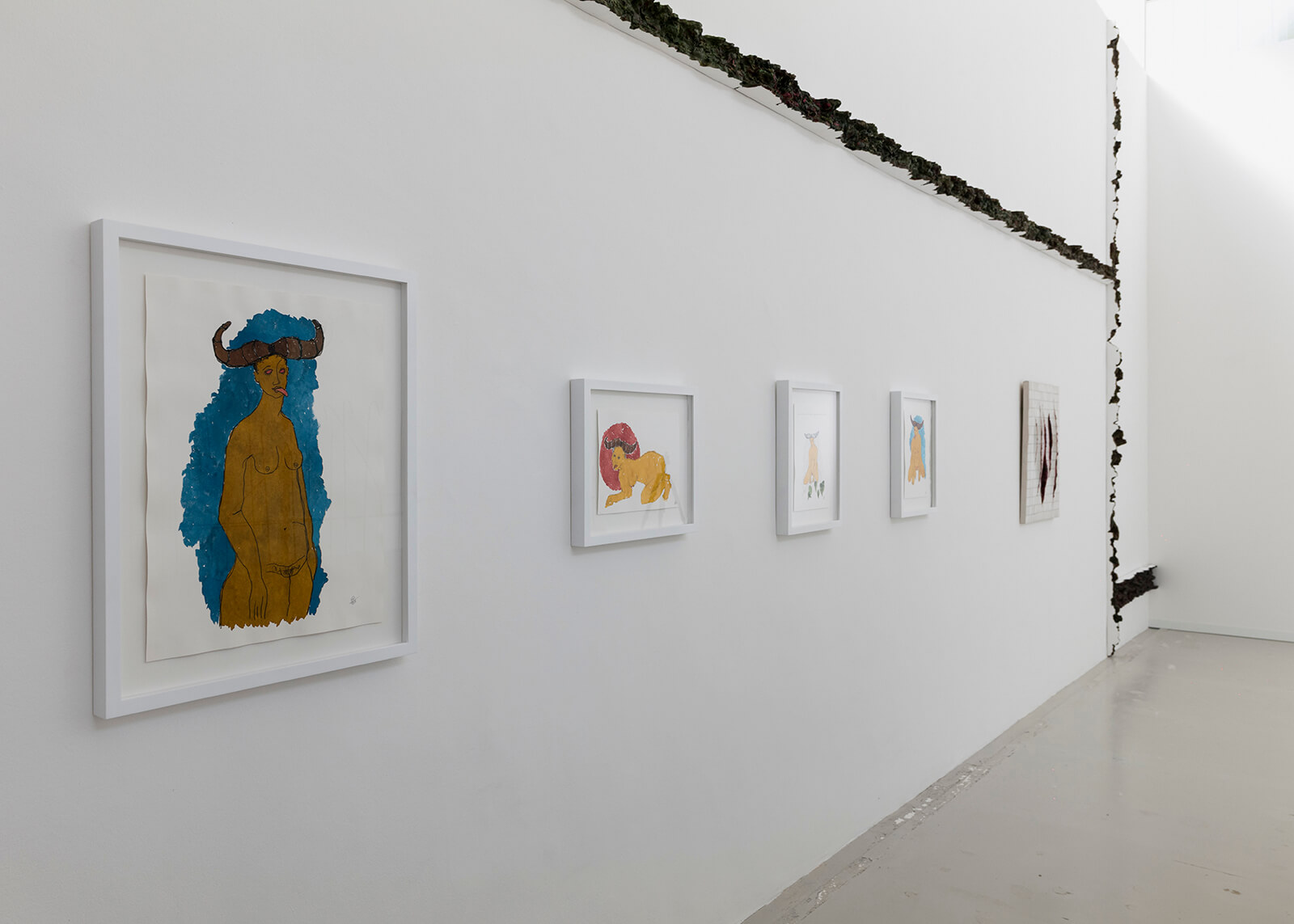
“Brazil, in my opinion, has a responsibility to ideas of justice and redistribution to the Afro-descended, Afro-Brazilian communities and the African diaspora. We were one of the most important racial laboratories in the world; we had a really intimate relationship with slavery, which is one of the most [serious] crimes against humanity. We have one of the largest Black populations in the world, and so we have a responsibility to really address these questions,” said Lima. This political grounding is reflected in Paulino’s oeuvre, particularly as it comes to the physical and symbolic violence faced by Black women. In her Bufala series, Paulino depicts non-white, non-Western depictions of femininity, drawing on the animal/human hybrids that are venerated, respected and feared figures in non-Christian mythology. The woman/buffalo hybrids celebrate and highlight the facets of Black femininity—sexuality, independence, strength, power—that find no place in the hegemonic coloniser culture.
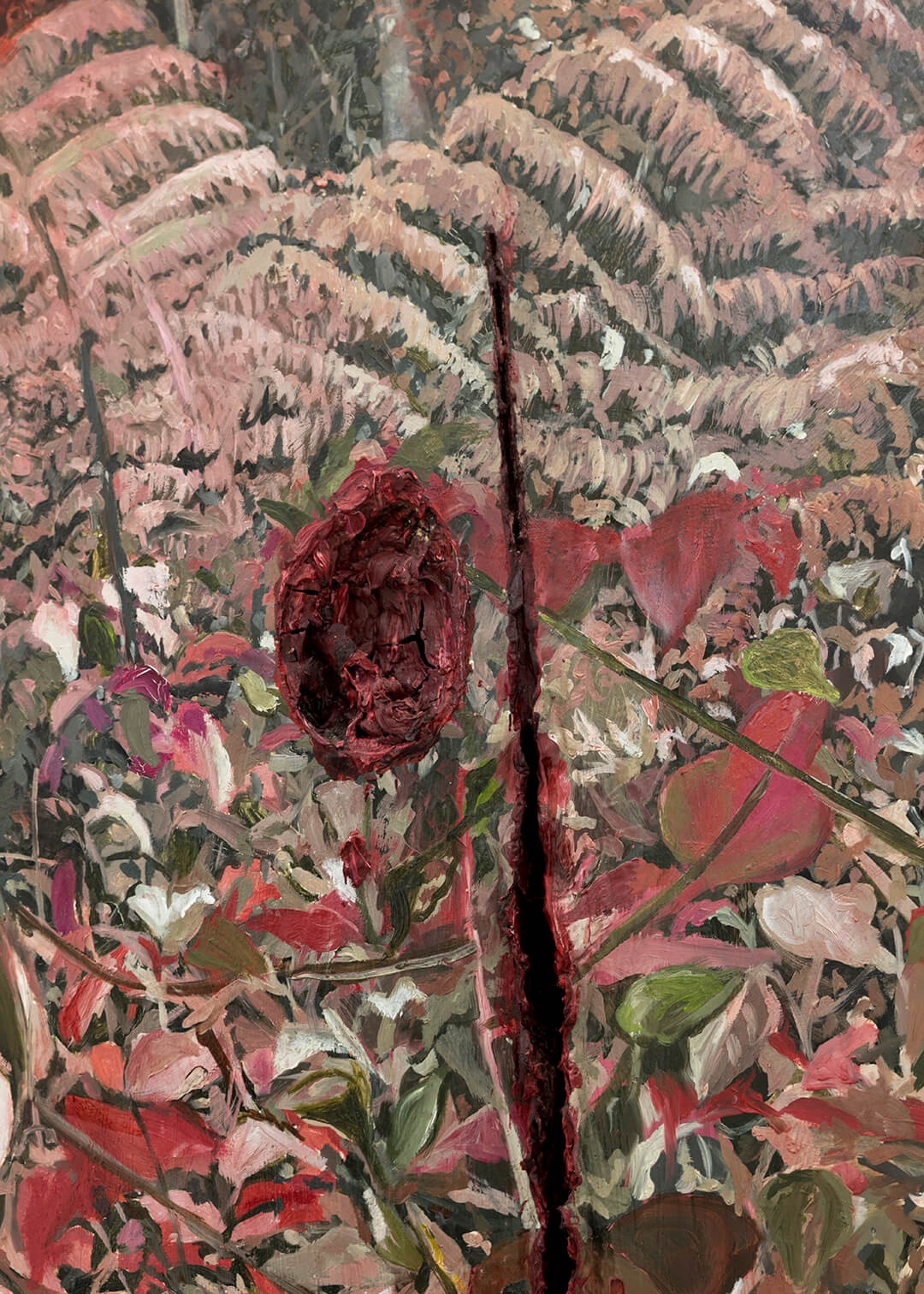
Varejão, a multimedia artist, has approached similar themes of protection and violence in her ever-transforming practice. Since the 1980s, she has drawn on the drama, contradictions and movements of Baroque art to express the vividness, violence and plurality of Brazilian culture and history. Works like Paisagem canibal (2003) reference and interact directly with Brazilian art history—the oval canvas shows a black-and-white forest, ringed with a large red wound, within which monochrome gives way to vivid red and green tones. Bloody tissue surrounds and encroaches on the ecosystem. The work and Varejão’s oeuvre embrace Antropofagia, a Brazilian art movement born in the 1920s, in response to colonial fears about ritual cannibalism practised by the Indigenous Brazilian Tupi people. Antropofagia advocated for the cannibalisation of European artistic forms and techniques by Brazilian artists to challenge Western cultural dominion. The painting performs the thesis of this movement, working with the classic Baroque oval canvas to show a jungle landscape, as parts of it are ‘consumed’ by colonialism and extractive capitalism.
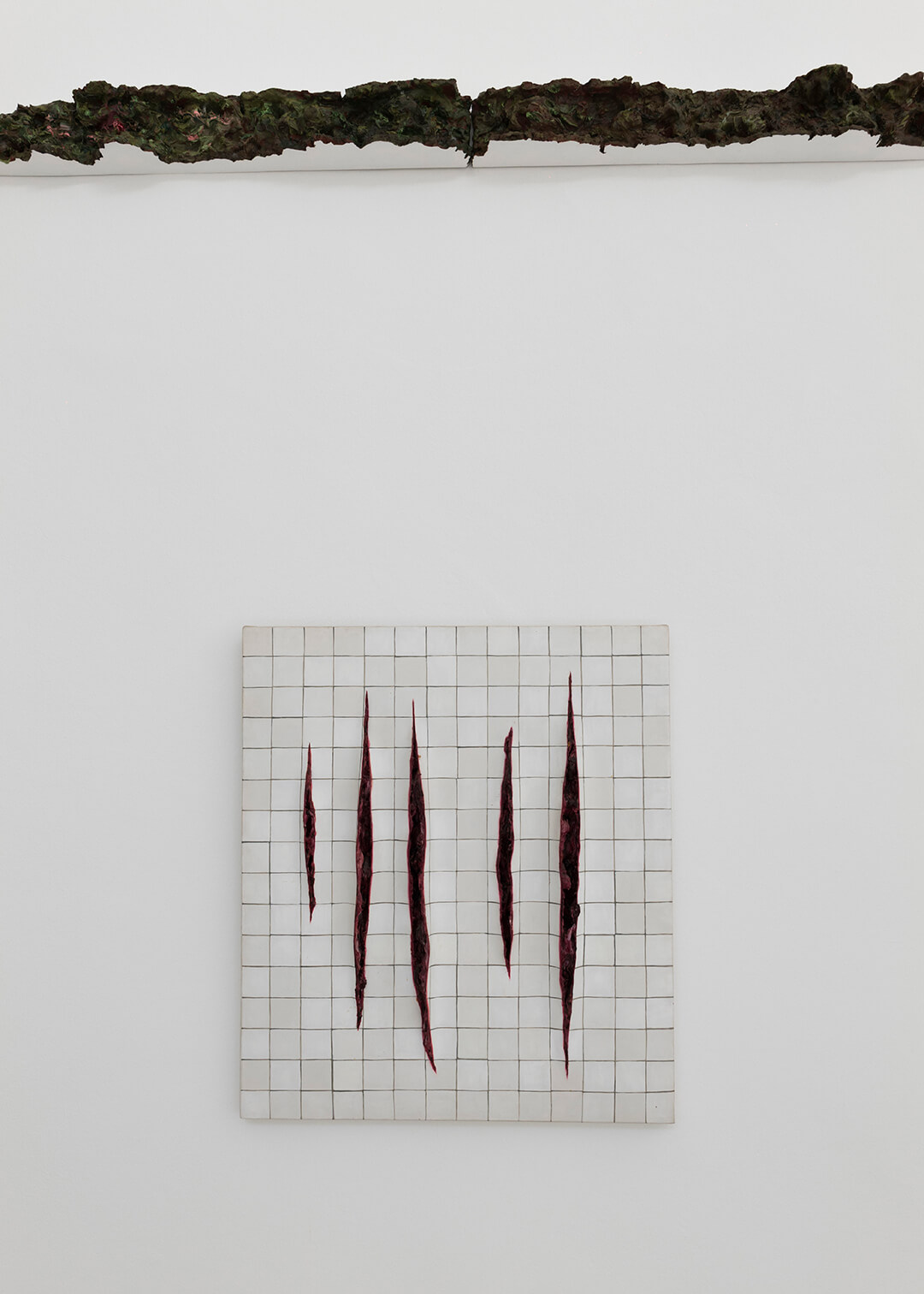
Much of Varejão’s abstract art draws on Brazilian architectural elements, such as azulejos. Varejão interrupts these architectural features with a series of violent gestures—they are marked with wounds that look like slashes and stabs that cut through the physical manifestation of Brazil’s diverse art forms, communities and the country’s cultural and economic exchange with Europe—revealing the underlying, violent human history, making it impossible to ignore. This spills out of the architecture of the Pavilion with Varejão’s interjections like the white columns whose edges give way to something dark and organic—perhaps rotting forest floor, perhaps meat? The ambiguity between human and nature, and the violence against both in Varejão’s artworks, provides another perspective into the political and spiritual world imagined by Paulino’s series of artworks about hybridity and transformation.
Lima says, “Before the last 10 years, there was a complete erasure of Black and Indigenous contributions to culture and art. So the way that we approached language was more straight, more functional. When we started to achieve results, the artists started to free themselves and move, through cognitive liberation, towards another movement that could be more imaginative, more fabulatory. We can see this clearly in Paulino’s work and in Varejão’s work, moving from her early works in the 80s to a completely abstract but very material practice.”
Comigo ninguém pode, as a whole, is a tribute to the folk history, marginalised communities and Indigenous art practices that are the backbone of Brazil’s sovereign culture. Through historical and contemporary works, Comigo ninguém pode highlights sophisticated thinking about and visual resistance to colonial, racial and gendered violence in Brazilian art. Lima showcases the women, particularly Black women, who have carved spaces for these narratives in the mainstream despite erasure and persecution. Paulino and Varejão’s works and the worlds they create acknowledge violence but move beyond it, depicting strength, survival, Indigenous mythology and the sustaining power of community. If the Pavilion insists on anything, it is that representation alone is not resolution. Which leaves the visitor with questions that do not settle easily:
The views and opinions expressed here are those of the author(s) and do not necessarily reflect the official position of STIR or its editors.
The 61st International Art Exhibition of La Biennale di Venezia, 'In Minor Keys’, curated by Koyo Kouoh, runs from May 09 – November 22, 2026, at the Giardini and the Arsenale venues, as well as various other locations around Venice. To read STIR’s exclusive coverage, conversations and highlights from the biennale, click here.
by Srishti Ojha Oct 27, 2026
The 13th edition of the Gyeonggi Ceramics Biennale in South Korea, Earth Makes, explores ceramics from around the world, spanning ancient traditions and contemporary experimentation.
by Srishti Ojha Oct 26, 2026
The Taiwan-based artist shares his opinion on exhibition rituals, protests and his search for ‘fragmented beauty’.
by Srishti Ojha Oct 21, 2026
Increasingly, artists, filmmakers and activists are turning to VR to create more personal, tangible accounts of the climate emergency and its impact on vulnerable communities.
by Mirra Lynn Oct 20, 2026
The Indian artist paints the old wadas of central Pune, capturing the traces of everyday life that cling to these structures, battered by time but unbowed.

make your fridays matter with a well-read weekend
Enter your details to sign in
Don’t have an account?
Sign upOr you can sign in with
a single account for all
STIR platforms
All your bookmarks will be available across all your devices.
Stay STIRred
Already have an account?
Sign inOr you can sign up with
Verification link sent to check your inbox or spam folder to complete sign up process
Tap on things that interests you.
Select the Conversation Category you would like to watch
Please enter your details and click submit.
Enter the 6-digit code sent at


Staging Black and Indigenous feminist history at the Brazil Pavilion
by Srishti Ojha | Published on : May 15, 2026


 Sign in with Google
 Sign in with email
What do you think?