Design04 mins. read
ADFF:STIR's London Curtain Raiser sets the stage for 2026 with dialogue and community
by Jincy IypeOct 01, 2025



by Srishti OjhaPublished on : Sep 07, 2026
“My work is basically in the tradition of a Neolithic art,” said Ana Mendieta, the Cuban-born American artist who turned landscapes into canvases for dramatic, organic land art that celebrated the female form. The multidisciplinary artist (1948 – 1985) was active in the 1970s and ‘80s, when she created iconic works such as her Silueta series (1973 – 80). Using elemental materials like soil, water and fire, as well as flowers, rocks and gunpowder, she left her imprint on the caves, beaches and grasses of the Americas and Europe and the annals of art history. Her work was heavily influenced by her exile from Cuba at age 12, following the country’s civil war, and deals with themes of gender, the female body, identity, Earth, violence and the trauma of separation. Mendieta, who studied archaeology and art at the University of Iowa after arriving in the US, brought both sensibilities to her practice, which drew on the connections between Earth and the human body, expressed through the female silhouette, womb and vulva—important leitmotifs of her visual language. Her deep engagement with the body and ancient practices lends her work a timeless quality, both prehistoric and relentlessly contemporary.
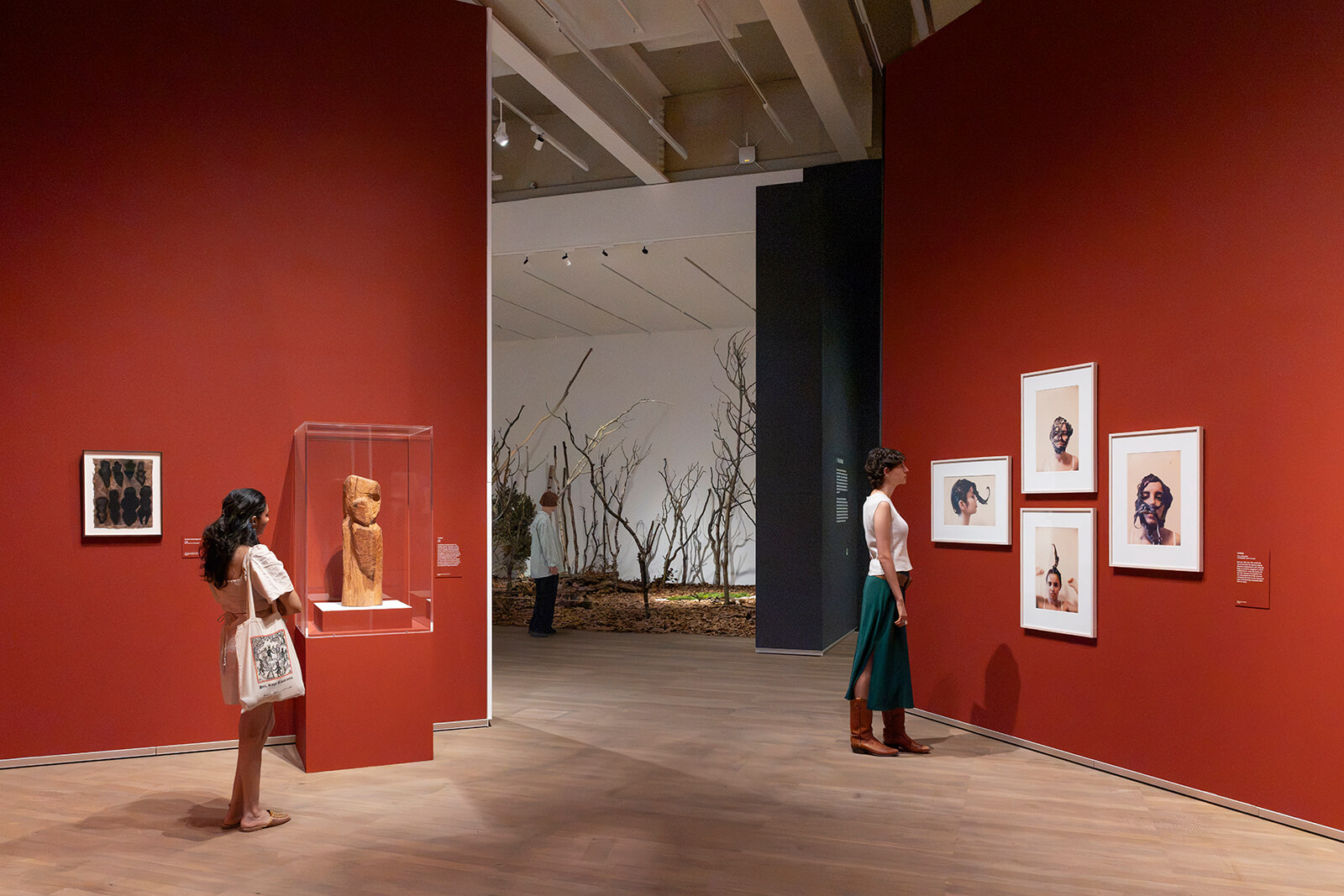
Tate Modern, which has long collected the artist’s work, has brought the survey exhibition titled Ana Mendieta to London. It is the first comprehensive exhibition of her work in the UK in over 10 years and was researched and co-curated by Valentine Umansky, curator of International Art; Michael Wellen, senior curator of International Art; and Elsa Collinson, assistant curator of International Art at Tate. It brings Mendieta’s most powerful and well-known works to new audiences, along with newly remastered films, rarely shown paintings, sculptures, drawings and restaged installations.
In a conversation with STIR, Collinson spoke about the enduring impact of the artist’s work, saying, “Many of the ideas Ana Mendieta put forward feel all the more critical today; particularly her persistent engagement with the natural world. As a generation impacted by environmental crisis, we have similarly grown more aware of our interconnection with the natural world. In this current time, Mendieta's works can help us reflect on our own positionality and engagement with what surrounds us, including with times that preceded us. These are undoubtedly some of the reasons why Ana Mendieta’s work—which operates across vast timescales—resonates so powerfully today.”
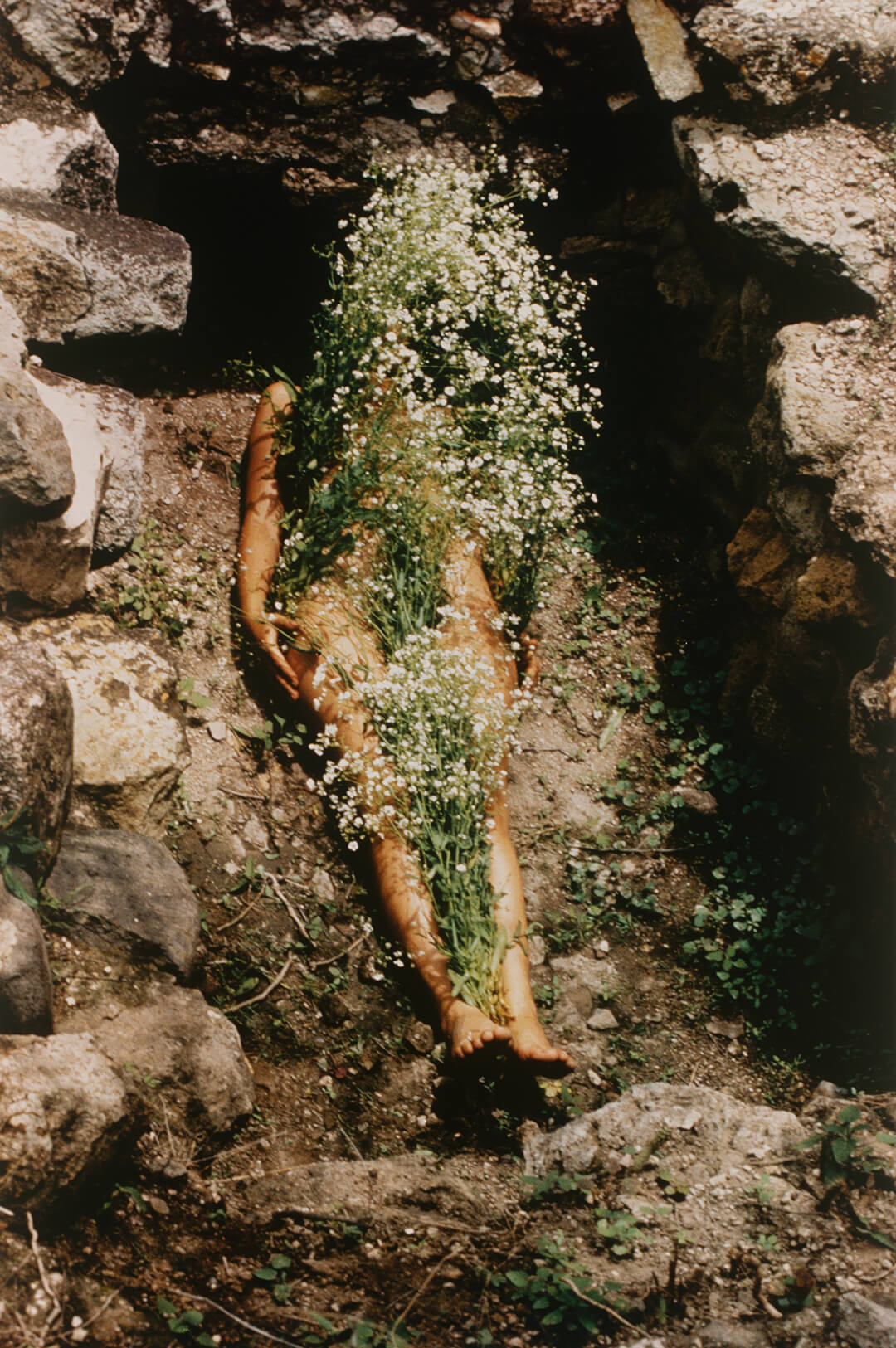
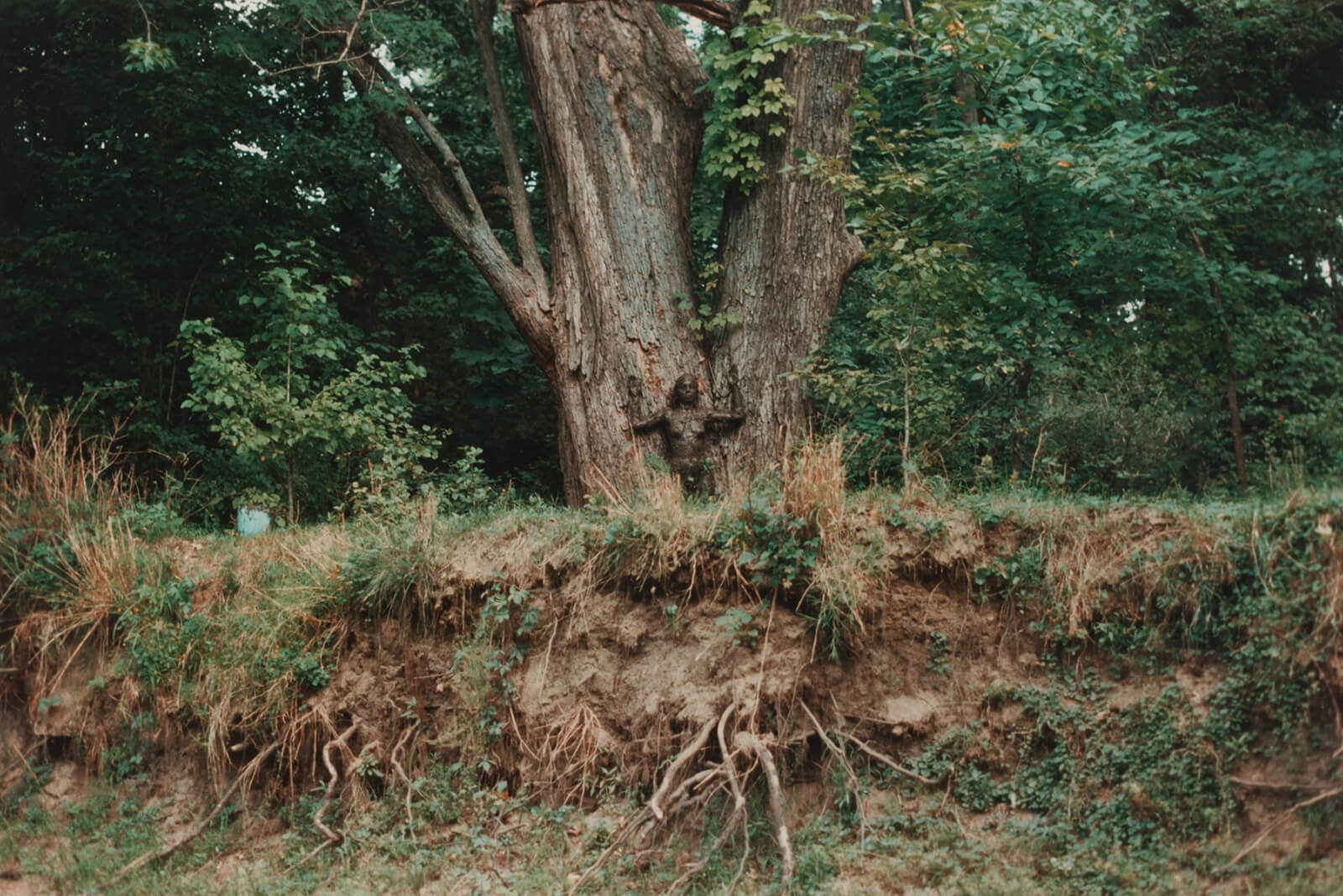
Silueta, a pivotal series of feminist art, began during a 1973 trip to Mexico, where Mendieta was inspired to join her form with the natural landscape, drawn to sites of ancient historical import. The series was a formal innovation due to its transient nature—the silhouettes, burned, moulded and etched into the land, were intended to be temporary, to be gradually reclaimed by nature in a meditation on the transience of life and the inevitability of renewal. They drew on an older, mythological and ritual understanding of art and challenged the primacy of the ‘art object’ and the museum and studio as spaces of creation and display.
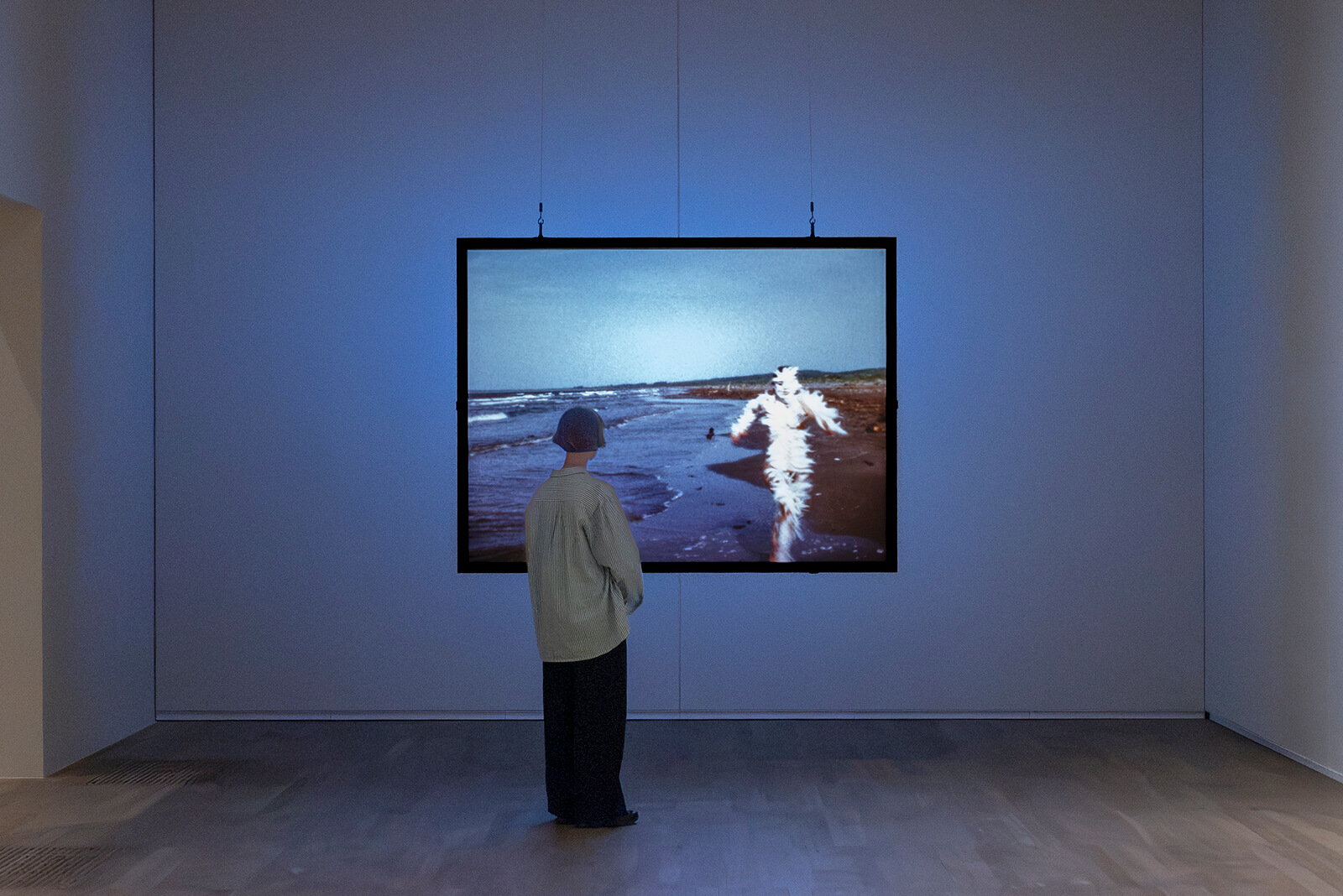
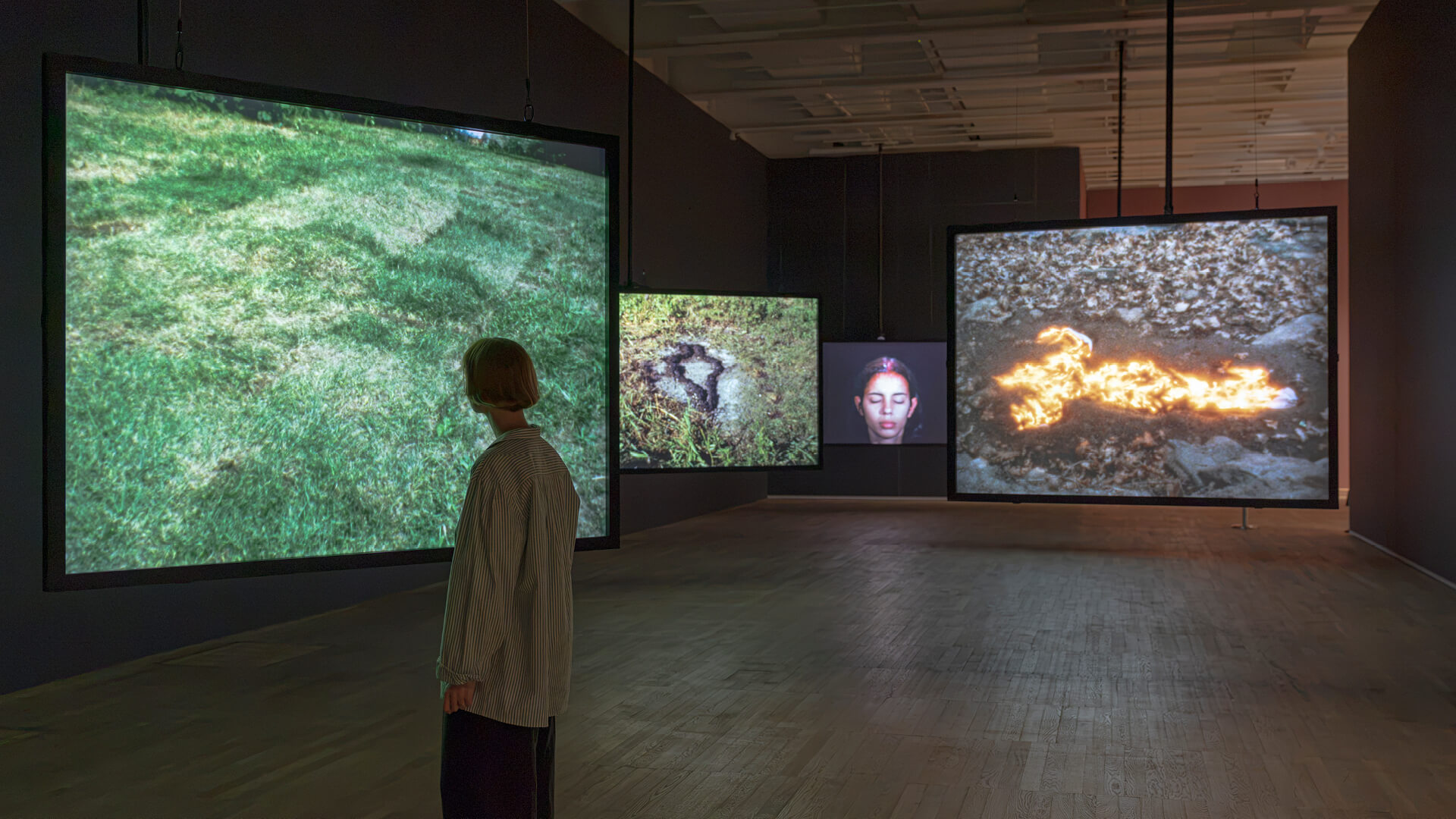
While most of the works are grounded in nature and abide by its materials, colours and undulating shapes, there are some audacious exceptions. Namely, the explosive work Anima, Silueta de Cohetes (Firework Piece) (1976), in which Mendieta creates a monumental female figure from fireworks, which she lights, filming the burning, exploding silhouette until it is extinguished, joining the dark night around it. Also created in Oaxaca, Mexico, is the 1974 film Bird Run, which sees Mendieta nude and covered in white feathers, running along the shore of La Ventosa beach. These works are not just feminist in their celebration of the female form but in their expression of an unabashed, freely moving female body that is part of the surrounding nature rather than a fetishised object.
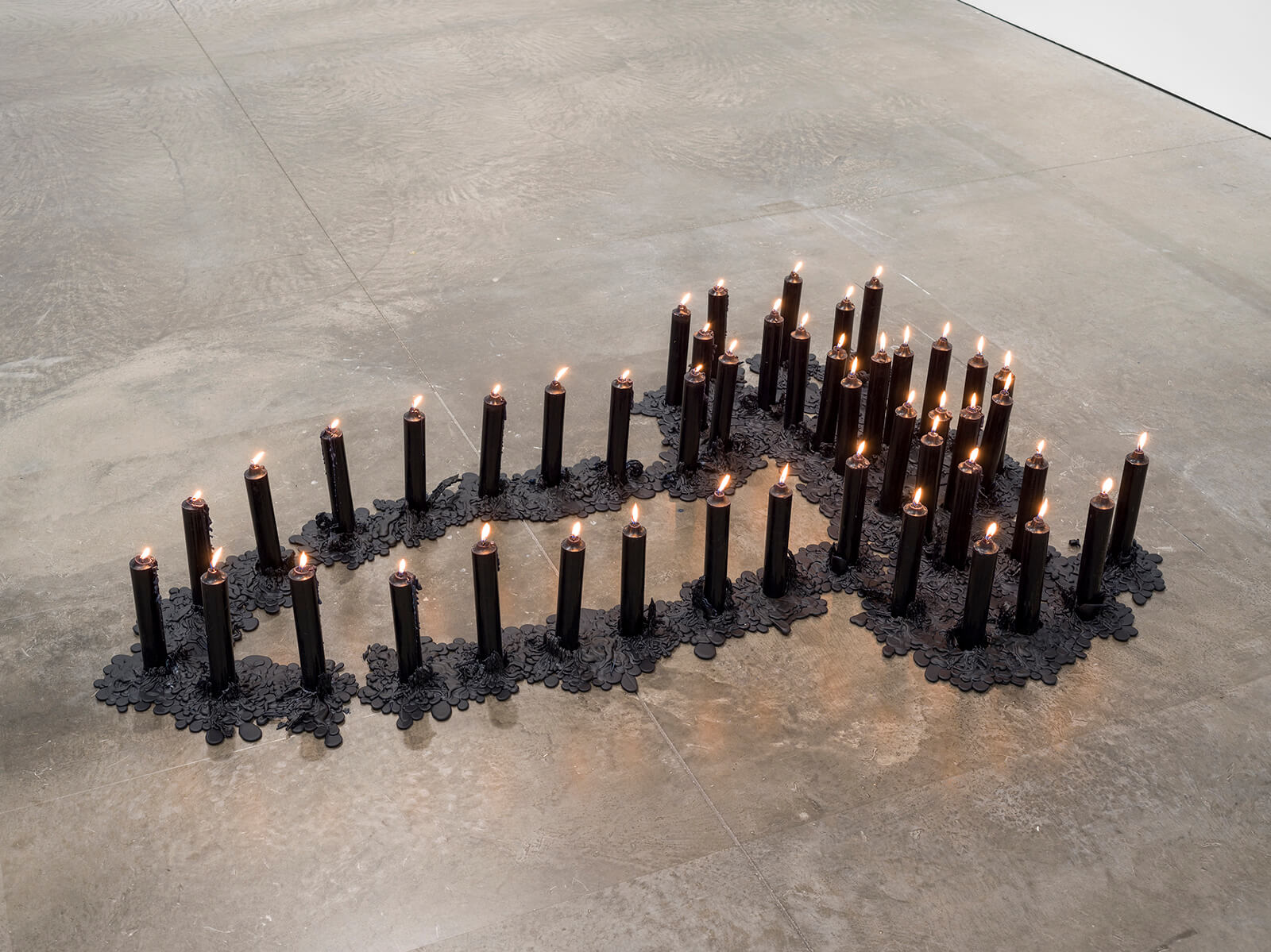
An early studio work by Mendieta, Ñañigo Burial (1976) shows the familiar silhouette, this time with arms raised, created with 47 black candles, lit and left to burn to wax on the floor, an existential and ritual look at the impermanence of life. As the Silueta series progressed and Mendieta explored archaeological sites in Mexico, Italy, Ireland, etc., the artworks would blend further into their environment, becoming more camouflaged. Mendieta explained her attachment to the Earth and its maternal aspect throughout her life, linking it to her displacement from home and her desperation to find a broader form of belonging, ancestry and connection.
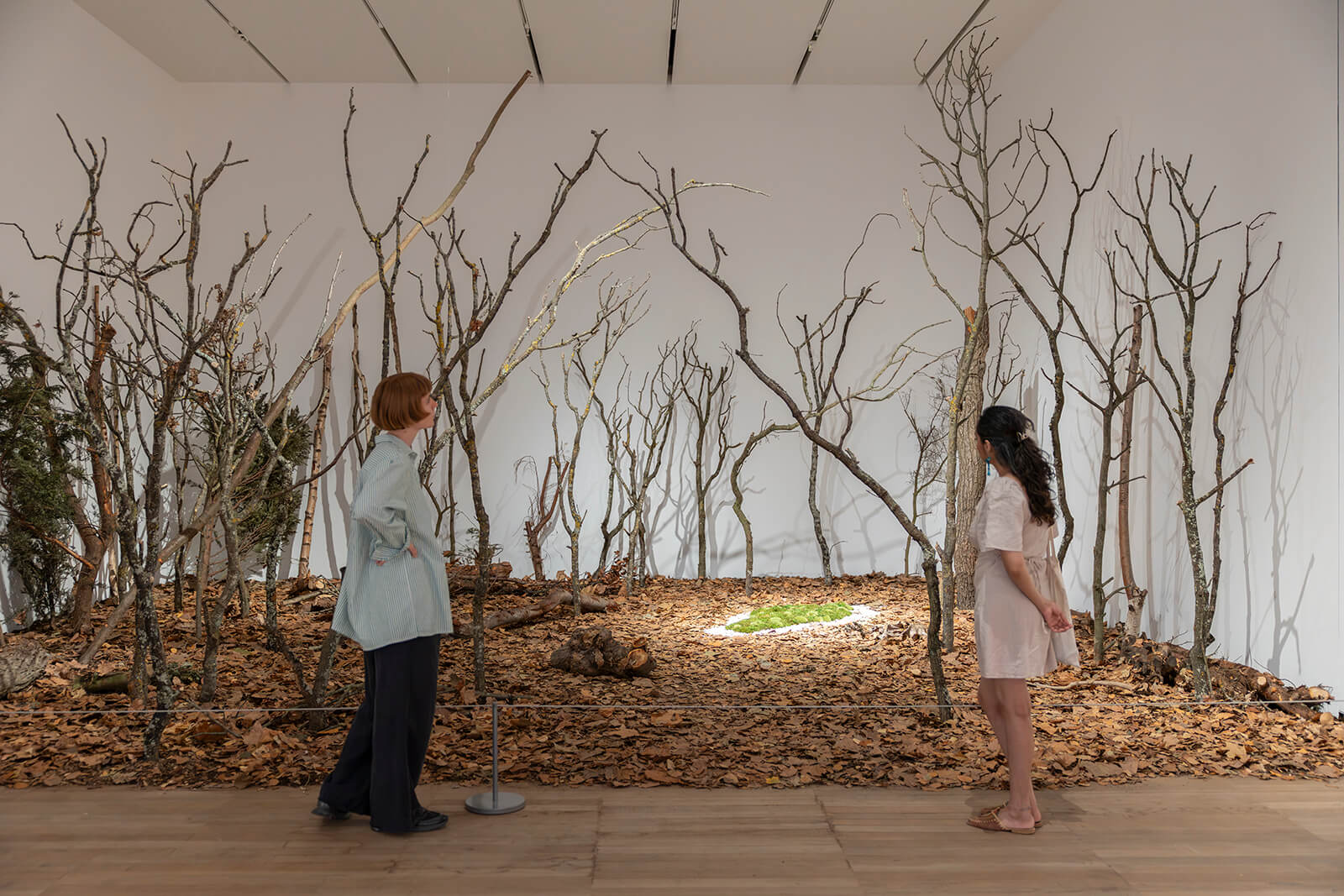
Tate Modern faced the unique exhibition design challenge of bringing these ephemeral works back to life as recreated installations, created under the advisement of the Estate of Ana Mendieta. This includes a forest-scape, Untitled: Silueta Series (1978, remade 2026), which transforms the indoor space of the gallery into an ecosystem created using soil, moss, branches, leaves and rocks. Rather than recreating Mendieta’s work exactly, they draw on her philosophy and practice by using local, indigenous flora. Collinson explained this consideration, saying, “Questions of sustainability were central to the making of this exhibition. Creating the restaged installations, particularly the forest installation, presented us with the same challenges that Mendieta would have likely faced in making the work. In keeping with the spirit of how she originally made this piece, using natural materials and plant species gathered locally, we also used leaves and branches gathered locally around Tate Modern, and species native to the UK.”
Most of the works, however, survive in their documentation as photographs and films. Mendieta brought the materiality of her land art to these modern mediums, often etching and making marks directly on film celluloid as part of her experimentation. This transfiguration of ephemeral sculptures into the near-eternal medium of film also extends her thinking and work on time and transformation between forms and states of being. The films show the works in her Silueta series as they are transformed by nature and time and make the temporal aspect of her practice more explicit and material. “Mendieta liked to say that the works ‘exist on two levels’: ‘in nature and eventually eroding away’ and ‘as documentation’ (Interview between Joan Marter and Ana Mendieta, February 1, 1985), hinting at the dual nature of the practice: outside museum walls, or as documentation of an event, already passed. This means that for the same silueta, you’ll often have both a photographic view (or several) and a film (sometimes two or three). This plurality is part of her process, and we tried to foreground it in the exhibition,” said Collinson.
![‘Untitled (Guanaroca [First Woman])’, 1981, Ana Mendieta | Ana Mendieta | Tate Modern | Ana Mendieta | STIRworld](images/see/7321_AnaMendieta_7.jpg)
A 1981 visit to Las Escaleras de Jaruco, a natural reserve in Cuba, would inspire another of Mendieta’s famous series—Esculturas Rupestres (Rupestrian Sculptures). It featured sculptural forms created in limestone that referred to goddesses from Caribbean mythology and merged the aesthetics of surrealism and cave paintings. This brought a sorely needed non-Western cultural lineage to the feminist art of the time, which was dominated by white artists. Works like Untitled (Guanaroca [First Woman]) (1981) and Atabey (Mother of the Waters) (1981) referred to the deities and natural forces of Taíno mythology, which emerged from Cuba, Puerto Rico and Caribbean cultures. These sculptures were created in caves, spaces significant to Taíno culture. They became a safe space for Mendieta to explore decolonial identity and avant-garde forms, reforging ties back to her indigenous culture.
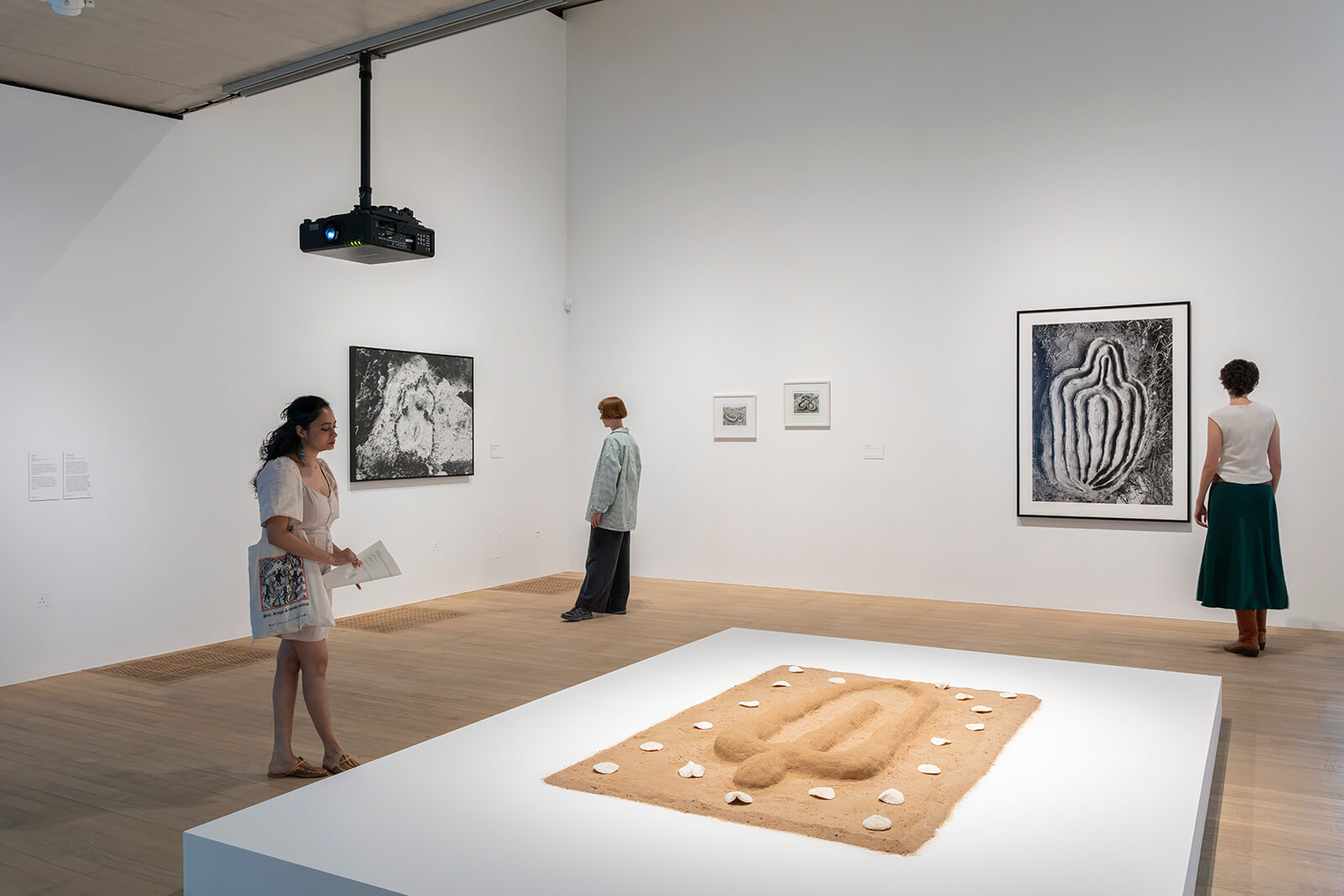
The importance of these mythological, cultural and historic sites to Mendieta and her work structures the exhibition. Collinson explains, “[The exhibition] is not organised by medium, but rather by themes, or in this instance, by metaphorical locations (e.g. the ‘grove’, the ‘cave’, the ‘school’, the ‘sacred grounds’, etc.) Each of the metaphorical locations are placed that informed Ana Mendieta's thinking and provided her with a sense of belonging: caves, forest groves, riverbanks, ritual sites and places of learning and education.”
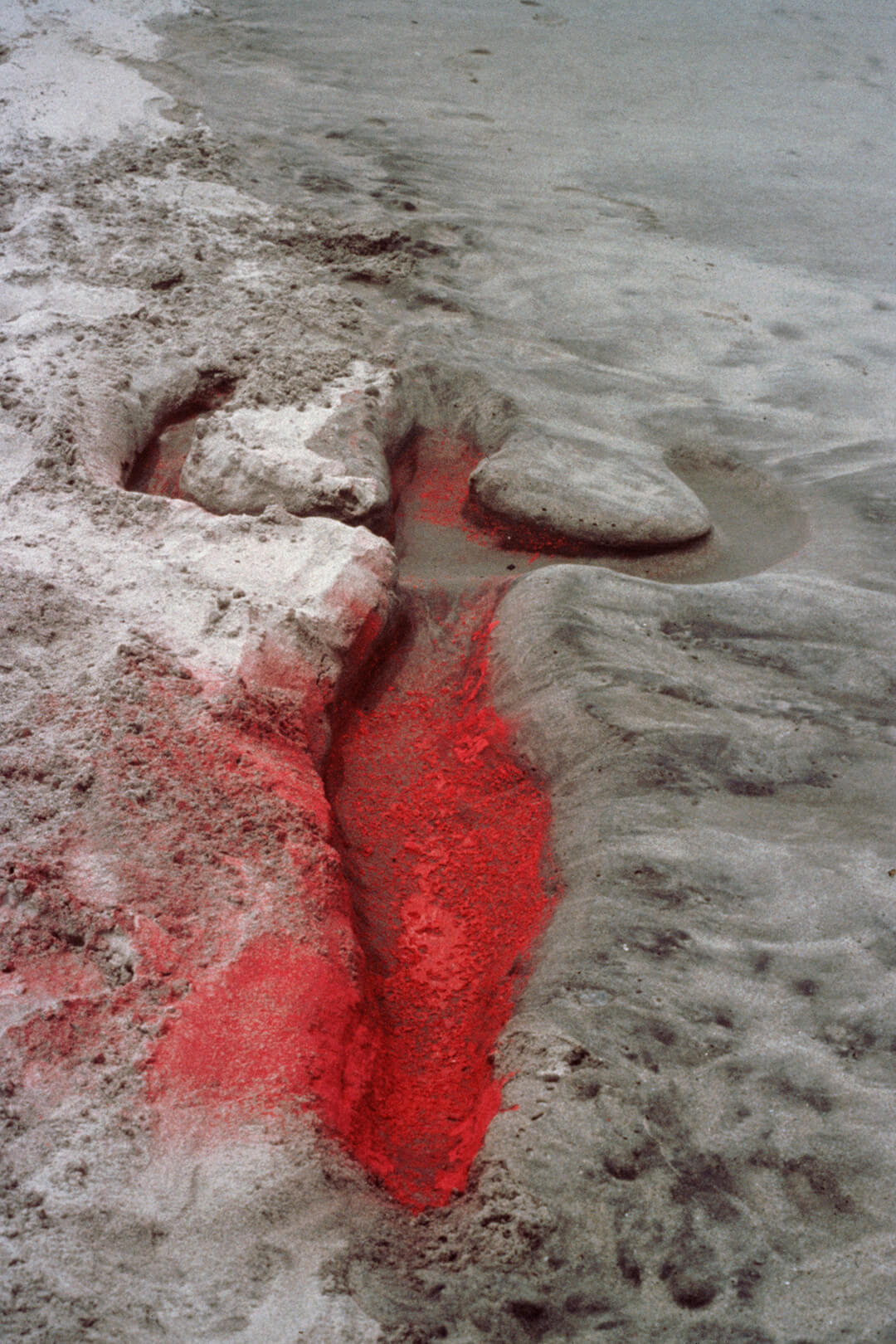
Another form that emerged from her travels was the open, undulating curves she explored in a 1981 film work, Ochún, which represents a further abstraction of her silhouette and exploration of the goddess form. The film shows the curved forms emerging from the waters off Florida’s coast, with the sea forming an ephemeral connection between the country she lived in and the country she belonged to. She elaborated on this motif in Furrows (1984), commissioned by the Rhode Island School of Design (RISD) and made over the course of a month using soil and grass.
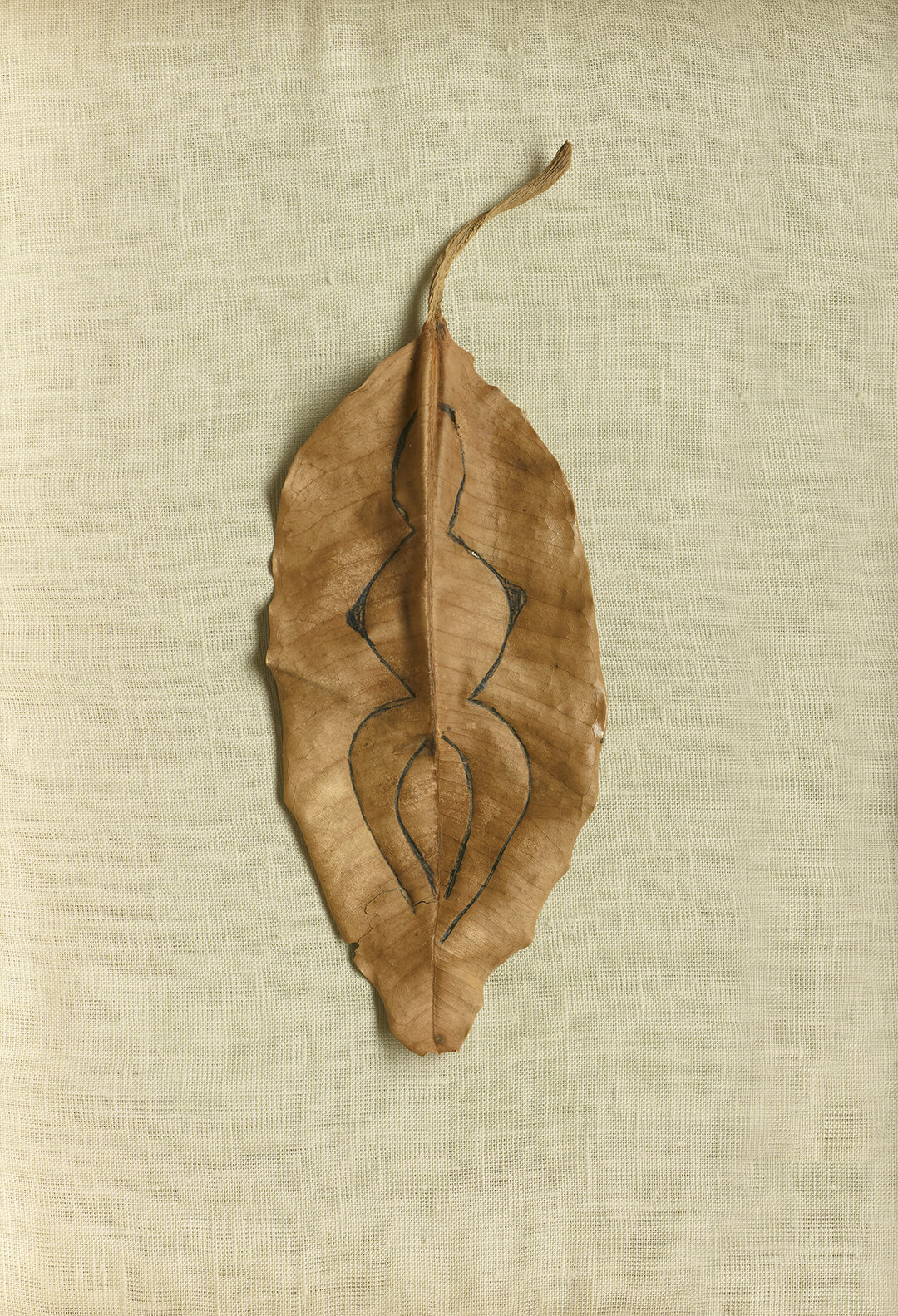
This coincided with a time in Mendieta’s practice when she won the Prix de Rome fellowship at the American Academy in Italy, giving her the opportunity to shift to large-scale studio works, developing the ideas she had been creating outdoors until then. She created drawings of abstracted female figures and lithographs of leaves, eventually drawing the figures on leaves directly. Eventually, this series of forms would also expand in scale to what would have been her largest work, La Jungla. Commissioned by MacArthur Park, it would have comprised seven redwood tree trunks carved with Mendieta’s leitmotifs, using her technique of burning patterns into organic material with gunpowder. They were to be installed outdoors, recalling ancient totems, referring to the seven Orishas or deities called on in Cuban Santería rituals. Unfortunately, the work was left incomplete as a result of the artist’s untimely death.
Mendieta was a pioneering artist who carved a path for women of colour and immigrants in art, creating a new language of land art and elevating earth, sand, ash and bark to the level of traditional fine art materials like oil paints and marble. Her unique relationship to the Earth and transiency created an aesthetic that was both ancient and modern, abstract and deeply spiritual. Despite only having created works over 10 years, she leaves behind an oeuvre and a legacy with a profound impact on the contemporary art world and the practice of ecological art. Tate Modern’s exhibition honours every facet of the complicated, multidisciplinary artist’s practice with a lovingly and diligently researched exhibition that engages deeply with Mendieta’s philosophy and politics. In a canon of art that is too often dominated by white, Eurocentric, male narratives, Ana Mendieta celebrates the conceptual and material contributions of a woman whose identity bore out ideas of universal and timeless significance.
‘Ana Mendieta’ will be on view from July 15, 2026 – January 17, 2027, at Tate Modern in London, UK.

by Anmol Ahuja Oct 15, 2026
How do heaps of souvenirs and relics with racist Aboriginal motifs and features become art? MCA Sydney’s winter showcase—the artist’s largest to date—beckons a possibility.
by Vandana Kalra Oct 14, 2026
With his latest exhibition as a point of departure, the modernist discusses his decades-long practice, the spontaneity of drawing and the social responsibility of artists.
by Srishti Ojha Oct 14, 2026
The first Dutch publication on the Turkish artist, the eponymous book centres on Refik Anadol: Latent City, his living data sculpture of Bruges, exhibited at BRUSK gallery.
by Srishti Ojha Oct 09, 2026
In his ongoing exhibition, the South African artist creates two post-apocalyptic futures to explore society’s relationship with textiles, patterns and technology.

make your fridays matter with a well-read weekend
Enter your details to sign in
Don’t have an account?
Sign upOr you can sign in with
a single account for all
STIR platforms
All your bookmarks will be available across all your devices.
Stay STIRred
Already have an account?
Sign inOr you can sign up with
Verification link sent to check your inbox or spam folder to complete sign up process
Tap on things that interests you.
Select the Conversation Category you would like to watch
Please enter your details and click submit.
Enter the 6-digit code sent at


Silhouettes burned, etched and carved: Ana Mendieta at Tate Modern
by Srishti Ojha | Published on : Sep 07, 2026


 Sign in with Google
 Sign in with email
What do you think?