Architecture04 mins. read
Concrete and shipping containers stack up in lego-like forms in Agrosemillas Offices
by Bansari PaghdarAug 04, 2026



by Jincy IypePublished on : Nov 04, 2025
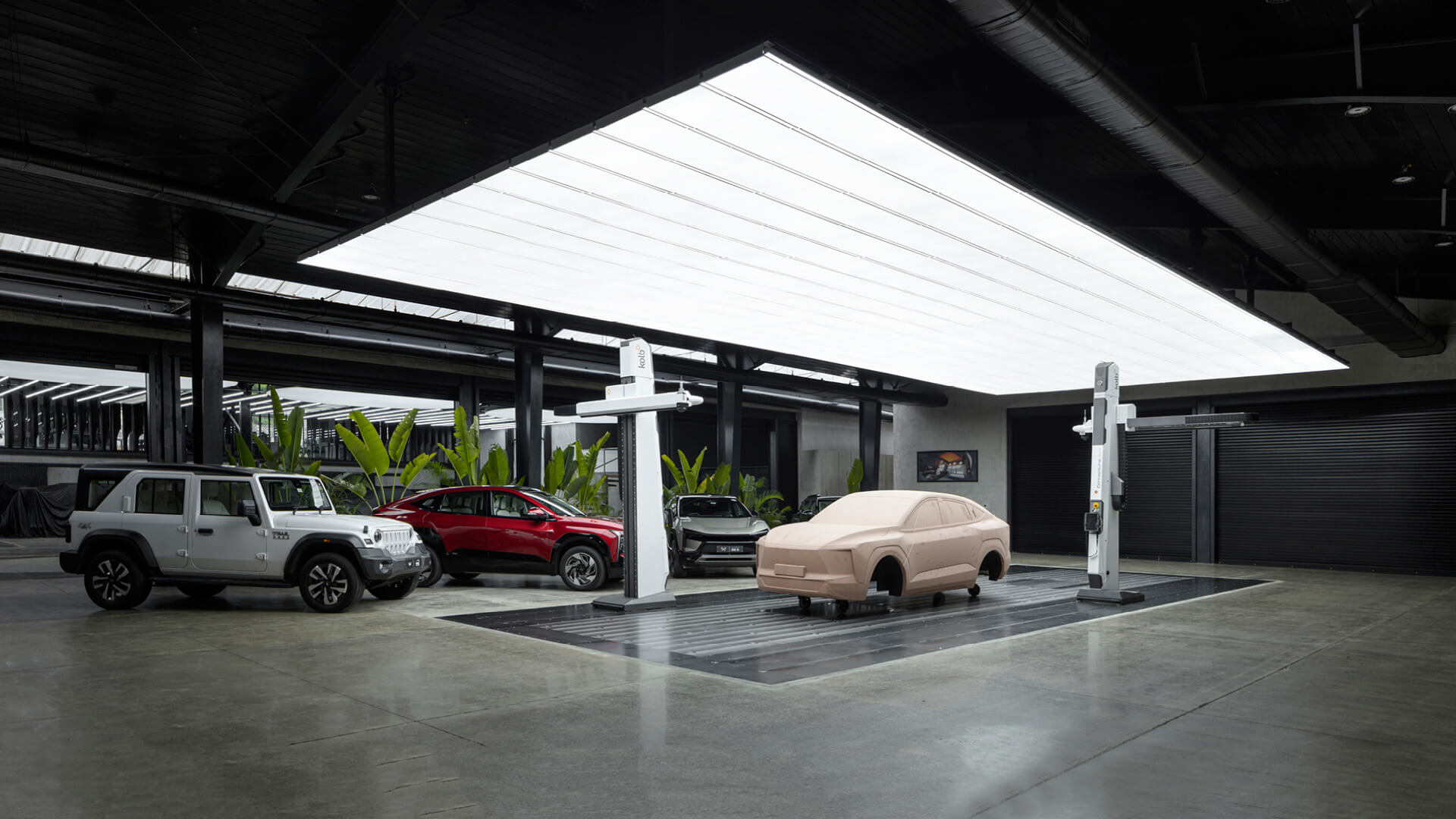
In the quiet of Mahindra & Mahindra’s vast Kandivali campus in Mumbai, sunlight falls in long slants across steel, concrete and the steady rhythm of making. The air seems to hum with the sound of design in progress: machines whirring, footsteps echoing, and conversations about proportion and precision. Here, at the heart of the Indian automobile manufacturing giant’s 64-acre site, sits a studio that, over the past decade, has come to define the company’s creative pulse.
In 2013, SJK Architects built that studio as a space that shifted the rhythm of a factory floor. It was an atelier within an industrial shed, where hand-finished grey plaster walls, concrete floors and clerestory light made the environment feel not manufactured but inspiring.
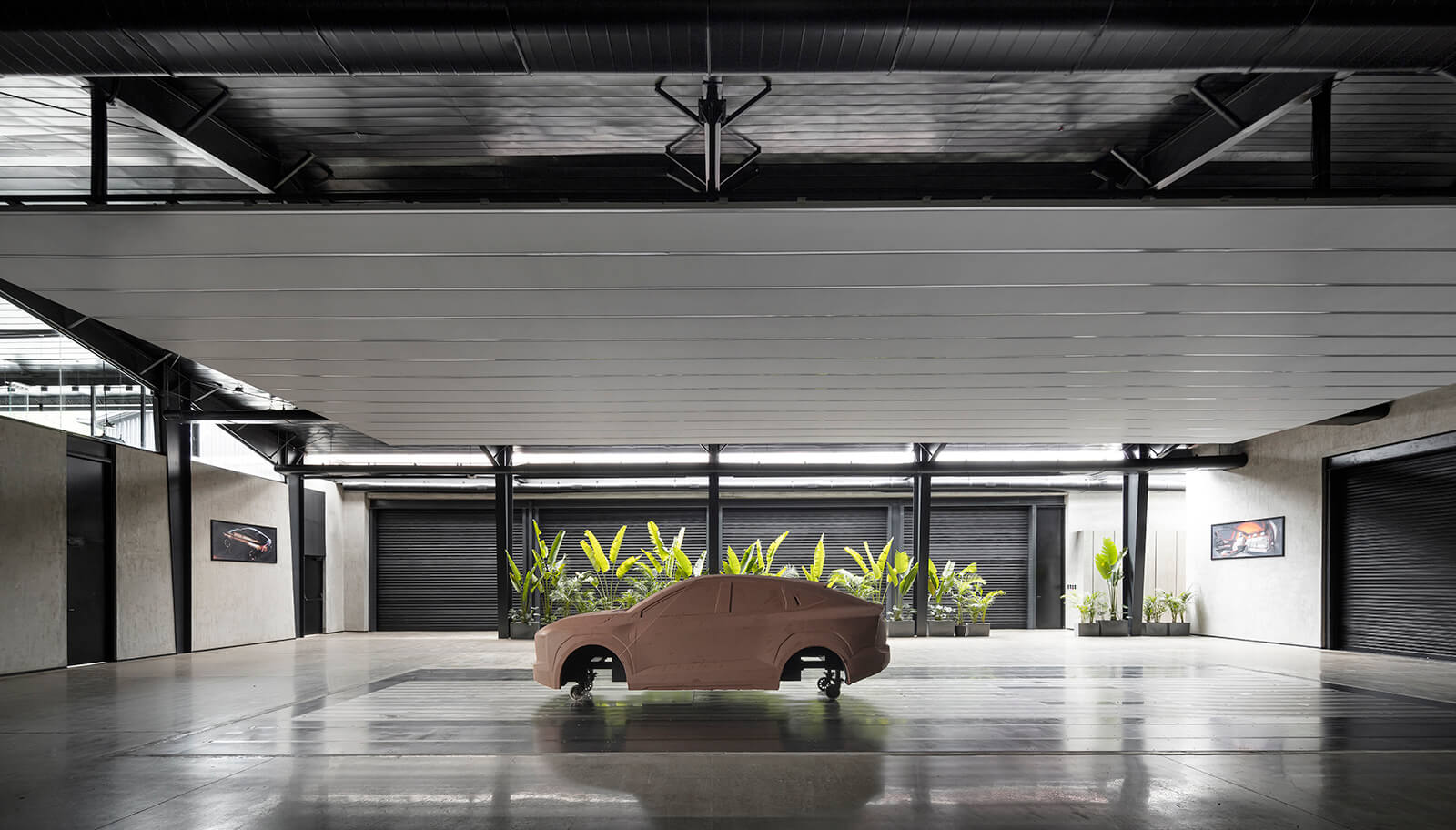
12 years later, that rhythm has evolved, as time compels all to. The automobile industry has accelerated, reshaped by robotics, rapid prototyping as well as advanced digital interventions. Mahindra & Mahindra’s design division needed a new facility—one that could house the first German robotic arm of its kind in India, alongside 1:1 scale modelling equipment. The architectural brief was pragmatic; the challenge, close to philosophical. How does one extend a handcrafted, poetic and already existing space with its own cadence into an environment driven by technology without losing its humanity?
As the project’s press release relays, “The real challenge was far more complex: how do you bridge a highly crafted, poetic Phase 1 with a Phase 2 driven by intense technological demands? How do you integrate two phases visually and spatially when working within the constraints of an industrial shed vocabulary? And how do you do all of this on a tight timeline and budget that wouldn't allow for expensive materials like corten steel that gave the original structure its character?”
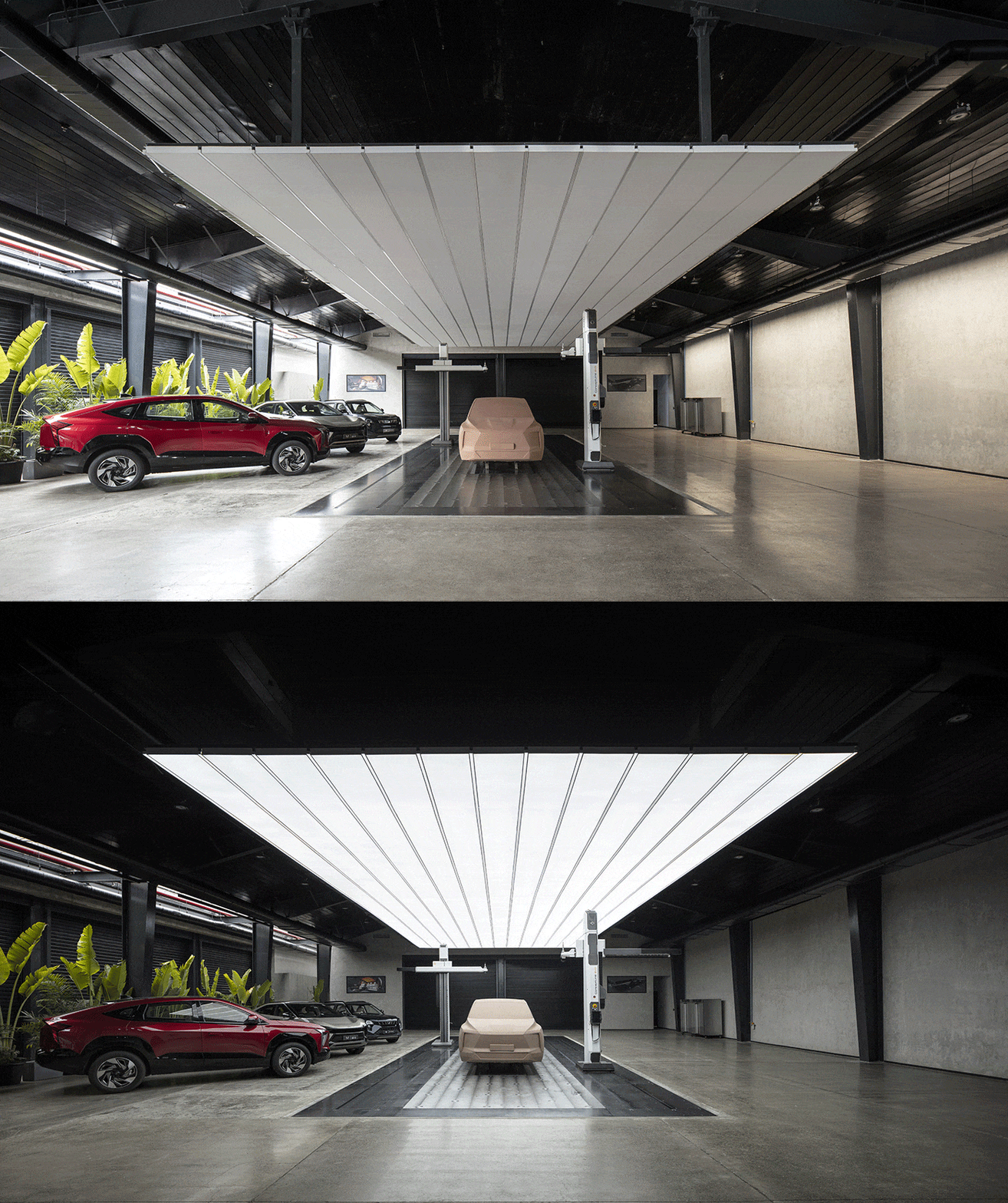
SJK Architects’ response was to build a structure that lives across time—"honouring the past through material and spatial continuity, serving the present with technical precision and anticipating the future through adaptability… a structure that exists in three tenses at once,” the firm shares.
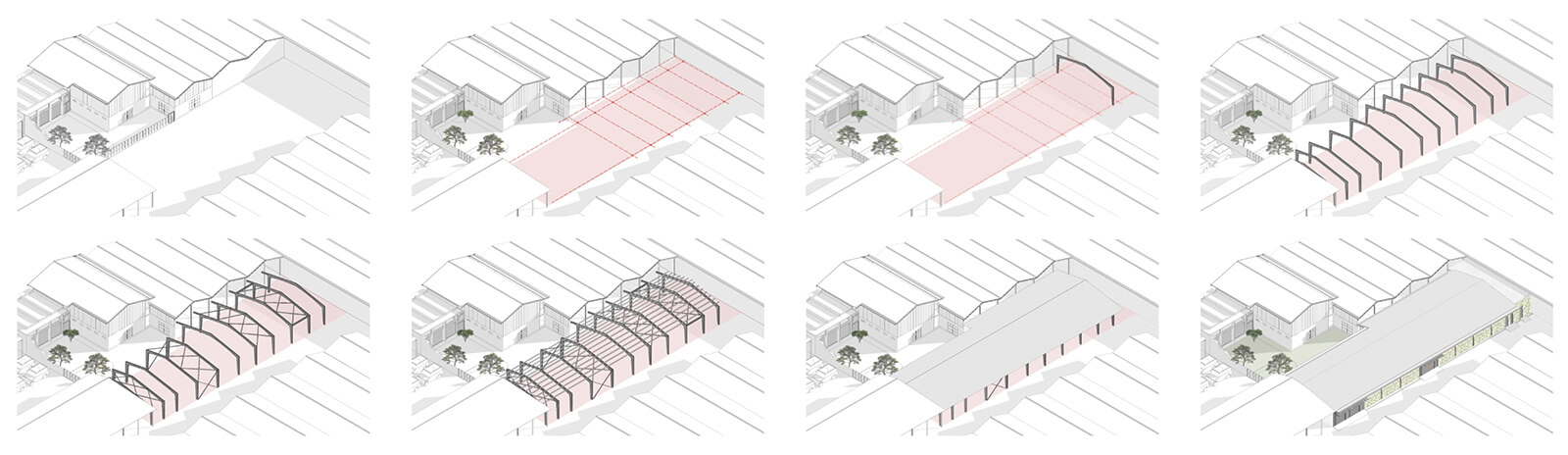
The new 21 by 67-metre extension, adjoining the original studio’s southern edge, is organised around a central Clay Bay for full-scale vehicle modelling. Around it, functions unfold with logic: paint booth and hard-modelling areas to the west, services along the industrial edge and social and creative spaces—pantry, library, model-makers’ desks—opening to a landscaped courtyard.
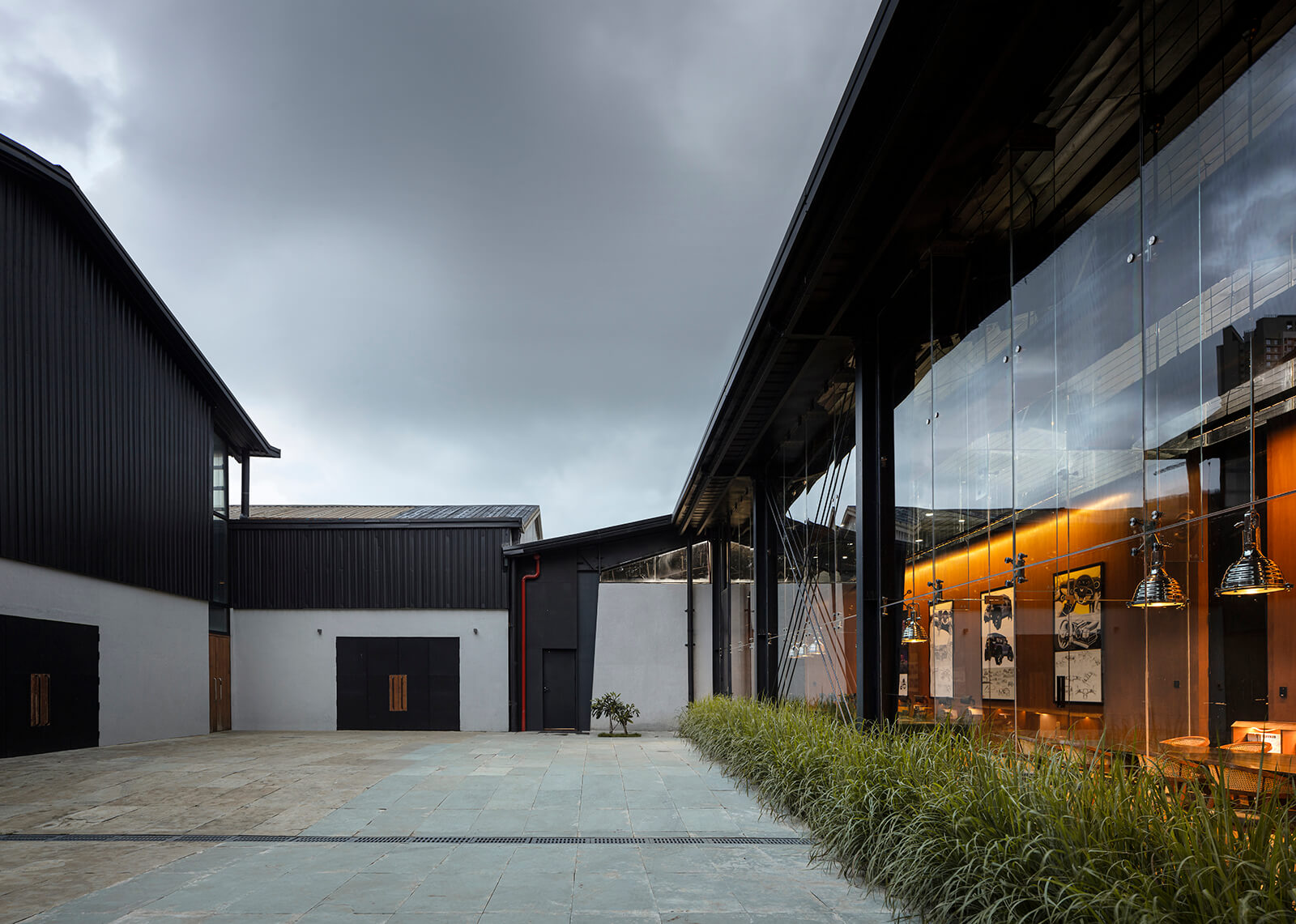
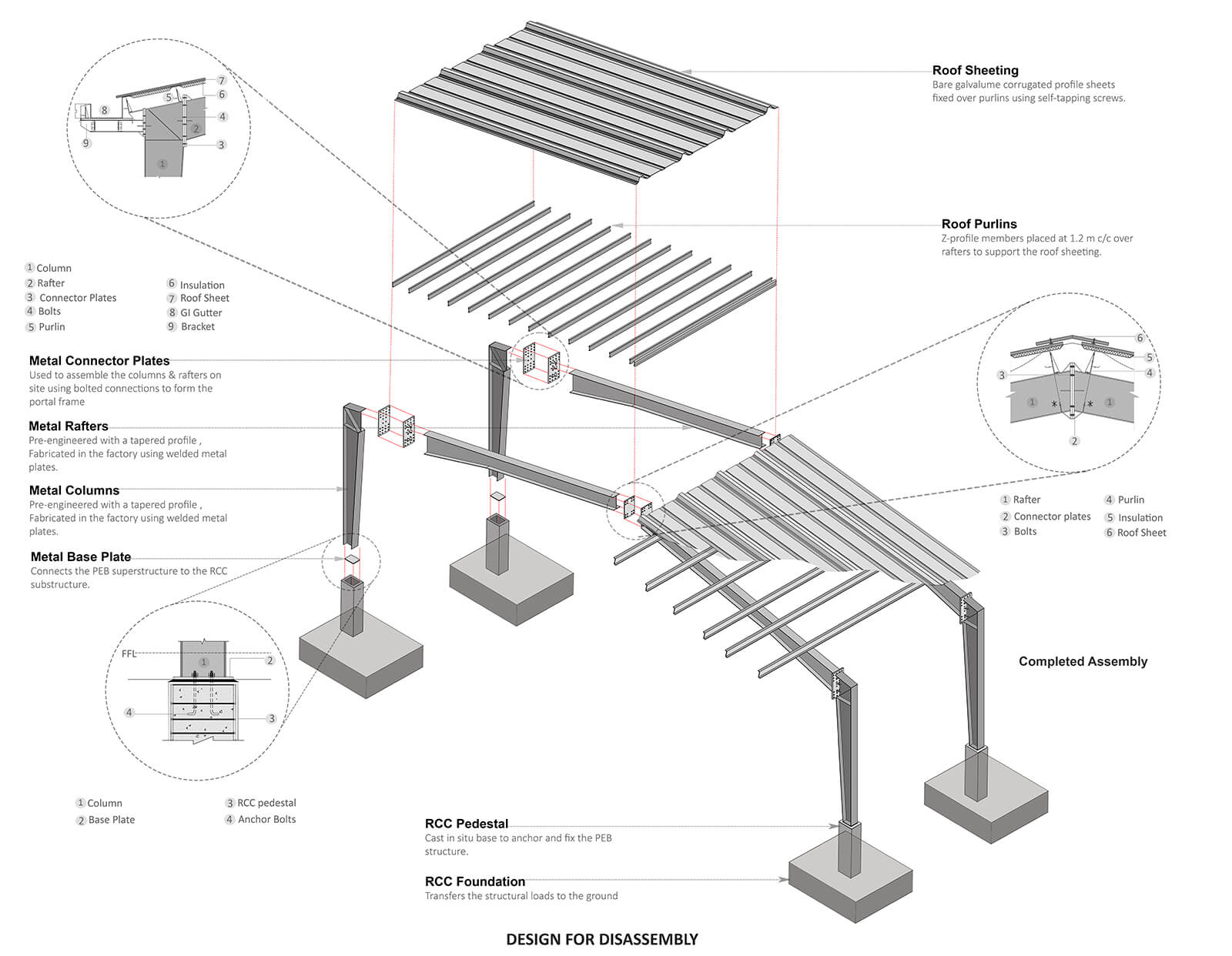
“The entire structure is designed for disassembly,” the Indian architects note in the project’s press statement. Every element of the black steel frame is bolted, not welded; each joint visible, each connection deliberate. The result is an architecture of precision and flexibility: when spatial needs shift, the frame can be dismantled and reused elsewhere.
“Phase 2 of the Mahindra Automobile Design Studio has happened 12 years after its first highly crafted, poetic Phase 1,” Shimul Javeri Kadri, founding partner at SJK Architects, tells STIR. “This phase necessitated intense technology in keeping with the needs of the day. The crucial need was also to integrate the two phases visually and spatially, despite the limitations of a vocabulary of industrial sheds. Our response was to use two important elements—a courtyard and a skylit street—to bridge the two phases spatially and a sharp black steel framework as the visual and structural backbone of the project.”
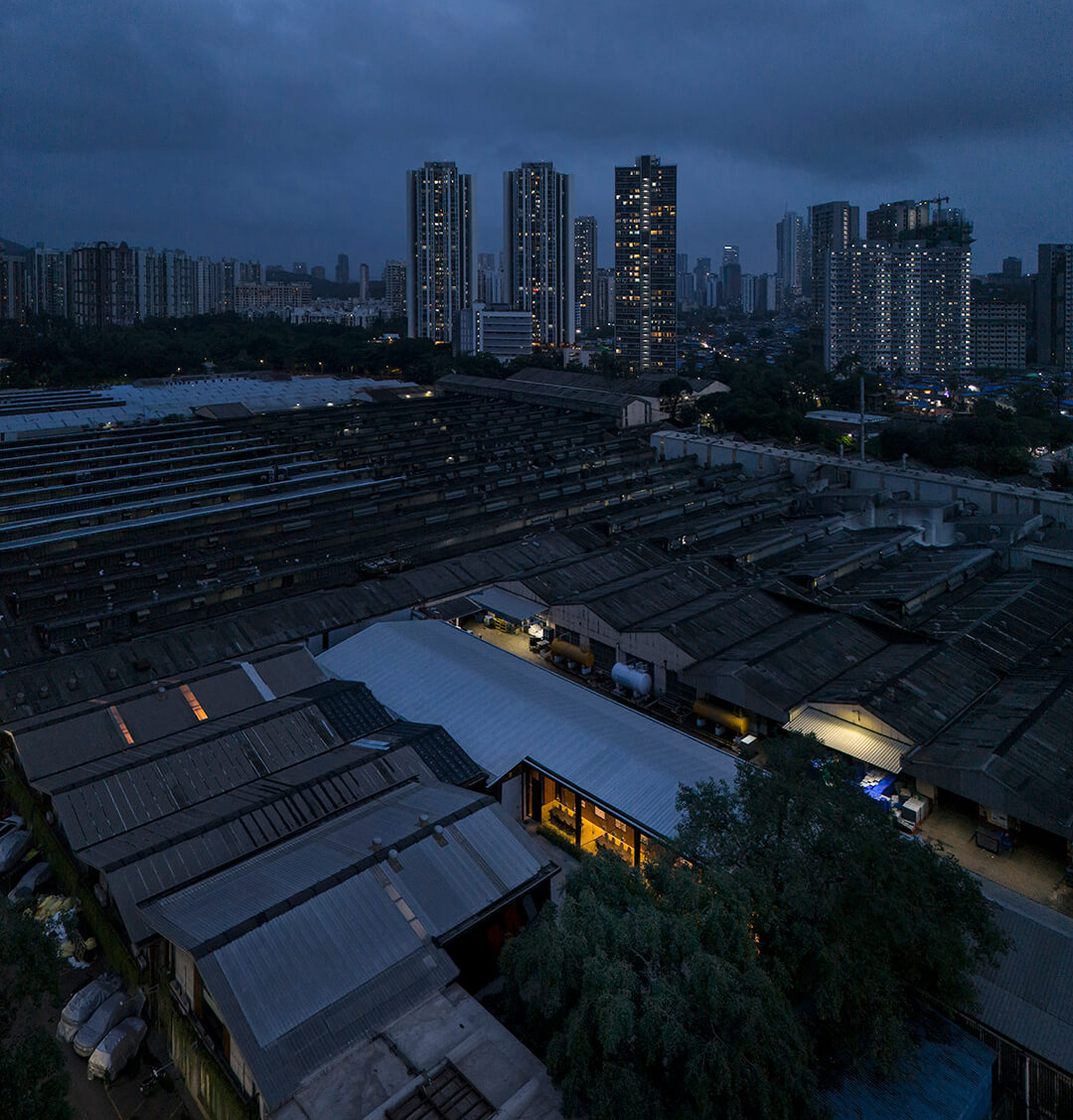
“Integrating sharp and demanding technology like lines of light and CNC robotic arms into this crafted space, ensuring human comfort and design inspiration was the crux of this project. We took it one step further by designing the structure for disassembly so that it could be recirculated if and when it needed to be. The result is a sharp black space, where each frame is deliberately and carefully proportioned to create a visually appealing space, a perfect backdrop to the act of creating well-designed automobiles,” she elaborates.
Exposed and proportioned, the black-painted profiles—extending the visual and structural language of the 2013 building—signal a new technological era while maintaining a crafted sensibility. As Javeri Kadri puts it, “Machine precision complements human touch, as technical evolution honours material memory.”
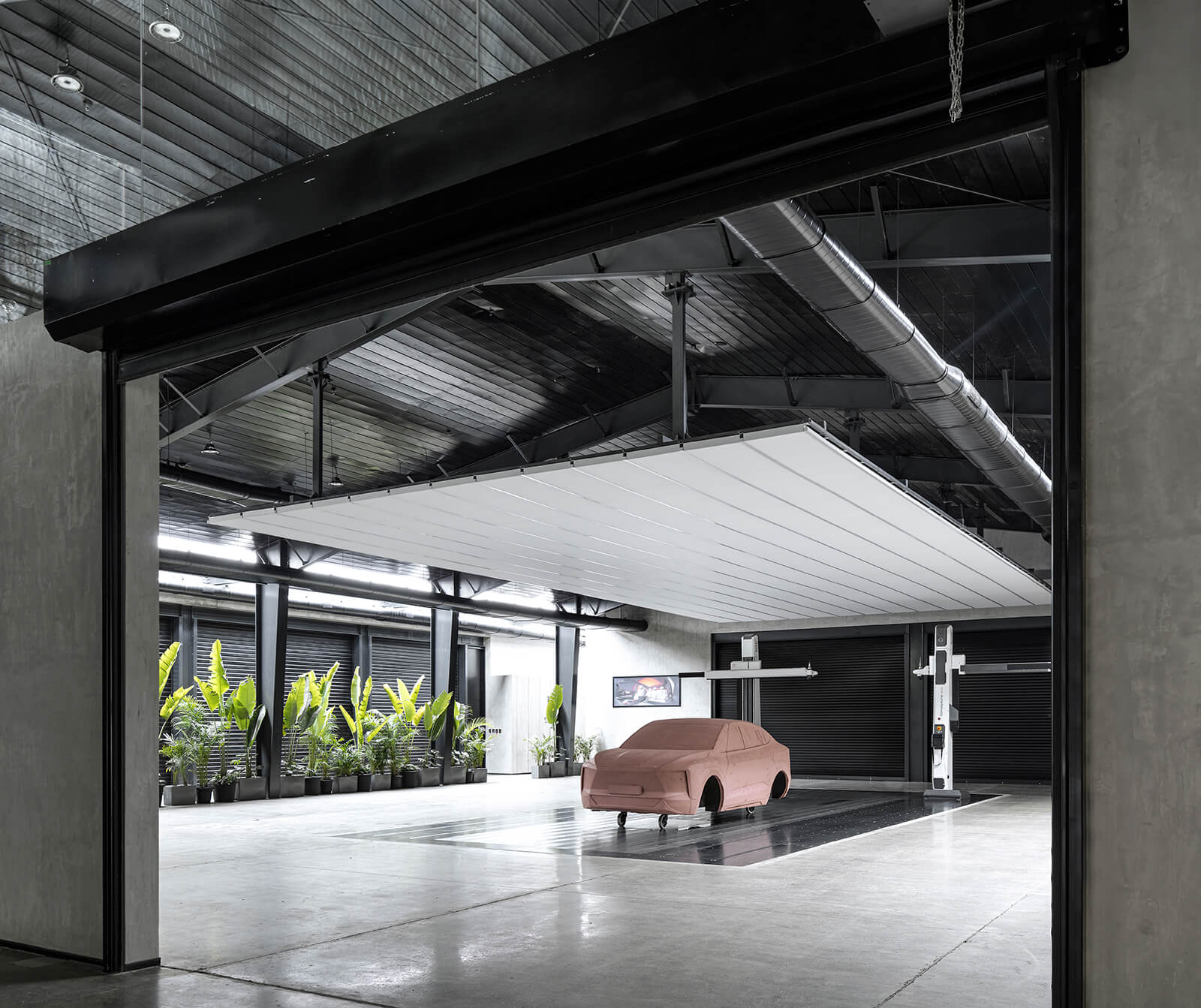
The link between the two phases of contemporary architecture is both spatial and emotional. The original courtyard, widened into a landscaped commons, remains a breathing space amid the campus’ density. Beside it runs a continuous skylit street, carved between old and new. Here, filtered natural light and planters soften the industrial edges, turning what could have been a bland corridor into a refreshing space.
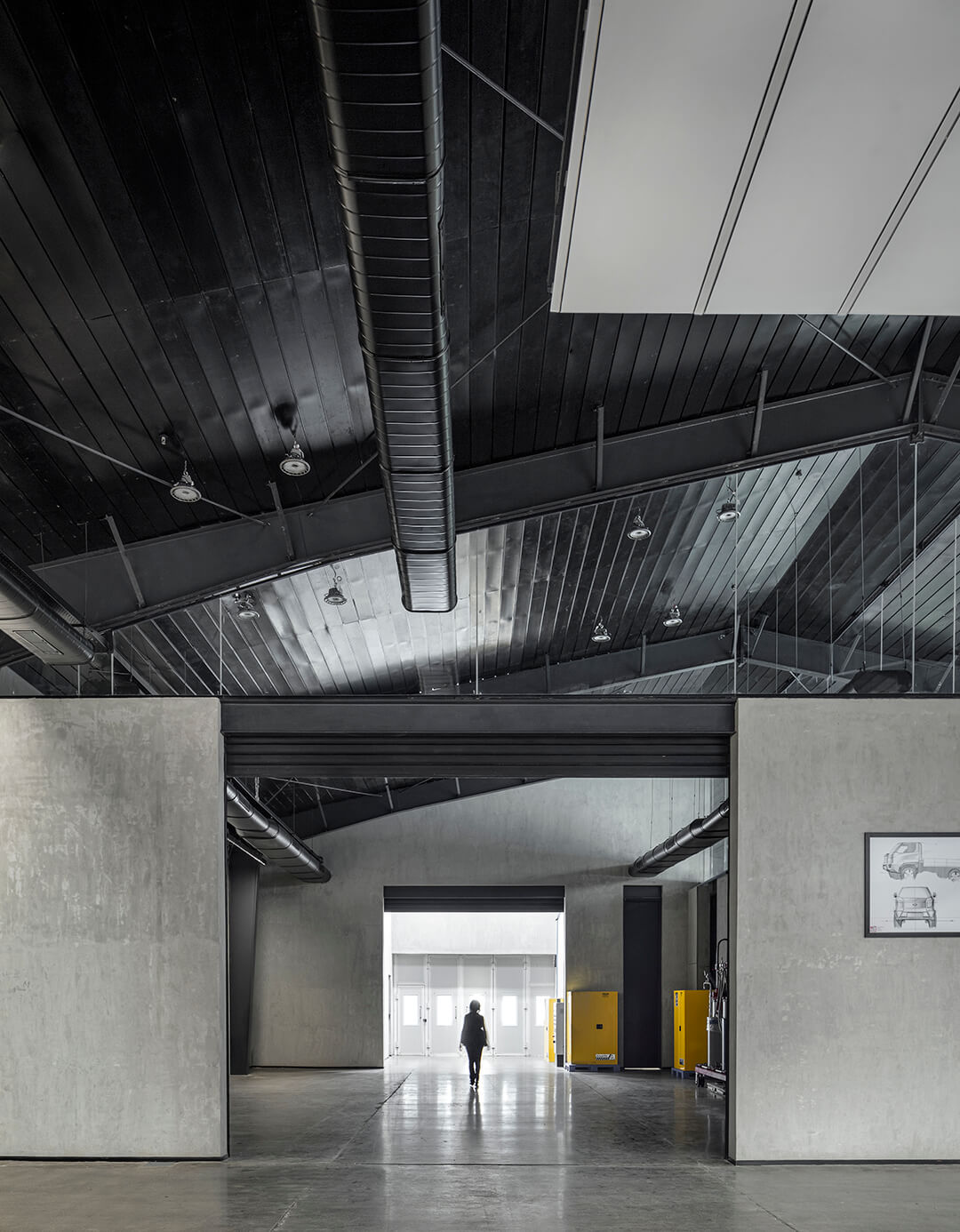
From concept to construction, the team’s commitment to adaptability informed every decision. “From a philosophical and design standpoint, we actually encountered no significant challenges because our choice of a pre-engineered building system aligned perfectly with our project goals,” shares Vaishali Mangalvedhekar, partner at SJK Architects, in conversation with STIR.
She continues, “We were able to break free from standard rolled steel sections and sculpt custom sections thick only where strength was needed, tapering elsewhere to create delicate, aesthetically pleasing forms. This not only delivered the visual outcome we sought but also significantly reduced material usage—something that aligned well with our sustainability values. Bolted construction would also allow for future adaptability. Should the company experience unprecedented growth, [it] could dismantle and relocate the entire structure, giving it a second life rather than letting it become waste.”
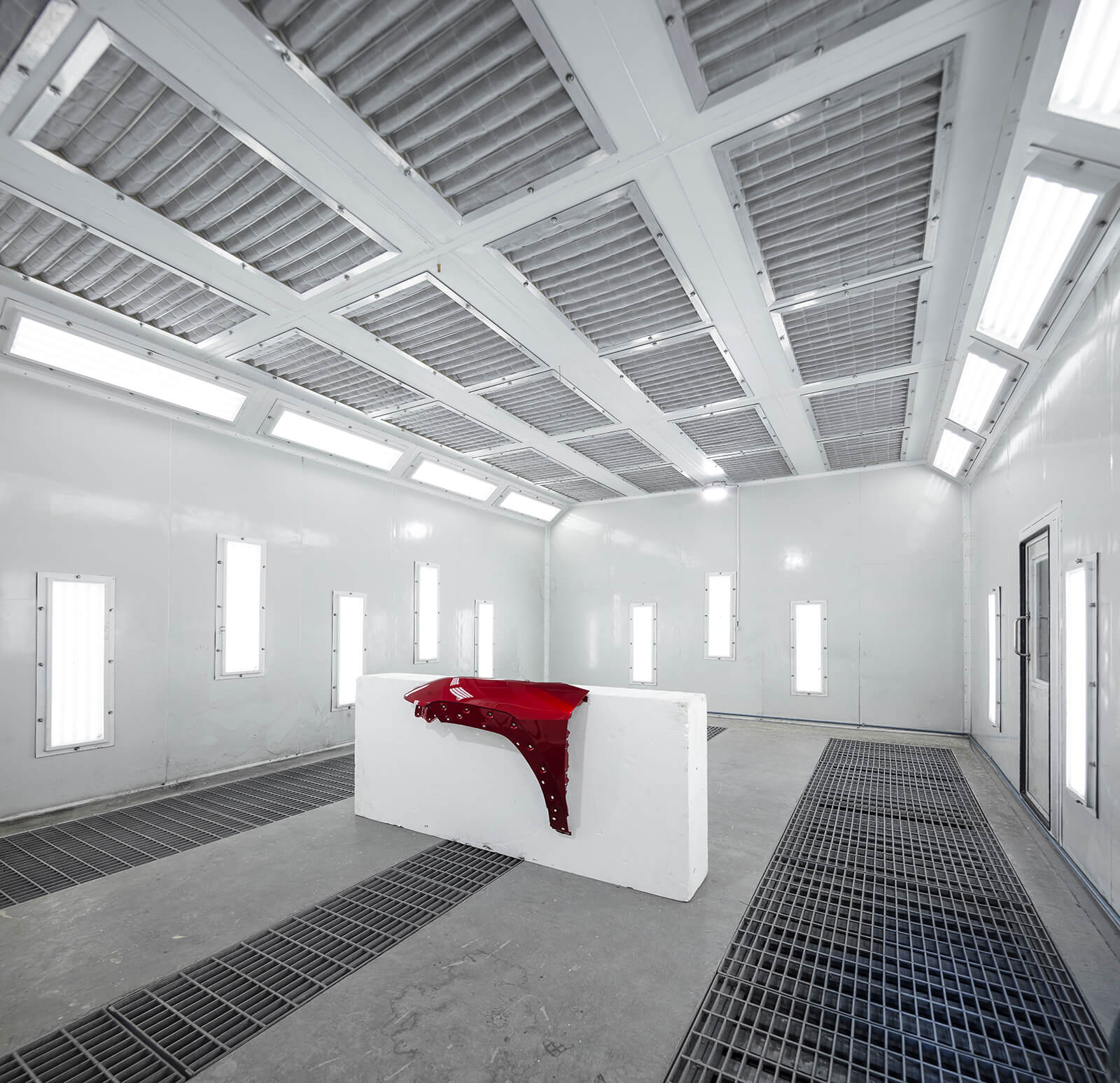
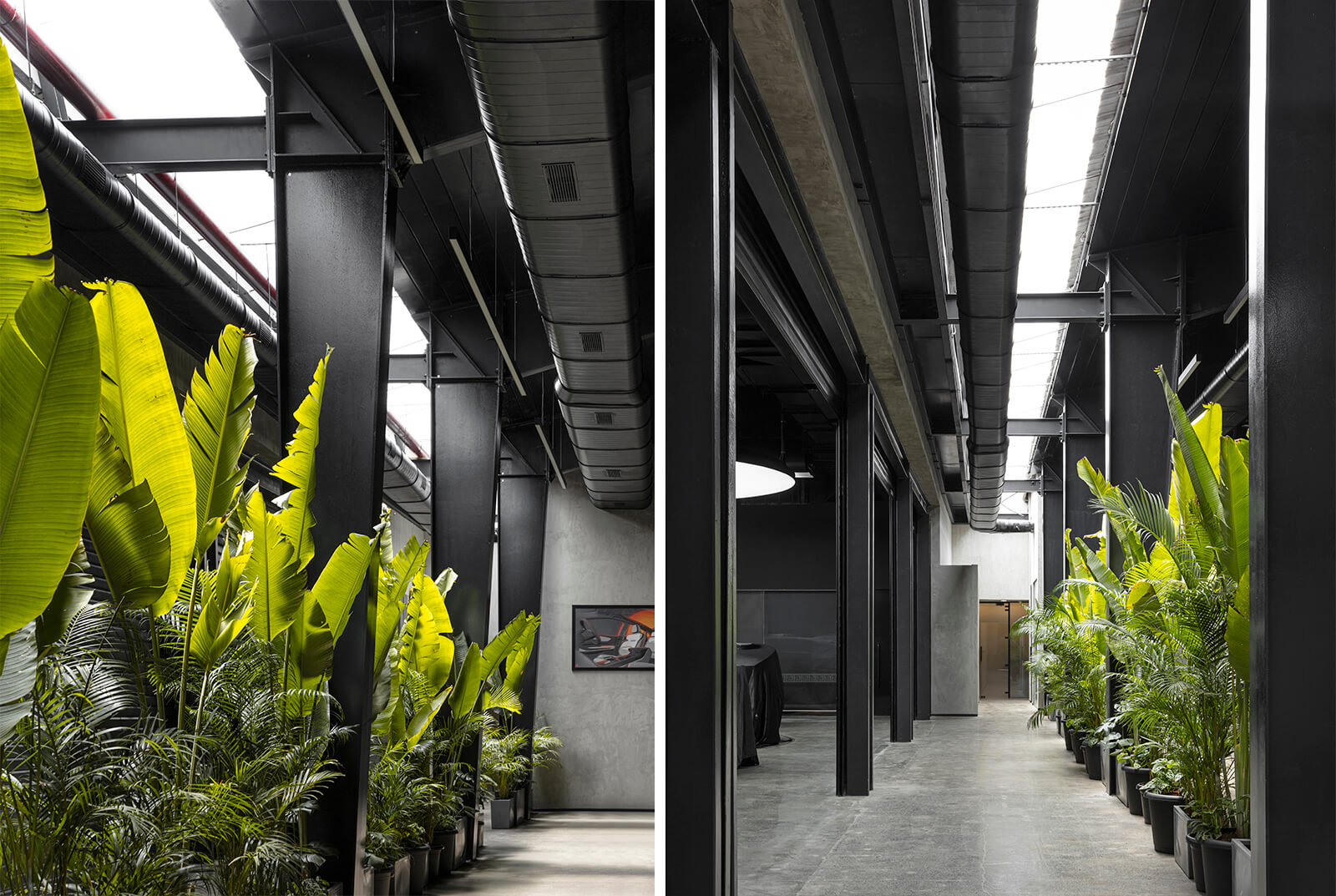
Technically, however, the process demanded rigour. Every service line, duct and conduit for the Indian architecture had to be pre-planned before fabrication. “Since the structure is entirely pre-engineered in the factory, even the smallest puncture for conduits had to be planned in advance—no site modifications were possible. The integration process became time-consuming but ensured precision and design integrity,” Mangalvedhekar notes.
“Should spatial needs shift, the entire frame can be dismantled and materials reused elsewhere, transforming potential waste into a circulating resource. In doing so, the project demonstrates a compelling sustainable model for India's fast-paced industrial landscape: architecture that evolves rather than becomes obsolete,” the firm reiterates.
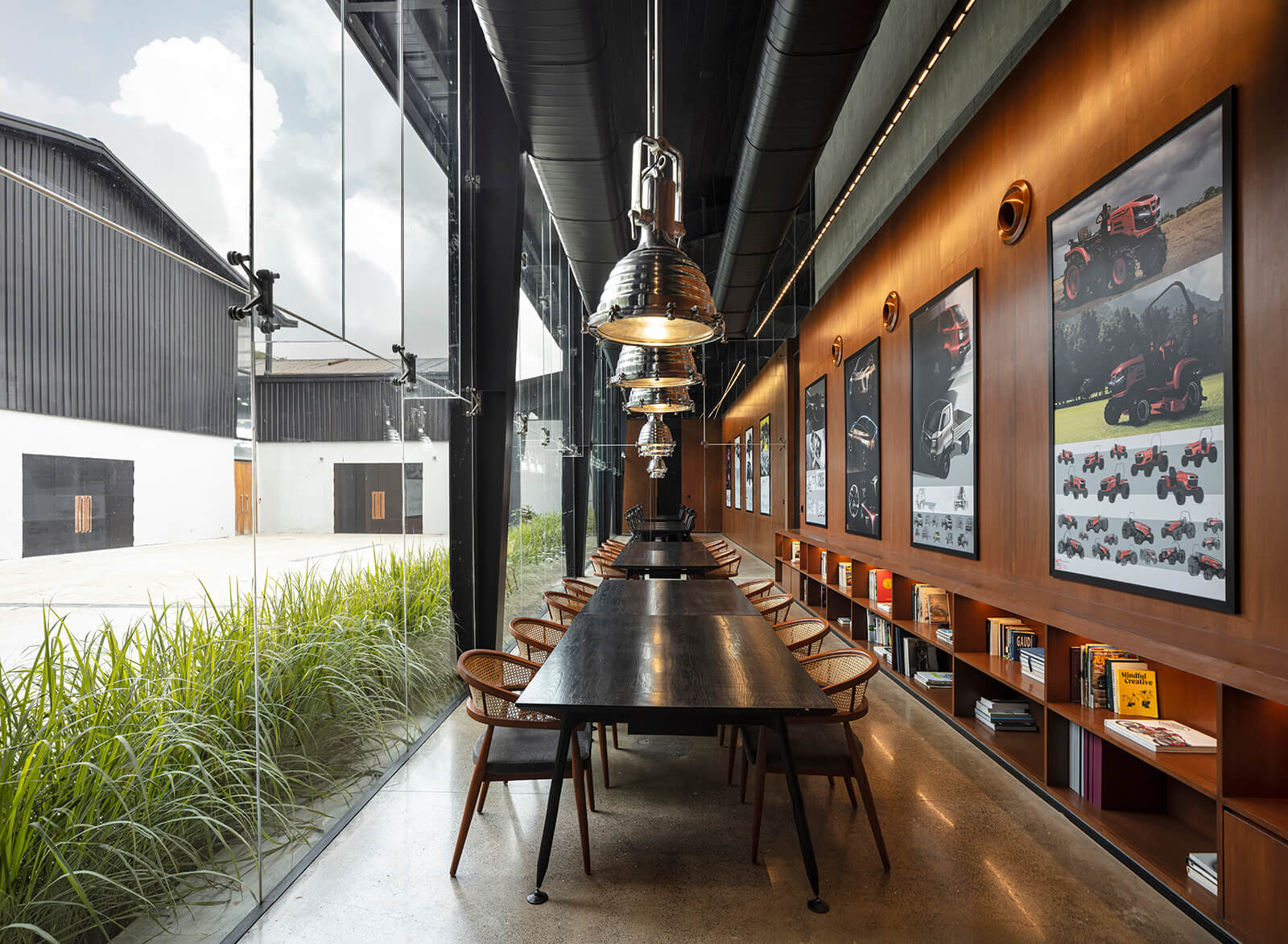
Despite its technological core, the studio retains a sense of intimacy. Wooden panelling, cane chairs, ship-style lights and lemongrass planters temper the industrial demeanour. The cement-plastered walls bear the marks of handwork while the concrete floors reveal the traces of their making. “High-tech innovation remains grounded in human craft. All partition walls are held at 4.3 metres rather than rising to the full 7.5-metre height, ensuring the black-painted roof reads as one continuous canopy unifying both structures. This gesture proves critical: it makes the two phases—despite the 12-year gap and different technological approaches—feel like one coherent whole,” details the press release.
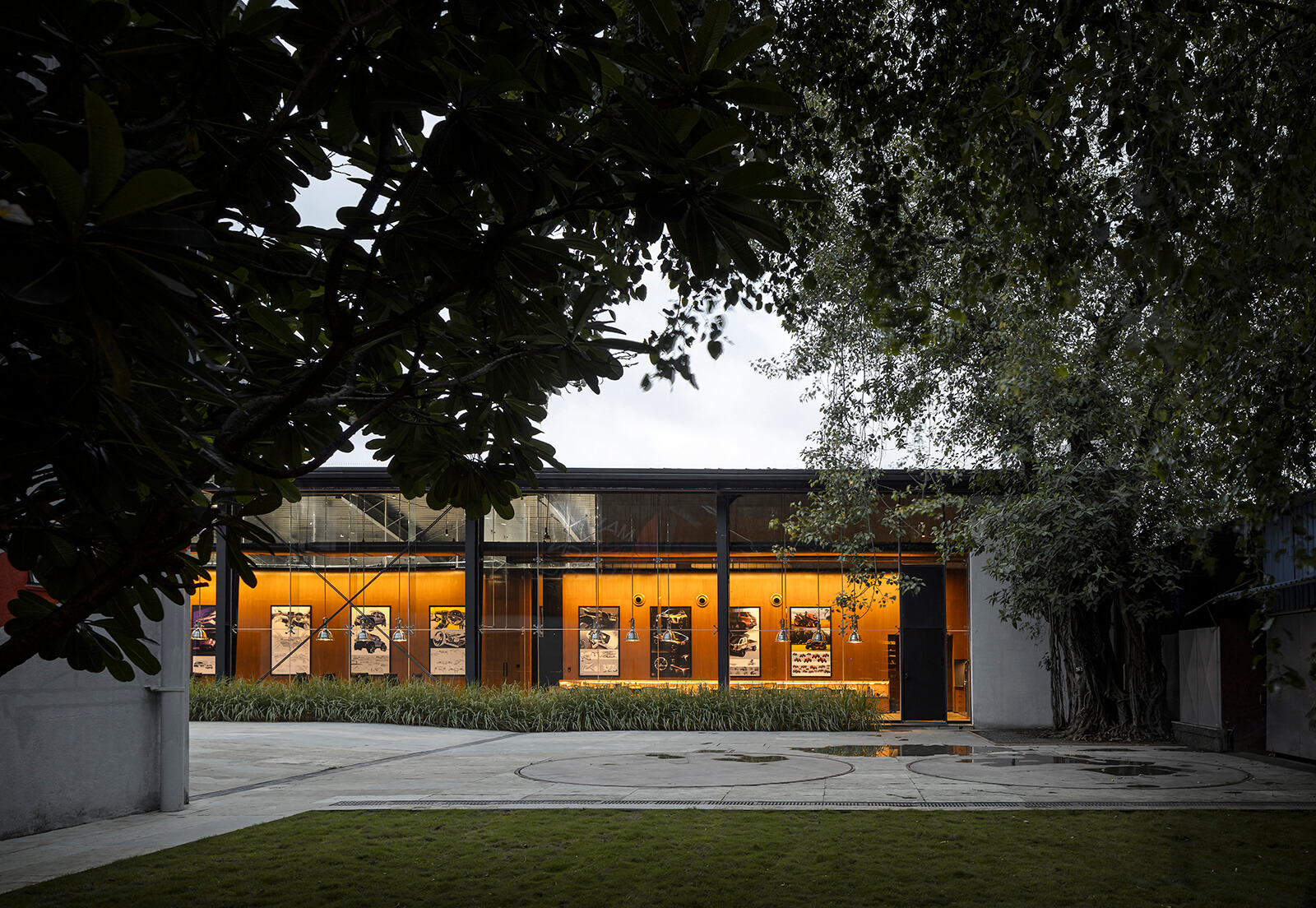
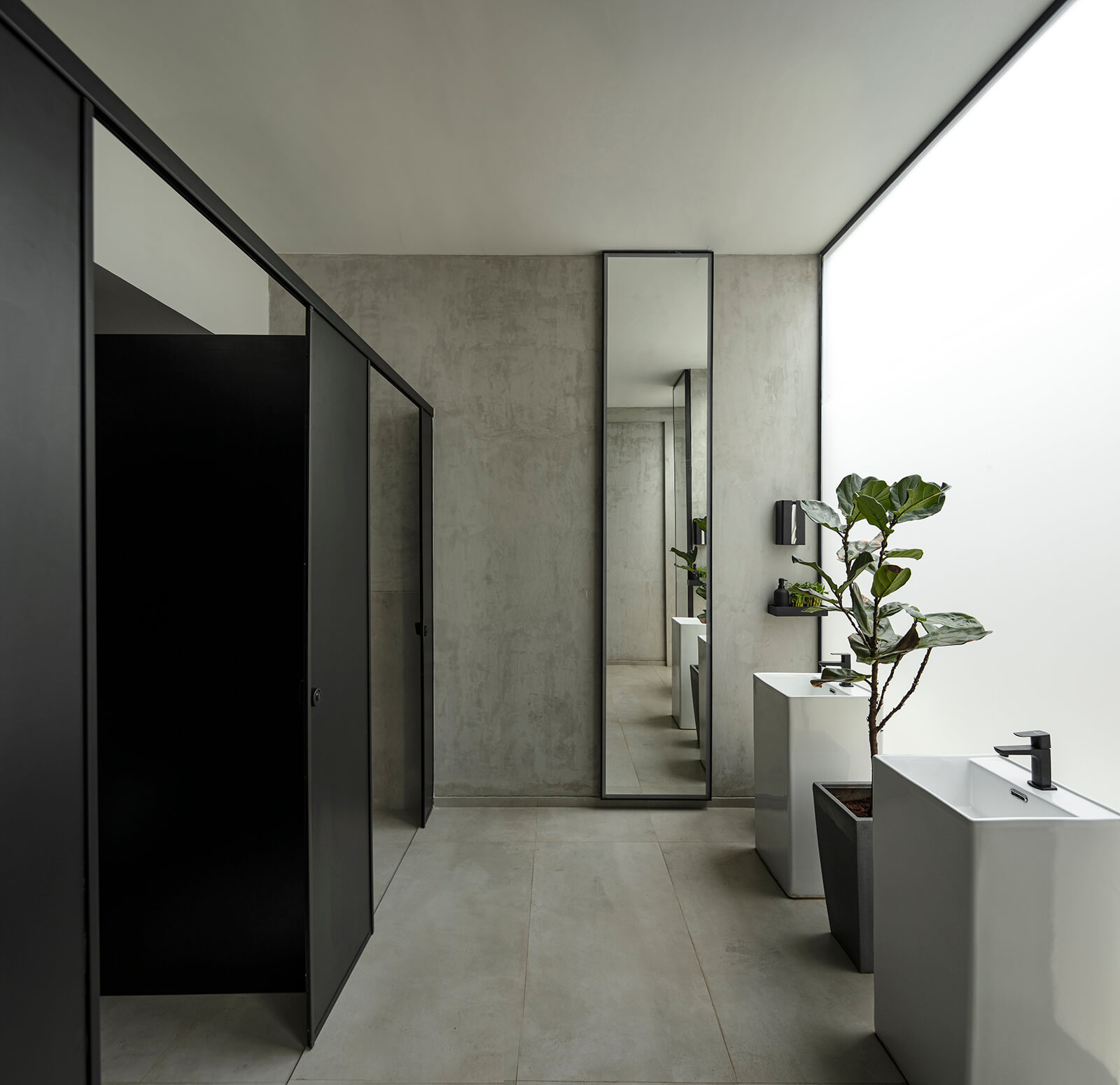
Even the edges breathe: a stainless-steel trellis supports climbing creepers, while neighbouring employees tend to the plants, extending care beyond the building’s bounds. It’s a small but telling gesture, ensuring that the studio is not isolated from its context but in quiet dialogue with it.
Every line of the project is drawn with an awareness of time—its passing, its potential, its circularity. Bolted frames anticipate future dismantling. The skylit street marks the motion of daylight. The material palette of the original studio, comprising black steel, grey cement plaster, and concrete, is intentionally carried forward into the extension. Together, these materials hold the memory of touch—from industrial steel to hand-trowelled plaster.
In doing so, SJK Architects propose a fresher model for industrial architecture in India: one that grows, adapts, evolves. This is a building that remembers where it began, responds to where it stands and prepares for where it might go next—a structure that exists, as it intends to, in three tenses at once.

by Pranjal Maheshwari Oct 19, 2026
The Mumbai-based architects integrate courtyards, mesh screens and north light trusses to create a dining space that doubles up as a community hub at SR University, Warangal.
by Mrinmayee Bhoot Oct 17, 2026
The Rotterdam-based institute centres the Indian Ocean as a network for exploring material histories and transnational links shaping coastal cultures, positing them as future models.
by Pranjal Maheshwari Oct 16, 2026
At the 2026 Stirling Prize ceremony, Mary Duggan with RUFF Architects, MAKER Architecten and Nakshabid Architects were felicitated for proffering quality housing and social equity.
by Mrinmayee Bhoot Oct 12, 2026
The new Centre for Contemporary Arts, fostering public engagement with art in Uzbekistan, is housed in a tram depot refurbished by the French studio, emulating local craftsmanship.

make your fridays matter with a well-read weekend
Enter your details to sign in
Don’t have an account?
Sign upOr you can sign in with
a single account for all
STIR platforms
All your bookmarks will be available across all your devices.
Stay STIRred
Already have an account?
Sign inOr you can sign up with
Verification link sent to check your inbox or spam folder to complete sign up process
Tap on things that interests you.
Select the Conversation Category you would like to watch
Please enter your details and click submit.
Enter the 6-digit code sent at


SJK Architects extend Mahindra & Mahindra’s studio across three tenses
by Jincy Iype | Published on : Nov 04, 2025


 Sign in with Google
 Sign in with email
What do you think?