Art05 mins. read
Peter Sedgley brings light to his canvases through optical illusions
by Georgina MaddoxDec 18, 2019



by Srishti OjhaPublished on : Jun 26, 2026
“Creative activity, like all aspects of social life, must be everyone’s business; it should not be delegated to a small group—whether the matter at hand is creativity, the valuing of work or social integration.”
- Valorization: Arm Key for the Cultural Penetration, Julio Le Parc, 1981
These were the words said by the era-defining Latin American abstract artist Julio Le Parc (1928 – 2026), whose recent passing prompted scores of tributes from galleries, artists and spectators from the world over. Le Parc was one of the creators of kinetic art, op art and immersive art, shaping not only their aesthetics but the democratic philosophy at their core. He was also a founding member of GRAV (Visual Art Research Group), established in 1960 with like-minded artists such as François Morellet, Yvaral and Vera Molnár who advocated for art to involve and create an embodied experience for the spectator, widening art’s place in society. Le Parc’s contributions as a masterful multimedia artist, thinker and political activist live on in the immersive and interactive art and spectator-led art movements of the present and future, influencing artists such as James Turrell and Carlos Cruz-Diez. The Tate Modern in London is presenting Julio Le Parc Light. Colour. Action. as a comprehensive retrospective, surveying the artist’s oeuvre from early geometric abstract artworks created in Argentina, where he was born, to the kinetic sculptures and experiments with light, movement and colour that would guide his practice in Paris from the 1960s to the present day. STIR’s curatorial director, Samta Nadeem, visited the show and spoke to Val Ravaglia, curator of Displays and International Art at Tate Modern, about Le Parc’s legacy and her collaboration with the late artist.
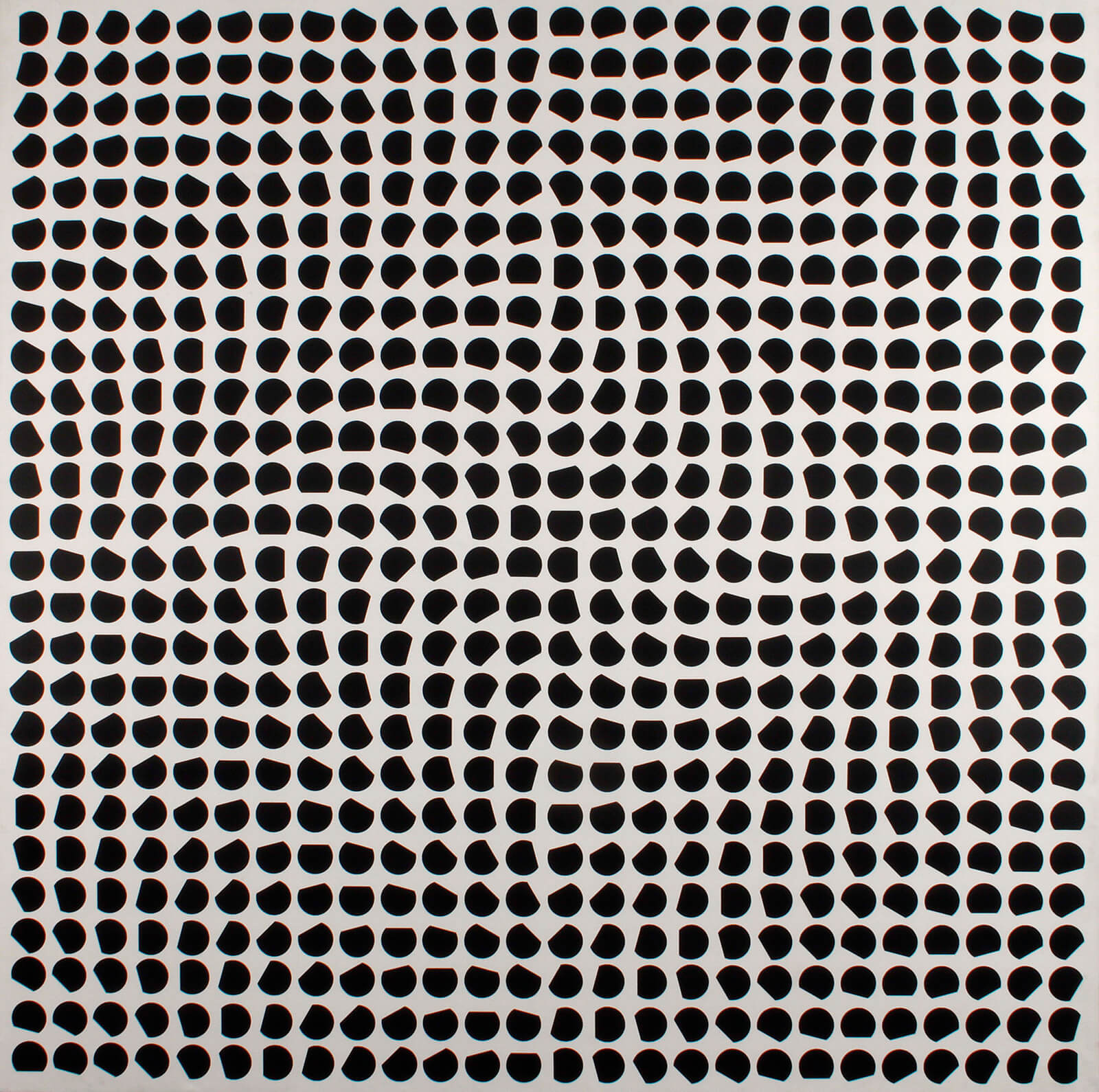
The exhibition shimmers, jitters, reflects and vibrates, coming alive with the movement of spectators. Eyes dart across flat works that create energy through geometry, walking before their changing reflections in Reflecting Blades, even pressing buttons to activate the whimsical installation artworks in what Le Parc called the Game Room. The immersive journey begins with a series of monochromatic paintings collectively named Black and White Surfaces by the artist. They feature regular shapes arranged in precise mathematical ‘programmes’ appearing to create rotations, spirals, curves and vibrations in spectators’ eyes from a flat, static form. One of the first pieces spectators see upon entering the show, Instability (1959 – 1991), sees Le Parc expanding his experiments on paper onto a large canvas, interrogating how this would alter spectators’ experiences.
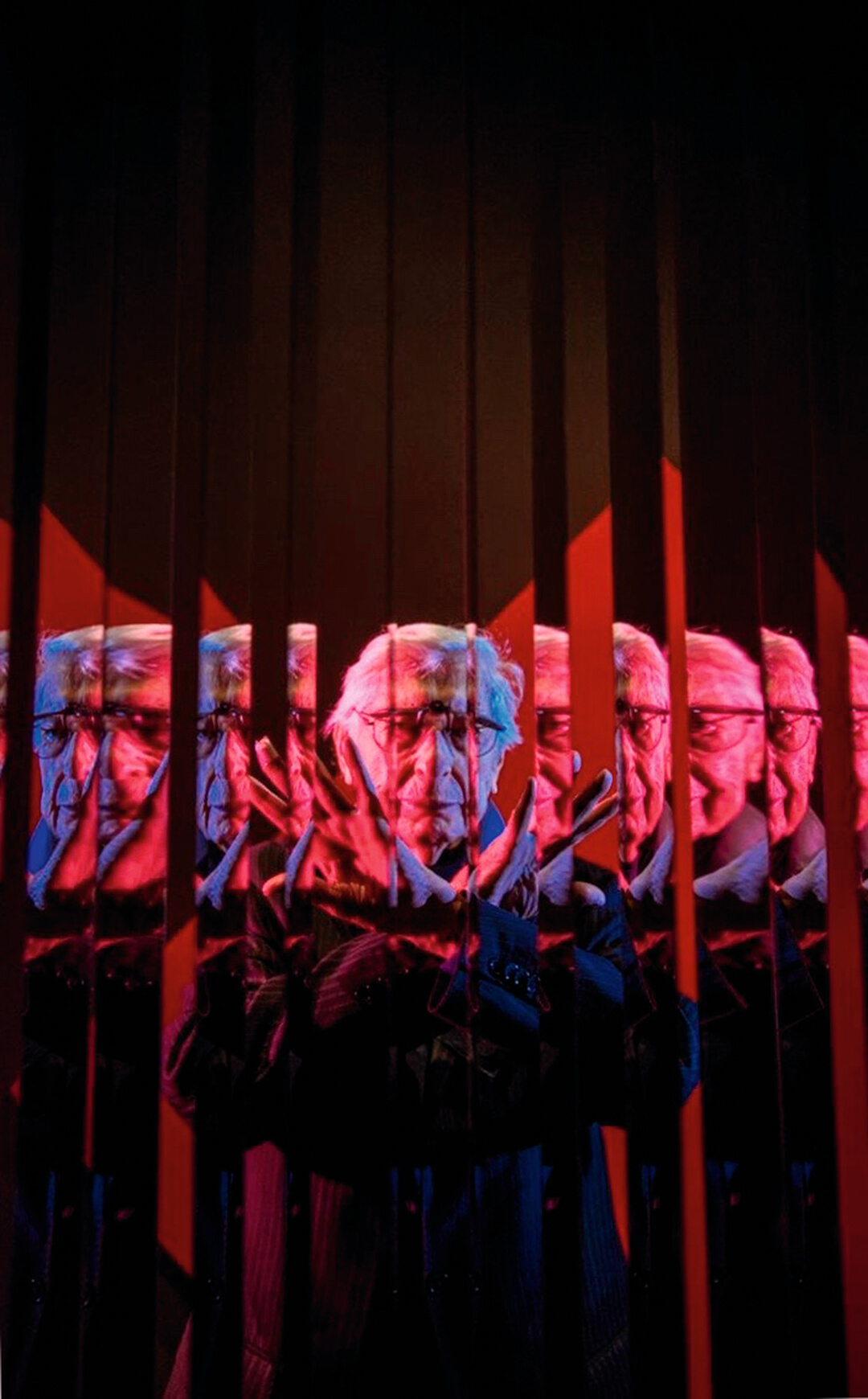
The spectator’s experience was at the centre of Le Parc’s work, and his ideology of art—that art should not need critical or educational scaffolding to be understood, enjoyed and experienced. Nadeem and Ravaglia spoke about the evolution of this kind of immersive, experiential art and how today, it is often cynically co-opted by corporate entities like shopping malls and branded backdrops as a gimmick. Ravaglia said, “The idea of having a Julio Le Parc exhibition was precisely to show the public one of the origin points of immersive art, and that, far from being a gimmick, for artists like Le Parc and his peers, it was a way of democratising works. Le Parc put this idea of communicating directly with the spectator front and centre in his works by working on interaction, on awakening a consciousness in the spectator.”
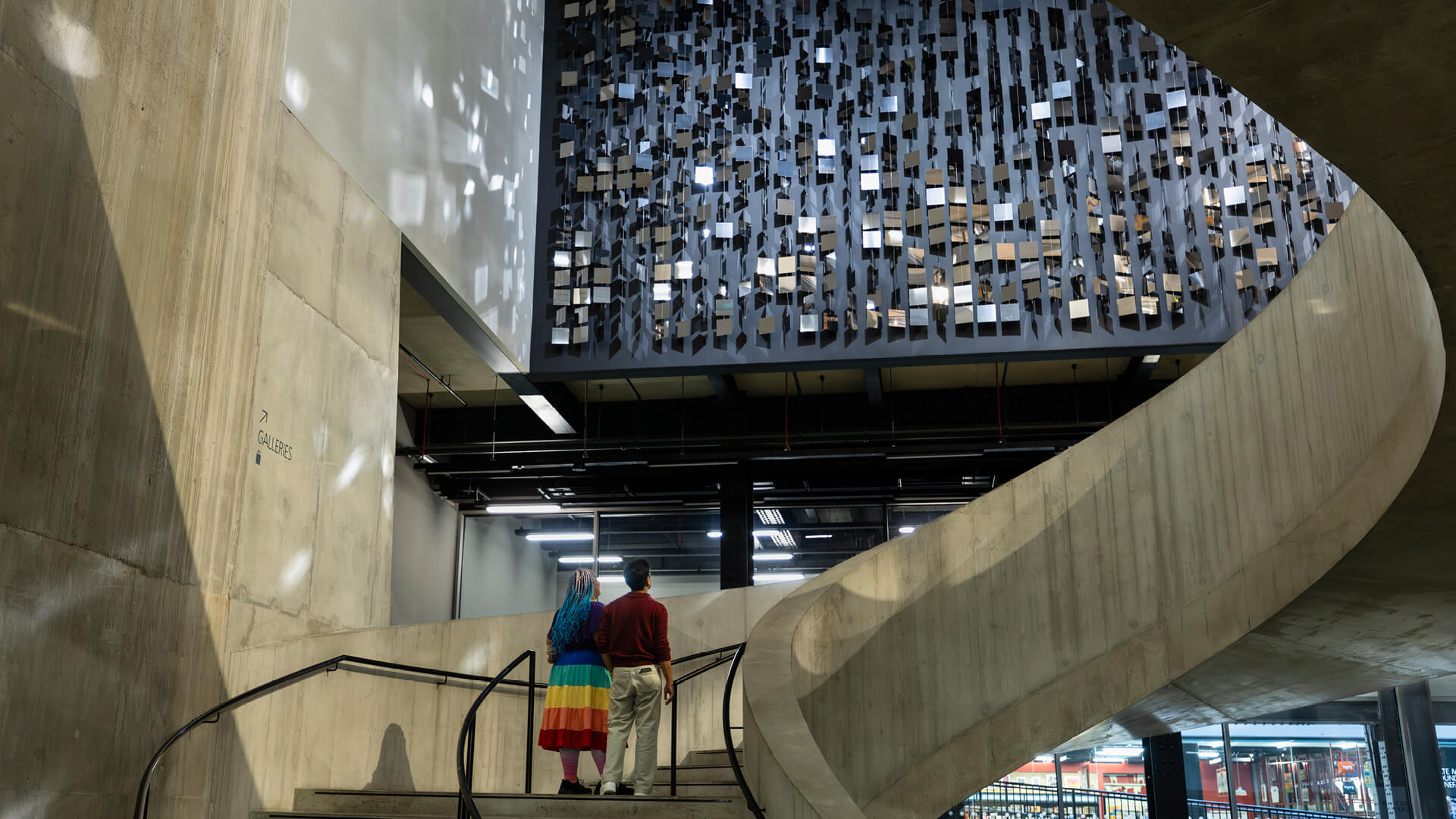
The exhibition moves into Le Parc’s light art, presenting works such as the recreation of Parc’s first mobile in a long series—Continual Mobile (Tate) (2026)—installed in the gallery’s concourse (the original was installed at the entrance of the 1963 Paris Biennale). Across different installations, reflective, translucent and opaque forms reflect artificial or natural light, creating shifting reflections and shadows that respond to the air currents of the room, affected by the presence and movement of spectators. In a series of works, including motors like Continual Light Cylinders, the interplay of reflective metal and light creates ever-changing flows. Le Parc’s work with light began with light boxes, which allowed him a degree of control over the ephemeral energy. Continual Light Box (1963 – 2013) uses four stainless steel ribbons in different colours, moved by two motors, causing light and colour to transform and travel, creating mesmerising gradients and flux within a strict geometry.
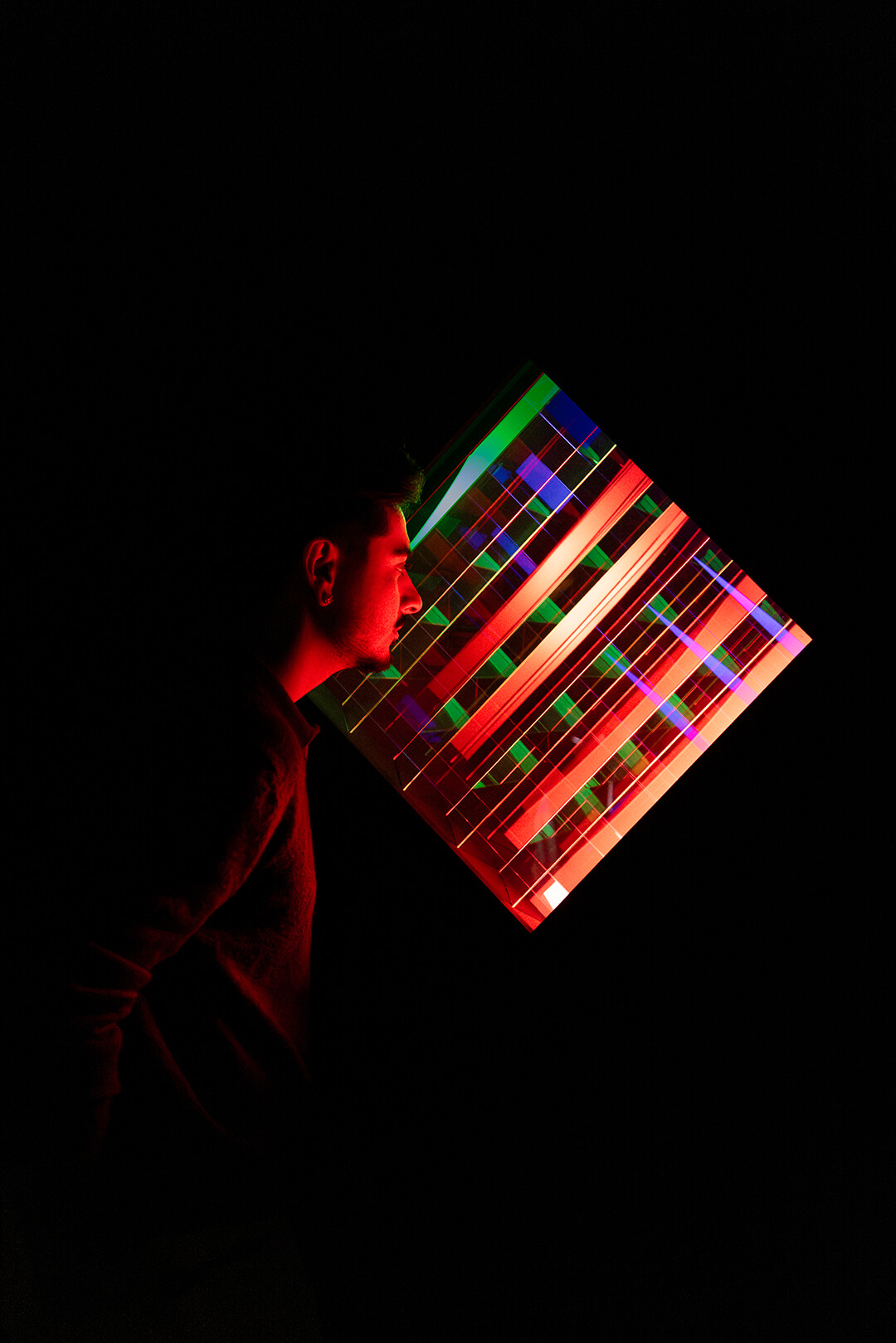
Ravaglia tells STIR about her experience collaborating with the artist on the exhibition design, saying, “Julio was involved directly, and his sons had a large role to play in the development of the exhibition. [Julio] was always brandishing a ruler and a pencil to make changes to the exhibition’s layout himself. He was very adamant that this was still his will that he was imparting on this exhibition. He was particularly concerned about avoiding light spillage.” Despite the challenge of fitting Le Parc’s many works into the Tate Modern’s gallery space and the careful lighting design required, the curatorial team’s careful divisions of the exhibition into sections that focus on different aspects of Le Parc’s multivalent practice create the experience of walking in the artist’s shoes, seeing the many materials and techniques he worked with concurrently over his life.
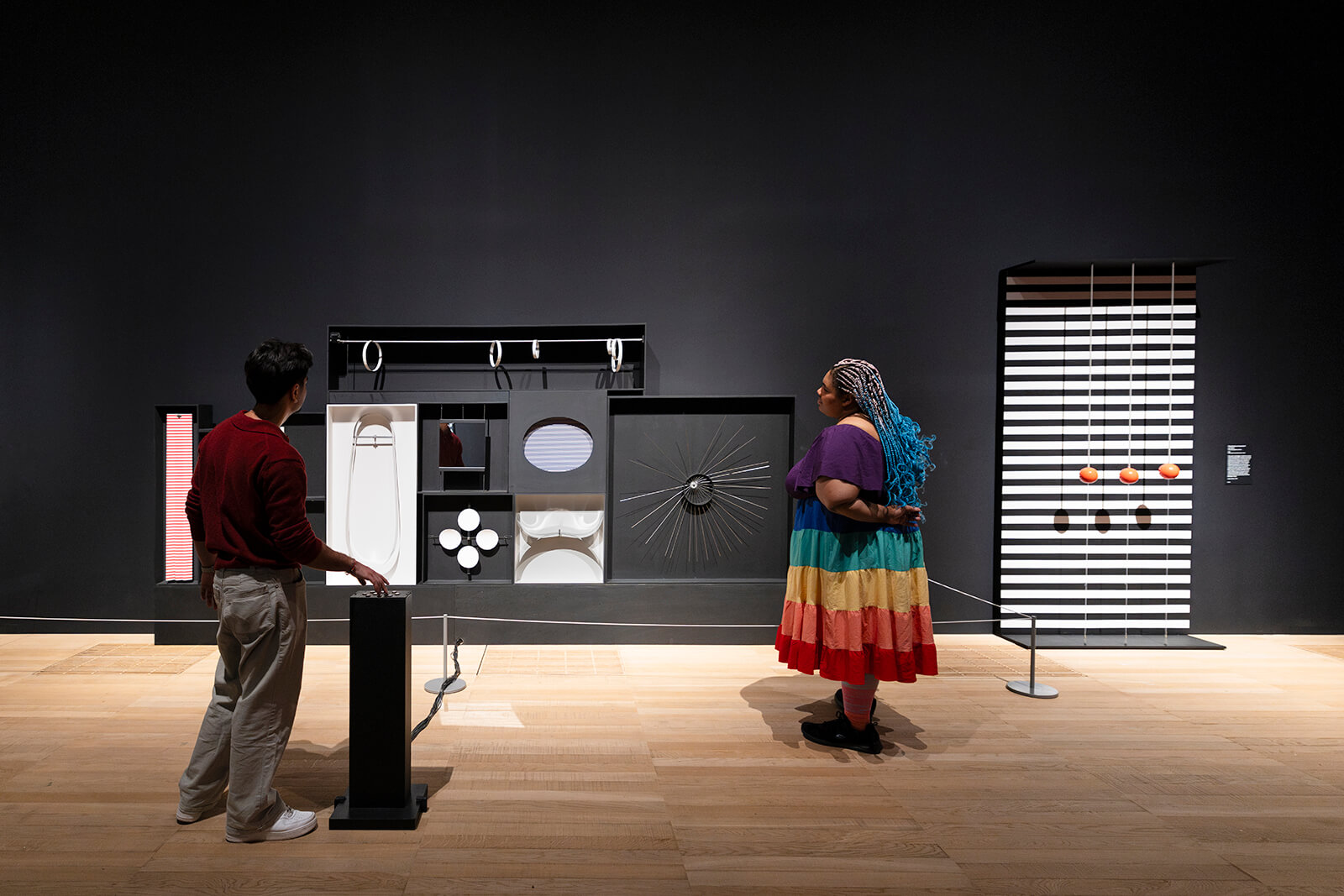
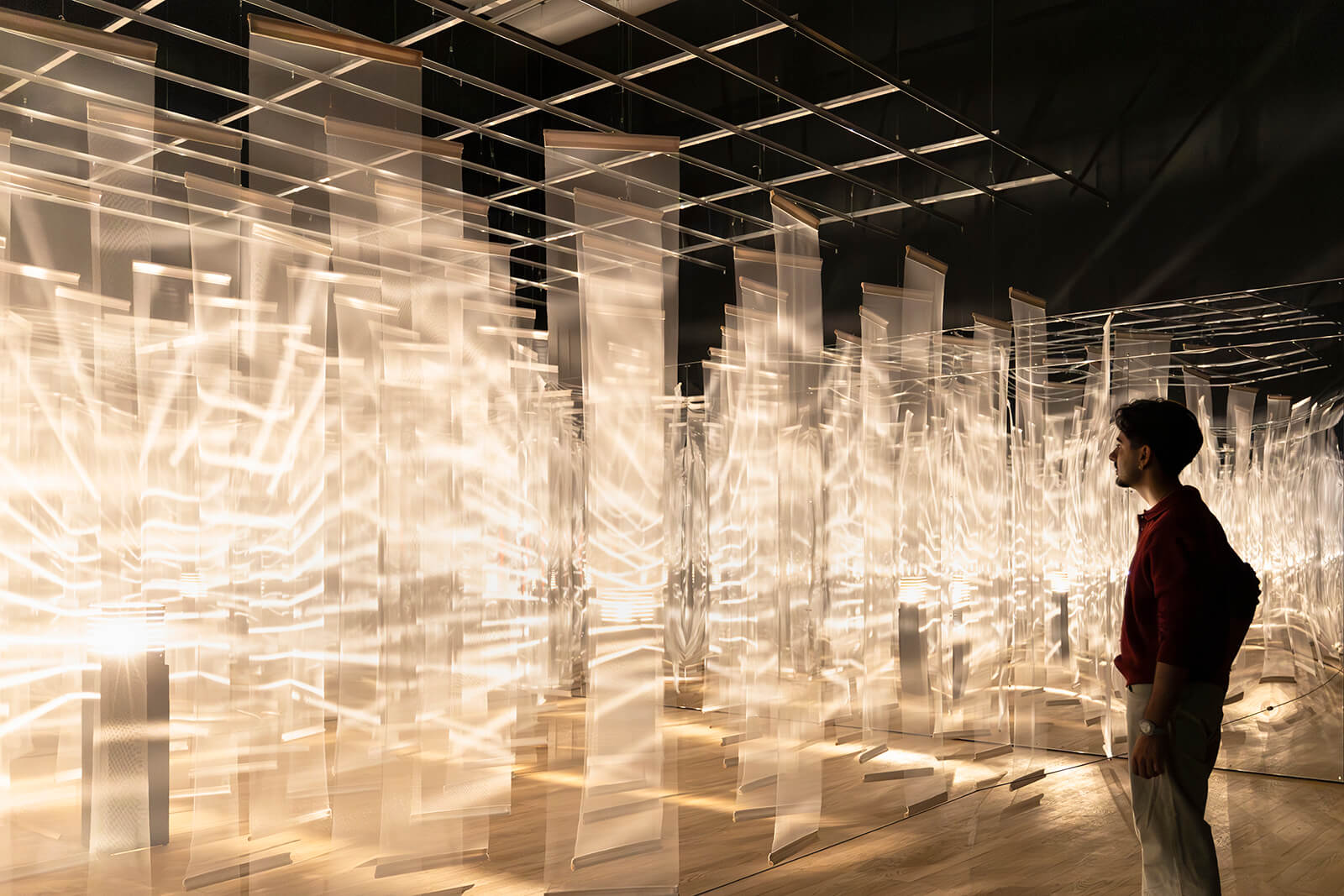
The playful spirit of Le Parc’s art shines in a section titled Game Room, which features several interactive works that invite viewers to touch, move components or press buttons, intended to surprise them with the visual effects of their active involvement in the artworks. Room-sized large-scale installations such as Cells represent another part of Le Parc’s contributions to GRAV, immersing spectators completely within an artwork. Meanwhile, games like Ribbons in the Wind (1988) place viewers in a room with long, white ribbons blowing out of a fan, creating evanescent interactions between the spectator, air currents, ribbons and the shadows they cast.
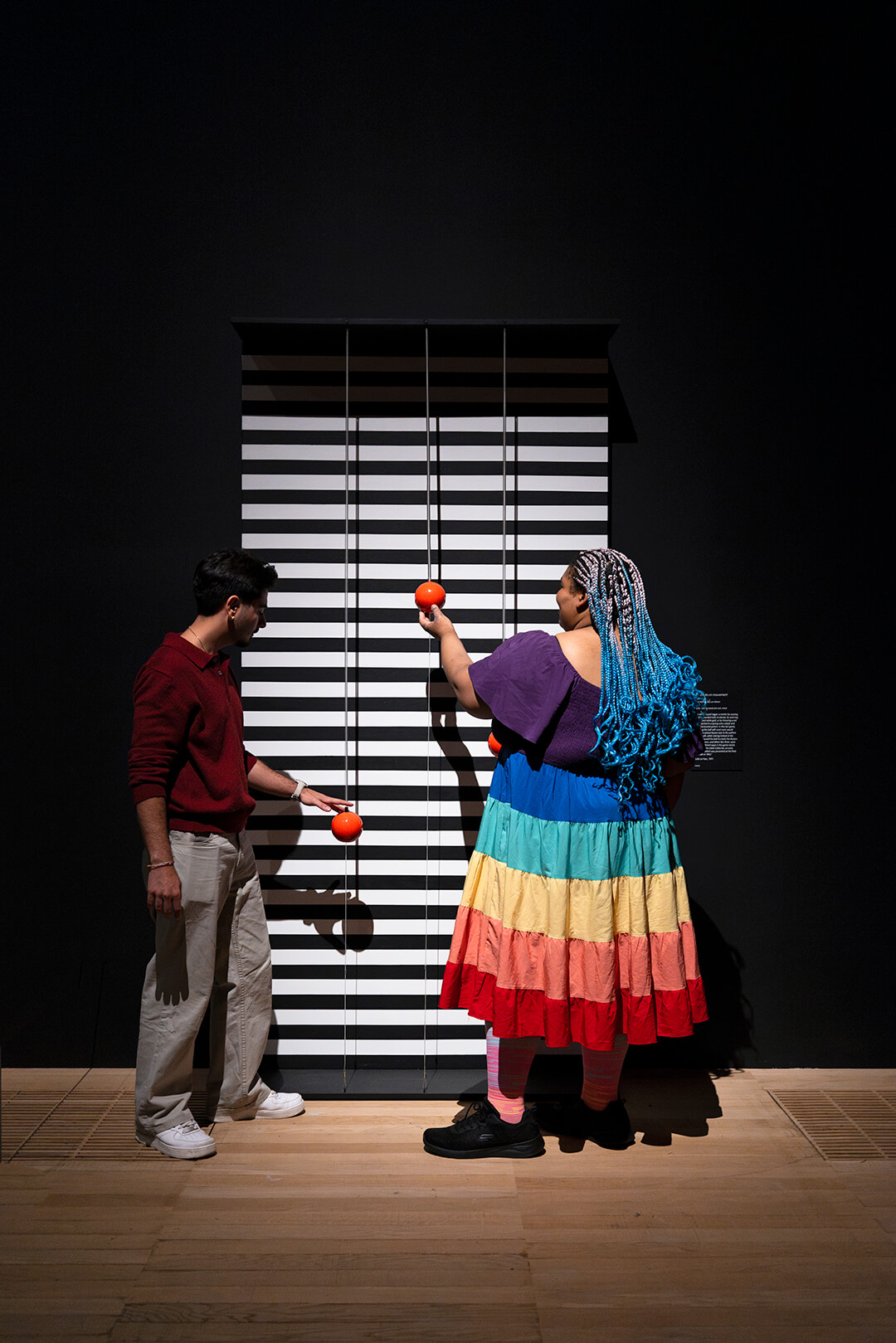
Le Parc’s emphasis on interaction as a quality that art should foster is obvious in the way spectators connect, observe and even play together in response to the installations. Like all of Le Parc’s art, the force behind these works was political—Le Parc was inspired by the geometric, grounded material concerns and aesthetic of the Movemento Arte Concreto Invención (the Concrete Art movement that was sweeping postwar Latin America) that focused on non-representational works that moved art out of conventional canvases and galleries into the public sphere with works that blended multimedia, performance and sculpture.
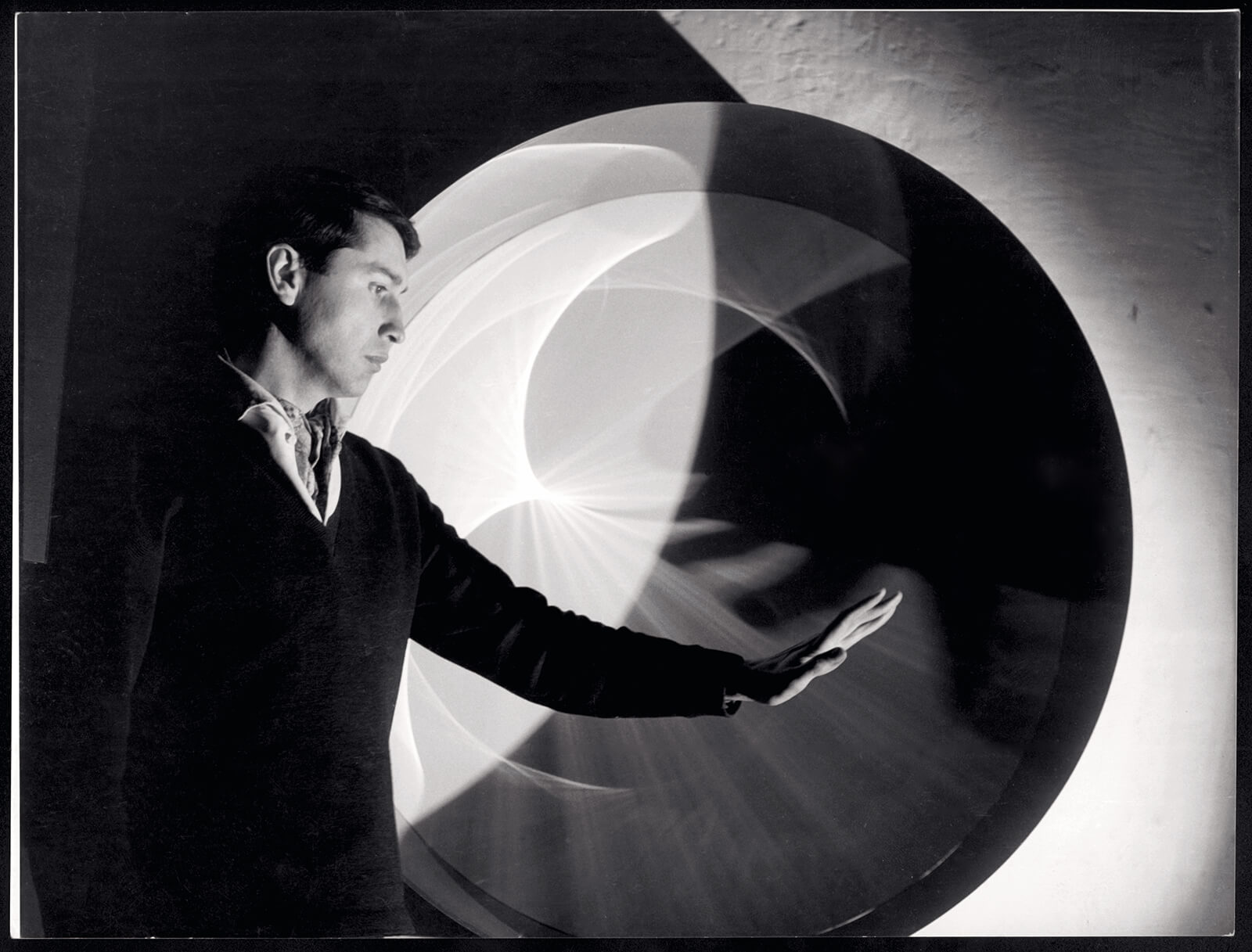
He was also part of the Atelier Populaire movement and protests, which saw artists and art students occupying École des Beaux-Arts in Paris to create lithographs and activist art to protest unemployment and poverty spurred by Charles de Gaulle’s conservative government in France. In a significant moment in Le Parc’s political life, he was expelled from France in 1968 for his involvement in the protest. Ravaglia explained the politics of Le Parc’s kinetic, geometric art, saying. “A common debate from the postwar period was bourgeois abstraction versus socially committed realism. Le Parc and his peers contested this, pointing out how abstraction could be a very simple way of conveying a message.”
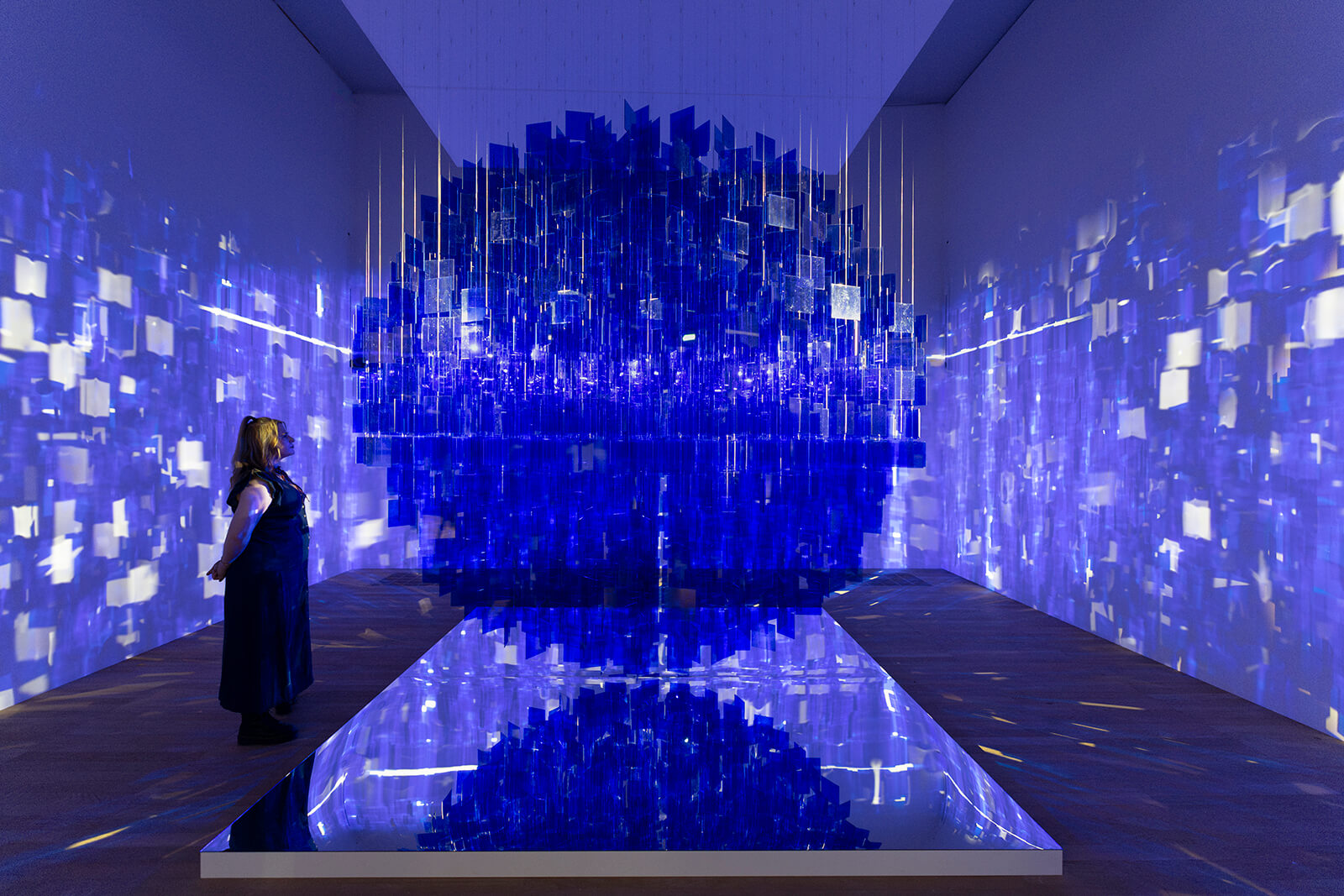
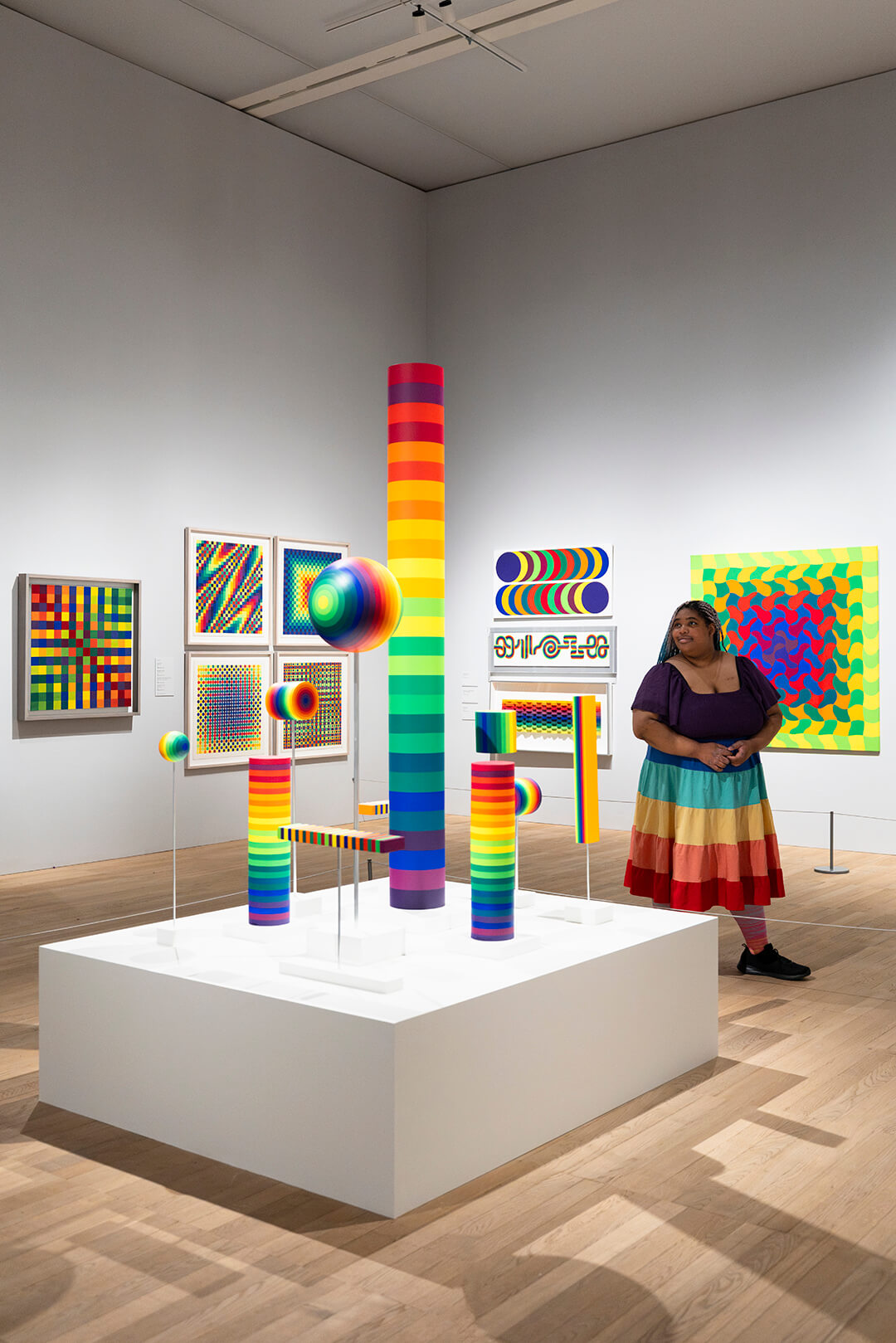
The final movements of the exhibition transition from monochromatic works, machines and experiments with light, exploding into a vibrant and whimsical world of colour. A whole room is dedicated to the alien beauty of Blue Sphere (2001 – 2022). Small reflective squares in ultraviolet blue come together to create a giant, shattered sphere that, suspended above a mirrored surface, scatters sharp blue reflections throughout the space. Spectators circle the kinetic sculpture, revelling in a room bathed with rich blue light, cut with white. The final section, Colour-Surfaces, is a concentration of Le Parc’s study of colour beginning from 1959. He brought the mathematical thinking and algorithmic logic from his monochromatic Surfaces to the colour wheel, eventually settling on 14 colours that he would combine and recombine in calculated patterns in paintings, reliefs, sculptures and fragmented works. Ravaglia spoke about the rhythm and sequencing of the exhibition, saying, “After the escalation of movement, it can feel like a step back to return to canvases and bi-dimensional works, but you can tell that Julio was still incorporating virtual movement and the movement of the viewer’s eye just as in the first room.”
Julio Le Parc: Light. Colour. Action. meets the formidable challenge of creating a retrospective for such a prolific and experimental artist with thoughtfulness, attention to detail and the guiding (or brandishing) hand of the late artist himself. Although some of the works in the exhibition were created as far back as the 1950s, they remain undeniably contemporary, as does Le Parc’s approach to art and the social role of artists. Ravaglia lays out the significance of Le Parc’s body of work in the digital age, saying, “We live in a time of increasingly disembodied experiences of art—remotely and through screens. Julio defended the value of the spectacle, of making art so visually enticing, people still want to experience it in the flesh. It’s also interesting to read his very analogue and embodied practice in relation to artists in the digital realm today, there are so many interesting dialogues to be teased out in the systemacity, algorithms and generative nature of his works.”
The exhibition, ‘Julio Le Parc: Light. Colour. Action.’, will be on view from June 11, 2026 – May 03, 2027, at the Tate Modern in London, UK.

by Srishti Ojha Oct 21, 2026
Increasingly, artists, filmmakers and activists are turning to VR to create more personal, tangible accounts of the climate emergency and its impact on vulnerable communities.
by Mirra Lynn Oct 20, 2026
The Indian artist paints the old wadas of central Pune, capturing the traces of everyday life that cling to these structures, battered by time but unbowed.
by Anmol Ahuja Oct 15, 2026
How do heaps of souvenirs and relics with racist Aboriginal motifs and features become art? MCA Sydney’s winter showcase—the artist’s largest to date—beckons a possibility.
by Srishti Ojha Oct 14, 2026
The first Dutch publication on the Turkish artist, the eponymous book centres on Refik Anadol: Latent City, his living data sculpture of Bruges, exhibited at BRUSK gallery.

make your fridays matter with a well-read weekend
Enter your details to sign in
Don’t have an account?
Sign upOr you can sign in with
a single account for all
STIR platforms
All your bookmarks will be available across all your devices.
Stay STIRred
Already have an account?
Sign inOr you can sign up with
Verification link sent to check your inbox or spam folder to complete sign up process
Tap on things that interests you.
Select the Conversation Category you would like to watch
Please enter your details and click submit.
Enter the 6-digit code sent at


Tate Modern hosts late kinetic art pioneer Julio Le Parc’s last exhibition
by Srishti Ojha | Published on : Jun 26, 2026


 Sign in with Google
 Sign in with email
What do you think?