Architecture06 mins. read
Vedic Vidya Kendra reimagines tradition through contemplative design
by Pooja Suresh HollannavarFeb 25, 2025




by Jincy IypePublished on : Dec 02, 2025
Situated deep in a terraced ridge in the Satmala mountain range, 70km from the city of Nashik in Maharashtra, India, a narrow strip of land, bordered by a mountain on the northwest and terraced farming slopes on the southeast, waits for the day to begin. Light sets across this remote, hilly terrain of the Western Ghats and its quiet forms of farming households. Here lies Hiwali, a small rural settlement—just about 25 homes—the aspirations within it, however, are anything but. Children of the village ascend nearly 50 feet along the main village road to traverse it, the path winding along farmland. The terrain is steep, but movement across it seems steady. It feels, in some ways, like the beginning of a story children write with their own footsteps.
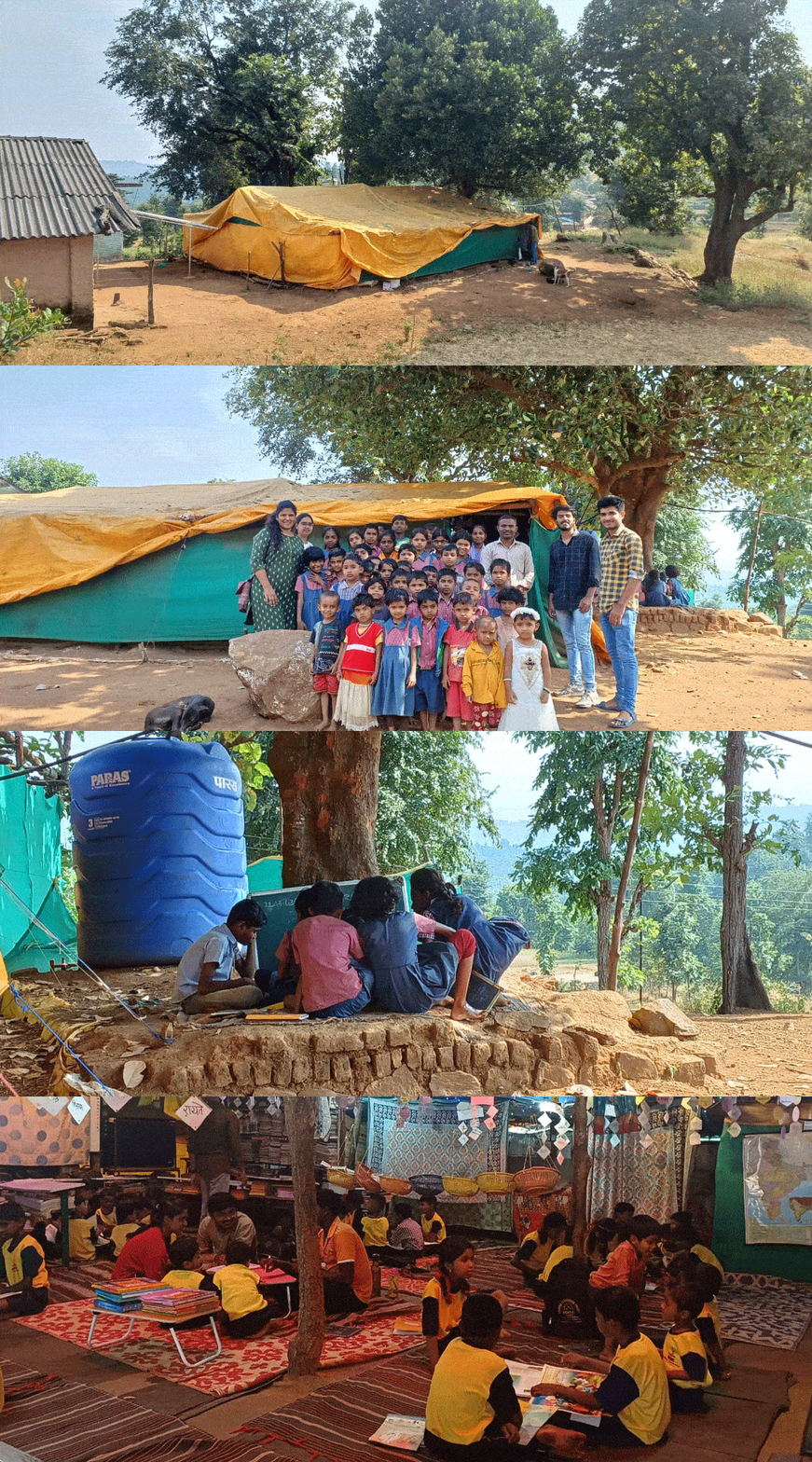
For years, the village’s primary school operated out of a temporary shelter. Yet every day, over 70 children from neighbouring settlements would arrive—drawn as much by learning as by the presence of their solitary teacher, Keshav Gavit, known across the district for his unusual, innovative methods.
For instance, all his students can write with both hands. They have memorised ‘over 1,100 tables and more.’ The school runs 365 days a year, 10 hours a day, teaching curriculum as well as life skills through group work and activity-based learning. The new school, built from the ground up to replace the previous temporary structure, was designed by Nashik-based architectural firm PK_iNCEPTiON, who note that it also functions "like a daycare", but with the intensity of a space where curiosity is an inherent undercurrent.

Initiated by the Give Welfare Organization and Armstrong Robotics & Technologies, the new Hiwali School begins from this spirit: not to impose an idea of education, but to shape an environment where it can unfold with abandon. Before drawing plans, the architects turned to Louis Kahn’s idea of ‘to and through’ spaces, a reminder that movement, thresholds and the relationship between built form and landscape can themselves become teachers. “It emphasises giving true attention to ‘through’ spaces, how the building integrates with its setting and how navigation becomes meaningful, enjoyable and inspiring,” relays the project’s press release.
“The structure does not follow conventional norms,” lead architect Pooja Khairnar tells STIR. “The school is designed to question the idea of a ‘to’ place, where one simply arrives and occupies fixed rooms. Instead, the in-between or ‘through’ spaces become the learning environments. These interior zones remain dynamic, flexible and open, avoiding any attempt to contain students. Given that one teacher handles seventy students, enclosed rooms would limit the kind of supervision the open layout allows.”
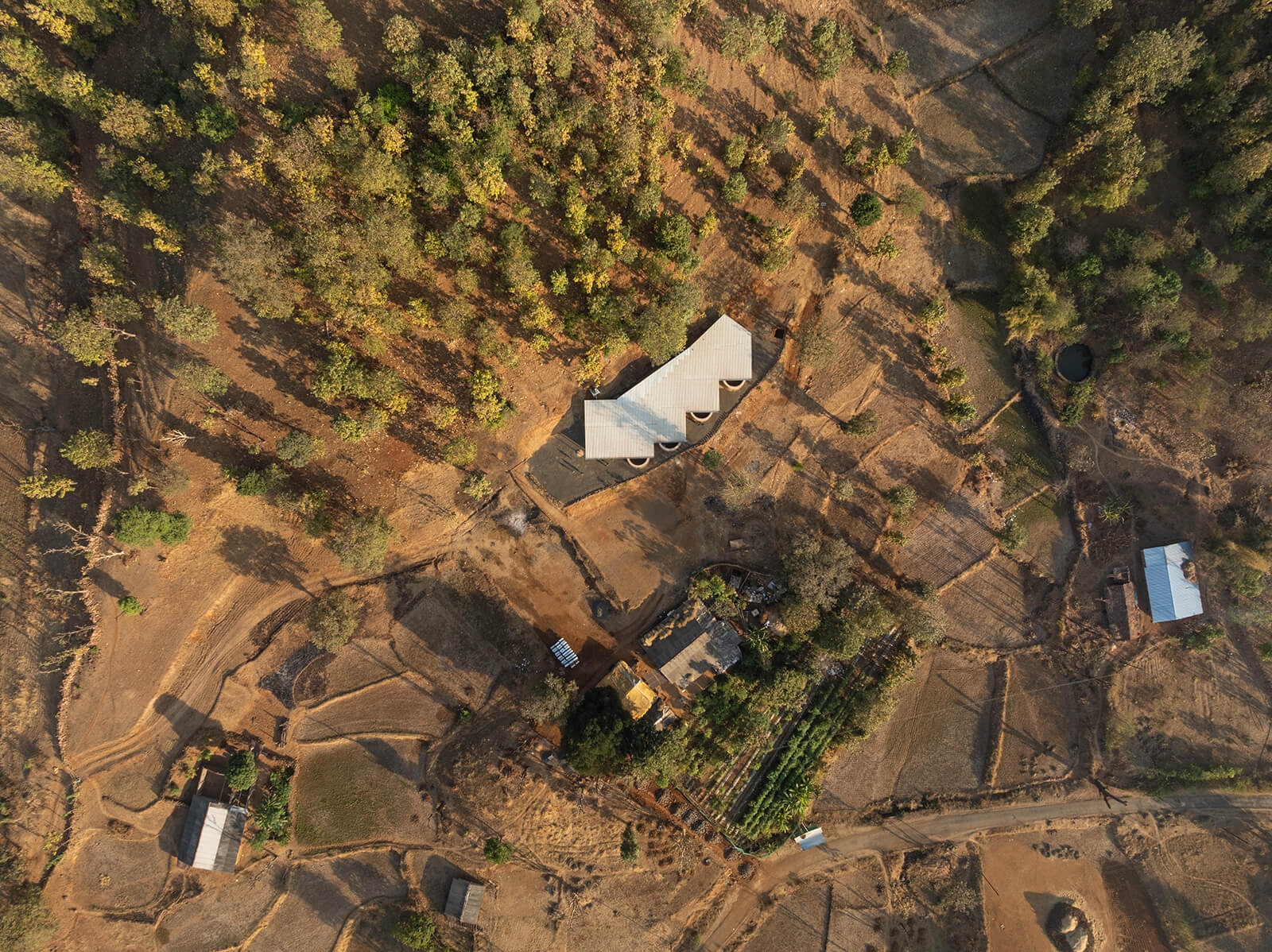
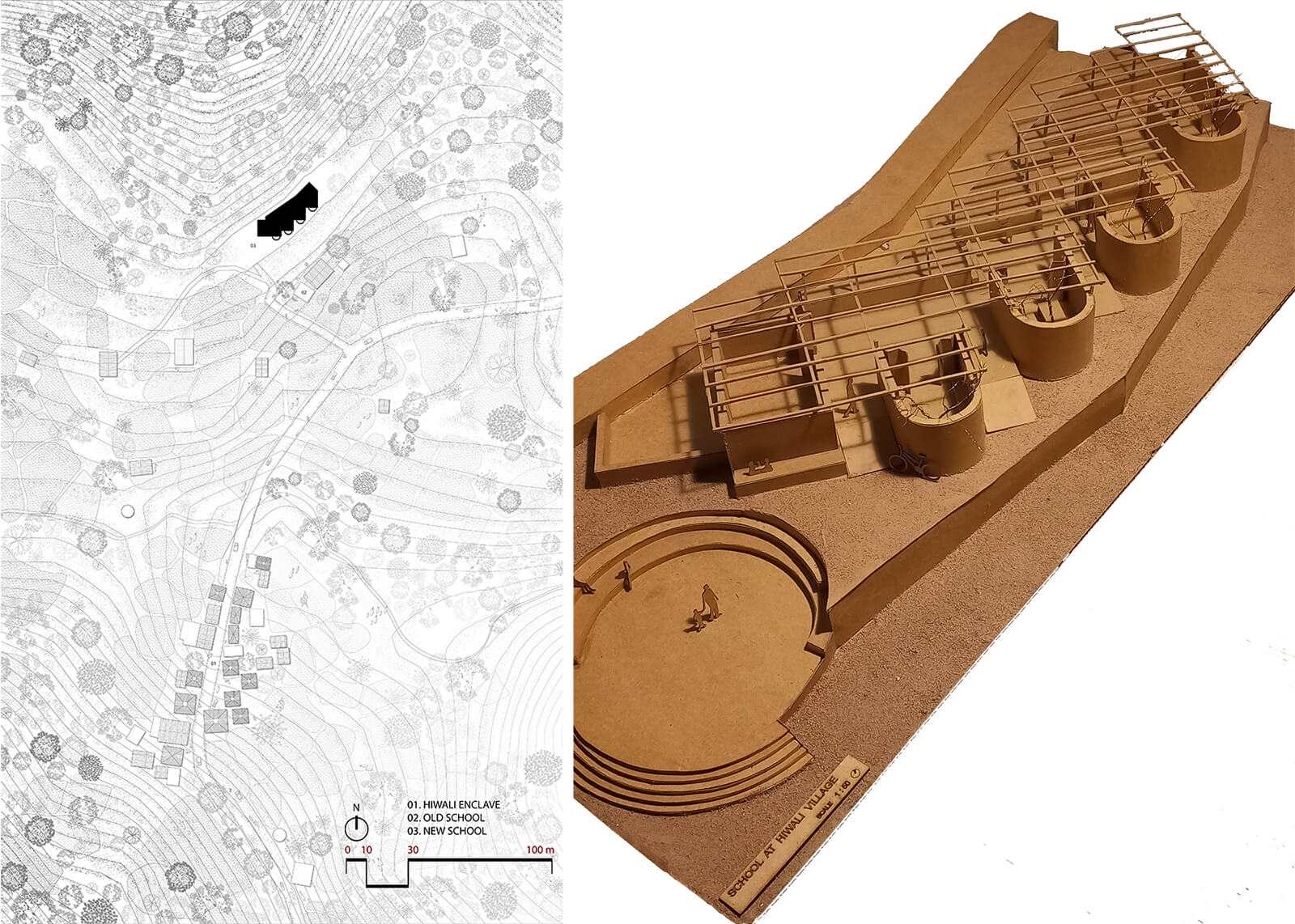
Here, the journey commences at a water moat carved at the upper edge of the site to protect it from mountain runoff, its presence marking the separation between the village and a place of possibility. Further on, diagonal modular blocks for the office, computer room, science room, projector room and library align with prevailing winds and terrain, allowing expansion towards the mountain. “Shaped in a U form, the blocks adopt an aerodynamic profile, suited to their windward setting,” mentions the team from PK_iNCEPTiON. Between the moat and the blocks, a zigzag plinth orchestrates water to contrive multiple nodes that transform into indoor amphitheatres for 'learning and play’.
“The raised plinth, introduced as a response to the retaining wall of the moat, creates a relatable environment for children. When students occupy the higher plinth and the teacher stands at the floor level, the difference between their eye levels is reduced. This softens the hierarchical stance that teachers typically hold and strengthens the relationship between teacher and student,” Khairnar explains.
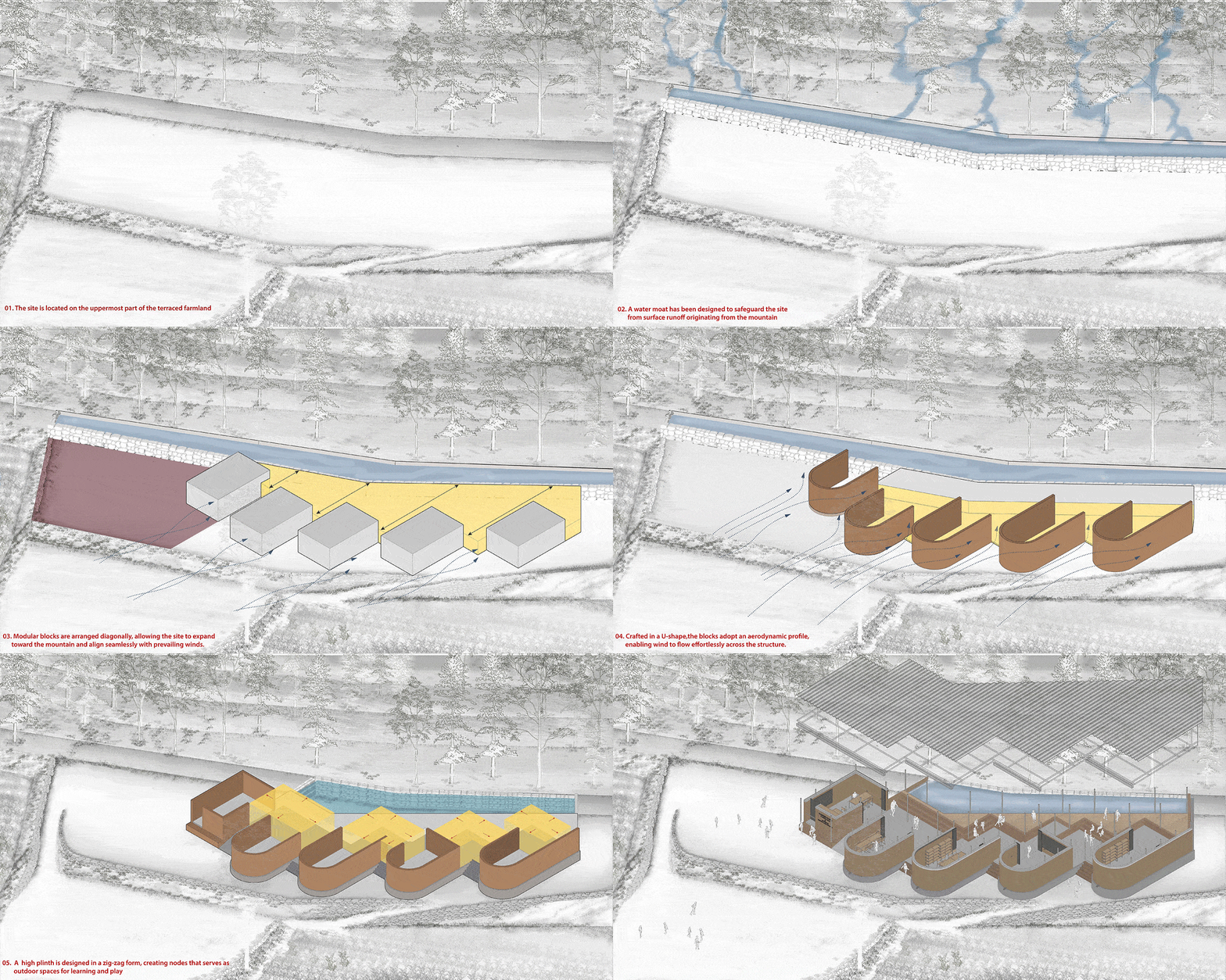
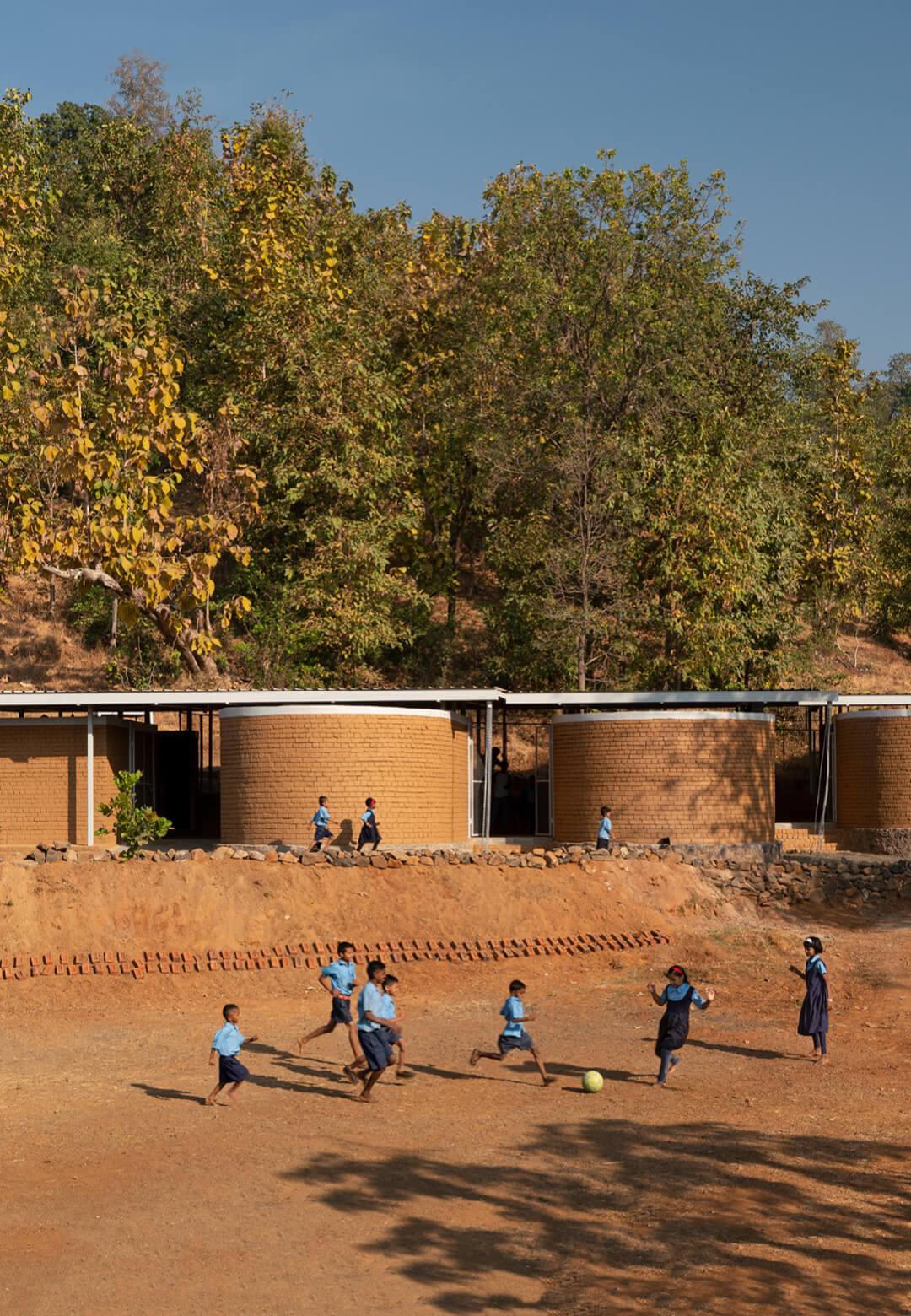
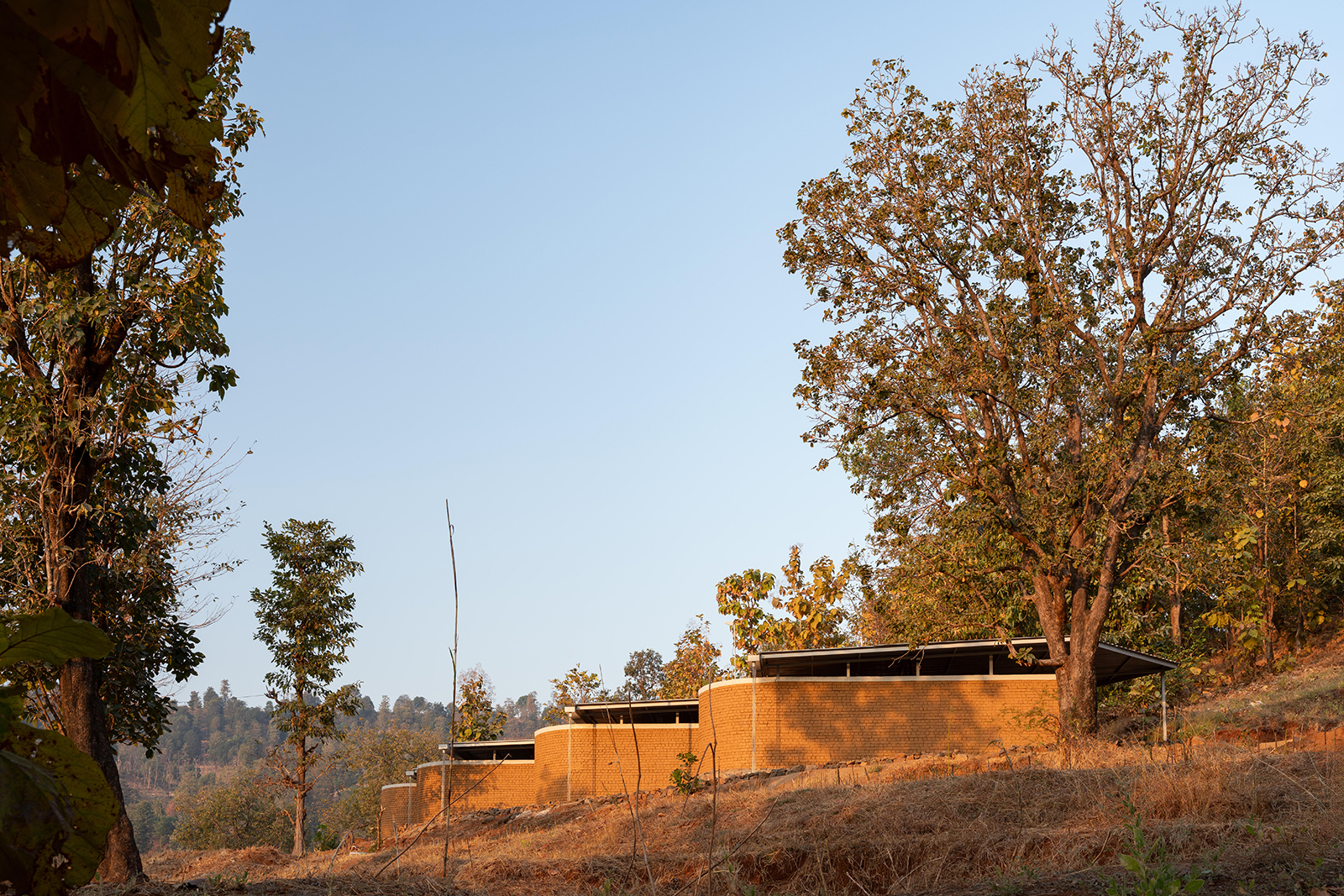
The choice of an aerodynamic profile for the 355 sqm educational architecture is both practical and poetic—hard winds slip across the roofs, while natural light pools in the open-to-sky, semicircular courtyards carved from their geometry. “Daylight enters through spaces between blocks for informal areas”, the Indian architects explain, “and through semicircular courtyards for rooms, derived from the roof profile.” The shifting volumes, between five and eight feet, create a ‘relatable’ scale that children understand and end up interacting with intuitively.
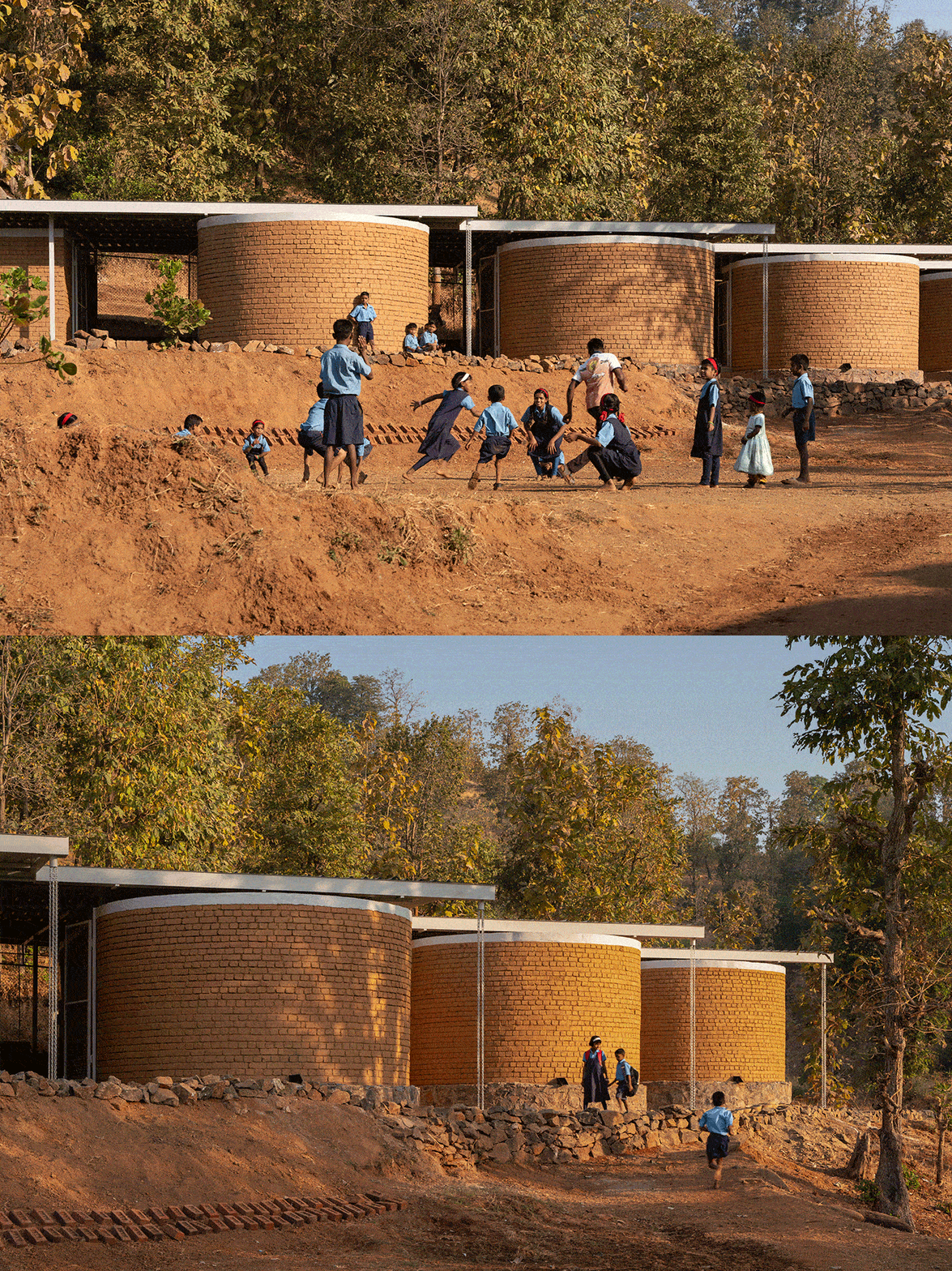
Inside, in subtle ways, the educational building avoids the forbearance or rudimentary nature often associated with rural infrastructure. The load-bearing brick walls are left exposed, for effect and for utility. With the school dependent on external donations, the architects opted for low-cost load-bearing construction. This traditional village practice, supported by readily available local brick and stone, also allowed local labour to participate in the build. Boards can be nailed onto them easily; surfaces become writable. A flat roof floats above, enhancing ventilation, with its underside acting as ‘a canvas for painting’.
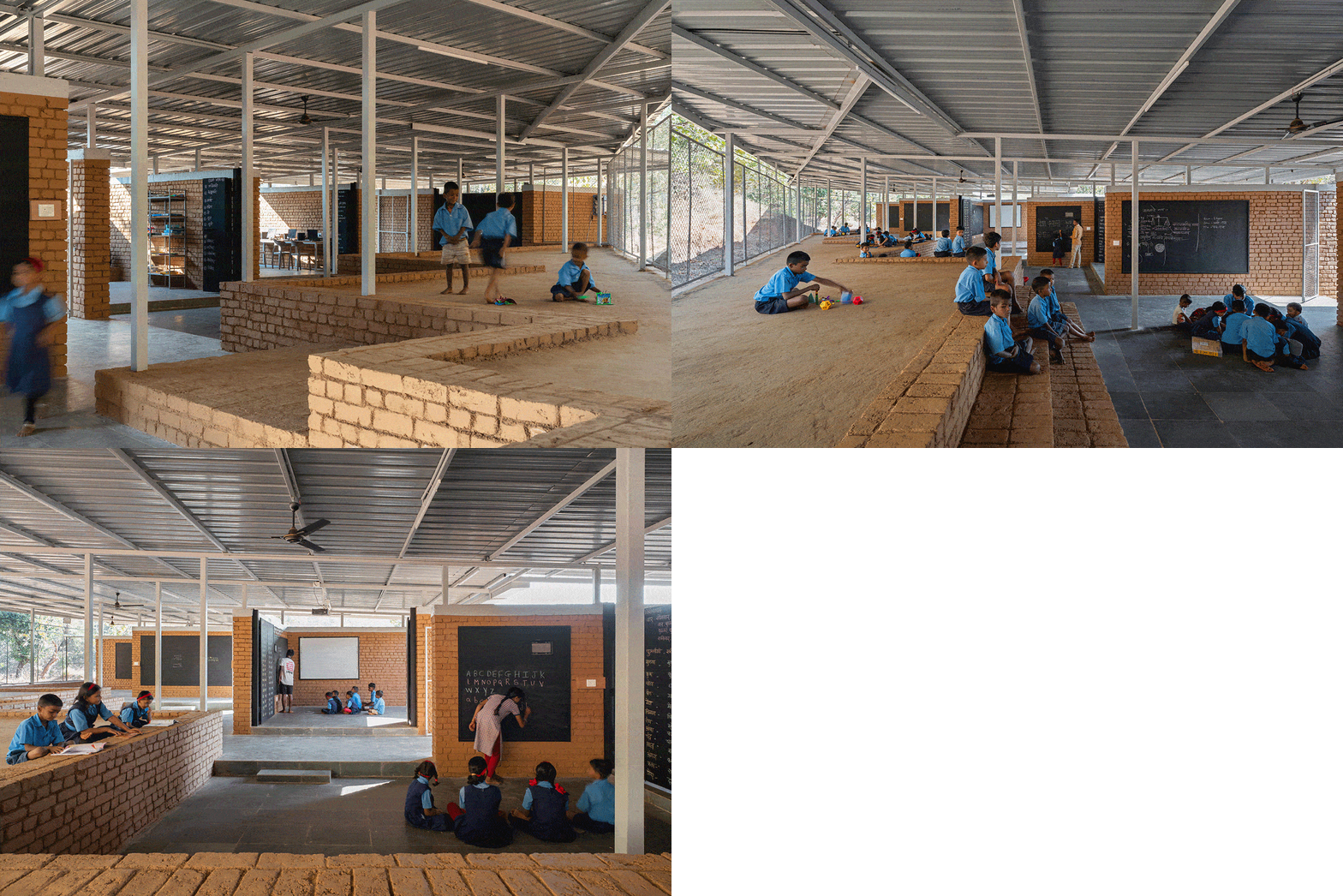
The high plinth employs cow-dung flooring, allowing children to sit, lie down or gather in groups with ease. Local stone grounds the school’s interior and becomes, quite literally, part of the children’s learning—'writable areas’ where chalk and charcoal turn architecture into a pedagogical tool. Folding doors allow spaces to expand, dissolve and recombine.
By not having defined classrooms, the architecture reinforces the idea that learning can take place anywhere in the environments students inhabit. – Pooja Khairnar, lead architect, PK_iNCEPTiON
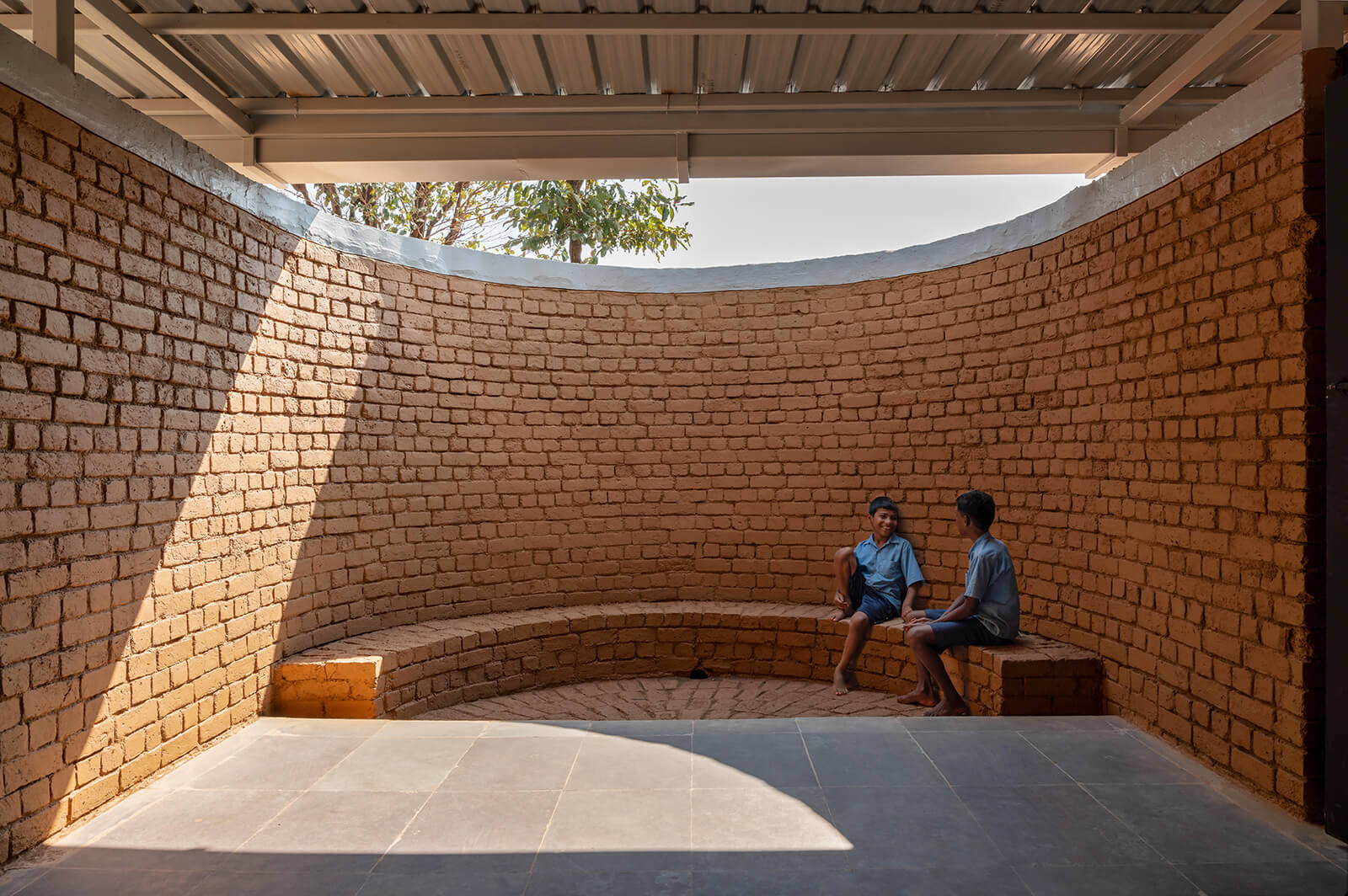
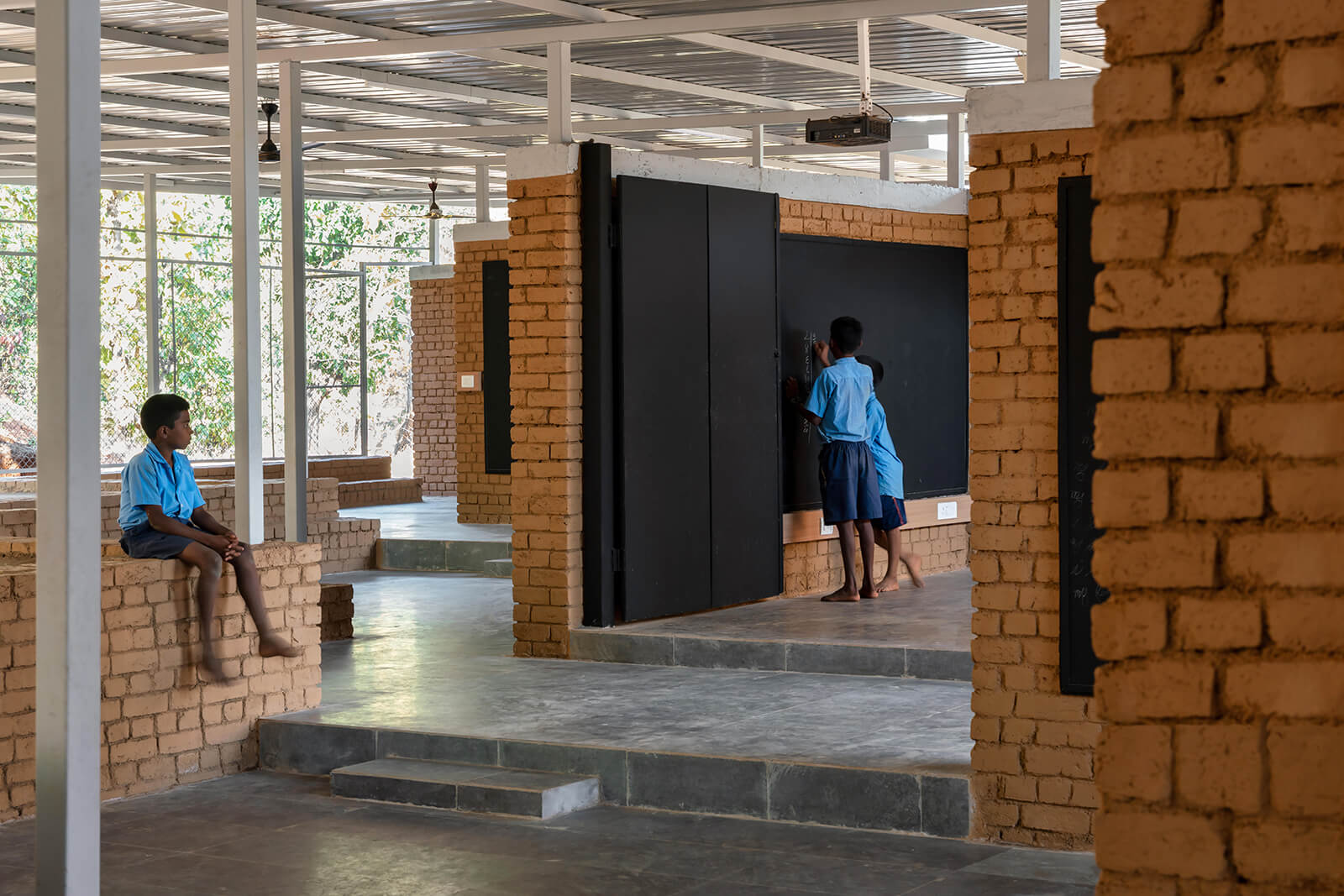
The most compelling feature of the school’s architecture is that there are ‘no defined classrooms’. Instead, its spaces and zones are shaped by movement, by clusters of children, by the way learning materialises around a step, a node, a courtyard. The Hiwali School becomes a continuous, interconnected environment where “open, flexible yet focused learning areas” adapt to the day, according to PK_iNCEPTiON. Children enter from multiple points, drifting between edges and thresholds, making small worlds of their own. No desks, no benches, boundary-less classrooms and foldable black doors that also double up as blackboards.
“One yearns for what one is deprived of,” Khairnar elaborates. “When freedom is limited, children naturally become restless. Traditional classrooms demand that students sit still in a single designated space. In contrast to this, a spatial experience that offers freedom, movement and choice can ease their minds and help students focus more naturally on the activity at hand.”
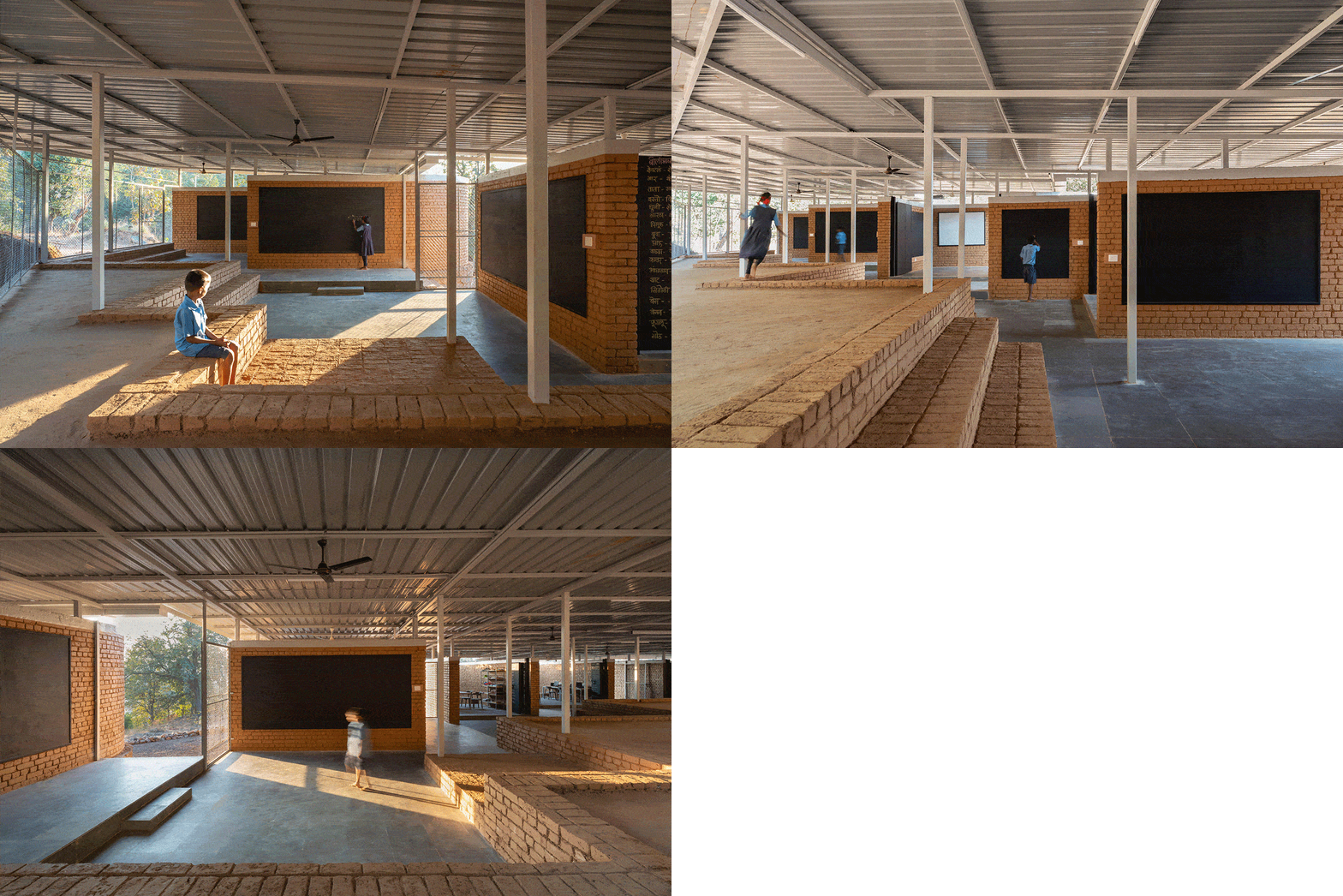
What makes the project resonate is not only its plural architectural intelligence but its refusal to fix methods of learning within walls. This is a building that understands the landscape as collaborator, the teacher as anchor and the children as authors. It offers “varied spatial scales, flowing steps and activity spaces that invite exploration”, as the firm puts it. It also belongs to the teacher, with connected areas that allow a single educator to manage a school bursting with movement and inquisitiveness.
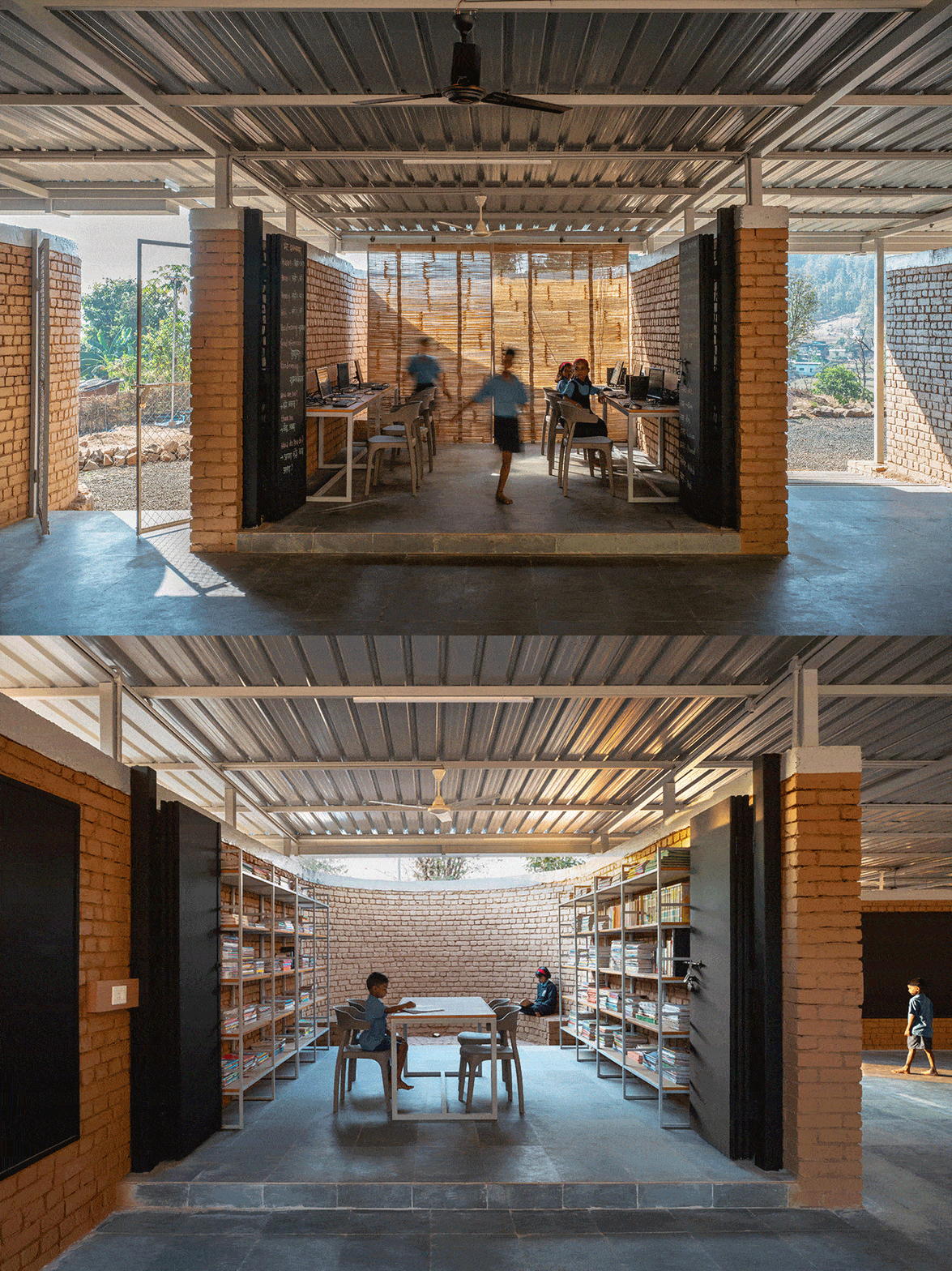
Most importantly, the school simply belongs to its students. Every corner is permissive, welcoming; each threshold, negotiable. All surfaces, a prompt. In a rural setting where education and extracurricular forms of learning are often null, rigid or uncultivated, the Hiwali School suggests that erudition can take many forms and routes, enabled by architecture—a shadow on the plinth, a chalk mark on stone floors, a group huddled beneath the roof’s gentle slope.
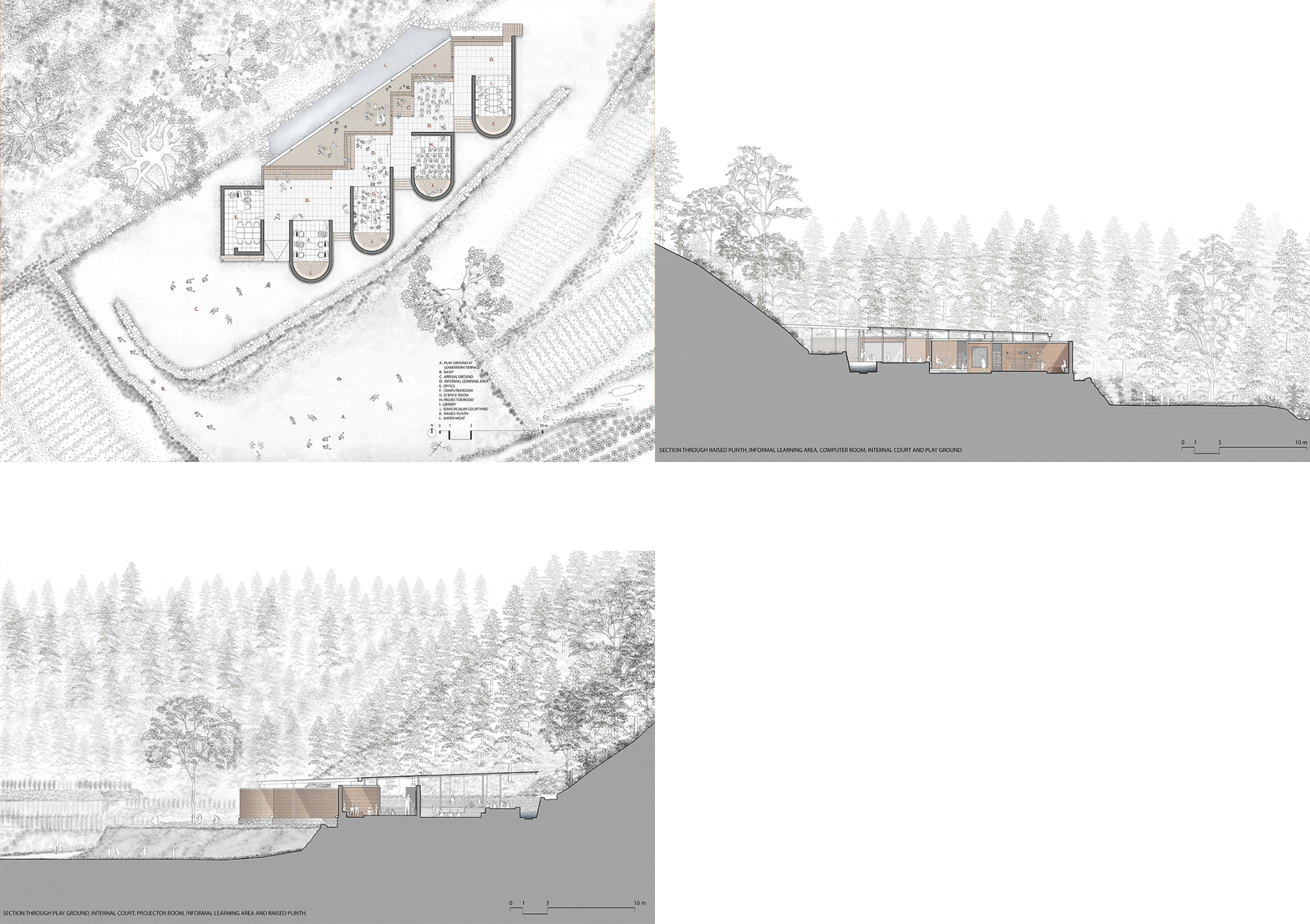
This architecture accepts and proffers its own judicious incompleteness as its finality. It leaves room for learning to define it, to take its own shape without prejudice. It offers a structure that is open-ended, porous, almost provisional in the best sense—a school where the classrooms are not given, but made; a place where knowledge and skills are delivered and discovered. Here, on a mountain ledge in Nashik, the intentionally ambiguous and transformative becomes the most generous form of design.
Name: Hiwali School
Location: Hiwali, Trimabakeshwar, Nashik, Maharashtra, India
Typology: Educational
Architect: PK_iNCEPTiON
Design Team: Pooja Khairnar (lead architect); Shantanu Tribhuvan, Swasti Rangani, Harshada Pathrabe, Bhavik Chopada, Tanishq Tejnani, Tejaswini Kawale, Swaroop Sope, Shreya Chandsare
Area: 355 sqm
Year of Completion: 2025

by Pranjal Maheshwari Oct 19, 2026
The Mumbai-based architects integrate courtyards, mesh screens and north light trusses to create a dining space that doubles up as a community hub at SR University, Warangal.
by Mrinmayee Bhoot Oct 17, 2026
The Rotterdam-based institute centres the Indian Ocean as a network for exploring material histories and transnational links shaping coastal cultures, positing them as future models.
by Pranjal Maheshwari Oct 16, 2026
At the 2026 Stirling Prize ceremony, Mary Duggan with RUFF Architects, MAKER Architecten and Nakshabid Architects were felicitated for proffering quality housing and social equity.
by Mrinmayee Bhoot Oct 12, 2026
The new Centre for Contemporary Arts, fostering public engagement with art in Uzbekistan, is housed in a tram depot refurbished by the French studio, emulating local craftsmanship.

make your fridays matter with a well-read weekend
Enter your details to sign in
Don’t have an account?
Sign upOr you can sign in with
a single account for all
STIR platforms
All your bookmarks will be available across all your devices.
Stay STIRred
Already have an account?
Sign inOr you can sign up with
Verification link sent to check your inbox or spam folder to complete sign up process
Tap on things that interests you.
Select the Conversation Category you would like to watch
Please enter your details and click submit.
Enter the 6-digit code sent at


The new Hiwali School by PK_iNCEPTiON posits an erudite architecture of possibility
by Jincy Iype | Published on : Dec 02, 2025


 Sign in with Google
 Sign in with email
What do you think?