Architecture05 mins. read
English masonry and garden traditions corral LANZA atelier's Serpentine Pavilion
by Anmol AhujaJan 20, 2026



by Pranjal MaheshwariPublished on : Jun 03, 2026
An idea, however revolutionary, always has a humble origin. The first thought, or at least the origin of it, is always simple. When faced with a problem—economic, social, aesthetic or any of the myriad kinds—the most befitting solutions are often the ones that seem the most obvious. This simplicity, however, is often not revered as much as its intellectual counterpart—complexity. That could be owed to its conspicuousness, its return in visible value and how a complex solution is assumed to require a considerably greater amount of effort. Like this introduction itself, it can be summarised in its very beginning, and yet, to conjure the image of a well thought-out notion, it has been elaborated thus. So, how does one add value to simple ideas? How can we make them aspirational, revered?
Mexico-based LANZA Atelier’s design for the Serpentine Pavilion 2026 might harbour a possible response to that line of thought. Earlier this year, Serpentine announced that their annual pavilion commission—marking a landmark 25th year since the custom first started with Zaha Hadid in 2001—has been awarded to the decade-old design studio of architect duo Isabel Abascal and Alessandro Arienzo. While the pavilion commission continues the legacy of involving emerging talents from around the world who haven't yet built in the UK every year, it further offered a unique opportunity in 2026: a celebration of this legacy. For this year’s summer programme, Serpentine Galleries have collaborated with the Zaha Hadid Foundation and Architects Association for a series of special events that will commemorate the legacy of the pavilion’s inaugural architect. While Abascal and Arienzo were honoured at the opportunity, they were also conscious of the complexities that came with it and have managed to resolve them with an elegant simplicity.
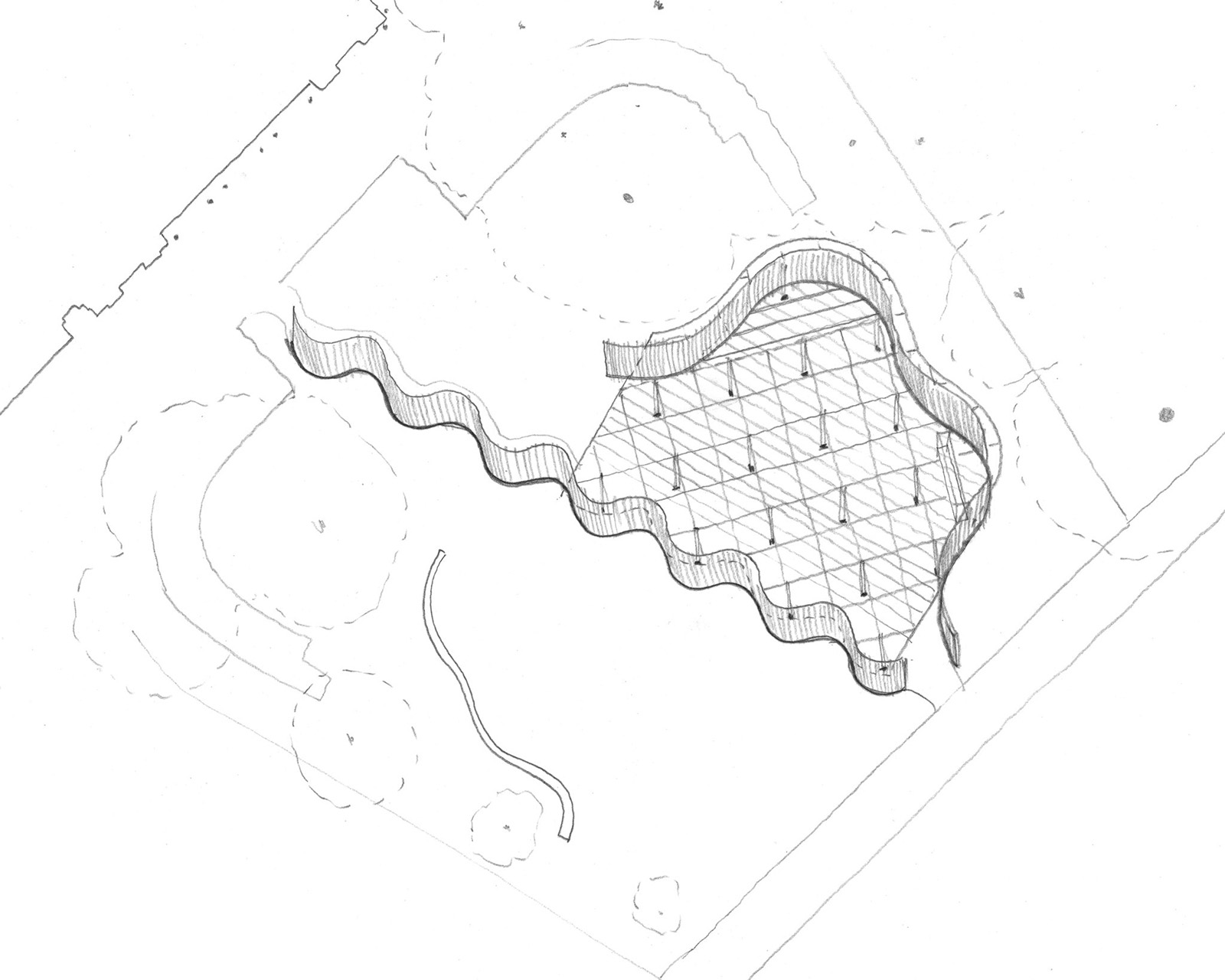
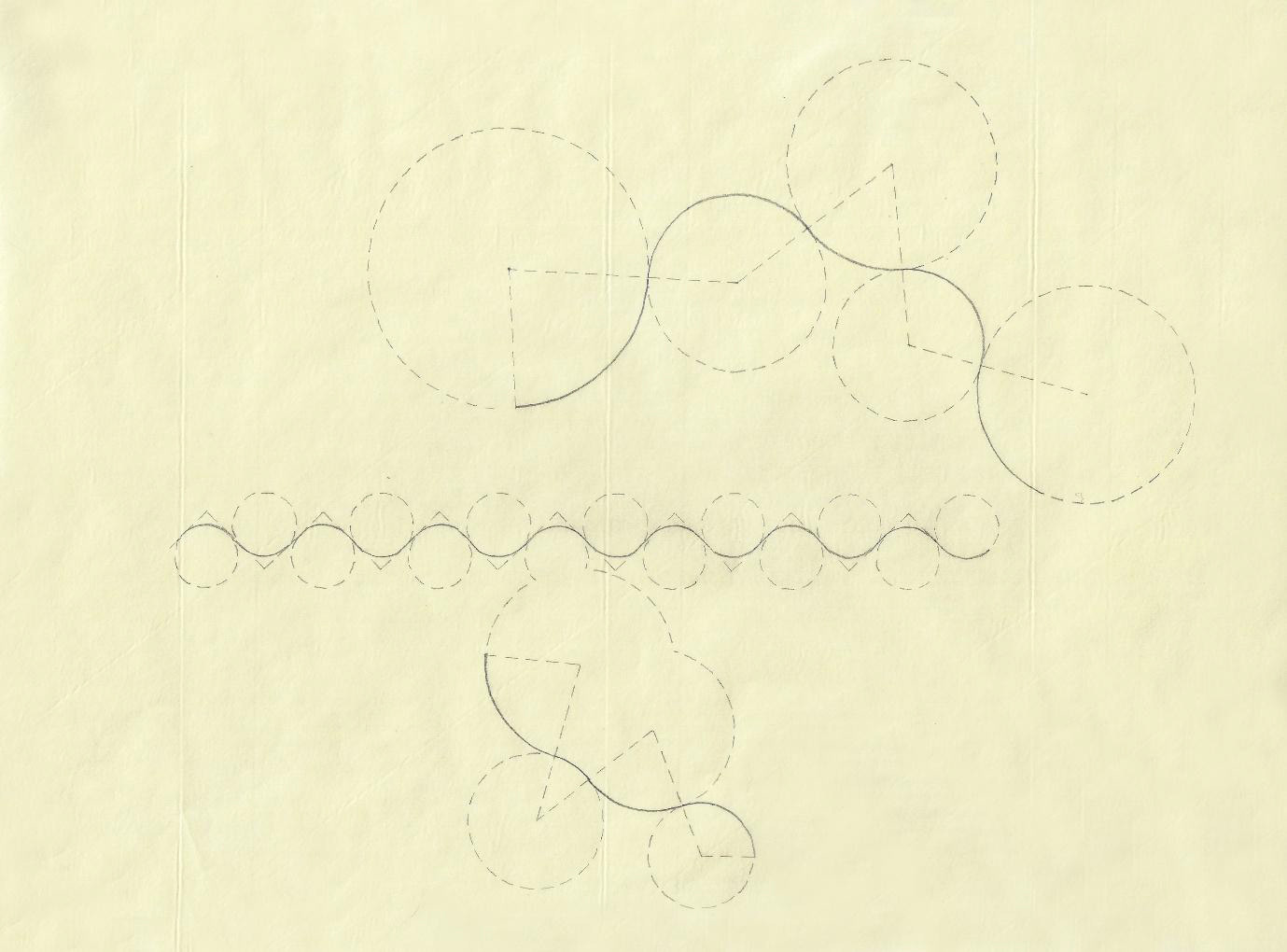
As they sat down with their thoughts and a piece of paper—a practice of hands-on methods of drawing and model making they relish—the first ideas appeared as simple strokes tracing the canopy to the north of the garden. “Not having visited the site before, starting to design was different from any other project we have done before,” the architects respond to STIR on an enquiry on their design process. “We needed to approach the site some way else, so we started by drafting its limits and as a result of the brief constraint that states that a one metre-offset from the tree canopy has to be kept free, we came out with an undulating line that defined the actual site,” they continue. While an abstraction of the serpentine curves outlining the forest canopy and the nearby lake was already forming in their mind, the architects found their resolve in the photographs of the crinkle-crankle wall that Arienzo found online. The revelation thus unleashed a two-pronged process of space resolution and further enquiry into this traditional style of brick wall construction.
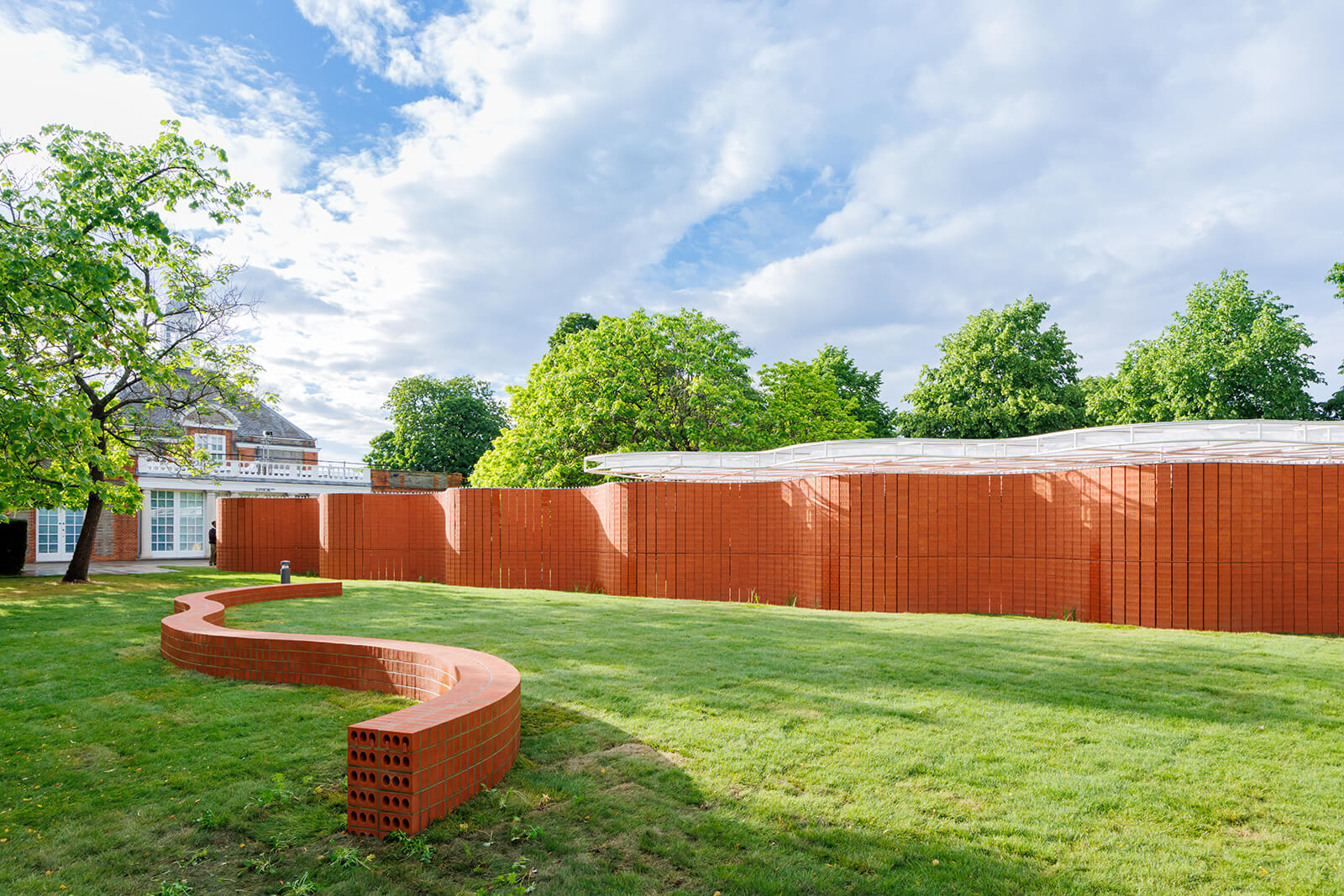

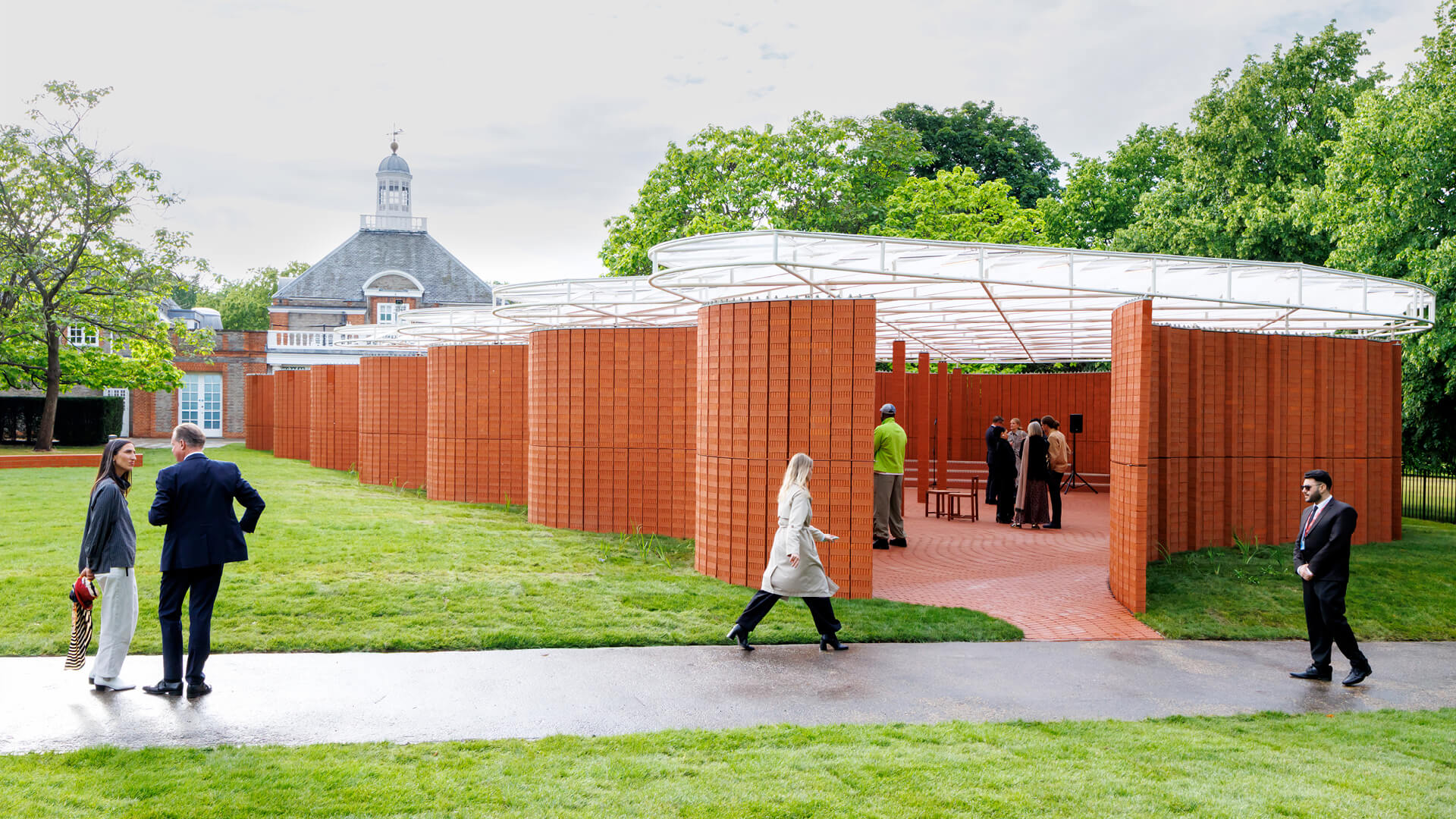
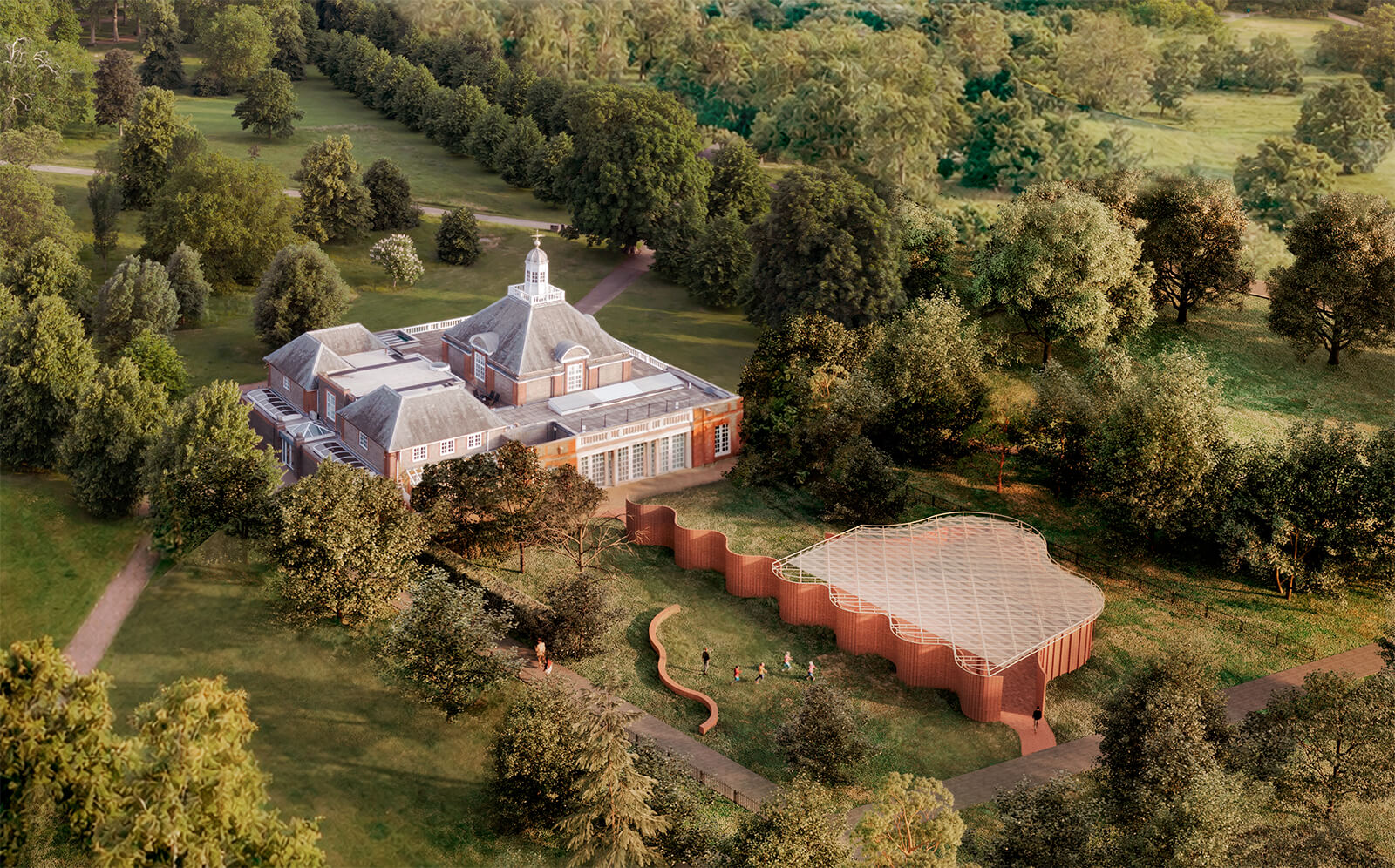
The form derived was simple. It defined, rather than divided, the Serpentine's lawn through an eponymous wall at its centre, supporting a light-weight structure enclosed by a free-flowing wall outlining the tree canopies on the north. The form loosely defined the space, intended only as a guide for the spatial programme that would unfold over the next few months, while allowing the light and air from the surrounding landscape to freely permeate it.
A parallel quest to know more about the wall led the team to the British county of Suffolk. The construction technique of the serpentine brick form was imported from Egypt to England by Dutch engineers as a solution to the ‘Brick Tax’ of the 18th century. The technique immediately resonated with the architecture studio’s focus on craft and spatial design traditions. “By virtue of its sinuous shape, the serpentine wall is recognised for requiring fewer bricks than a straight wall, as its winding geometry introduces lateral support to an otherwise flimsy one-brick-wide structure,” the architects share with STIR. “In the hands of gardeners and built on an East-West axis, these elements become fruit-walls that soak up the heat from the southern exposure and release it at night, providing a warm agricultural environment,” they continue, reflecting on how the simple structure carries important lessons for contemporary architecture discourse. “The structure employs less while providing more, which is a timely lesson for our current era of overconsumption.”
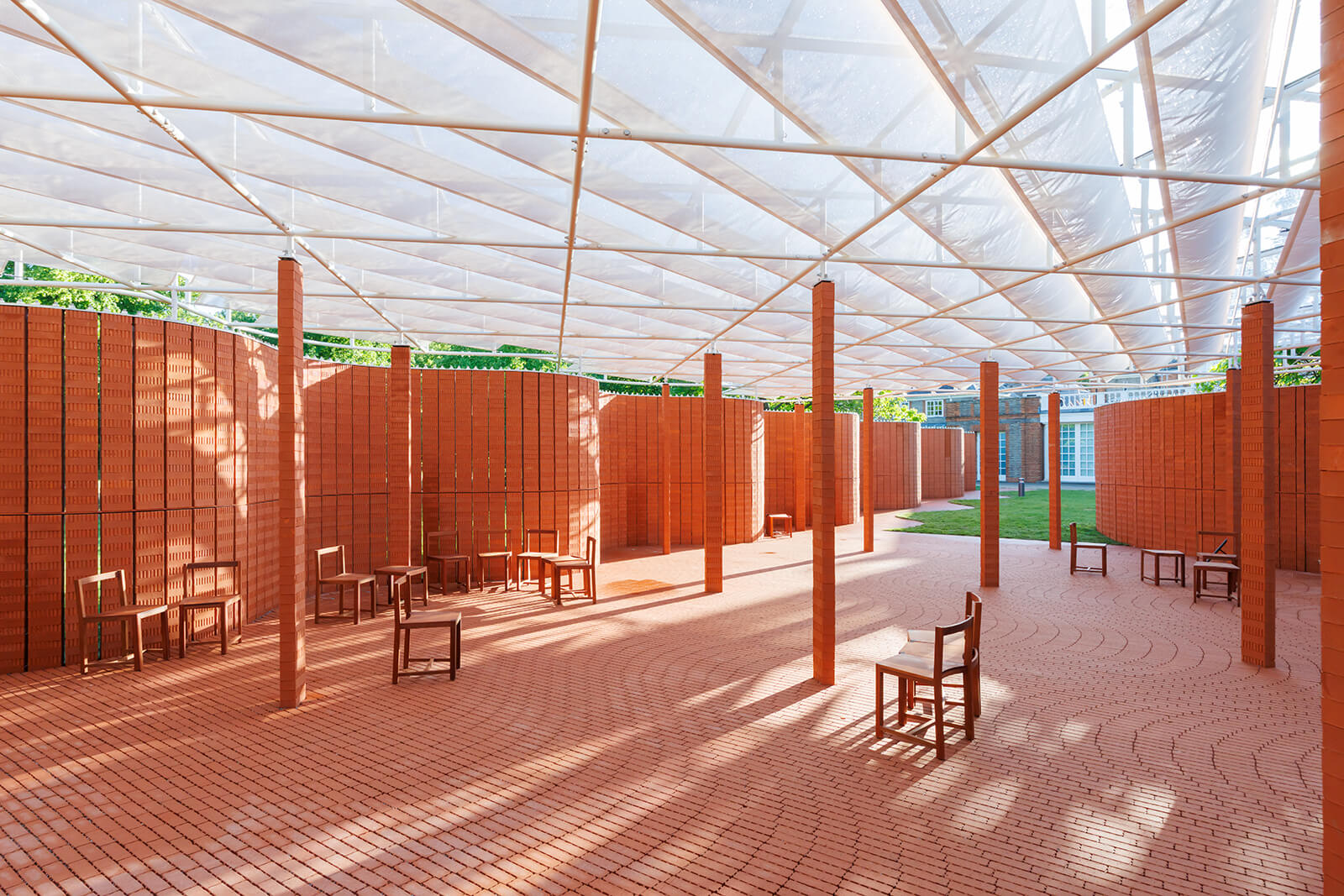
The brick structures on the lawn now reveal an interior defined by light, shade and rhythmic movement. With a brief to be fully demountable, the construction process deviated from tradition to employ stainless and mild steel with cladding in perforated masonry bricks. The resultant curves are rendered as partly permeable screens that retain a visual connection on both sides of the wall. A translucent fabric roof rests lightly on a grid of brick piers using a structural steel frame. With the filtered sunlight casting slender vertical shadows, the space evokes the scene of a tranquil forest grove. The architects refer to it as the origin of ‘paradise’, with a garden around a wall, taking root in the words of the once sacred Avestan language: pairidaeza, with pairi translating to ‘around’ and daeza to ‘wall’.
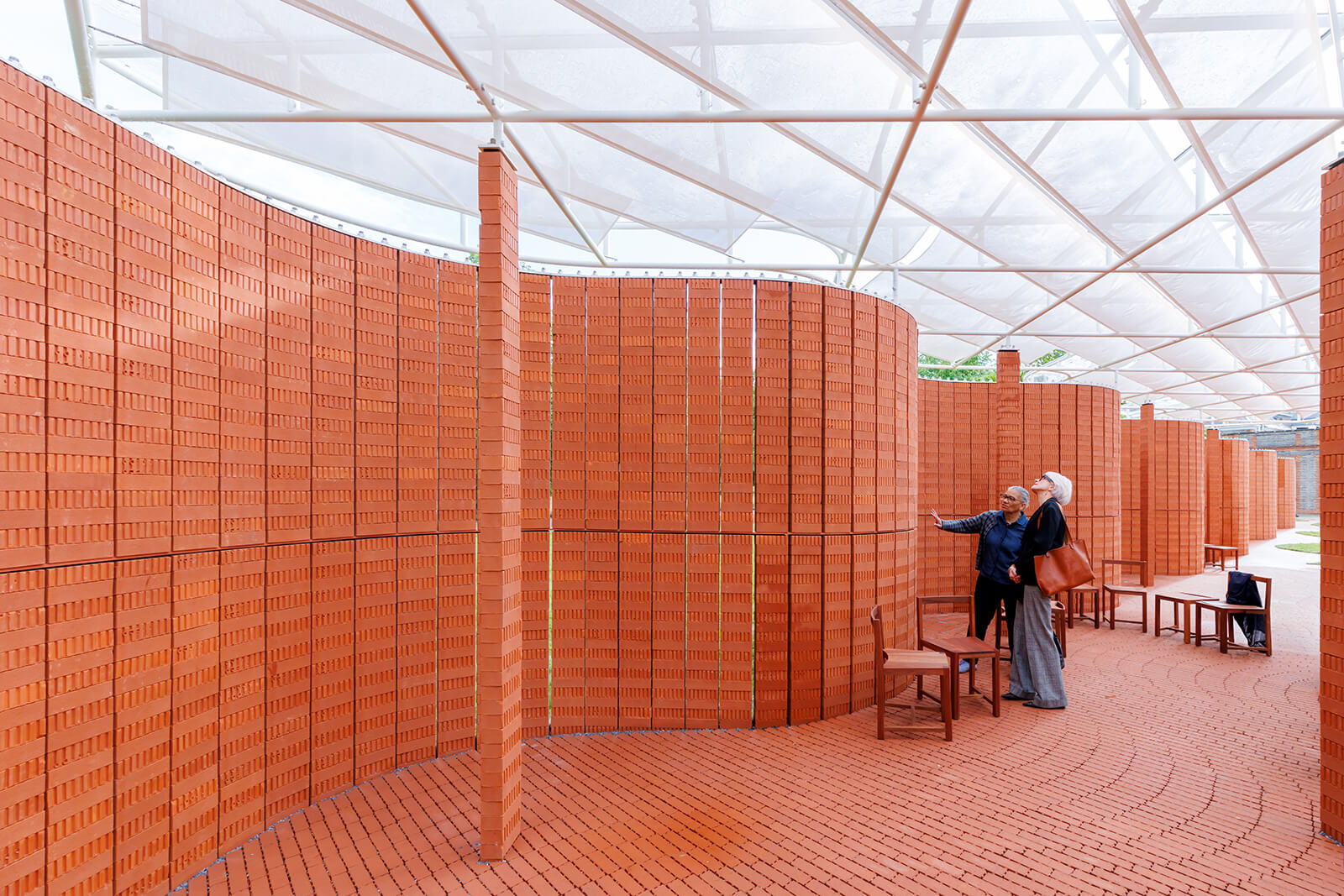
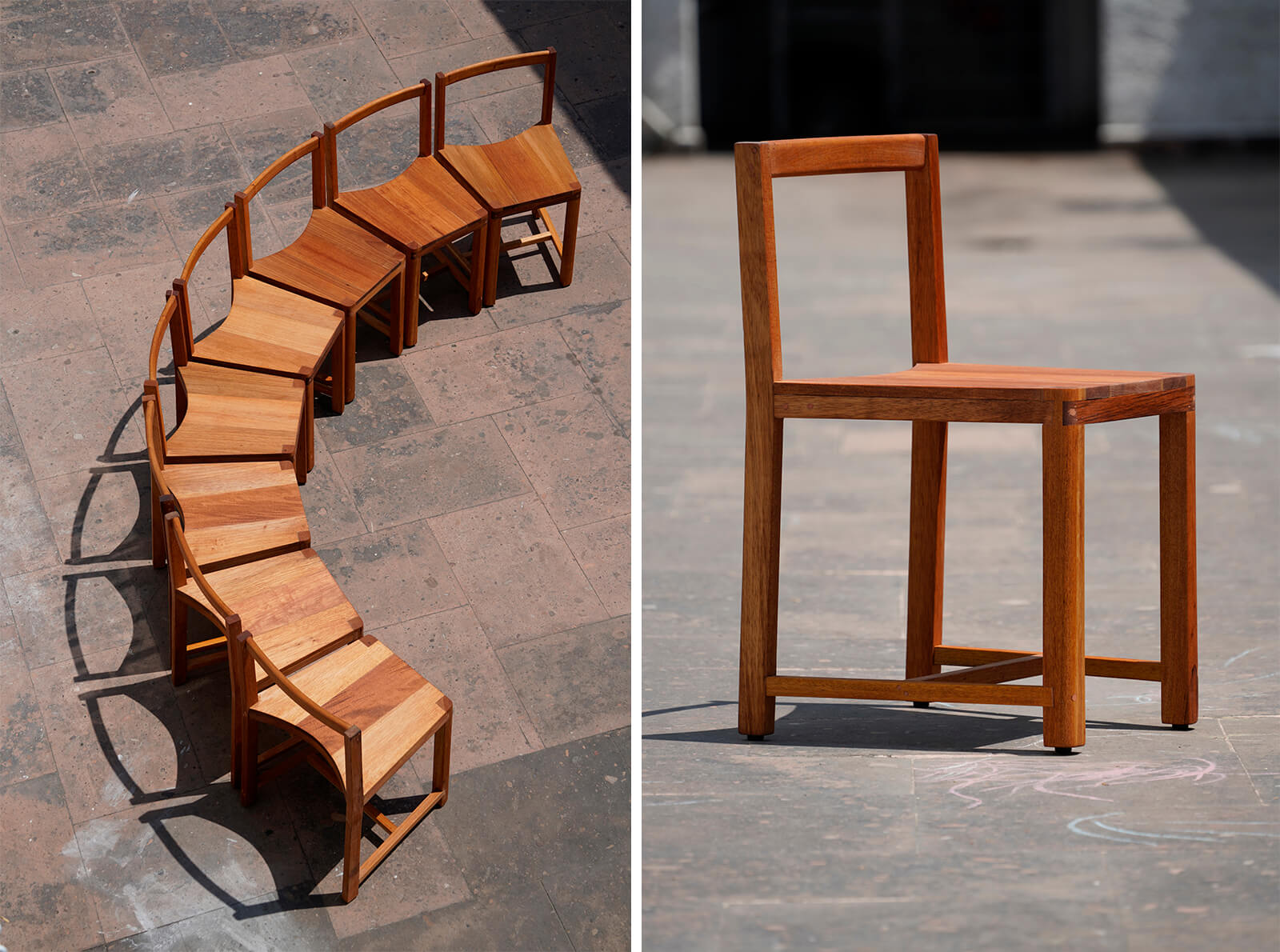
For the architects, the choice of clay bricks, originating from the ground itself, connects the contemporary structure to the primitive idea of creation from clay, which is also believed to have led to the origin of humans. The earthen material is also viewed as a celebration of the English garden tradition, directly referring to the exposed brick facade of the Serpentine South Gallery, itself a former tea pavilion. “A serpentine wall moves through the middle of the site, transferring energy and momentum to its surroundings. This is our own contemporary version of a pairidaeza; one in which bricks are inanimate and yet they are not without a soul,” the architects state. LANZA Atelier expanded their methodology to custom-design the furniture of the pavilion from Sapele hardwood, reinforcing their belief that furniture design and architecture together are equally integral parts of the design process.
While seemingly simple in design, the temporal nature of the pavilion architecture posed certain challenges during its construction. “The key challenge [was] creating a fully demountable masonry wall, ensuring the Pavilion’s sustainable legacy beyond its first life,” shares Jon Leach, director at AECOM, in an official statement. “While a traditional masonry wall would be fully bonded with mortar beds, an alternative approach incorporating a slender steel subframe inside the wall was required to meet the tight project programme and to minimise damage and wastage during transportation and the demount and rebuild process,” he remarks.
Throughout the summer until October, a serpentine will anchor the gallery’s live and events programme with music, film, theatre, dance, literature, philosophy, fashion and technology. Some highlights would be LANZA Atelier’s conversation with Serpentine artistic director Hans Ulrich Obrist to discuss concepts behind the pavilion design and Park Nights, where artists would be invited to create new, site-specific works. Exhibitions curator Tamsin Hong and assistant exhibitions curator Liz Stumpf will also organise free afternoon tours, while Family Days will feature free workshops, creative activities and performances for all ages. The hallmark of this year’s programme would, however, be the two-day symposium on Hadid’s life and work, bringing together leading architects, thinkers and cultural practitioners to explore questions at the forefront of architecture, while contemplating the past.
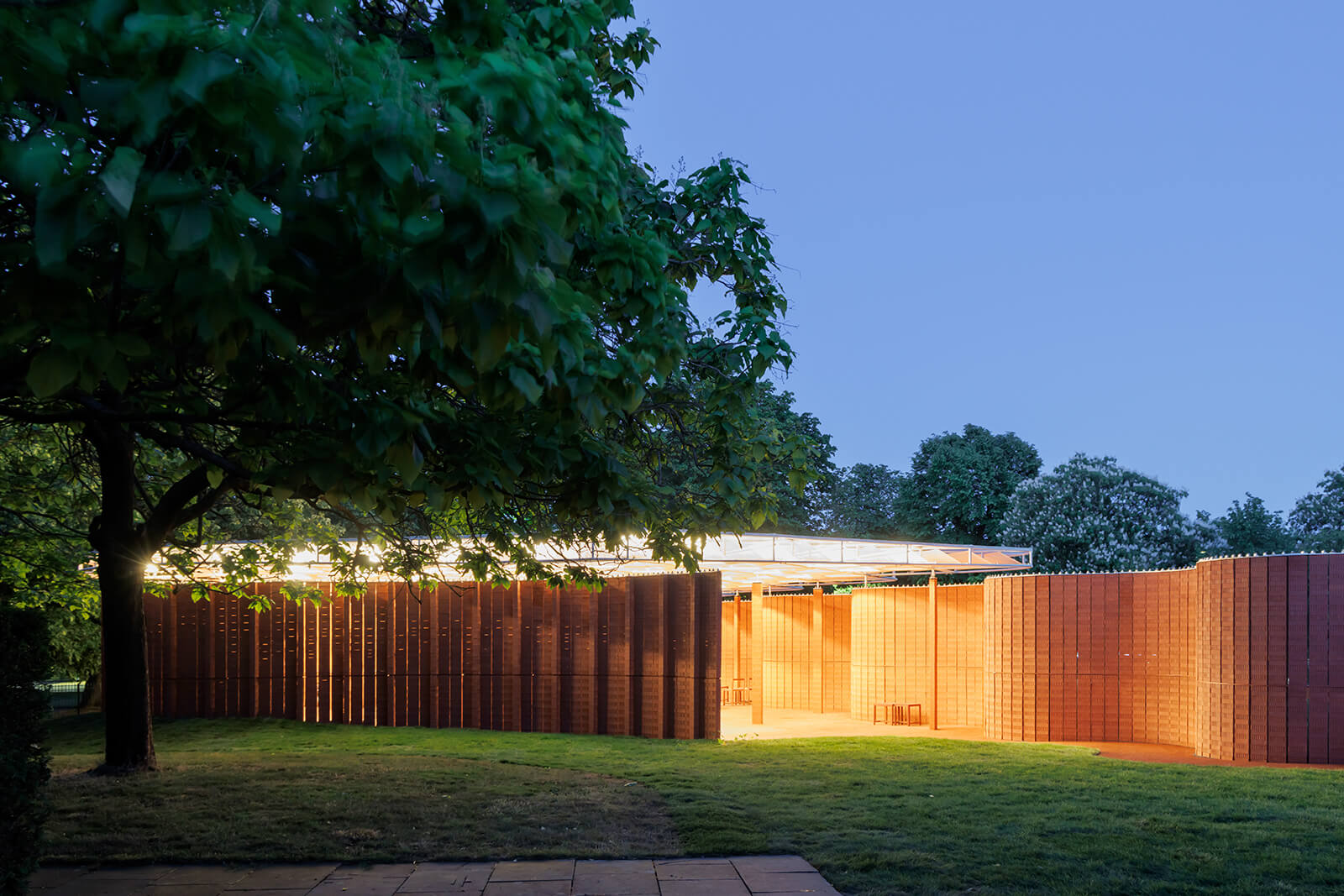
While a serpentine stands as a seemingly simple structure in both its individual elements and comprehensive architectural form, it is lent value through cultural context, as well as its refusal at indifference towards several global ecological and socio-political issues. “We see this commission as an opportunity for the wider public to focus on architecture,” Abascal and Arienzo tell STIR. “We would like visitors to relate to the idea that we all dwell and are all somehow connected to architecture, and therefore we can all reflect on what kind of architecture we need amidst the world’s ecological crisis to foreground gathering and collective experience,” they continue. “We are also adding our own voice to 24 previous voices that have left their mark on the Serpentine lawn, thereby creating a collage of the architecture of the first quarter of the 21st century—and that is very beautiful.”
Name: a serpentine
Location:United Kingdom
Typology: Pavilion
Architect: LANZA Atelier
Principal Architects & Designers: Isabel Abascal and Alessandro Arienzo
Design Team: Alejandro Márquez (senior architect), Genevieve Parkes (senior architect), Eric Valdez (structural consultancy), Jorge Zaldívar (visualisation), Alejandra Richard (junior architect), Lara Carolan (junior architect), Sofía Yáñez (junior architect), Luis Herrero (design intern), Roy Kim (design intern)
Engineering and Technical Design: AECOM
Project Advisors: Michael R. Bloomberg (chairman, Serpentine Board of Trustees), Andrew Scattergood (CEO, The Royal Parks), Darren Share (director, The Royal Parks), Andrew Williams (park manager, The Royal Parks), Westminster City Council District Surveyors' Service (Building Control), Garnet Gordon (principal surveyor), Ayo Oluwasere (structural engineer), London Fire Brigade, David Doyle (fire safety inspecting officer), The Friends of Hyde Park and Kensington Gardens
Area: 541 sq m (site), 279 sq m (footprint), 244 sq m (internal)
Year of Completion: 2026

by Pranjal Maheshwari Oct 24, 2026
A consortium of Copenhagen’s 3XN, Toronto’s B+H Architects and Shenzhen’s Zhubo Design has designed the museum to mimic the surrounding riverscape, topped with a public park.
by Pranjal Maheshwari Oct 19, 2026
The Mumbai-based architects integrate courtyards, mesh screens and north light trusses to create a dining space that doubles up as a community hub at SR University, Warangal.
by Mrinmayee Bhoot Oct 17, 2026
The Rotterdam-based institute centres the Indian Ocean as a network for exploring material histories and transnational links shaping coastal cultures, positing them as future models.
by Pranjal Maheshwari Oct 16, 2026
At the 2026 Stirling Prize ceremony, Mary Duggan with RUFF Architects, MAKER Architecten and Nakshabid Architects were felicitated for proffering quality housing and social equity.

make your fridays matter with a well-read weekend
Enter your details to sign in
Don’t have an account?
Sign upOr you can sign in with
a single account for all
STIR platforms
All your bookmarks will be available across all your devices.
Stay STIRred
Already have an account?
Sign inOr you can sign up with
Verification link sent to check your inbox or spam folder to complete sign up process
Tap on things that interests you.
Select the Conversation Category you would like to watch
Please enter your details and click submit.
Enter the 6-digit code sent at


LANZA Atelier's Serpentine Pavilion 2026, a first in brick, frames a fluid spatial bearing
by Pranjal Maheshwari | Published on : Jun 03, 2026


 Sign in with Google
 Sign in with email
What do you think?