Architecture10 mins. read
ADFF:STIR Mumbai 2026 promises a radical vision connecting cinema, space and city
by Jincy IypeDec 15, 2025



by Aarthi MohanPublished on : Jan 07, 2026
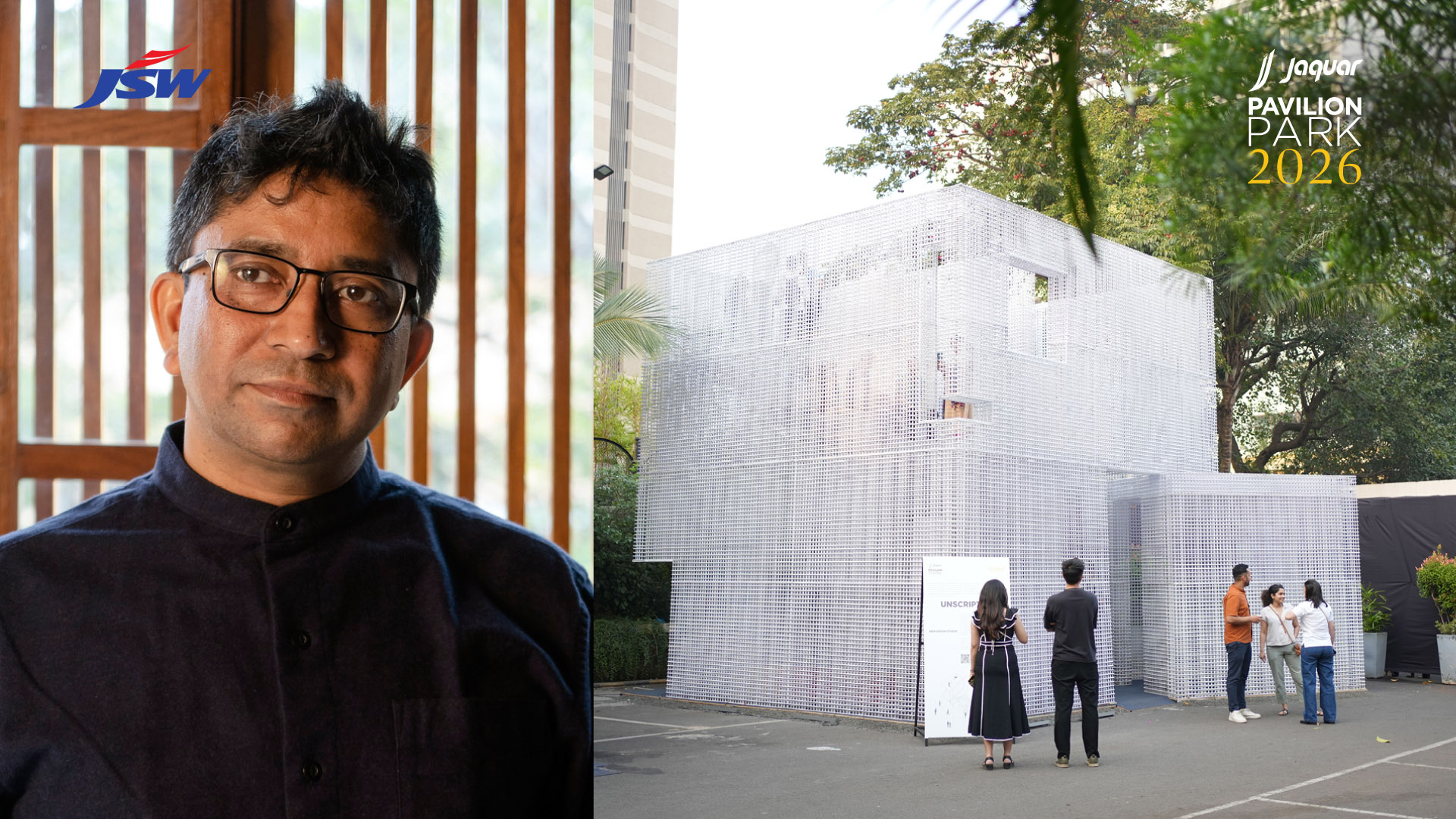
What if architecture did not conclude with construction but only began when people arrived? This question anchors Unscripted, a pavilion designed by Abin Design Studio for ADFF:STIR Mumbai 2026, taking place from January 9 – 11, 2026, at the National Centre for Performing Arts (NCPA) grounds in Mumbai, India. Commissioned as part of the Jaquar Pavilion Park and supported by JSW, the pavilion positions architecture not as a finished entity but as an open framework shaped by encounter, movement and time.
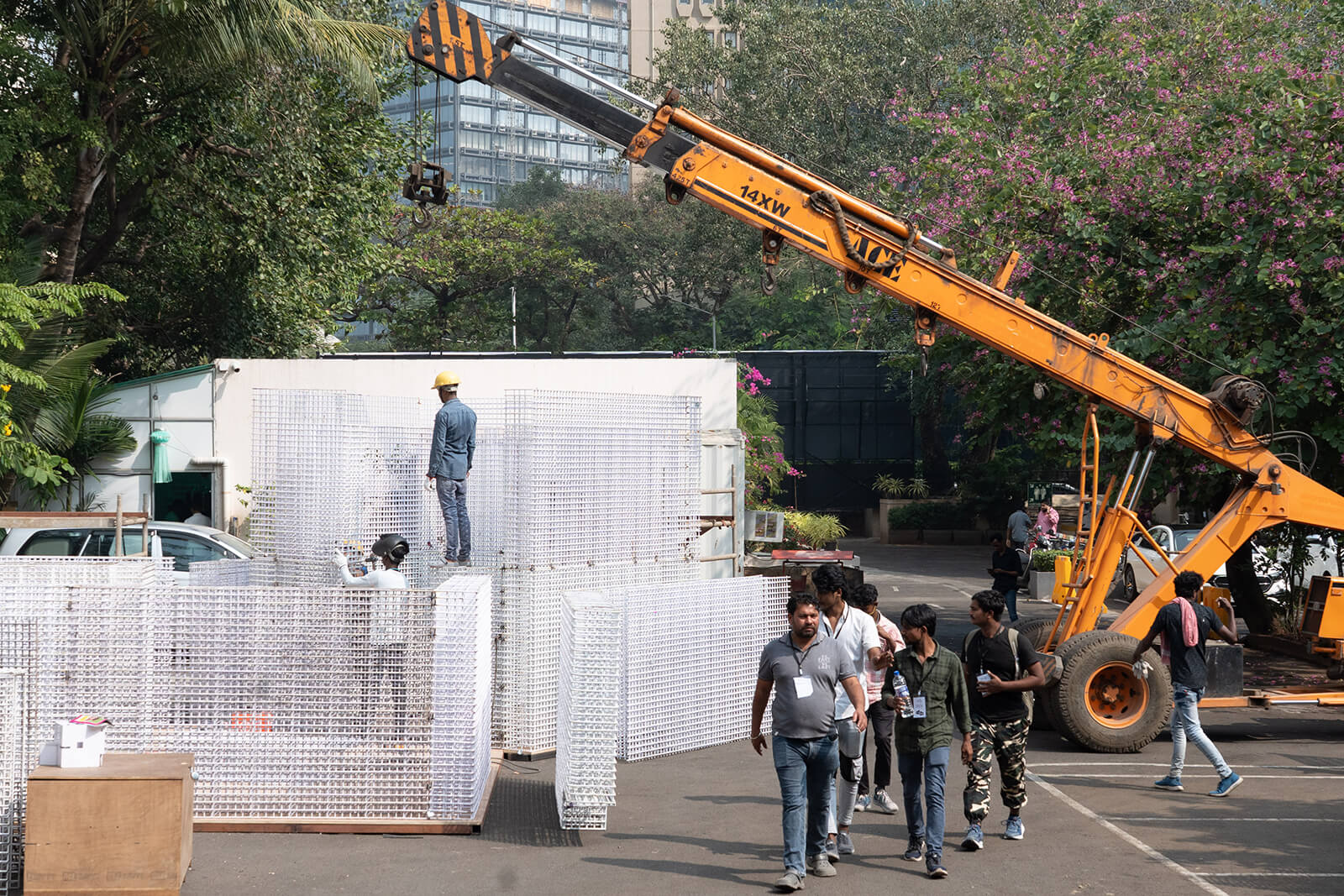
Mumbai offers fertile ground for such an exploration. It is a city of simultaneities, structured yet improvised, fragile yet enduring. Streets shift roles by the hour, thresholds become stages and density produces moments of unexpected intimacy; here, life unfolds through negotiation rather than resolution. The pavilion architecture, responding to curator Aric Chen’s theme for the Pavilion Park titled Mumbai Transcripts, draws from this condition, treating the city not only as context but as a system in which architecture is shaped through use, negotiation and time.
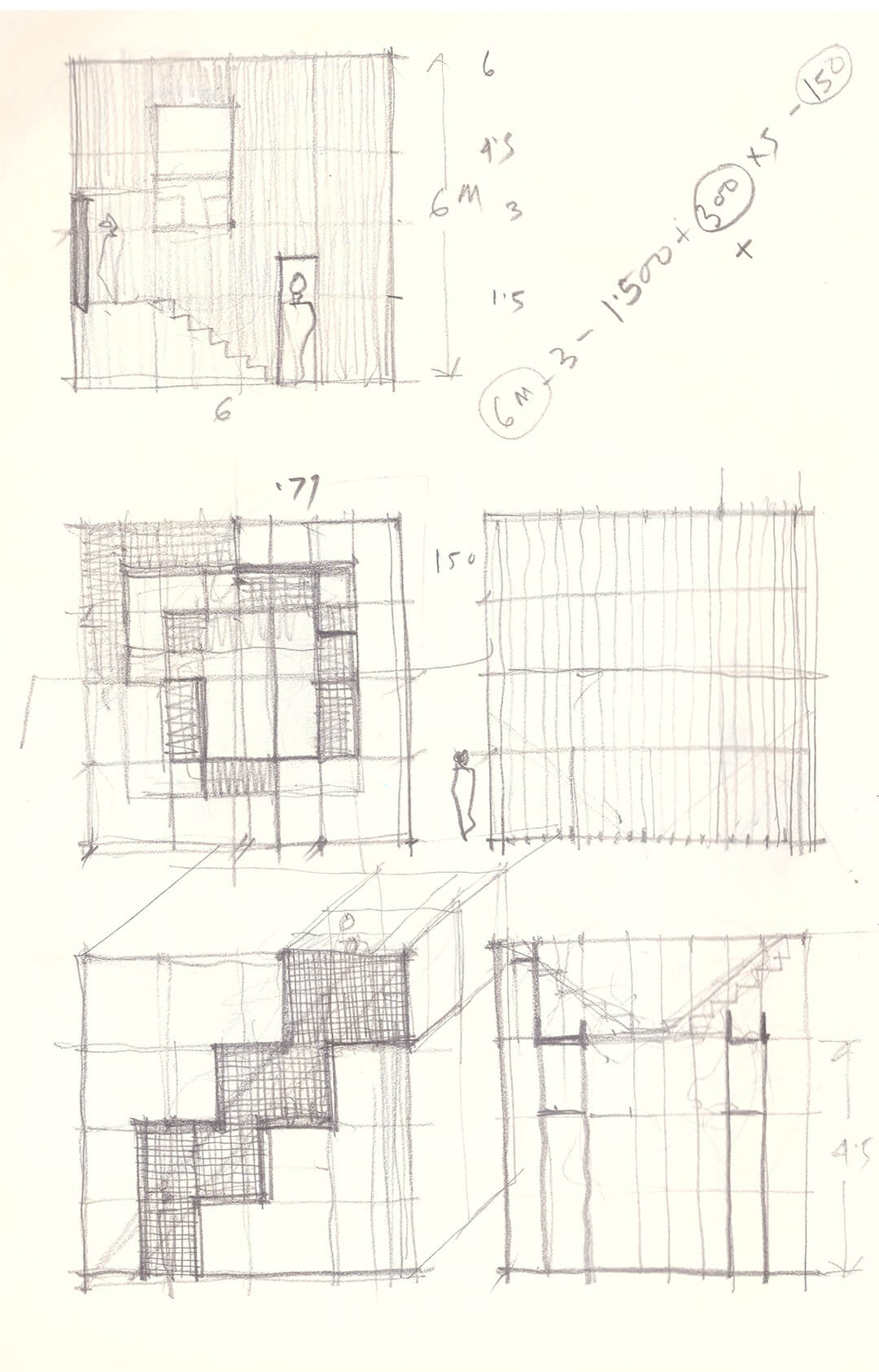
The pavilion design begins with a disciplined grid, precise and ordered, echoing architecture’s impulse to impose clarity on space and movement. This initial order is then deliberately unsettled: the grid fractures, rotates and displaces through a 45-degree shift, introducing diagonal movement into an otherwise orthogonal system. This disruption reflects a lived urban reality in which movement rarely follows straight lines, and life bends, collides and recalibrates itself constantly. Voids are cut into the structure as active thresholds rather than absences, allowing air, light and people to pass through. These openings are where the pavilion breathes, and encounters take place.
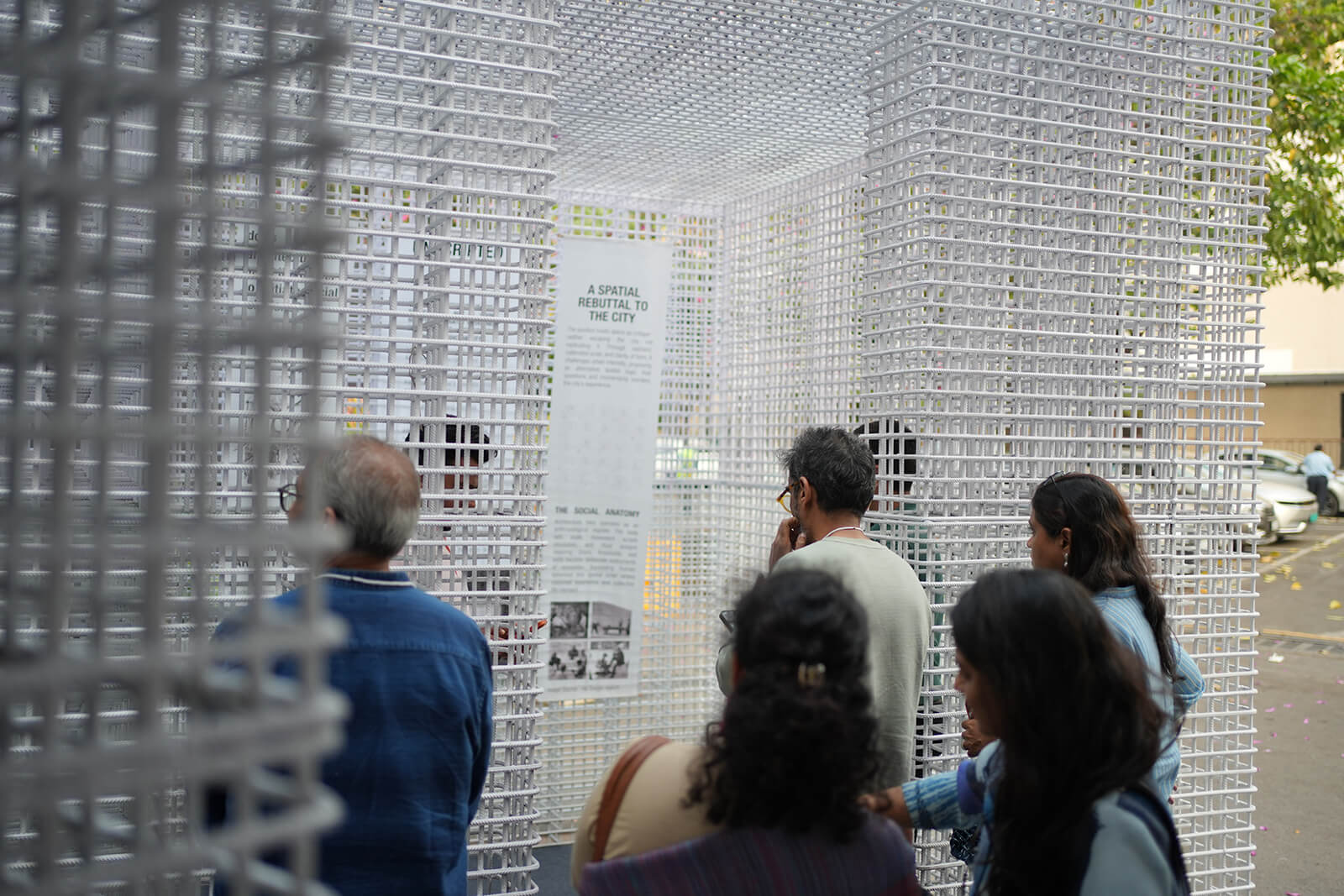
Conceptually, Unscripted is an extension of the festival's curatorial theme, which draws from Bernard Tschumi’s Manhattan Transcripts. Developed as a series of speculative drawings, Tschumi’s work challenged the idea of architecture as purely formal or functional construct, proposing instead that meaning emerges through the interaction of space, movement and event. The pavilion similarly resists a singular reading. From one angle, it appears ordered and legible; from another, it feels fragmented and unsettled. This oscillation mirrors the simultaneity of urban experience, where coherence and chaos coexist.
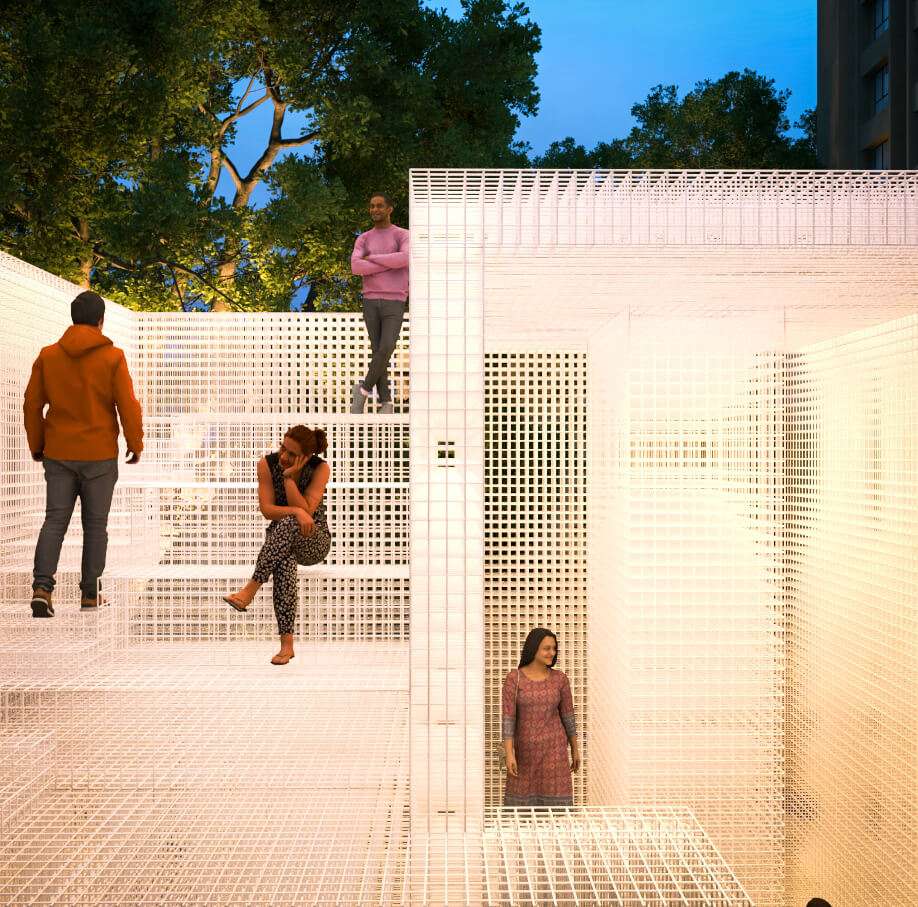
Human presence is central to the pavilion’s spatial layout. Its proportions are scaled to the human body, with circulation, seating and thresholds emerging from a modular system that balances structure with flexibility. Rather than dictating use, the pavilion anticipates it. Stairs double as places to gather, landings become moments of pause and the ground plane doubles as a key space for activations such as installations, discussions and assemblies. Within the spatial scheme, visitors are imagined not as mere observers but as participants whose movements and interactions complete the work.
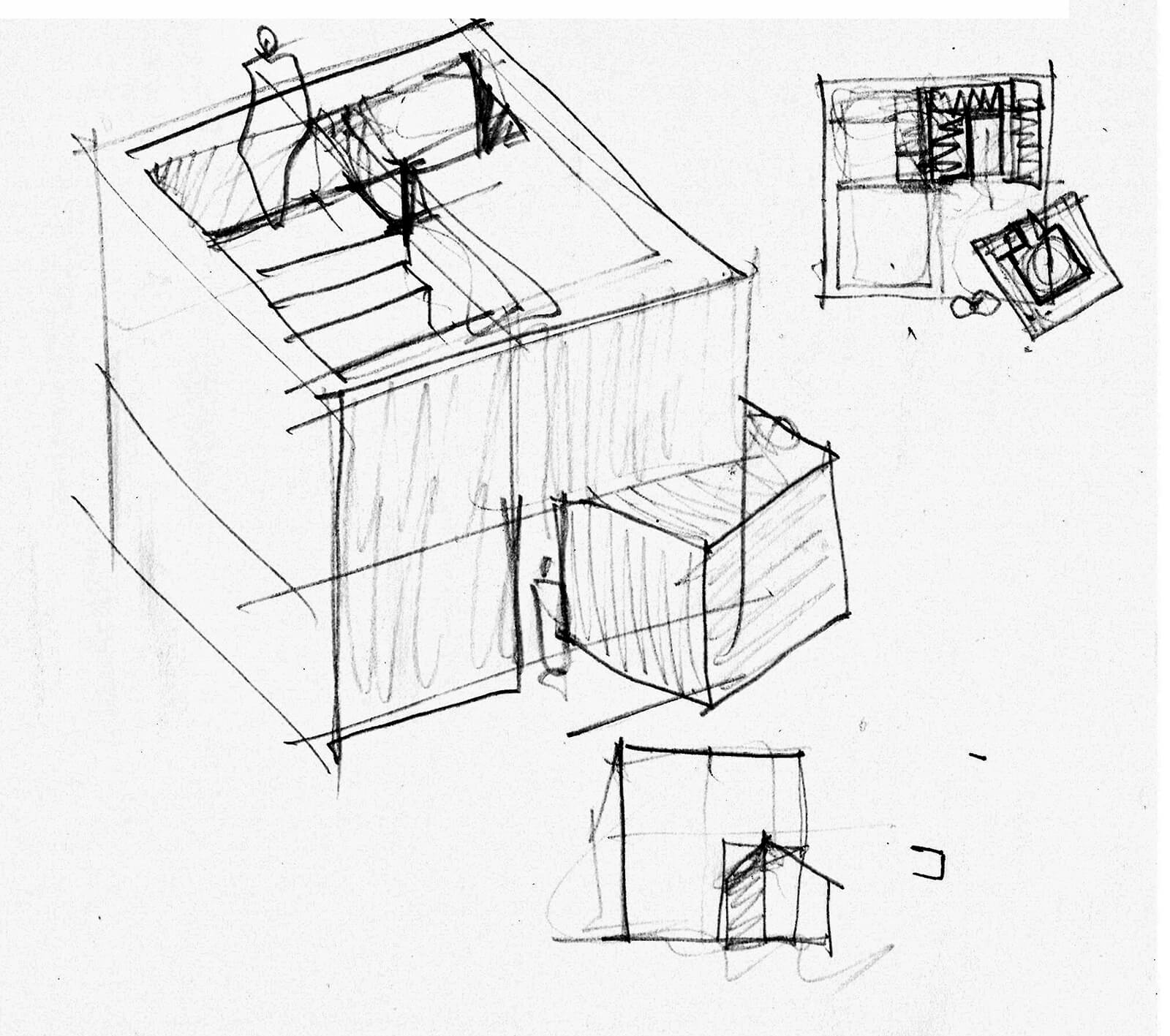
Formally, the pavilion originates as a simple cube divided into multiple volumes. One volume is deliberately disengaged, introducing a controlled fracture that destabilises uniformity and opens space for negotiation. While externally the structure presents clarity and restraint, internally it unfolds as an experiential terrain shaped by diagonals, voids and shifting alignments. There is no front or back. The pavilion is porous on all sides and accessible from any direction, aligning with the Jaquar Pavilion Park’s ambition to foreground openness and public engagement.
Set for installation within the NCPA lawns, where Mumbai’s dense urban fabric meets the openness of the sea, Unscripted occupies a charged threshold that responds by offering both compression and release, reflecting the city’s capacity to hold contradiction while remaining resilient.
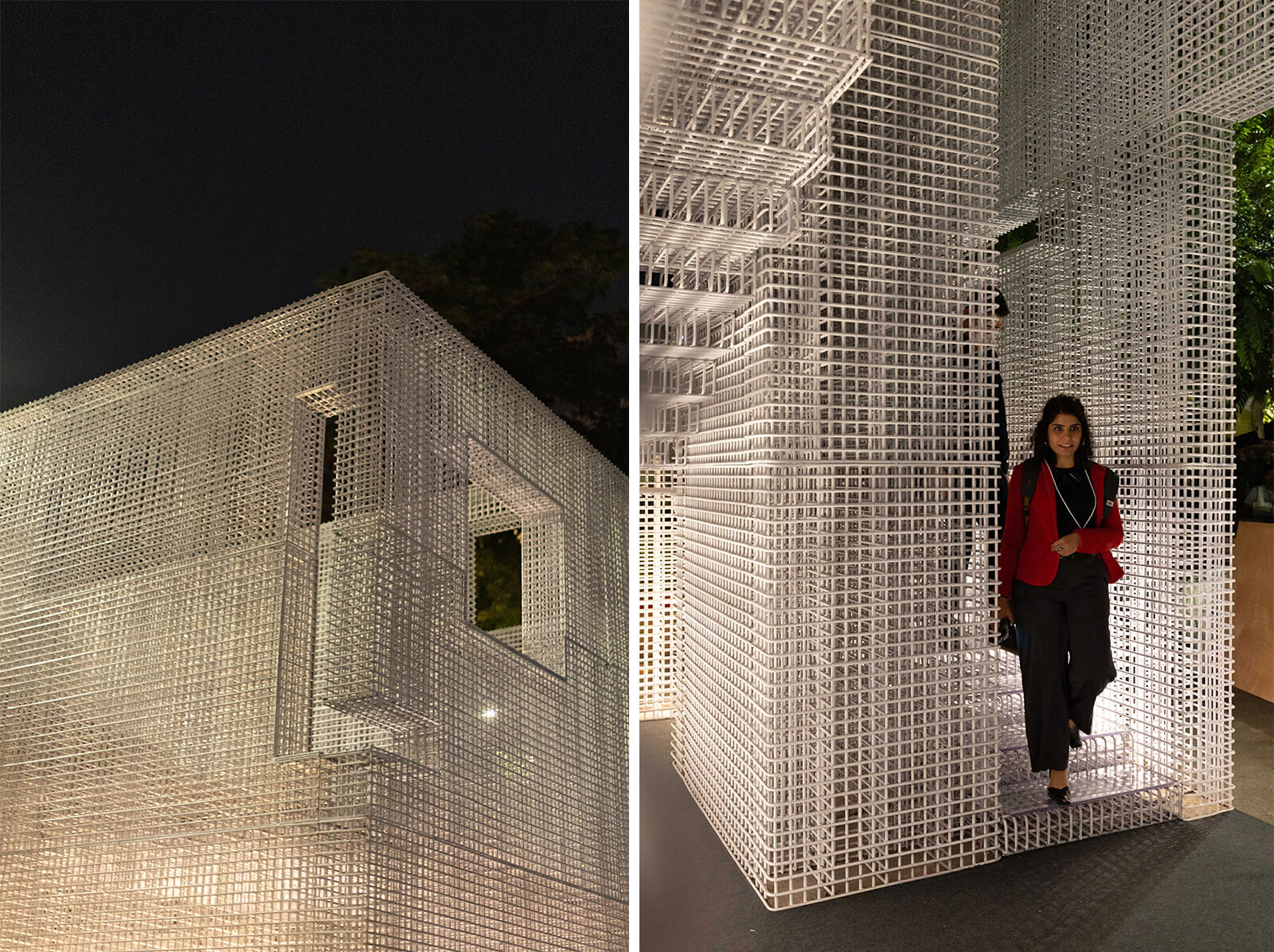
“Mumbai reminds us that stories rarely end; they keep unfolding. That’s what we wanted here, a pavilion that stays open, active and alive. For this pavilion, we began with a question: what if architecture is not a fixed entity but an open script shared by the moment and encounter,” Abin Chaudhuri, founder of Abin Design Studio, tells STIR. “Mumbai has always fascinated me. It holds opposites; you see how the city is constantly renegotiated by the people who look through it. The pavilion is called Unscripted; as visitors walk through it, their pauses and paths inscribe their space. They complete the walk.”
Crafted using JSW Steel and finished with JSW Paints, the pavilion is designed for longevity beyond the Architecture Design Film Festival. As Sangita Jindal, chairperson of the JSW Foundation, notes, “Guided by our belief in making life better for every Indian, every day, this versatile and sustainable installation is designed to have a life beyond its presentation at ADFF:STIR Mumbai 2026. Through projects such as this, JSW seeks to spark meaningful conversations around thoughtful design, material innovation and the adaptive reuse of resources that help shape and build our nation.” Like Mumbai itself, Unscripted remains unfinished by design, open to interpretation and alive through use.The 2026 edition of the Pavilion Park at ADFF:STIR Mumbai 2026 is presented by Jaquar.
Unscripted by Abin Design Studio is supported by JSW.
You can now book your passes for the festival here. Full schedule for the festival is available here.

by Pranjal Maheshwari Oct 19, 2026
The Mumbai-based architects integrate courtyards, mesh screens and north light trusses to create a dining space that doubles up as a community hub at SR University, Warangal.
by Mrinmayee Bhoot Oct 17, 2026
The Rotterdam-based institute centres the Indian Ocean as a network for exploring material histories and transnational links shaping coastal cultures, positing them as future models.
by Pranjal Maheshwari Oct 16, 2026
At the 2026 Stirling Prize ceremony, Mary Duggan with RUFF Architects, MAKER Architecten and Nakshabid Architects were felicitated for proffering quality housing and social equity.
by Mrinmayee Bhoot Oct 12, 2026
The new Centre for Contemporary Arts, fostering public engagement with art in Uzbekistan, is housed in a tram depot refurbished by the French studio, emulating local craftsmanship.

make your fridays matter with a well-read weekend
Enter your details to sign in
Don’t have an account?
Sign upOr you can sign in with
a single account for all
STIR platforms
All your bookmarks will be available across all your devices.
Stay STIRred
Already have an account?
Sign inOr you can sign up with
Verification link sent to check your inbox or spam folder to complete sign up process
Tap on things that interests you.
Select the Conversation Category you would like to watch
Please enter your details and click submit.
Enter the 6-digit code sent at


Unscripted at ADFF:STIR Mumbai 2026 on how architecture begins with people
by Aarthi Mohan | Published on : Jan 07, 2026


 Sign in with Google
 Sign in with email
What do you think?