Architecture10 mins. read
ADFF:STIR Mumbai’s ~log(ue) returns, sparking plural discourse
by Bansari PaghdarJan 08, 2026



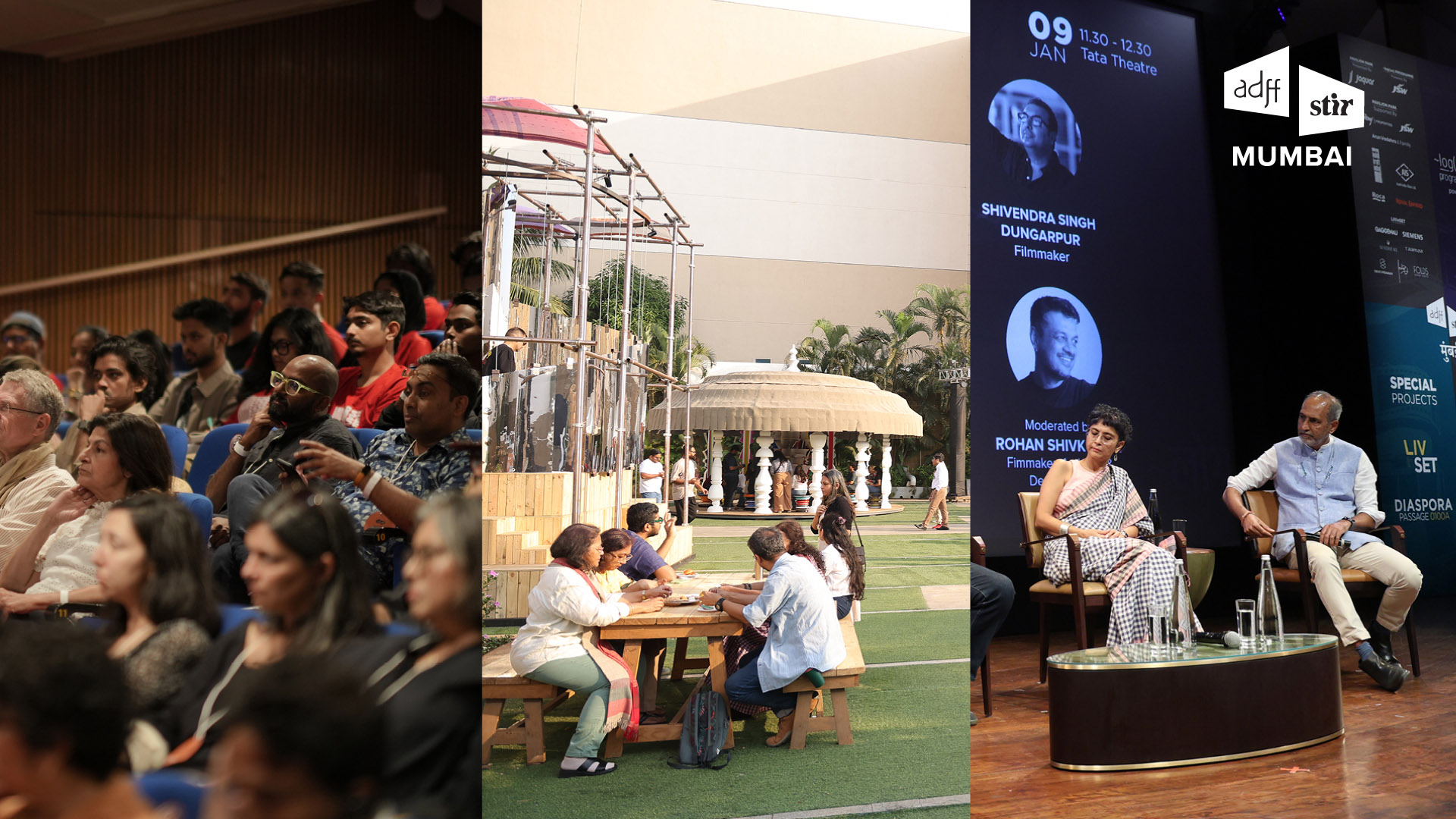
by Bansari PaghdarPublished on : Jan 16, 2026
Cultural platforms, especially in a country as multifarious as India, are expected to be accessible, rigorous and expansive simultaneously. This understanding has less to do with the specific composition (or the programming) of such avenues and more to do with their overall outlook and positioning, especially vis-à-vis physical, cultural and sociopolitical context. What institutional patronage can do in this scenario is to help sustain engagement beyond the spectacle of it all, enabling structural stability, alongside a taut curatorial and operational vision that is required for events of a multidisciplinary nature. That urgent clarion call, considering the proverbial state of the world, is something that formed the backdrop against which the Premiere Night for the returning ADFF:STIR Mumbai would unfold.
With the same spirit of plurality and multiplicity, ADFF:STIR Mumbai 2026, the expanded festival’s sophomore edition hosted at the National Centre for the Performing Arts (NCPA) from January 9 – 11, 2026, represented a strategic institutional collaboration between STIR and ADFF, the latter founded in New York by Kyle Bergman. The festival’s return—building on its debut South Asia edition—became a rare avenue for a unification of the creative fields and the many formats that constitute festivals of this nature worldwide, comprising the Jaquar Pavilion Park, ~log(ue) Programme powered by JSW and Special Projects, advancing a program with both global reach and local cultural resonance.
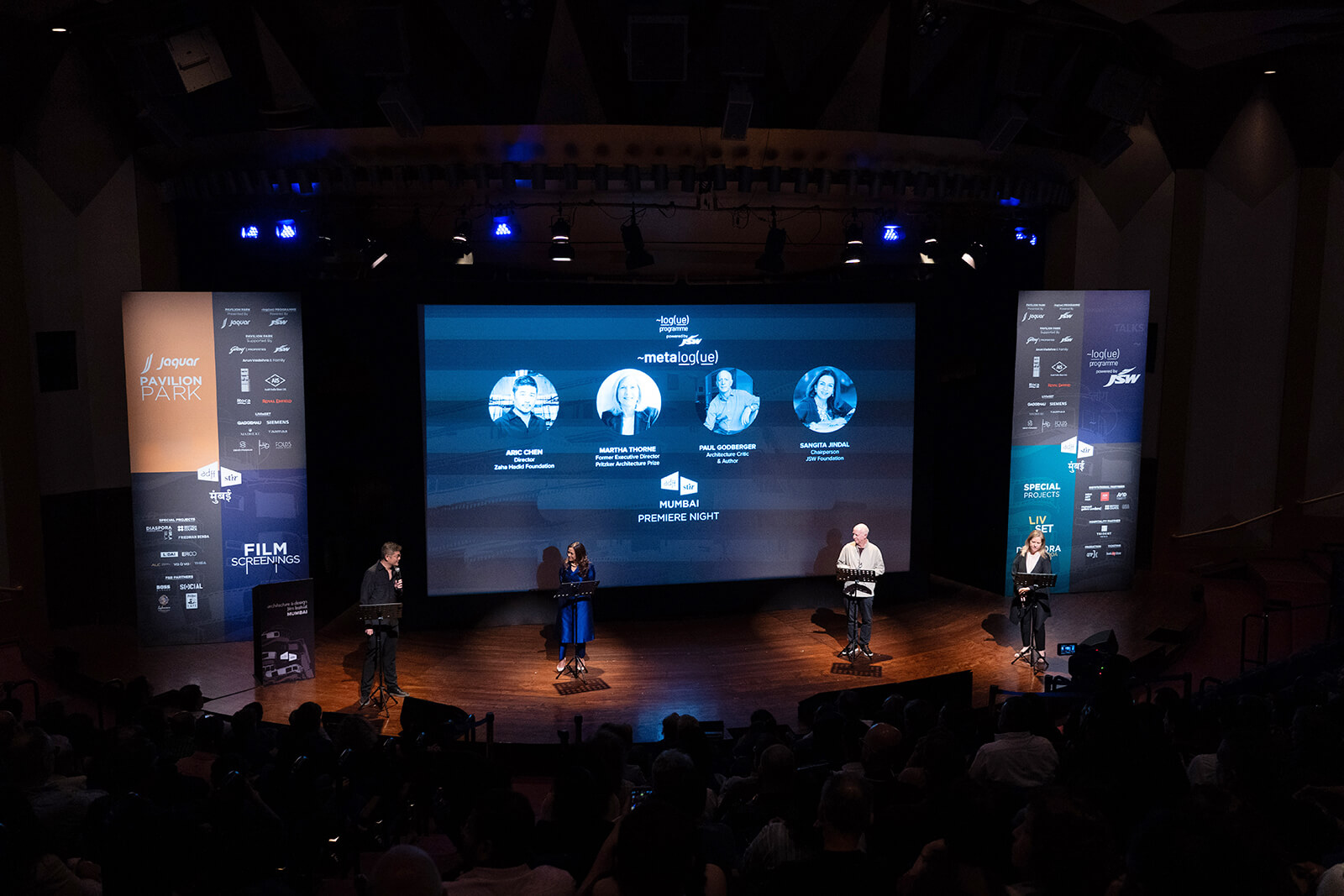
The premiere night of the festival on January 8, 2026, graced by many architecture, design, art and film visionaries, featured a pluralistic keynote, Building the Framework: Institutions, Patronage and the Future of Architecture & Design, exploring what it takes to build and sustain institutions that meaningfully support architecture and design today. The talk brought together Pulitzer Prize-winning architecture critic and author Paul Goldberger; Martha Thorne, curator, academic and former executive director of the Pritzker Architecture Prize and a juror for the Jaquar Pavilion Park; Sangita Jindal, chairperson of the JSW Foundation; and Aric Chen, director of the Zaha Hadid Foundation and curator of the Jaquar Pavilion Park.
”Architecture and design do not endure through individual brilliance alone. They are shaped, sustained and legitimised by institutions such as museums, foundations, awards, publications, education platforms and systems of patronage that nurture ideas, support experimentation and transit professional practice into public practice”, Samta Nadeem, festival curator, stated along similar lines as a precursor to the headlining ~metalog(ue) for the night.
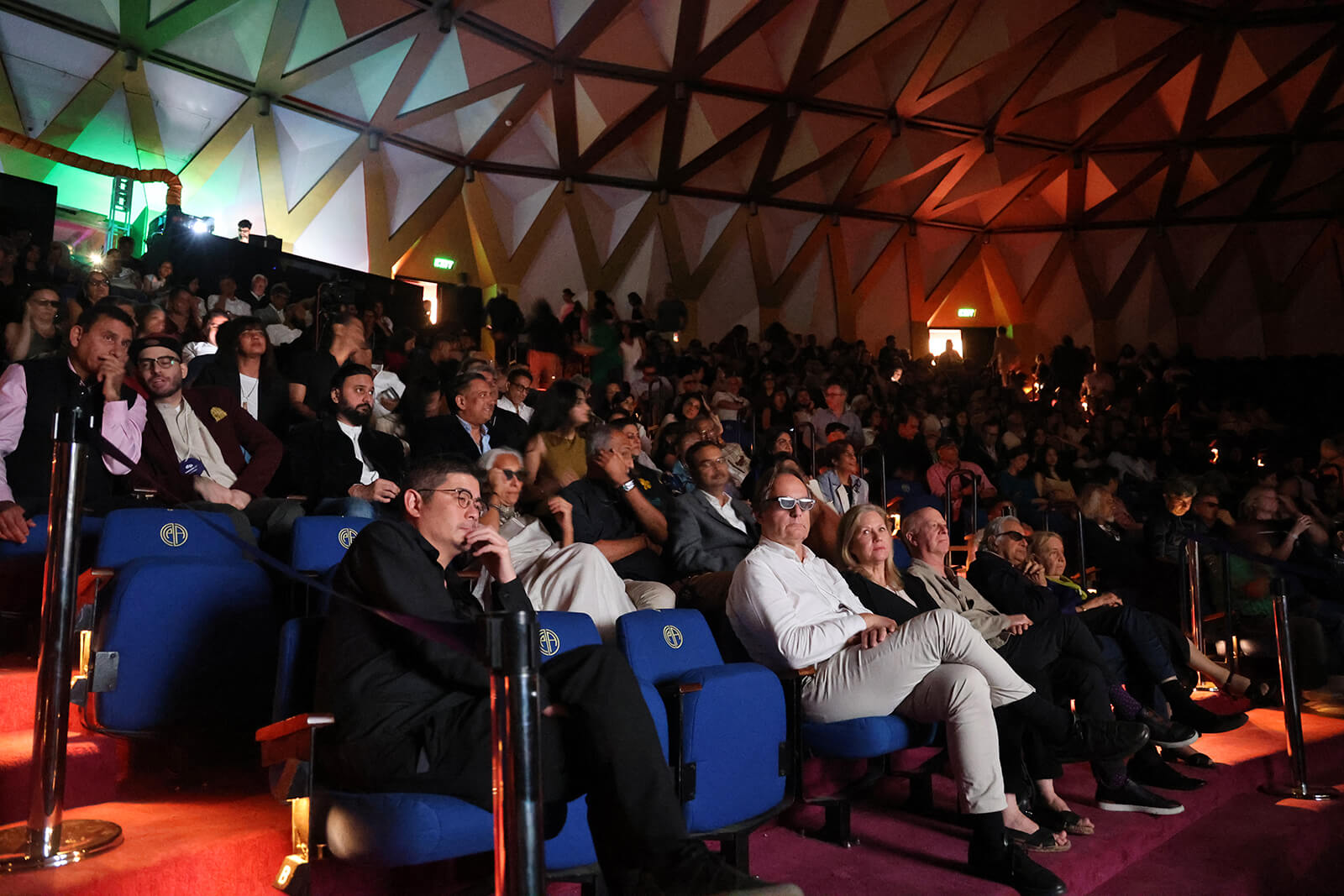
Across its three-day run, the festival welcomed over 12,000 attendees, including architects, designers, filmmakers, artists, students and cultural leaders. Bringing together a truly plural and international community, the festival amplified Mumbai’s position as a major cultural node in the global creative network, enabling dialogue and discourse extending across educational institutions, cultural agencies, public spaces and audiences, reinforcing the design event’s impact beyond being a multi-format film festival. It acted as an intersectional space for stories, memories and reflections, old and new, becoming a vibrant hub of interdisciplinary exchange between professionals and the public at large.
“ADFF:STIR Mumbai strengthens India’s cultural landscape by occupying and accelerating a once-missing or largely nascent public platform, where the realms of architecture, design, cinema and society intersect in diverse, sincere and informed ways. It places Indian architectural discourse in direct conversation with global practices while weaving in indigenous knowledge systems,” says Amit Gupta, festival director and founder & editor-in-chief, STIR.
Over 30 internationally acclaimed and homegrown films found their home at the festival, showcased across four theatres: the Tata Theatre, Experimental Theatre, Godrej Dance Theatre and Little Theatre at the NCPA—from films on renowned architects and designers such as Geoffrey Bawa (Bawa’s Garden), Charles and Ray Eames (Eames: The Architect and the Painter) and Frank Gehry (Sketches of Frank Gehry and Frank Gehry: Building Justice) to underrated gems including Changing Lanes and Lewerentz: Divine Darkness. A slew of 3D films, including Anselm and Pina by Wim Wenders, along with Cathedrals of Culture were special offerings this year, several of them seeing near-full houses. Titles in the 2026 lineup further explored issues of activism and urban infrastructures, design histories, iconic practitioners and global perspectives. The screenings—central to the festival—offered cinematic provocations that resonated with the festival’s theme, linking narrative storytelling in cinema, documentary inquiry and speculative imagination.
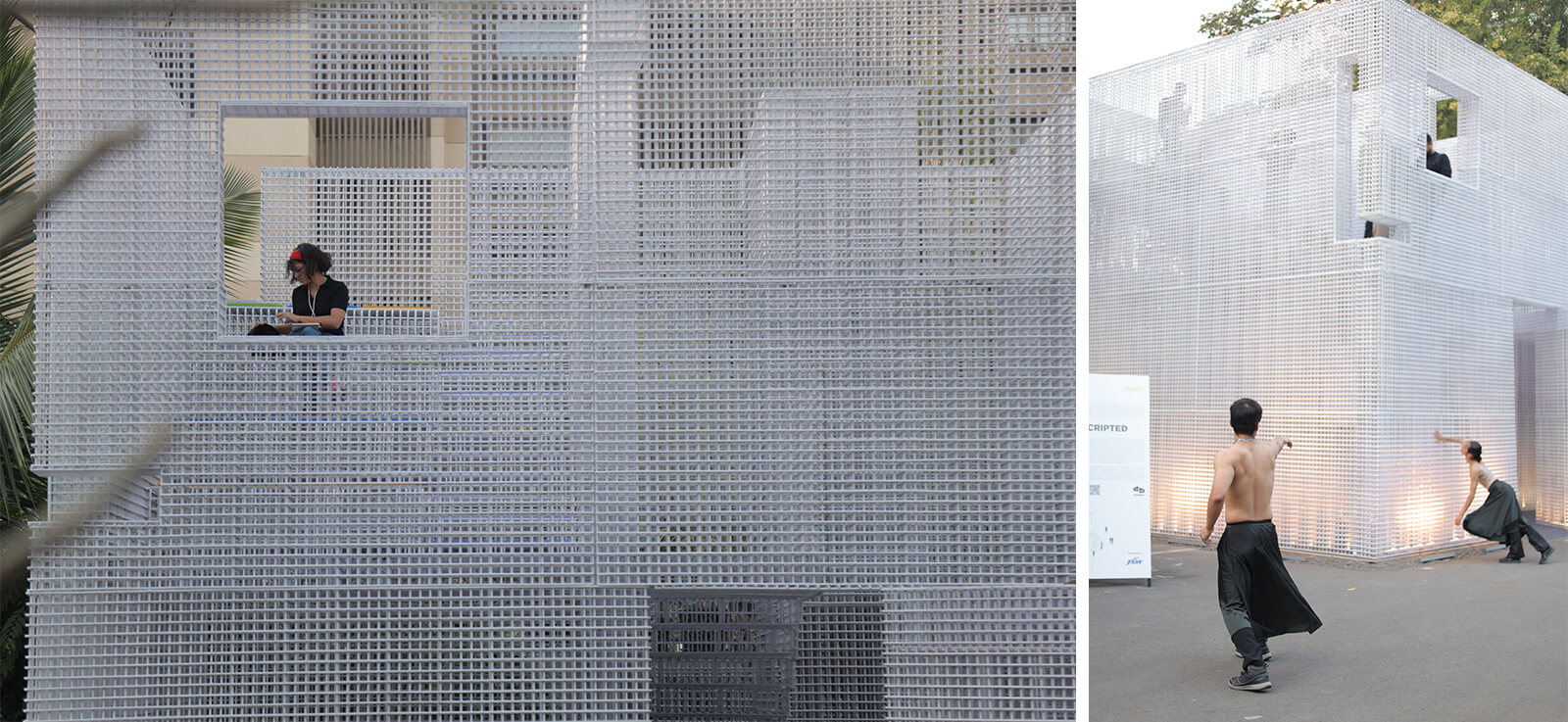
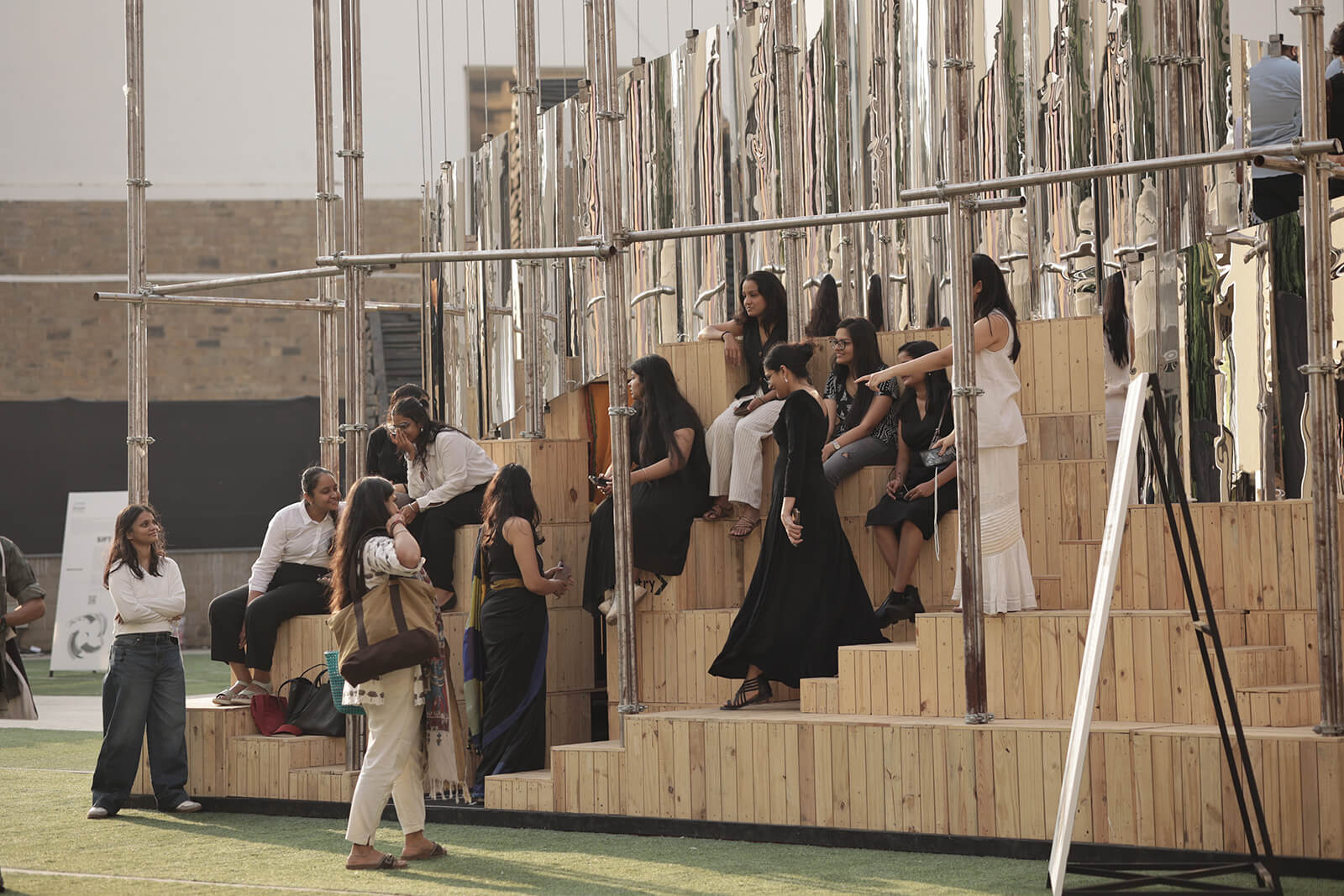
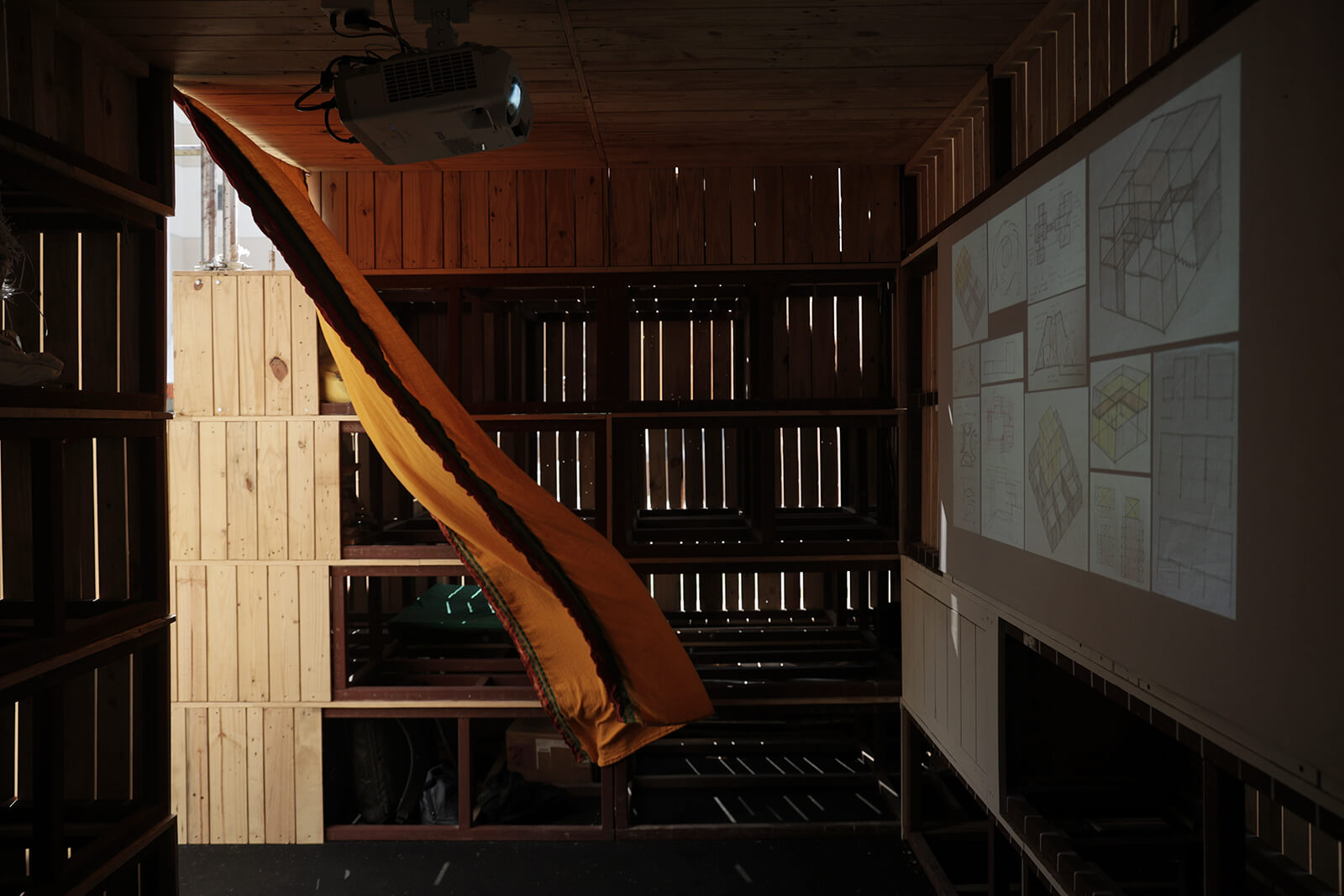
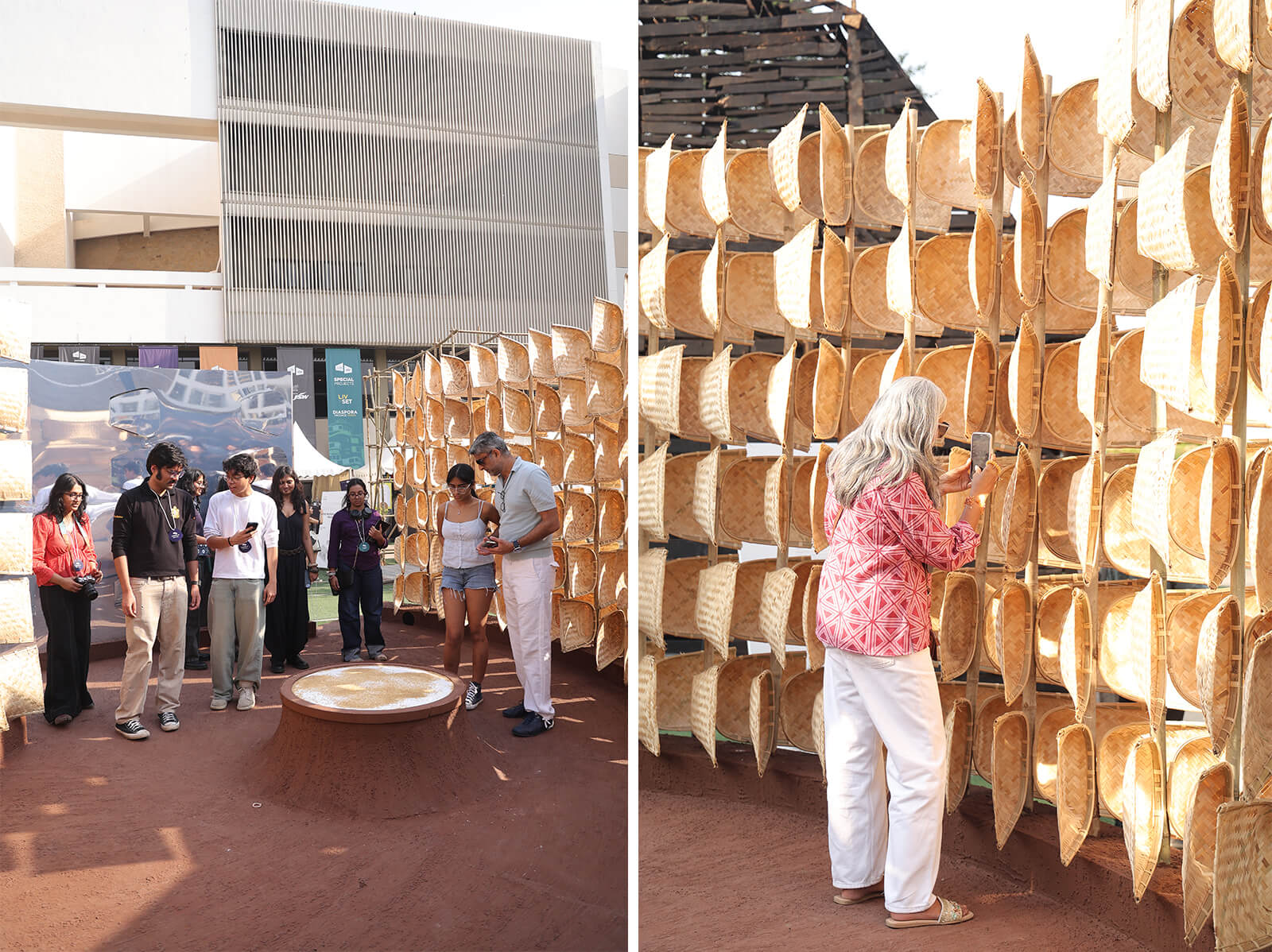
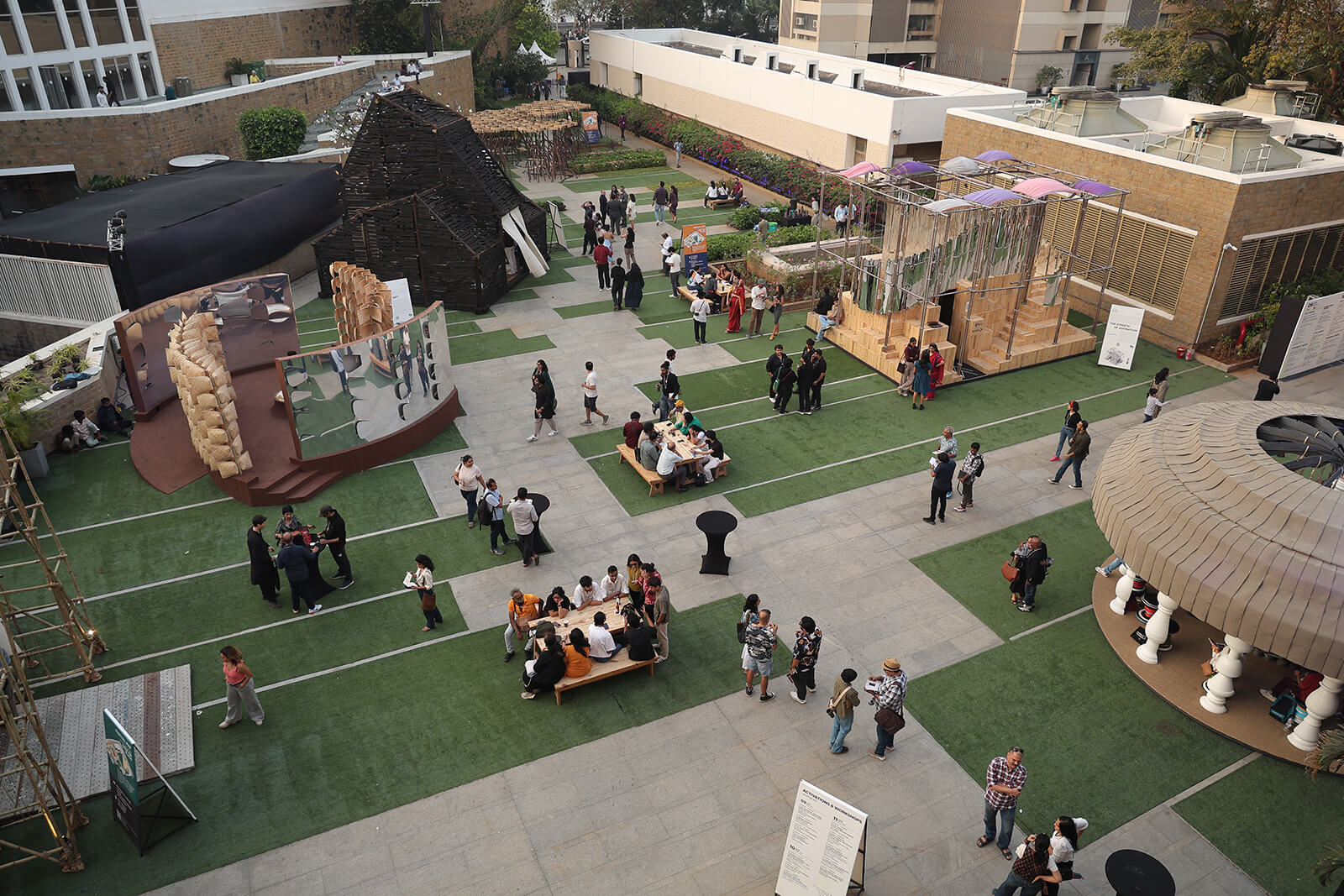
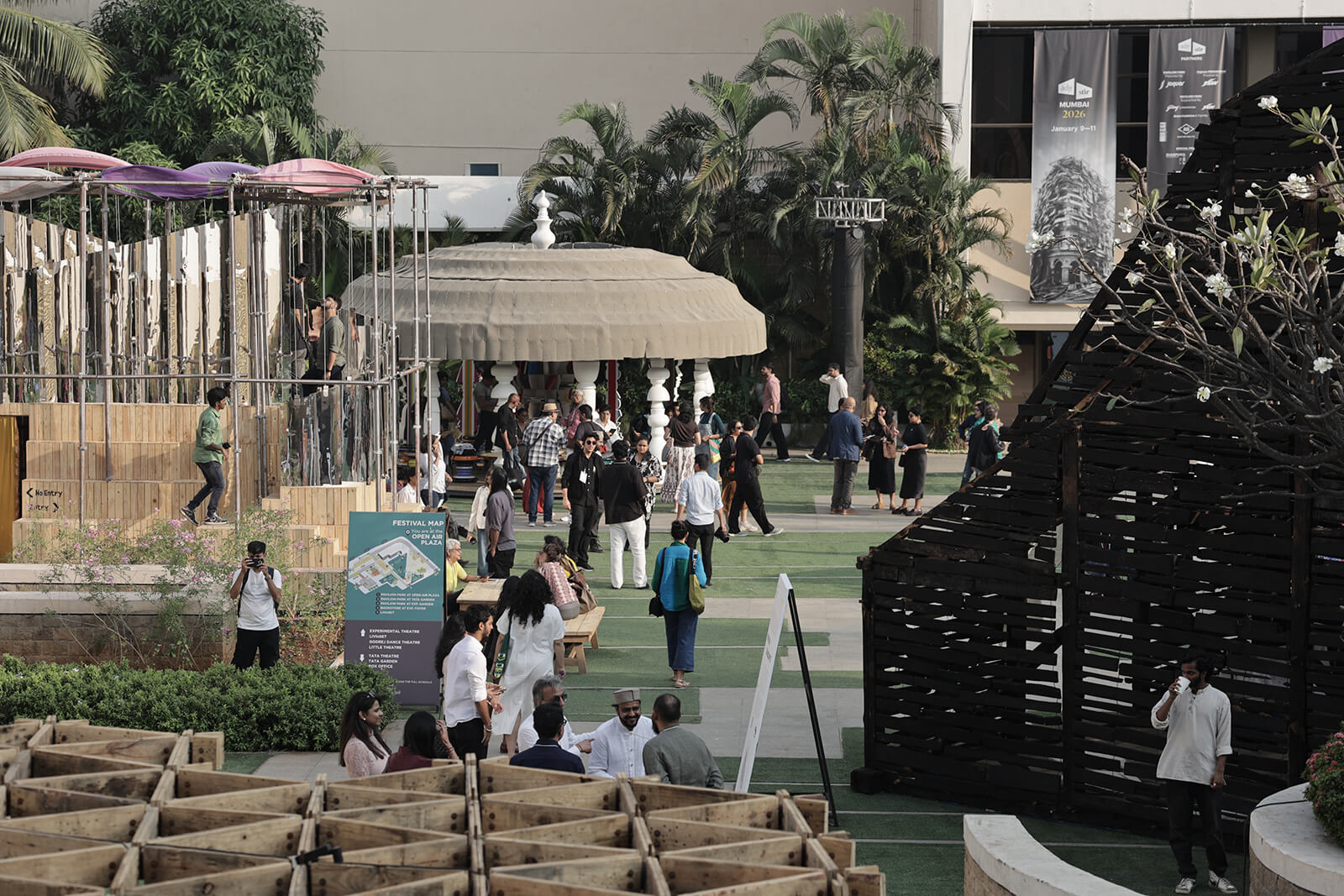
The festival’s ethos in spatial, tangible terms, manifested in the Jaquar Pavilion Park. Erected volumes, colliding and collapsing; surfaces, bare, robust and unfolding in layers; memories, flooding, fusing and transforming—ten architectural pavilions, responding to Chen’s curatorial theme, The Mumbai Transcripts, came alive in these dramatic iterations. Both provocations as well as meditative reflections on the maximum city, the pavilions became liminal spaces within the frantic festival ground, where people rested, conversed and exchanged ideas and experiences, creating a temporary but evolving ecosystem in itself.
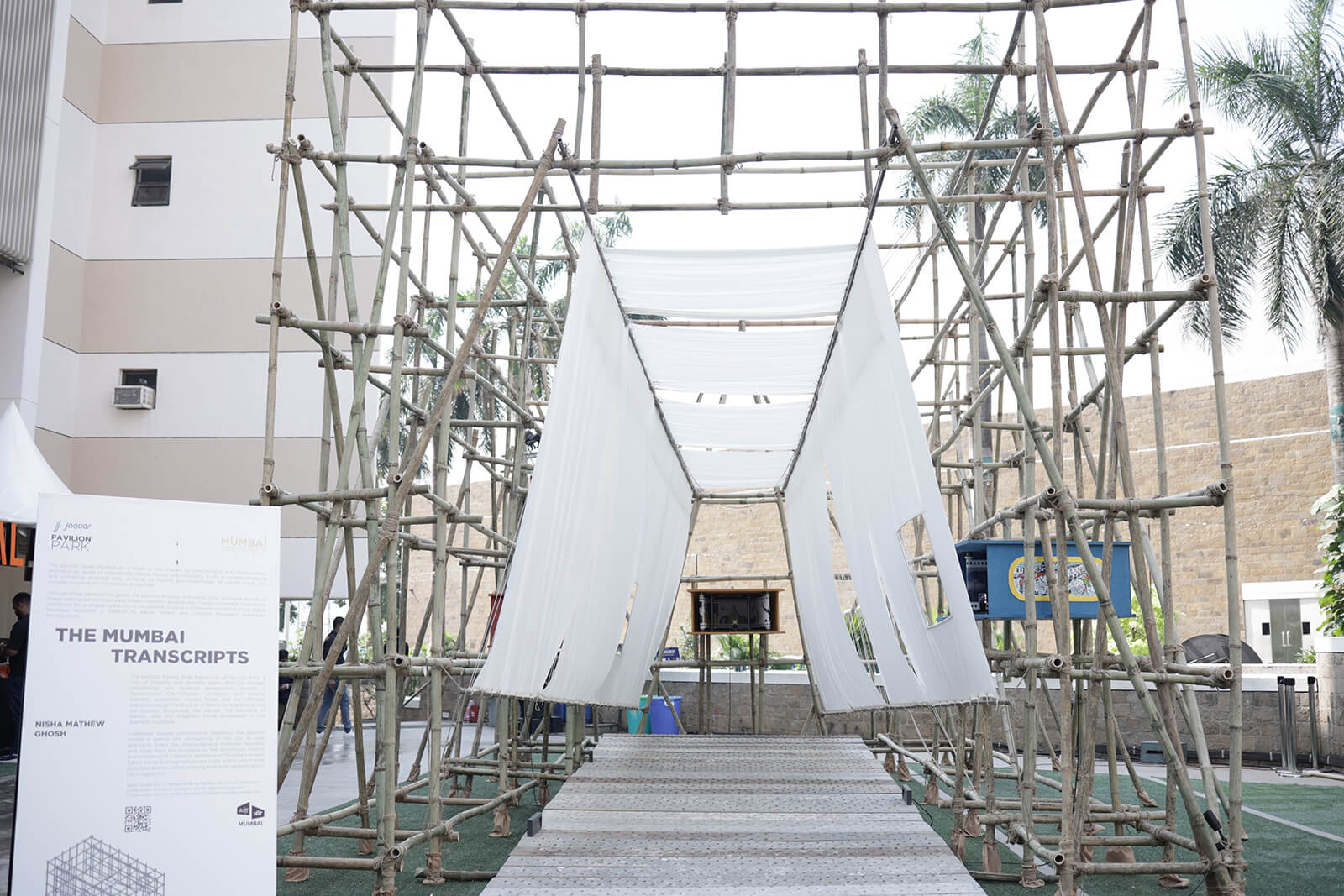
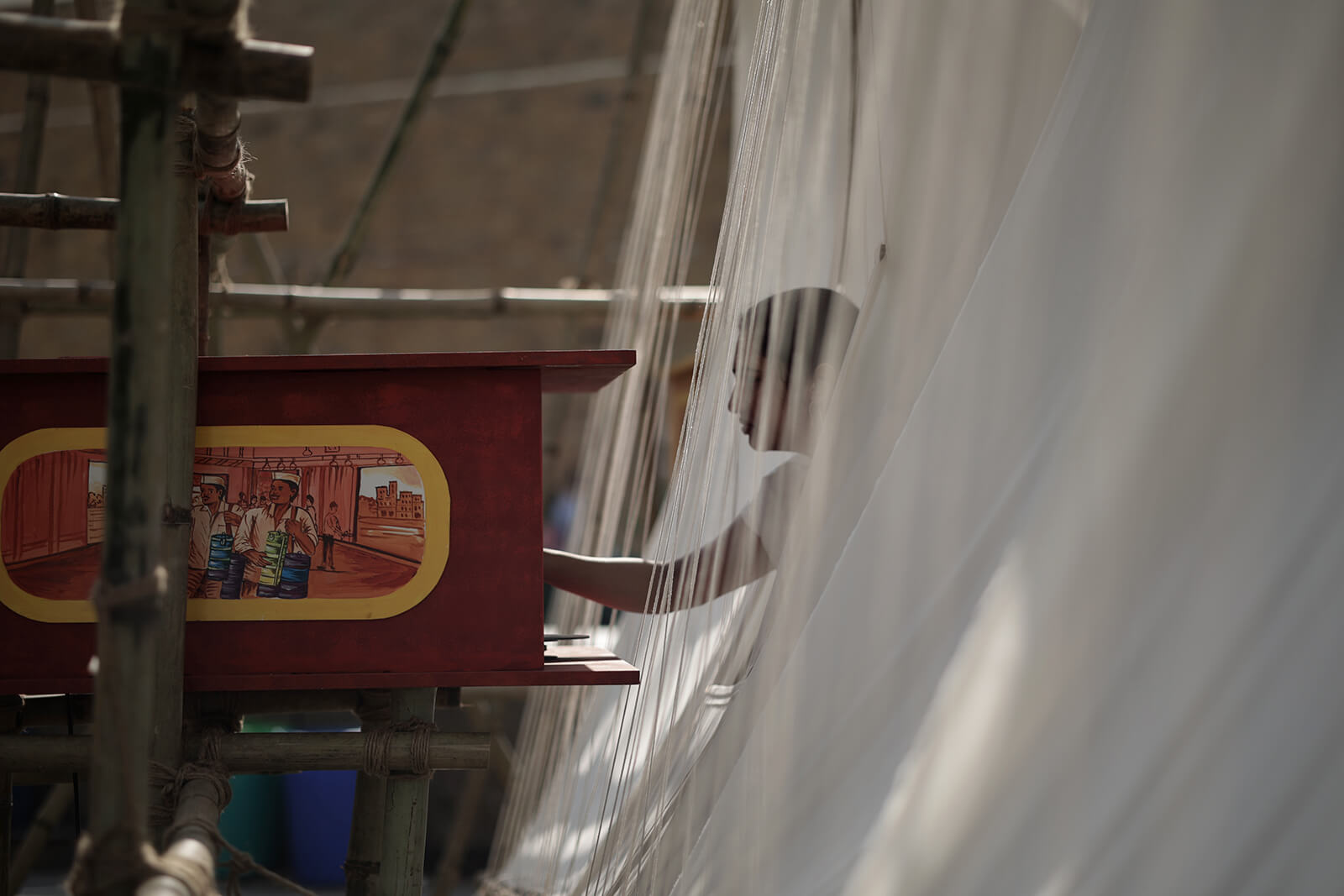
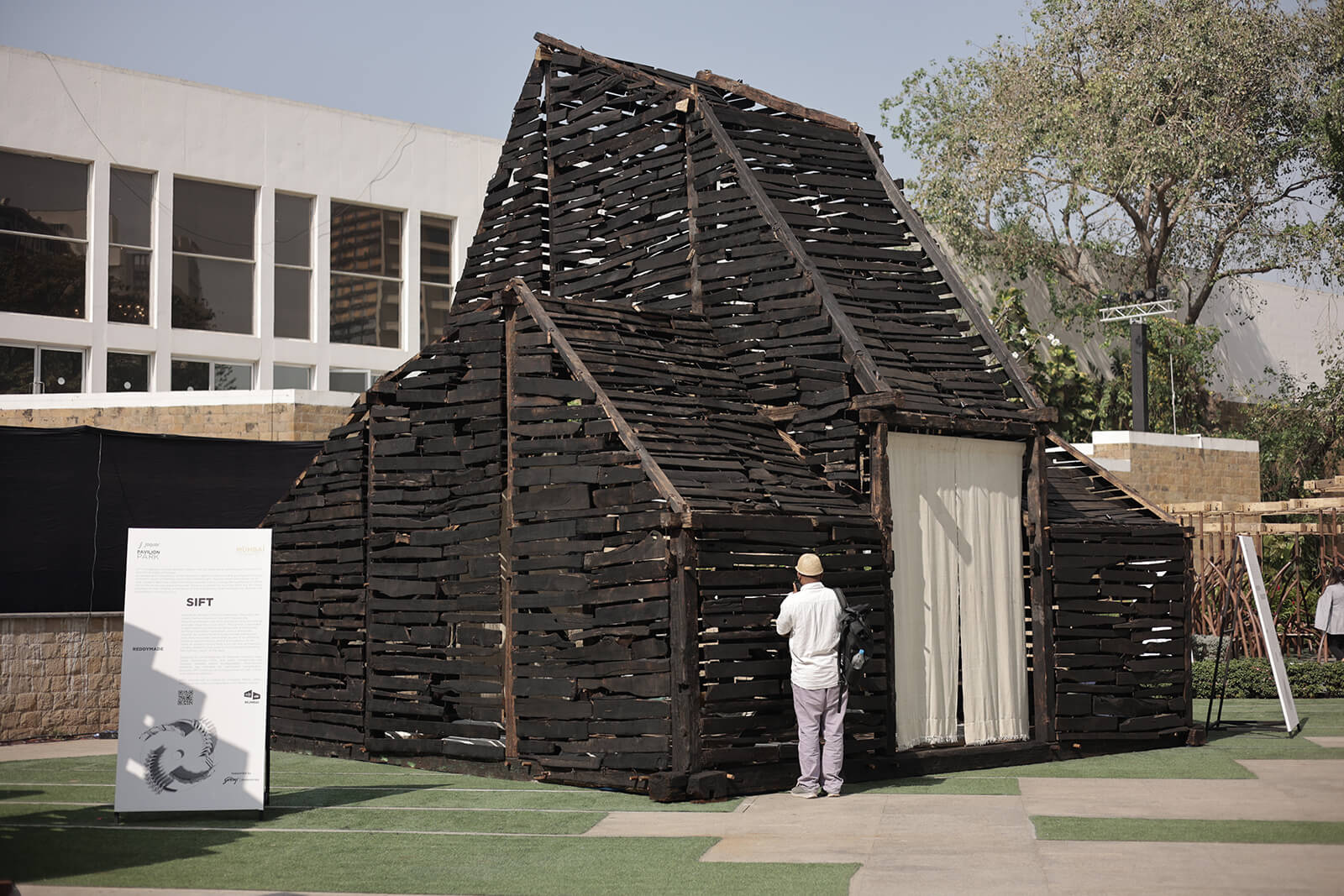
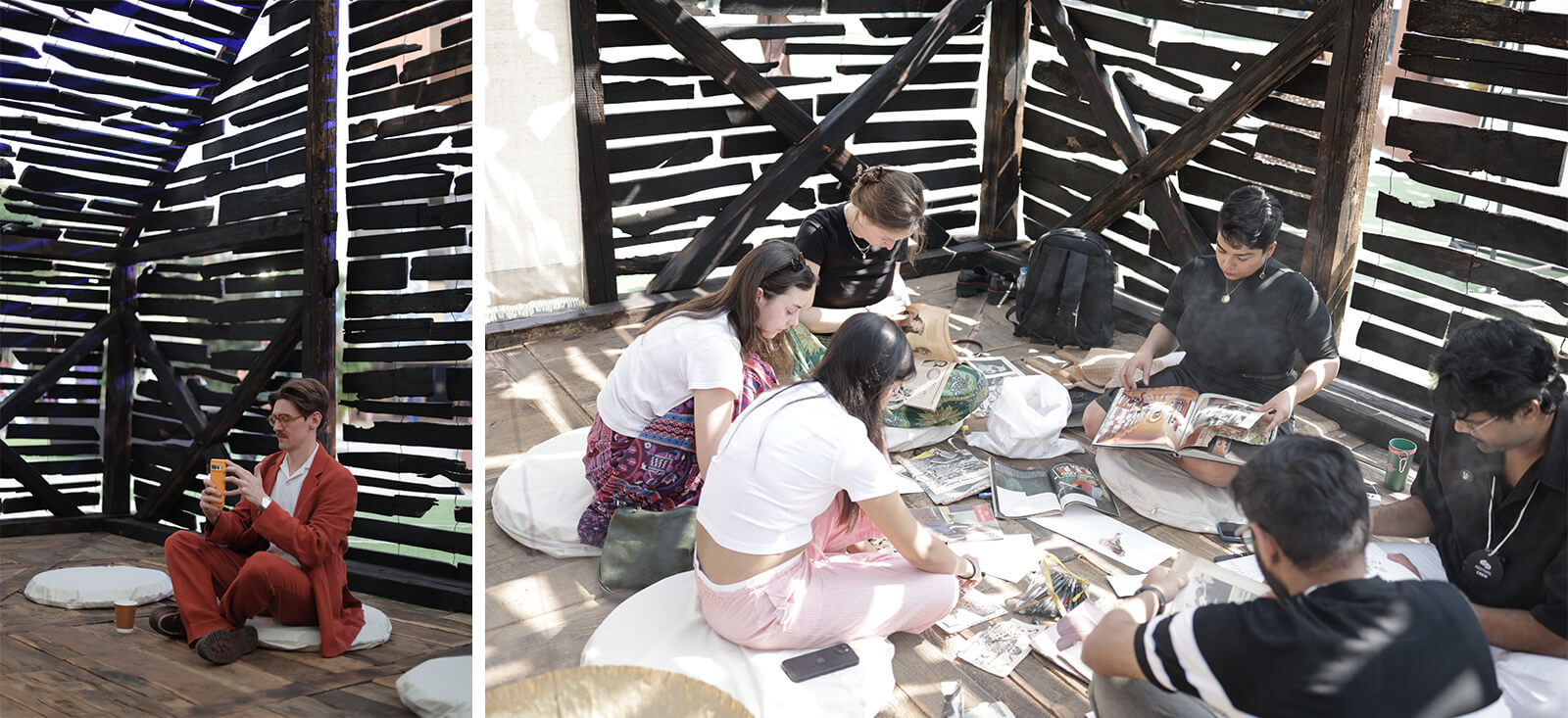
The Jaquar Pavilion Park served as a stage for spatial experimentation, with ten selected proposals realised from a larger pool of international participants. While the visitors enjoyed watching grains of rice dancing to cymatic vibrations at SIFT by Reddymade, Streets of Aspiration by SJK Architects attracted the visitors and the on-ground staff alike to seek moments of respite from the strong afternoon sun, emulating informal seating blocks throughout the city.
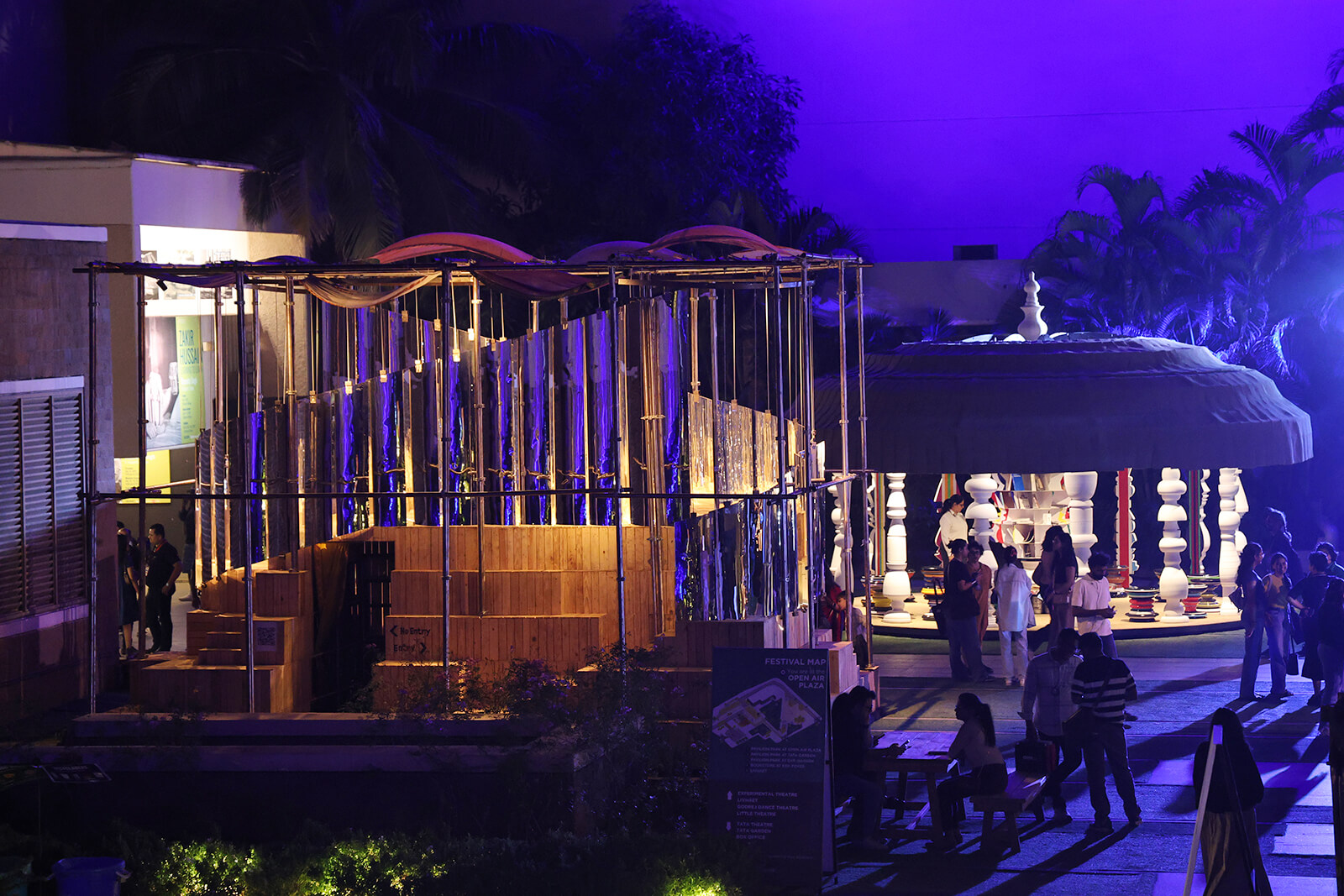
The Mumbai Transcripts by Nisha Mathew Ghosh invited exploration of the many facades of the city’s cultural identity, while Mountain Transcripts by NORTH brought the mountainous landscapes of the Himalayan foothills to the humid, tropical coastline of Mumbai, luring visitors in with the unique aromas and music of the mountains. Unscripted by Abin Design Studio and Pentad Pavilion by UHA were especially popular with the visitors with their pockets of social exchange, outstanding materiality and unique construction details evoking wonder and curiosity.
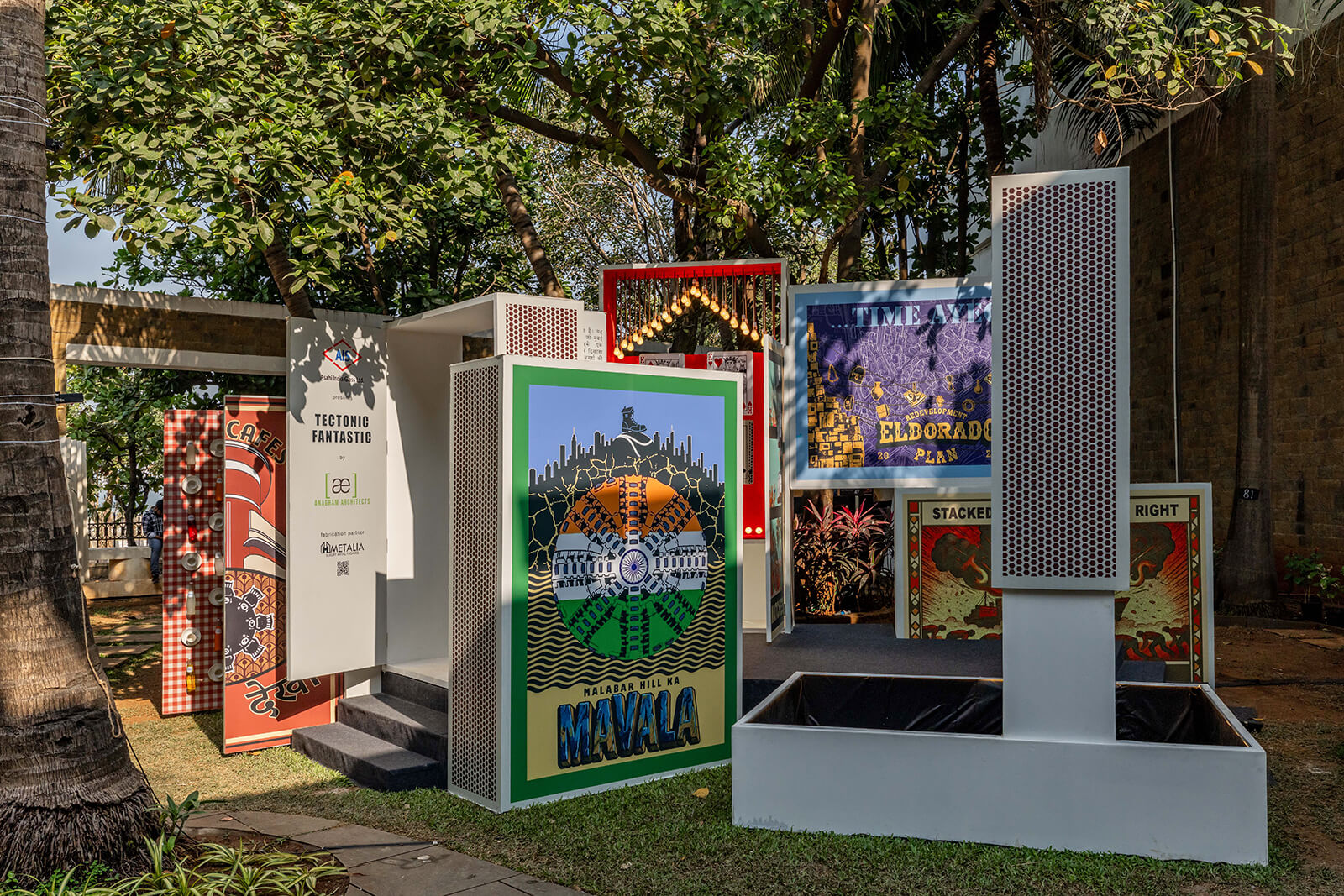
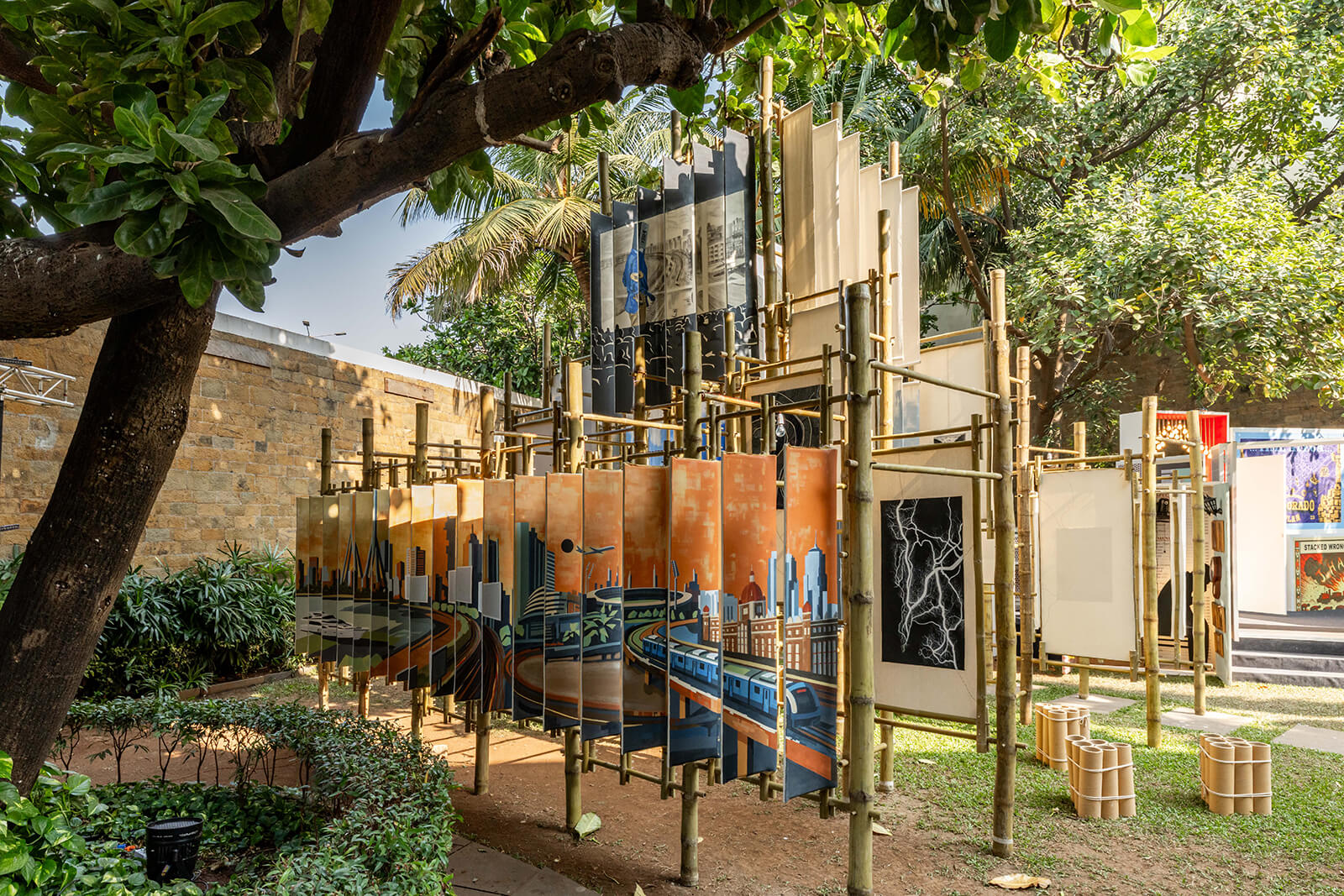
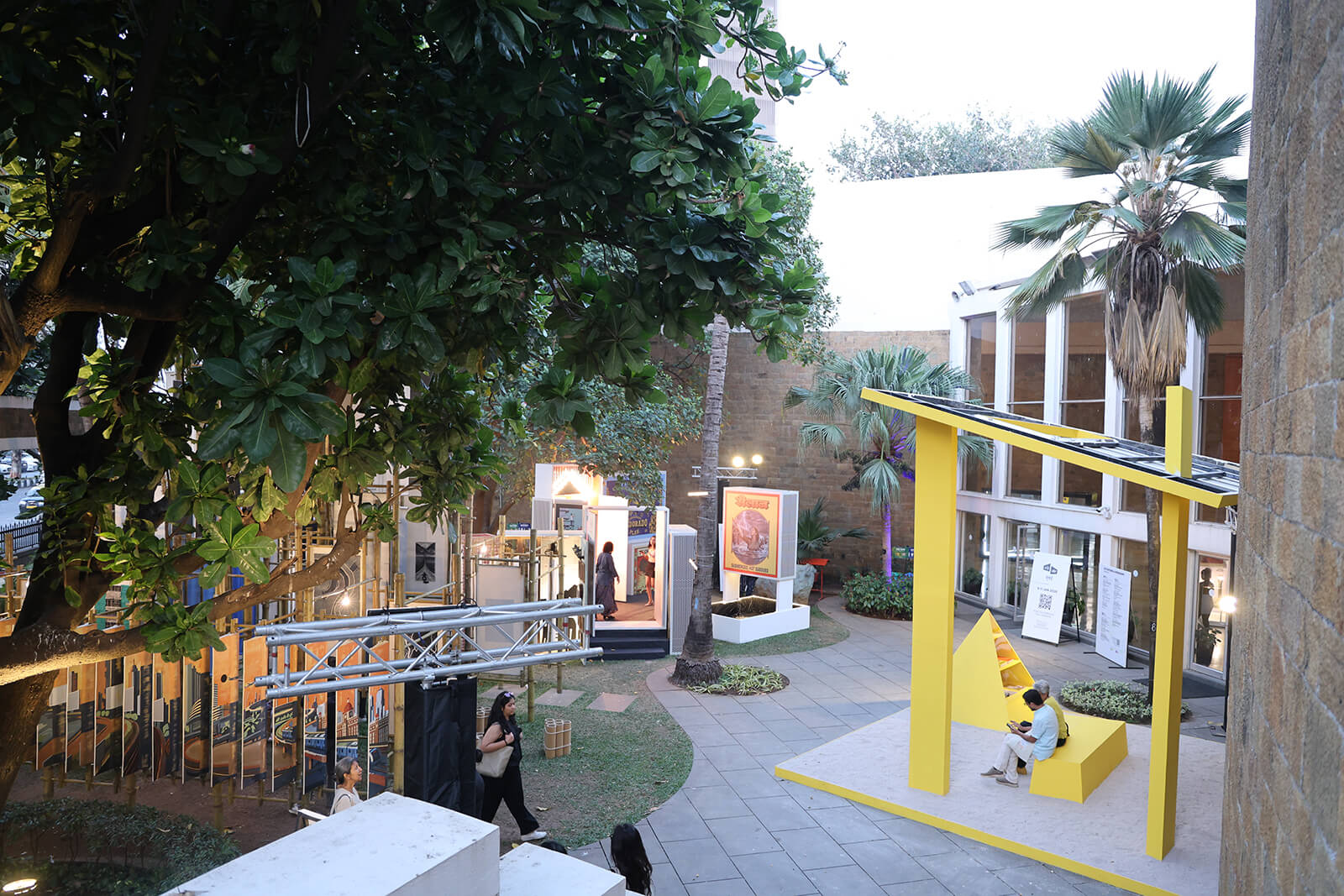
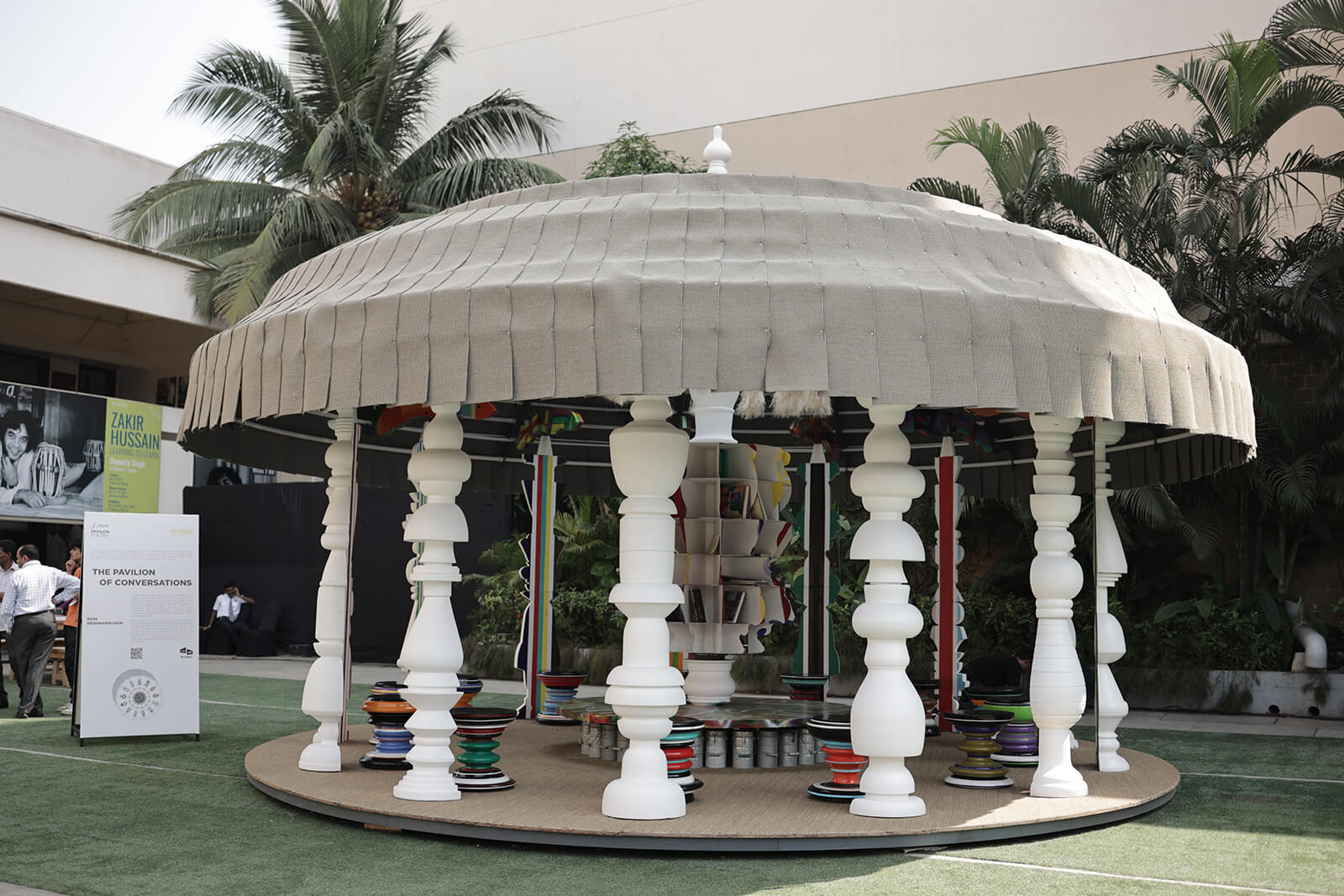
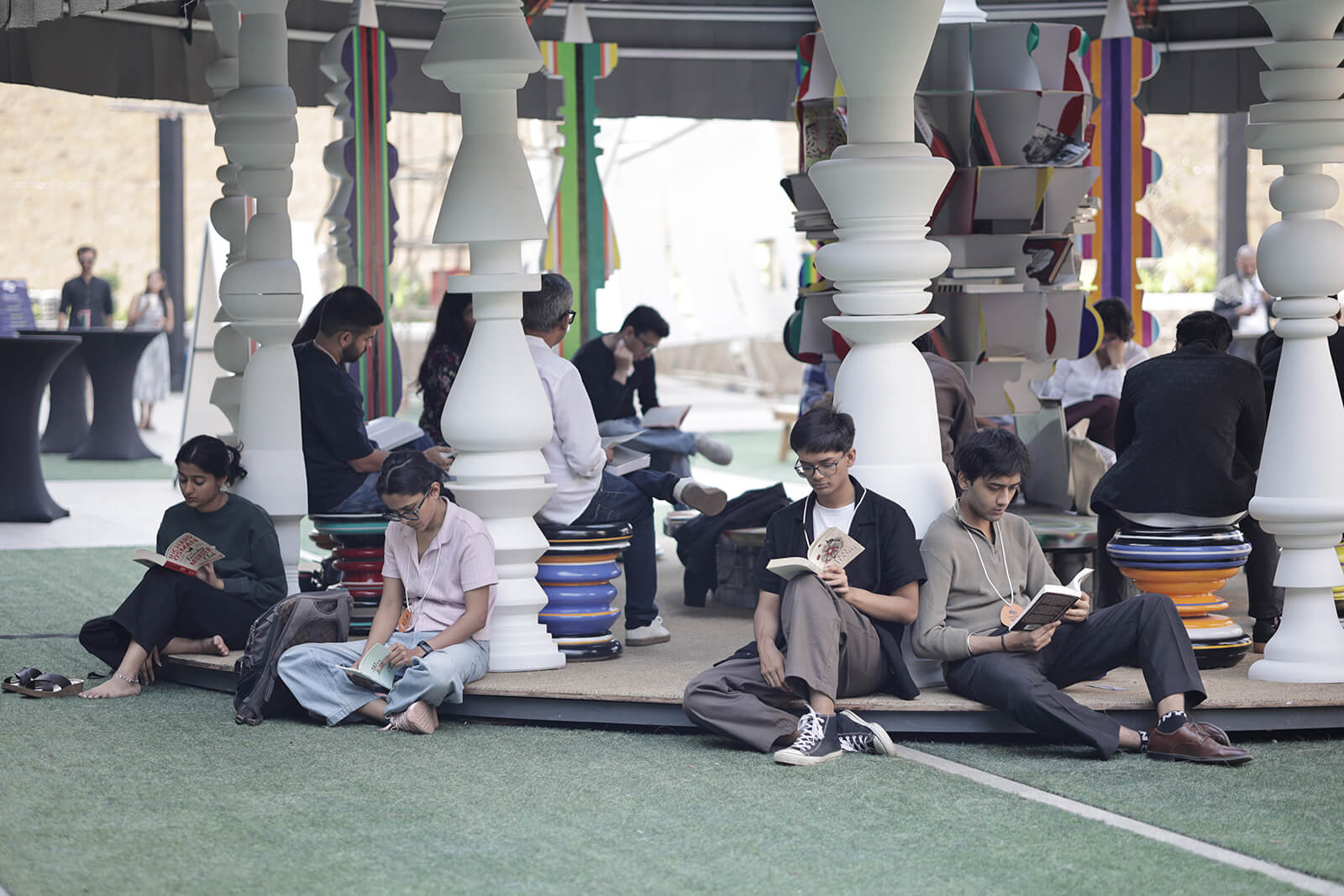
On the other hand, The Script by Field Architects, Mangrove Pavilion by Studio Sangath and Tectonic Fantastic by Anagram Architects attracted playful manoeuvres and transitional spaces that allowed visitors to traverse and peek through their unique graphic and structural assemblages. The Pavilion of Conversations by Bose Krishnamachari, strategically placed, attracted several spontaneous photography, sketching and reading sessions, apart from the programmed ones.
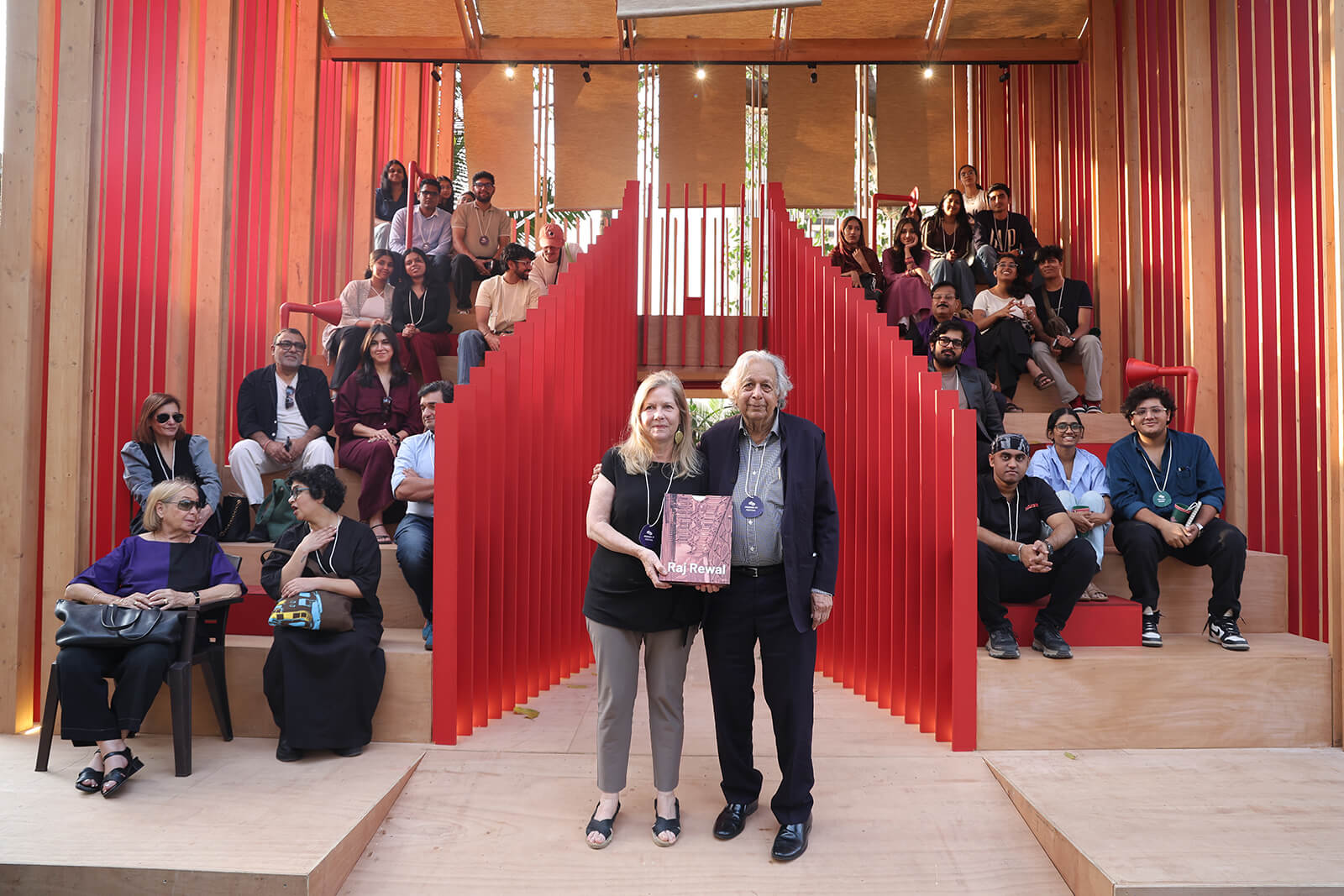
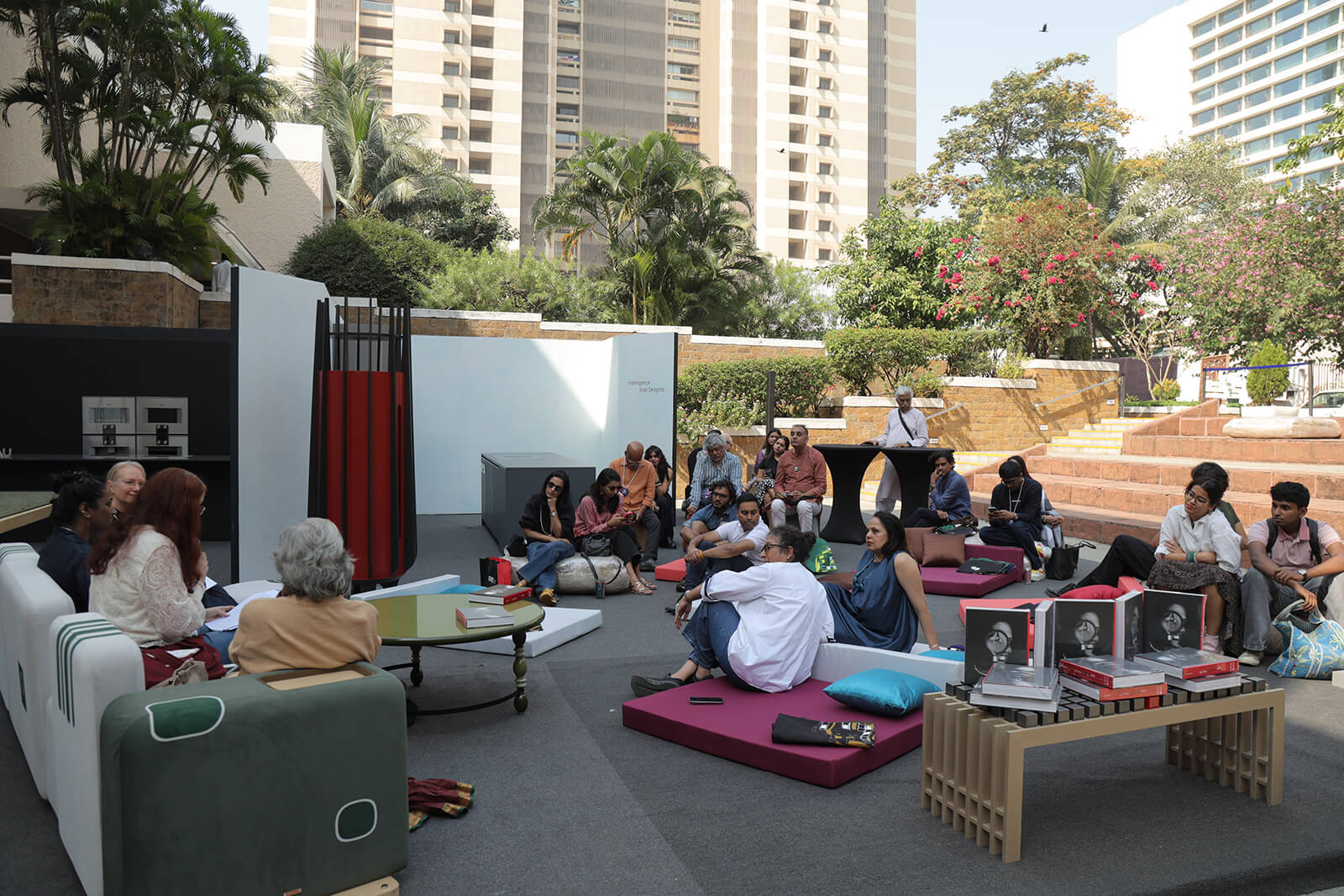
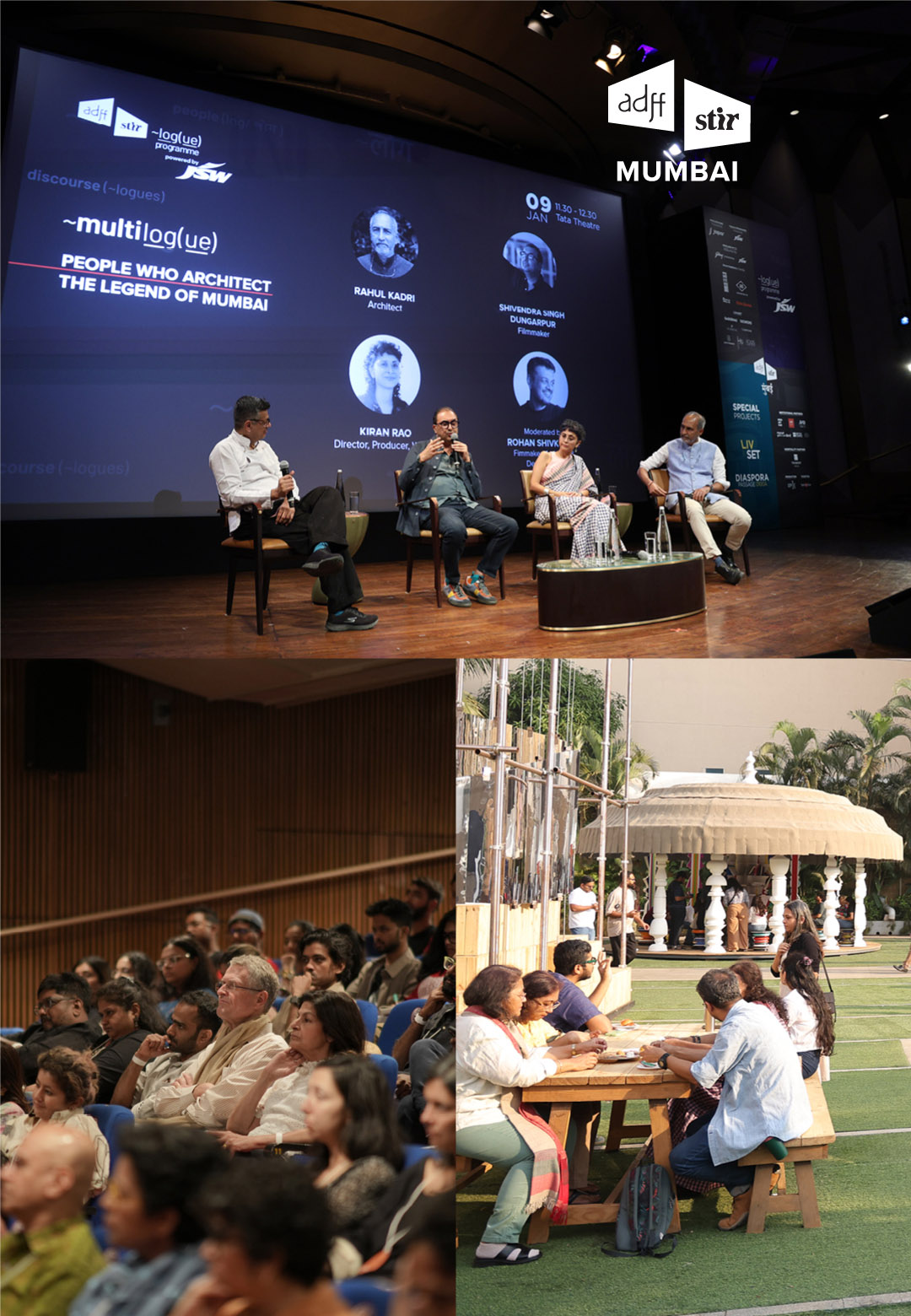
Held in conjunction with several of the films at the festivals and its larger ethos of promoting plural voices through the city, the ~log(ue) Programme returned, powered by JSW this year, with formats including ~monolog(ue)s, ~dialog(ue)s, ~multilog(ue)s, ~metalog(ue)s, ~epilog(ue)s, ~prolog(ue)s and ~analog(ue)s expanding conventional festival conversations into multidimensional exchanges. The ~log(ue)s attracted audiences from all backgrounds, as they joined in on the conversation along with the panellists, speakers and presenters, foregrounding creative intent, impact and practice, prompting the interlocutors to reconsider how ideas and entire disciplines themselves might intersect and fuse. The specially designed ~log(ue) formats also positioned audience engagement alongside performances by artists, book readings and workshop activations such as urban speculation in Unhinged Mumbai, the Team Tree! timber-workshop and Thinking Cities in Narratives, a comics and storyboarding workshop by Leewardists.
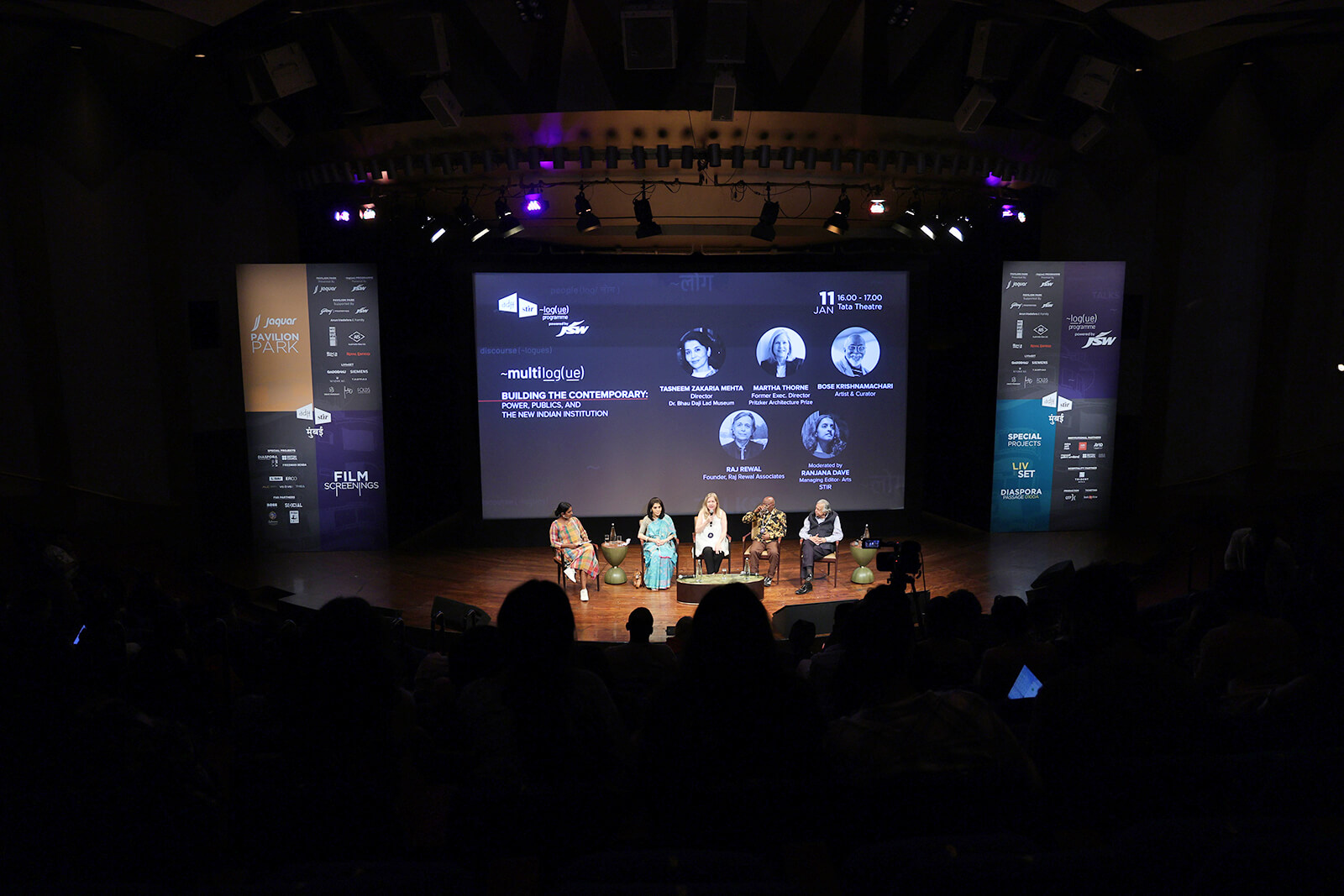
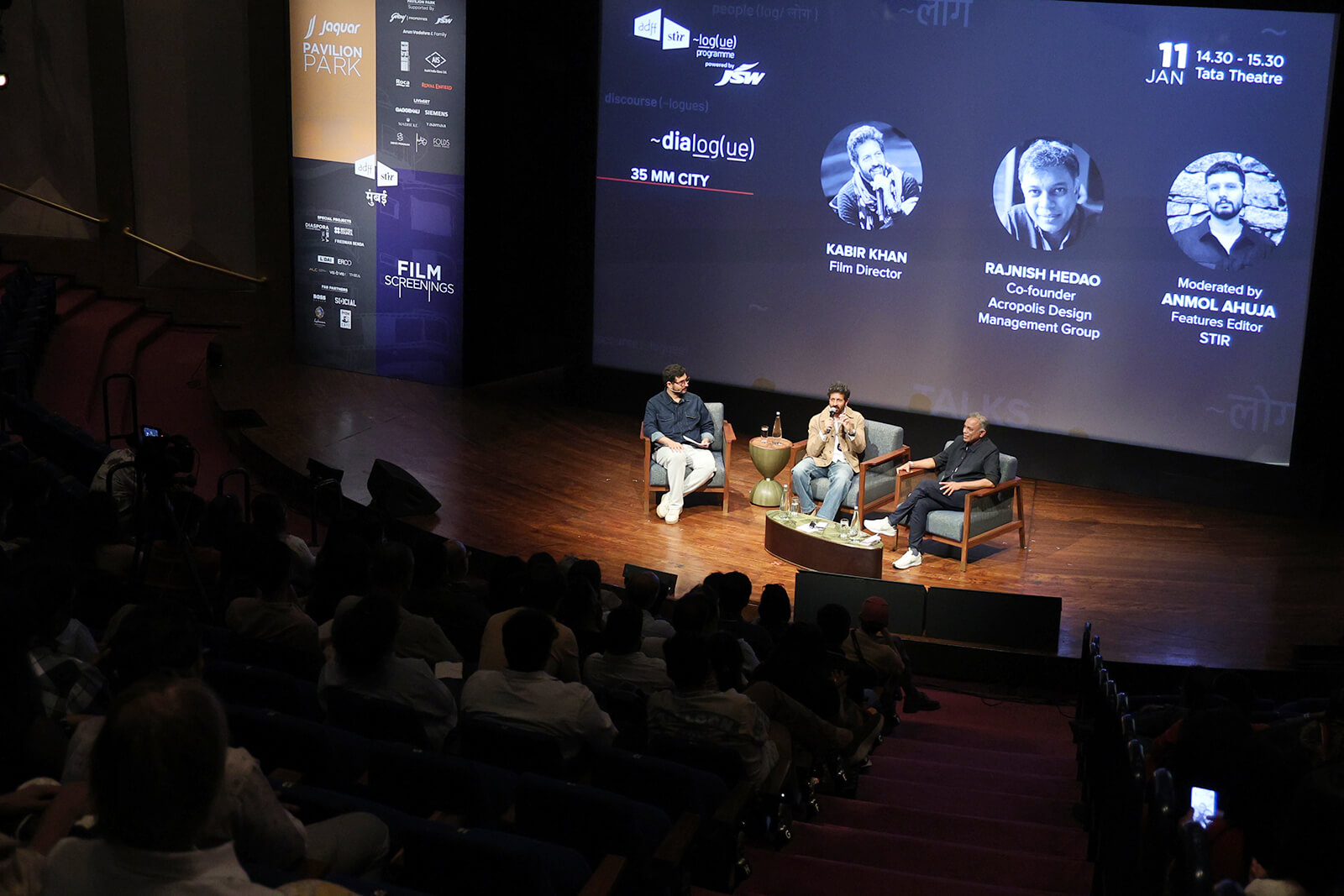
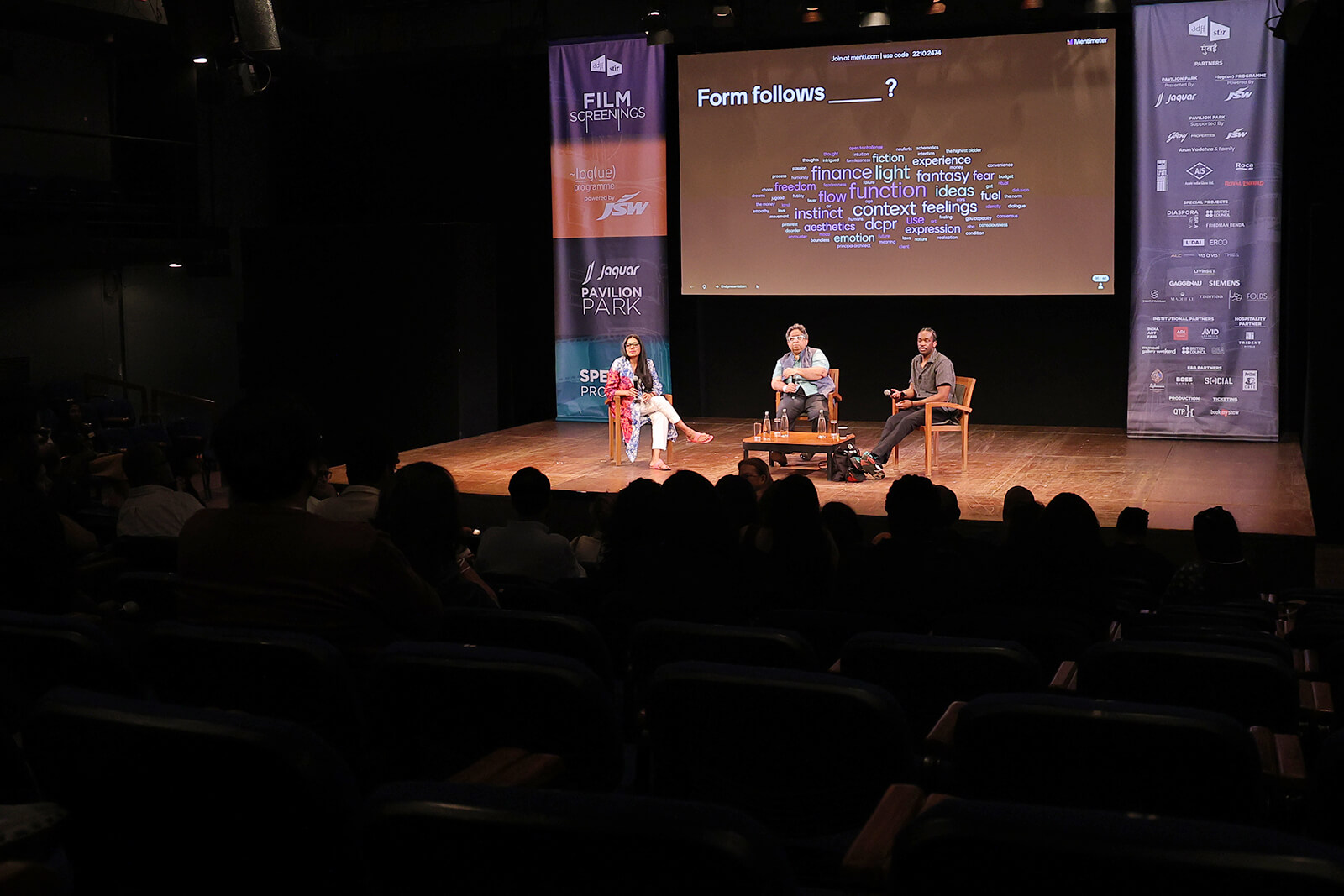
“In its second chapter, the festival moves from intention to practice. What began as a commitment to plural narratives has evolved into a living, multi-nodal system, one that privileges dialogue over declaration and process over spectacle. This evolution became most visible within the ~log(ue) Programme, which has expanded from a space of conversation into a curatorial method foregrounding listening, co-authorship and porous forms of knowledge-making”, says Nadeem.
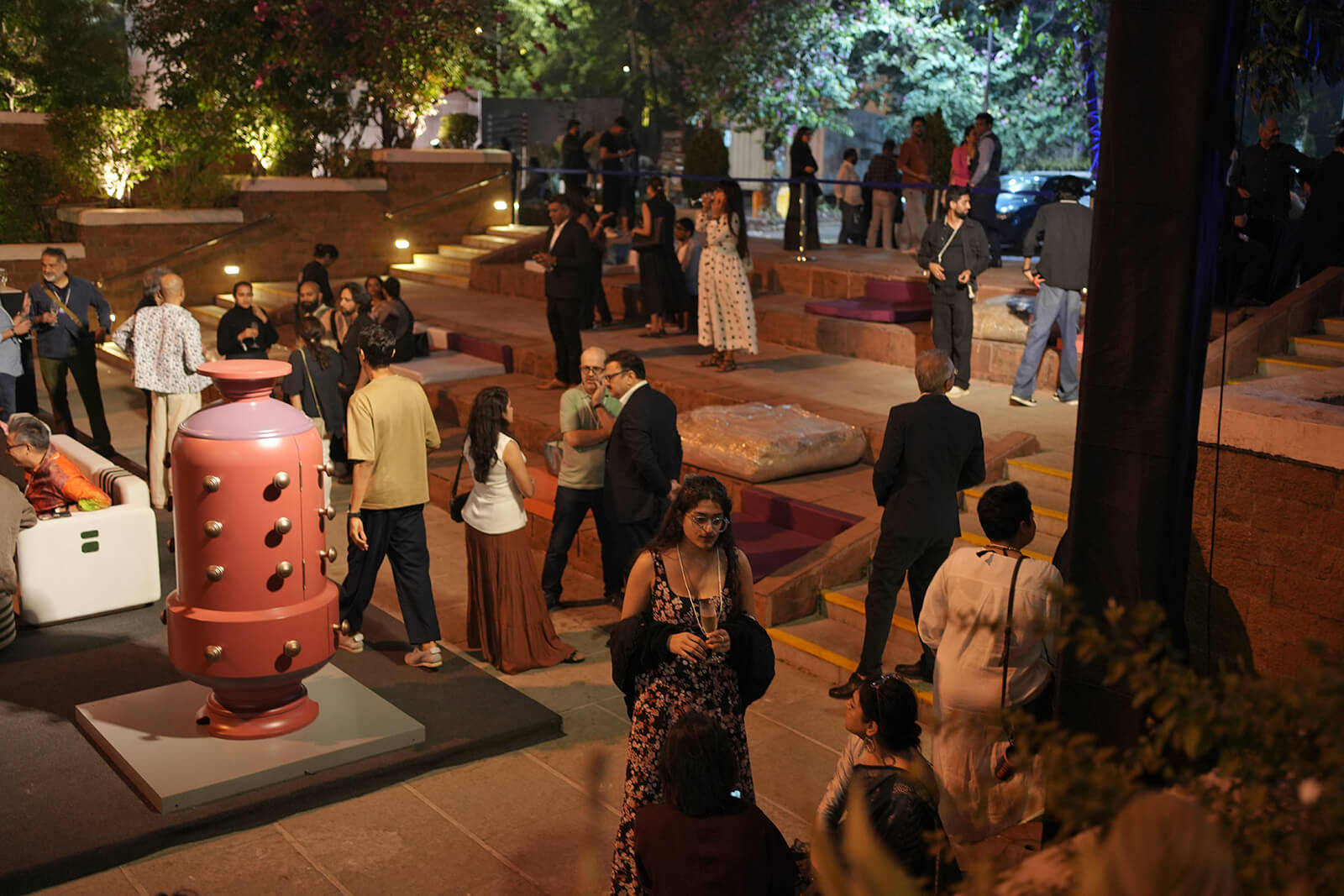
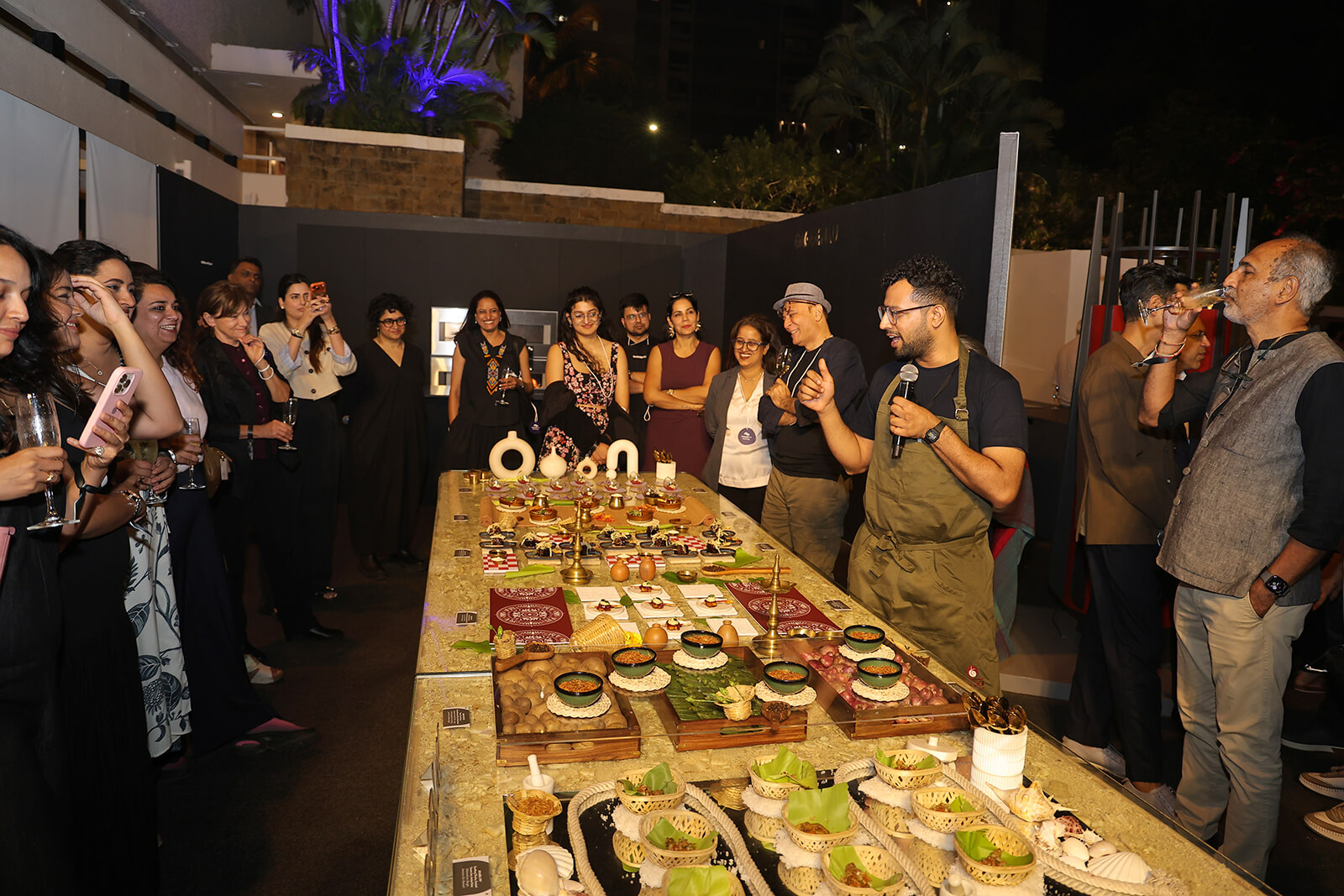
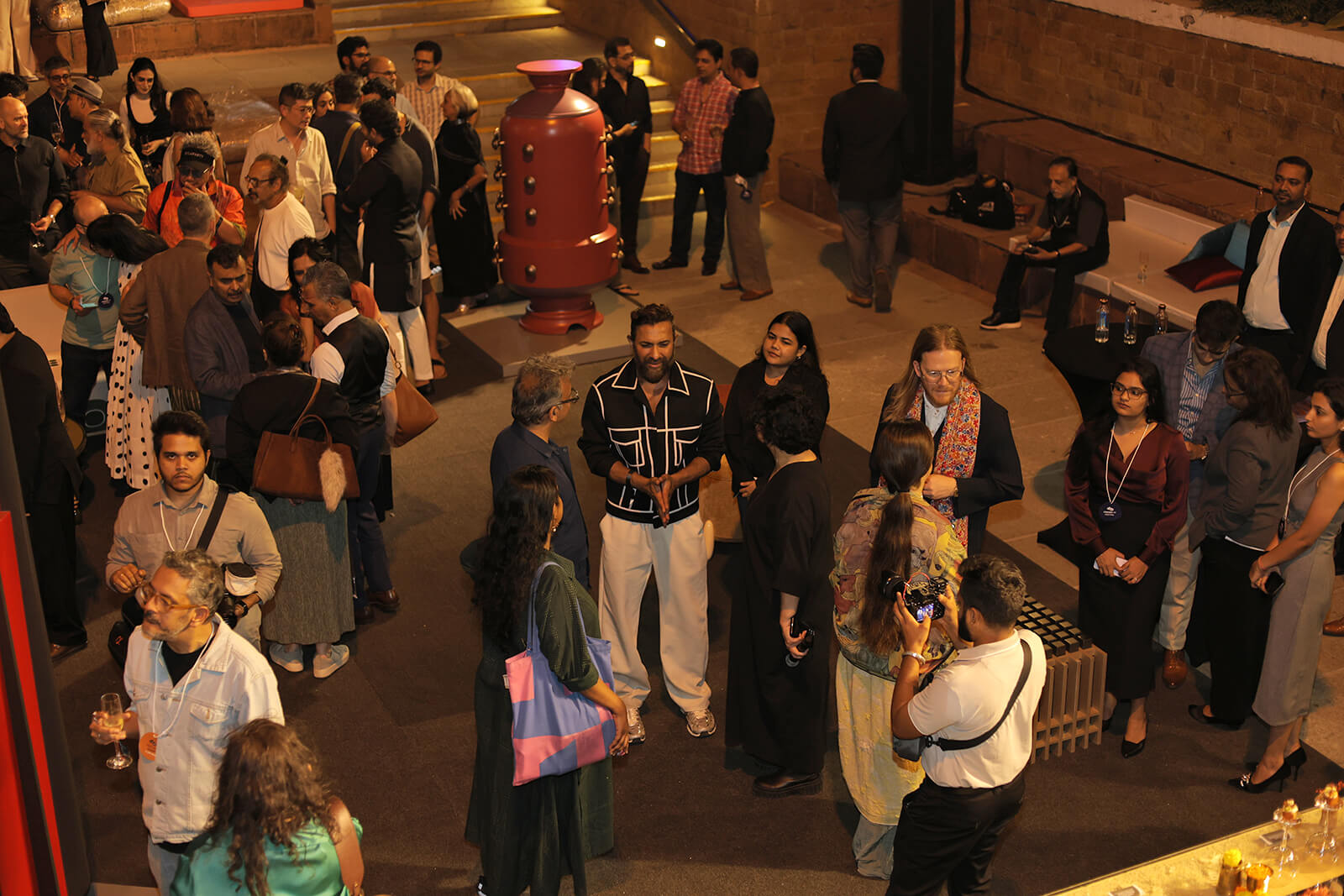
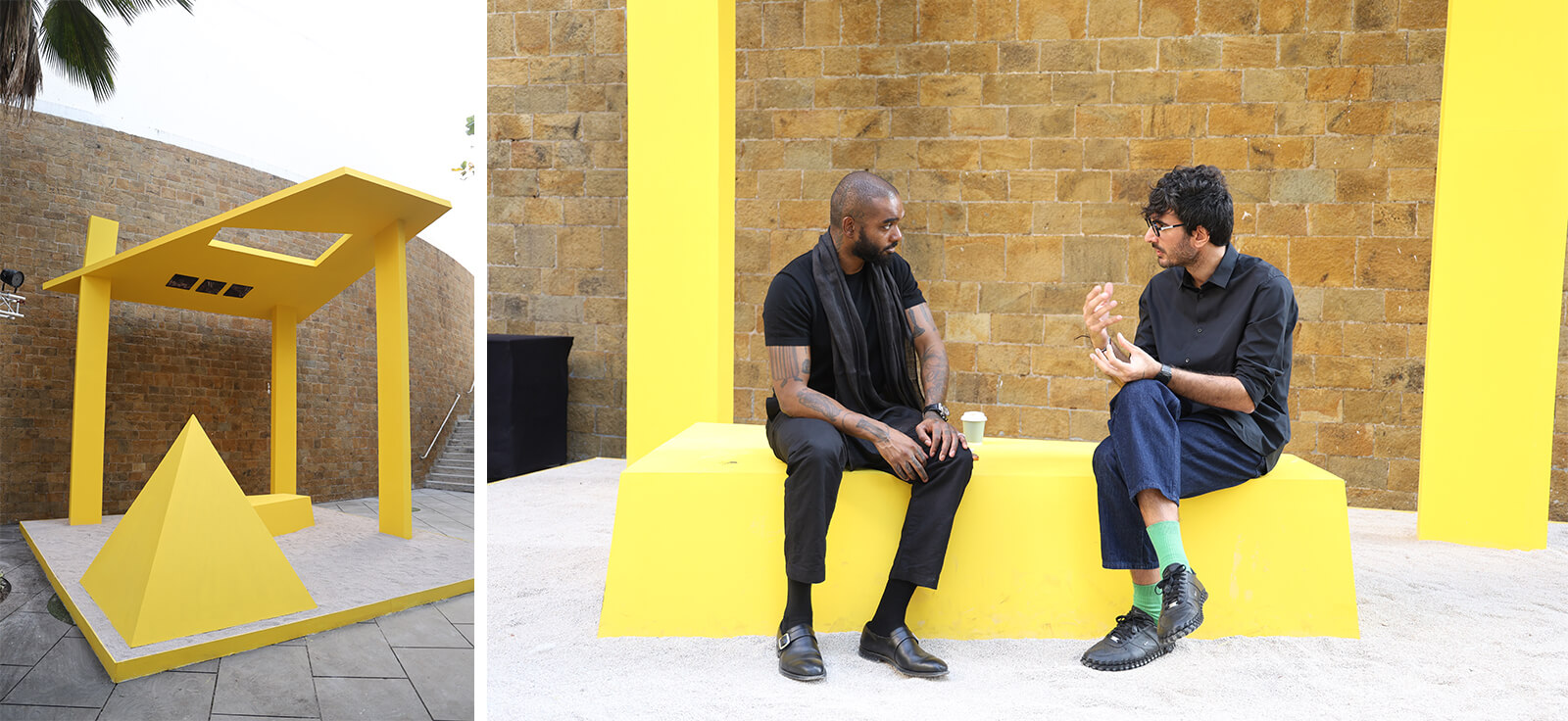
The design festival also staged two Special Projects, including Diaspora Passage 01001A by SRA and LIVinSET, complementing the films and talks with immersive spatial encounters that activated experiential design dimensions. The projects extended as the festival’s conceptual, material and spatial repository, offering the visitors additional, traversable contexts through which they engaged with design, movement, identity and space. Diaspora Passage 01001A was an especially popular venue for students across the city, as they got to engage with and discuss their itinerant design proposals and prototypes with Dr Samuel Ross MBE, situated in an abstract yellow structure meant to evoke memory, movement and migration. LIVinSET, on the other hand, transformed the Godrej Dance Theatre’s sunken court into a curated but lively showcase of objects that choreograph our everyday lives, staging a unique, interactive showcase venue for brands and culinary experiences.
Among its many dimensions, ADFF:STIR Mumbai 2026 amplified its experiential offerings through its hospitality, made possible by Trident Hotels. A short stride from the venue, the iconic Trident Nariman Point became home base for the festival's many delegates and varied energies to unwind and recoup from the fervour of festival days. “Our association with the ADFF:STIR Festival underscores our commitment to the arts, culture, and contemporary design. By aligning with platforms that celebrate architecture, design and modern living, Trident continues to foster thoughtful conversations that resonate with the evolving sensibilities of our guests”, states Dhiraj Mehta, Senior Vice President and General Manager, Trident, Nariman Point, Mumbai, reflecting the consonant energies between the festival and the globally renowned hotel group.
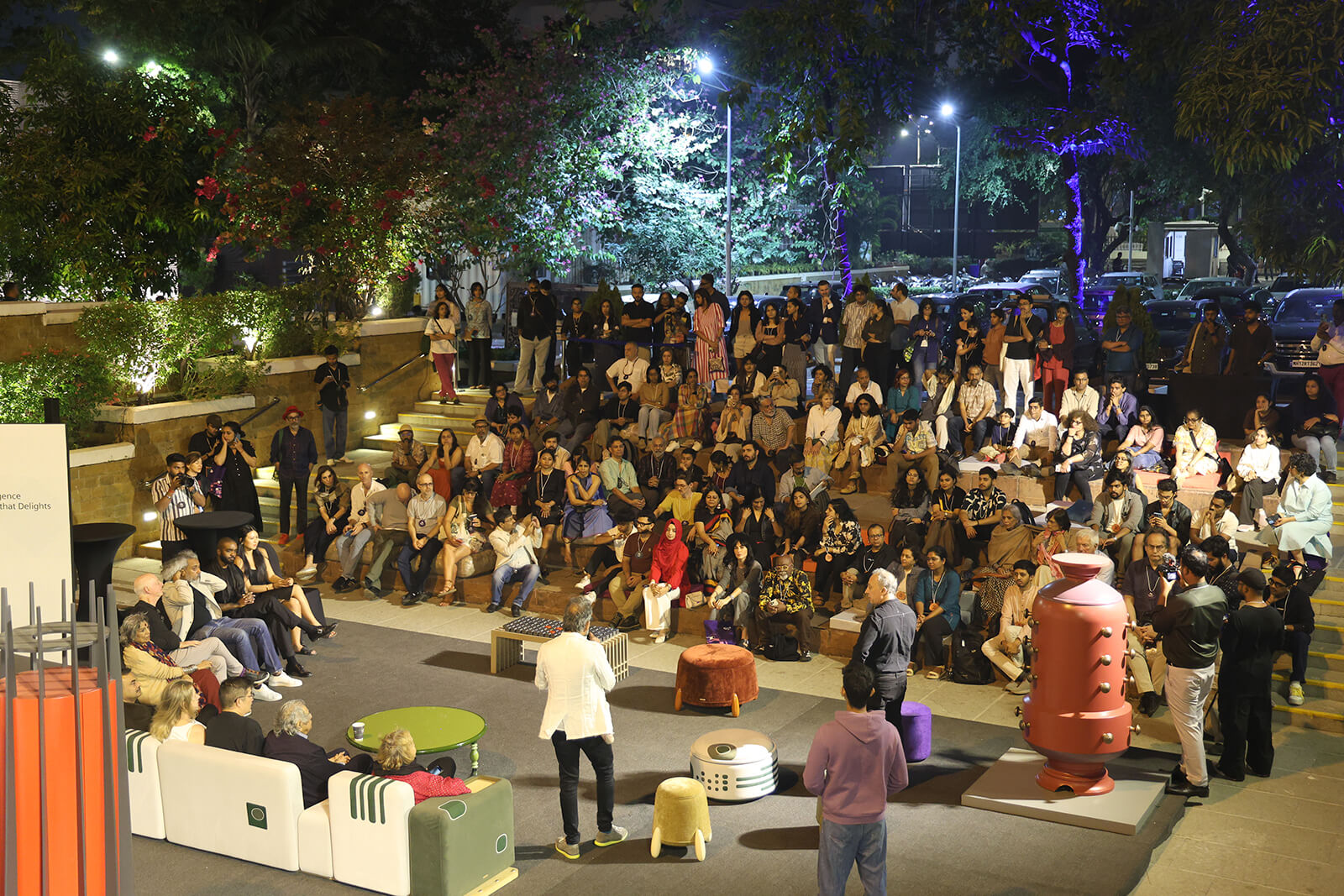
Perhaps the most evocative outcomes of ADFF:STIR Mumbai 2026 were its serendipitous, unplanned interactions—the informal dialogues among the attendees, spontaneous overlaps between screenings and spatial experiences, groups of young onlookers and students sketching and painting the pavilion, perched outside the screening venues and thousands of smiles across the open air plaza, auditorium foyers and backstage—moments that were unprogrammed yet profoundly generative and responsive to a festival of this hybrid nature. It is indeed these moments that became the capstone of the festival experience, revealing how structured frameworks can pave the way for unanticipated creative interactions and discoveries, becoming just as vital to the overall ethos and ecosystem of the festival.

by Pranjal Maheshwari Oct 24, 2026
A consortium of Copenhagen’s 3XN, Toronto’s B+H Architects and Shenzhen’s Zhubo Design has designed the museum to mimic the surrounding riverscape, topped with a public park.
by Pranjal Maheshwari Oct 19, 2026
The Mumbai-based architects integrate courtyards, mesh screens and north light trusses to create a dining space that doubles up as a community hub at SR University, Warangal.
by Mrinmayee Bhoot Oct 17, 2026
The Rotterdam-based institute centres the Indian Ocean as a network for exploring material histories and transnational links shaping coastal cultures, positing them as future models.
by Pranjal Maheshwari Oct 16, 2026
At the 2026 Stirling Prize ceremony, Mary Duggan with RUFF Architects, MAKER Architecten and Nakshabid Architects were felicitated for proffering quality housing and social equity.

make your fridays matter with a well-read weekend
Enter your details to sign in
Don’t have an account?
Sign upOr you can sign in with
a single account for all
STIR platforms
All your bookmarks will be available across all your devices.
Stay STIRred
Already have an account?
Sign inOr you can sign up with
Verification link sent to check your inbox or spam folder to complete sign up process
Tap on things that interests you.
Select the Conversation Category you would like to watch
Please enter your details and click submit.
Enter the 6-digit code sent at


Programmed encounters and sporadic collisions at ADFF:STIR Mumbai 2026
by Bansari Paghdar | Published on : Jan 16, 2026


 Sign in with Google
 Sign in with email
What do you think?