Architecture10 mins. read
ADFF:STIR Mumbai 2026 promises a radical vision connecting cinema, space and city
by Jincy IypeDec 15, 2025



by Jincy IypePublished on : Dec 24, 2025
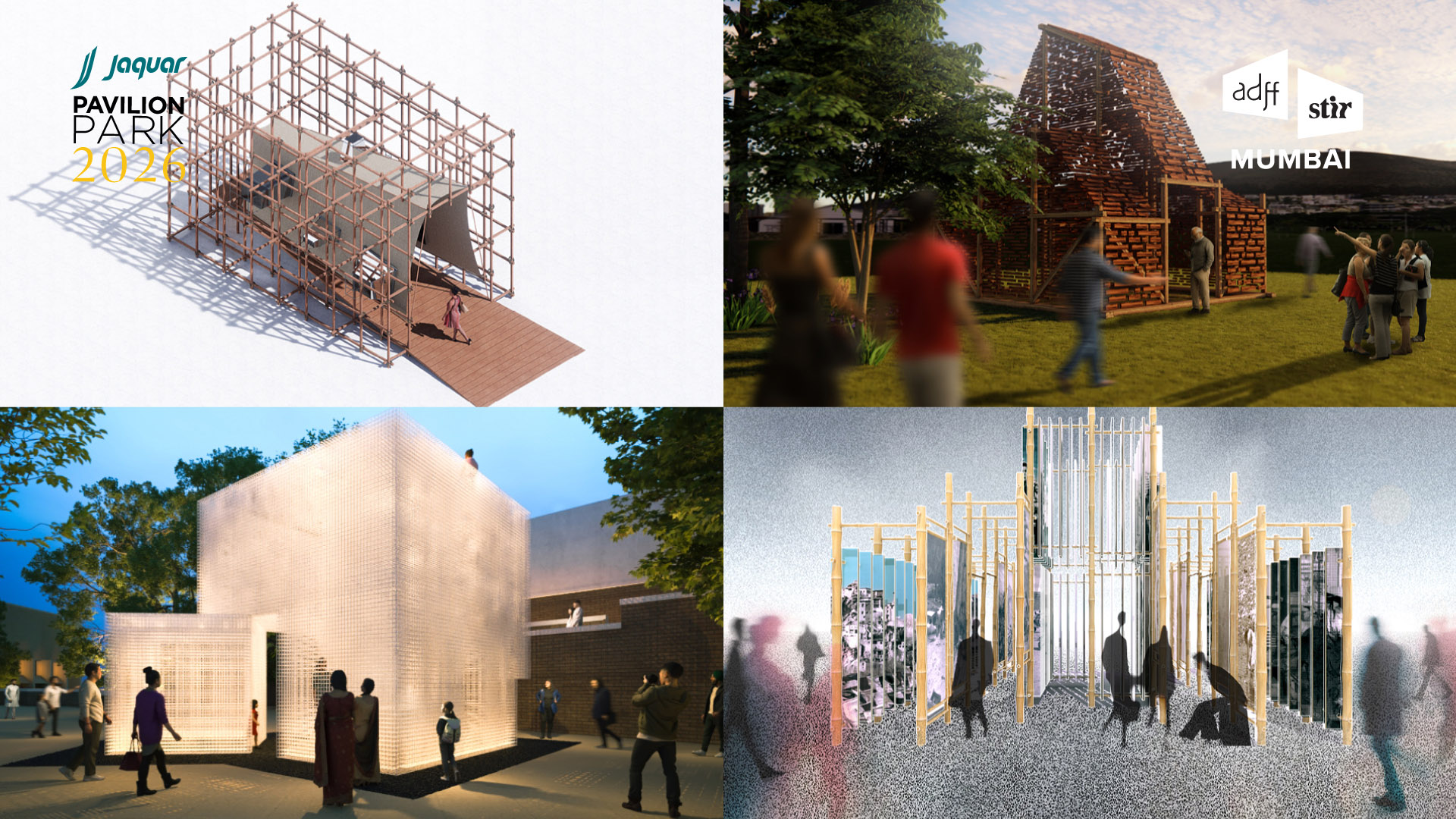
At ADFF:STIR Mumbai 2026, the Jaquar Pavilion Park—one of the key pillars of the three day festival—promises to emerge as a spatial extension of its inquiry and offerings, one that shifts attention from the screens to the very ground beneath our feet. Conceived as a series of temporary architectural installations animating the lawns of the National Centre for the Performing Arts (NCPA), the Pavilion Park positions architecture as an event rather than an object, something activated through movement, encounter and use. As one of the four central tenets activating the multi-modal architecture and design film festival’s second edition, from January 9 – 11, 2026, Mumbai, it invites architects to work within the pavilion format as a site of experimentation, where spatial ideas can be tested publicly, performatively and in dialogue with the city. Sustainability and circularity are embedded into the project’s brief, with all structures designed for dismantling, relocation and continued life beyond ADFF:STIR Mumbai 2026.
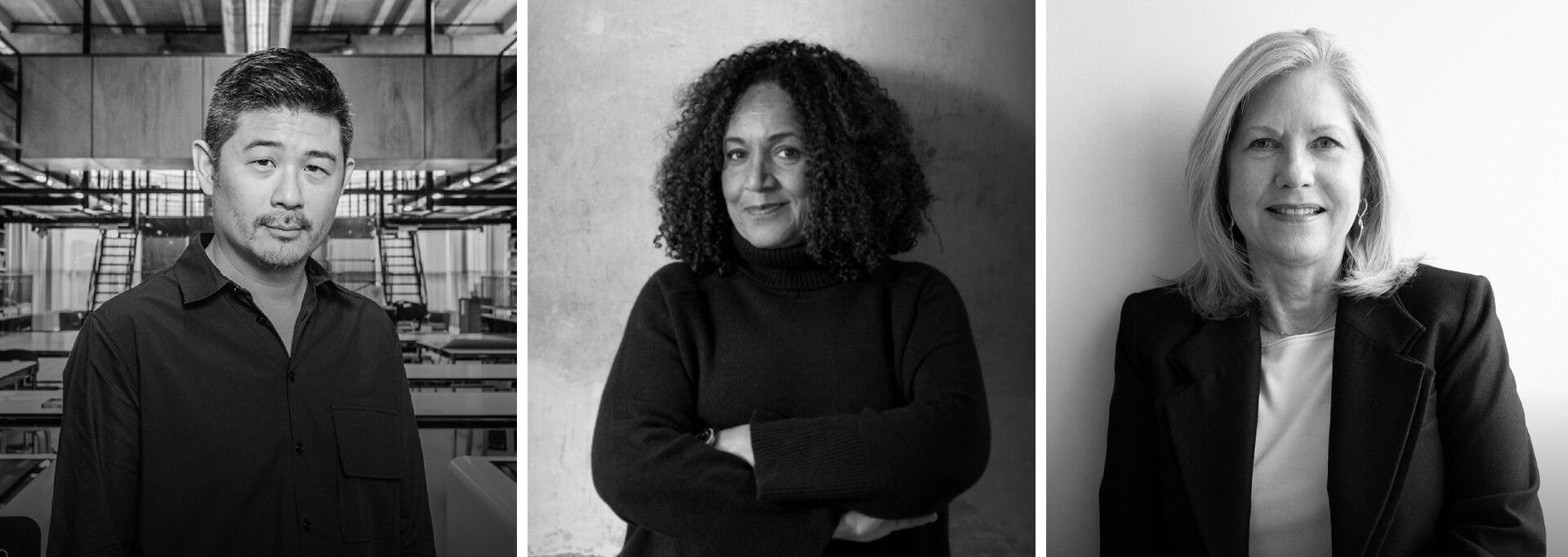
Curated by Aric Chen, director of the Zaha Hadid Foundation, the 2026 Pavilion Park is framed through the theme Mumbai Transcripts, which draws directly from Bernard Tschumi’s influential text, The Manhattan Transcripts. Developed in the late 1970s as theoretical propositions and speculations executed through drawings, Tschumi’s work challenged conventional architectural representation by proposing that architecture could not be solely understood through form. It is also very much the interaction between space, movement and event—often mapped through cinematic techniques such as montage, sequencing and narrative framing—that produces more meaning and intrigue. The drawings rejected stable or reductive function and typology, embracing fiction, temporality and human action as architectural material.
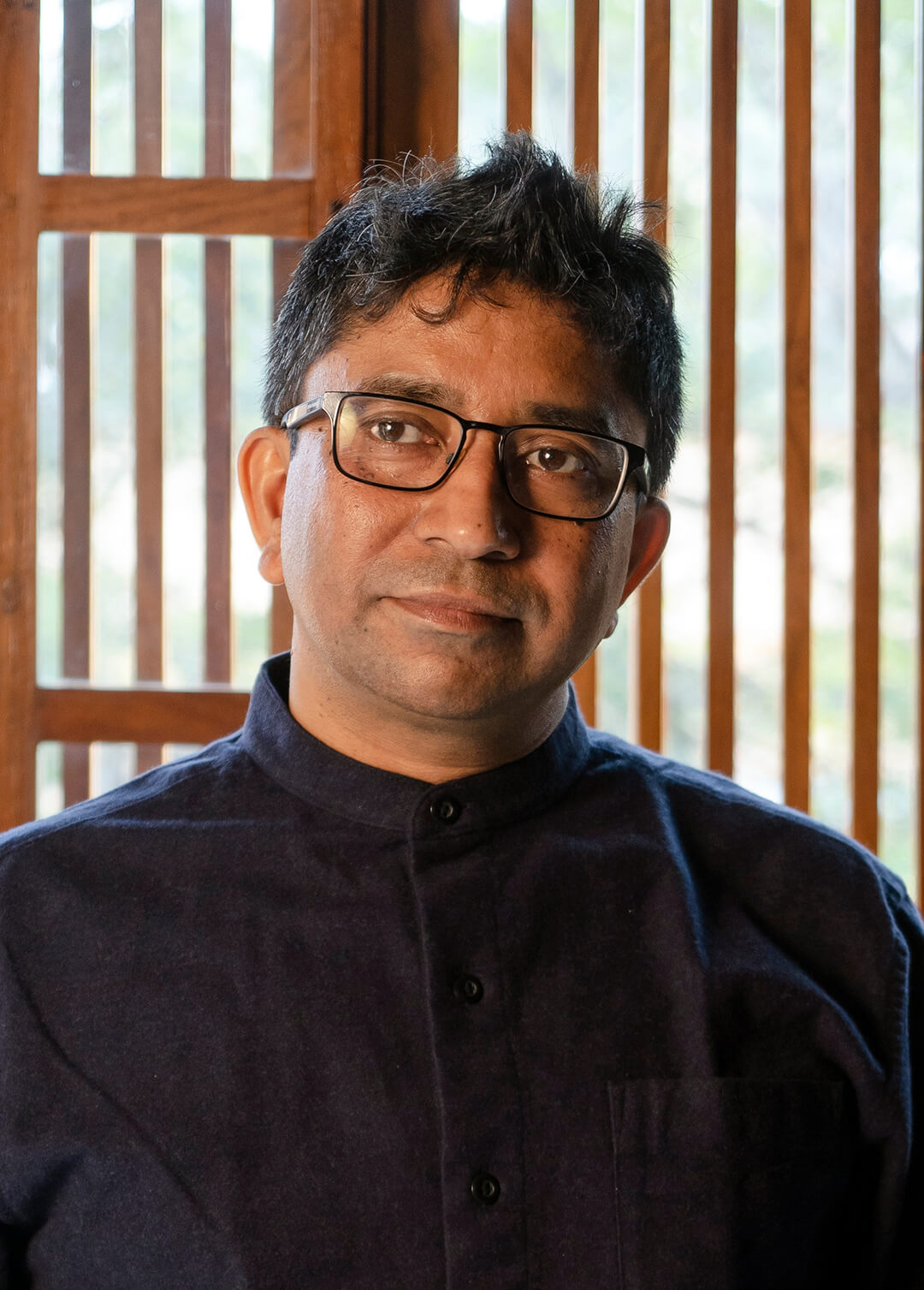
In translating this to Mumbai, Chen’s curatorial brief asks architects, designers and artists from a global cohort connecting India, the UK, USA, Southeast Asia and beyond, to explore architecture as a narrative apparatus (instead of a static composition) capable of shaping experiences, social relations and modes of participation within the city’s dense, layered conditions. As Chen notes, “In many ways, architecture brings fiction and reality together. You’re able to shape experiences and narratives through the spaces that you create.” The Pavilion Park, he suggests, offers a format where such ideas can be articulated with a freedom that conventional building rarely allows, encouraging visitors and creators to become “actors, protagonists and audiences in their own cinema”.
What relationships between space, movement and event can we glean from this metropolis in the 21st century? How might architecture address the disjunction between use, form and social values to articulate, create and encourage (or discourage) new forms of social relations? – Aric Chen, director of the Zaha Hadid Foundation and curator and jury chair of the Jaquar Pavilion Park 2026, in his curatorial note
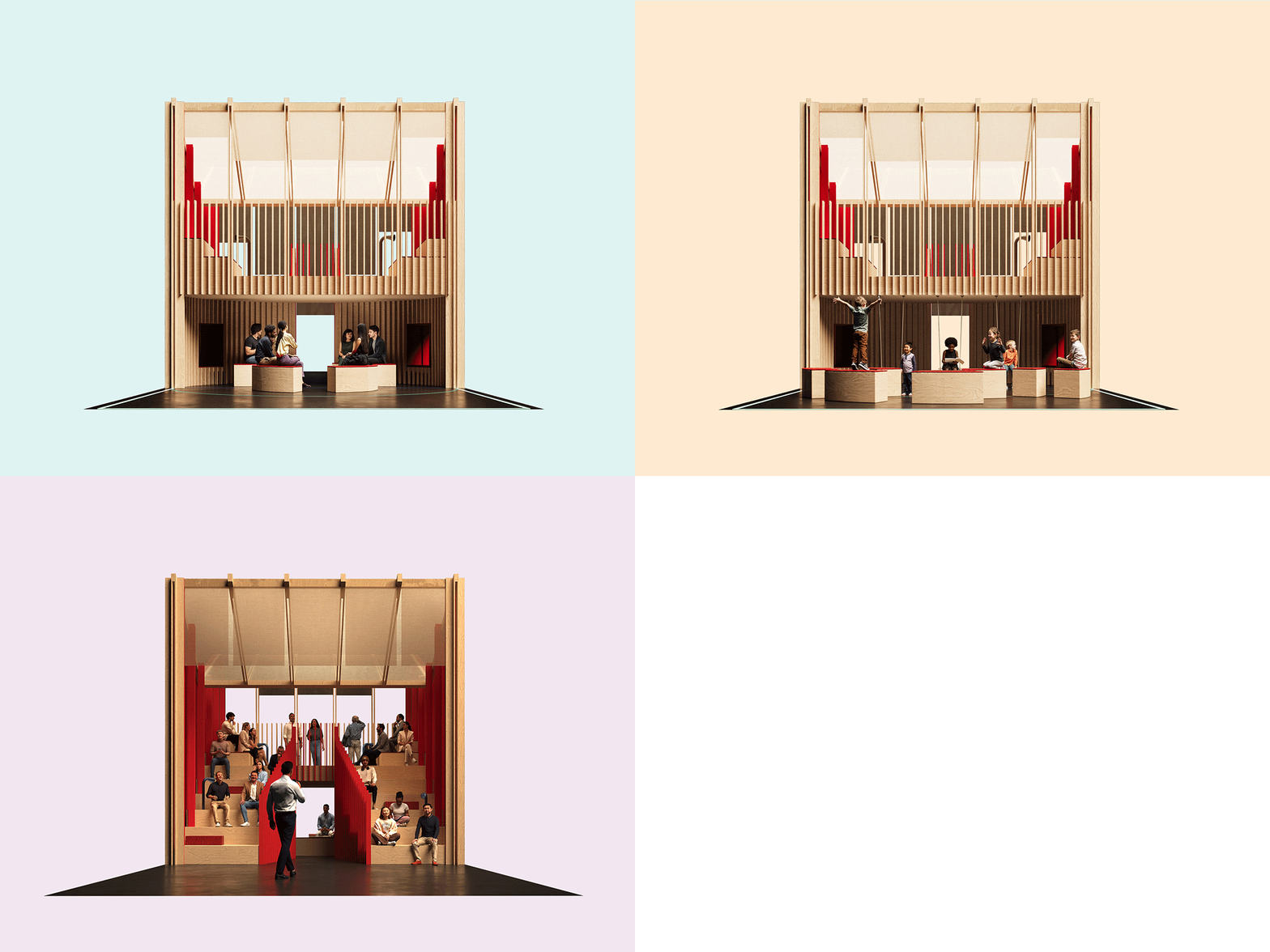
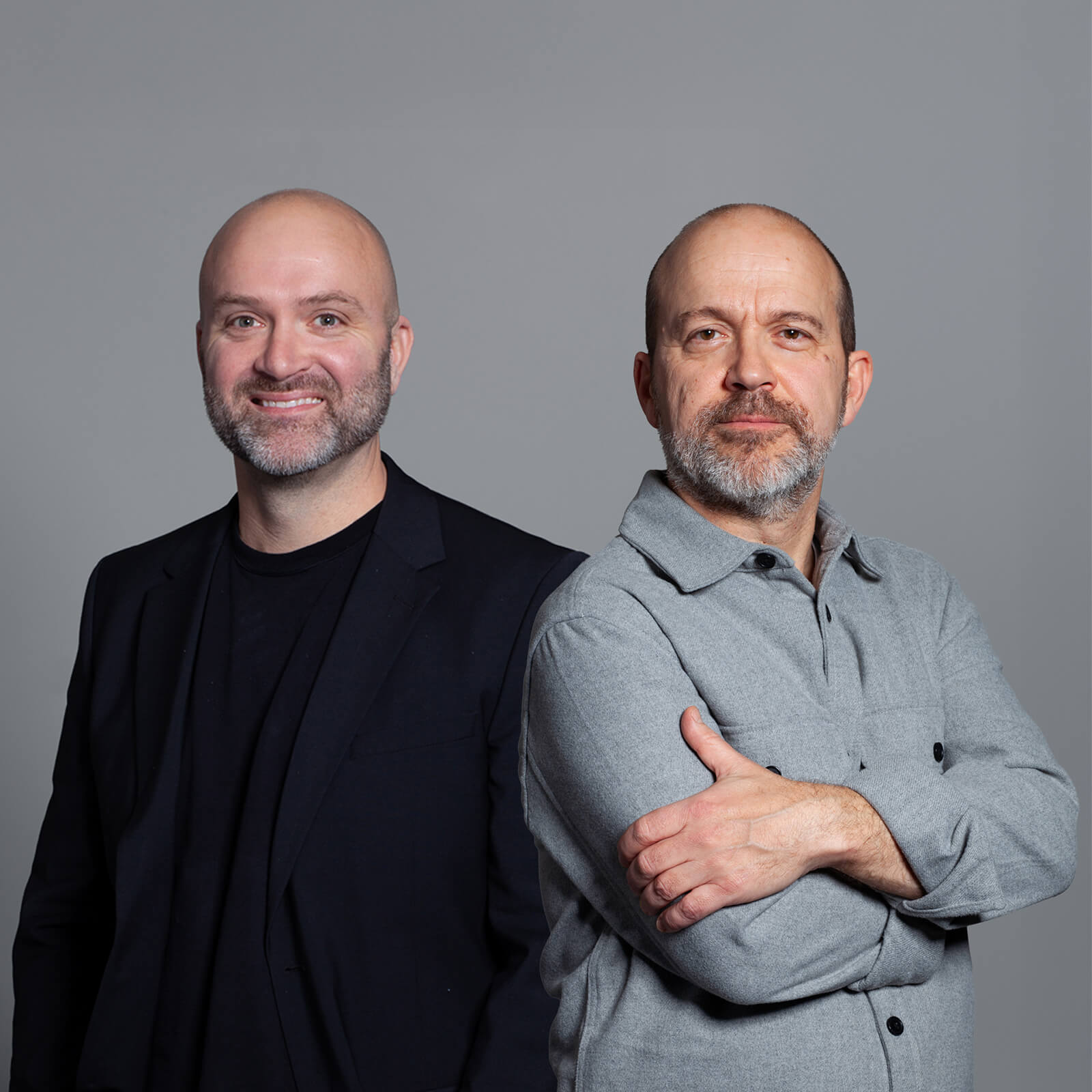
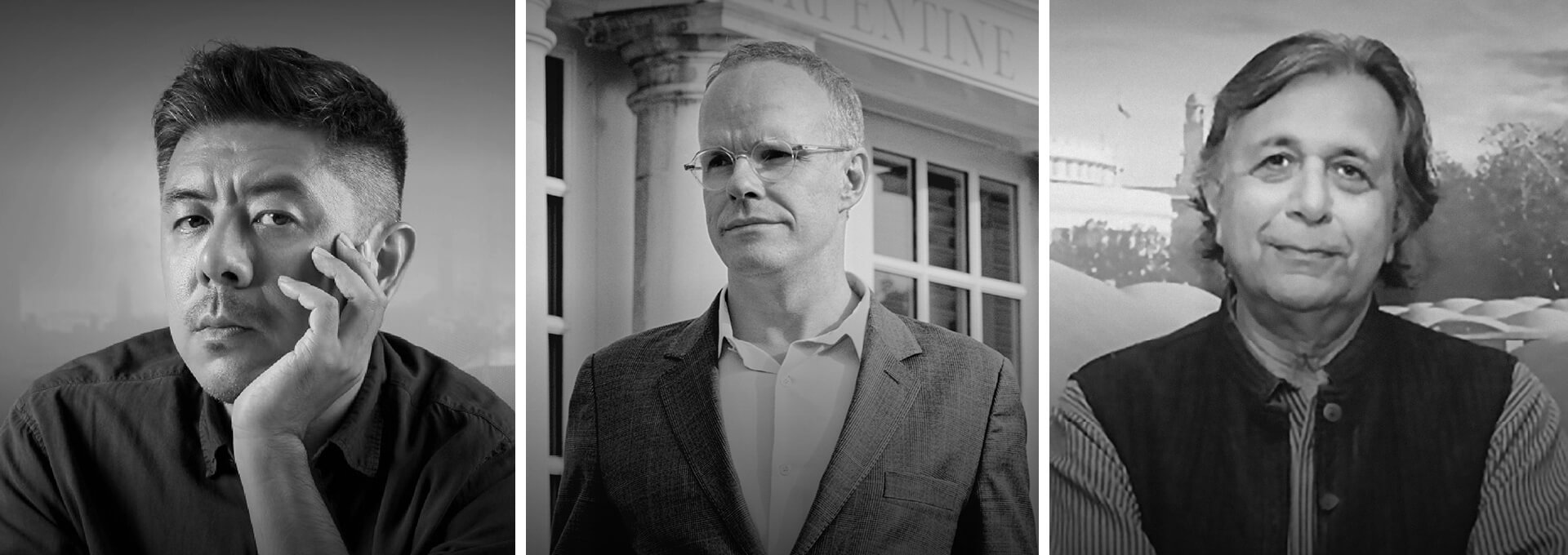
From an invited pool of 52 proposals, ten pavilion designs were selected after careful deliberation by a distinguished jury comprising Chen, Hans Ulrich Obrist (artistic director, Serpentine Galleries, London), Lesley Lokko OBE (founder, African Futures Institute and curator of the Venice Architecture Biennale 2023), Raj Rewal (founder, Raj Rewal Associates), Ma Yansong (founder, MAD Architects) and Martha Thorne (curator, editor and former executive director, Pritzker Architecture Prize). Together, the jury identified projects for the Pavilion Park 2026 supported by the Jaquar Group, a global leader in bathroom and lighting solutions, that engage Mumbai as a backdrop and an active text, one shaped by everyday rituals, ecological pressures, political negotiations and collective improvisation.
"Pavilions have long offered architects and designers a way to think beyond buildings. To create spaces that invite people in, encourage reflection and hold space for shared experiences," notes Mohit Hajela, Group Vice President, Business Development, Global Operations for Jaquar Group. “These structures often exist outside the demands of permanence or singular function. They allow for experimentation, but they also carry meaning. The Jaquar Pavilion Park builds on this tradition in a way that is rooted in the region, using temporary architectures to open up conversations, connect disciplines and imagine new ways of being together in space."
The commissioned pavilions are meant to perform as cinematic fragments—across materials and scales—to script a collective narrative about Mumbai, its rhythms, its ruptures and its evolving urban identity, while being uniquely reflective of the broader discourse on cities and place.
The Jaquar Pavilion Park, in partnership with STIR, is an effort to set a benchmark in cultural patronage. This is a commitment to shaping critical discourse, supporting the production of new ideas and bringing forth a meaningful dialogue. – Mohit Hajela, Group Vice President, Business Development, Global Operations for Jaquar Group
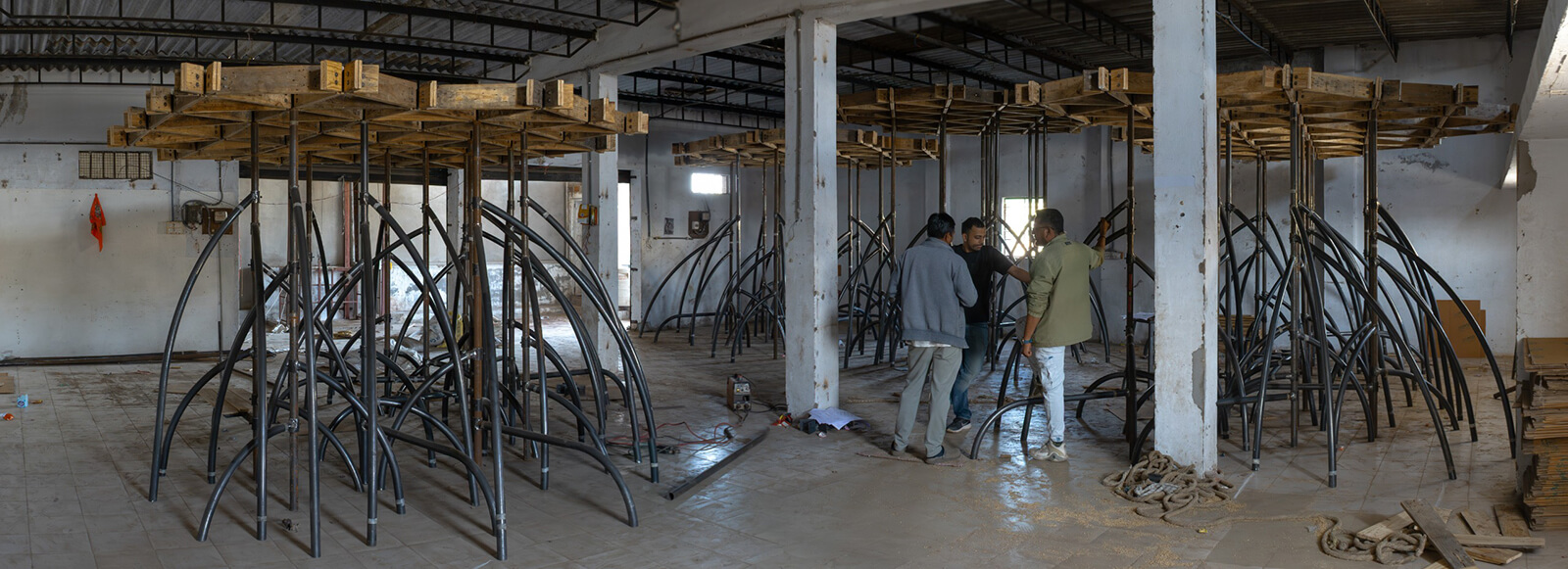
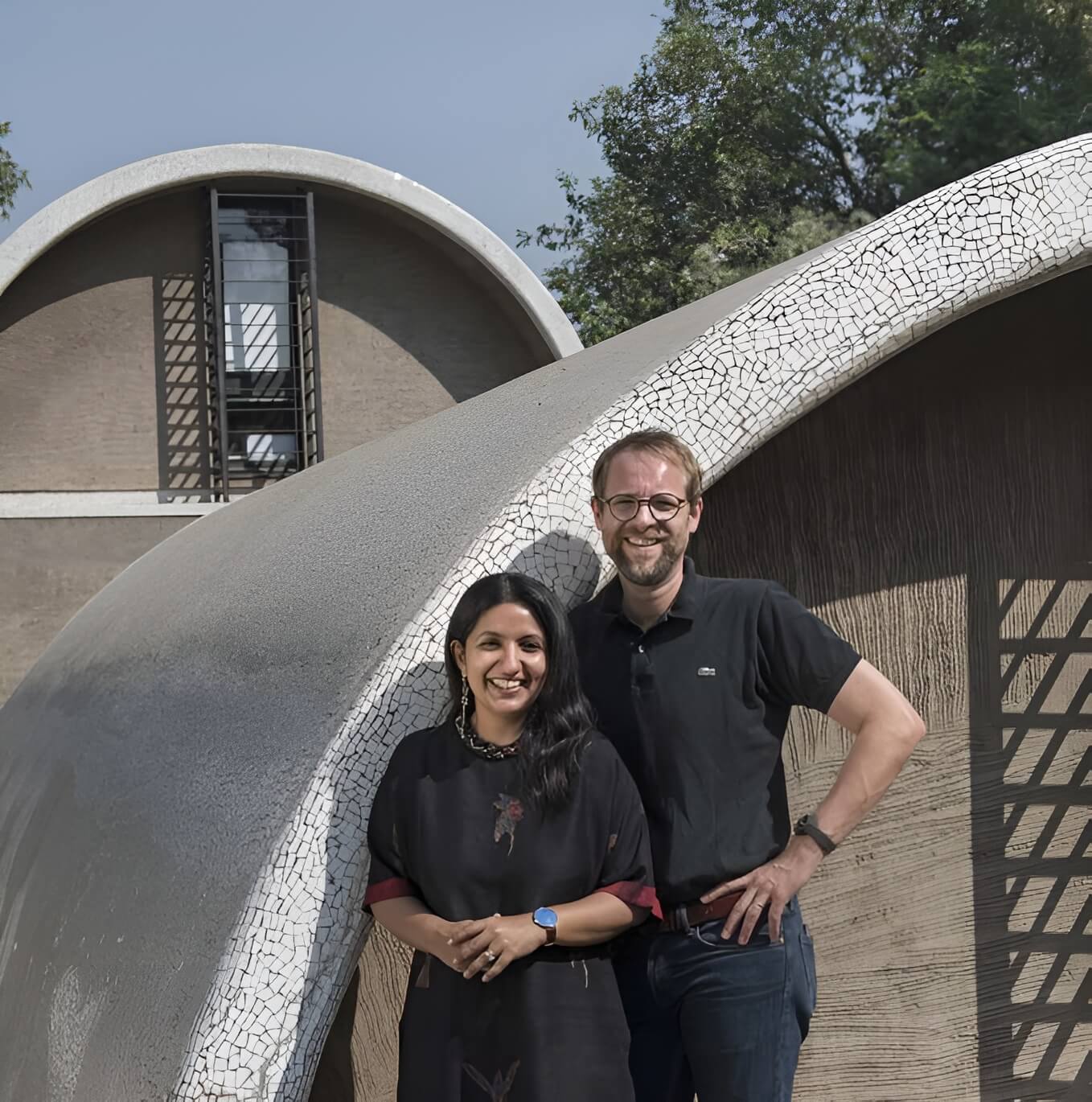
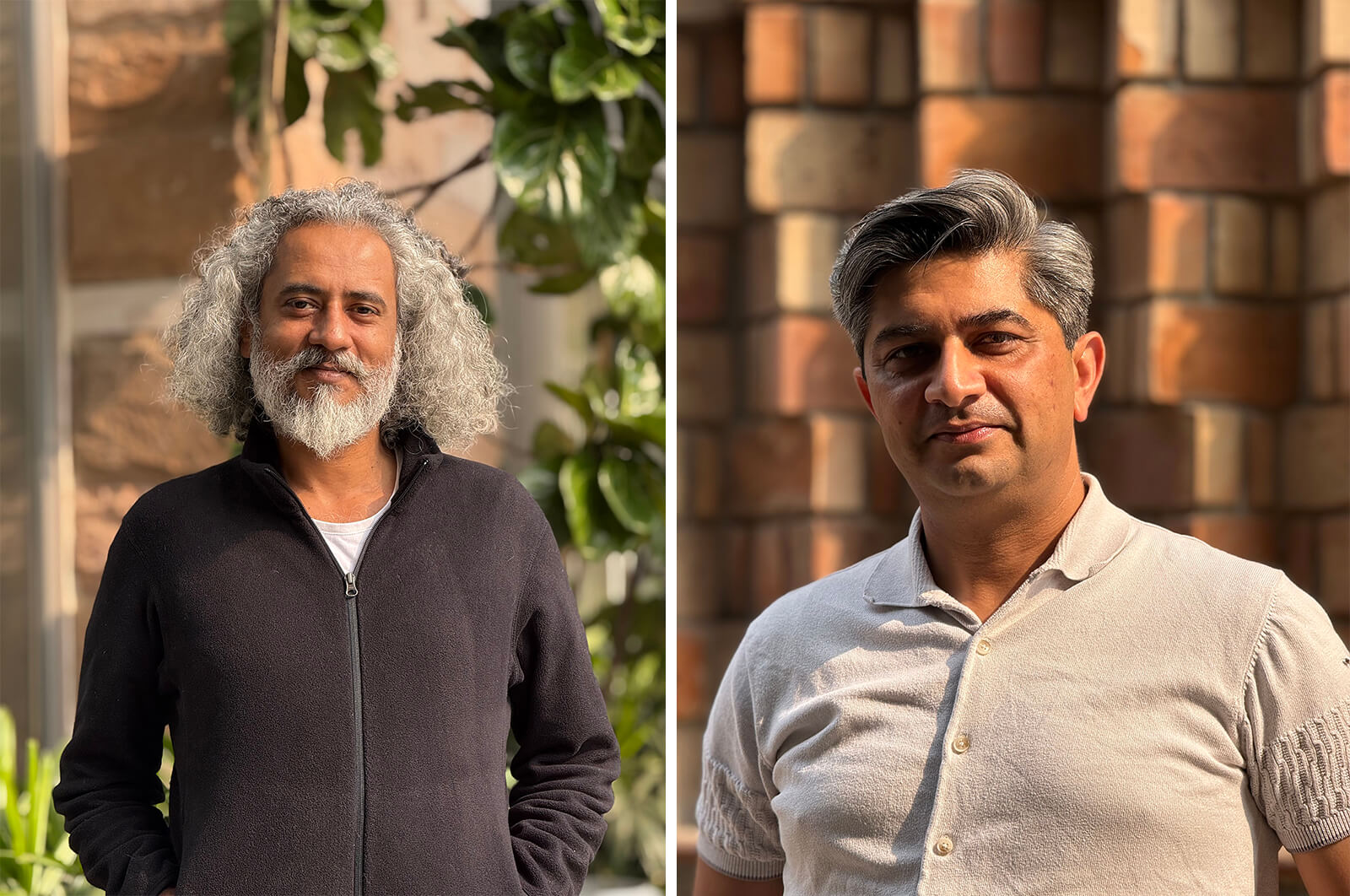
Of the ten selected pavilions, the Mangrove Pavilion, conceived by Studio Sangath, supported by Mr Arun Vadehra & Family—patrons behind the Vadehra Art Gallery, New Delhi and Arari Interiors, draws from Mumbai’s coastal ecologies to foreground the mangrove as both form and metaphor. Constructed from salvaged wood and recycled steel pipes, the pavilion conceived by Ahmedabad-based interdisciplinary architecture and design practice founded by Khushnu Panthaki Hoof and Sönke Hoof, evokes root-like branching systems that support gathering, performance and rest while underscoring ecological fragility and collective responsibility.
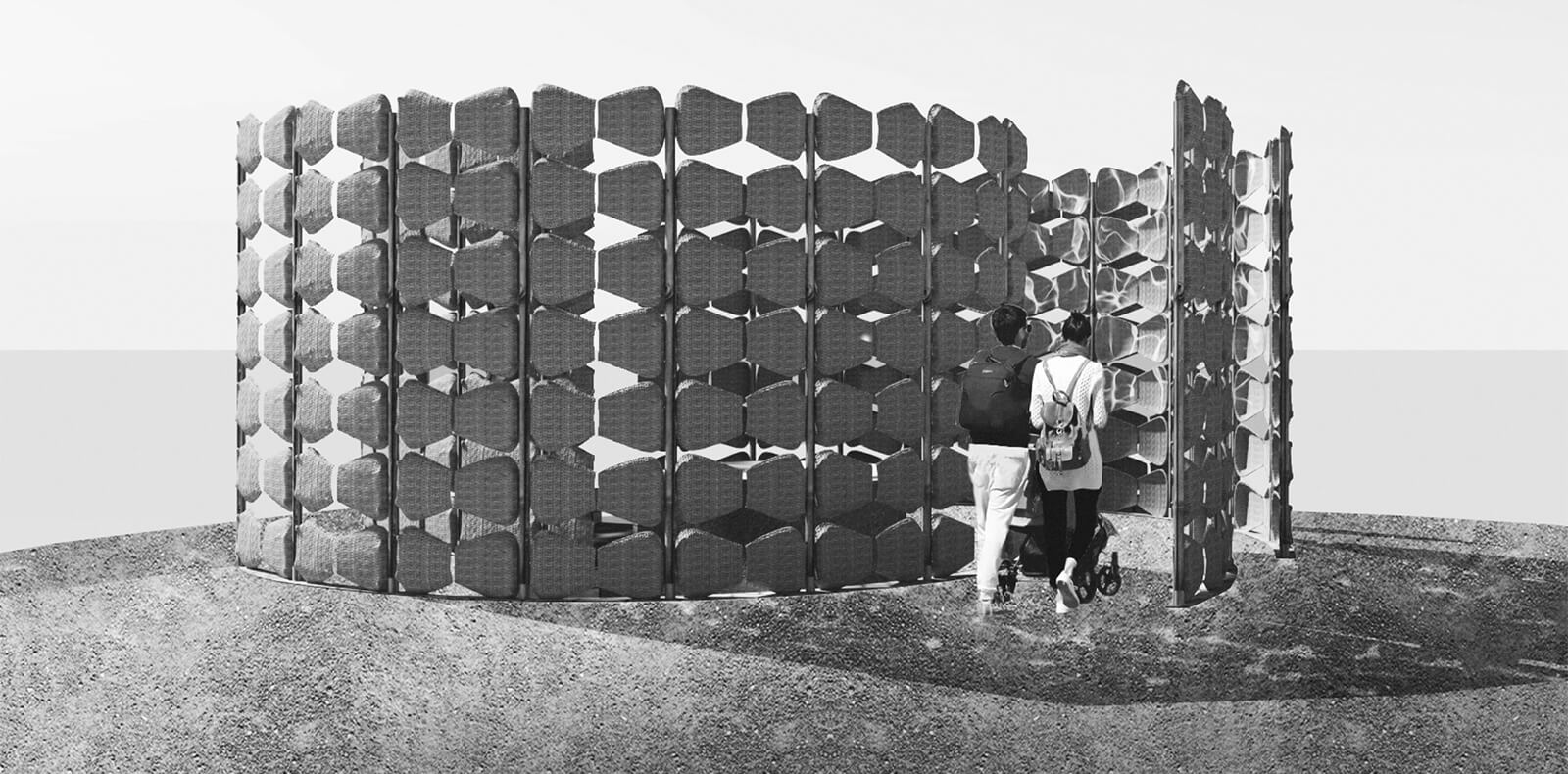
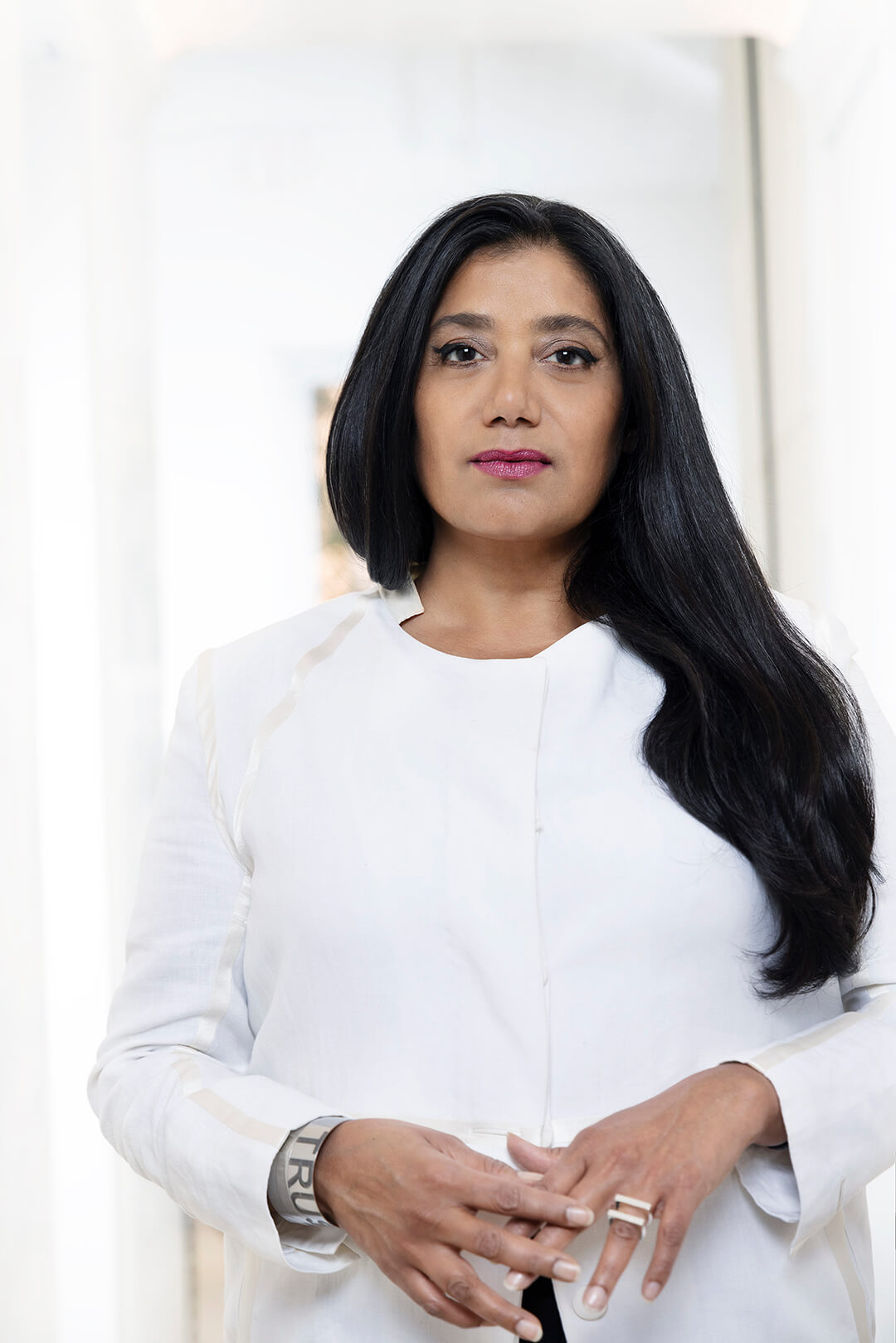
With support from Godrej Properties, SIFT by Reddymade, founded by Suchi Reddy, takes inspiration from the humble rice sieve as an object of filtration and rhythm. Using bamboo sieves, earth and water, the pavilion creates a spiralling, multisensory environment where sound, light and movement distil everyday labour into a cinemato-spatial experience.
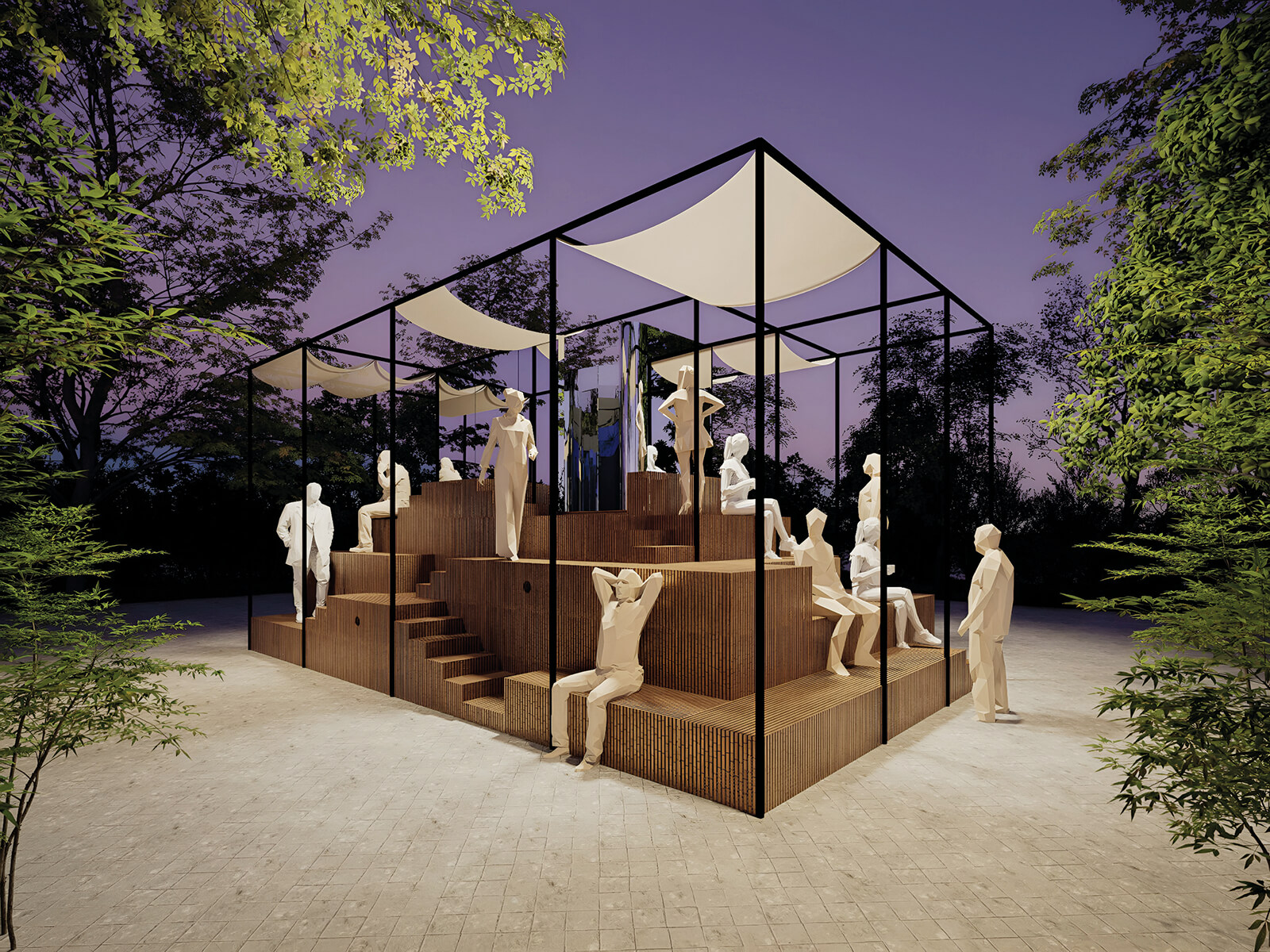
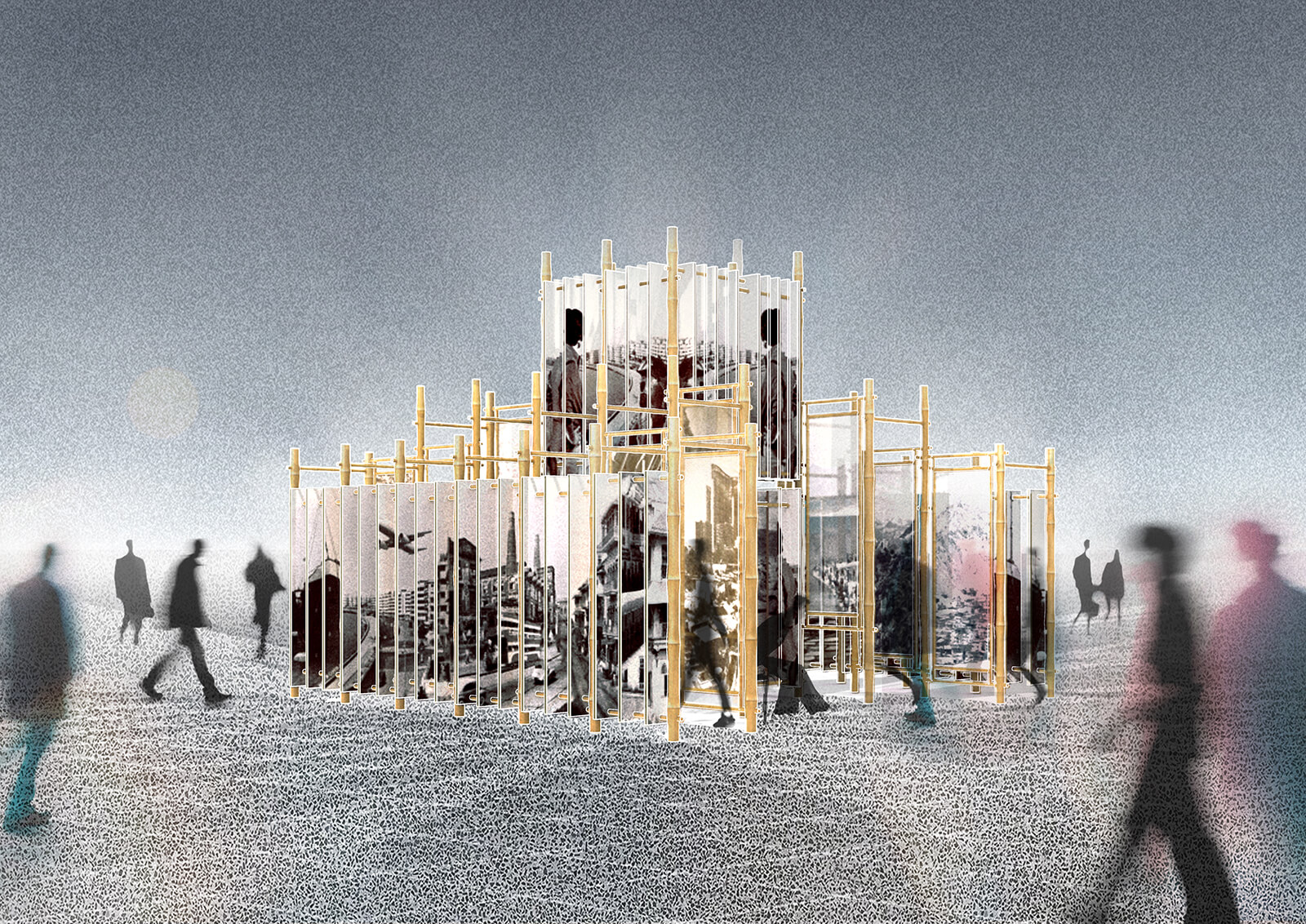
UHA Global’s Pentad Pavilion rethinks democratic space through a reconfigurable architectural assembly inspired by global parliamentary typologies. Combining opposing benches, circular forums and galleries, it operates as a pop-up parliament that invites visitors to alternate between participation and observation. The Streets of Aspiration by SJK Architects, led by founding partner Shimul Javeri Kadri, foregrounds the overlooked act of pausing within Mumbai’s relentless urban flow. Using bamboo, scaffolding and stainless steel, the pavilion, supported by BuildKraft India Systems LLP, fragments the street into inhabitable moments of seating, leaning and looking, while framing social disparity through controlled views.

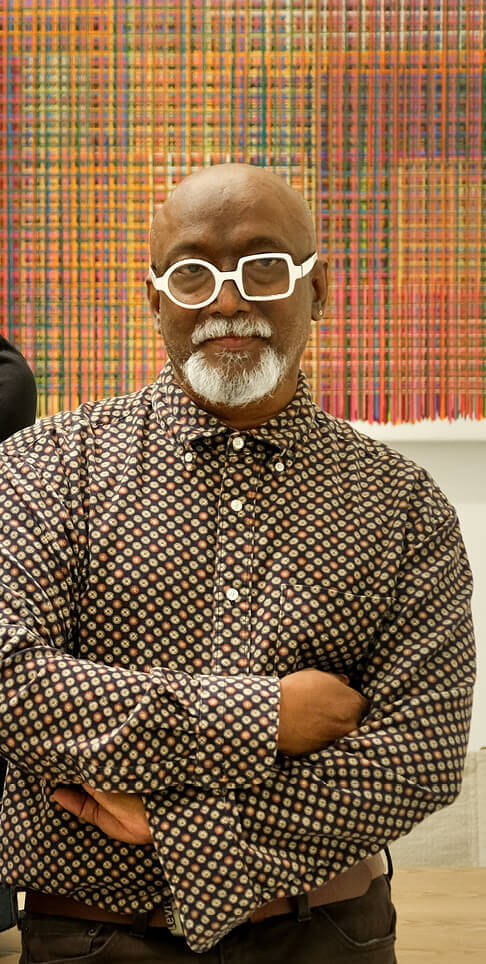
The Pavilion of Conversations by Indian artist, independent curator and scenographer based between Mumbai and Kochi, Bose Krishnamachari, positions dialogue itself as architectural content. Conceived as a spatial platform for exchange, this pavilion foregrounds speech, debate and listening, aligning architecture with performative and participatory cultural practices. Meanwhile, the Unscripted pavilion by Abin Design Studio, founded by architect and entrepreneur Abin Chaudhuri, resists predetermined program and outcome. Structured as an open-ended system, the pavilion, supported by JSW Group, allows use, movement and interaction to continuously redefine the space, foregrounding improvisation as a central urban condition.
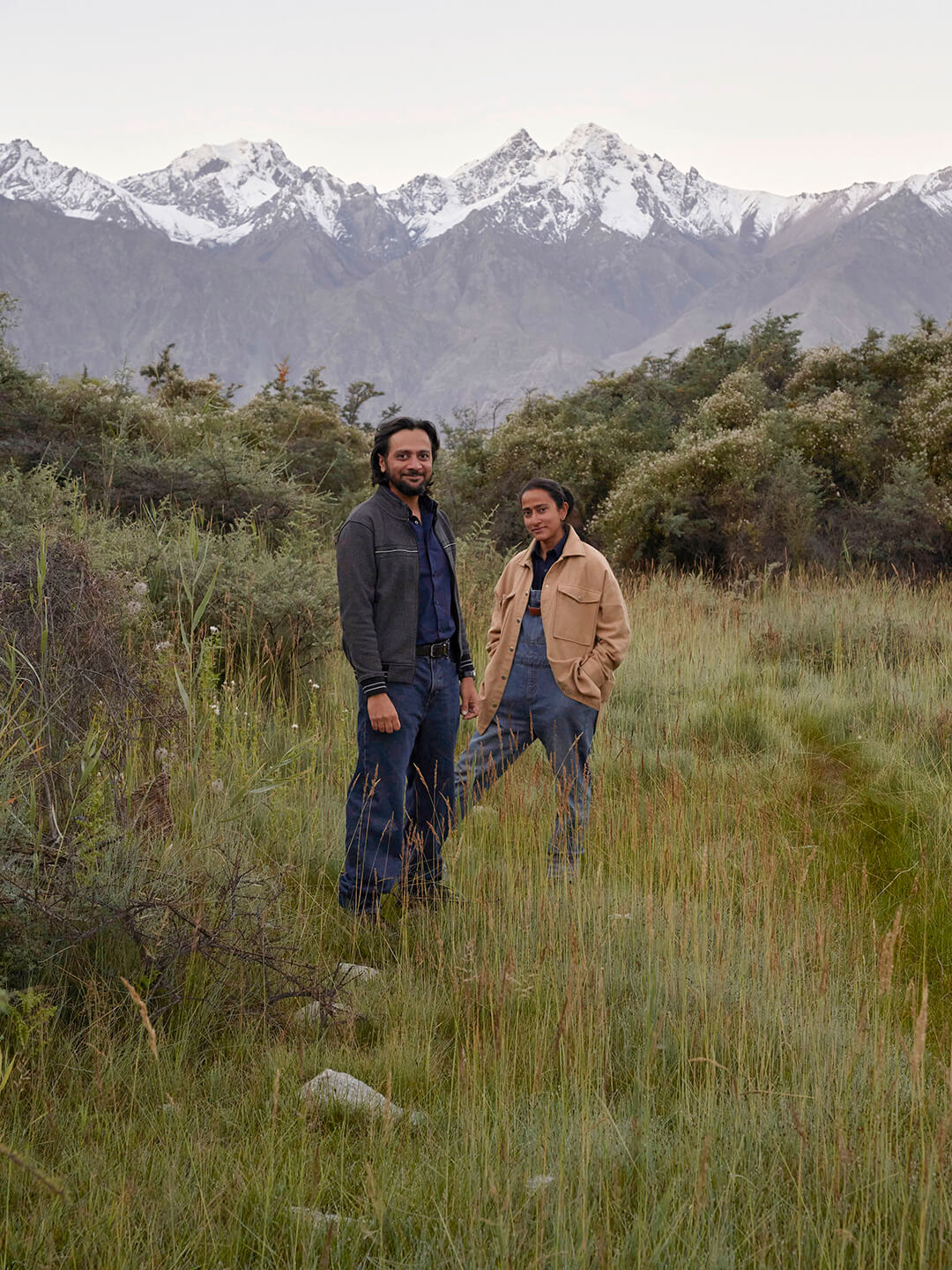
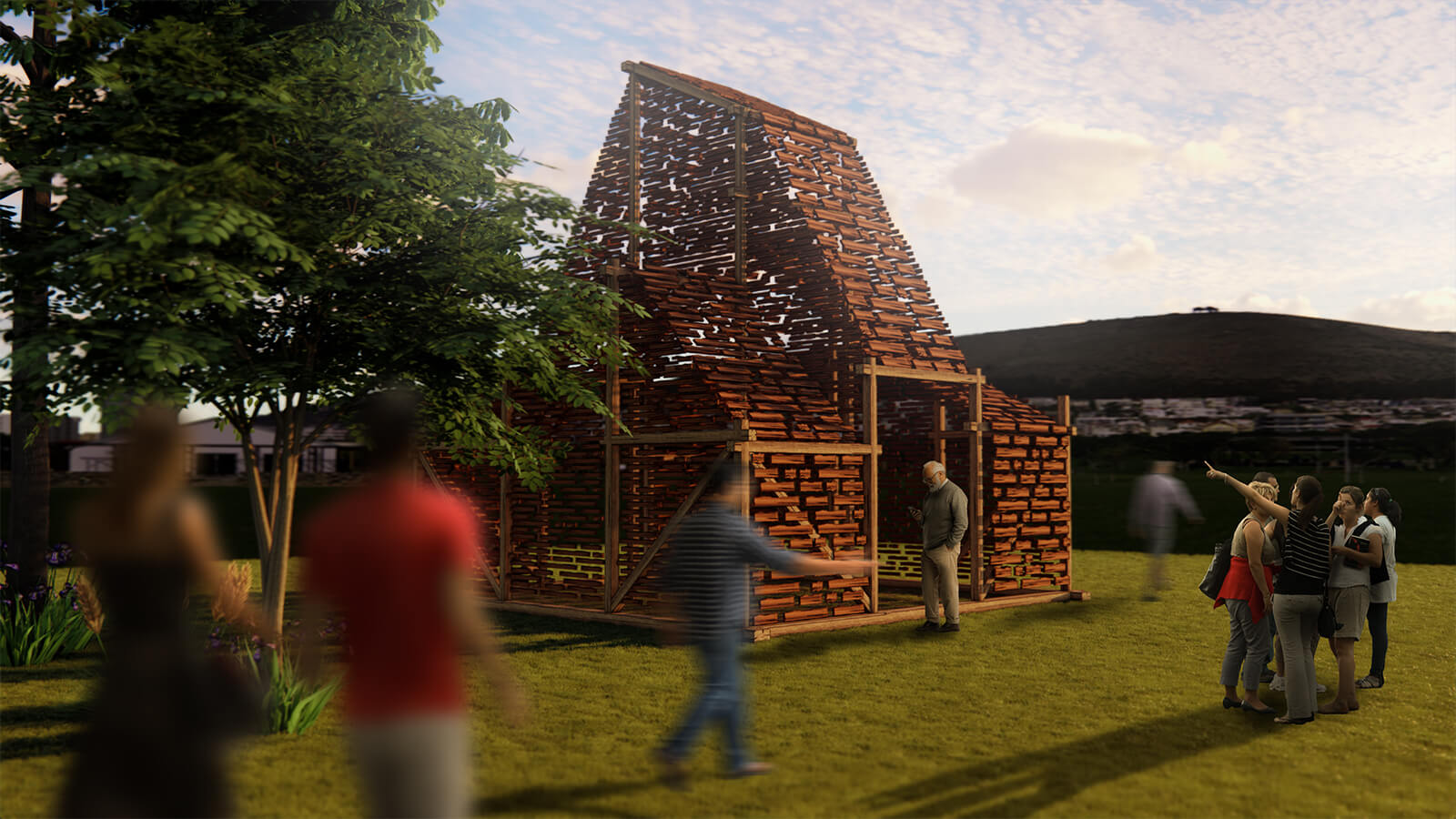
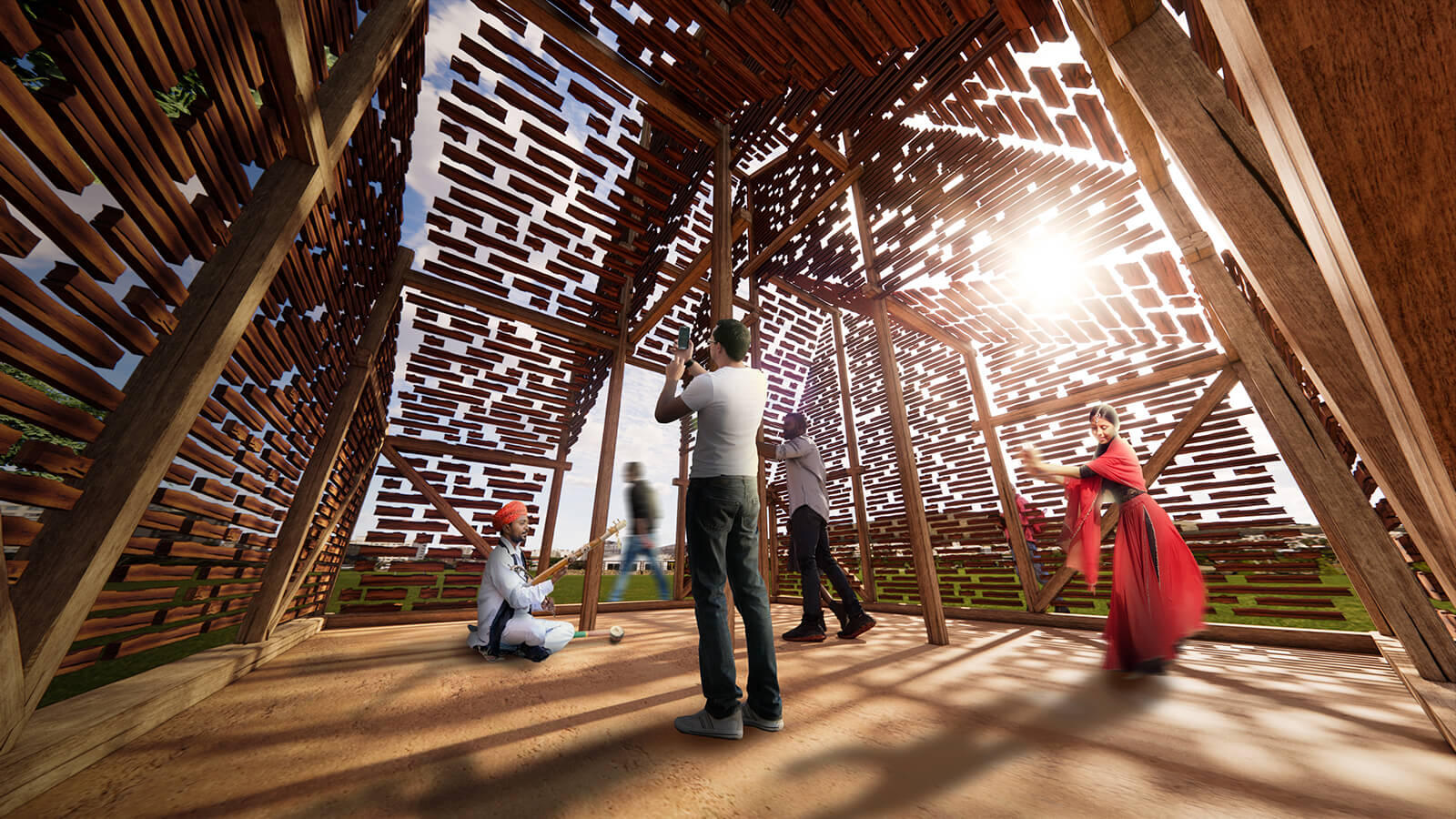
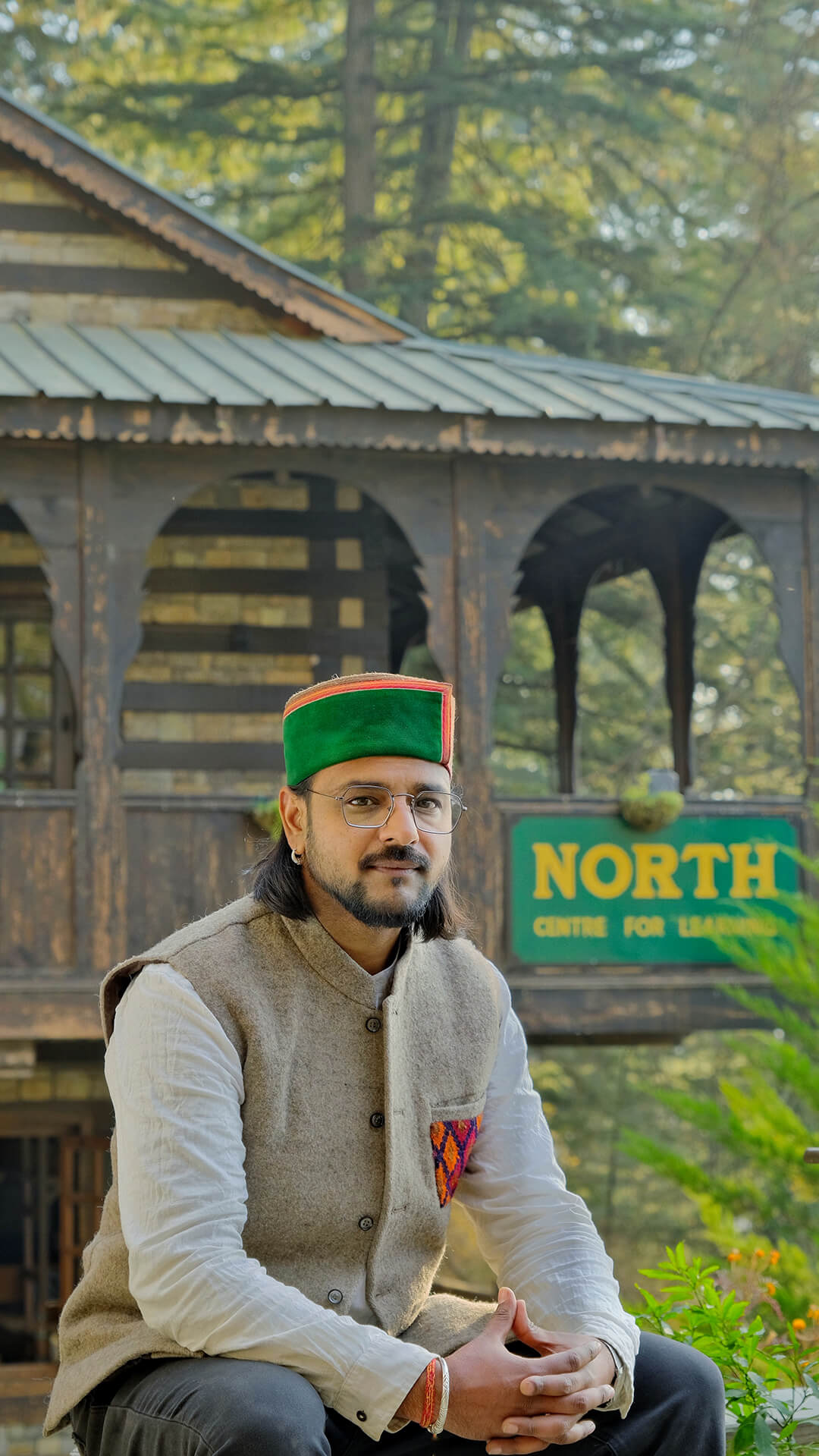
The Script by Field Architects, a practice of nomadic architecture founded by Faiza Khan and Suril Patel, treats architecture as a narrative structure. Through sequencing, framing and calibrated thresholds, the pavilion supported by Royal Enfield invites visitors to move through space as if progressing through a story—where meaning emerges through bodily experience rather than fixed interpretation. Mountain Transcripts by NORTH, a regenerative design practice founded by artist and architect Rahul Bhushan, in contrast, translates Himalayan timber traditions into a vertical, nail-less structure assembled through ancestral joinery techniques. Built using deodar and reclaimed wood, the form integrates ritual, sound and scent, positioning craft as a form of cultural memory with a planned afterlife at the NORTH campus.
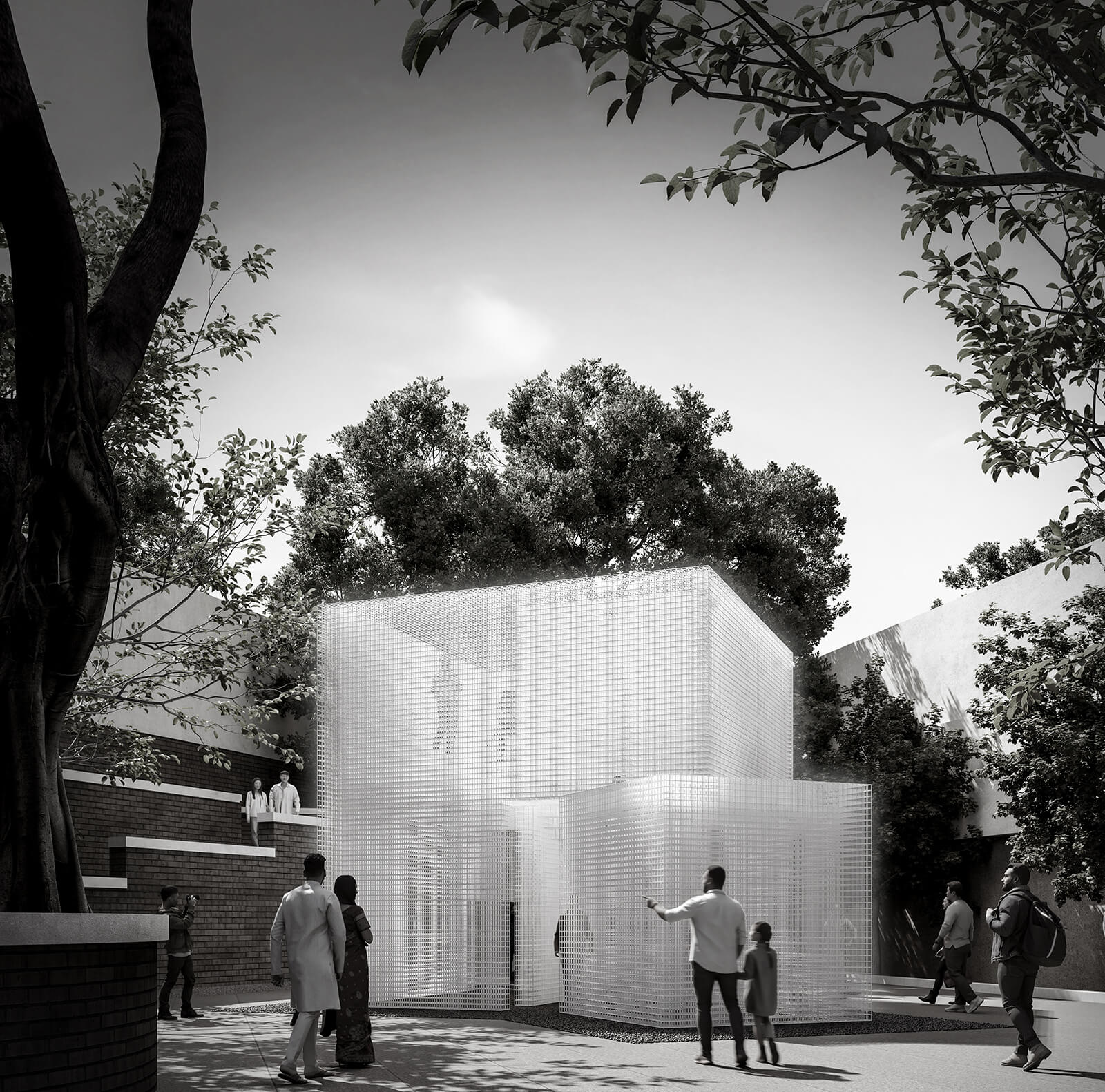
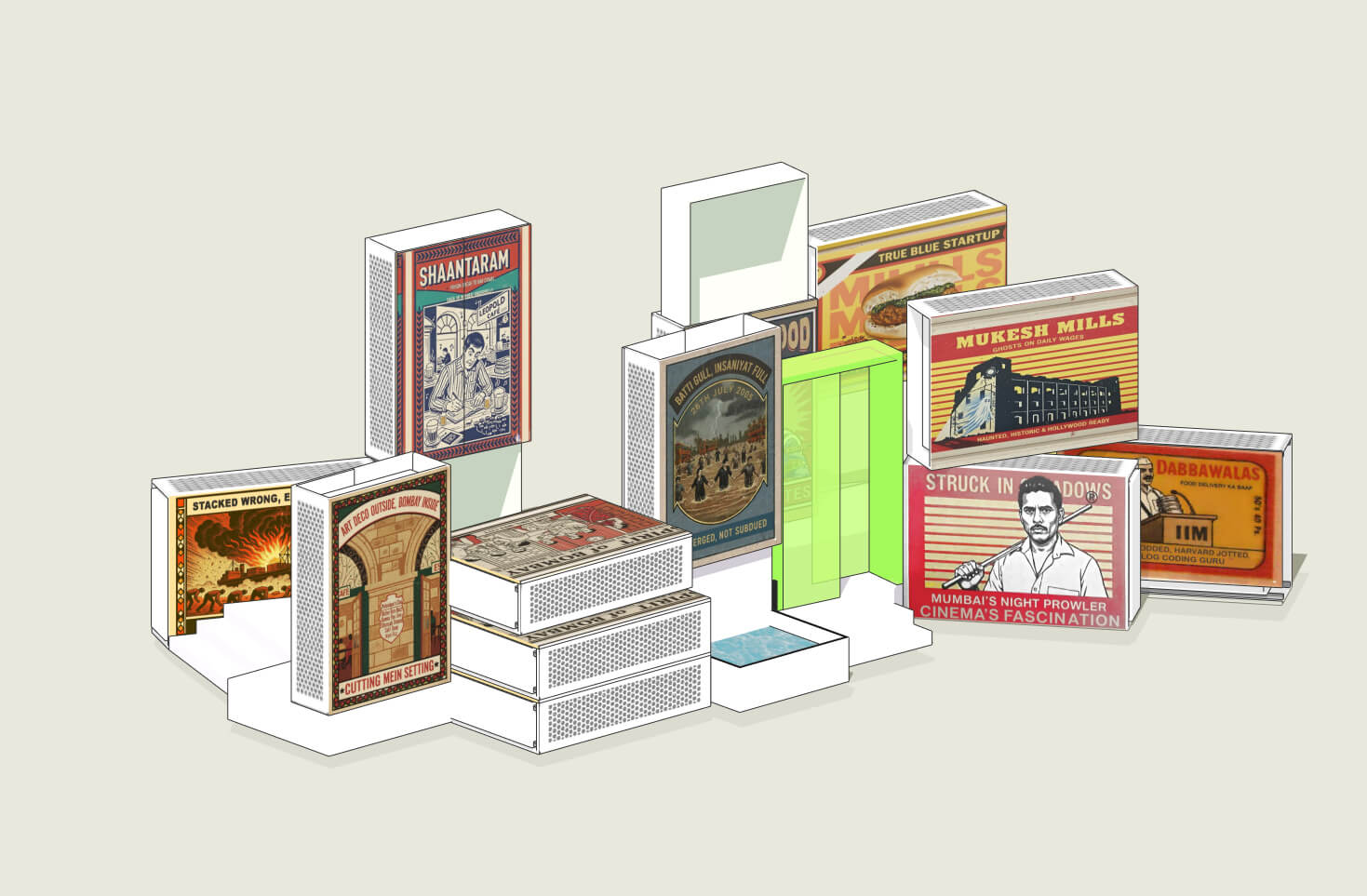
Supported by ROCA, The Mumbai Transcripts by Mathew and Ghosh Architects, a studio founded by Nisha Mathew, offers a reflexive engagement with the curatorial theme itself. Layered and contextual, the pavilion distils Mumbai’s contradictions—density and openness, informality and control—into spatial palimpsest shaped by movement and encounter. Tectonic Fantastic, designed by Anagram Architects, founded by Madhav Raman and Vaibhav Dimri, assembles human-scaled matchbox structures into a shifting tessellation. In the pavilion supported by Asahi India Glass Ltd., each box opens to reveal dioramic scenes drawn from Mumbai’s ‘average everydayness’: commuting, queuing, worshipping, celebrating, framing the city as a collective cinematic montage shaped by coincidence, improvisation and folklore.
Beyond the festival’s three-day run, each commissioned pavilion is designed for disassembly and reuse, guided by a framework of Recycle, Repurpose, Renovate, Donate and Acquire. The Jaquar Pavilion Park, in this way, resists architectural disposability, extending its social and material life beyond the moment of exhibition. In this sense, it does not present architecture as just finished statements or formal resolutions. What it foregrounds instead is architecture as a condition, something provisional, activated and contingent on use.
It operates in the register of the design event: time-bound and activated by montages of bodies in motion. Much like cinema itself, meaning here is produced through sequencing, encounter and attention, through what happens as one moves, pauses, listens or gathers. The pavilion format, with its inherent temporariness, makes this even more legible.
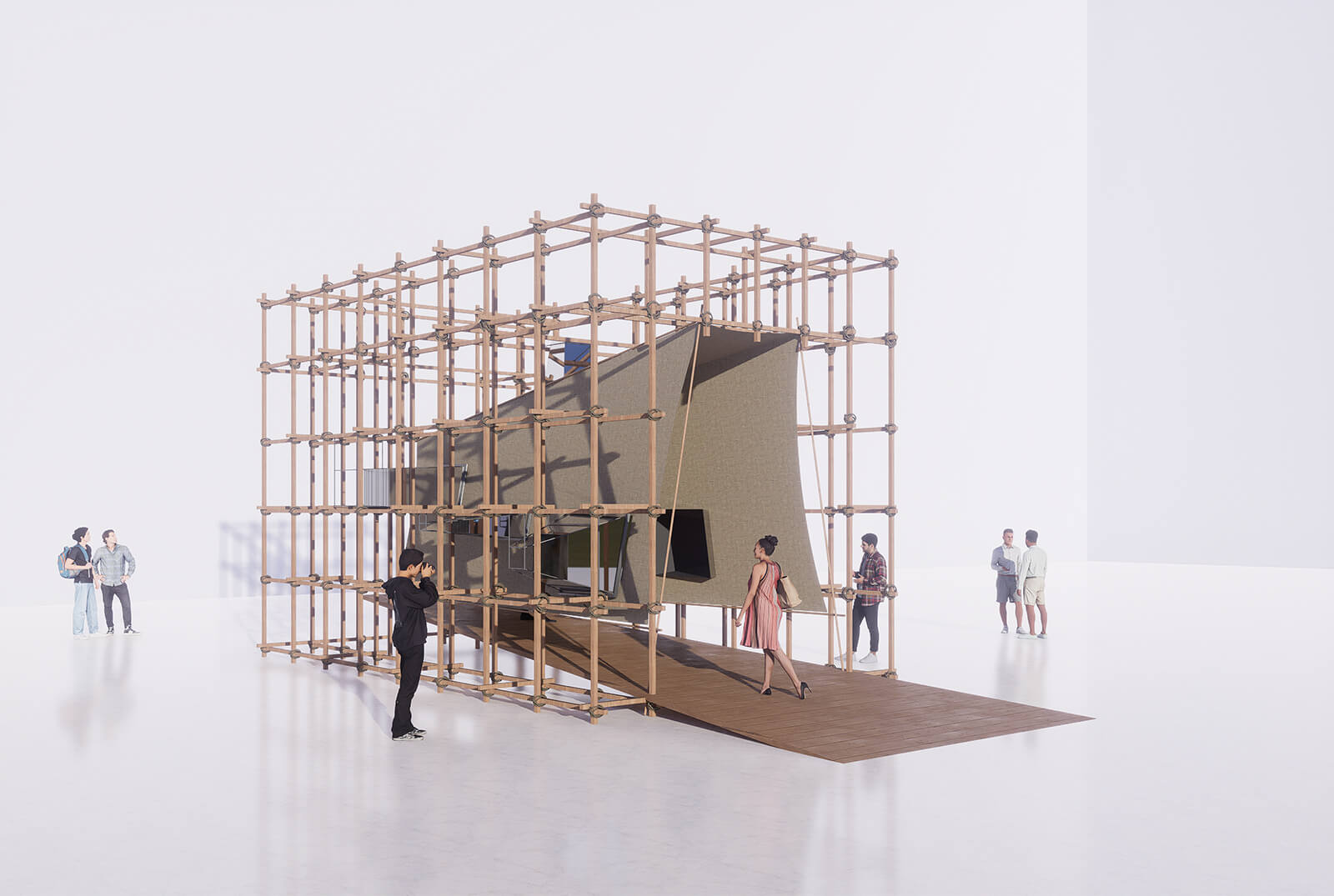
Freed from the pressures of permanence and fixed afterlives, architecture here is allowed to speculate, to rehearse, through movement across thresholds, the accumulation of encounters, positing speculations, warnings, architectural flair and storytelling in equal measures. In doing so, the Jaquar Pavilion Park aligns closely with Tschumi’s insistence that “there is no architecture without event”.
Placed within the sophomore edition of ADFF:STIR Mumbai, this approach, rather than offering a clean, coherent image of the city, assembles a series of propositions about how social relations are produced in space. Film is no longer confined to the screen as representation; it becomes operative, embodied and spatial. Architecture and design do not resolve the disjunction between use, form and social values. They expose it, holding that tension open as experiments and lines of inquiry, an ongoing process and as cinematic sites themselves.
ADFF:STIR Mumbai returns to the NCPA grounds in Mumbai, India, from January 9 – 11, 2026, with a renewed focus and expanded program. Keep an eye out on STIR's official channels and on the ADFF:STIR Mumbai website for further details on the films, the Jaquar Pavilion Park, the ~log(ue) Programme supported by JSW and other Special Projects.
You can now book your passes for the festival here.

by Pranjal Maheshwari Oct 19, 2026
The Mumbai-based architects integrate courtyards, mesh screens and north light trusses to create a dining space that doubles up as a community hub at SR University, Warangal.
by Mrinmayee Bhoot Oct 17, 2026
The Rotterdam-based institute centres the Indian Ocean as a network for exploring material histories and transnational links shaping coastal cultures, positing them as future models.
by Pranjal Maheshwari Oct 16, 2026
At the 2026 Stirling Prize ceremony, Mary Duggan with RUFF Architects, MAKER Architecten and Nakshabid Architects were felicitated for proffering quality housing and social equity.
by Mrinmayee Bhoot Oct 12, 2026
The new Centre for Contemporary Arts, fostering public engagement with art in Uzbekistan, is housed in a tram depot refurbished by the French studio, emulating local craftsmanship.

make your fridays matter with a well-read weekend
Enter your details to sign in
Don’t have an account?
Sign upOr you can sign in with
a single account for all
STIR platforms
All your bookmarks will be available across all your devices.
Stay STIRred
Already have an account?
Sign inOr you can sign up with
Verification link sent to check your inbox or spam folder to complete sign up process
Tap on things that interests you.
Select the Conversation Category you would like to watch
Please enter your details and click submit.
Enter the 6-digit code sent at


Transcribing the maximum city with Jaquar Pavilion Park at ADFF:STIR Mumbai 2026
by Jincy Iype | Published on : Dec 24, 2025


 Sign in with Google
 Sign in with email
What do you think?