Architecture12 mins. read
Building future for a billion voices: the best of Indian architecture in 2022
by Jerry ElengicalDec 30, 2022




by Bansari PaghdarPublished on : Dec 20, 2025
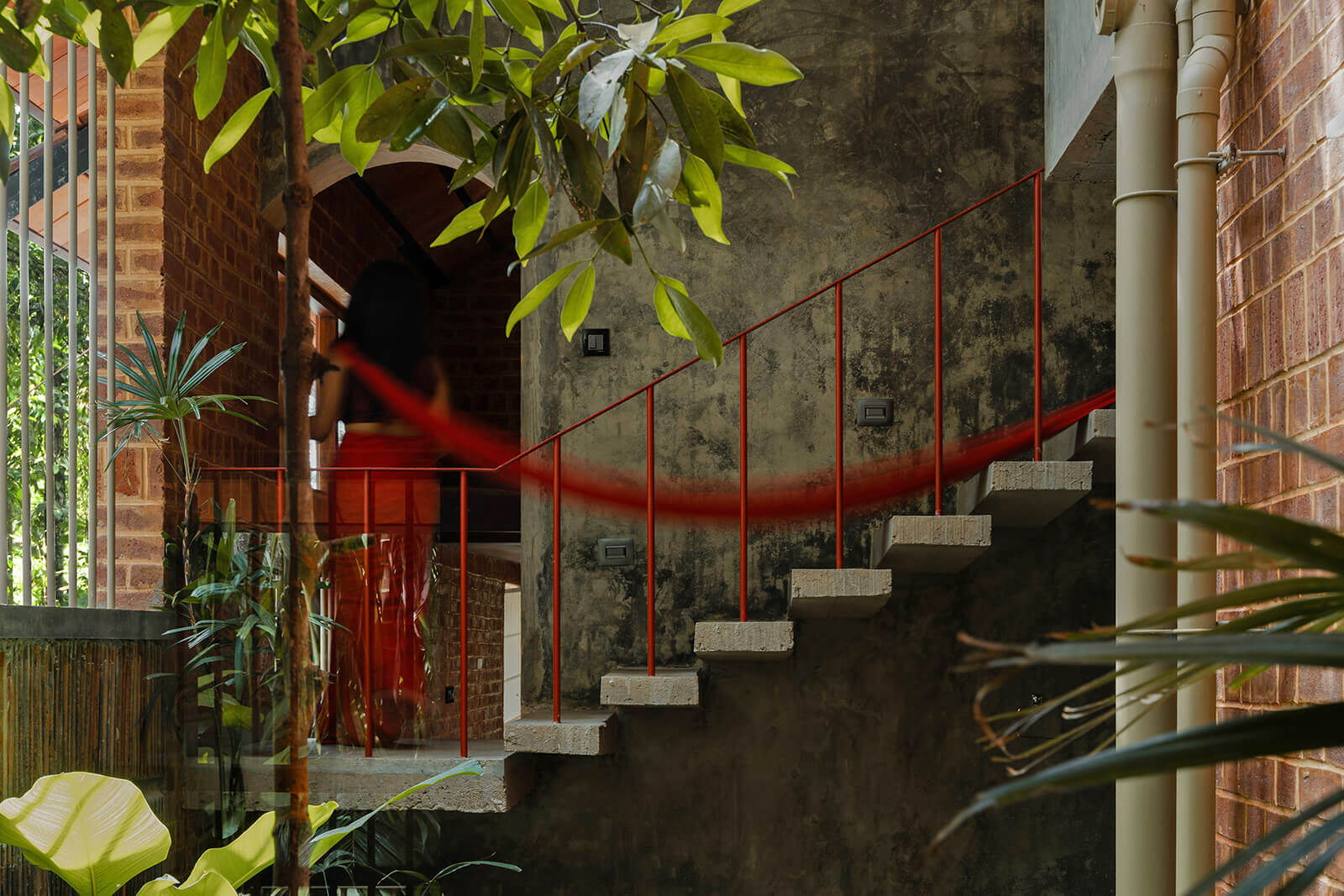
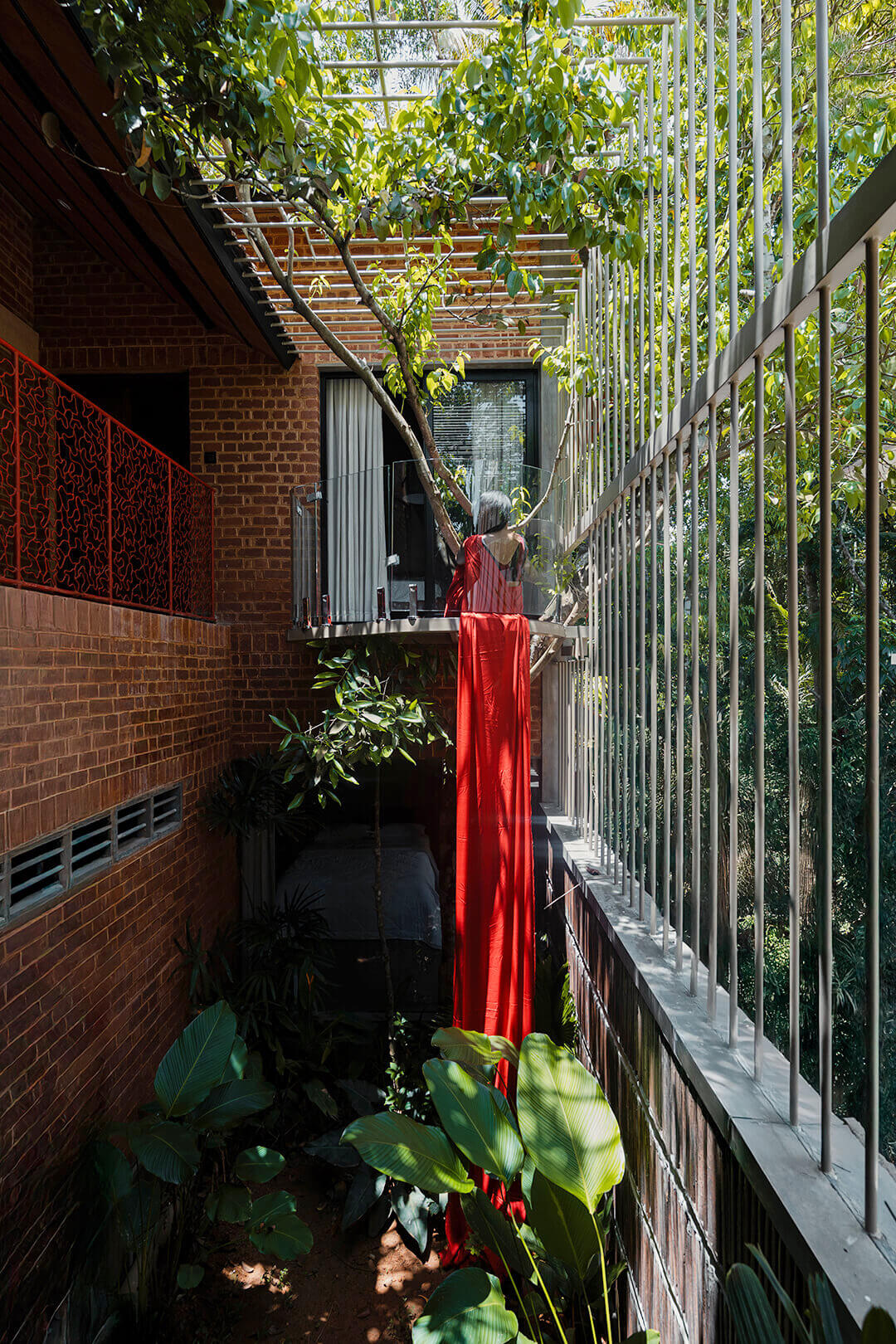
Amidst the backwaters of Paravur in Kerala’s Kollam district, the house Of Trees and Gods and Mud is shaped by the memory of kaavus (sacred groves) and the spirit of the land. Surrounded by diverse vegetation and a small pond, the residential design embodies the client’s spiritual beliefs, intertwining nature with a local material palette to create a hybrid domestic ecosystem. Designed by Kochi-based practice Urava, the private residence uses four ‘guardian trees’ as design anchors, around which the built environment is carefully shaped. Courtyards and staircases are thoughtfully choreographed to weave nature into the rhythms of everyday life.
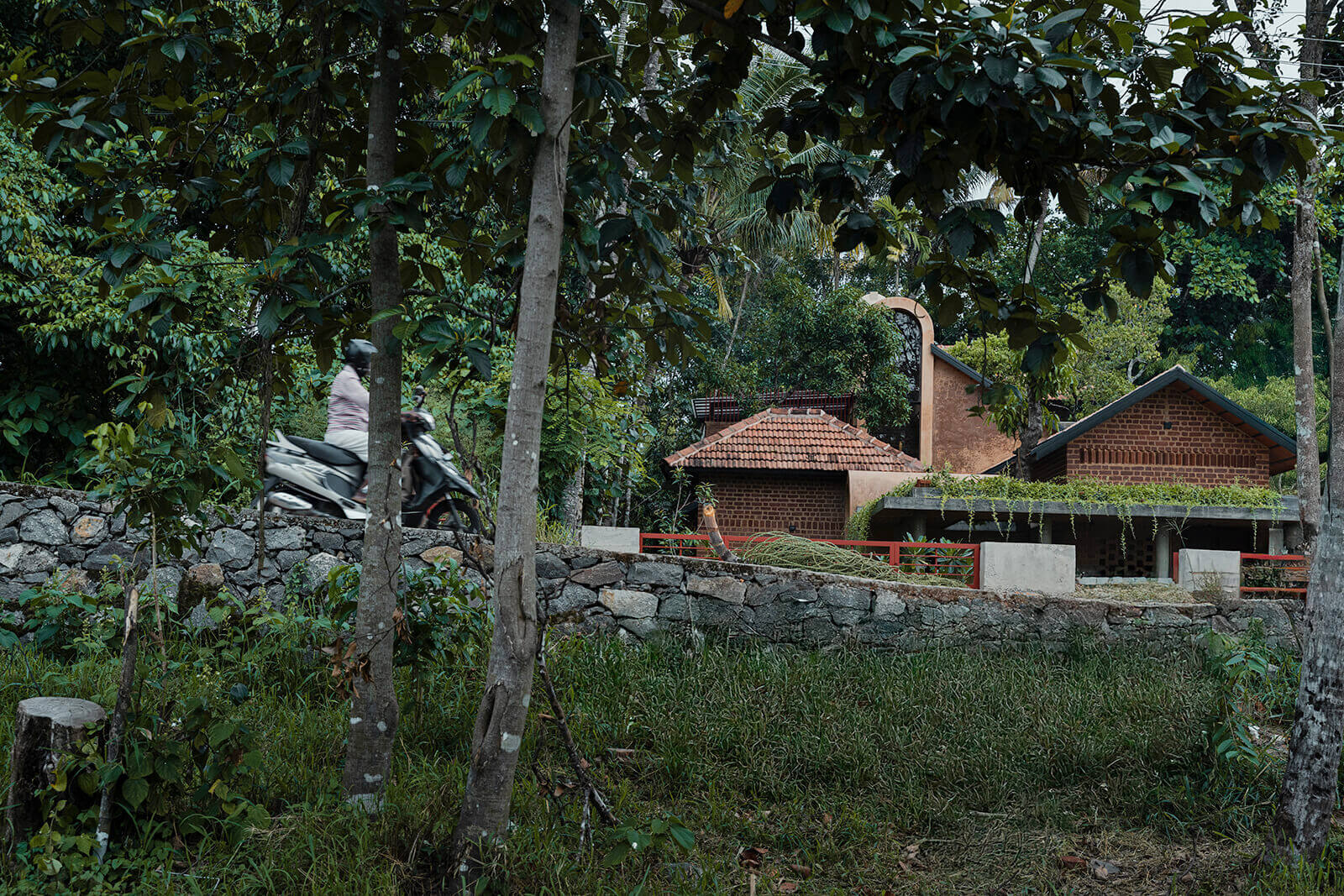
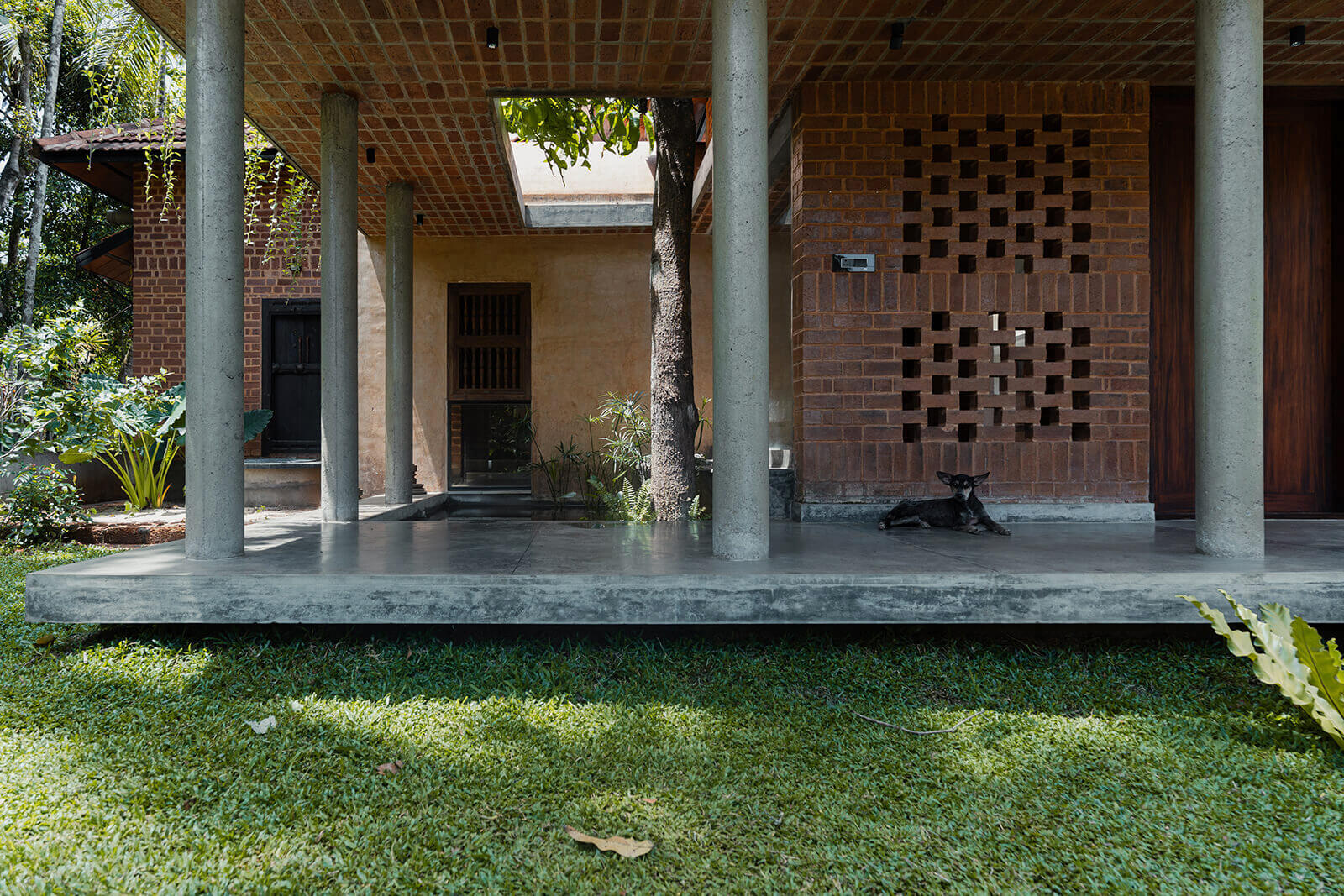
At first glance, the residential architecture appears as a cluster of modest brick volumes, familiar to the national and regional context. On close observation, however, the built masses seem to form a complex planar arrangement, layered with a keen sensitivity towards its surroundings—a facet quite inherent in Kerala architecture. The residential interiors, shaped by considered placement of apertures, textures and spatial planning, embody a sense of serenity and groundedness that gently infuses everyday lived moments.
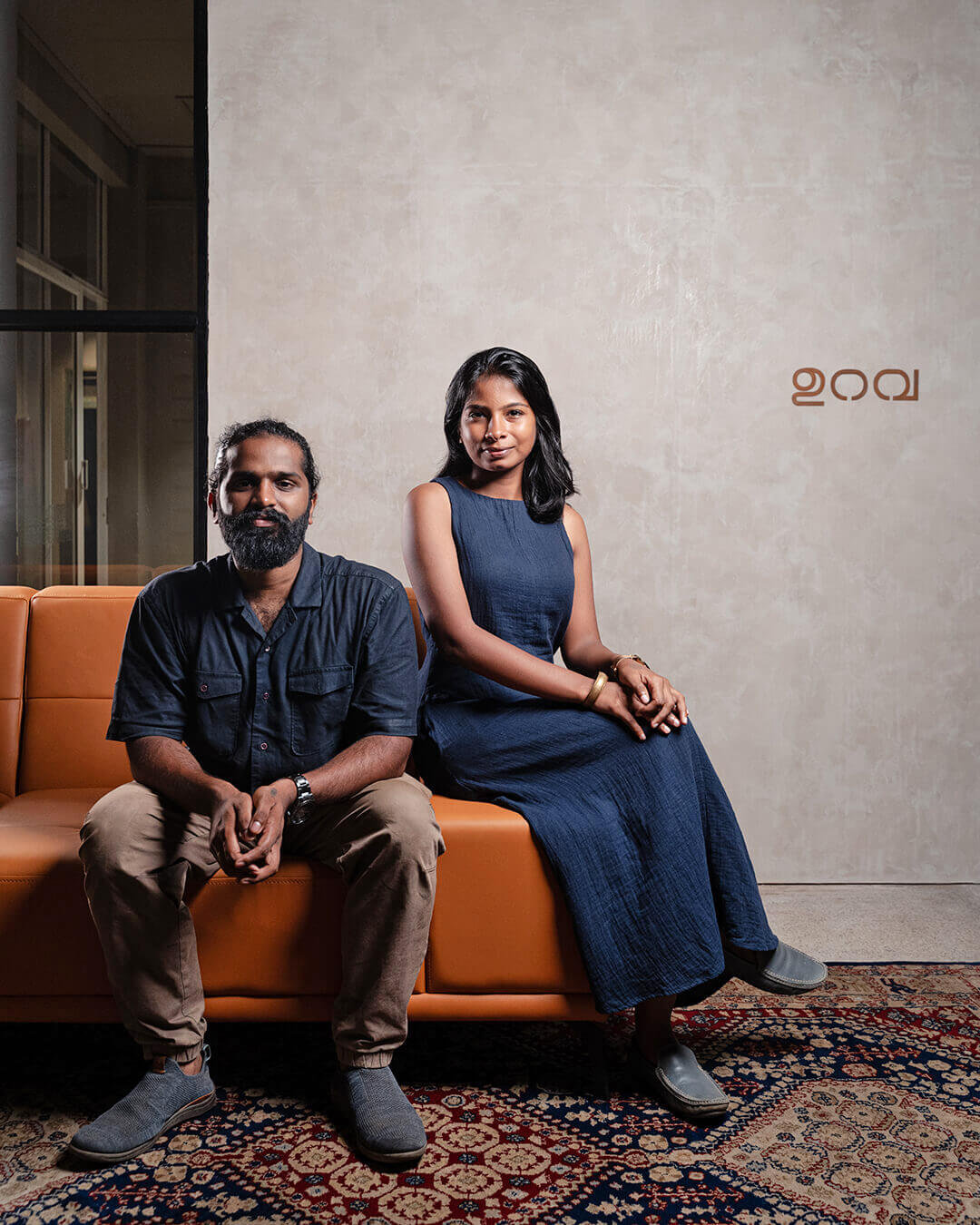
Founded by Indian architects Joel M Joy and Arya Sankaranarayanan, Urava prioritises storytelling in its designs, crafting spaces that weave cohesive narratives. Specialising in bespoke residential and hospitality designs, the studio sensitively responds to the values, culture and lifestyle of each client, creating spaces that are both personal and contextual.
In a conversation with STIR, the studio founders delve into the design of Of Trees and Gods and Mud, unpacking its materiality, interpretation of ‘sacred architecture’ and cultural memory. The following are edited excerpts from the interview.
Bansari Paghdar: Materiality plays a pivotal role in this residential design. Could you elaborate on the reclaimed materials and elements used in different spaces and how they contribute to the collective identity of the project?
Joel M Joy, Arya Sankaranarayanan: The design emphasises a strong commitment to sustainability and circular design through the careful selection and reuse of materials, ultimately contributing to the project's identity as a "living narrative of belief, ecology, and place".
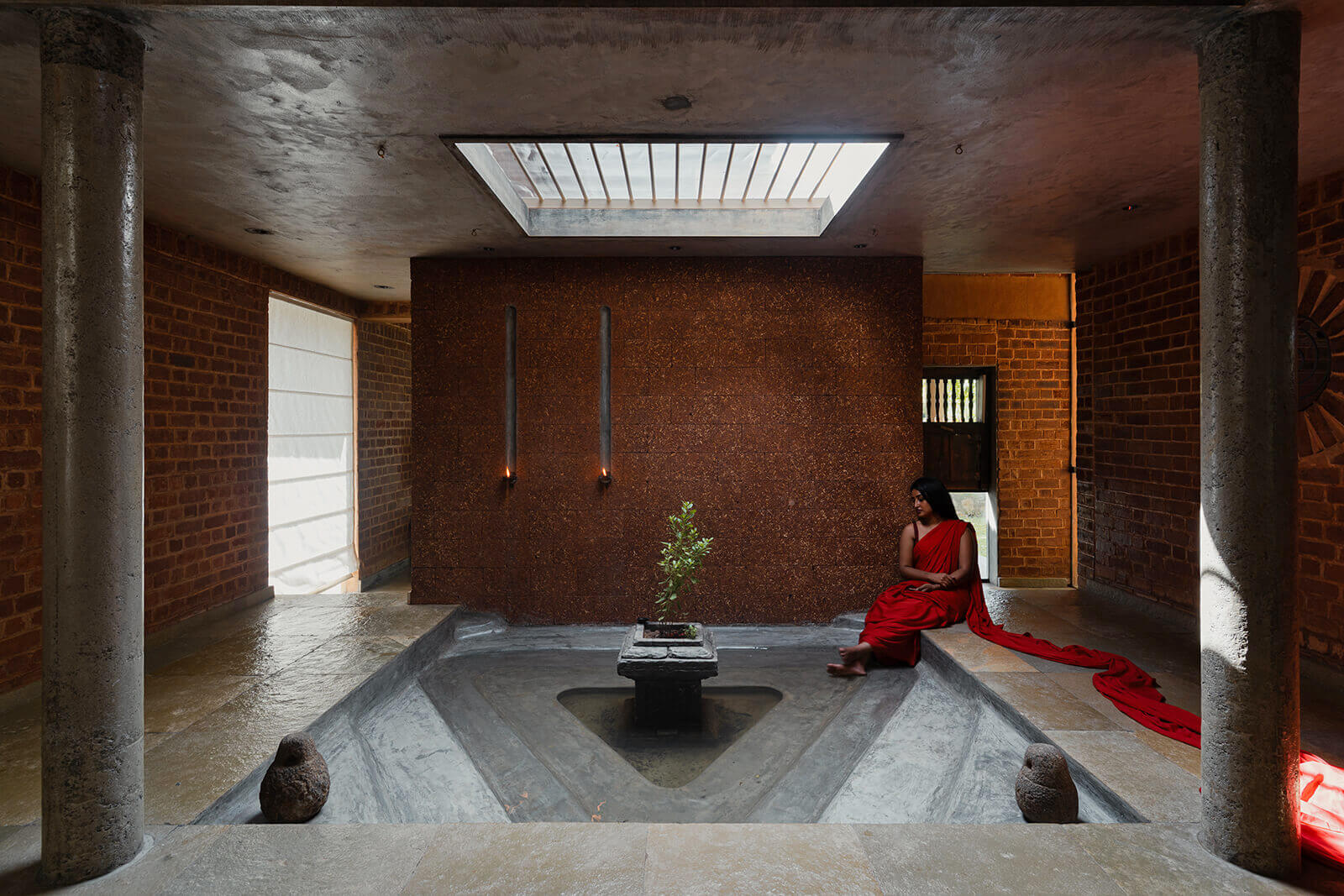
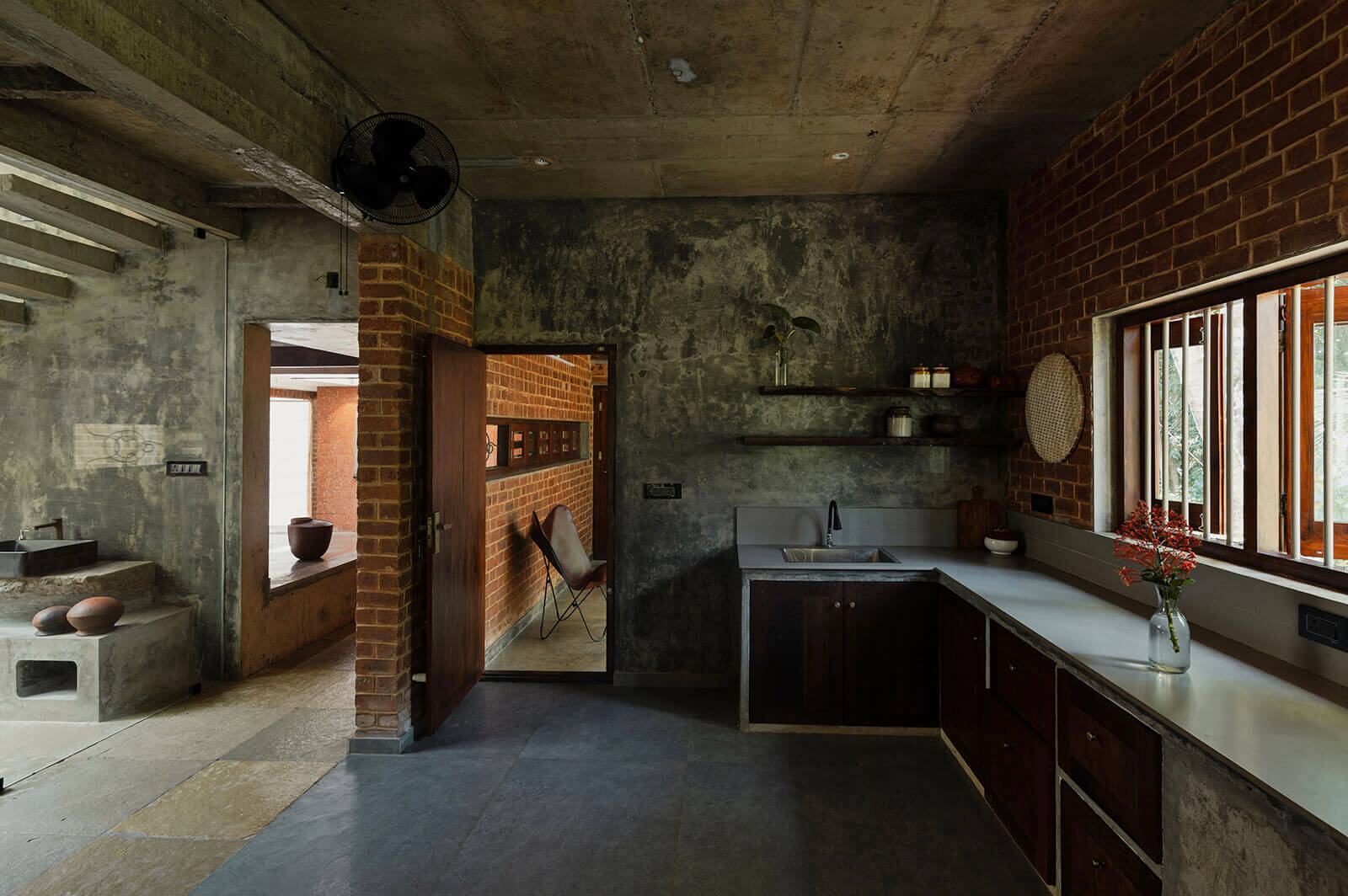
Our material palette is anchored in resource conservation. This is evident in our use of reclaimed materials, such as huge abandoned stone blocks recovered from demolished ancestral homes in Kerala, which were meticulously crafted into the inbuilt seating and furniture throughout the house. Similarly, reclaimed wood was incorporated to conserve resources and extend the material lifecycle through adaptive reuse. Part of the compound wall construction was done reusing Mangalore roof tiles salvaged from earlier structures.
Beyond reclaimed elements, we prioritised natural and traditional materials for a healthier living environment. Stabilised mud plaster was used extensively on the exterior walls, creating a breathable, toxin-free envelope. The concrete load was significantly reduced by employing filler slabs constructed from mud bricks and natural stone. Finally, oxide plasters were chosen over conventional paints for finishes. This comprehensive approach to material honesty ensures that the mud architecture grounds the family in their environment and embraces the luxury of slow living.
Bansari: How have you interpreted elements of 'sacred architecture' into the building without a sense of appropriating or directly replicating local temple architecture?
Urava: We interpreted elements of sacred architecture not through direct replication, but through the lens of symbolic and abstract forms, deeply informed by the 'Spirit of the Place' (Genius Loci). This approach draws reverence from the local spiritual landscape, which is marked by sacred groves or kaavus.
Our subtle interventions include stone beams placed above passages, which abstractly echo the gravity and sculpted ceilings of traditional temple structures. Furthermore, two prominent brick vaults rise like miniature gopurams (temple towers), their arched forms evoking distant mountain summits—a reference to the ancient Indian belief that mountains are sacred spaces. The layout itself features a long central passage, the idanaazhi, symbolising the path of life. We also integrated tortoise motifs into details like the window grills, drawing inspiration from a tortoise found at the site's natural pond and the powerful mythology of the tortoise carrying the world on its back. These interpretations embed a spiritual resonance without appropriating local temple architecture forms.
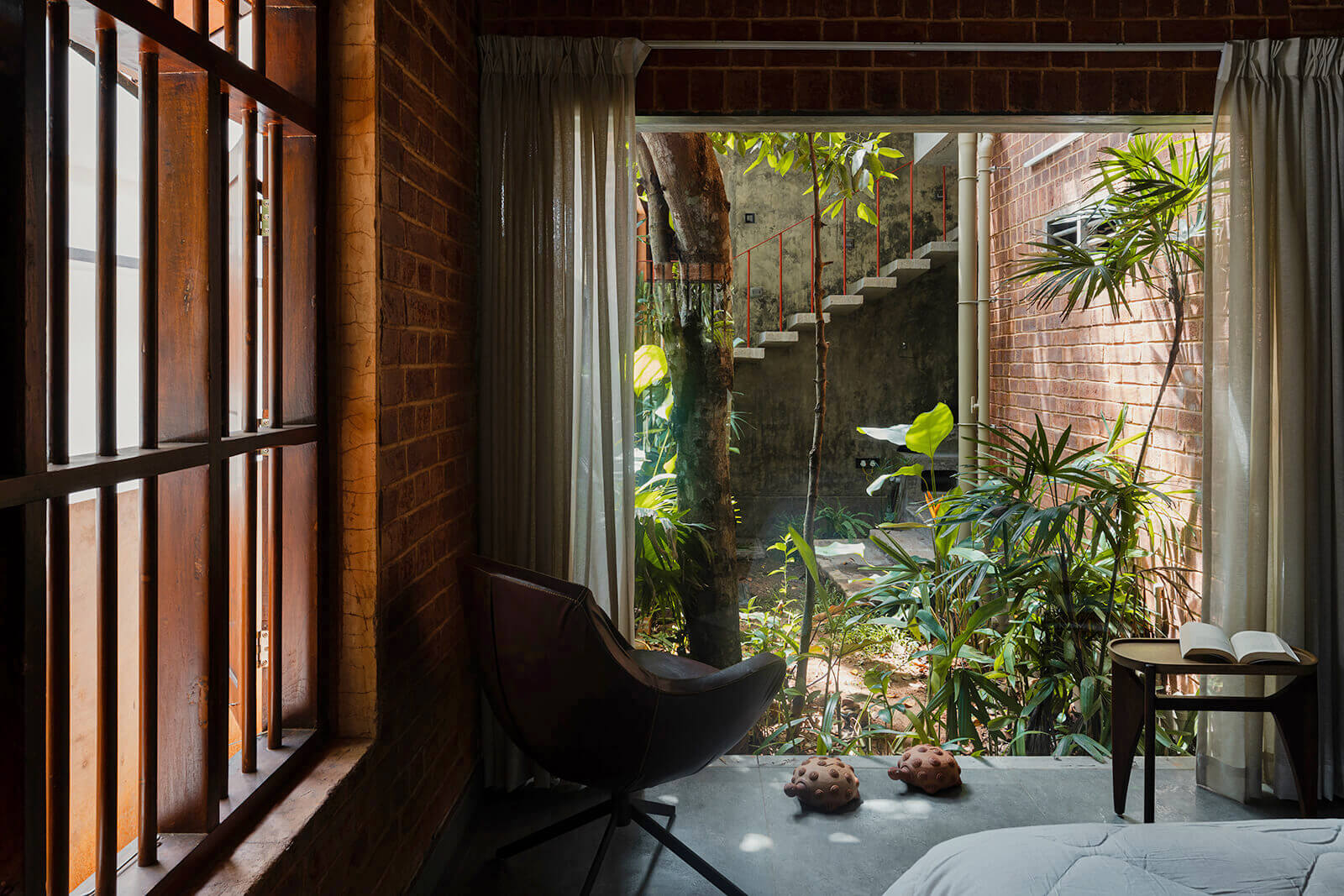
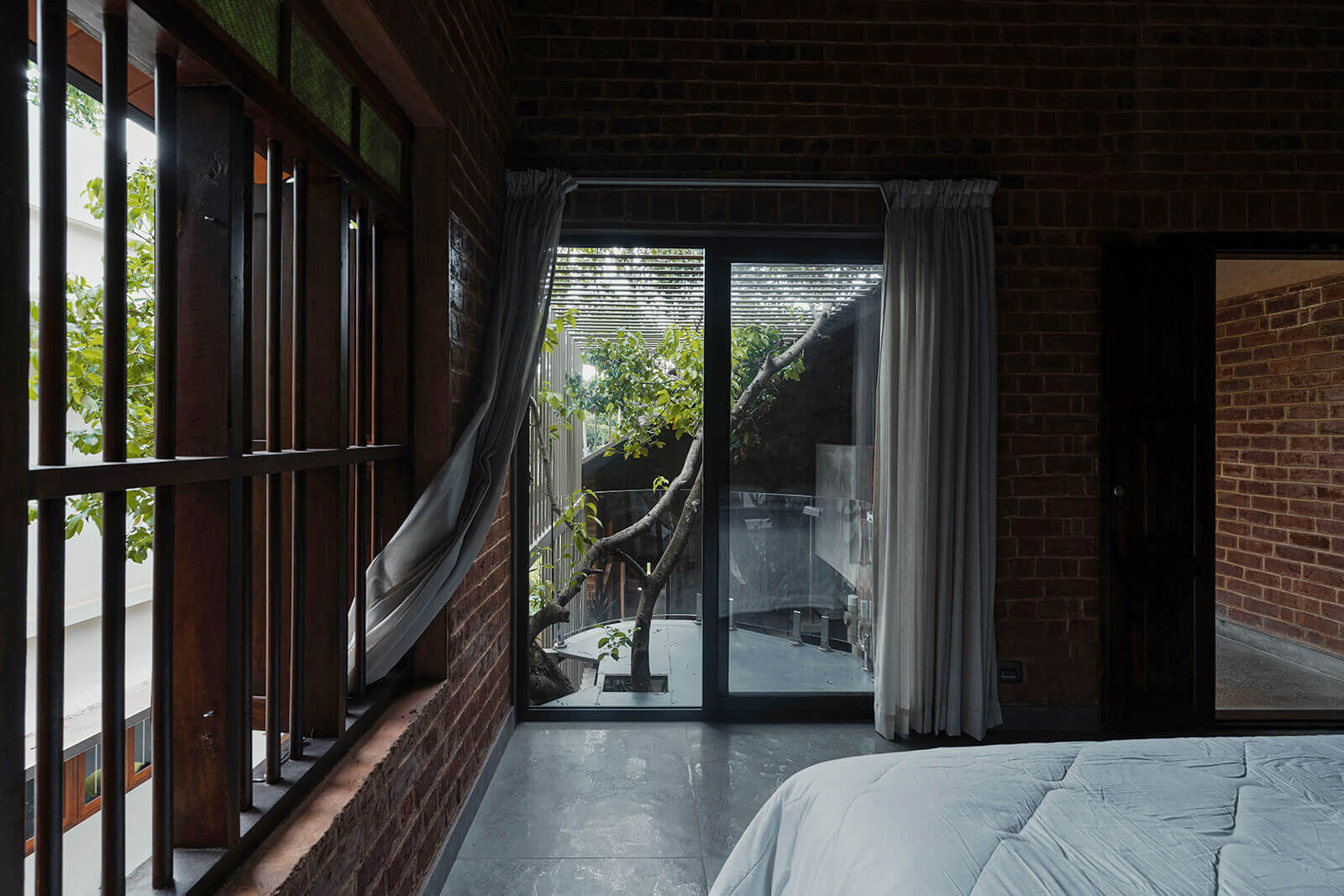
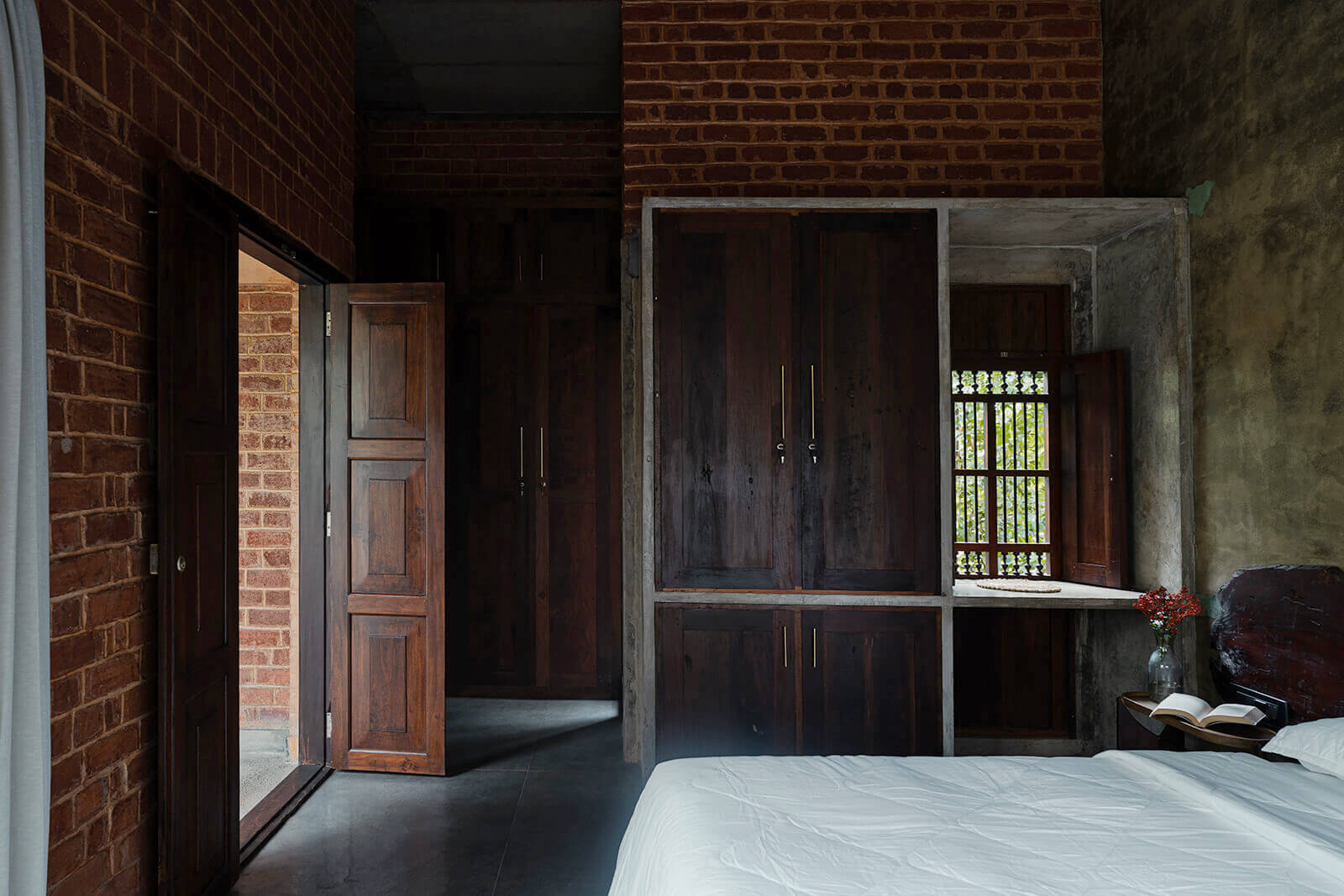
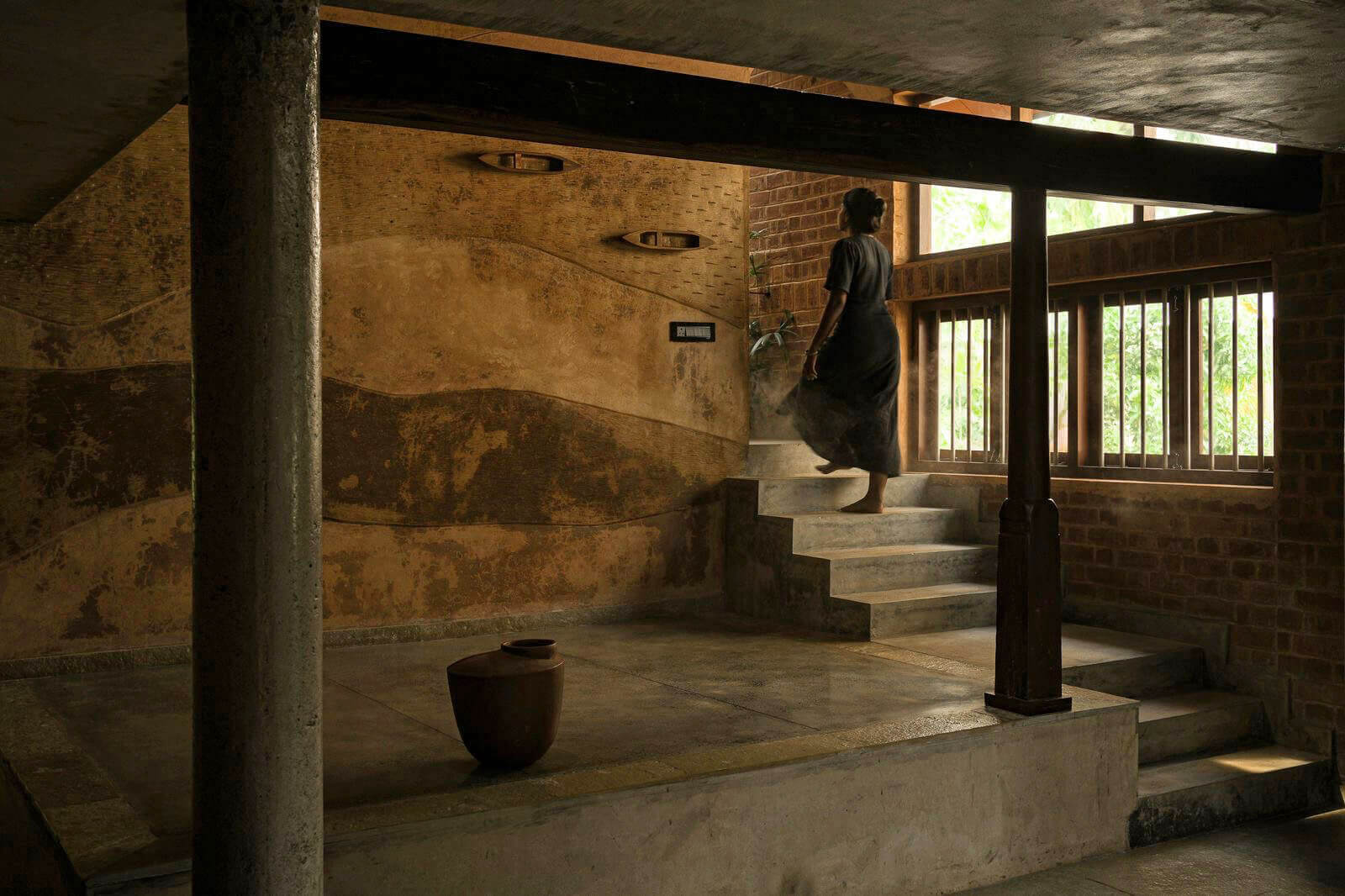
Bansari: The hand-crafted mud mural tells a story of North Paravur’s once thriving waterways. How do you see architecture’s role in carrying forward such cultural memory?
Urava: At the heart of our practice is architectural storytelling. We believe that spaces designed from narratives rooted in user values, culture, lifestyle and environment become intimately connected to the individual or context, fostering a profound sense of uniqueness. The hand-crafted mud mural, situated next to the thinna (a traditional raised platform), is a prime example of this role. It is a subtle abstraction inspired by an aerial view of North Paravur's kayals (backwaters) and the region's once-thriving water routes, where vanchi (boats) transported goods. The mural acts as a tangible record of this history. By crafting it using a blend of different native muds, the architecture honours traditional materials and methods rooted in the land, actively preserving heritage. Ultimately, the design ensures that ’every wall remembers’ and that spaces are deeply associated with stories. By rooting the home in the region's history, ecology, and belief, the architecture creates a ’living narrative’ that will foster cherished childhood experiences and carry forward the cultural memory for the generations who live there.
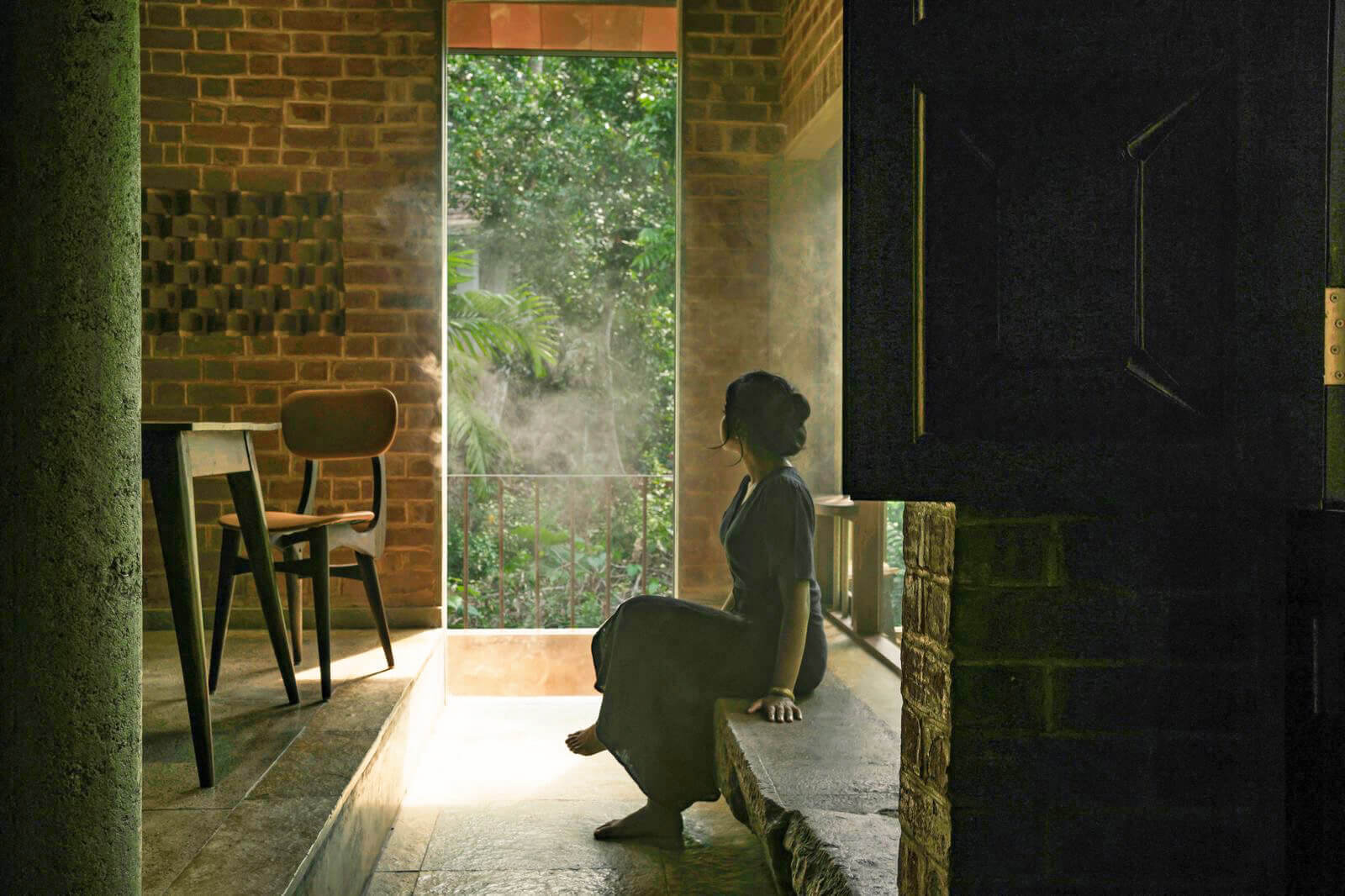
Staying true to the conceptual core, the residence is designed with great attention to detail as it holds within its walls layers of memories, cultural, material and otherwise. A fusion of vernacular and contemporary architecture further establishes the project not just contextually but temporally, hinting towards the future of spiritual and sustainable design. The house is temporal yet transcendent, fostering an entire ecosystem, reflecting the kaavus it is nestled within.
Name: Of Trees and Gods and Mud
Location: Paravur, Kochi, Kerala
Architects: Urava
Built-up Area: 1,800 sq ft
Site Area: 3,920 sq ft
Year of Completion: 2025

by Pranjal Maheshwari Oct 24, 2026
A consortium of Copenhagen’s 3XN, Toronto’s B+H Architects and Shenzhen’s Zhubo Design has designed the museum to mimic the surrounding riverscape, topped with a public park.
by Pranjal Maheshwari Oct 19, 2026
The Mumbai-based architects integrate courtyards, mesh screens and north light trusses to create a dining space that doubles up as a community hub at SR University, Warangal.
by Mrinmayee Bhoot Oct 17, 2026
The Rotterdam-based institute centres the Indian Ocean as a network for exploring material histories and transnational links shaping coastal cultures, positing them as future models.
by Pranjal Maheshwari Oct 16, 2026
At the 2026 Stirling Prize ceremony, Mary Duggan with RUFF Architects, MAKER Architecten and Nakshabid Architects were felicitated for proffering quality housing and social equity.

make your fridays matter with a well-read weekend
Enter your details to sign in
Don’t have an account?
Sign upOr you can sign in with
a single account for all
STIR platforms
All your bookmarks will be available across all your devices.
Stay STIRred
Already have an account?
Sign inOr you can sign up with
Verification link sent to check your inbox or spam folder to complete sign up process
Tap on things that interests you.
Select the Conversation Category you would like to watch
Please enter your details and click submit.
Enter the 6-digit code sent at


Urava’s brick home in Kerala evokes a living narrative of belief, ecology and place
by Bansari Paghdar | Published on : Dec 20, 2025


 Sign in with Google
 Sign in with email
What do you think?