Design05 mins. read
Design Democracy returns to Hyderabad with an intersectional programme
by Jincy IypeSep 04, 2026



by Jincy IypePublished on : Feb 17, 2026
This year, at the 17th edition of India Art Fair held at the NSIC Exhibition Grounds in New Delhi, collectible design assumed a sharper definition. India Art Fair 2026 presented its most expansive Design section to date, convening 14 pioneering studios and two international design galleries in a dedicated showcase of limited-edition, mostly hand-crafted works. Over the past three editions, the section has seemed to evolve from inclusion to intention, establishing design as a distinct cultural and commercial category within the fair’s architecture, towards making design a serious collecting discipline in India.
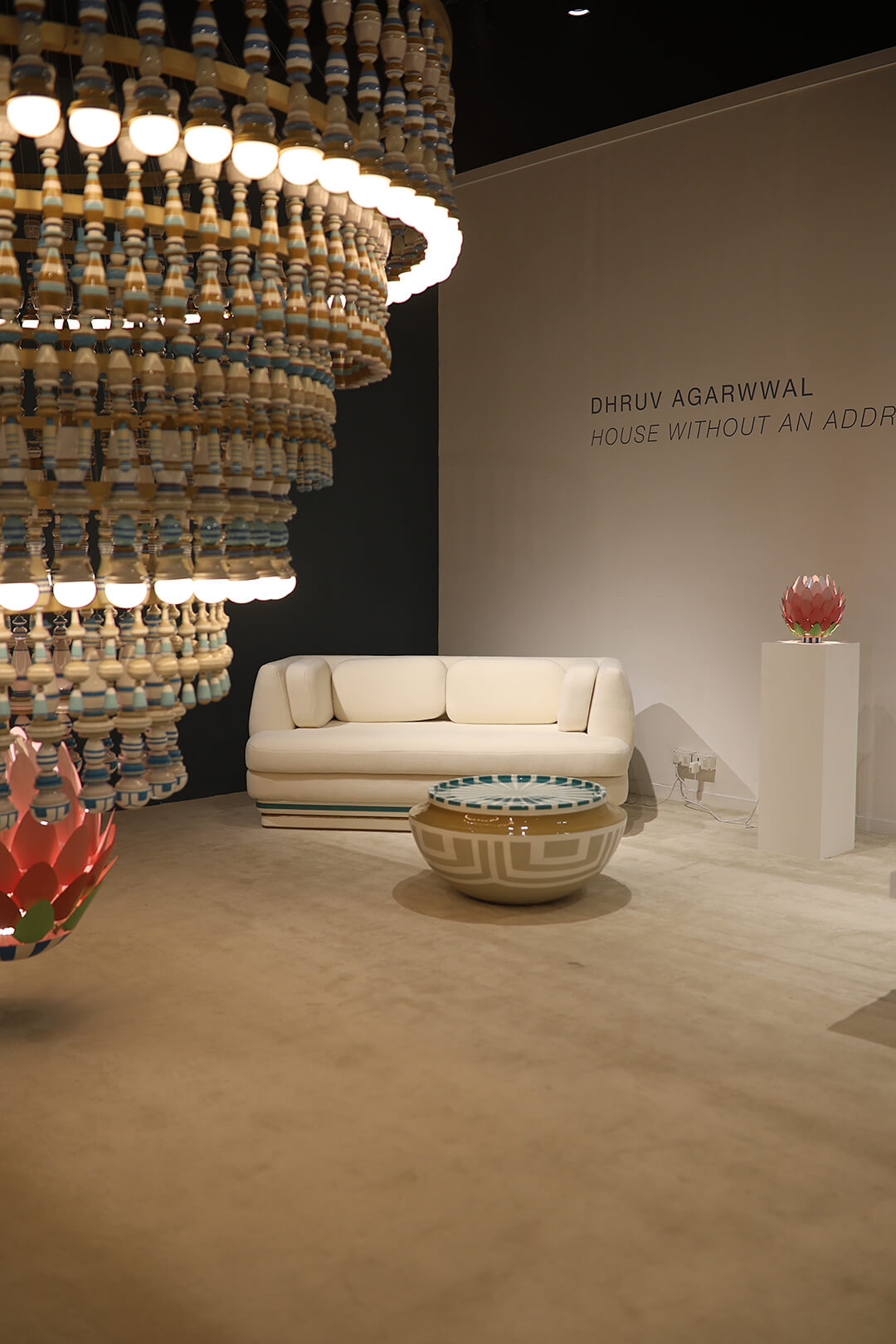
From February 5 – 8, 2026, the art fair’s Design section featured a dynamic line-up ranging from architect-designers such as Ashiesh Shah of Atelier Ashiesh Shah (Mumbai) and Rooshad Shroff, founder of the boutique firm RooshadSHROFF (Mumbai), to material-led practitioners such as Vikram Goyal, as well as craft-driven institutions including Chanakya School of Craft (Mumbai). Also presenting were artist Gunjan Gupta (New Delhi), founder of IKKIS, a contemporary Indian homeware brand and landscape practice Kunal Maniar and Associates (Mumbai) alongside international presences such as Galerie Maria Wettergren (Paris). Within the wider Galleries section, Carpenters Workshop Gallery further reinforced the fair’s global inclusion.
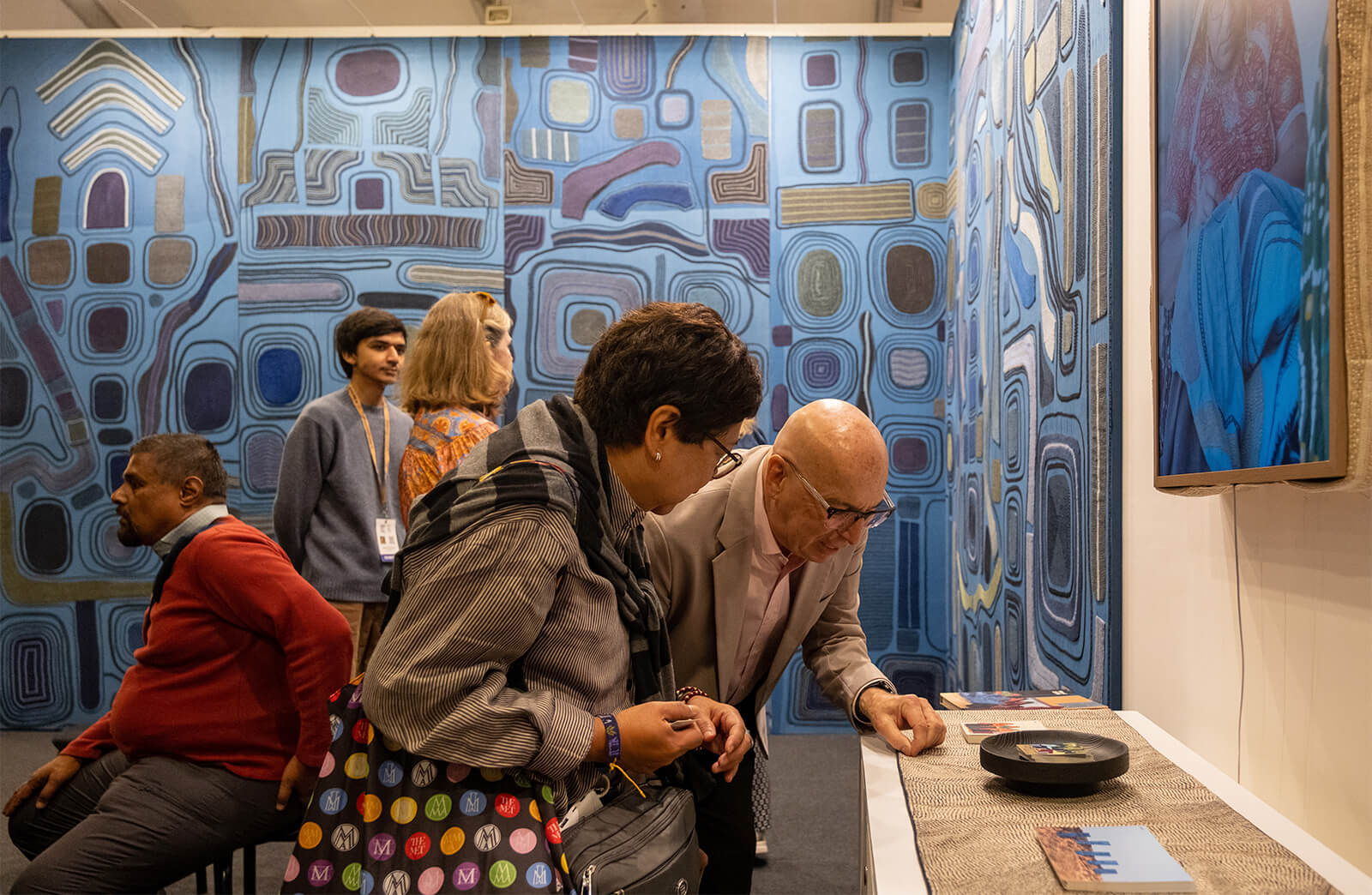
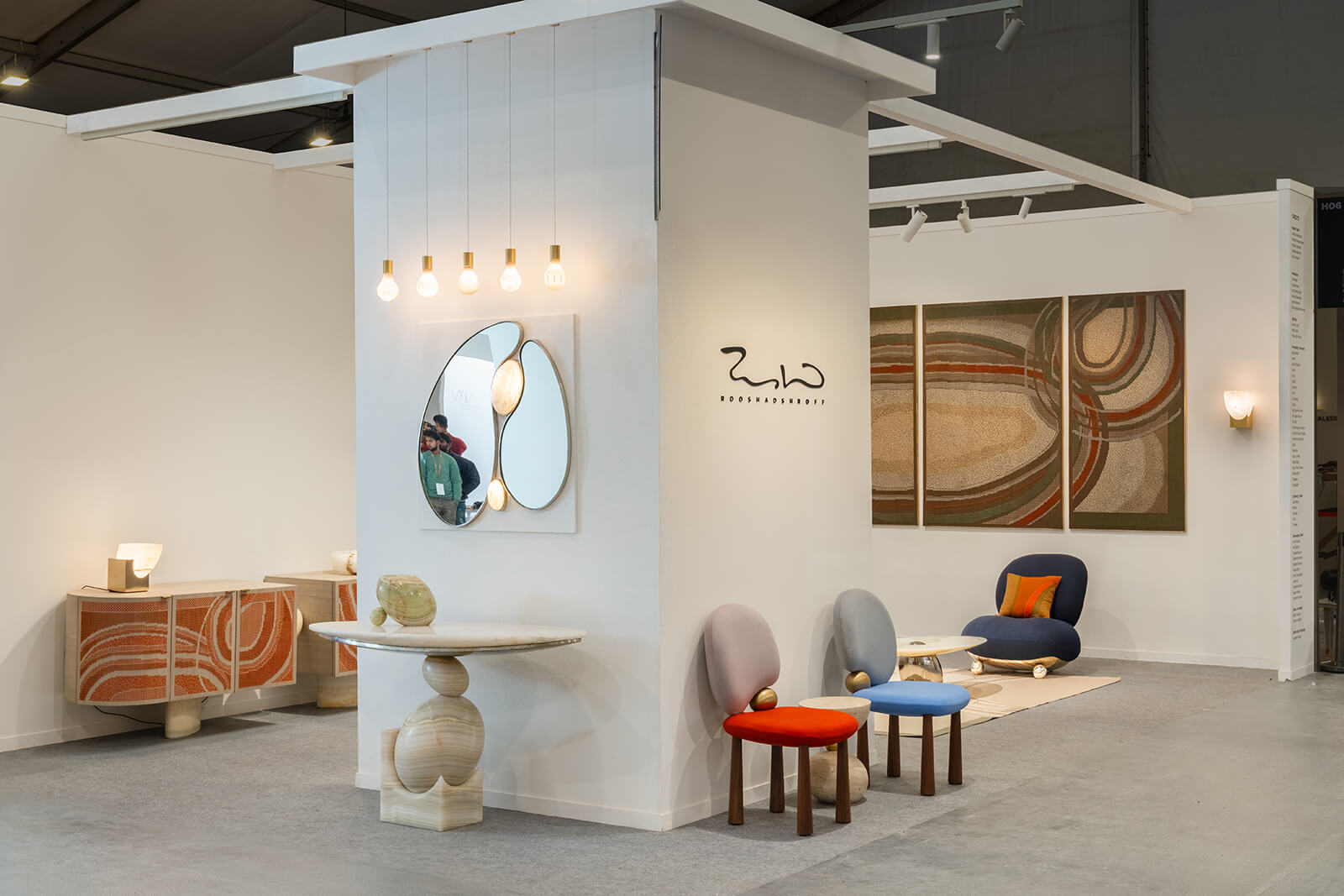
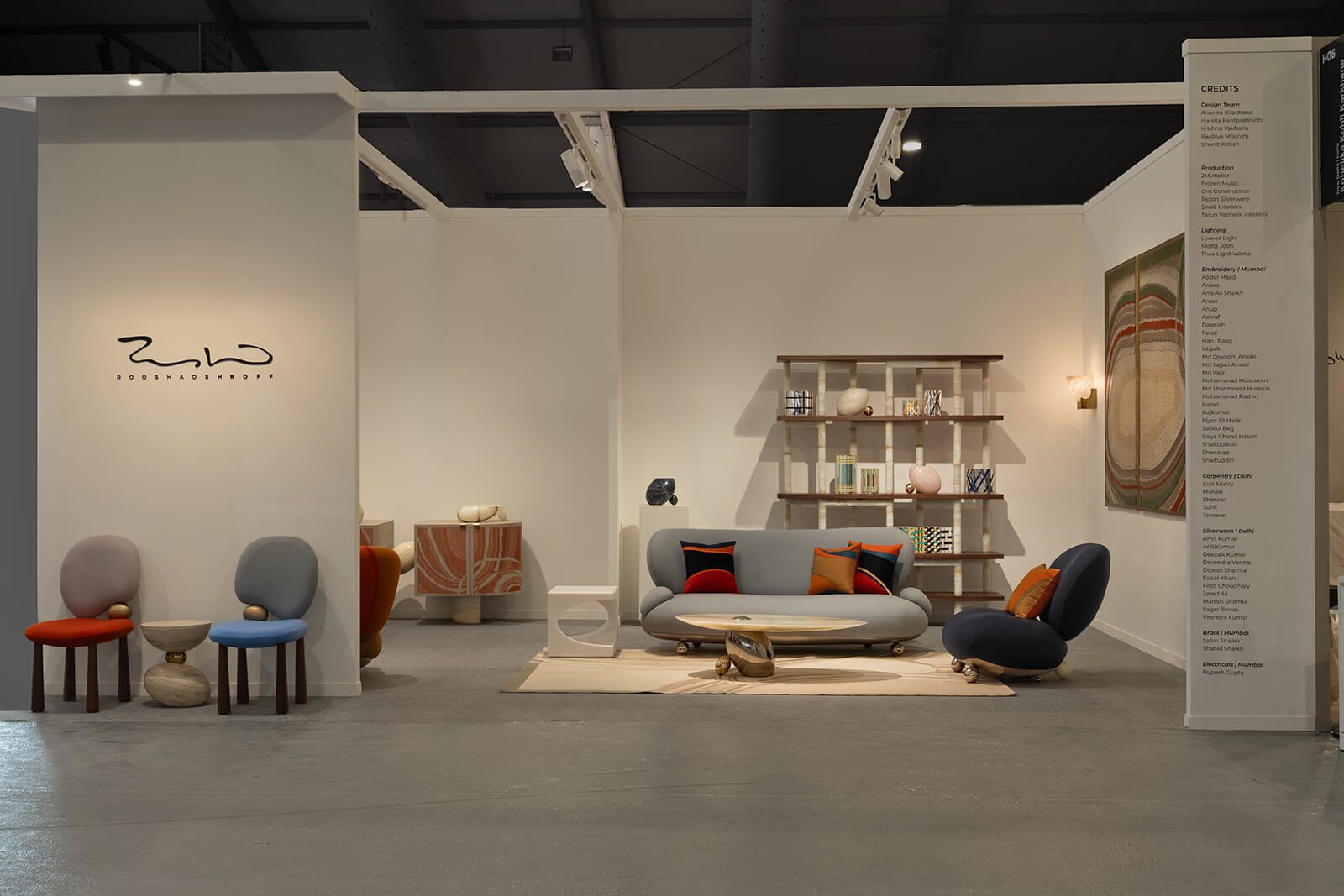
For Shroff, the presentation was about disciplined evolution. “We’ve been working with different techniques for a long time, and I think we’ve been quite consistent,” he told STIR, referencing his embroidery on wood, initiated in 2011, and his long engagement with marble in his product designs. “Embroidery is something that I’ve been working with right from the beginning…the rug here is embroidered, the cushions are embroidered,” he explained. Reflecting on the platform itself, he added, “It’s a great new space that they’ve cultivated…because design requires its own space. It’s not [just] art, and these are also not very commercial pieces of furniture… this gives you that platform that helps us elevate the distinction.”
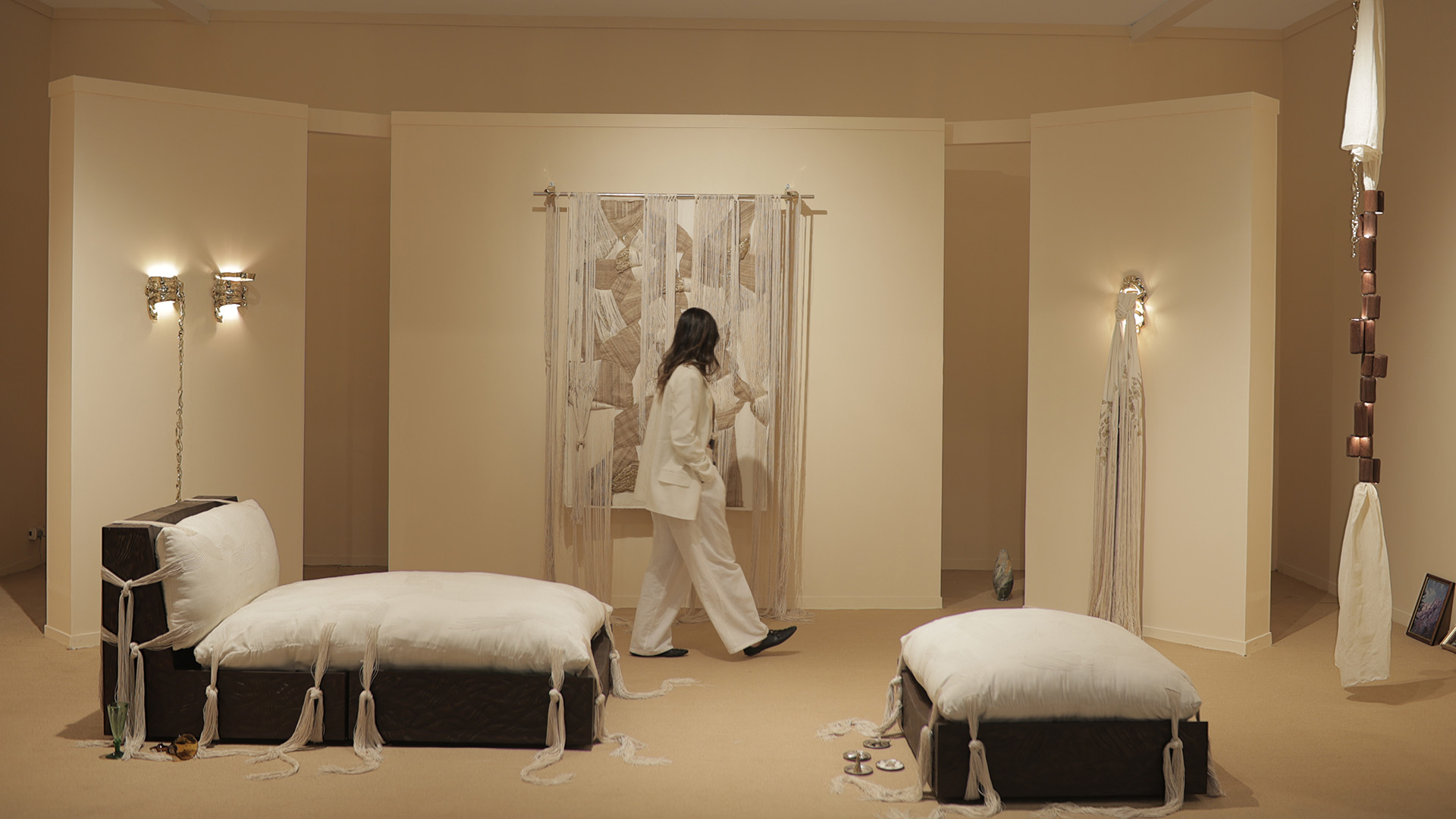
Shah’s works emerged from ritual and atmosphere. “I think all our pieces come from a sense of meditative journey,” he told STIR, tracing the presented furniture pieces to childhood memories spent in dhoop (sunlight). Seeking to restore the performance of lighting incense, he described wanting to “orchestrate and choreograph the dance of the smoke”. The results are designs that lean into scent and ephemerality as compositional tools, shaping an encounter that privileges slowness and sensory immersion.
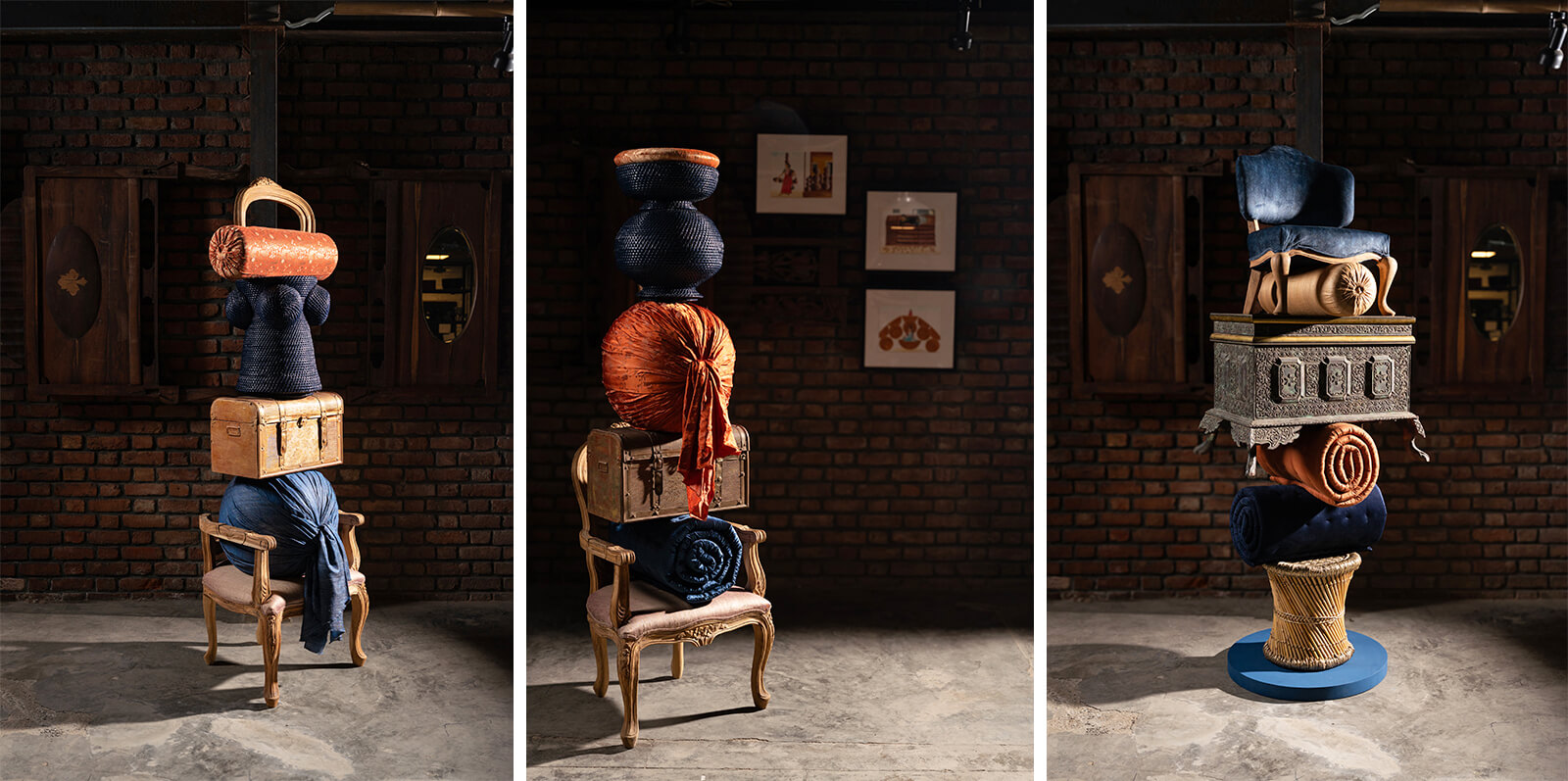
Gupta’s triptych design installation, All That Stands, part of her larger showcase at the art event titled Held in Place, examined the chair as both an object and a power structure. “It constructs the story and the arrival of the chair, and it deconstructs [it] with the power play of the floor-based archetypes in juxtaposition with the western elevation of seating,” she explained to STIR. The stacked forms appear on the brink of collapse, yet, as she notes, “there’s a perfect energy that organises this”, holding tension in equilibrium.
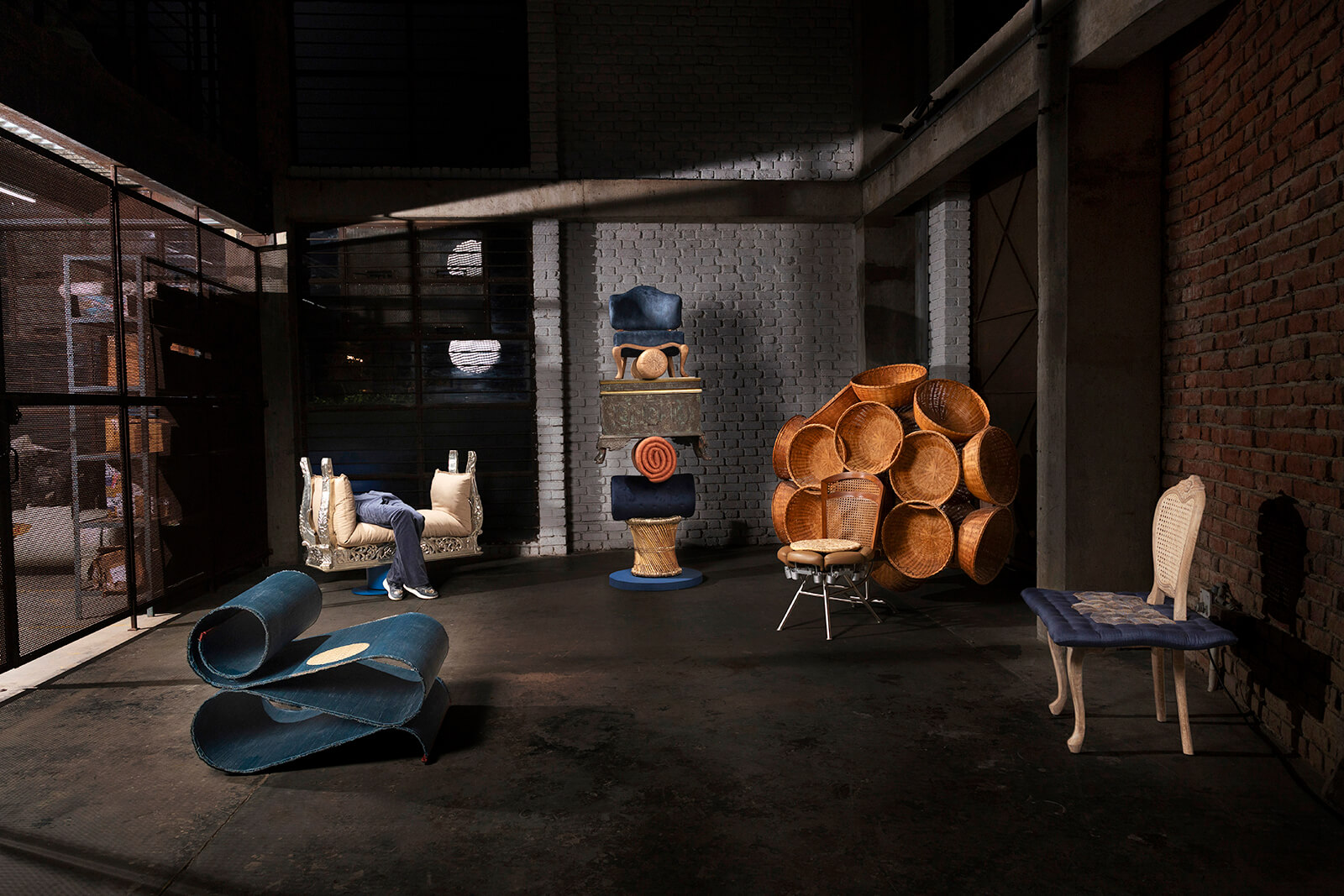
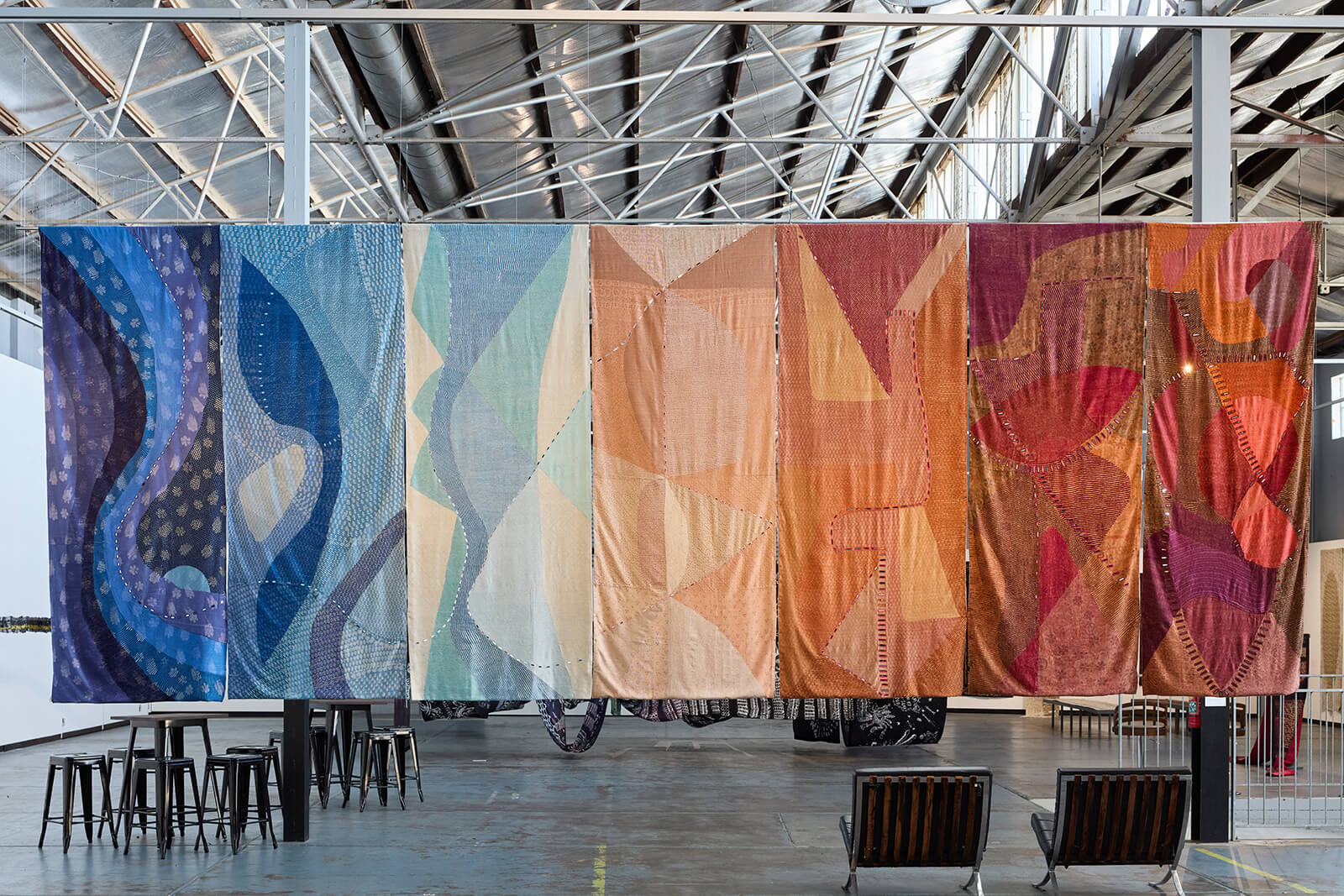
Karishma Swali, founder and creative director of the Chanakya School, framed the non-profit school and foundation's proffering through textile history. “Our practice has been grounded in the understanding of our textile histories and how, within them, you uncover culture and our collective identities within India,” she said. Craft, in this view, carried ecological intelligence and invited porous boundaries between mediums.
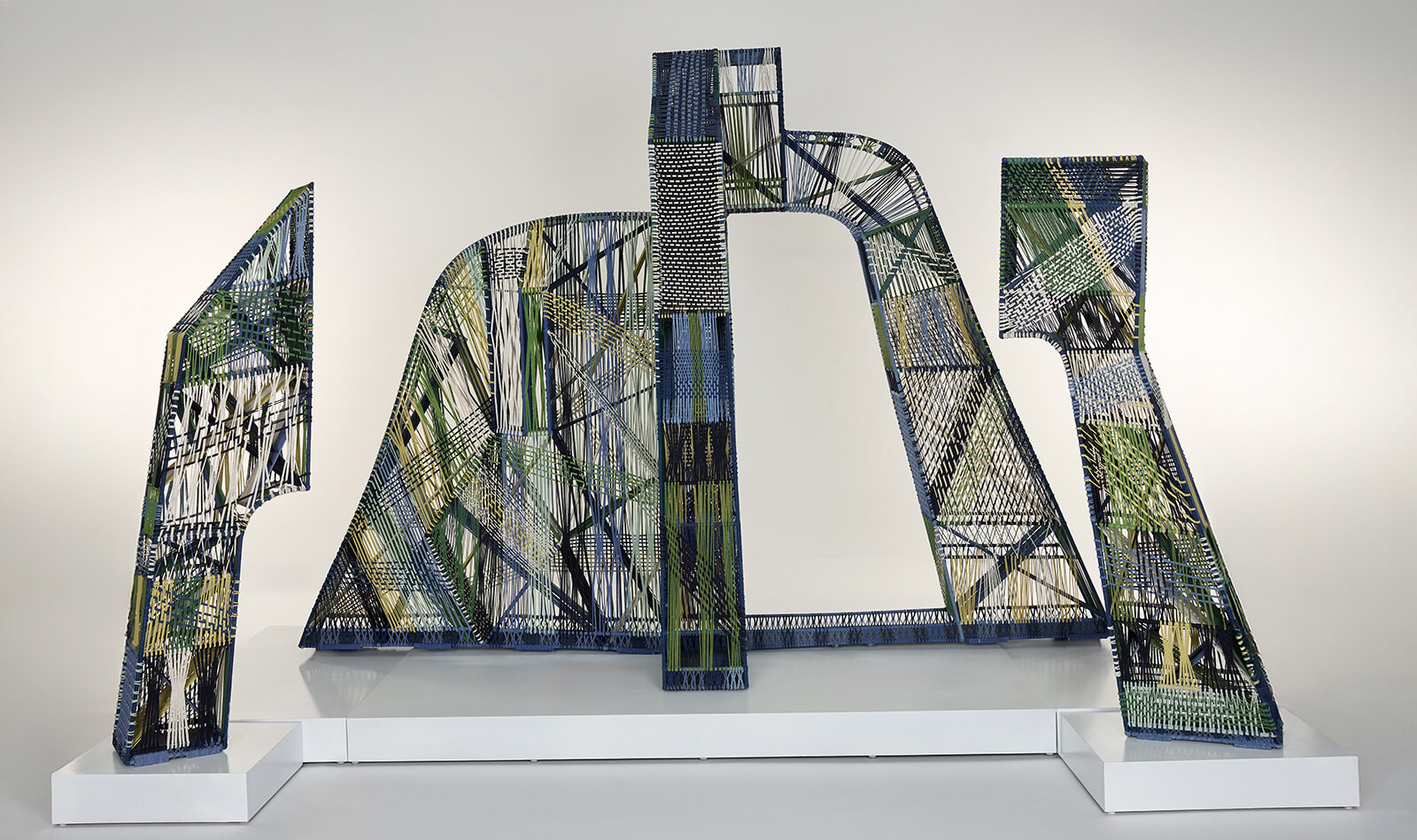
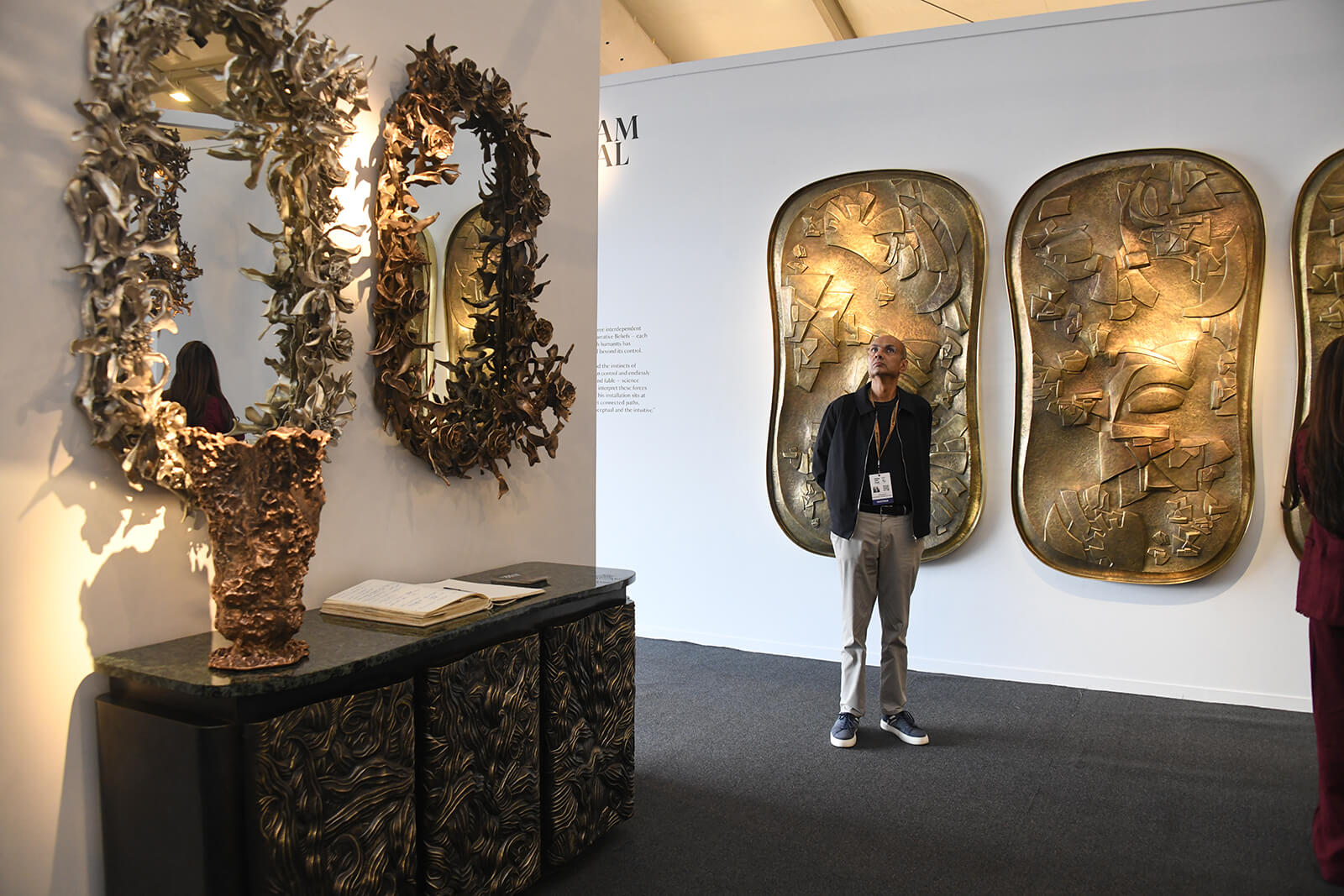
Goyal’s monumental sheet-metal works drew from cosmology, observatories and Indian fables. “This presentation has three independent streams—cosmos, nature and legends,” he shared with STIR, referencing the three Jantar Mantar monuments in India (Delhi, Jaipur and Banares) and the Panchatantra tales as ways humanity has made sense of the world, via beliefs and fables. Working in repoussé and hollow joinery, his studio painstakingly hand-welds and chisels sheet metal into complex three-dimensional forms at scale, something that the Indian designer claims is unique to his studio’s works, an exacting process that foregrounds both labour and narrative.
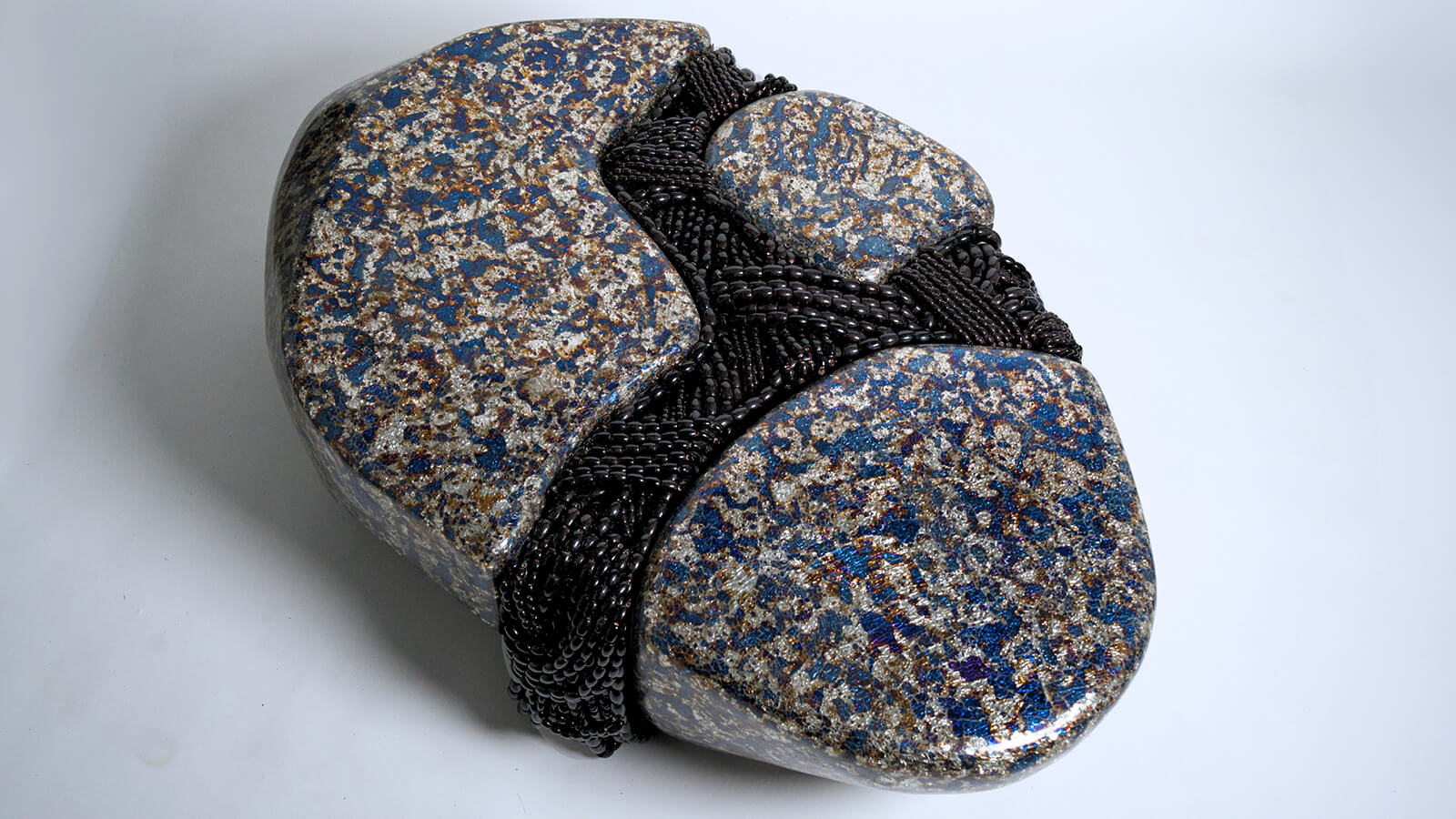
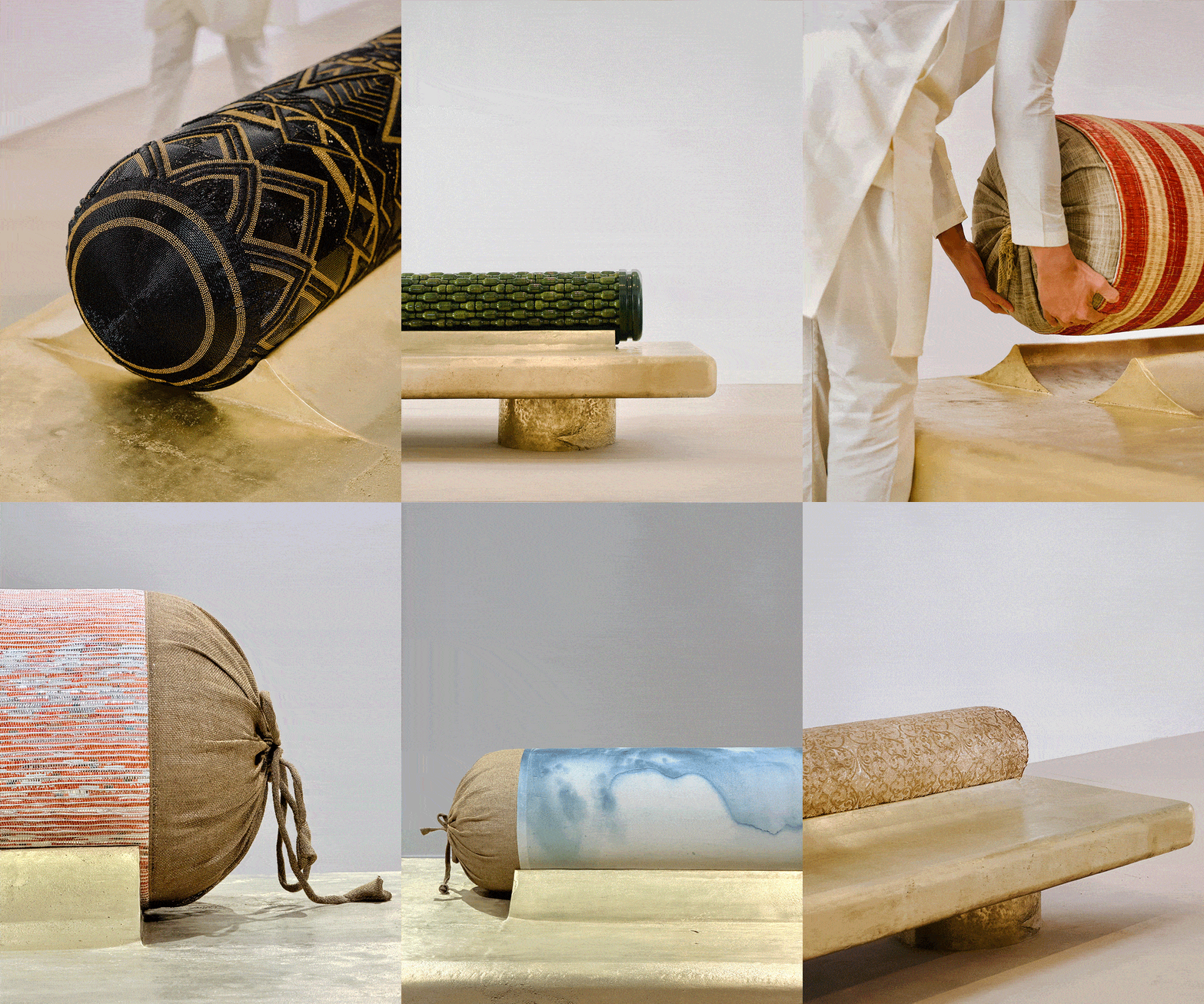
If scale defined presence, Maniar’s Love Bench commanded the room. Cast in panchdhatu, “a mixture of five metals put together”, the hefty, 3,000kg piece required the only reinforced booth floor at the fair, according to the landscape architect and head of Kunal Maniar & Associates. “[It] is about two people coming together,” he conveyed. For this edition, eight bolsters were created in collaboration with different artists; one paid tribute to Art Deco’s centenary with over 55,000 hand-applied beads.
Other bolsters incorporated non-recyclable plastic waste through the brand reCharkha, as well as intricate bidri work with regional collaborators. “It’s basically a mix and a concoction of all things,” he said, underscoring that the project is “a tribute… for collaborating with the right kind and like-minded people to get love across”. On the Design section itself, he added, “It’s a great leap for all of us to profess our creative inputs in our design products…there’s a lot of energy exchange.”
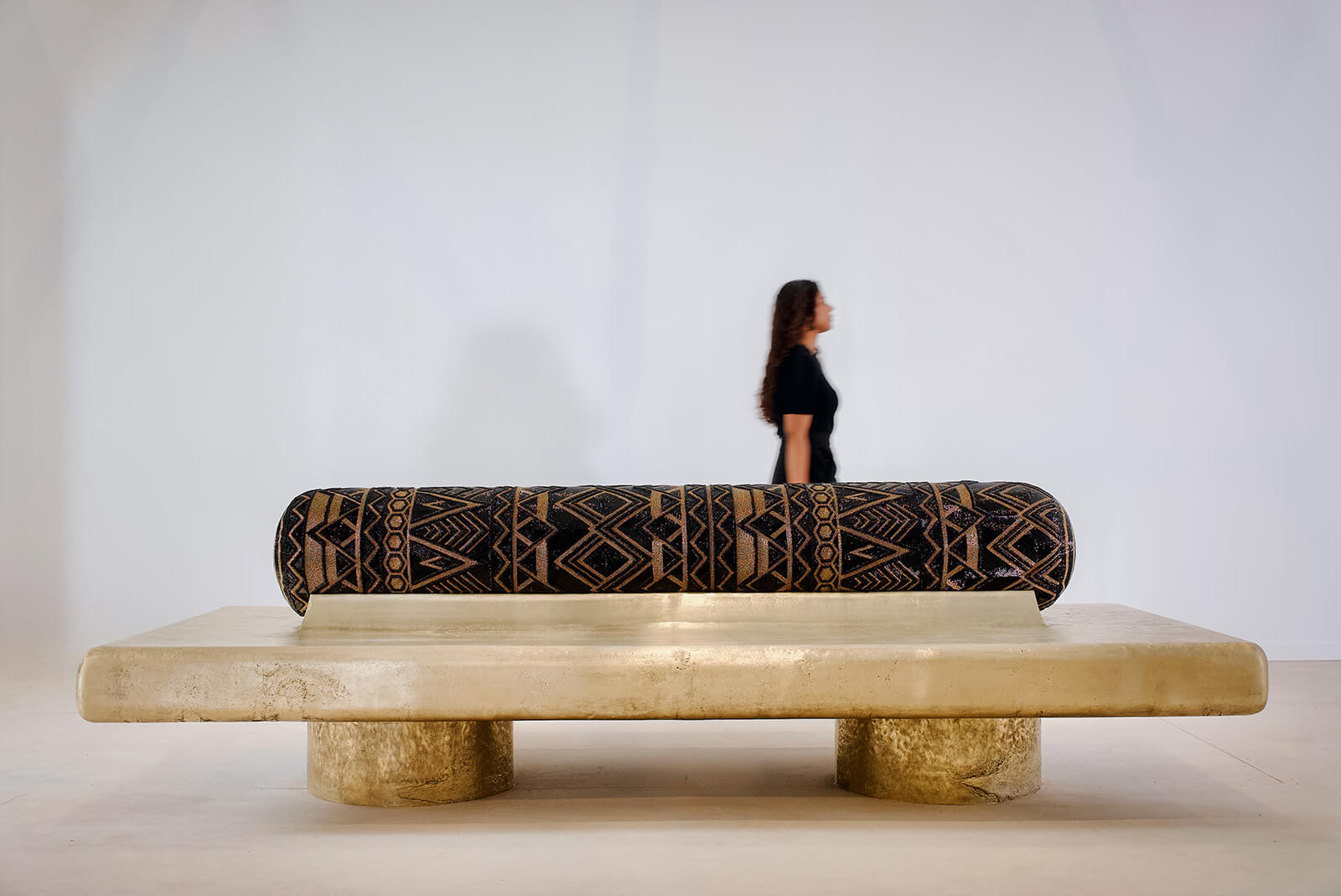
Placed alongside the material intensity of Goyal’s repoussé sheet-metal narratives, the ritual atmosphere of Shah’s incense-driven works and the embroidered surfaces of Shroff, Maniar’s work reinforced how collectible design in India is increasingly anchored in layered storytelling, in heritage, in beauty. His objects, much like the others on view, resist purely decorative readings; they invite interpretations. The other participating designers and creatives included Aspura (Jaipur), DeMuro Das (New Delhi / London / New York), Kohelika Kohli Karkhana (New Delhi), Morii Design (Gandhinagar), Nitush-Aroosh (New Delhi), SHED (Surat), Studio Renn (Mumbai) and Villa Swagatam x Æquō (Paris / Mumbai).
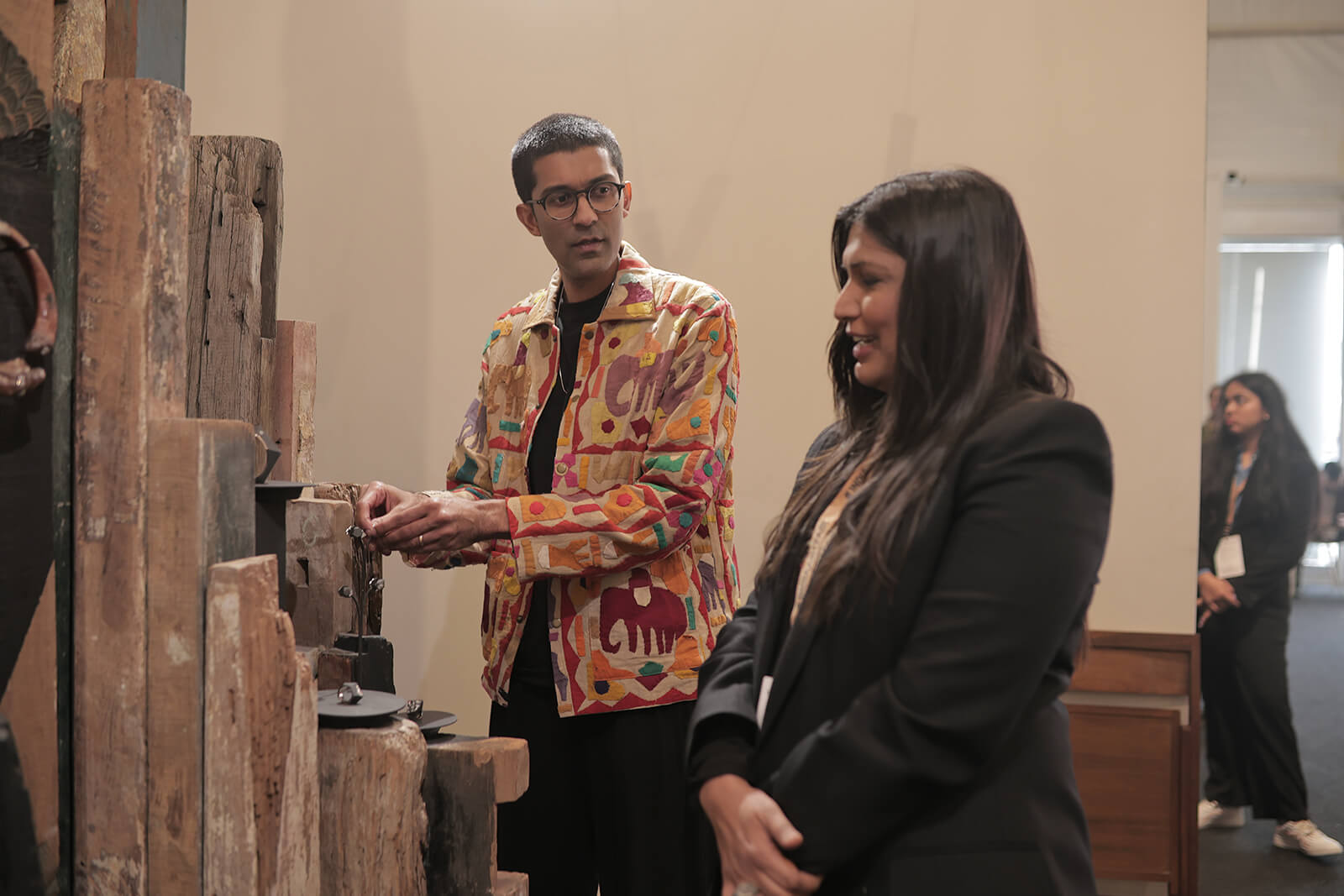
As India’s design market expands and coagulates, enthusiasm and excess share space. A dedicated Design section at India Art Fair provides a framework that may sharpen discernment, privileging material depth, research and technical rigour. Collectible design, poised between function, artefact and artwork, finds coherence here. The challenge ahead lies in sustaining experimentation with the same intensity as growth. For what is collectible design anyway if not thinking through doing?

by Pranjal Maheshwari Oct 23, 2026
Co-authored by Jareh Das, Chairman traces the British designer’s fixation on chairs as symbols of power and identity and as mediums of expression and community building.
by Mirra Lynn Oct 22, 2026
The curators behind Palestine Design Week 2026 reflect on its intent, considering how design holds memory, makes space for loss and imagines a future in Palestine.
by Chahna Tank Oct 22, 2026
STIR speaks with the Mumbai-based type designer about her practice, type walks and why she wants more people to have stronger opinions about Indian-script fonts.
by Jincy Iype Oct 15, 2026
STIR explores craft, material intelligence and people shaping Indian design through dialogues with Design Democracy’s co-founders and the curators of its special exhibitions.

make your fridays matter with a well-read weekend
Enter your details to sign in
Don’t have an account?
Sign upOr you can sign in with
a single account for all
STIR platforms
All your bookmarks will be available across all your devices.
Stay STIRred
Already have an account?
Sign inOr you can sign up with
Verification link sent to check your inbox or spam folder to complete sign up process
Tap on things that interests you.
Select the Conversation Category you would like to watch
Please enter your details and click submit.
Enter the 6-digit code sent at


What the Design section at India Art Fair signals for collectible design in India
by Jincy Iype | Published on : Feb 17, 2026


 Sign in with Google
 Sign in with email
What do you think?