Art10 mins. read
Unearthing India’s buried legacy of visual storytelling
by Srishti OjhaAug 14, 2026



by Srishti OjhaPublished on : Oct 01, 2026
The first thing I notice when speaking to Charbak Dipta about graphic novels and comic books is his earnest, fan-like love for them, both as art forms and as cornerstones of his childhood thinking, expression and inspiration. Dipta blends cultural references, an encyclopaedic knowledge of the comic form and a childlike imagination to create multi-layered, cross-generational works that are love letters to visual storytelling.
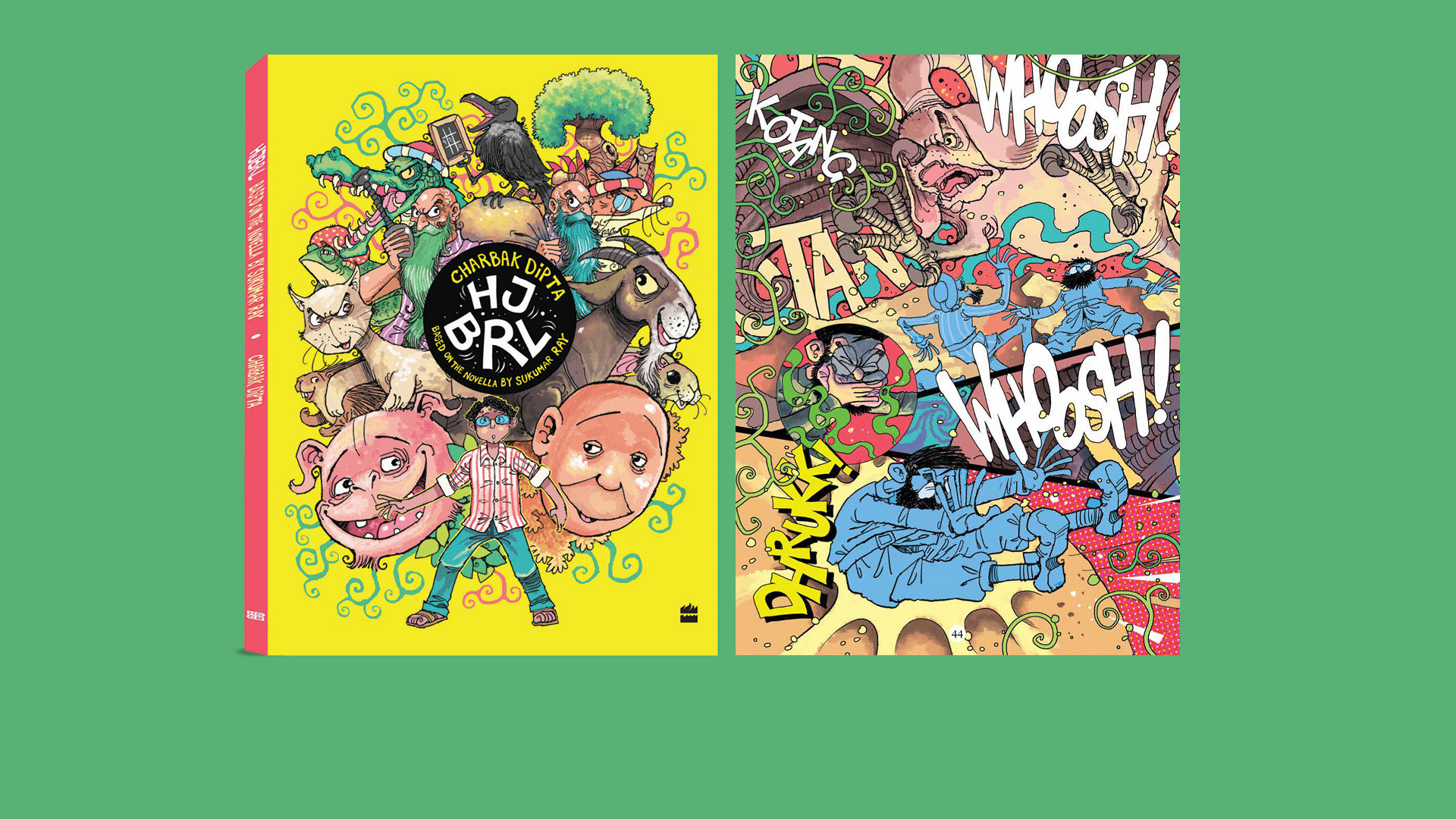
Most recently, Dipta released the English version of Heshoram Hoshiyaar with HarperCollins India. The comic book is an adaptation of the Bengali story, Heshoram Hoshiyarer Diary by master illustrator and satirist Sukumar Ray—a wacky adventure following a troupe of explorers as they document strange animals in a new land.
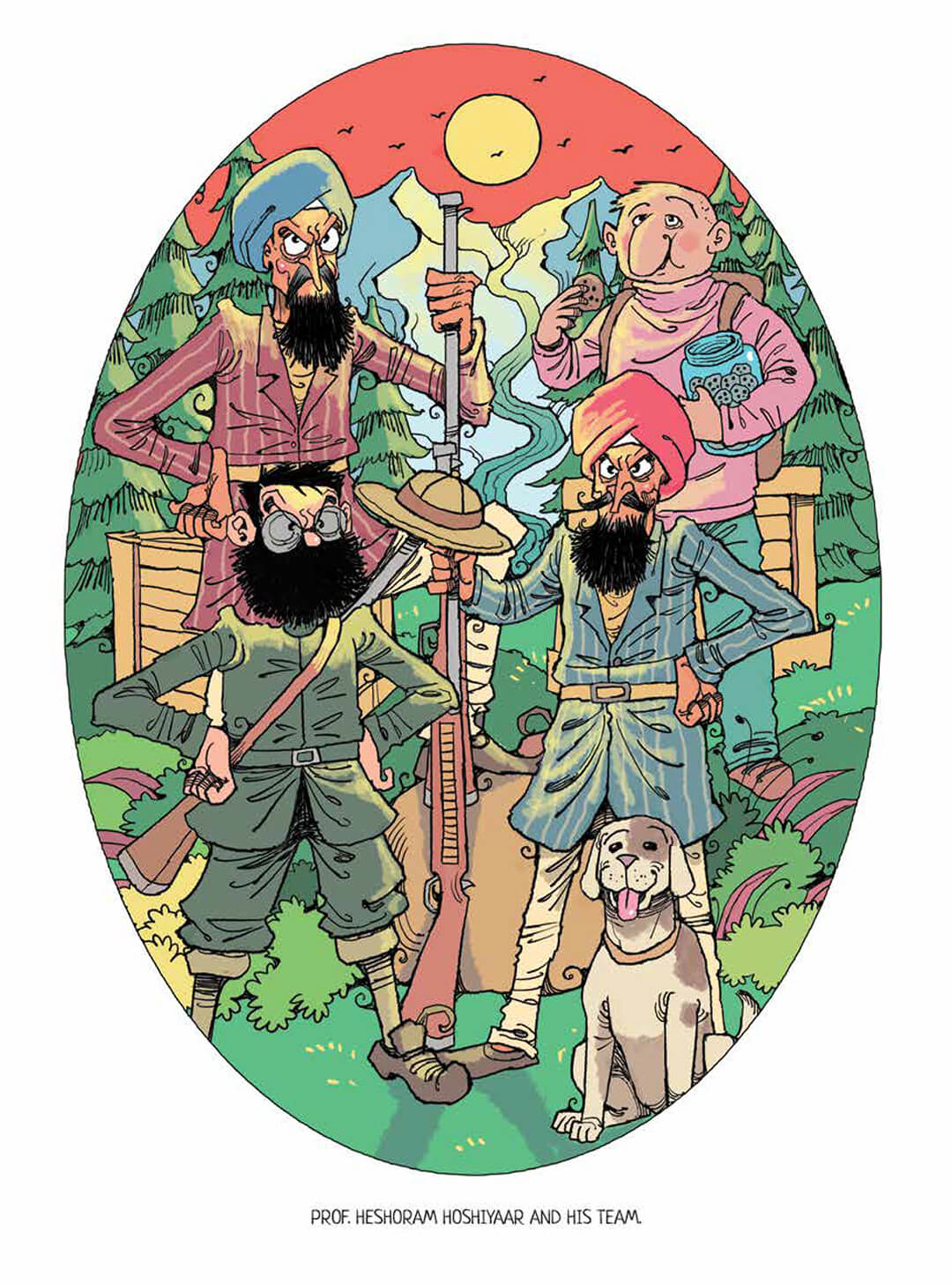
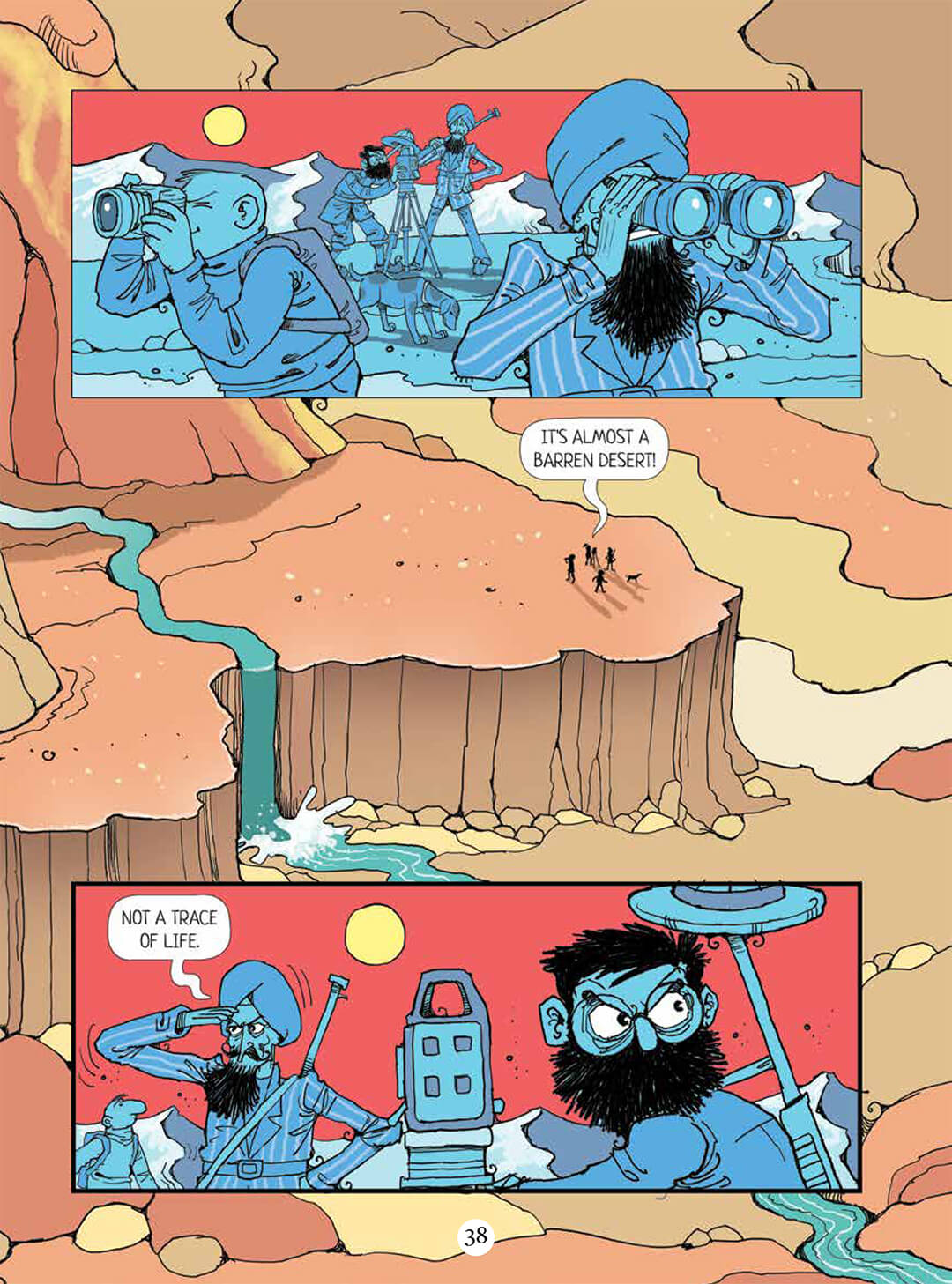
The world of Heshoram Hoshiyaar follows the story of a mad scientist Professor Hoshiyaar, his always-hungry nephew Chandrakhai and the gang tracking down and naming the bizarre creatures they encounter as they journey through unknown lands. Scrapes, scuffles and close calls abound as they follow animals like the Pookiesaurus and Hungrytherium. Dipta adapts Ray’s short story and its few illustrations using dynamic formats, bright colours and a cartoonish flair to appeal to the young, visual readers of today.
Dipta’s journey as an illustrator has been dynamic. He worked as a cartoonist, an art director, freelance illustrator and comic artist, bouncing around some of the biggest global names in publishing, including Penguin, HarperCollins, Oxford University Press and Macmillan, before shifting to making full-length graphic novels in 2020.
His debut graphic novel The World of Lublu (English edition) and Lublur Prithibi (Bengali edition) was nominated for the Best Digital Comic category in the 2026 Will Eisner Comic Industry Awards, widely considered the ‘Oscars of comics’, as well as for the Digital Book of the Year at the prestigious Harvey Awards, marking a historic first for a work by a South Asian artist originating in a regional language.
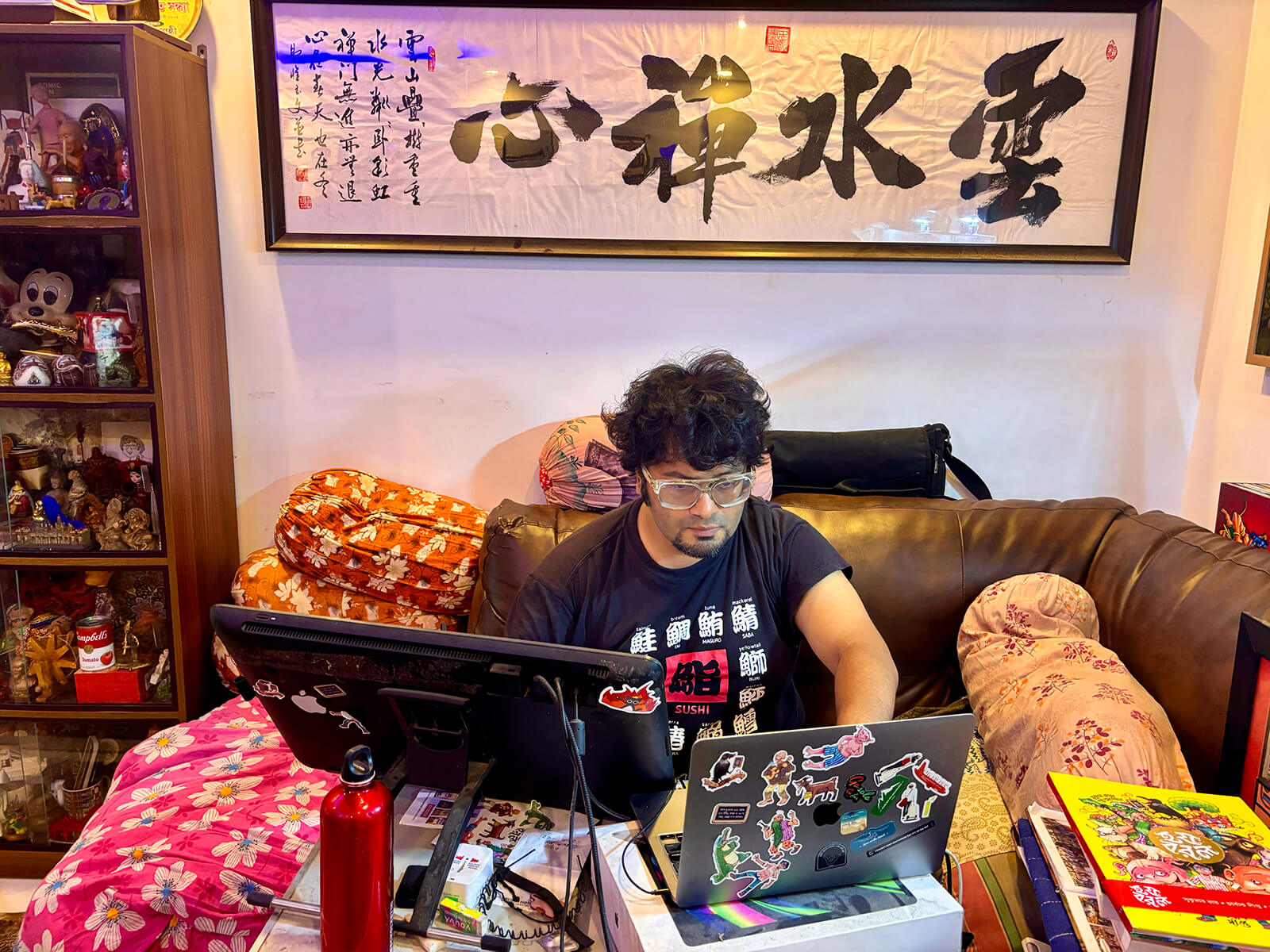
Currently, Dipta is pushing the boundaries of visual storytelling with experiments in graphic novels like Heshoram Hoshiyaar and Will Eisner’s A Contract with God, while making strides in motion comics adapting the Ramayana on his YouTube channel, 360° comics on the World of Lublu website and graphic poetry projects. STIR had the opportunity to interview the artist about his practice, evolution and new work, Heshoram Hoshiyaar.
Edited excerpts of the conversation are below:
Srishti Ojha: Can you tell me about your decision to adapt Sukumar Ray’s Heshoram Hoshiyaar into a comic book medium?
Charbak Dipta: Bengali kids like me have grown up reading this story. The story is 100 years old now, so I wanted to bring it back and present it in a new and colourful way for today’s kids. It’s only four or five pages long, but in that short text there are so many visual elements, including some illustrations and sketches from Ray. It was really fun to turn these few pages into a complete graphic novel.
Srishti: So much of your work—from Heshoram Hoshiyaar to Lublur Prithibi references visual art and literary works. What draws you to these references?
Charbak: I like to reference famous paintings and works in my comics, such as Edward Hopper’s Nighthawks (1942) in The World of Lublu or the movie Nayak (1966) by Satyajit Ray. This comic has a lot of Easter egg references scattered throughout as well.
I like this practice because kids can enjoy seeing the colourful illustrations and stories, but underneath there is a lot of philosophical thought and social and political references. When they grow up, they can understand the undercurrents and the subtext. I try to do this so that adults can also be attracted to the work, and I can cater to both generations with a single book. The World of Lublu and Heshoram Hoshiyaar are cross-generational books.
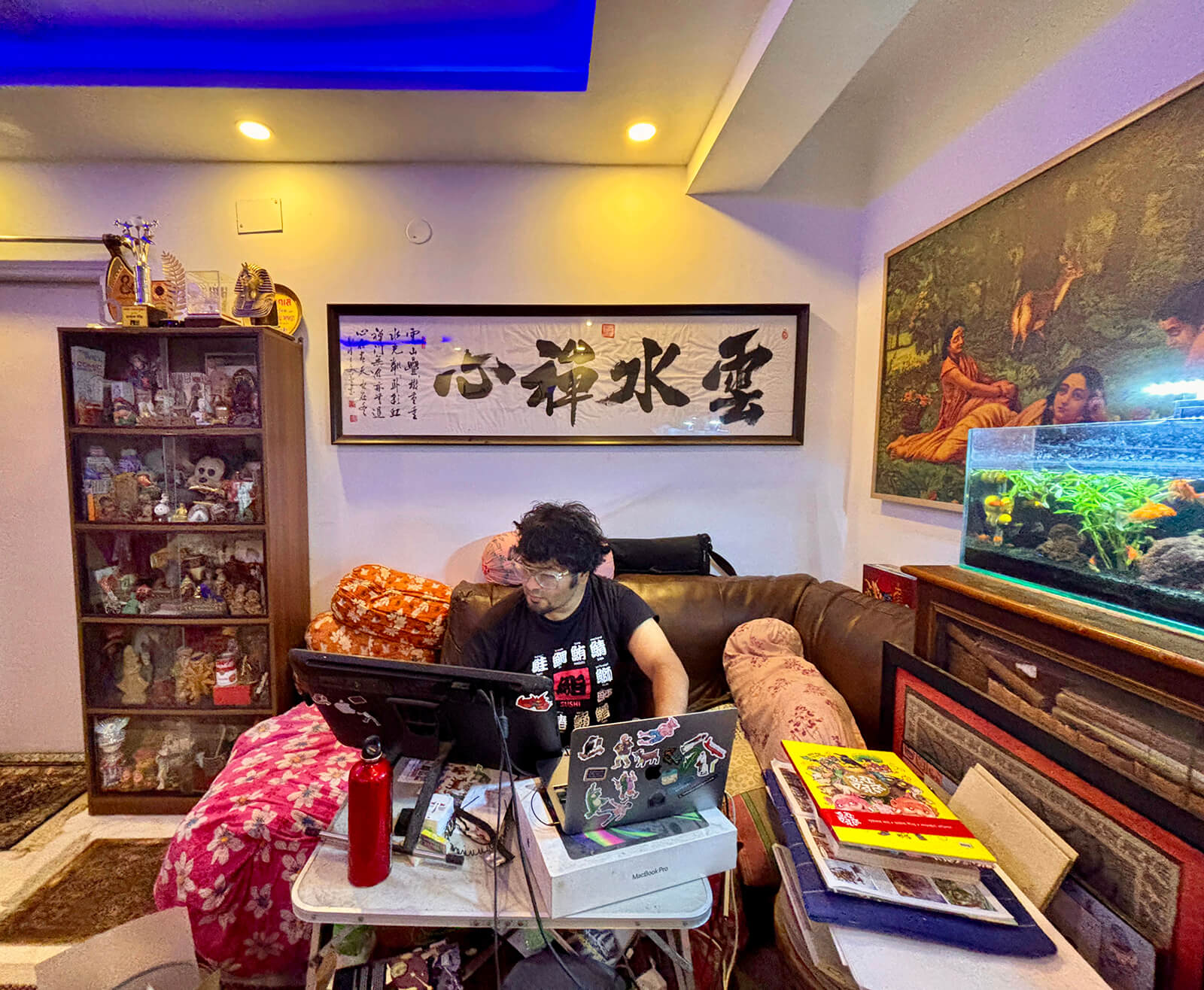
Srishti: How did you get into visual storytelling, and how has your process changed over time, culminating in your new comic, Heshoram Hoshiyaar?
Charbak: When I started, my style was completely different. I tried to mimic the styles of different Sunday comics like Blondie, Hägar the Horrible, Calvin and Hobbes and Asterix. I followed the Franco-Belgian school of comics. There are two schools—Marcinelle (the dynamic and cartoonish style of Asterix) and Ligne Claire (the strong lines and realistic backgrounds of Tintin).
Afterwards, I began taking inspiration from American comics, and recently, I have been following manga comics such as those by Katsuhiro Otomo(who wrote Akira from 1982 to 1990) and Osamu Tezuka (widely considered the ‘Father of Manga’ for series like Astro Boy (1952 – 68) and Buddha (1872 – 83).
Of course, I also reference and take inspiration from Indian comics like Amar Chitra Katha and from other Indian artists like Abanindranath Tagore and Nandalal Bose from the Bengal School and Mario Miranda.
I try to learn new things every day. After five years, my style will be completely different—the main aspects would be the same, but the technicality and outlook will be completely different.
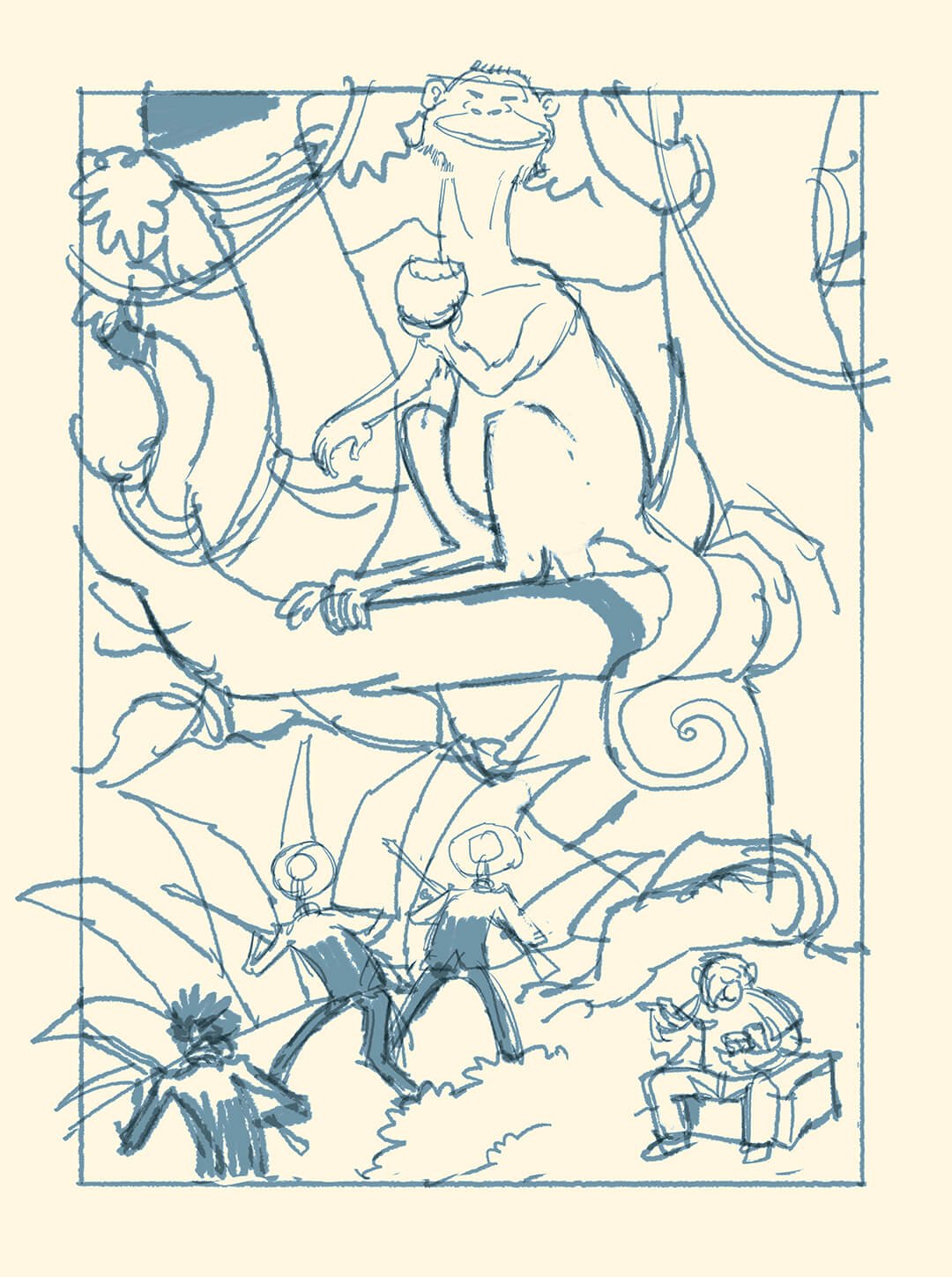
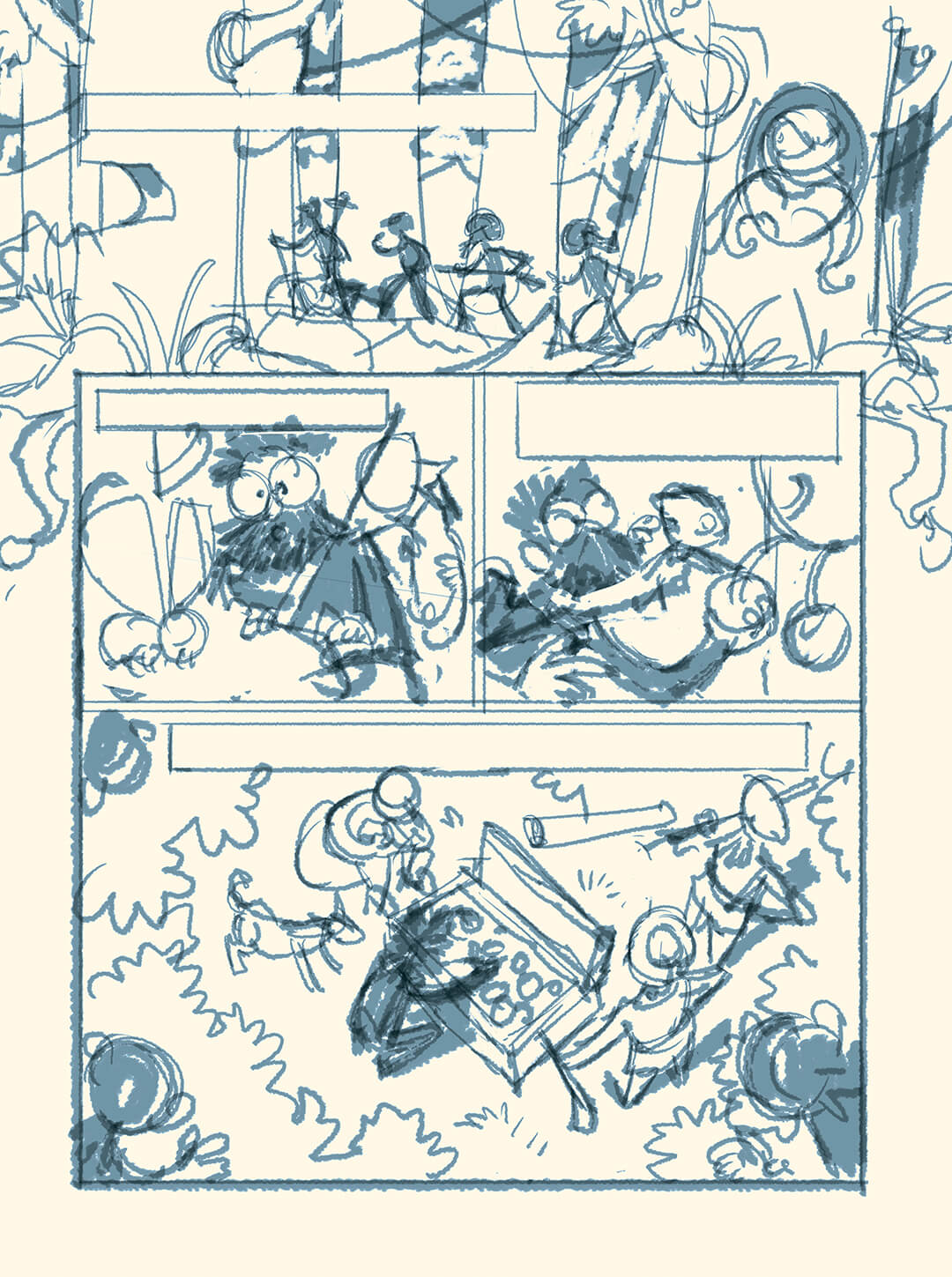
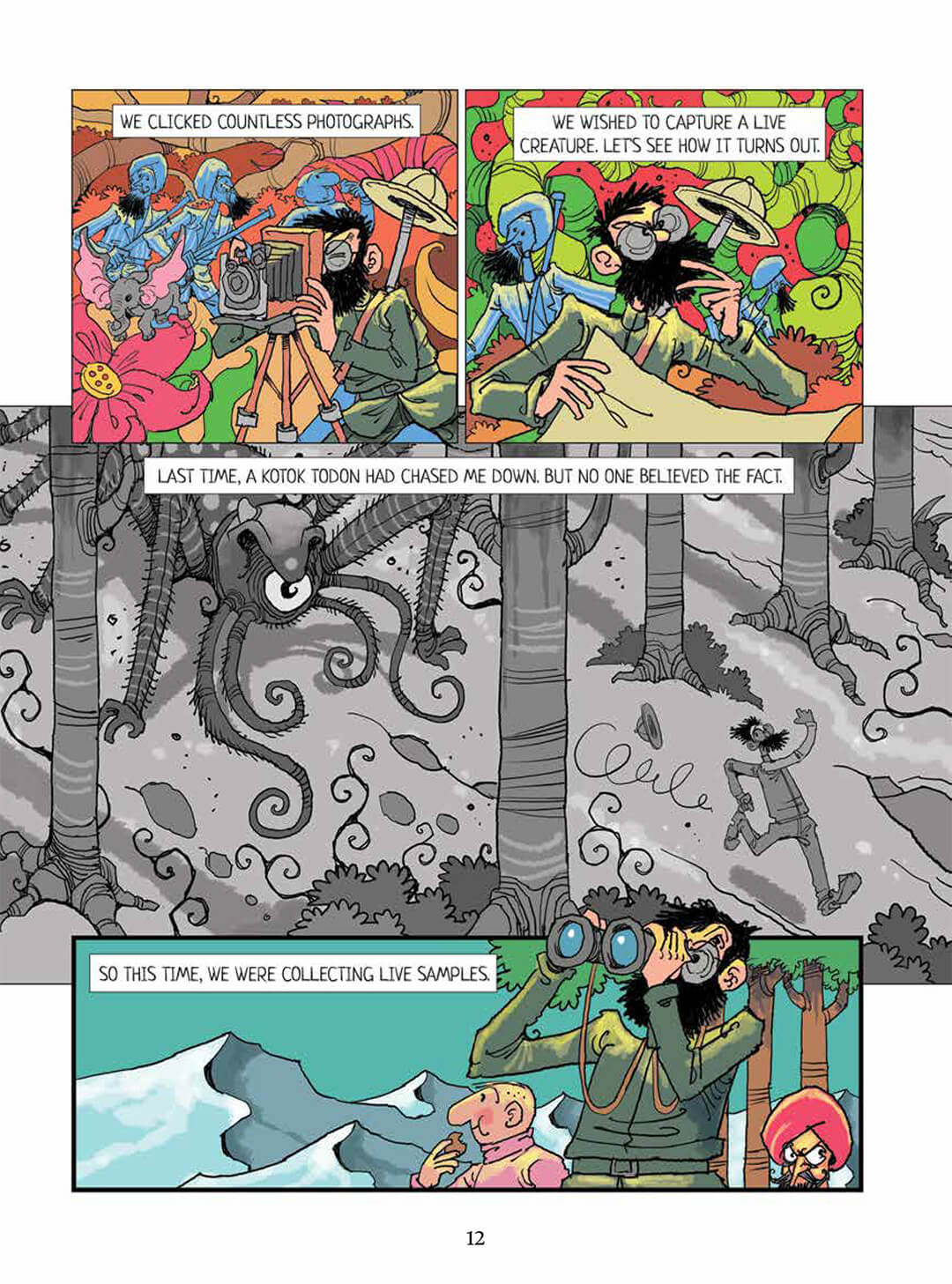
Srishti: Could you talk about the formal choices you make in Heshoram Hoshiyaar, such as moving between full-page spreads, boxed panels and shifting between colour tones? How do you approach these decisions across different projects?
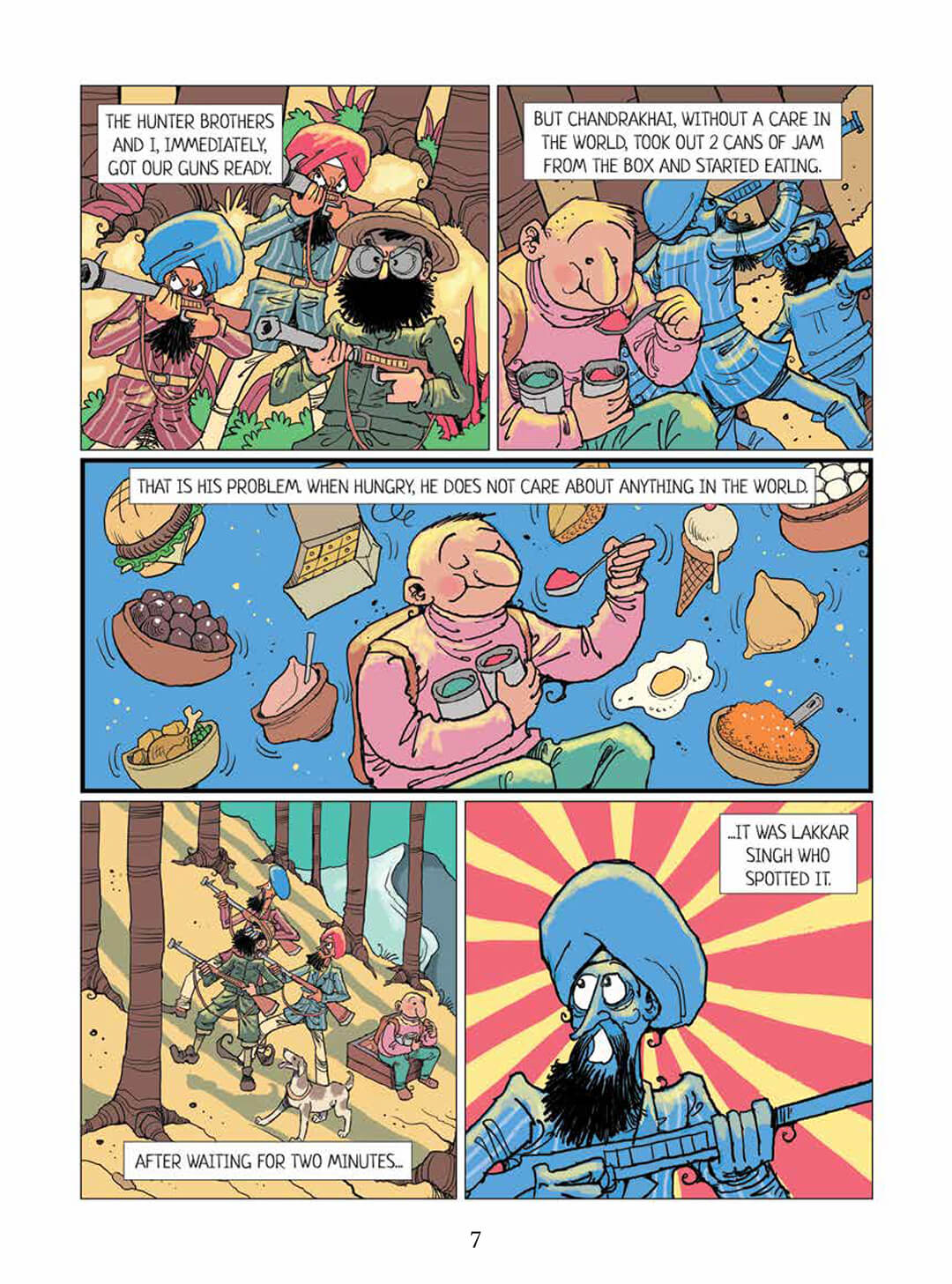
Charbak: It depends on the story. Heshoram is very goofy, adventurous and funny, so I want my illustrations and layout to match the story. I make the characters goofy, and colour plays a major role. For example, there’s a flashback where Heshoram is being chased—since it’s a flashback, I put it in black and white. In the desert scene, the blue and grey colours portray the mood in a different way. For the chaotic panels, I experiment with the panelling—breaking the panel, fragmenting it, trying different kinds of layout and lettering and SFX to capture the chaos in the illustration.
I enjoy the process most when I’m creating my own stories; it’s a very liberating process, and it’s all in my control, like in Lublur Prithibi. When adapting others’ stories, I feel a bit restrained, but it’s a relatively easier process because I follow the author’s preexisting text. But with the Ramayana, since it’s an epic and a very complex story, I don’t feel so restrained. I try to portray epic prose and noble characters, which is completely different from the goofiness of Heshoram Hoshiyaar, the nonsense verse of HJBRL and the philosophical tone of Lublur Prithibi. As I said, it all depends on the story, mood and situation.
Srishti: Often, adaptations for TV or film in animation or live action are considered the ‘next step’ for comic books and graphic novels. Now that you are experimenting with motion comics and 360° comics, would you be open to such adaptations?
Charbak: I don’t consider it a next step because comics themselves are a powerful medium. They don’t need support from other industries like animation or film. There have been offers which came to me for filming Lublu, etc., but they did not progress much. If someone approaches me, I’ll discuss it, but I’m not very keen on trying to get into film or animation.
Many people have asked me why I don’t try animation, VFX, gaming or these historic, constructed industries. There is no comic industry as such in India—it’s very fragmented and like a cottage industry.
I have stuck to this medium for over 10 years out of pure love for it. It’s not a stepping stone for me; it’s not the higher level; it is all the same.
Srishti: In India especially, comics don’t enjoy the same support, funding or popularity as art forms like film and animation. What are your hopes for the Indian comic industry as it establishes itself domestically and nationally over the next few years?
Charbak: I think Indian comics should be more original rather than imitating existing Western graphic novels and comics. For example, Shakti Man and the Bengali comic Batul the Great, two of the most prominent Indian comics, are imitations of Superman and Desperate Dan (a British comic book), respectively. I hope Indian creators can explore more original themes and characters that suit Indian themes and Indian settings in the way Japan and Korea do with manga and anime, allowing them to export their culture to the world. We need more original comics to show the world what we have.
I think the support of the government, through funding and investment or a new national award for comics, can revolutionise the Indian comics landscape by encouraging Indian creators. Support from the media is also very important to grow the industry.
Publishers also need to take more risks. I went to English publishers working in India with The World of Lublu, and all of them rejected it. Then it got nominated for the Eisner, and now the conversations with English publishers are finalised. They should publish different, out-of-the-box subjects instead of the same old stories like biographies and adaptations of old classics. That’s how the industry can grow.
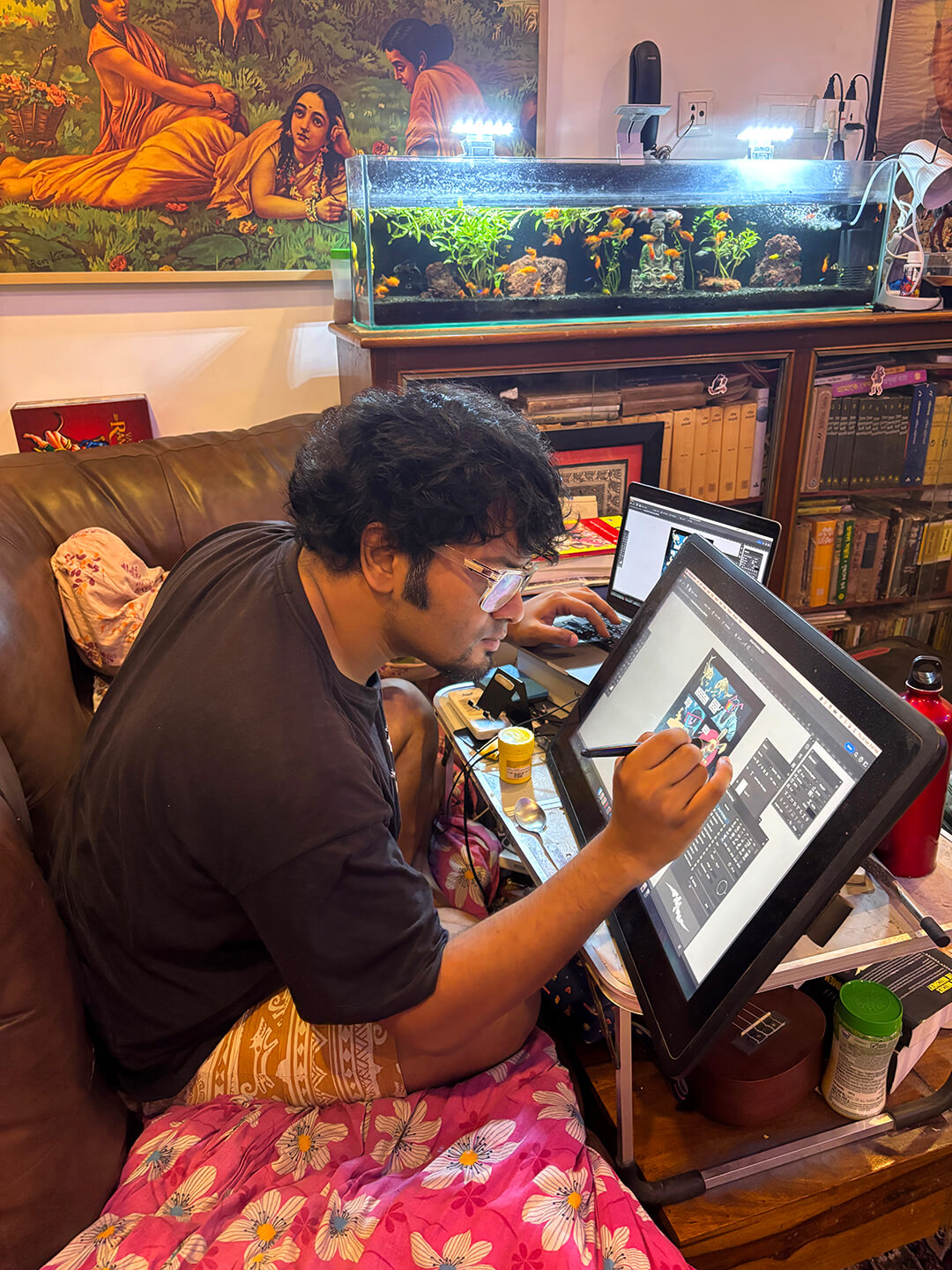
Srishti: What’s NEXT for you?
Charbak: I am currently working on World of Lublu 2. I dream of making it a consistent series with maybe 20 books. I also want to revive my first graphic novel, Indian Aliens, which I had self-published and now want to present to the market commercially. After the Ramayana, I also want to portray the Mahabharata.
by Srishti Ojha Oct 21, 2026
Increasingly, artists, filmmakers and activists are turning to VR to create more personal, tangible accounts of the climate emergency and its impact on vulnerable communities.
by Mirra Lynn Oct 20, 2026
The Indian artist paints the old wadas of central Pune, capturing the traces of everyday life that cling to these structures, battered by time but unbowed.
by Anmol Ahuja Oct 15, 2026
How do heaps of souvenirs and relics with racist Aboriginal motifs and features become art? MCA Sydney’s winter showcase—the artist’s largest to date—beckons a possibility.
by Srishti Ojha Oct 14, 2026
The first Dutch publication on the Turkish artist, the eponymous book centres on Refik Anadol: Latent City, his living data sculpture of Bruges, exhibited at BRUSK gallery.

make your fridays matter with a well-read weekend
Enter your details to sign in
Don’t have an account?
Sign upOr you can sign in with
a single account for all
STIR platforms
All your bookmarks will be available across all your devices.
Stay STIRred
Already have an account?
Sign inOr you can sign up with
Verification link sent to check your inbox or spam folder to complete sign up process
Tap on things that interests you.
Select the Conversation Category you would like to watch
Please enter your details and click submit.
Enter the 6-digit code sent at


Heshoram Hoshiyaar is a chaotic, goofy take on a childhood Bengali classic
by Srishti Ojha | Published on : Oct 01, 2026


 Sign in with Google
 Sign in with email
What do you think?