Architecture07 mins. read
New Currents: probing collaborative oceanic futures with Nieuwe Instituut’s symposium
by Mrinmayee BhootOct 17, 2026



by Mrinmayee BhootPublished on : Nov 19, 2026
“The Indian Ocean [is a] cultural space overarched by several chronotopes, where temporalities and territorialities are constructed and deconstructed” – 'Moorings', Françoise Vergès
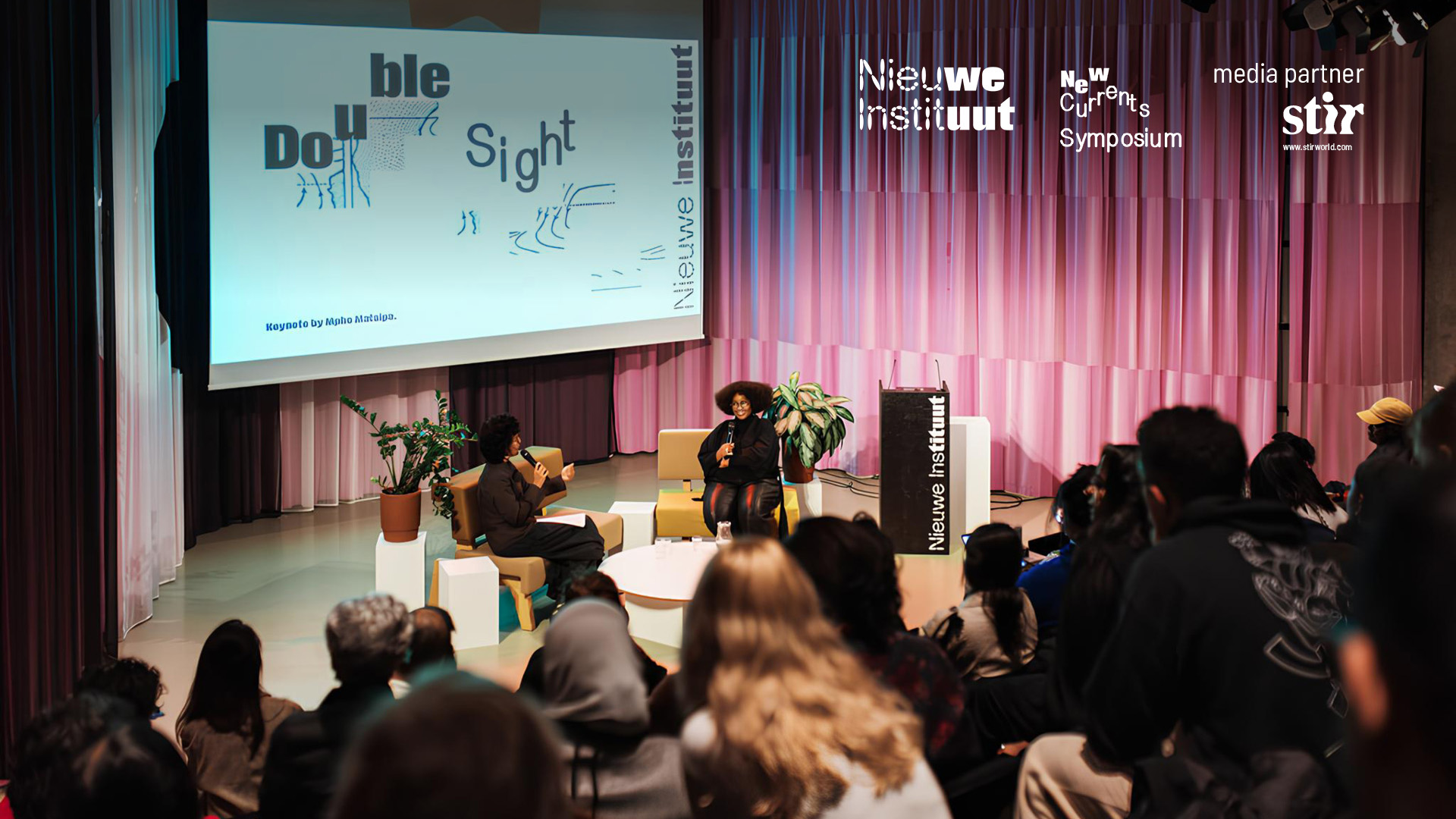
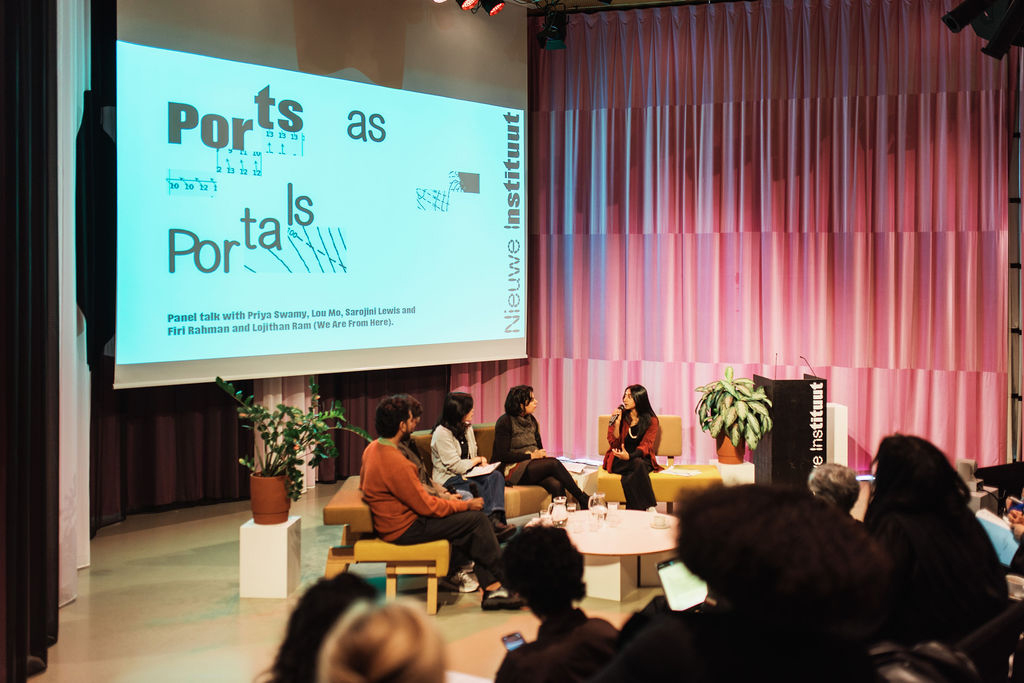
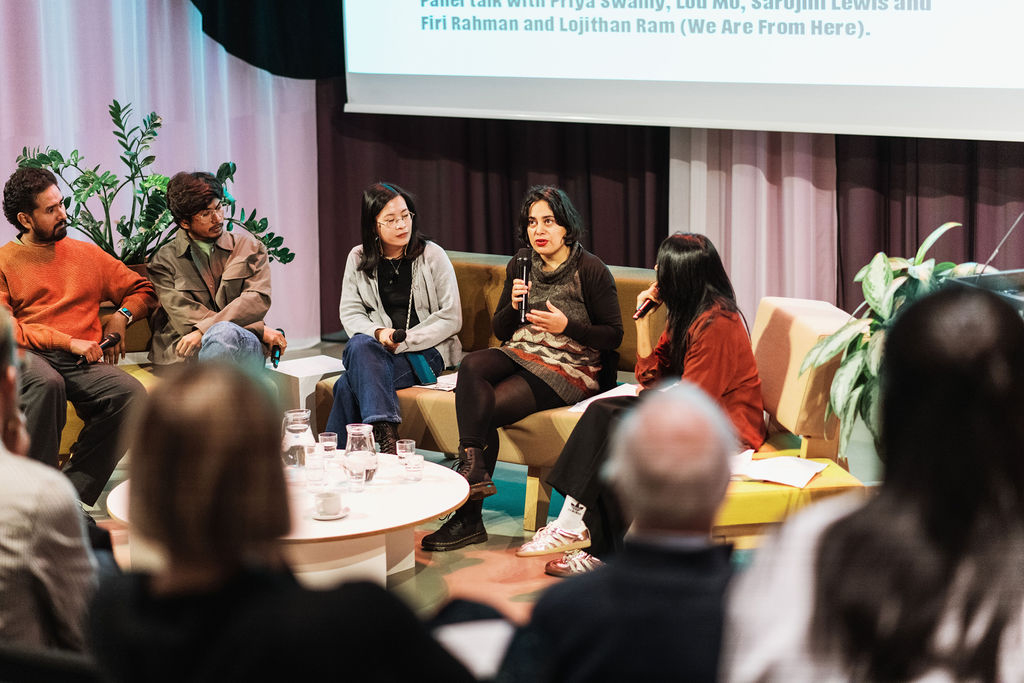
The idea of the ocean as a dynamic and even cultural entity—as opposed to purely natural or static—anchors Nieuwe Instituut’s research programme, New Currents. Under the larger rubric of the ocean as an agent in shaping sociopolitical realities and vessels from which to imagine the future, on October 29, 2026, the Rotterdam-based institute organised a symposium where panellists ranging from activists, historians, researchers, designers and artists presented community-focused work. Aimed at expanding conventional—or more appropriately, Eurocentric—histories, the research work presented during the symposium also hoped to actively resist binaries (such as between the Occident and the Orient) in its processes of gathering.
As Setareh Noorani, architect, researcher and curator leading the project at Nieuwe Instituut, underscored in the opening address, the aim of the symposium was to look beyond difference at the pluralities that sustain cultures and bring to the fore the connections that still persist in landscapes buoyed by their maritime pasts. The hope is to return to ways of being that are in harmony with the natural landscape, that are inclusive and plural, that are fostered in mutualities and not differences. “How could the residues of solidarity be amplified, direly needed in these times? How can returning to water, from river to the sea to the ocean, restitute the debt of displacement, whether in the form of rapid urban development, asymmetric investment in port and coastal infrastructure, or the wanton erasure of indigenous tradition and right to land?”, Noorani emphasised.
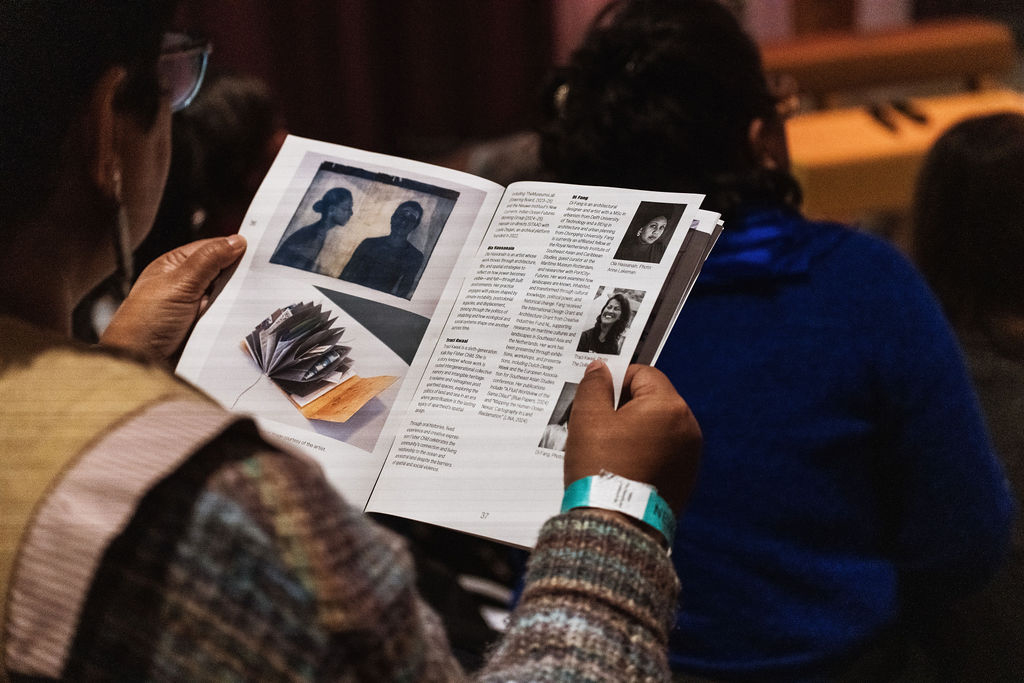
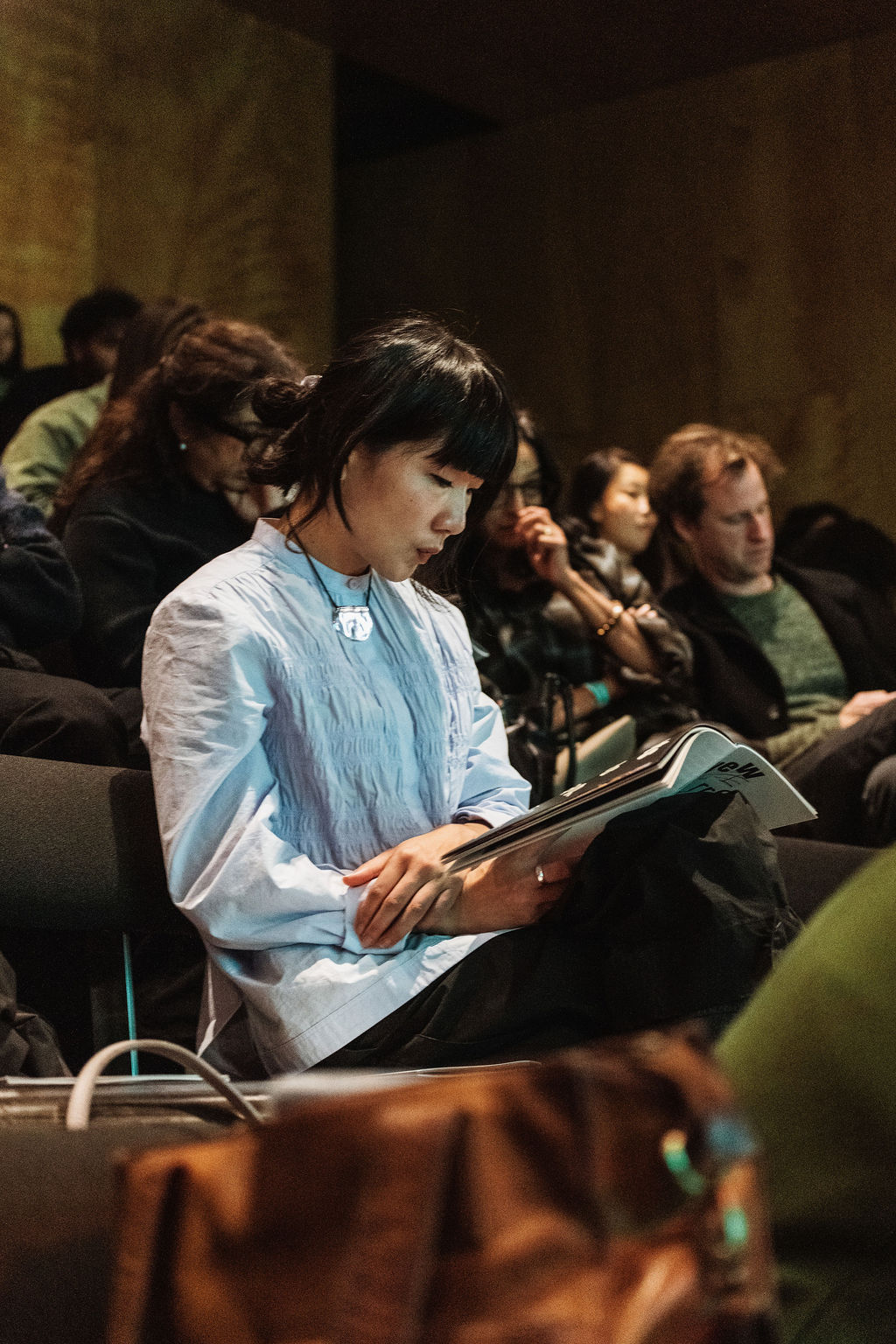
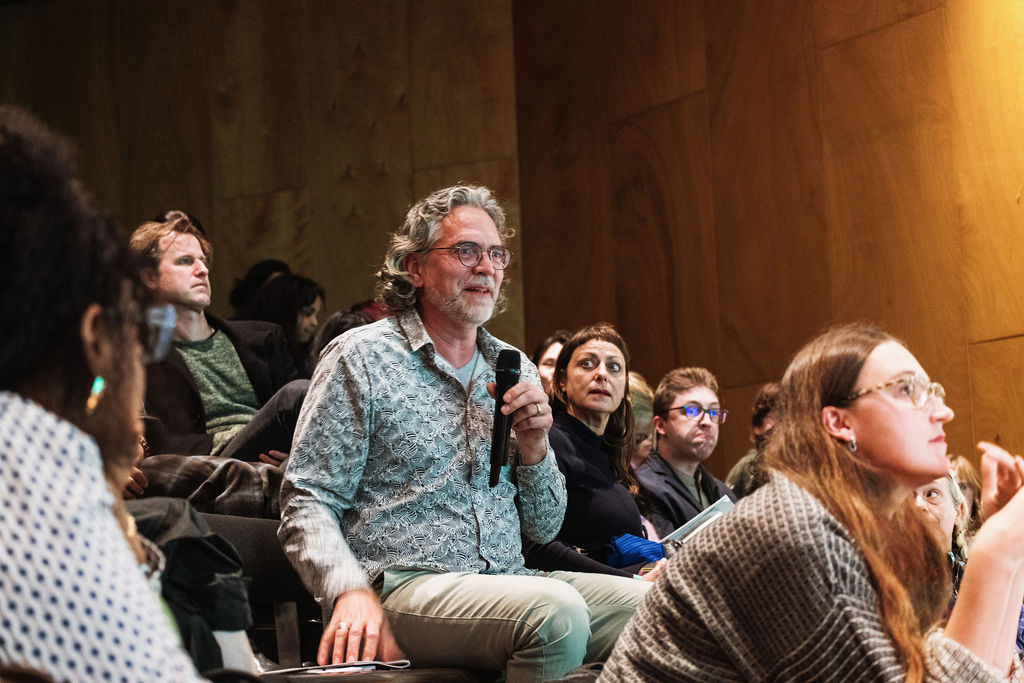
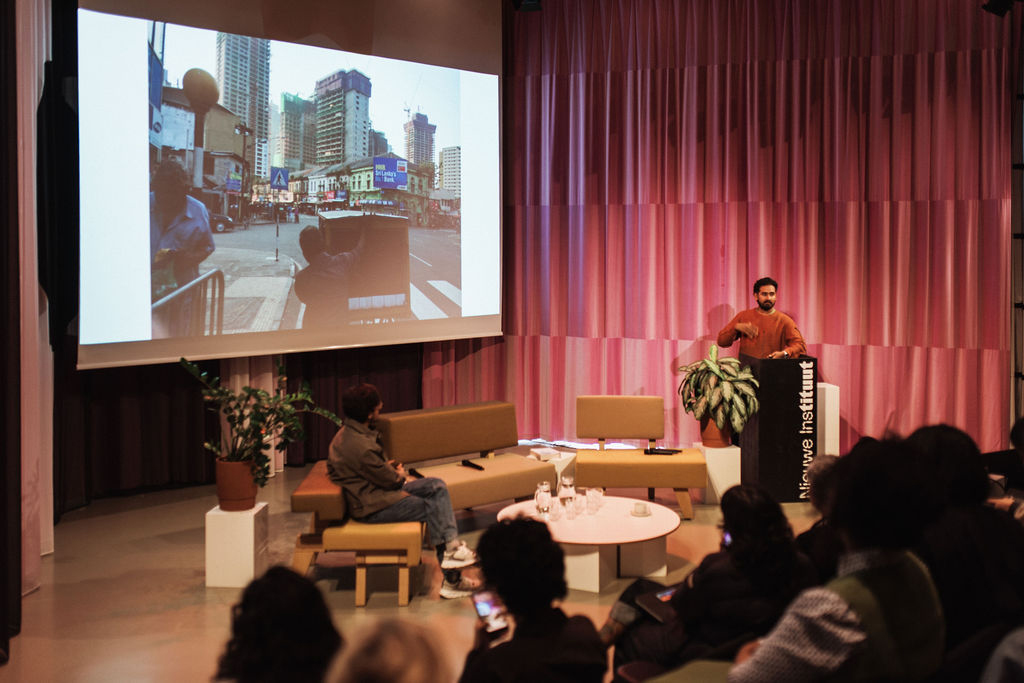
Like the multitudinous seas, each panellist in the day-long event presented work that was cross-disciplinary in nature. Projects such as Firi Rahman’s work documentation of Slave Island in Colombo, addressing gentrification and community displacement; Traci Kwaii’s exploration of the stories of displaced Kalk Bay communities; and Mumbai-based organisation urbz’s educational and cultural programmes focused on the Koli community highlighted approaches that bring people together, documenting and preserving their memories and knowledge as viable archives for understanding the social fabric of a place.
On the other hand, Sarojini Lewis’ archival project Waves of Ternate, which delves into family histories and archives to critique colonial memory; Di Fang’s research into the nomadic seafaring communities in Malaysia; and MADEYOULOOK’s presentation drawing on the notion of landedness and the role of Indigenous languages in addressing climate calamities, focused on more ephemeral matter: on archives, bodily experiences and the shifting terrains of the words we use. Vitally, all the participants harnessed the power of critical imaginaries in addressing absence—of resources, bodies and of voices.
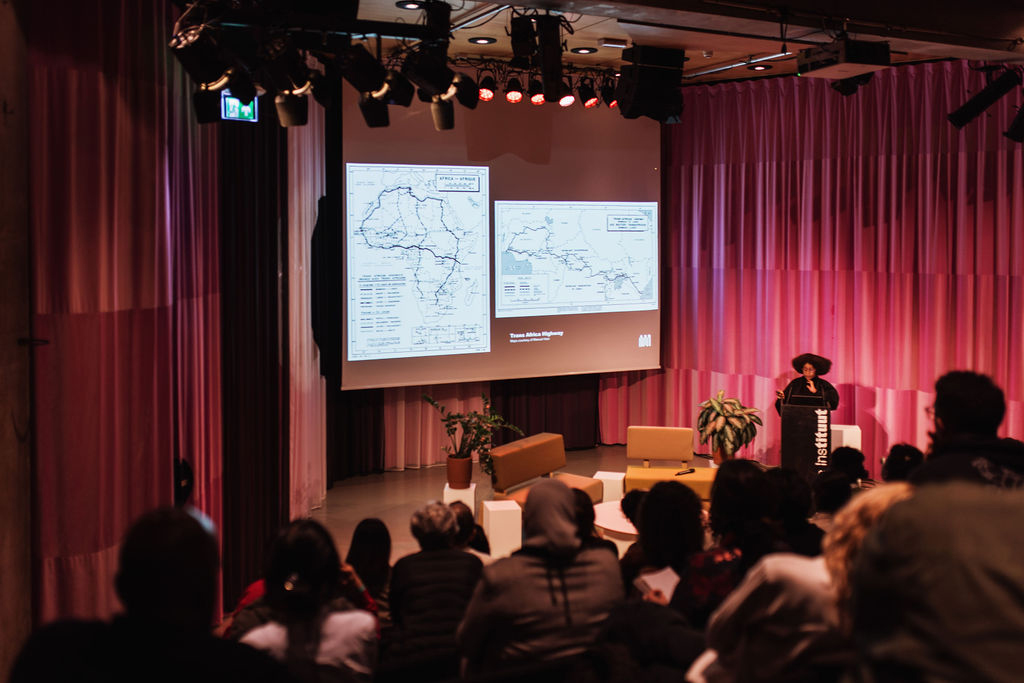
The philosophical spine of the day’s programme—stories that conspired to unfix spatialities and temporalities in thinking of the coastal present—was keenly felt as I listened to the speakers on a screen sitting in New Delhi, nowhere near the ocean. The ability to hold contradictory futures, double truths and opposing views as both true was also the crux of the keynote address by Mpho Matsipa, Double Sight. Drawing on W.E.B. Du Bois’ metaphor of the veil, Mphiso foregrounded her discussion with the internal conflict that defines the colonised mindset: “The sensation of looking at oneself through the eyes of a dominant, prejudiced society and the struggle of holding two identities at once.” Questioning this relation between coloniser and colonised, Mphiso asked instead what a South-South relationship might yield. Through her presentation focused on the Atlantic slave trade and the histories of extraction in Africa, Mphiso emphasised the role of critical fabulation in thinking histories that undo dominant narratives.
Her invocation of double sight also makes one wonder if even the most lenient imagination could proffer a balance between the world-building narratives of the ‘master’ and the ‘slave’. When what is lost is not knowable, can sifting through the traces suffice? And what do these traces tell us of the future? In her talk, Mphiso pointed to epistemologies that deviate from European ideals, stating, “Thinking with an African Anthropocene reminds us of who pays the price for humanity's planetary footprints so as to better grasp the kinds of entanglements and futures people face in our treacherous times.” For years, those in the global majority have paid that toll for the relentless progress of the West; our lands plundered and ways of being negated. At the same time, so much of our presents are defined by that legacy of colonialism—take, for instance, the symposium and this very piece, articulated in English, a language that can never fully capture the breadth of interrelationships shared between cultures, and between humans and more than humans.
In many ways, The Great British Rift at Venice Architecture Biennale 2025 similarly set forth to imagine future pasts through the traces of slow violence on landscapes. Here, training the lens on the ocean not only affords a more fluid understanding of cultural identities but offers a larger geography and more fruitful networks to scrutinise. Watery perspectives also bring into question the perspective of an adherence to either/or, both/and and yet/also narratives that the symposium hoped to encourage. How do we determine where that line is drawn, where someone acts, and the other acknowledges? Absences here might become spaces for imagination where that distinction of what we know and what must be imagined is crucial.
In the second session of the day, Oceanic Resonances, Kwaai, a sixth-generation Kalk Bay Fisher Child, ocean historian, social and ecological activist, spoke about the violence witnessed by and etched into her native Fisheries Beach. Invoking the sea as both fearsome and reverential, her talk centred the rich indigenous history of the Kalk Bay community and the marginalisation of their fishing and seafaring cultures. “I gathered brown and green shards of glass…they were a memory that our people were here. Broken glass washed between land and sea, then polished until it glistened like gems. I hold this image not because broken glass becomes a simple symbol of repair but because the sea has worked on what was discarded without erasing where it came from,” Kwaai poetically conveyed, noting the objective of the Fisher Child project to create a practice of relations without extracting from the coast that gives it meaning. This sentiment, of how infrastructure and ceaseless development sever us from the land, was echoed by Ola Hassanin, who urged the audience to examine environments that perpetuate violence as a form of resistance.
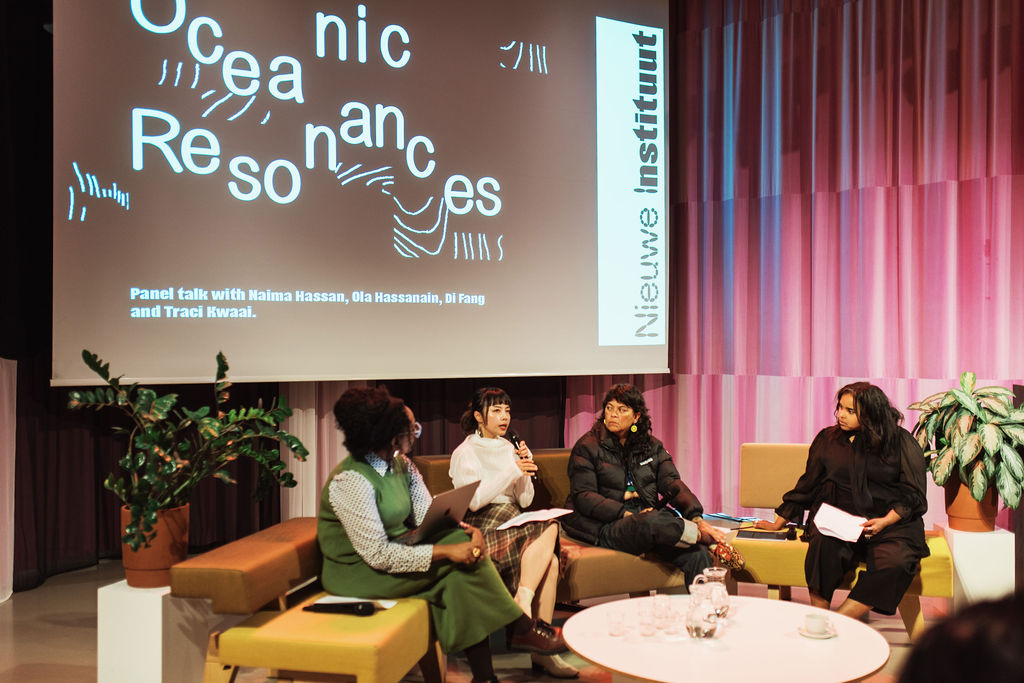
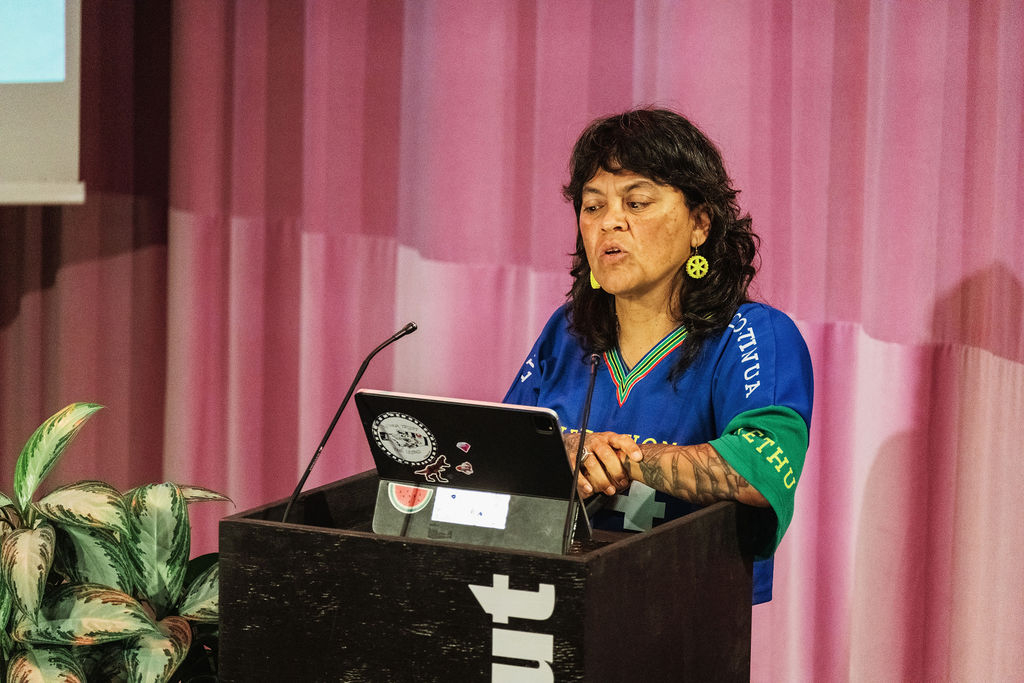
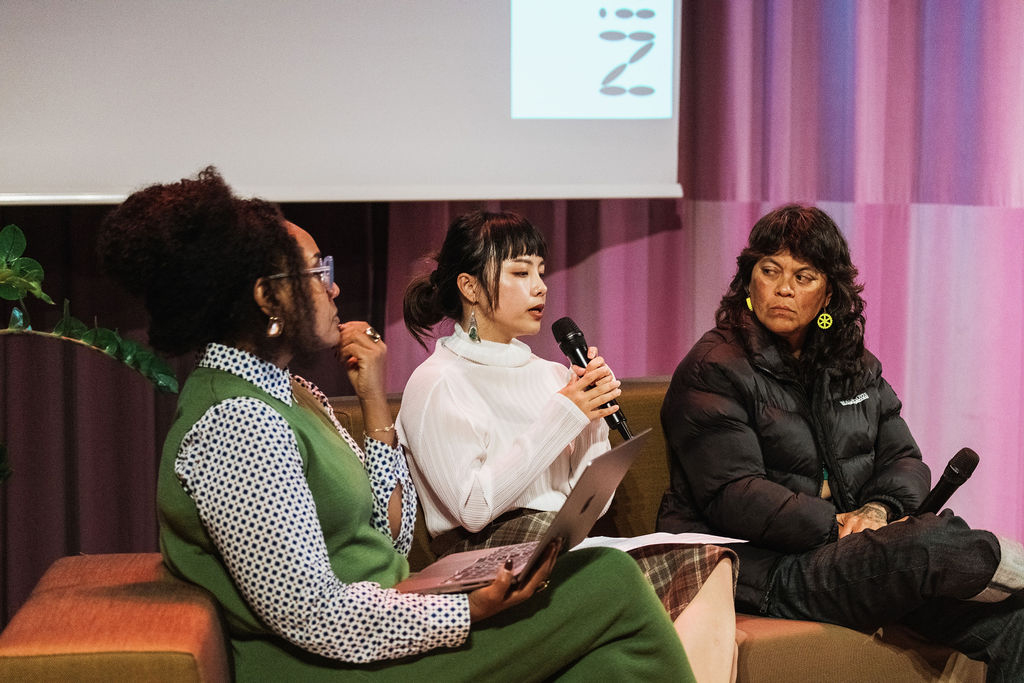
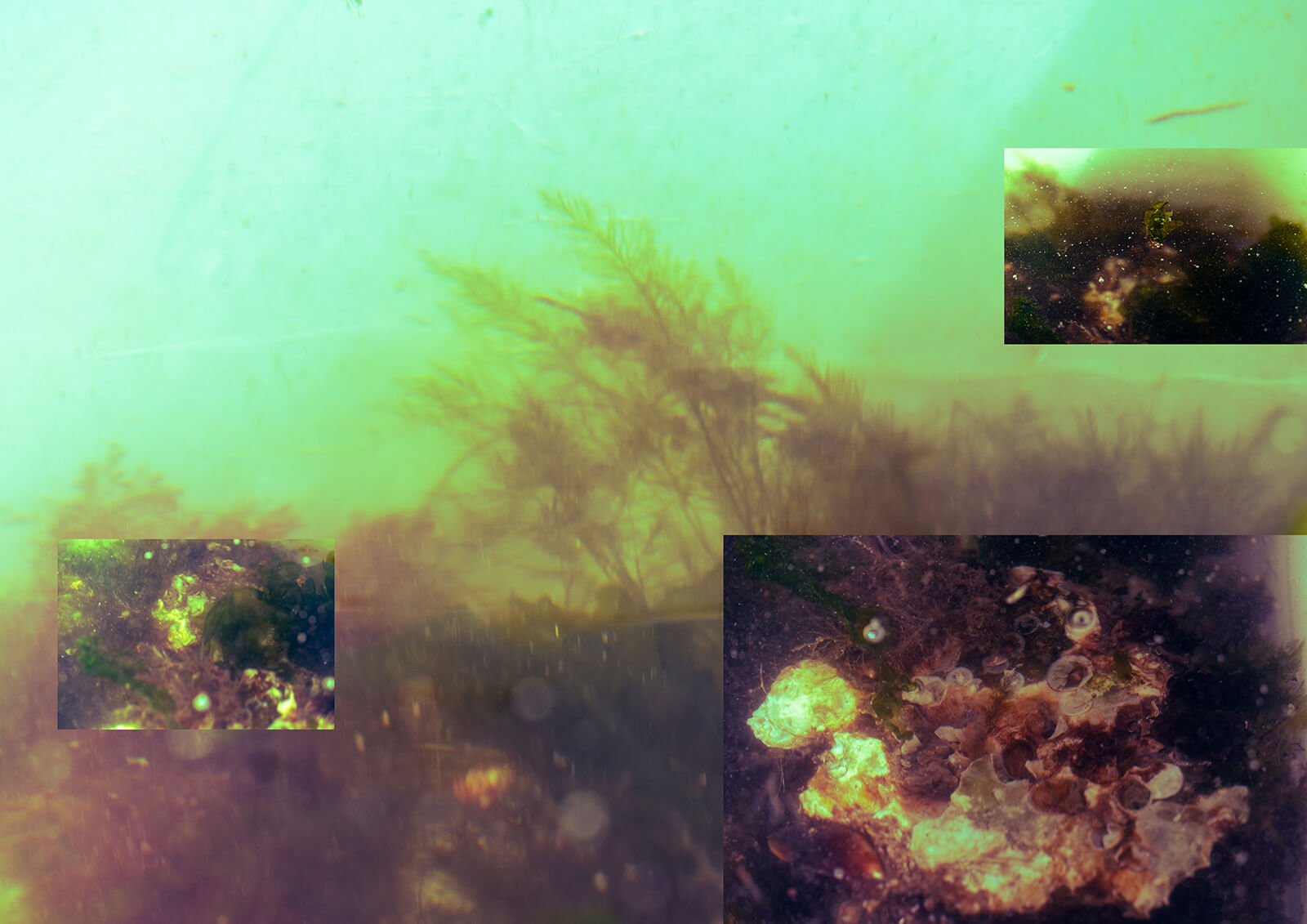
In her work, Hassanin, an architect and artist, considers the ways in which infrastructure shapes socio-political shifts in Sudan through her work, with a recent project, The Watcher (part of her talk), focusing on the Gezira scheme. The Watcher meant to emphasise the paradoxes induced by modernity through the construction of such a scheme. The figure becomes emblematic of how we could think of regenerative practices, which, unlike in linear narratives, prefigure the idea of repair and regeneration. Particularly in Hasannin and Kwaai’s presentation, there is an implicit/tangible search for how history is constructed, who constructs it and what spaces and objects hold it.
In both talks, the relevance of listening to was also key. Throughout the day, participants emphasised the vital role of oral histories in preserving and continuing traditional ways of being. Perhaps best exemplified by Indigenous songs about the sea (like those of the Kolis, as urbz pointed out in their presentation), these invoke a way of being that is not separate from the natural. Moreover, songs have always been forms of passing knowledge down through memory, and have always figured in acts of resistance against dominion. It’s a reciprocal relationship, then: the erosion of nature is the erosion of culture, and the erosion of culture, that of the landscape. The insistence on reconstructing the past through the spotlighting of epistemologies otherwise is a means to understand our lost futures, and repair what might still be possible. Still, the extent of the erasure is what remains in my mind. It goes beyond repair, or reparation, which in any case reinforces the difference between developed and developing.
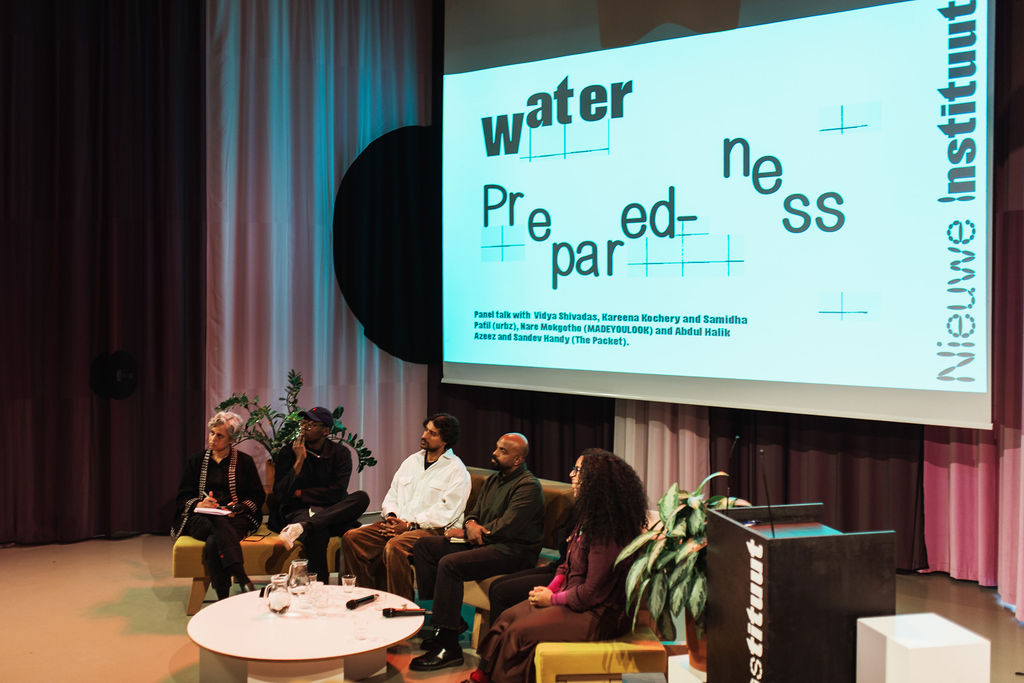
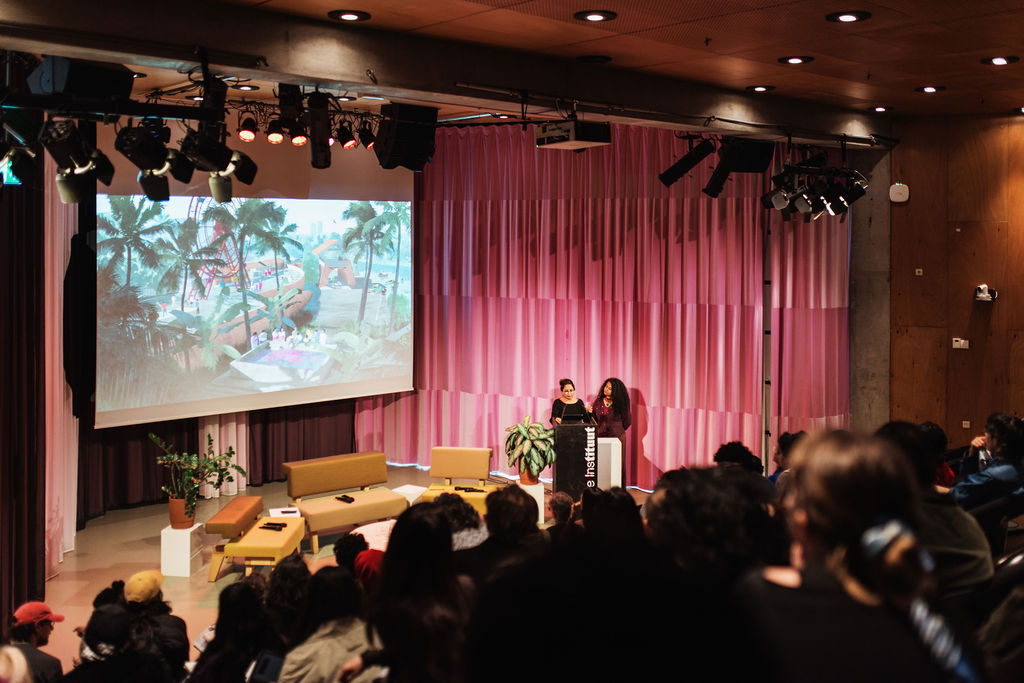
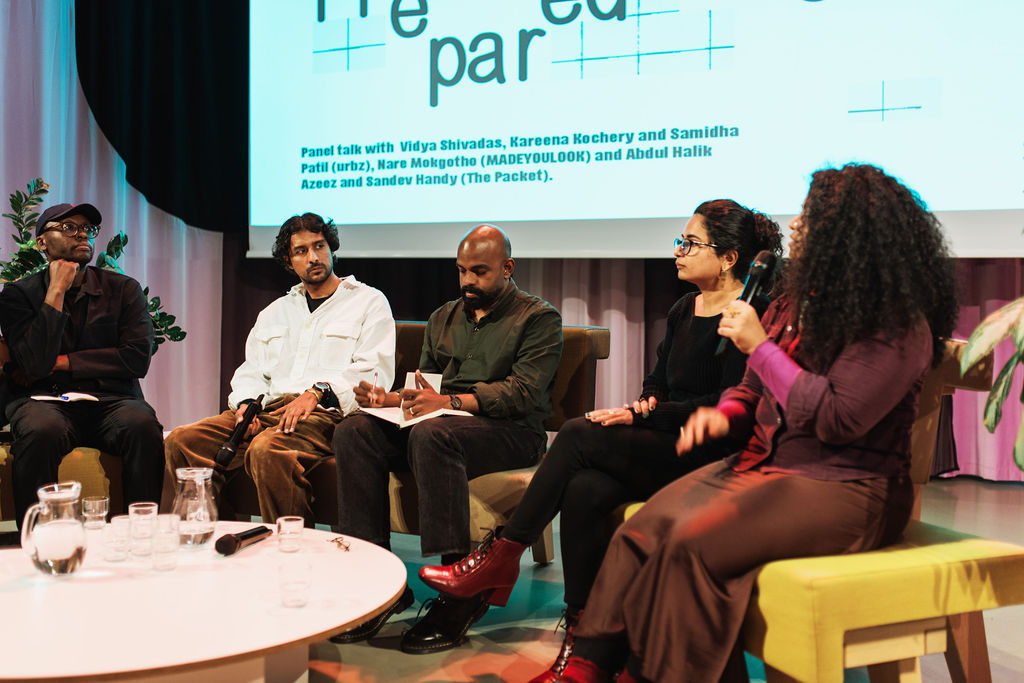
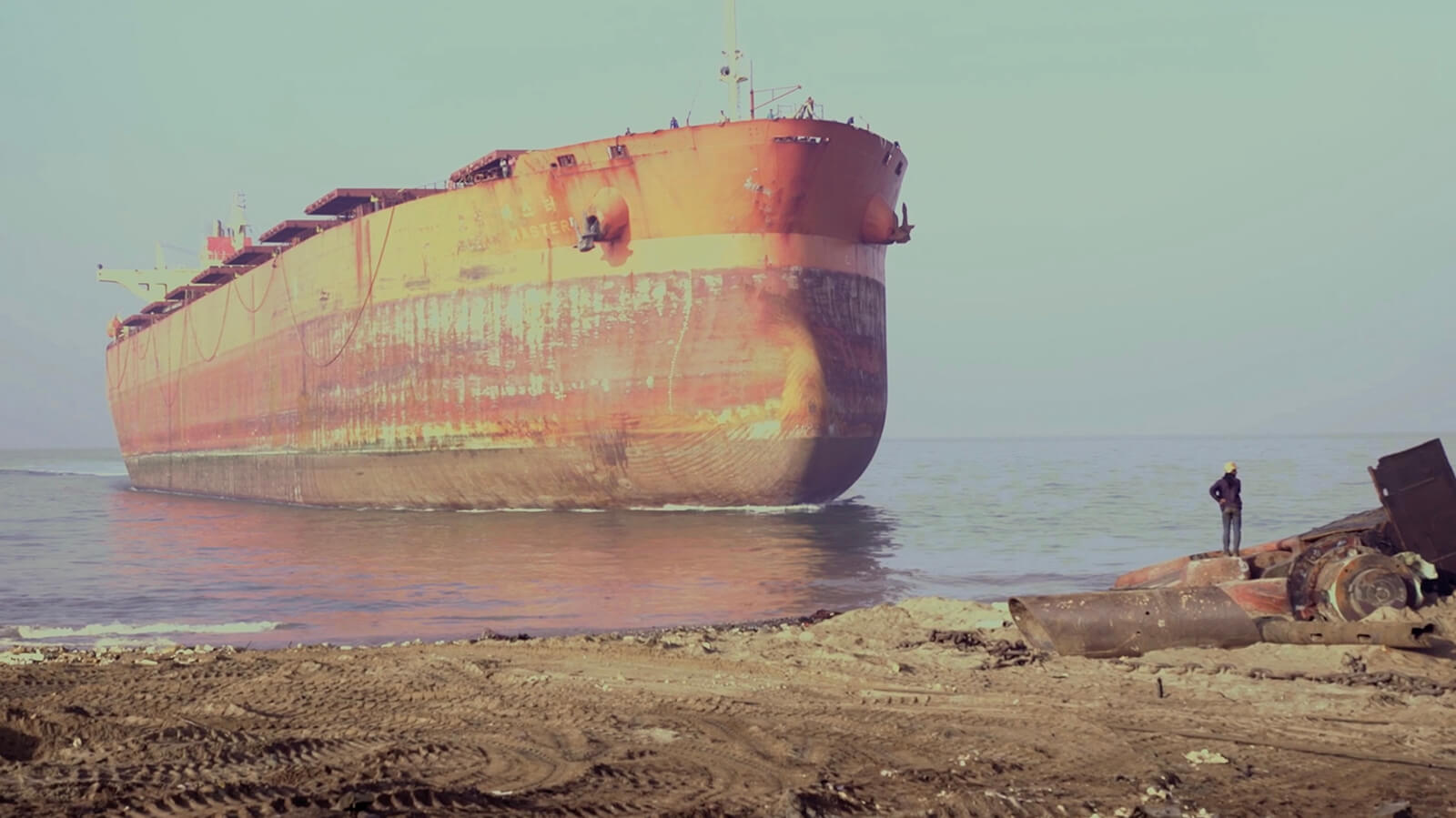
How do we make sense of what has been lost, and reconnect through the material that we have inherited, remains one of the most vital questions the symposium leaves one thinking about. Especially in the invocation of the acoustic and the bodily—which in Mphiso’s presentation takes on a spatial quality through the Underground Railroad—the symposium reinforces a belief long held that our very language needs to be rethought. Because what do we do when the words with which we think the ocean are diminished? How do we replenish those connections? If most panellists hope to work through precarity, that condition of precarity itself demands scrutiny.
There is a weariness one can associate with both these figures, one persistent in its hope for another future away from precarity, the other continually labouring at sifting through the sand for traces of what is lost. It demands far more attention than the minute gaze of the pearl diver (invoked by Lewis as someone who gathers fragments of evidence), or the steadfast patience of The Watcher. Perhaps the only place to begin—to reconcile with the absence of material evidence and diminishing forms of embodied knowledge—is to ask for whom has the world already ended.
The views and opinions expressed here are those of the author and do not necessarily reflect the official position of STIR or its editors.

by Zohra Khan Nov 20, 2026
The graphic novel by architect Pero Puljiz proffers a series of frenzied black and white drawings of an alternate universe, eschewing a linear narrative.
by Pranjal Maheshwari Nov 18, 2026
The Indonesian architectural firm designs Mitte Oblique Garden as a porous and socially engaging tropical urban forest puncturing the dense fabric of the national capital.
by Pranjal Maheshwari Nov 13, 2026
In conversation with STIR, the internationally acclaimed Korean architect and artist discusses visual and material minimalism as an eco-conscious approach in his practice.
by Pranjal Maheshwari Nov 13, 2026
The Maestro Ilaiyaraaja Centre for Music at IIT Madras is conceived by the Delhi-based studio as a premier research facility shaped through natural materials and organic curves.

make your fridays matter with a well-read weekend
Enter your details to sign in
Don’t have an account?
Sign upOr you can sign in with
a single account for all
STIR platforms
All your bookmarks will be available across all your devices.
Stay STIRred
Already have an account?
Sign inOr you can sign up with
Verification link sent to check your inbox or spam folder to complete sign up process
Tap on things that interests you.
Select the Conversation Category you would like to watch
Please enter your details and click submit.
Enter the 6-digit code sent at


Tracing the precarities of fluid geographies through New Currents at Nieuwe Instituut
by Mrinmayee Bhoot | Published on : Nov 19, 2026


 Sign in with Google
 Sign in with email
What do you think?