Art12 mins. read
KNMA's The Meeting Ground brings diverse art histories into conversation
by Vandana KalraAug 17, 2026



by Samar JodhaPublished on : Oct 05, 2026
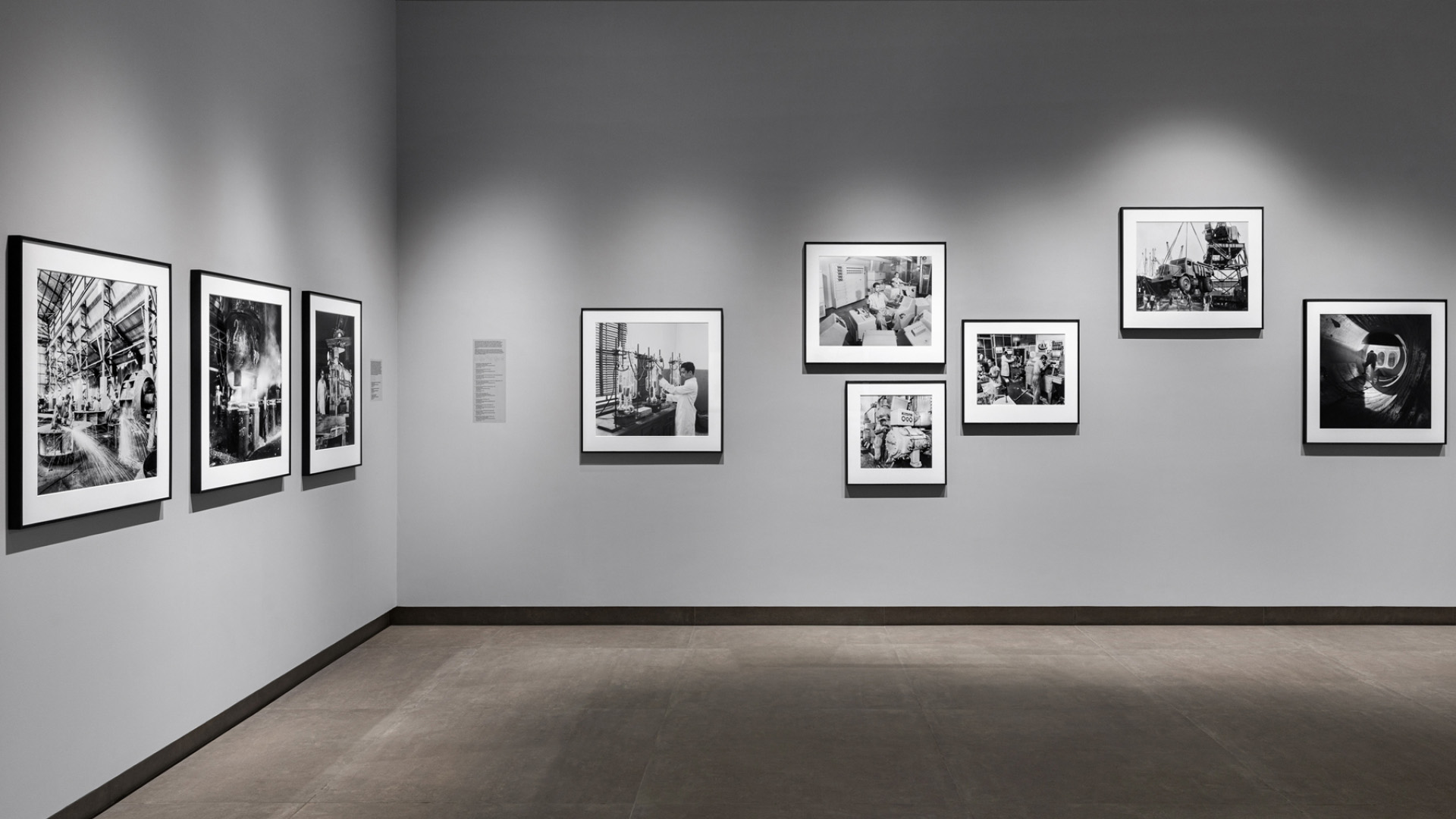
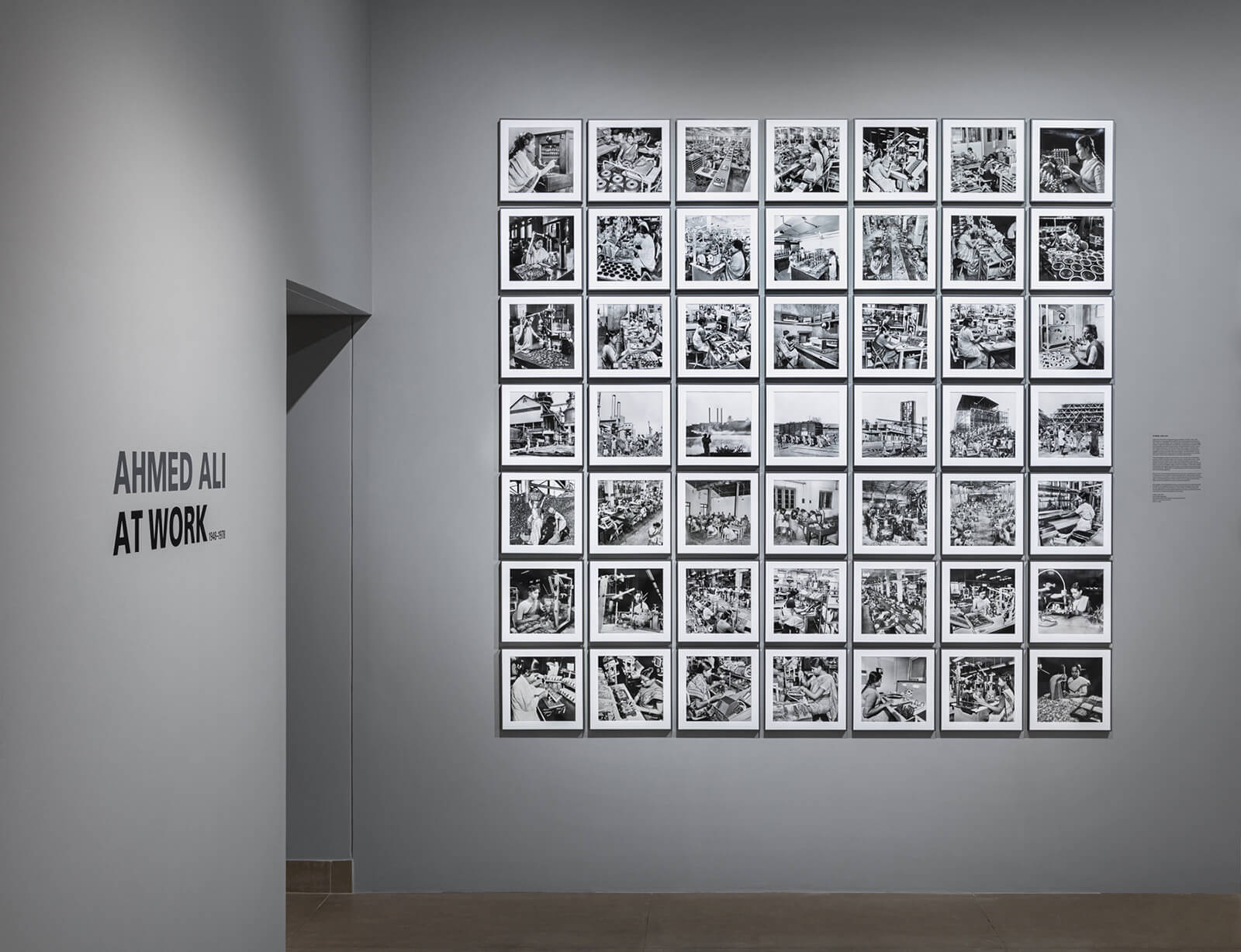
I had met Ahmed Ali socially, probably 30 years ago, and knew of his pictures loosely, mostly the Bastar work, the Muria and Maria he photographed in the ‘50s, which had been shown in Delhi. The industrial photographs I had never really seen, and I don't think many people had; most of them stayed as negatives for decades. He set up his studio, Universal Camera Arts, in Calcutta in 1948, and kept working into his nineties. He died in 2016. Seeing this side of the work for the first time, in At Work (1948 – 1978) at PHOTOINK in Delhi, I read it as a record of what a new country thought it was becoming, photographed for the companies (corporate hadn’t come into that language yet) that were building it.
Growing up, we had a subscription to Soviet Land, among other publications from the USSR, all part of the Indo-Soviet friendship. These were large-format, heavy glossy paper; printing we did not have in any Indian magazine at that time, and yes, it was the recycling era: once our parents had read them, those glossy pages went to cover my school books. The photographs were state photographs: the steelworker in front of the turbine, the woman smiling at the top of a tower, everyone styled, lit and told how to stand. You knew it was staged even as a child, and you thought that was how photography had to be done.
I only understood much later where that look came from: USSR in Construction, a Soviet magazine of the 1930s, where Alexander Rodchenko and others photographed Stalin's Five-Year Plans, and the worker was placed against dams and furnaces as a hero. India began its own Five-Year Plans in 1951. Nehru called the dams and steel plants the temples of modern India, but the state never ran its own picture-making on that scale. So much of industrial India was photographed by private studios, for the companies themselves.
Ali's work fills that gap. The pictures were paid for by clients, and many of the names in the credit lines—Andrew Yule, Bird and Company, Macneill and Barry—were old British managing houses still running Bengal's mines and mills years after 1947, so in plain terms this is commissioned work.
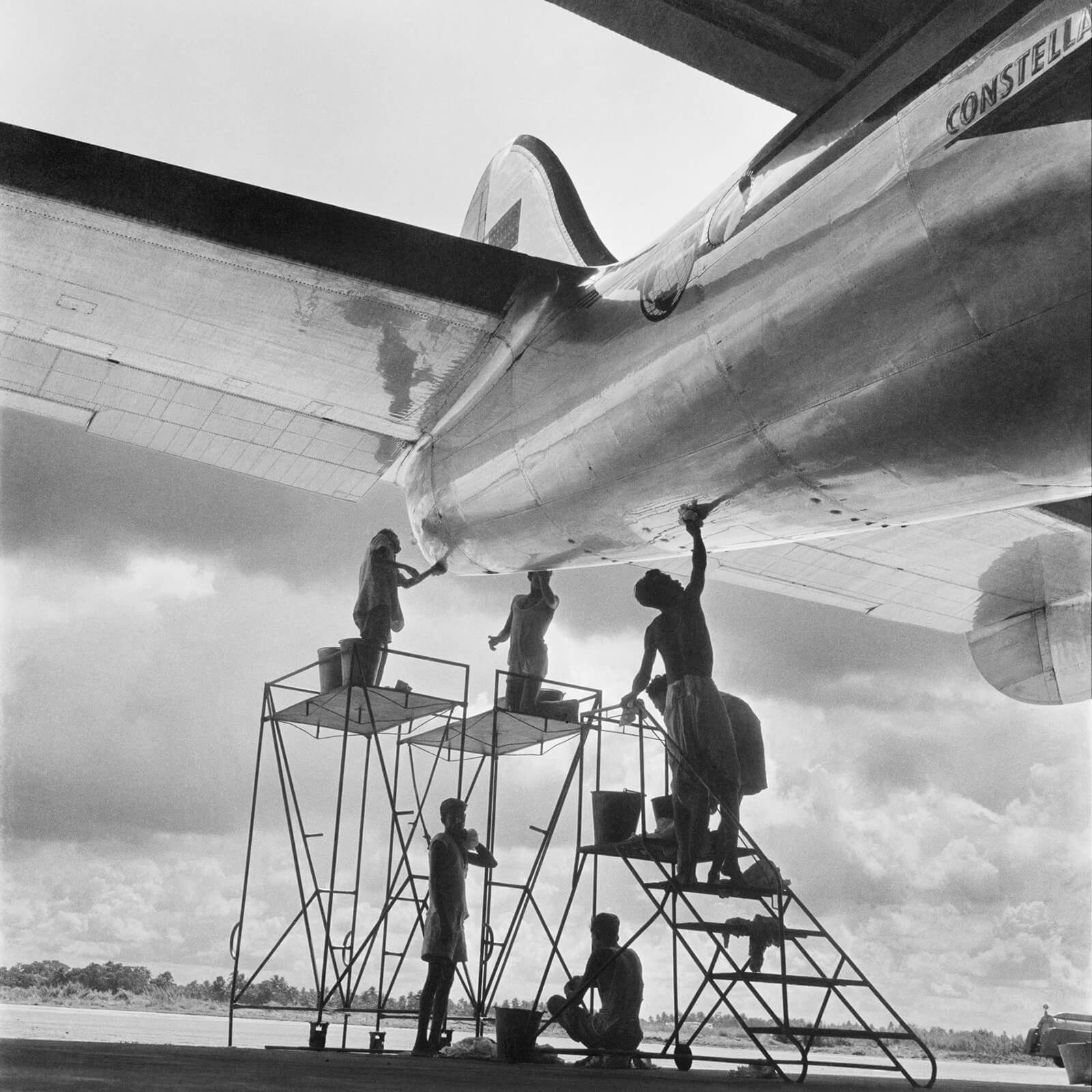
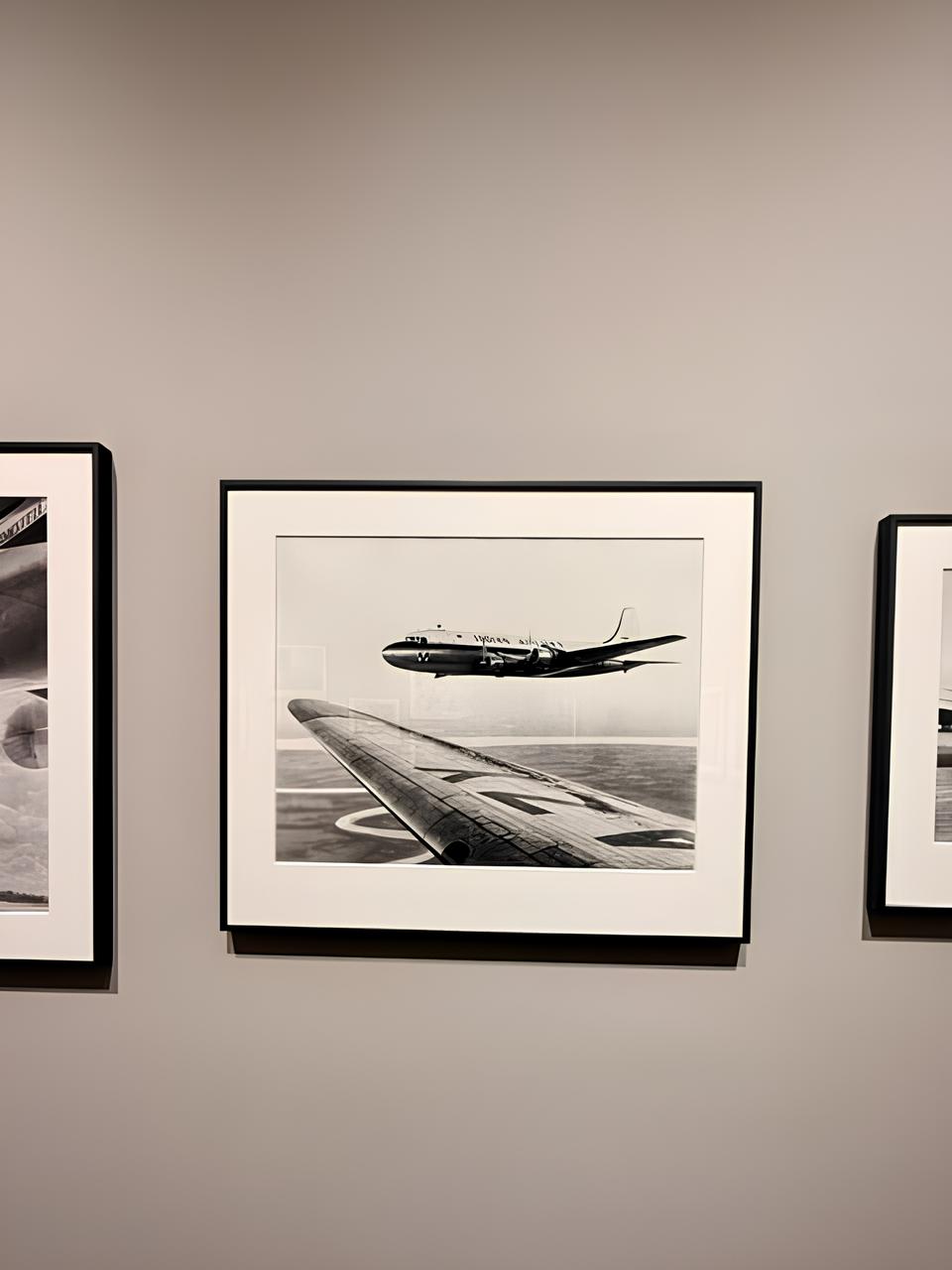
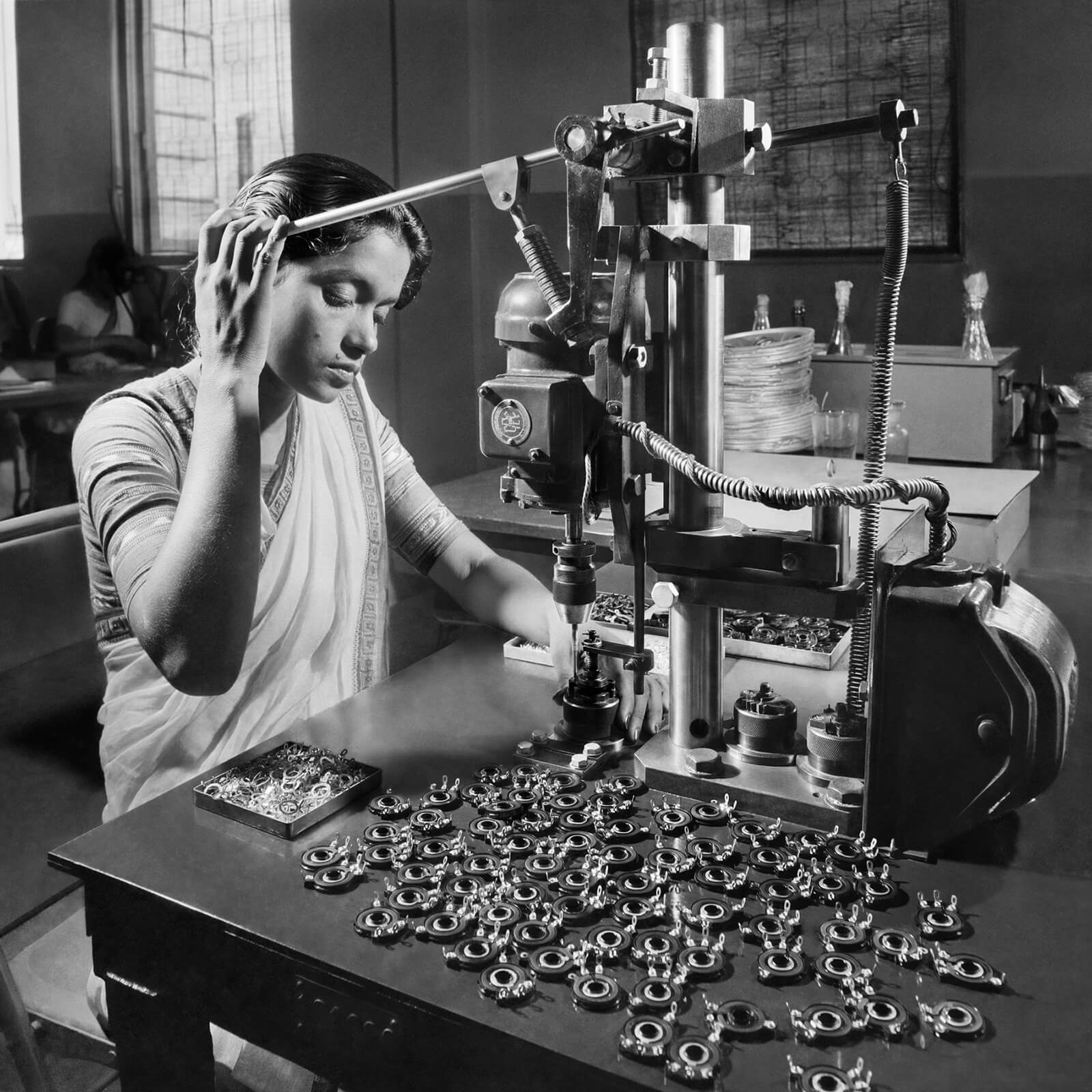
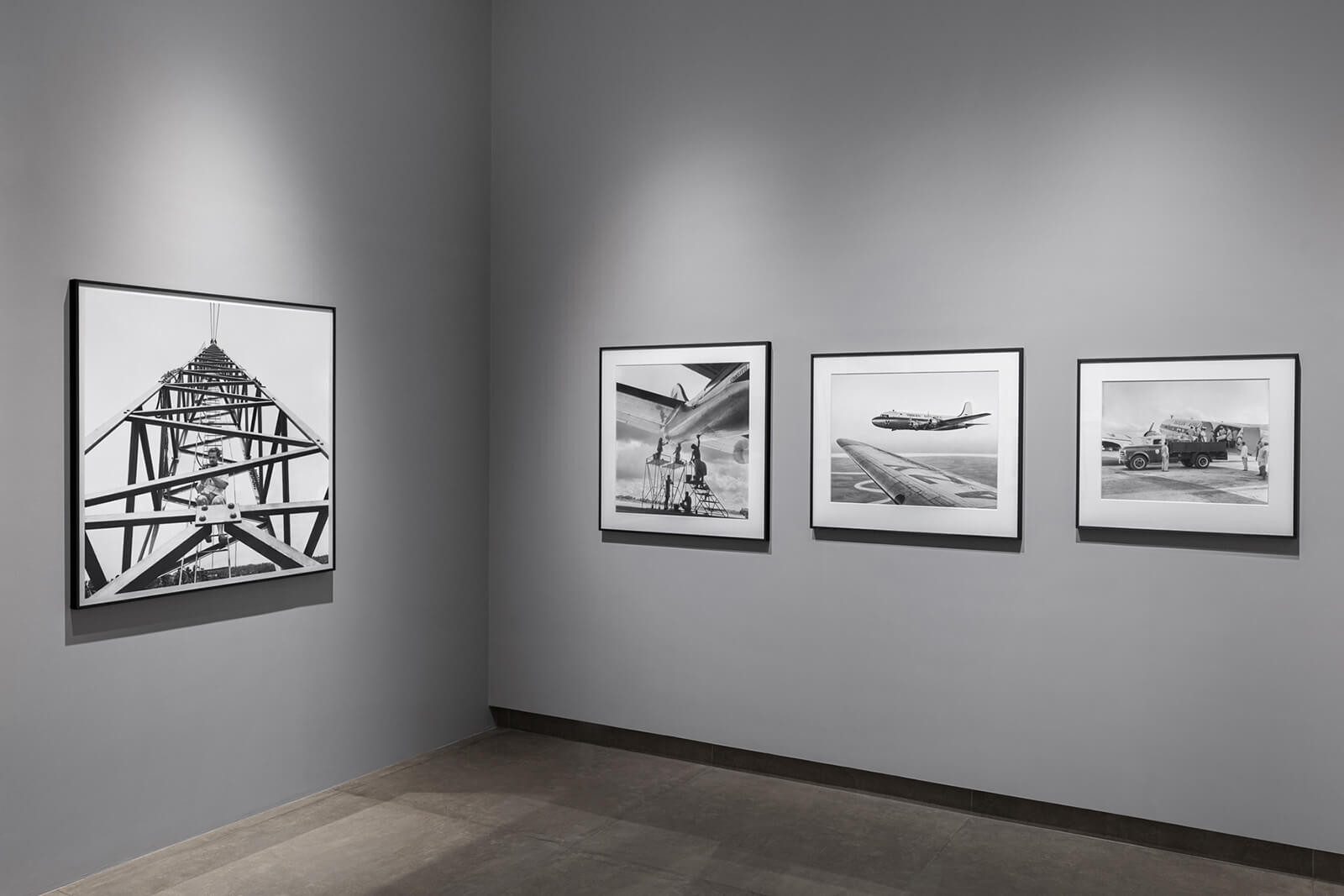
But he did not just document the plant. He came from commercial and studio work, advertising, calendar models, portraits. He carried that into the factory: the composition, light, perspective, all very well thought through, whether it is an Indian Airlines plane photographed off the wing of another in flight or a man carrying a sack along a wall of stacked sacks. That is not easy on an industrial site: a studio is clean and under your control, a plant is clutter you cannot move, and this is pre-digital, pre-Photoshop; what you shoot is what you get. Even the flat group portraits have that clarity, made in places where people were not yet used to looking at a camera, and he treats them as human flesh set against the heavy industrial landscape. He left out the styling and the heroic pose, something Soviet imagery probably took from the Greeks and Romans. People stand at their machines the way they would have stood anyway, only better lit.
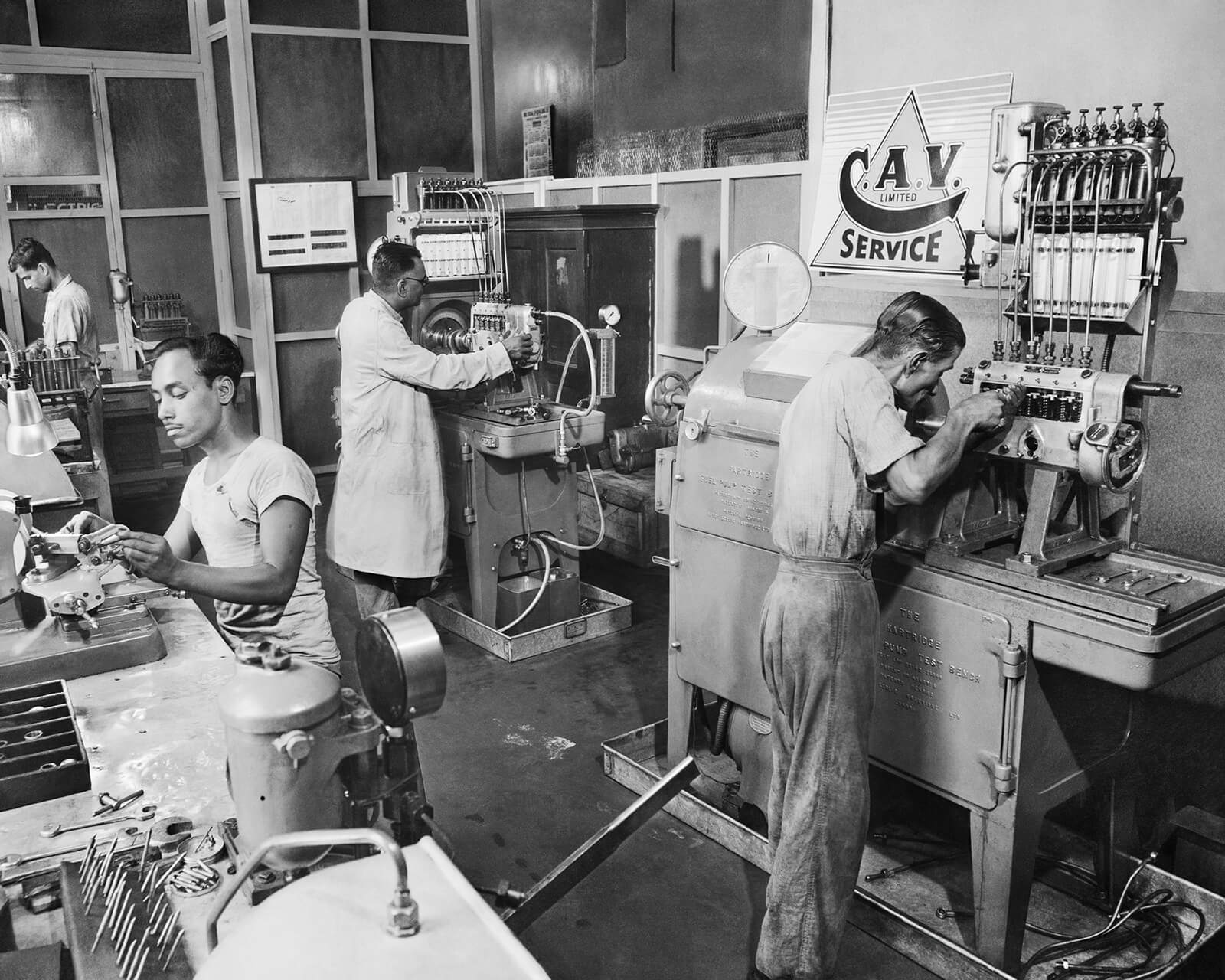
Walking through, I thought of Sunil Janah, working in the same decades out of the same city. I was fortunate to meet him at Ram Rahman's loft in New York City, and had the chance to see some of his original prints. Janah had been the Communist Party of India's photographer, came to industry from there, and was later commissioned by Hindustan Steel for Durgapur, Rourkela and Bhilai, where the structures are enormous and the people often small; with Ali, it is usually the other way round.
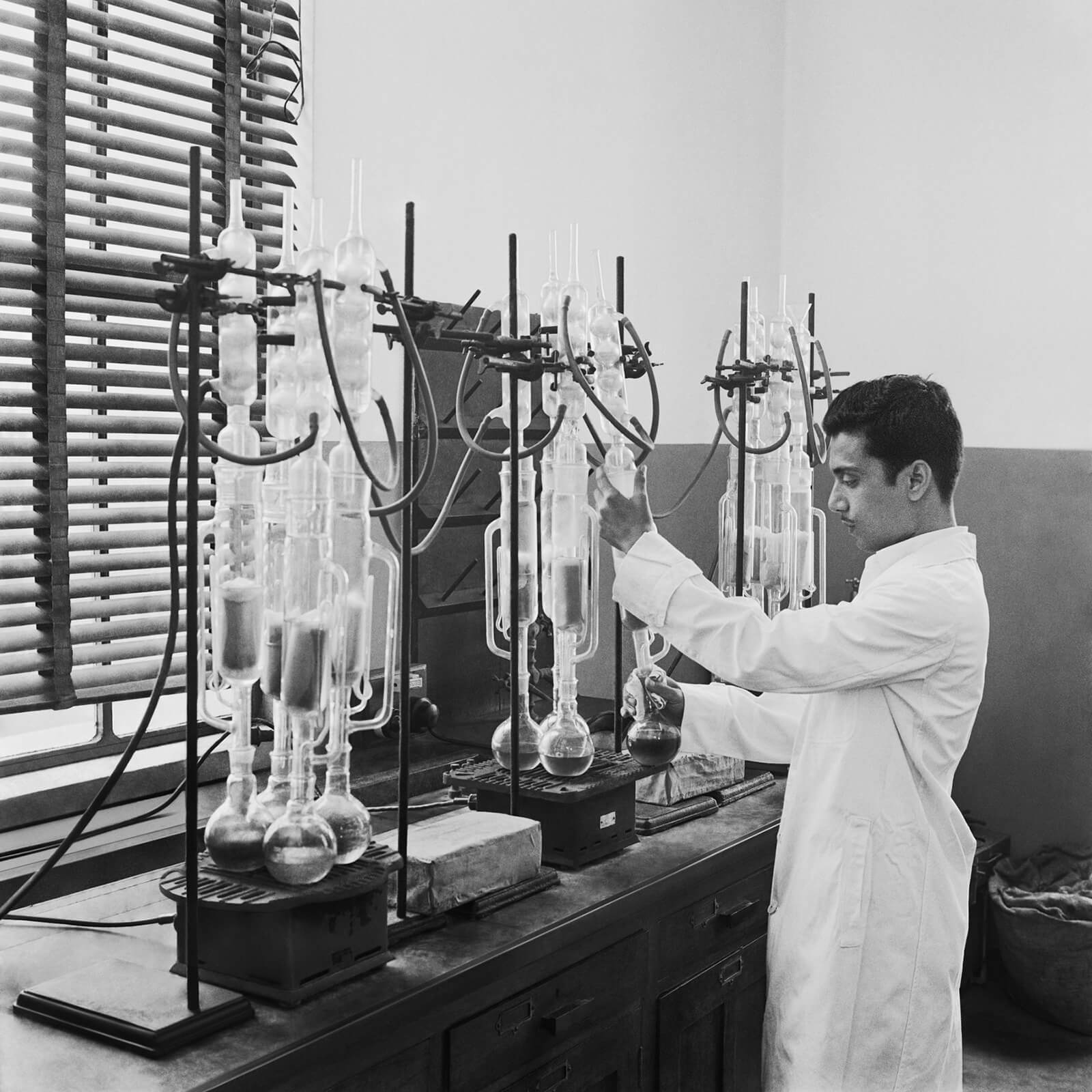
What impressed me most was the rescue itself: PHOTOINK working for years through more than a hundred thousand of his negatives and printing from them again. It took me back to when photography became cheap enough to use at scale, and apart from studios doing weddings and family portraits, four places used it most: prisons keeping records, the army with its regimental groups, schools and colleges doing their class pictures and industry photographing its workforce.
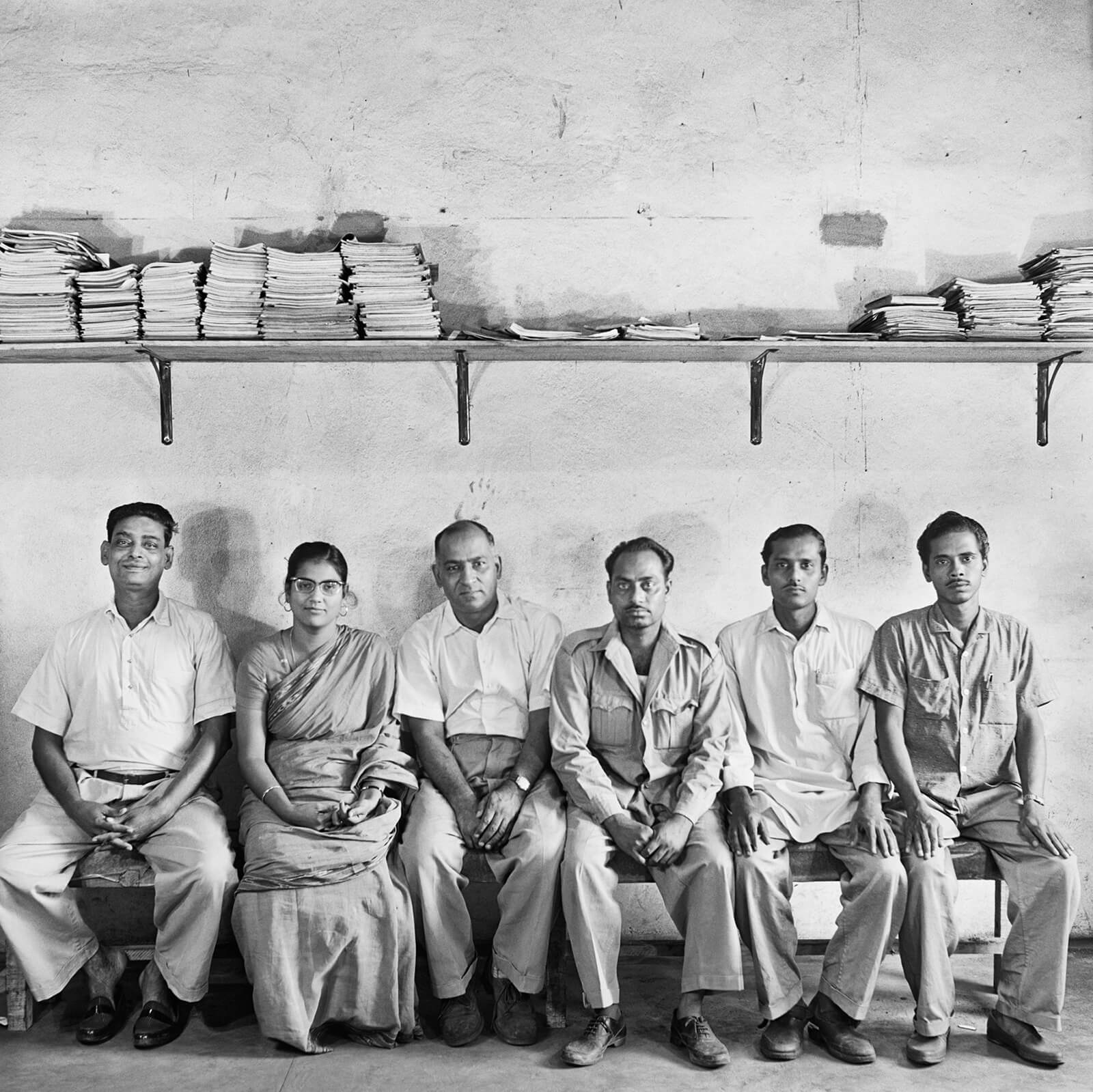
In America, Lewis Hine came out of that ground: first the child labour pictures, then commercial clients and workers photographed in a way management would like. His 1932 book was called Men at Work. I remember it from his retrospective at the International Center of Photography in New York in the winter of 2013. During the war, the Office of War Information sent Alfred Palmer into aircraft plants to photograph women building bombers, photographs made to bring more women into factories. Ali's women came out of the same commercial practice; it was the habit of the time: workers shown at their best, for the people who were paying for them.
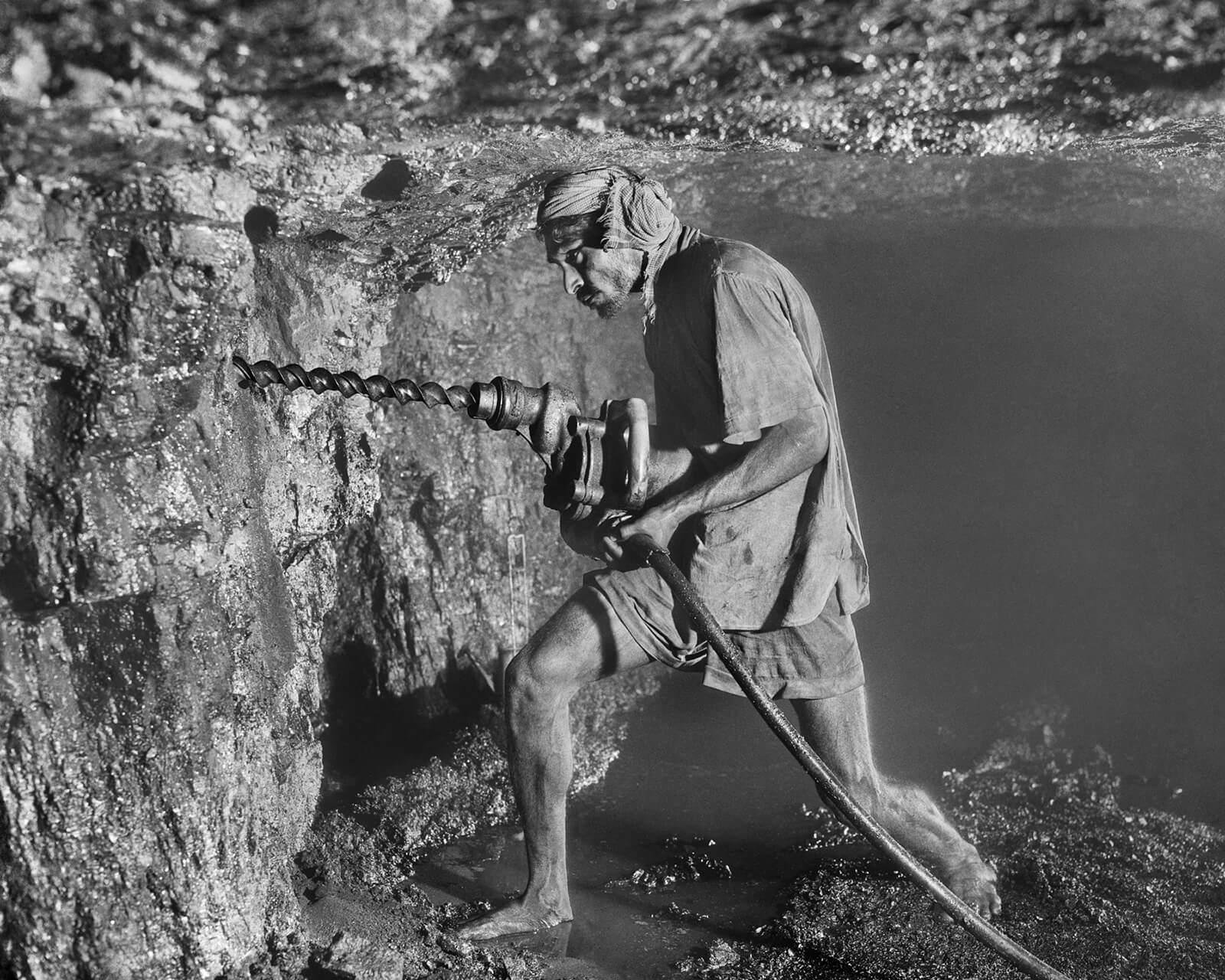
In India, it was the coal mines. The colonial government had banned women from working underground there in 1937, lifted the ban in 1943 because the war needed coal and brought it back in 1946. Independent India kept it in the Mines Act of 1952, and it remained in place until 2019. In the jute mills, too, women were steadily let go over those years, and Ali was photographing them in mills, factories and on building sites right through that time.
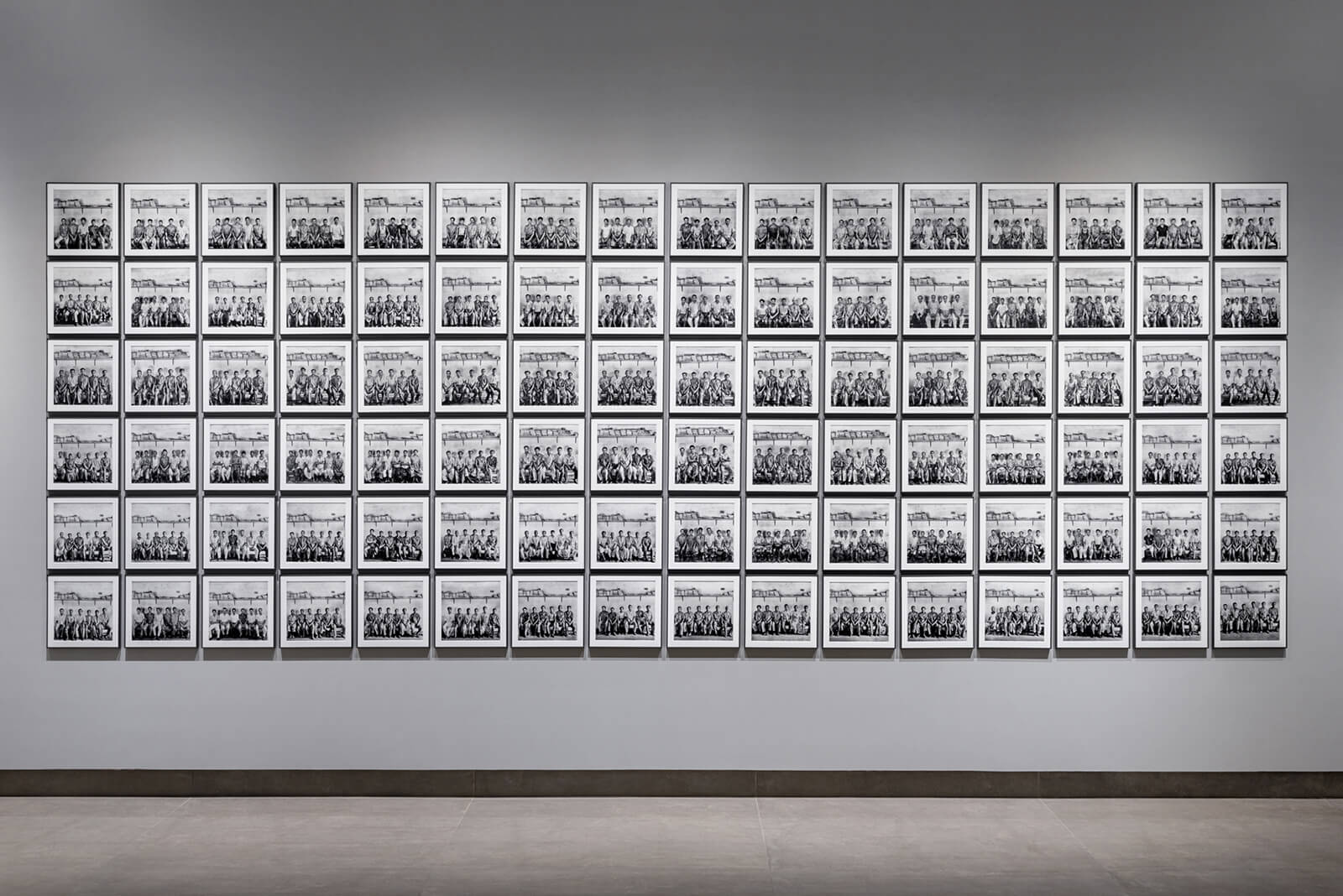
Back in the gallery, Assembly is 96 group portraits made in one Calcutta factory in 1952, men seated in rows on a bench against the same wall, the way a school photographs its class every year, and somewhere in all those rows there is one woman.
‘At Work (1948 – 1978)’, Ahmed Ali Archive, is on view from September 5 – October 24, 2026, at PHOTOINK, New Delhi.

by Srishti Ojha Oct 21, 2026
Increasingly, artists, filmmakers and activists are turning to VR to create more personal, tangible accounts of the climate emergency and its impact on vulnerable communities.
by Mirra Lynn Oct 20, 2026
The Indian artist paints the old wadas of central Pune, capturing the traces of everyday life that cling to these structures, battered by time but unbowed.
by Anmol Ahuja Oct 15, 2026
How do heaps of souvenirs and relics with racist Aboriginal motifs and features become art? MCA Sydney’s winter showcase—the artist’s largest to date—beckons a possibility.
by Srishti Ojha Oct 14, 2026
The first Dutch publication on the Turkish artist, the eponymous book centres on Refik Anadol: Latent City, his living data sculpture of Bruges, exhibited at BRUSK gallery.

make your fridays matter with a well-read weekend
Enter your details to sign in
Don’t have an account?
Sign upOr you can sign in with
a single account for all
STIR platforms
All your bookmarks will be available across all your devices.
Stay STIRred
Already have an account?
Sign inOr you can sign up with
Verification link sent to check your inbox or spam folder to complete sign up process
Tap on things that interests you.
Select the Conversation Category you would like to watch
Please enter your details and click submit.
Enter the 6-digit code sent at


What Ahmed Ali’s industrial photographs reveal about a new India
by Samar Jodha | Published on : Oct 05, 2026


 Sign in with Google
 Sign in with email
What do you think?