Art06 mins. read
Wet archives: Marine Intersections and Coastlines as Webs in Colombo
by Ranjana DaveApr 02, 2026




by Ranjana DavePublished on : Jan 30, 2026
Three people in a verandah hold up their dog whistles, focusing their attention on a large sheet of paper, its hand-drawn peaks out of a mountain skyline, accompanied by some writing. Look closer, and you see that the peaks form a music score; this is Raven Chacon’s Whistle Quartet (2001). “Repeat as many times as desired/needed…improve with each repeat…,” the score proclaims. The three people put their whistles to their lips, and perform a remarkably synchronised version – of note, since they were spontaneously sought out from a crowd in the course of a curatorial walkthrough at Colomboscope 2026. Running from January 21 – 31, 2026, across various venues in Colombo, Sri Lanka, the festival’s ninth edition, Rhythm Alliances, plumbs this spirit of rhythmic connection across multiple modes of doing. It is led by guest curator Hajra Haider Karrar and artistic director of Colomboscope Natasha Ginwala, with assistant curator Pramodha Weerasekera.
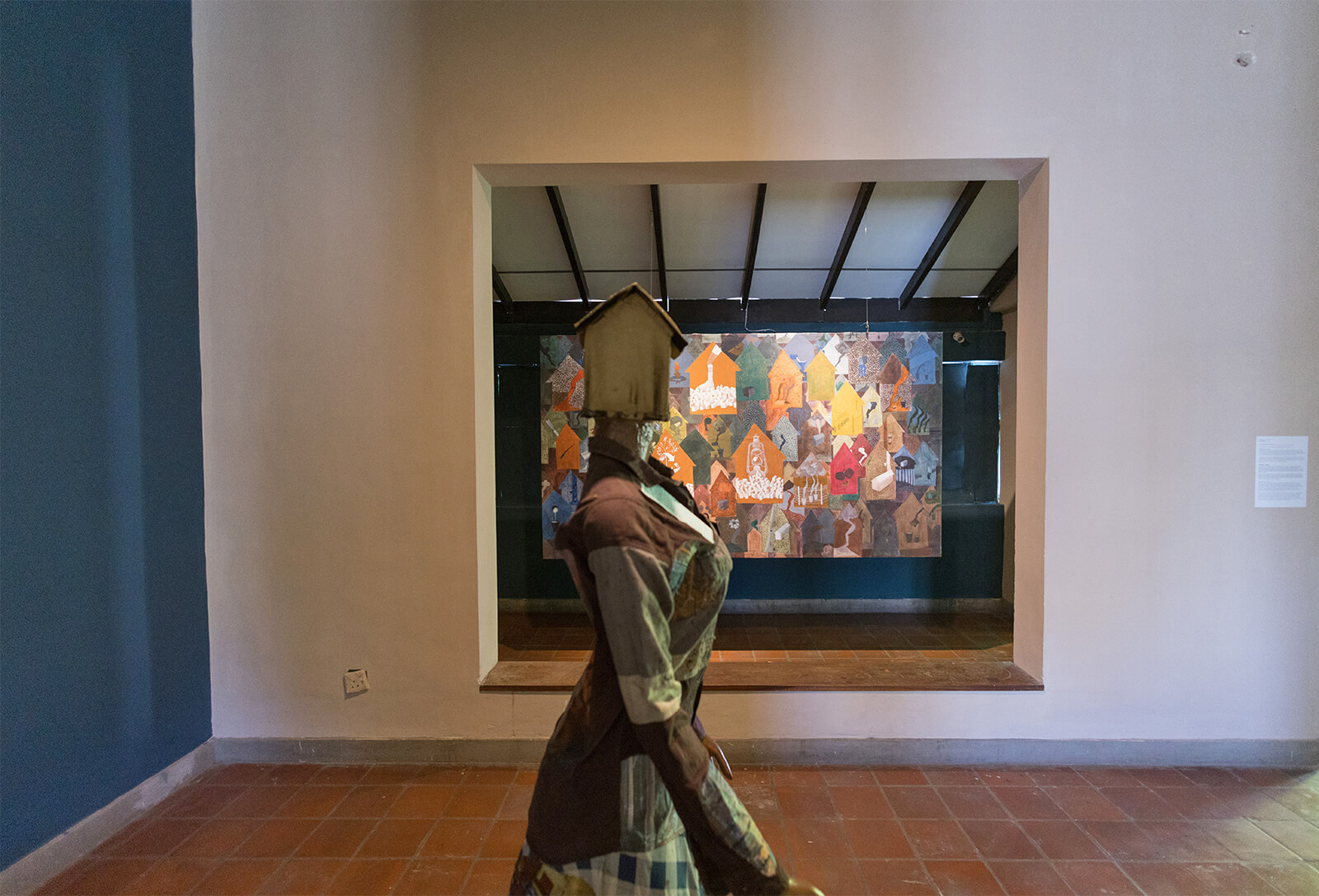
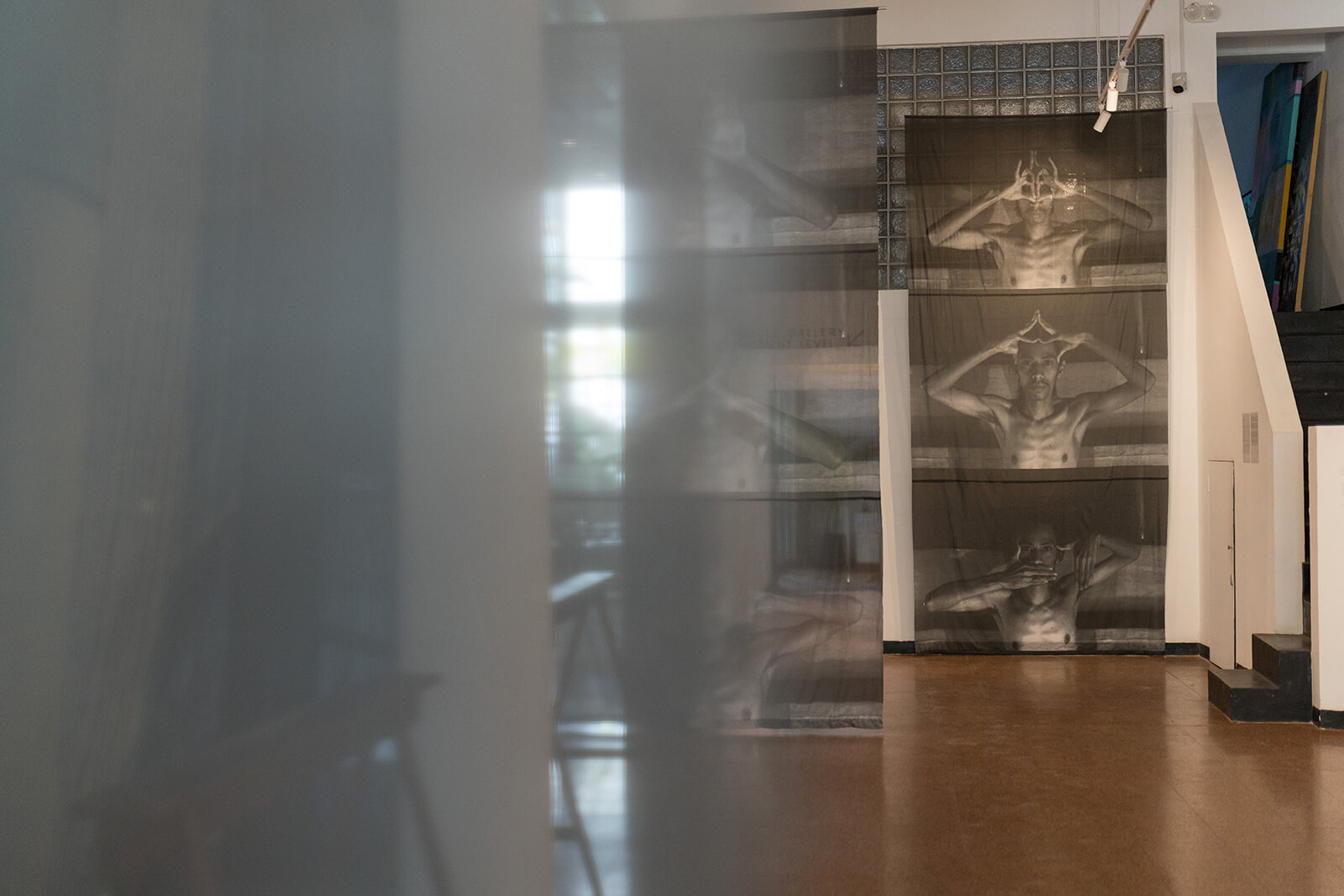
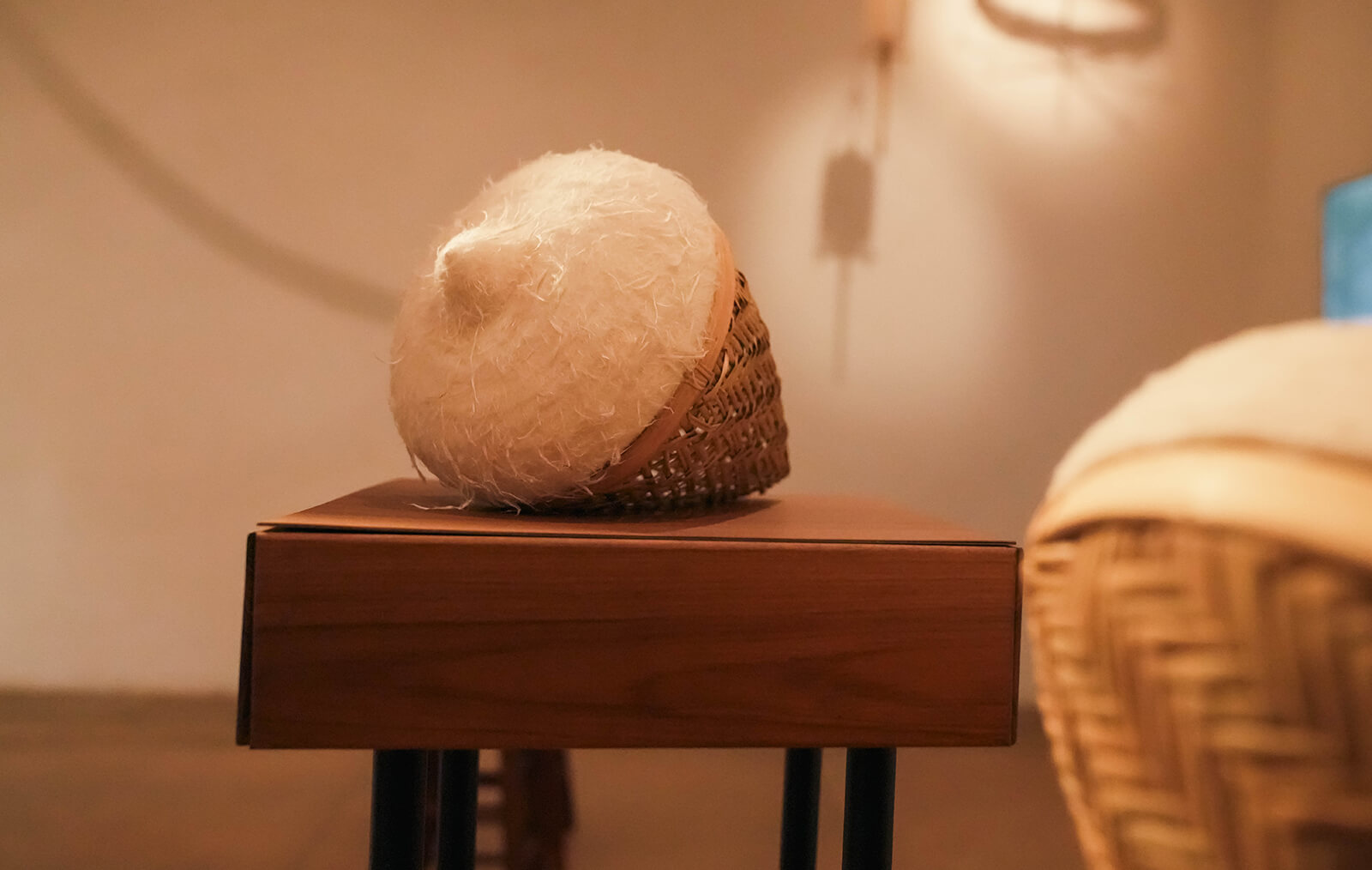
The city never recedes from view. Tashyana Handy and Sakina Aliakbar cover a street-facing glass window at Colpetty Town House in lines of poetry. Their installation, For Private View and Public Disappearance (2025), stages what could well be an uncannily intimate shop window of sorts, with its worn wooden bed, random objects and lines of poetry jumping out at you from speakers placed in strategic corners. Passersby on the road outside slow down to take in the installation, occasionally stopping in their tracks to press their faces against the glass window. Upstairs, Jegatheeswaran Keshavan uses discarded rubber particles to recreate the persona of a rubber industry worker. The artist is a descendant of plantation workers in Sri Lanka, originally brought over as indentured labourers from South India. Denied land rights, and for a long time, Sri Lankan citizenship, here, Keshavan's installation stands tall in the centre of the space, an assertive claim to identity through rubber – also the source of the worker’s exploitation.
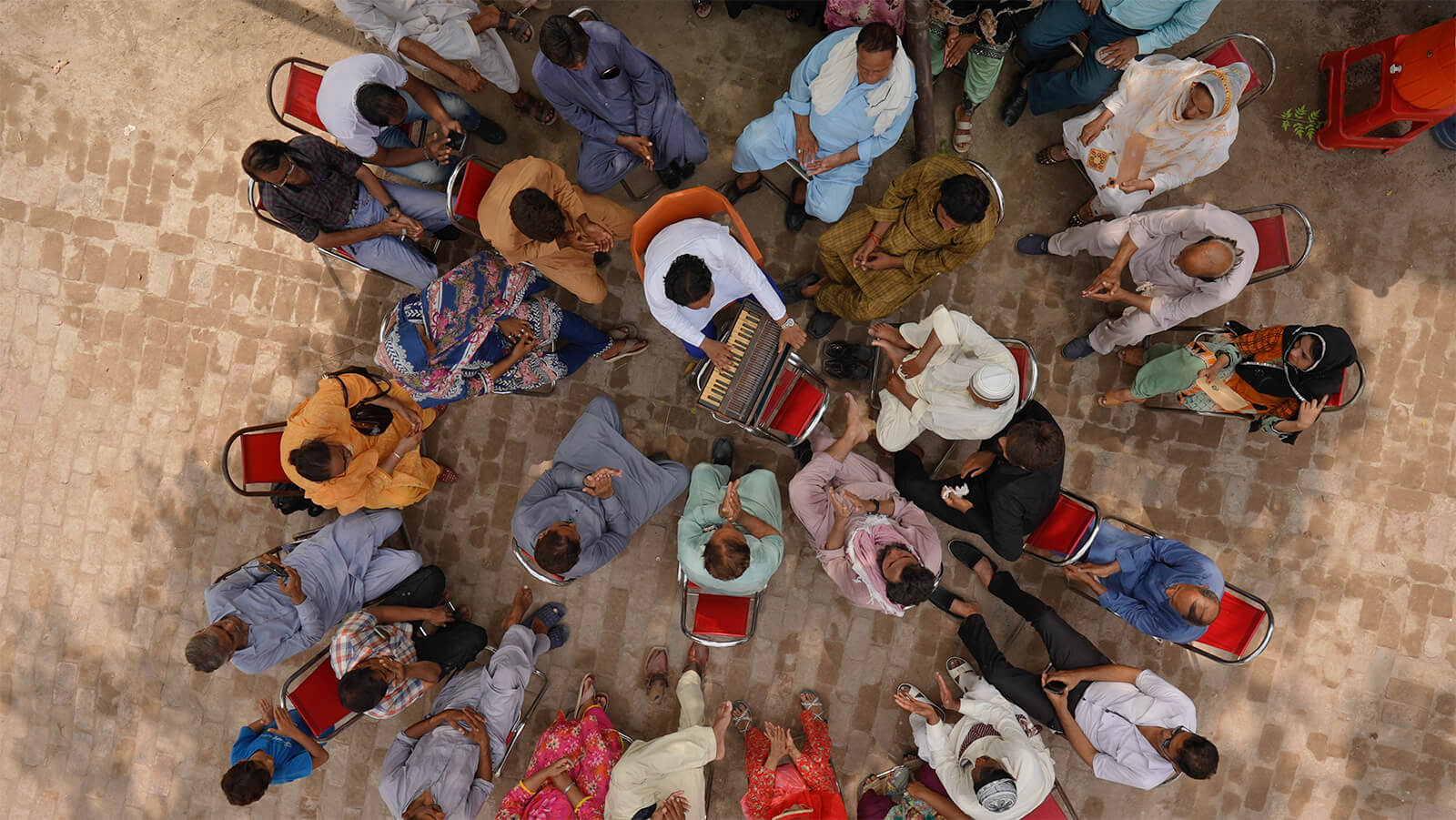
At the partially destroyed Rio Cinema, a building ravaged by the Black July pogroms of 1983, Basir Mahmood recalls an erstwhile film studio in another part of the subcontinent in his video work A Body Bleeds More Than It Contains (2026). Filming at Bari Studios in Lahore, now sold to a private company for real estate development, Mahmood works with ‘extras’, background actors who once featured in the films made at the studio to stage a daylong tribute of sorts, to the stories these films told and to the people and spaces that made them possible. The actors drag red cushioned chairs – the kind that you can rent from a ‘tenthouse’ for special occasions – the sound of their metal legs scraping the ground a presentiment of the end of this chapter in Lollywood’s history. They offer up scenes from the past – acting out stray conversations, impassioned fights and even death – a male actor is ‘shot dead’ on screen, a red liquid immediately staining his shirt. He proceeds to fall to the ground, his limbs splayed at awkward angles as another actor reacts to his corpse with tremendous grief. In another excerpt from Mahmood’s larger research platform, Lollywood Resource, we see interviews with some of these actors, recounting the films they were part of, and also their own journeys in the industry, now squarely in the camera’s gaze instead of being in the background.
On my last evening in Colombo, I walked from Borella junction to the impenetrable boundary wall of the Bandaranaike Memorial International Conference Hall, a gift by the People’s Republic of China in memory of a former prime minister. I made the journey to watch a technical rehearsal of PARAMPARA: From generation to generation by the Chitrasena Dance Company and the video art-focused reVerb Collective. The company is a storied dance dynasty in Sri Lanka, known for adapting what was once a male-dominated ritual dance vocabulary to the stage, where it has since been embodied by three generations of women performers. PARAMPARA combines snippets of archival footage with dance, dialogue and drumming. The company’s third-generation lead dancer Thaji Dias performs with a drummer, demonstrating words, phrases and paragraphs in dance, and adopting different personas to reference other times and spaces. In costume, she dances in the alien precincts of a camping store in Berlin, recalling her grandmother Vajira, who performed in what was once a theatre in the same space. She spins across a wall of sleeping bags, as customers steal glances at her, largely absorbed by their pursuit of hiking gear. The work draws crucial connections between decades of dancemaking amidst the sociopolitical realities of Sri Lanka – the civil war, institutionalised corruption and the Aragalaya – the mass protests (beginning in 2022) against the former government’s mishandling of the Sri Lankan economy. But it also risks spreading itself too thin in veering sharply between the abstract and the specific, not offering the viewer enough relational context to situate family histories, dance ethnographies and social events.
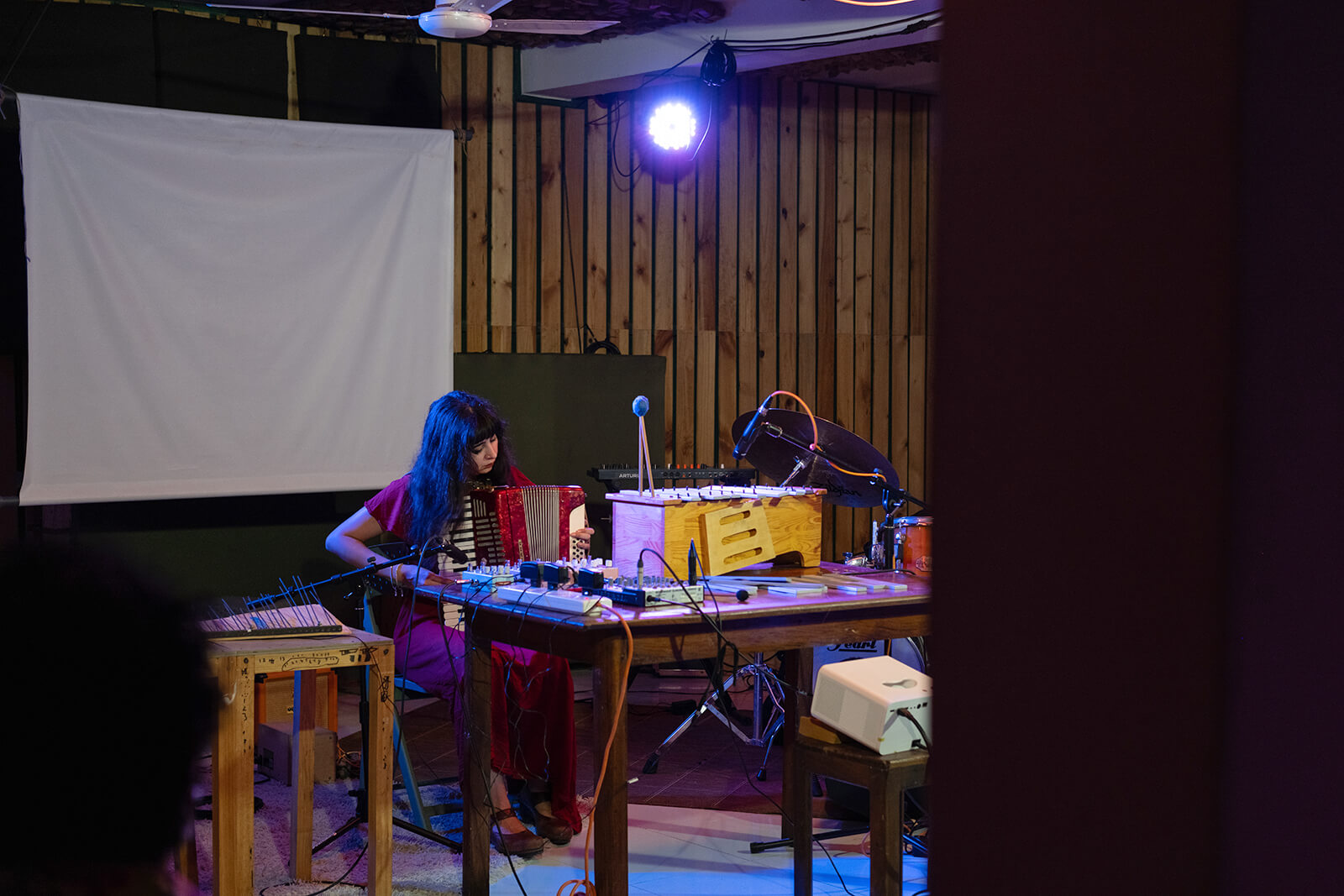
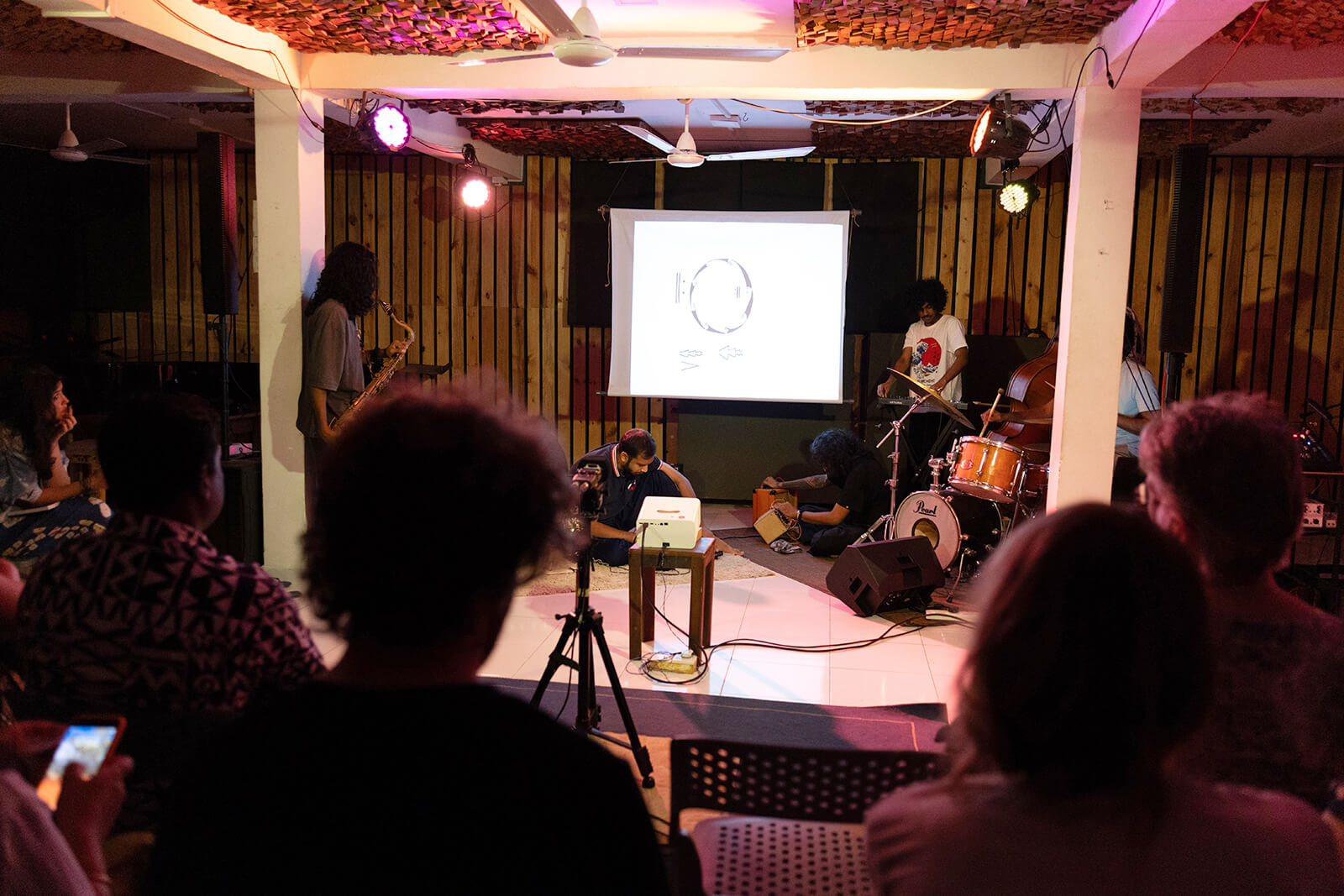
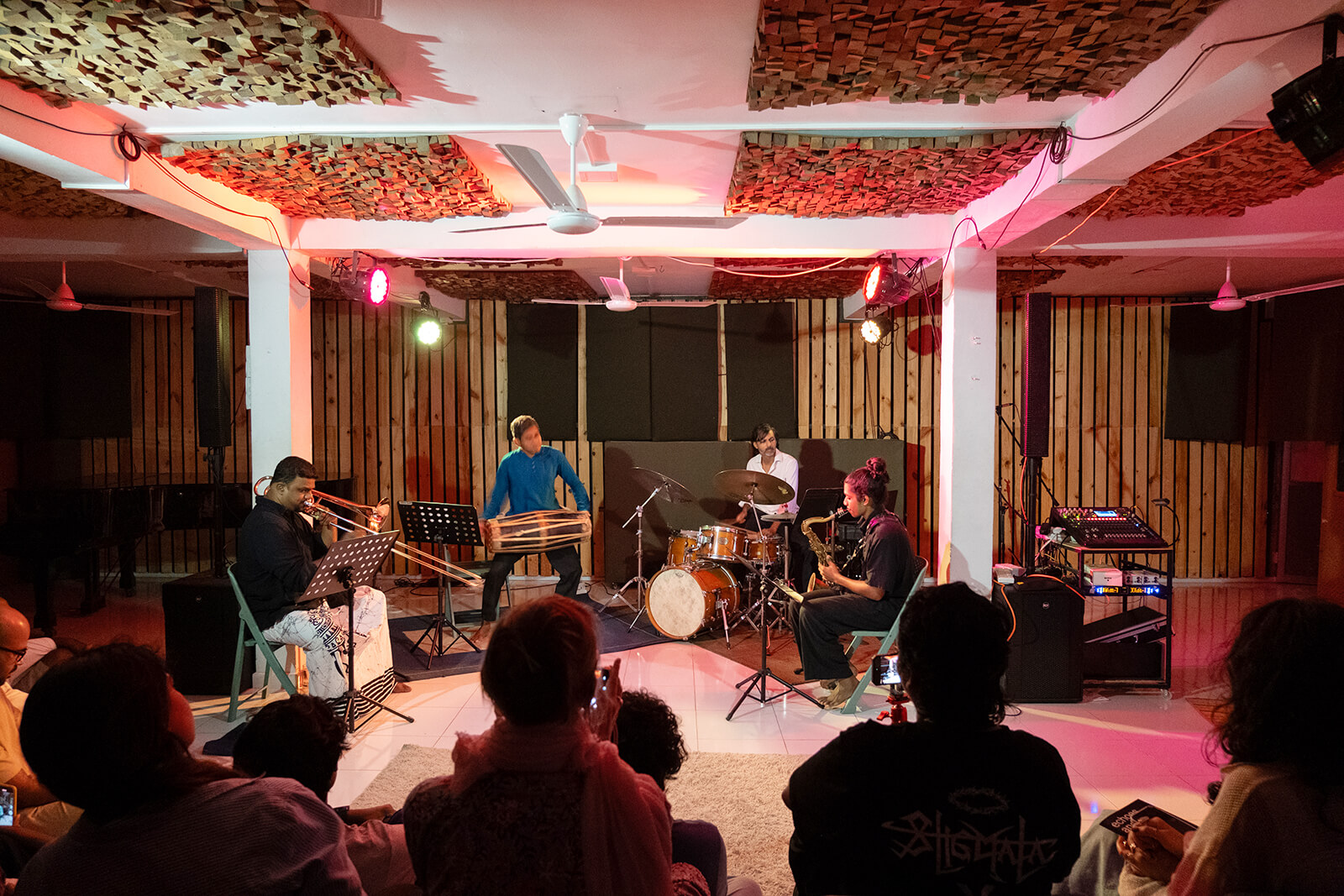
Colomboscope fits snugly into the subcontinent’s ‘art season’, also a period of time where the weather is mild enough to suit visitors from more temperate climes. It draws in international audiences, but also attunes them to local practice that would otherwise go unnoticed, like the stellar series of performances I saw at Musicmatters, a local music school. The students who kept the lights and air conditioning going when Yara Asmar performed Stuttering Music with an assemblage of broken instruments and field recordings took to the stage on other occasions – to perform Raven Chacon’s scores and also to accompany their teacher (and ethnomusicologist) Sumudi Suraweera in performance with musician Susantha Rupathilaka, bringing jazz and electro-acoustic overtones to a Kandyan dance ritual.
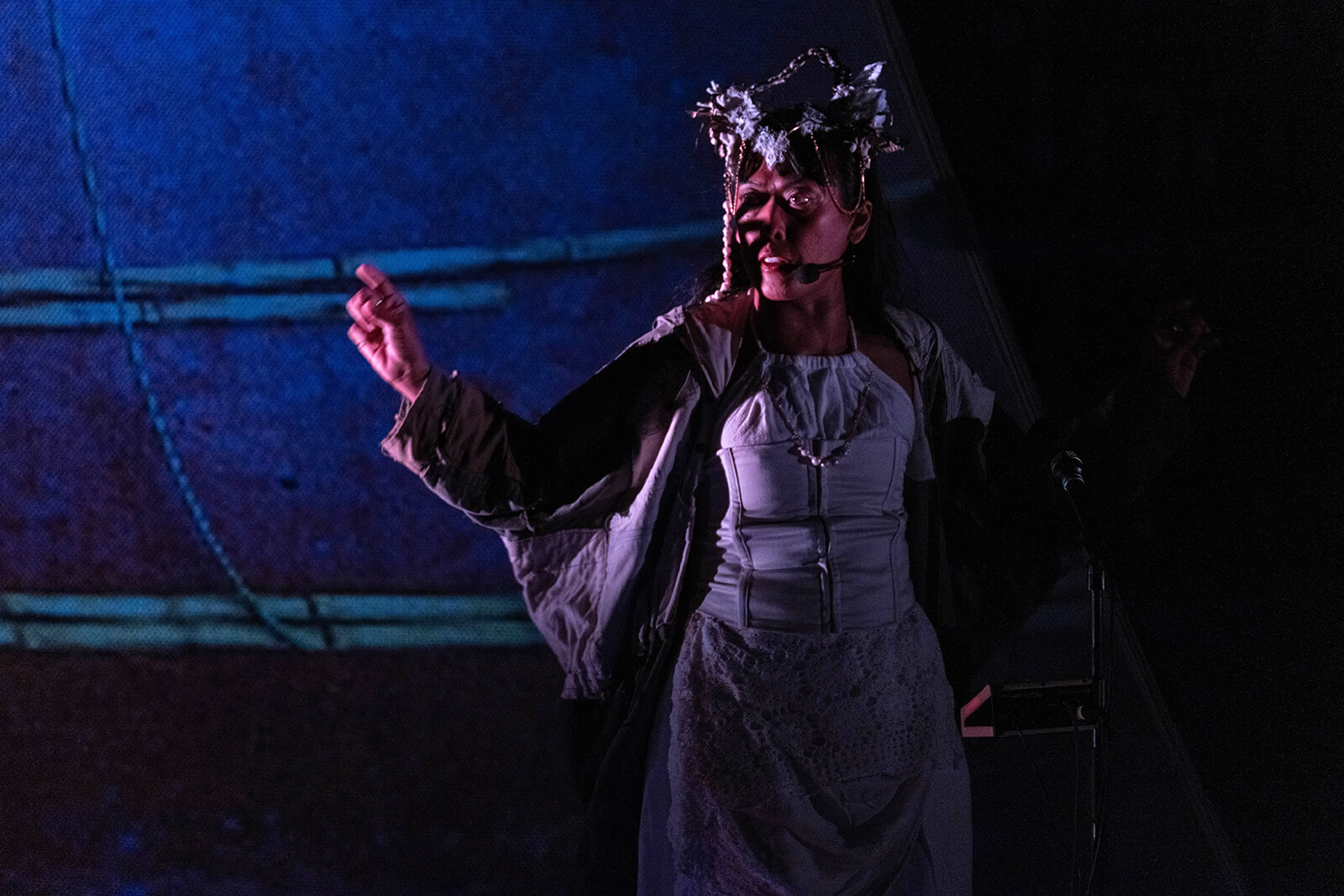
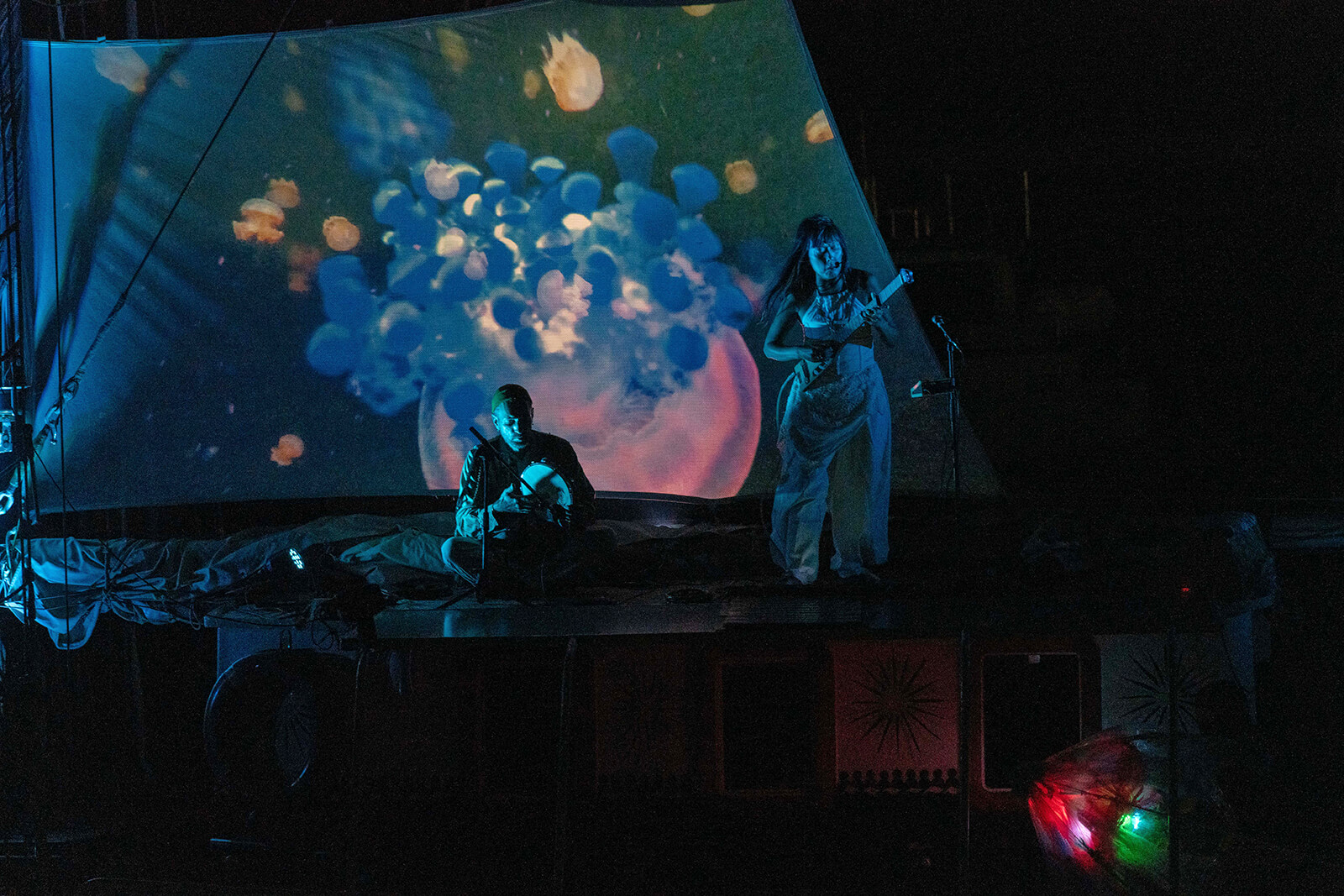
Rhythm Alliances suggests spatial, emotional and cultural linkages in its roster of artists, many with clear ties to the subcontinent, or to oceanic histories of trade and transmission. A multimedia performance by musicians Nova Ruth and Grey Filastine on their sailing ship Arka Kinari took us into the special economic zone of Port City Colombo, built on 665 acres of reclaimed land to the west of Colombo. In the vein of other aspirational urban industrial projects in South Asia, Port City has been likened to Hong Kong, London and Dubai. We drove on wide, unlit streets, workers in neon vests waving red traffic wands to mark the route. Audiences milled in the dockyard, while the ship became a performance space, gently heaving with the wind as Nova and Filastine sang and played, invoking the climate crisis on terrain that is proof of ecological destruction. Behind us, endless rows of container cranes – brightly lit, unlike the rest of Port City – telegraphed unceasing activity. The city never recedes from view, and it reminds us that power is at the centre of cultural and commercial exchange – both in how and where we make art – and the conditions and contexts of this making.
STIR is a media partner with Colomboscope for its ninth edition, ‘Rhythm Alliances', which runs from January 21 – 31, 2026, in Colombo, Sri Lanka.
The views and opinions expressed here are those of the author(s) and do not necessarily reflect the official position of STIR.
by Srishti Ojha Oct 21, 2026
Increasingly, artists, filmmakers and activists are turning to VR to create more personal, tangible accounts of the climate emergency and its impact on vulnerable communities.
by Mirra Lynn Oct 20, 2026
The Indian artist paints the old wadas of central Pune, capturing the traces of everyday life that cling to these structures, battered by time but unbowed.
by Anmol Ahuja Oct 15, 2026
How do heaps of souvenirs and relics with racist Aboriginal motifs and features become art? MCA Sydney’s winter showcase—the artist’s largest to date—beckons a possibility.
by Vandana Kalra Oct 14, 2026
With his latest exhibition as a point of departure, the modernist discusses his decades-long practice, the spontaneity of drawing and the social responsibility of artists.

make your fridays matter with a well-read weekend
Enter your details to sign in
Don’t have an account?
Sign upOr you can sign in with
a single account for all
STIR platforms
All your bookmarks will be available across all your devices.
Stay STIRred
Already have an account?
Sign inOr you can sign up with
Verification link sent to check your inbox or spam folder to complete sign up process
Tap on things that interests you.
Select the Conversation Category you would like to watch
Please enter your details and click submit.
Enter the 6-digit code sent at


At Colomboscope 2026 in Sri Lanka, a score for many people
by Ranjana Dave | Published on : Jan 30, 2026


 Sign in with Google
 Sign in with email
What do you think?