Art08 mins. read
Serving ‘lewks’ and ‘aesthetics’ with Virtual Beauty at Somerset House
by Mrinmayee BhootJul 28, 2025



by Mrinmayee BhootPublished on : Feb 27, 2026
Khoj International Artists’ Association’s current showcase, Are You Human? presents a fundamental dilemma—perhaps more exacerbated in the digital age—the question of how humanness is defined. The omnipresence of the internet and communication technologies in our everyday lives leaves the boundaries between bodies, machines and public space permeable—the one informing the other—that the showcase hopes to spotlight. Its central provocation remains to unsettle the notion that we are not human alone, given our penetrating entanglements with digital technologies; that our acute reliance on the World Wide Web for everything has in some way turned us into cyborgs; the smartphone a ‘natural’ extension of our arms.
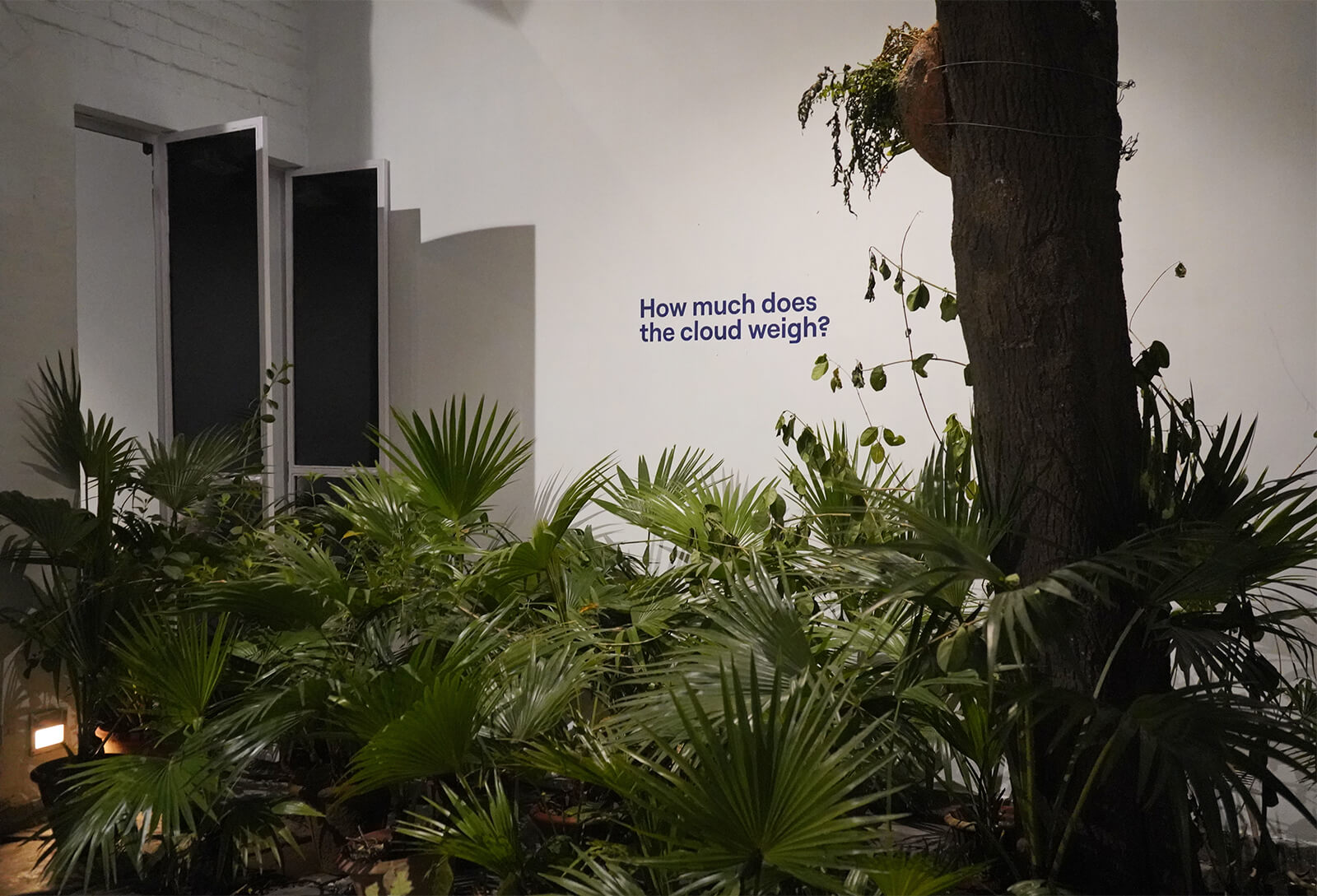
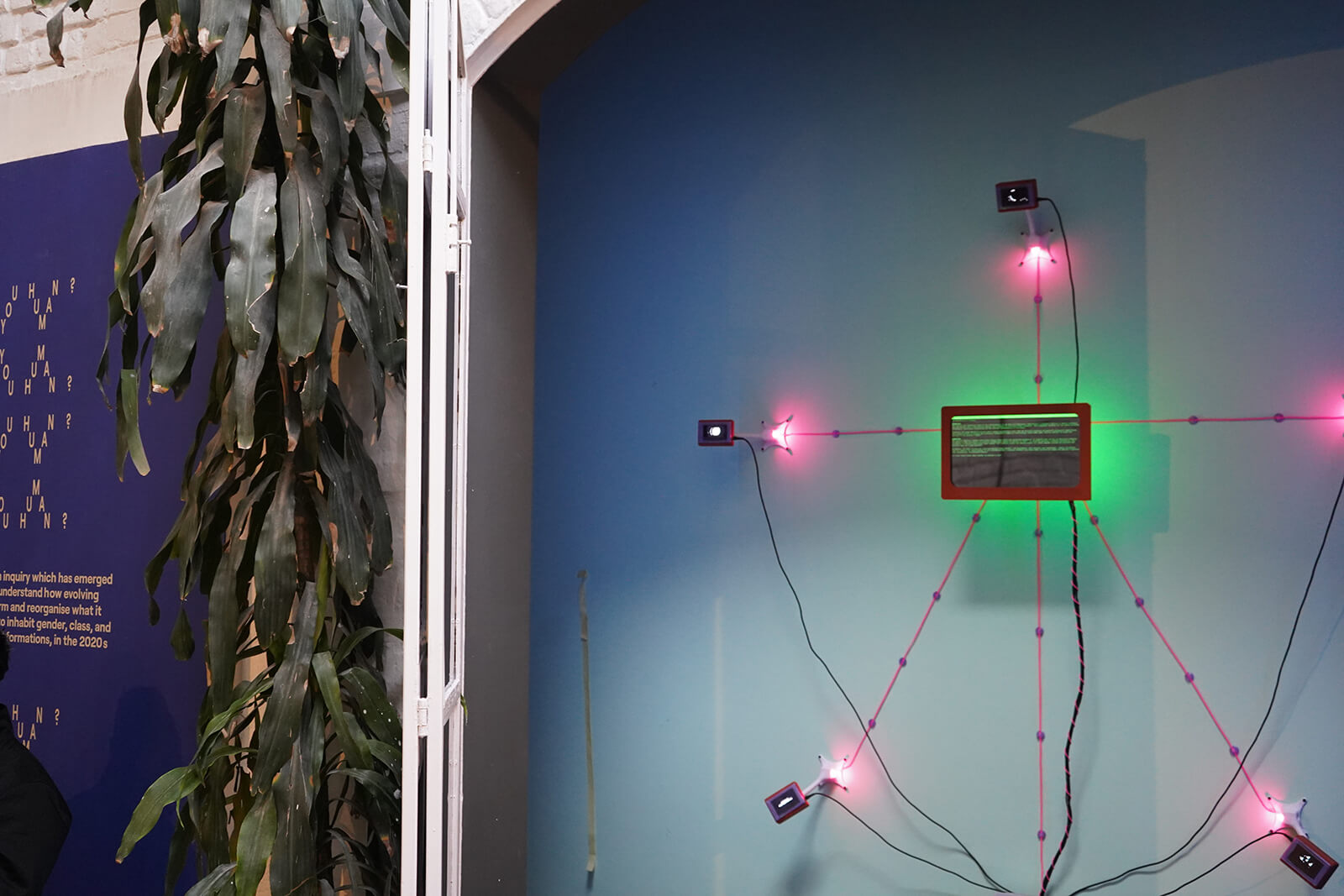
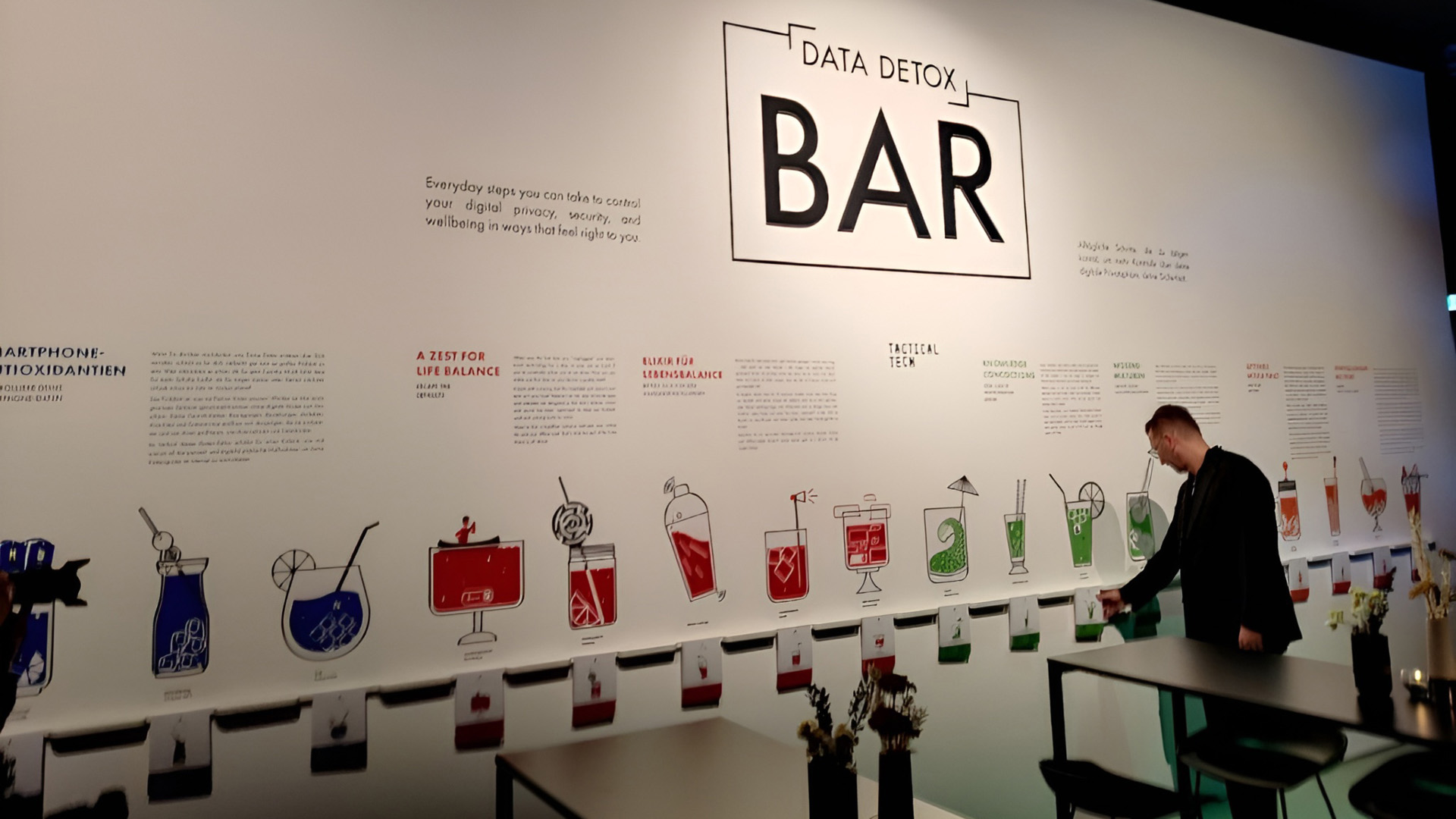
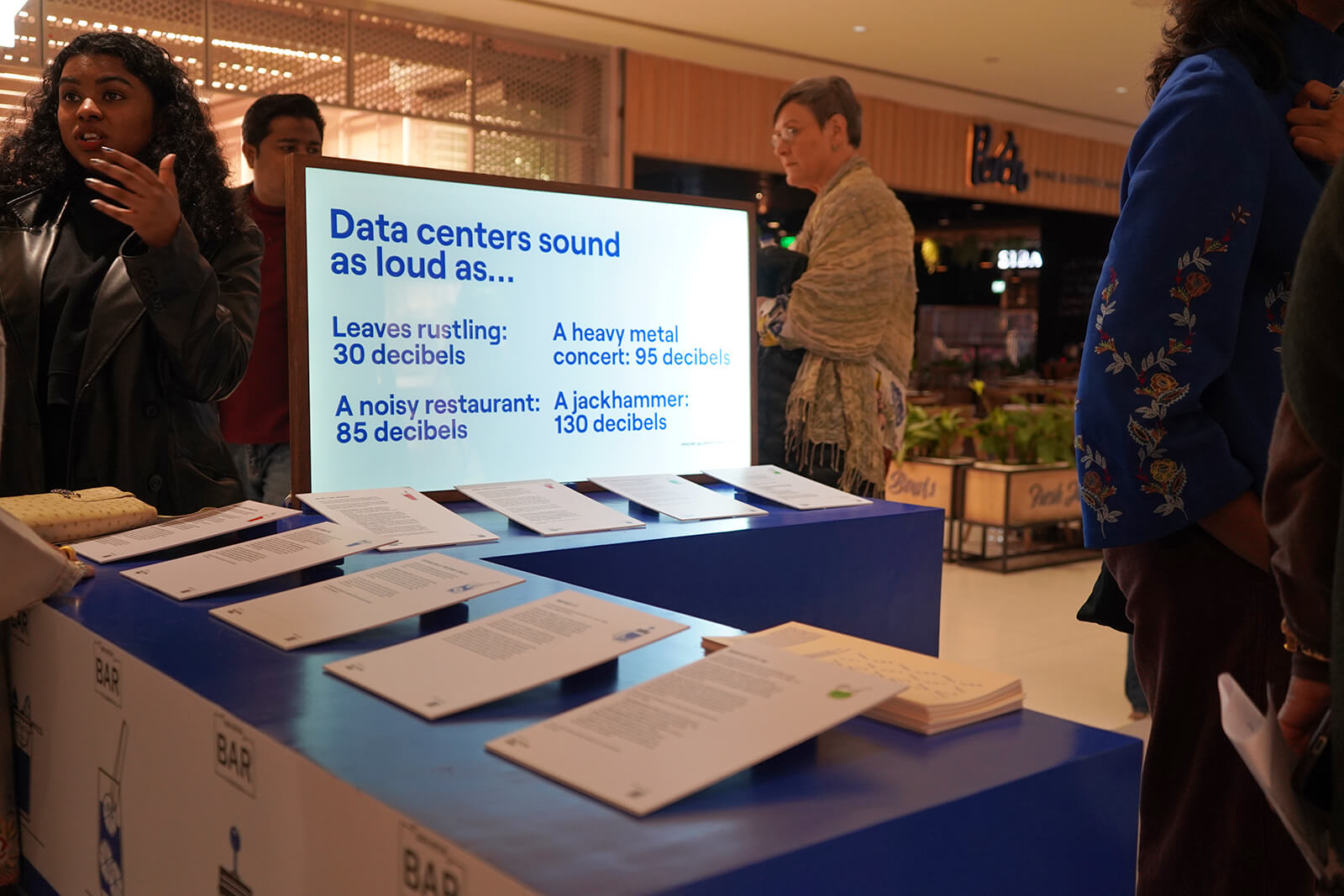
It’s split into two parts: one half of the installations housed at Khoj Studios till February 28, 2026, and the other dispersed through the superfluous spaces of DLF Avenue Mall, a shopping complex across the road from the art institution till earlier last week. At the proverbial heart of the exhibition at the studio—in their cosy and overflowing canteen—the organisers have put together a makeshift reference library, with charts depicting data about our internet consumption patterns and their impact, and books that support and add critical perspectives to the themes explored by the artists in the show.
Aptly, one of the few books on display is Shoshana Zuboff’s The Age of Surveillance Capitalism (2018), an all-too-pertinent text unpacking what it means to occupy the digital world in any sense today. Zuboff’s critical text offers an incisive look at the ways in which technology has been engineered to define our choices for us, to categorise us through algorithms, to monitor our behaviour, to mould and streamline the ‘content’ that we consume through a digital architecture that has almost perfect knowledge of us; in essence, to define all that is ‘human’. In deference to Zuboff, the installations on display, ranging from interactive artworks to films to speculative sculptures, hope to underscore how our bodies have become sites of data production; how this very data is inherently biased and how, in turn, this bias shapes our perception of and existence in public spaces.
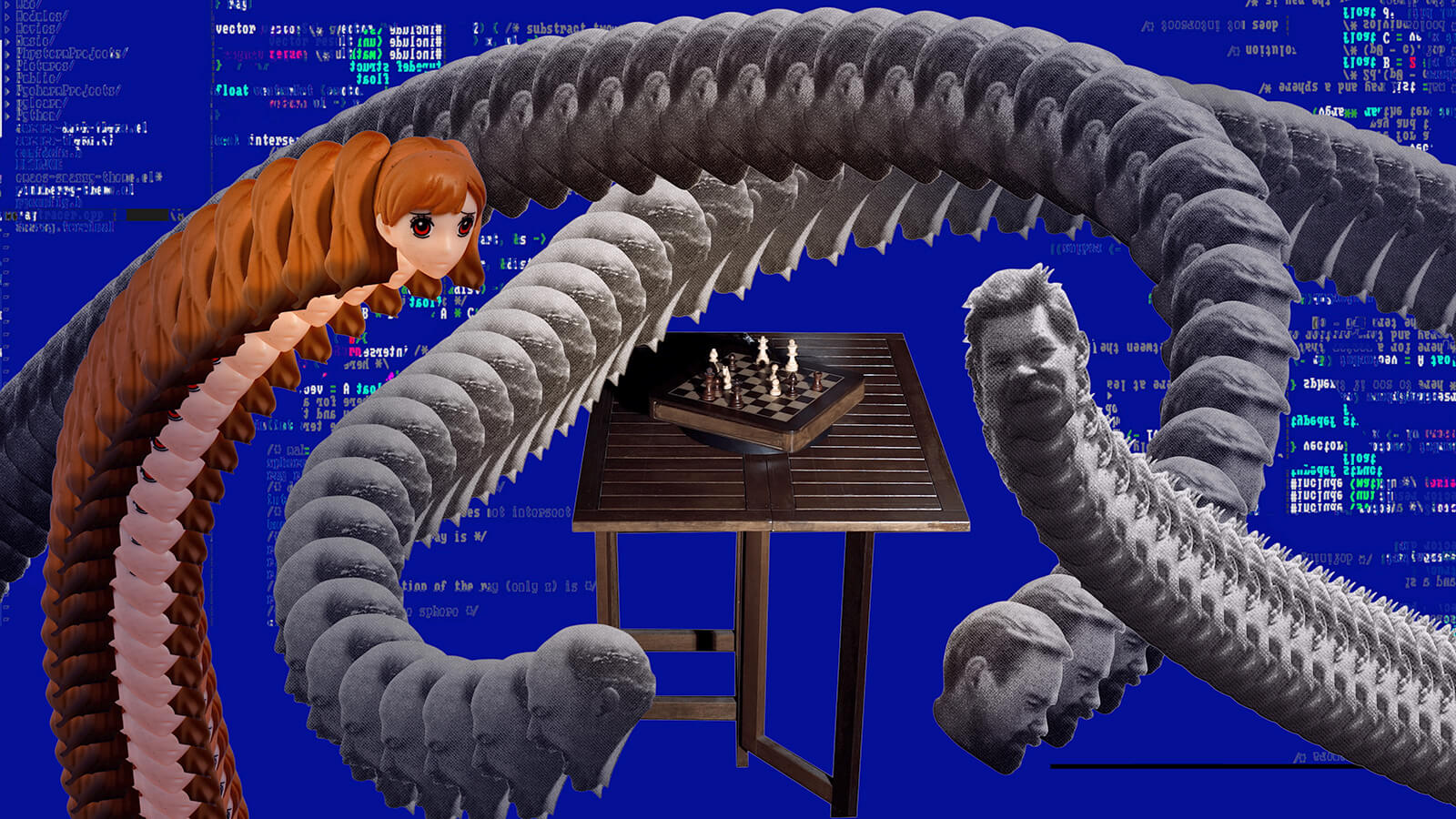
This inquiry, already a vastly discussed topic in cultural spheres, is refracted through the lens of gender, caste and other socio-ecological formations, the official release states. One is most struck in this negotiation between the organic and the machinic—one that the show claims is becoming increasingly porous—of the reliance on screens. They are employed for most installations; most are, after all, video artworks, or digital interfaces with which to interact. Their inclusion, however, feels more like a barrier, not a porous boundary, because of the passive nature of a viewer’s engagement with the medium. For instance, Delhi and Berlin-based artist MOCHU’s contribution, GROTESKKBASILISKK! MINERAL MIXTAPE feels abstract. Exploring online subcultures and the ways they perpetuate a technologically accelerated view of the world, the work is almost surrealist. A dolphin glitches across the screen while lines of code fill the blank space behind, its claim of reflecting the ways in which we engage with social media rendered with the uncanniness of AI hallucinations. If the video feels abstract, the text accompanying it is even more oblique. For viewers not well versed with the references being flashed onscreen, the images themselves don’t offer much clarity.
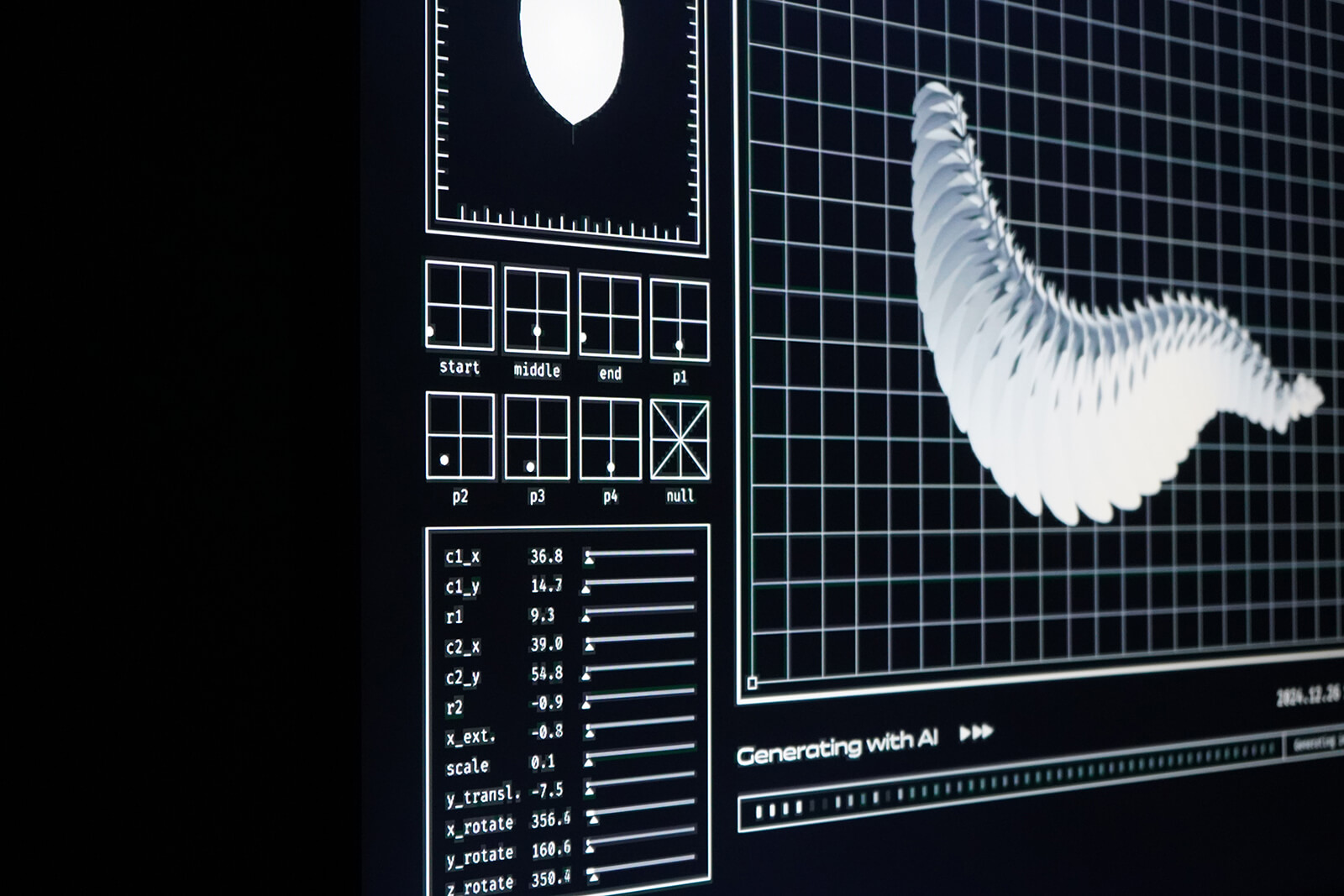
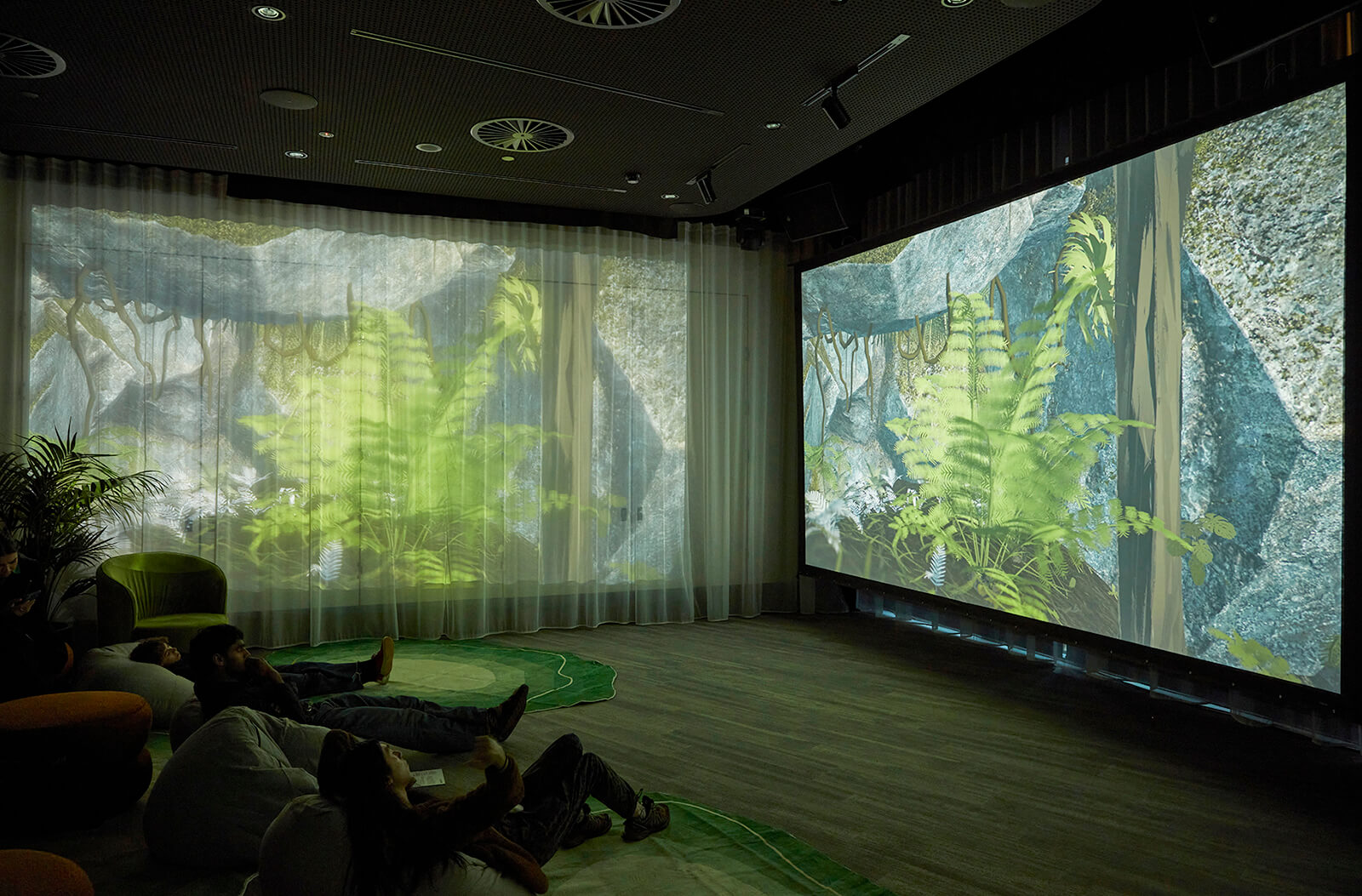
There are also works that expose the hardware of essentially intangible internet systems, like Patricia J. Reis and Stefanie Wuschitz’s Clay PCB – Eco-Feminist Decolonial Hardware, which offers a ‘feminist hardware’ kit—making use of resources that have been mined under fair working conditions and from ubiquitously available material. Through the speculative artwork, the duo propose a model for technology that is not destructive of our fragile planet. The most impactful installation, tracking the manner in which software industries are destroying the planet, is through Gondwana by Ben Andrews and Emma Roberts, a VR representation of the Daintree Rainforest in Australia. Here, data points are employed to recreate the nuances of a changing rainforest—one that is affected very much by human intervention and our plundering of natural ecosystems. In offering real-time data of our impact on ecosystems, it imposes real-world consequences on the abstractness with which we usually think of digitality.
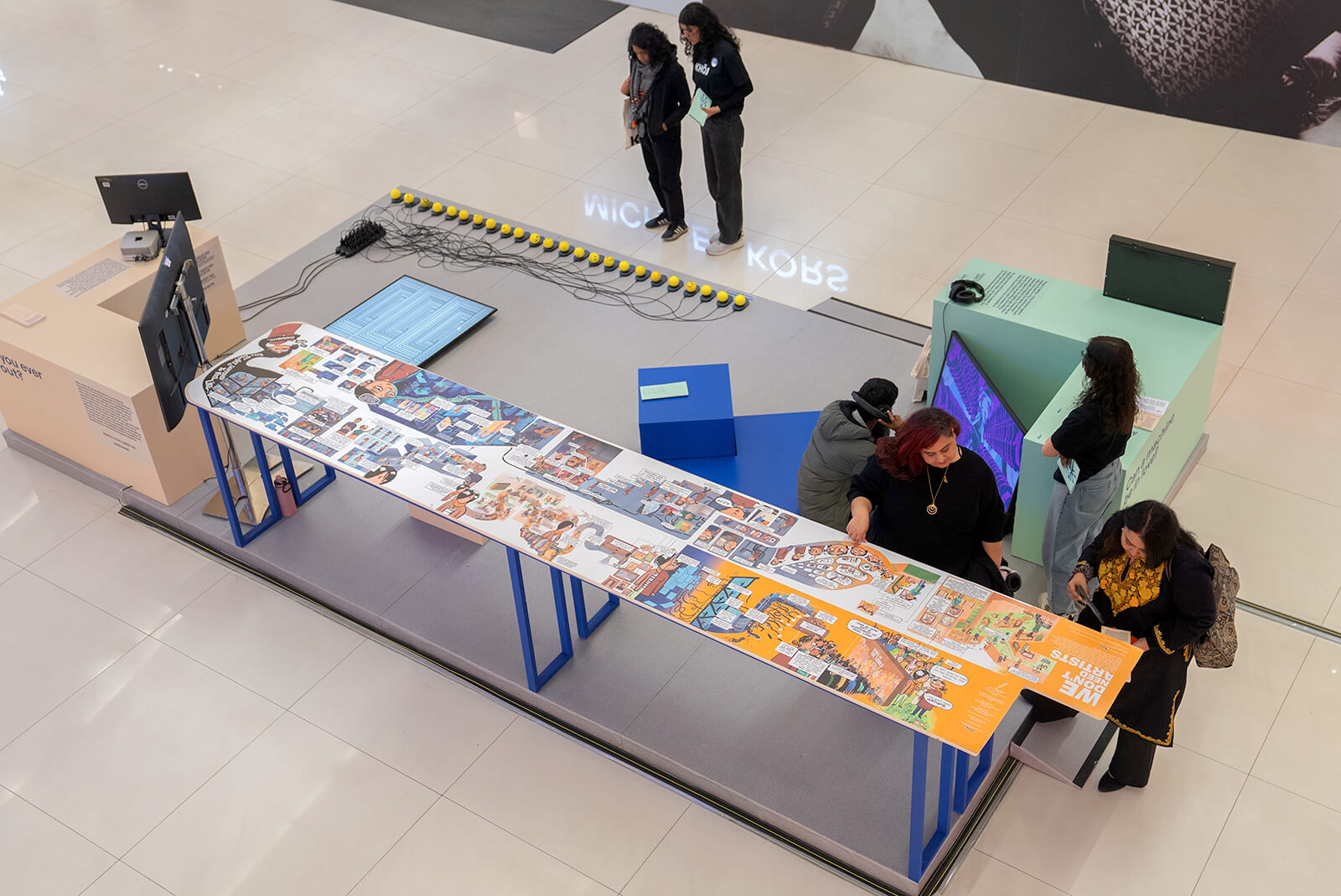
Other works, like Zein Majali’s Propane, which is a montage of digital renders or even Dimension Plus’ Ecological Pool that uses AI as a generative tool to imagine the life cycle of an imaginary species hinge on the side of speculation, giving the show an air of intangibility, one that makes the looming threat of these systems—ecological destruction, social alienation, economic devastation to name a few—feel less intimidating. Dwelling on digital culture in India, A Glimpse of Us by Manuel Beltran and Nayantara Ranganathan presents cutouts of targeted advertisements in India, looking at online advertising and the ways in which it influences users’ behaviour. It depicts ads for political campaigns, women empowerment programmes, infrastructure projects, and is perhaps the most situated in its perspective of the average internet user in the subcontinent. The Internet in the subcontinent was established in 1986 for academic institutions and then opened up to the general public on 15 August 1995. As of last year, the country had over 1 billion internet users, an all-pervasive phenomenon that deserves scrutiny over access, democratisation and to what ends the freedom of the digital realm is exercised.
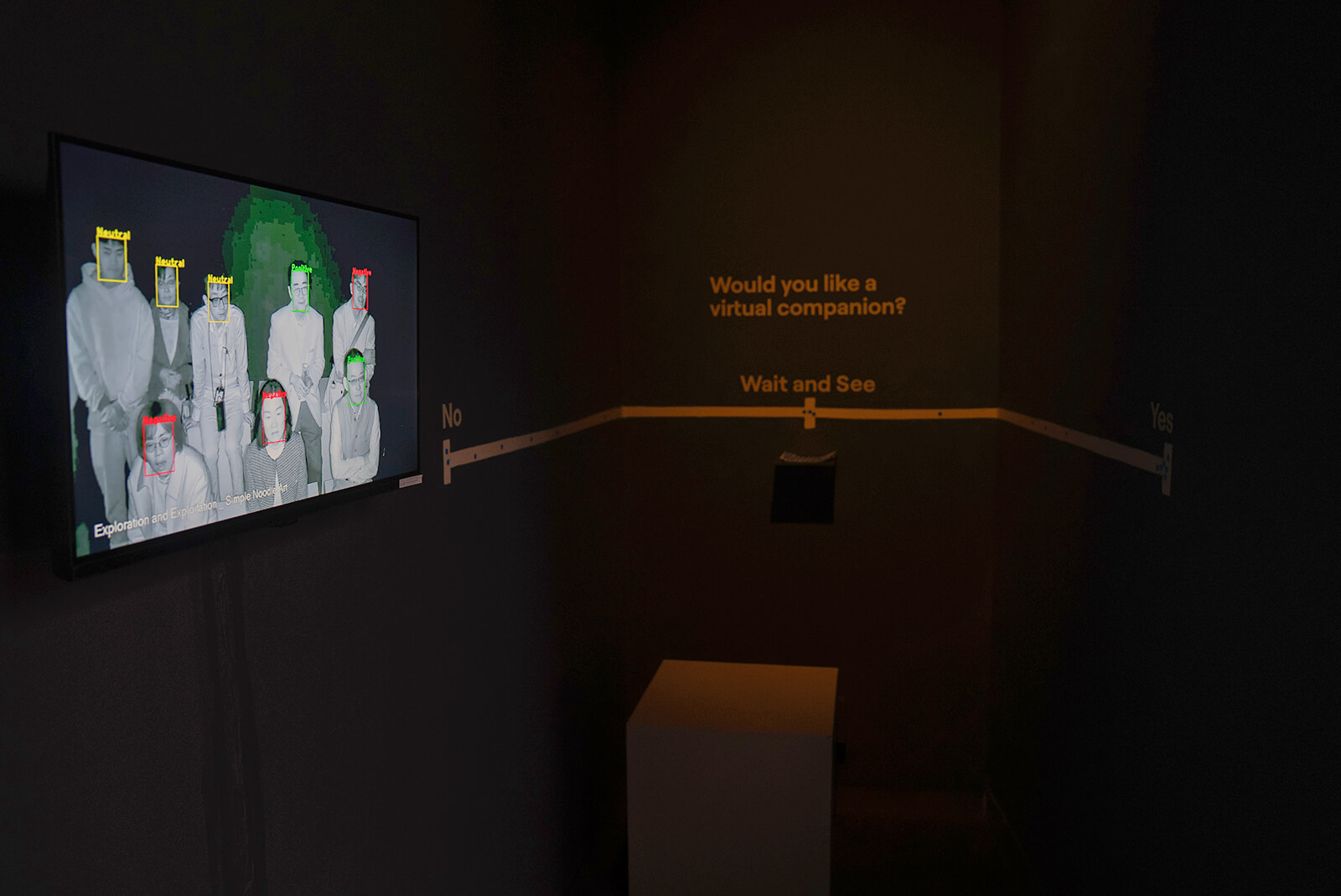
When everyone is on the internet, the question becomes, what is a good internet user? This is what Indian artist Swarna Manjari poses with her simplistic graphic artwork, An Ideal Internet User, listing ‘good habits’ that one must adopt when in cyberspace. These range from advice on managing cookie settings to not clicking on spam links. Going through, one begins to wonder if these ‘good habits’ are means to make the internet more democratic or ways for the algorithms to make one conform and to learn more about the user. This is perhaps most cheekily explored by Taiwanese artist collective Simple Noodle Art in Exploration and Exploitation, an interactive artwork in which they portray a fictional world where algorithms regulate human emotions to feed us recommendations. The installation hopes to show how, instead of expanding the range of information available to us, AI algorithms actually trap us in filter bubbles, regurgitating our own skewed worldviews.
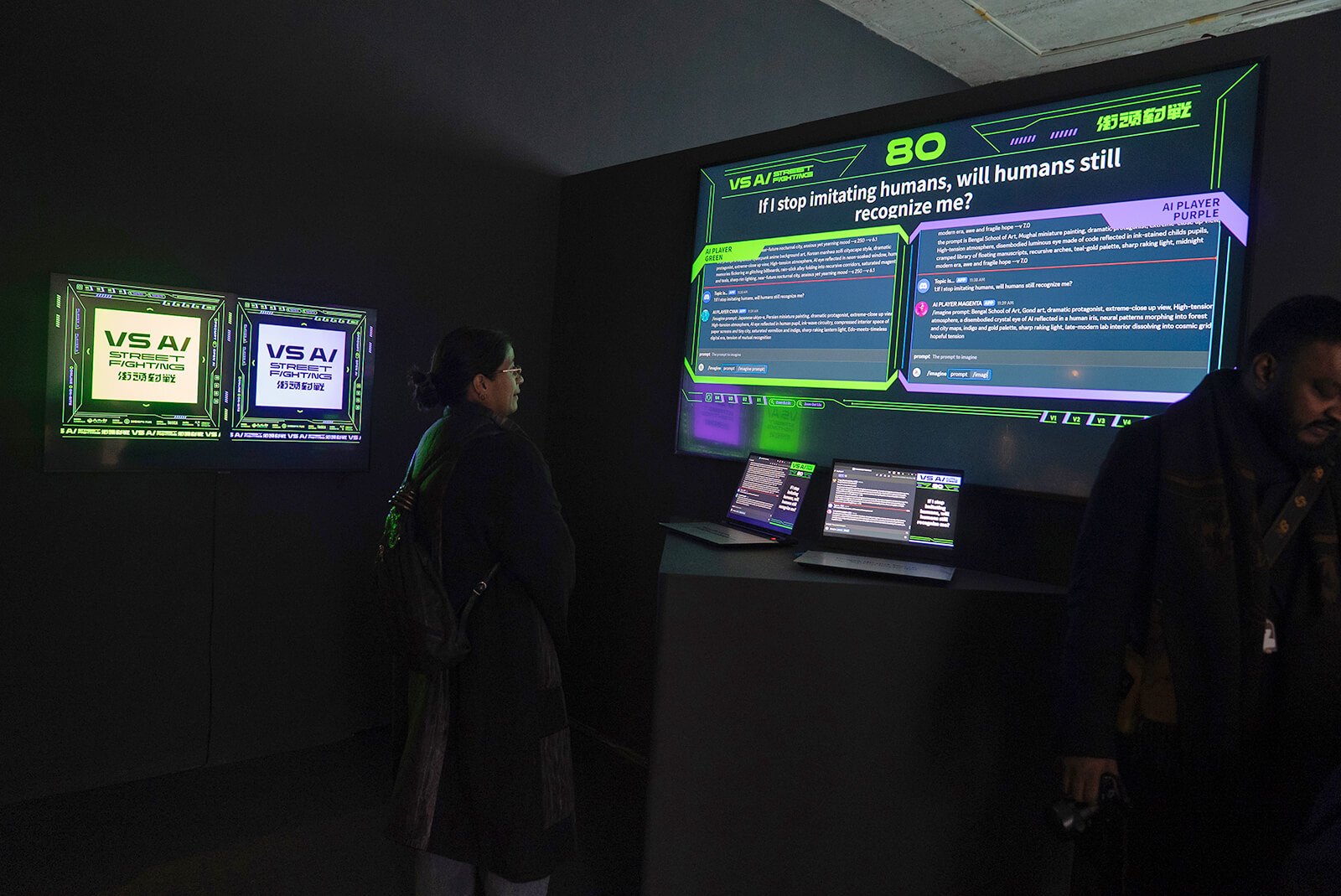
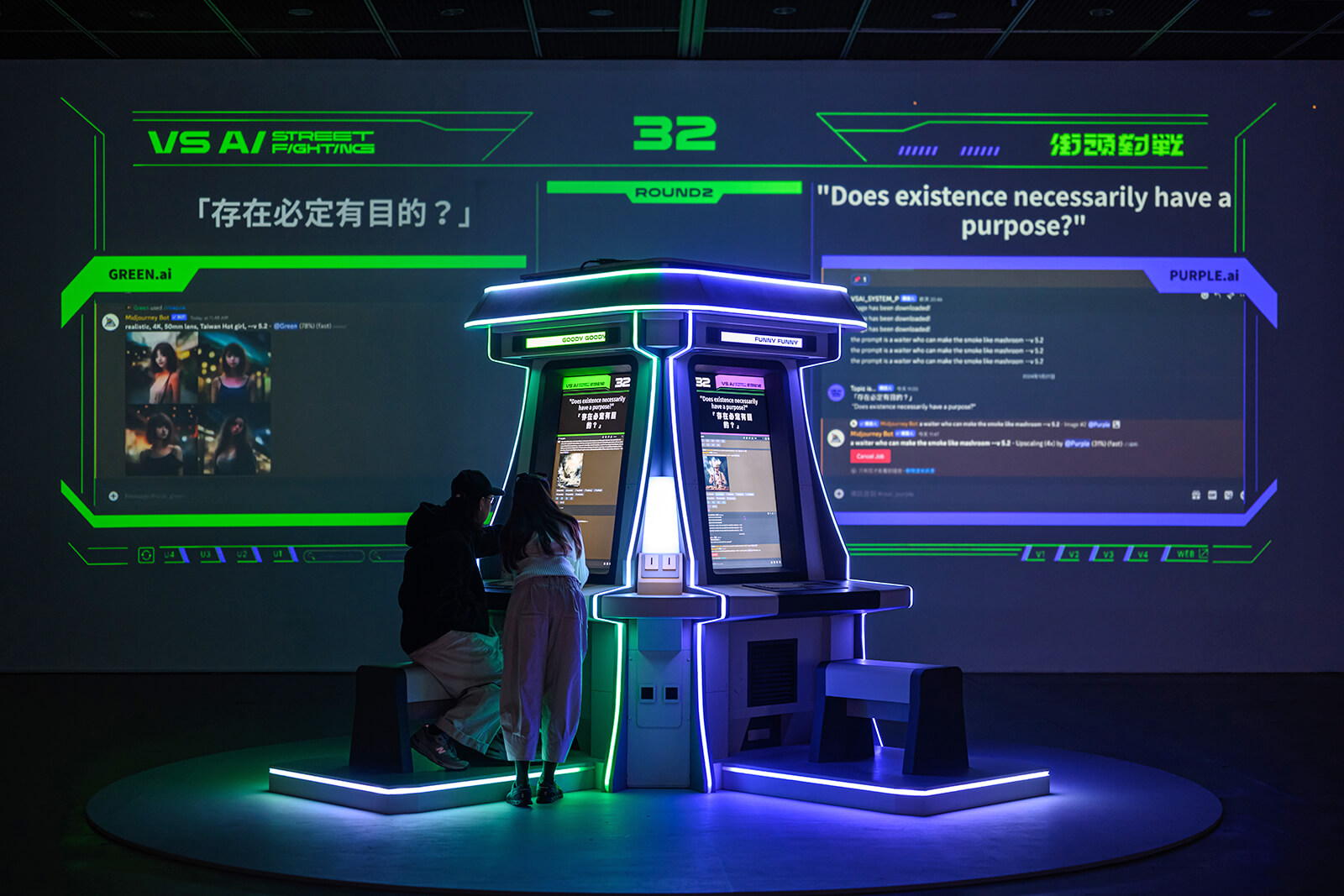
For a showcase that hopes to spotlight the influence of the digital in our lives, the presence of AI in a lot of the works (such as Simple Noodle Art) is self-evident. With a similar theme exploring AI bias, an interactive work by Tomo Kihara and Playfool, Deviation Game, pits viewers against an AI model in a Pictogram-style game. By asking viewers to draw an object to confuse AI into not being able to guess correctly, it underscores how AI models gather information and process data. Offering another perspective on large language models, Cayenne van den Houten’s systems_for_refusal: feedback.room is presented as a networked installation exploring the ways in which AI tends to hallucinate information at certain instances, given the information it is asked for.
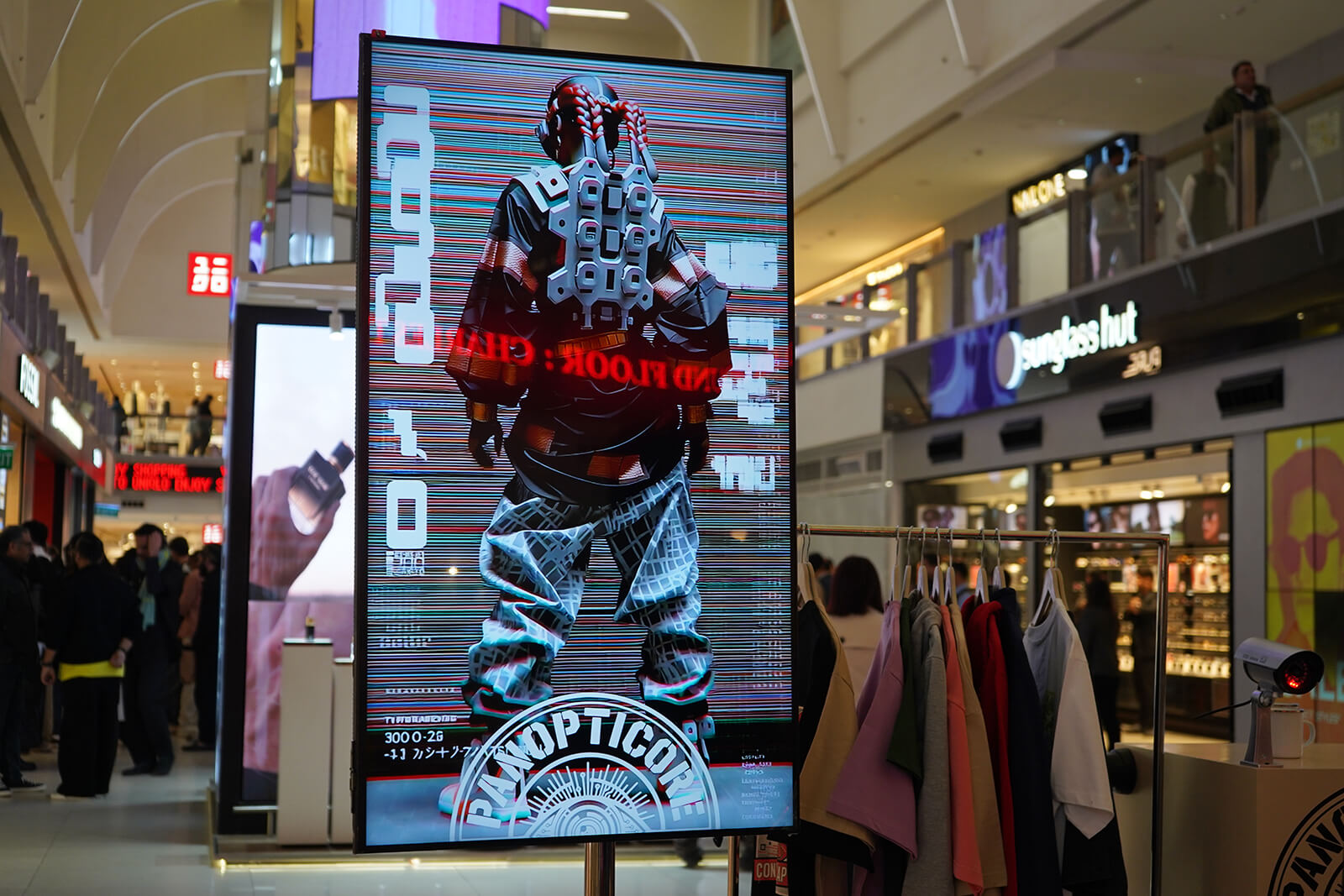
Across the road at DLF Avenue, IIT Kanpur Hive Lab’s Judgement Day, which uses surveillance technology and AI to label passersby as either safe or a threat, indicates the pervasion of surveillance technology in public spaces, the biases entailed and the caution we must exercise, which is also explored in their VR artwork Body as Data. The other installations scattered through the mall, as a means to engage with a public that might not necessarily walk into art galleries, feel jarring, given the subject that they explore and their dissonance from the context in which they are placed. That said, artist duo Elsewhere in India’s installation Panopticore manages to unsettle the viewer through that very juxtaposition. Designed as a fictitious pop-up retail installation, the products on display reference Jeremy Bentham’s model of the panopticon (as referenced in the name).
Variously, the works included in the showcase at Khoj do unravel some pertinent questions that are still being shaped as we decide how to be within the digital age: questions of how technology can reshape itself to be more ecologically sensitive; how we might dismantle normative social hierarchies through feminist practices; or can democracy exist in a world where truth is unstable, and realities are increasingly manufactured. The fact that these are only explored through the lens of the universal—by only tandemly engaging with the inequalities inherent in the system—of who gets access to what technology, who can discern and who cannot, who can choose to disengage and who cannot remains a question that the viewer must contend with. Some go so far as to only engage with the algorithms that humans have generated. No data or no recognition is given to who, what, where this information comes from, or what context it critiques. If Are You Human cannot convince the average viewer of how digital technology structures their lives, neither does it implicate it with the ethical or moral consequences of reshaping our socioeconomic realities. Ultimately, the responsibility of answering the question that the show poses, if an answer can exist at all, remains one that is intensely human, shaped by particular lived realities alone.
‘Are You Human?’ is on view from January 30 – February 28, 2026, at Khoj Studio, New Delhi.
The views and opinions expressed here are those of the author(s) and do not necessarily reflect the official position of STIR or its editors.

by Anmol Ahuja Oct 15, 2026
How do heaps of souvenirs and relics with racist Aboriginal motifs and features become art? MCA Sydney’s winter showcase—the artist’s largest to date—beckons a possibility.
by Srishti Ojha Oct 14, 2026
The first Dutch publication on the Turkish artist, the eponymous book centres on Refik Anadol: Latent City, his living data sculpture of Bruges, exhibited at BRUSK gallery.
by Vandana Kalra Oct 14, 2026
With his latest exhibition as a point of departure, the modernist discusses his decades-long practice, the spontaneity of drawing and the social responsibility of artists.
by Srishti Ojha Oct 09, 2026
In his ongoing exhibition, the South African artist creates two post-apocalyptic futures to explore society’s relationship with textiles, patterns and technology.

make your fridays matter with a well-read weekend
Enter your details to sign in
Don’t have an account?
Sign upOr you can sign in with
a single account for all
STIR platforms
All your bookmarks will be available across all your devices.
Stay STIRred
Already have an account?
Sign inOr you can sign up with
Verification link sent to check your inbox or spam folder to complete sign up process
Tap on things that interests you.
Select the Conversation Category you would like to watch
Please enter your details and click submit.
Enter the 6-digit code sent at


Khoj underscores the persistent question of humanity and its traces in the digital age
by Mrinmayee Bhoot | Published on : Feb 27, 2026


 Sign in with Google
 Sign in with email
What do you think?