Design08 mins. read
Designer Shahar Livne examines the violence of rubber in The Devil’s Milk triptych
by Pia BhatiaSep 14, 2026



by Andrea Zarza CanovaPublished on : Feb 06, 2026
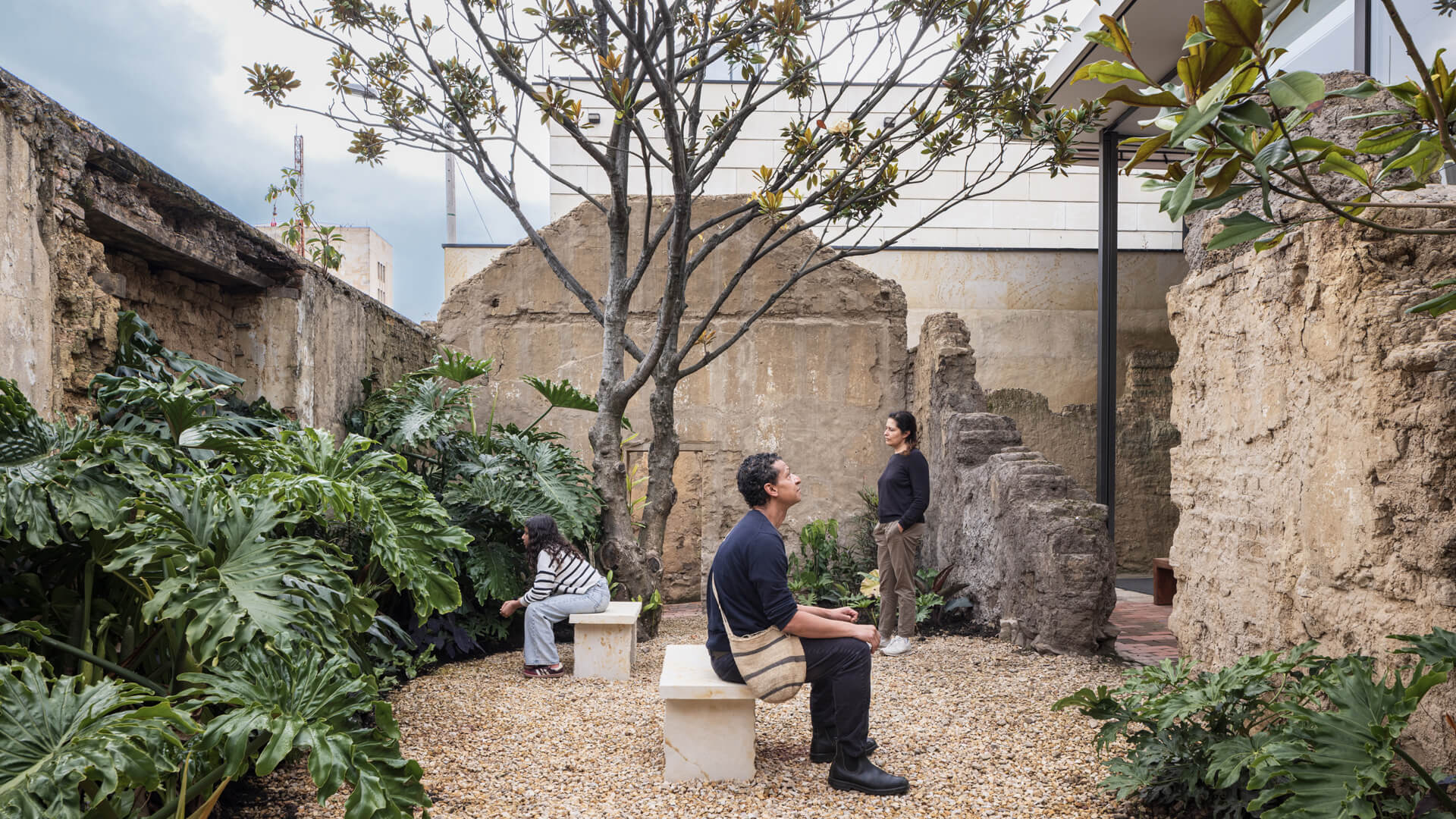
Fragmentos is located in the Candelaria neighbourhood of Bogotá, Colombia, near the Presidential Palace, City Hall and other governmental ministries. Colombian visual artist and sculptor Doris Salcedo was commissioned to design this ‘counter-monument’ in 2016 as part of the Colombian Peace Process between the FARC guerrillas and the Colombian Government. In collaboration with Granada Garcés Arquitectos, the site was transformed from a former dumping ground into an exhibition space articulated around the ruins of a former colonial home, discovered once the detritus was cleared. Separated from the street by a wall synchronous in height with the neighbouring low houses, the scale of Fragmentos feels aligned with the human body. Stepping in from the street into the first of various outdoor areas of Fragmentos, one is met with an enveloping soundscape of melodic humming filling the surrounding environment, blending in with the sounds of the street left behind.
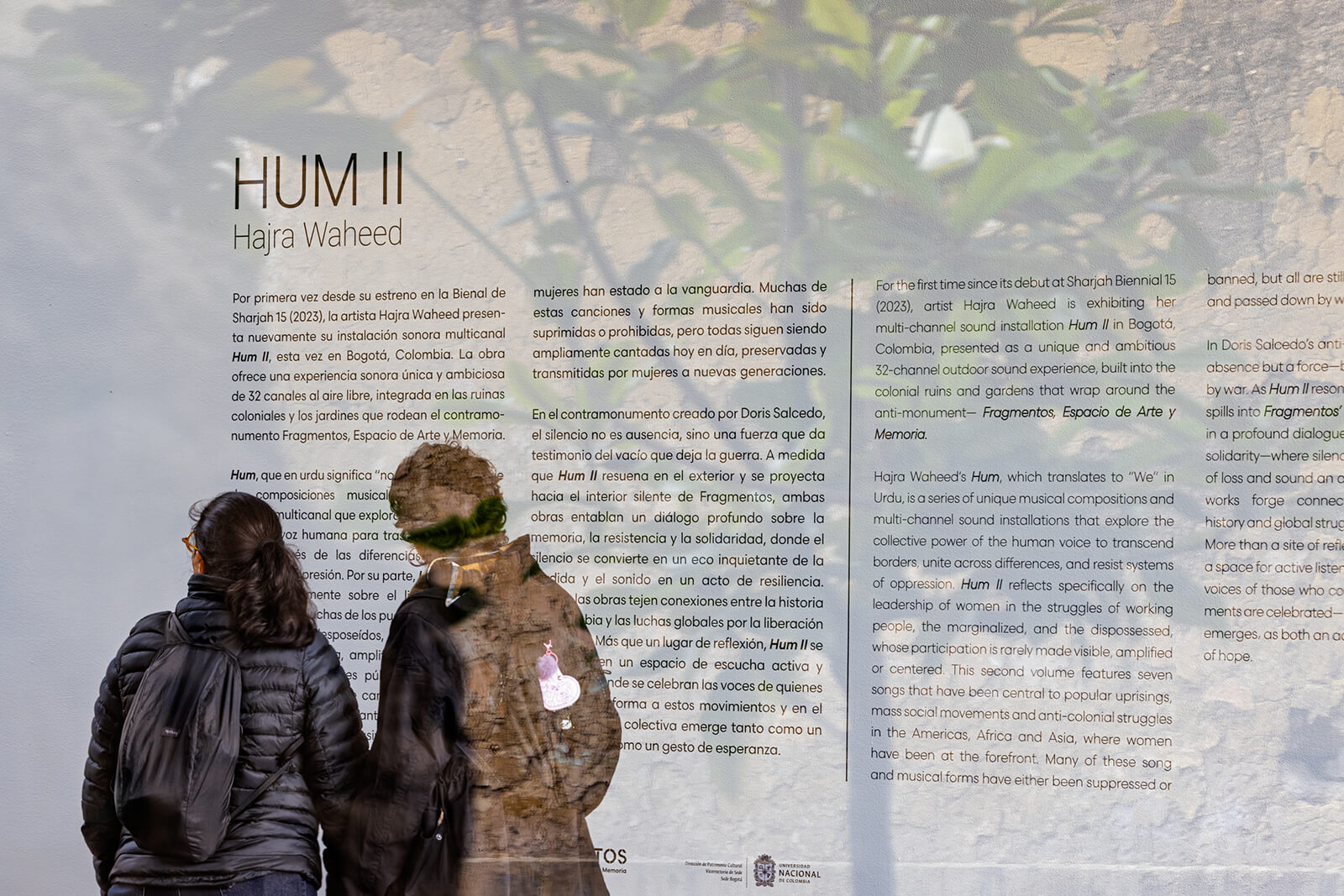
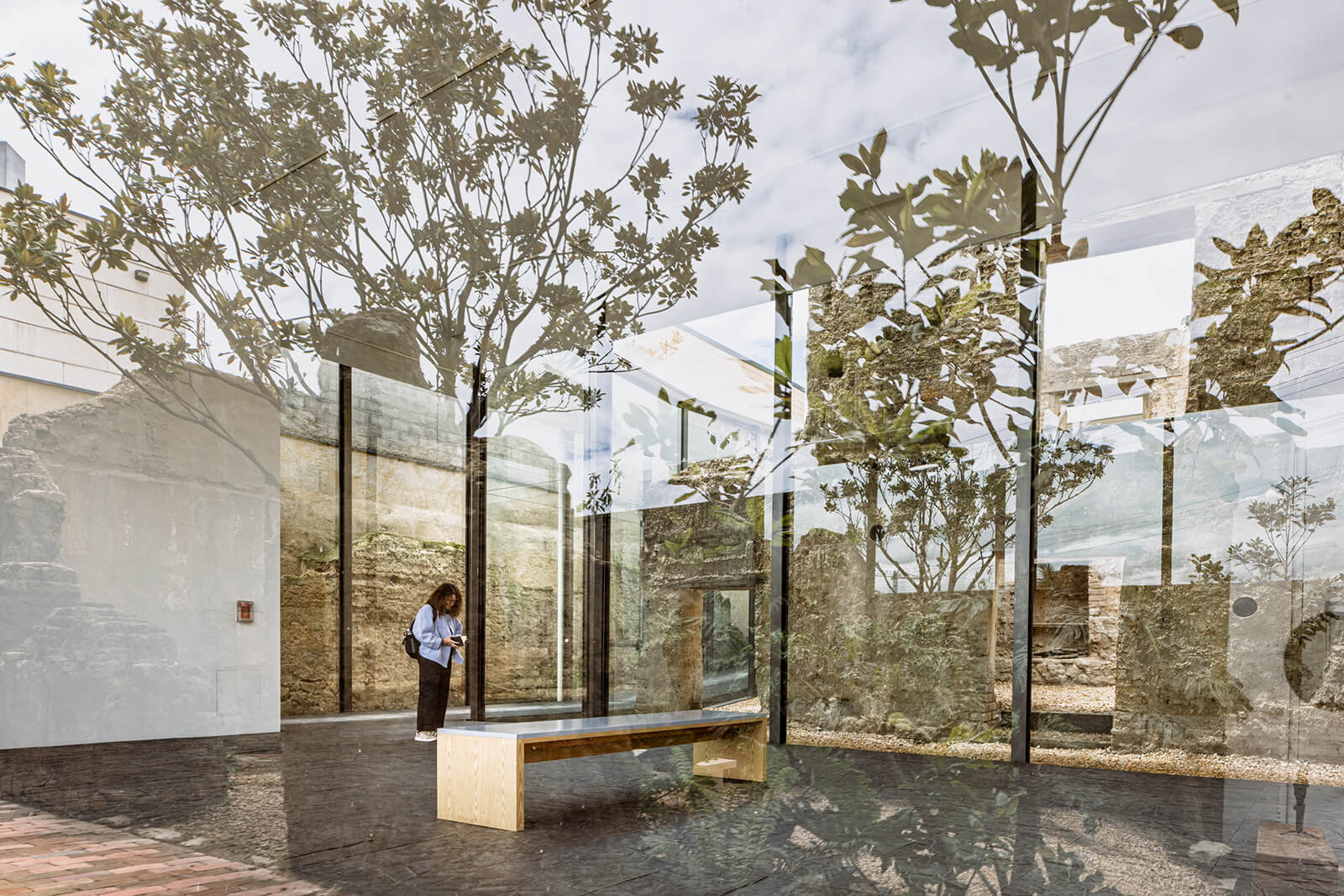
These hummed melodies, audibly coming from various voices through concealed speakers, form part of the composition that is Hum II, a multichannel sound installation by interdisciplinary artist Hajra Waheed that remains on display until next week. Hum II brings into sequence seven songs from global resistance movements in which women’s leadership has been vital. At Fragmentos, Hum II distinctly activates the site not simply as an exhibition space, but as a living archive and composition we can physically walk through. The unique relationship between site, space and the songs and voices within Waheed’s work, carefully rendering her evocative soundscapes, is palpable. Neither is foregrounded nor placed in the background. Instead, space and the resistance embodied within it forms part of this composition.
A newfound archive of sorts emerges within Fragmentos’ ruins: it activates transmission of song through hums, preserving them in this intimate and collective act, encoding lyrics in an act of resisting official language. Hum II begins with a hummed arrangement of Into the New World by Girls Generation (SNSD), a K-Pop song that students protesting at Ewha Women’s University in Seoul adopted during a stand-in with the police, eventually becoming the ‘unofficial anthem for South Korea’s Candlelight Revolution’—an event which led to the ousting of President Park Geun-hye. Following this, Taraweeh, a type of Palestinian folk songs can be heard, also in a hummed arrangement. These folk songs, developed by women, already rely on encoding and encrypting their words, enabling them as a carrier of messages across prison walls. More recently, these songs and their words have been further transformed, mobilising people in the street to protest for Palestinian liberation with the ongoing genocide. All of these hummed histories together fill the outdoor areas of Fragmentos.
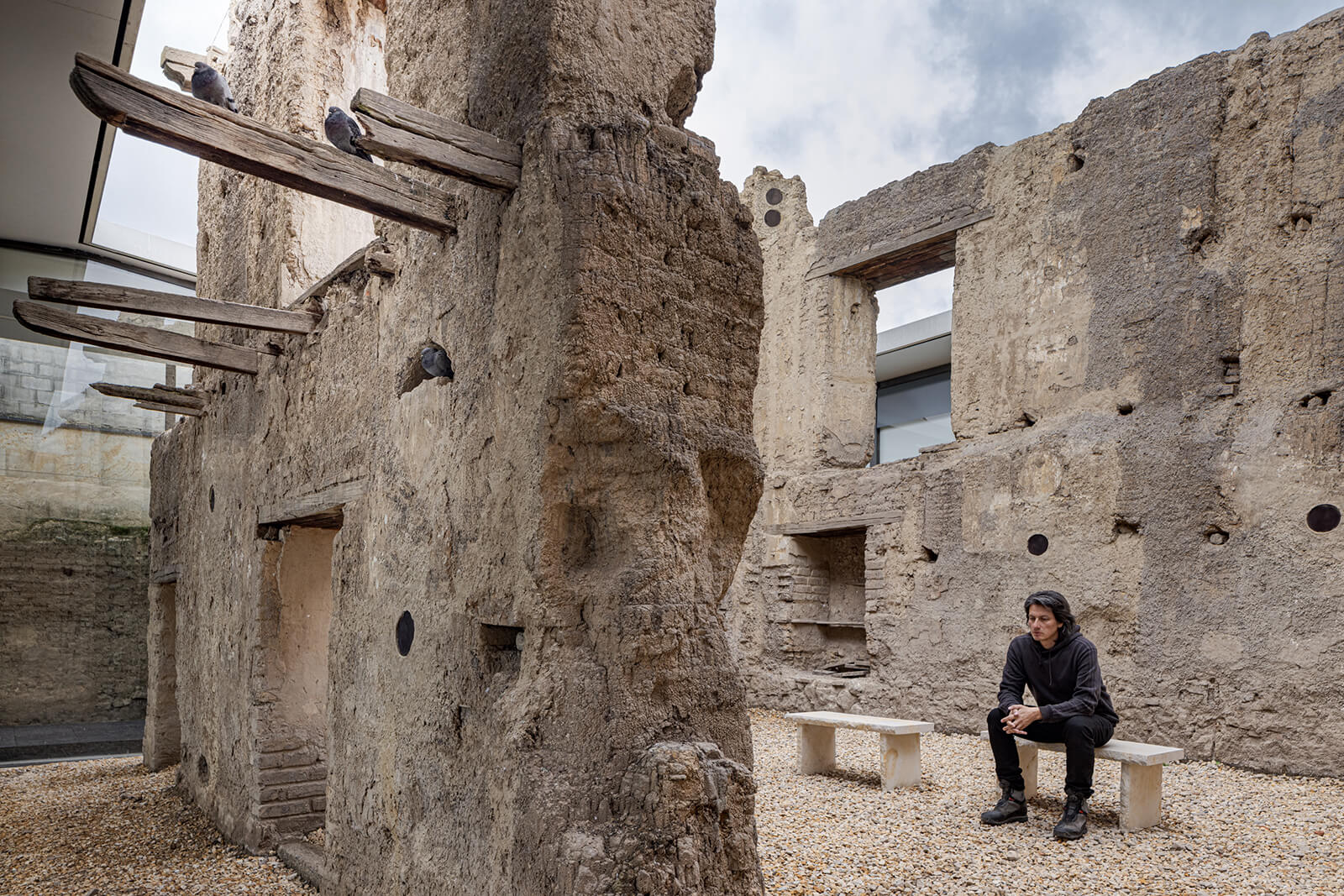
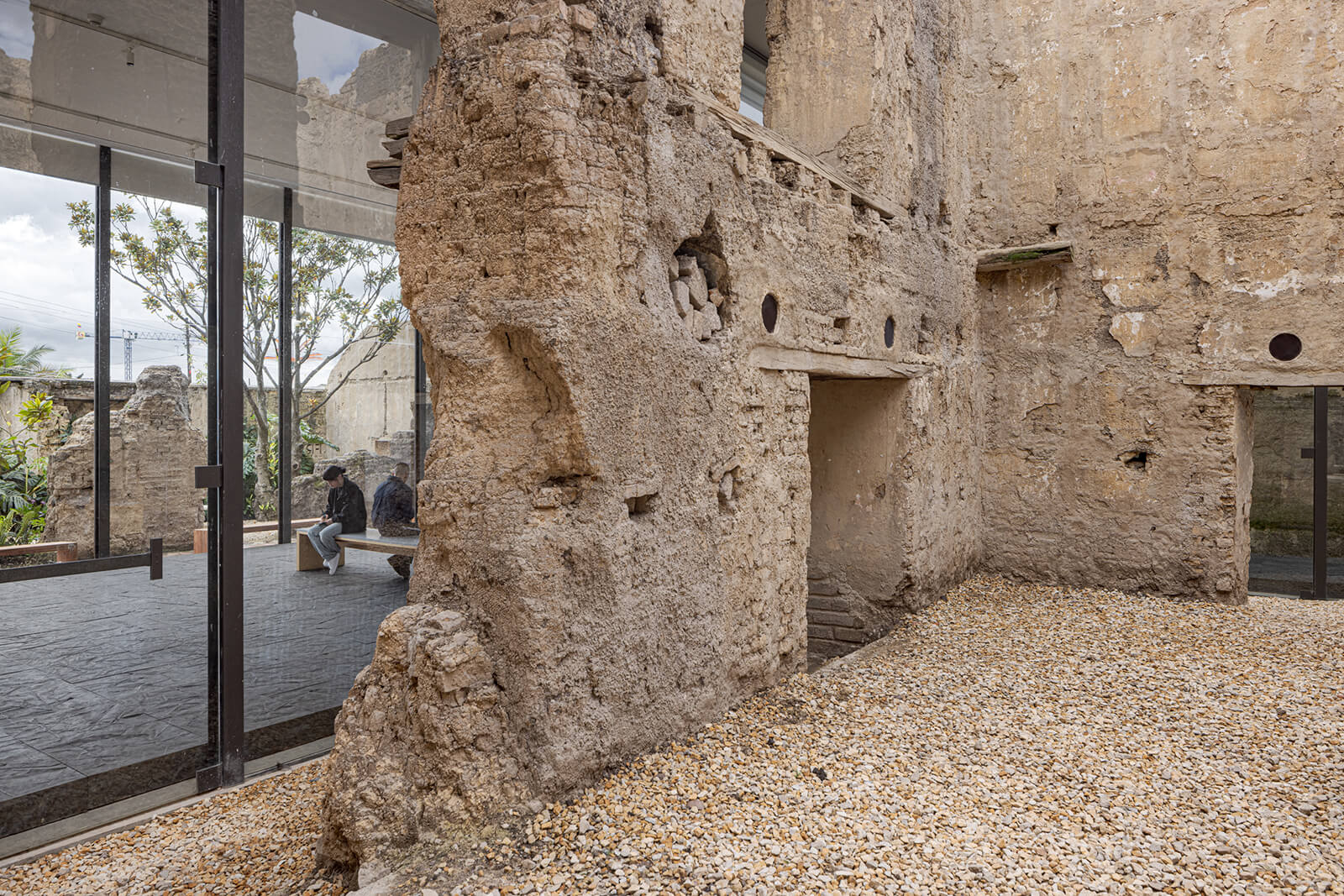
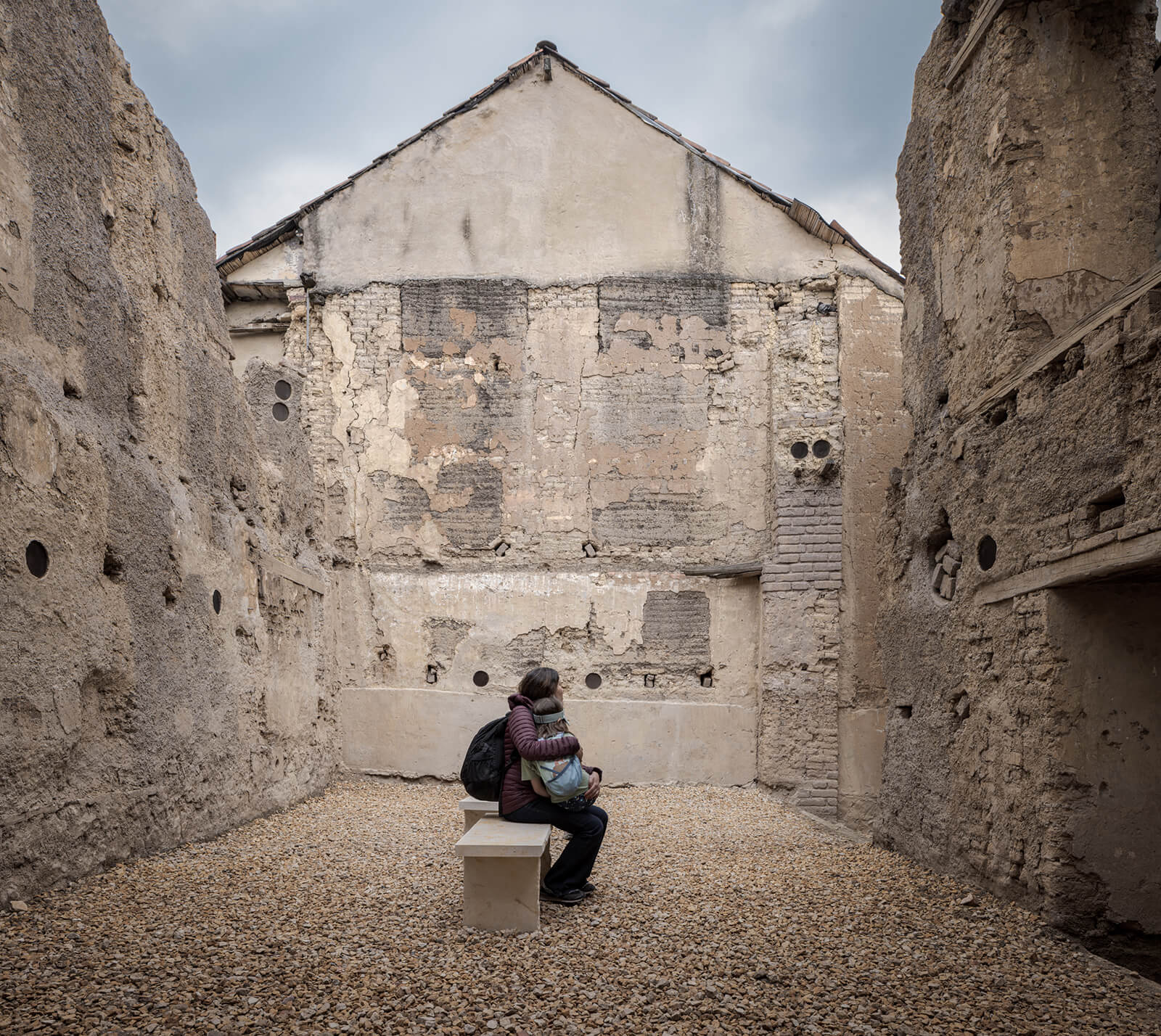
To understand what kind of archive (or counter-archive) Hum II proposes, it is necessary to rethink what an archive might be when carried by bodies rather than objects, especially in relation to space. Writing on her long-standing research into the archive of wax cylinders made by Dutch ethnomusicologist Arnold Bake in Bengal, Moushumi Bhowmik compares recordings to ruins: “All these recordings are now remains from a time gone by. Perhaps we can also call them ruins, for the sounds on the records are not what they once were”. While this is true, what Waheed’s installation at Fragmentos manages, even when embedded in ruins, is to bring the vitality and current relevance of each song, its role as a carrier, index or placeholder for movements of resistance, into a live, physical experience. The experience of listening to them in the ruins at Fragmentos reminds us that the songs are not mere recorded artefacts, but living histories of resistance—ones we can listen to, learn, and walk through. This is especially pertinent considering that so much of Global South history, and the history of formerly colonised nations, is archived intangibly in oral traditions like folktales and song, morphing as it travels through geographies and settlements carried by communities across the years, often to be lost with time. Fragmentos’ counter-monumentality then has an entirely new dimension with Hum II, one that supersedes its architectural history and seeks to wrest archival agency from artefact to space—celebrating what is unfixed, mobile and evolving. As visitors, we are invited to experience these histories by walking through Fragmentos and listening to their loud and clear diffusion through 32 speakers.
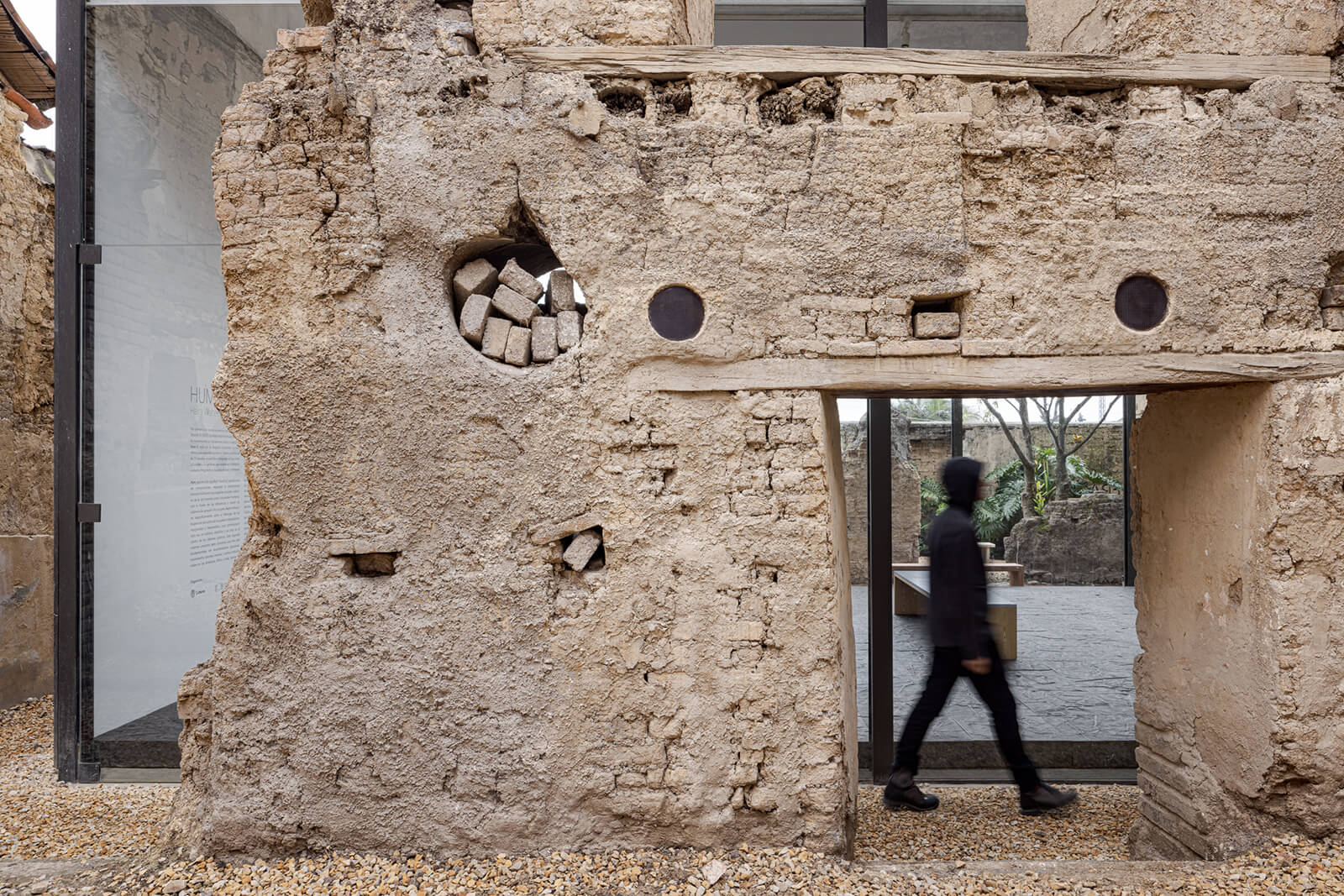
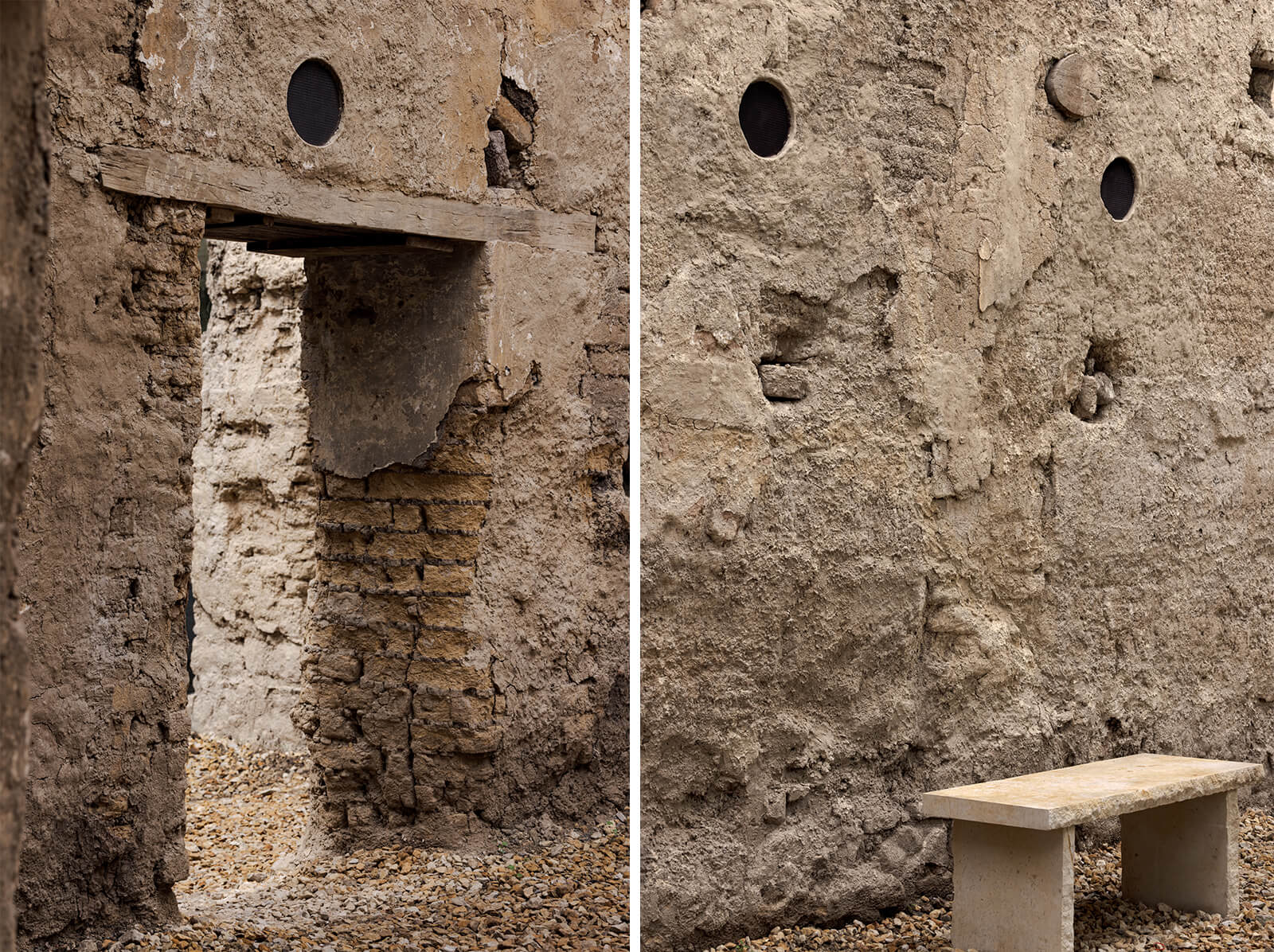
Hum II further exemplifies how musical composition itself can be a "space of safekeeping" (Müller, 2002). The 32 speakers from which the work is diffused have been meticulously embedded and concealed into the porous walls of the ruins, after these were stabilised by a seismic engineer who ensured they were structurally safe for visitors to roam around and nearby. Further to this, Waheed mixed the piece on site with a sound engineer, ensuring that the sound levels of each individual speaker were calibrated in relation to each other with the visitor’s walkthrough in mind, mapping the compositional arc of the 30-minute piece onto the physical site of Fragmentos. This is what goes behind imparting this work a distinctly spatial notion beyond the metaphorical, with precision engineering being an additional facet in eliciting the spatial memory of sound and realising an architecture that may be better perceived through the sonic medium. Once the safety of the outdoor spaces was established, they were replanted with indigenous species, turning Fragmentos into an inhabitable site for listening. The site’s architectural history—of dwelling, destruction, thoughtful reconstruction and subsequent inhabitation—speaks to the idea of negotiating space and listening as a situated practice of resistance, in itself. Waheed acknowledges the humming voices we hear through these speakers in crisp and clear studio recordings while maintaining their anonymity. In a booklet accompanying the work, she refers to them as ‘the hummers who remain anonymous and live amongst us’, perhaps to maintain that humming is a technique available to many of us, interior and private, yet plural.
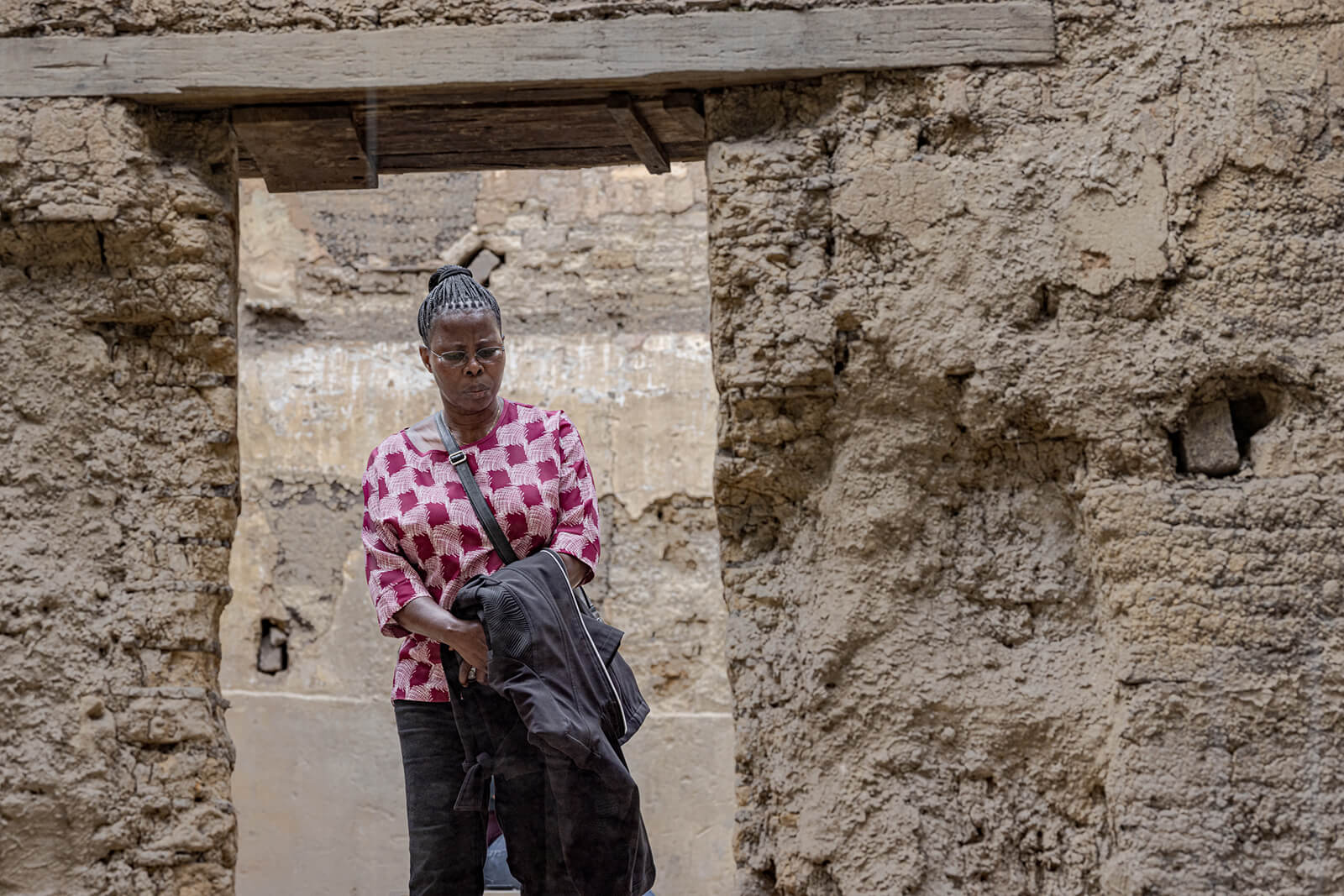
Waheed’s attention to site in Hum II builds on earlier iterations of the work, mainly Hum at the Lahore Biennial. The site of Fragmentos is more than just a container for sound as vibration to move through; it also structures, relates to and enhances the meaning and signification of the sounds within this installation. This is because Salcedo dedicated Fragmentos to the survivors of sexual violence in the ongoing Colombian conflict between the military and guerrillas; the floor of the inside spaces was made in collaboration with a group of survivors from melted down arms decommissioned as part of the peace agreement. Waheed’s gesture of initiating the rehabilitation of the outdoor areas of Fragmentos to house her multichannel installation reveals a commitment to the regeneration of this site beyond the confines of white cube galleries, while amplifying the voices of women in movements of resistance. Hum—preceding Hum II—was also responsive and in dialogue with its exhibition site, the Diwaan-i-Aam, a 40-pillar public hall initially conceived as a space to receive members of the general public to hear their grievances. During her initial site visit to Lahore, in November 2019, which coincided with nationwide protests, Waheed spoke of her interest in finding ‘a language of resistance that could cut through’ a perceived culture of silence (Cox and Waheed 2020). This resonates at Fragmentos, where the sounds of Hum II fill the “absence, silence and emptiness” of the ruin, as Salcedo speaks, to describe how Fragmentos makes tangible the aftermath of war.
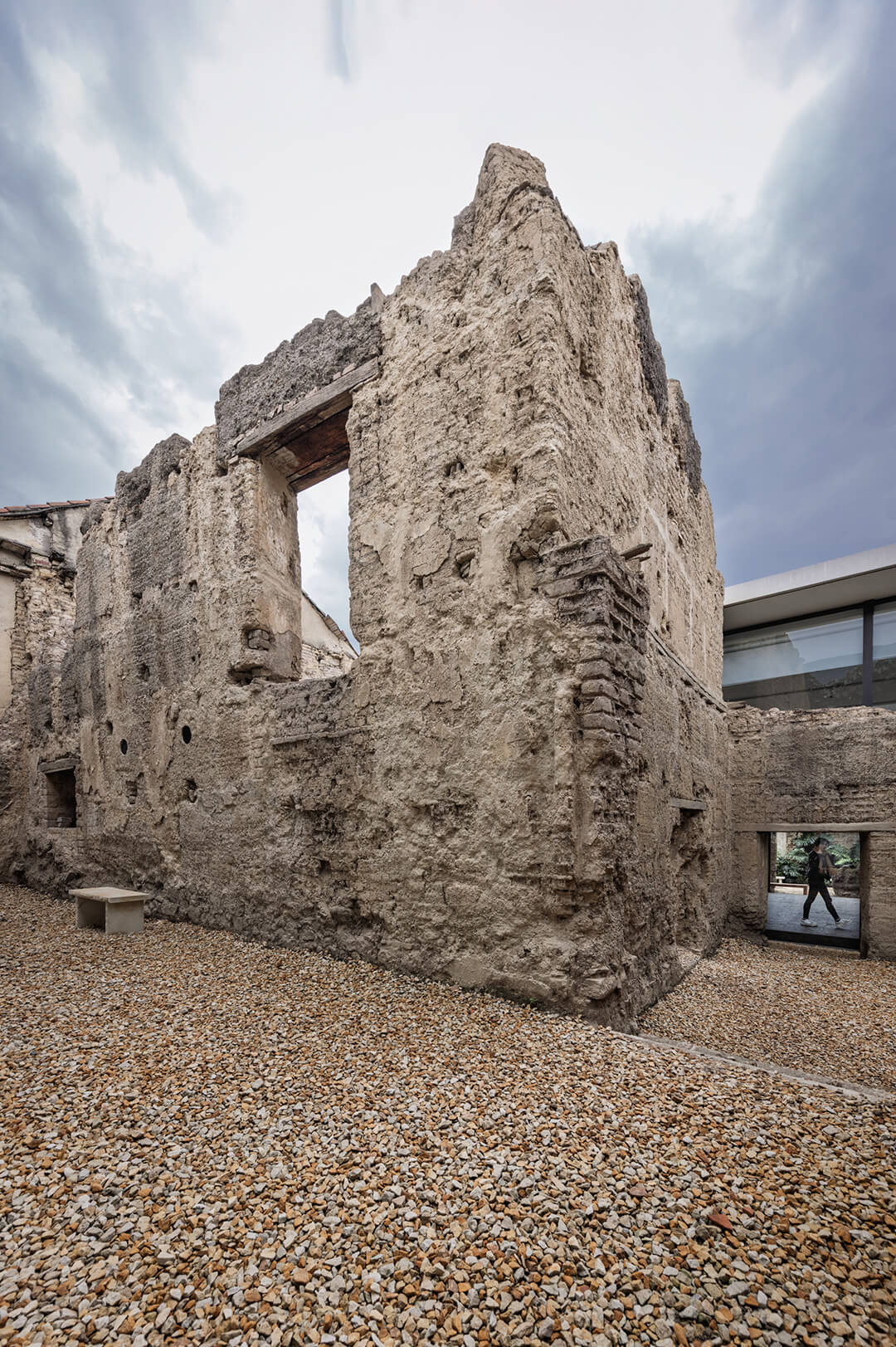
In what constitutes the exhibition's first showing in South America and in what is also the first use of Fragmentos’ outdoor spaces for temporary exhibitions, the enmeshment between Hum II and the site remains ever-present. The humming of the songs, skilfully spatialised and embedded within the ruins and gardens, swells and resonates, elevating the ensemble into a living, breathing organism and drawing listeners into a heightened state of awareness of their own bodies. The empty space within the ruins expands as if it had lungs itself, its dynamic range moving alongside one walking through the outdoor spaces, moving through the composition, from ruin to garden and eventually a merging of both. The uncanny sensation that the ruins themselves are humming, exacerbated by how the composition is enmeshed into them, brings to mind Italian philosopher Adriana Cavarero’s words: “Thought lay in the lungs, not in the head. Thinking is to speak, and to speak is to breathe. If in the psyche there is no breath, there is also no voice, and thus there is no thought.”
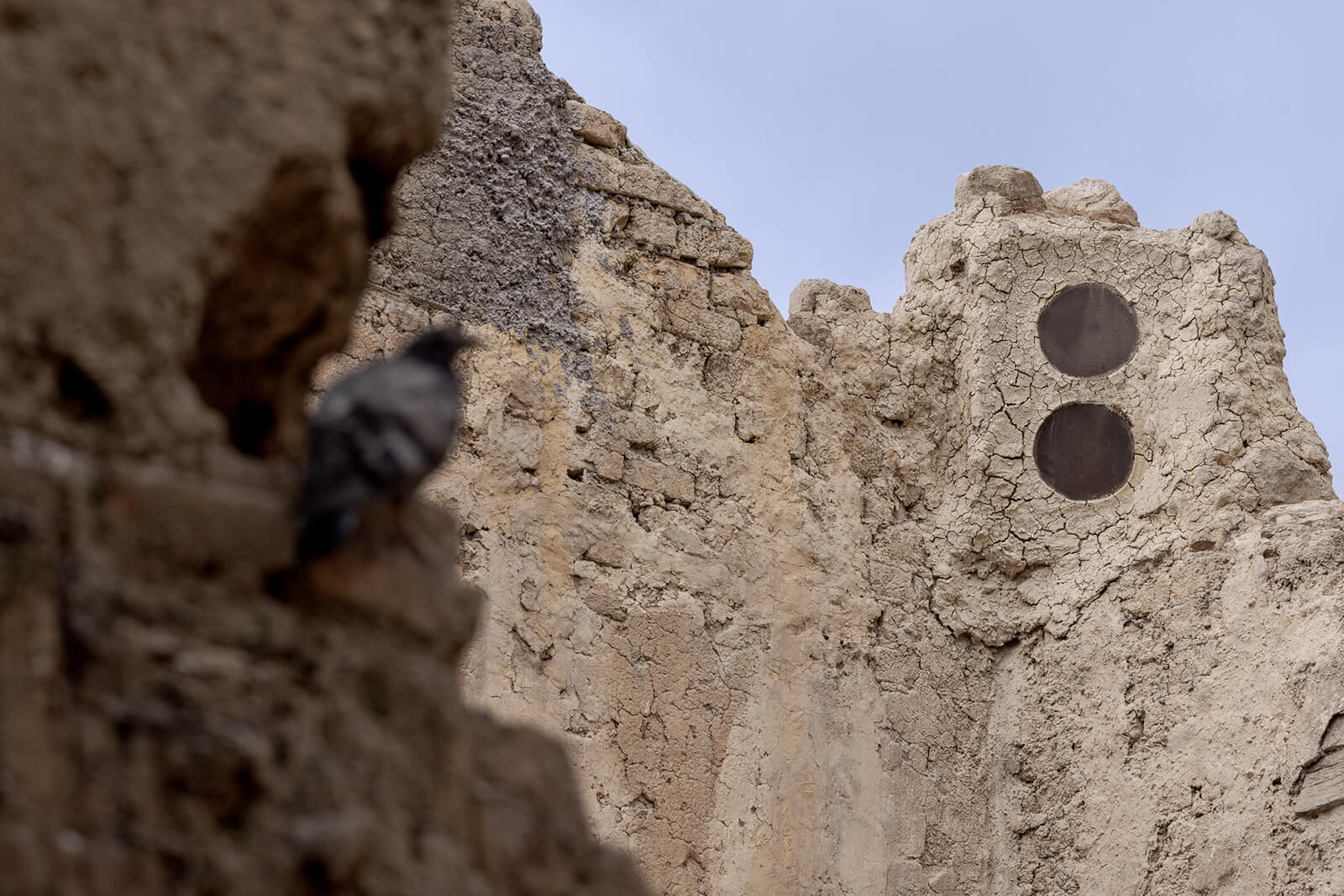
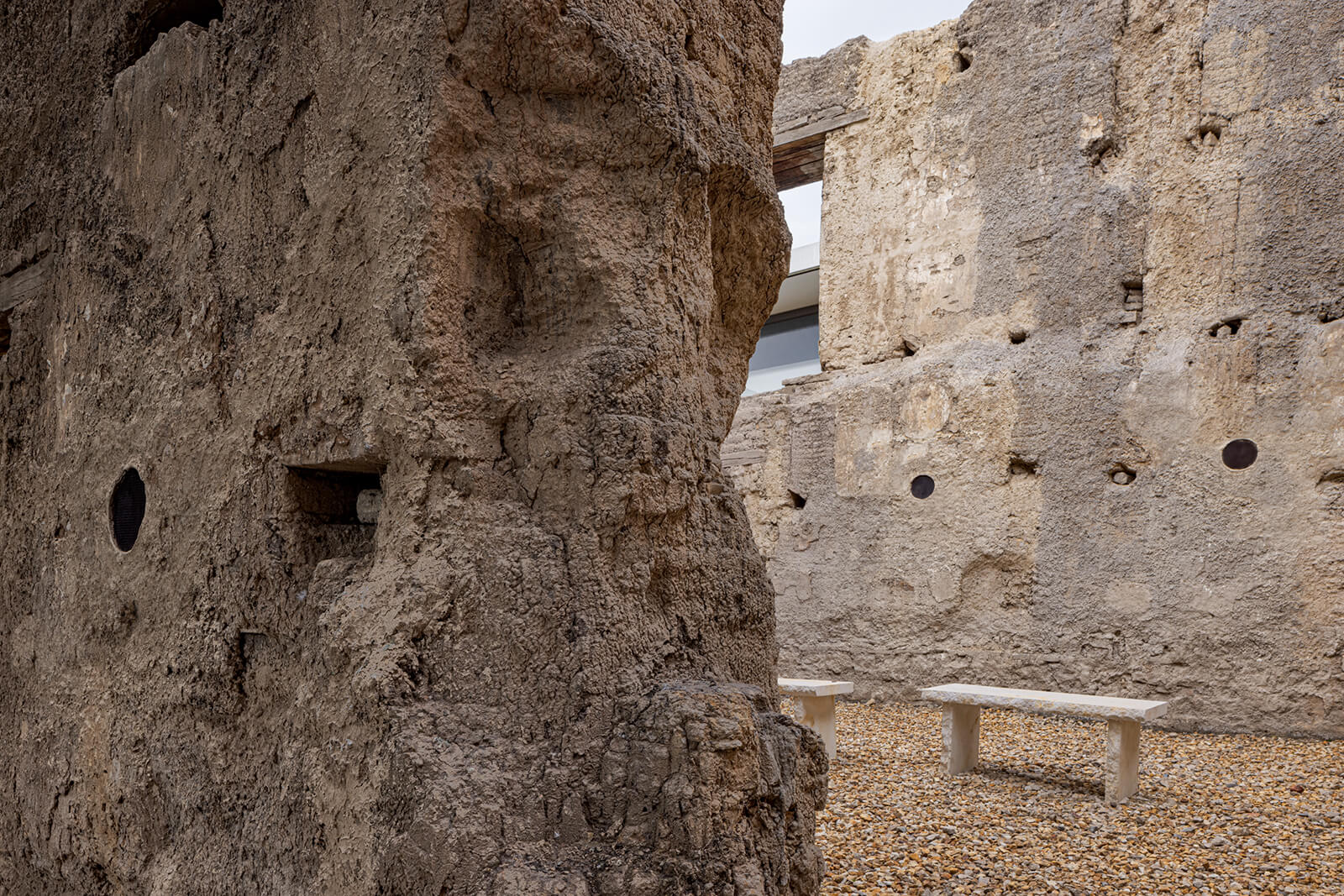
In Hum II, women’s voices and leadership are amplified, if not through words, then by being encoded into hummed sound. That the ruins have once again become a home to house these sounds, through the familiarity of the voice, creates a space for thinking and experiencing global histories of resistance, locally. Hummed words travel more lightly, become available to memory more quickly, and are therefore transmitted more immediately, from ear to ear, despite (often physical and political) barriers. Fragmentos and Hum II together offer a living site for us to walk through hummed histories of resistance, leaving us with the experience of what a different form of moving through memories might be.
The views and opinions expressed here are those of the author(s) and do not necessarily reflect the official position of STIR or its editors.
by Pranjal Maheshwari Oct 27, 2026
The Brazilian architects shape the residence with cues from its context, nimbly segregating its private and social realms with greens, lattice screens and a form-giving ascent.
by Pranjal Maheshwari Oct 24, 2026
A consortium of Copenhagen’s 3XN, Toronto’s B+H Architects and Shenzhen’s Zhubo Design has designed the museum to mimic the surrounding riverscape, topped with a public park.
by Pranjal Maheshwari Oct 19, 2026
The Mumbai-based architects integrate courtyards, mesh screens and north light trusses to create a dining space that doubles up as a community hub at SR University, Warangal.
by Mrinmayee Bhoot Oct 17, 2026
The Rotterdam-based institute centres the Indian Ocean as a network for exploring material histories and transnational links shaping coastal cultures, positing them as future models.

make your fridays matter with a well-read weekend
Enter your details to sign in
Don’t have an account?
Sign upOr you can sign in with
a single account for all
STIR platforms
All your bookmarks will be available across all your devices.
Stay STIRred
Already have an account?
Sign inOr you can sign up with
Verification link sent to check your inbox or spam folder to complete sign up process
Tap on things that interests you.
Select the Conversation Category you would like to watch
Please enter your details and click submit.
Enter the 6-digit code sent at


Spatialising absence, silence and resistance in Hajra Waheed’s Hum II at Fragmentos
by Andrea Zarza Canova | Published on : Feb 06, 2026


 Sign in with Google
 Sign in with email
What do you think?