Architecture10 mins. read
ADFF:STIR Mumbai’s ~log(ue) returns, sparking plural discourse
by Bansari PaghdarJan 08, 2026




by Srishti OjhaPublished on : Feb 20, 2026
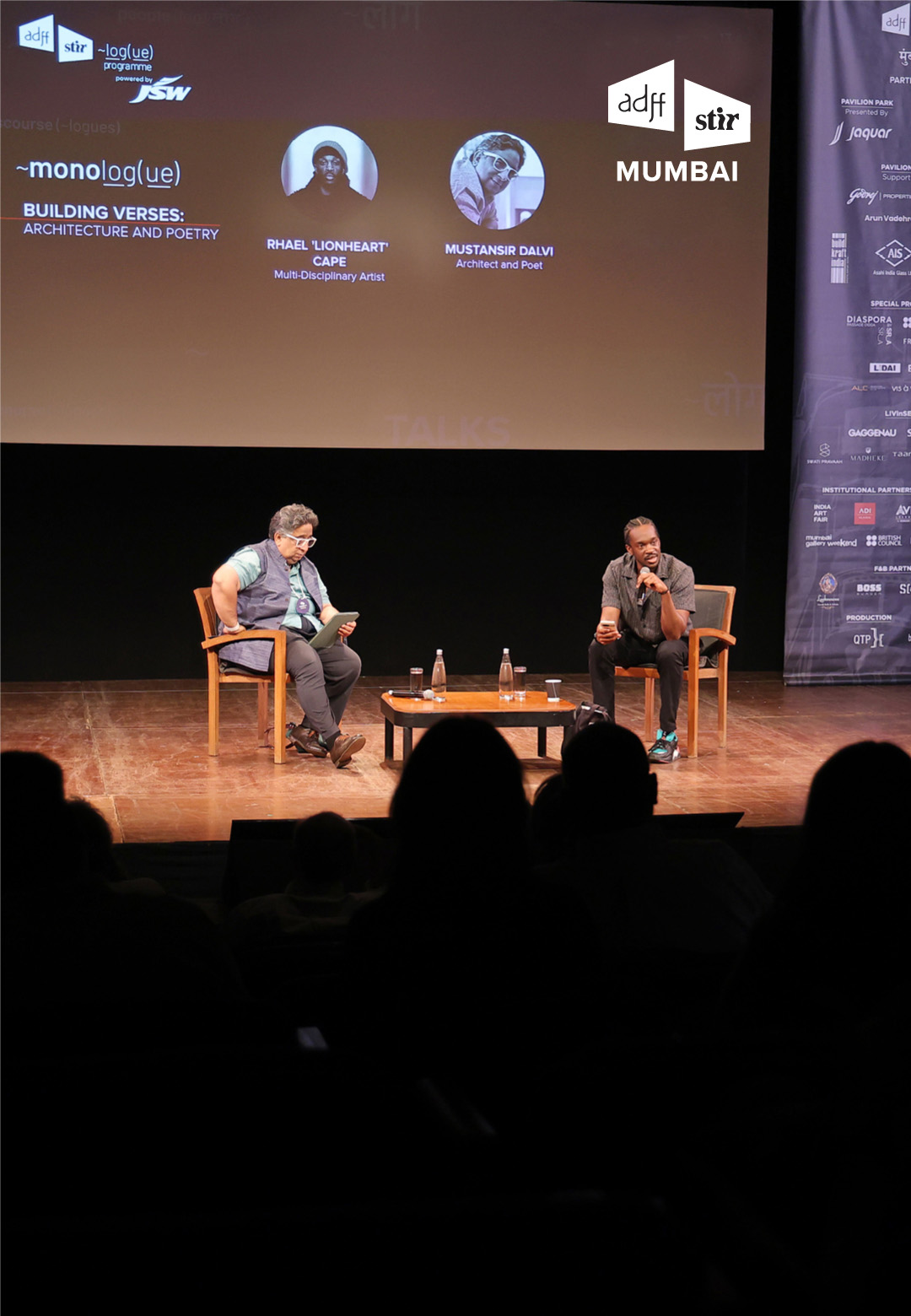
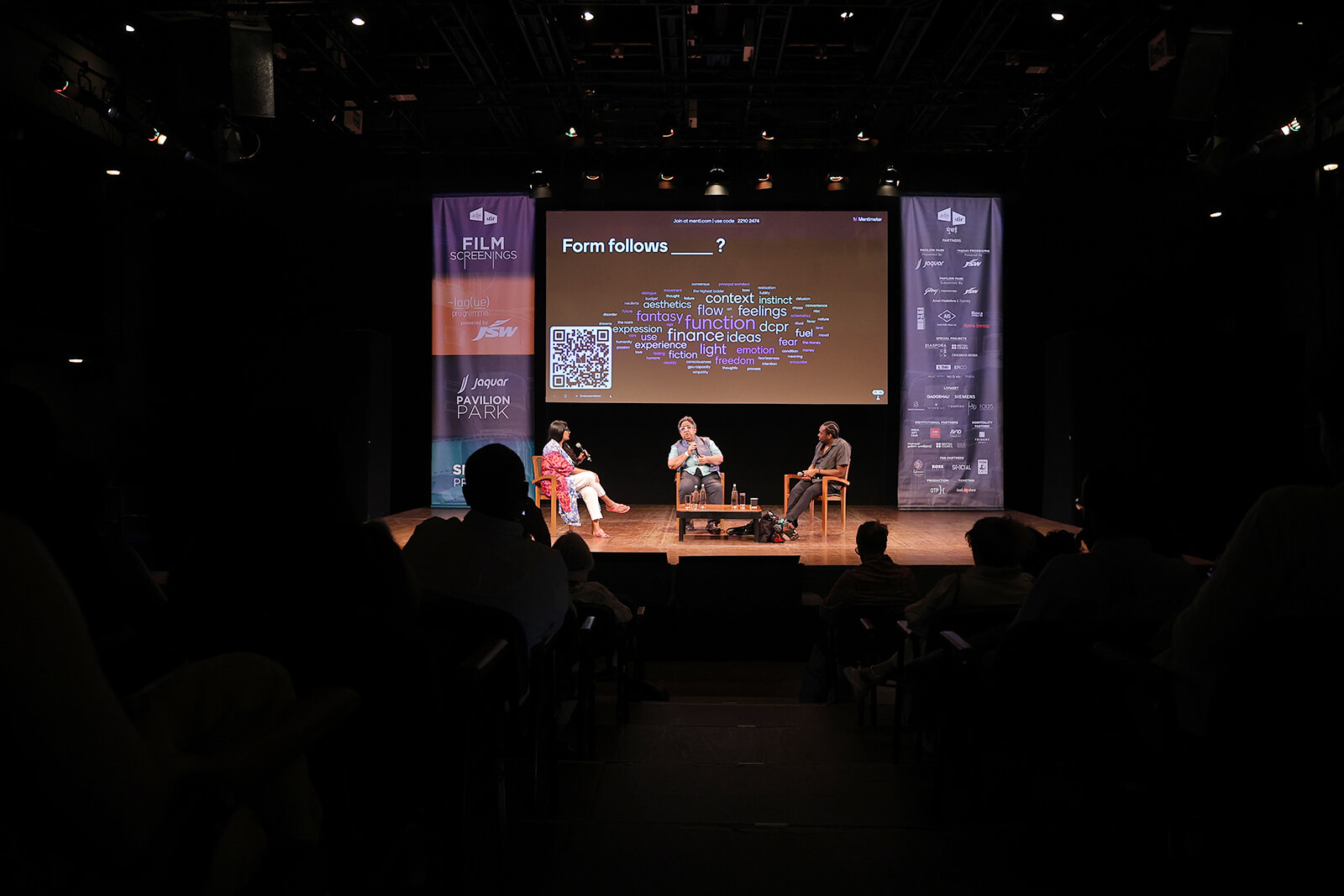
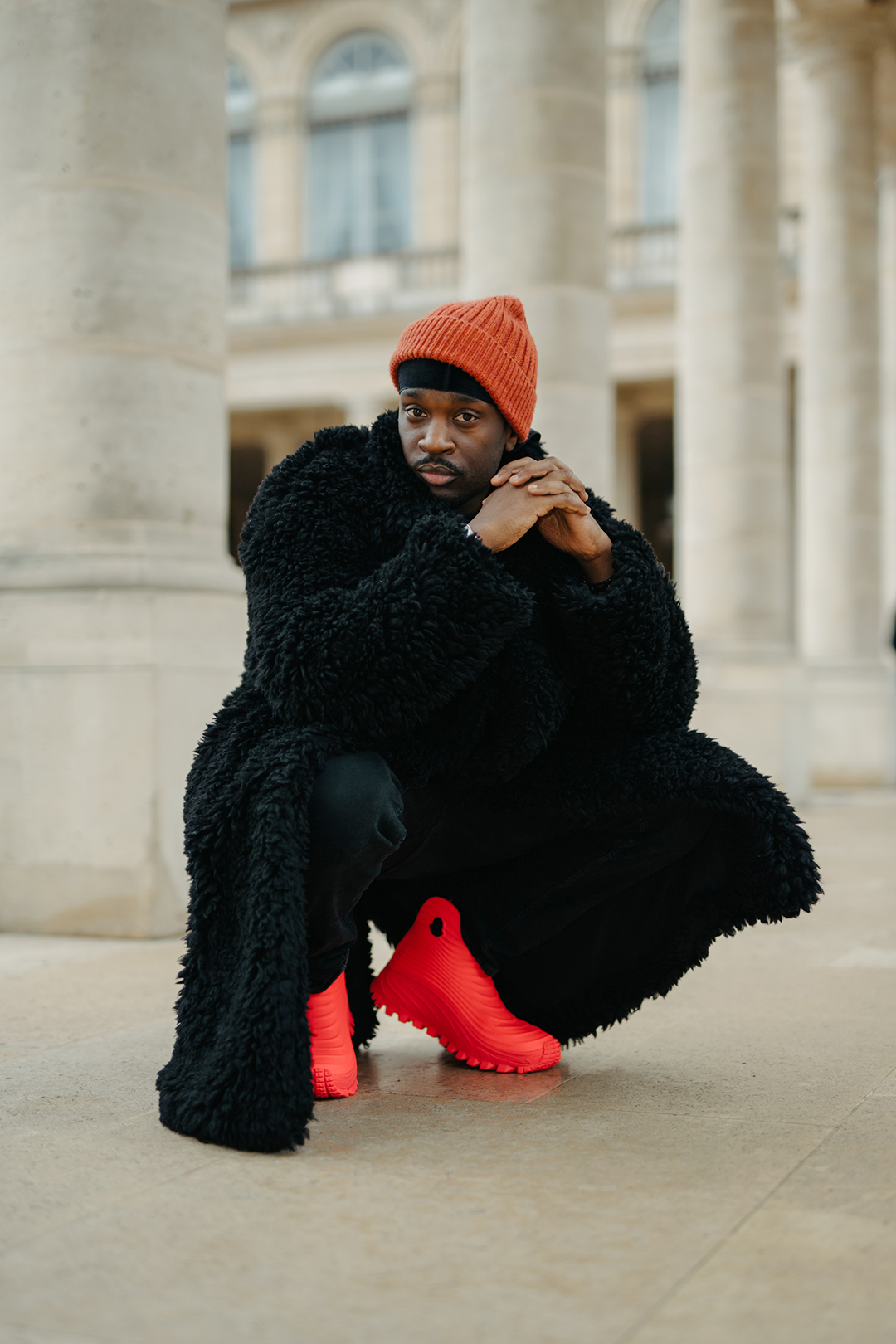
On the second day of ADFF:STIR Mumbai 2026, when Rhael 'LionHeart' Cape Hon FRIBA—whose participation at the festival was supported by the British Council—steps off the stage at the Experimental Theatre of the National Centre of Performing Arts in Mumbai, he is buzzing. His feet barely touch the ground as he takes in the audience’s response to his ‘jugalbandi’ with Indian poet Mustansir Dalvi in Building Verses: Architecture and Poetry, part of the festival’s ~logue programme. This fits perfectly with his on-stage persona—a poet who prefaces his work with an appeal to the audience to keep their minds open when witnessing the vulnerable act of a poetry reading; reads with passion threading his steady voice; listens intently to his interlocutors; is persuaded by the audience to read a never-before-seen poem and who apologises repeatedly for the length and pace of his thoughtful, off the cuff answers to designer Suchi Reddy’s panel questions.
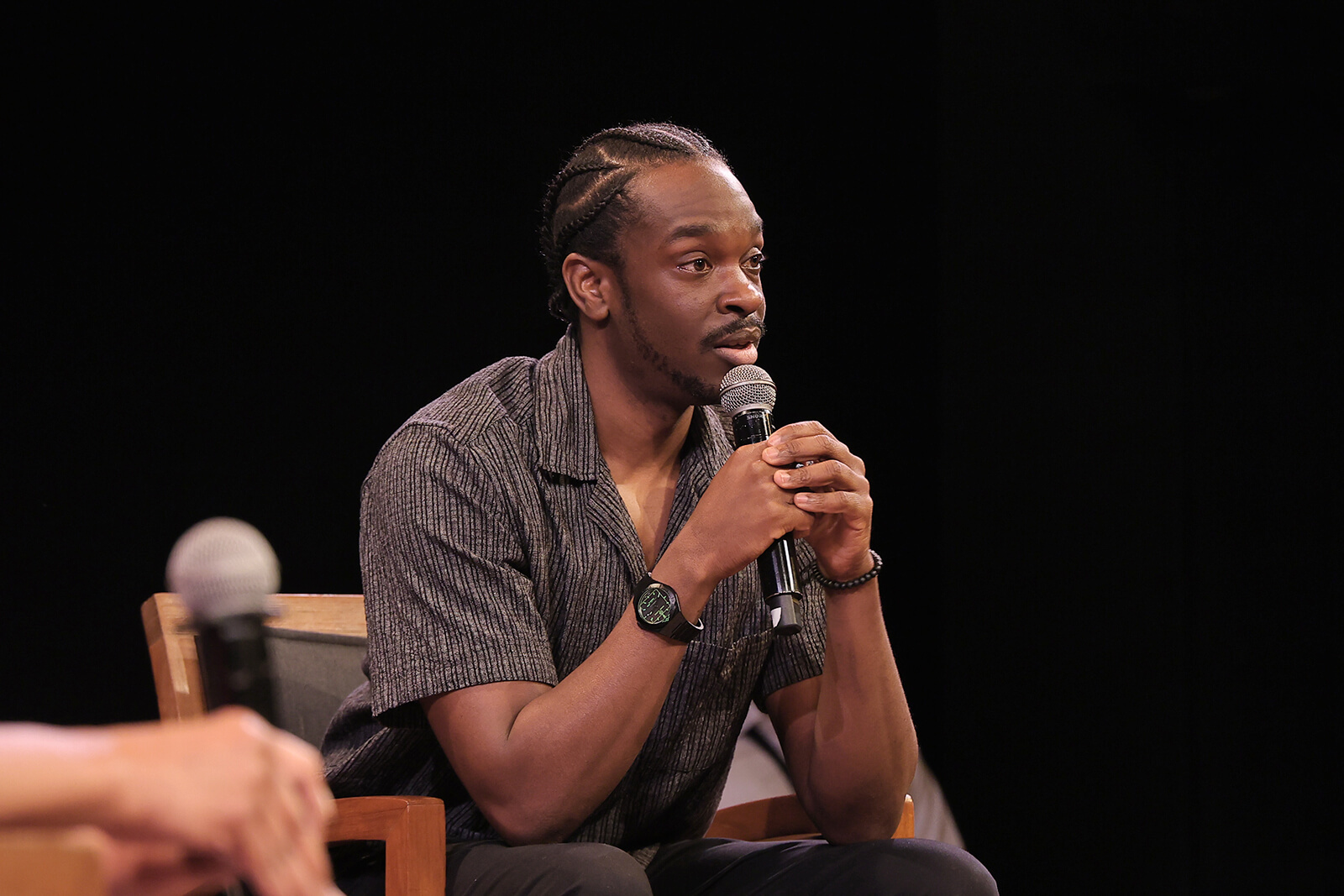
LionHeart is a multimedia artist, poet and director, not someone you’d expect to meet at an architecture firm. For the last nine years, though, that is exactly where he has been—a Poet in Residence at top architecture firms in Europe, New York City and Japan. He has carved out a niche for himself as an architectural poet, bringing his research on emotional inhabitancy, care and mental health to the world of architecture and design. He collaborates with firms and their employees in a unique, cross-disciplinary effort to bring a consideration of human psychology and emotion to the forefront of architectural thought and design, overturning the often impersonal and pragmatic expectations of these fields.
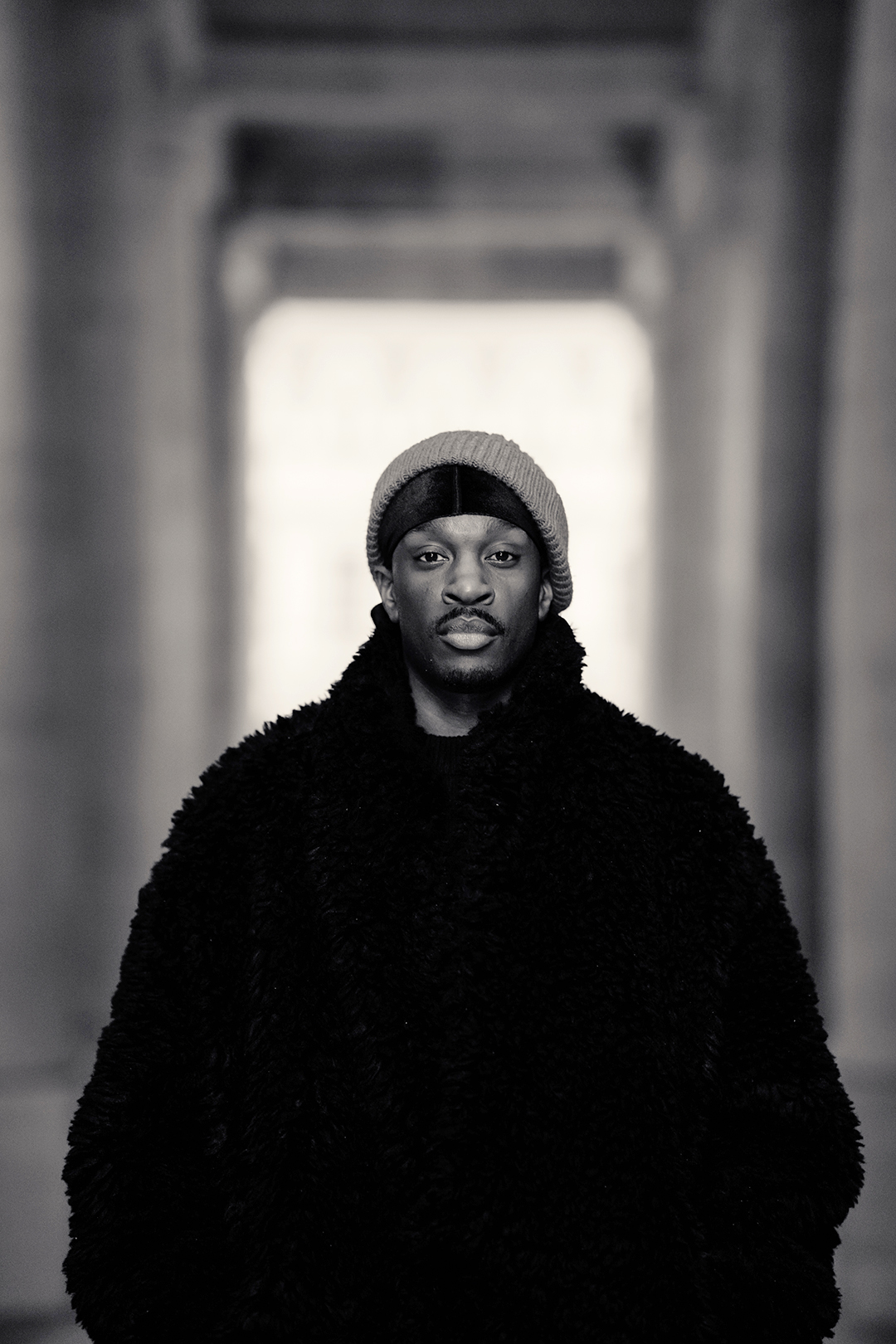
LionHeart grew up in Kentish Town in northwestern London, following in his father’s footsteps by pursuing architecture at the University of East London, while becoming a regular at the city’s spoken word scene. The seeds of his unconventional career began on a visit to the Barbican Centre in London during a period of anxiety and mental health struggles. Inhabiting the brutalist architecture, with its concrete walkways overlooking waterways and fountains, sparked a fascination that snowballed into a career across architectural criticism, residencies, an audiovisual exhibition, Those With Walls for Windows (2023) at the Venice Architecture Biennale and forays into performance and direction, like with his recent film, Sentient Brutalism (2025).
In our conversation from the sidelines of ADFF:STIR Mumbai 2026, LionHeart talks about his experience at the festival, his journey as architecture’s poet in residence, upcoming projects and his hopes for the creators and inhabitants of architecture the world over.
Srishti Ojha: Architecture, for a field that is so material and sensory, even compared to artforms like poetry, can often feel sterile and sexless. Why do you think that is, and how does meshing it with poetry change that?
LionHeart: Currently, architecture and poetry operate under two different functions. Poetry isn’t created for commercial viability. People write poems to enable humanity, to access emotions, to articulate things, to build a resonance between each other. Architecture serves as a milestone for current or past objectifications or functionality. Meaning, it thinks about people, but only so far as they can move and operate. Poetry thinks about people so we can elevate the level of consciousness and interact with humanity.
But when architecture and poetry come together, they are the most powerful force I have experienced.
Srishti: There is so much need in the world. We need more housing, more institutions, more public spaces, and it seems like governments are always several steps behind. How can the institutions dealing with these urgent needs be convinced to take the principles of love and spirituality seriously and not as an afterthought, the last rung on Maslow’s hierarchy?
LionHeart: [My] residencies with world-renowned architectural practices demystify the value that poetry can offer. Not that it needs validation, but it provides familiarity and access. At some point, I hope to facilitate conversations that will see these residencies become protocol, which can only happen in collaboration with firms. I am spending time learning how to create poetic architectural artefacts, visual art films, that can communicate with not just institutions, but with citizens. We have so much power when we decide this is how things need to be for us architecturally, not just visually. I want to equip people with the language to do that.
Srishti: How does travelling the world and seeing the different manifestations of globalisation and types of architecture affect your practice?
LionHeart: I was blown away when I travelled from London to Japan—to Tokyo and Kyoto. I thought that out of 360°, my view was already 180°; that I was halfway there. Turns out, I only saw a fraction.
I met the people at Tezuka Architects in Tokyo. One of them said to me, “You know, when you have a void or an empty space in the Western world, you say it’s lacking something, right? In the Eastern world, we say it’s full, it’s serving a purpose.”
Imagine doing that for all the cities all around the world. You would have an archive, a thesaurus of different ways of describing unique experiences.
Srishti: Your poems are packed with so many prepositions and words to do with the relationality between people, spaces and things. Do you visualise your poetry in any way mentally?
LionHeart: I have tried it. I had asked someone I used to mentor to graph their work, to let it show and dictate the emotions, narration and the arc of the poem. I tend not to follow it. I have to trust the poem. I have to trust the writing. I’m just trying to figure out what it wants. If I force it into a frame, it might not want that; it may want to be something even better. So I tend not to want to force my poems into forms.
Srishti: You're very aware of the architectural industry and of your audience of architects within it. How do you find that approaching them through poetry has affected the way they hear what you’re saying?
LionHeart: I try to be. An architecture practice is a profession in an industry like any other. It works a certain way because there is a system. Systems don’t like being shaken up; they prefer a smoother entry point, and then they are able to understand that: “Okay, we’re actually doing this together. You’re not challenging me in a threatening way. You’re finding a complementary way of doing something slightly different from how it’s been done for so long.” Again and again, this slight difference comes in, and when you look back after five years, you see the change.
Be patient with architecture. Buildings can take three to four years to actually build, and sometimes architects are forced to design them in two to three months. The industry needs to be more patient with it and find seductive ways of incentivising how that change could happen.
Srishti: When you talk about architecture, it seems like its purpose in the world is to foster love, community and connection, to be a place where you can find solace. But often, in the world as it exists, the more depressed, suppressed, ill and mute you are, the better. You become a better consumer, an easier subject to control. How do you reconcile the gap between how things are and how you see they could be?
LionHeart: I’m writing a new collection right now. Its original title was Heartbreak as Architecture.
People say poetry is fiction, but it’s a thin line. Because at some point, that building in front of us was fiction in someone’s head. It didn’t exist until it was formalised. That’s why I challenge architects so much, because they are creating worlds. These worlds can be better than the one we live in. Like Frank Gehry, whose documentary played here, he didn’t conform to the world; he questioned it. So acknowledge things, but still question them.
‘Building Verses: Architecture and Poetry’ was part of the ~logue programme at the second edition of ADFF:STIR Mumbai, which took place from January 9 – 11, 2026.
by Srishti Ojha Oct 21, 2026
Increasingly, artists, filmmakers and activists are turning to VR to create more personal, tangible accounts of the climate emergency and its impact on vulnerable communities.
by Mirra Lynn Oct 20, 2026
The Indian artist paints the old wadas of central Pune, capturing the traces of everyday life that cling to these structures, battered by time but unbowed.
by Anmol Ahuja Oct 15, 2026
How do heaps of souvenirs and relics with racist Aboriginal motifs and features become art? MCA Sydney’s winter showcase—the artist’s largest to date—beckons a possibility.
by Vandana Kalra Oct 14, 2026
With his latest exhibition as a point of departure, the modernist discusses his decades-long practice, the spontaneity of drawing and the social responsibility of artists.

make your fridays matter with a well-read weekend
Enter your details to sign in
Don’t have an account?
Sign upOr you can sign in with
a single account for all
STIR platforms
All your bookmarks will be available across all your devices.
Stay STIRred
Already have an account?
Sign inOr you can sign up with
Verification link sent to check your inbox or spam folder to complete sign up process
Tap on things that interests you.
Select the Conversation Category you would like to watch
Please enter your details and click submit.
Enter the 6-digit code sent at


Architecture’s poet in residence wants you to use your voice
by Srishti Ojha | Published on : Feb 20, 2026


 Sign in with Google
 Sign in with email
What do you think?