Design10 mins. read
iF Design Award 2026 examined what it means to design in the age of AI
by Sunena V MajuMay 09, 2026



by Sunena V MajuPublished on : Jun 24, 2026
My first interaction with Behnaz Farahi was in 2022, for an interview about Midjourney. (For those who have forgotten, in the rapid pace at which AI is developing, Midjourney was among the most controversial AI programmes of 2022, able to generate images from a prompt.) I had reached out to the Iranian-born, American interdisciplinary designer to ask about her interactions with Midjourney and how she was exploring the platform. Though it seems like a distant phenomenon to discuss Midjourney now, it was a soft beginning of AI seeping into creative spaces and the start of many dialogues on whether AI is a threat or a boon to creatives. I have closely followed Farahi's journey since. She transitioned her role from an architect to an artist, briefly a fashion designer, and is now the director of the Critical Matter research group at the MIT Media Lab. Recently, I came across videos of a gigantic eye projected on MIT's historic dome and I knew instantly that that ‘gaze’ came from the desk of Farahi. Intrigued to explore the stories of the many eyes, I connected with her over a Zoom call to discuss her current projects, the offerings at her Critical Matter lab and how she returns to the gaze: who gets to look, who is looked at and what kind of power moves in between.

The following are edited excerpts from the conversation.
Sunena Maju: Let's start with that eye on the dome, Gaze to the Stars. The gaze has a long history as an instrument of power and surveillance, and your work keeps returning to it. How did the project come about?
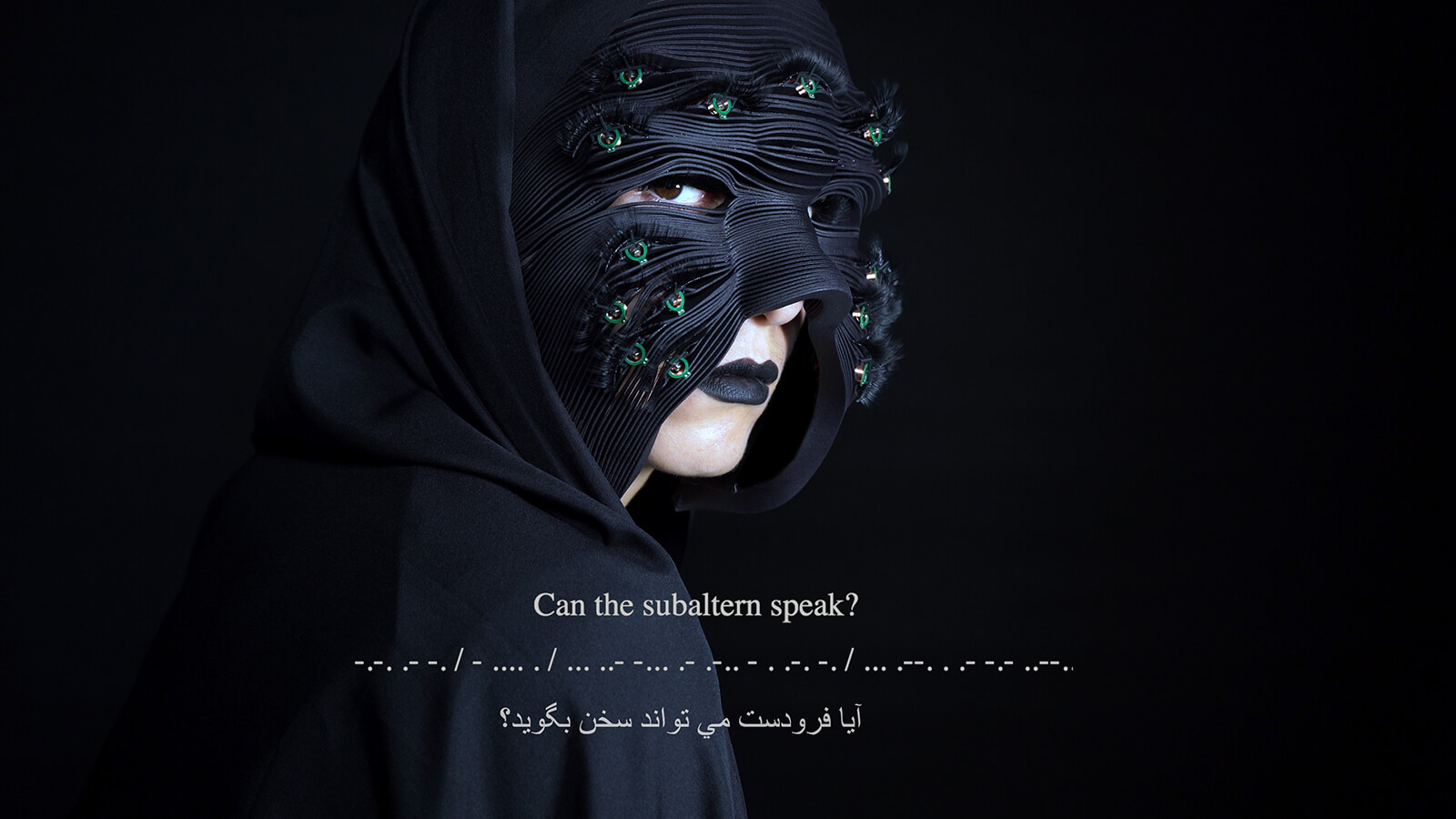
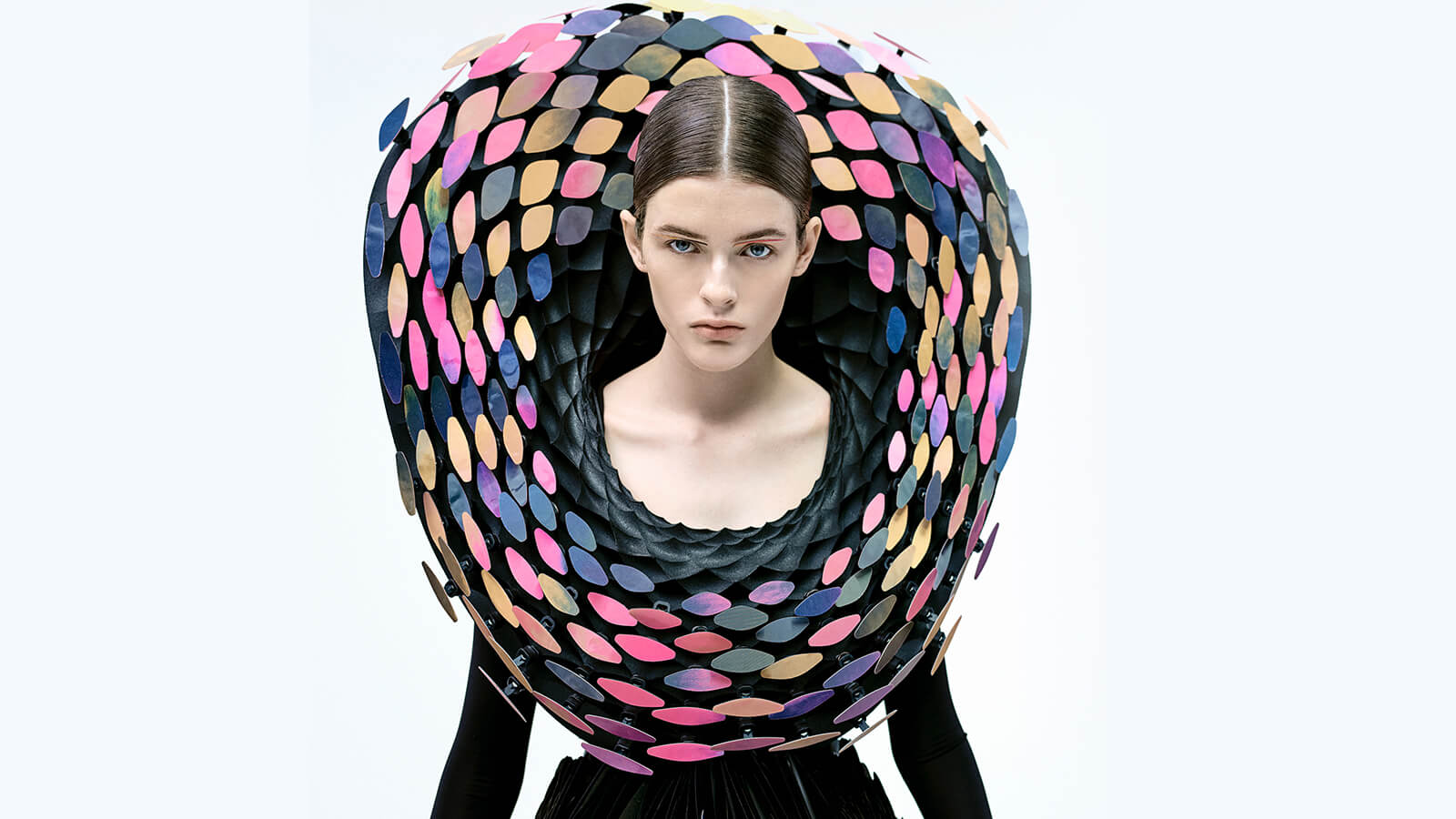
Behnaz Farahi: All my work prior to MIT provided a foundation for what we are doing now at the Critical Matter group. A big body of it relates to social interaction and how we connect with one another, often inspired by the gaze, because the gaze connects us. From a critical feminist perspective, it asks what it means to be observed and to observe and how power is negotiated through the act of looking. A fashion piece I made earlier in my career, Caress of the Gaze, asked what it would feel like to sense someone else's gaze on your body, addressing the male gaze on the female body.
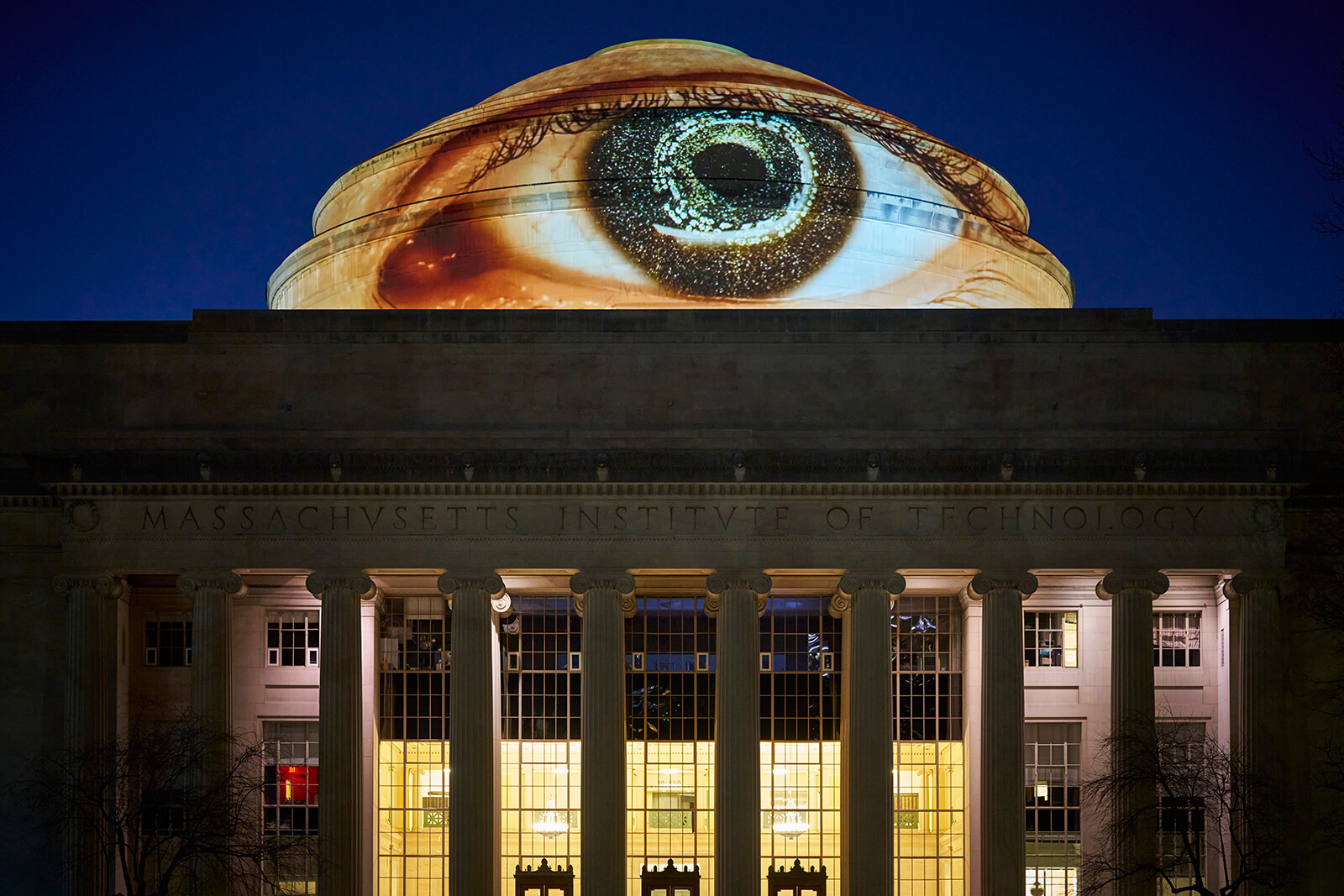
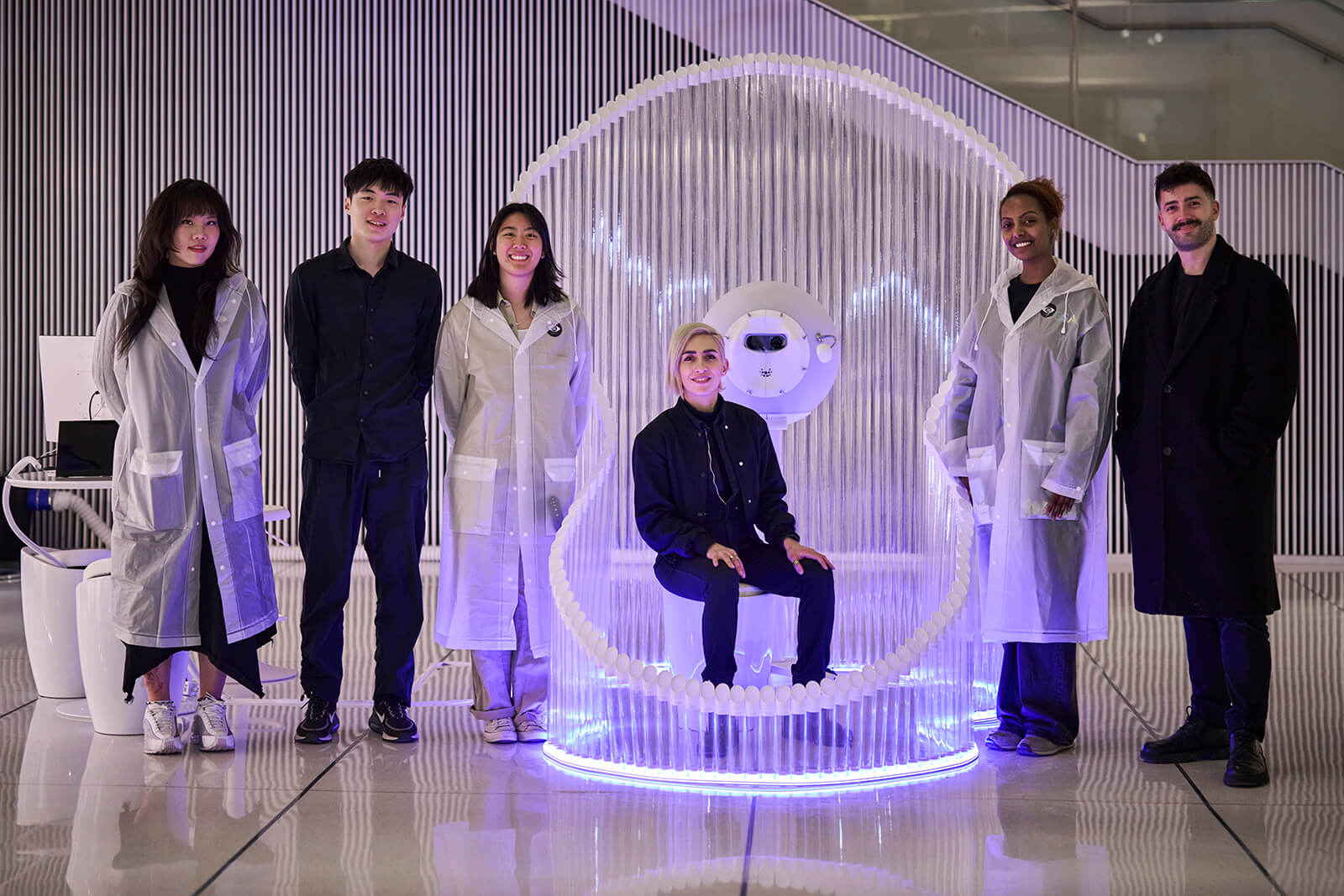
Gaze to the Stars is a large-scale public art installation that turned the MIT Great Dome into a storytelling vehicle. We collected 200 eyes and 200 stories through a sensory pod we designed. As you enter the pod, you look into an infinity room and have a conversation with an AI. It asks questions like "What are you longing for?" or "What do you dream of becoming?" to understand your story better. We turned each story into ten words, encoded them as a Braille message in each iris, and, over three nights, projected all these eyes with their encoded messages onto the dome.
If you were a local in the city, you would see these giant eyes. If you were in the MIT yard, you could scan a QR code that took you to the website to decode the hidden message. We tend to project MIT stories of happiness and success, but not all stories are success stories; many are about stress, fear of uncertainty, grief and loss, which is what Gaze to the Stars tried to bring forth. That was fascinating.
Sunena: If Gaze to the Stars turns the gaze outward, your most recent project, Resonance, turns it inward. How did Resonance begin?
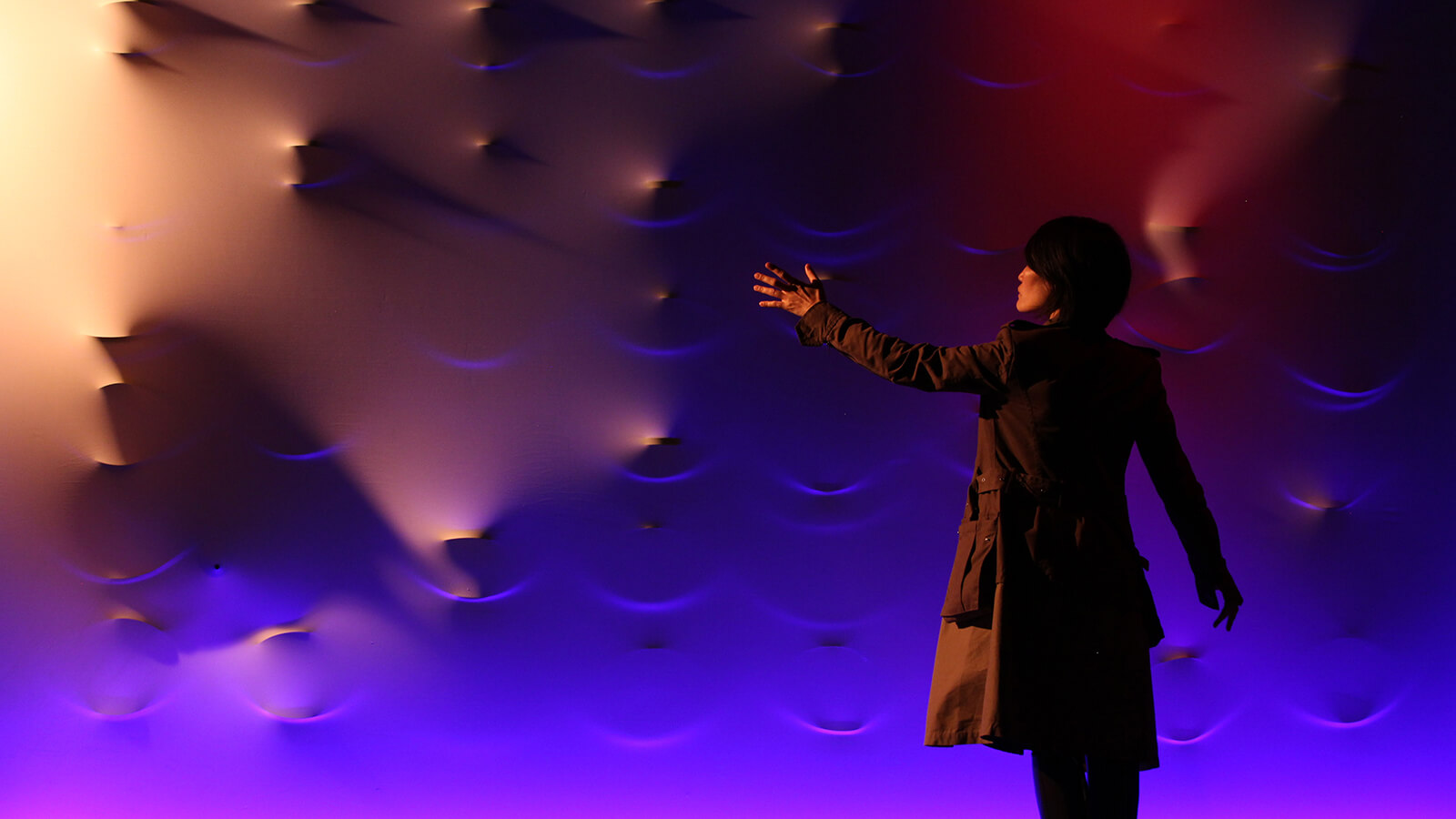
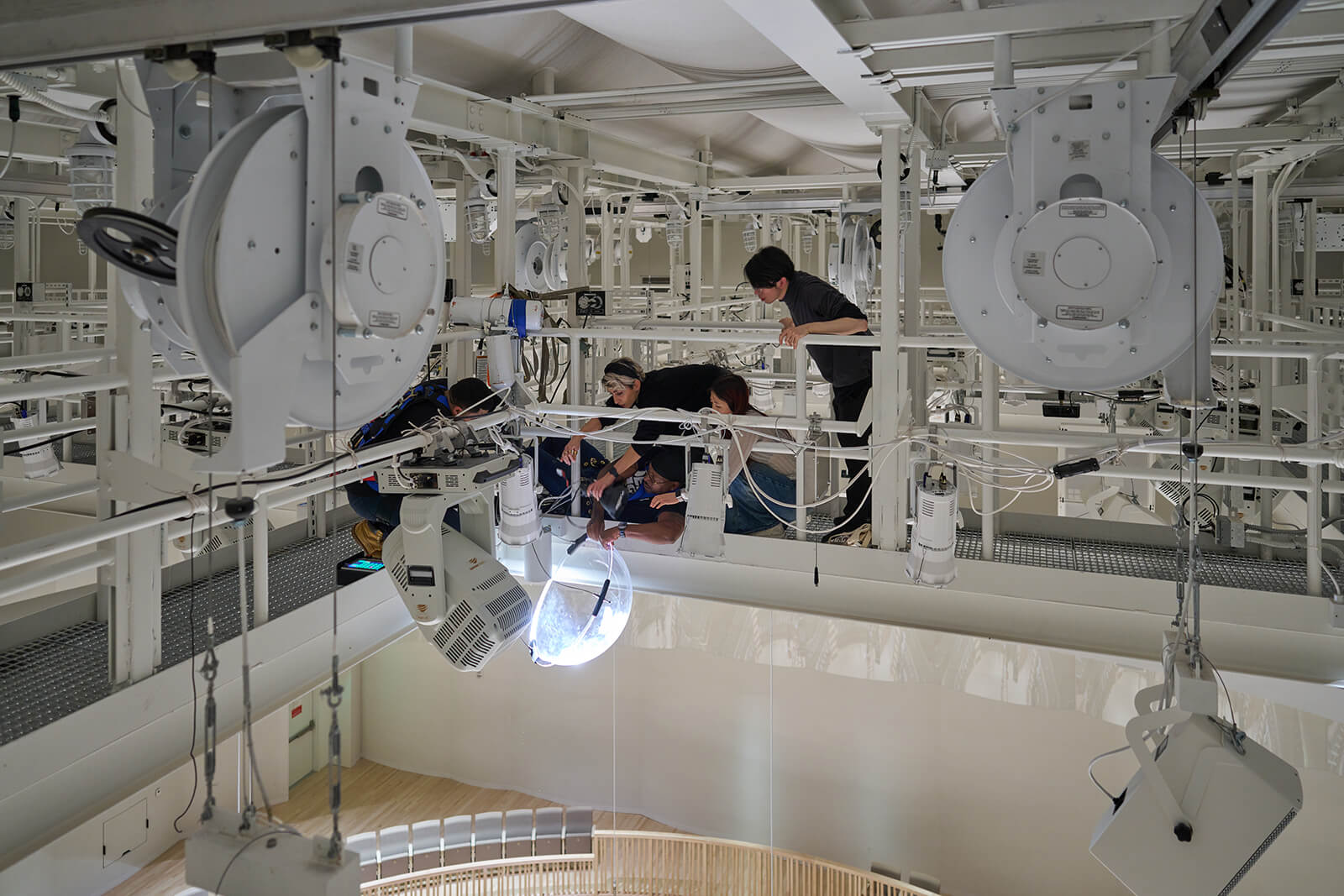
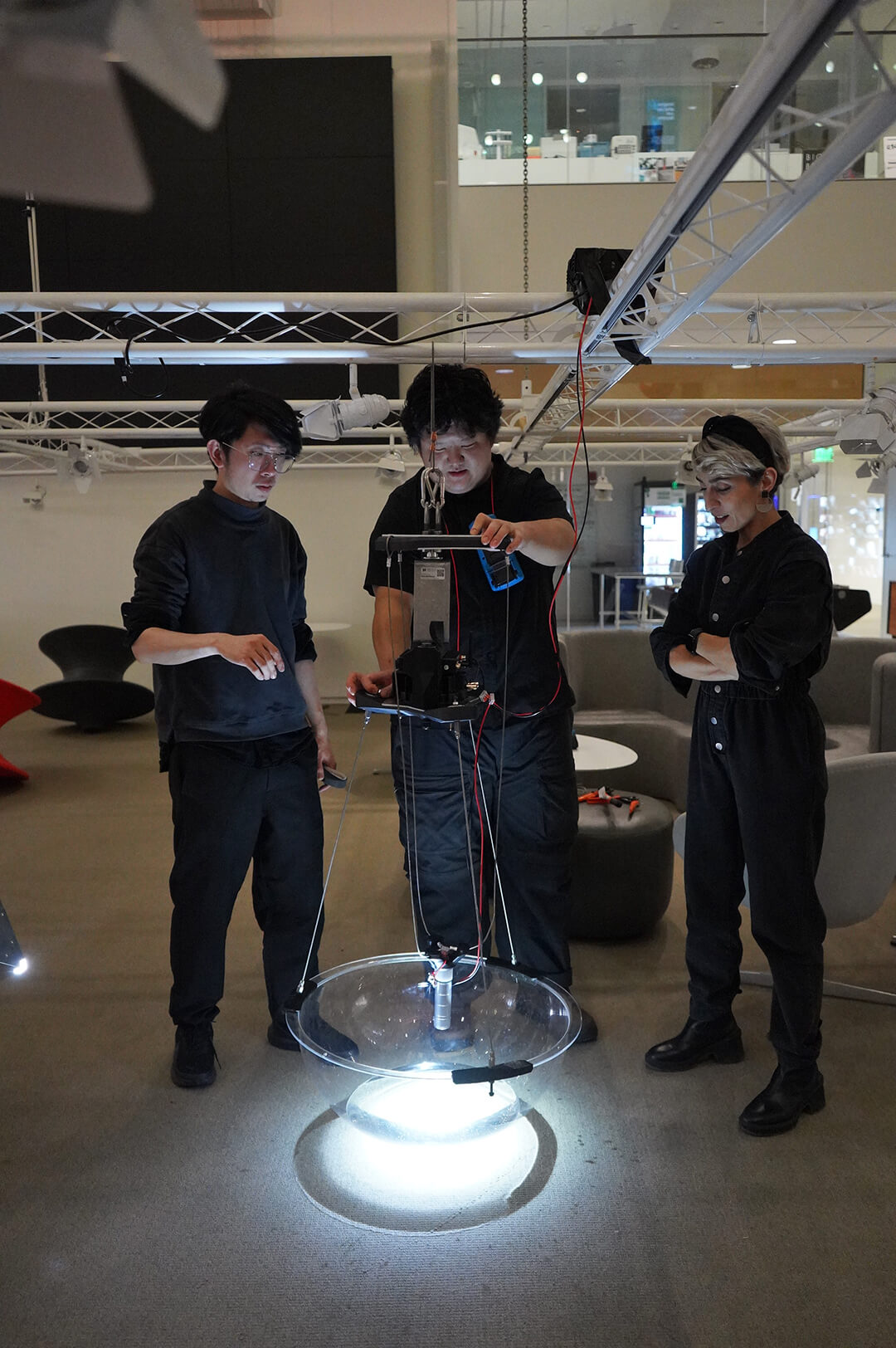
Behnaz: It really started with thinking about ways to connect your body to the environment and how your mind can control matter. Then, I had the opportunity to give a TEDx talk at MIT, and I went to the new music hall designed by SANAA. It was an amazing space, and I thought, I want to do an installation here. At the time, we were already working on a project about connecting mind to matter, a collaboration with BrainCo, which makes EEG sensors. They sent us their sensors, and we were controlling water and textures with the power of the mind. When the music hall opportunity came up, we started thinking about how to create an experience in the entire space.
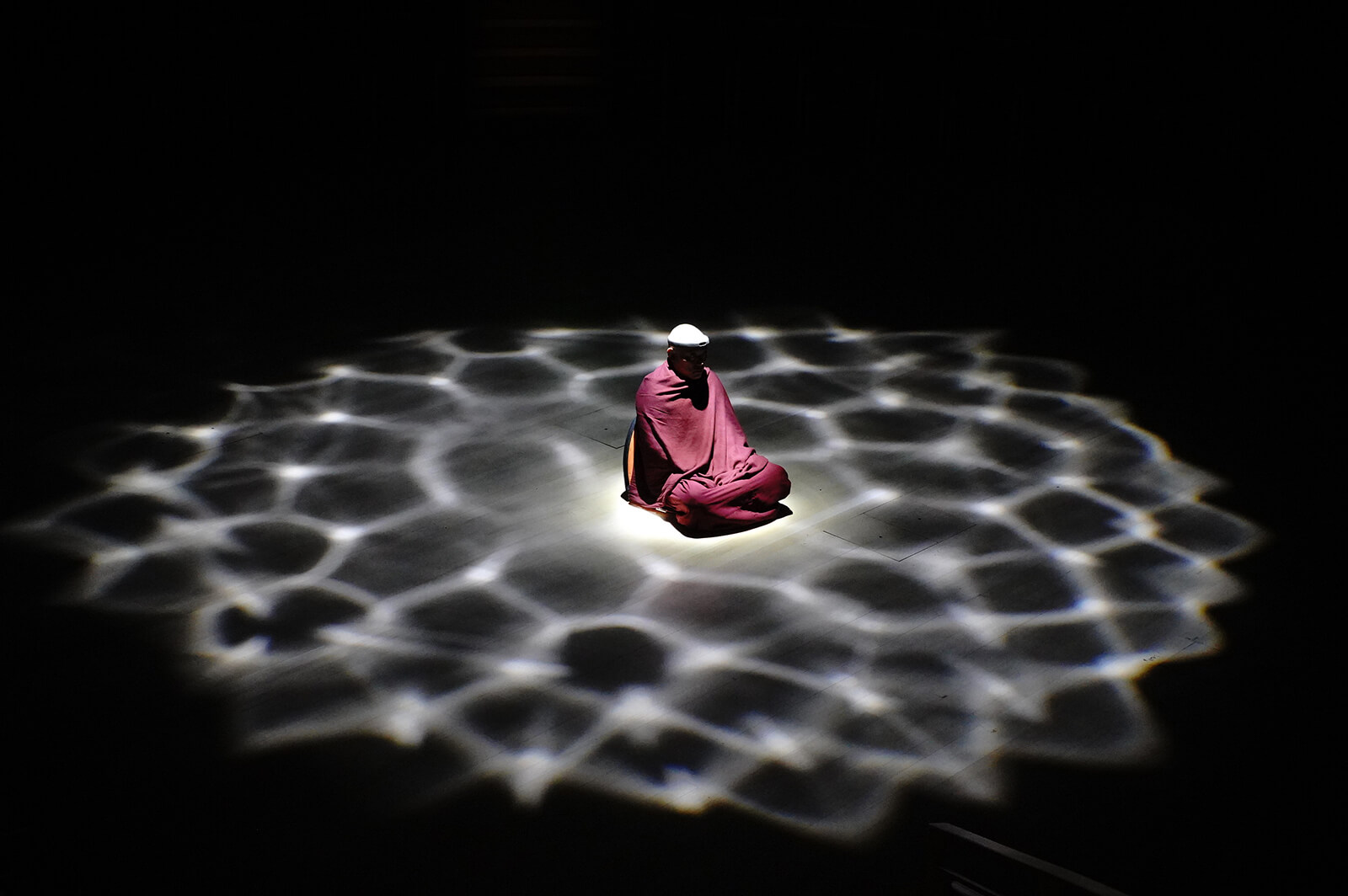
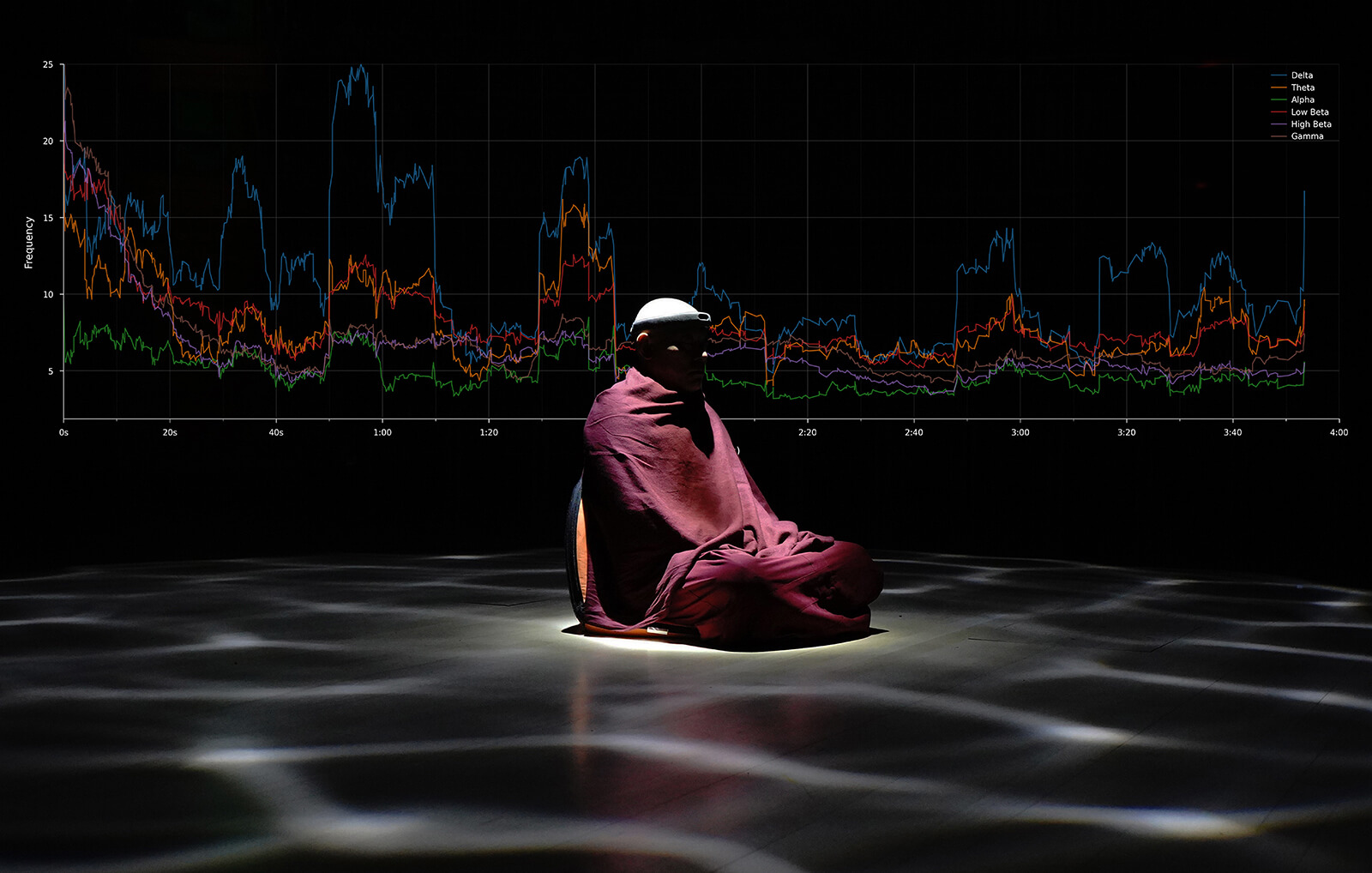
The installation consists of a bowl holding water. The water receives vibration from a transducer attached to the bowl, and the transducer receives the signal from the brain activity of a Buddhist monk, the meditator. The idea was to think of the mind as waves, as vibration, as frequency. What if you could control materials with the power of your mind, through the same vibrations? As the observer, you watch the monk meditating, and as he calms his mind, you see the water patterns on the surface get calmer, with less movement and fewer ripples.
I am inspired by contemplative practices, by yoga, meditation and mindfulness, where you look inward to enhance your well-being and calm your nervous system. I think design, art and technology can bring a sense of centredness and inner peace and help us connect with ourselves more. There is a lot of scepticism toward mindfulness. You see someone meditating and think, "What a waste of time”, if you are not familiar with it. Experiences like this make you aware that this is not just a vague spiritual word. More than ever, science can understand what is happening in your brain when you meditate. When you focus and calm your brain, your brain frequency changes, and we turn that frequency into tangible physical vibrations that change the light and shadow in the architectural space.
Sunena: When you and I first spoke, back in 2022, the conversation around AI was dominated by fear, the worry that it would flatten or replace creative work. Your practice seems to refuse that framing, treating technology as one of the collaborators rather than a verdict. How do you think about using it well?
Behnaz: One thing that helped was my PhD in a program called Interdisciplinary Media Arts and Practice at the University of Southern California (USC), a hybrid of theory and practice. Early on, I realised how different the two modes are. You are almost using different muscles in your brain. When you are making, you are at a different pace of production. When you are writing, you are on a different pace. But I found the process fascinating. You read texts from the humanities, gender studies, queer studies that, at first, might not sound relevant, but then you find a connection to your making that leads you to turn something invisible and intangible into something tangible.
One example is the idea of the male gaze on the female body. It has been around for so long, from John Berger's book, Ways of Seeing (1972), to Laura Mulvey's Visual Pleasure and Narrative Cinema (1975) and Barbara Kruger's Untitled (Your gaze hits the side of my face) (1981). When you bring new, emerging technology to address one of those older concepts, suddenly you are onto something. You bring innovation by combining disciplines, whether critical theory or neuroscience and cognitive science, with art, design and technology and you bring a refreshing view to an older concept.
It started as experiments and prototypes, and then it was a ball rolling, one project after another. – Behnaz Farahi
Sunena: That hybrid is built into the name of your lab. Critical Matter holds a tension inside it. Critical theory is a practice of provocation and refusal; material science is a practice of solving and building. How is the lab organised around that?
Behnaz: There are three pillars to our research: social, material and psychological. On the social end, works such as Gaze to the Stars focus on bringing communities together, thinking about stories, data and the social aspects of design. On the psychological end, we look at well-being and create awareness, Resonance being an example. The material pillar looks at novel material systems and robotic fabrication, developing materials that are more ecologically friendly and sustainable.
Sunena: You trained as an architect, a discipline that deals in the fixed and the permanent and your work is almost the inverse of that—responsive, worn on the body, alive. When did the transition from being an architect to a designer happen?
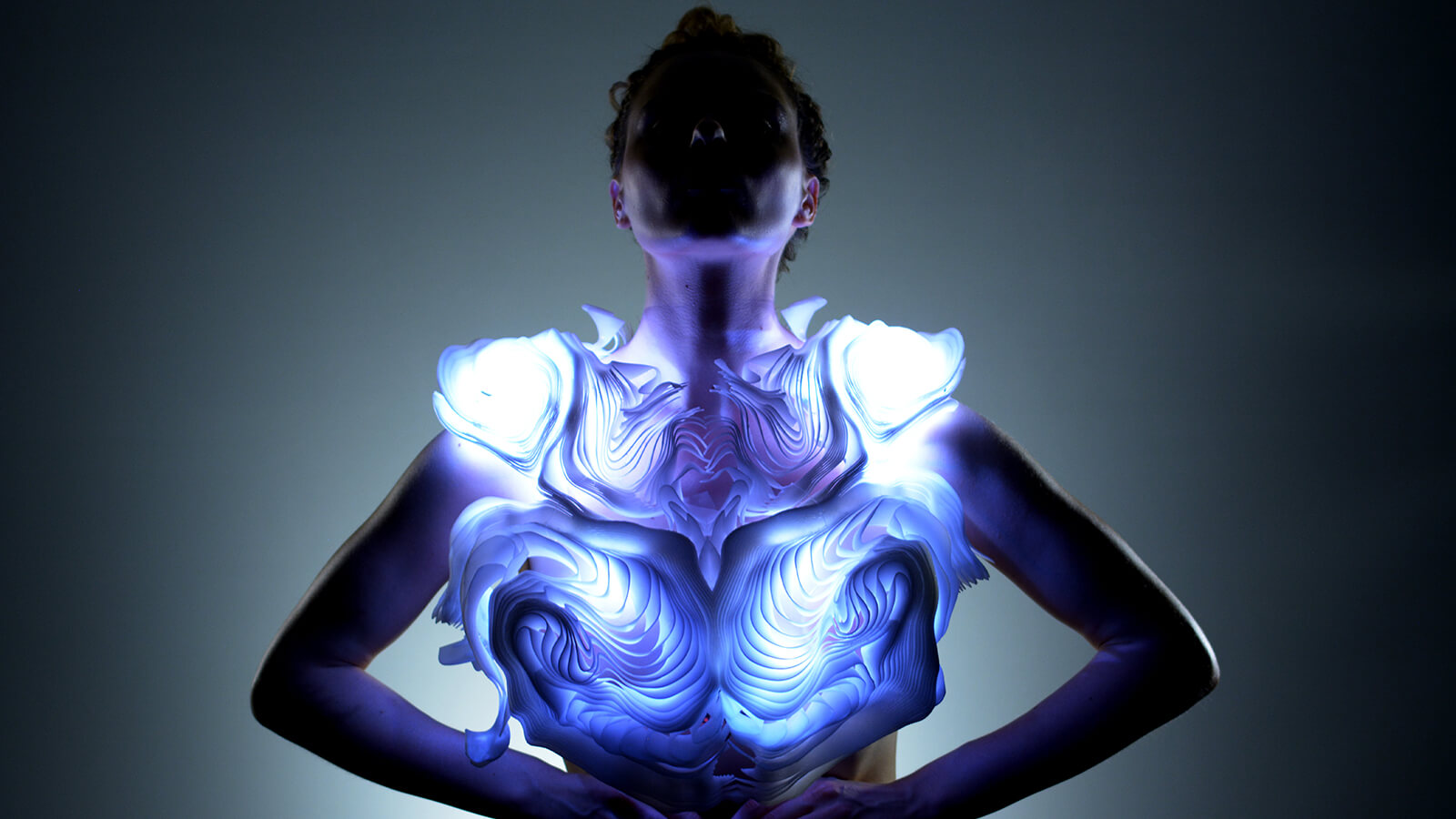
Behnaz: I studied architecture, but I realised I was interested in combining technology with architecture, not static architecture, but architecture in relation to the human body. I even worked in an architecture firm for a while, but I was drawn to interactive, responsive environments and to a new paradigm for the relationship between the body and the environment. Then there was my fascination with emerging technologies—exploring which sensors are out there and ways I can experiment with them and the data. The more I prototyped, the more it took me in interesting directions. Because I had access to 3D printing as an artist-in-residence at Autodesk, and because of the scale of the machine, I was able to 3D print for the human body. Suddenly, I was making things for the body, and everyone knew me as a fashion designer. I was not one, but it was fascinating to think about how this technology would sit on the body and change how you perceive it. It started as experiments and prototypes, and then it was a ball rolling, one project after another.
Sunena: Was there a thinker who gave you the vocabulary for this, for the body and its environment as one continuous thing?
Behnaz: Many, but two come to mind. One is from philosophy and cognitive science: Andy Clark, author of Natural-Born Cyborgs (2003). My whole fascination was the relationship between the body and the environment, and Andy Clark, with David Chalmers, brought this idea of the extended mind. On the other hand, a few figures opened up critical theory and feminist and queer studies for me. One was Amelia Jones, a professor at USC and a fierce feminist thinker. Through her work, I discovered other theorists like Judith Butler, and that opened up the whole landscape. And during my master's, around 2011 and 2012, I was a student of the new materialist philosopher Manuel DeLanda. He wrote A Thousand Years of Nonlinear History (1997). He opened up a whole world for me, thinking about matter, materials and processes, less about final forms and more about how you partner with materials.
Sunena: You keep describing design as a way of asking rather than answering. Is that the thread running through all of it? What keeps you motivated about your work?
Behnaz: The immediate answer is my research lab and my students. The energy in the group is buzzing. They are excited, and I am excited because they are excited, and we work as a team. Every meeting brings more ideas. I am excited that design is not all about solving problems but more about asking, provoking and seeing differently, like Berger's work. How can we push the edge, do something that questions, provokes and makes you think? With this group, I am fortunate, because they come with the same mindset and we go there together.
Sunena: What’s NEXT for you?
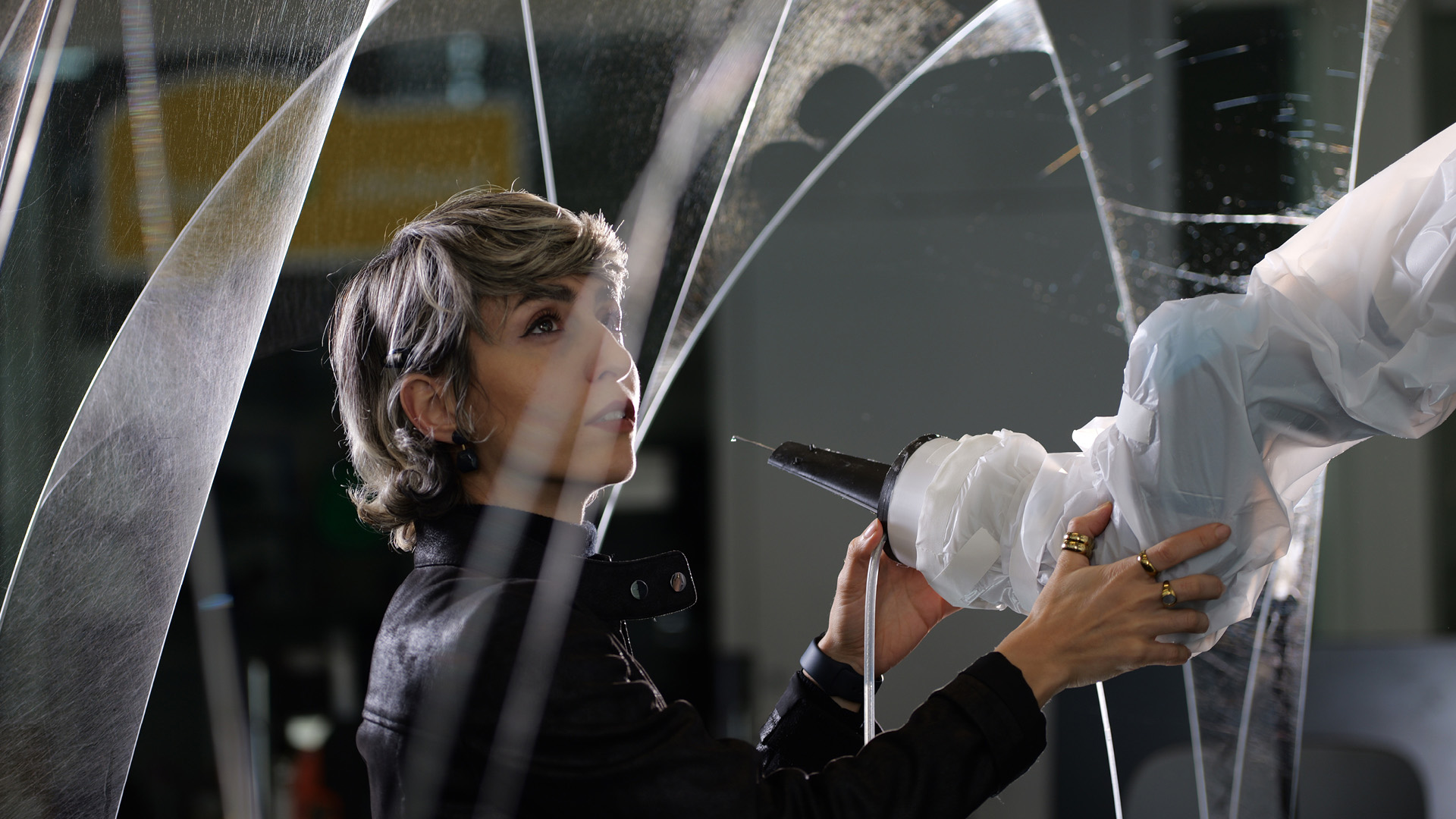
Behnaz: We are developing a sustainable system using a process called electrospinning, which uses a high electrical and magnetic field to deposit nanofibres from a syringe onto a collector. We built our own custom system using a robotic arm. We have electrospun fashion pieces and masks. Initially, the project started with human hair. We melted human hair into a polymer and used it to fabricate nanofibres. Currently, we are using algae and seaweed, thinking about waste as a resource. Right now in the lab, a robot is spinning a whole pavilion out of the seaweed. It is still under development.
As Farahi discussed what lay ahead for her while showing me an image of a robotic hand, it took me back to something she shared in our conversation in 2022. “I have collaborated with AI Midjourney to envision some space station occupied by industrial robotic arms autonomously feeding pods of bio-fluids and algae, transformable spaces changing scales and material properties from soft to hard using soft robotics…” The context of that statement was her telling me about different prompts and imaginary environments she was conjuring. But somehow, four years later, she created an innovative, radical lab for herself with robotic arms, algae, soft robotics and more—this time in the real world.
A calm mind, the power of gaze and a story of struggle are all human emotions that are always felt but rarely seen. Farahi uses technology to show it to us in real time, space, scale and visuals. Combining mind, matter and design, her works sit at a critical node exploring how designers can collaborate with technology to understand the reality of human emotions—using technology as a tool, not a threat. However, Farahi’s work is not a departure from the ways technology and AI are negatively impacting the world right now; her practice is a tale of what technology looks like in creative, responsible and innovative spaces, rather than in server farms and data centres of billion-dollar corporations.

by Pranjal Maheshwari Oct 23, 2026
Co-authored by Jareh Das, Chairman traces the British designer’s fixation on chairs as symbols of power and identity and as mediums of expression and community building.
by Chahna Tank Oct 22, 2026
STIR speaks with the Mumbai-based type designer about her practice, type walks and why she wants more people to have stronger opinions about Indian-script fonts.
by Mirra Lynn Oct 22, 2026
The curators behind Palestine Design Week 2026 reflect on its intent, considering how design holds memory, makes space for loss and imagines a future in Palestine.
by Jincy Iype Oct 15, 2026
STIR explores craft, material intelligence and people shaping Indian design through dialogues with Design Democracy’s co-founders and the curators of its special exhibitions.

make your fridays matter with a well-read weekend
Enter your details to sign in
Don’t have an account?
Sign upOr you can sign in with
a single account for all
STIR platforms
All your bookmarks will be available across all your devices.
Stay STIRred
Already have an account?
Sign inOr you can sign up with
Verification link sent to check your inbox or spam folder to complete sign up process
Tap on things that interests you.
Select the Conversation Category you would like to watch
Please enter your details and click submit.
Enter the 6-digit code sent at


Behnaz Farahi on gaze, mindfulness and thinking through materials
by Sunena V Maju | Published on : Jun 24, 2026


 Sign in with Google
 Sign in with email
What do you think?