Art09 mins. read
Wedding photos, 'boterismo' and Korean film stars: Your guide to Art Basel Hong Kong
by STIRworldMar 24, 2025




by Ranjana DavePublished on : Dec 01, 2025
In September 2025, I arranged to meet the Kazakh artist Gulnur Mukazhanova and Centre for Heritage, Arts and Textile (CHAT) curator Wang Weiwei in the lobby of the Almaty hotel to talk about Mukazhanova’s exhibition Dowry of the Soul at the Hong Kong venue (now on view at CHAT). Mukazhanova, upon meeting us, excitedly led us down a cobbled pavement a few streets away from the hotel, to a store that displayed one of her laboriously produced felt works. Felt is made by matting and pressing wool or silk fibres together until they bind into a flat, textured mass. Looking at her work in the sleek store, where we were surrounded by knick-knacks exemplifying Central Asian craft and design, this reckoning of time and effort felt stark. We discussed Mukazhanova’s process and Wang’s deepening curatorial focus on modern and contemporary exchanges between China and Central Asia.

Mukazhanova was born in Kazakhstan in the waning years of the Soviet Union; she studied art in Almaty and later in Berlin. “Kazakhstan is both the cause and subject of my research,” she says in a 2021 publication on her practice. Sovietness was always a lingering presence in her life, particularly through the lived experience of her parents. Mukazhanova contended with participating in two drastically different educational and cultural ecosystems in Almaty and Berlin, turning eventually to the fragmented history of Kazakhstan and the suppression of many traditional practices and ways of life during Soviet times. Her first instinct, then, was to research her own origins and see how they aligned with contemporary Kazakh life.
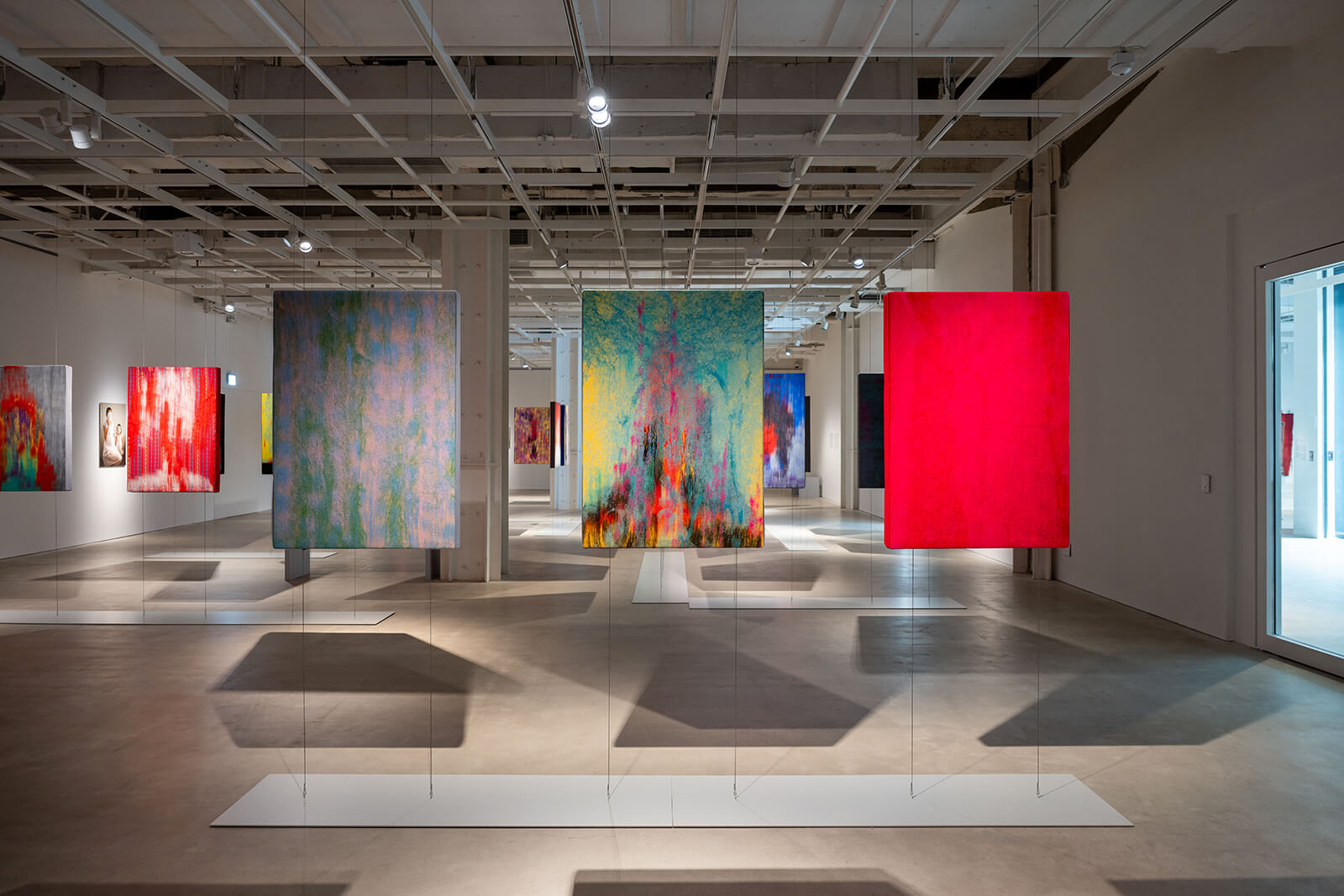
CHAT is housed in what used to be a cotton-spinning factory in Tsuen Wan, a bayside Hong Kong neighbourhood. It now offers exhibitions, residencies and programmes that support and foreground textile art. Wang’s 2023 exhibition, Clouds, Power and Ornament – Roving Central Asia, also featuring Mukazhanova, sought to highlight the richness of central Asian textile and craft, and its role in shaping the region’s politics, culture and society. Mukazhanova used fabric from Hong Kong and Central Asia to create a large-scale felt installation. Why Central Asia, I asked Wang. The connections between China and Central Asia were the “thread behind the exhibition”, she noted. “If we see the fabrics, we understand that the borders never really existed,” she said, adding, “This is not only [in the time of the] Silk Road. Many fabrics in Central Asia were actually produced in China…[for instance] during Soviet times. And Central Asia, now, is still the biggest market for China to export fabrics. And also if you think about all the [shared] patterns, the motifs, you can see the influence.”
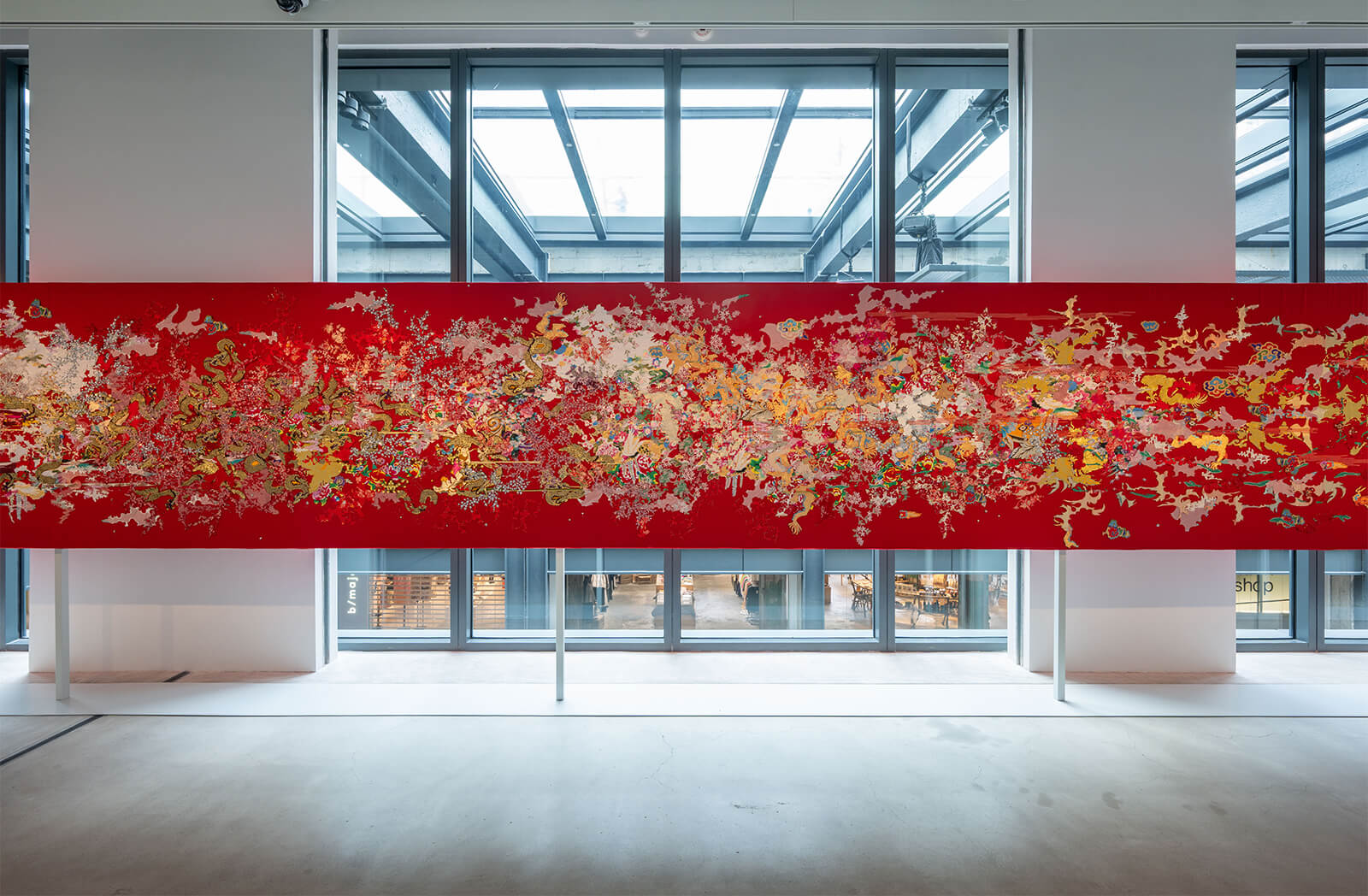
The ‘Silk Road’ is a popular but disputed moniker for a web of overland trade routes that connected ancient and medieval Asia and Europe, deriving its name from China’s silk trade. The road was less a singular route and more a network, Wang suggested, facilitating a series of smaller transregional exchanges along its general contours, its cumulative breadth illustrated by stray references that travelled long distances, like specific motifs on textiles. Trade and strategic connectivity remain crucial to 21st-century Chinese geopolitics; in 2013, China announced its Belt and Road Initiative (incidentally, during former premier Xi Jinping’s visit to Kazakhstan), making infrastructural and trade-driven investments in over 150 countries along six overland economic corridors.
Wang’s research was also driven by the general unfamiliarity with Central Asia as a region in cultural circles in Hong Kong, towards a better understanding of how its realities as 21st-century nation-states play out against the shared backdrop of a Soviet past. In older curatorial work in Shanghai, she focused on political and cultural intersections in East Asia.
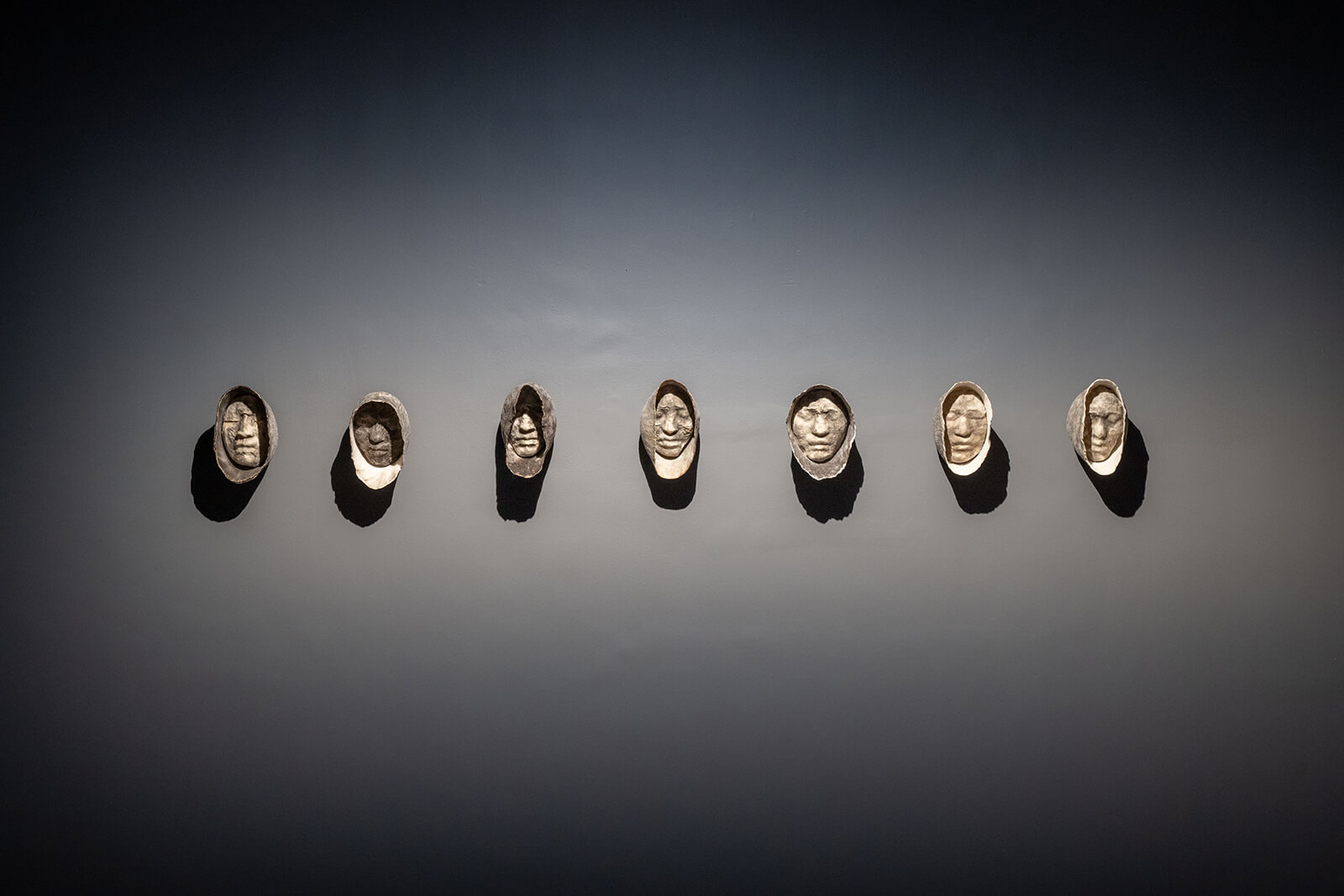
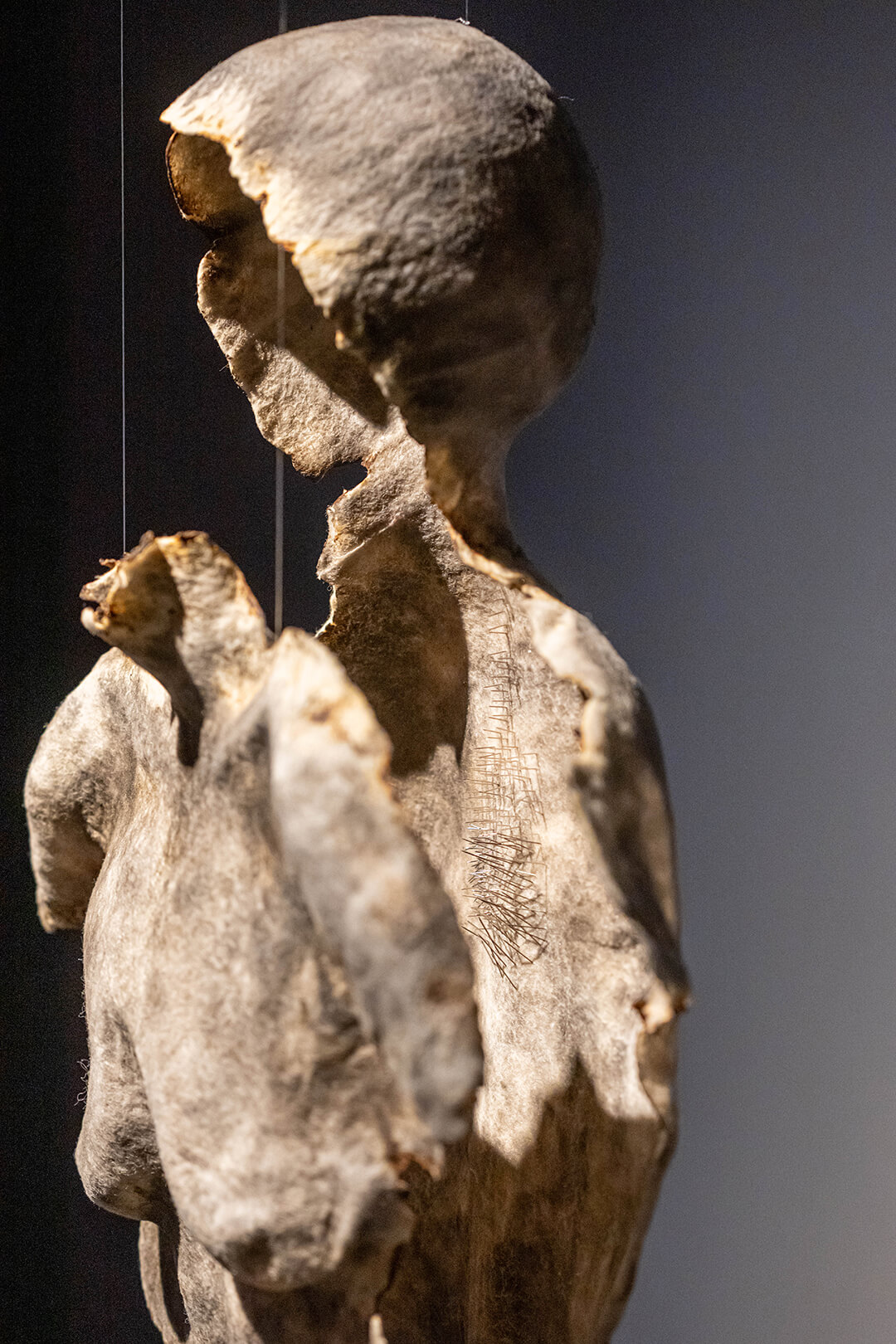
Dowry of the Soul showcases a large body of Mukazhanova’s work, including paintings, felt sculptures, textiles, video installations and photographs. “For Hong Kong audiences, Gulnur’s work is not very familiar. However, the spirit of her work is about meditation, healing and emotional expression…and is very important for audiences to understand,” Wang said.
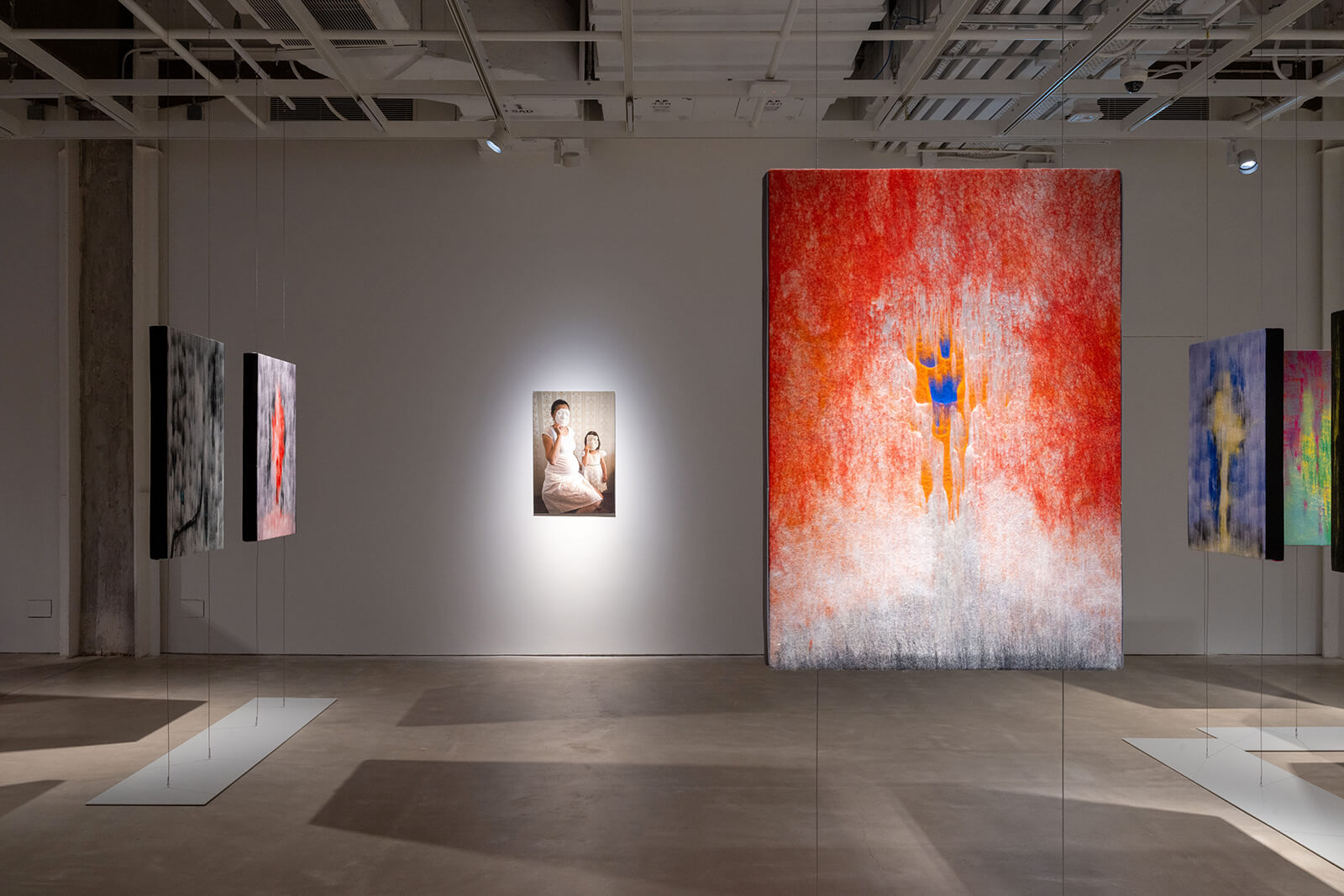
For Mukazhanova, the tactility of textiles offers a doorway into larger historical narratives. “Fabrics are part of history; they describe certain periods [of time]. When I was touching the fabric, I started having [a greater interest] in the history of the fabric…and then in what happened during that time [in order] to understand [the present day]. Everything we have is a reflection of the past, [transmitted] from generation to generation,” she said.
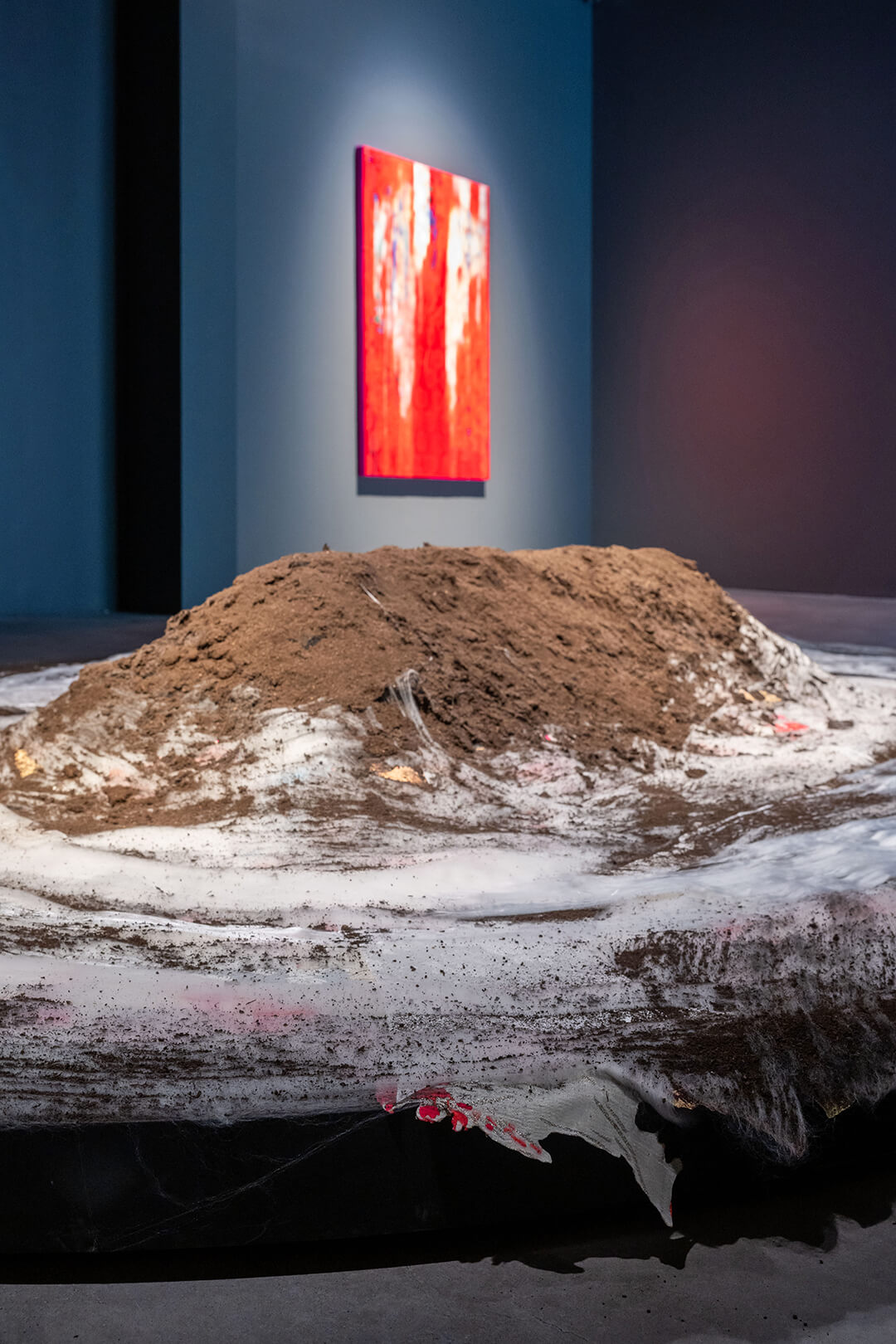
While Mukazhanova has previously made felt artworks entirely by herself, in recent projects at the Bukhara Biennial and at the Tselinny Center for Contemporary Culture, she worked with groups of local volunteers or students. For the Tselinny Center’s inaugural programme, she created a hexagonal installation with six felted portals, monolithic and tower-like from a distance, and patched together from striated segments of colourful fabric when you go closer. It is a wildly animated presence in the former cinema hall – a cavernous space of industrial proportions, where the multicoloured spires of Mukazhanova’s work caress the metal lighting rigs dangling from the ceiling. How did she retain authorship of the work’s design and narrative, Wang wondered. “It is a learning process,” Mukazhanova said. She plans the layout of the work and defines each part of it for her collaborators, making an initial section for their reference. “It was very intense to [teach] a workshop and [simultaneously] control the piece. In the middle of the process, I understood that I had to trust them. If I am working with a collective, I have to trust that they feel comfortable and sure.” The rolling of wet felt, although deeply physical, became another opportunity to talk about shared cultural connections with the 25 – 30 men helping her through the process. She said, “They were all touched by the meaning behind it. This is the material of our artists; it is our history, I explained.”
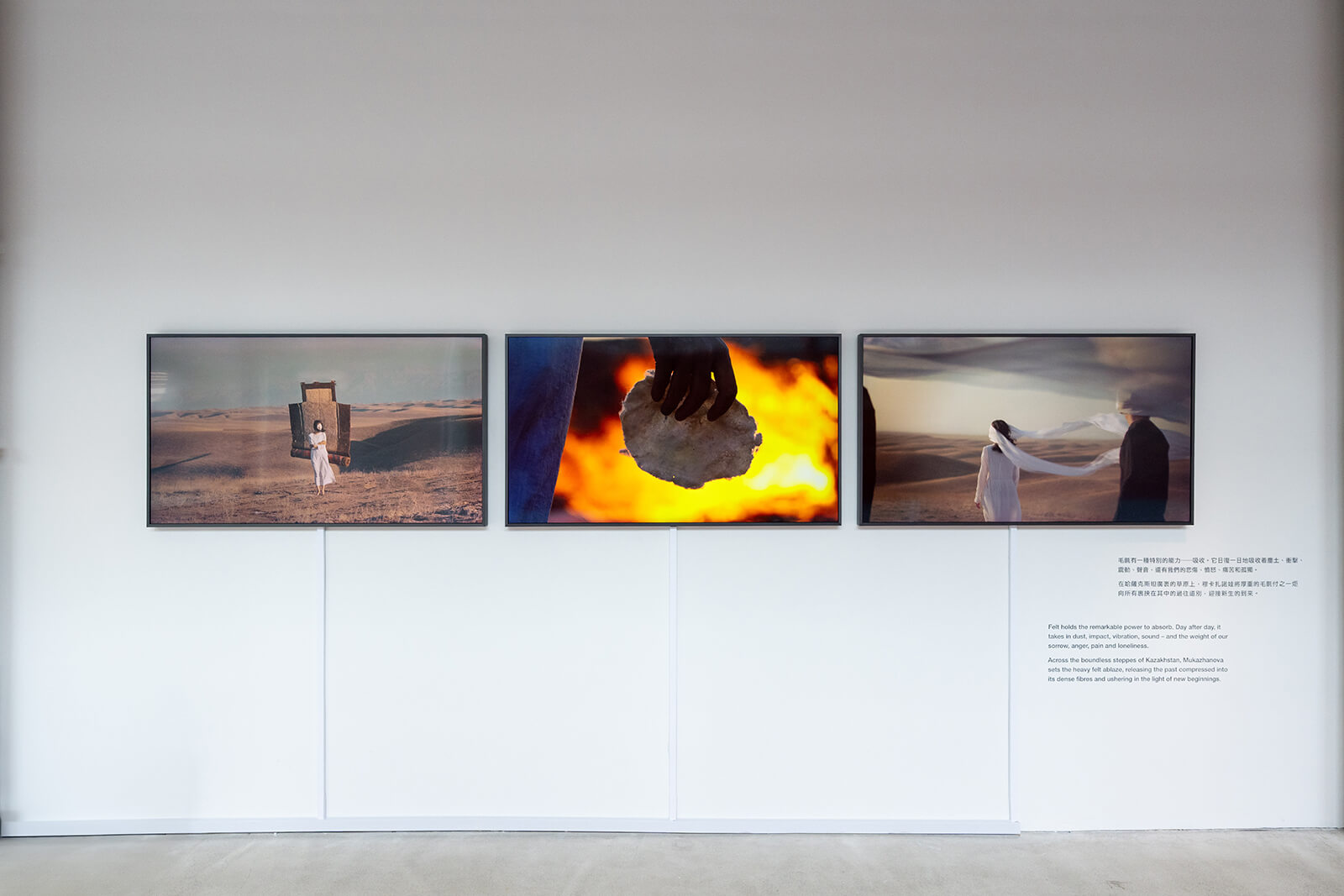
“The process dictates your state,” Mukazhanova said about felt, which she has worked with since her time in art school in Almaty. “You can’t do it fast, [that doesn’t work].” Given how the fibres are kneaded and pressed together into their form as felt, finding an end to the process can also be tricky. “In applied art, you can get lost experimenting…for me, the idea comes first, and that helps, but sometimes I want to do more, and I have to [tell myself to] stop,” Mukazhanova laughed. Detail is a void of relentless possibility in her work – through colours, patterns and layers of felt. Arriving at the work’s final form is then a process of subtraction, she noted. “Then I start to burn [the felt], to take [the layers] out, to search for the idea, because it's too beautiful. Applied art takes all your attention [in] all these patterns, flowers, geometrical forms. You go inside the flower, you [feel attached to] it. But in art, it's important to see the meaning.”
‘Gulnur Mukazhanova: Dowry of the Soul’ is on view from November 14, 2025 – March 1, 2026, at CHAT (Centre for Heritage, Arts and Textile), Hong Kong.
by Srishti Ojha Oct 21, 2026
Increasingly, artists, filmmakers and activists are turning to VR to create more personal, tangible accounts of the climate emergency and its impact on vulnerable communities.
by Mirra Lynn Oct 20, 2026
The Indian artist paints the old wadas of central Pune, capturing the traces of everyday life that cling to these structures, battered by time but unbowed.
by Anmol Ahuja Oct 15, 2026
How do heaps of souvenirs and relics with racist Aboriginal motifs and features become art? MCA Sydney’s winter showcase—the artist’s largest to date—beckons a possibility.
by Vandana Kalra Oct 14, 2026
With his latest exhibition as a point of departure, the modernist discusses his decades-long practice, the spontaneity of drawing and the social responsibility of artists.

make your fridays matter with a well-read weekend
Enter your details to sign in
Don’t have an account?
Sign upOr you can sign in with
a single account for all
STIR platforms
All your bookmarks will be available across all your devices.
Stay STIRred
Already have an account?
Sign inOr you can sign up with
Verification link sent to check your inbox or spam folder to complete sign up process
Tap on things that interests you.
Select the Conversation Category you would like to watch
Please enter your details and click submit.
Enter the 6-digit code sent at


Enduring connections: Dowry of the Soul at CHAT Hong Kong
by Ranjana Dave | Published on : Dec 01, 2025


 Sign in with Google
 Sign in with email
What do you think?