Architecture18 mins. read
Al Borde: An Ecuadorian practice 'on the edge' of architectural archetypes
by Almas SadiqueMar 11, 2025



by Aarthi MohanPublished on : Dec 01, 2025
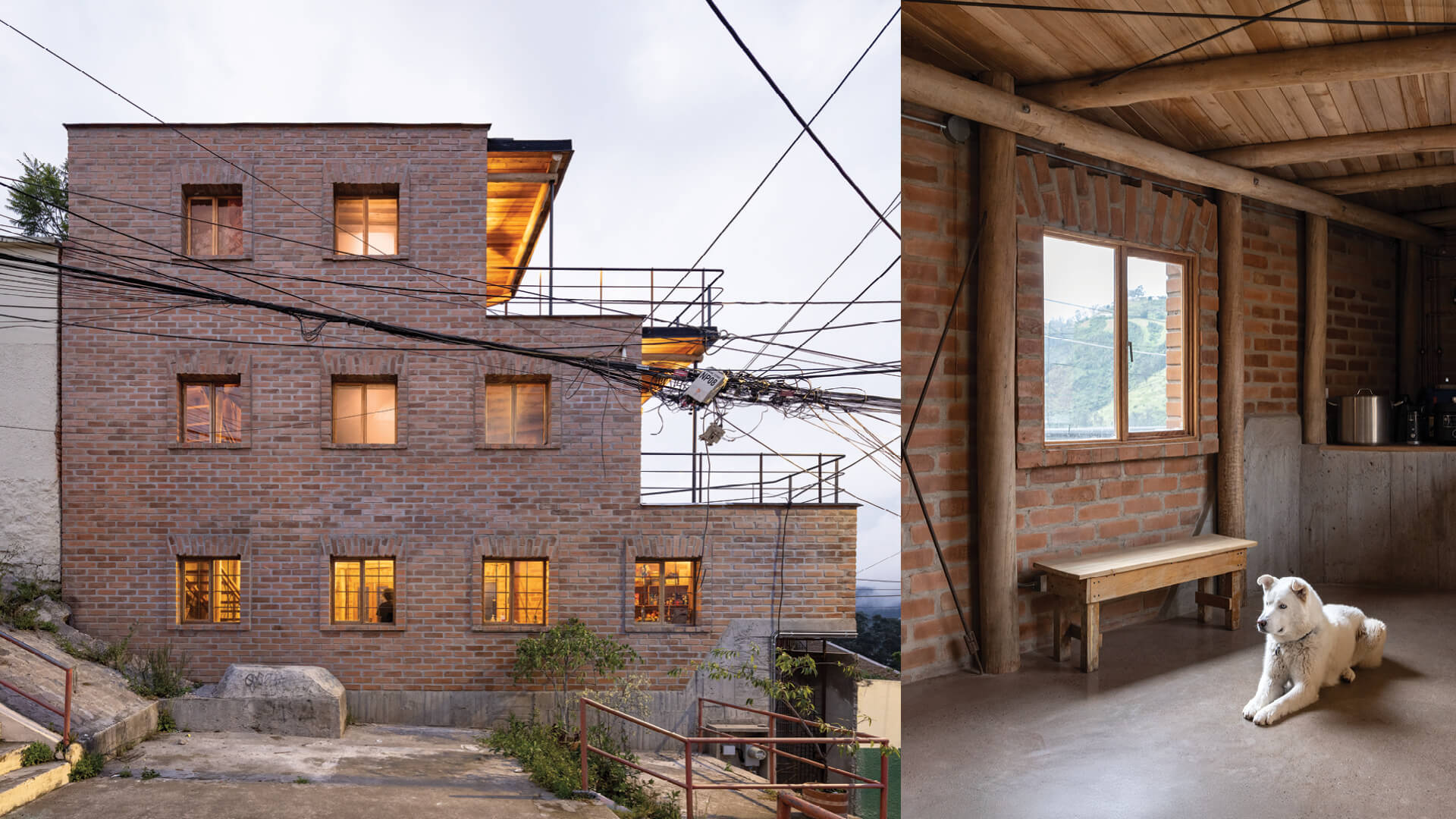
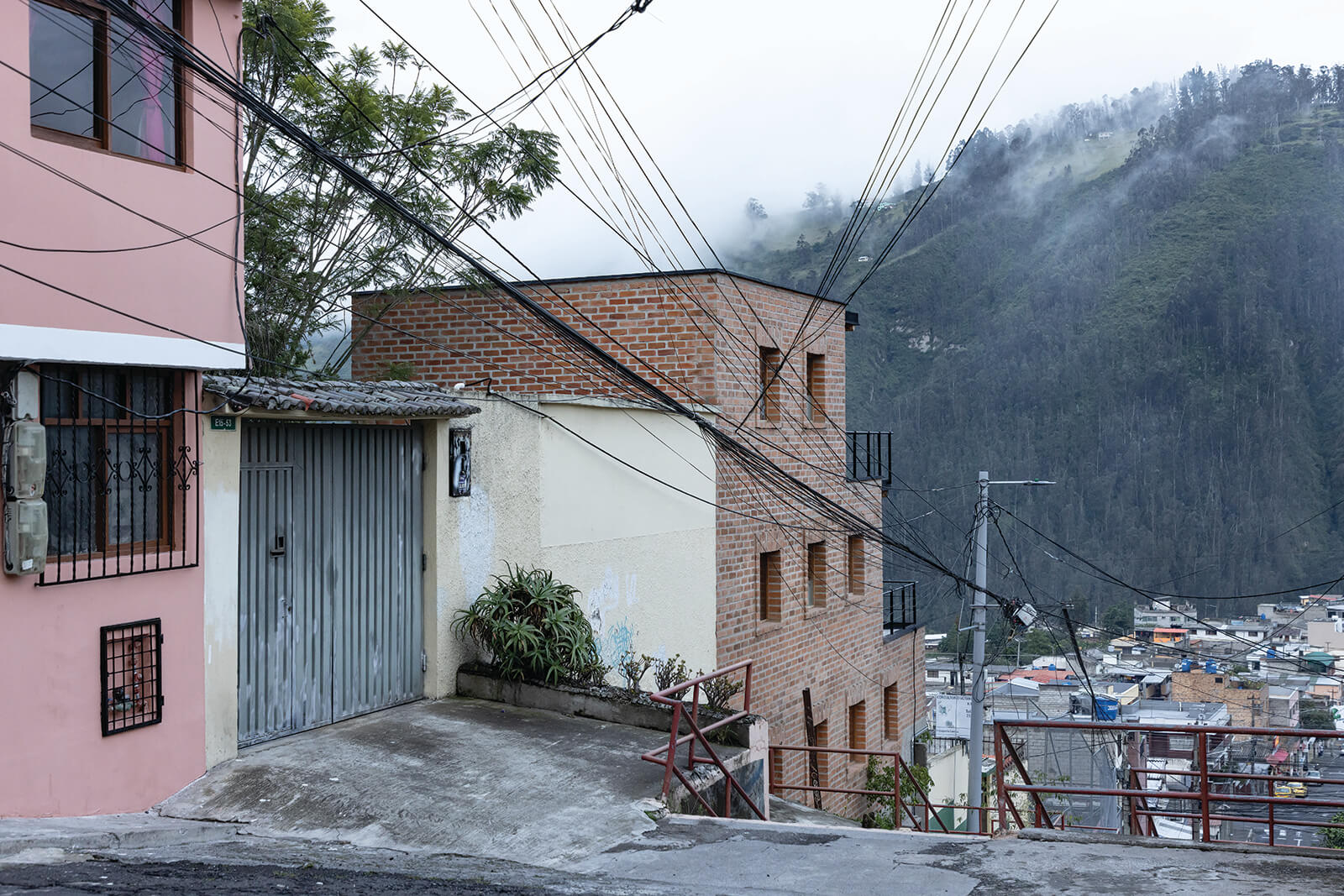
In Quito’s La Vicentina neighbourhood— a steep, tight-knit hillside community where stairways thread between homes and daily routines spill naturally into the shared public steps—architectural studio Al Borde has realised a residential project that quietly rethinks how houses in equatorial cities might be built. The commission came from Freddy Ordóñez, a mechanical engineer, professor and director of the SCINERGY research group at the National Polytechnic School, who wanted a house for himself, a smaller dwelling for his daughter and a flexible space that could serve as a workshop or a social room. The sloping plot, inaccessible by car and overlooking Cerro Auqui, a prominent hill on the city’s eastern periphery, suited his lifestyle as a committed cyclist and offered the architects a chance to design a residence that would also operate as a living laboratory. Equipped with sensors and data collection systems, the house is integrated into Ordóñez’s ongoing research on resilient, low-impact construction in equatorial contexts.
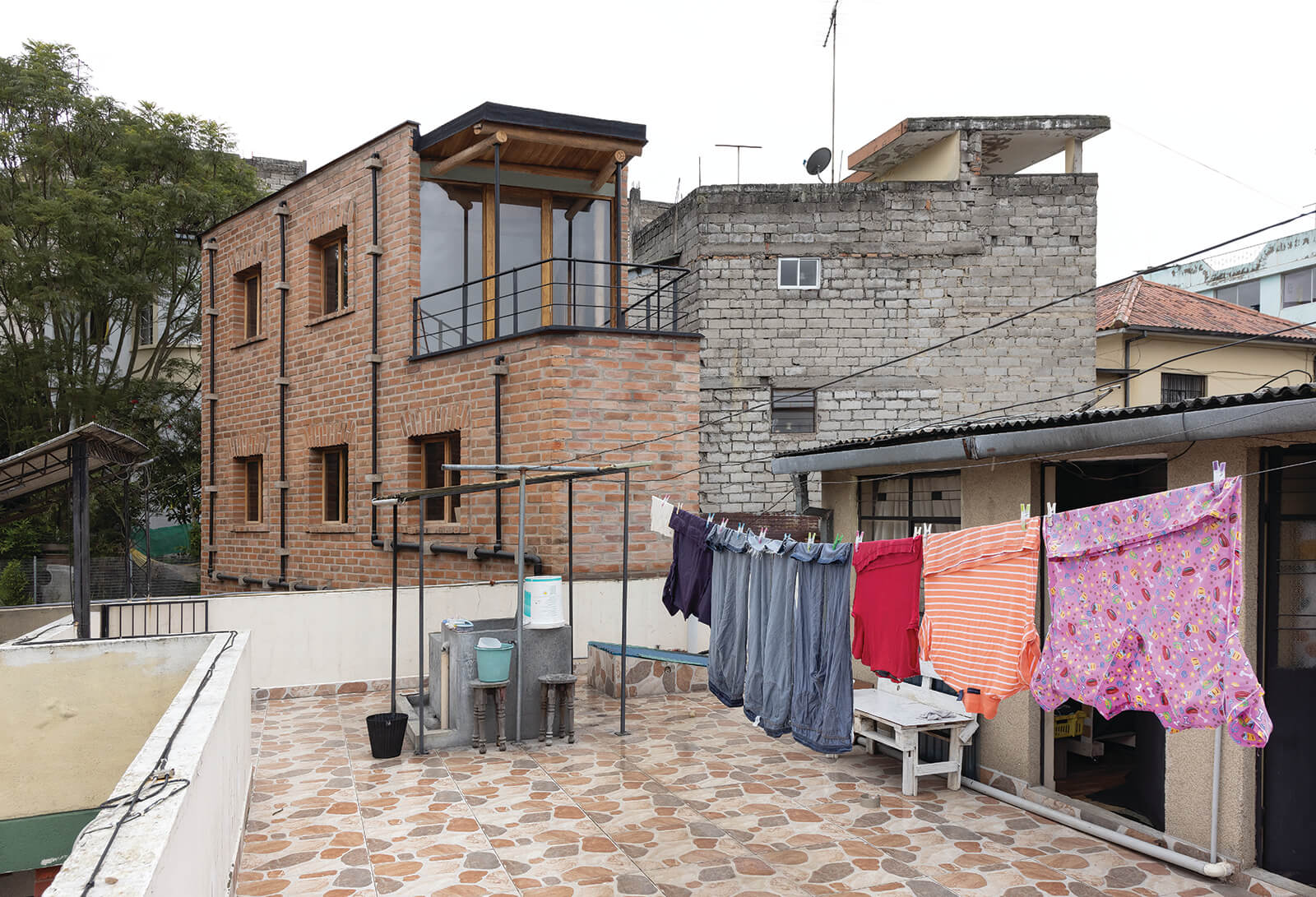
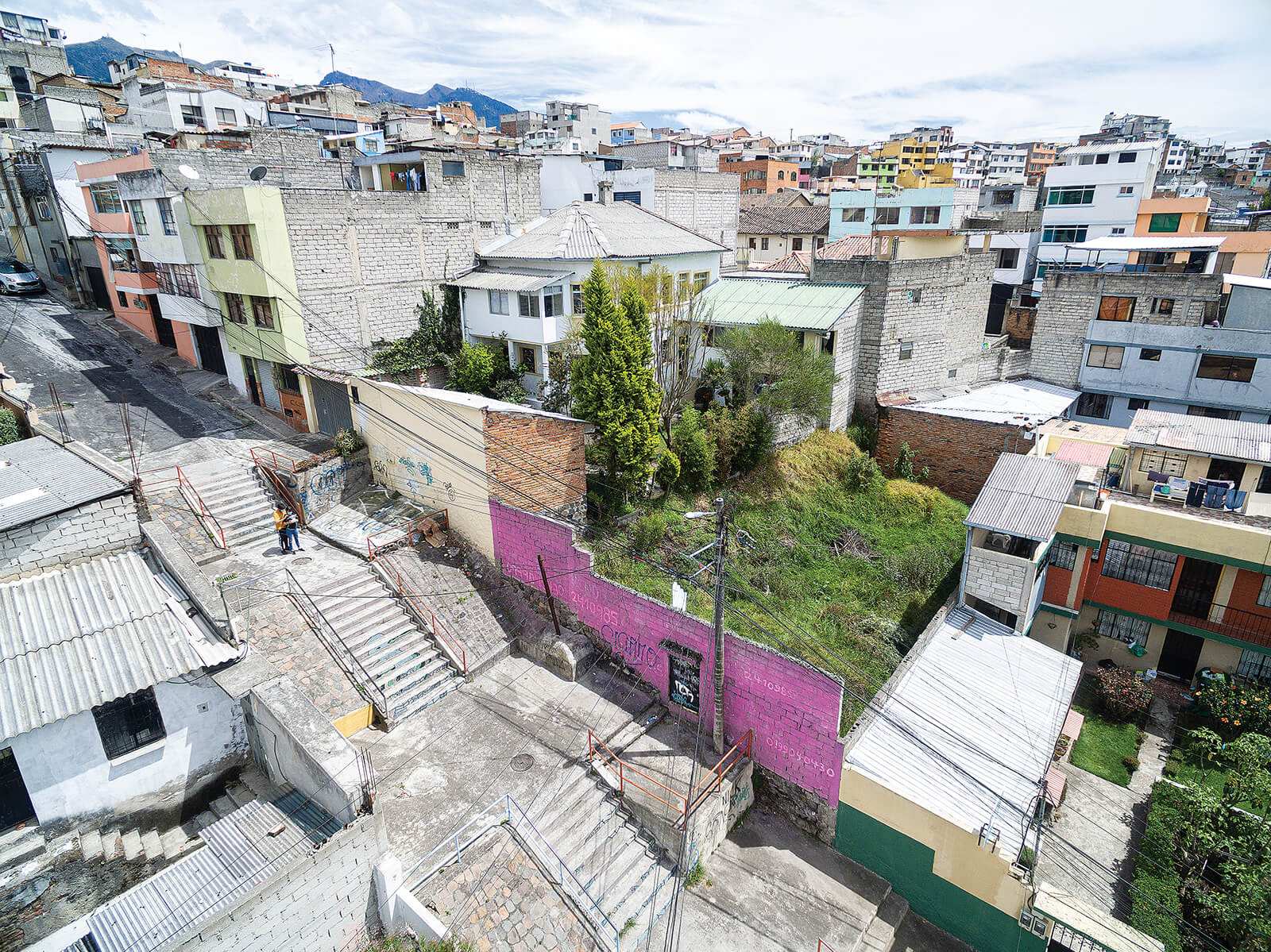
Constraints defined Casa La Vicentinafrom the outset. The compact plot sits within a traditional middle-class neighbourhood, where patios and gardens spill into each other. Parking was impossible, but this opened up an unusual freedom ensuing no need for a dedicated space to a driveway or garage. The architects began with a simple but decisive move. They split the house into two slender volumes, placing them around a trapezoidal central courtyard—a configuration that maximised outdoor space while establishing a direct visual continuity with the neighbours’ yards and mature trees, especially a jacaranda that was preserved as part of the composition. As Al Borde shared with STIR, “What now appears to be an obvious solution was the result of a complex process of figuring out how to best respond to these conditions. It wasn’t just about building a house; it was about creating voids that allow the occupants to breathe and connect with their environment.”
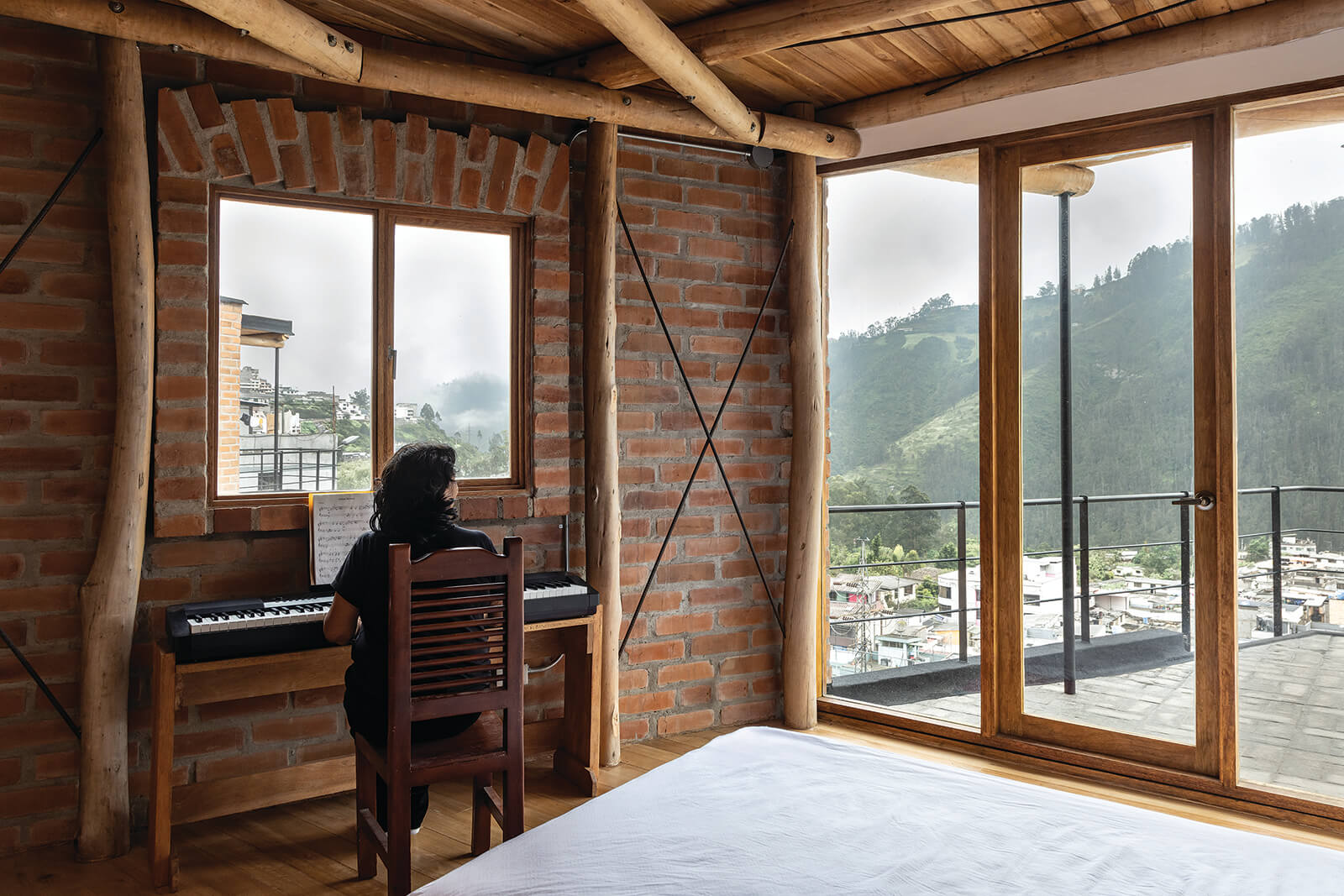
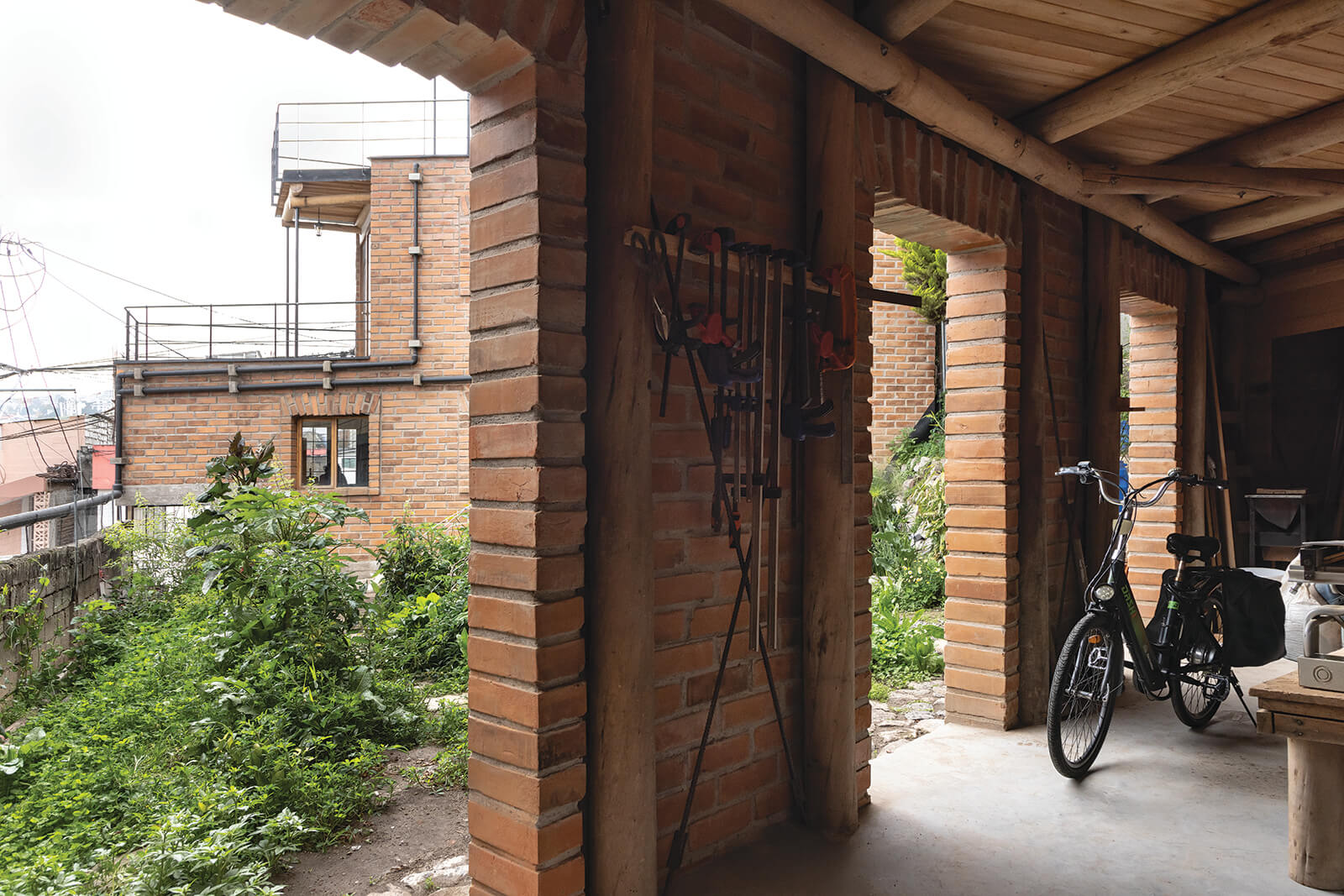
The vertical organisation that followed allowed each floor to carry a single function. The ground level accommodates the social areas, the first floor houses a bedroom and study and the second contains another bedroom, each level slightly retreating from the one below. These retractions form a sequence of terraces that face east, opening toward the city and mountains. They work as both living extensions and passive devices, capturing sunlight and strengthening the sense of openness. The absence of a wall between the house and the street further amplifies this generosity. Windows overlooking the public realm create what the architects describe as a form of ‘spontaneous community surveillance’, where visibility is equally about security and social exchange. In this way the design encourages casual, day-to-day interaction with neighbours, a gesture that builds community architecture as much as it frames views.
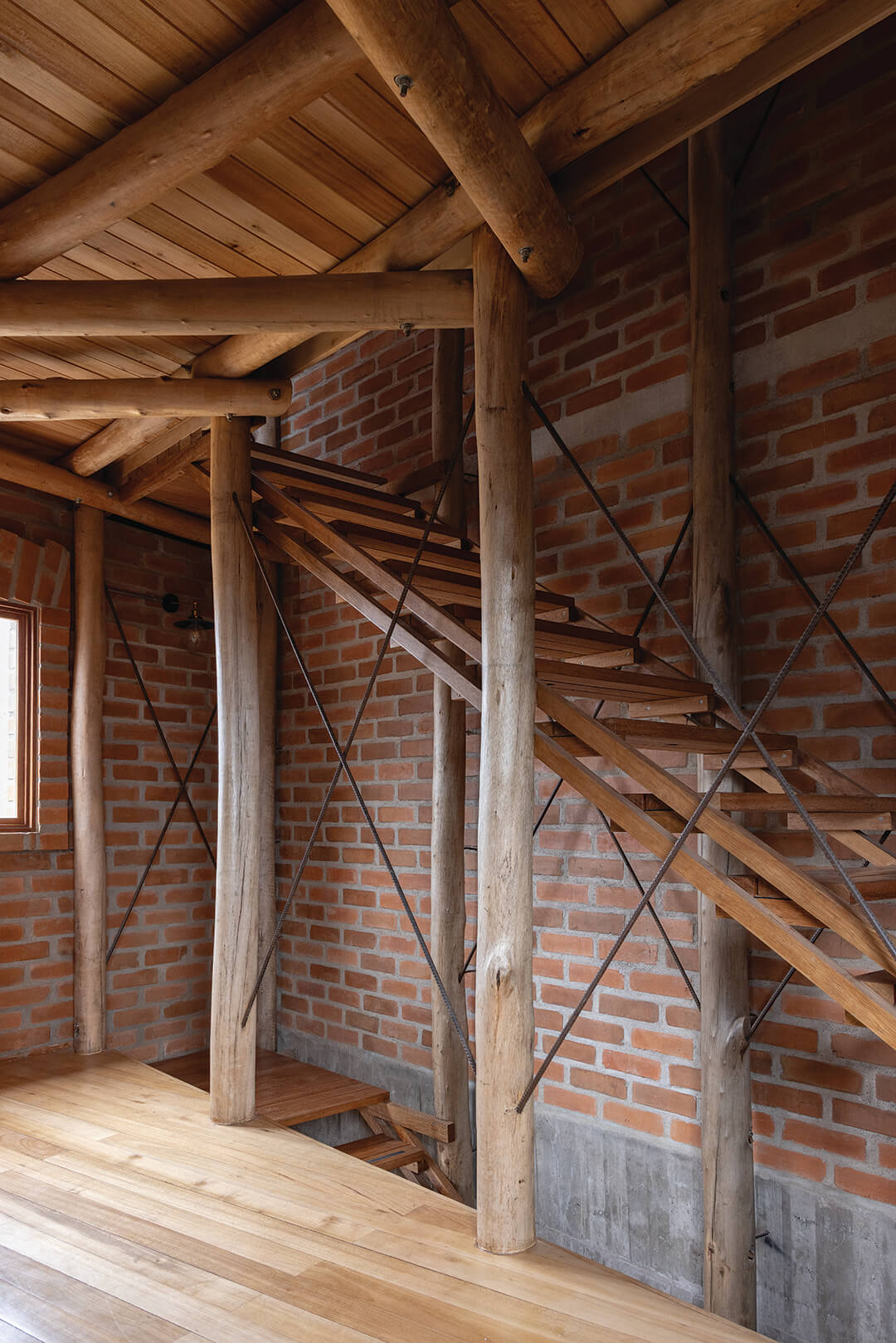
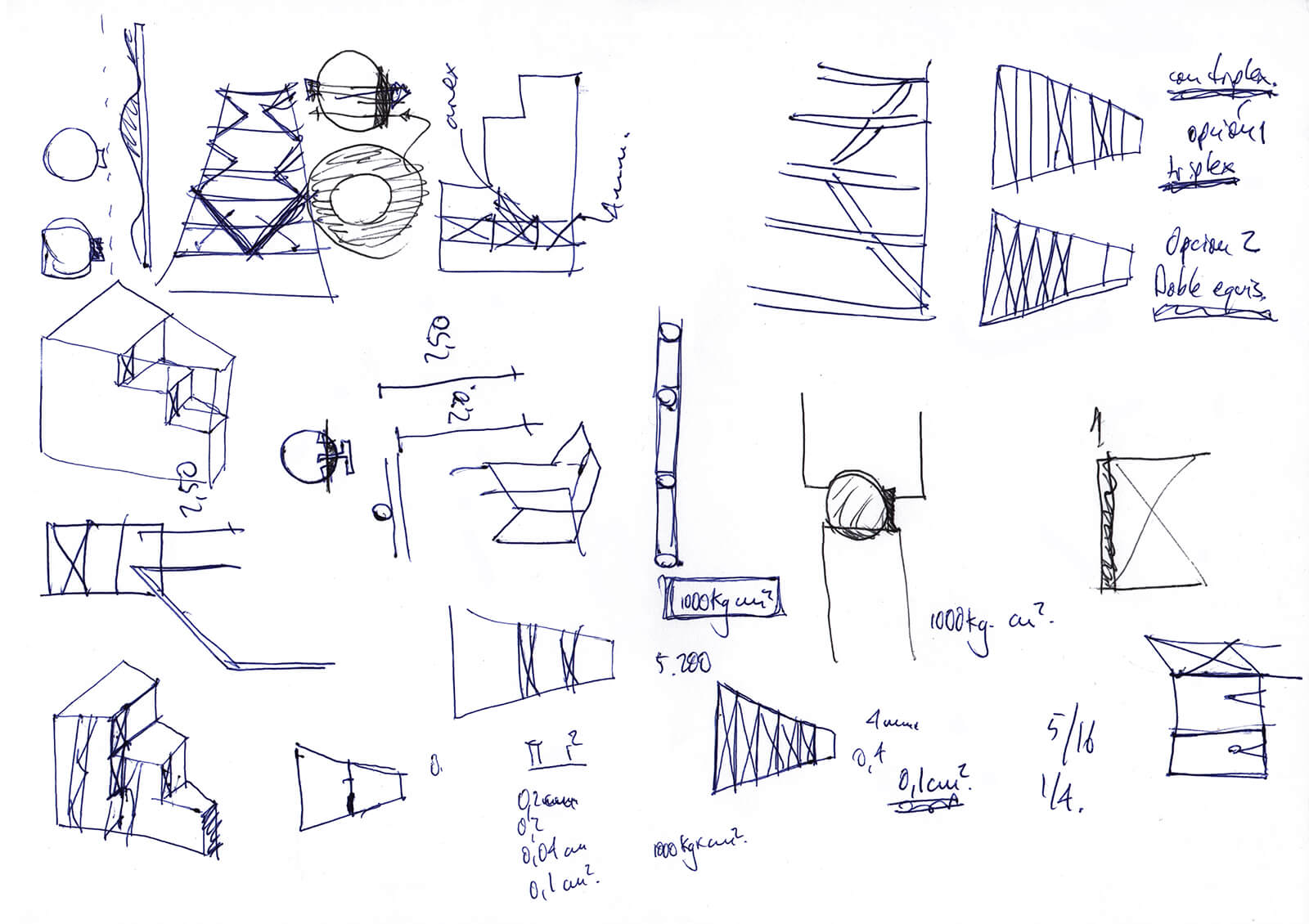
The most striking feature of the house, however, is structural. Instead of concrete or steel, the architects employed eucalyptus trunks, known locally as pingos, or the load-bearing frame. Straight from a forest which is only 12kms away, these nine-metre logs were used in their raw state, their natural irregularities accepted as part of the structural logic rather than corrected machining. In Quito, eucalyptus trees are ubiquitous, their presence marking a legacy of 19th century forestry policies that prioritised fast growth over ecological balance. While the species has caused soil degradation and displaced native vegetation, its abundance makes it an unavoidable reality. By sourcing pingos directly and pairing the harvest with a program of replanting native species, the project turned the choice into an act of ecological responsibility. Working with the trunks also minimised industrial processing eliminating the need for sawing planks, energy-intensive transformations, and wasted offcuts. The full length of each log became part of the house, lowering embodied carbon while reasserting a forgotten vernacular technique.
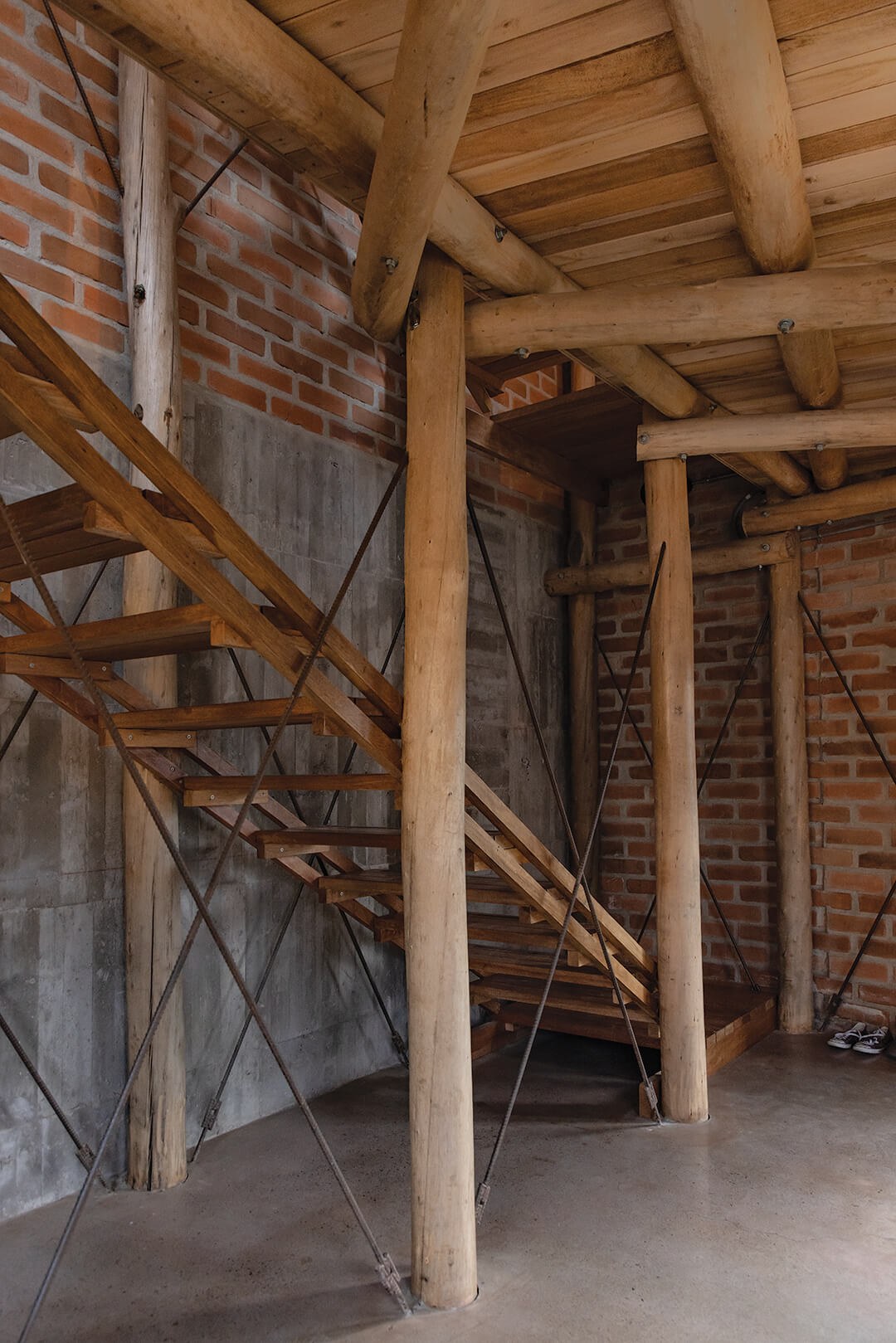
The irregularity of the pingos required extensive craftsmanship. Builders worked column by column, accepting the crookedness and taper of each piece and adjusting the connections in situ. This collaborative process highlighted a crucial dimension of construction in Ecuador, which is the skill of local artisans, whose work often goes unrecognised. For the practice, the house is as much a monument to this manual intelligence as it is to material innovation. When STIR asked Al Borde to elaborate on the importance of craftsmanship in the project, the studio responded, “This house is a manifesto to their contributions, as it is, in essence, a handmade luxury impossible to replicate in the global north, where construction systems increasingly rely on technology rather than human hands.”
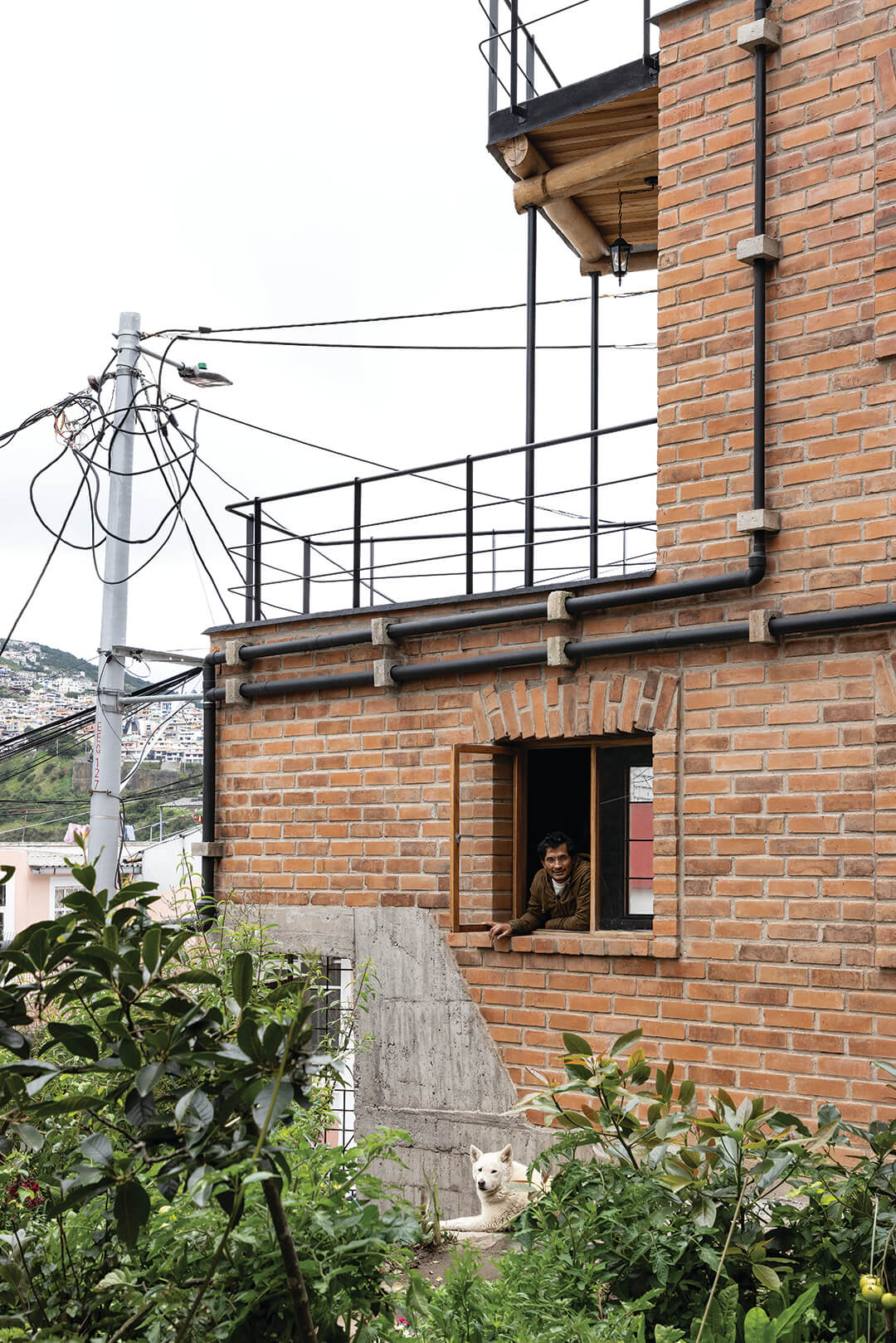
The choice of wrapping the house in brick around its timber skeleton was both pragmatic and symbolic. Brick architecture brings thermal stability to the structure, absorbing heat during the day and releasing it gradually at night. At the same time, its modularity made it possible to adapt to the irregularity of the pingos, with a small cavity separating the skin from the structure. Sourcing was deliberate. Handmade bricks were purchased from family-run kilns rather than industrial suppliers, a decision that supported small-scale economies while reinforcing the tactile quality of the building. Structurally, the partnership between round timber and masonry created a hybrid system, where the rigidity of brick buttresses the flexibility of wood; an essential combination in Quito’s seismic environment.
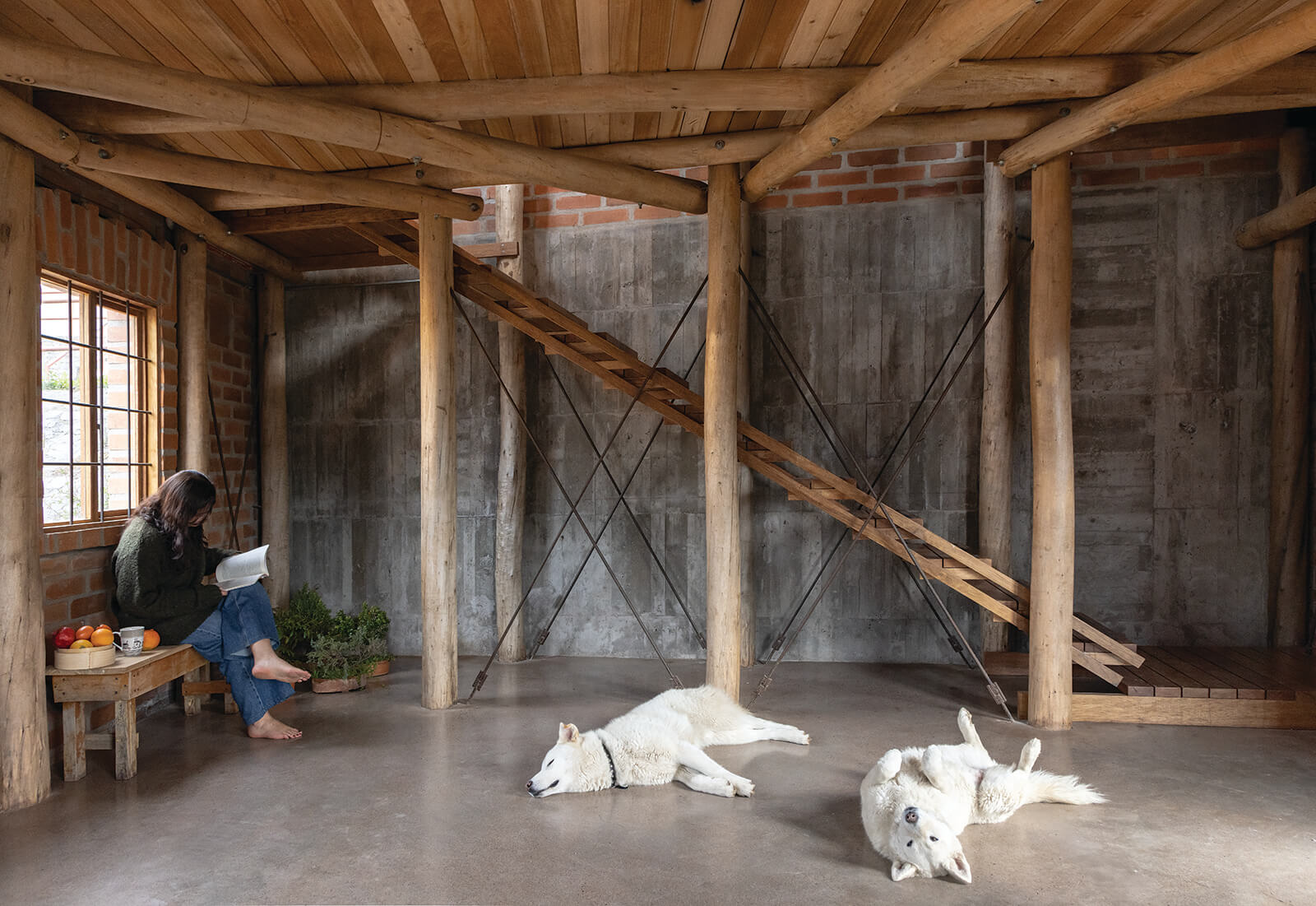
Beyond the materials, the residential architecture project’s social resonance unfolds in subtle ways. The architects’ decision to forgo the boundary wall introduced a degree of permeability between domestic life and the street. Stray dogs occasionally wander into the patio, blurring the line between private and public, but reinforcing the atmosphere of shared territory. This openness aligns with the character of the house, where community is sustained through visibility, proximity and the informal occupation of common ground. It strengthens those dynamics instead of retreating from them.
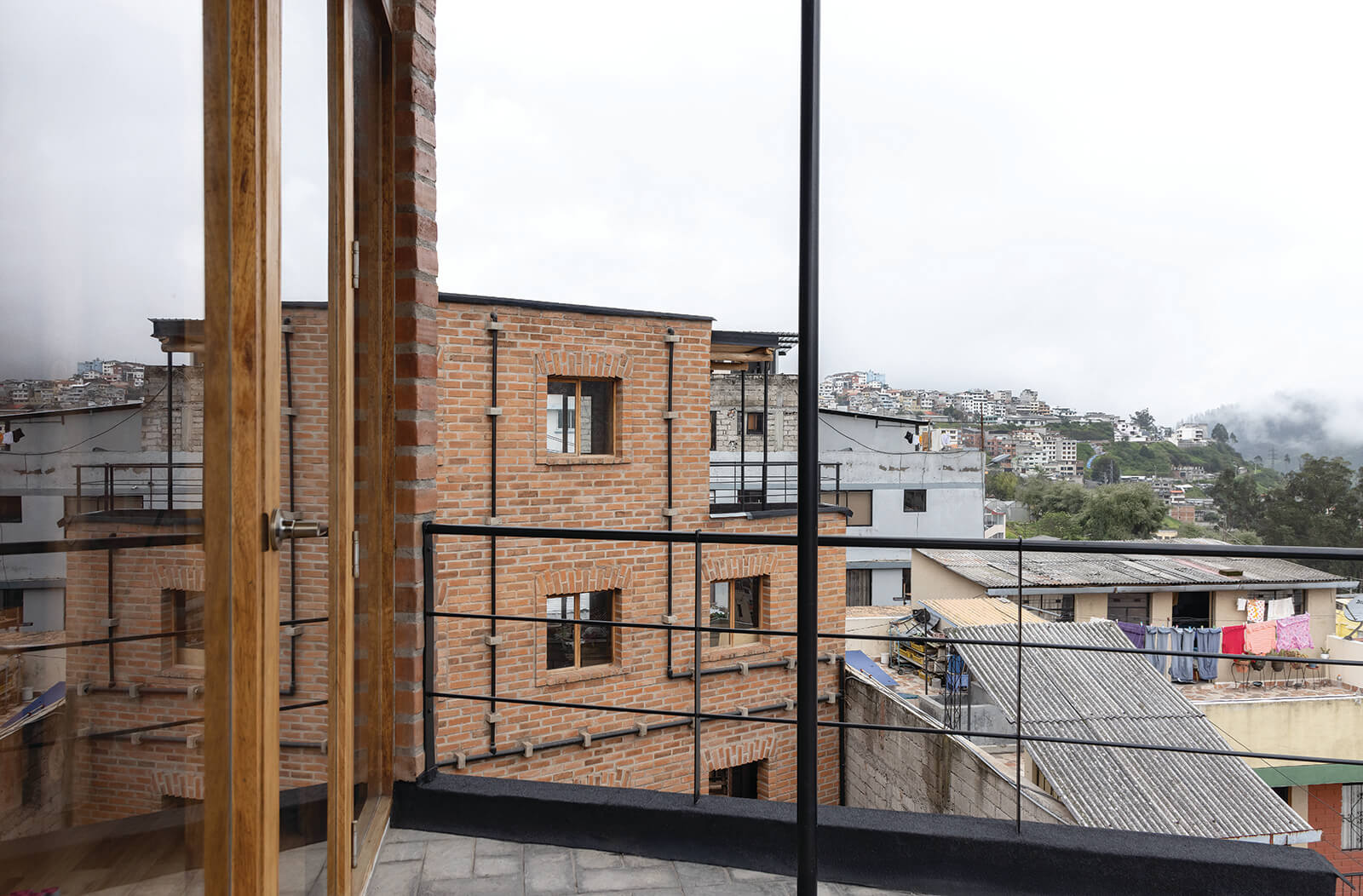
Technically, the residential design doubles as a research instrument. Its thermal performance has been carefully engineered through orientation, cross-ventilation, insulation and massing strategies. The result is that 72 per cent of interior hours fall within comfort levels in a city where most homes reach less than half that figure. Energy balance is achieved through photovoltaic panels and a heat pump, while water demand is reduced by 40 per cent via rainwater harvesting and greywater reuse. Even the patio participates in ecological repair, acting as an infiltration zone that helps replenish the city’s overtaxed aquifers.
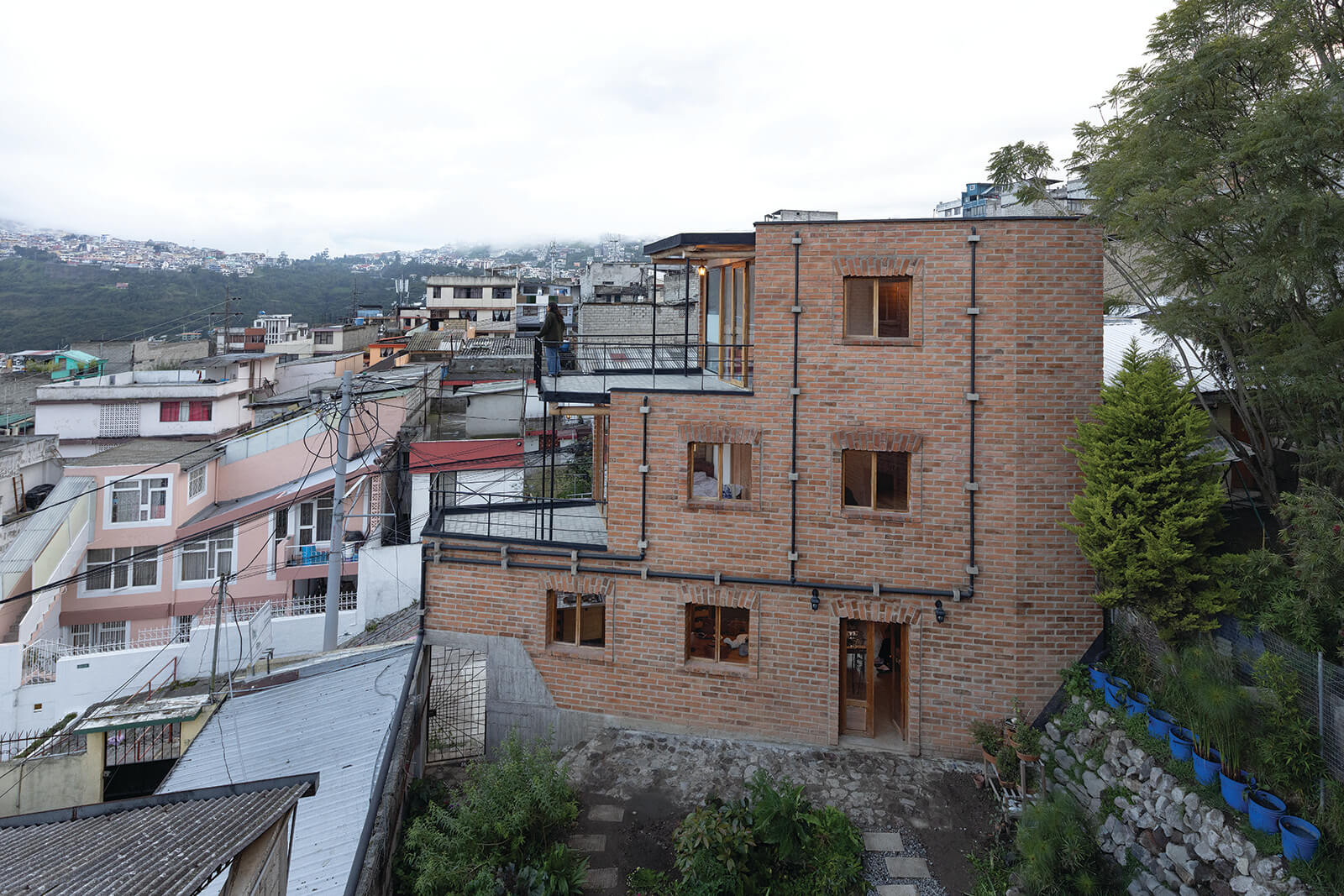
These features, however, are not intended as isolated experiments. They represent an approach to urban housing in equatorial climates that prioritises replication over spectacle. Instead of relying on expensive high-tech systems, the sustainable design demonstrates how locally available materials and straightforward strategies can meet environmental targets while remaining accessible. It resists dependence on imported technologies and argues for self-sufficiency through passive design and artisanal know-how.
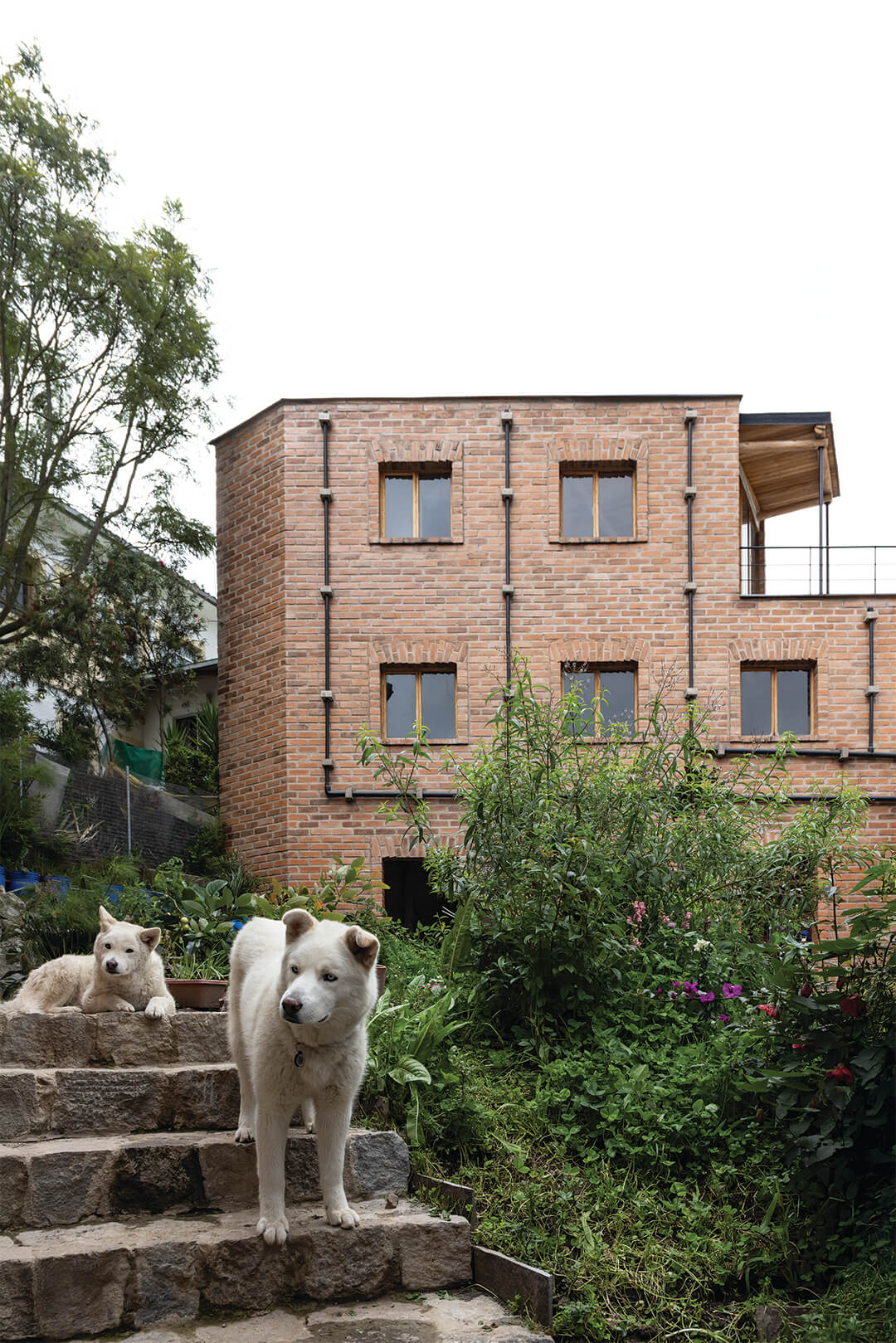
Al Borde sees the house not as a completed building but as a process. With its sensors and ongoing monitoring, the project will continue to generate data for SCINERGY, contributing to debates on building policy in Ecuador and beyond. Its lessons are practical and emphasises that equatorial cities need not default to mechanical conditioning or imported solutions. By drawing from context, both urban and ecological, architects can deliver homes that are sustainable, affordable and culturally attuned.
This position reflects on Al Borde’s wider ethos, which has consistently sought to do more with less, relying on local labour and rethinking the overlooked potential of everyday materials. In Casa La Vicentina, those principles find new form in dialogue with scientific research, turning an ordinary commission into a prototype. Rather than chasing spectacle, the architects frame architecture as a tool for negotiation between the site, the community and the resources. What emerges is not a model to be imitated wholesale, but an insistence that the most lasting innovations may arise from scarcity, and that resilience is built incrementally, through the intelligence of context and the precision of craft.
Name: Casa La Vincentina
Location: La Vicentina, Quito, Ecuador
Architect: Al Borde
Collaborators: Al Borde: María Fernanda Heredia, Melissa Narváez, Scinergy: Estefany Vizuete, Joel Vega
Area: 200.00 sq m
Year of Completion: 2024

by Pranjal Maheshwari Oct 19, 2026
The Mumbai-based architects integrate courtyards, mesh screens and north light trusses to create a dining space that doubles up as a community hub at SR University, Warangal.
by Mrinmayee Bhoot Oct 17, 2026
The Rotterdam-based institute centres the Indian Ocean as a network for exploring material histories and transnational links shaping coastal cultures, positing them as future models.
by Pranjal Maheshwari Oct 16, 2026
At the 2026 Stirling Prize ceremony, Mary Duggan with RUFF Architects, MAKER Architecten and Nakshabid Architects were felicitated for proffering quality housing and social equity.
by Mrinmayee Bhoot Oct 12, 2026
The new Centre for Contemporary Arts, fostering public engagement with art in Uzbekistan, is housed in a tram depot refurbished by the French studio, emulating local craftsmanship.

make your fridays matter with a well-read weekend
Enter your details to sign in
Don’t have an account?
Sign upOr you can sign in with
a single account for all
STIR platforms
All your bookmarks will be available across all your devices.
Stay STIRred
Already have an account?
Sign inOr you can sign up with
Verification link sent to check your inbox or spam folder to complete sign up process
Tap on things that interests you.
Select the Conversation Category you would like to watch
Please enter your details and click submit.
Enter the 6-digit code sent at


A hillside house in Quito by Al Borde becomes a prototype for equatorial living
by Aarthi Mohan | Published on : Dec 01, 2025


 Sign in with Google
 Sign in with email
What do you think?