Design09 mins. read
Design Democracy 2026 puts regional design at the heart of Made in India
by Jincy IypeOct 15, 2026



by Bansari PaghdarPublished on : Feb 11, 2026
Within the broader context of the NCPA, Mumbai, India, the question of activation—spatial, bodily, programmatic and of the in-between—remained a crucial, albeit interesting, one for the duration of the recently concluded ADFF:STIR Mumbai 2026. In line with the curatorial brief for the Jaquar Pavilion Park, a melding of space, movement and event had to be an essential driver in shaping these activations beyond the festival's designated 'venues', including the theatres, the central plaza and the pavilions themselves. Serendipitously, even sporadically, it was these in-between spaces in which the true essence of the festival—participatory, collaborative and agency-redefining—shone through.
In addition to the films screened, the aforementioned Jaquar Pavilion Park and the ~log(ue) programme powered by JSW, the acclaimed festival's second edition introduced novel facets of engagement to its public programming with this precise idea of activation in mind. Termed Special Projects, activations including Diaspora Pavilion 01001A by SR_A staged at the Tata Gardens and LIVinSET, which overtook the Godrej sunken court, expanded the limits of convention—both spatial and programmatic—often placed on public festivals. While situated in and defined by two key transitional spaces in the complex, the interventions responded to their immediate context and activities prescribed within them, but with a view to expanding both. This was especially apparent at LIVinSET, wherein 'activation' subsumed new dimensions through the addition of 'object' into the mix.
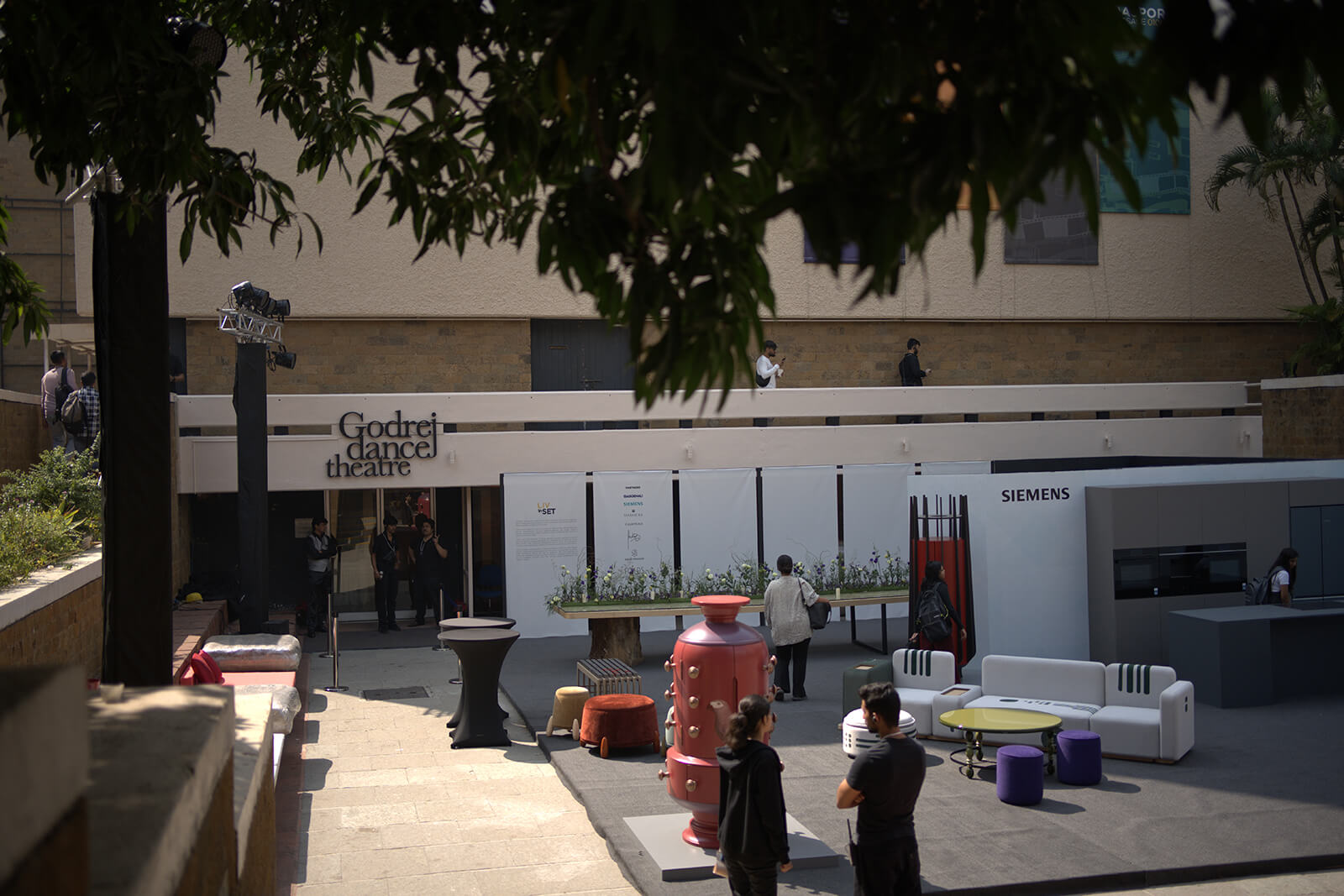
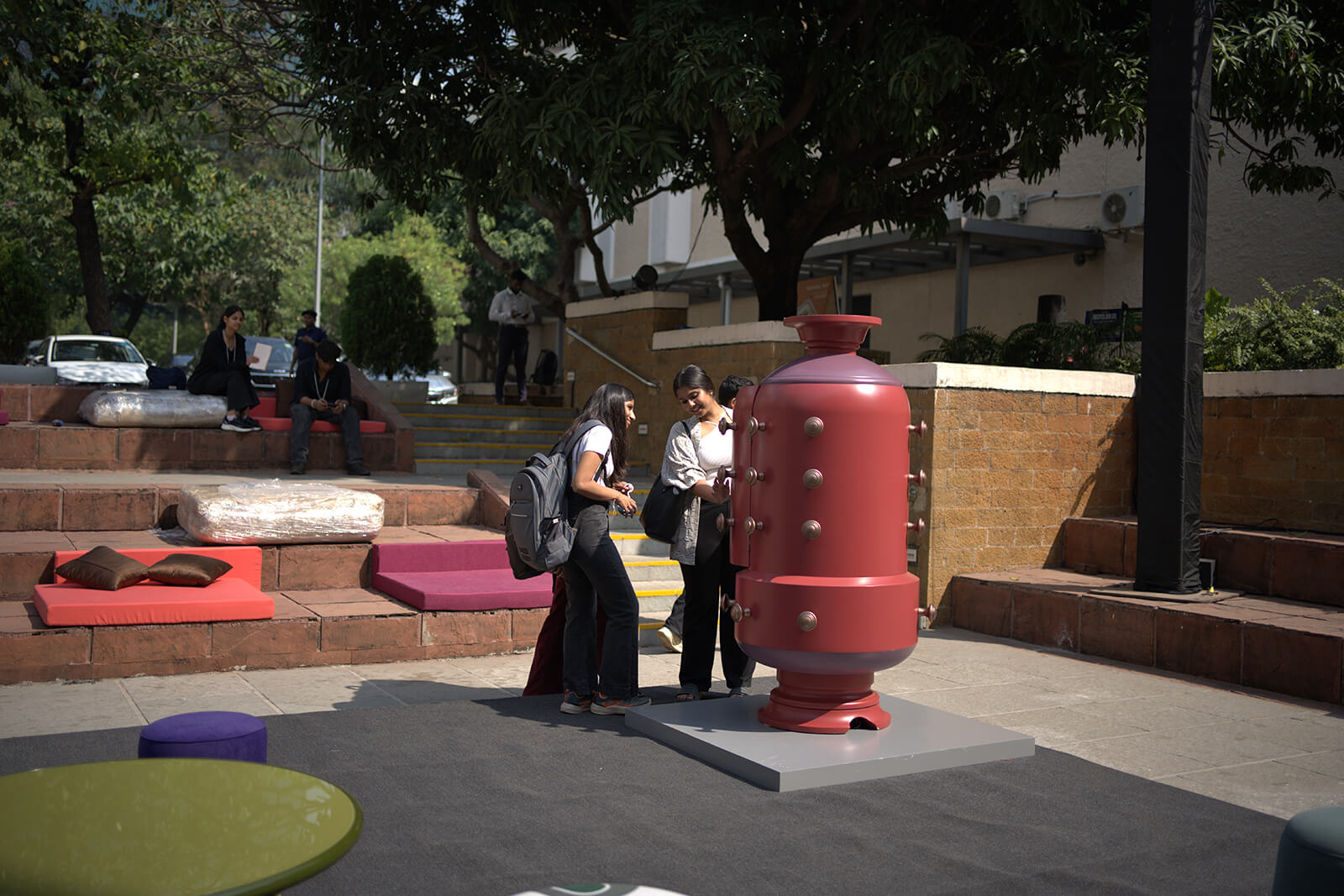
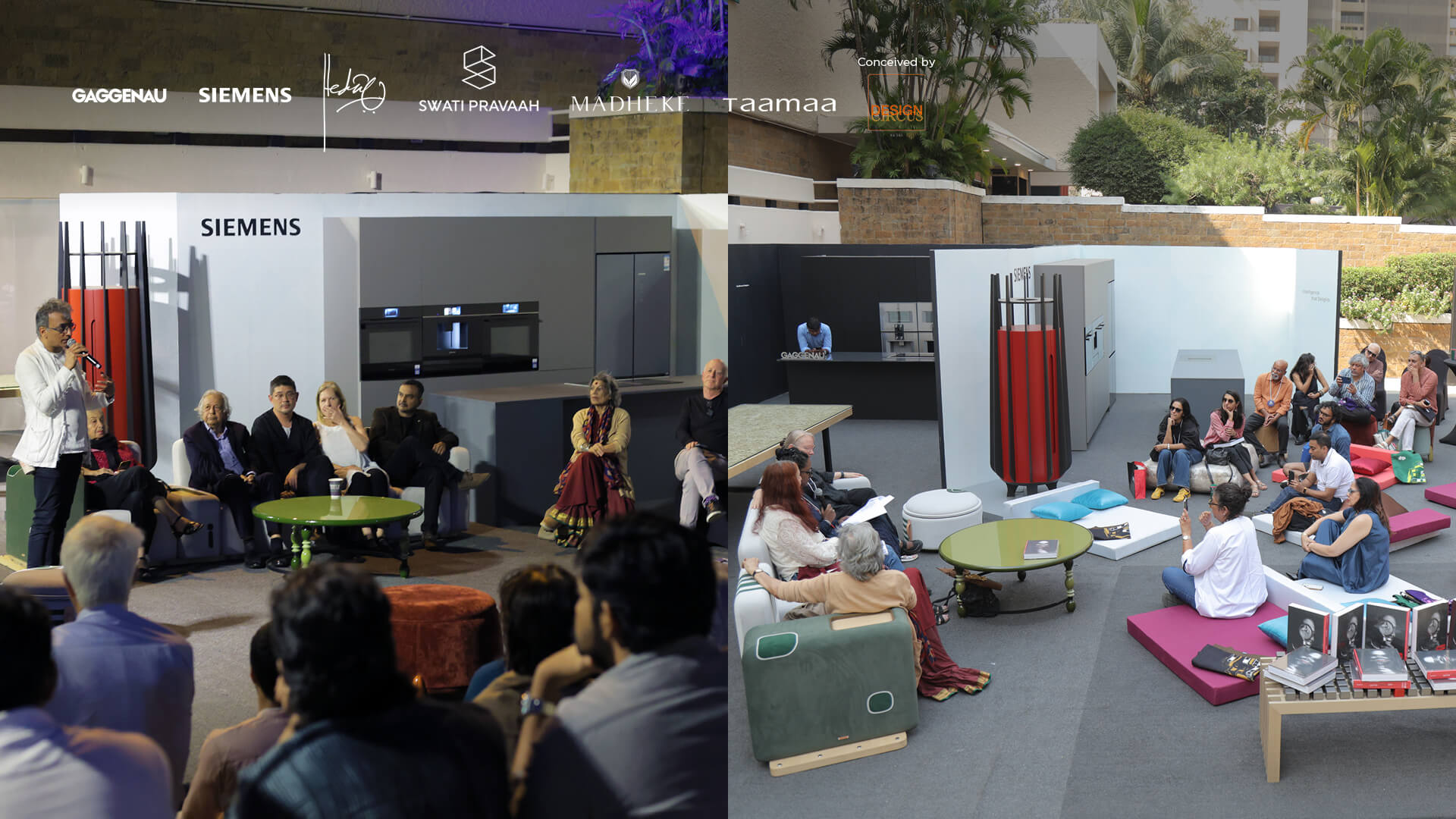
Conceived by Design Circus, a Mumbai-based studio helmed by Riyaz Himany and Payal Bania, in collaboration with STIR, LIVinSET was designed as an experiential product design gallery, assembled as a 'set' inspired by the mise-en-scène in film. Here, everyday objects transcended their prescribed functional obligations and became props for visitors to interact with, inspiring reflection on our daily lives and the objects that guide and define them. Featuring products of outstanding craftsmanship and design merit by brands including Gaggenau, Siemens, Hedao x Swati Pravaah, Madheke and Taamaa, the project transformed the idea of a home into a stage apart from a sanctum, softly hinting at the idea of daily living as performance, dissolving progressions and hierarchies as it adapted to accommodate various encounters at the festival.
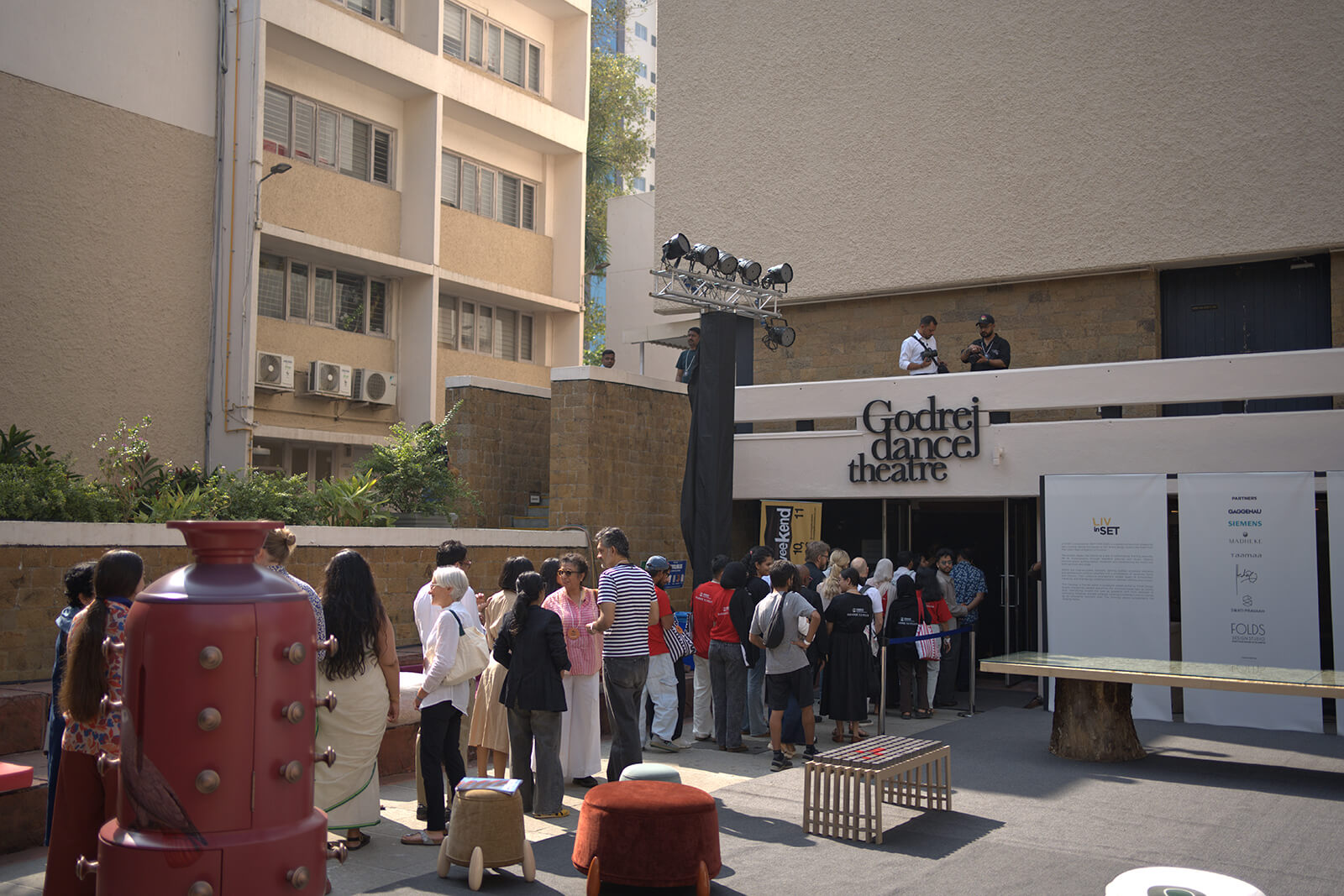
Within LIVinSET, furniture, lighting, textile and sculptural designs came together to reveal layers of spatial composition, creating a fusion of stillness and dynamism to host various opportunities for encounters. Gaggenau’s private culinary experience on the evening of January 9, 2026; a curator-led walkthrough of the festival for Mumbai Gallery Weekend x India Art Fair guests taking off and culminating here for a gathering around food on January 10, 2026; a book launch by gallery Chemould Prescott Road and artist Mithu Sen on January 11, 2026; followed by a closing huddle for the second edition of the festival were some of the programmed events for the visitors to experience this spatial narrative, positioning the intervention and its many constituent objects as central to the festival’s narrative.
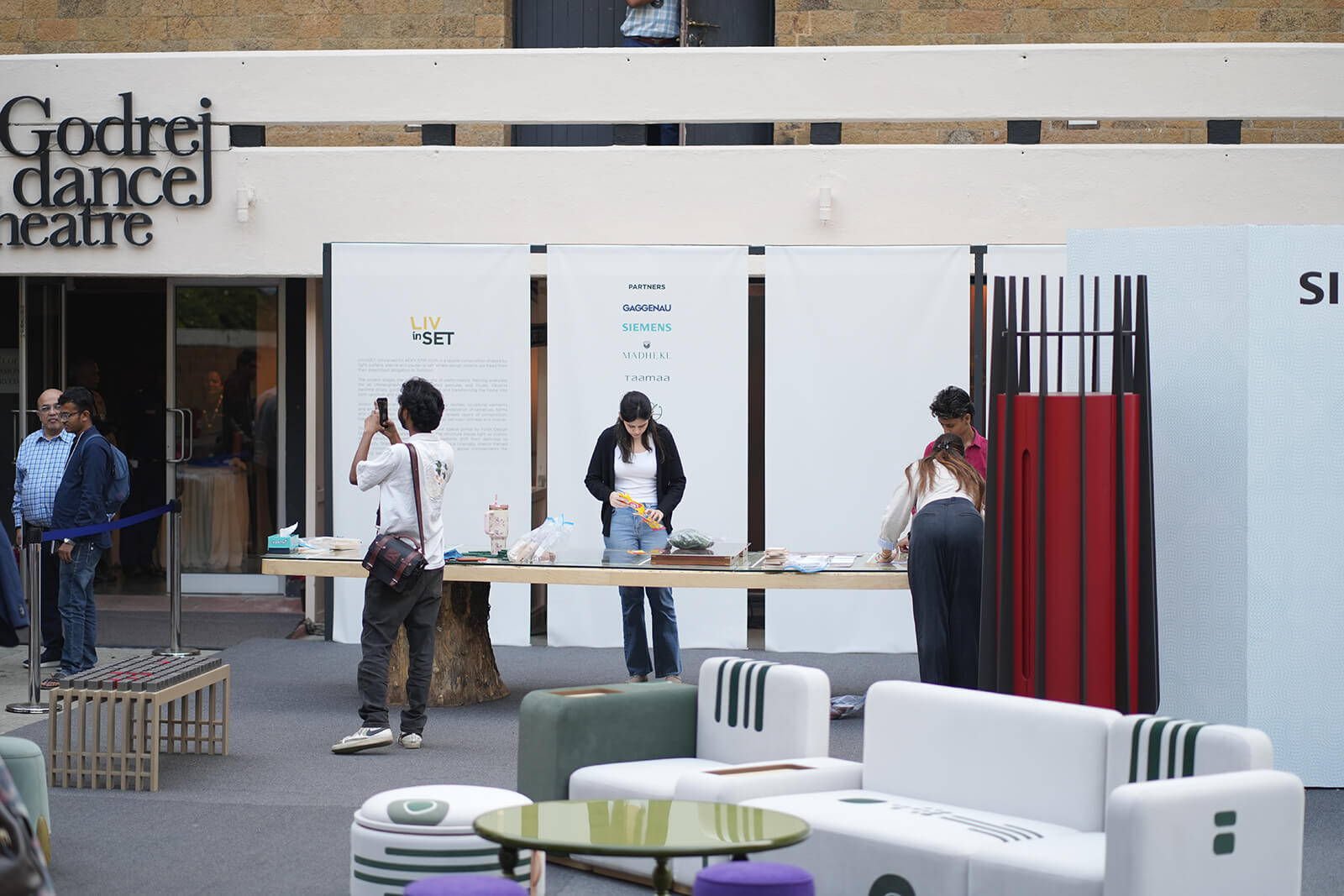
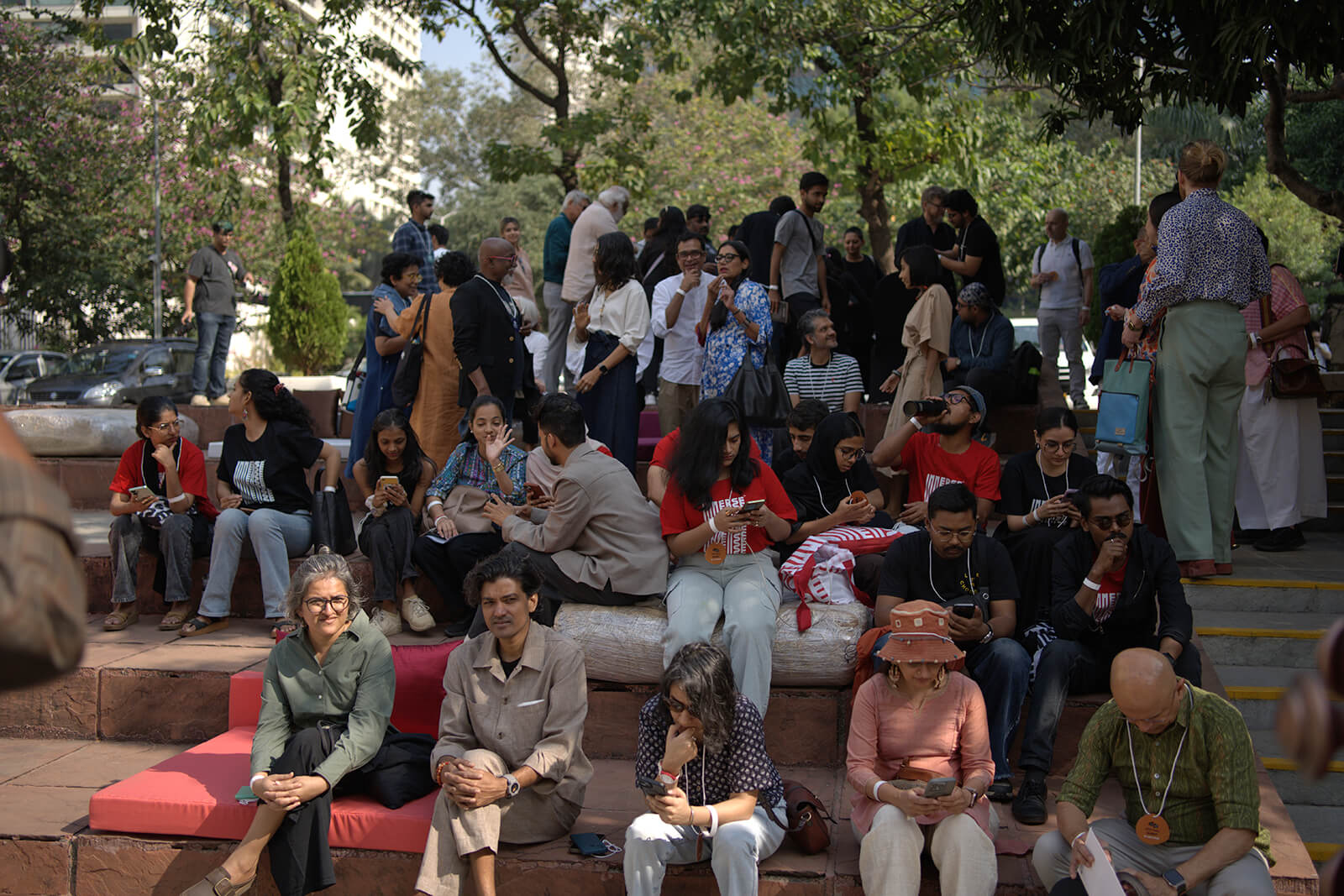
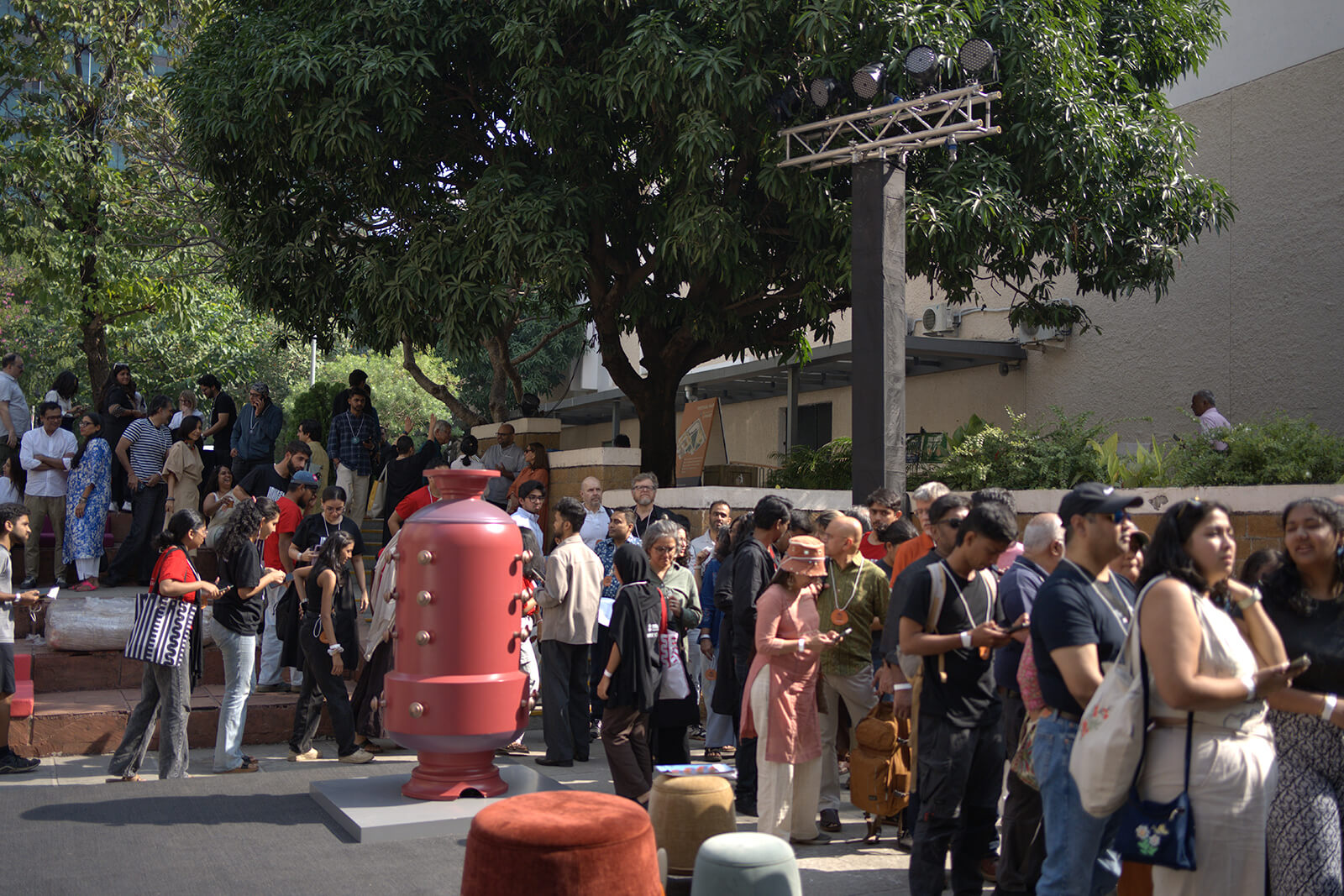
Zooming out, a setting and a stage like LIVinSET cannot be fully considered devoid of its physical positioning and connection to other interventions on site at the NCPA. The large sunken court where LIVinSET was sited doubled up as the entrance plaza for one of the four primary venues of the festival, the Godrej Dance Theatre. As visitors queued up for screenings and talks set in the theatre, they often congregated in the plaza, talking to each other, exploring LIVinSET and interacting with the objects, making it a space that accommodated the in-between instances of the festival experience. As people commuted among the different venues, they would catch glimpses of the sunken court and the interactions happening within, often treating it as a place for pausing and reflecting. At times, people sat down to have a casual conversation on the chairs on display, while children played away with the interactive furniture, hinting at an element of play concealed within these very artefacts in our own homes. As such, several sporadic interactions continued to enliven LIVinSET, encompassing the spirit of the design festival as well as illuminating the threshold between design and space.
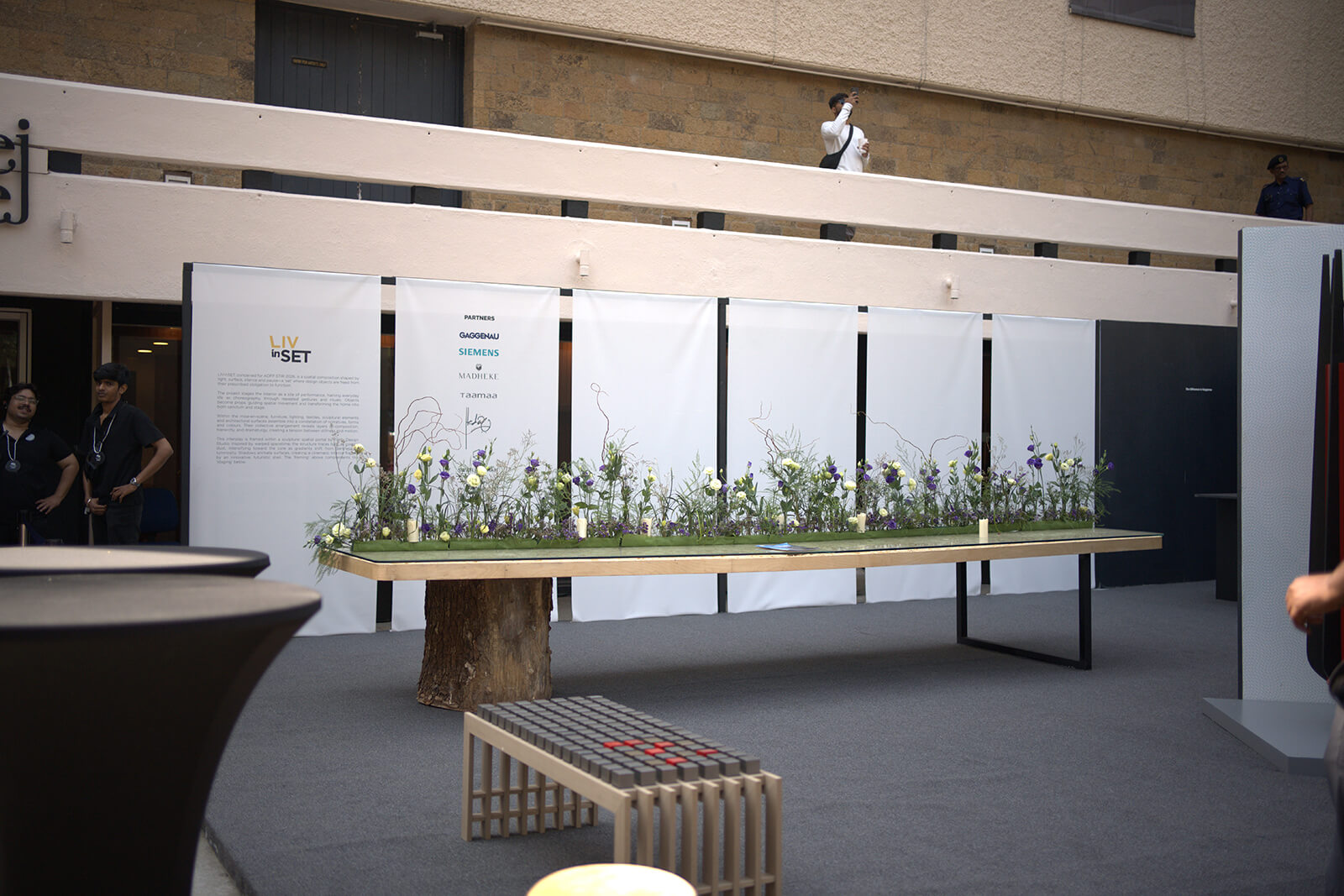
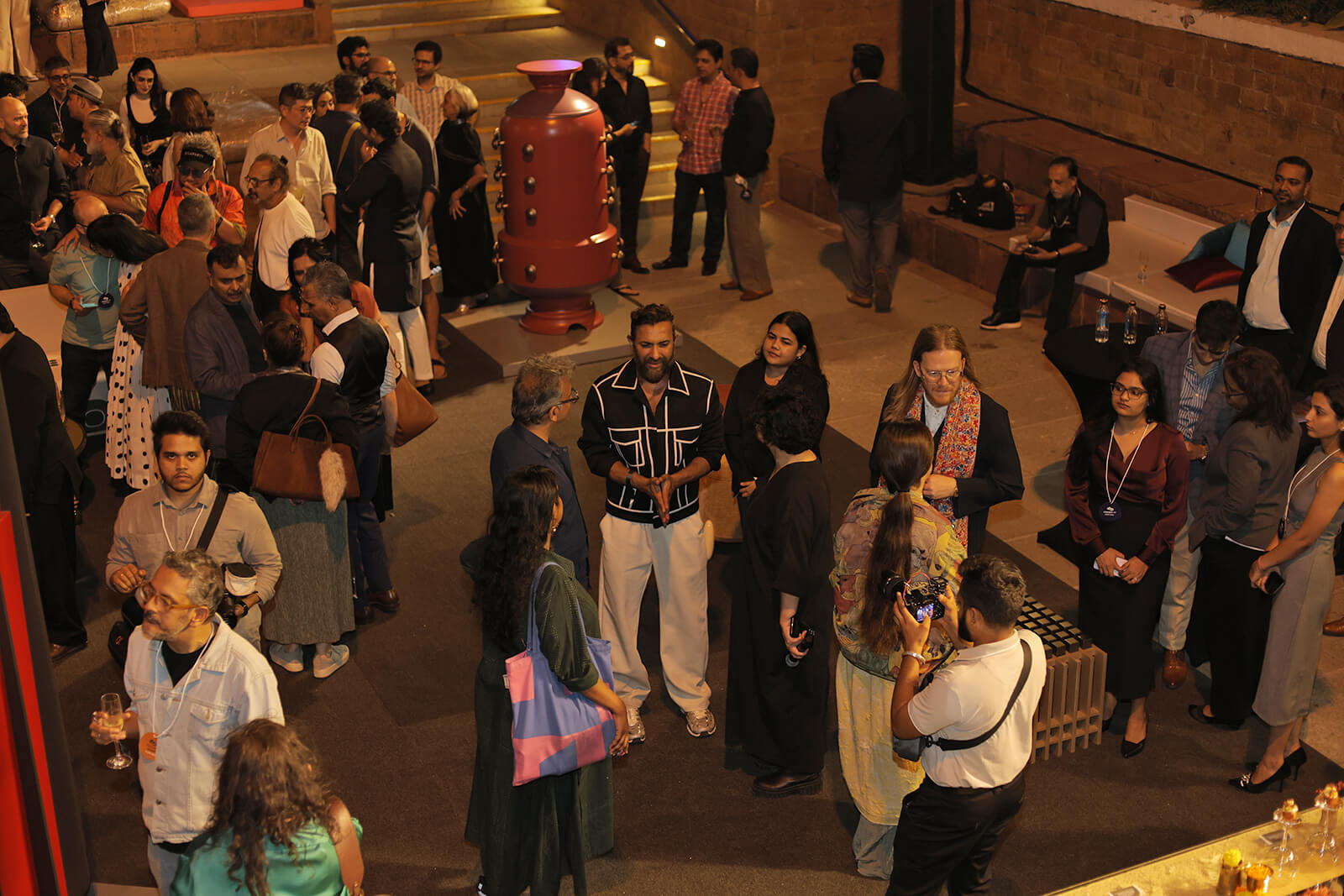
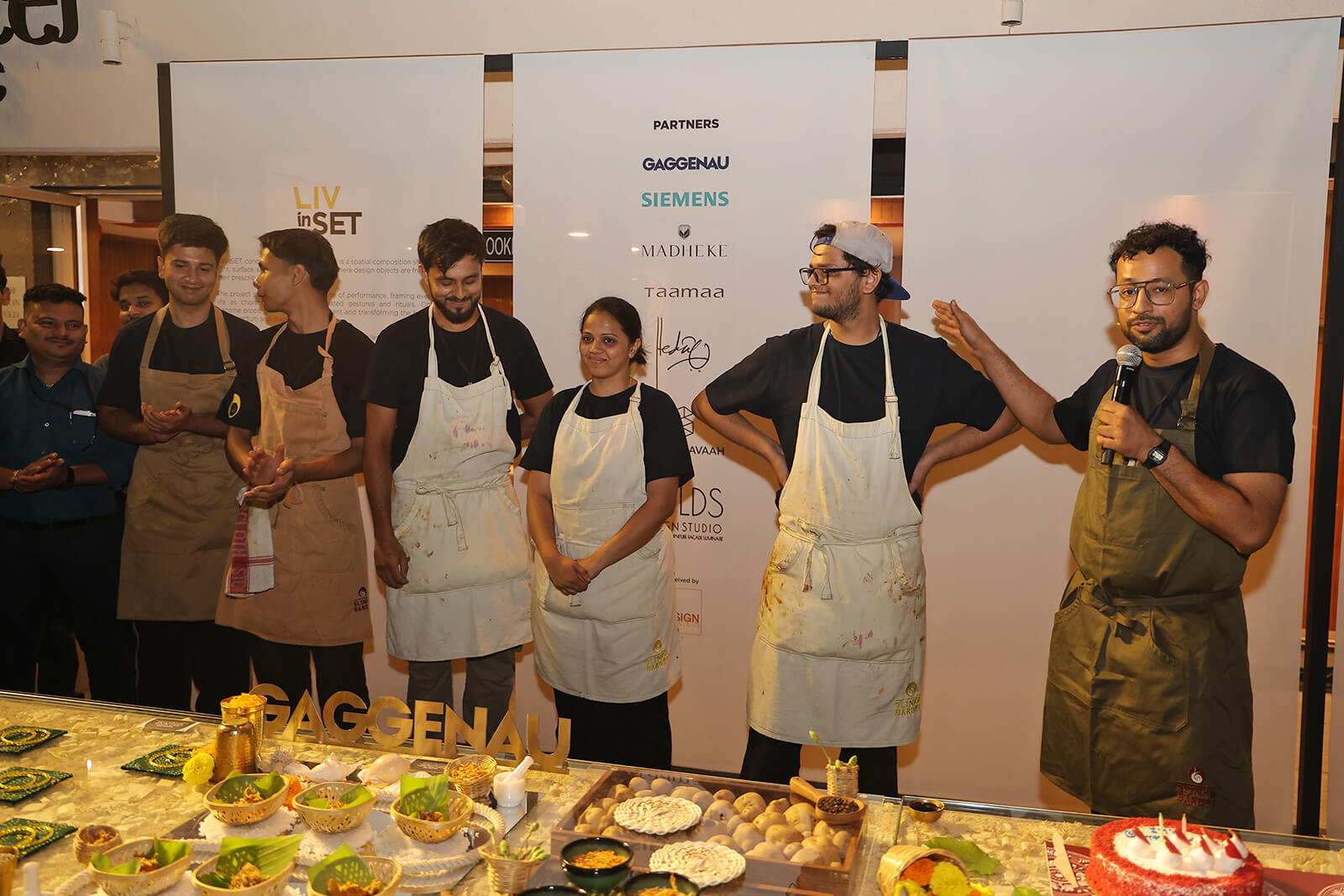
German luxury home appliance manufacturer and part of the BSH Home Appliances Group, Gaggenau, hosted an evening that extended the philosophy of the festival into culinary experiences that could foreground texture, colour, form and techniques rooted in the everyday life of the region, seen through the lens of Gaggenau’s expert kitchen equipment. In a convergence of cinema, design and the culinary arts, Design You Can Taste was conceived to translate design thinking into taste and craft into cooking. Ali Akbar Baldiwala, executive chef at Slink and Bardot, combined fresh produce with technical precision, fused creative restraint with conceptual depth and incorporated ingredient and material intelligence with rigorous flavour experimentation to position food as a performative medium within LIVinSET, bringing together people from various creative disciplines in an evening of organic engagements.
In partnership with the concurrent Mumbai Gallery Weekend (MGW), a curator-led walkthrough of the design festival—spearheaded by Aric Chen, curator and jury chair for the Jaquar Pavilion Park, along with festival director and STIR’s founder and editor-in-chief Amit Gupta—was bookended by LIVinSET. A group of 100 VIP guests from MGW and India Art Fair (IAF) were given a tour of the NCPA to showcase everything on offer at the festival, concluding at LIVinSET with a lunch hosted by chef Baldiwala.
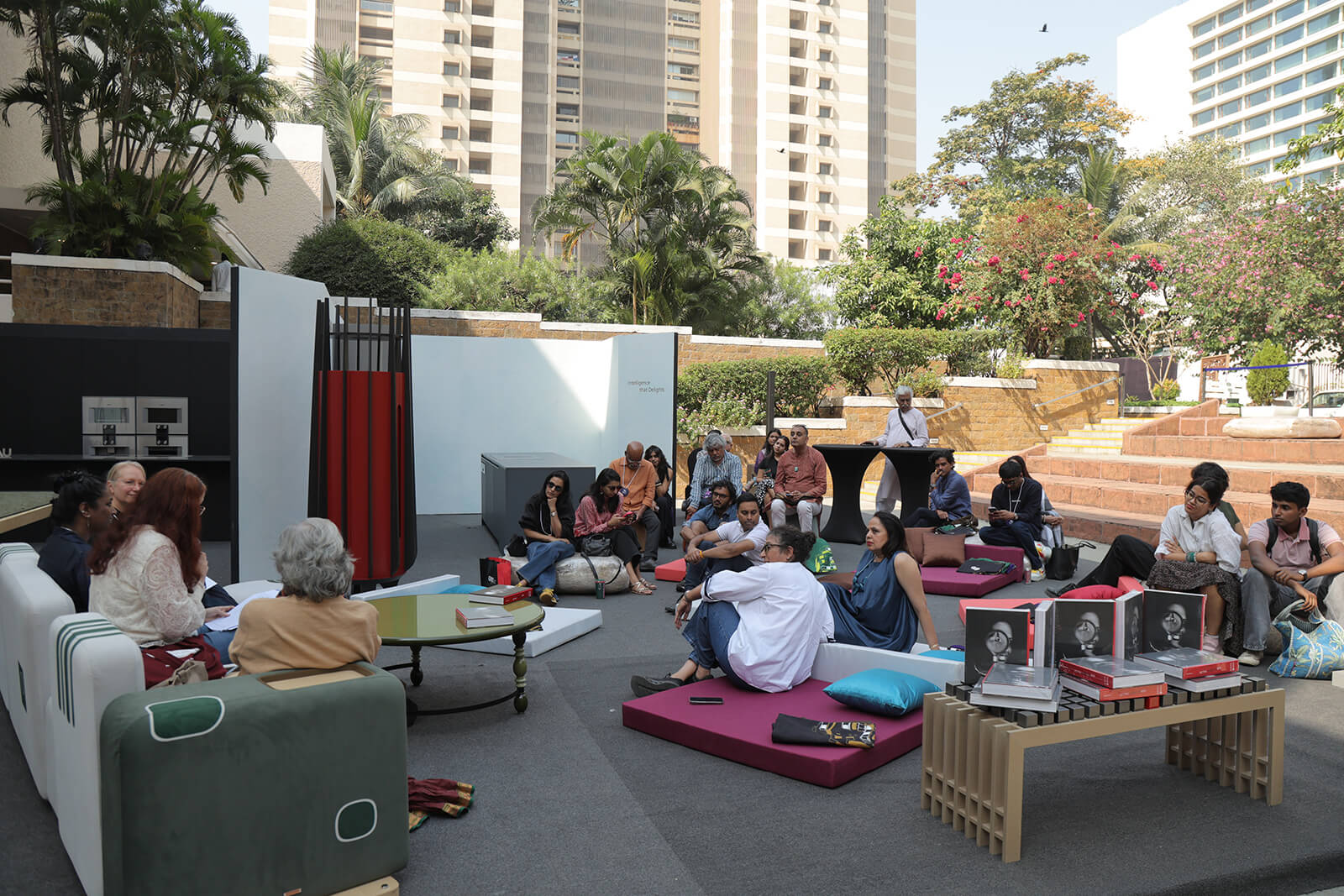
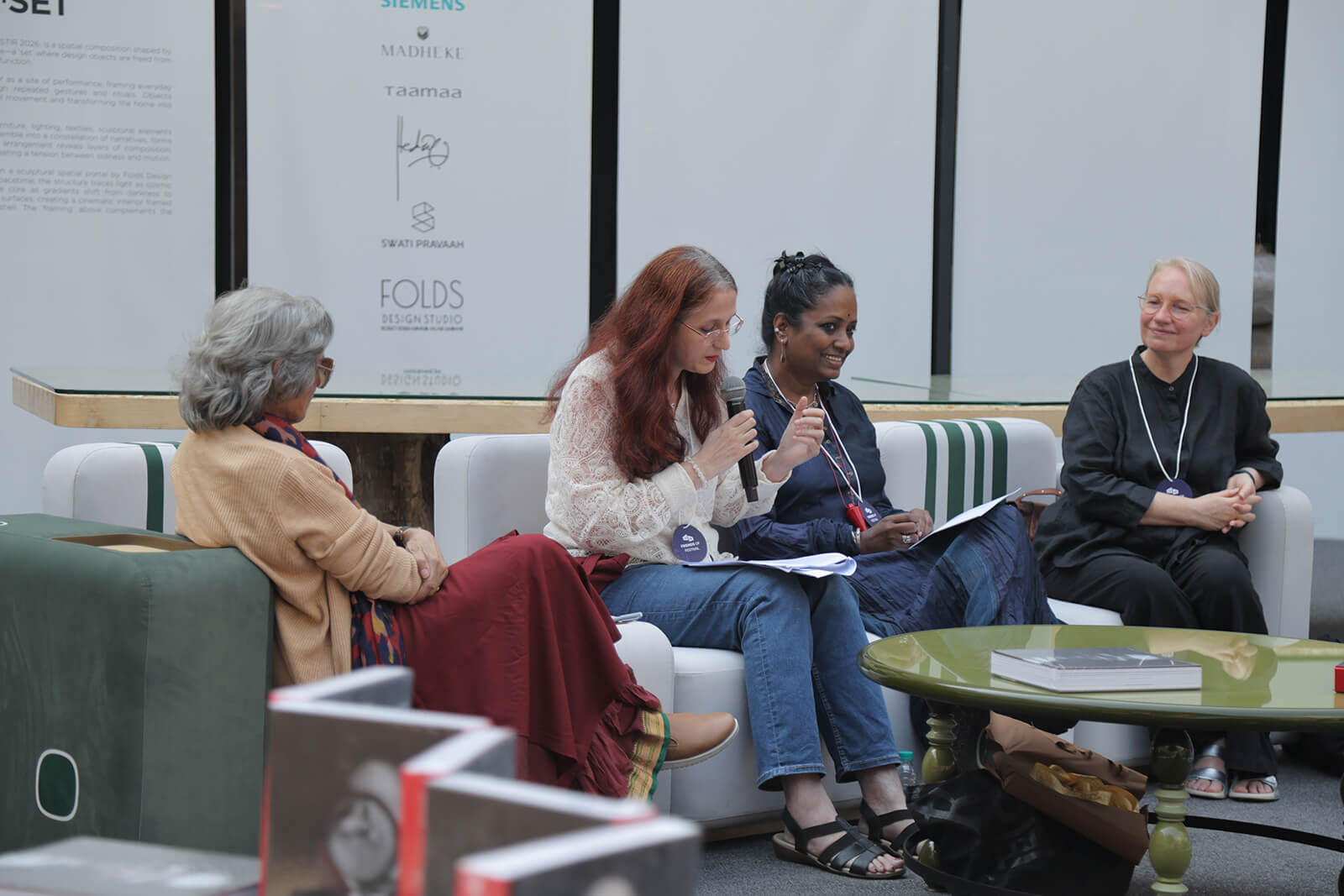
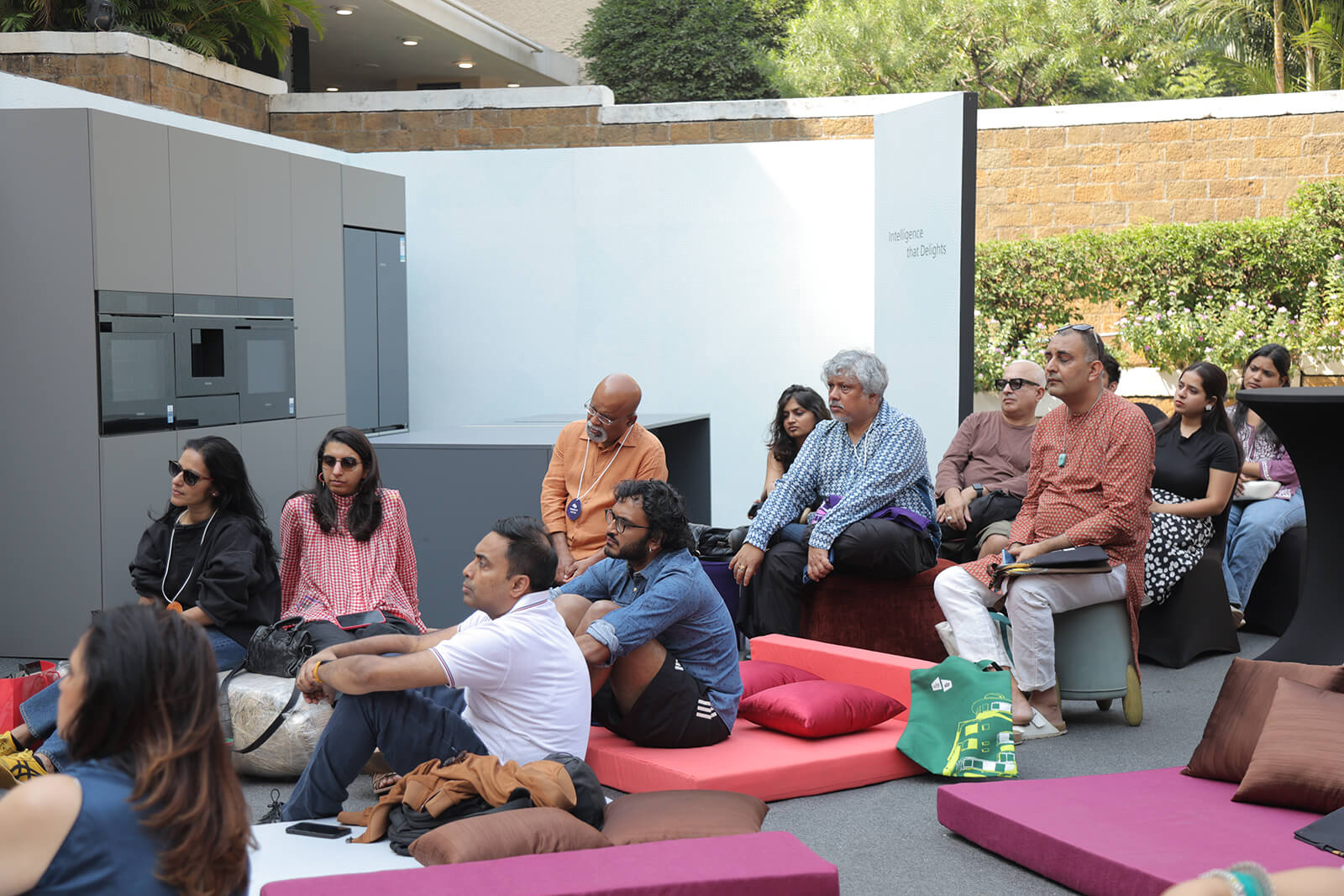
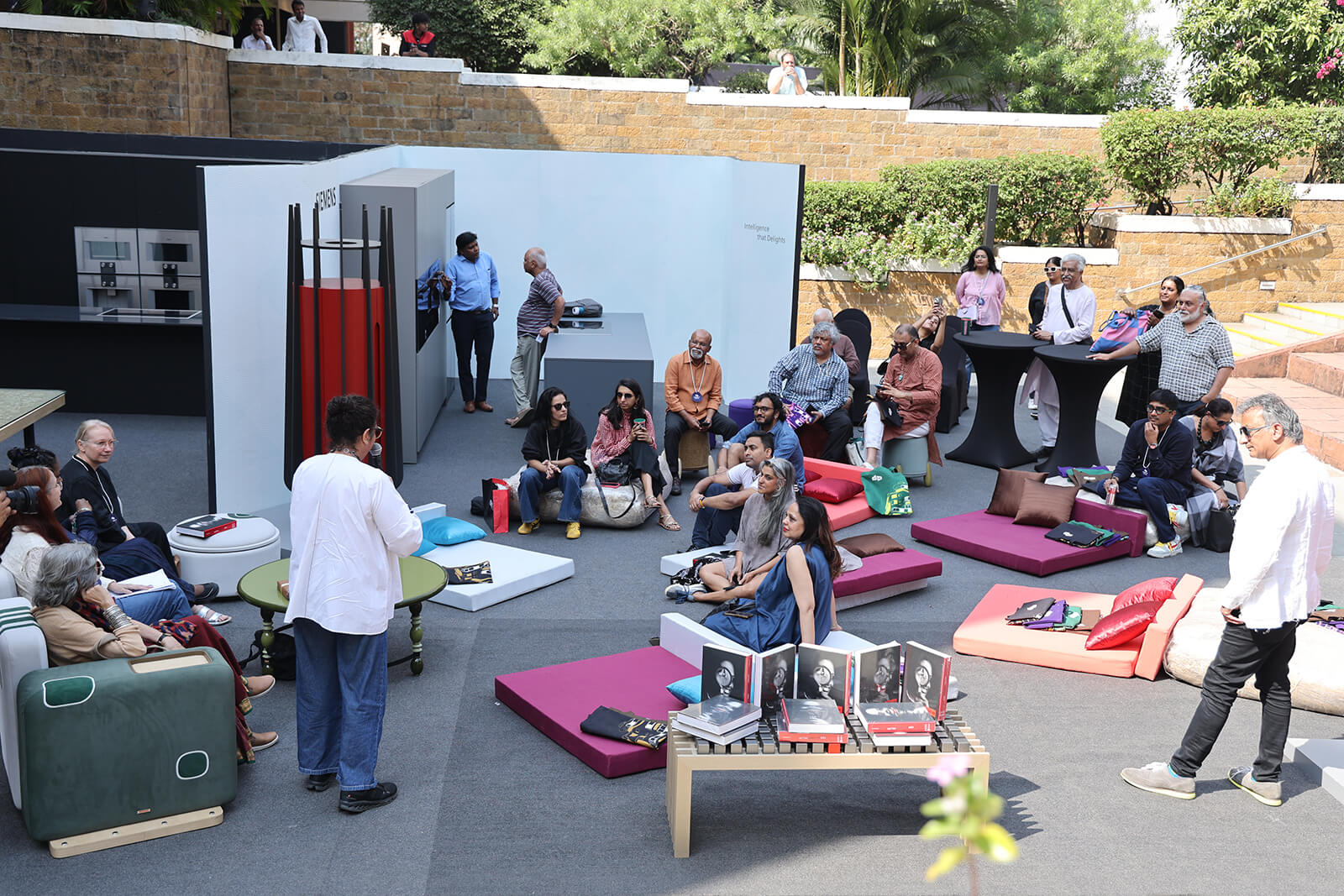
Indian contemporary artist and poet Mithu Sen’s book, Unmyth: Works and Worlds of Mithu Sen, a comprehensive artist monograph from Mapin Publishing, was launched on the afternoon of January 11, 2026. Its fairly unique staging at LIVinSET, especially for a book launch, sought to dissolve boundaries between the speakers and the audience, making the session wholly interactive. While Sen was in conversation with the book's editor Irina Aristarkhova, with Nancy Adajania in the role of provocateur, the discourse around the book and subsequent discussions turned out to be largely informal and organic, comprising a discourse on Sen’s larger body of work along with the contents of the book. The setting and its openness also ended up attracting people who knew little of Sen’s work but found the conversations interesting from a distance and felt compelled to join in.
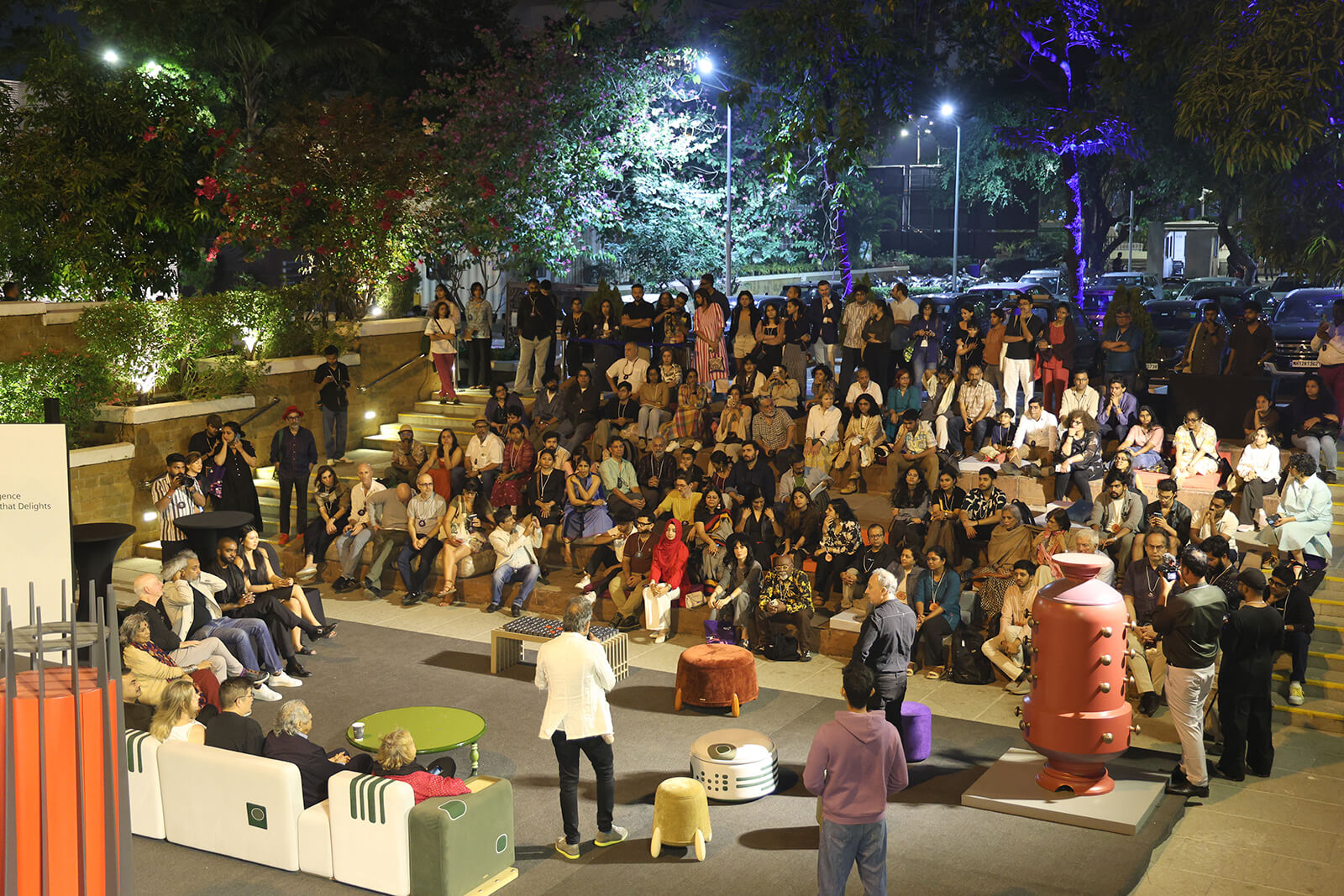
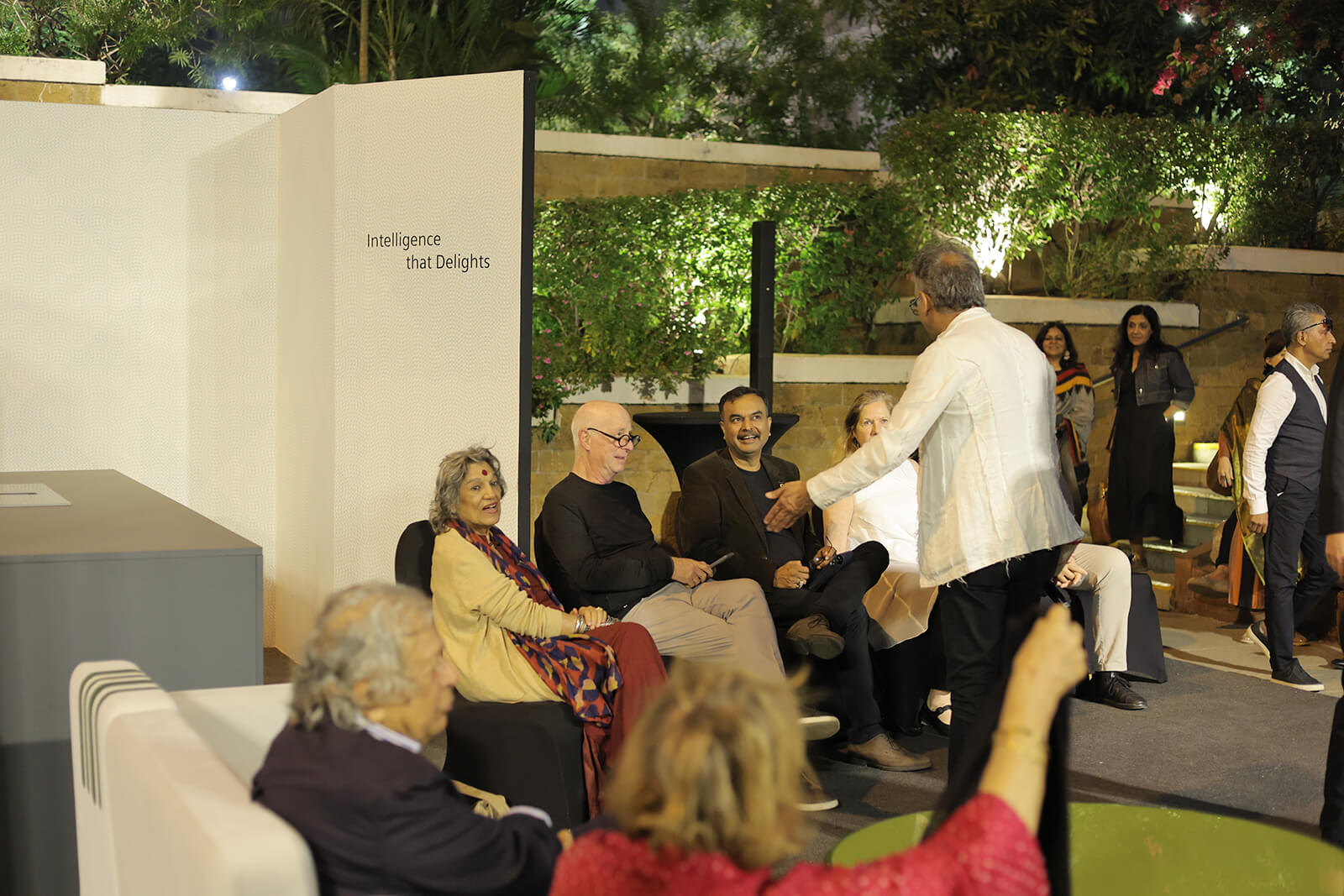
As ceremonial instances go, the festival came to a fitting conclusion at LIVinSET with a democratic forum, an en masse group huddle involving all stakeholders, including guests, organisers, speakers, designers, architects and attendees. On the final evening of the festival weekend, What’s Next set out to preemptively shape the forthcoming edition of the festival through a comprehensive feedback loop. Attendees, regardless of their background, age or experience, sat down together to discursively deliberate on everything they loved about the festival, what could have been better and what they hope from the platform and initiative that is ADFF: STIR and its next headings. In the deliberate absence of any formal closing ceremonies or talks, LIVinSET’s curated plaza happened to be the perfect setting for the festival’s intended democratic conclusion. At the intersection of design, space and craft, the ‘set’ choreographed everyday encounters and was continually shaped and reshaped by these, inspiring a reflection on our own movements and activations in the spaces we occupy, every day.

by Pranjal Maheshwari Oct 23, 2026
Co-authored by Jareh Das, Chairman traces the British designer’s fixation on chairs as symbols of power and identity and as mediums of expression and community building.
by Mirra Lynn Oct 22, 2026
The curators behind Palestine Design Week 2026 reflect on its intent, considering how design holds memory, makes space for loss and imagines a future in Palestine.
by Chahna Tank Oct 22, 2026
STIR speaks with the Mumbai-based type designer about her practice, type walks and why she wants more people to have stronger opinions about Indian-script fonts.
by Jincy Iype Oct 15, 2026
STIR explores craft, material intelligence and people shaping Indian design through dialogues with Design Democracy’s co-founders and the curators of its special exhibitions.

make your fridays matter with a well-read weekend
Enter your details to sign in
Don’t have an account?
Sign upOr you can sign in with
a single account for all
STIR platforms
All your bookmarks will be available across all your devices.
Stay STIRred
Already have an account?
Sign inOr you can sign up with
Verification link sent to check your inbox or spam folder to complete sign up process
Tap on things that interests you.
Select the Conversation Category you would like to watch
Please enter your details and click submit.
Enter the 6-digit code sent at


Activating space, objects and thresholds at ADFF:STIR Mumbai 2026 with LIVinSET
by Bansari Paghdar | Published on : Feb 11, 2026


 Sign in with Google
 Sign in with email
What do you think?