Architecture10 mins. read
ADFF:STIR Mumbai’s ~log(ue) returns, sparking plural discourse
by Bansari PaghdarJan 08, 2026




by Mrinmayee BhootPublished on : Jan 28, 2026
A city is made by everybody, American-Canadian journalist Jane Jacobs observed, arguing for the good that cities can provide. That they are made by, and not for, people is an important distinction. Cities are not designed in isolation, but are sustained—defined really—by networks, both considered and unconsidered, of everybody. Road networks, water systems and electric grids order the urban realm, but it is the disavowed vendors in public squares, the space made by communities under the shade of trees to gather, the chance interactions on streets, that bring the city alive. Deferring to this crucial understanding of the city as a living, shifting system of relations between design and its interactions with the 'every'body that ought to create a city, the ~log(ue) Programme at ADFF:STIR Mumbai 2026 powered by JSW, focused on intersectional discourse and multimodal formats as a means to expand on what it means to create for the complexities of contemporary life, and what it means to inhabit them.
It is in this spirit that conversations and sporadic encounters—questioning rather than prescribing, engaging with rather than demonstrating—become central tenets for ADFF:STIR Mumbai, in lieu of a programme that, above all, values participation with/in the creative cultures, beyond mere notions of form or function. The exchanges, both planned and spontaneous, hoped to unpack the relationships between space, movement and event—a theme concurrent with the Jaquar Pavilion Park. An expanded programme for this year’s design festival harnessed the inquiry into the intertwined nature of the three by staging events—dynamic and momentary—in the spaces of the pavilions. Various ~analog(ue) sessions were planned within the precisely designed pavilion architectures, each conceptualised to serve as spaces for analogous activations in novel, distinct setups. Fostering a situated form of knowledge-making, the grounds of the National Centre for Performing Arts (NCPA), Mumbai, became a space charged with the voices of multitudes. Together, the NCPA’s theatres, grounds and everything in-between became spaces where a different dimension of the ~log(ue) programme could unfold—talks, poetry and book readings, musical performances, hands-on workshops for young people including sketching and collage making, design crits with experts, guerrilla lighting workshops and much more—a willed distinction in not just voices, but also the conduits in which these voices were produced and heard at ADFF:STIR Mumbai 2026.
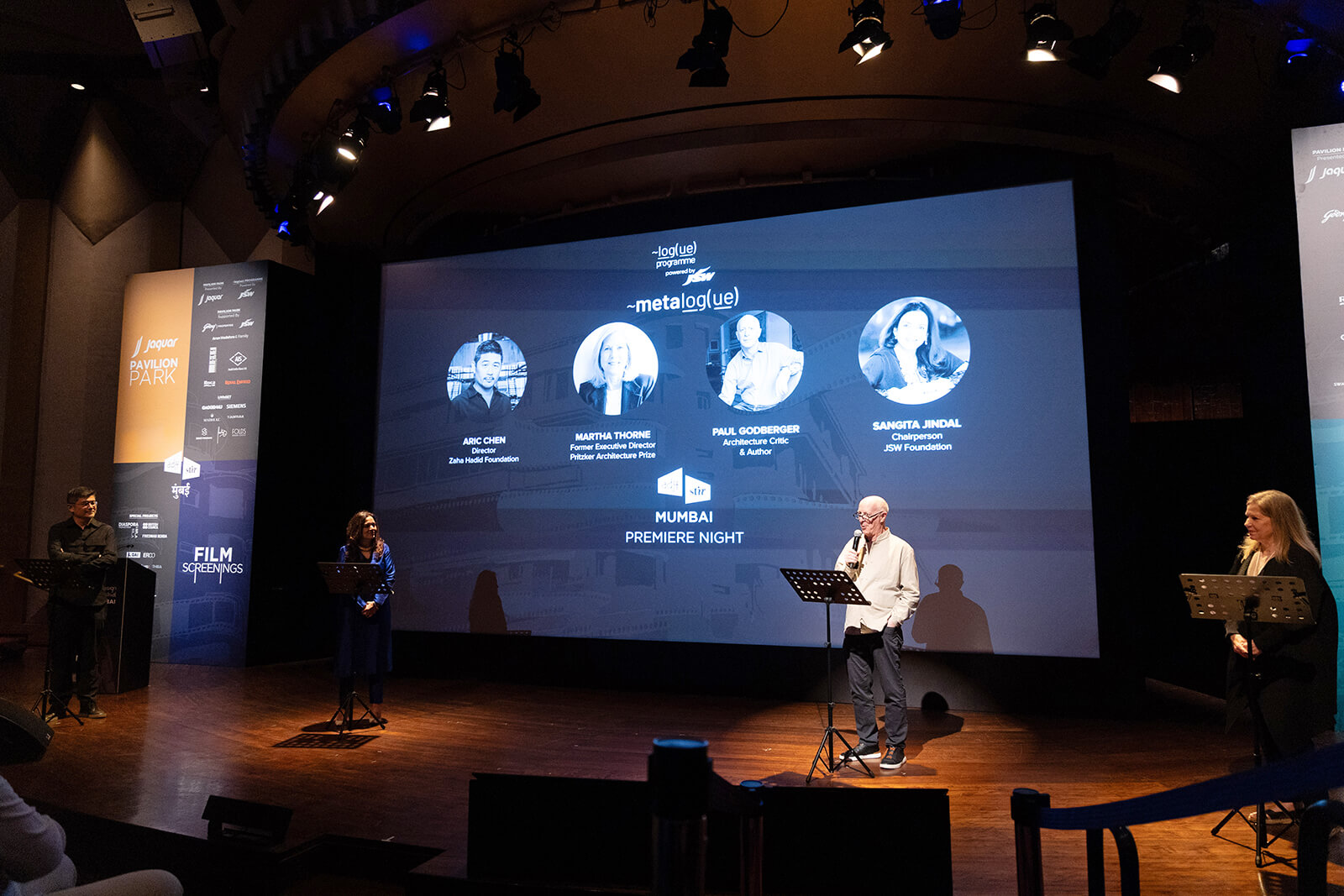
That the intention was to champion pluralities, to resist the urge to rely on singular voices, was encapsulated in the ~metalog(ue) which headlined the festival’s premiere night. Titled Building the Framework: Institutions, Patronage and the Future of Architecture and Design, the talk was presented as a keynote delivered collectively by Paul Goldberger, Pulitzer prize winning architecture critic and author; Martha Thorne, writer, curator and former executive director of the Pritzker Architecture Prize; Sangita Jindal, chairperson of the JSW Foundation and Aric Chen, director of the Zaha Hadid Foundation and curator of this year’s Pavilion Park. It insisted on undoing understandings of the built environment as singularly shaped, stressing the role platforms such as institutions, publications, awards and, especially, public-oriented festivals play in nurturing ideas, supporting experimentation, and translating professional practice into public understanding. Reflecting on the practice of writing, Goldberger noted, “Architecture criticism, when it's being done well [...] writes about the political context of buildings. It writes about the social context of buildings. It writes about the relevance of a particular building to larger social issues at this moment. All of those are part of architecture criticism as much as anything aesthetic. It is not an either/or. It's a both/and, and I think architecture is the best argument there's ever been against binary thinking.” The same both/and perspective was underscored time and again in the sessions that would follow.
Architecture is the best argument there's ever been against binary thinking. – Paul Goldberger
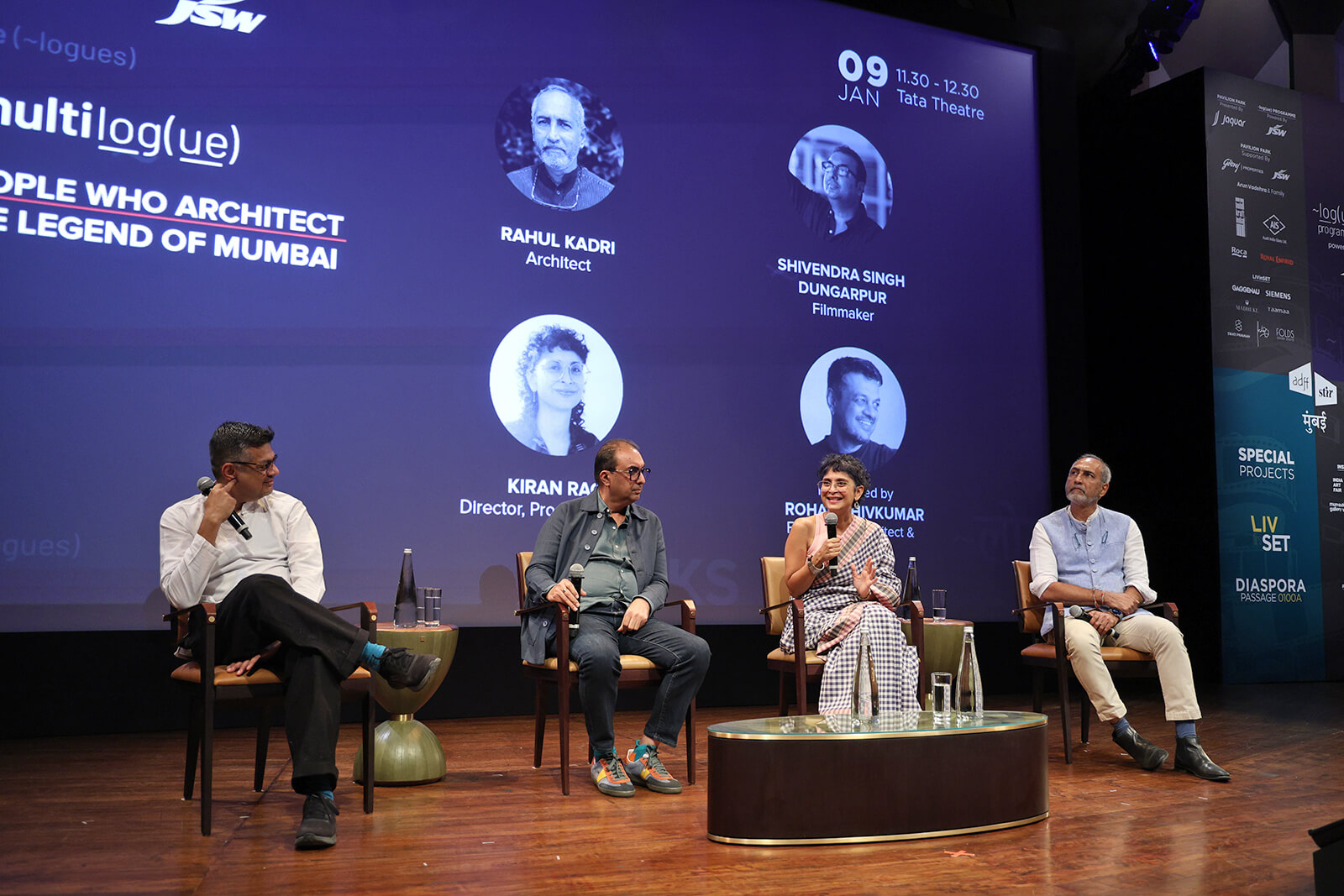
The design festival officially opened to the public with People Who Architect the Legend of Mumbai, a ~multilog(ue) moderated by Rohan Shivkumar, filmmaker, architect and dean of KRVIA and including Kiran Rao, filmmaker, producer, writer; Rahul Kadri, partner and principal architect, IMK Architects; and Shivendra Singh Dungarpur, filmmaker and archivist. The ~multi(log)ue, rather than a pluralistic ‘keynote’, was a space for different voices to co-exist, reflecting on the topic at hand through the different perspectives of the panellists. Dismantling the idea of a ‘legend’ for a city like Mumbai, the talk centred on the conundrum of what the modes of producing culture for/with the public mean today. In that vein, the panel expanded on how public spaces create and sustain cultural consciousness. The everyday negotiations of people in the mythic city were also central to the ~multilog(ue) session at Experimental Theatre on the same day, titled Reading the City Through Its Everyday Scripts: How Mumbai’s Icons Shape Urban Life, conceived in partnership with Avid Learning. In conversation, Chen, Pronoti Datta, writer and communications specialist; Robert Stephens, architect, Urbs Indis; and Shimul Javeri Kadri, founding partner, SJK Architects, explored what the everyday rhythms of Mumbai reveal about its changing social and cultural realities. The question here, as hinted at in the ~metalog(ue) too, was one of authorship. Who can or gets to architect the city? What infrastructures support this act of shaping? What ritualistic practices drive the everyday functioning of the city and what conduits must exist to facilitate those?
Questions of authorship and the changing dynamics of creative practice today were variously explored at Godrej Dance Theatre on January 9, 2026, in Regenerative Futures: Creativity in a Changing World, jointly conceived with sā Ladakh. The ~multilog(ue), moderated by Bakul Patki, curator, creative producer and writer, with panellists Suril Patel and Faiza Khan, co-founders, Field Architects; Monisha Ahmed, executive director, Ladakh Arts and Media Organisation; Rahul Bhushan, founder & director, NORTH; Raki Nikahetiya, director, sā Ladakh Biennale and Sandeep Bogadhi, founder, Earthling Ladakh; expanded on notions of building and creativity through the urgent lens of climate-vulnerability, asking how design can respond to the increasingly fragile world we occupy. The first step towards regeneration, as Bhushan emphasised, is to develop a reciprocative method of designing, engendering the forbearing ability of listening and learning with the community and local context.
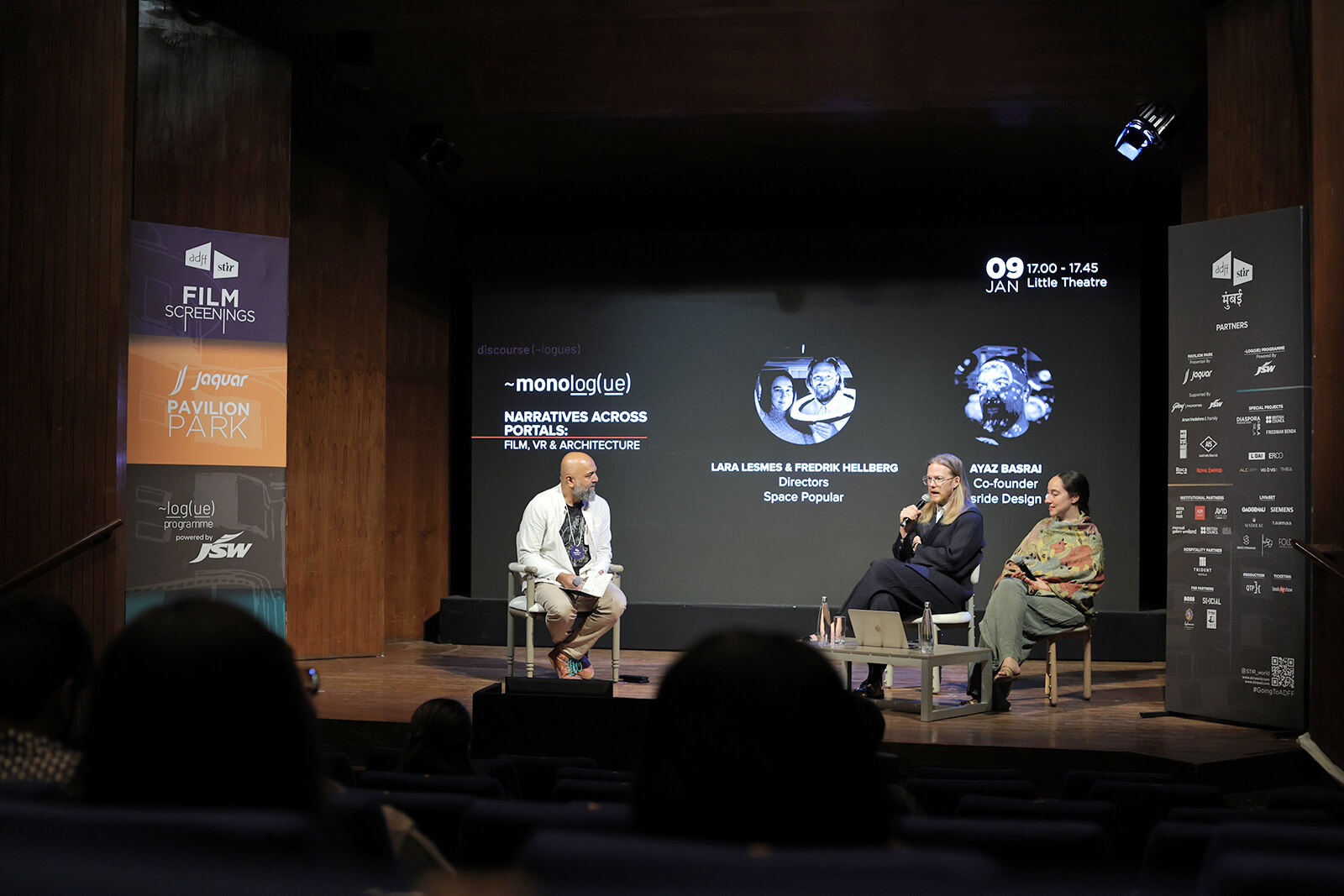
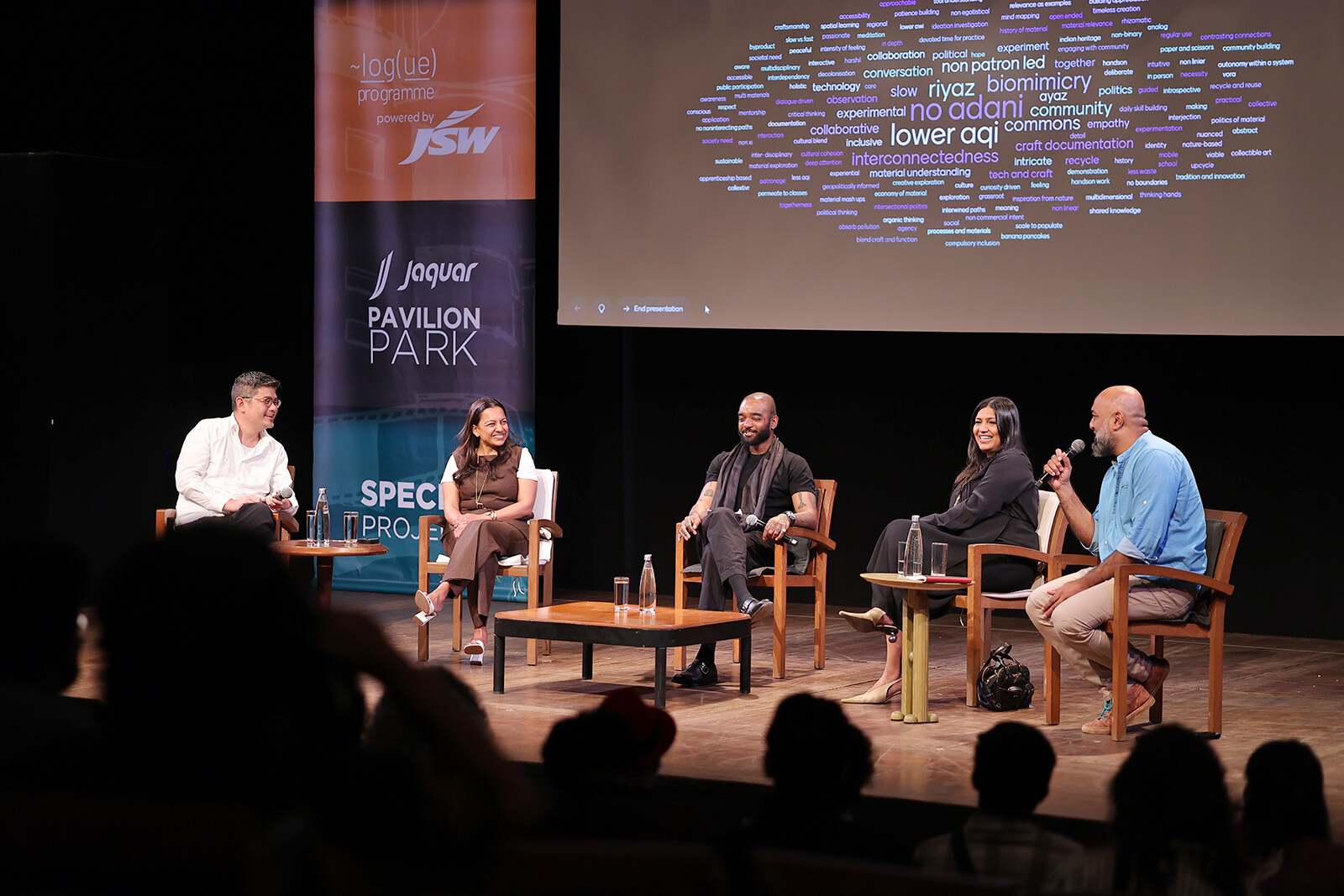
The contentions of singular authorship, its connotations and shifting relationships were also examined in a cross-disciplinary conversation with Pankhuri Upadhyay, founder, Maker’s Legal; Kaiwan Mehta, dean, Balwant Sheth School of Architecture, SVKM NMIMS; Khushboo Ranka, filmmaker; Ayaz Basrai, co-founder, The Busride Design Studio; and Sameer Kulavoor, artist, under the title Authorship, Interrupted: What AI Changes in Creative Work. Positioning the digital technology as simply one of the many conditions that threaten earnest creative work and the cultural thinking of a generation, the panel demystified doubts around design thinking and what the role of AI is in it, how relationships between the machinic and the human are being revised, and vitally, can we consider the technology to be a collaborator in any truthful sense. Rather provocatively, Basrai, whose studio is well known for its use of the medium for critical speculative drawings, observed, “We’re getting trained as carbon-based intelligences by a silicon-based intelligence to start gaining planetary consciousness. How do you actually engage with that? I feel it’s through a sense of playfulness and curiosity; to not get seduced by the image but see what’s happening under the surface.”
On the last day, Can craft save the world? at Experimental Theatre similarly foregrounded the pressing need to unsettle how we currently think of design. Adopting ‘craft thinking’ as a paradigm for an equitable future, the panellists, including Basrai; Karishma Swali, creative director, Chanakya School of Craft; Dr Samuel Ross MBE, founder, SR_A; Tarini Jindal Handa, managing director, JSW Realty and founder, æquō in a ~multilog(ue) moderated by Chen, reflected on craft as a political and social mechanism to rethink creative practice, and reorder how we operate within the world. “Anyone can make and all have the right to make, and I feel craft can be the way to put into reality what can’t be said. It can be an ability to deliver a sense of meaning or connection,” Ross reflected. In thinking through the need for craftsmanship in a world defined by crisis, the session also opened itself up to the audience. Participants were encouraged to contribute to a shared word cloud listing what a curriculum for craft thinking might become, adding a fitting collective dimension to the session. ‘Empathy’, someone noted, to which the panellists emphasised the need for generative interrelationships between the ‘arts’ and artisans. ‘Autonomy’, noted another, while ‘community’, ‘sustainability’ and ‘care’ were among some of the many responses to the vital question.
We’re getting trained as carbon-based intelligences by a silicon-based intelligence to start gaining planetary consciousness. How do you actually engage with that? – Ayaz Basrai
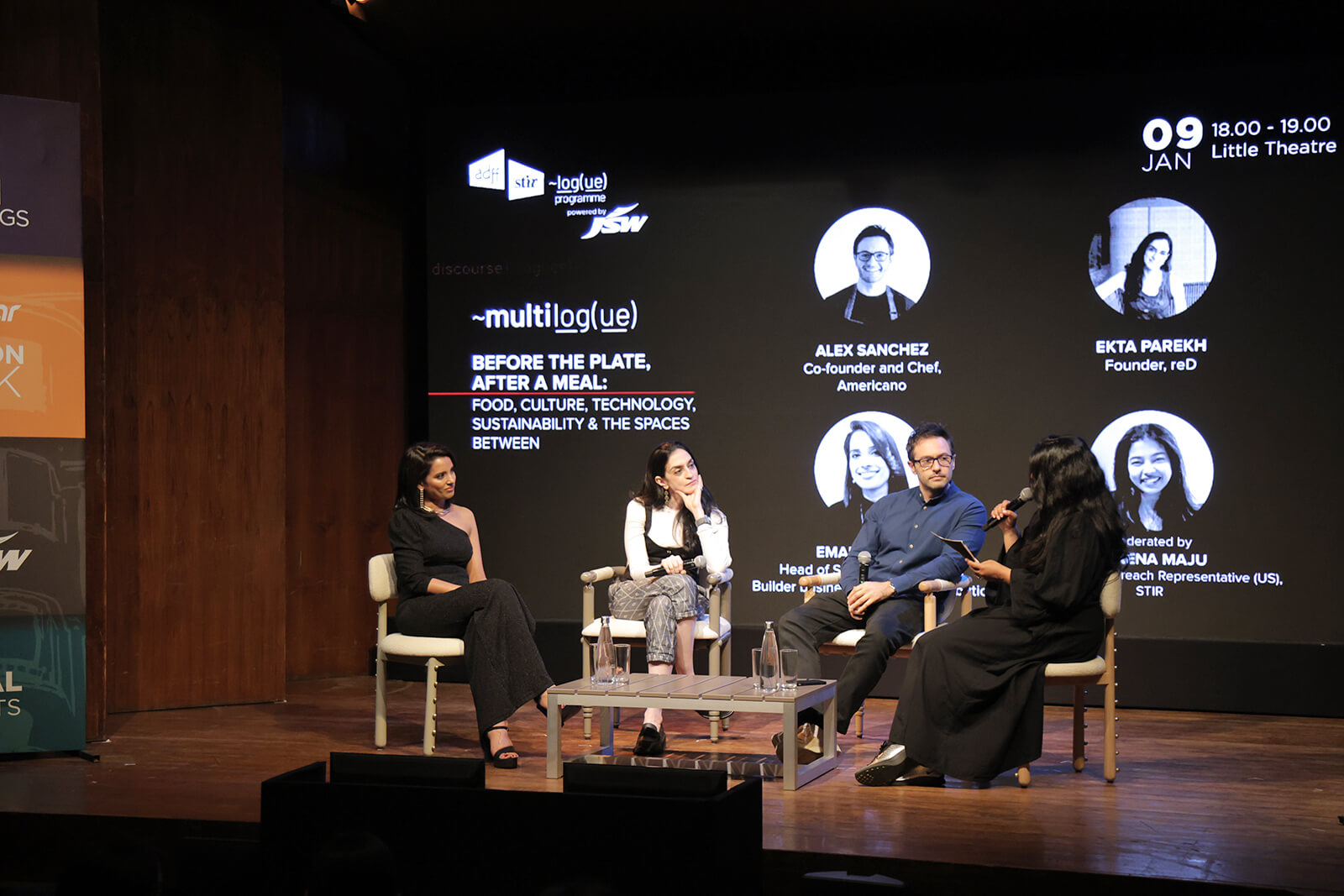
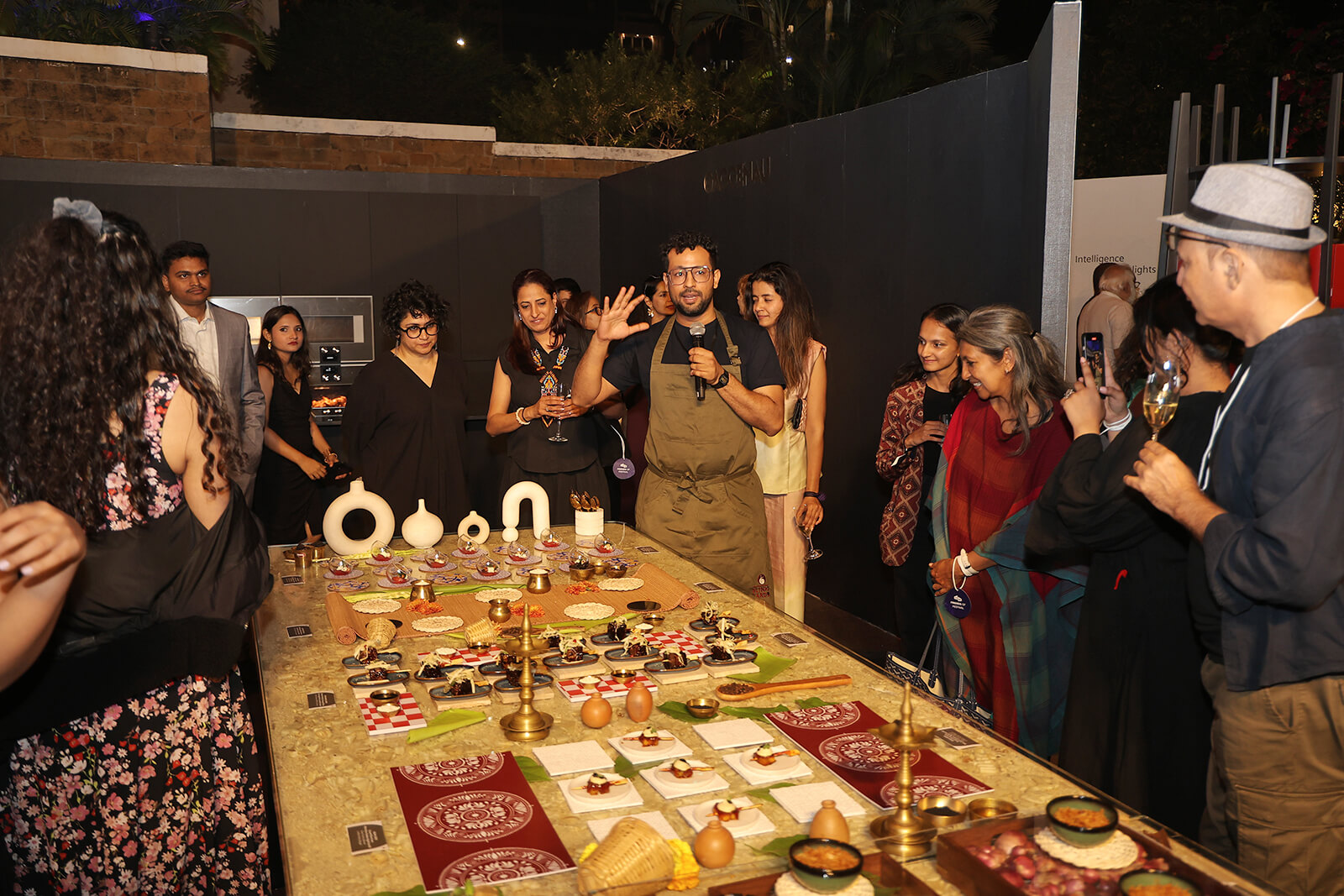
If craft could be understood as dialogue, as fertile exchange and a community-oriented mechanism for sustainable ‘design’, the session Before the Plate, After a Meal: Crafting Gastronomy, Technology and the Spaces Between at the Little Theatre on January 9, 2026, positioned its role in the culinary industry as a discipline. Examining the larger systems around food, not just how we eat, but where we eat, and how and where our food comes from, Alex Sanchez, co-founder and chef, Americano; Ekta Parekh, founder, reD; Emalda Philip, head of Sales - Kitchen Retail, Builder business, Bosch BI distribution; and moderator Sunena Maju, features writer, STIR, interrogated how everyday meals can become acts of collective care. The session preceded a chef-led culinary experience hosted by GAGGENAU, the luxury kitchen appliance brand and an integral part of the LIVinSET. A shared table of conversations became a novel medium of exchange for the evening.
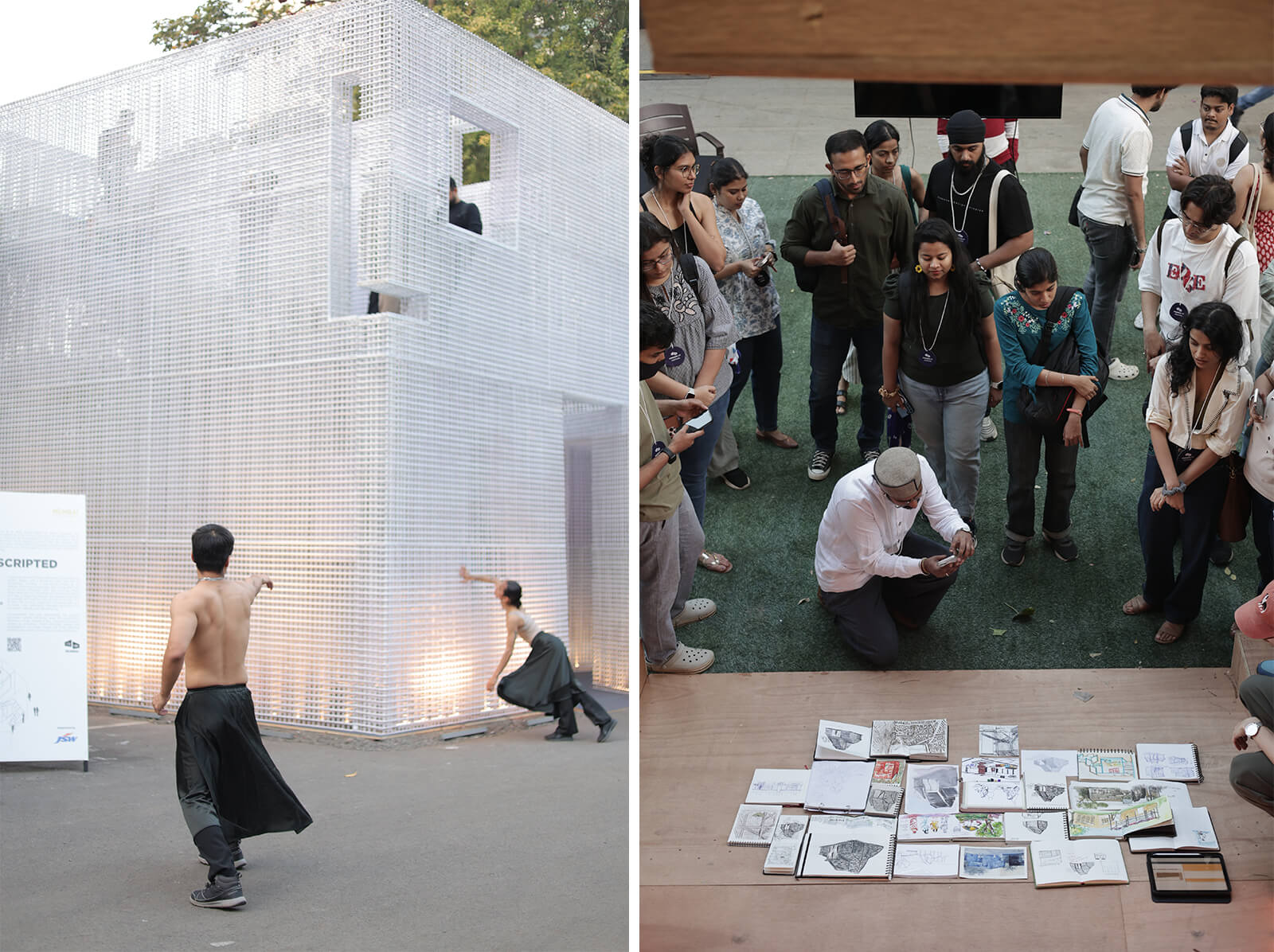
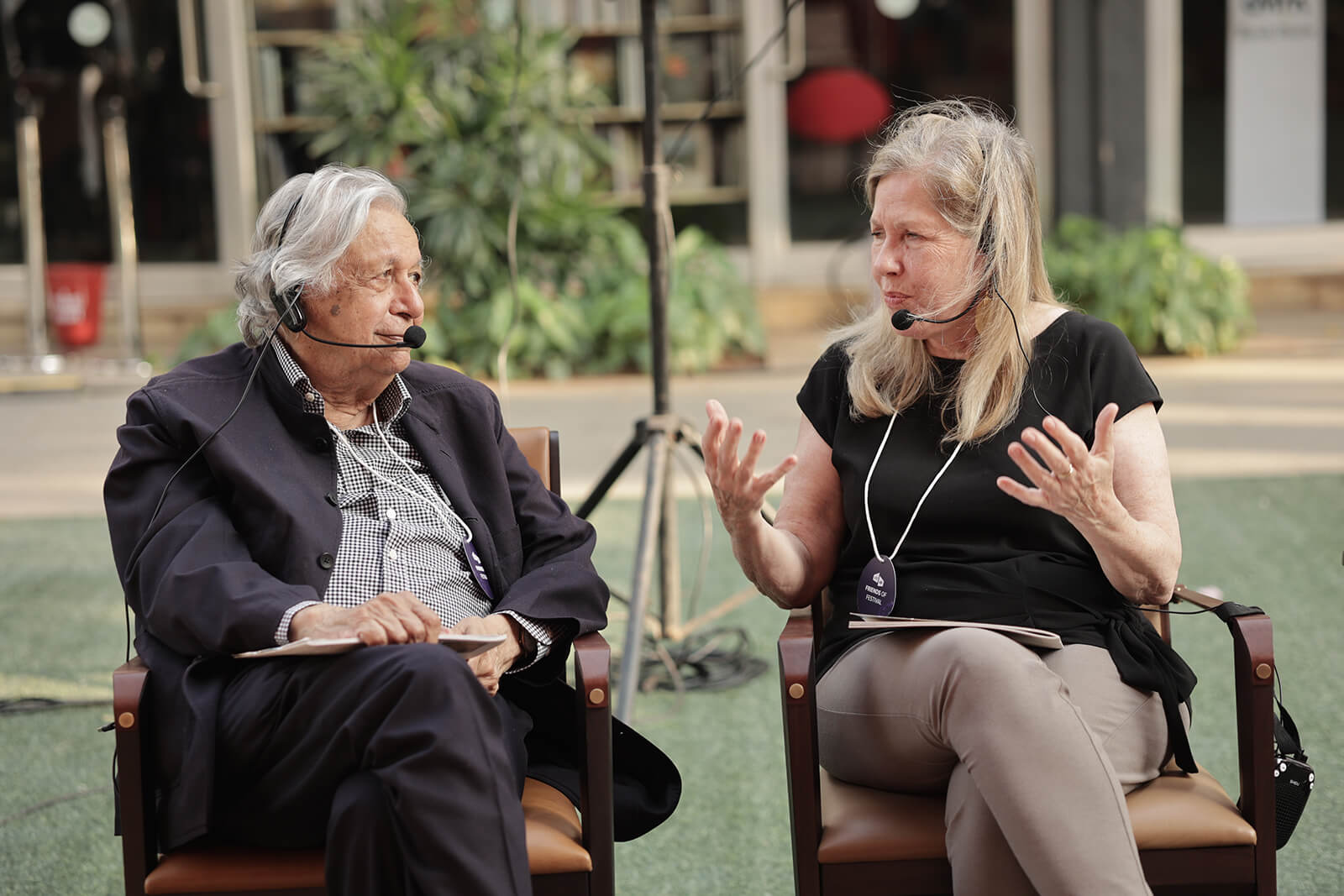
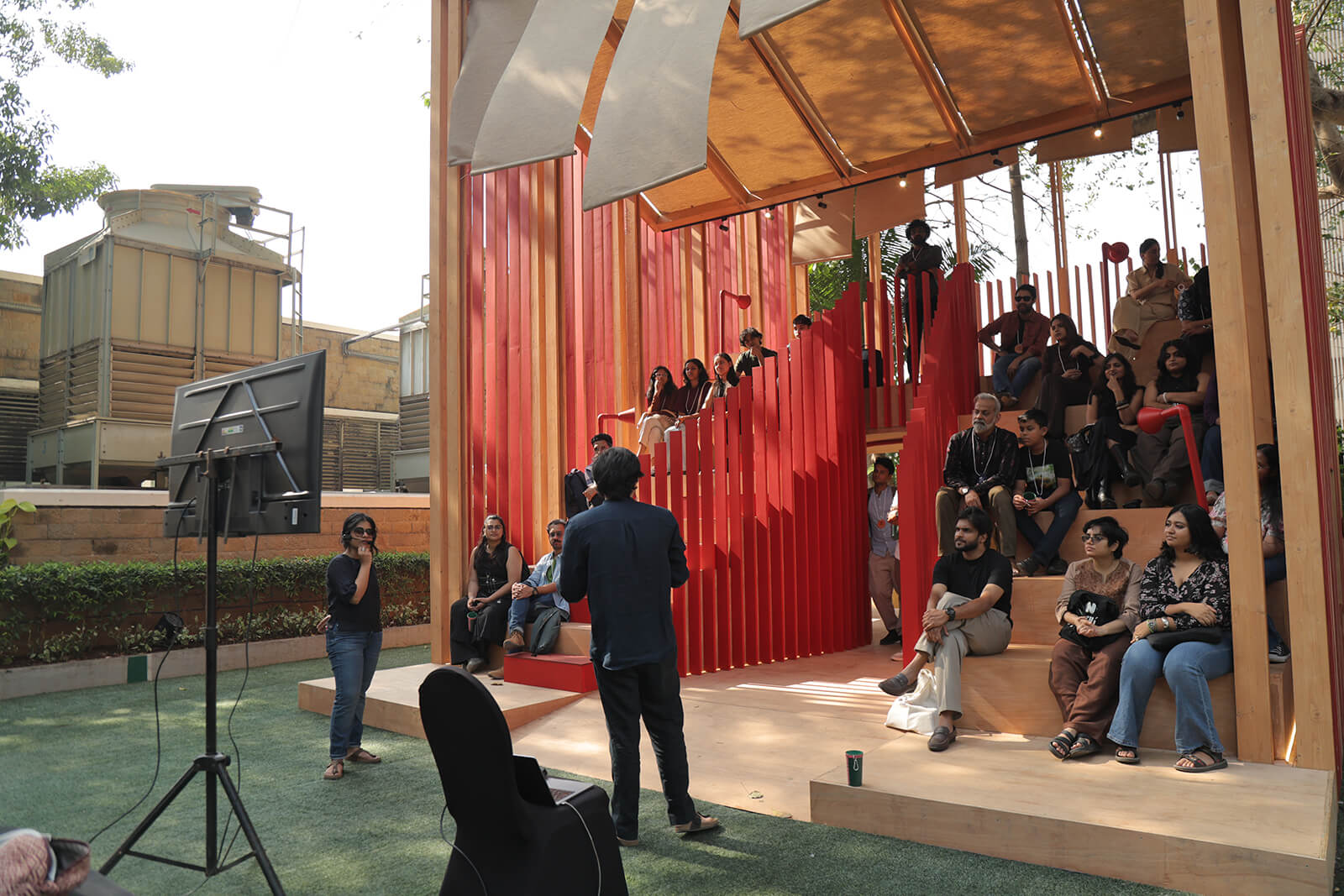
While the stages at NCPA became spaces for thinking with/through plural perspectives, and through language about space, the Jaquar Pavilion Park afforded crucial infrastructure to this process. ~analog(ue) sessions through the three days of the festival activated the various pavilions, allowing for openness to be a key aspect of the public programme, along with a certain sense of intimacy afforded by precisely this break from convention. ~analog(ue) sessions, by design, flooded beyond the theatres and the stages, evening out hierarchies and making interaction planar.
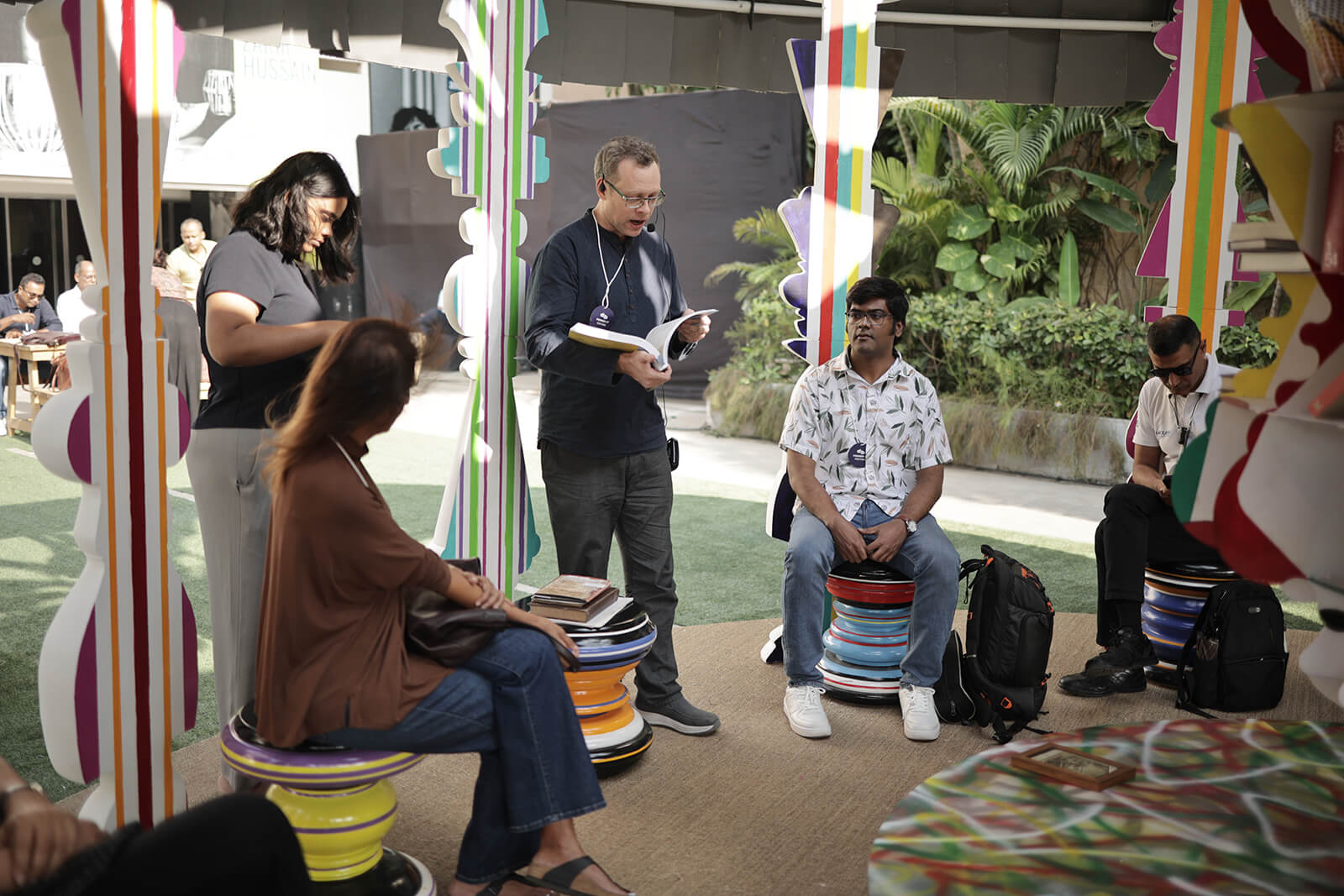
Book readings of Bombay Imagined by Robert Stephens, Raj Rewal’s monograph by the great Indian architect himself and Matters End by Naresh V Narasimhan wove stories through the porous, ephemeral architectures at NCPA. On the other hand, interpretative dance performances by Mukta Nagpal and Ashish Rao responded to the dynamic design of Abin Chaudhari’s Unscripted, eventually encompassing other pavilions. Sessions with Urban Sketchers Mumbai and Juhu Reads underscored the intent of the pavilions as spaces of repose, of engagement and not mere display. A host of workshops similarly utilised these outdoor interventions, with Leewardists’ storyboarding and comic making workshop, Thinking Cities in Narratives, taking participants through how visual narrative can act as powerful tools to communicate urban experiences, and Architecture and Emotional Inhabitancy, a poetry writing workshop, staging a conversation between architect Suchi Reddy, Rhael ‘LionHeart’ Cape and sound designer Malloy James on creating emotive environments in architecture. The conversation led into a workshop by LionHeart, working with people on how to write about architecture through poetry. T.R.A.C.E with Light: A Lighting Design Workshop by the Lighting Designers Association of India (LiDAI), supported by ERCO, ALC, Thea and vis à vis, similarly actively participated with the context, with workshop attendees working with the facades of the NCPA to examine the role of light in shaping our perception of space.
Worldbuilding is a geography of choices, geopolitics of voices. For any architect that draws a line performs a political act if that line divides. – Rhael ‘LionHeart’ Cape
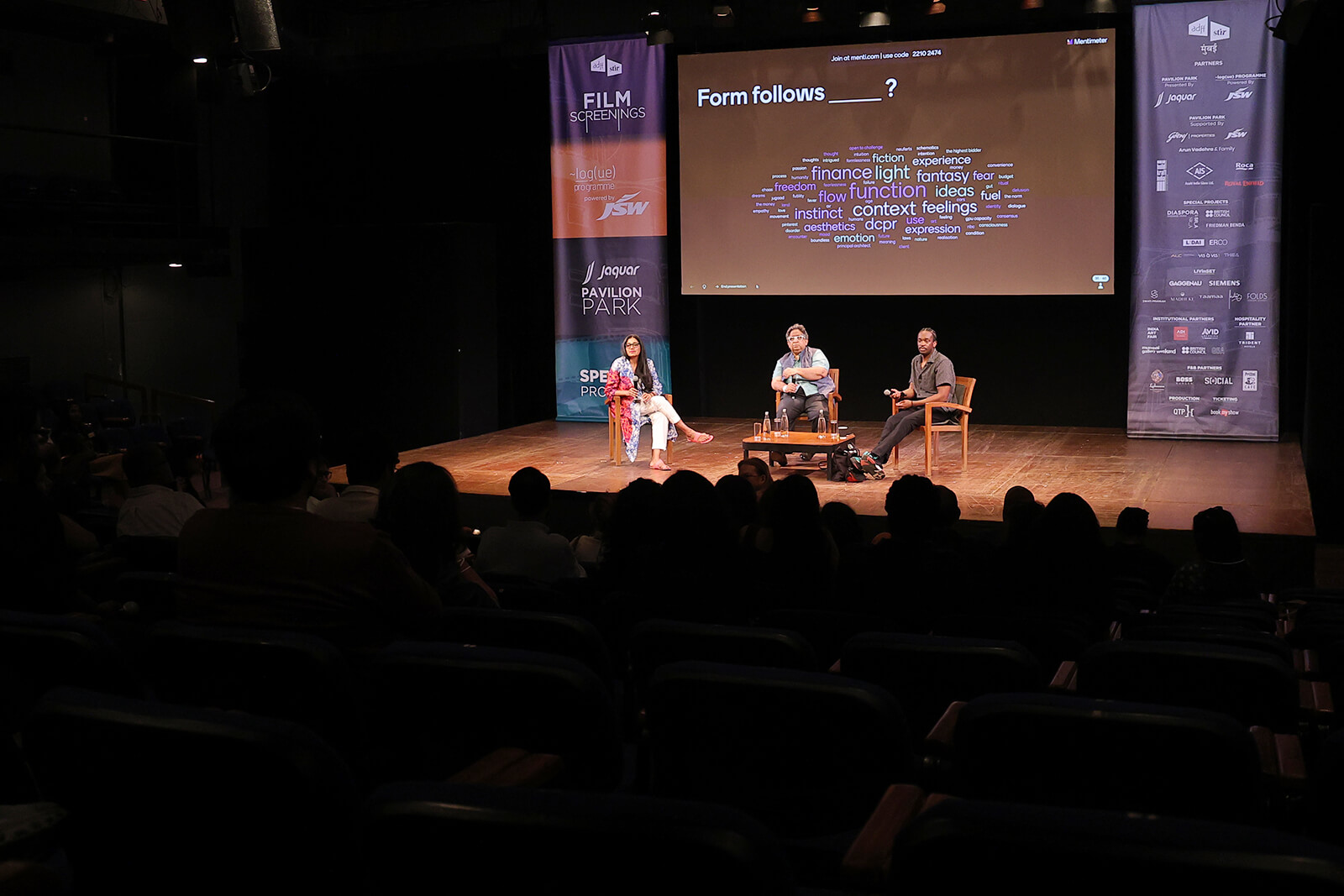
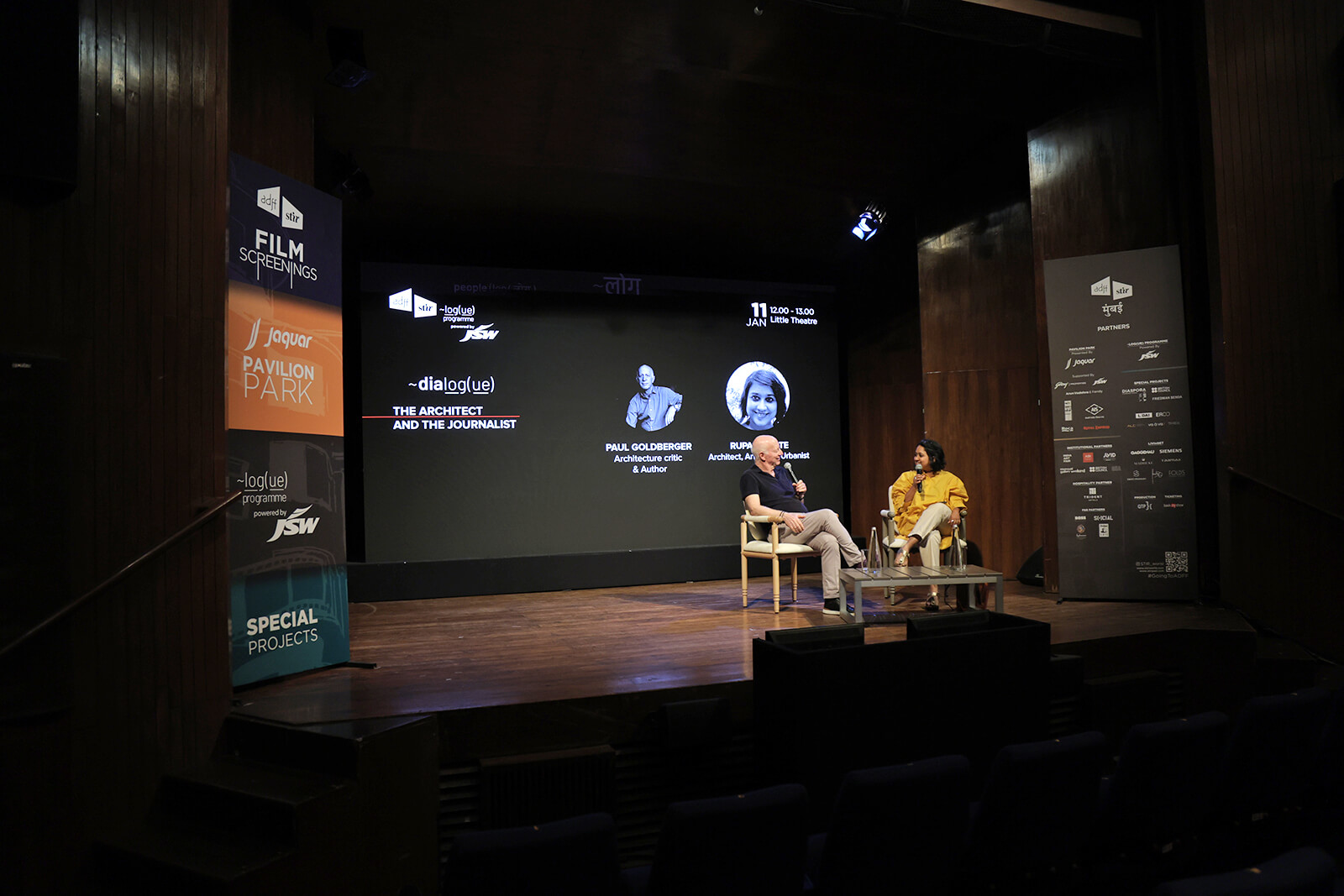
Another vital thread, unspooling the ways in which conversation takes place, in which it contaminates and takes hold of imagination (individual as well as collective) was dissected through the weight words hold in wor(l)ding landscapes. “Worldbuilding is a geography of choices,” LionHeart pronounced in Building Verses: Architecture and Poetry, a ~monolog(ue) session between him and architect, academic and poet Mustansir Dalvi on January 10, 2026. The pair’s corresponding monologues explored how words and spaces shape one another mutually, where words come from and the meanings we attribute to them, how these, as much as the urban environment, influence our memories and emotions about the urban environment. As LionHeart observed, ‘Tension is a genesis’ underlining the generative friction that continues to exist between the written and the built. Between how we talk about the city and how it is designed. This question was also expounded on by Goldberger and Rupali Gupte, architect, artist and urbanist, on day 3 at Little Theatre in a ~dialog(ue) between the two called The Architect and The Journalist.
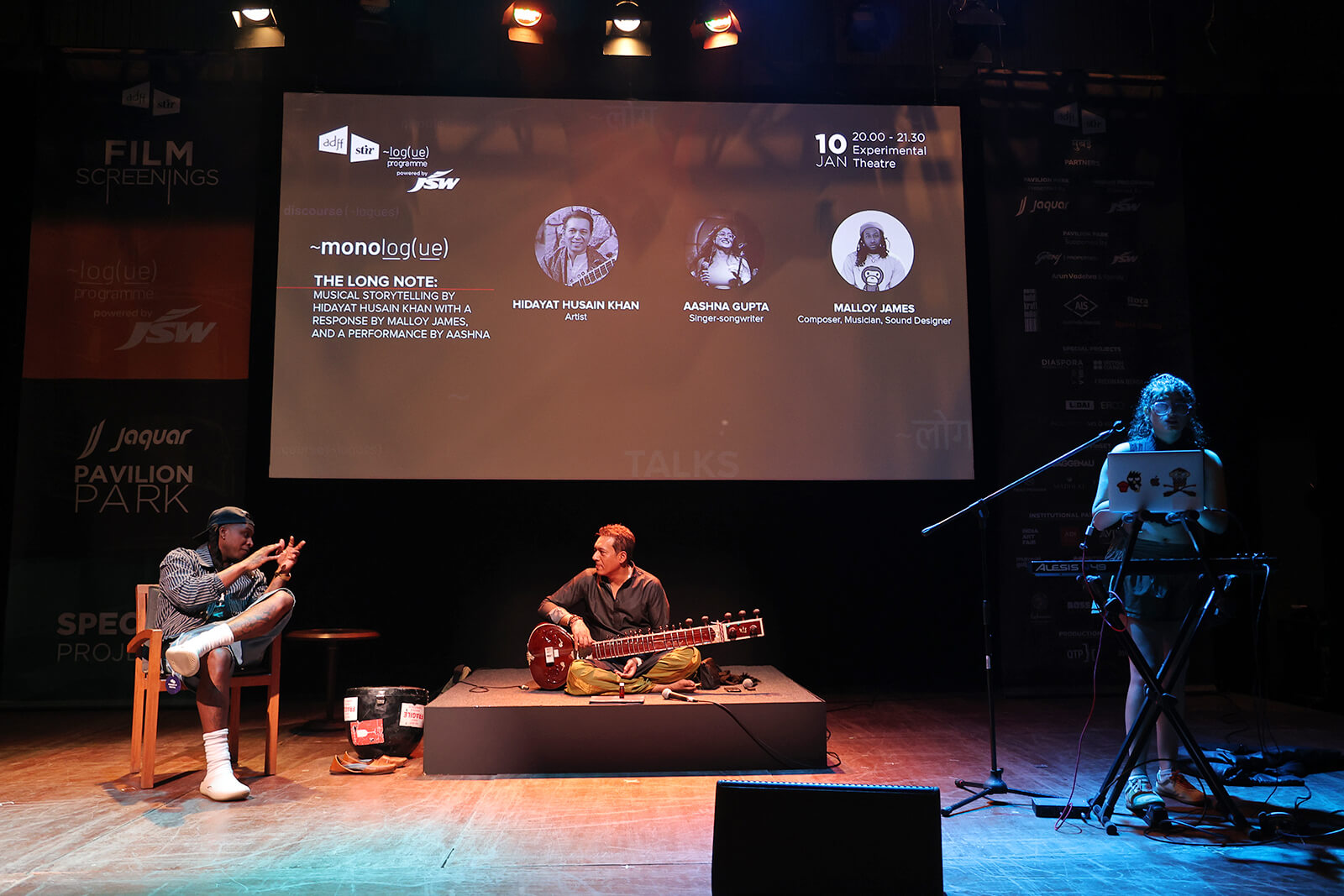
The Long Note, a performance by virtuoso artist Hidayat Husain Khan, with a response by Malloy James, followed by original scores by singer-songwriter Aashna, on January 10, 2026, unravelled the unspoken dimension of language, employing music as a necessary tool of communication and proffering connections. The trio emphasised music as a prolific field for enhancing spatial awareness and experience. Building on the ways in which stories populate worlds, in 35 mm City, Anmol Ahuja, features editor, STIR, mediated a ~dialog(ue) between Kabir Khan, film director, and Rajnish Hedao, production designer and architect, that explored how urban spaces are portrayed on screen through locations and sets, and how these mediate textures and atmosphere. It underscored the capacity of film and production design to shape our understanding of urban life. Ultimately, the festival hinged on the ways in which such tactile connections emerge—between film and design, design and memory, between practice and theory, between the lived and the intended—and the conversations that hold and foster these.
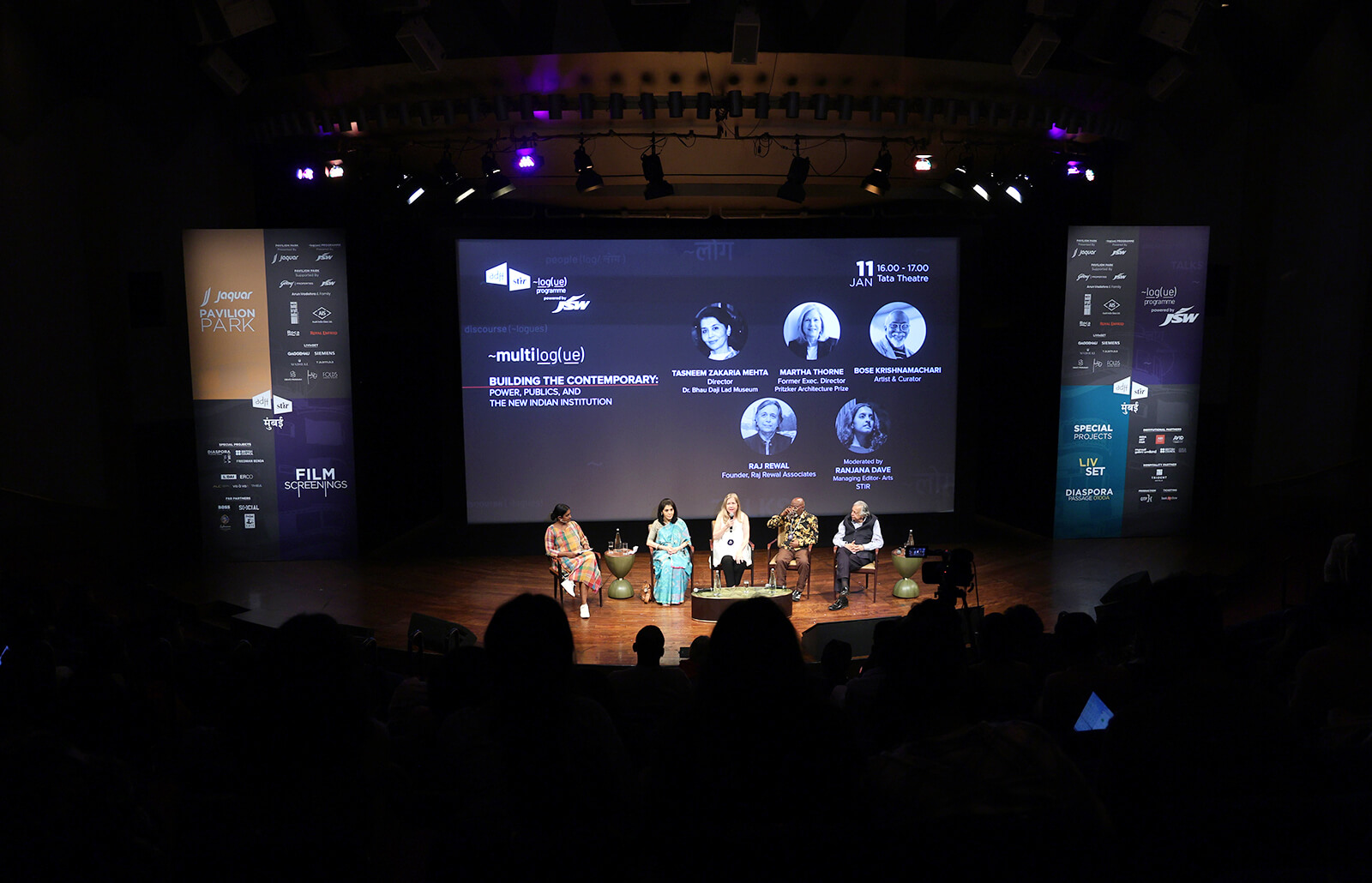
The dogmatic desire to shape knowledge, to control value and taste that ~log(ue) strived in some ways to disrupt through intersectional contamination and collaborative exchange was the pertinent topic of discussion in one of the last ~multilog(ue) sessions of the festival, Building the Contemporary: Power, Publics and the New Indian Institution. Examining the surge in institution-building in India today and situating it in its longer post-Independence history, the discussion included Bose Krishnamachari, artist & curator; Tasneem Zakaria Mehta, director, Dr Bhau Daji Lad Museum; Thorne; and Rewal, and was moderated by Ranjana Dave, managing editor, Arts for STIR.
Speaking of the festival’s curation at large and the escalation in the scale and scope of the ~log(ue) programme, Samta Nadeem, festival curator, noted, “~log(ue)has expanded from a space of conversation into a curatorial method foregrounding listening, co-authorship and porous forms of knowledge-making. Resisting linear narratives in favour of ongoing inquiry, ~log(ue) positions discourse itself as a creative system that is multi-vocal, situated and continuously unfolding.” It is precisely in this spirit that the closing session of the festival—usually amped with grandeur and a touch of celebrity—conspired very differently for ADFF:STIR Mumbai 2026. Organisers, curators, attendees, speakers, designers, architects, artists, patrons and the workers who made the festival collectively huddled around an open plaza, holding a reflective forum. Every voice was welcome, every opinion mattered, every feedback heard in unison—recounting the wins for the 2026 edition, while priming for the 2027 edition to be not just bigger, but better, bolder, more plural and even more multimodal.
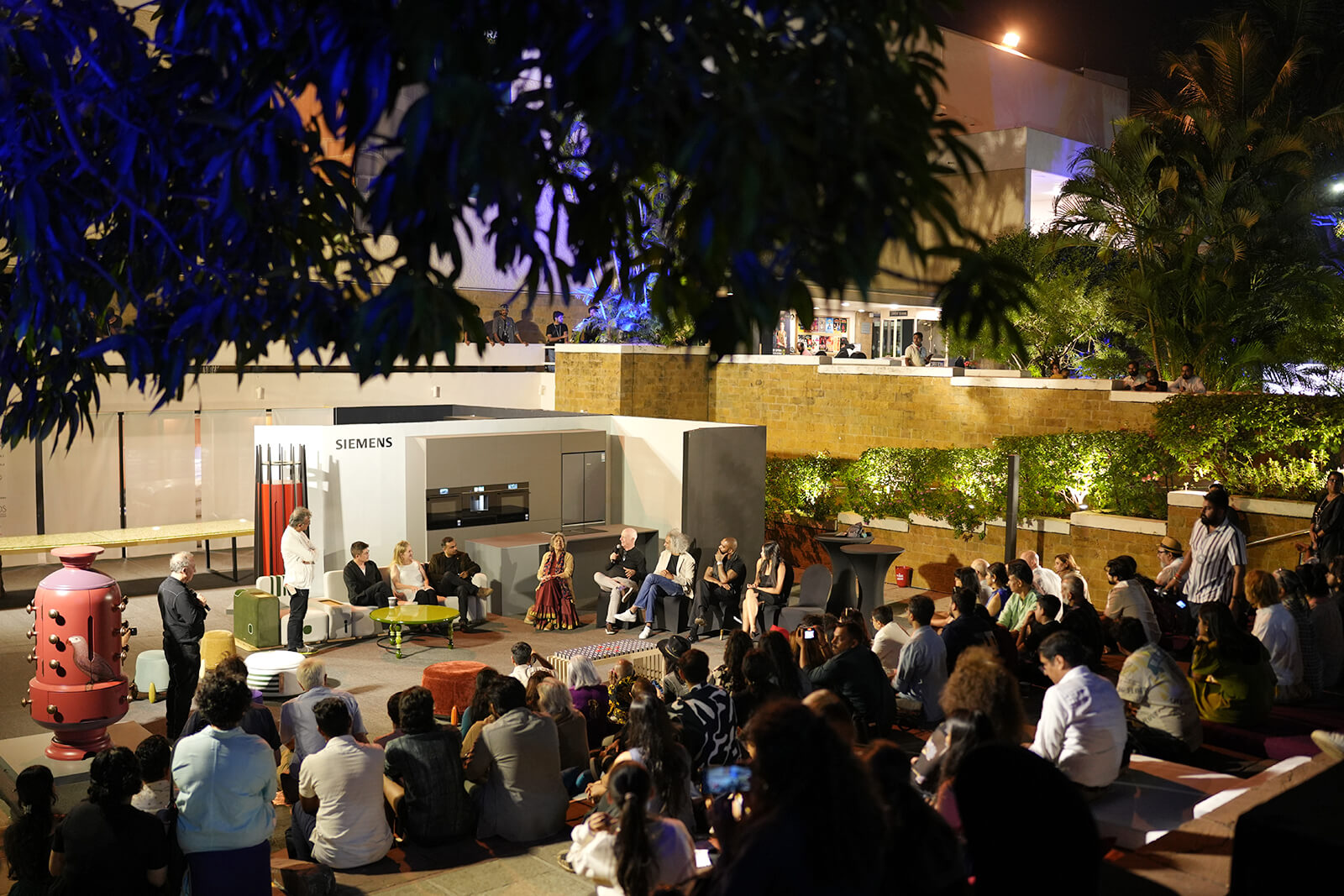
What most stood out then, not only in this final session but as a latent theme for the festival, were the tangible affects of words and interactions and the meanings they hold. How language and its use are pivotal in shifting what we assume to be certain, what we think is a given. It is only through our active interaction with the world that we can create, that we can begin to make sense of it, to make space for other realities, the sessions seemed to insist. For what are networks without stories that bolster them?

by Pranjal Maheshwari Oct 23, 2026
Co-authored by Jareh Das, Chairman traces the British designer’s fixation on chairs as symbols of power and identity and as mediums of expression and community building.
by Mirra Lynn Oct 22, 2026
The curators behind Palestine Design Week 2026 reflect on its intent, considering how design holds memory, makes space for loss and imagines a future in Palestine.
by Chahna Tank Oct 22, 2026
STIR speaks with the Mumbai-based type designer about her practice, type walks and why she wants more people to have stronger opinions about Indian-script fonts.
by Jincy Iype Oct 15, 2026
STIR explores craft, material intelligence and people shaping Indian design through dialogues with Design Democracy’s co-founders and the curators of its special exhibitions.

make your fridays matter with a well-read weekend
Enter your details to sign in
Don’t have an account?
Sign upOr you can sign in with
a single account for all
STIR platforms
All your bookmarks will be available across all your devices.
Stay STIRred
Already have an account?
Sign inOr you can sign up with
Verification link sent to check your inbox or spam folder to complete sign up process
Tap on things that interests you.
Select the Conversation Category you would like to watch
Please enter your details and click submit.
Enter the 6-digit code sent at


From conversation to co-authorship: public programming at ADFF:STIR Mumbai 2026
by Mrinmayee Bhoot | Published on : Jan 28, 2026


 Sign in with Google
 Sign in with email
What do you think?