Architecture16 mins. read
A living memory of a man's relationship to his land: the One Tree Hill Community Hall
by Jincy IypeNov 15, 2023



by Aarthi MohanPublished on : Feb 18, 2026
How does a cemetery function when it is no longer used for burial or regularly visited for mourning, yet continues to exist within the life of a city? Sensorium Park occupies a British-era cemetery established in the late 19th century, set within a mature pine forest in Uttarakhand, India. Designed by Bangalore-based Compartment S4, a practice working across architecture, landscape and exhibition design, the civic architecture project reflects the studio’s long-standing interest in restraint, spatial sequencing and narrative openness. Rather than treating architecture as an entity, the practice approaches design as a calibrated response to sites shaped by layered social, historical and ecological conditions. Sensorium Park thus emerges from this position, considering how a place marked by loss, neglect and continuity might be carefully rehabilitated as a vivid public landscape.
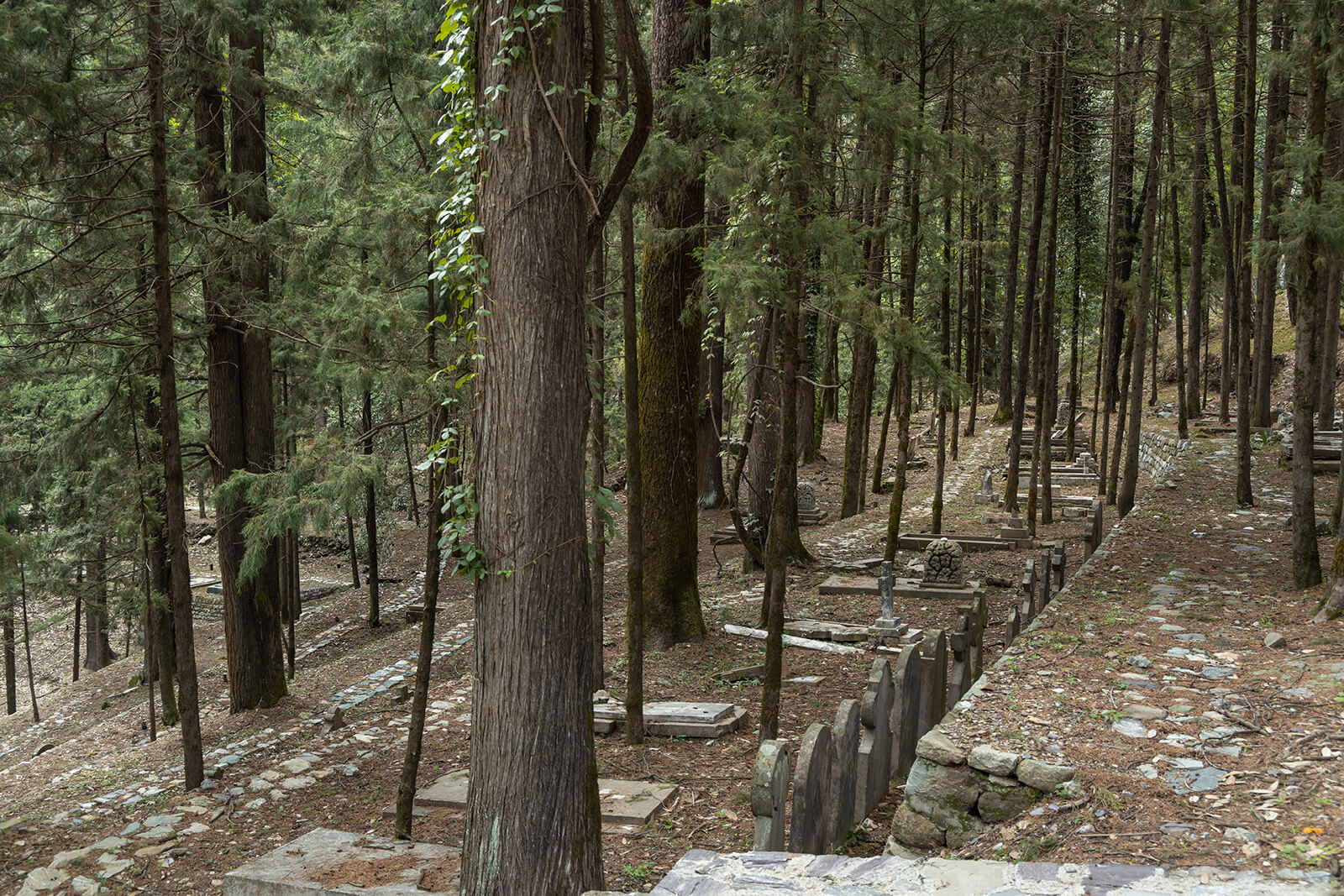
Prior to the intervention, the cemetery existed as a physically overgrown and socially disconnected enclosure. Dense vegetation, obscured paths and graves made the site difficult to access, while socially, too, it remained detached from everyday urban life. Perceptually, its colonial origins and long period of neglect contributed to its isolation. Early site readings, however, indicated a more complex condition. While the burial ground itself had fallen into disuse, the surrounding pine forest had continued to develop into a self-sustaining habitat supporting diverse flora and fauna and marked by continuous green cover.
The initial brief from the Uttarakhand Government focused on making the cemetery accessible and safer for public use. Early discussions made clear that the site could not be approached as a conventional park or a redevelopment project. Questions of access and maintenance gradually shifted towards considerations of memory, reverence and the extent to which intervention was appropriate. The brief thus evolved into creating a space that one can access and experience gently without erasing or overpowering its historical and ecological character.
Excavation gradually brought previously obscured graves into consideration. Many were unnamed and undocumented, with no archival records identifying those buried there. While some may date back to the First World War, this speculation remains uncertain. Rather than attempting to reconstruct histories that could not be responsibly verified, the architects adopted restraint as a guiding approach to the project. “Rather than attempting to decode or narrate what could not be responsibly verified, we chose restraint as a design position,” the studio tells STIR. Decisions about what not to interpret were treated as equally important as those that shaped the design.
The project does not rely on didactic devices or overt memorialisation. There are no plaques assigning identities or fixed meanings to individual graves and no linear narrative explaining the site’s history. Ambiguity is acknowledged as a necessary condition reflecting the incomplete and fragmented nature of the records themselves. By leaving certain spaces unnamed and unresolved, the project allows visitors to form their own relationship with the site without being directed towards a singular reading.
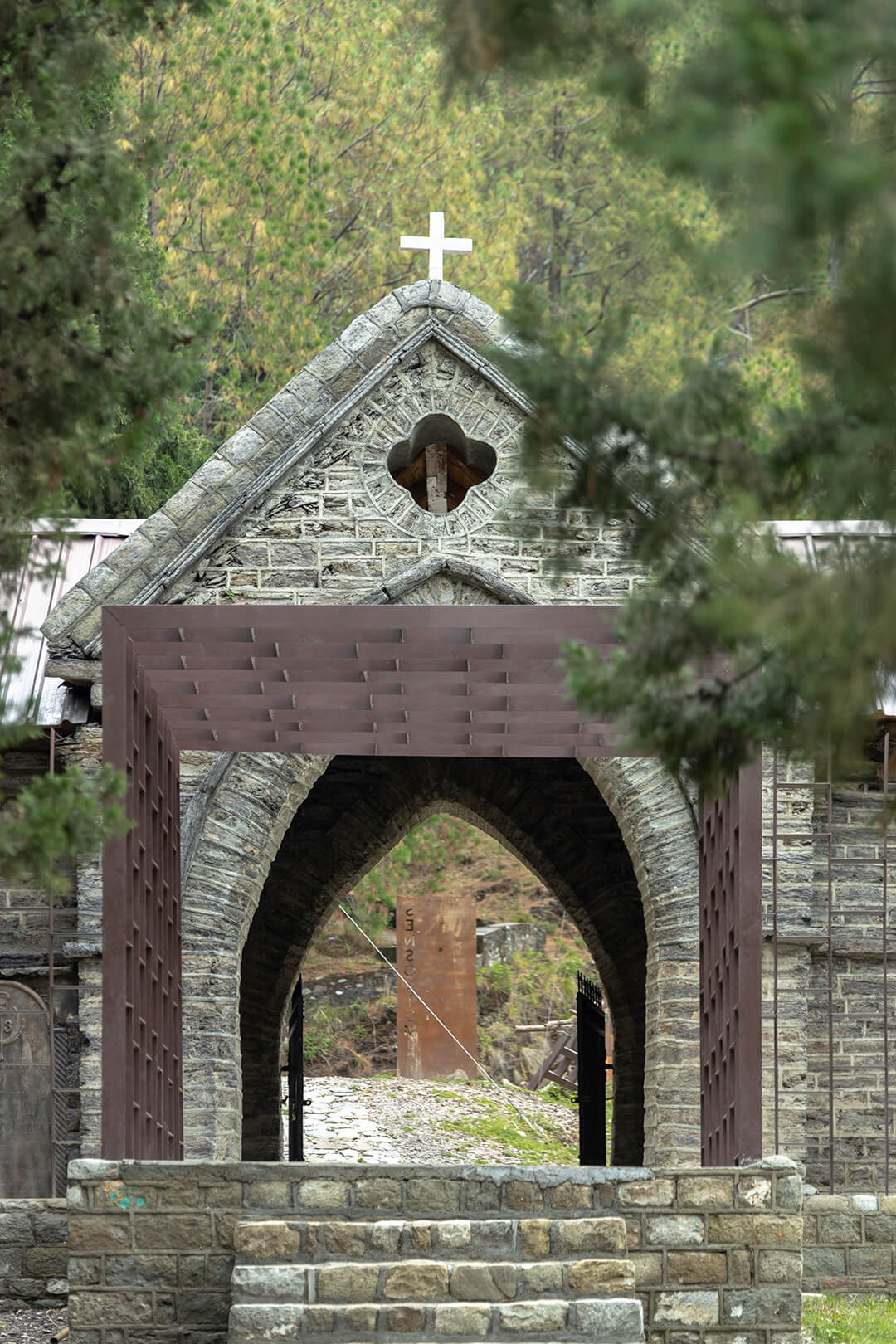
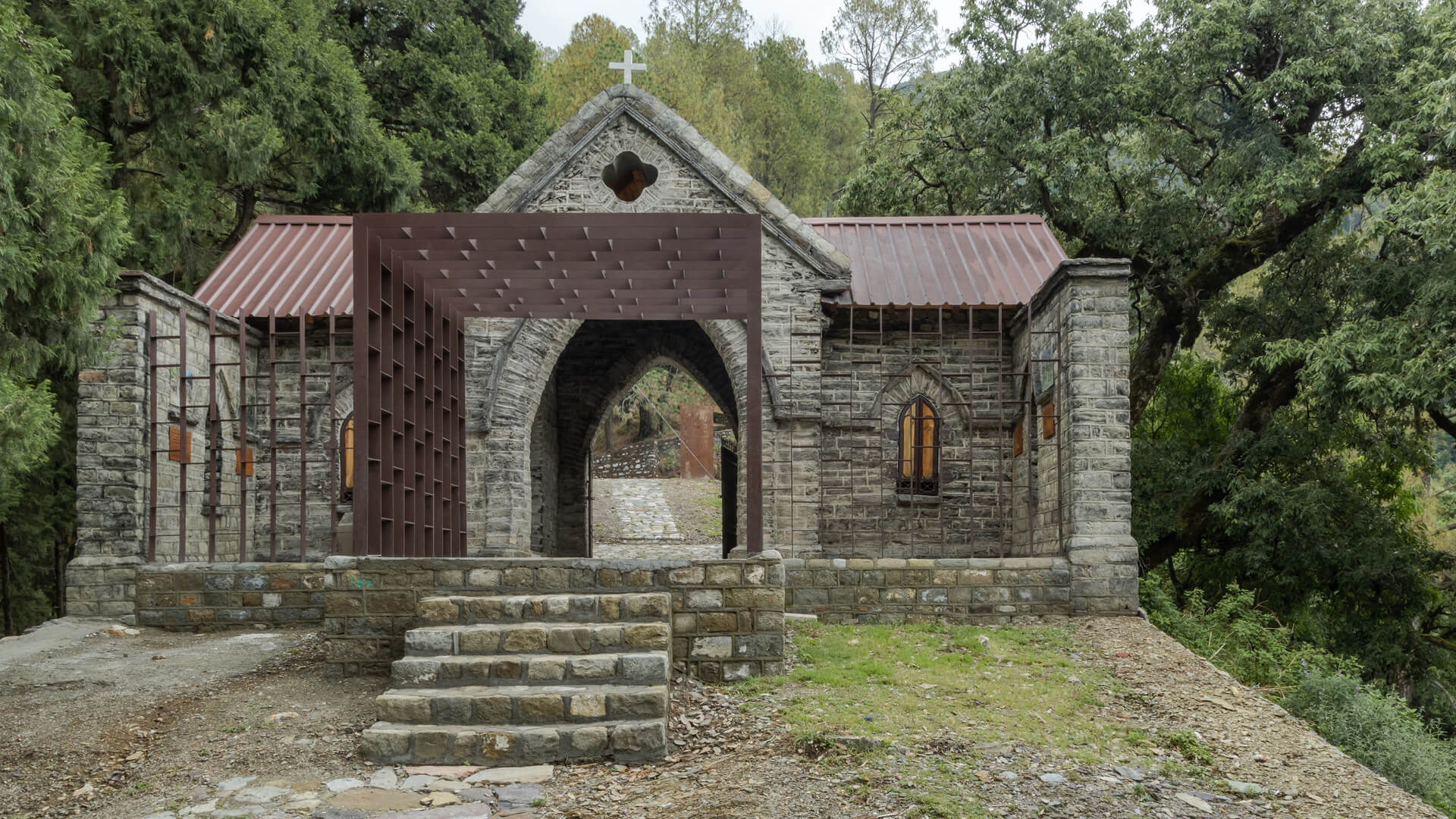
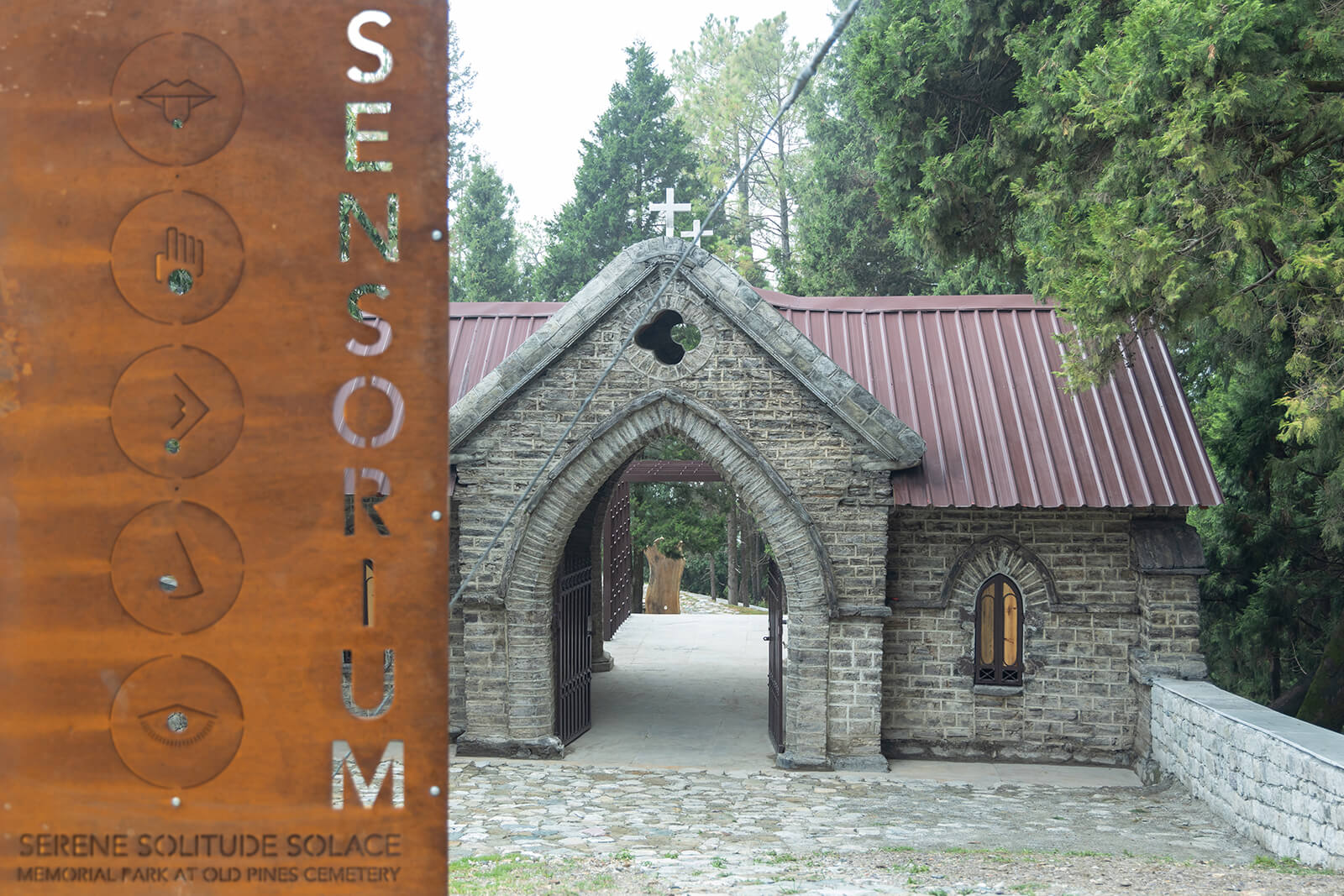
Movement through the park is organised around a meandering stone pathway that moves organically through the forest. The path is intentionally non-linear, encouraging slow movement and allowing visitors to encounter the site gradually. At the entrance, the original stone gate of the cemetery has been carefully restored. A contemporary metal frame draws attention to the portal without altering its character. Within this stone enclosure, the wooden roof has been reconstructed using material techniques consistent with the site.
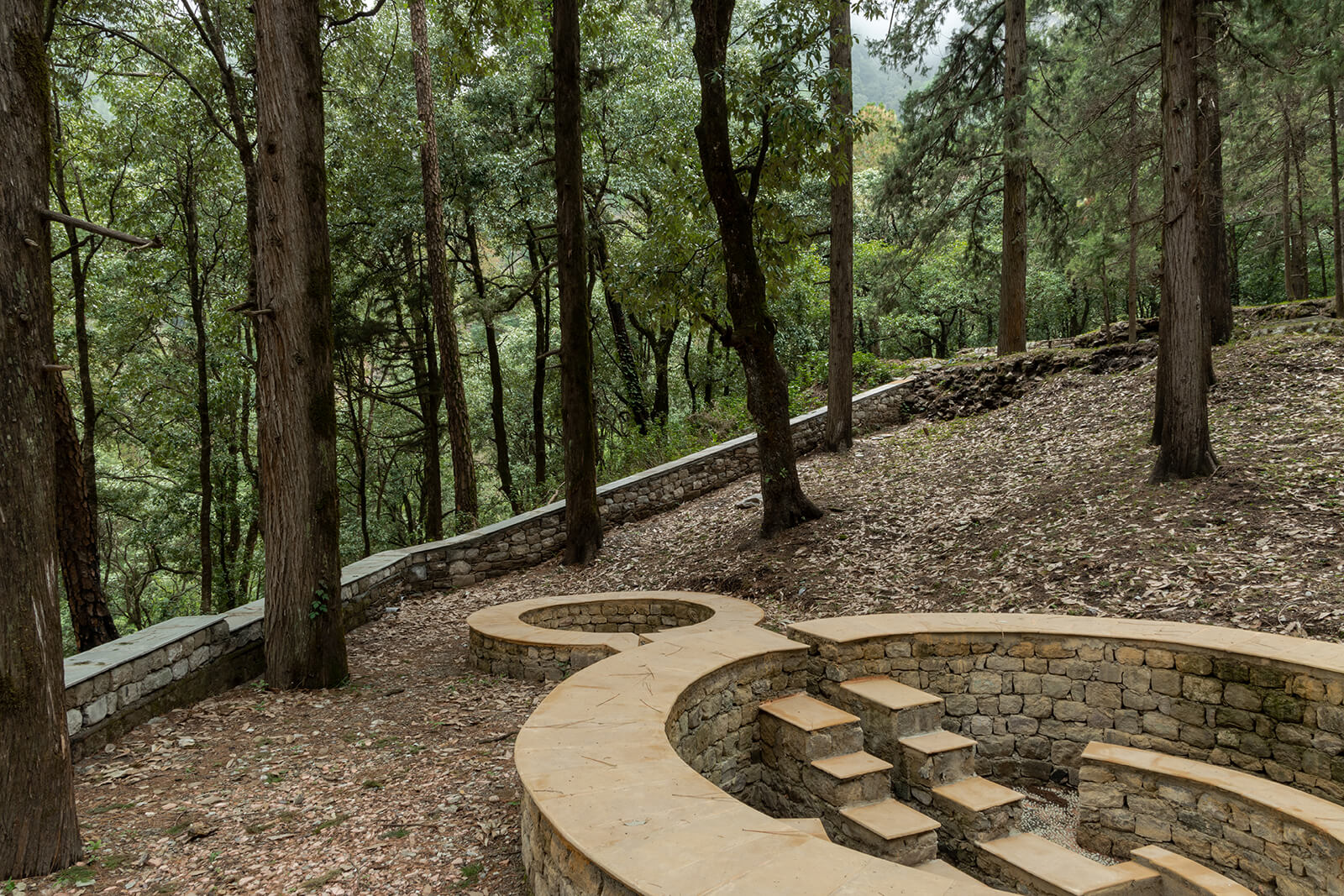
Material interventions across the park are limited and contextually grounded. Stone, wood, corten steel and acrylic are used sparingly to define paths, seating and moments of pause. Several stone elements were restored or reworked rather than newly constructed, allowing them to sit quietly within the landscape. Construction was phased and deliberately paced, relying on low-impact techniques and close collaboration with local teams familiar with the terrain—an approach that allowed the project to respond to on-site discoveries, particularly during excavation, while minimising disturbance to existing flora and fauna.
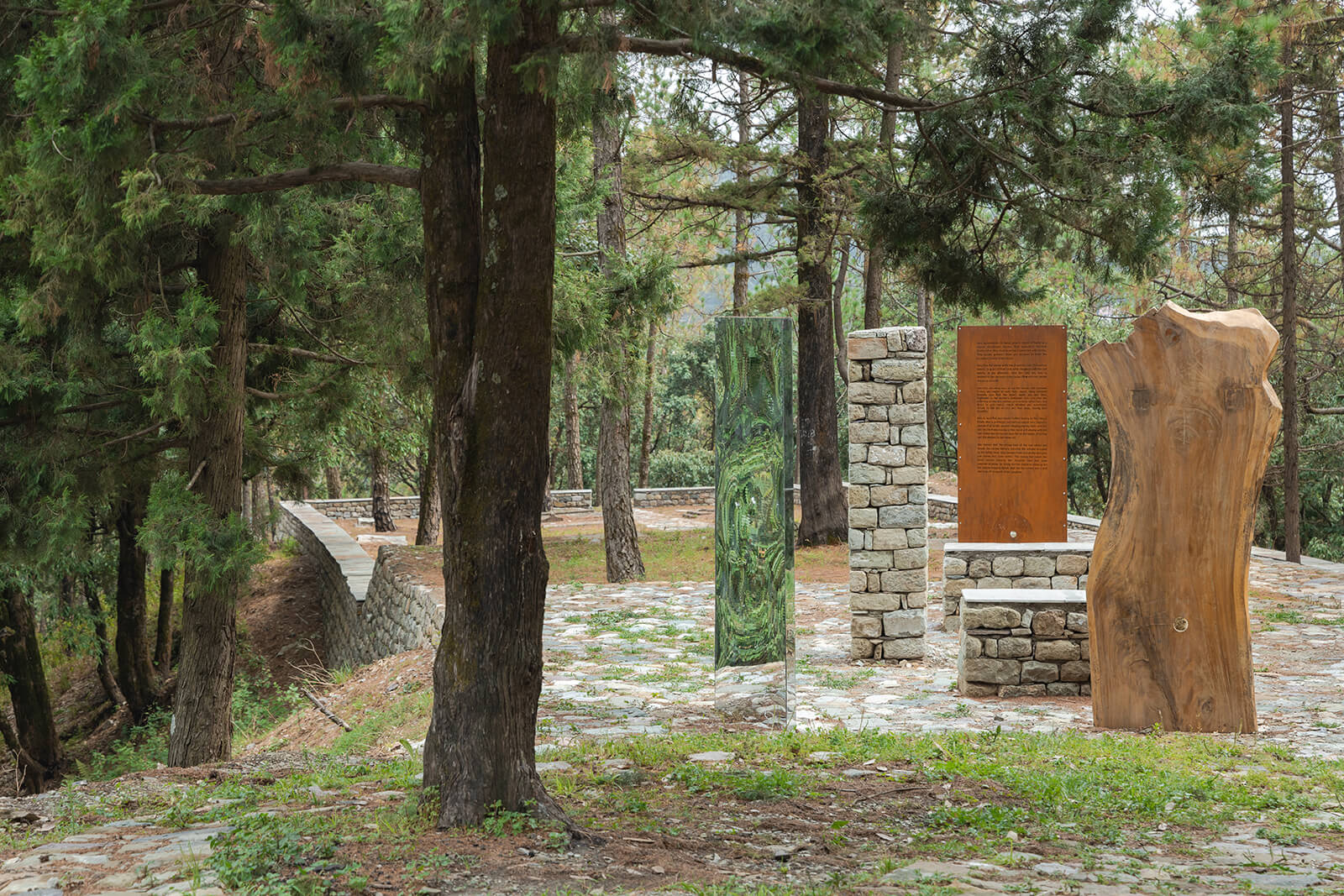
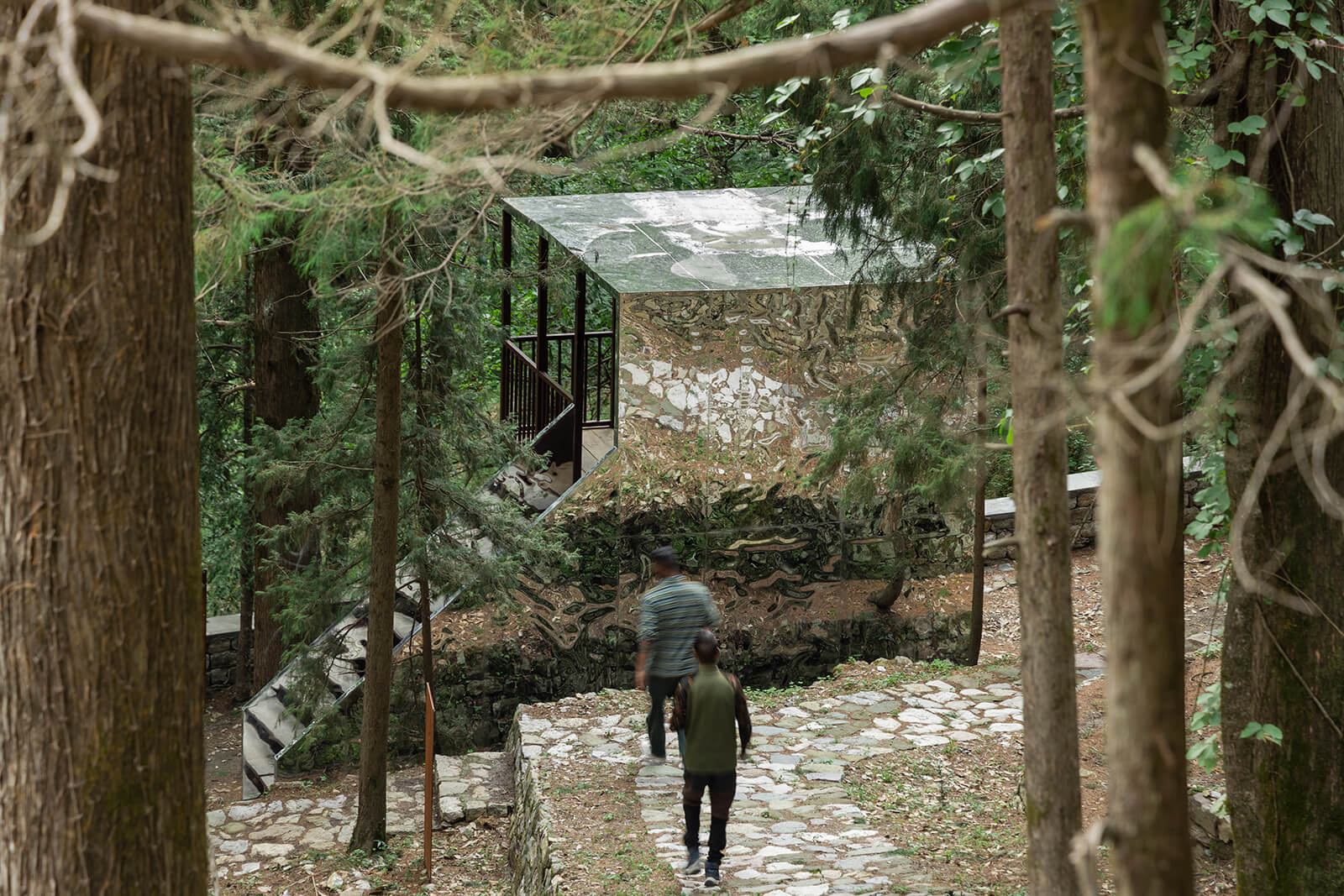
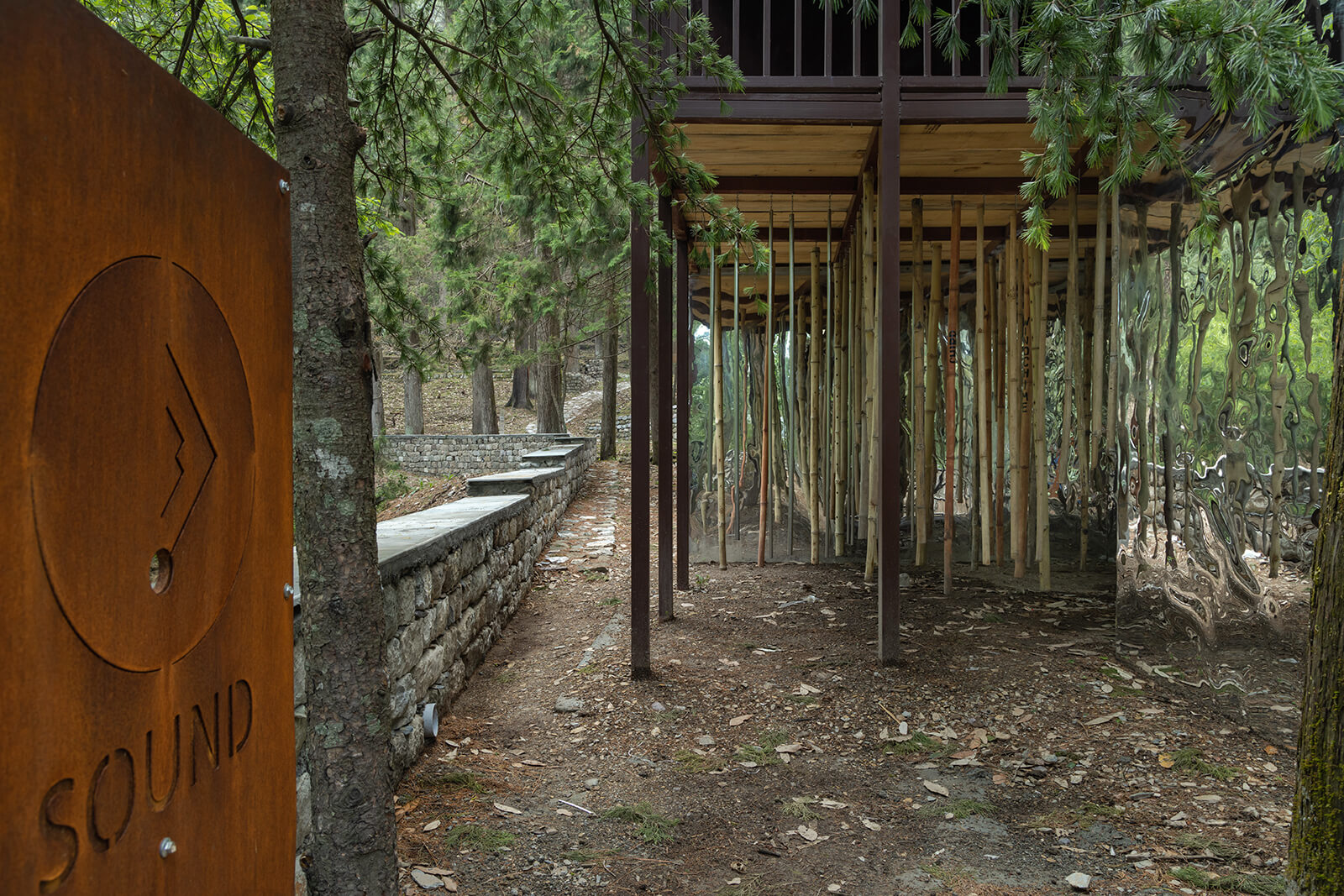
Sensorium Park, as the name suggests, is structured as a sensory landscape rather than a visually dominant one. A series of small, dispersed installations engages the body and senses without foregrounding formal gestures or symbolism. A mirror-clad cabin reflects the surrounding forest, creating a brief shift in perception that redirects attention back to one’s presence within the landscape. A human-scale bamboo wind chime produces sound that merges with ambient forest noise. Further, elements crafted in Deodar wood introduce incense into the scheme while textured stone and bark surfaces invite touch along the pathway. A garden of edible fruit and berry trees adds taste to the narrative, integrating a sense of nurturing into the experience of the site.
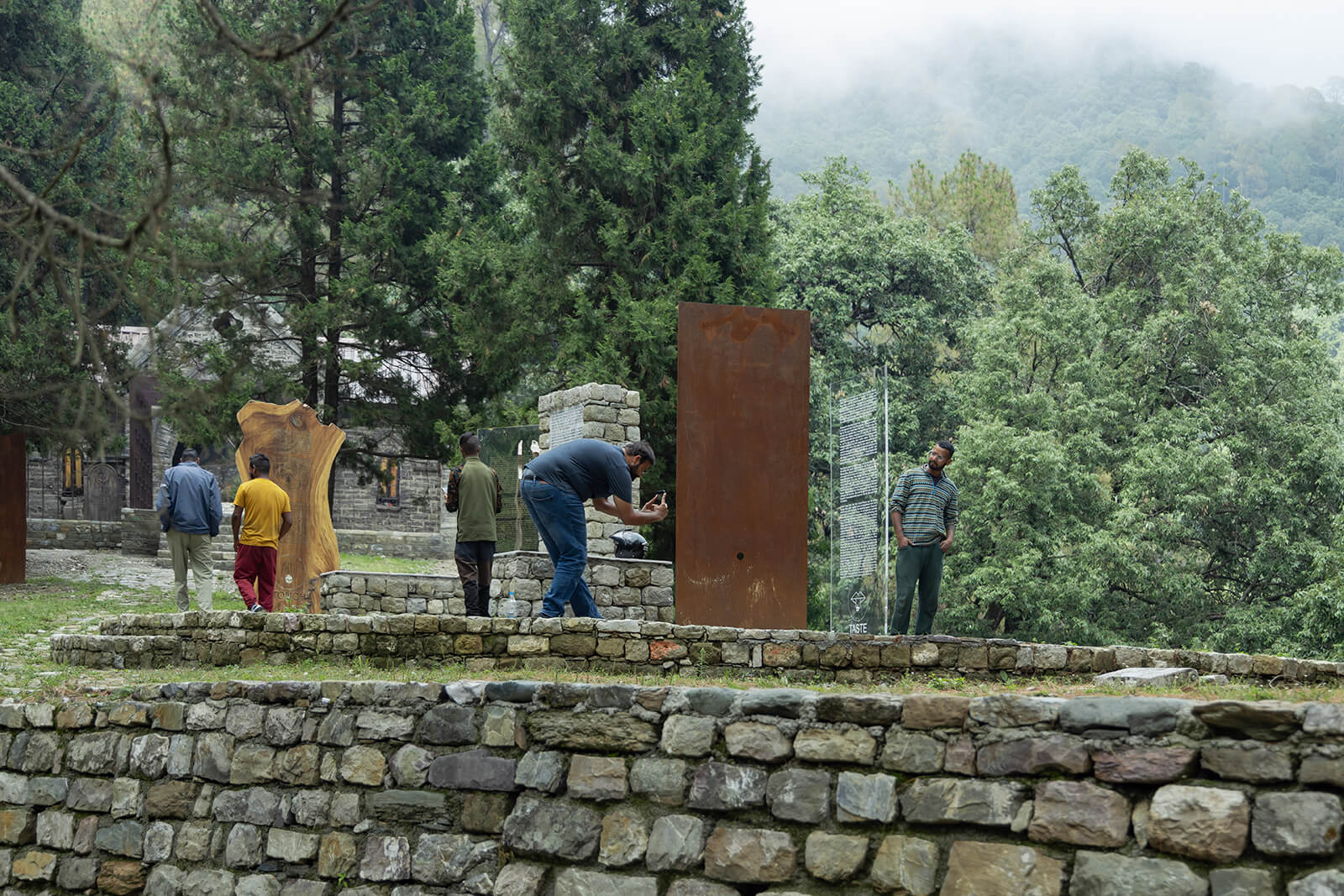
The installations are intentionally modest and embedded within the terrain. As the architects note, “By drawing attention back to the landscape itself, the installations encourage visitors to slow down and observe, allowing personal reflection to emerge organically.” Engagement was considered carefully in relation to the site’s funerary and commemorative nature. The project eschews large structures or singular architectural gestures in favour of contextually grounded compositions that do not overshadow the existing landscape and graves.
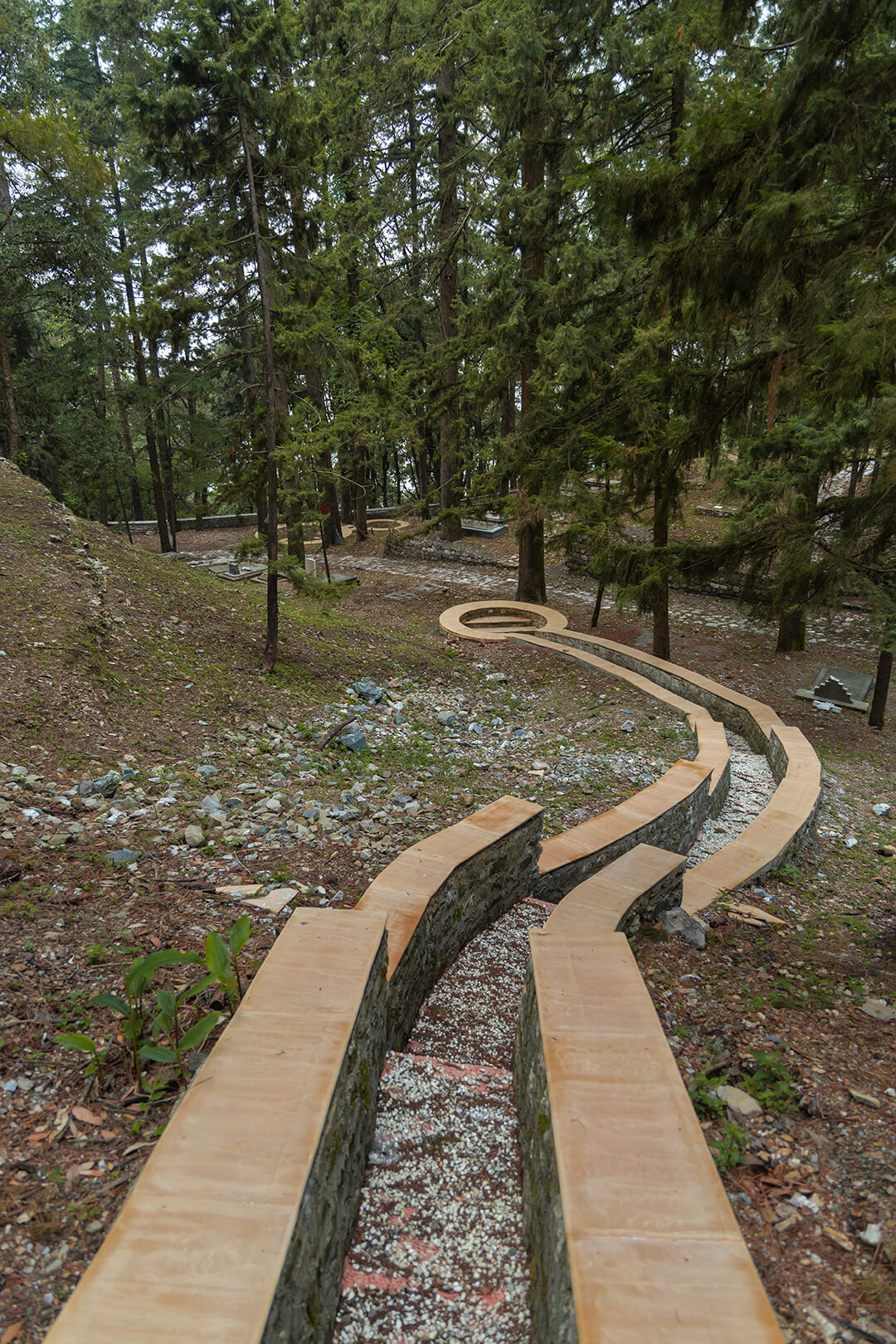
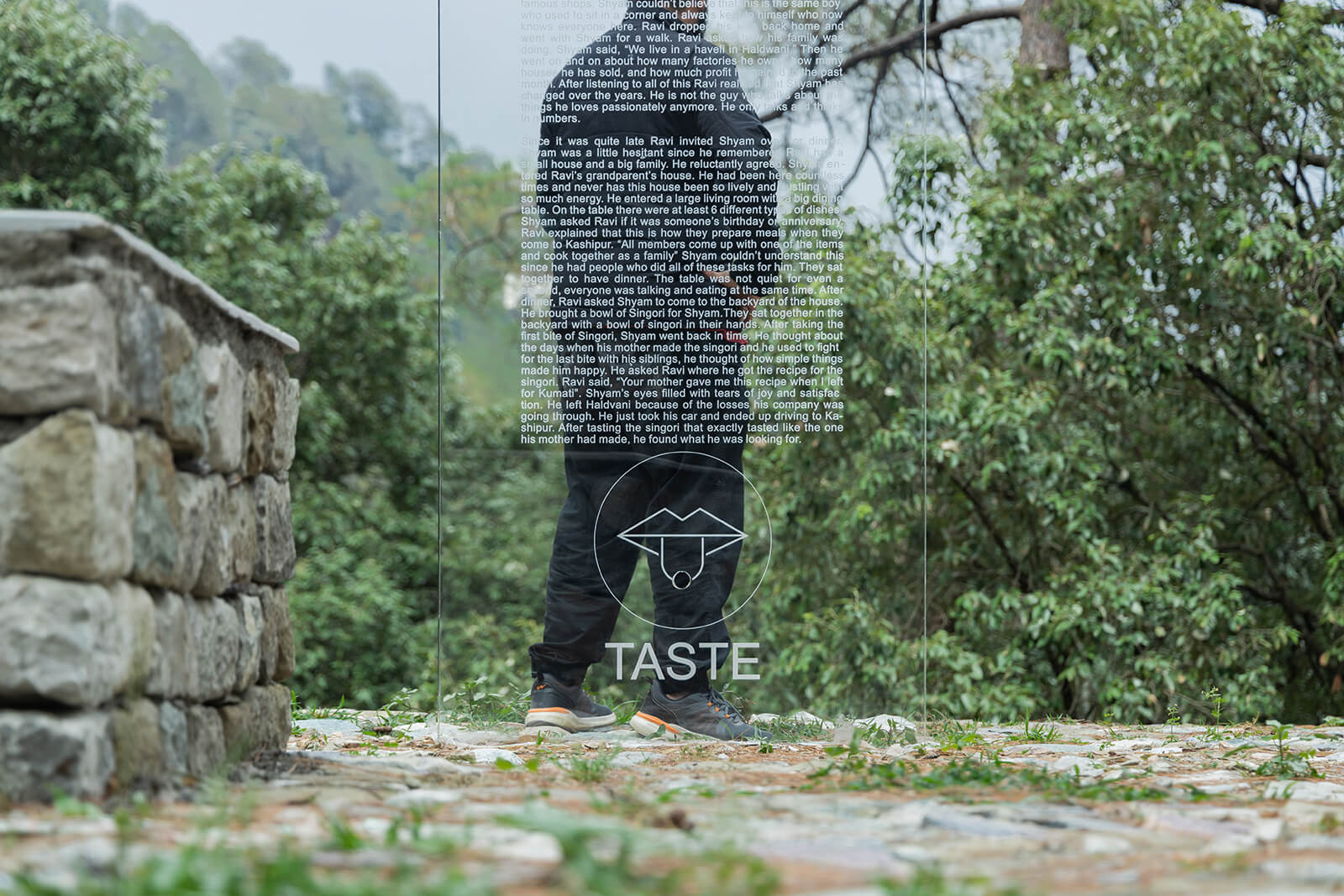
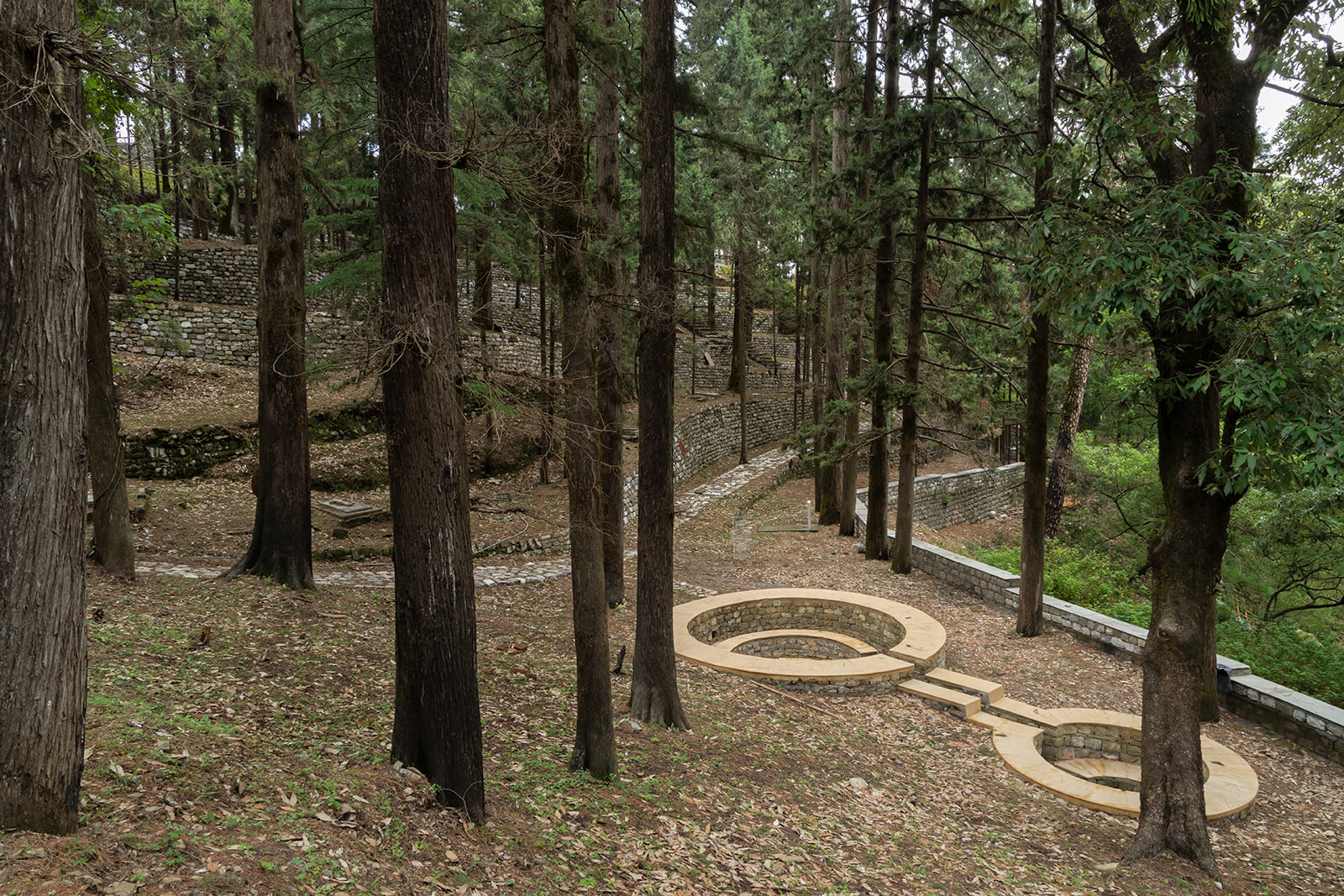
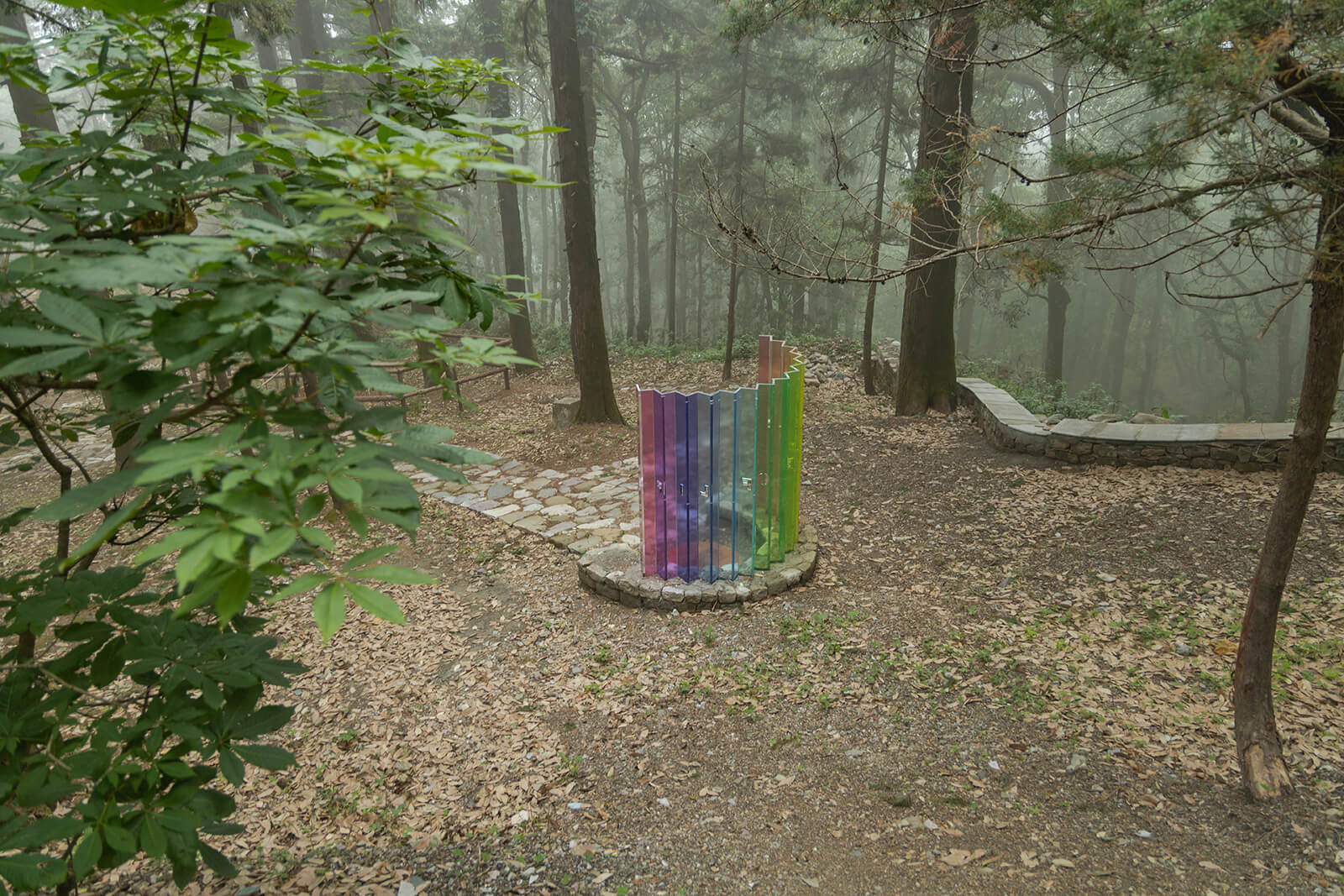
The journey concludes in a stone seating space formed within a natural culvert, offering a place for pause and reflection. Nearby, a colourful installation marks the end of the path without imposing closure. Signage throughout the park functions as quiet guidance rather than instruction. Designed using steel, etched wood and acrylic, the signage is minimal and discreetly placed to avoid visual interruption. Its tone is reflective rather than explanatory, offering orientation while leaving interpretation open.
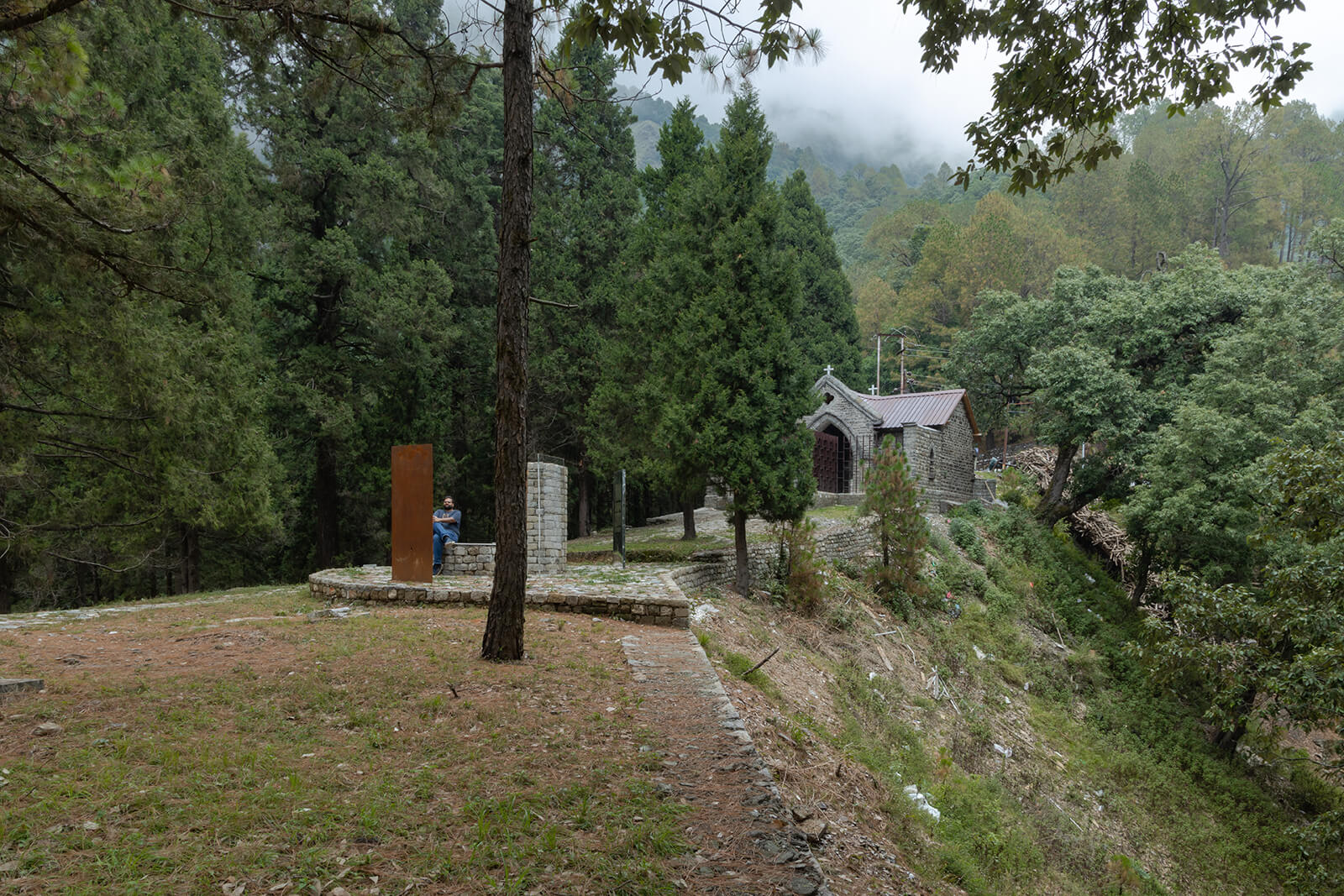
In India, cemeteries are often experienced as closed, ritual-bound spaces. Sensorium Park demystifies this perception without diminishing their significance. The design avoids overt religious symbolism and refrains from prescribing fixed modes of use. Visitors are free to walk, pause or sit, engaging with the site at their own pace. Comfort emerges through spatial clarity and sensory familiarity rather than through sanitisation.
Working within a colonial-era burial ground in a postcolonial present also raised questions of authorship and historical framing. The architects were conscious that design decisions could privilege certain narratives while leaving others unacknowledged, which led them to decentralise authorship and avoid closure. As they shared with STIR, “Our responsibility was not to overwrite the site with a singular contemporary narrative but to create conditions where multiple temporalities and histories could coexist.” Some memories surface while others remain silent, and both are treated with equal respect.
What distinguishes the public park is its treatment of the cemetery as a living landscape where ecological continuity, undocumented histories and everyday public use are allowed to coexist without hierarchy. Rather than transforming the site through assertion, the project responds through limited action, careful sequencing and an acceptance that certain aspects remain unresolved.

by Pranjal Maheshwari Oct 19, 2026
The Mumbai-based architects integrate courtyards, mesh screens and north light trusses to create a dining space that doubles up as a community hub at SR University, Warangal.
by Mrinmayee Bhoot Oct 17, 2026
The Rotterdam-based institute centres the Indian Ocean as a network for exploring material histories and transnational links shaping coastal cultures, positing them as future models.
by Pranjal Maheshwari Oct 16, 2026
At the 2026 Stirling Prize ceremony, Mary Duggan with RUFF Architects, MAKER Architecten and Nakshabid Architects were felicitated for proffering quality housing and social equity.
by Mrinmayee Bhoot Oct 12, 2026
The new Centre for Contemporary Arts, fostering public engagement with art in Uzbekistan, is housed in a tram depot refurbished by the French studio, emulating local craftsmanship.

make your fridays matter with a well-read weekend
Enter your details to sign in
Don’t have an account?
Sign upOr you can sign in with
a single account for all
STIR platforms
All your bookmarks will be available across all your devices.
Stay STIRred
Already have an account?
Sign inOr you can sign up with
Verification link sent to check your inbox or spam folder to complete sign up process
Tap on things that interests you.
Select the Conversation Category you would like to watch
Please enter your details and click submit.
Enter the 6-digit code sent at


From burial ground to public landscape: Compartment S4’s Sensorium Park
by Aarthi Mohan | Published on : Feb 18, 2026


 Sign in with Google
 Sign in with email
What do you think?