Art14 mins. read
Friend or Foe: Melanie Pocock and Marilou Laneuville on shared friendships
by Rajesh PunjOct 15, 2024



by Srishti OjhaPublished on : Mar 28, 2026
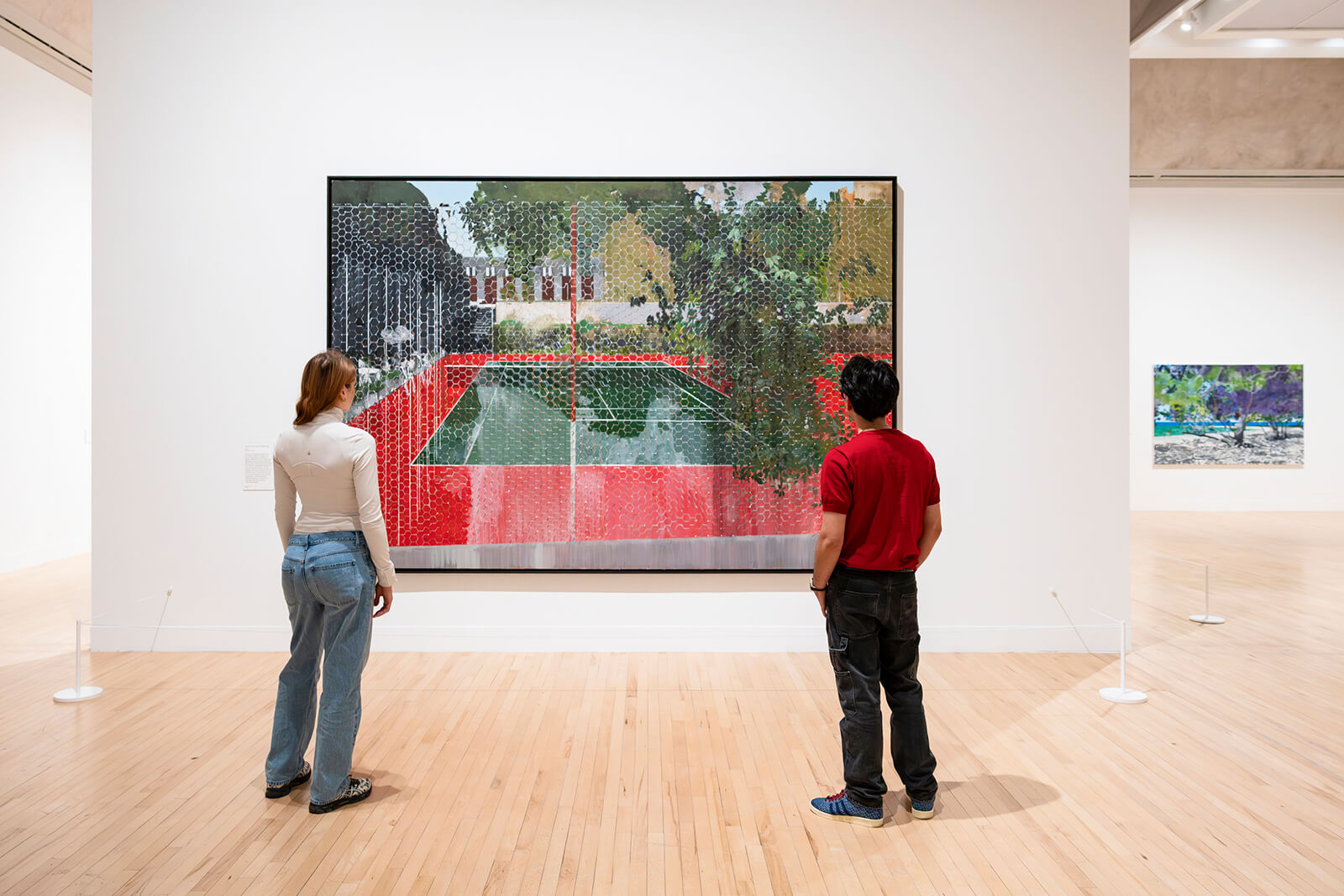
A tennis court, fresh-looking, surrounded by green flora, with neat concrete steps leading away from it to a modern, grey building in the background. The mood of richesse and relaxation never reaches the viewer, broken up into little hexagonal tiles by a foreboding chicken-wire fence. The viewer is placed in the shoes of a person on the outside, the scenery in a different world, even as lush plants spill out of the constructed barrier. This is Country Club Chicken Wire (2008) by British artist Hurvin Anderson, reflecting on his experiences growing up in a Jamaican family in Birmingham and his time as an artist-in-residence in Trinidad. The painting is part of Hurvin Anderson, a survey exhibition of the contemporary artist’s paintings at Tate Britain. Tropical flora rendered in vibrant greens evokes the Caribbean even as they are interrupted by dilapidated, greying hotels; figures from family photographs recur in paintings, sometimes as children, other times as adults, at times both, holding hands and intersecting, linear time be damned. The exhibition, like Anderson’s practice, loops and shuffles through times and spaces, embracing overlaps, repetitions and blurs as England and the Caribbean, childhood and adulthood, departure and return layer over each other endlessly, creating lingering compositions that commit the foggy nostalgia of memory to canvas.
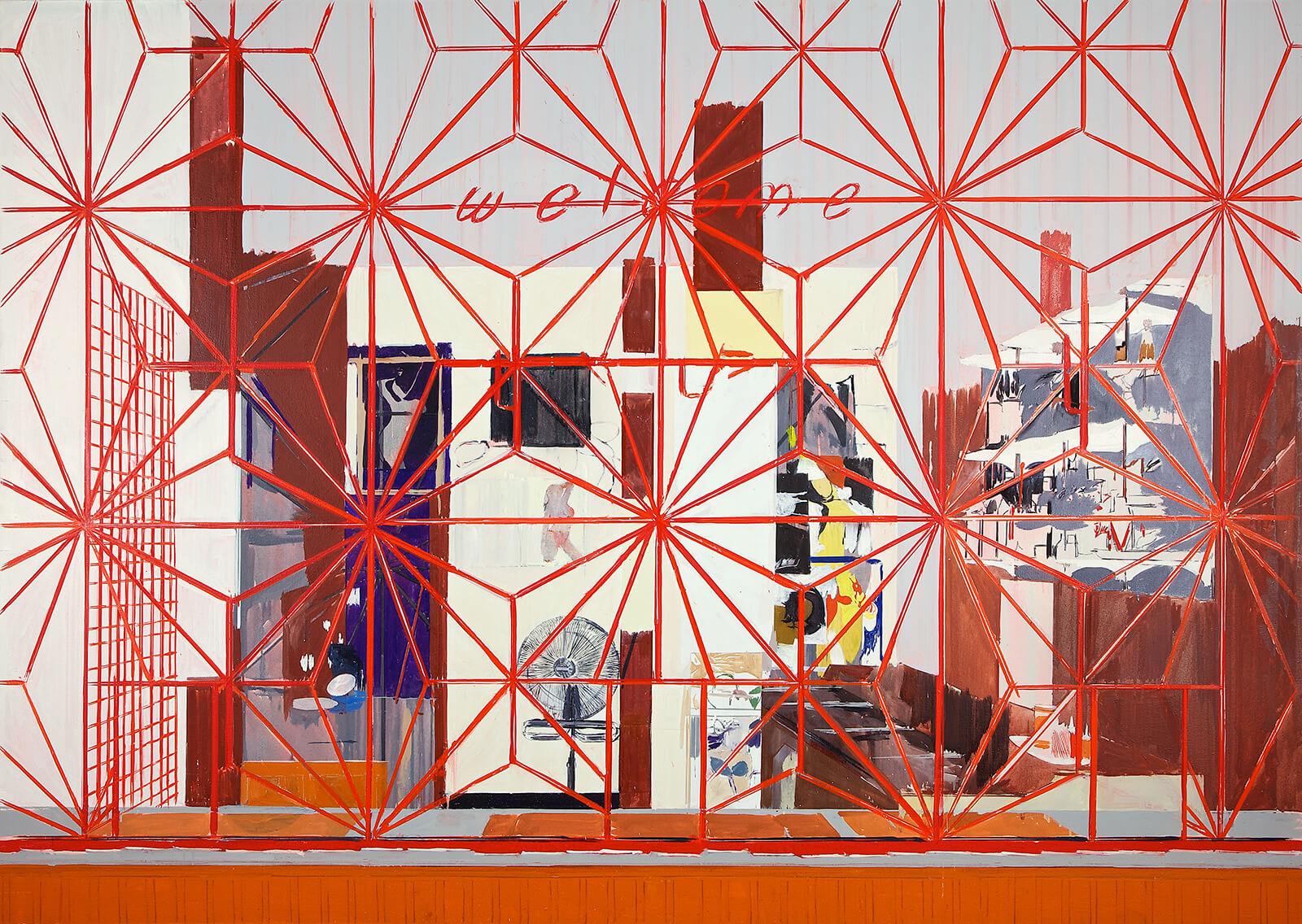
The exhibition includes more than 40 paintings, family photographs and newspaper clippings that span Anderson’s entire career. They contextualise his life as the first person in his family to be born in England, following his family’s immigration from Jamaica. Longing and belonging (or their absence) colour the melancholic landscapes that the painter has become known for. His paintings pull apart the fantasy of the Caribbean, viewed from the perspective of hometown emigrées and the lounge chair views of European tourists alike. Home, identity and memory begin to complicate and split as they are viewed through the wire fence of racial and imperial power relations. Periods of transition, entry and exit are of particular importance to Anderson. Welcome: Carib (2005) complicates the doormat pleasantry by placing it behind an ochre metal grille that separates the viewer from the receding Caribbean streetscape, this separation being a leitmotif in Anderson’s work.
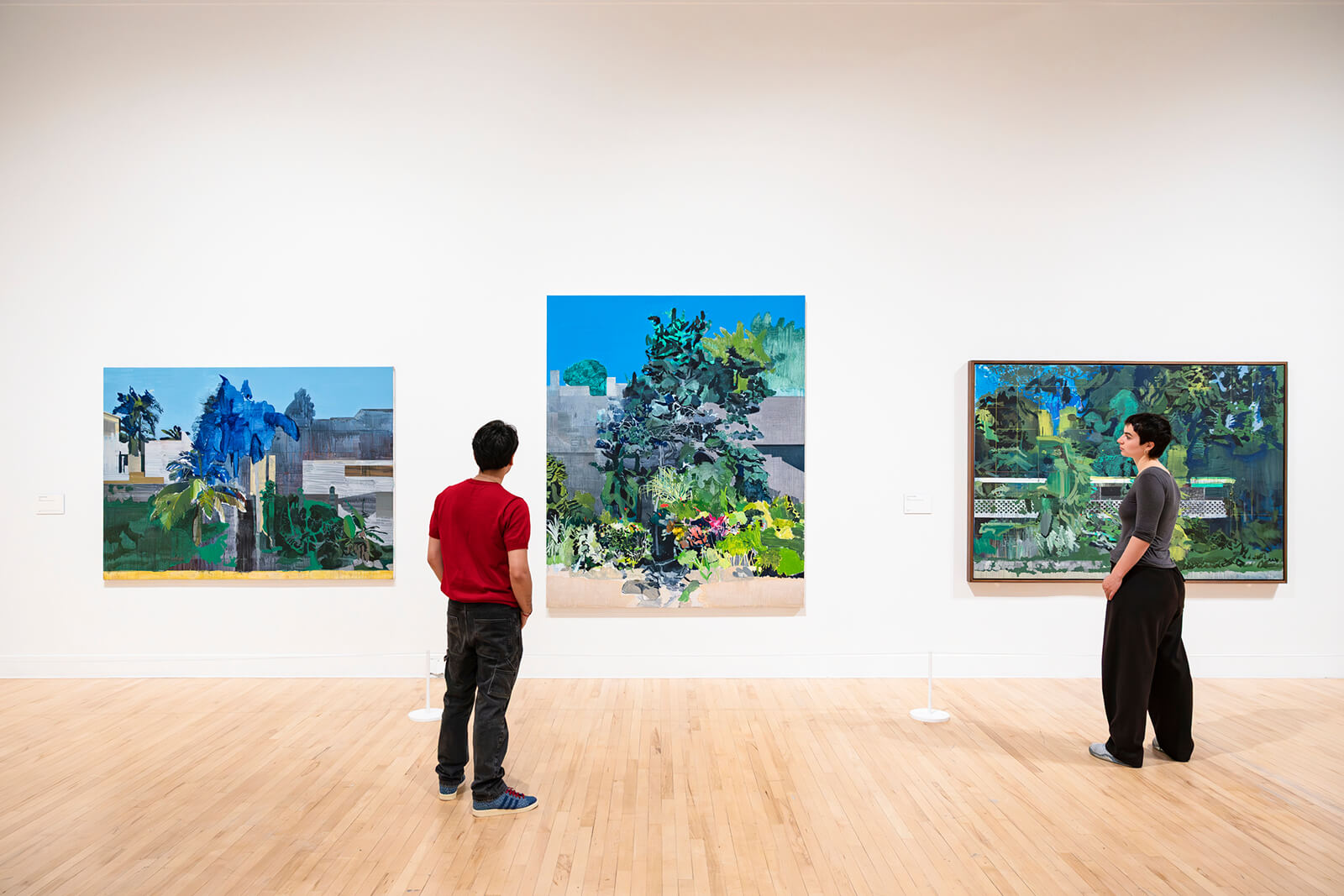
Conventional landscapes of the Caribbean with the requisite colours and vegetation are broken up in Maracus III (2004) by a haze of tourists in the lower third of the painting, rendered with minimal detail and in contrasting warm tones that interrupt the swathe of rich blue above them. In Ashanti Blood (2021), Anderson depicts his experience on the shores of Trinidad, looking back and seeing hotels once only meant for tourists (symbolic of the same class and racial tensions in Trinidad seen in Welcome: Carib), in disrepair, on their way to being reclaimed by nature and the land they stand on, showing that these interruptions go both ways.
Many of Anderson’s works are set in Birmingham, where he grew up, though they maintain a continuity in tone and colour palette with his other works. Ball Watching (1997), an earlier work, is based on a photograph of Anderson and his friends looking into a pond that their football has been kicked into during a friendly game. Despite the intense cultural Britishness of the image and the moment, the figures staring pensively into the blue lake in the foreground—in search, in wait, at a threshold—evoke a deeper feeling, tying into the migrant experience shared by many communities in the world, caught between worlds.
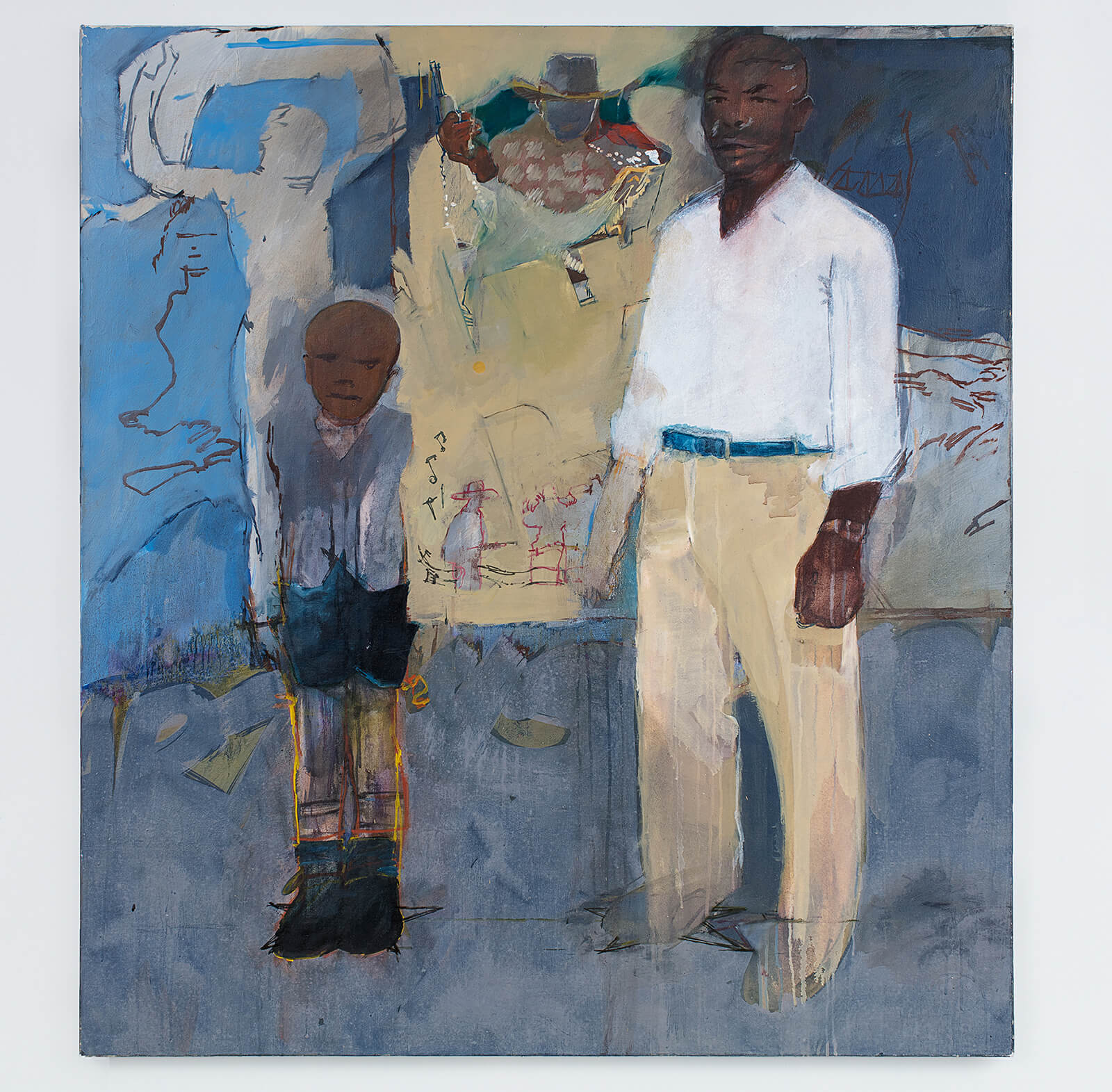
Dominique Heyse-Moore, the senior curator of contemporary British art at Tate Britain, said, “Part of Hurvin Anderson's way of working is to loop back in time and place, playing with personal and collective memories. So the pleasure is in taking a viewer on that journey, asking them to surrender to not quite knowing where or when they are as they look at a painting. His work is so much about colour, paint and light; those things are outside of any chronology other than the cycles of the day and the seasons.” The paintings which feature Anderson’s family exemplify this relationship with chronology. Bev (1995), for example, is a monochromatic portrait in a formal style, showing a seated woman and a young child leaning against her—Anderson’s sister as an adult and as a child, shown within the same frame, transgressing linear time. Hollywood Boulevard (1997), meanwhile, shows a young Anderson beside his father, borrowing the visual language of a family photograph and rendering it with the haziness of memory.
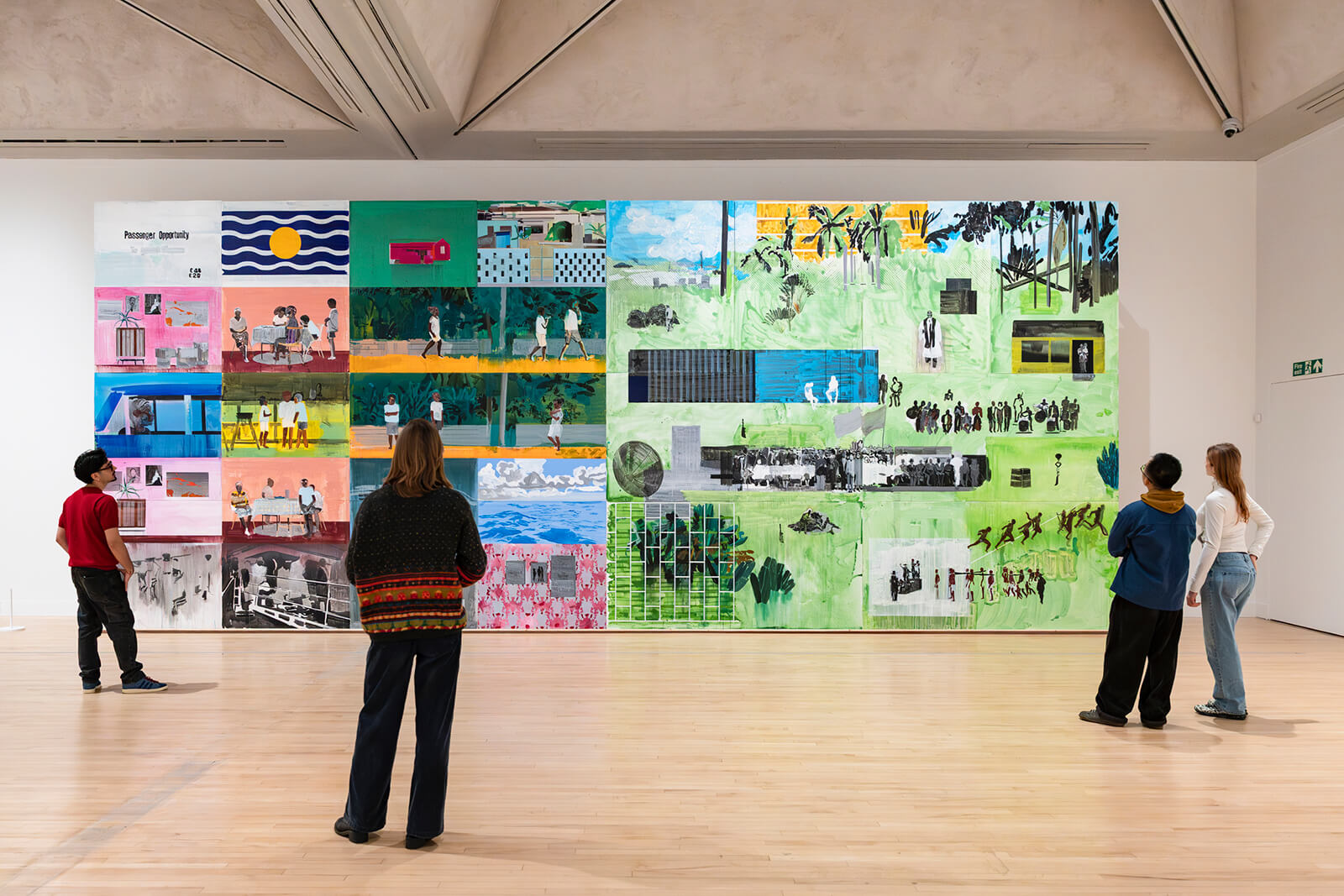
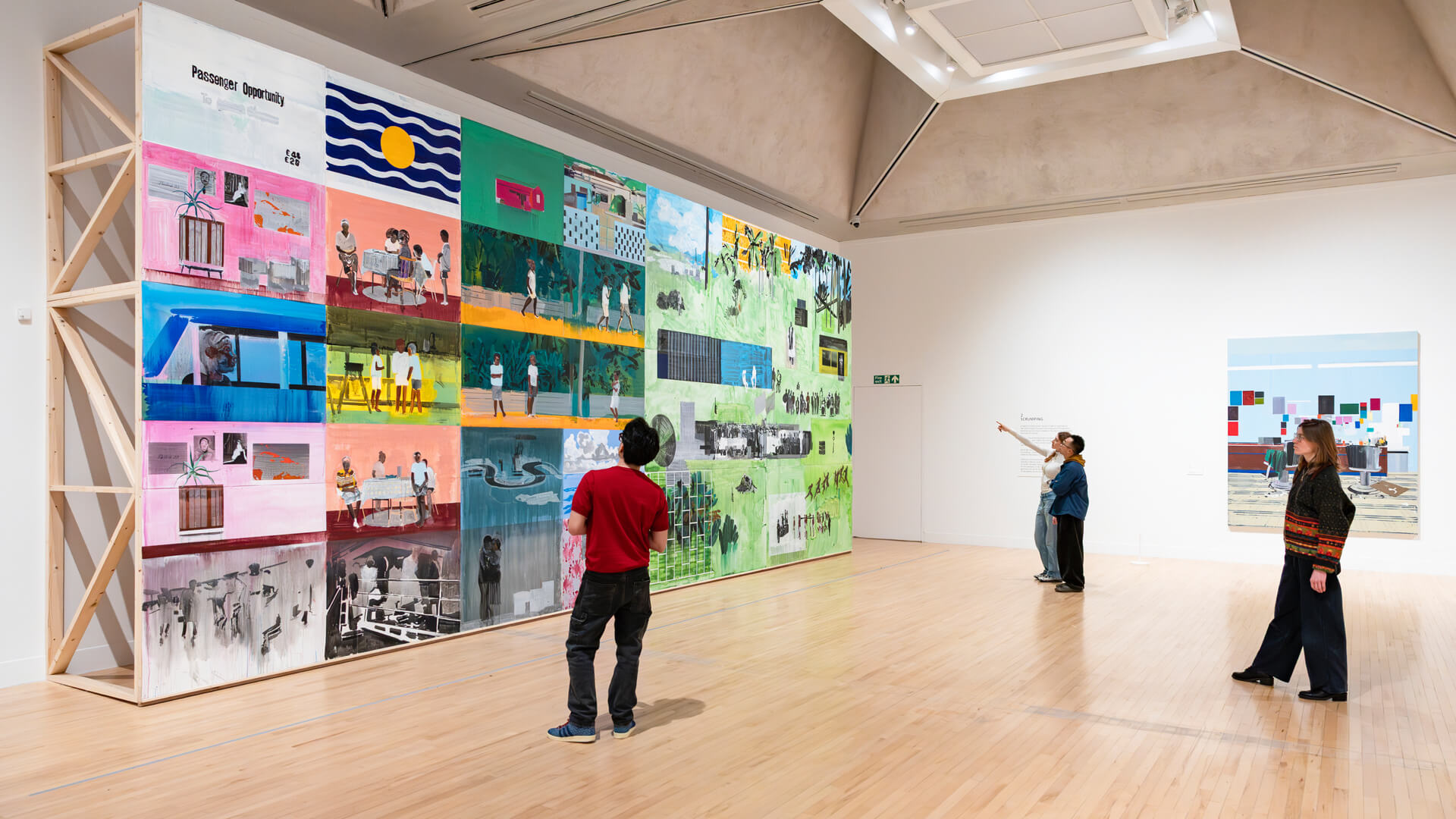
One of the largest works in the exhibition, Passenger Opportunity (2024 – 2025) builds on this idea of the threshold, reimagining Jamaican painter Carl Abrahams’ 1985 murals created for Jamaica’s Norman Manley International Airport. The 24-panel piece serves as a montage of the journeys, emotional and geographical, undertaken by Jamaicans emigrating to Britain historically and in the present day. The painting’s scope and the decision to break it into panels give it a filmic quality, becoming a kind of montage. Amid verdant settings filled with lively community are monochrome panels of people on journeys, sitting together but looking straight ahead. The left side is sparser—homes left behind, people gathering in parks, at dinner tables and airplane ramps, finding themselves alone in taxis or absent from sitting rooms and seascapes. In one panel, two people hold onto each other tightly, the gravity of their embrace speaking volumes about the pain of separation, even as they appear to have escaped it.
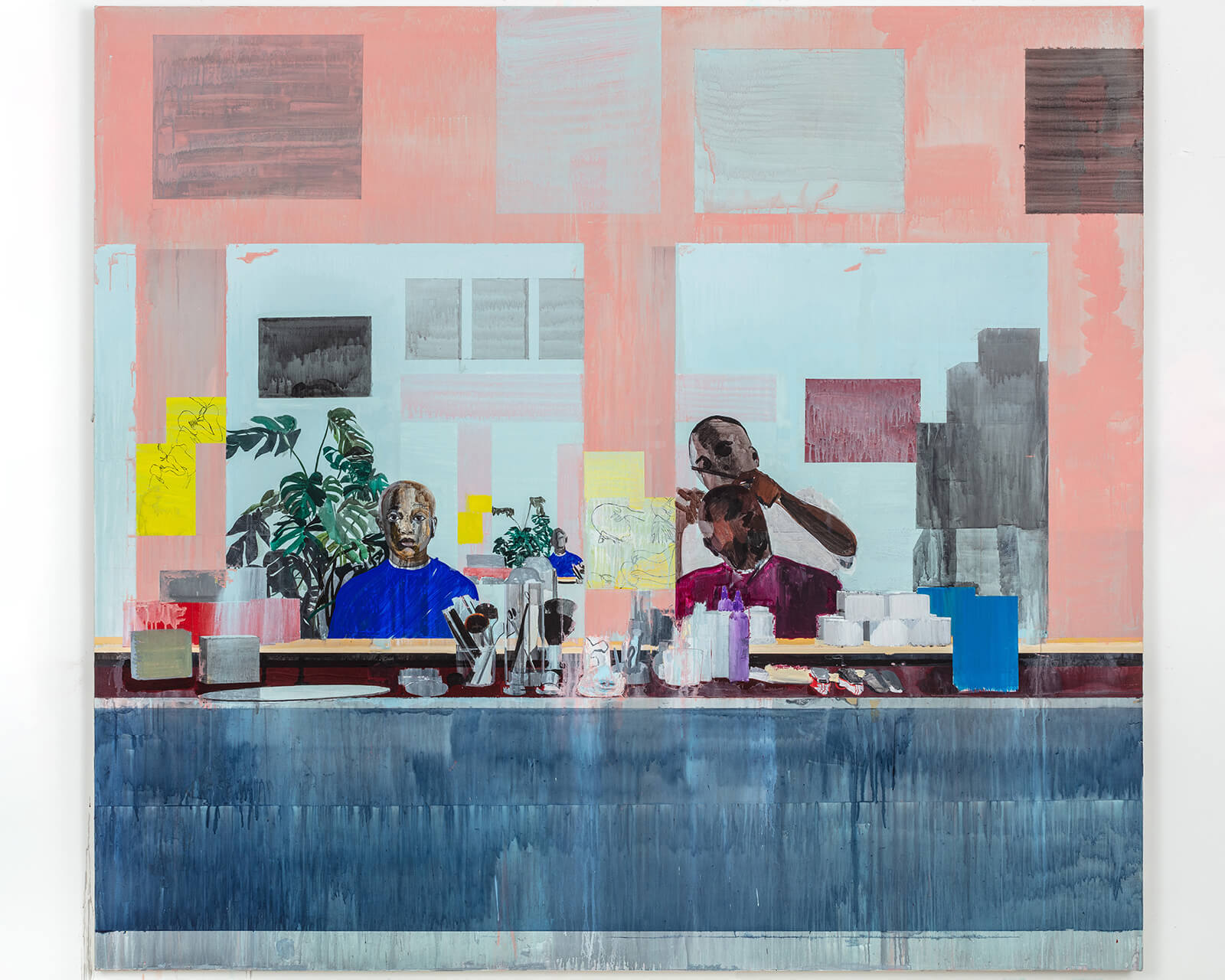
Spaces—the feelings they evoke, who they include and exclude—are integral to Anderson’s work, with one of the best examples of this focus being his barbershop series. In a similar vein to his landscapes, he takes the Western tradition of domestic paintings of homes, salons, etc., and reinterprets them through his cultural lens. The barber shop represents a space of socialisation and community more than commerce, a space for intimacy. In Shear Cut (2004), three figures—a barber and two customers, one having his hair cut, the other looking into the mirror, waiting. The former are rendered in spare brushstrokes, their faces mostly a suggestion. The lone figure is shown in greater detail, his eyes striking, seeming to look at the viewer through the mirror. Identity and self-perception are brought to the forefront with his melancholy expression, while the other, more gestural figures bring a more casual, intimate feeling to the scene. Peach tones and translucent blues create a sense of warm familiarity. The potted plants in the composition call back to paintings from a series set in the Caribbean, bridging geographic space with colour and personal references, bringing another world into a Birmingham barbershop.
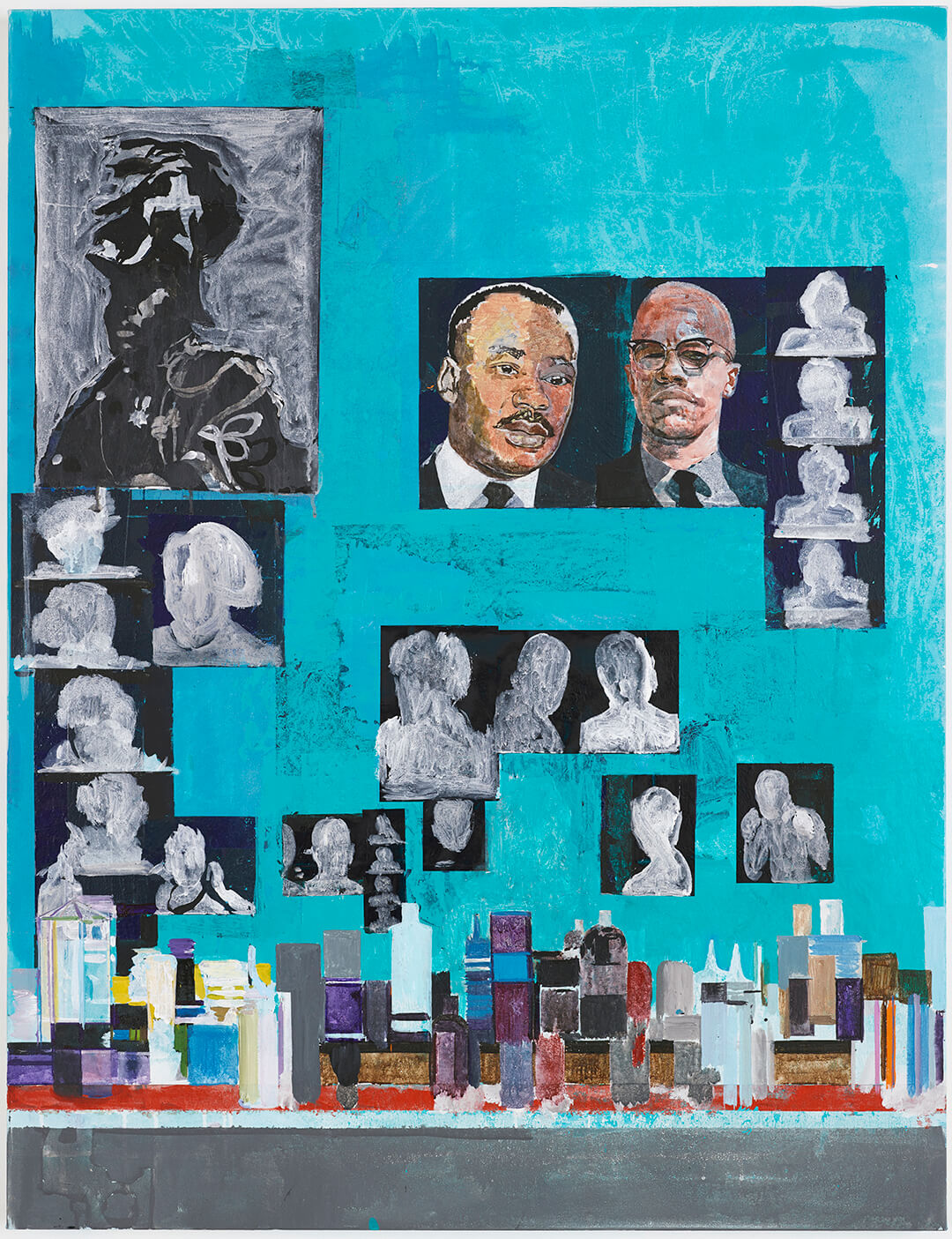
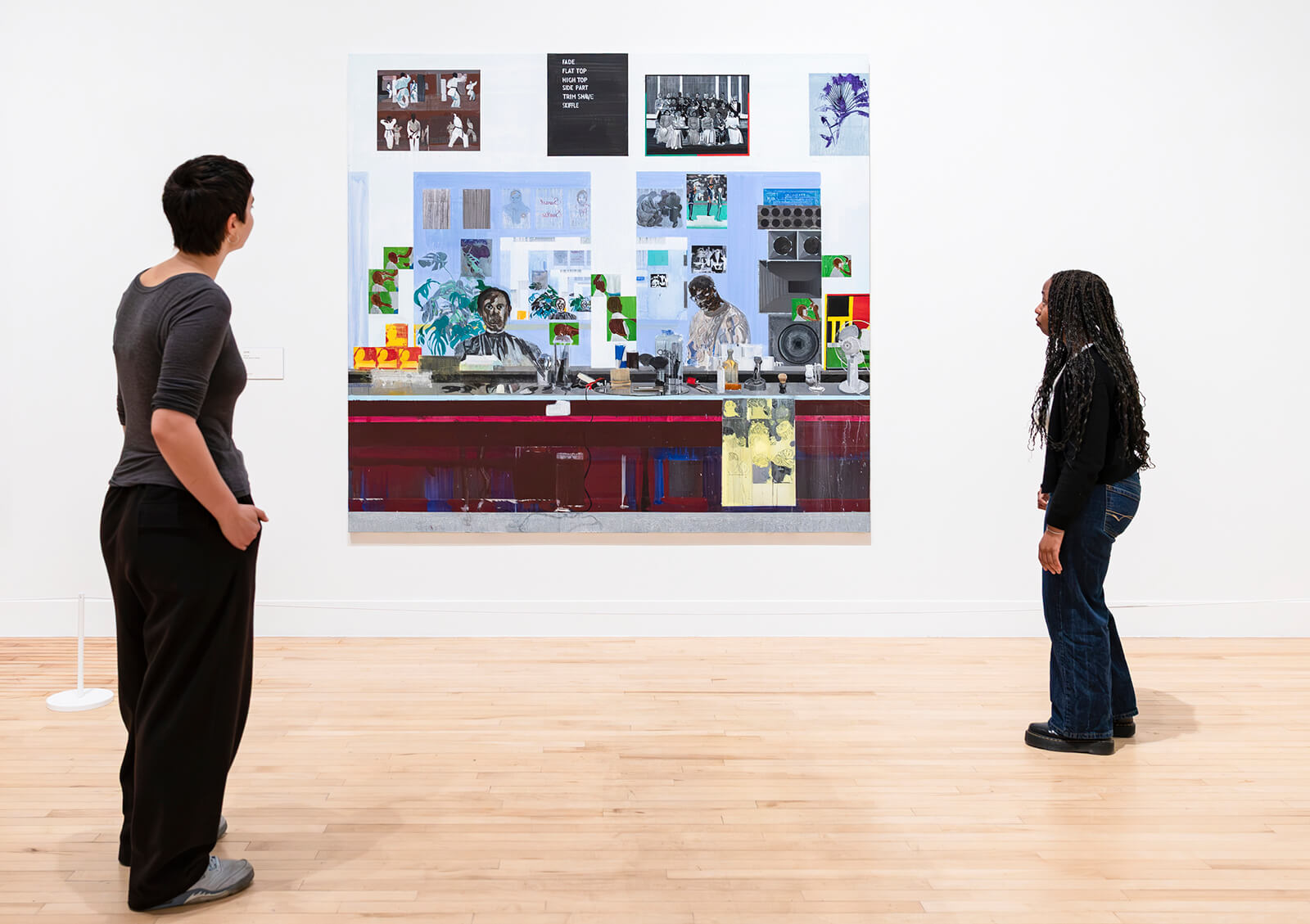
Another work set in the barbershop is the direct and almost confrontational work titled, Is It OK To Be Black? (2015 – 16). The painting shows images of black political icons such as Martin Luther King Jr. and Malcolm X in sharp relief, contrasted with Anderson’s usual semi-abstract or blurred depictions of people. Other images in this more familiar style show the silhouette of cultural icons such as Muhammad Ali, taped up above a slew of hairdressing tools and products. The perspective of the painting puts the viewer in the barber’s chair, placing them in the same position of introspection and questioning as the figure in Shear Cut. The title and use of popular imagery place the painting within a larger discourse of race relations and politics. This is underscored by Handsworth Songs (1986), a film essay by Black Audio Film Collective screened outside the exhibition, contextualising Anderson’s upbringing and experiences in Handsworth, Birmingham, in the 70s and 80s.
The works in Hurvin Anderson shift from public to private to intimate settings and discourses, flitting between timelines and realities, presenting us with a vision of the world constructed by memory, imagination and desire. This fluidity makes the interruptions of walls, barriers and decay even more pronounced, as does placing the viewer in the space of an often excluded or ostracised subject, provoking them to question these separations.
‘Hurvin Anderson’ will be on view from March 26 – August 23, 2026, at Tate Britain.
by Srishti Ojha Oct 21, 2026
Increasingly, artists, filmmakers and activists are turning to VR to create more personal, tangible accounts of the climate emergency and its impact on vulnerable communities.
by Mirra Lynn Oct 20, 2026
The Indian artist paints the old wadas of central Pune, capturing the traces of everyday life that cling to these structures, battered by time but unbowed.
by Anmol Ahuja Oct 15, 2026
How do heaps of souvenirs and relics with racist Aboriginal motifs and features become art? MCA Sydney’s winter showcase—the artist’s largest to date—beckons a possibility.
by Vandana Kalra Oct 14, 2026
With his latest exhibition as a point of departure, the modernist discusses his decades-long practice, the spontaneity of drawing and the social responsibility of artists.

make your fridays matter with a well-read weekend
Enter your details to sign in
Don’t have an account?
Sign upOr you can sign in with
a single account for all
STIR platforms
All your bookmarks will be available across all your devices.
Stay STIRred
Already have an account?
Sign inOr you can sign up with
Verification link sent to check your inbox or spam folder to complete sign up process
Tap on things that interests you.
Select the Conversation Category you would like to watch
Please enter your details and click submit.
Enter the 6-digit code sent at


Hurvin Anderson’s landscapes defy a linear chronology
by Srishti Ojha | Published on : Mar 28, 2026


 Sign in with Google
 Sign in with email
What do you think?