Architecture06 mins. read
CollectiveProject’s Talaricheruvu Rural School positions the context as muse
by Anushka SharmaJun 23, 2025



by Bansari PaghdarPublished on : Oct 27, 2025
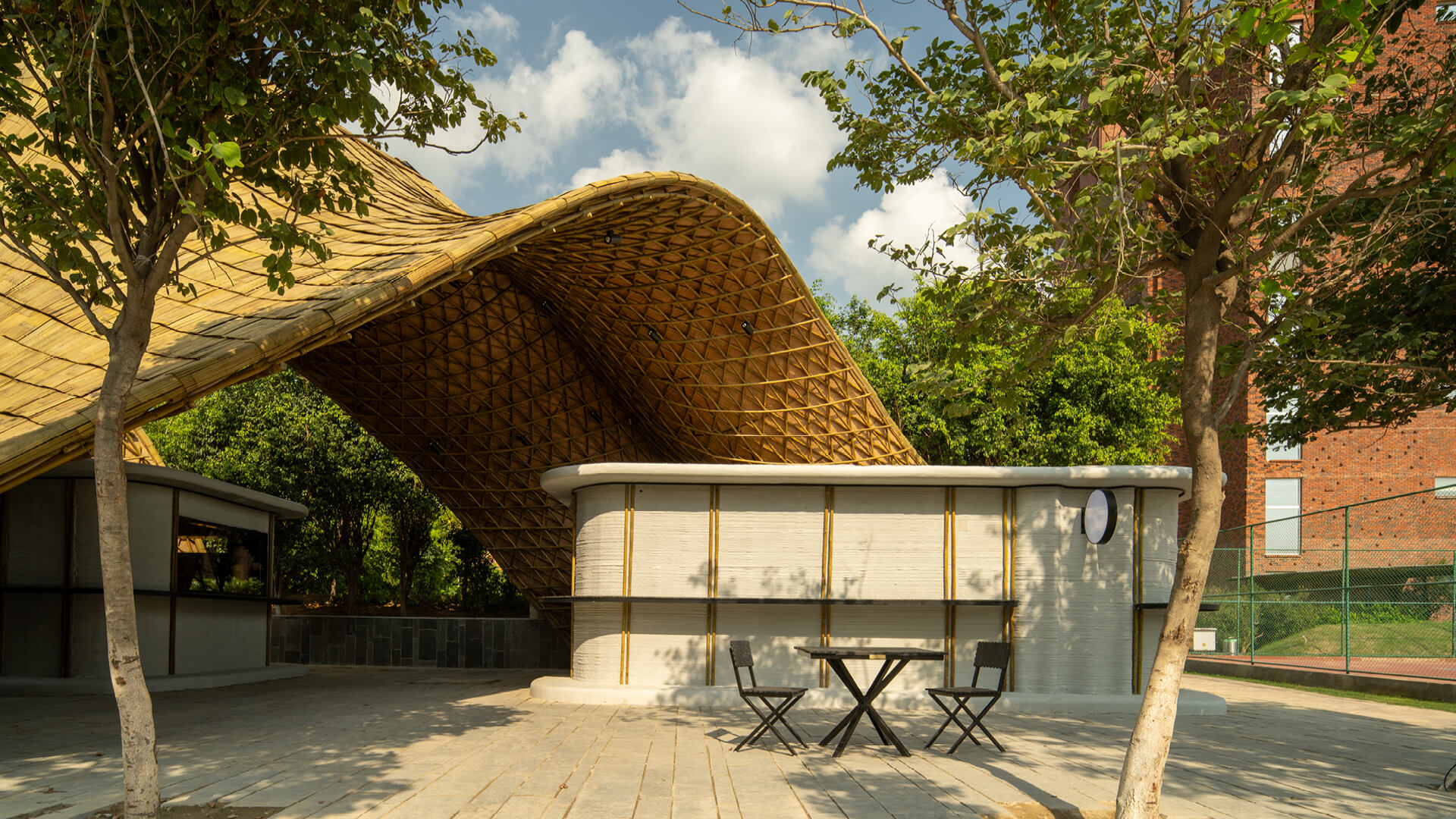
In educational architecture, besides classrooms, spaces such as corridors, vestibules, courtyards and cafeterias influence, often pilot, social dynamics and emotional well-being. College canteens, particularly, are places where hierarchies dissolve and conversations flow. The Ashoka University in Haryana, India, realises one such inclusive design of its new outdoor cafeteria—the 650 sqm Hungry Caterpillar as an arched bamboo pavilion, designed by Mumbai-based practice Lyth Design. Visualised as a caterpillar feeding in a cocoon of canopies, the design echoes a hybrid fusion of ecology, technology and vernacular techniques, creating a space that invites curiosity, exchange and self reflection.
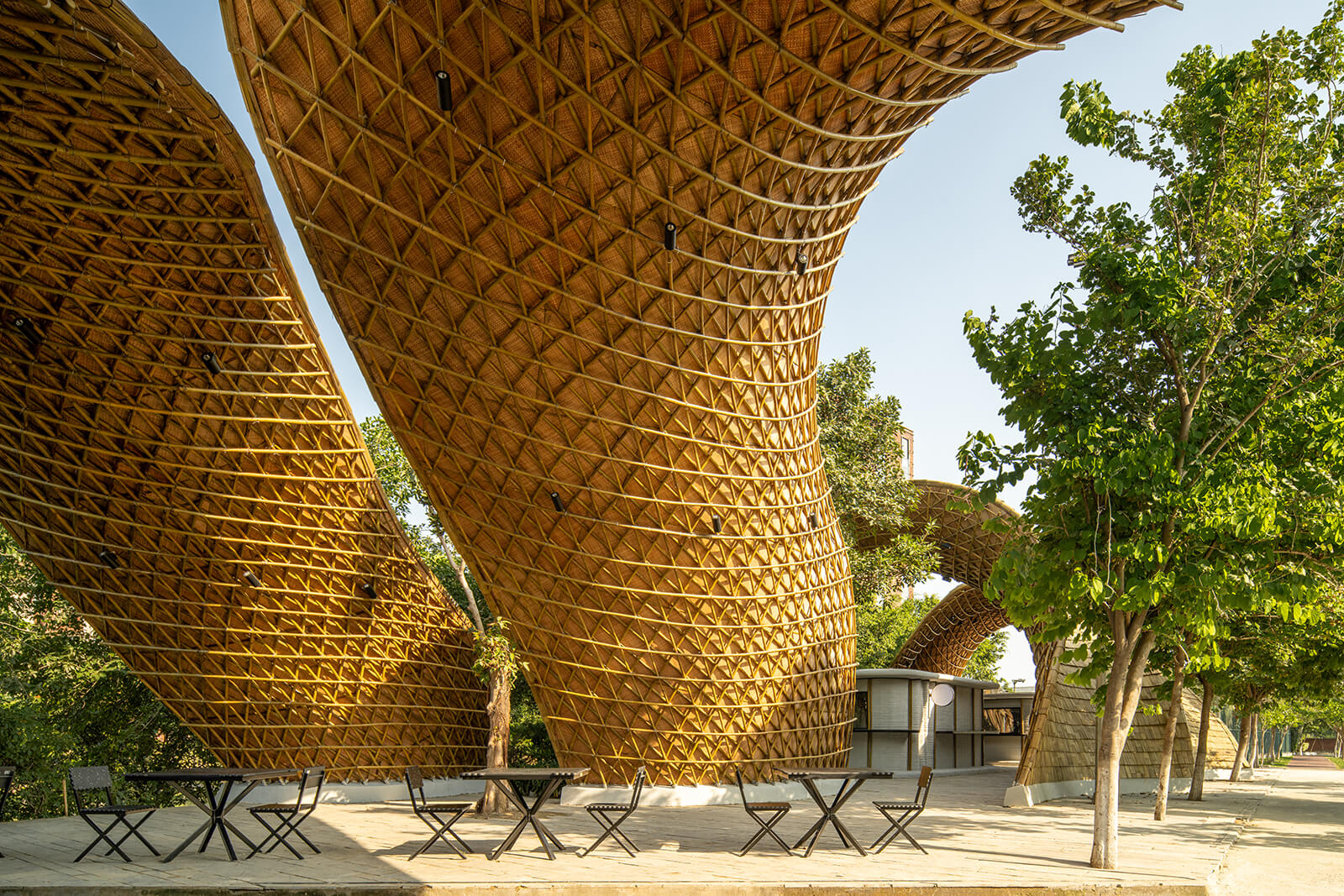
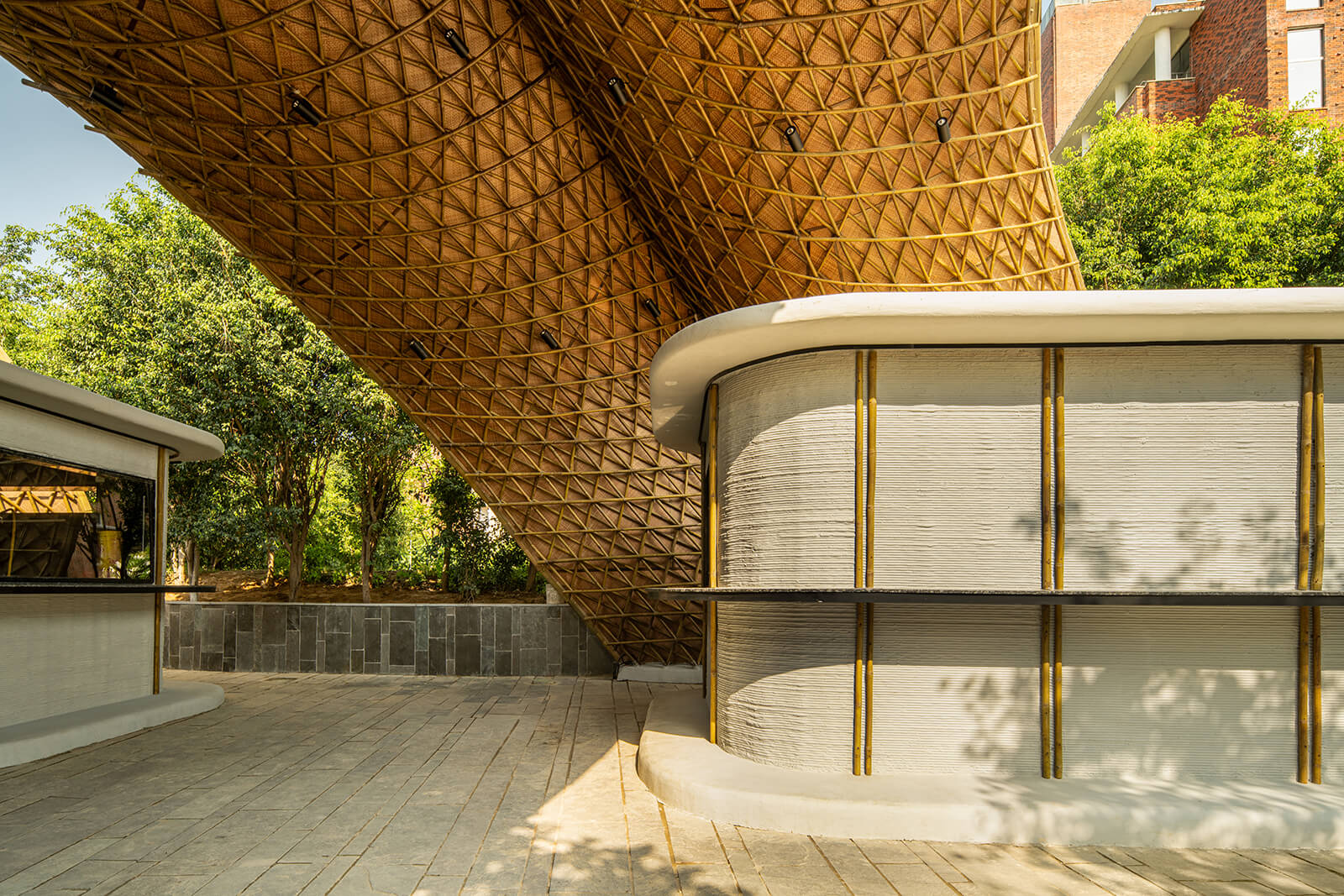
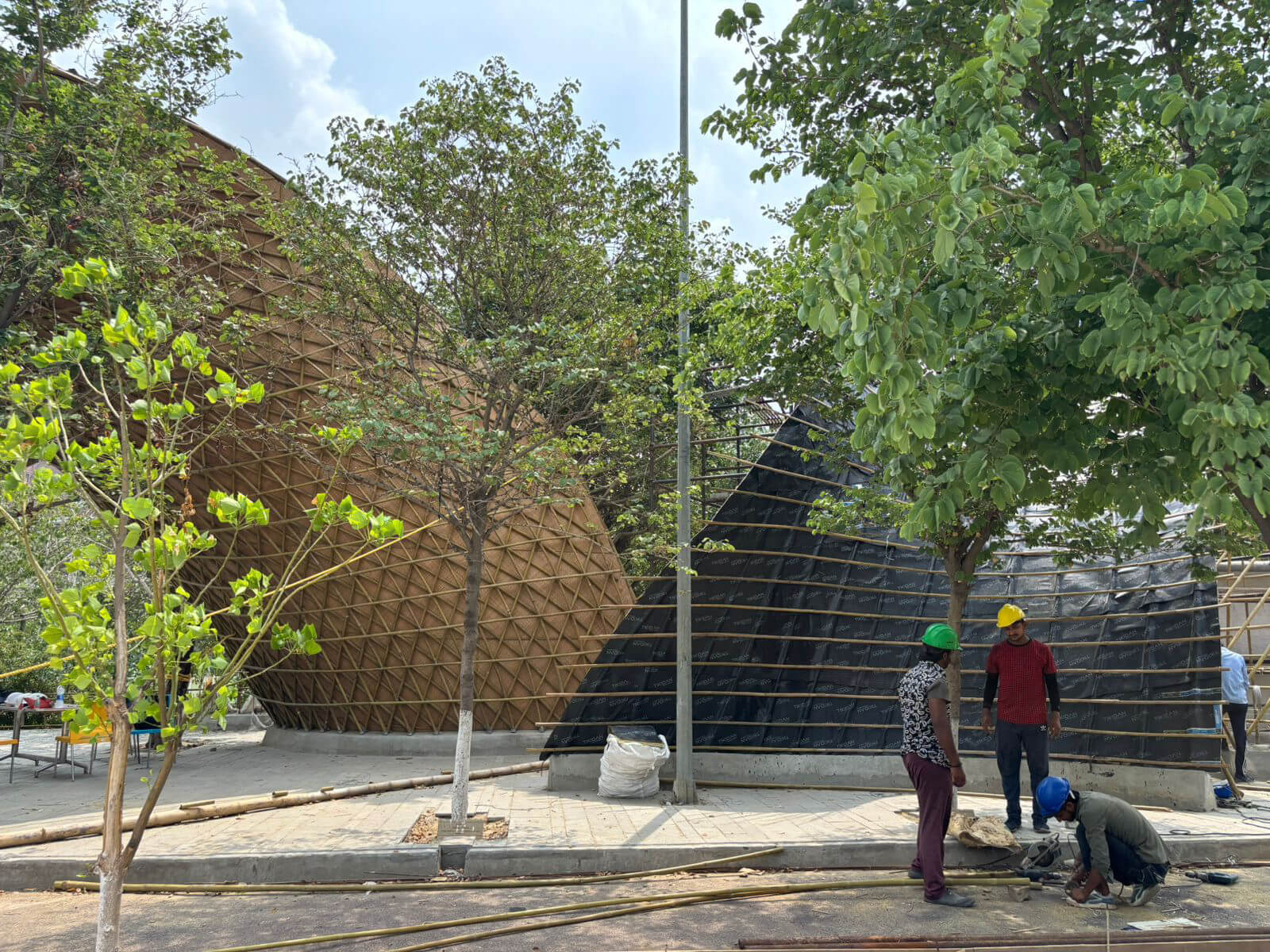
A series of twisted arches give shape to the pavilion’s canopies, their distinct bamboo architecture blending surrounding tree foliage. Crafted by Mumbai-based bamboo construction company Jans Bamboo, in collaboration with structural designers Atelier One, the canopies feature curves that collectively form gridshells. Spanning up to 19m, these lightweight forms comprise slender bamboo members interwoven at a 45-degree angle, and finished with crushed bamboo mats that provide shade. “Bamboo is a living material; it doesn’t behave like steel or concrete. It demands patience, skill and an openness to work with its nature rather than against it. One of the biggest challenges was achieving the complex double curvature of the bamboo gridshells,” Apoorva Shroff, founder and principal designer at Lyth Design, told STIR.
Shroff, who frequently mentors at Mumbai’s NMIMS Balwant Sheth School of Architecture, founded the boutique architecture and interior design firm in 2022. Specialising in workplace and residential design, her practice reflects a refined sensitivity to natural materials—particularly bamboo which she explored in depth during a workshop at the Bamboo U school in Bali.
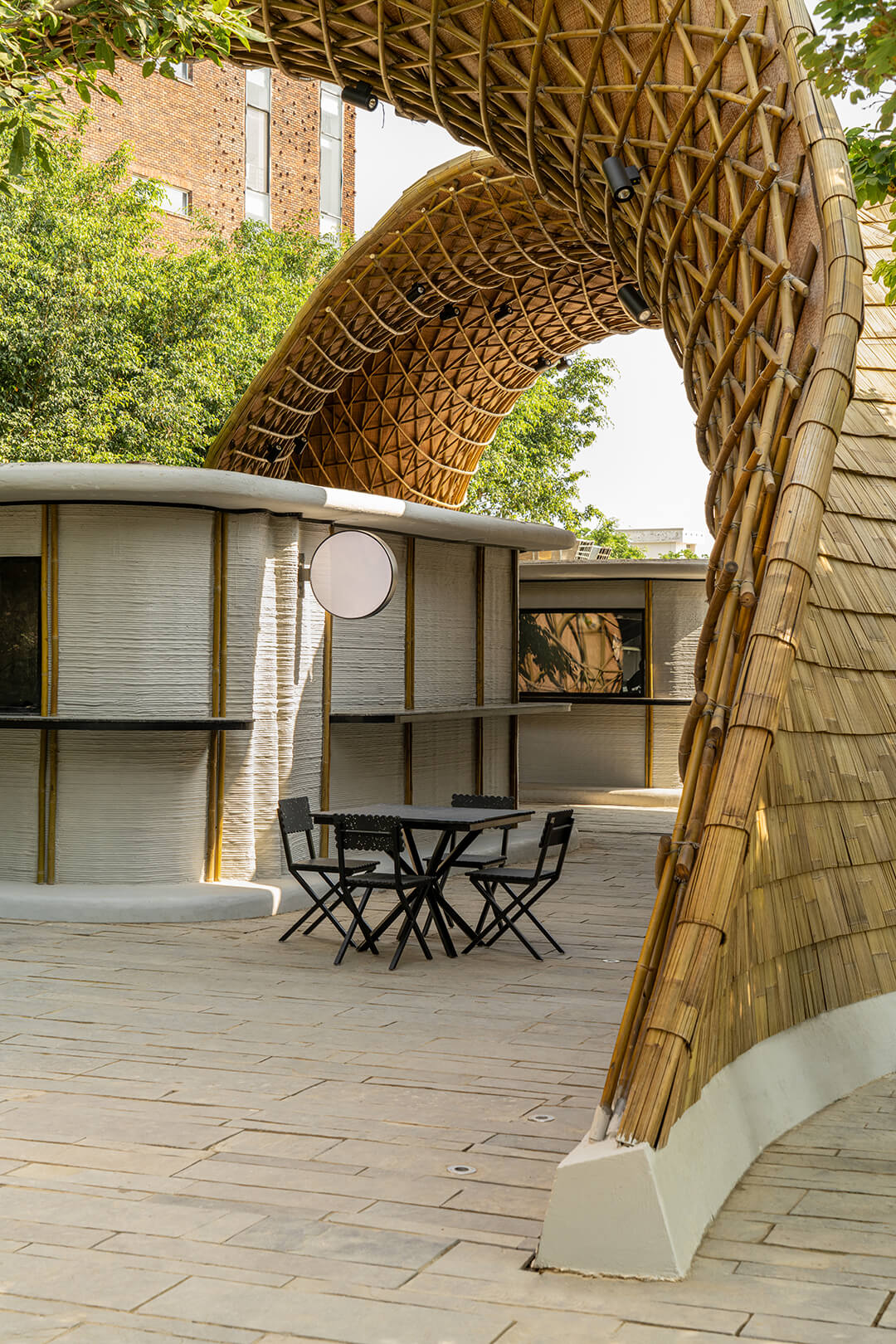
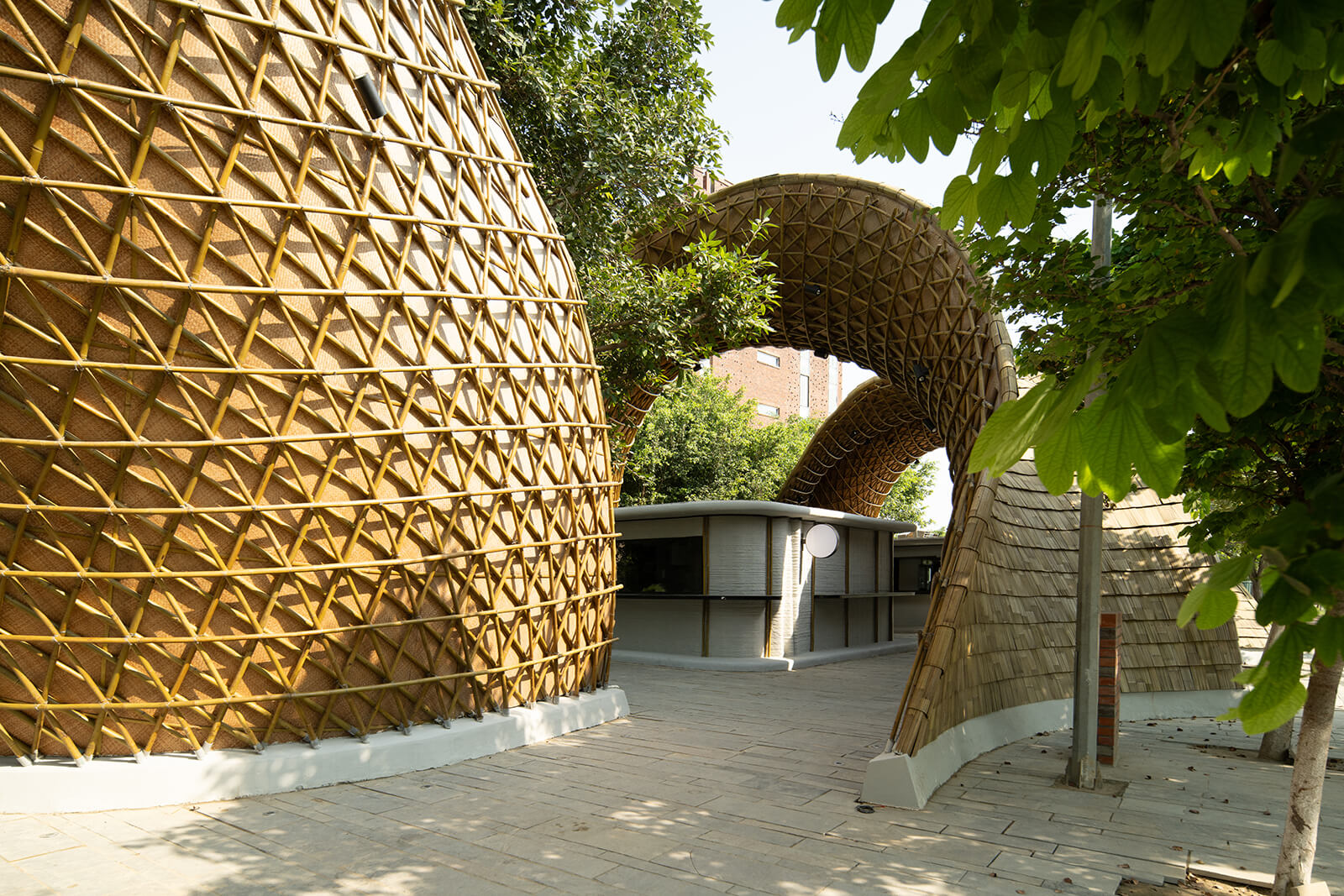
Dividing the cafeteria into small pockets are modular 3D-printed concrete structures functioning as kitchens—the forms evocative of a series of pseudo-enclosed, cocoon-like spaces that follow an organic flow. The cuboidal designs and uniform layers of the concrete architecture contrast with the organic architecture of the canopies, resulting in an active dialogue between the two materialities and design languages. With Ahmedabad-based company Micob Pvt. Ltd. in charge of the 3D printing technology, the modular designs offers a low-waste, energy-efficient alternative to traditional construction. Adding a personal touch to the space are the furniture pieces—made entirely from recycled plastic waste—by PLACYCLE - Sustainable Studio.
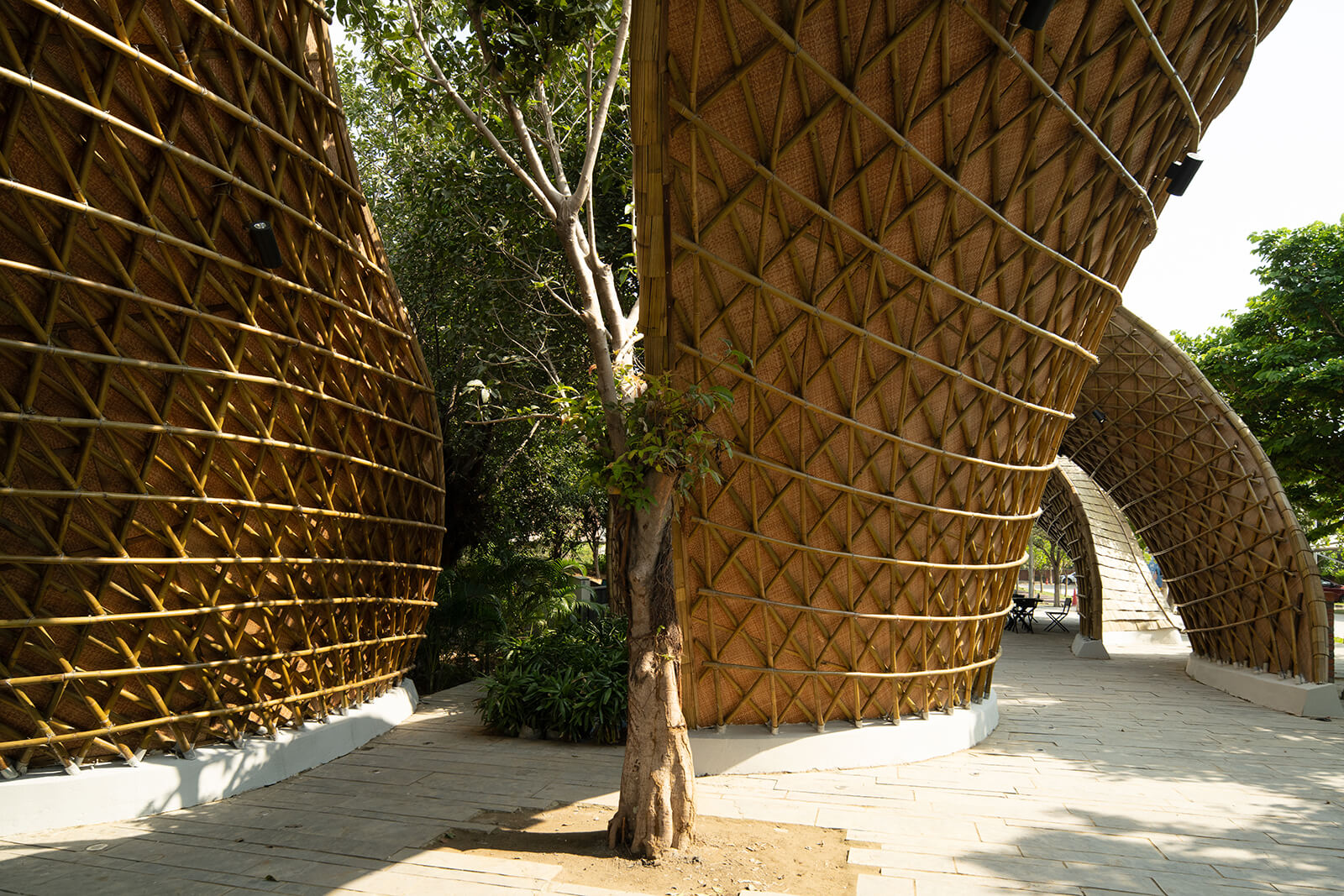
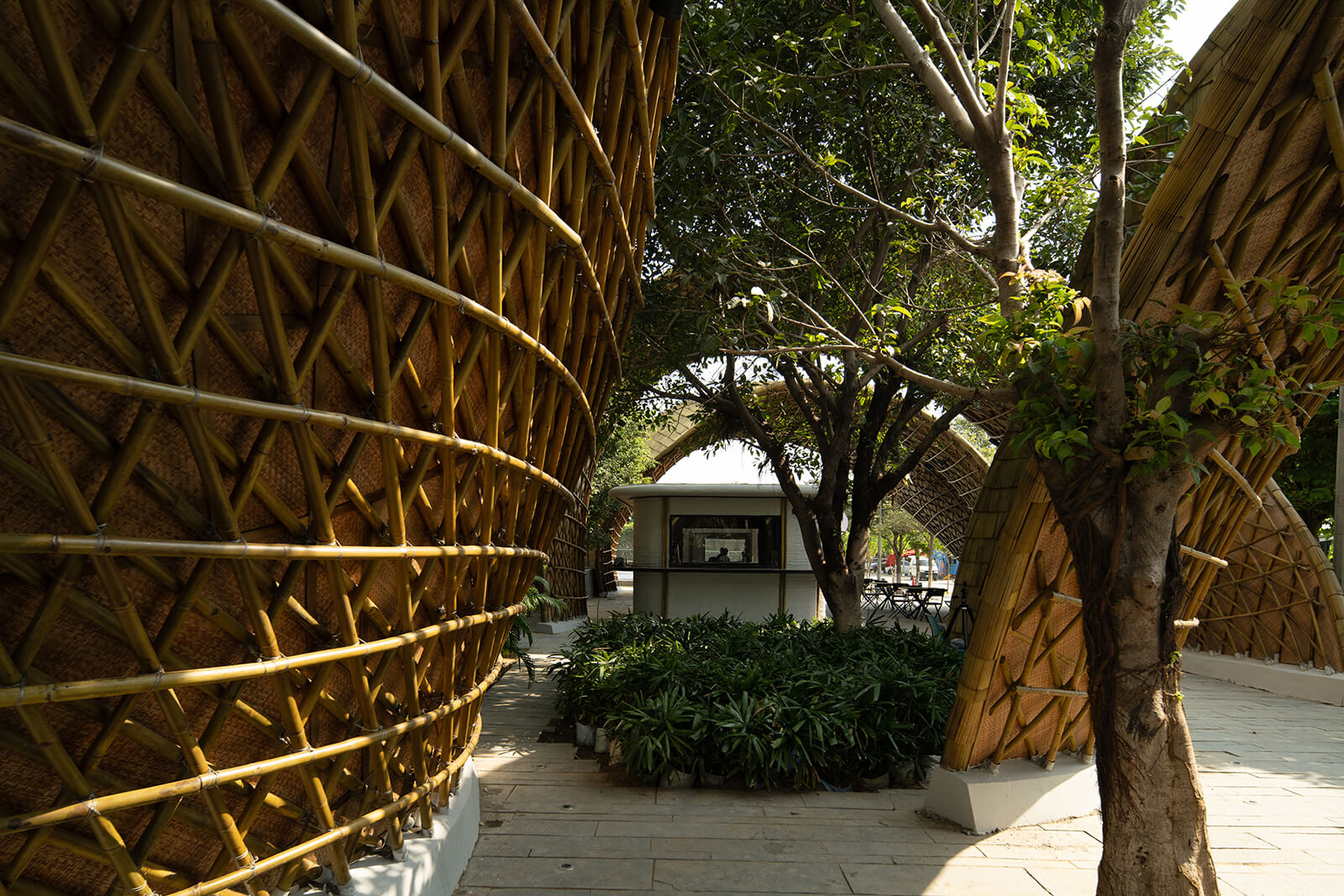
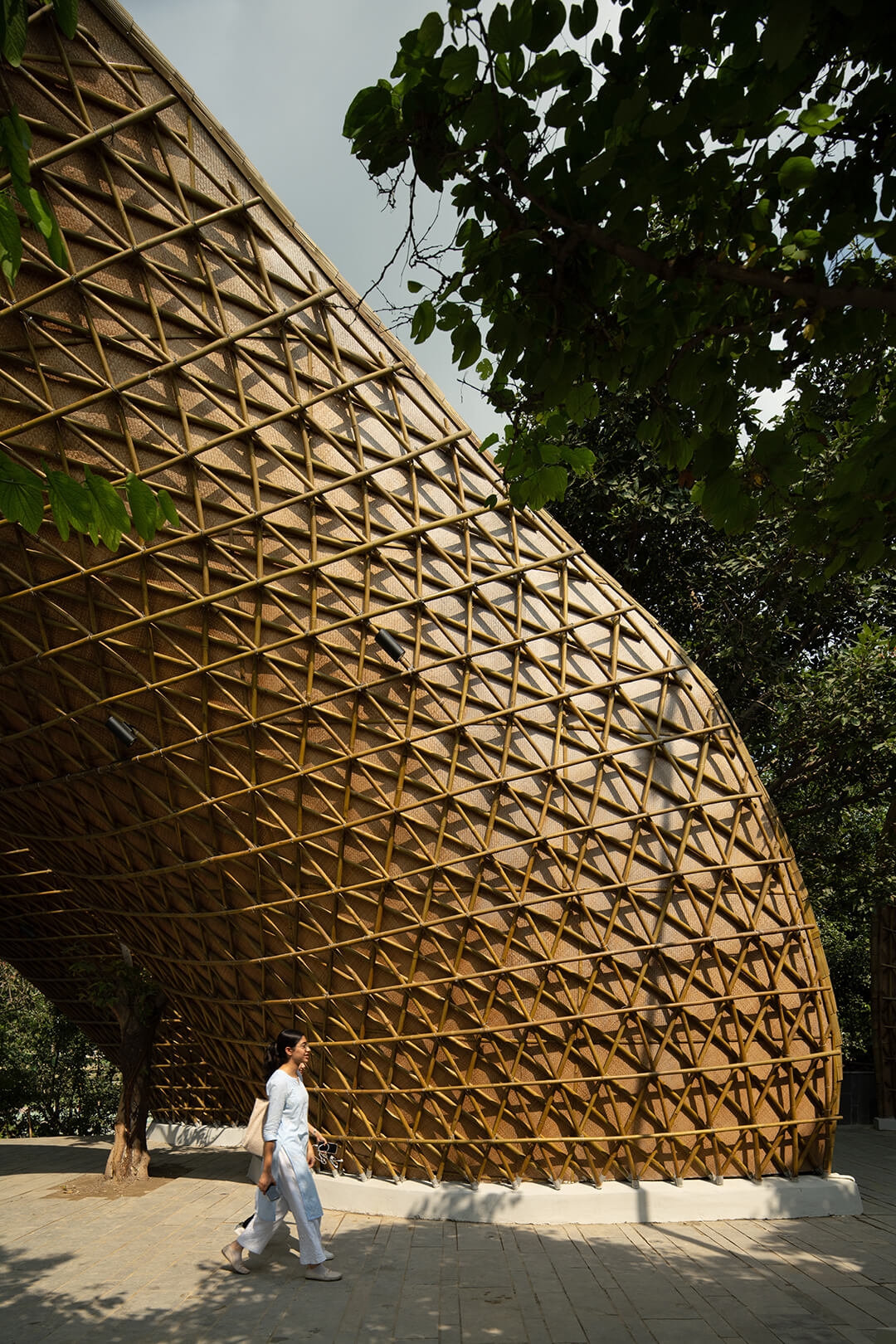
“Here, sustainability isn’t an afterthought—it’s the very foundation. Every curve, material and module reflects a conscious effort to create a space that’s light on the planet but rich in experience,” Shroff said in the press release. The sustainable design reduces material costs and quantities with its precise, additive process, while ensuring an ecologically conscious, time-saving operation. Moreover, the cavity created between the walls reduces heat transfer and provides thermal insulation, paving the way for an energy-efficient design.

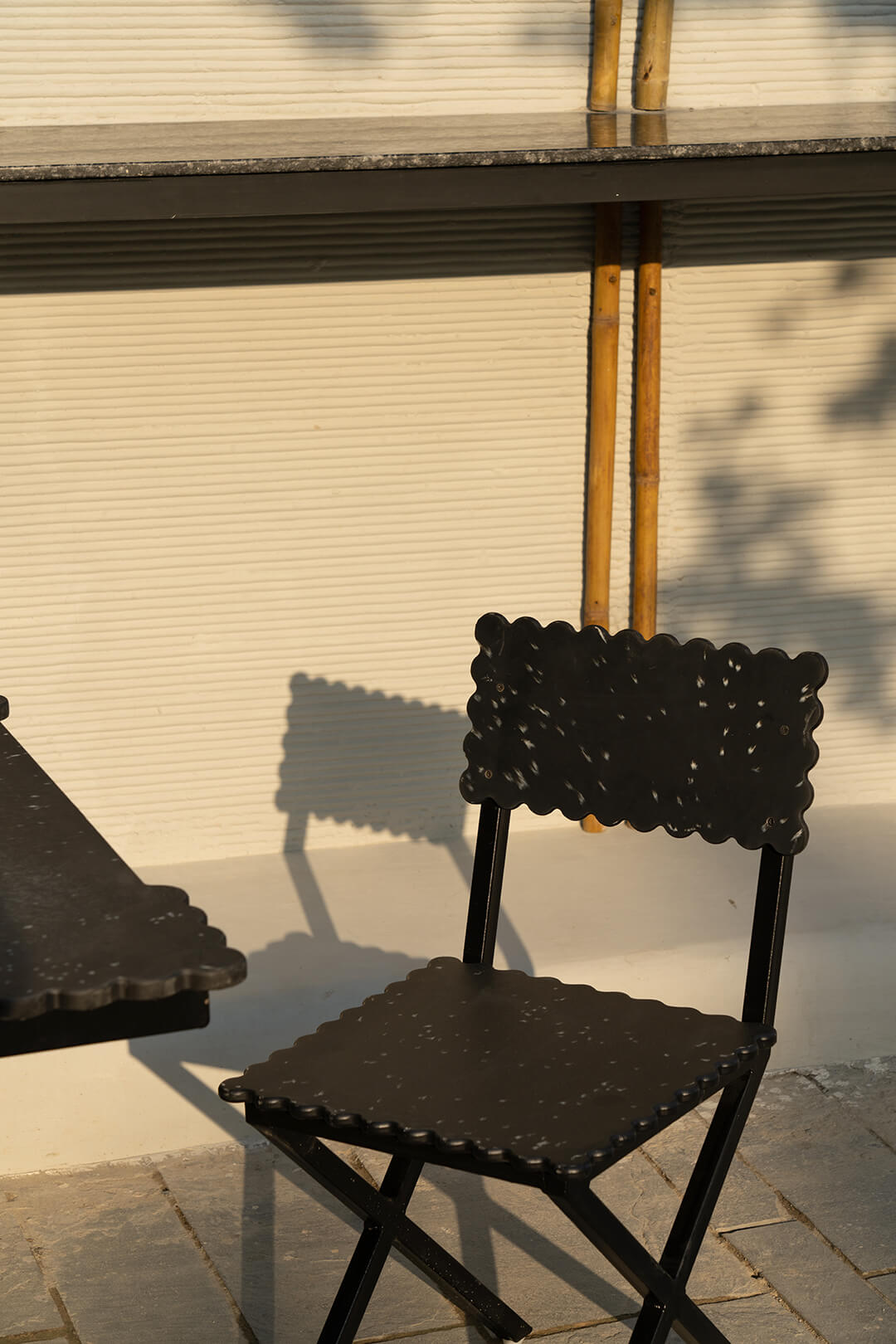
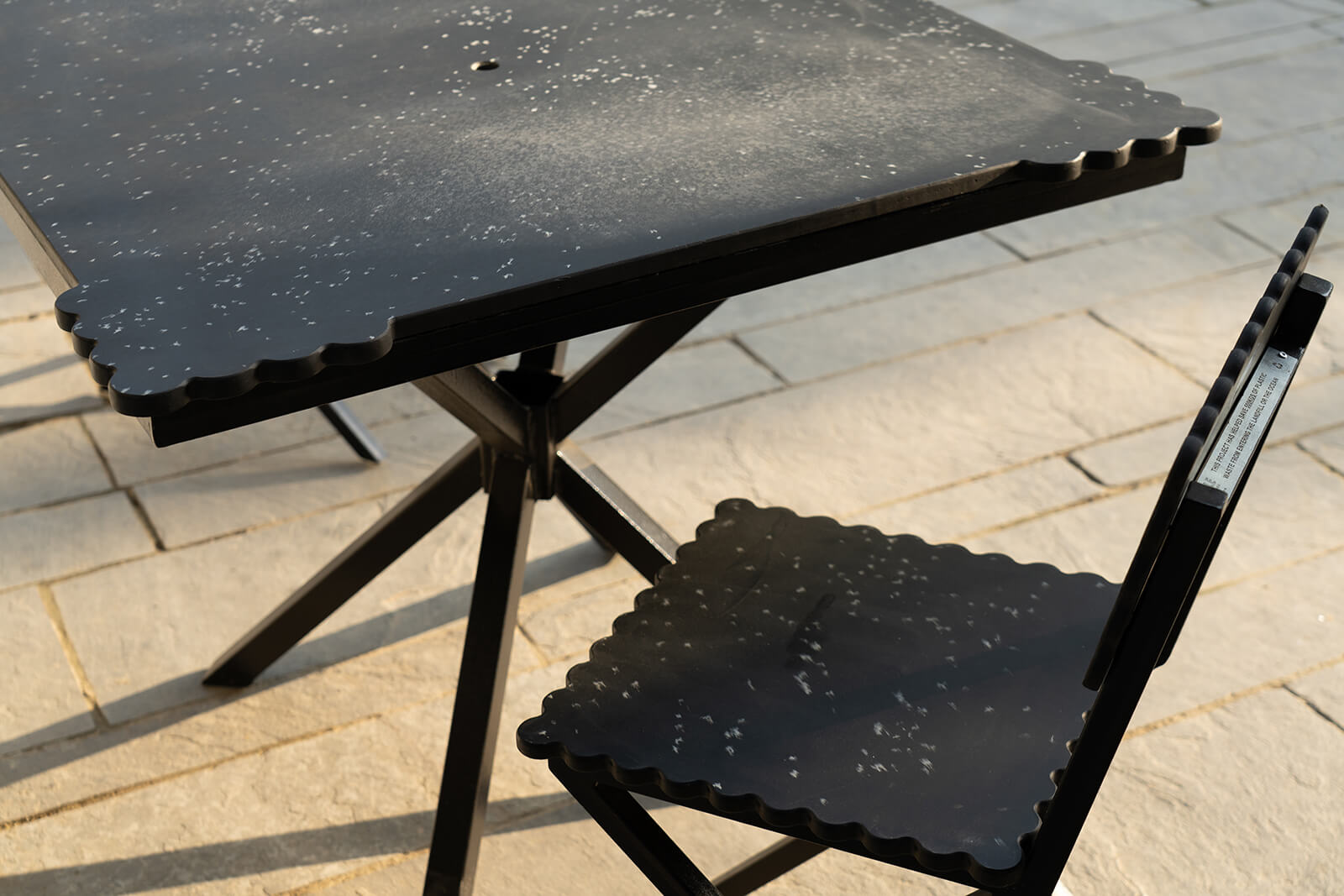
“Bringing together different sustainable technologies—3D printing, bamboo construction and recycled plastic furniture—and making them coexist in a cohesive way was a challenge. It required coordination across geographies and disciplines. But in many ways, the challenges were the very things that made the outcome richer and more meaningful,” Shroff told STIR.
She continues, “For me, this project goes beyond building a canteen; it is about creating a living ecosystem that reflects the values of growth, learning and responsibility. It reaffirms my belief that architecture can nurture people while also respecting and replenishing the environment. What began as an image of a cocoon nestled in trees evolved into a food street that embodies curiosity, community and care for the planet."
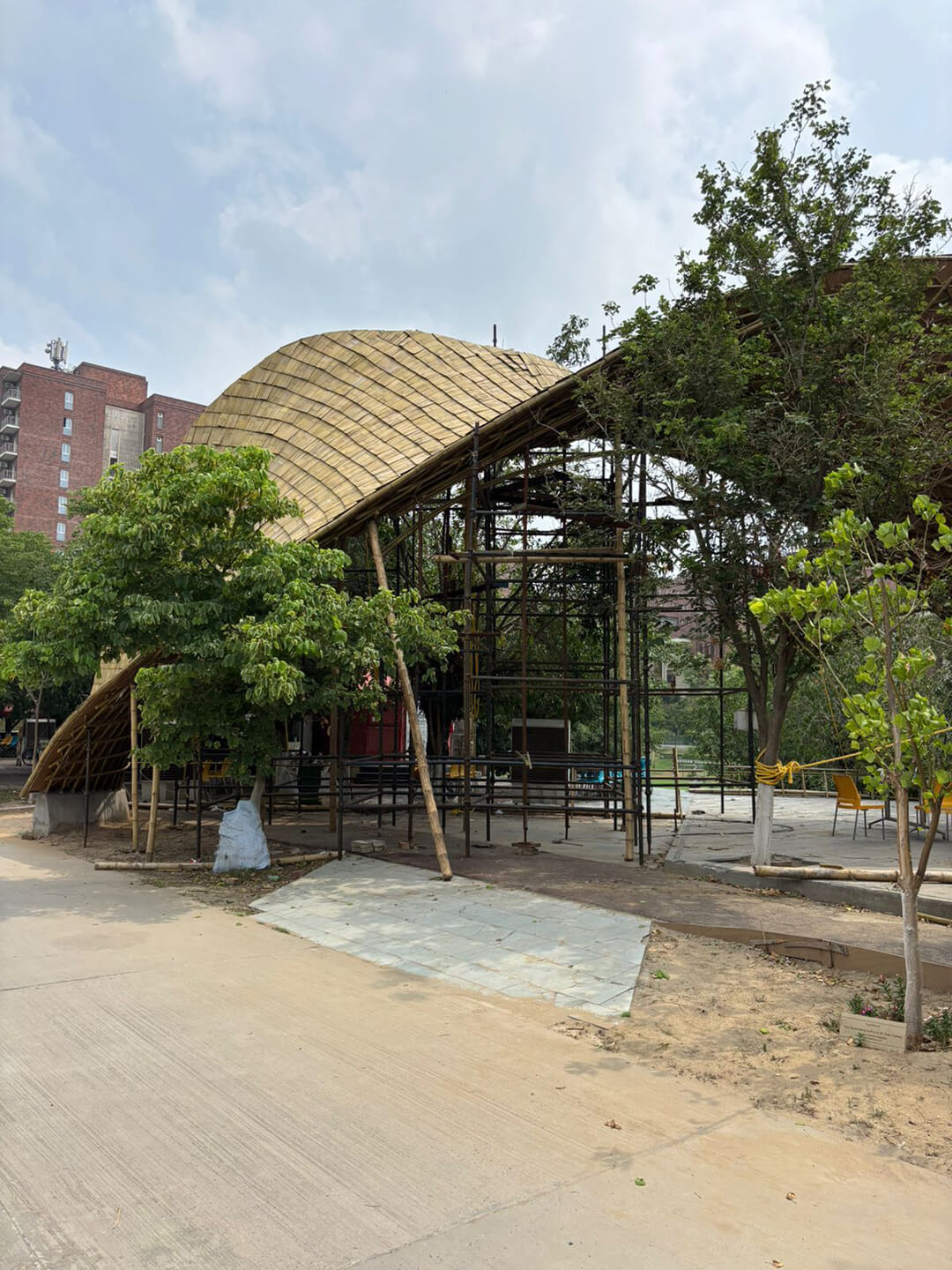
Catering to interventions of multiple scales, from architecture to furniture design, the project is consciously and strategically curated by the architects. Prioritising sustainability and evoking curious exploration, Lyth Design created a vibrant built environment with a distinct character and quality. Drawing a parallel with the Embrace pavilion at the Xianmo Flower Field Landscape Park in Beijiao, China, by Atelier cnS, The Hungry Caterpillar's open layout and ease of access resonates inclusivity and a sense of belonging, making it an integral part of the institution’s sociocultural identity.

by Pranjal Maheshwari Oct 19, 2026
The Mumbai-based architects integrate courtyards, mesh screens and north light trusses to create a dining space that doubles up as a community hub at SR University, Warangal.
by Mrinmayee Bhoot Oct 17, 2026
The Rotterdam-based institute centres the Indian Ocean as a network for exploring material histories and transnational links shaping coastal cultures, positing them as future models.
by Pranjal Maheshwari Oct 16, 2026
At the 2026 Stirling Prize ceremony, Mary Duggan with RUFF Architects, MAKER Architecten and Nakshabid Architects were felicitated for proffering quality housing and social equity.
by Mrinmayee Bhoot Oct 12, 2026
The new Centre for Contemporary Arts, fostering public engagement with art in Uzbekistan, is housed in a tram depot refurbished by the French studio, emulating local craftsmanship.

make your fridays matter with a well-read weekend
Enter your details to sign in
Don’t have an account?
Sign upOr you can sign in with
a single account for all
STIR platforms
All your bookmarks will be available across all your devices.
Stay STIRred
Already have an account?
Sign inOr you can sign up with
Verification link sent to check your inbox or spam folder to complete sign up process
Tap on things that interests you.
Select the Conversation Category you would like to watch
Please enter your details and click submit.
Enter the 6-digit code sent at


Lyth Design’s Hungry Caterpillar nestles within a cocoon of bamboo canopies
by Bansari Paghdar | Published on : Oct 27, 2025


 Sign in with Google
 Sign in with email
What do you think?