Architecture08 mins. read
Studio KO’s design for CCA Tashkent negotiates lightness and weight
by Mrinmayee BhootOct 12, 2026



by Pranjal MaheshwariPublished on : Aug 18, 2026
Throughout civilisational history, craft has played an integral role in bridging disparate parts of the world and fostering intercultural exchange. Since at least the Indus Valley—and probably before that—finely crafted functional objects, among other goods, promoted trade across regions, settlements and cultures, establishing prominent routes such as the Silk Road and elaborate market setups around these settlements. Superseding commerce, these soon became forums for discussions and exchange of ideas, cultures and knowledges. Despite their dwindling prominence owing to the influence of industrial means of making and replicating, for Lebanese designer Nada Debs, traditional crafts and design continue to play a similar role—perhaps even more critically—in contemporary design discourse as a medium for cultural exchange and continuity.
Debs has been an advocate for local crafts, especially traditional artisanal techniques from the broadly defined Arab region, for over two decades; perhaps even before she established her eponymous furniture design practice in Beirut in 2003. In a conversation with STIR about her curation for STIR X Script’s Made In series in 2020, she highlighted the potential of engaging with local craftspersons and encouraging regional production for reinforcing the local economy and promoting local identities on global platforms. Her recent project, Okhun Gozar in Tashkent, Uzbekistan, furthers her commitment to bridging traditional and contemporary design, transforming an abandoned mosque into a craft salon. The renewed Gozar of Artisans is designed for hosting installations, object displays, gatherings and educational events on the region's indigenous craft traditions and contemporary design works.
The site has always been familiar to and imbued with the spirit of craft and handiwork. It was part of the historic blacksmiths’ quarter of Tashkent, a major city that was itself a bustling hub along the Silk Road. The new programme aimed to highlight the enduring language of craft rooted in place and materiality, and the disused 18th-century structure offered itself as a suitable host. Debs’ intervention allows the mosque—once an essential spiritual and communal node for the neighbourhood—to maintain its cultural continuity. It does so by extending its communal relevance and lending its spatial rhythms to the current programme. The transition is almost poetic: the spatial considerations that once positioned craft as a medium of spirituality are now adapted in reverence for craft itself.
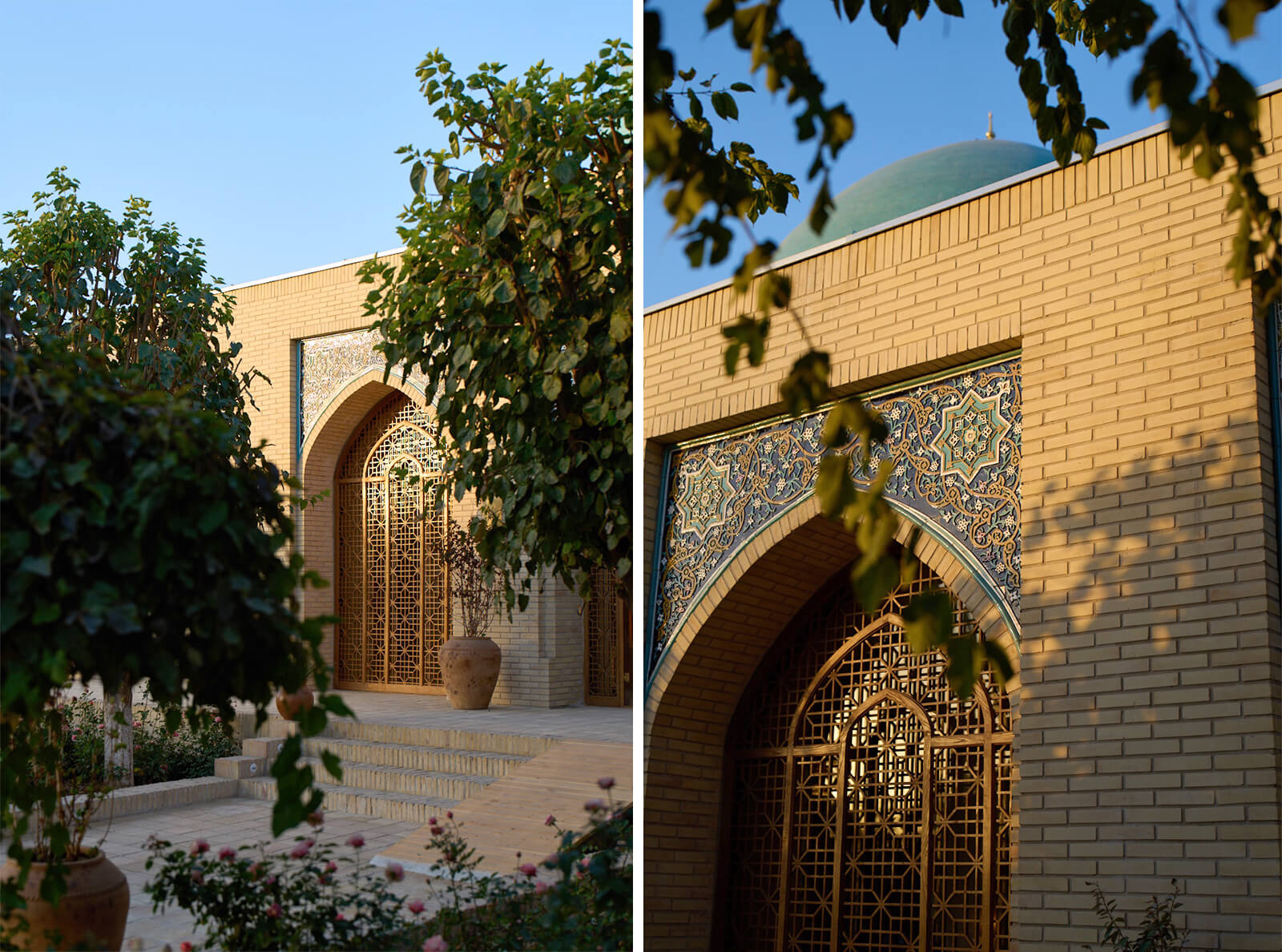
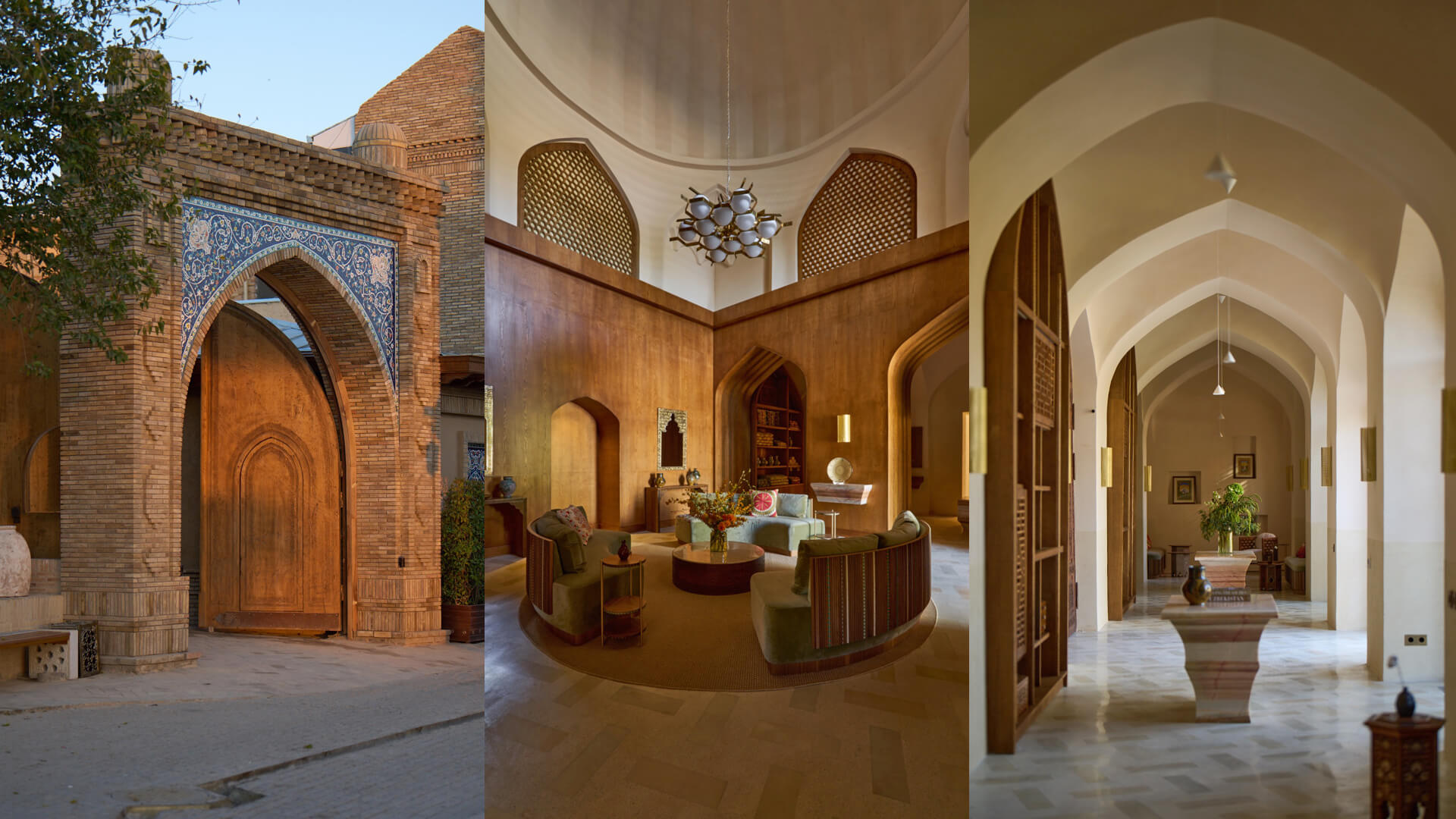
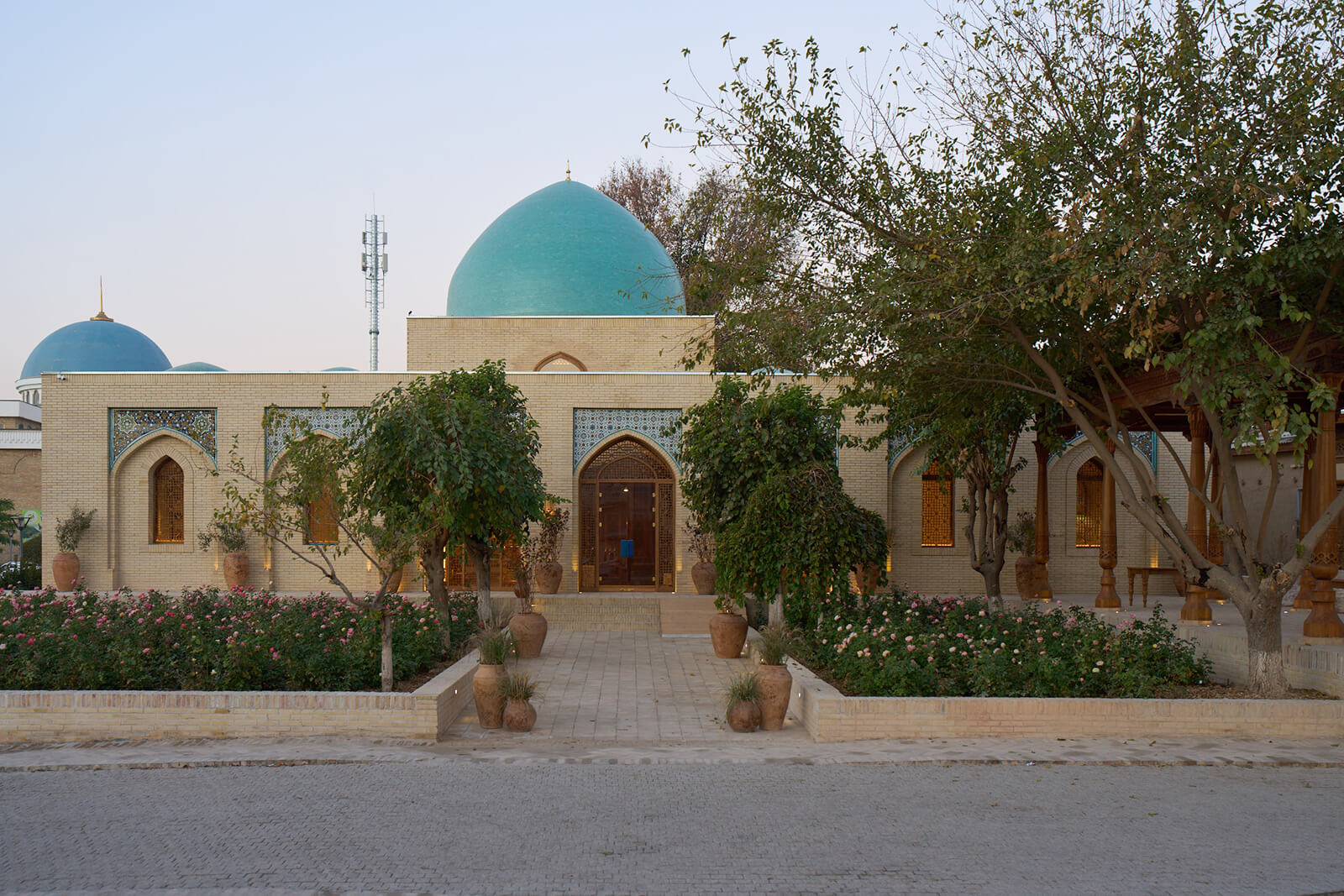
The adaptive reuse project began with a refinement of these spatial layouts. Existing circulation has now been adapted to the new functions of display and interaction, streamlining flow to strengthen interspatial connections. The volumes have been largely retained, while definitive elements of the mosque’s architectural heritage, like decorative panjara lattices regulating the inlet of natural light, pointed arches and cupolas, have been restored as a living contextual setting for the contemporary craftworks. The building’s external appearance embodies this duality as well. The lovingly restored blue domes topping the structure and the intricately embellished entrances and arches are lent additional definition through the handsome new strata of brickwork.
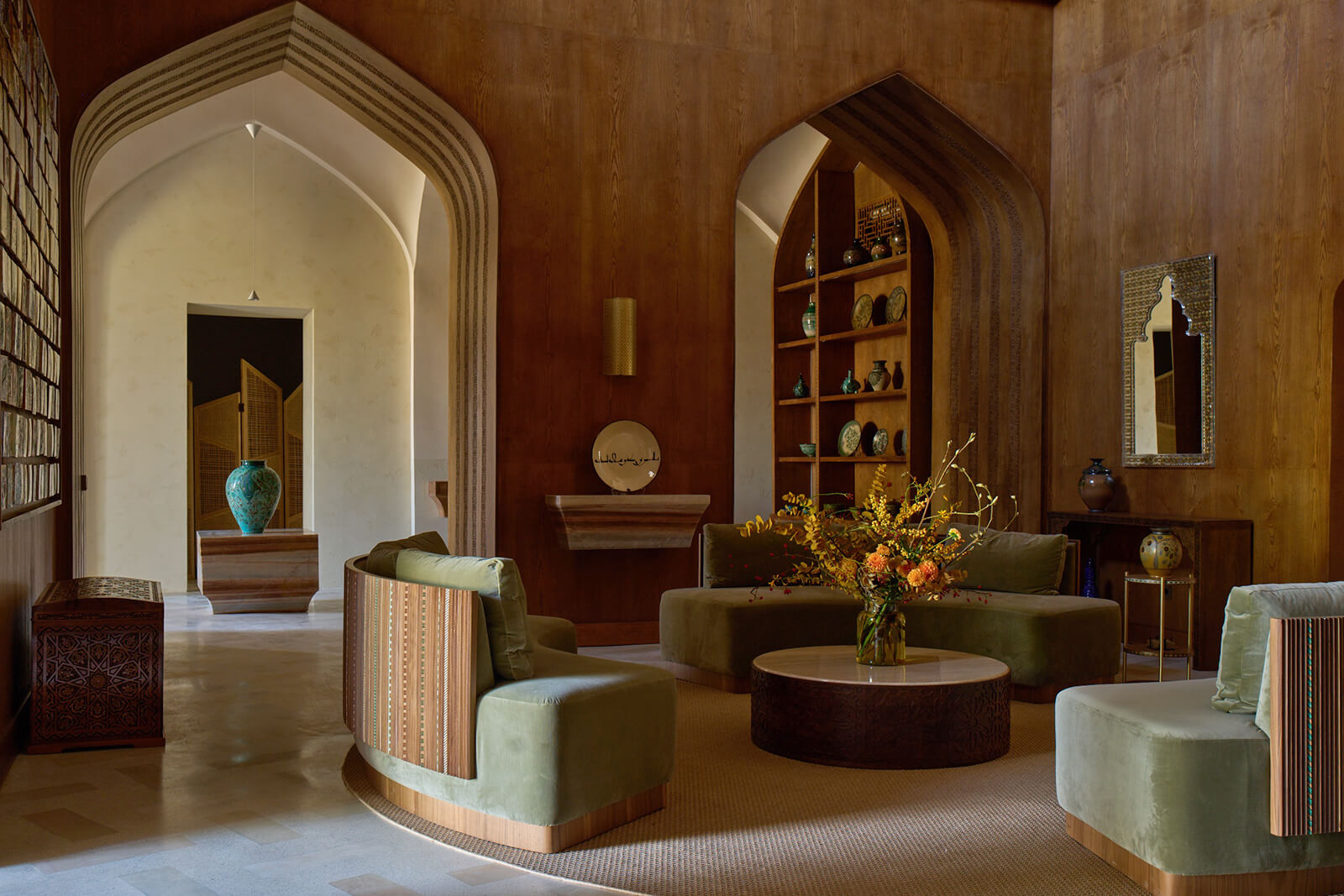
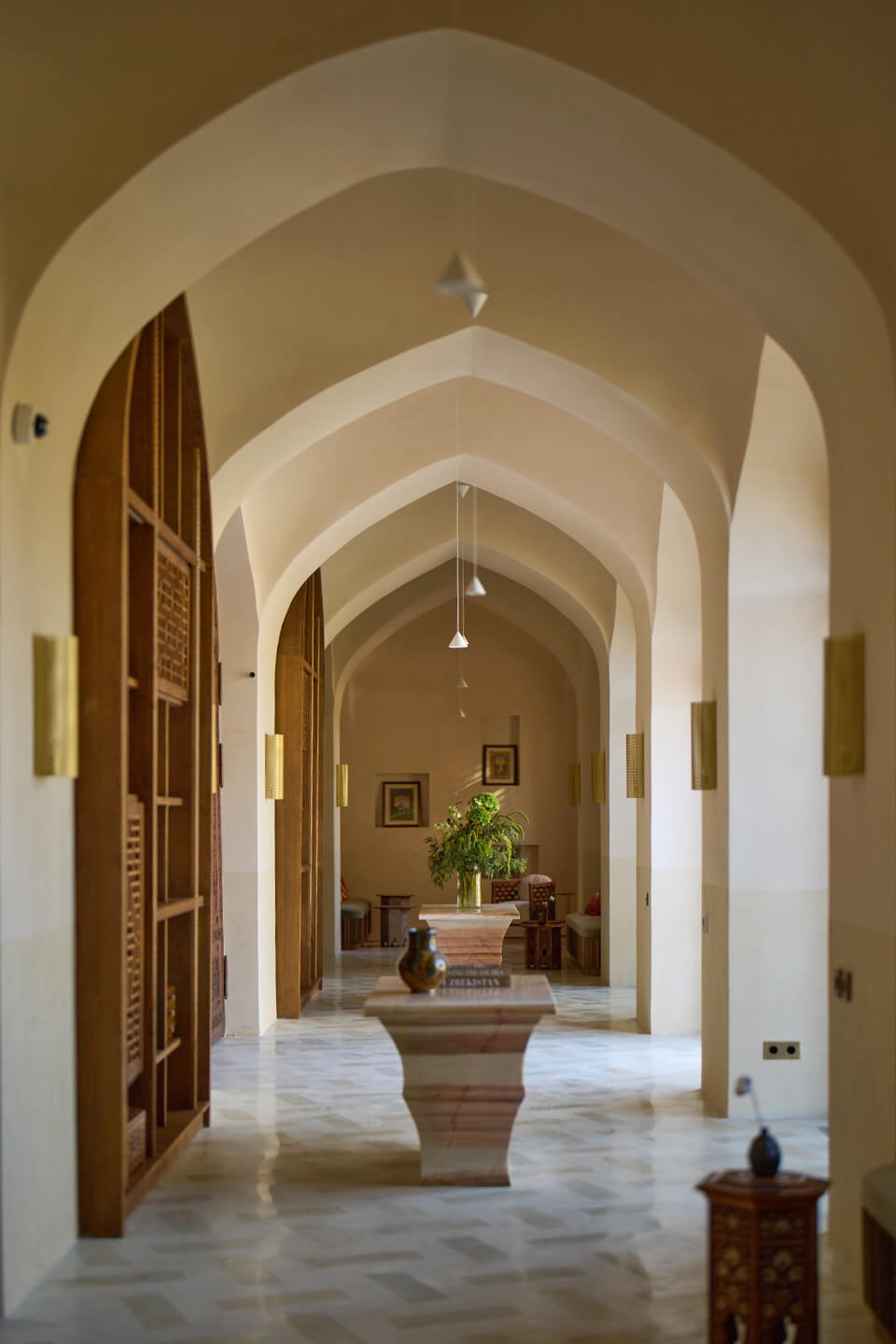
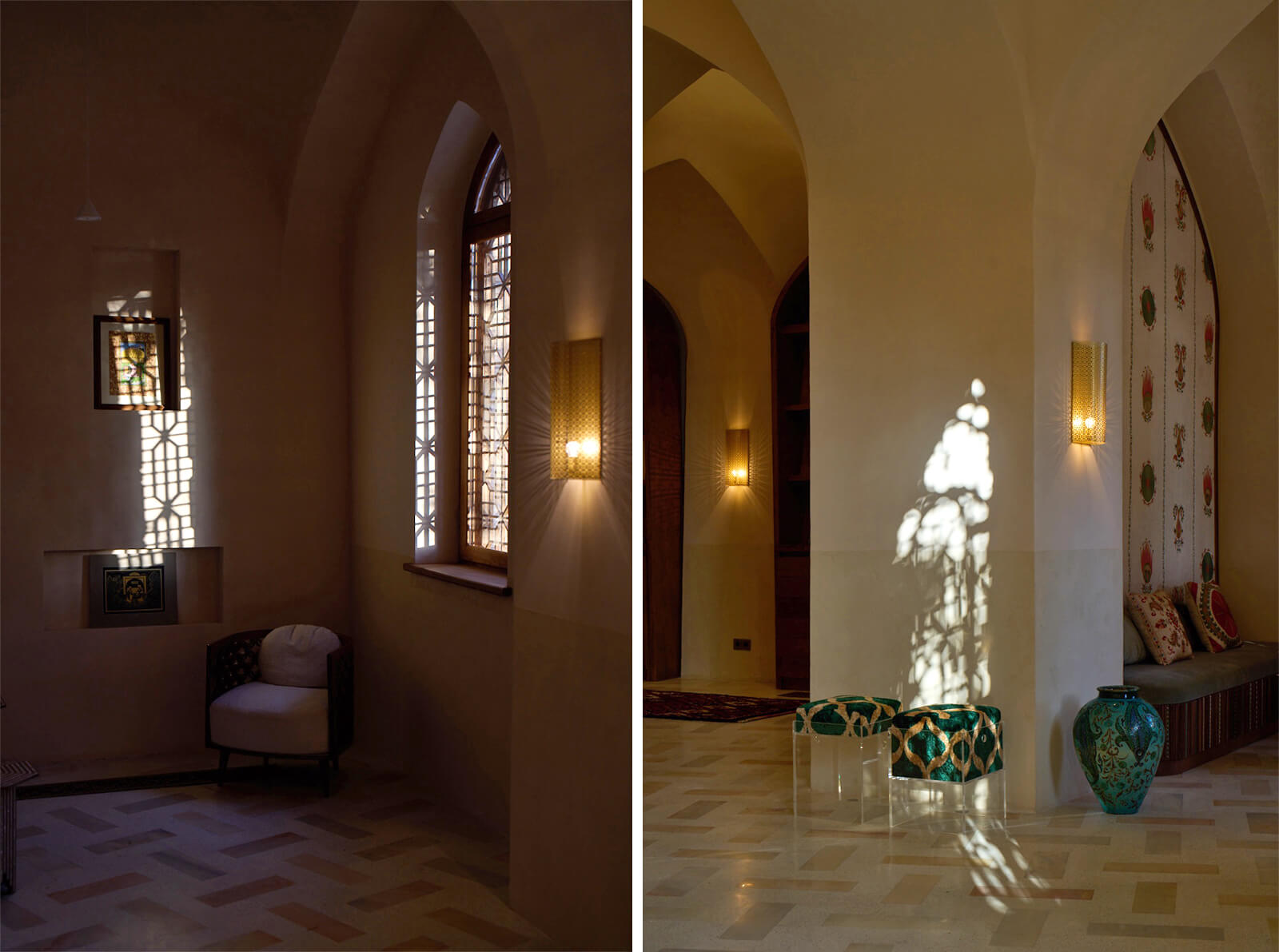
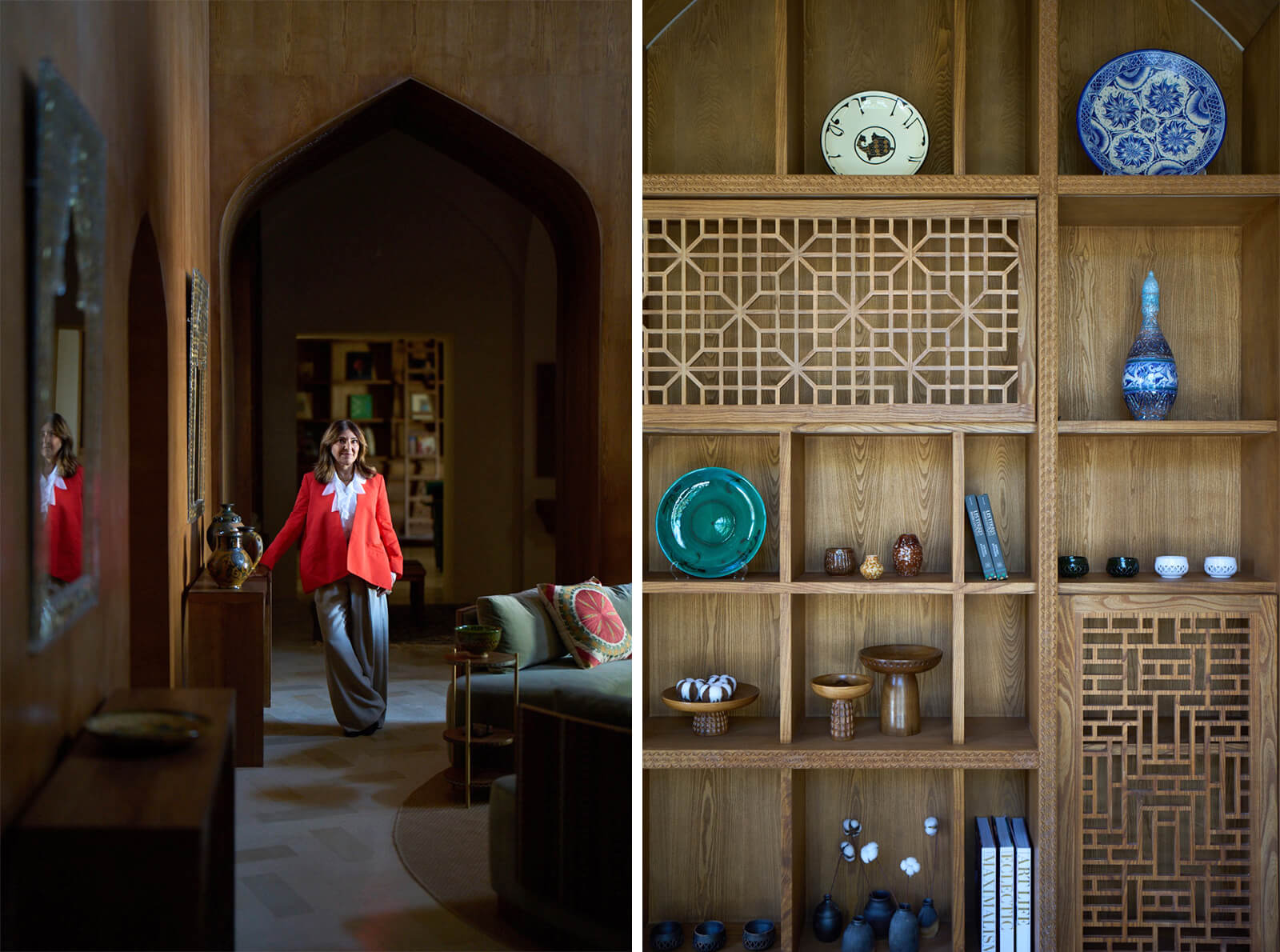
The material palette comprises traditional wall plaster, terrazzo and an extensive display of wood throughout the furnishings and interior finishes, employed for its inherent warmth and affinity towards intricate craftsmanship. On the cupolas, ribbed patterns made in plasterwork add a subtle but definitive textural depth, until the archways give way to the domes, periodically adorned with perforated wooden screens. The use of ornamental building features has been reserved only for some restored elements, while the majority is retrofitted to highlight the craft displays, collections and conversations. The result is a certain perceived purity in volumes—an archway standing as a planar wooden surface, recessed to accommodate shelves in some instances, and extruded to lend depth into spatial transitions in others.
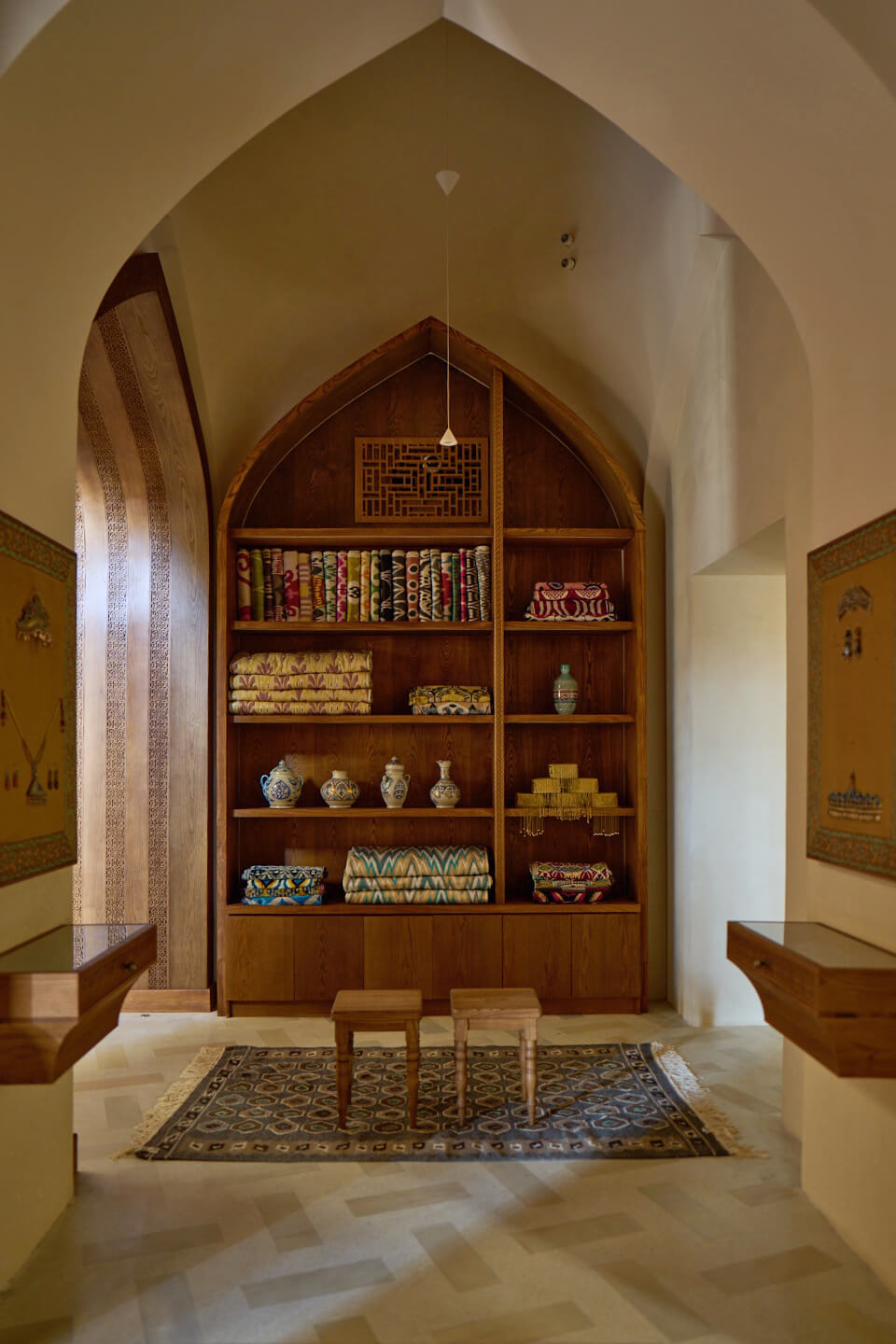
This technique of accentuating the surface curvature is continued along the archways through alternating between the shades of wood. The furniture, including the seating assemblies for gatherings and the wooden cabinets that serve as object displays, employs traditional techniques to produce outcomes that carry contemporary design sensibilities. The cabinets are embellished with intricate carvings to complement the works of local artisanal practices on display.
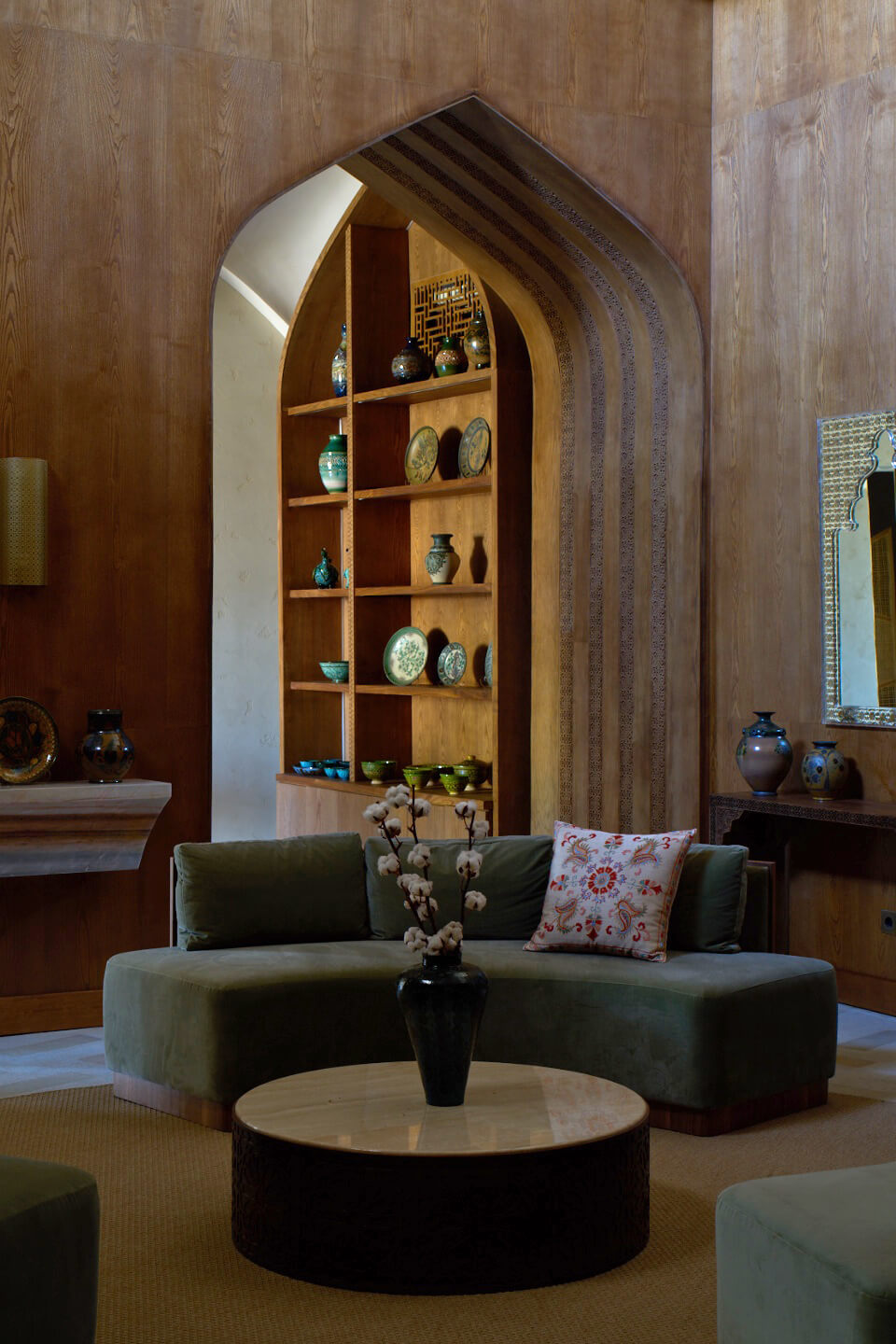
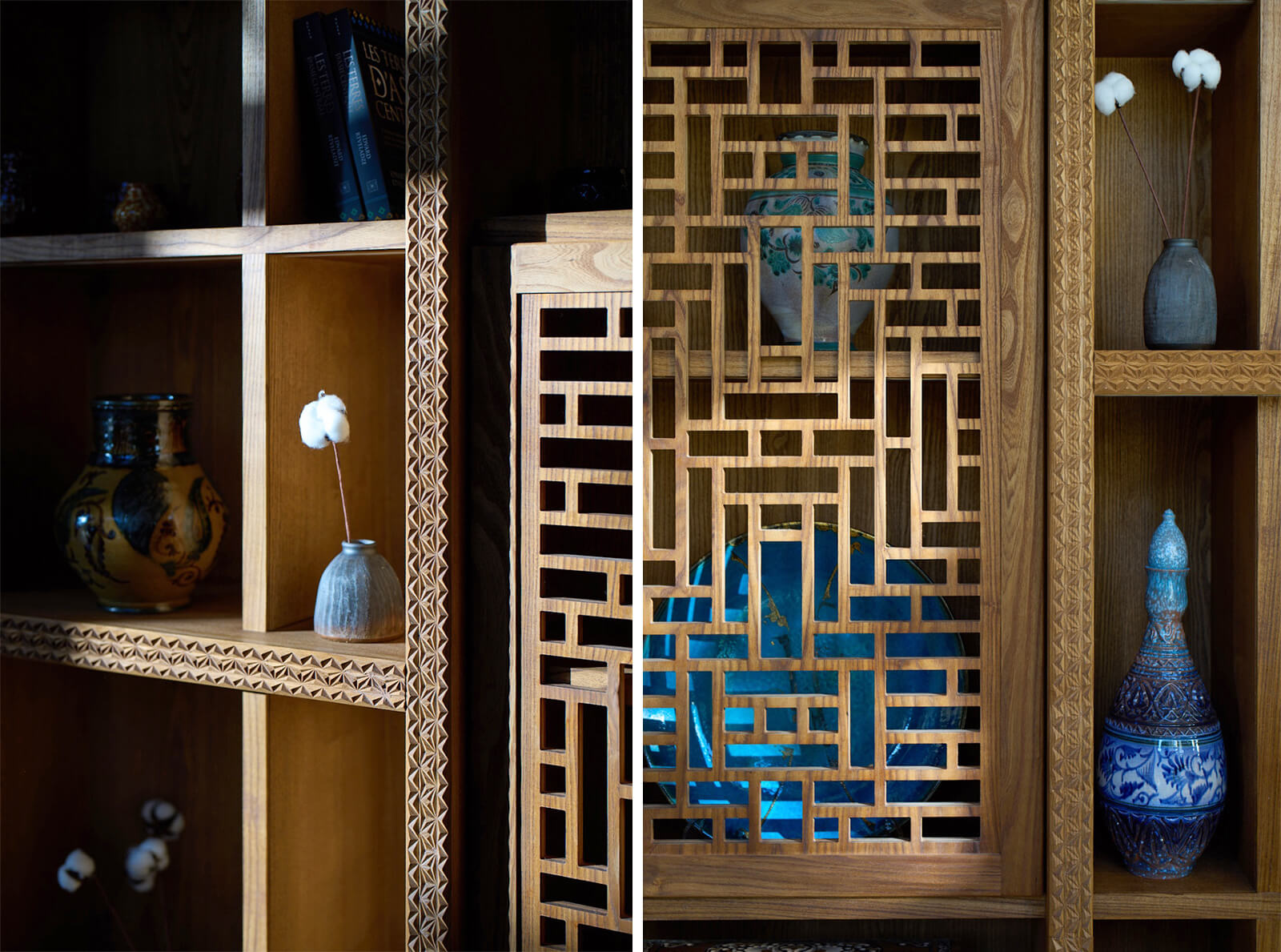
In the early 20th Century, Debs’ great-uncles are said to have travelled along the Silk Road before settling in Japan, where she grew up sensitised to the ‘minimalist’ and ‘essential’ language of design that ultimately defined her practice. Today, she lends that understanding—further refined by working on household objects that blend these sensibilities with the material memories and cultural richness of Arab craftsmanship—back in the service of an artisanal hub. Through exercising a degree of restraint within its own architecture, the Gozar of Artisans diffuses craft as an integral part of its experience, elevating it from the presumption of being merely decorative or ornamental. Craft traditions and craftsmanship emerge as a living and evolving language of expression, allowing design to bridge the gap between practices, disciplines and geographies.
Name: Gozar of Artisans
Location: Tashkent, Uzbekistan
Client: ACDF – Uzbekistan Art and Culture Development Foundation
Architect: Nada Debs
Collaborators: Uzbekistan Art and Culture Development Foundation

by Mrinmayee Bhoot Oct 17, 2026
The Rotterdam-based institute centres the Indian Ocean as a network for exploring material histories and transnational links shaping coastal cultures, positing them as future models.
by Pranjal Maheshwari Oct 16, 2026
At the 2026 Stirling Prize ceremony, Mary Duggan with RUFF Architects, MAKER Architecten and Nakshabid Architects were felicitated for proffering quality housing and social equity.
by Mrinmayee Bhoot Oct 12, 2026
The new Centre for Contemporary Arts, fostering public engagement with art in Uzbekistan, is housed in a tram depot refurbished by the French studio, emulating local craftsmanship.
by Mirra Lynn Oct 10, 2026
The Shanghai-based architecture practice’s intervention in Suzhou transforms three abandoned houses into a bookstore, café, library and homestay.

make your fridays matter with a well-read weekend
Enter your details to sign in
Don’t have an account?
Sign upOr you can sign in with
a single account for all
STIR platforms
All your bookmarks will be available across all your devices.
Stay STIRred
Already have an account?
Sign inOr you can sign up with
Verification link sent to check your inbox or spam folder to complete sign up process
Tap on things that interests you.
Select the Conversation Category you would like to watch
Please enter your details and click submit.
Enter the 6-digit code sent at


Nada Debs evinces local crafts by turning a historic Uzbek mosque into an artisanal hub
by Pranjal Maheshwari | Published on : Aug 18, 2026


 Sign in with Google
 Sign in with email
What do you think?