Art05 mins. read
Sunhil Sippy on the fading art of analogue photography and building a living archive
by Srishti OjhaJul 11, 2026



by Bansari PaghdarPublished on : May 13, 2026
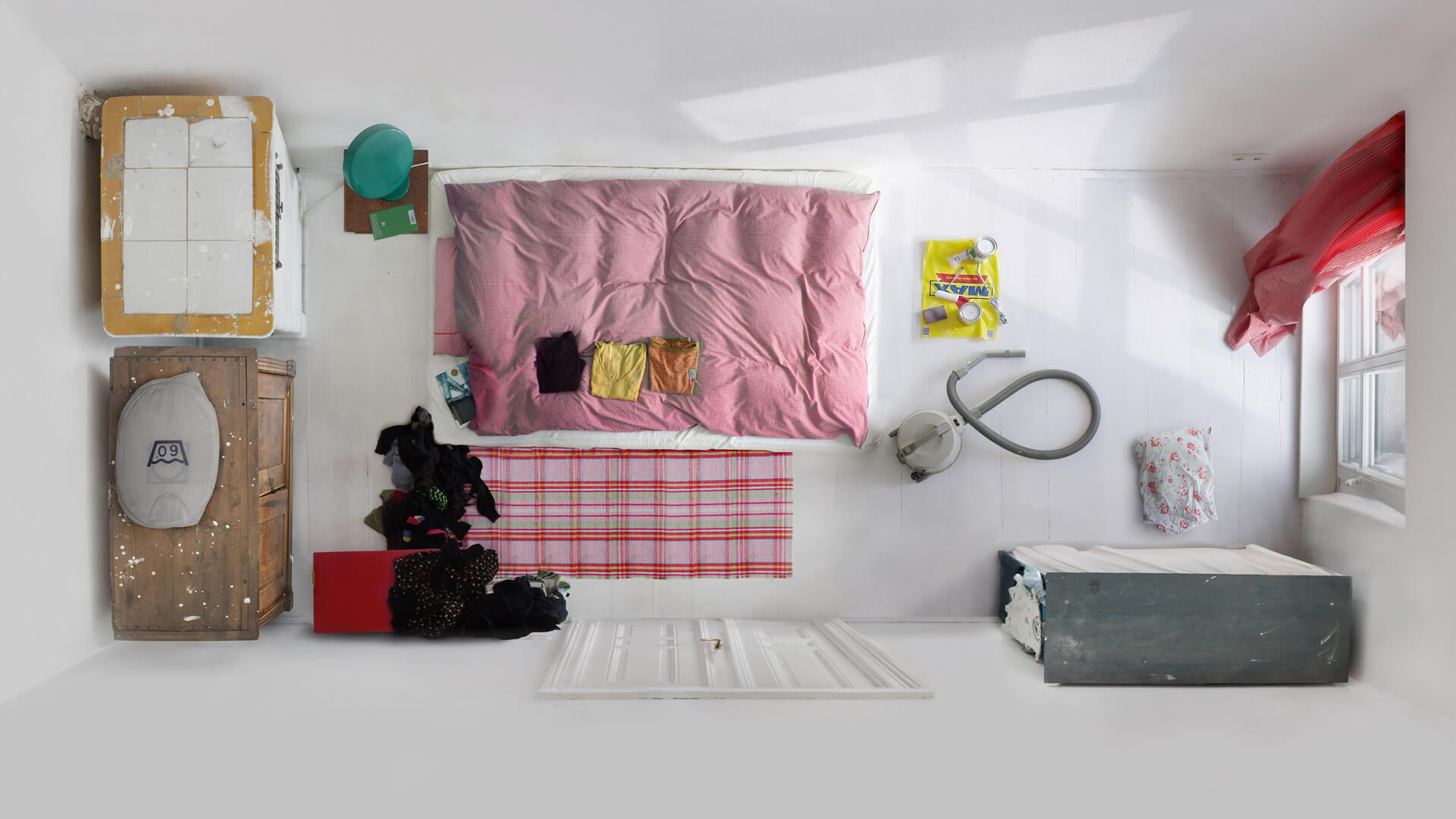
A pile of worn clothes, sweaty and tangled, lying on the floor. The bed, wrinkled and poorly made, hiding an unfinished book under the covers. Curtains, lazily undrawn, sweeping the floor with their length. A vacuum cleaner in the middle of the room, waiting to be put away. Eagerly awaiting the occupant to enter and navigate the mess: Will they fix it or ignore it, slumping on the bed to relax? Will they sense that they aren’t alone?
A particular curiosity of the human condition is an unrequited interest in each other’s lives—comparing, dissecting—perhaps to make more sense of one’s own life and its myriad interactions with the world. With the rise of technology and social media, we are closer to each other than ever before, capable of practically invading private spaces like never before, alarmingly so. This desire is arguably an instinct that has developed, evolved and become convoluted over time, almost forming into a socio-political arc of our times.
Photographer Menno Aden’s series of works, Room Portraits, explores similar ideas of surveillance and voyeurism, questioning systems of order that permeate our everyday lives. Based in Berlin, Germany, the photographer focuses on architecture and spaces with a marked absence of the human figure in his work. Yet the photography series can be viewed as portraits of the people occupying them. Perhaps this sense of the spaces being lived in emerges precisely from the absence of people, allowing the spectator to project imagined gestures and movements onto picturescapes to understand these spaces better.
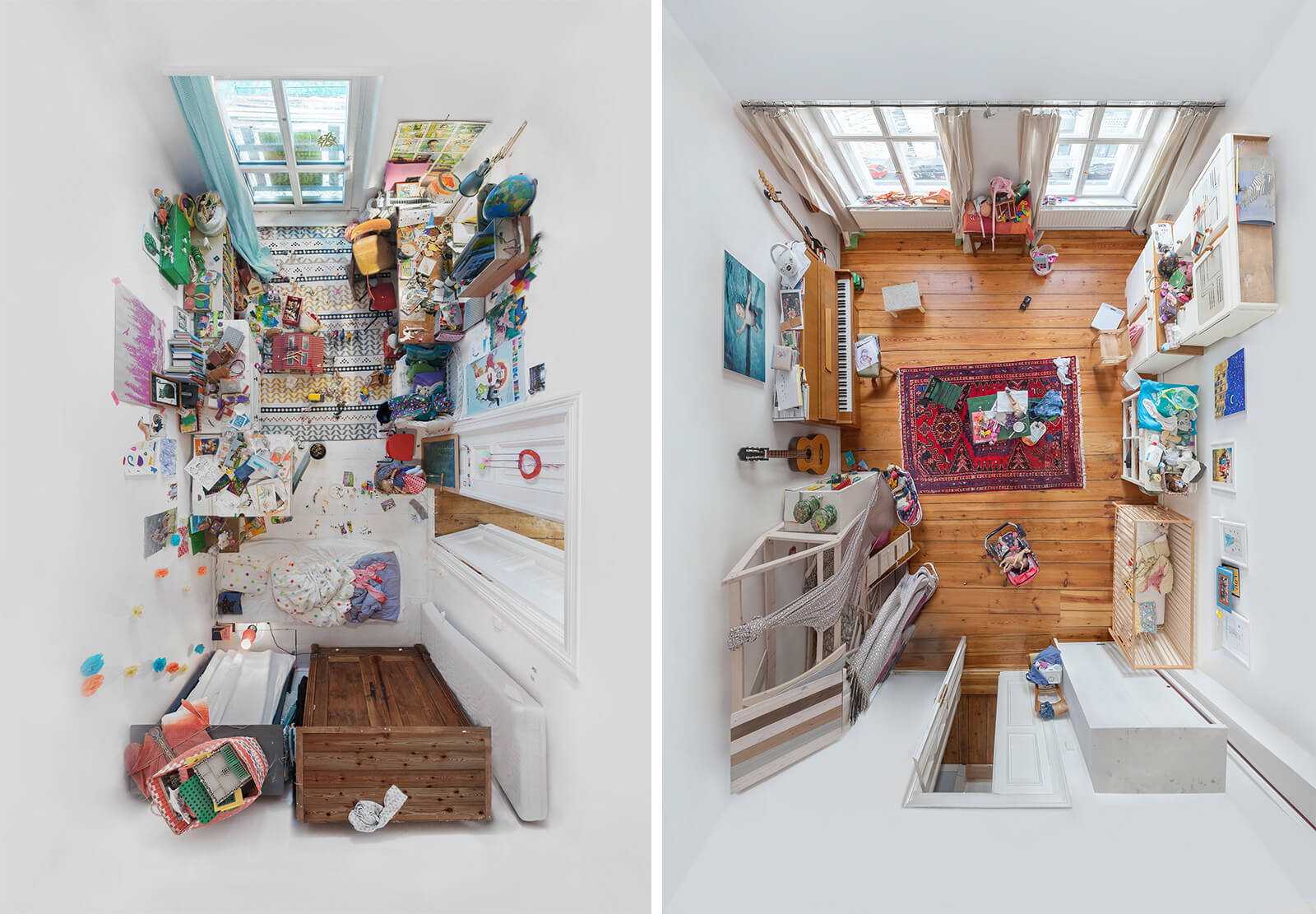
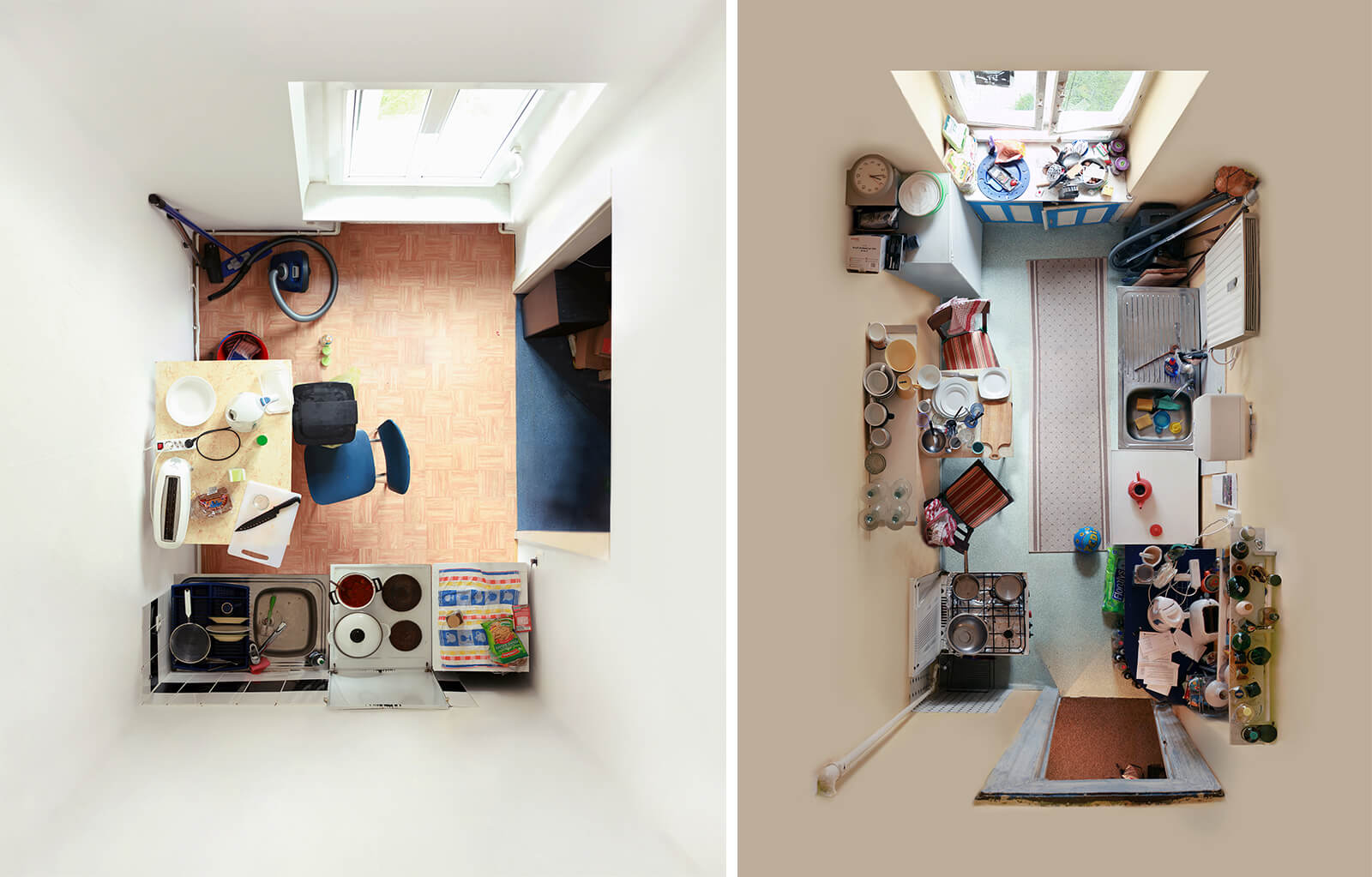
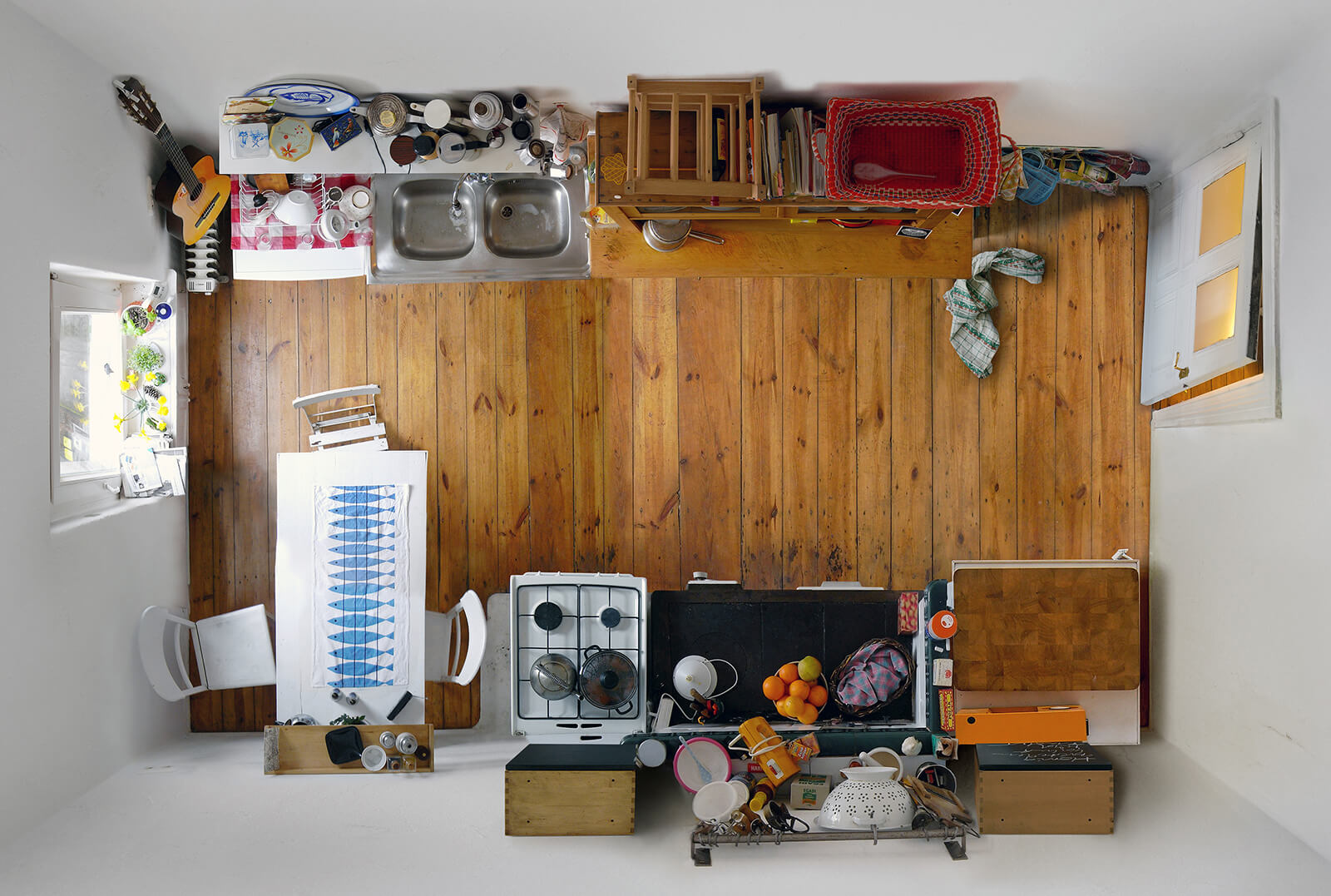
Captured from a bird’s-eye view, the photographic compositions liberally exercise a sense of authoritarian scrutiny, comprising several individual shots taken and assembled digitally into complete spaces. If one were to follow a more technical line of inquiry, questioning the perspective with which the photographer chooses to display the spaces, one realises that by collapsing multiple perspectives into a single flattened image, the works distort depth—neither fully three-dimensional, nor purely abstract—while still preserving spatial information. “With this approach, depth becomes ambiguous, at once measurable and unstable. This mirrors how we actually perceive space—not as neutral geometry, but as layered memory, movement and expectation. We do not inhabit space as architects draw it. We inhabit it through use,” Aden tells STIR. By deliberately putting these spatial fragments together into digital, somewhat abstract assemblages, Aden probes the human desire for immoral and unvirtuous peeping that may even accompany the process of documenting a space.
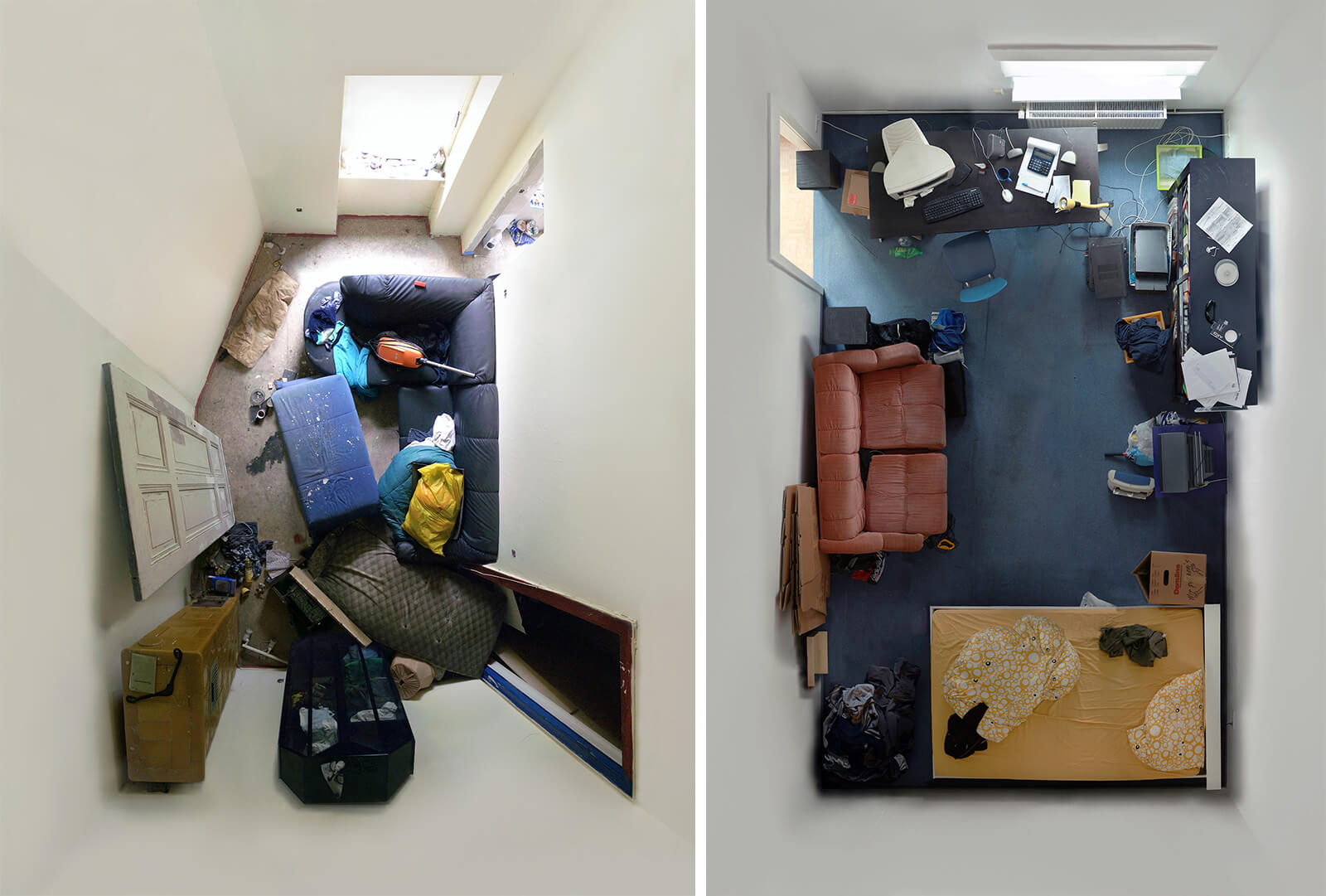
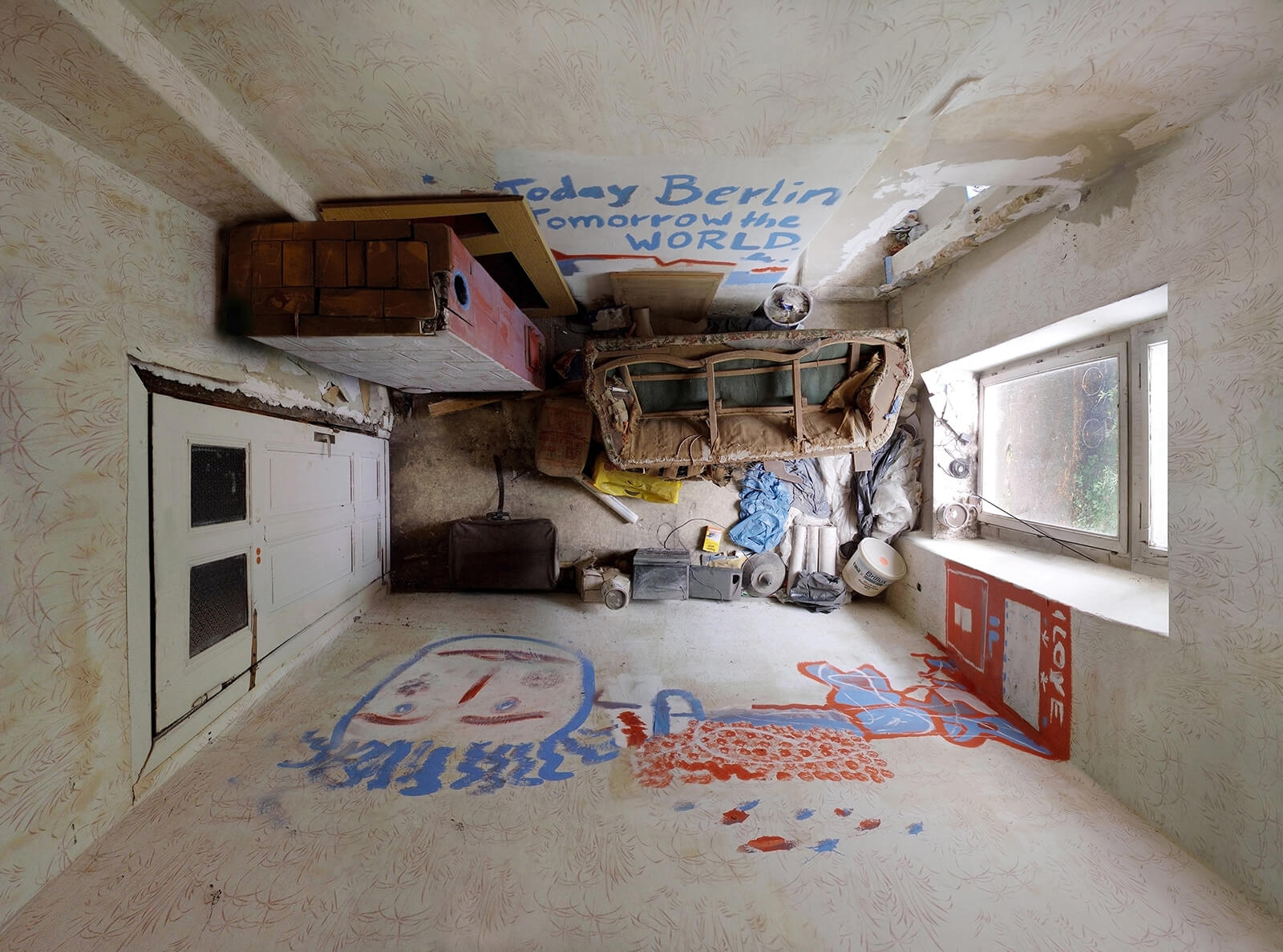
The compositional logic of the series closely resembles architectural drawings or floor plans, in which space is rendered legible, ordered and navigable. “I am very aware that by lifting the camera to the ceiling and compressing the room into a legible surface, I exercise a form of spatial authorship. Yet I would hesitate to call it design. Architecture projects intention forward. My images excavate what is already there. If there is agency, it lies in choosing the point of view, a gesture that transforms lived contingency into visual order. It is less about control than about revelation. The room becomes a text that can suddenly be read,” the architectural photographer tells STIR.
Yet, caution is warranted in framing this as an entirely novel perspective. The photographer’s gesture of selecting the perspective is a decisive act of control in itself. The room may become more ‘readable’ from this perspective, but the conditions designed to enable that readability are tightly constructed: depth is foregone, temporal traces are stilled and disorder appears as if staged. The image is perceived at a certain distance and with a certain detachment, imparting subjectivity to the meaning deciphered by observers and converting the contingencies of everyday life into something ordered, consumable and ultimately controllable.
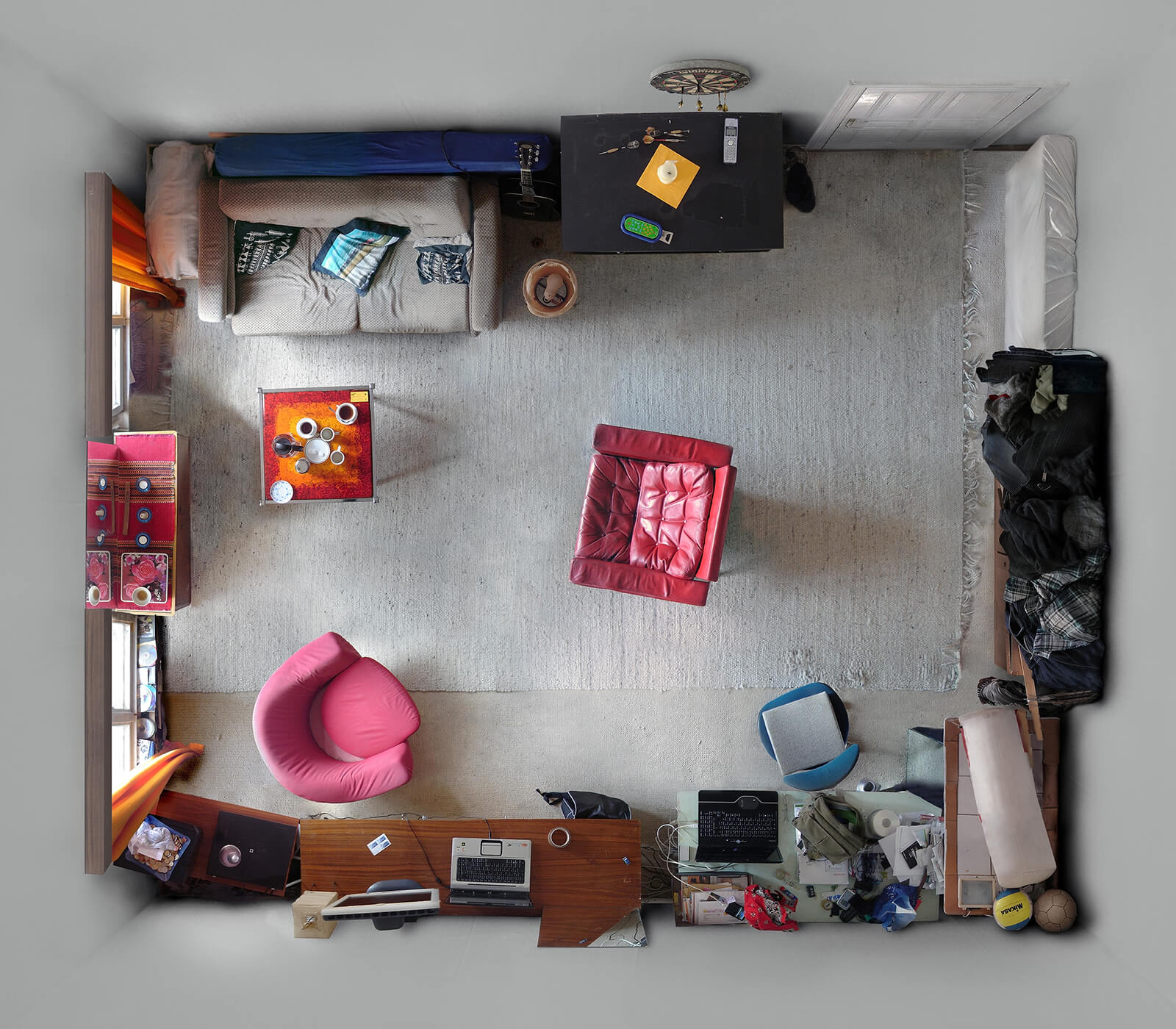
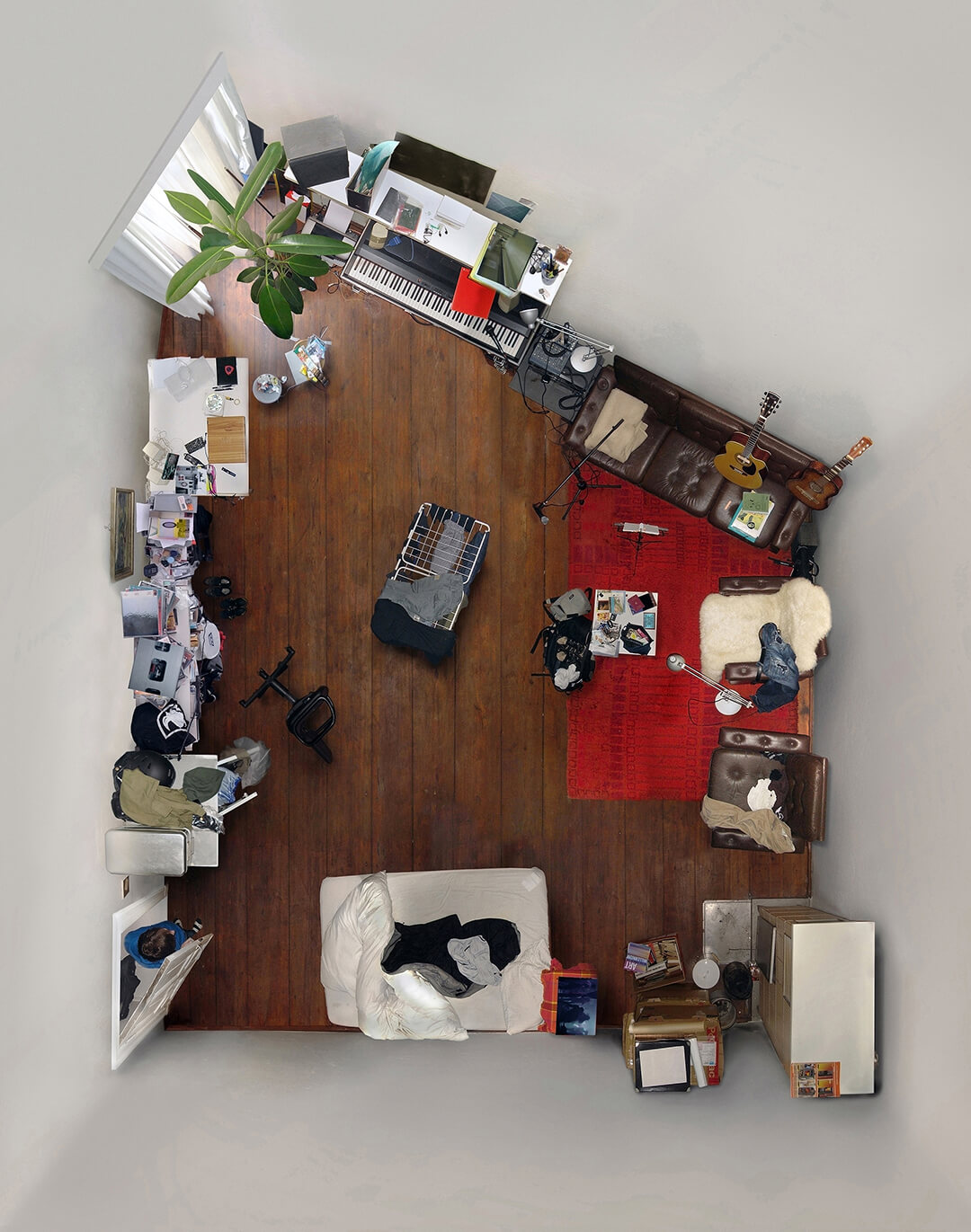
“I do not stage these elements but encounter them. The designer’s hand, if present, is restrained. I am assembling visibility rather than composing fiction. My aesthetic is influenced by typological photography, but also by sociological curiosity. The understanding that spaces are biographies written in furniture,” Aden adds, expanding on the designerly agency that is contingent upon carefully composing these spaces. Indeed, all the objects in a given space—no matter their scale or purpose—may become enablers of tactile spatial encounters. The ordered chaos of these messy rooms might make the observer feel elevated and empowered, while the exhibitor might feel exposed and vulnerable, perhaps, even liberated.
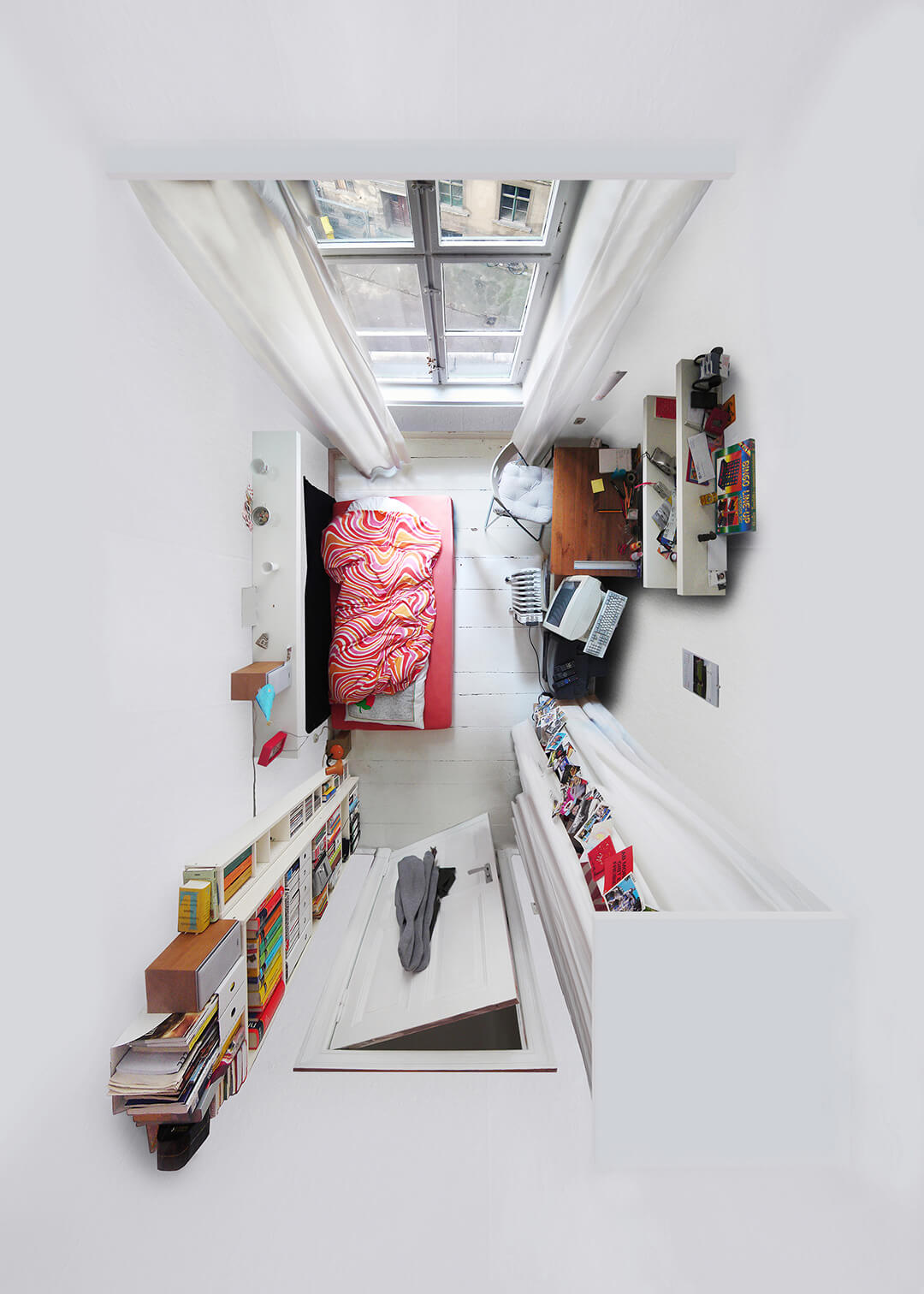
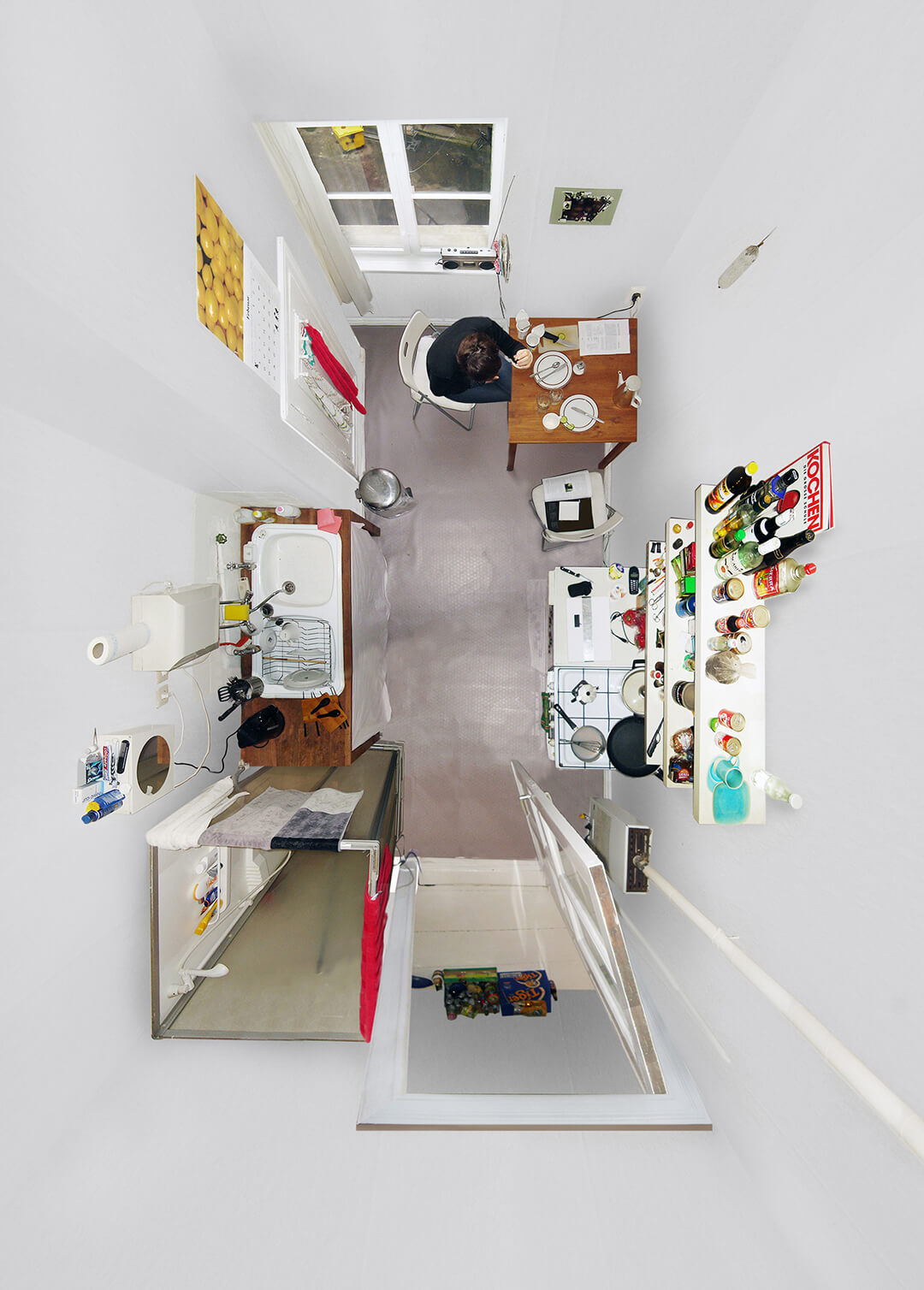
Aden intentionally prods this voyeuristic urge—which he argues popular culture has made quite mainstream—deeming it an ancient curiosity that is as political as it is architectural and psychological. “From the open visibility of Dutch windows and the myth of the ‘curtain tax’—rooted in a Calvinist ethos of transparency and ‘nothing to hide’—to the dystopian ideals of total exposure in the novel 1984 (1949) by George Orwell…one could trace a cultural arc,” says Aden, revealing ideas and philosophies that inspire the series. At a time when private spaces are increasingly exposed and surveilled through smart devices, social media and data collection on social media, Room Portraits comments on these conditions of visibility and control. “The images stage a paradox: the more completely a space is rendered visible, the more its inhabitant disappears,” Aden tells STIR. As these portraits become increasingly more legible, one begins to see a deeper, more political undercurrent.
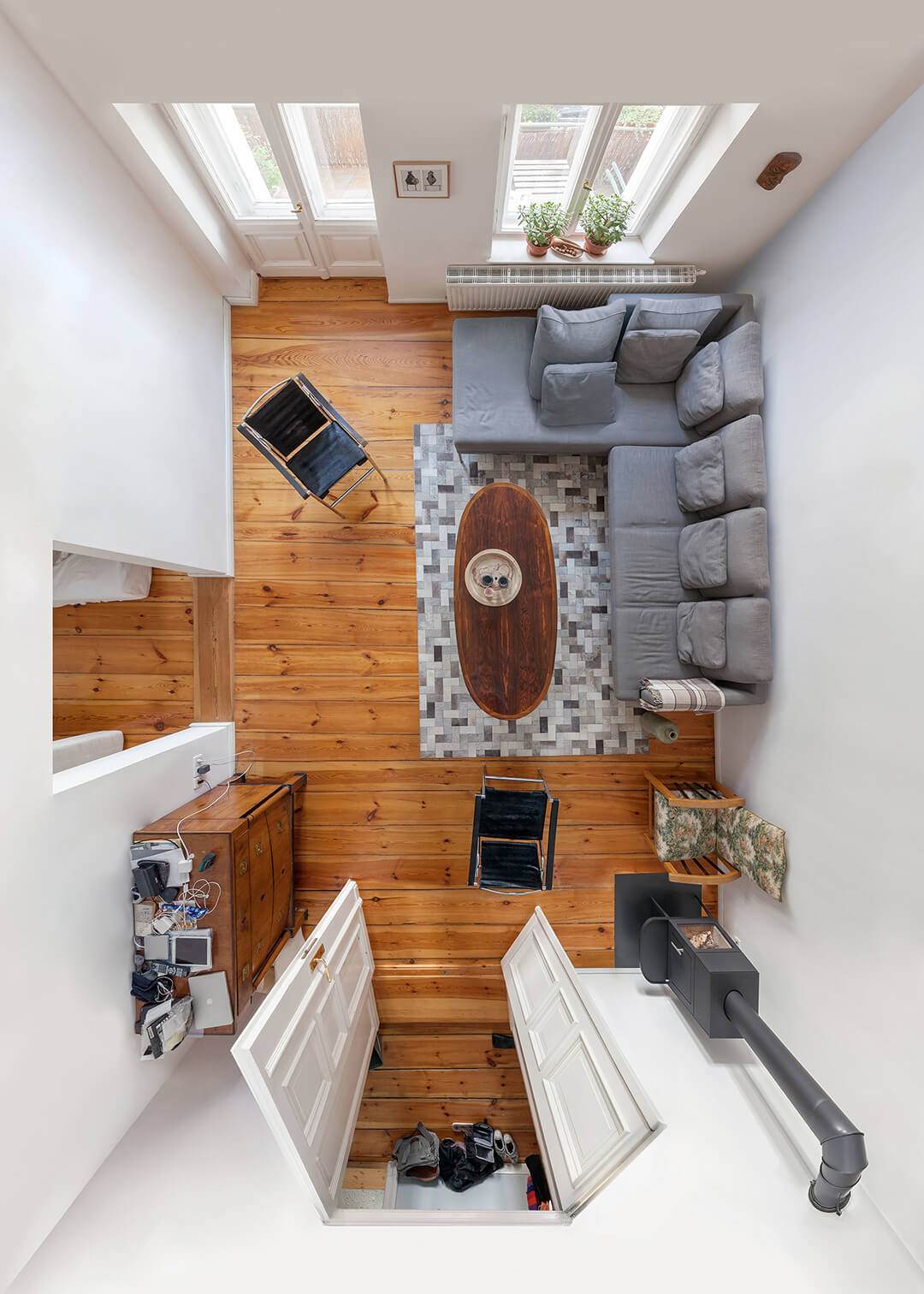
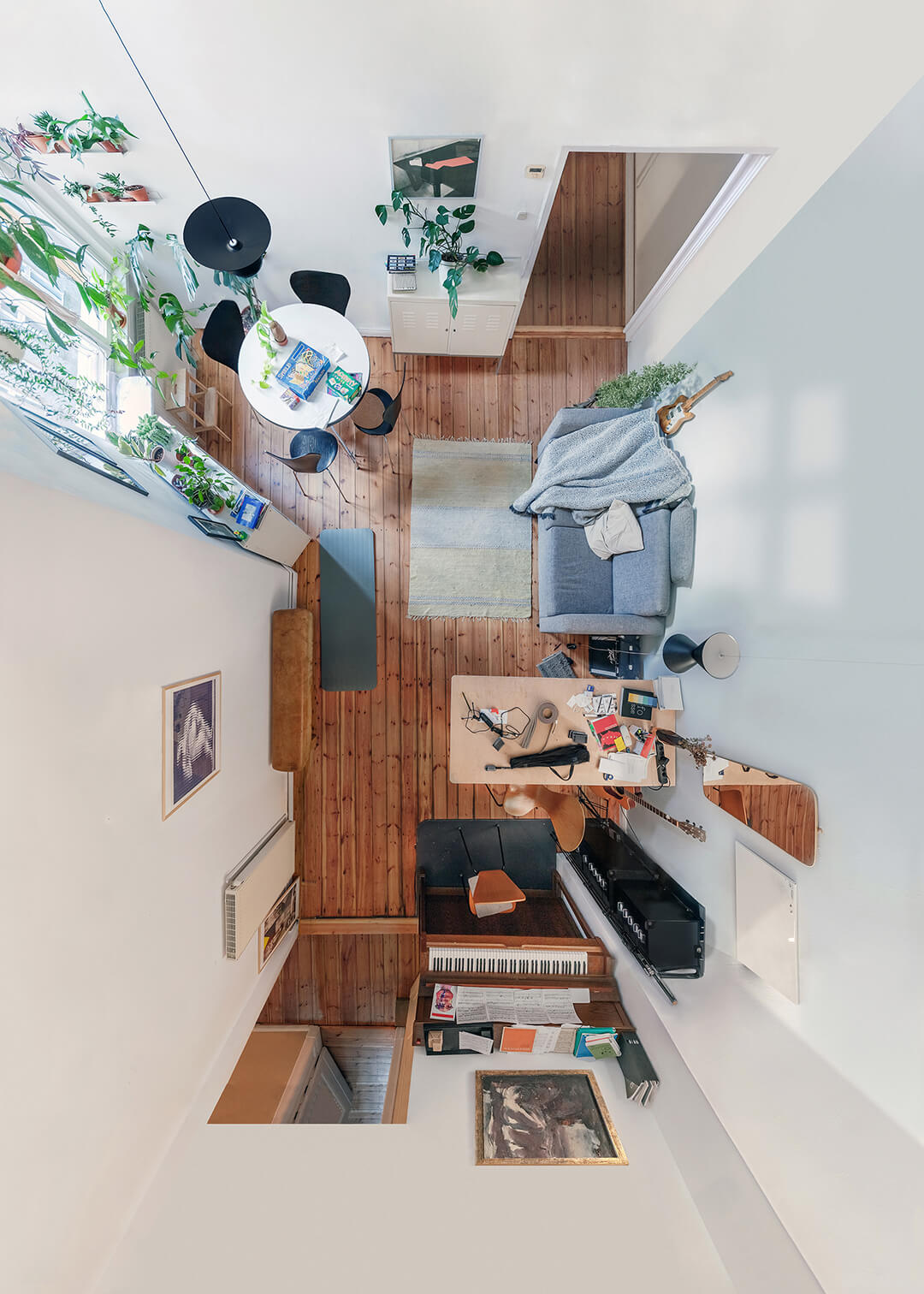
As exercised control has morphed from overt authoritarianism to more diffused, privatised systems, data extraction has been normalised as people voluntarily render themselves visible online. Transparency has become a soft system of governance, where people mistake visibility for virtue, internalising surveillance and exercising compliance. The disappearance of the inhabitant the photographer speaks of, perhaps, is about reducing human complexity into readable patterns of data, analysing behavioural traces and spatial proxies. This implies that the more legible one becomes, the more their identity is flattened into consumable bite-sized pieces of an analysable image. The photographs hint that these private spaces, traditionally sites of complete autonomy, have been breached by systems of observation, and the distinctions between private and non-private spaces are becoming non-existent.
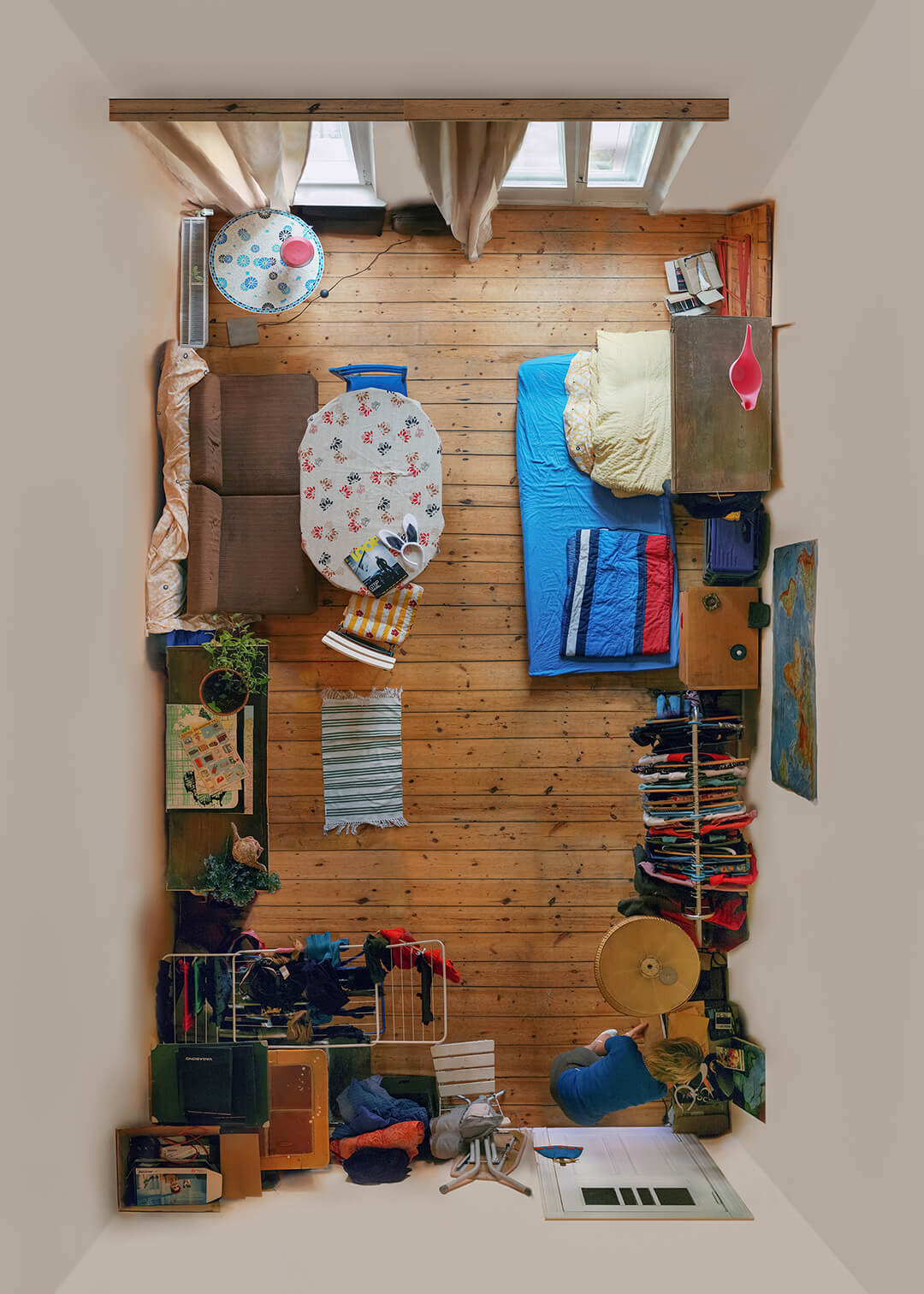
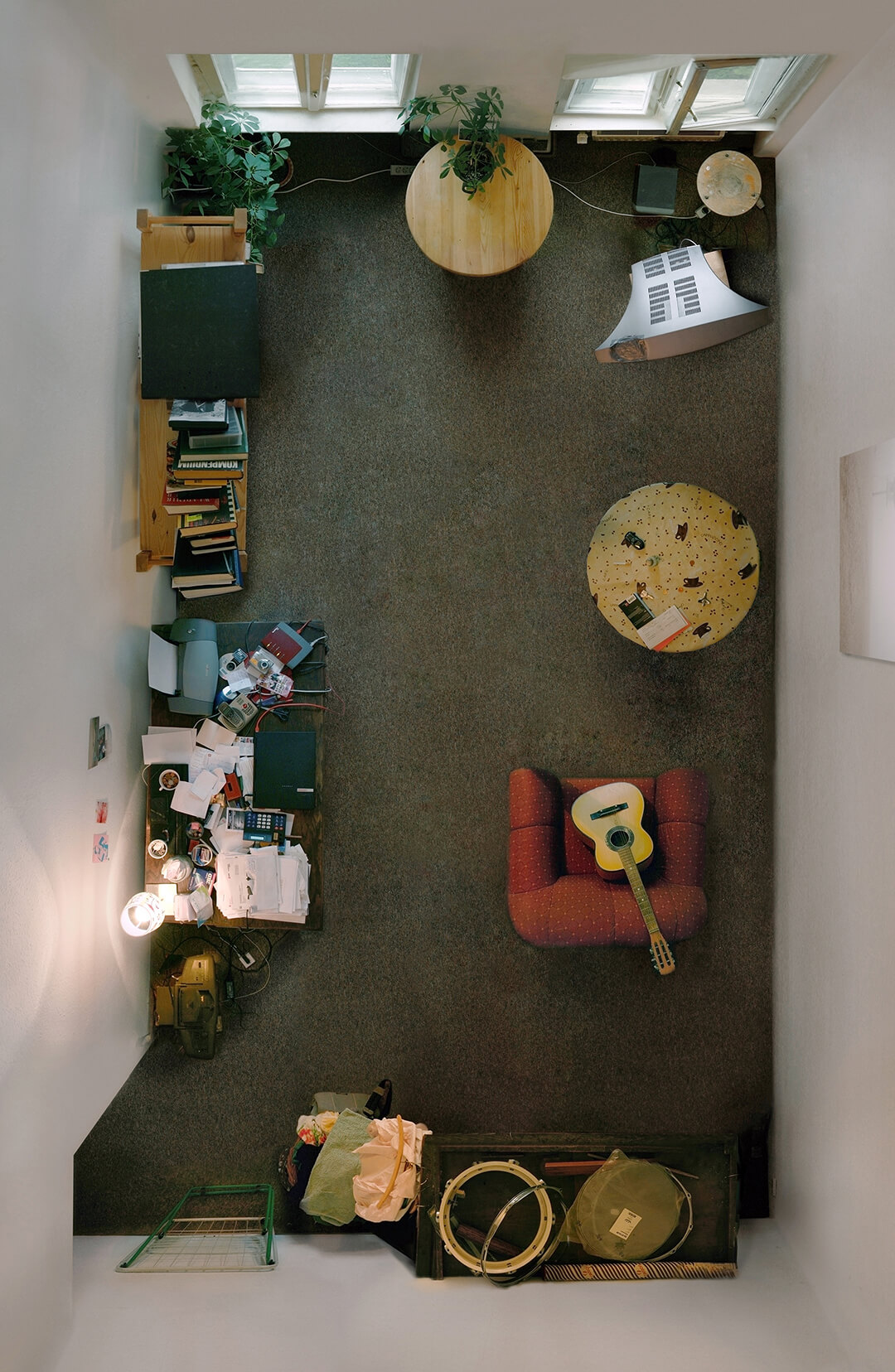
The overhead perspective captures this tension brilliantly, hinting that the gaze is not individual but institutional. Several platforms incentivise sharing, looking and exposing. In this light, power is crowdsourced. The surveillance isn’t simply top-down (infrastructural) now, but has also become lateral (peer-to-peer). In such a condition, the subject too is no longer a passive recipient of the gaze, but is both the observer and the observed at once. Thus, visibility becomes a performative loop rather than a position one occupies from the outside; in the case of Room Portraits, from above. One is constantly seeing and simultaneously exposing oneself, unable to truly participate.

by Pranjal Maheshwari Oct 19, 2026
The Mumbai-based architects integrate courtyards, mesh screens and north light trusses to create a dining space that doubles up as a community hub at SR University, Warangal.
by Mrinmayee Bhoot Oct 17, 2026
The Rotterdam-based institute centres the Indian Ocean as a network for exploring material histories and transnational links shaping coastal cultures, positing them as future models.
by Pranjal Maheshwari Oct 16, 2026
At the 2026 Stirling Prize ceremony, Mary Duggan with RUFF Architects, MAKER Architecten and Nakshabid Architects were felicitated for proffering quality housing and social equity.
by Mrinmayee Bhoot Oct 12, 2026
The new Centre for Contemporary Arts, fostering public engagement with art in Uzbekistan, is housed in a tram depot refurbished by the French studio, emulating local craftsmanship.

make your fridays matter with a well-read weekend
Enter your details to sign in
Don’t have an account?
Sign upOr you can sign in with
a single account for all
STIR platforms
All your bookmarks will be available across all your devices.
Stay STIRred
Already have an account?
Sign inOr you can sign up with
Verification link sent to check your inbox or spam folder to complete sign up process
Tap on things that interests you.
Select the Conversation Category you would like to watch
Please enter your details and click submit.
Enter the 6-digit code sent at


Room Portraits is a top-down view of the socio-politics of surveillance and voyeurism
by Bansari Paghdar | Published on : May 13, 2026


 Sign in with Google
 Sign in with email
What do you think?