Architecture05 mins. read
Habitat 0 offers a circular dialogue between architecture and landscape
by Anushka SharmaJul 30, 2025




by Bansari PaghdarPublished on : Jan 09, 2026
Although the origins of the word ‘gimmick’ cannot be accurately traced, it is said to come from an anagram of magic, gimac. It was likely used by magicians and gamblers to describe clever tricks or devices such as trick mirrors. In Theory of the Gimmick: Aesthetic Judgement and Capitalist Form (2020), author Sianne Ngai argues that gimmick is both a labour-saving trick and a strained effort to get attention. She explores gimmicks across a series of fictional literature, photographs, art and theories, where they eventually emerge as powerful tools in aesthetic theory, despite often being compromised. To call something a gimmick, as author Merve Emre argues, is to demand agreement or invite confrontation. Nomads, a boutique resort in Pondicherry, India, does both. By calling itself ‘an architectural gimmick’, it invites visitors to examine whether architecture that flaunts its theatricality could also carry spatial sensitivity and experiential depth. Designed by biophilic architecture studio seeders, the hospitality design features 10 suites inspired by the culture and architecture of Bali, Japan, Chettinad (India), Mexico and Greece, along with conceptual designs such as Bohemia, Nowhere and Forest.
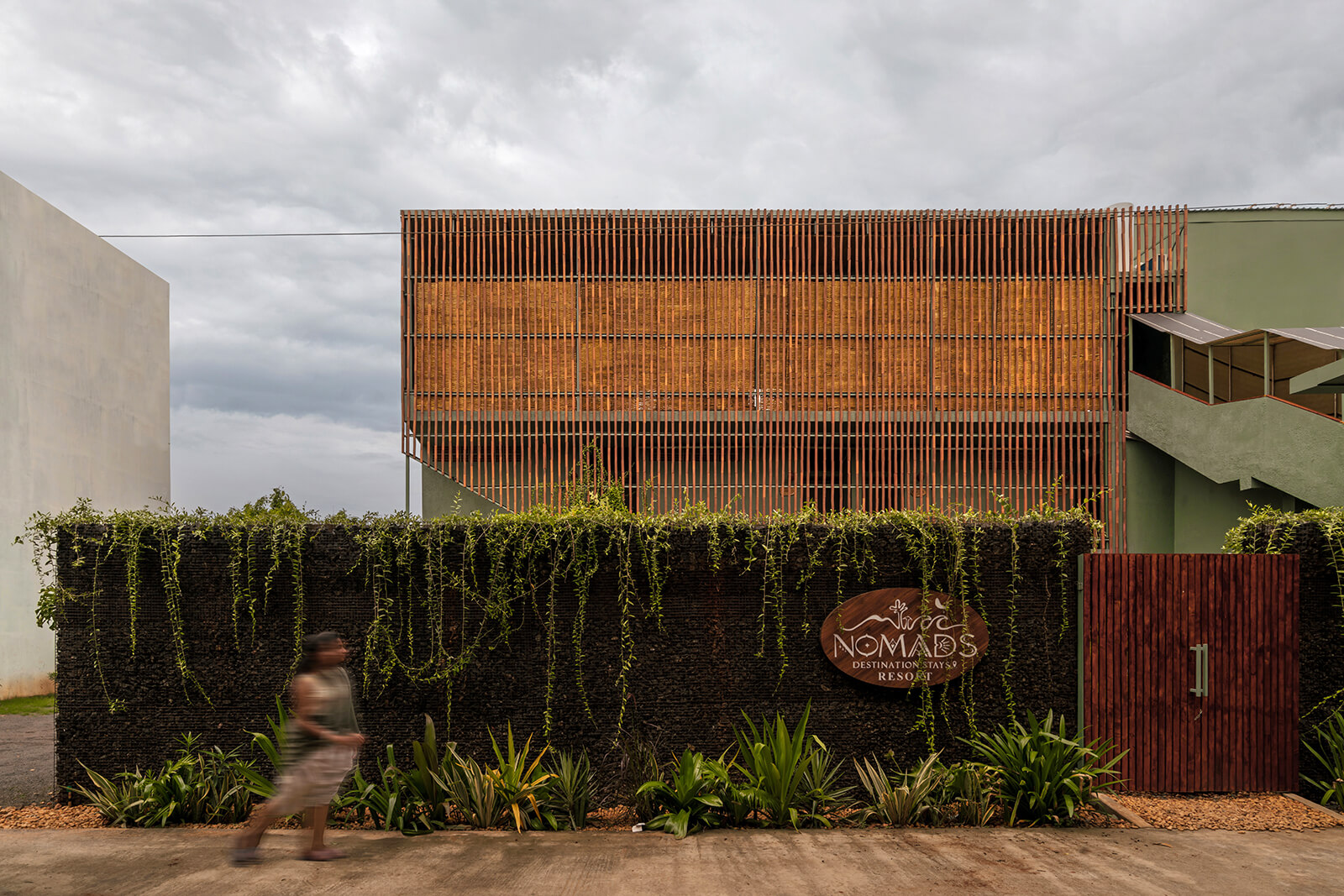
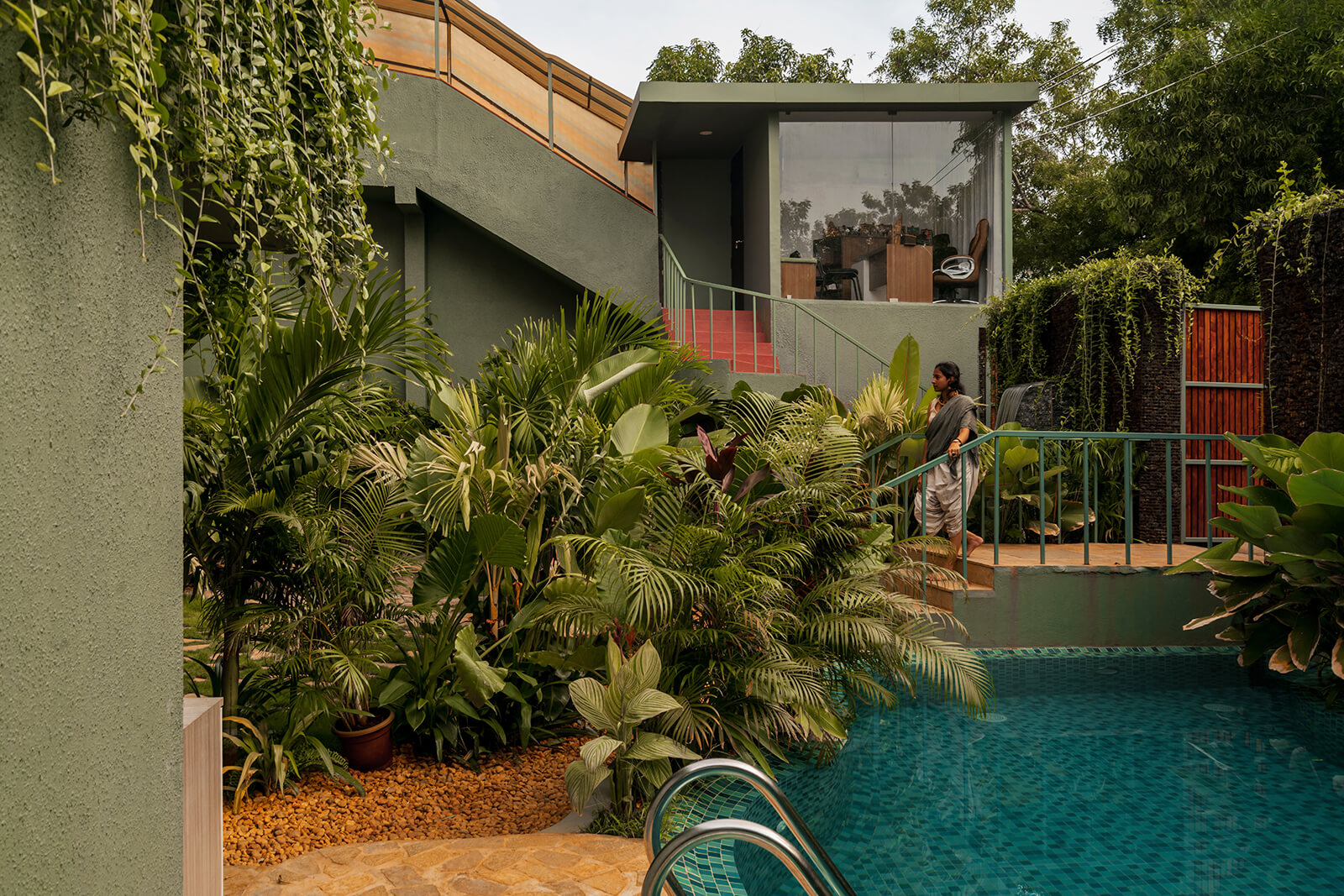
“I must share a moment from my internship with Lijo Reny Architects in Thrissur. During a review, my mentor, Ar. Lijo once discarded a lighting plan I had worked on, cautioning me against falling into the trap of being gimmicky. That lesson stayed with me. Years later, as Nomads evolved into a juxtaposition of cultures designed to draw in guests, I embraced the word with a twist,” architect Dinesh D., founder of the Indian architecture studio, tells STIR. After graduating in 2023, he established the practice in May 2024 in Pondicherry, crafting creative design solutions, biophilic spaces and landscape designs. For the Nomads project, the Indian architect drew inspiration from the nomadic journey of human life, where we inhabit the world briefly, explore our surroundings and connect with others. “It celebrates the timeless human impulse to travel, discover new places, engage with diverse cultures and experience the world beyond borders,” notes the studio.
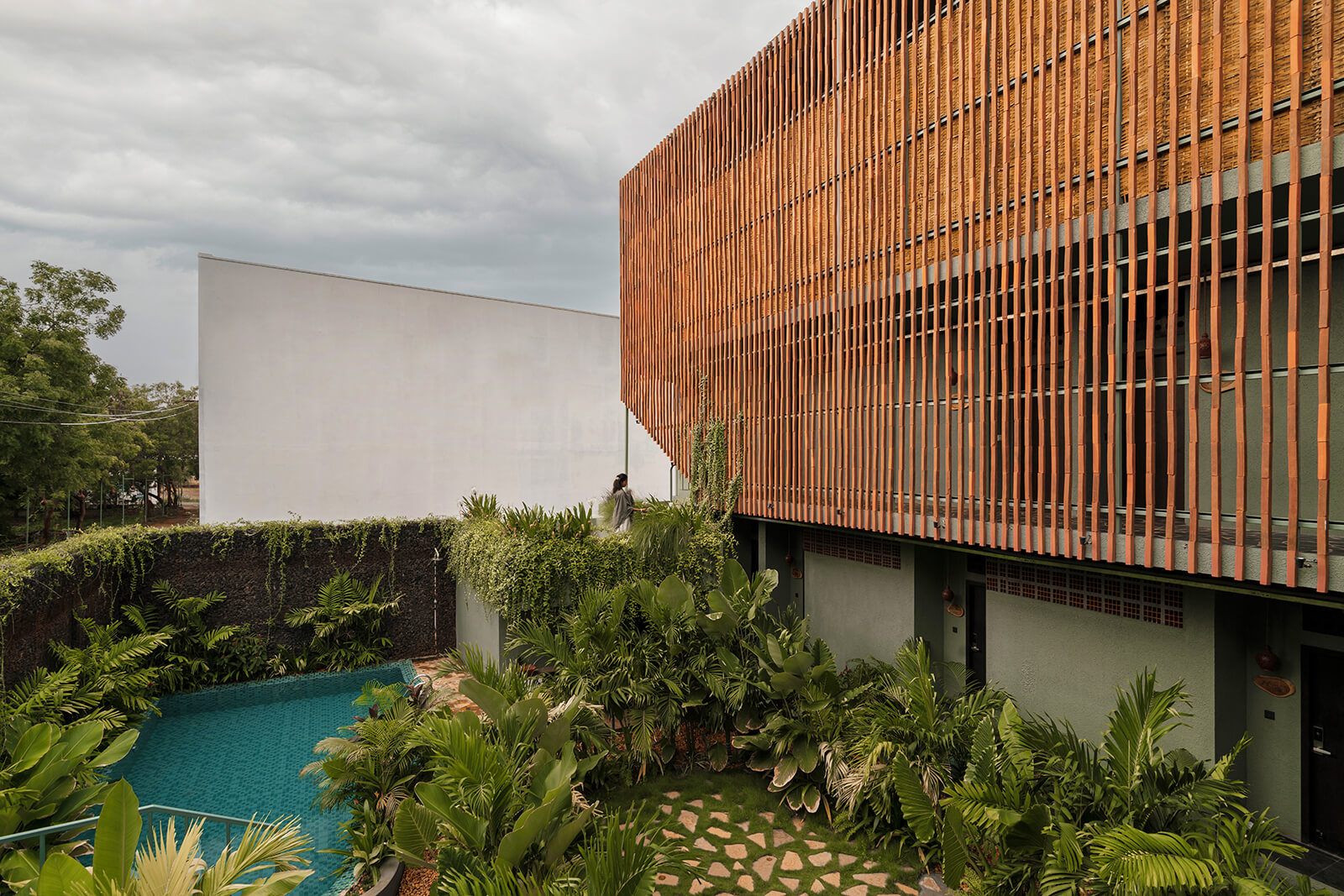
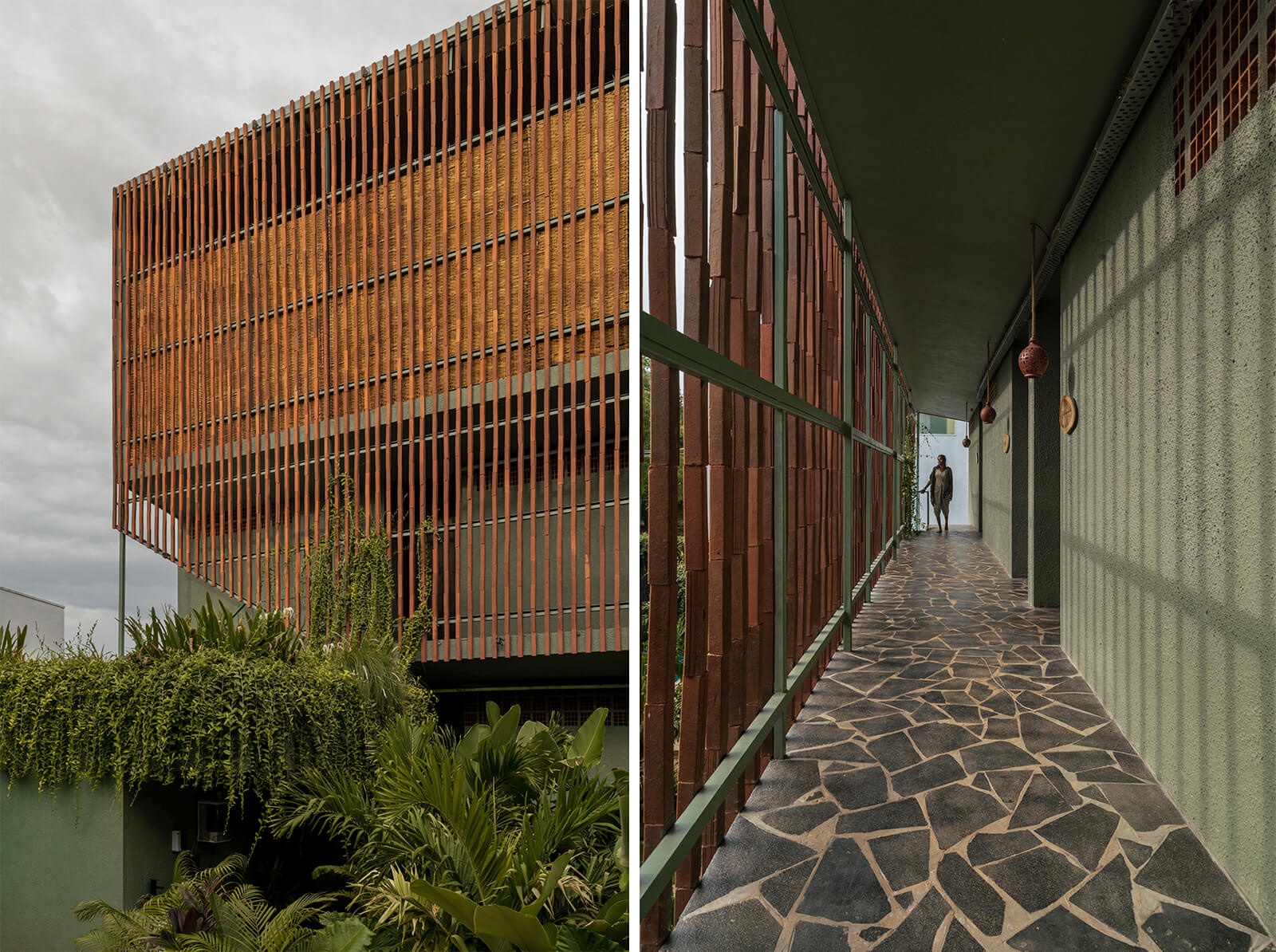
Three months of extensive research into different cultures went into conceiving the designs. “The study had to be extensive for two reasons: first, we wanted each space to remain authentic and respectful to its culture of origin; and second, to achieve that authenticity, we had to carefully source furniture, lighting, materials and even vegetation,” explains Dinesh. Since the architects were sceptical of the design concept in the beginning, one of their major concerns was ensuring that the spaces do justice to their respective cultural inspirations. “This fear drove us to conduct an in-depth study of each country’s architecture, landscapes and traditions, so that the translations were rooted in respect rather than superficial borrowing. Every decision became critical—from sourcing artefacts and furniture to curating vegetation,” the architects reveal. They identified objects that could be locally sourced for their capacity to endure and similarity in the properties and aesthetics of the cultural artefacts, retaining the design character without compromising sustainability.
“Through such sensitive measures and while working within practical restrictions of budget and feasibility, we believe we have managed to honour the spirit of each culture while adapting it meaningfully to our own context,” the architects add. They argue that the hospitality architecture reflects the evolving needs of today’s hospitality industry, where visitors expect the interior design beyond novelty, to have a meaningful, experiential and memorable quality. As the architects design Nomads with respect, care and sensitivity towards the cultures, they also add layers of playfulness and joy by allowing the visitors to experience glimpses of these cultures.
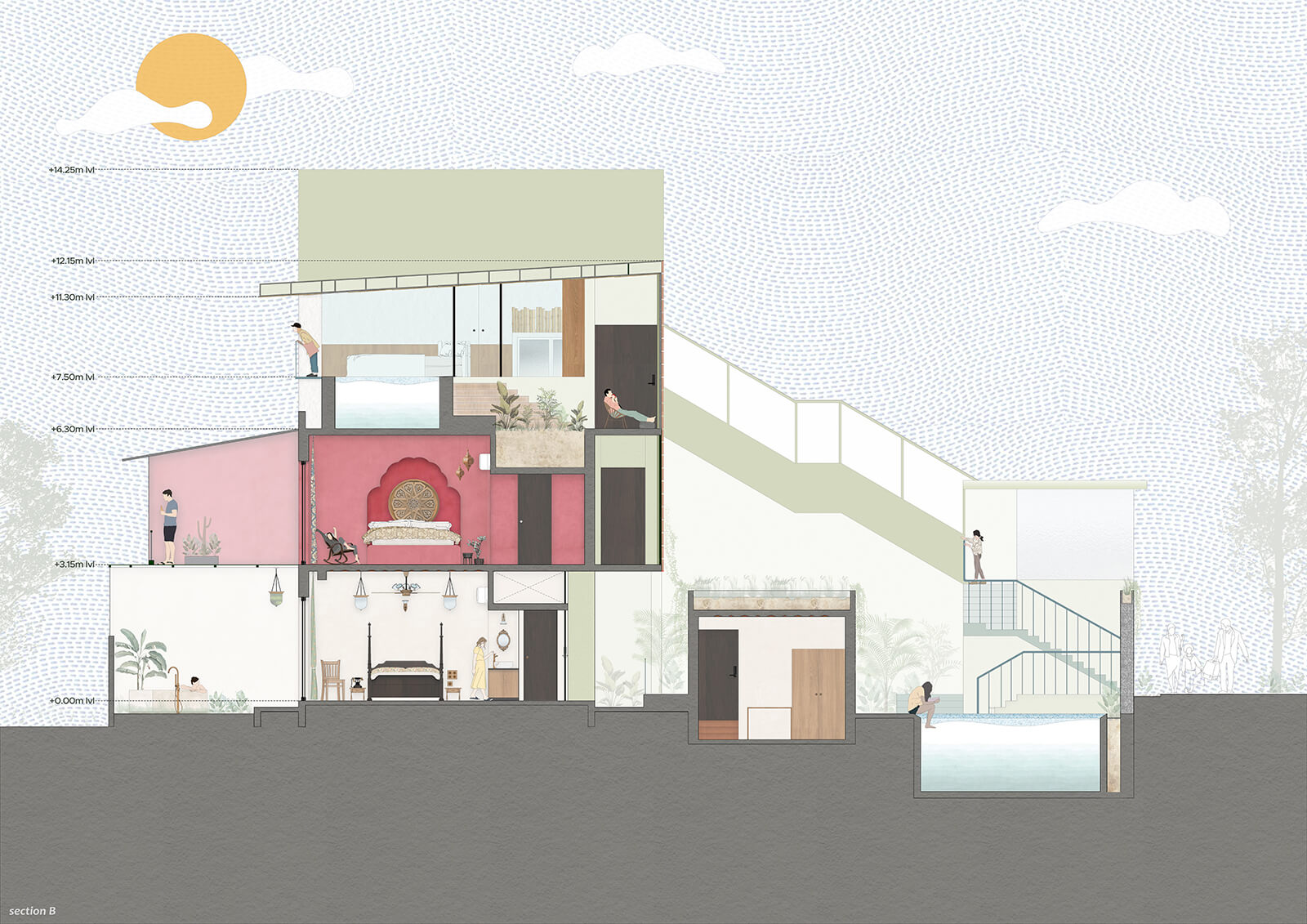
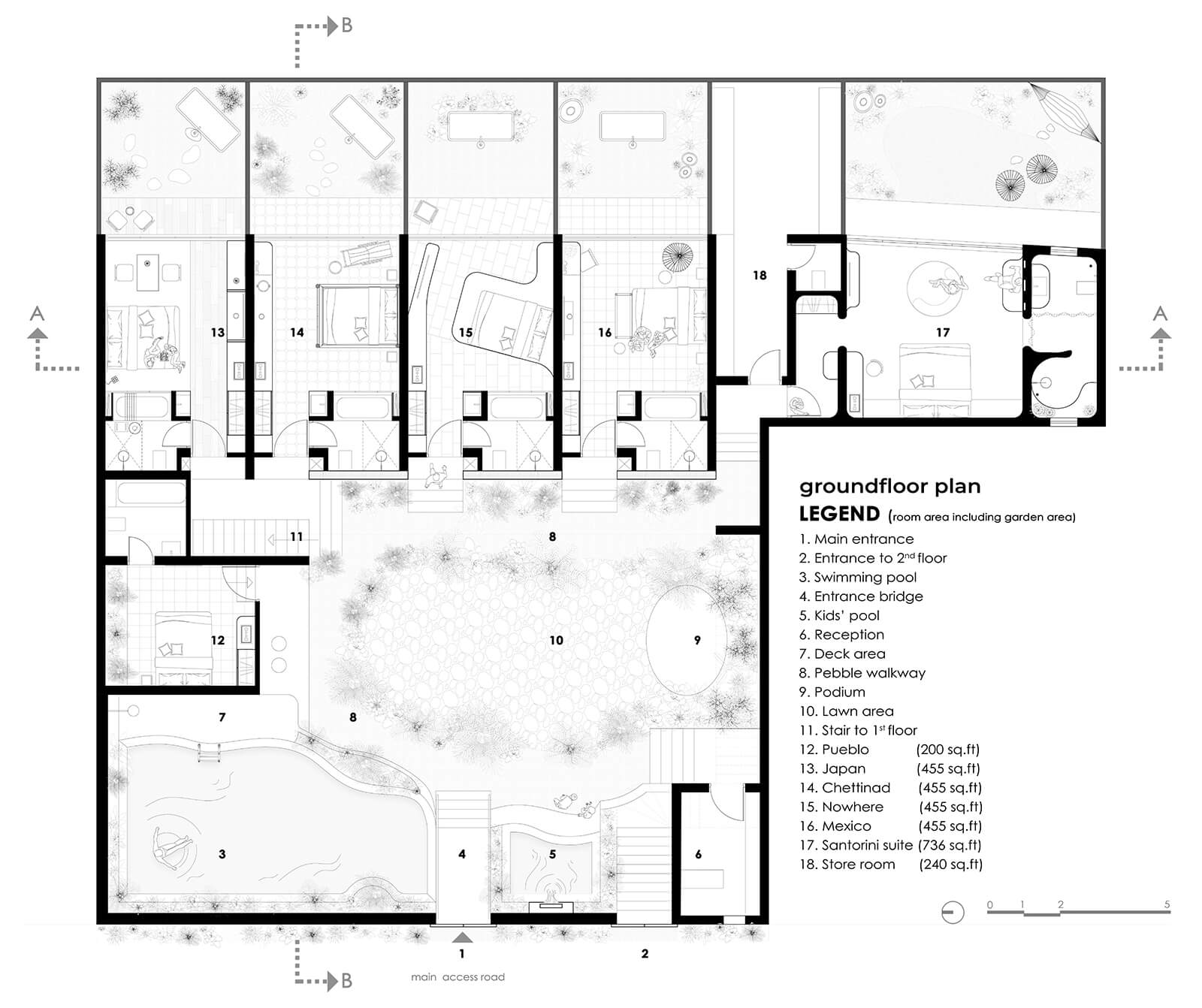
Upon entering the resort, visitors are welcomed with a densely populated landscape design, featuring a pool, outdoor seating area and an L-shaped outdoor staircase that leads to the upper level. The staircase design, despite being understated, has a sculptural quality due to its standalone, domineering presence, complemented by the reception space elevated off the ground. The facade design is characterised by a 10 ft tall gabion wall and cascading creepers, concealing the bespoke interiors. The west facade features a bespoke terracotta screen, made from hollow terracotta bars and steel rods mounted on a metal framework, which caters to nature’s random, organic design and reduces heat gain. A series of ferrocement planters and a Mediterranean-inspired landscape surrounds the pool, softening the rugged quality of the stone facade. The Kadappa stone pathway leads the visitors into the building through the lush corridor, the vegetation softly grazing against the skin and cool air permeating through the site as one begins their experiential journey.
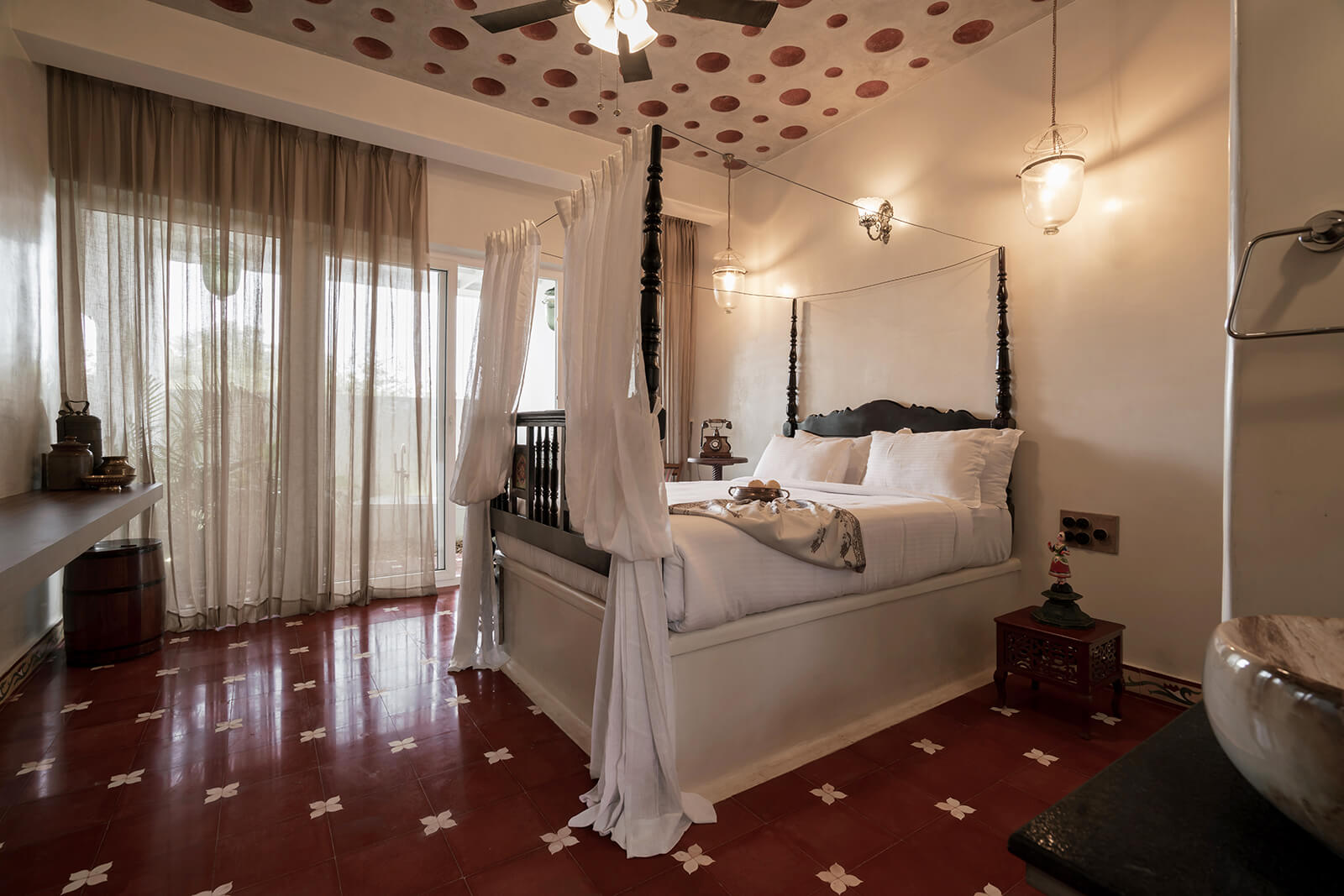
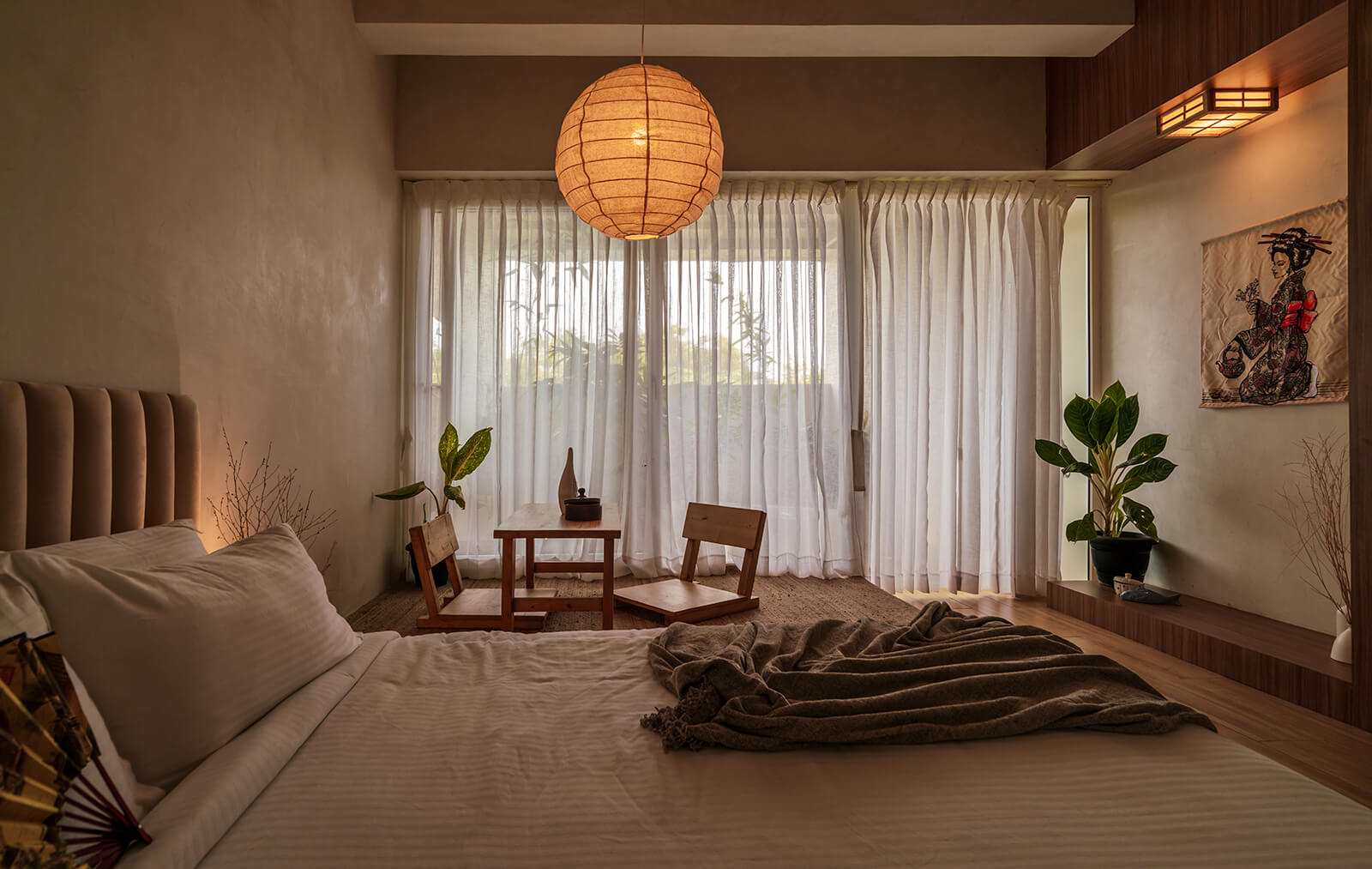
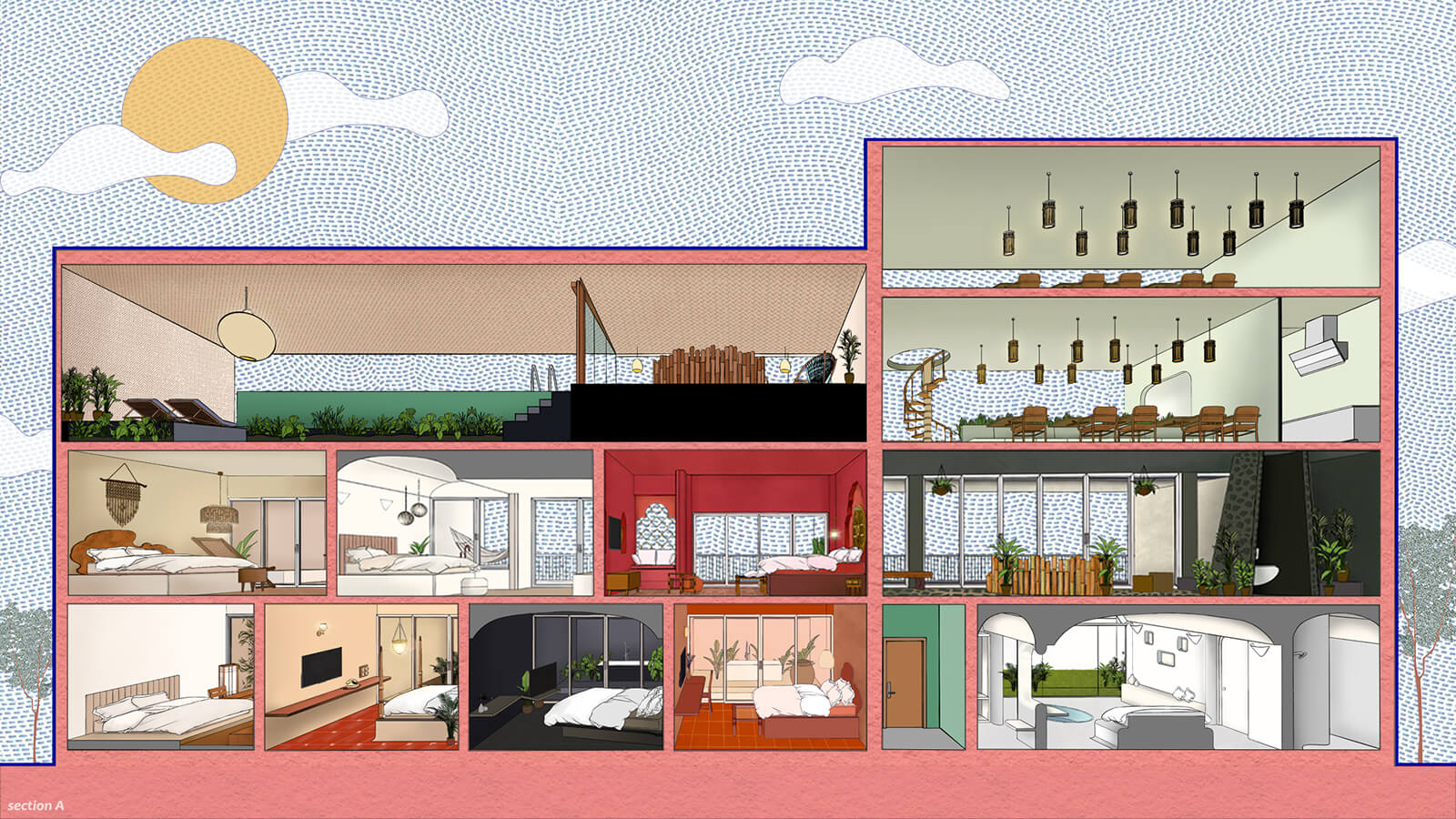
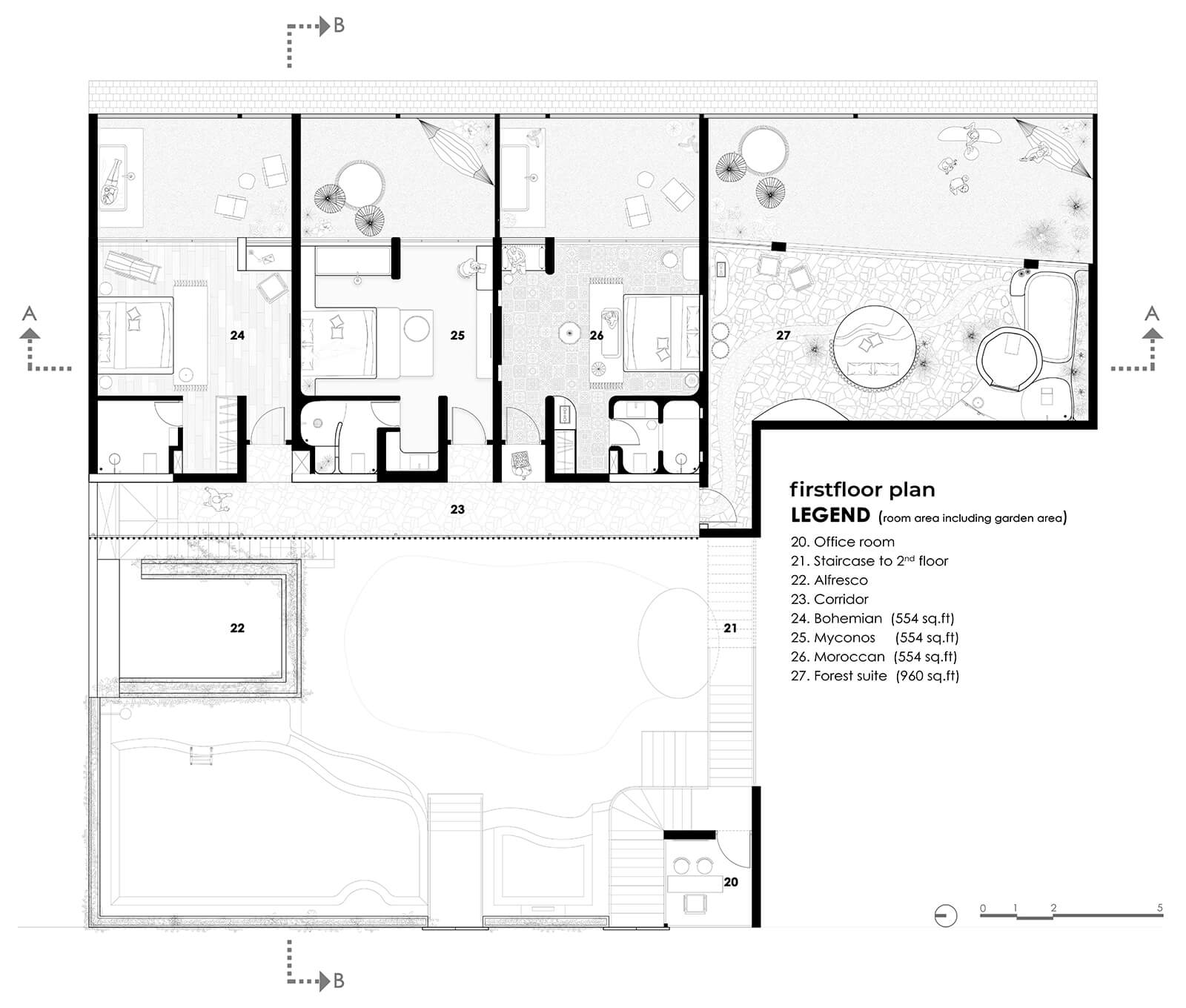
Behind the permeable corridors lie a series of distinctly curated spaces, crafted thoughtfully to evoke culturally resonant built environments that go well beyond merely functioning as accommodation. The Chettinad room takes inspiration from the southern regions of India, featuring elements of regional vernacular architecture. Athangundi flooring and half-white oxide walls are complemented by a traditional bed and bell jar lighting designs. The indoor garden features areca palms and banana trees, both stark reminders of South Indian natural landscapes. The Japan room, on the other hand, features a bamboo garden, handmade paper lighting and traditional Japanese chairs. With soft mat flooring and chopped palm leaves and oxide walls, the space reflects Japan’s tobacco leaf plastering and evokes a serene atmosphere.

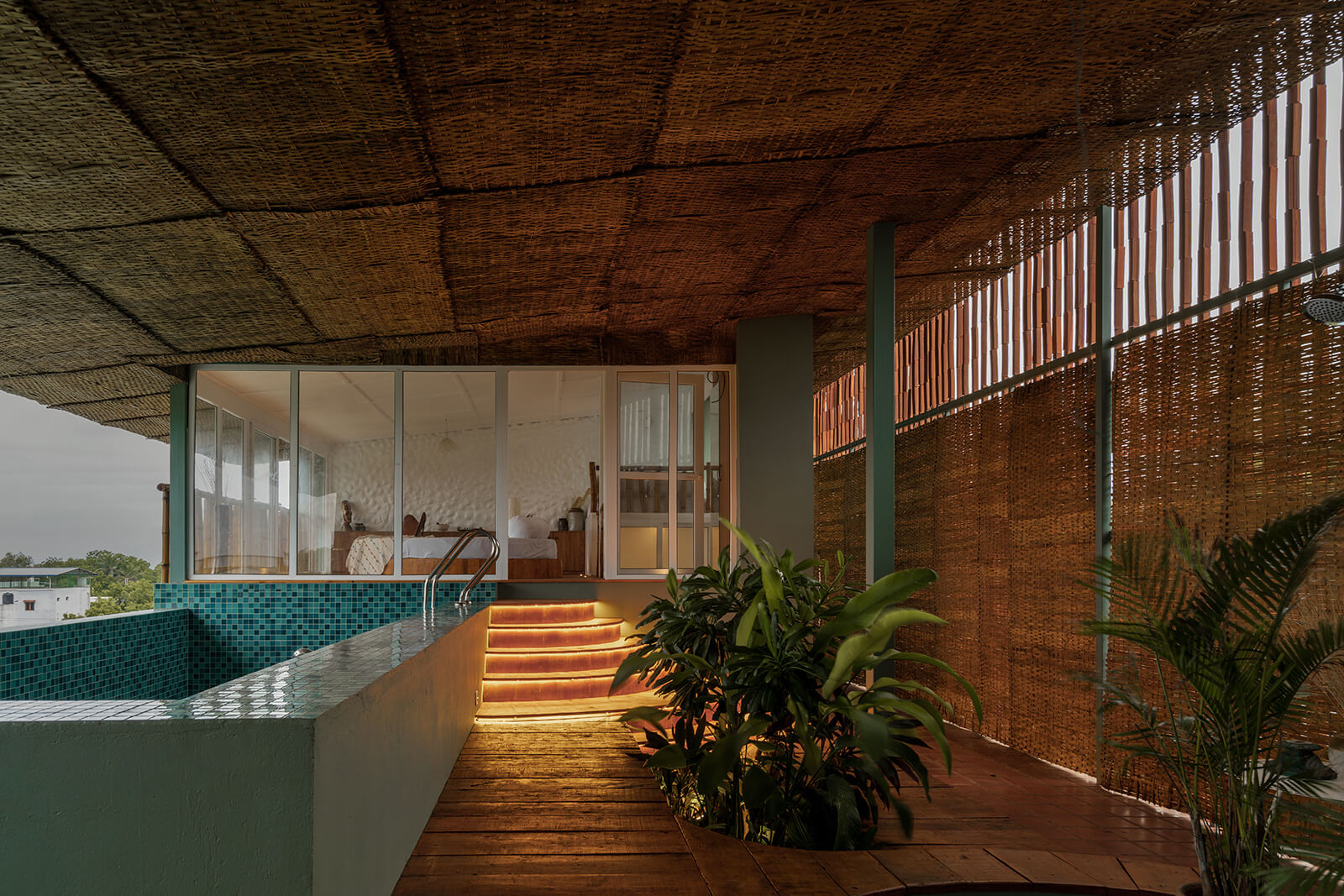
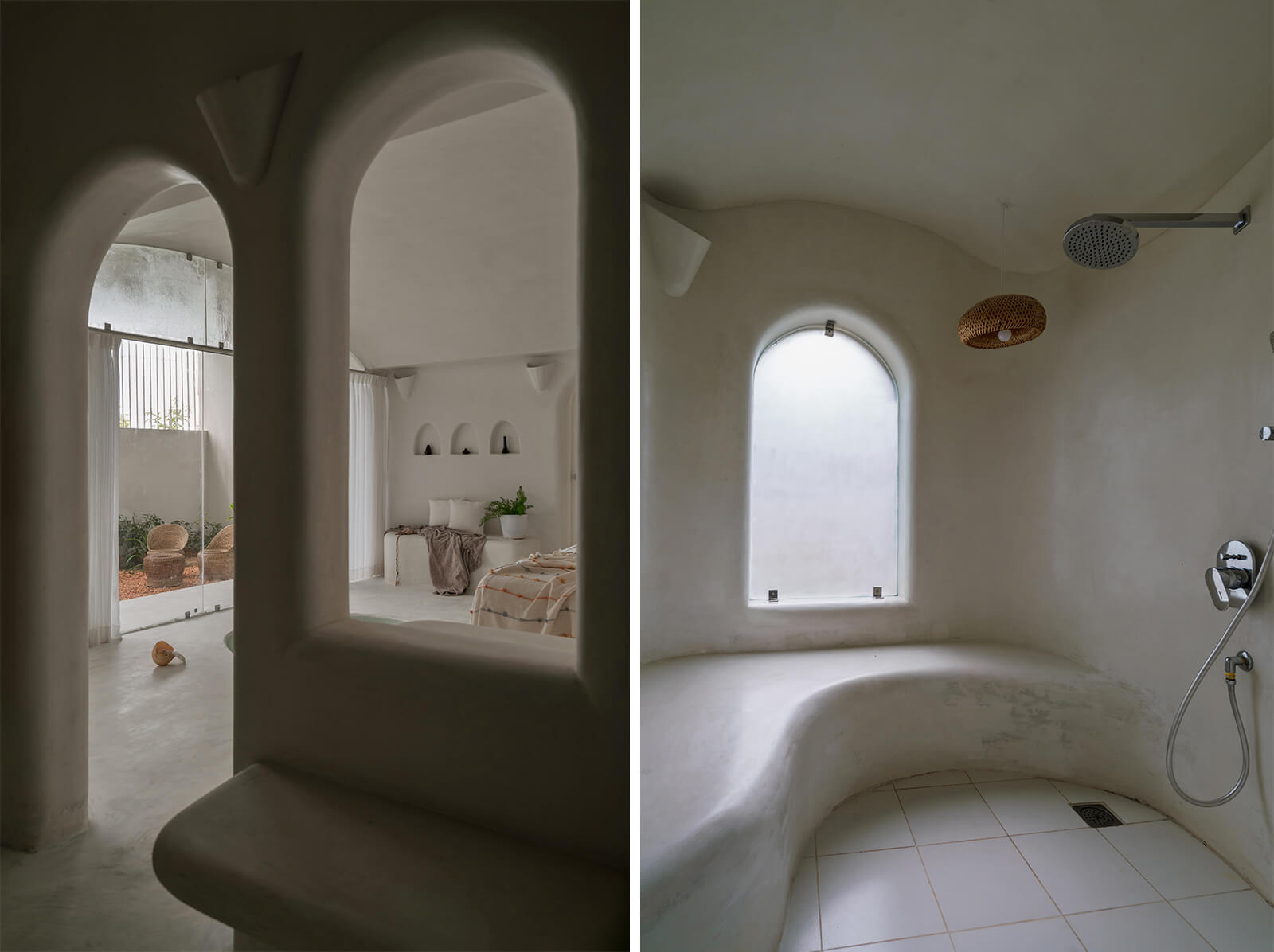
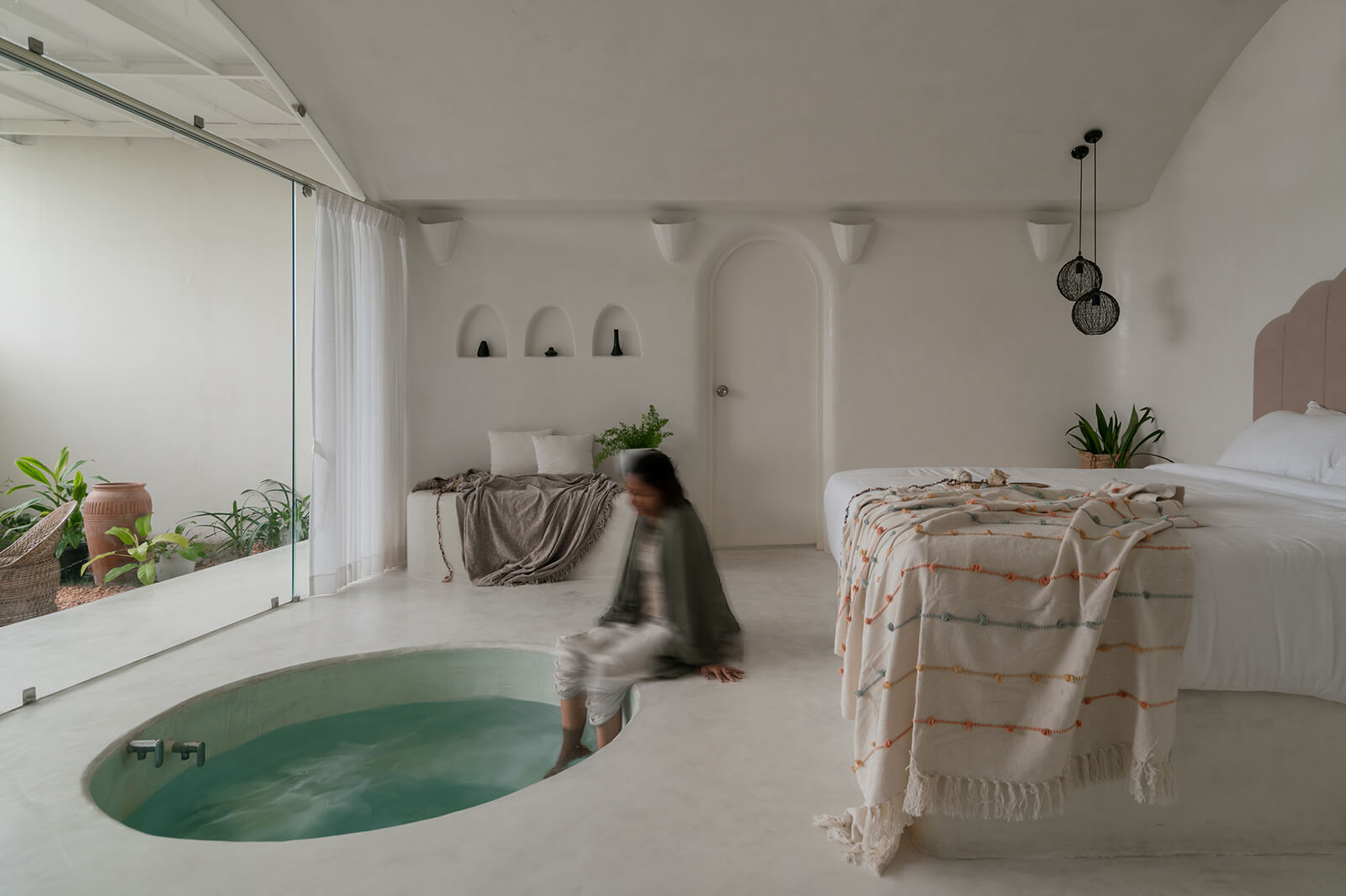
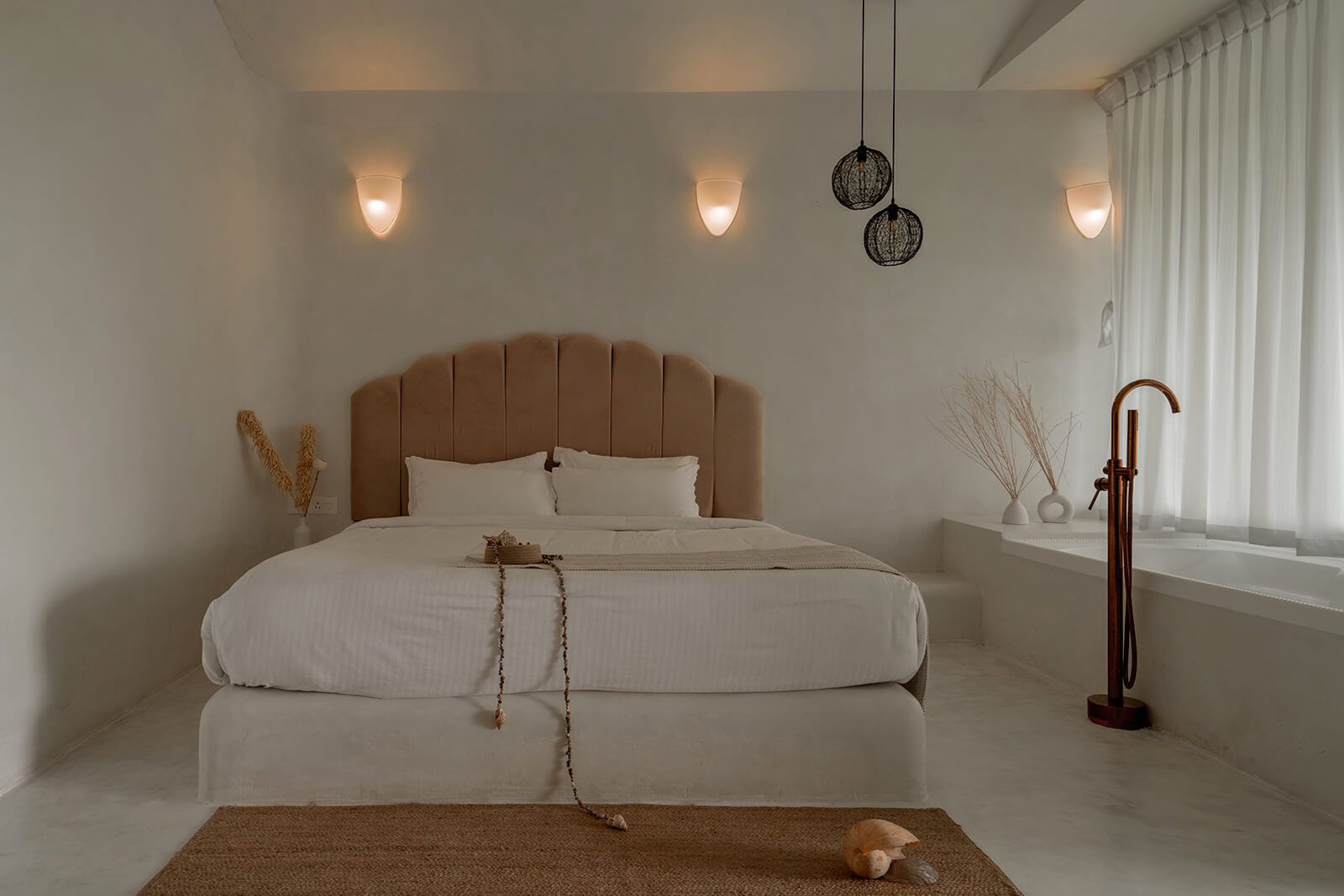
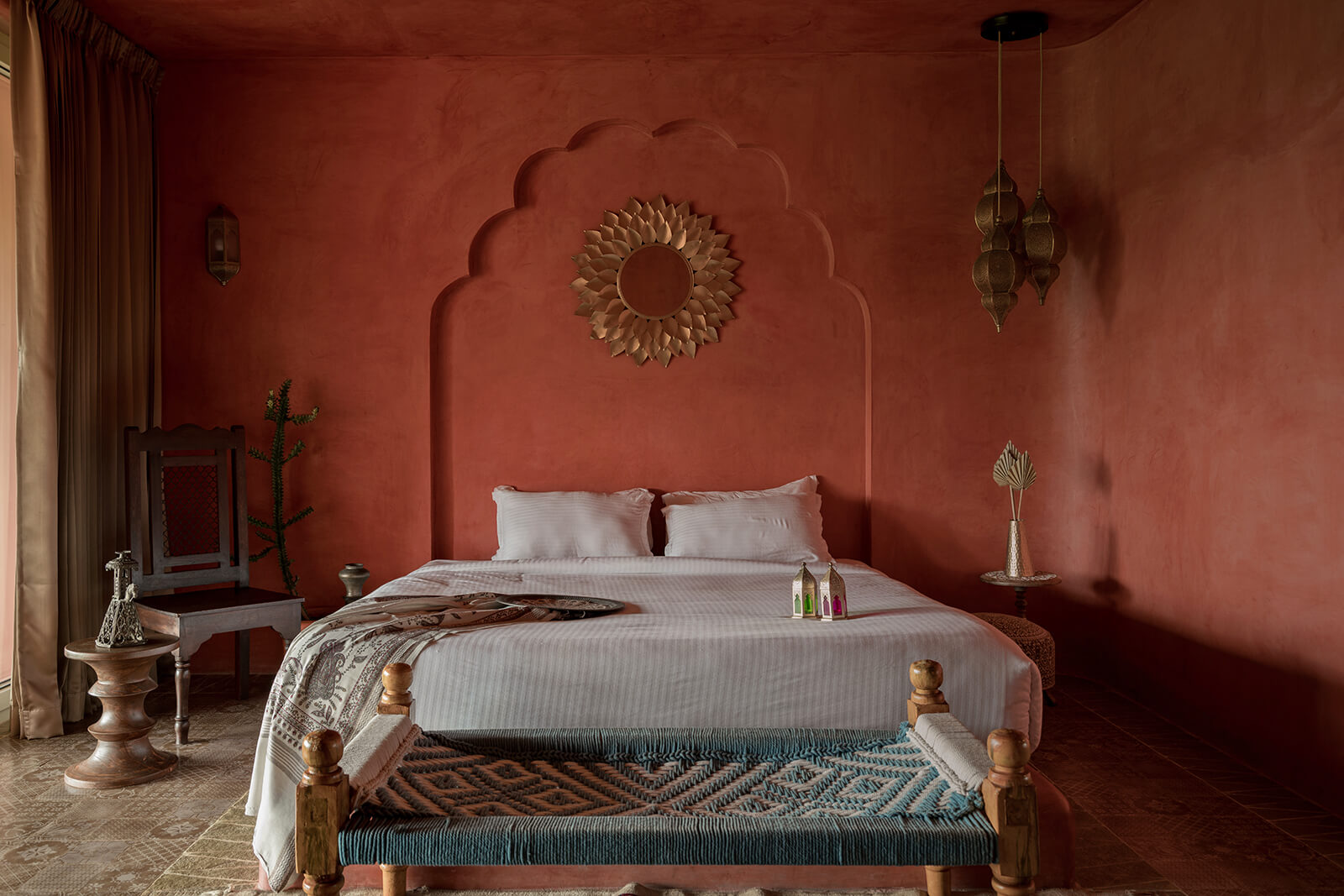
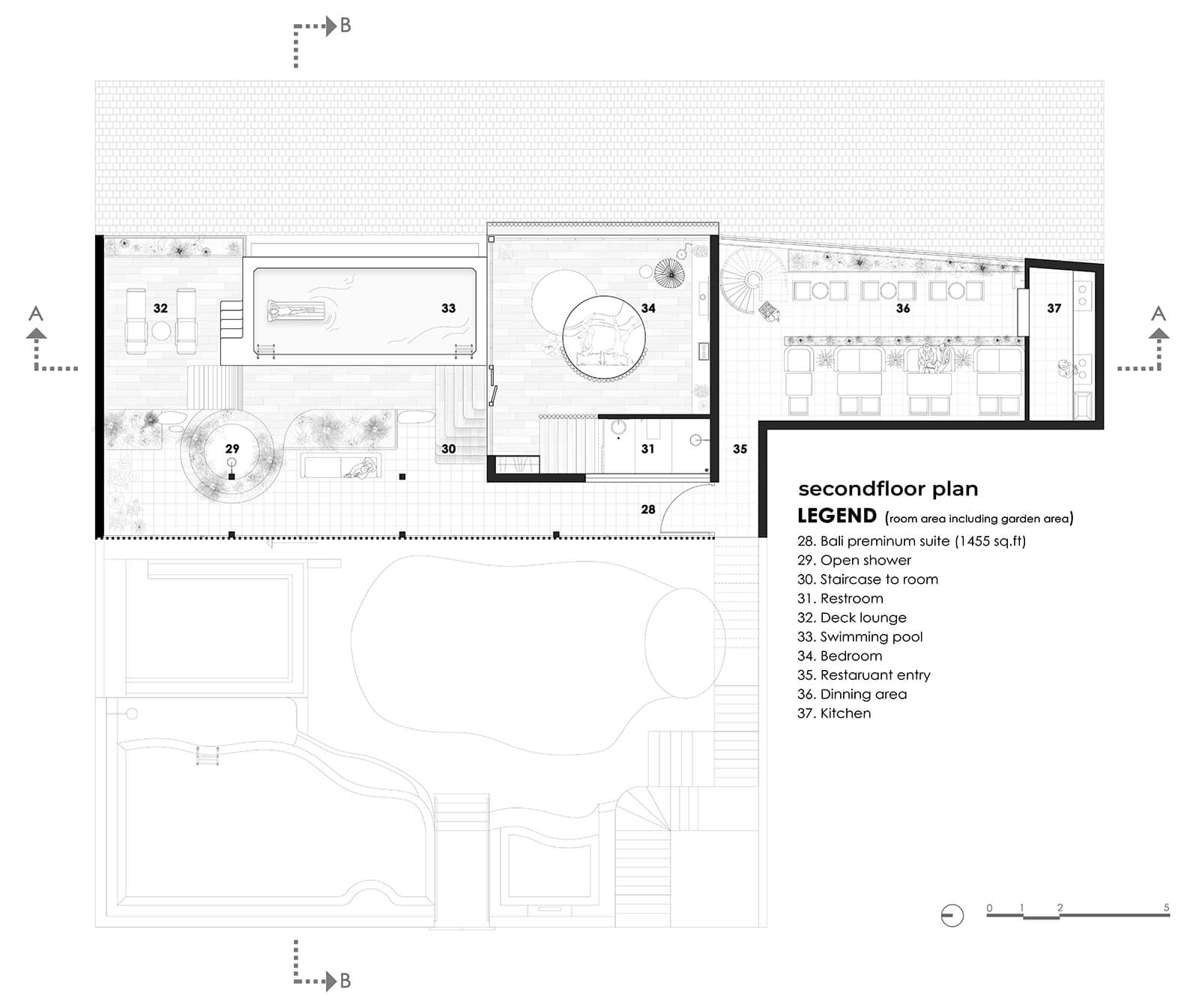
Rooms Santorini and Mykonos channel the beauty of Greece with their white oxide surfaces, curved forms and arched ingresses. The minimal design features lighting sculptures embedded into the walls, further contributing to a soft, comforting interior. Contrary to this, the Morocco room features detailed arches and niches with a recessed bay window, in addition to decorative elements such as diwan cushions, tandur stone flooring and subtle motifs that complement the opulent pink oxide walls. The Bali room spans the entire second floor, a testament to the popular tourist destination, known for the distinct style of Balinese architecture. A lap pool, a deck and an outdoor shower comprise its garden, while the indoors feature flooring made from reclaimed wood, a circular bed, wavy plastered walls, woven mat ceiling and bamboo railings to evoke the tropical architecture.
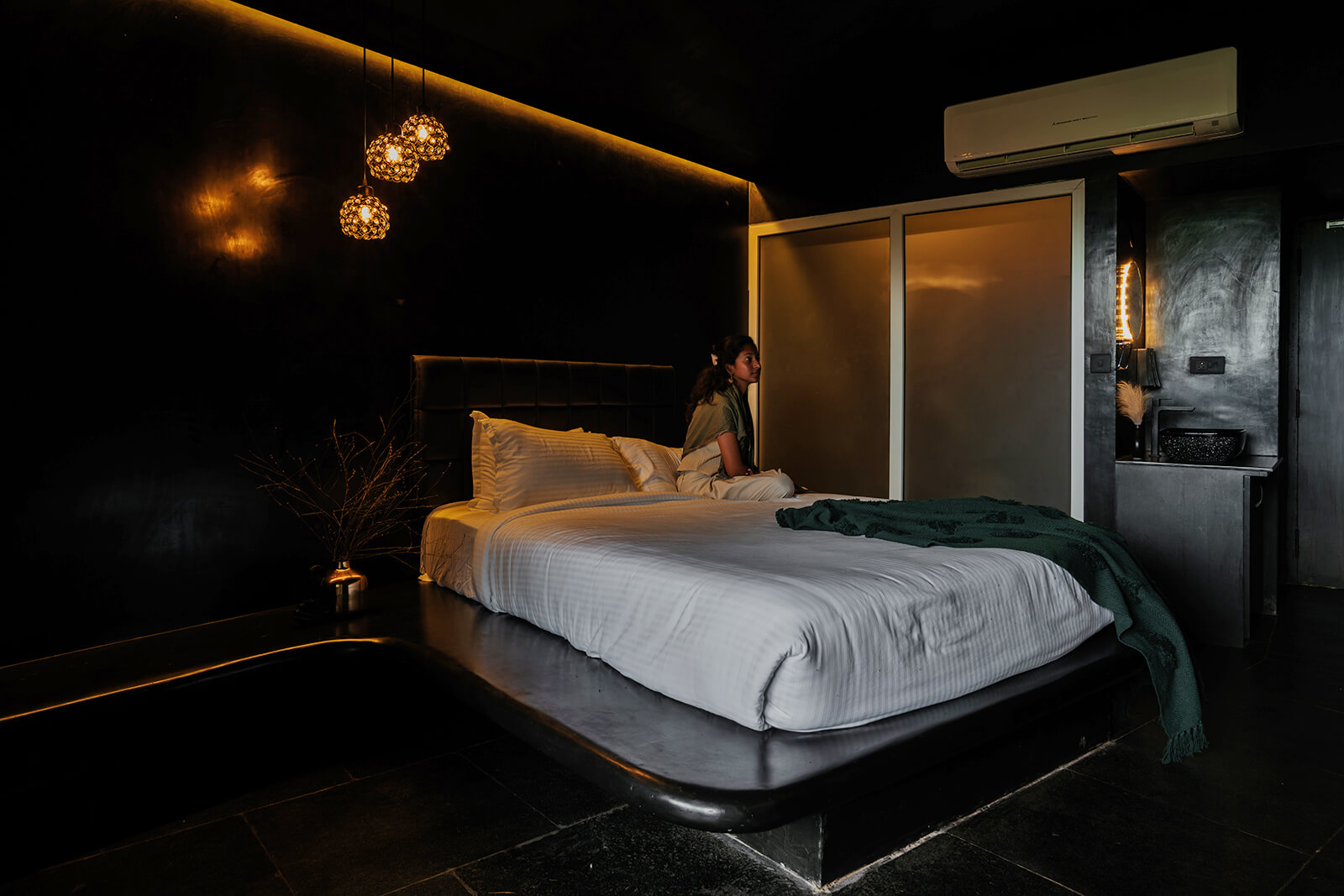
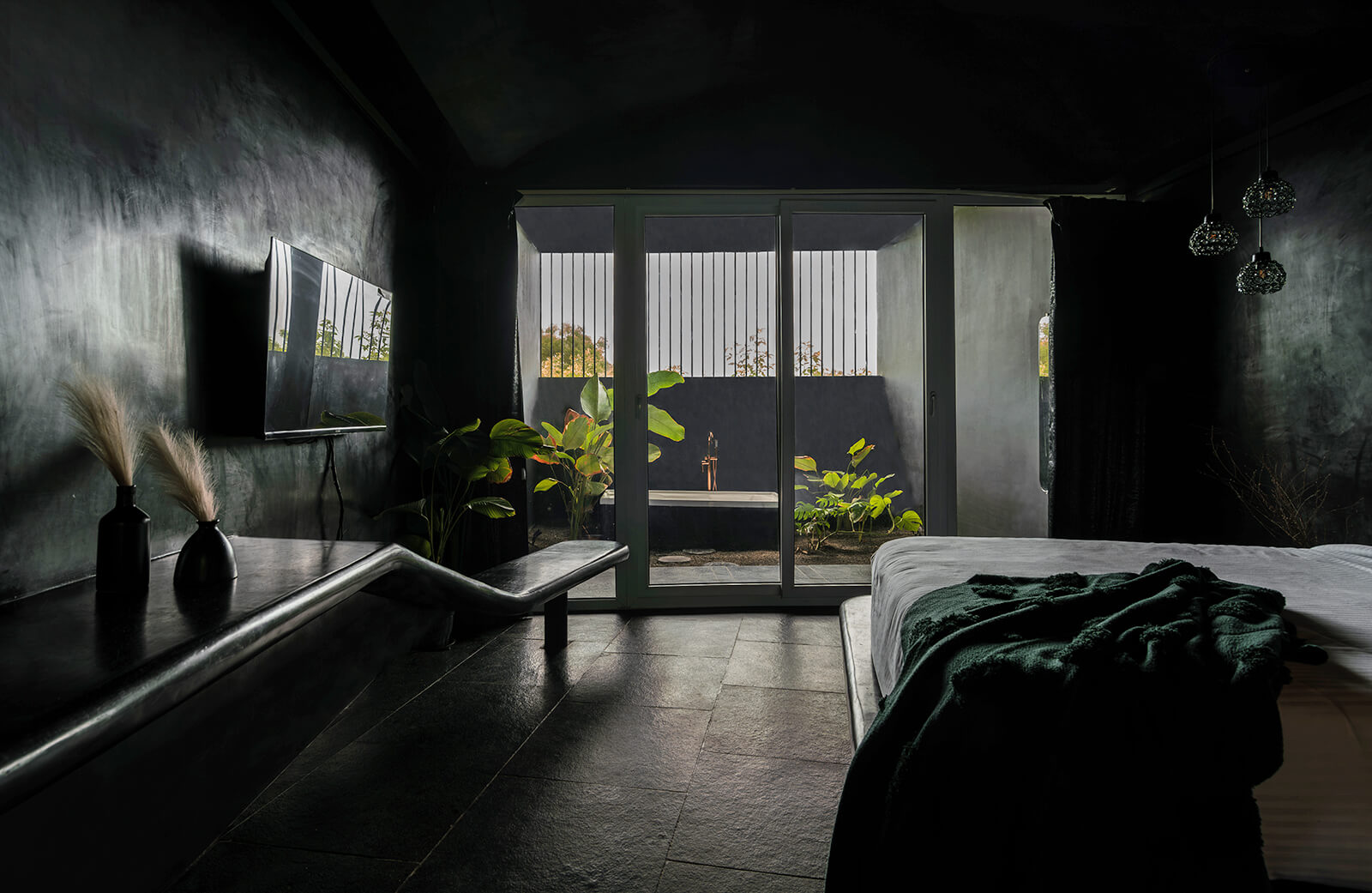
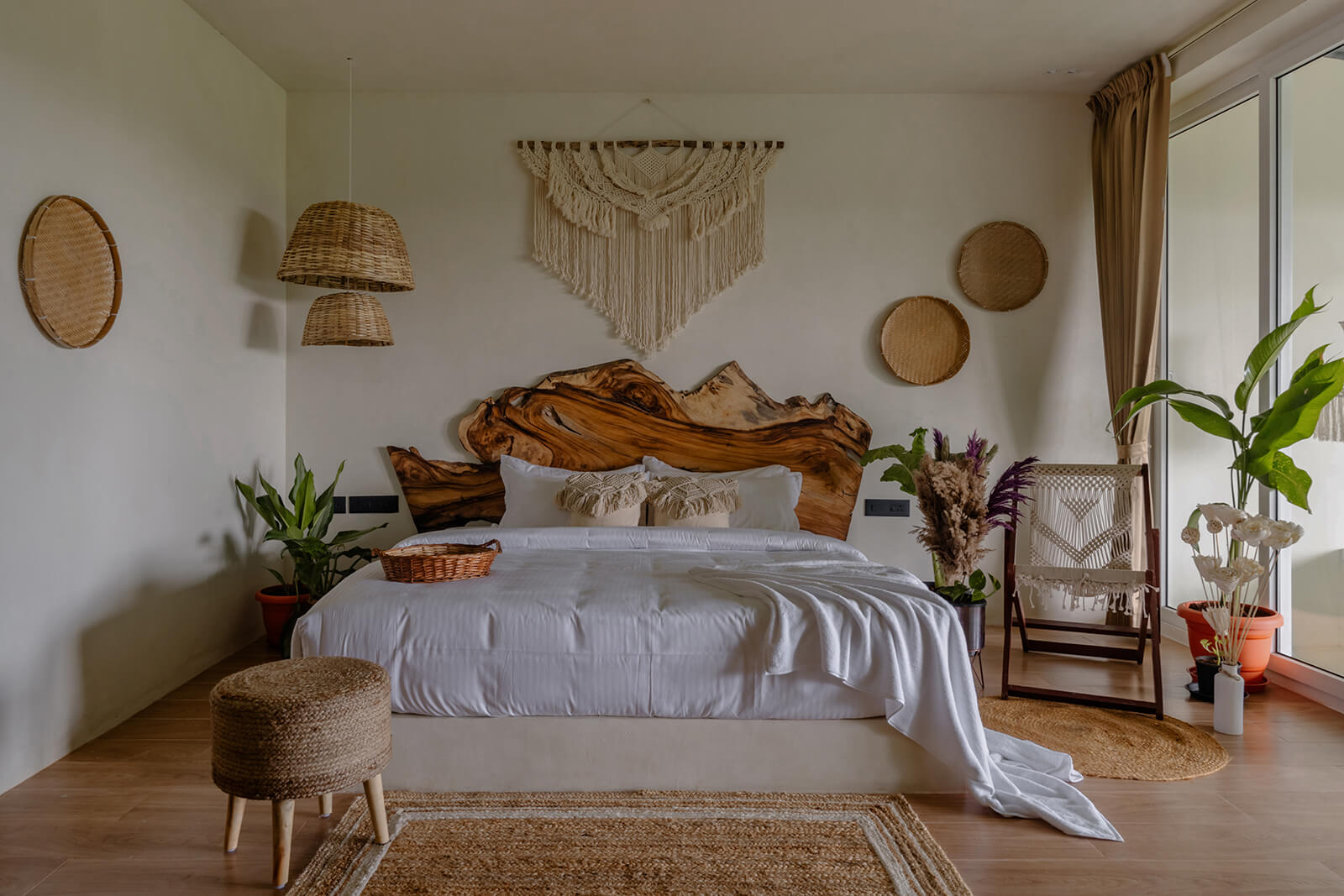
Three rooms, Nowhere, Bohemia and Forest stand out among the others with their unique concepts. With black oxide and leather-finish Kadappa stones, the Nowhere room reflects spatial emptiness and existential transience, while Bohemia evokes warmth with its textured wooden floors, raw timber headboards, macrame hanging decor and rattan lighting pieces. Further, the Forest room brings wilderness into a domestic setting, featuring blue mosaic on the floors encased by rubble stones, evoking a flowing stream. A bamboo headboard highlights the circular bed, complemented by furniture designs made of tree trunks and reclaimed roots. The space further adds layers of tactile design through bamboo plumbing fixtures and a sculpted ferrocement structure.

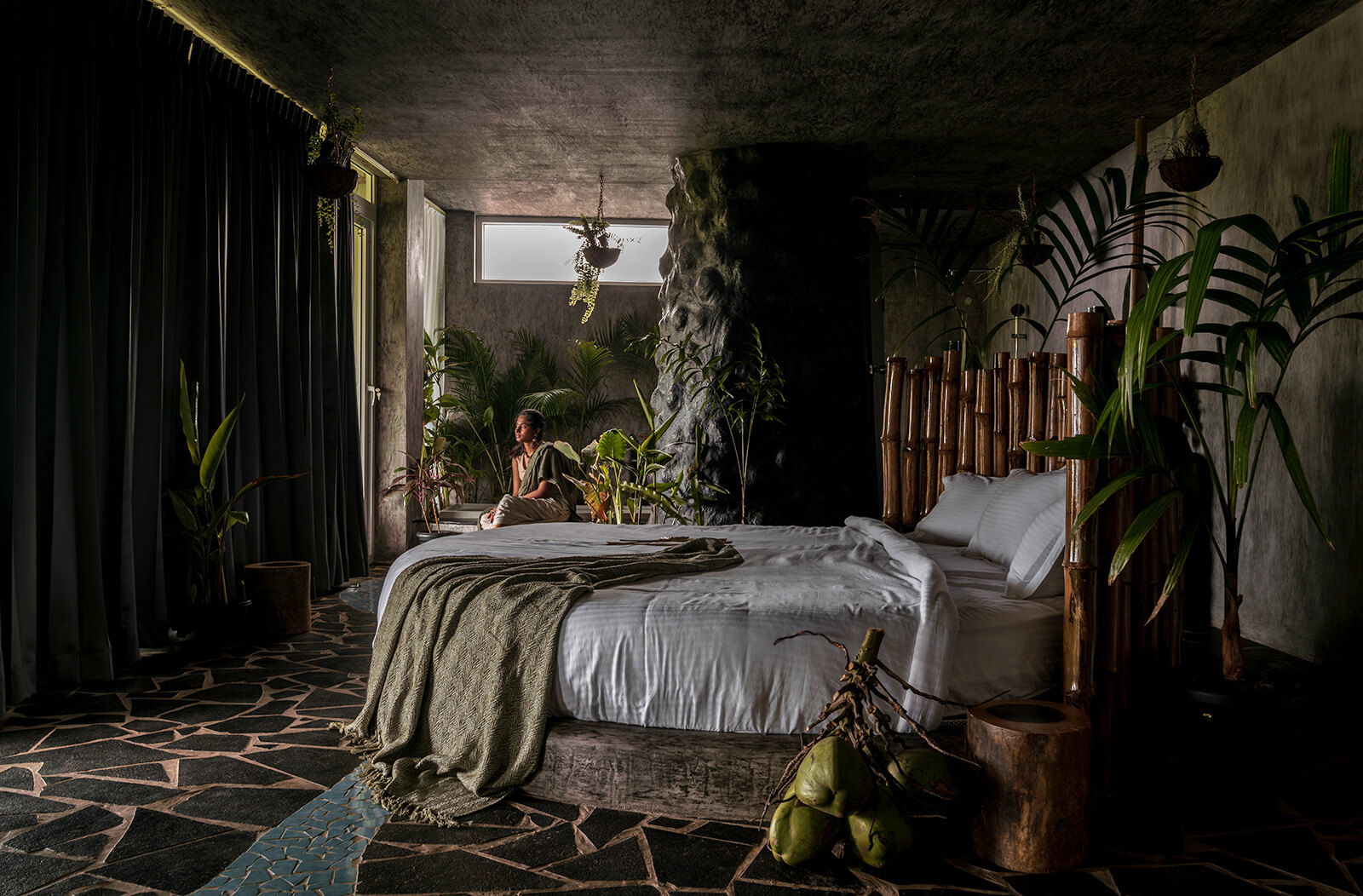
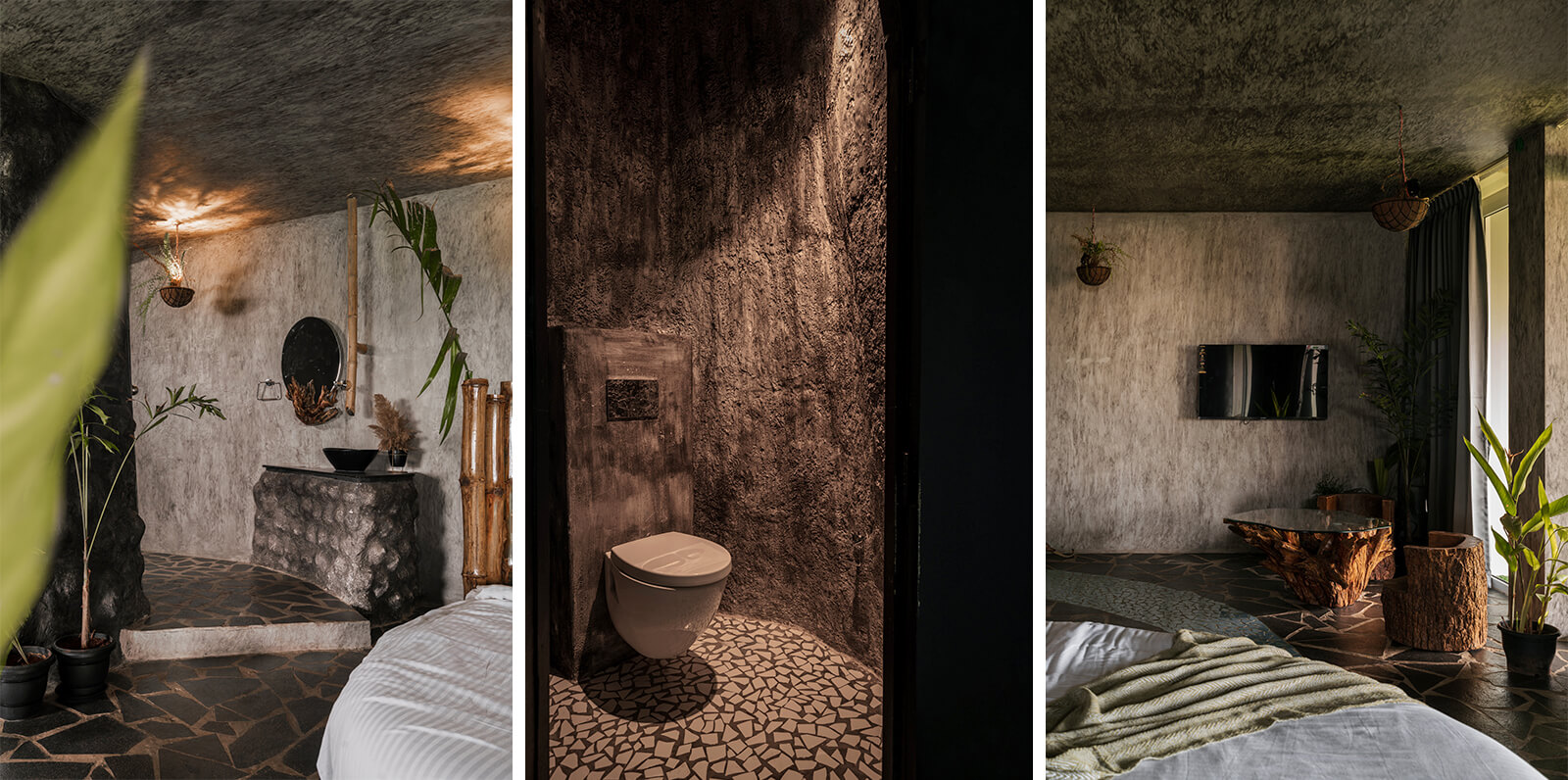
Beyond novelty, what about the project ensures that each space sustains its experiential quality over repeated visits? STIR asks the design team. “The Santorini, Japan, Morocco and the Forest-themed rooms have developed strong followings, with repeat stays becoming common. Such loyalty stems from the fact that Pondicherry does not otherwise offer this kind of immersive architecture. Architectural elements like oxide plastering, stone flooring and carefully curated details ensure that the spaces transcend trends, retaining their timeless and experiential quality over repeated visits,” the studio responds.
In calling itself “an architectural gimmick”, Nomads refuses the often easy dismissal of spectacle, reclaiming it as a meaningful tool for artistic expression and cultural conveyance. While Ngai described the gimmick as a trick both expressively excessive and labour-efficient, in the case of this project, that trick becomes a way of resonating with hospitality beyond its novelty. Like magicians, the hospitality design also uses illusions, not for deception, but to create playful spatial fragments that invite visitors to dwell within cultural mirrors of the world. The visitors return, not merely to collect a series of experiential themes, but to re-enter a built environment that wears its theatricality unapologetically, while using materiality and tactility for a grounding experience.

by Pranjal Maheshwari Oct 19, 2026
The Mumbai-based architects integrate courtyards, mesh screens and north light trusses to create a dining space that doubles up as a community hub at SR University, Warangal.
by Mrinmayee Bhoot Oct 17, 2026
The Rotterdam-based institute centres the Indian Ocean as a network for exploring material histories and transnational links shaping coastal cultures, positing them as future models.
by Pranjal Maheshwari Oct 16, 2026
At the 2026 Stirling Prize ceremony, Mary Duggan with RUFF Architects, MAKER Architecten and Nakshabid Architects were felicitated for proffering quality housing and social equity.
by Mrinmayee Bhoot Oct 12, 2026
The new Centre for Contemporary Arts, fostering public engagement with art in Uzbekistan, is housed in a tram depot refurbished by the French studio, emulating local craftsmanship.

make your fridays matter with a well-read weekend
Enter your details to sign in
Don’t have an account?
Sign upOr you can sign in with
a single account for all
STIR platforms
All your bookmarks will be available across all your devices.
Stay STIRred
Already have an account?
Sign inOr you can sign up with
Verification link sent to check your inbox or spam folder to complete sign up process
Tap on things that interests you.
Select the Conversation Category you would like to watch
Please enter your details and click submit.
Enter the 6-digit code sent at


seeders stages ten theatrical illusions of spatial fragments for the Nomads retreat
by Bansari Paghdar | Published on : Jan 09, 2026


 Sign in with Google
 Sign in with email
What do you think?