Architecture07 mins. read
Transcribing the maximum city with Jaquar Pavilion Park at ADFF:STIR Mumbai 2026
by Jincy IypeDec 24, 2025



by Mrinmayee BhootPublished on : Dec 26, 2025
A dense flock of entangled roots and branches—bearing the shifting, slippery threshold between the land and sea—Mumbai’s mangroves are vital to its reclaimed terrain. The fertile infrastructure protects the city against climate catastrophe, holding against the wrath of the Arabian Sea. These vegetal guardians of an incessantly urbanising city, however, exist within a fraught political imaginary. Multiple recent government rulings seem to want to do away with them, in lieu of urban infrastructure deemed ‘necessary’; the citizens want to protect them, for much the same reason. It’s in continuation of this urgent debate—portent to a future that is fragile but yet to manifest entirely—that Ahmedabad-based Studio Sangath conceives their pavilion design at the Jaquar Pavilion Park, one of the four dynamic pillars of the returning ADFF:STIR Mumbai 2026.
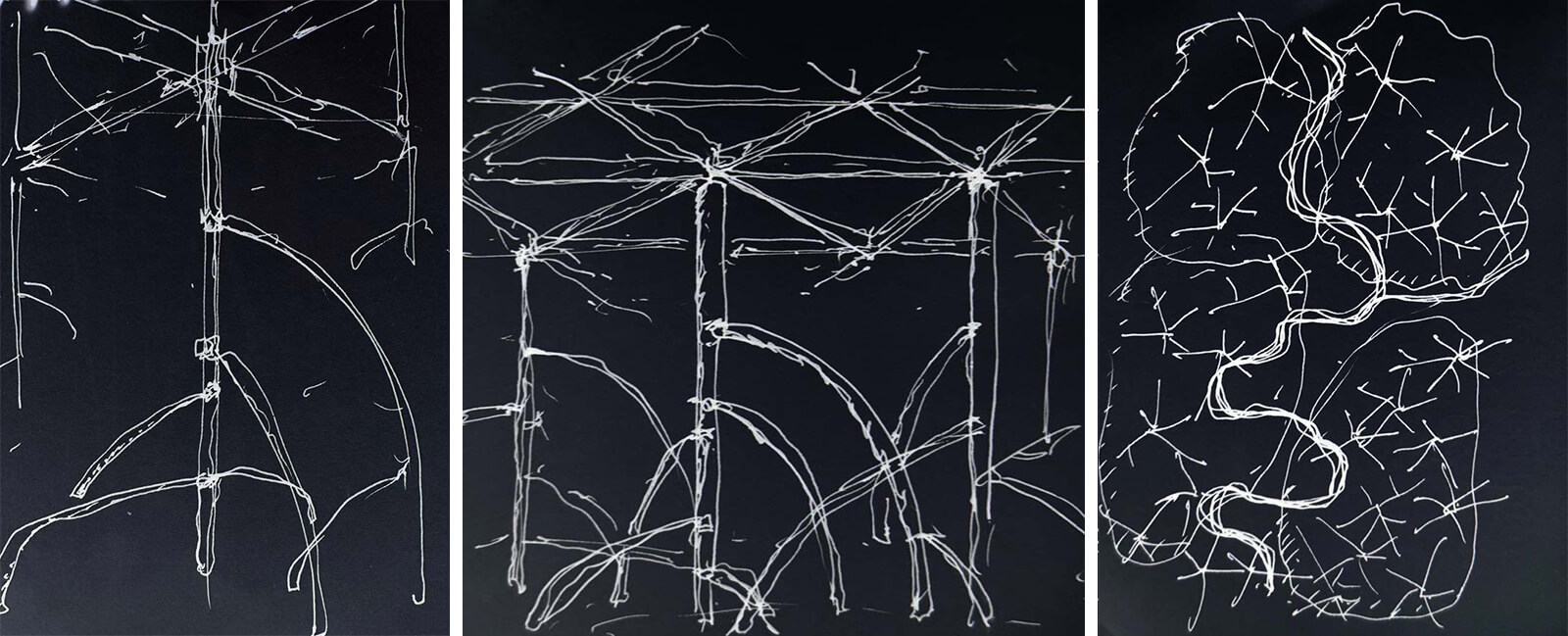
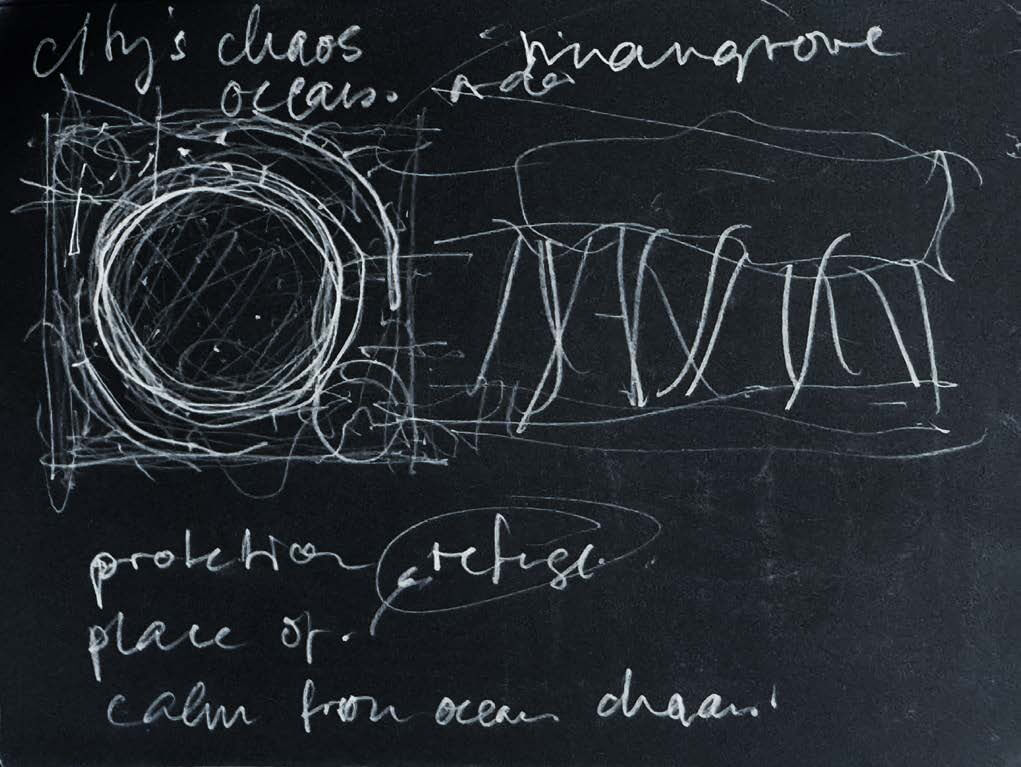
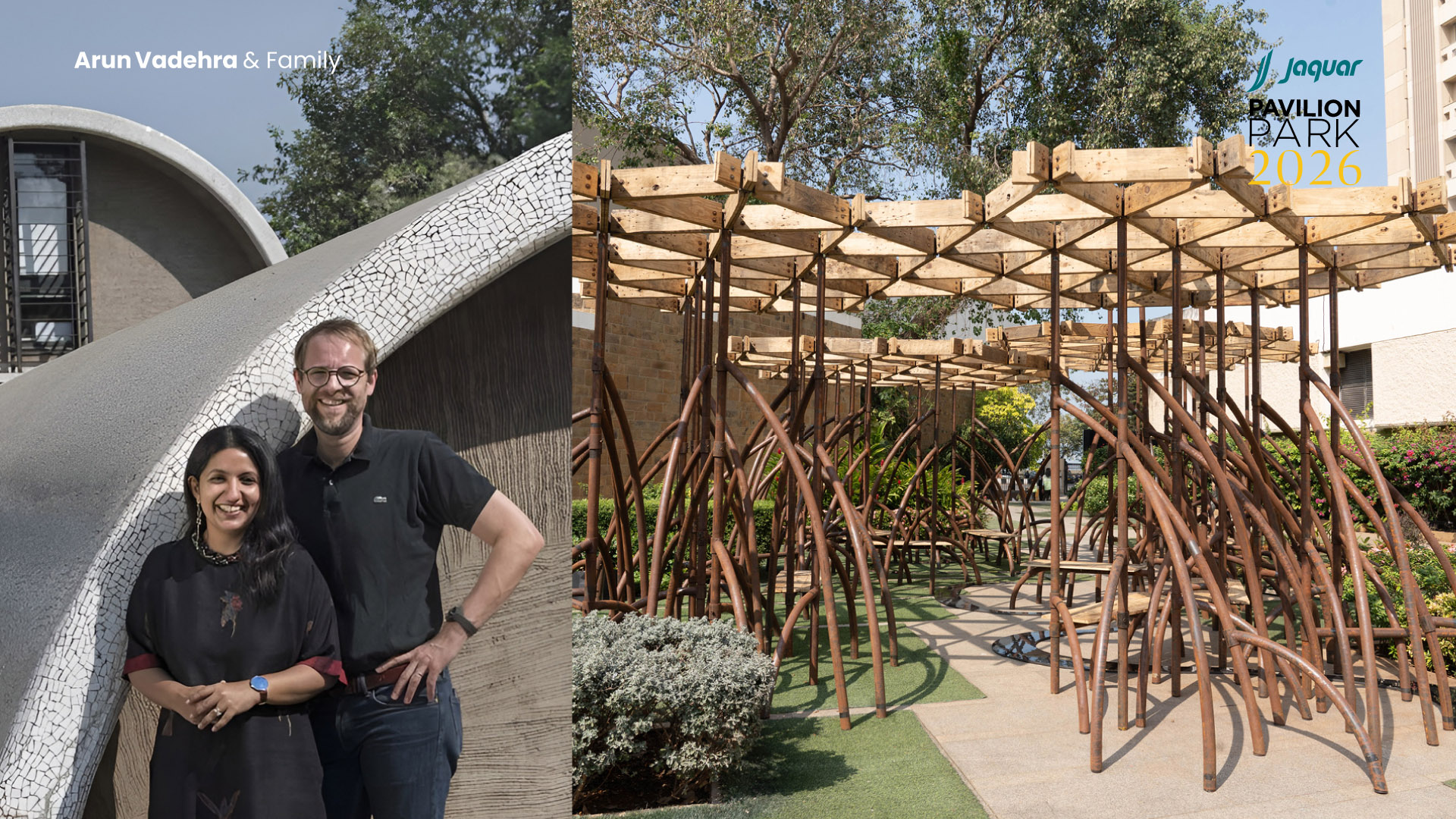
The project is generously supported by Mr Arun Vadehra & Family—patrons behind the Vadehra Art Gallery, New Delhi and Arari Interiors, and elicits the literal in its title. The pavilion design is then an attempt by the Indian architects to reflect on the ecosystems that are intrinsic to a city defined by flux, whilst offering a place to pause, a space to question and a setting through which to create awareness towards an increasingly fragile ecosystem. The pavilion's architecture, nimble in conception, takes on the rhizomatic form of the mangrove and its enmeshed structures. A network of roots and branches creates a configuration that is porous—possessing its own organic structural logic—that encourages coming together. The design team, led by the studio’s principal architects, Khushnu Panthaki Hoof and Sönke Hoof, describes its structure as ‘a gentle labyrinth’ with the trees’ limbs transfigured into benches and canopies.
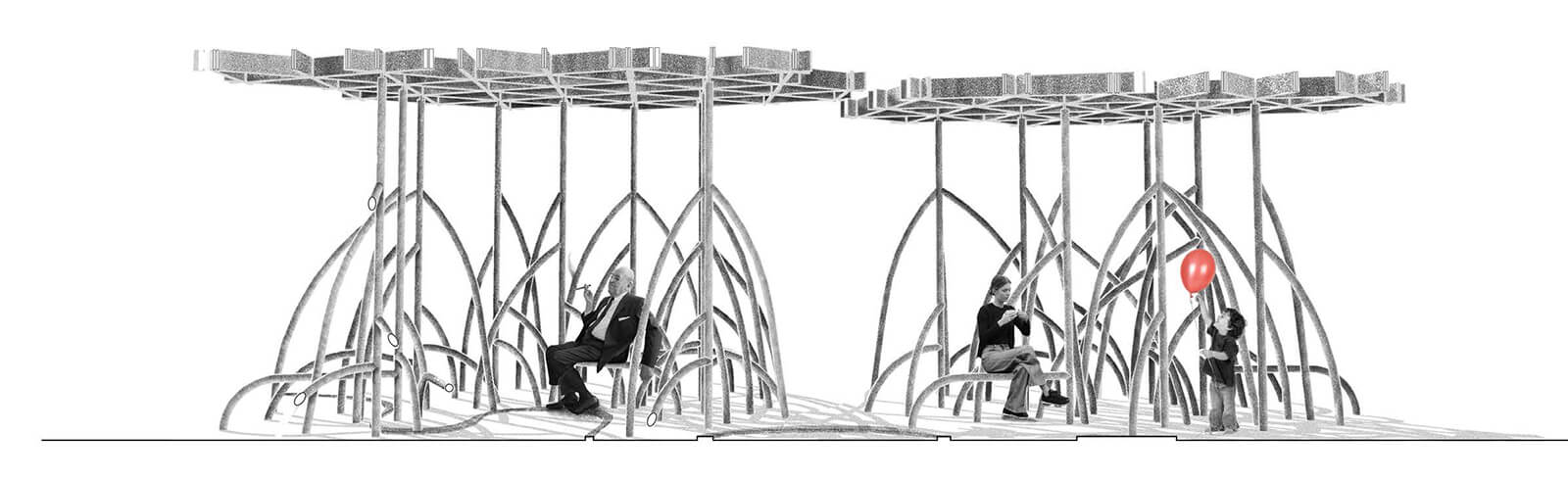
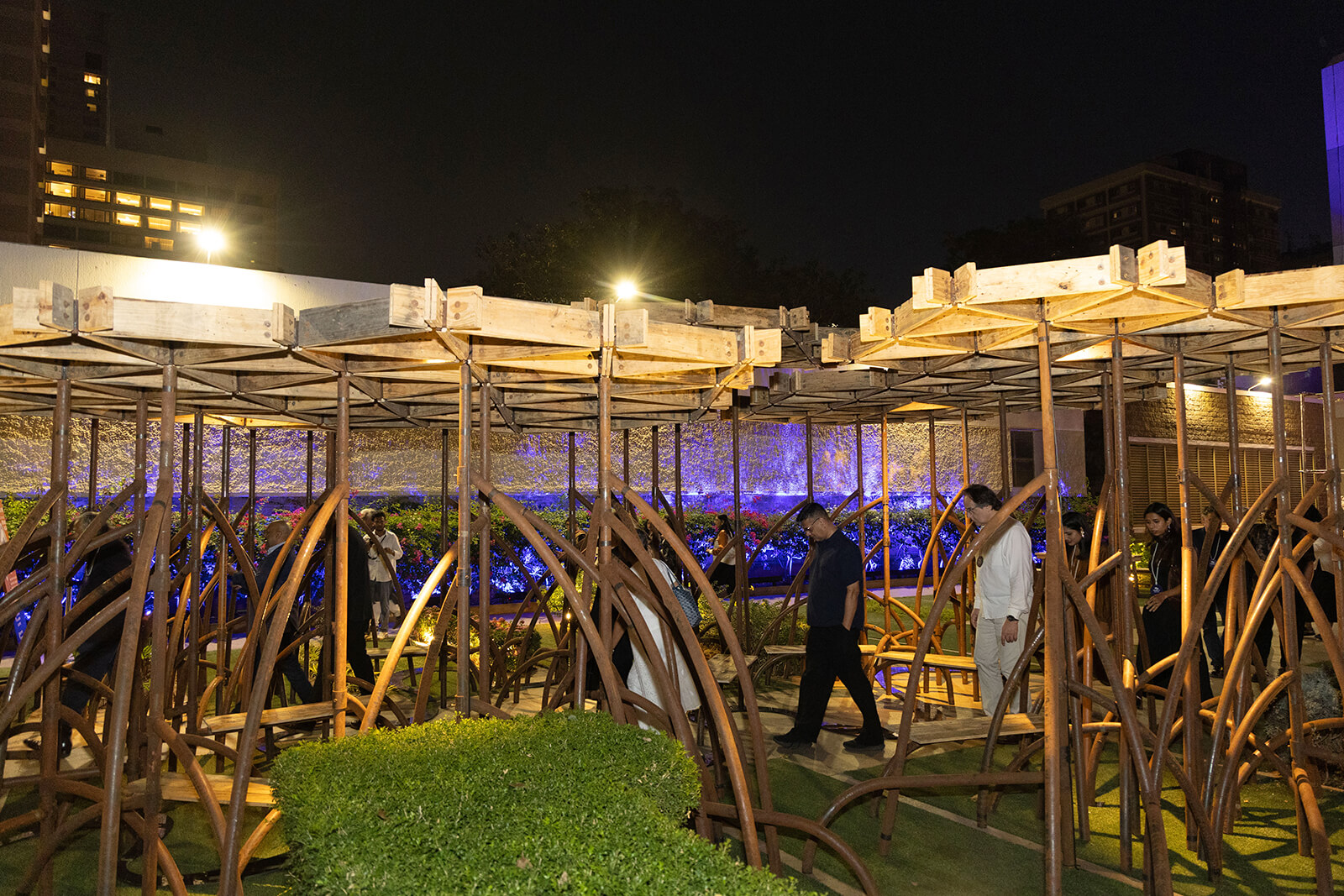
The team envisioned the organic pavilion as a space that encourages both moments of solitude and shared conversation, with nooks to relax in and a fluid space that one can effortlessly weave through. It’s this fluidity that the team also intends will lend itself as a dramatic backdrop for theatrical performances, dances or spontaneous conversations. Further, at the heart of the pavilion, a narrow reflective stream affords fleeting views of the sky, foliage and passersby alike. “While thinking about Mumbai, we kept going back to Lewis Mumford’s words: a city is a fact in nature,” Studio Sangath notes about the inspiration for the design. The invocation of the shifting mangroves thus becomes a means to highlight pivotal aspects of resilience, openness and a forbearing co-existence with nature.
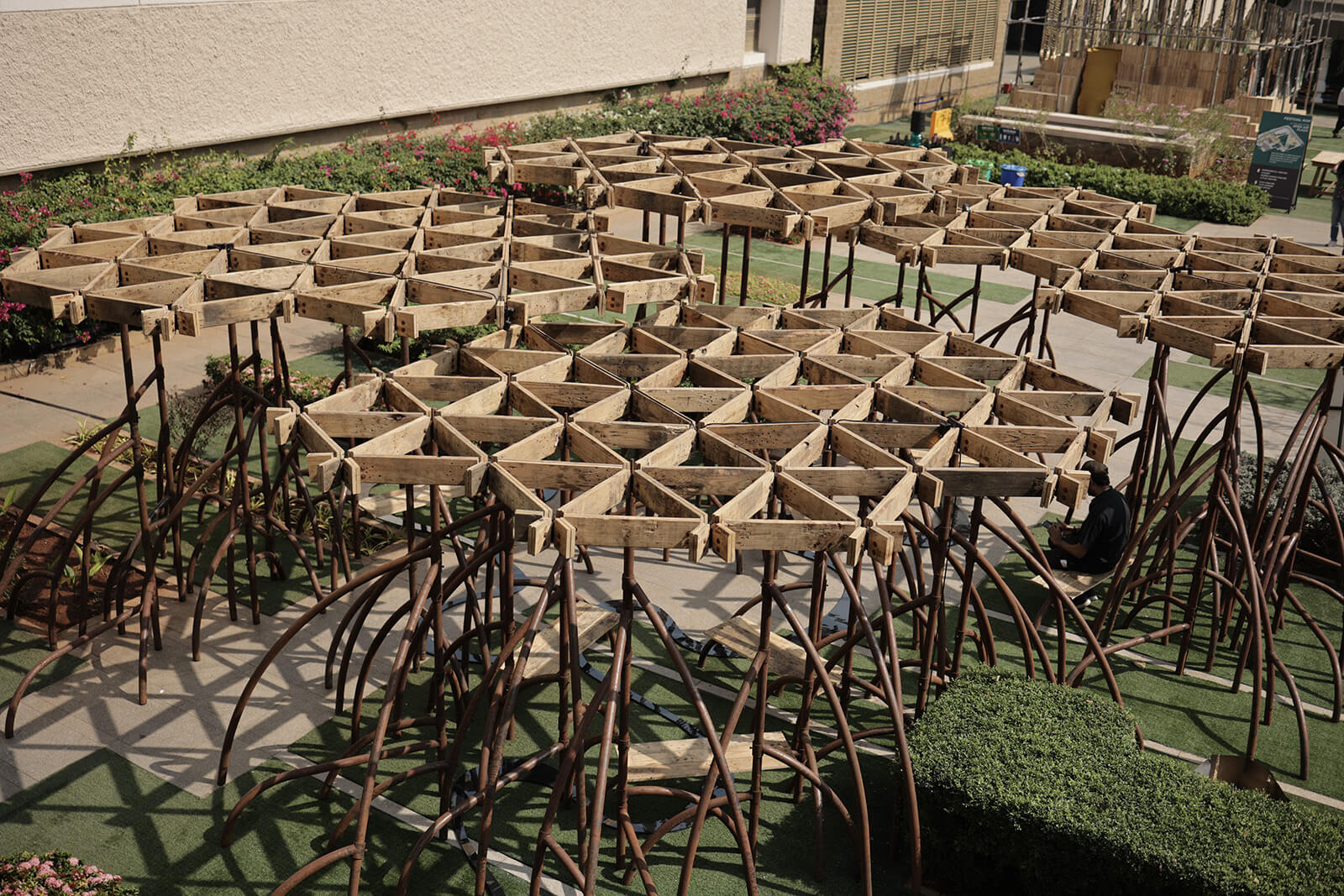
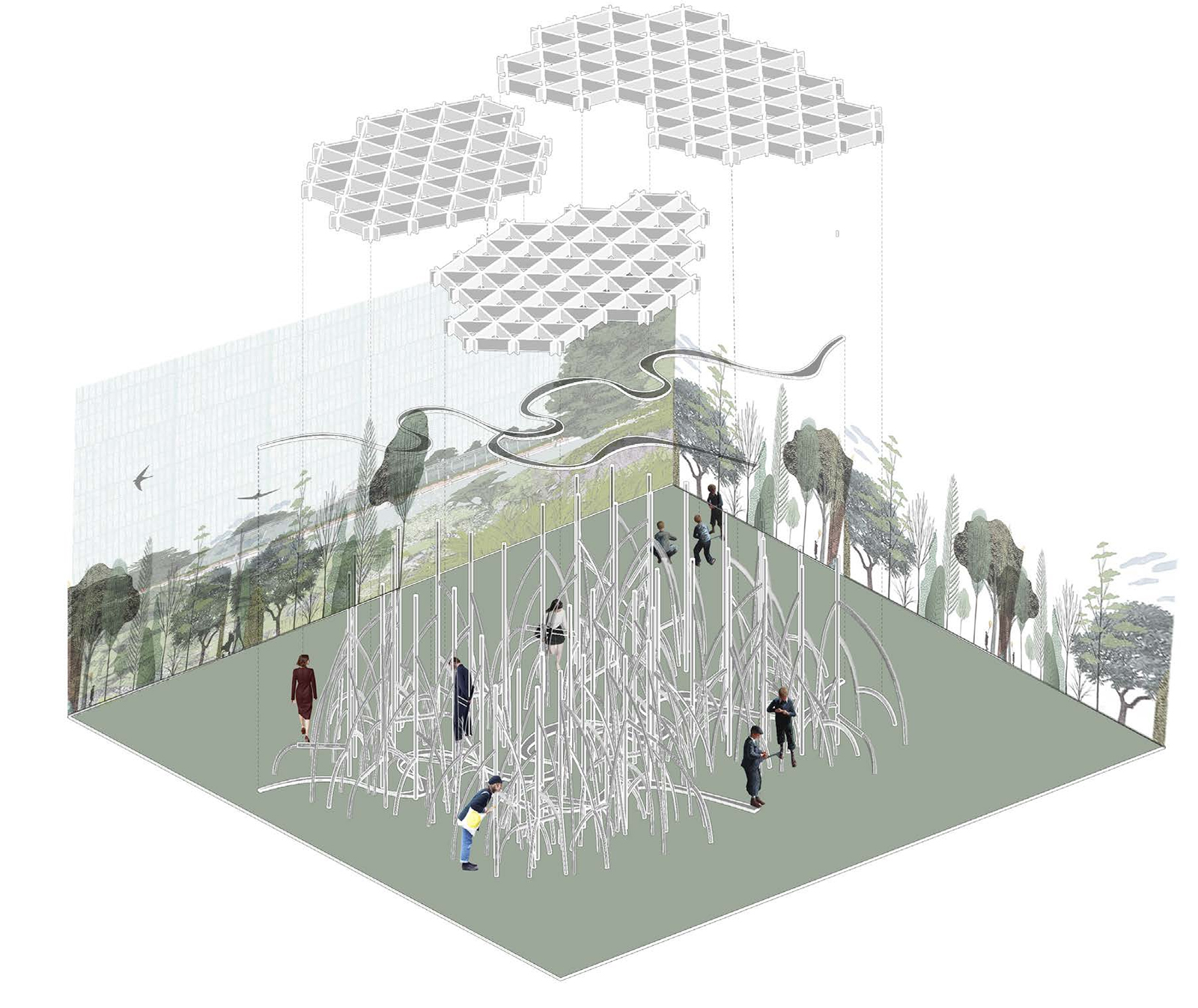
Upholding sustainable values written into the Jaquar Pavilion Park’s guidelines, the design for the pavilion also takes into account the temporary structure’s construction. As the team notes, the pavilion is conceptualised as a modular design, built using recycled materials sourced from surrounding neighbourhoods—discarded shipping pallets, packaging crates and recycled steel pipes. The circular design will be composed of three standard modular sections, allowing flexibility for different configurations.
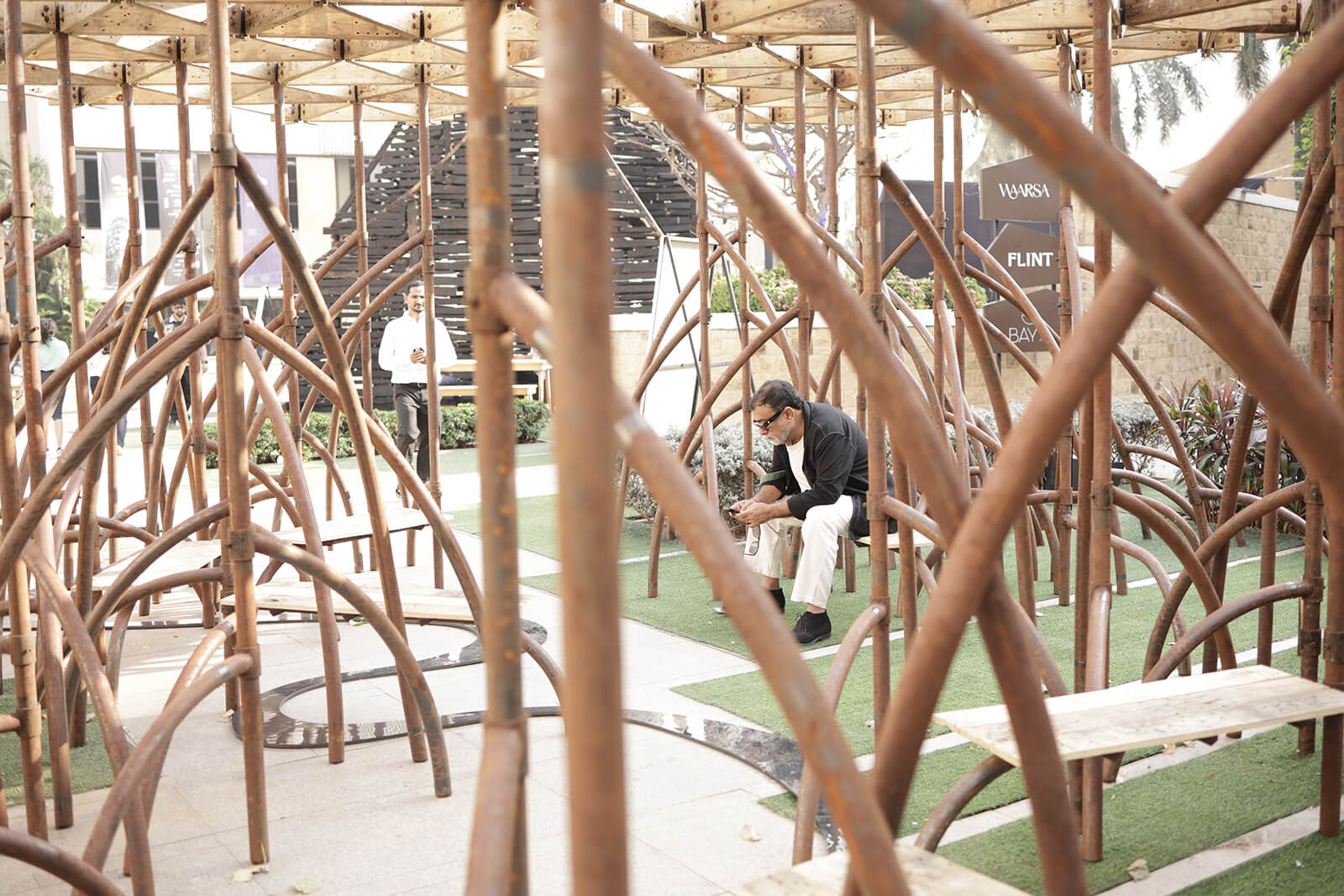
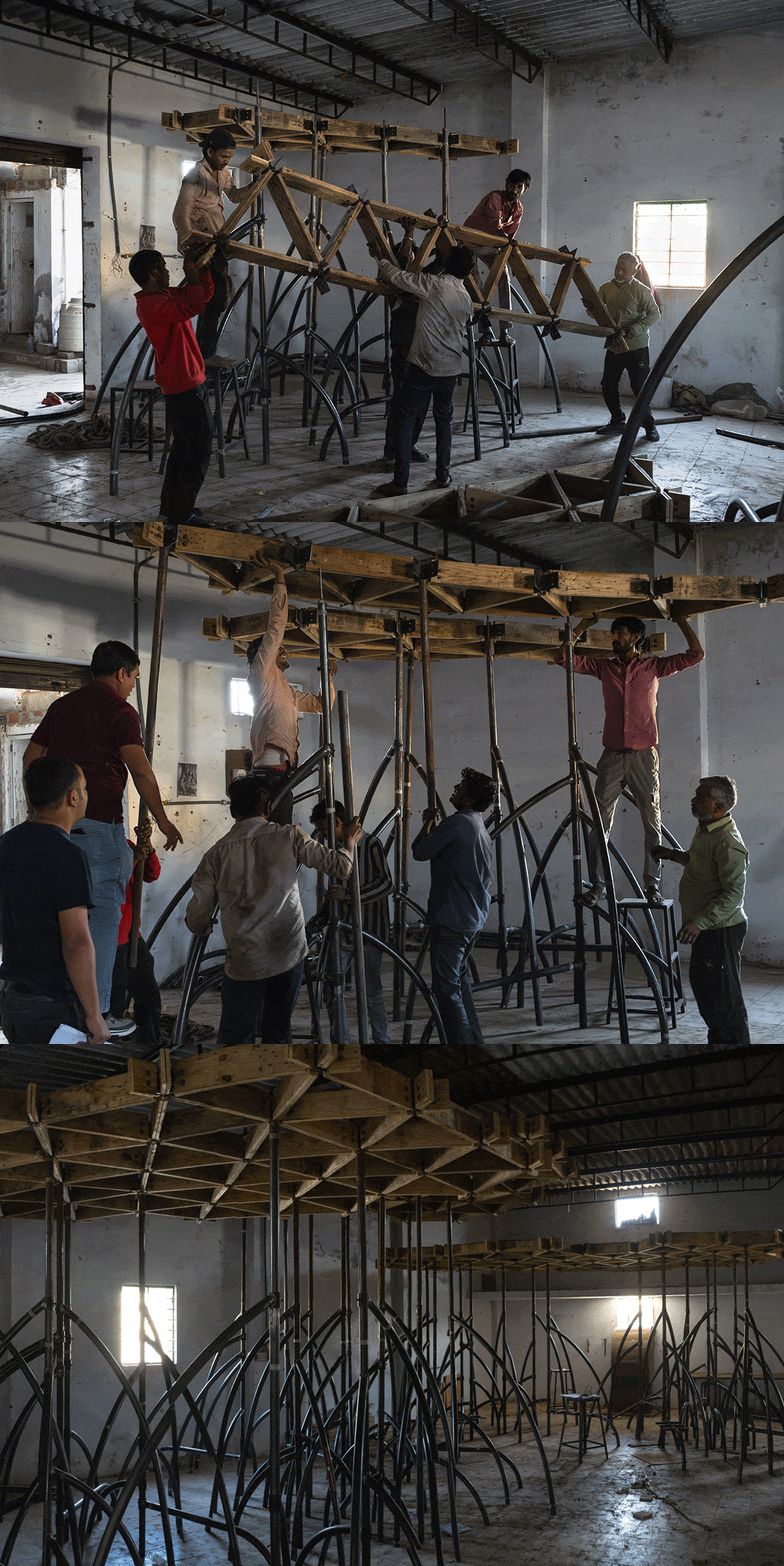
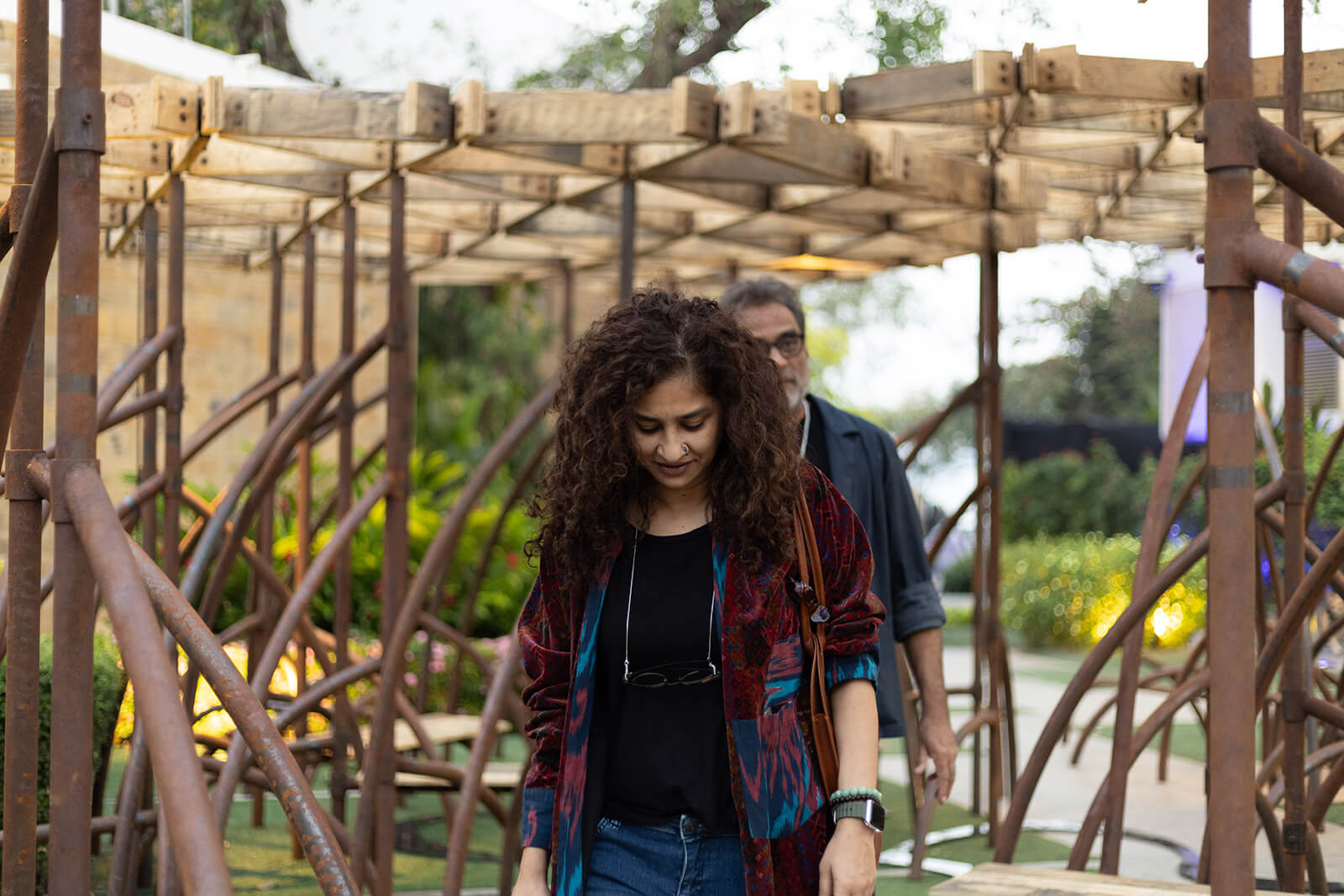
The pavilion’s crucial themes resonate with the larger philosophy of this year’s Jaquar Pavilion Park, inviting participating designers to recontextualise the collective narratives about Mumbai and its constantly evolving urban identity. The existence of such a natural landscape in proximity of the city is in itself a contradiction. Where the population and health of these mangroves are in rapid decline due to the city’s insipid expansion, urban development, pollution and land reclamation; where the powers that be are pushing for razing 45,000 trees in these ecosystems following the Bombay High Court clearing a coastal road project already deemed controversial; the presence of the symbolic mangrove within the National Centre for Performing Arts (NCPA) is a testament to the ability (and will) of design to inspire conversations deemed too inflammatory for the public sphere, although their urgency might dictate otherwise.
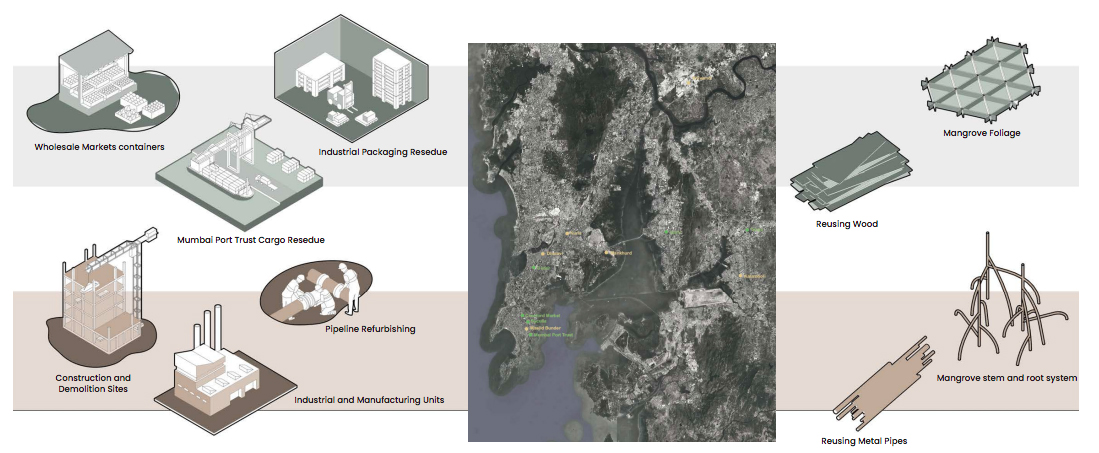
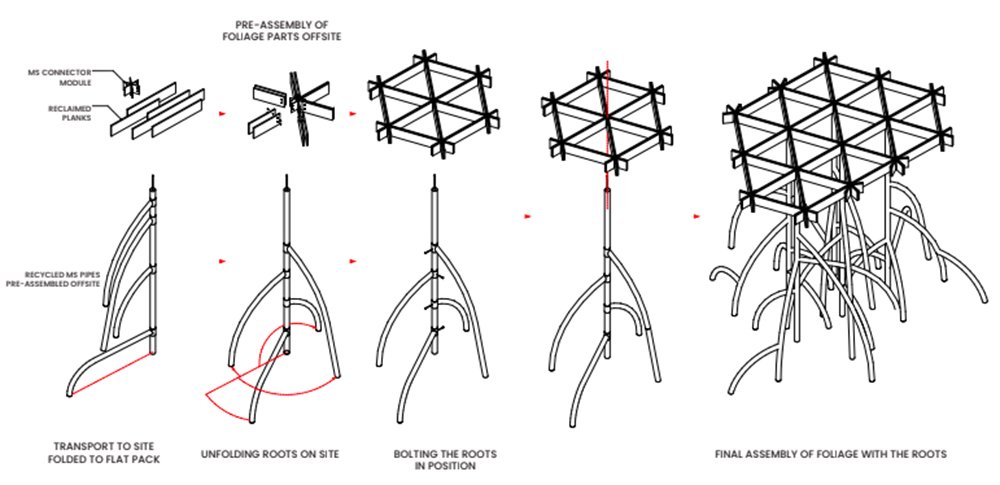
With a light touch on the ground, the ephemeral architecture of Mangrove Pavilion and its semiotic approach to sustainable design negotiates contradictions of city and shoreline, structure and spirit, performance and place. Like the porous habitats it emulates, it is to unfold and breathe along with its context, drawing the visitor into its knotty network of relations.
The 2026 edition of the Pavilion Park at ADFF:STIR Mumbai 2026 is presented by Jaquar.
Mangrove Pavilion, by Studio Sangath, is supported by Arun Vadehra & Family.
You can now book your passes for the festival here. Full schedule for the festival is available here.

by Pranjal Maheshwari Oct 24, 2026
A consortium of Copenhagen’s 3XN, Toronto’s B+H Architects and Shenzhen’s Zhubo Design has designed the museum to mimic the surrounding riverscape, topped with a public park.
by Pranjal Maheshwari Oct 19, 2026
The Mumbai-based architects integrate courtyards, mesh screens and north light trusses to create a dining space that doubles up as a community hub at SR University, Warangal.
by Mrinmayee Bhoot Oct 17, 2026
The Rotterdam-based institute centres the Indian Ocean as a network for exploring material histories and transnational links shaping coastal cultures, positing them as future models.
by Pranjal Maheshwari Oct 16, 2026
At the 2026 Stirling Prize ceremony, Mary Duggan with RUFF Architects, MAKER Architecten and Nakshabid Architects were felicitated for proffering quality housing and social equity.

make your fridays matter with a well-read weekend
Enter your details to sign in
Don’t have an account?
Sign upOr you can sign in with
a single account for all
STIR platforms
All your bookmarks will be available across all your devices.
Stay STIRred
Already have an account?
Sign inOr you can sign up with
Verification link sent to check your inbox or spam folder to complete sign up process
Tap on things that interests you.
Select the Conversation Category you would like to watch
Please enter your details and click submit.
Enter the 6-digit code sent at


Studio Sangath's Mangrove Pavilion evokes knotty ecologies at ADFF:STIR Mumbai 2026
by Mrinmayee Bhoot | Published on : Dec 26, 2025


 Sign in with Google
 Sign in with email
What do you think?