Architecture04 mins. read
House of Memories’ porous brick interstices envelope nostalgia and stillness
by Bansari PaghdarJul 21, 2026



by Aarthi MohanPublished on : Feb 04, 2026
Long before construction began, a site in rural Karnataka, India, established firm limits on what could and could not be done. Mature trees occupied much of the two-acre plot. Large boulders interrupted the ground at irregular intervals. Movement across the land was slow and uneven, requiring attention rather than ease. These conditions shaped the project from the outset, not as constraints to overcome but as fixed realities that informed every architectural decision.
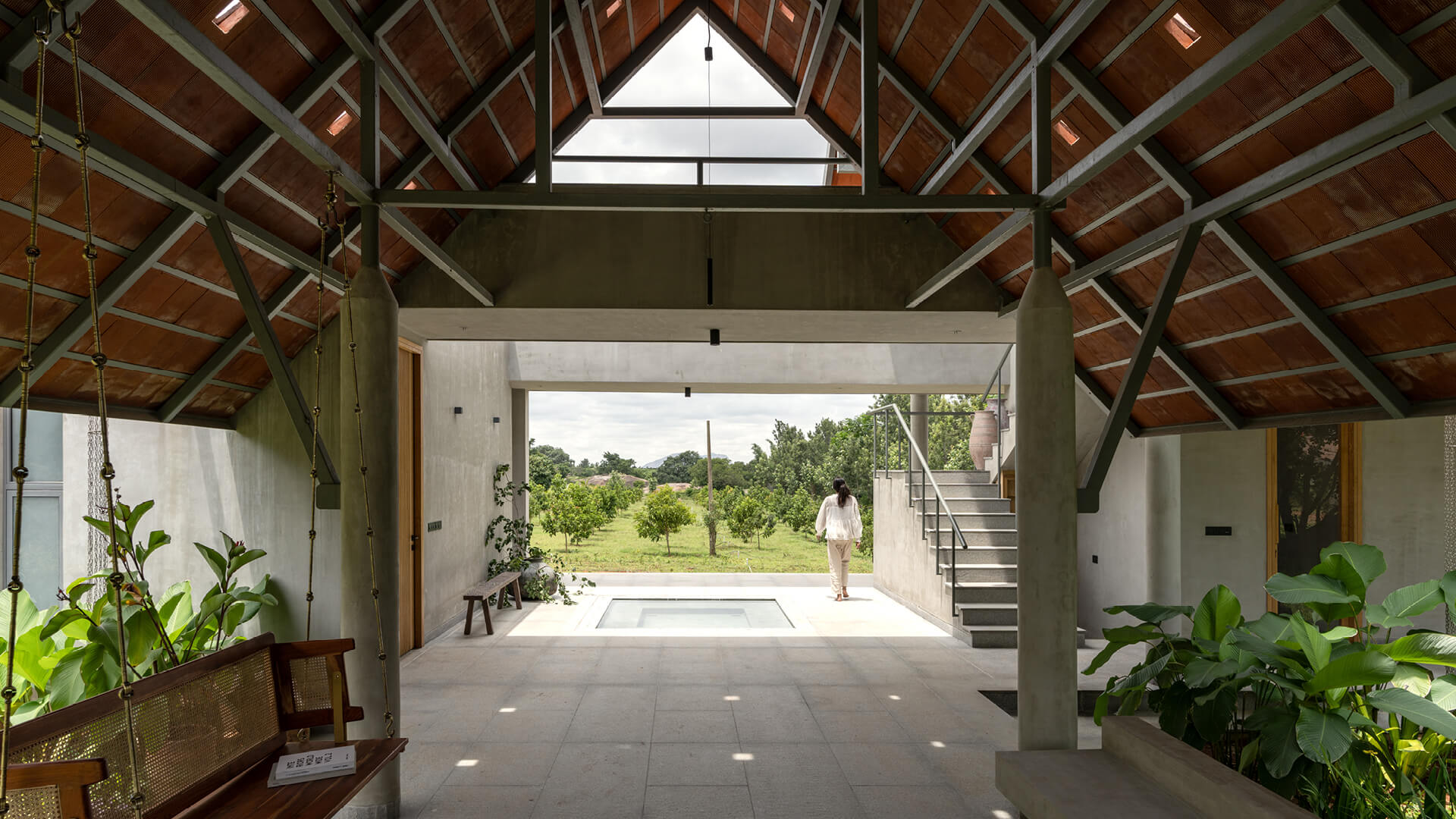
Designed by Taliesyn, founded by GS Mahaboob Basha and Shalini Chandrashekar, the House by the Grove is a 5,443 sq m weekend home conceived for a family of three with minimal alteration to its setting. Rather than clearing the site, the Indian architects worked within it, allowing existing trees and stone formations to determine the location, orientation and scale of the building. The house—marked by steeply pitched roofs, concrete colonnades and a series of open verandas and walkways—is not arranged around a single formal idea but instead unfolds through a sequence of cues that respond directly to the terrain and the way it is encountered on foot.
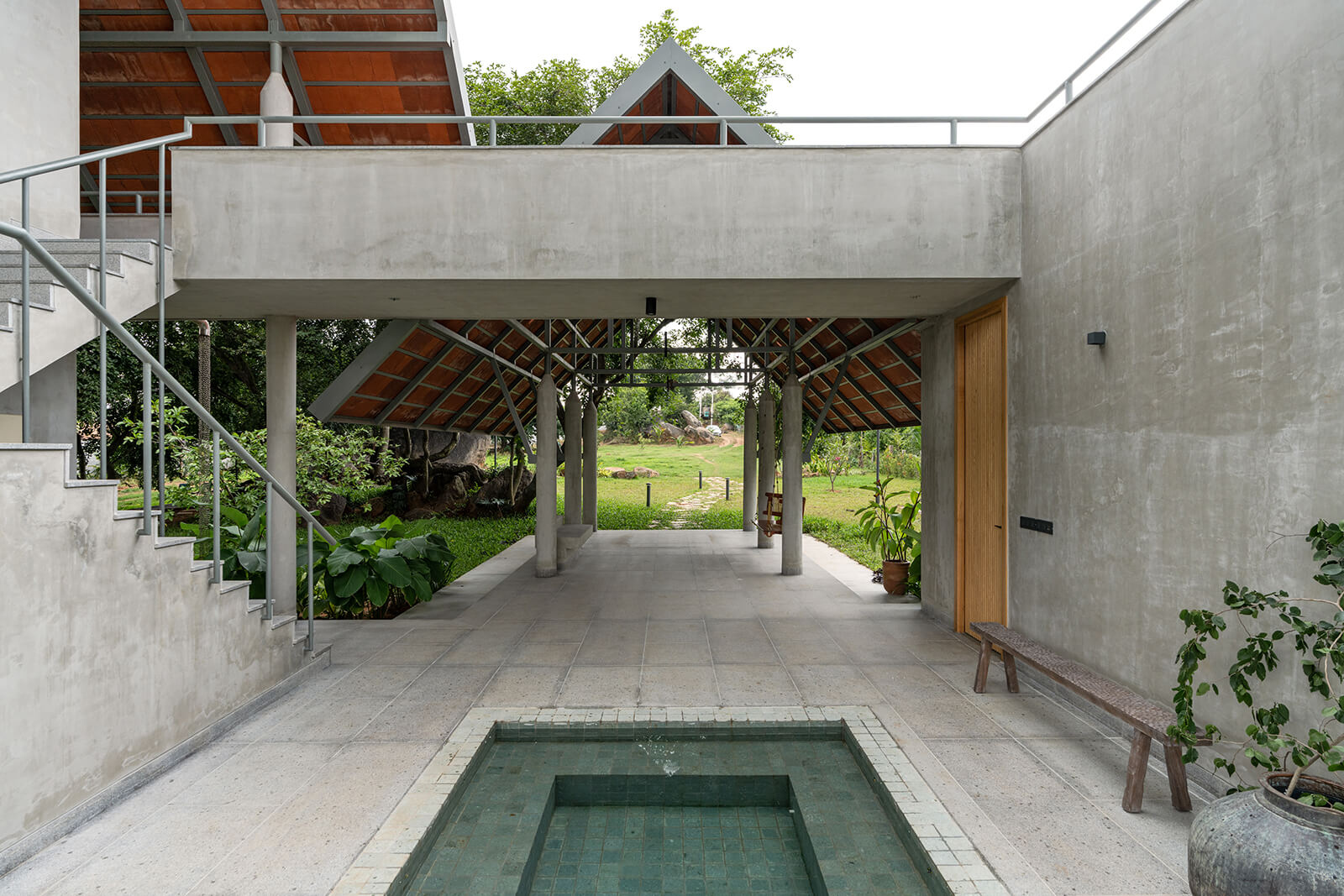
The residential architecture is organised as two distinct blocks set at different heights, comprising an entrance block and a living block. This division is not symbolic but spatial and experiential. The entrance sequence is deliberately low and compressed, narrowing the field of vision and slowing movement before releasing the inhabitant into an imposing and more expansive interior volume. This shift establishes a clear spatial logic that continues through the house, where changes in height and enclosure are used to mark transitions and to structure openness within the house without relying on partitions.
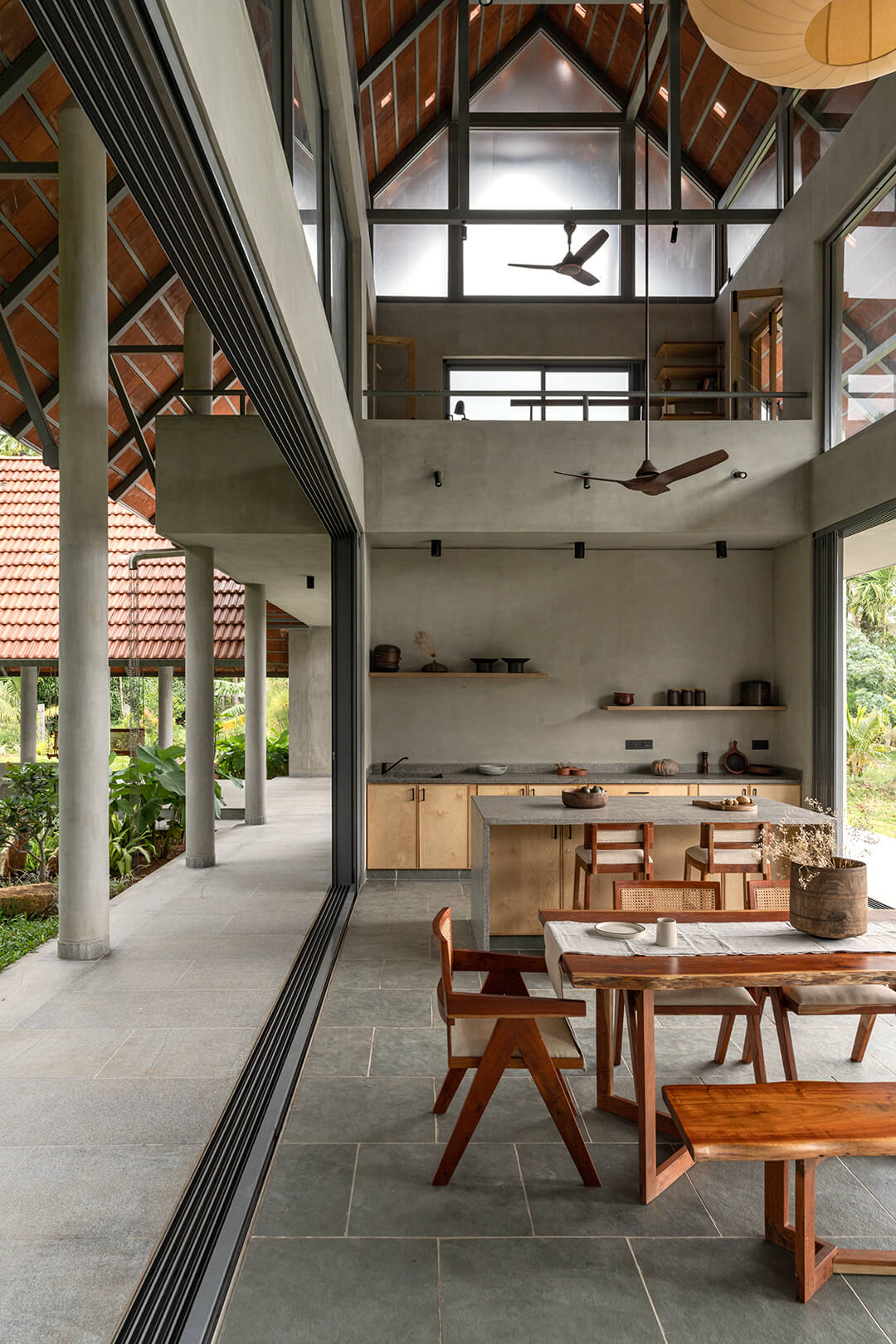
This sequence was calibrated around everyday patterns of arrival and occupation. As the Indian architects explain to STIR, “The choreography is calibrated to transition the inhabitant from the public realm to the private experience of the home. It begins with a low, intimate arrival sequence that serves as a point of discovery before opening into a taller, expansive volume within the living block. This sequence mirrors the daily shift from the act of entering to the experience of the open-plan living, dining and kitchen areas, which serve as a generous social hub.” Circulation is therefore treated as an active spatial condition, aligning movement through the house with daily routines rather than treating it as a residual space.
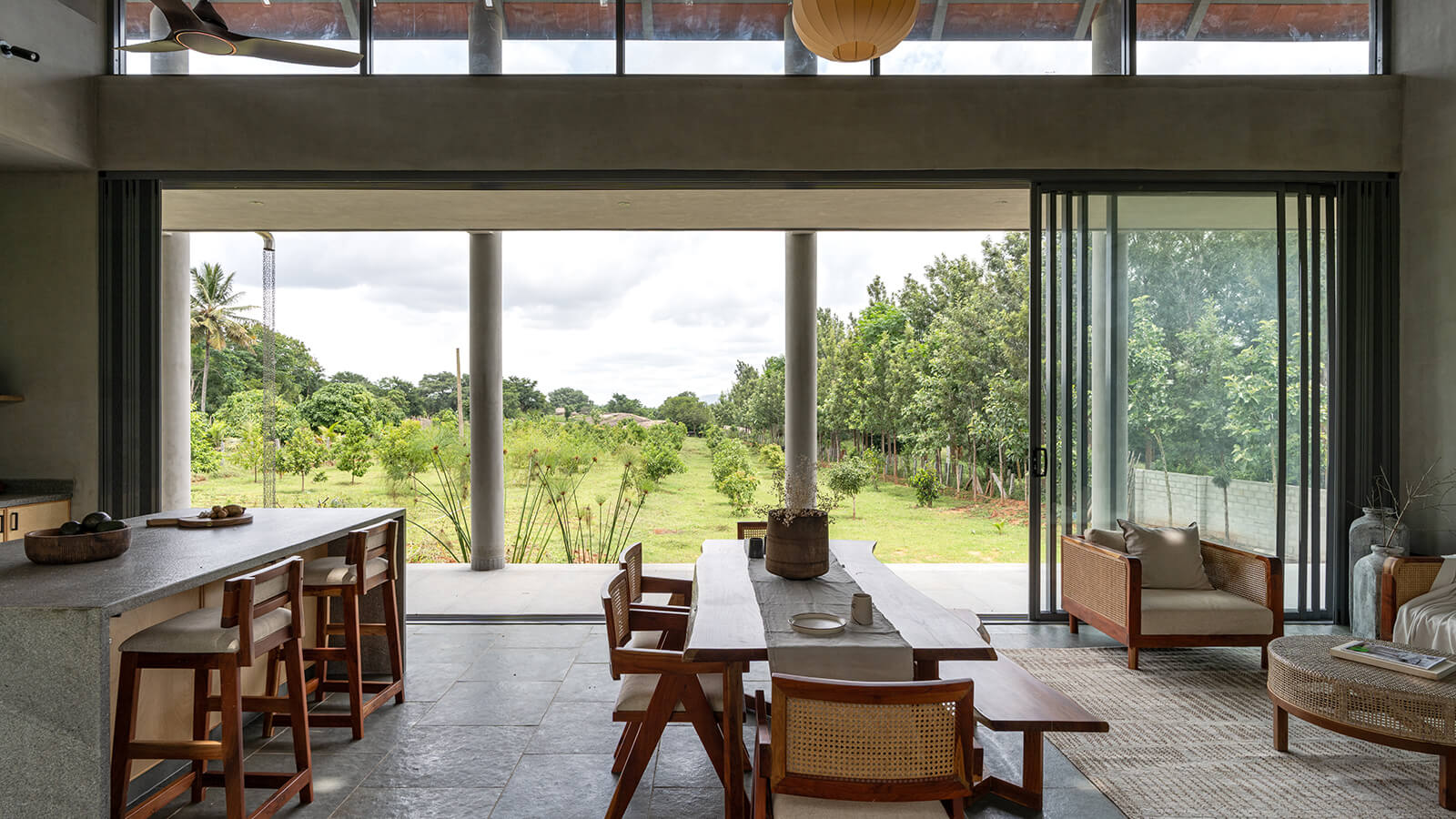
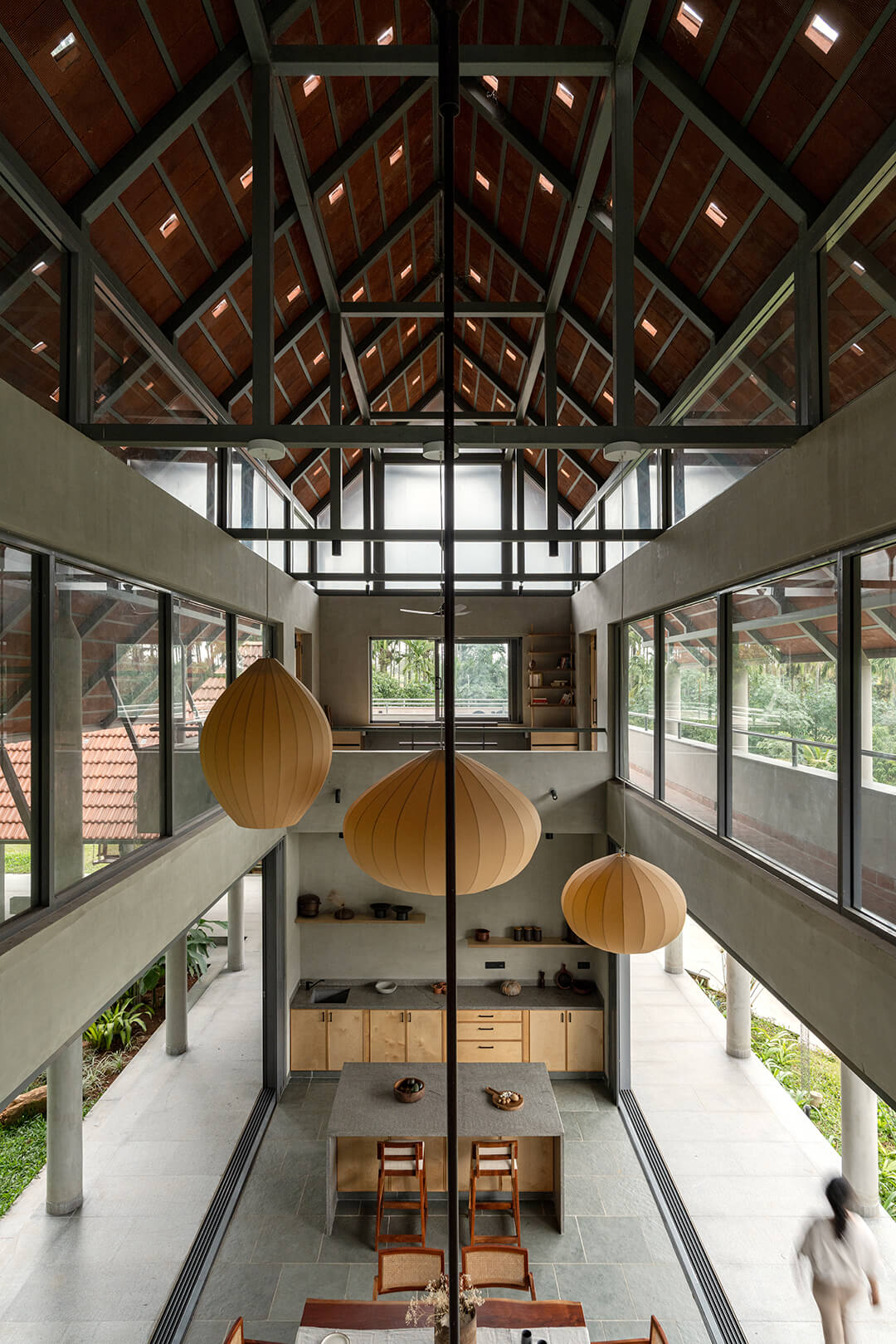
The living block forms the centre of domestic activity. Here, the living, dining and kitchen areas are arranged in an open plan under a steeply pitched roof finished with traditional Mangalore tiles. The scale of this space allows it to accommodate gatherings without becoming visually overwhelming. A series of columns punctuates the interior space, introducing a steady rhythm that breaks down the openness while supporting the roof structure. As the day progresses, natural light filters through these vertical elements, producing subtle shifts in illumination that articulate the interior gradually rather than through dramatic contrasts.
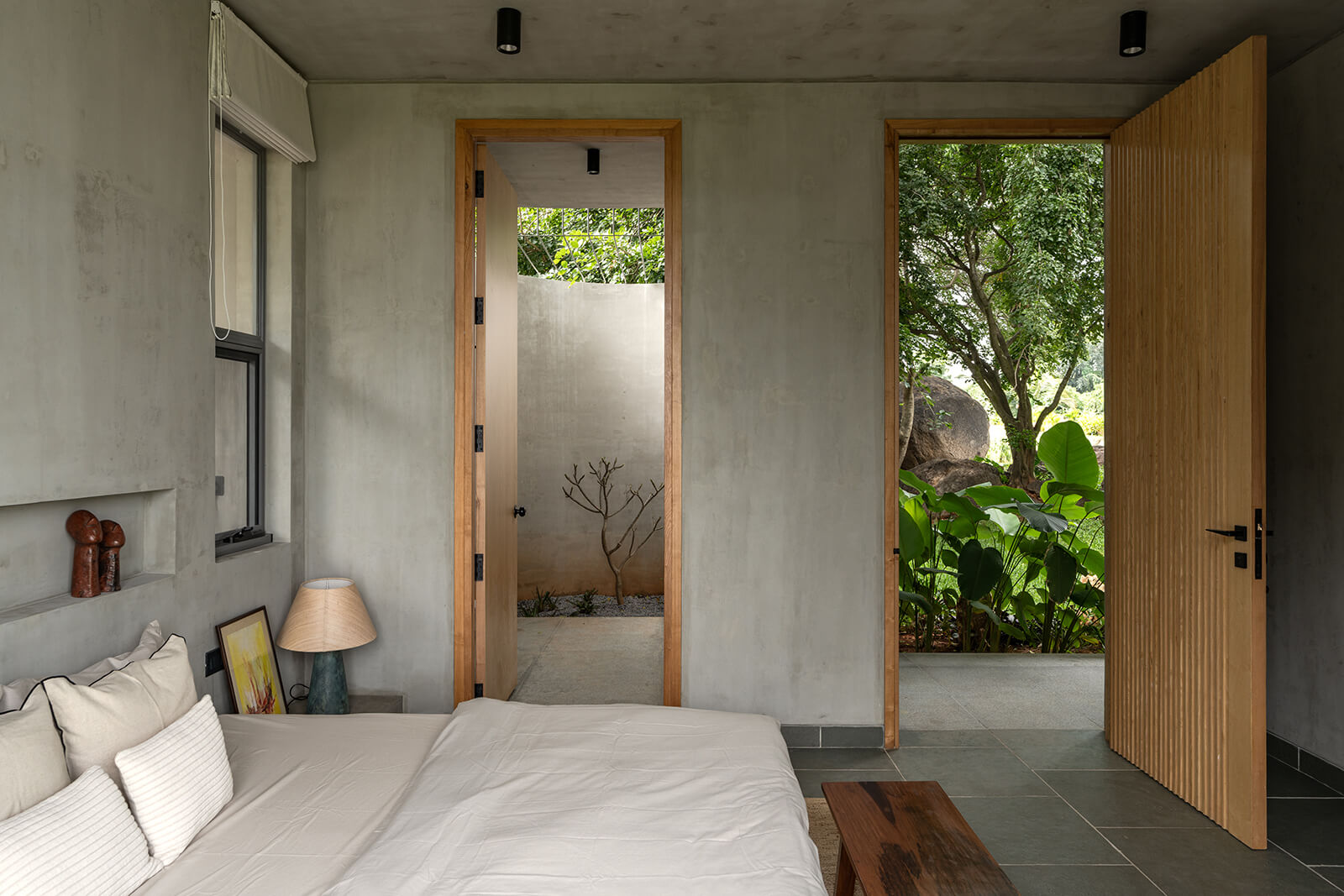
Private rooms are positioned away from this central zone and are intentionally smaller in scale. Located in quieter pockets of the site, they prioritise enclosure and acoustic separation over visual openness. The rooms are designed as places for rest, reading and withdrawal from shared activities while remaining closely connected to the rest of the house. Each of these spaces maintains a controlled relationship with the outdoors, allowing light and ventilation without compromising on privacy.
Throughout the concrete architecture, openings are carefully framed to register specific views rather than broad landscapes. The intention is not to maximise outlook but to establish measured connections with the surrounding grove, an approach that allows the outdoors to remain in close dialogue with the interior of the house without overpowering it. The landscape is encountered in fragments and intervals, reinforcing the idea that the house is woven through the site rather than set apart from it.
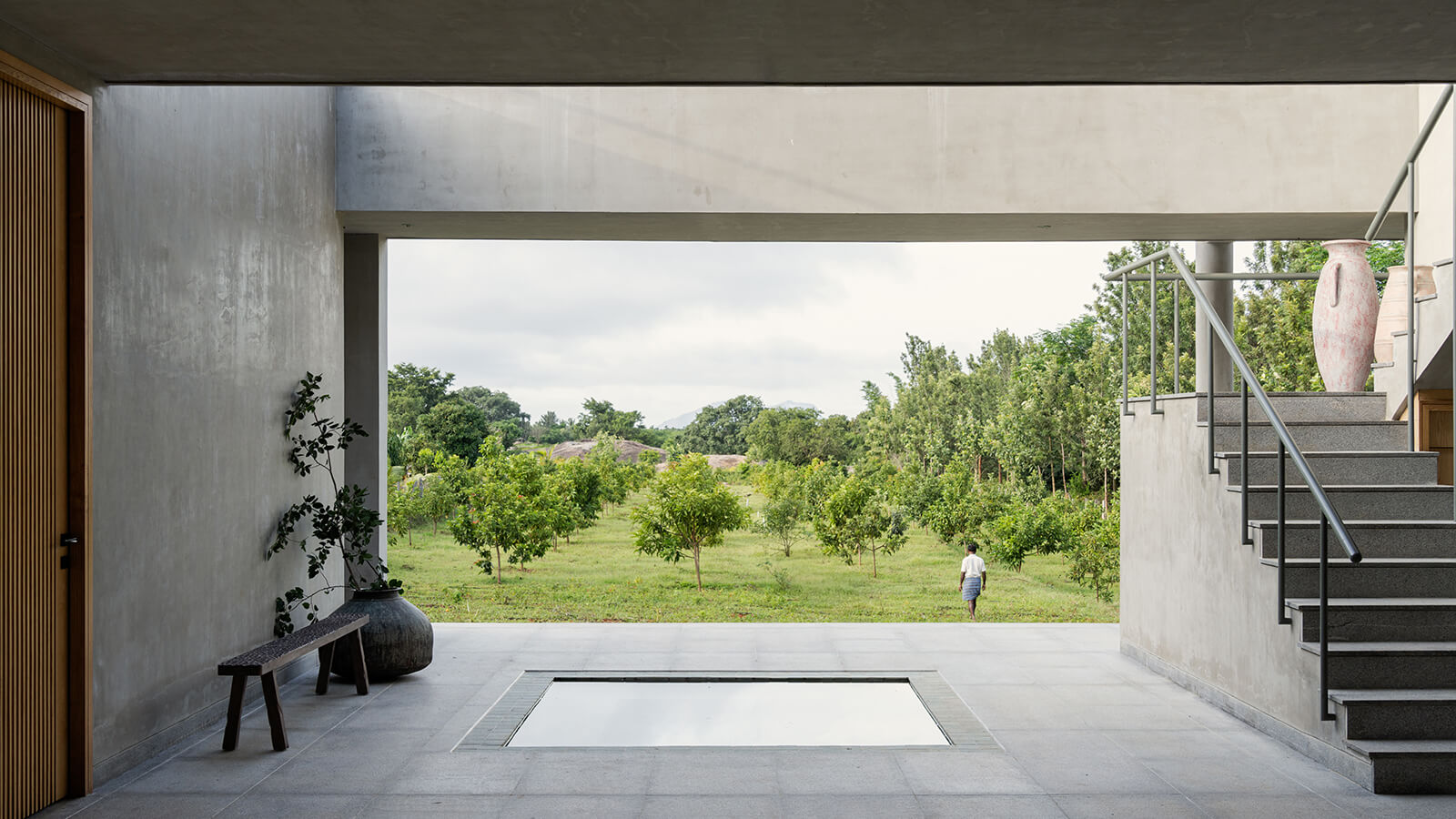
Arrival at the private residence is marked by a water feature at the entrance. While it contributes to passive cooling, its primary role is social and spatial, of establishing a moment of pause before one enters the house, shaping how the architecture articulates approach and occupancy “It is designed specifically as a gathering space, providing a dedicated area for the family to relax, socialise and transition into the home’s atmosphere,” the design team informs STIR.
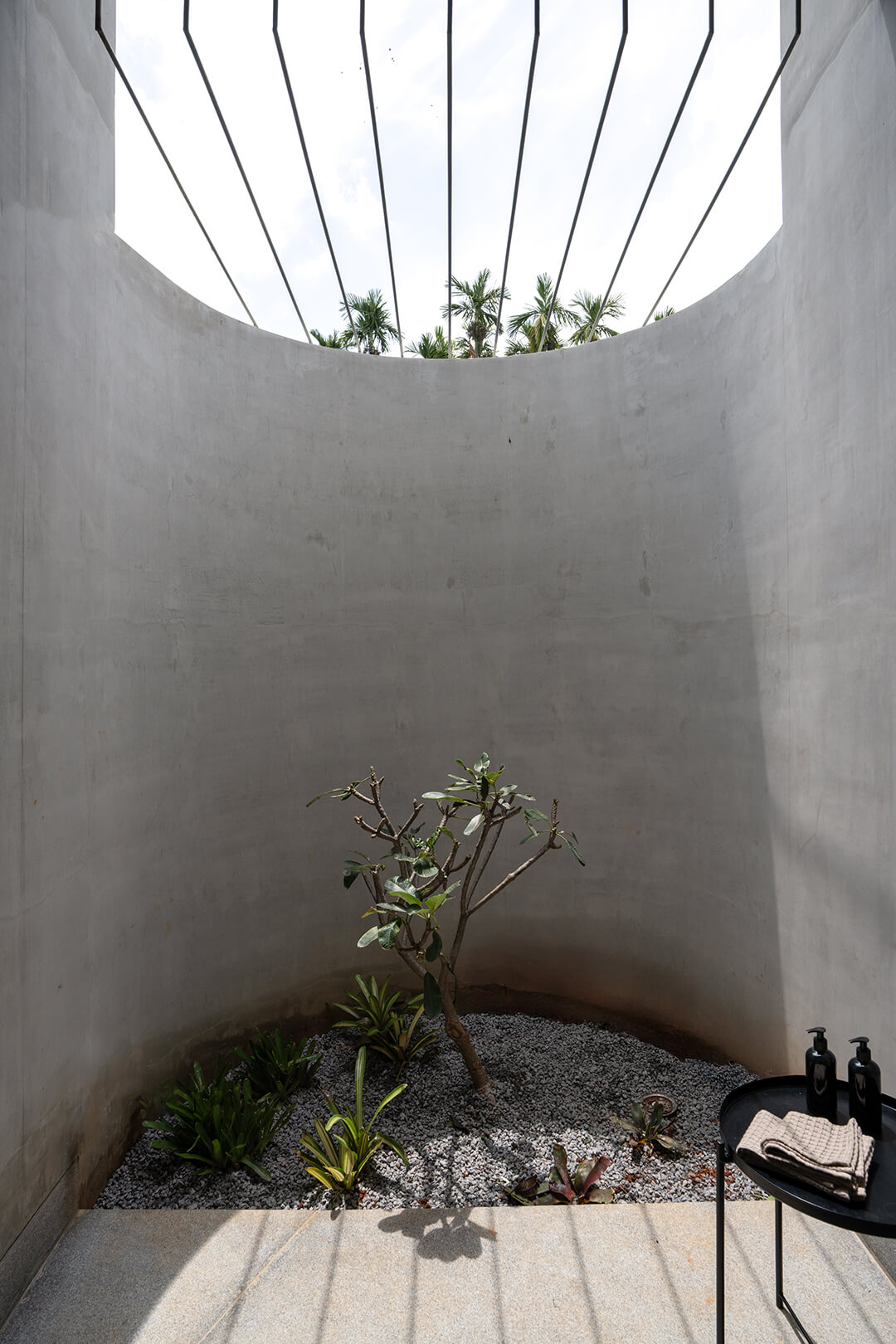
Beyond the point of arrival, the residential design includes a series of smaller spaces designed to encourage slowing down rather than programmed use. Bay windows are placed at key points along circulation paths, offering places to sit, pause or look out without instruction. Open-to-sky bathrooms extend this approach into daily routines, allowing light, air and seasonal changes to enter intimate spaces. These elements are not treated as features but as integral parts of how the house supports varied rhythms of use.
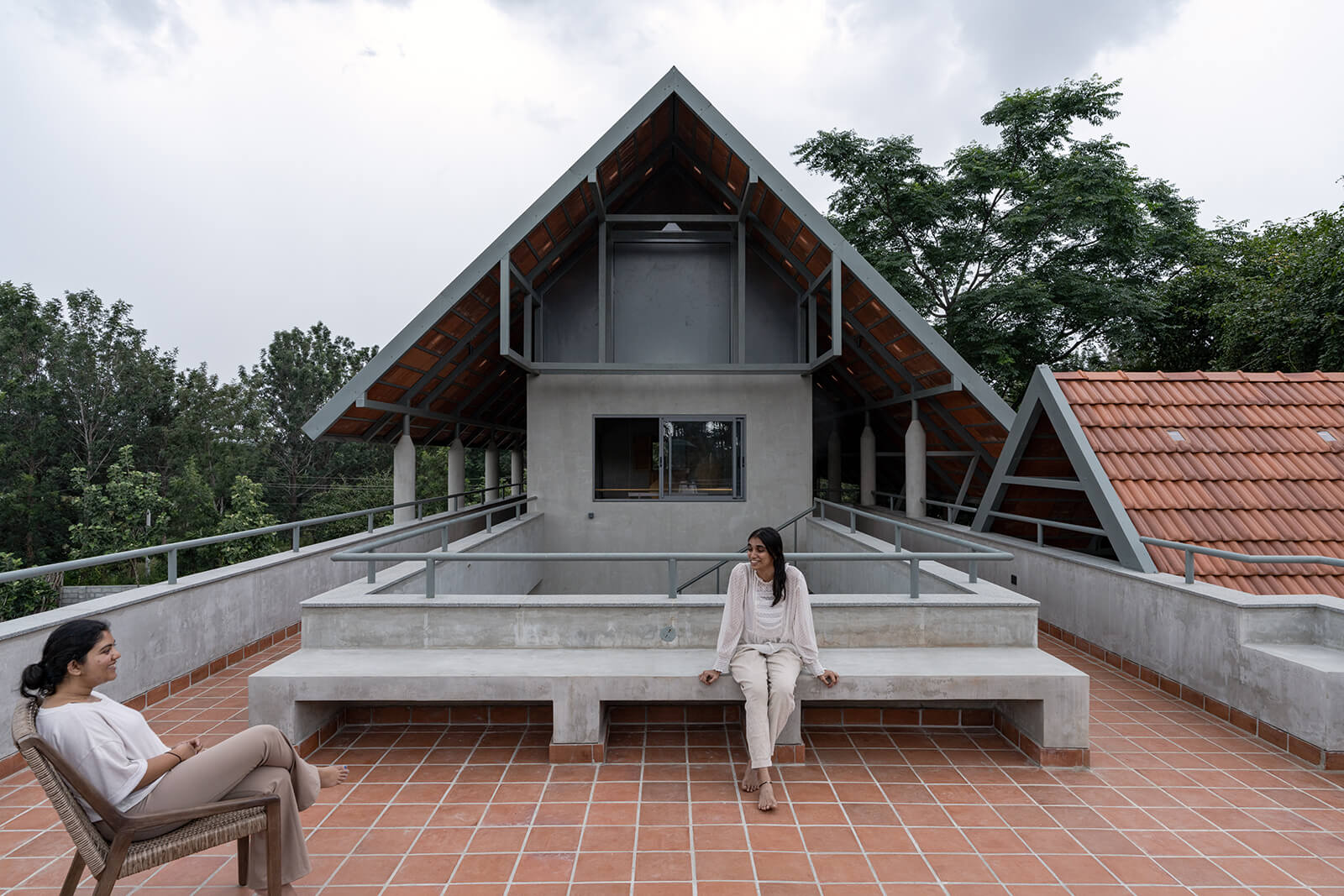
Material selection reinforces the home’s overarching grounded and restrained approach. The Mangalore tiled roof establishes continuity with regional building traditions while providing thermal protection suited to the climate. Walls finished in hand-applied cement retain visible variations, reflecting on-site craftsmanship rather than industrial uniformity. These surfaces respond differently to light across the day, giving the interiors a subtle sense of change without relying on applied finishes.
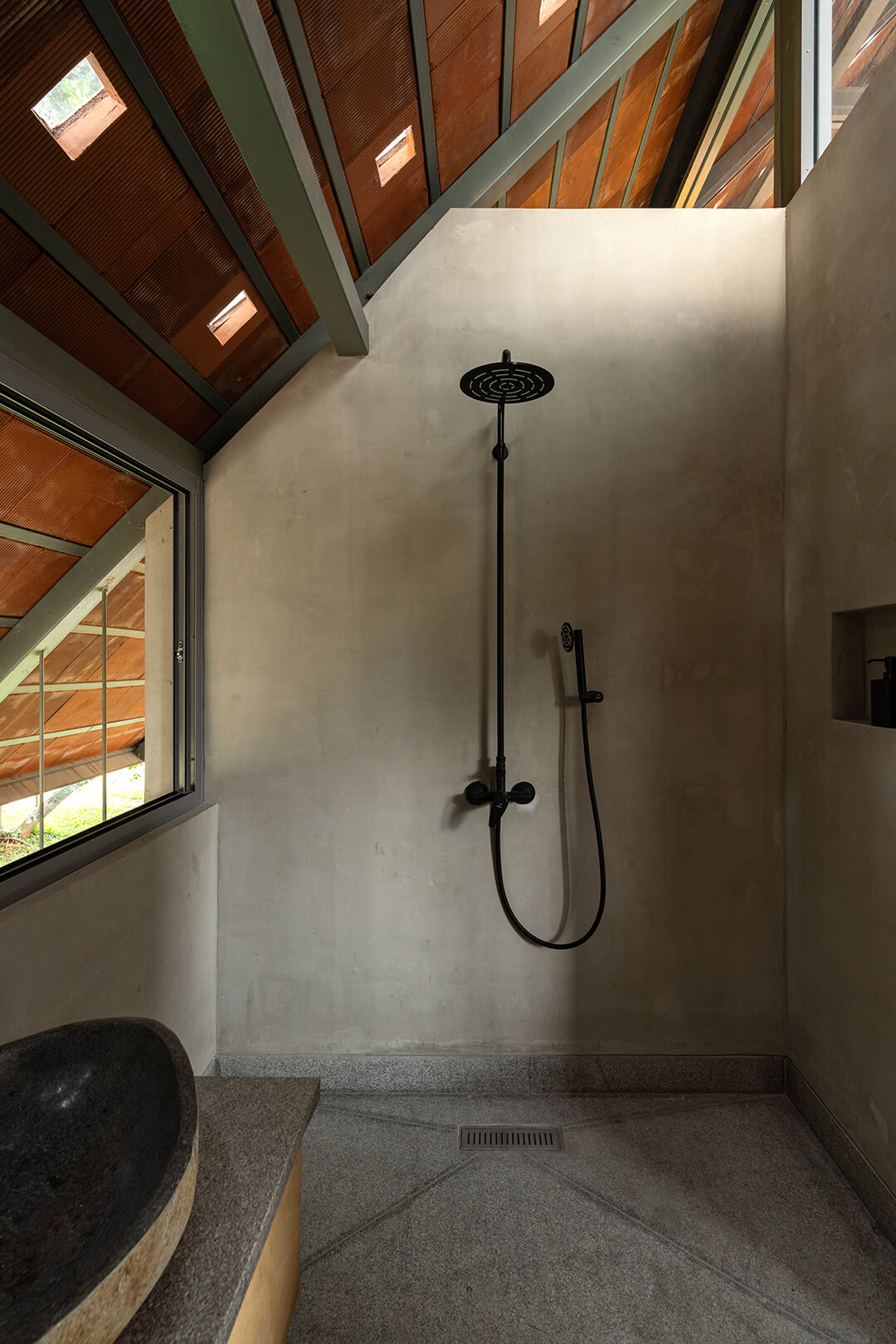
Flooring across the main living spaces is executed in Kota stone, chosen for its durability and understated texture. In bathrooms, Sira stone introduces a cooler surface underfoot, well-suited to wet areas and local conditions. The materials—exposed to a construction process that retained their natural texture instead of articulating excess refinement—are not used for contrast or visual emphasis but for their performance, longevity and familiarity within the region.
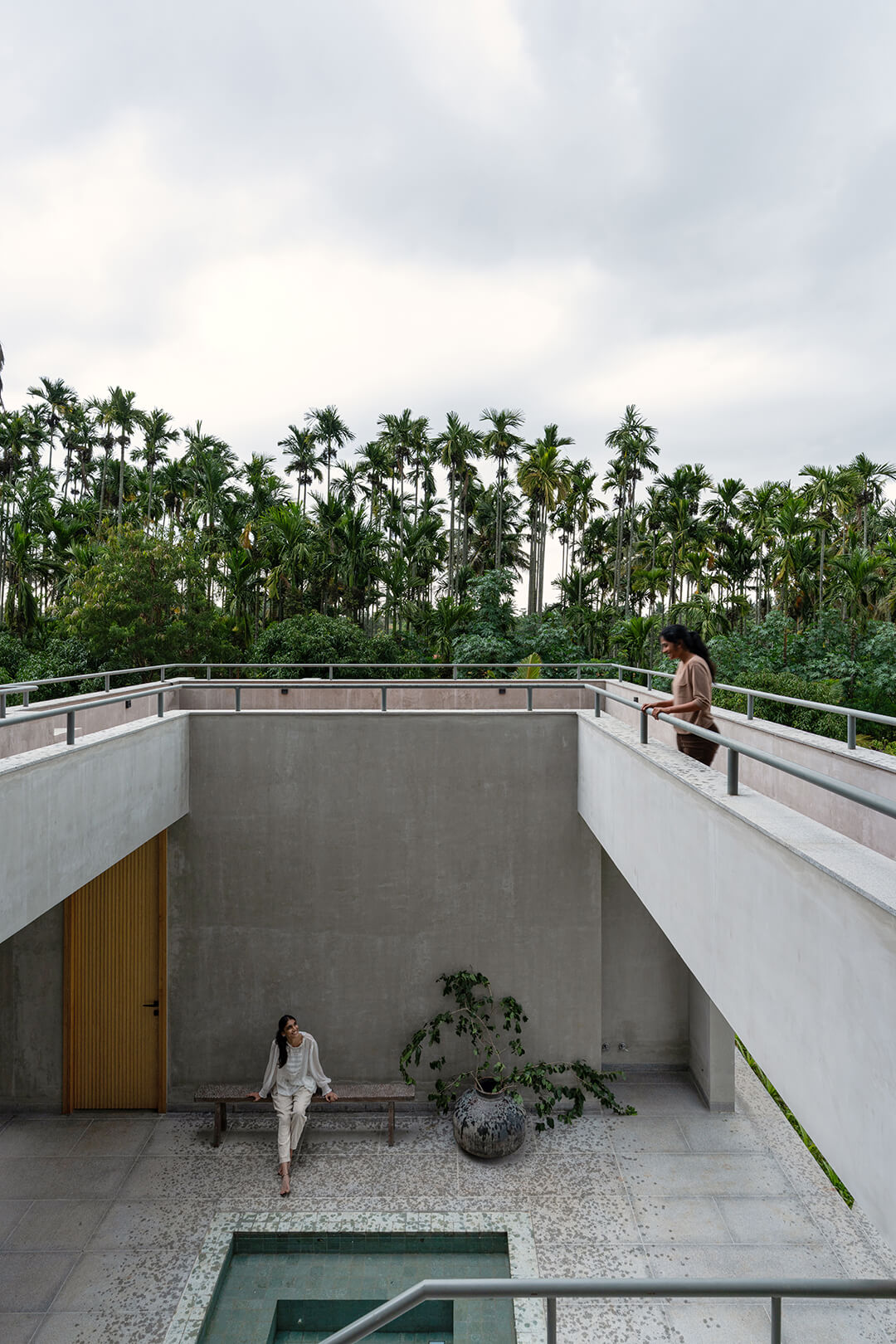
Taken together, the Indian architecture project is defined by a careful balance between openness and enclosure, shared and private space and built form and landscape. Social areas are clearly defined without dominating the plan, while spaces for retreat are integrated rather than isolated. The architecture remains consistent in its response to the site, using scale, sequence and material to support everyday living.
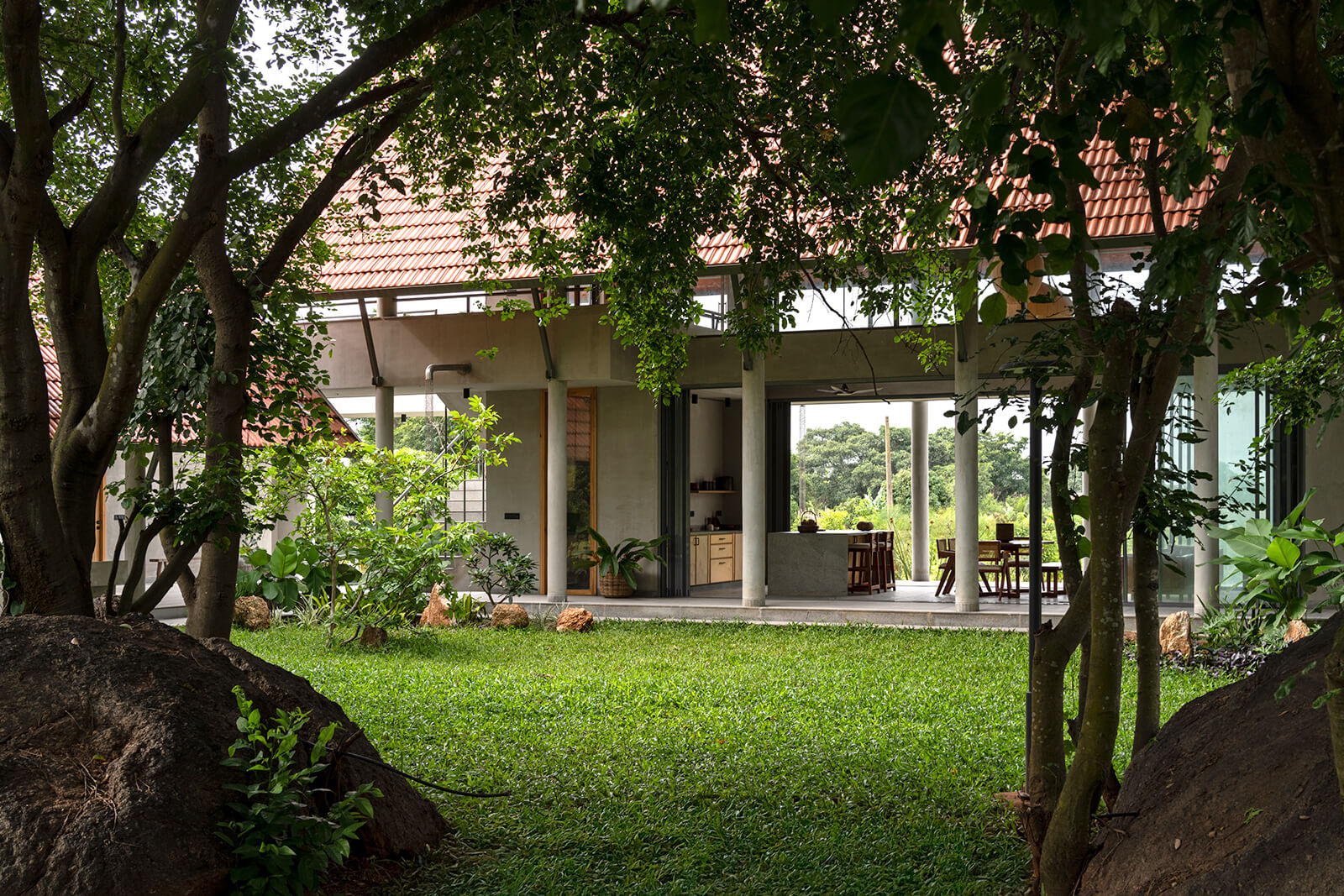
Having previously designed Ksaraah as another porous weekend retreat in which morphing concrete elements beautifully embraced nature, Taliesyn’s intervention yet again created a domestic environment that feels measured and specific to its setting, where architecture supports daily life without asserting itself beyond what the site and its occupants require.

by Pranjal Maheshwari Oct 19, 2026
The Mumbai-based architects integrate courtyards, mesh screens and north light trusses to create a dining space that doubles up as a community hub at SR University, Warangal.
by Mrinmayee Bhoot Oct 17, 2026
The Rotterdam-based institute centres the Indian Ocean as a network for exploring material histories and transnational links shaping coastal cultures, positing them as future models.
by Pranjal Maheshwari Oct 16, 2026
At the 2026 Stirling Prize ceremony, Mary Duggan with RUFF Architects, MAKER Architecten and Nakshabid Architects were felicitated for proffering quality housing and social equity.
by Mrinmayee Bhoot Oct 12, 2026
The new Centre for Contemporary Arts, fostering public engagement with art in Uzbekistan, is housed in a tram depot refurbished by the French studio, emulating local craftsmanship.

make your fridays matter with a well-read weekend
Enter your details to sign in
Don’t have an account?
Sign upOr you can sign in with
a single account for all
STIR platforms
All your bookmarks will be available across all your devices.
Stay STIRred
Already have an account?
Sign inOr you can sign up with
Verification link sent to check your inbox or spam folder to complete sign up process
Tap on things that interests you.
Select the Conversation Category you would like to watch
Please enter your details and click submit.
Enter the 6-digit code sent at


Taliesyn designs a weekend home shaped by site and sequence in rural Karnataka
by Aarthi Mohan | Published on : Feb 04, 2026


 Sign in with Google
 Sign in with email
What do you think?