Architecture04 mins. read
House of Memories’ porous brick interstices envelope nostalgia and stillness
by Bansari PaghdarJul 21, 2026



by Bansari PaghdarPublished on : Mar 19, 2026
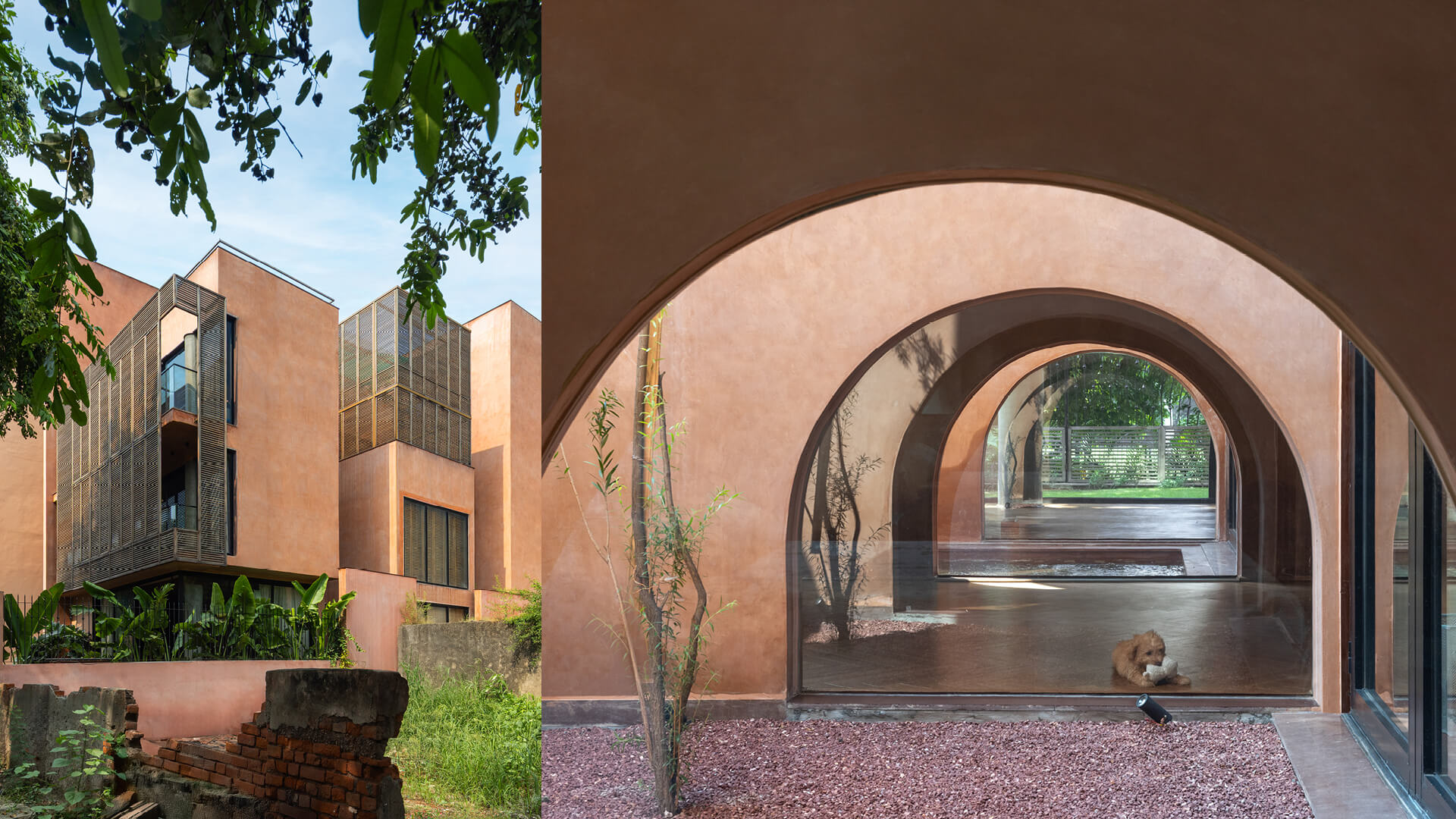
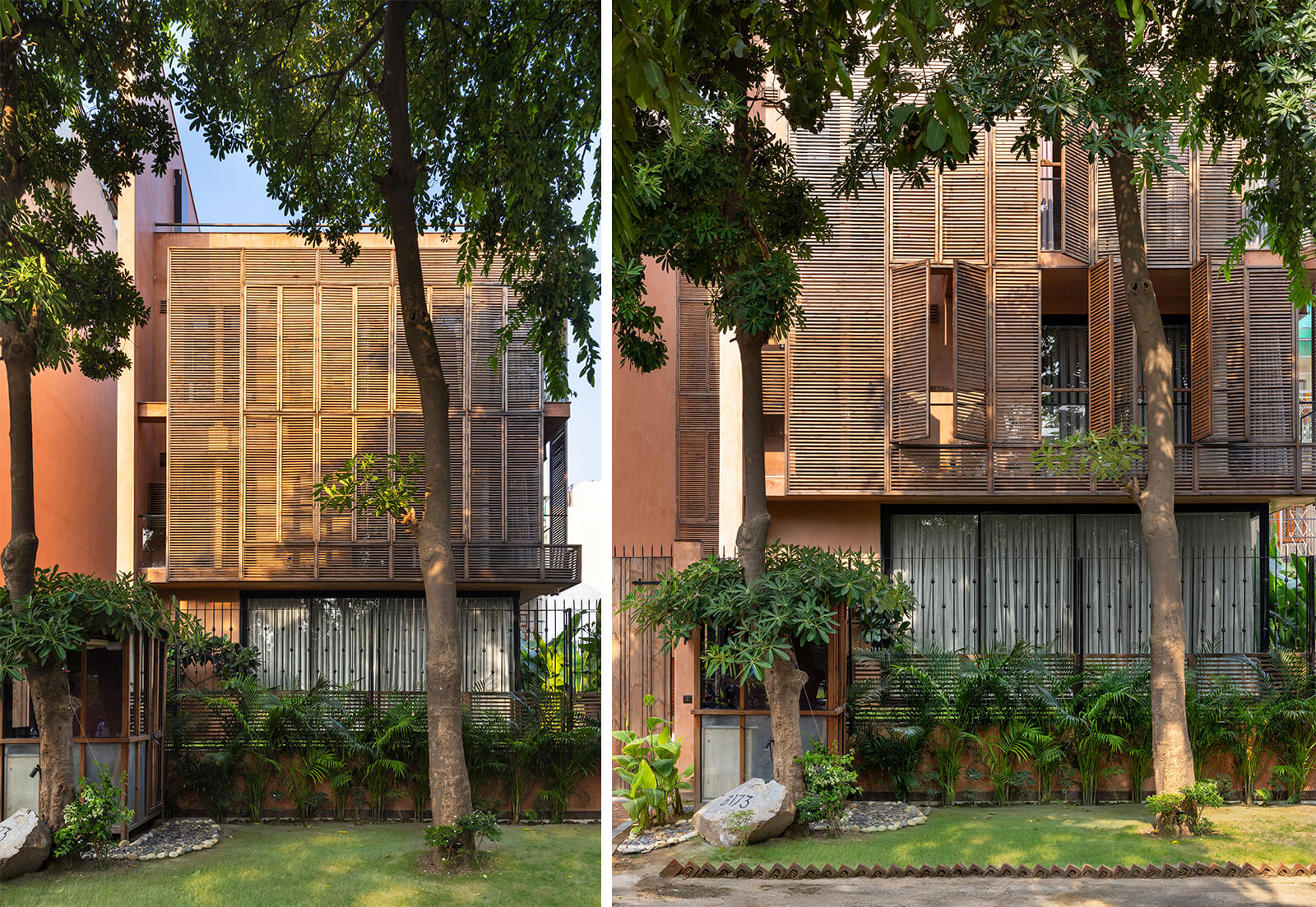
In a residential neighbourhood in Noida, India, a project seeks spatial inspiration from a traditional Rajasthani portable wooden box, Kavad, bringing together craftsmanship, artistry and storytelling. Every panel in the box is hand-painted with excerpts from a tale, opening itself up to the spectator sequentially. Unfolding as one such box of narratives that build upon one another, A Tale of Tinted Courts by Architects Collaborative incorporates the concept of a Kavad into the spatial experience of the house across its three storeys and dimensions. In a more literal interpretation of the box, panelled wooden frames characterise the facade design, making the residential architecture seemingly open and close like one. Spatially, the planning positions courts as abstract interpretations of the Kavad’s story panels, often serving as deliberate pauses amid narrative progression.
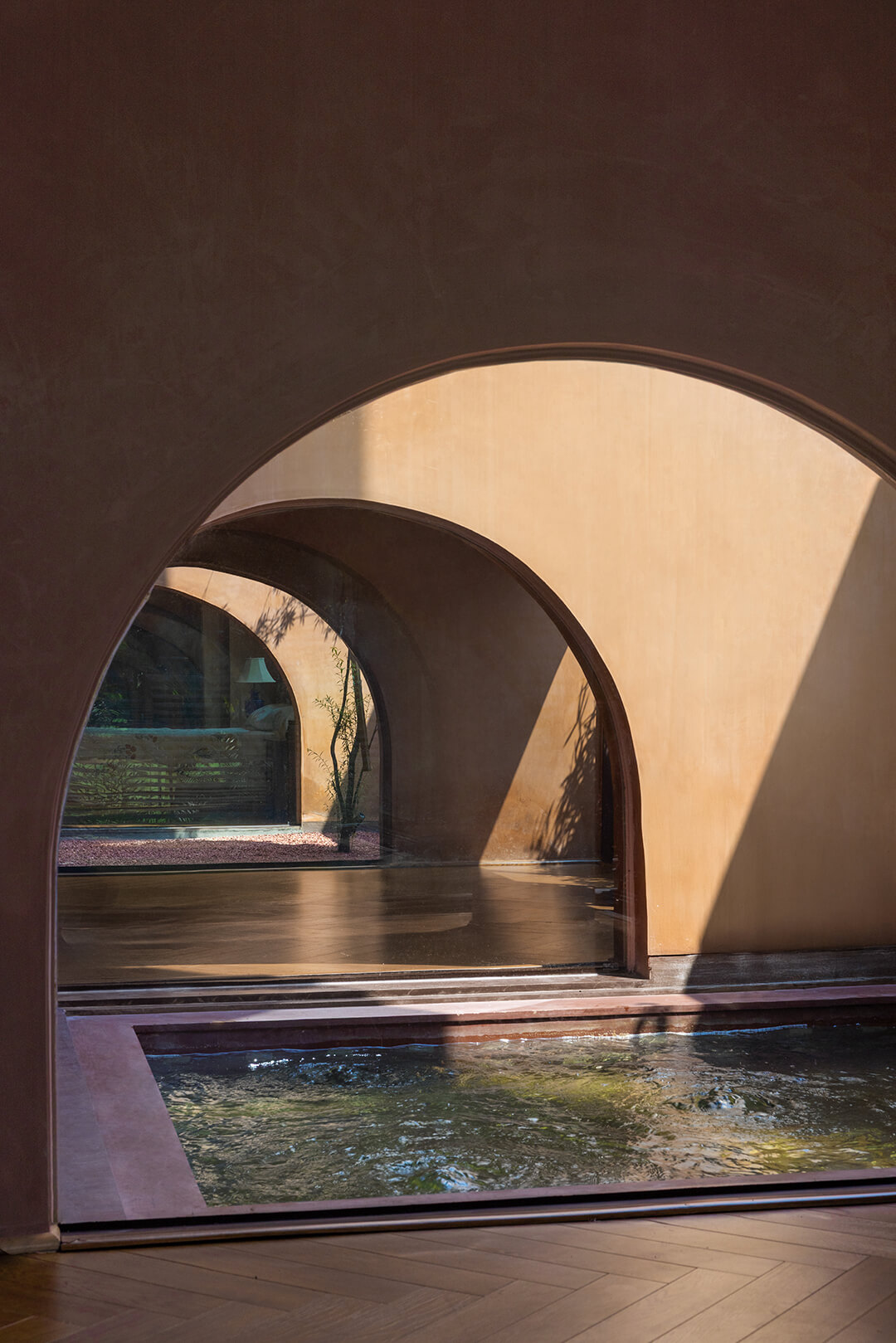
Built for a family of four, the private residence sits on a 300 sq m site, oriented towards the southwest. The project brief included five bedrooms, along with comfortable spaces for study and work and a basement for storage and lounging. To connect these functions more intimately, the architects introduced courts to establish a formal spatial hierarchy. A series of low-lying arches visually connect the courts and functions, activating the setting with movement and natural light.
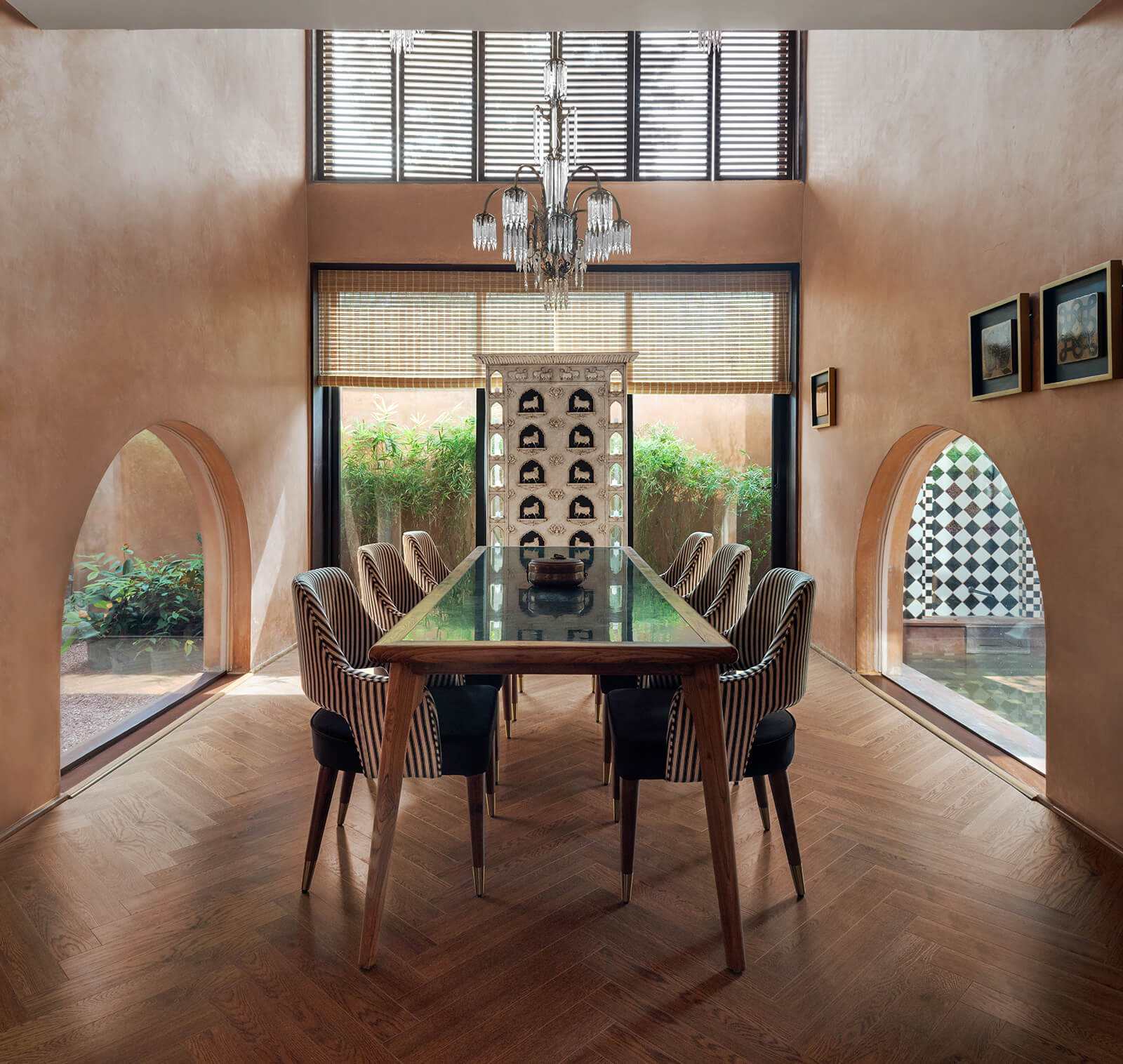
“The courts were the actual initiation of the design process. They were intrinsic to how the plan is laid out. In its barest configuration, the house is essentially three separate blocks connected to each other through court spaces. The idea of ‘second-handed interactions’ was interpreted through this configuration, where no two functional spaces connect directly to one another. There is always an intermediary court for this transition. The spaces, therefore, do not spill as seamlessly into one another as they would in an open-floor layout, nor do the walls hold the spaces as individuals,” the New Delhi-based Indian architecture practice tells STIR.
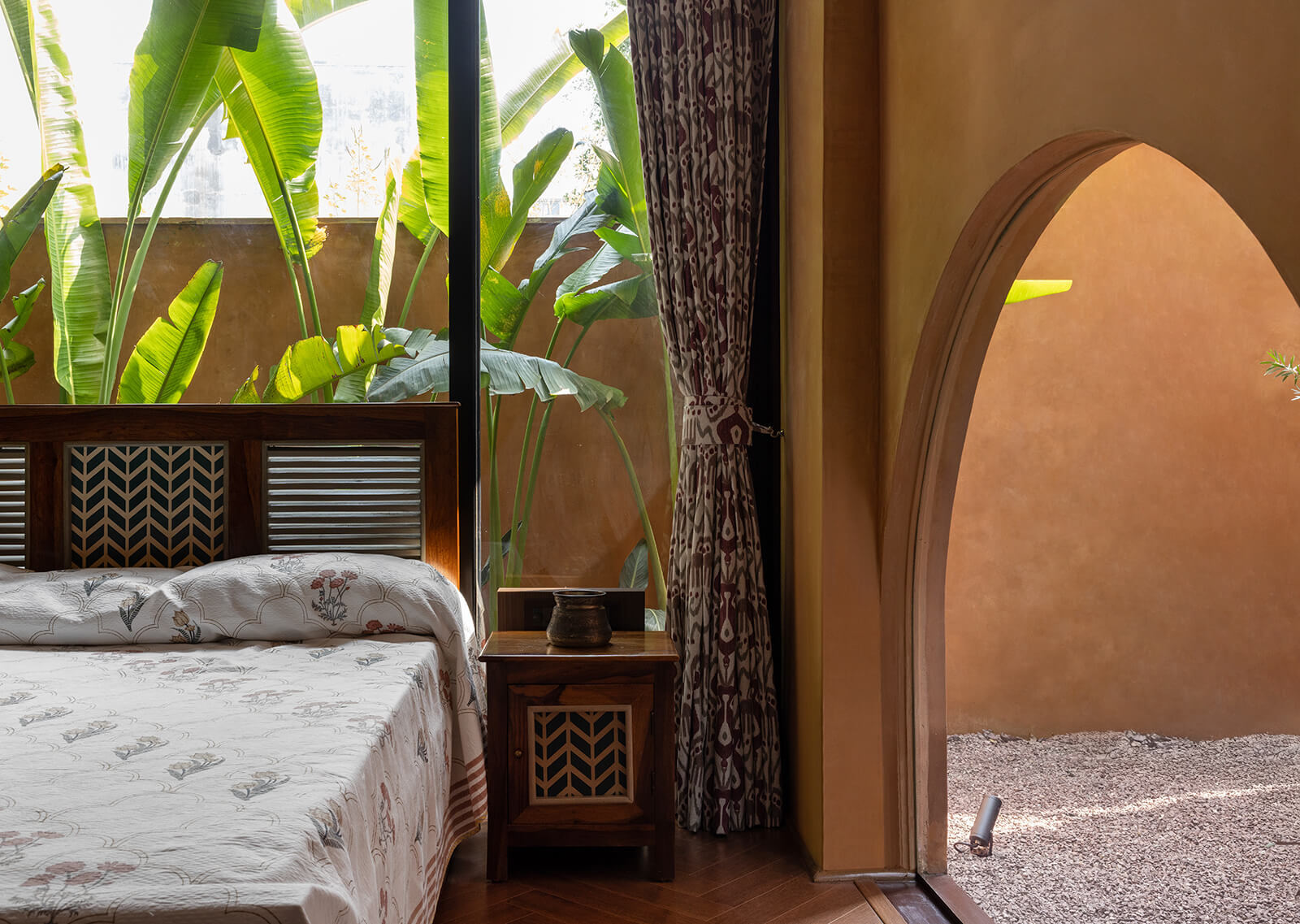
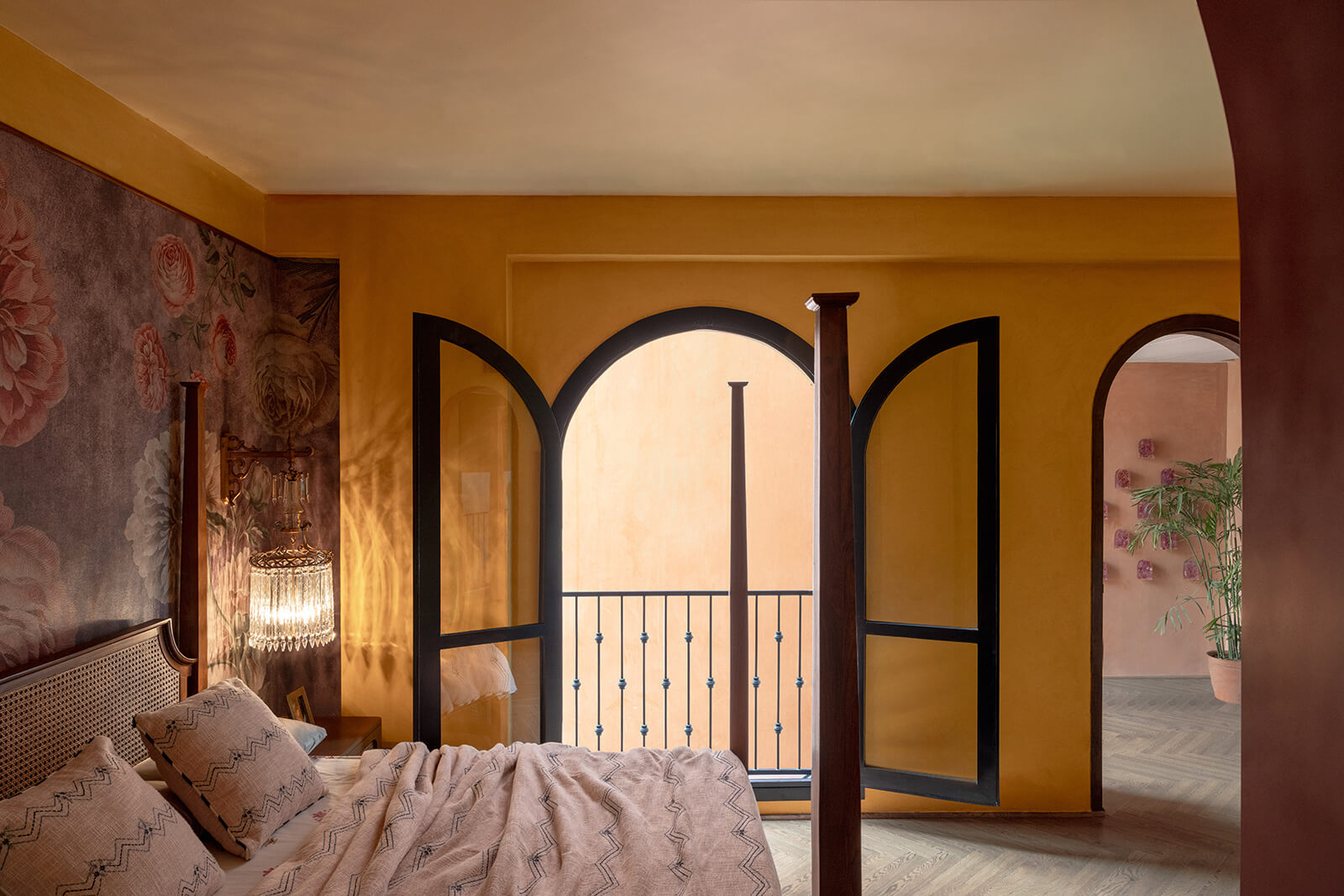
These courts were carefully calibrated—conceptually, dimensionally, climatically and spatially—to mediate between isolation and interaction in a domestic setting. The courts act as transitional buffers, also becoming pauses amidst the circulation, enabling interaction between the islanded spaces and contributing to their spatial identity. Their intermittent positioning and sequential unfolding further result in layering and functional overlapping, adding dynamism to an otherwise sequenced residential design.
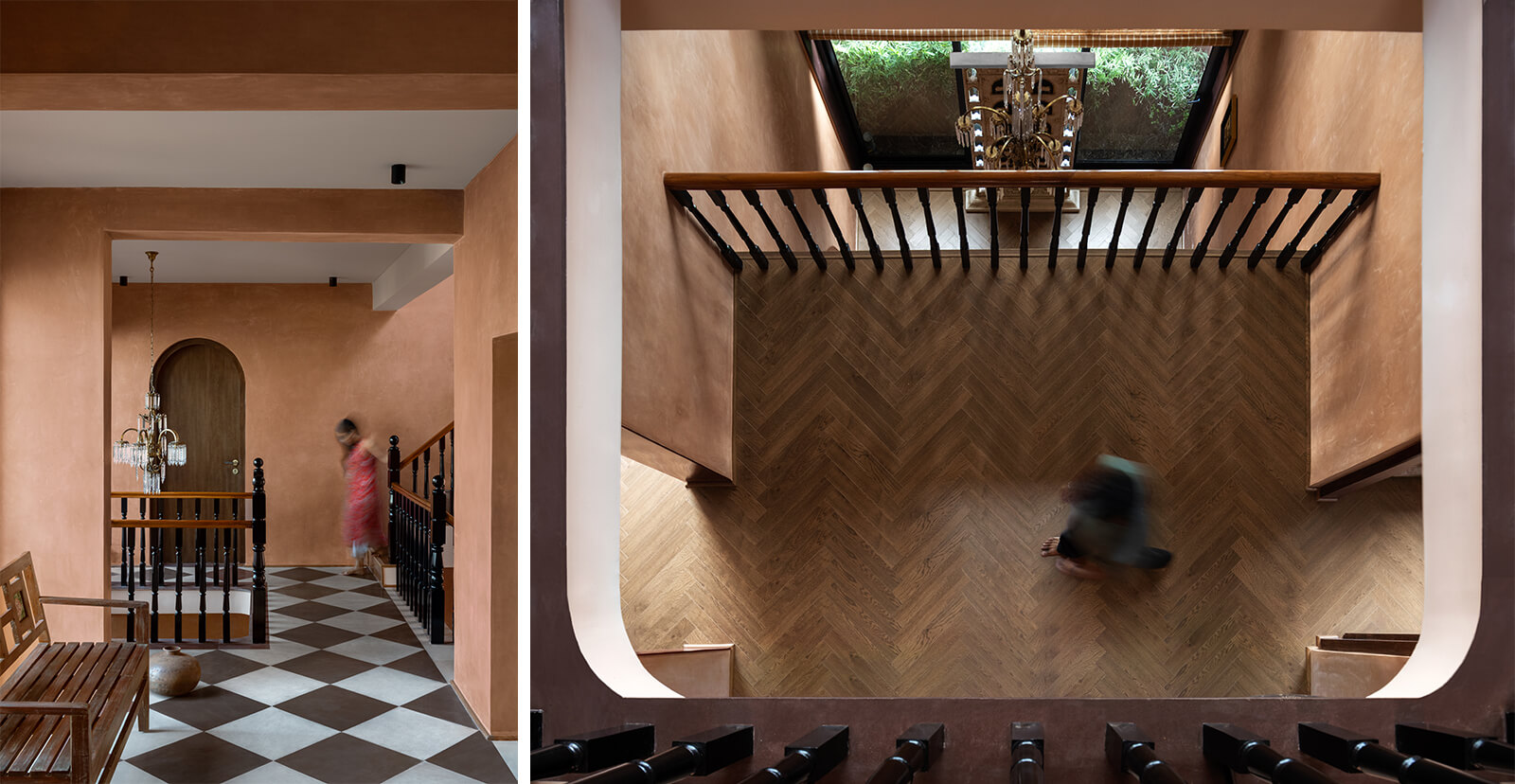
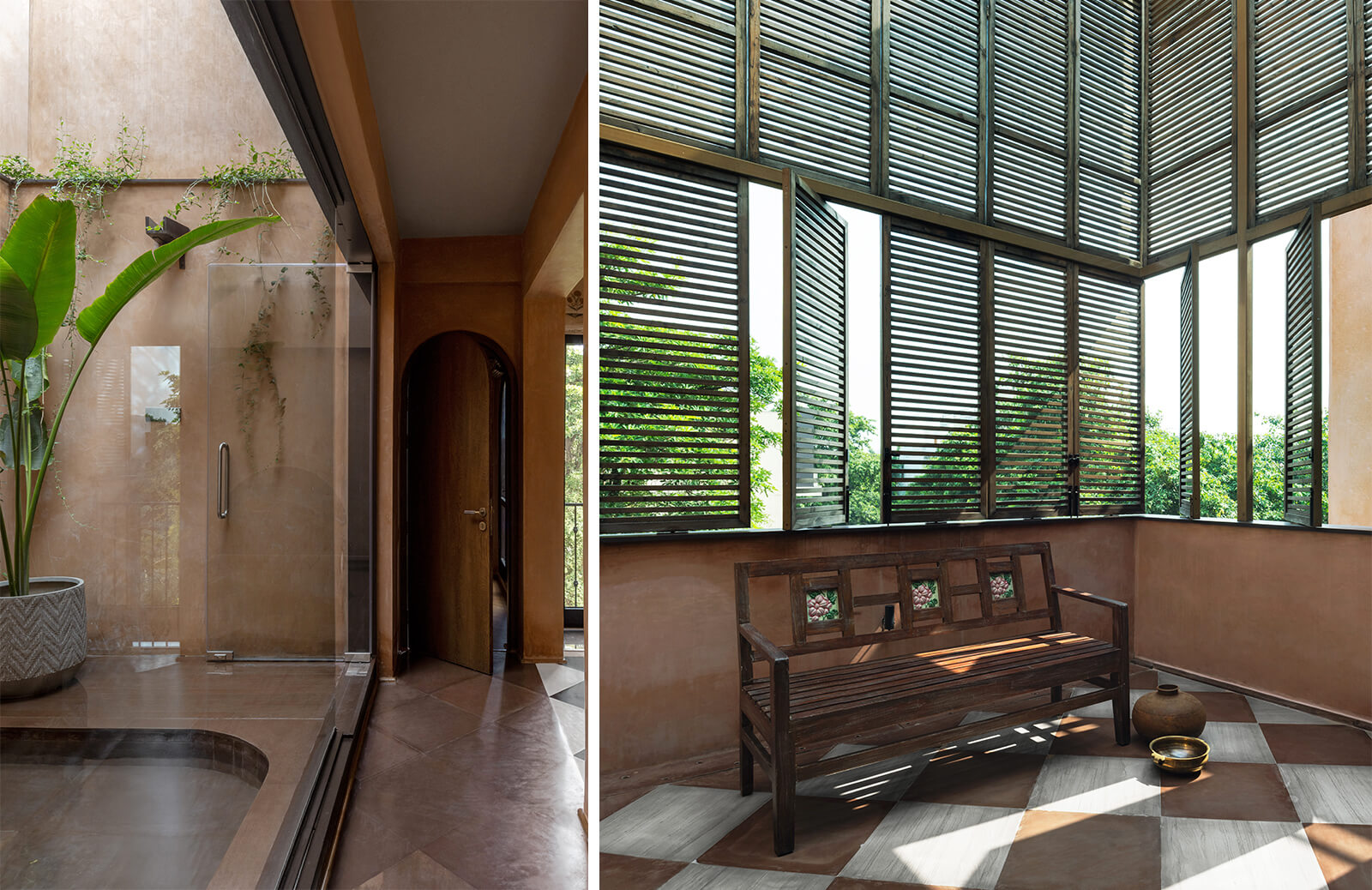
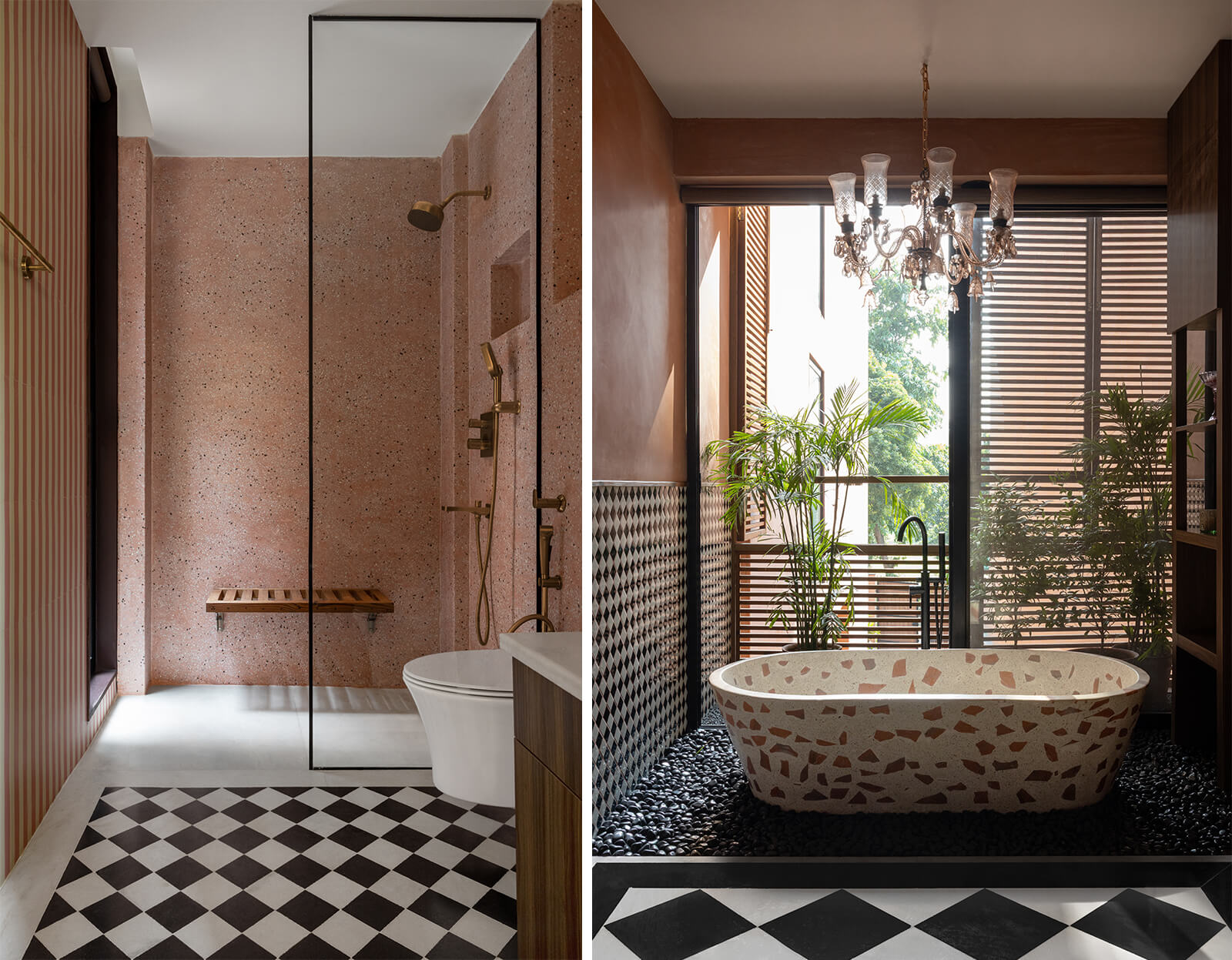
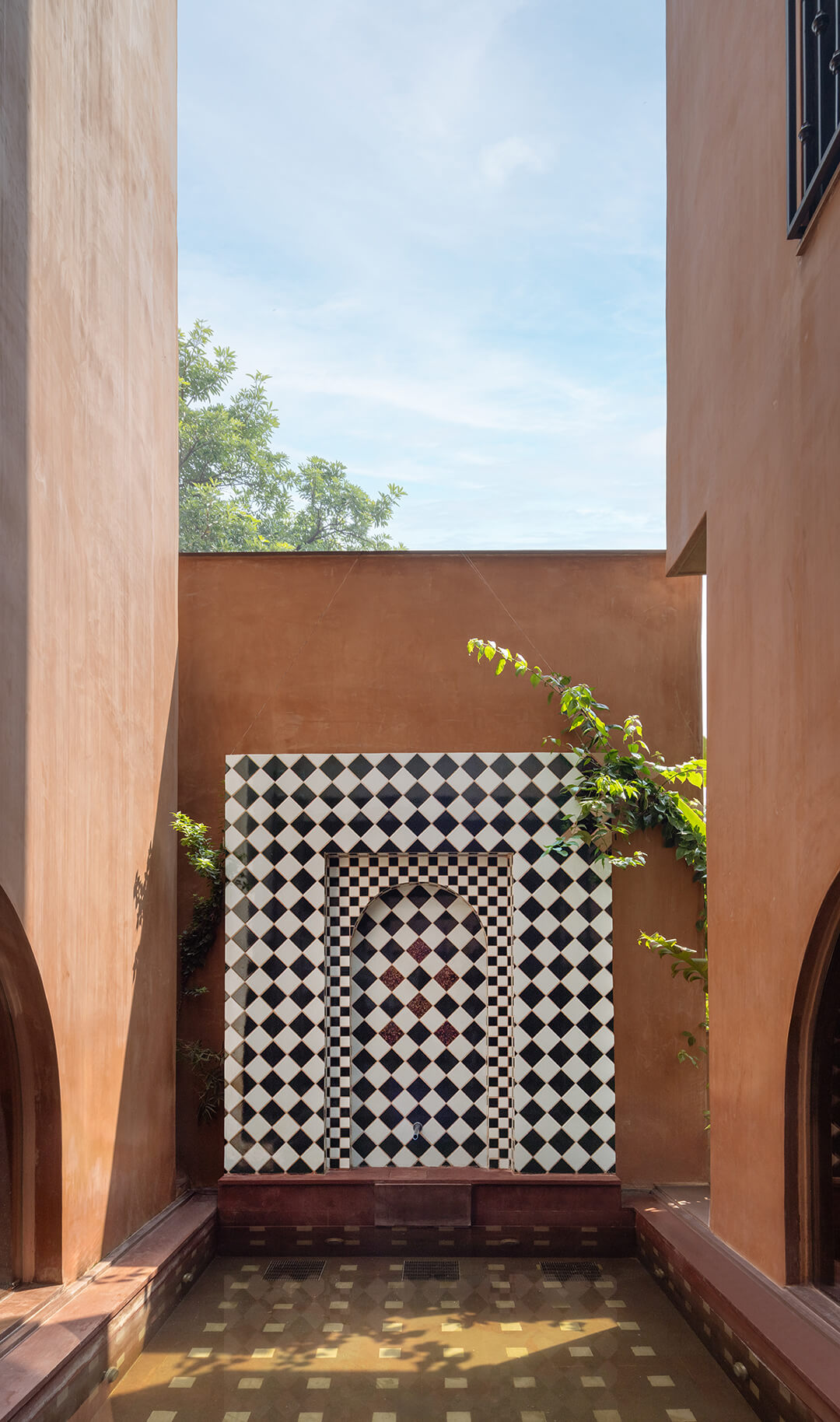
“Climatically, the courts of the ground level are east-oriented, and so they bask in the morning sunlight, but with the progression of the day, they act more as sources of ventilation and indirect light, trying to minimise the harsher south and west sun. As we move to the floors above, of the additional two courts, one has a louvred wooden framing around, to allow self-shade to make the outdoor space usable in the daytime, and the other has an eight-inch deep water bed to help cool the micro-climate,” the Indian architects add.
Focusing on other architectural details of the building, the operable wooden second skin of the building allowed a smoother transition for the clients from a high-rise apartment typology to a grounded, layered domestic landscape. The skin helped negotiate between the intended storytelling and environmental control, especially with respect to the harsh South sun. Made of multiple openable louvred wood panels, the skin allows varied amounts of light to penetrate the internal spaces, even when completely shut, creating an interplay of light and shadow. Upon opening, they offer views of the park and faint glimpses of the road. “At its most fundamental, the wooden skin acts as a porous, discretionary buffer between the occupants, their interactions with the immediate ground-level context and the weather,” the architects explain.
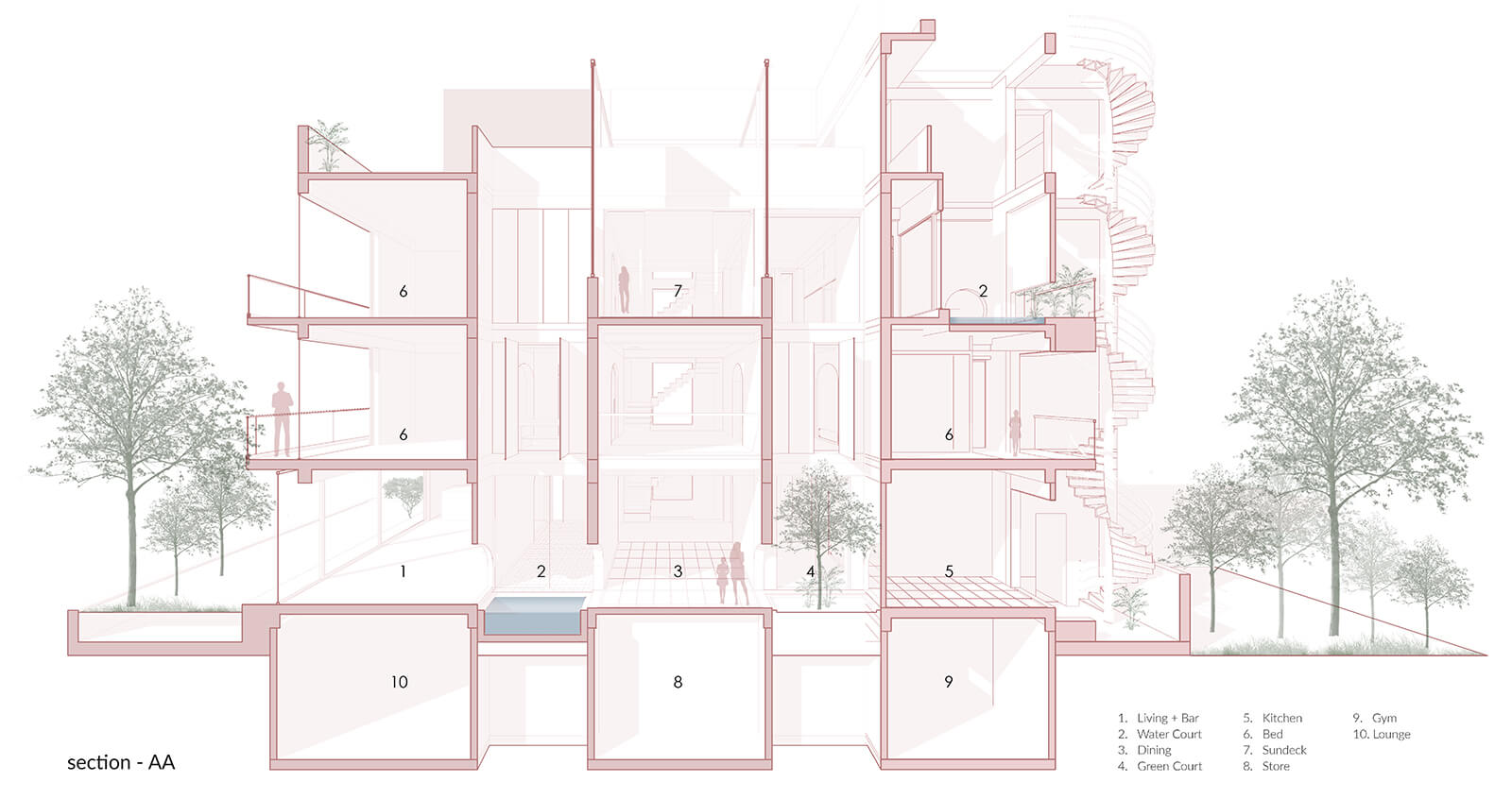
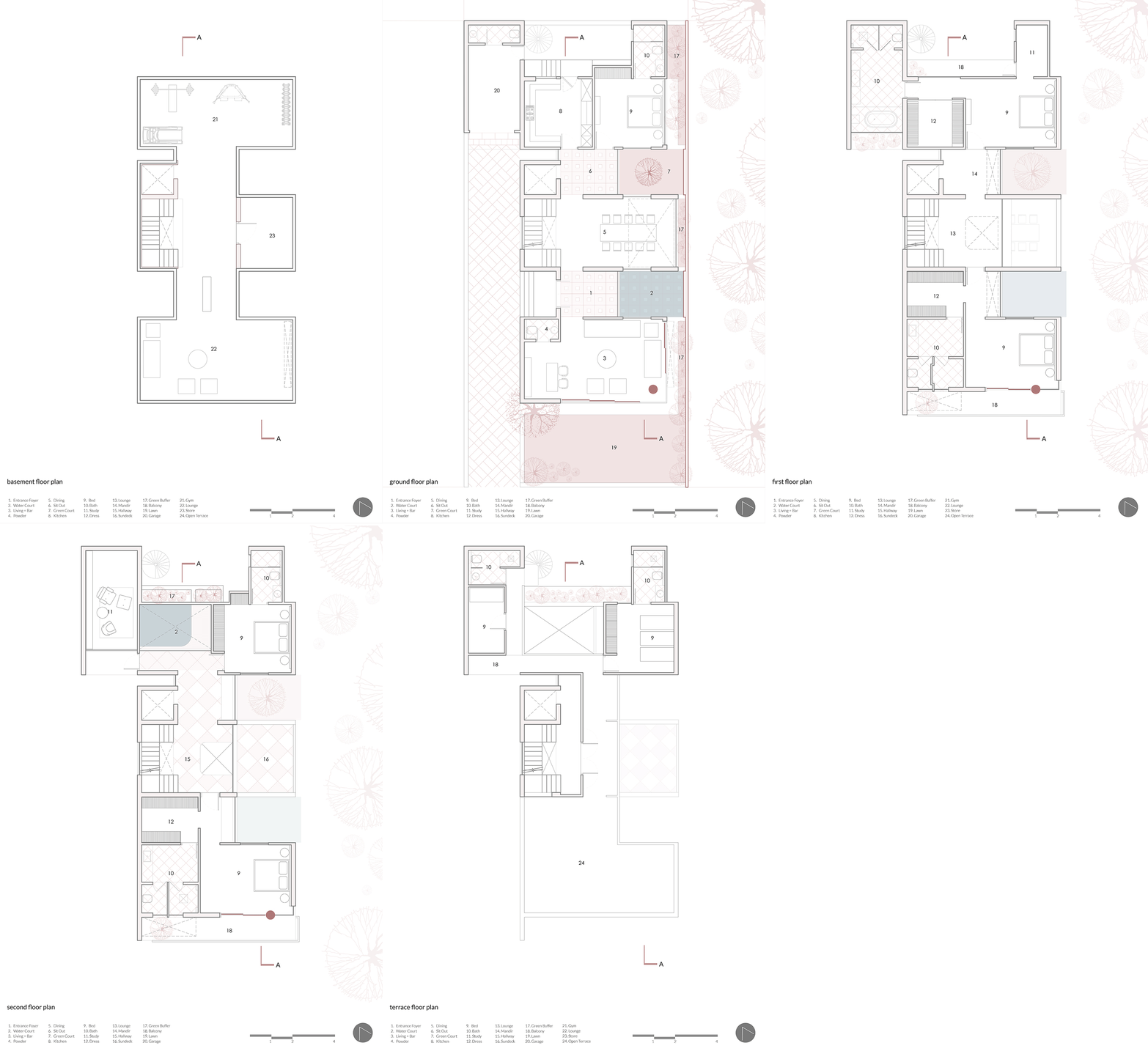
With the way the courts are positioned and the spaces arranged, the building emerges as an array of three monolithic blocks that overlook the courts, collectively exhibiting a welcome porosity in their built fabric. A combination of materials, including wood, limestone, sandstone and lime plaster, binds the spaces together in cohesive colours and a unified design language. Synonymous patterns and inlays of stonework throughout the courts add more dimension to the otherwise monotonous and understated wall treatments, positioning them as crucial spatial facilitators rather than merely buffers. The courts then become a vital feature and a relief amidst the otherwise densely packed context that is characteristic of architecture in this part of the country, using a limited footprint and interwoven spatial tapestry as a guide for more equitable and thermally comfortable space-making.
Name: A Tale of Tinted Courts
Location: Noida, Uttar Pradesh, India
Architects: Architects Collaborative
Site area: 300 sq m
Built-up area: 750 sq m
Year of Completion: 2025

by Pranjal Maheshwari Oct 19, 2026
The Mumbai-based architects integrate courtyards, mesh screens and north light trusses to create a dining space that doubles up as a community hub at SR University, Warangal.
by Mrinmayee Bhoot Oct 17, 2026
The Rotterdam-based institute centres the Indian Ocean as a network for exploring material histories and transnational links shaping coastal cultures, positing them as future models.
by Pranjal Maheshwari Oct 16, 2026
At the 2026 Stirling Prize ceremony, Mary Duggan with RUFF Architects, MAKER Architecten and Nakshabid Architects were felicitated for proffering quality housing and social equity.
by Mrinmayee Bhoot Oct 12, 2026
The new Centre for Contemporary Arts, fostering public engagement with art in Uzbekistan, is housed in a tram depot refurbished by the French studio, emulating local craftsmanship.

make your fridays matter with a well-read weekend
Enter your details to sign in
Don’t have an account?
Sign upOr you can sign in with
a single account for all
STIR platforms
All your bookmarks will be available across all your devices.
Stay STIRred
Already have an account?
Sign inOr you can sign up with
Verification link sent to check your inbox or spam folder to complete sign up process
Tap on things that interests you.
Select the Conversation Category you would like to watch
Please enter your details and click submit.
Enter the 6-digit code sent at


A Tale of Tinted Courts, a layered unfolding of a mythological box
by Bansari Paghdar | Published on : Mar 19, 2026


 Sign in with Google
 Sign in with email
What do you think?