Design09 mins. read
Design Democracy 2026 puts regional design at the heart of Made in India
by Jincy IypeOct 15, 2026




by Bansari PaghdarPublished on : Feb 07, 2026
The inaugural Aranyani Pavilion, Sacred Nature, opens at the gardens of the Sunder Nursery in New Delhi, India, operating at the fluid, unfixed convergence of art, architecture and design. Named after the forest deity from the sacred Vedic text Rigveda—composed over 3,000 years ago, pioneering early Indian ideas around nature—Aranyani enters the built environment sector for the first time with the architecture pavilion. The annual commission is set to facilitate ecological research for the organisation within the context of the physical environment, applying architectural thinking to expression in order to make space for ecological conservation in tandem with the urban landscape.
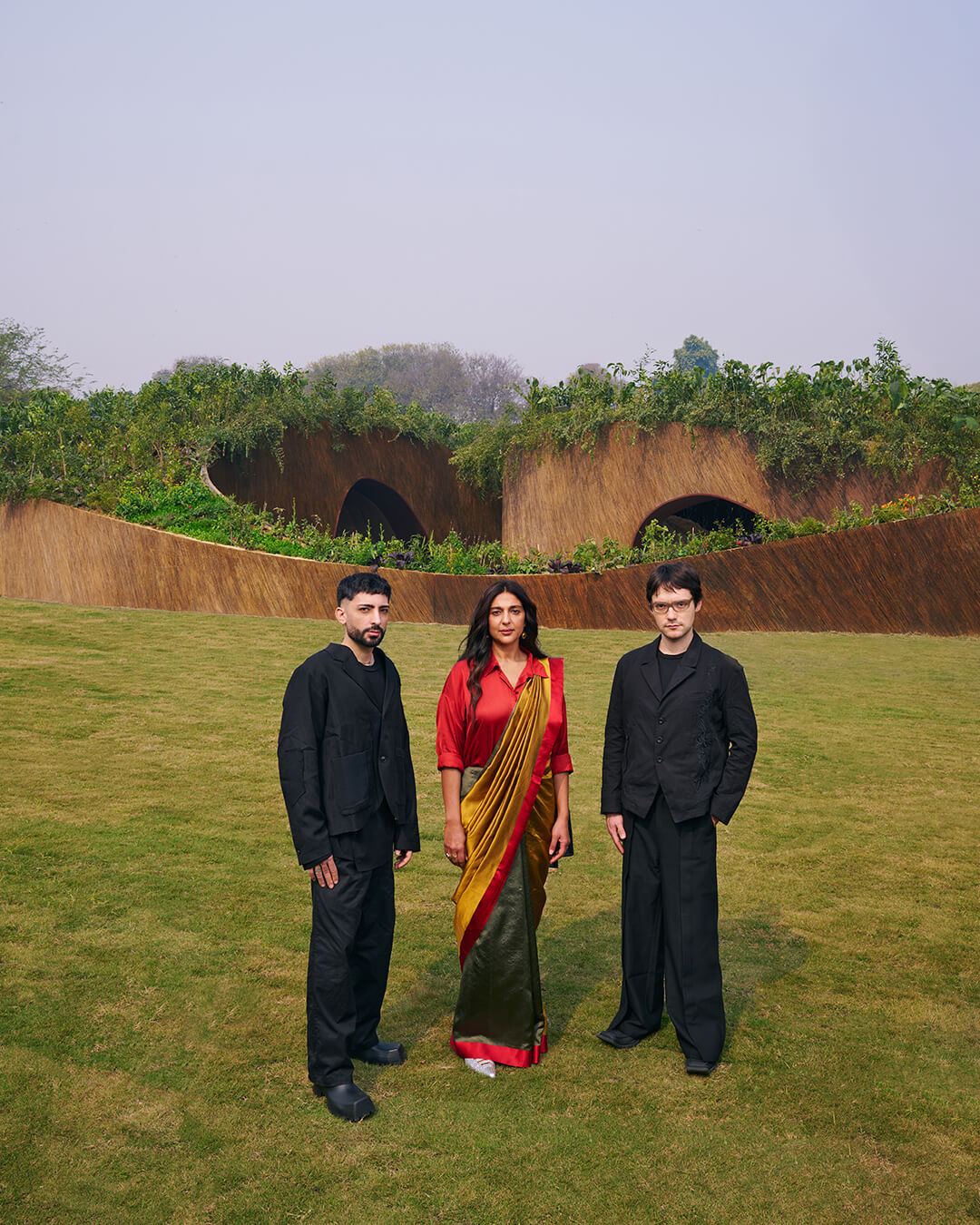
Founded by conservation scientist and creative director Tara Lal, Aranyani is, at the outset, an initiative dedicated to the renewal of human connection with nature through conservation and creative arts. Spanning land and marine restoration, ecological storytelling and sustainable design, her practice seeks to restore vulnerable ecosystems through community-centric models. Lal has conceptualised Sacred Nature, the inaugural Aranyani Pavilion, in collaboration with Cypriot-Colombian practice T__M.space, led by architects Tanil Raif and Mario Serrano Puche. The studio is known for its digitally crafted lightweight structures that foreground local materiality and ecological thinking, aligning with Lal's beliefs and the intent behind bringing the project to life.
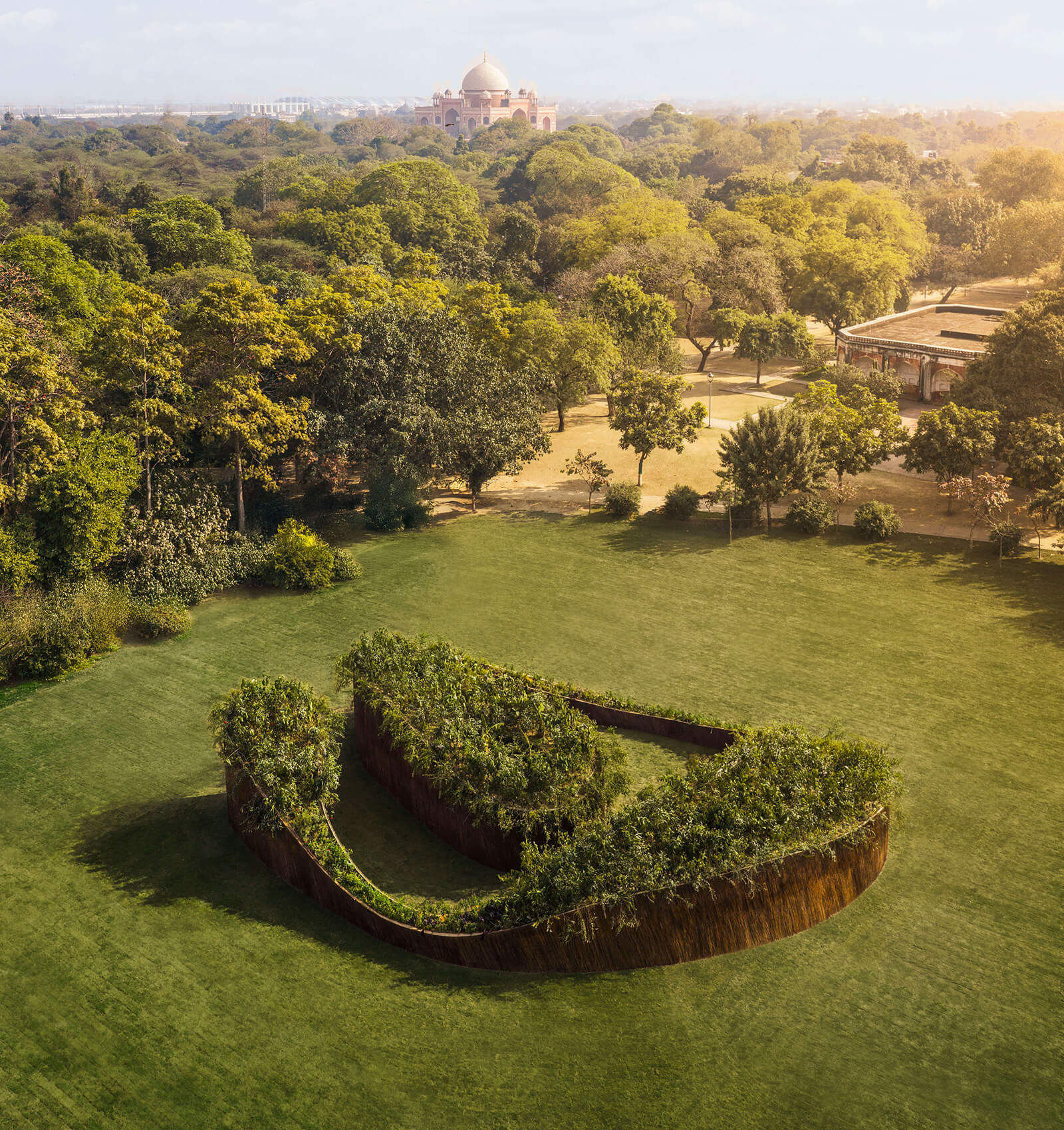
“We are living through a moment where the distance between people and the natural world has never been greater. So many of our ecological crises are rooted in colonial histories and systems that separated us from land, from Indigenous knowledge and from one another. The Aranyani Pavilion is an invitation to repair that rupture, to experience ecology not as abstraction but as something we walk through, feel and belong to,” states Lal in an official release.
In addition to the name of the project, the site itself has a rich history that adds more meaning to the conception of the pavilion. Once known as Azim Bagh or ‘great garden’, Sunder Nursery—now synonymous as a speck of hope in Delhi's damaged gauntlet of public green spaces—is a 90-acre parcel of land, established as a nursery in the early 20th century for the new Indian capital. Featuring several rare trees, water gardens and restored monuments, the site has been renewed since 2007 by the Aga Khan Trust for Culture (AKTC). The pavilion thus draws from the spatial logic of sacred groves and ancient community-protected forest sanctuaries that acted as bio-reserves long before modern conservation law existed. Spiritual beliefs and social customs preserved them, safeguarding biodiversity, water sources and local ecologies—now acknowledged as important biodiversity hotspots within frail urban ecosystems.
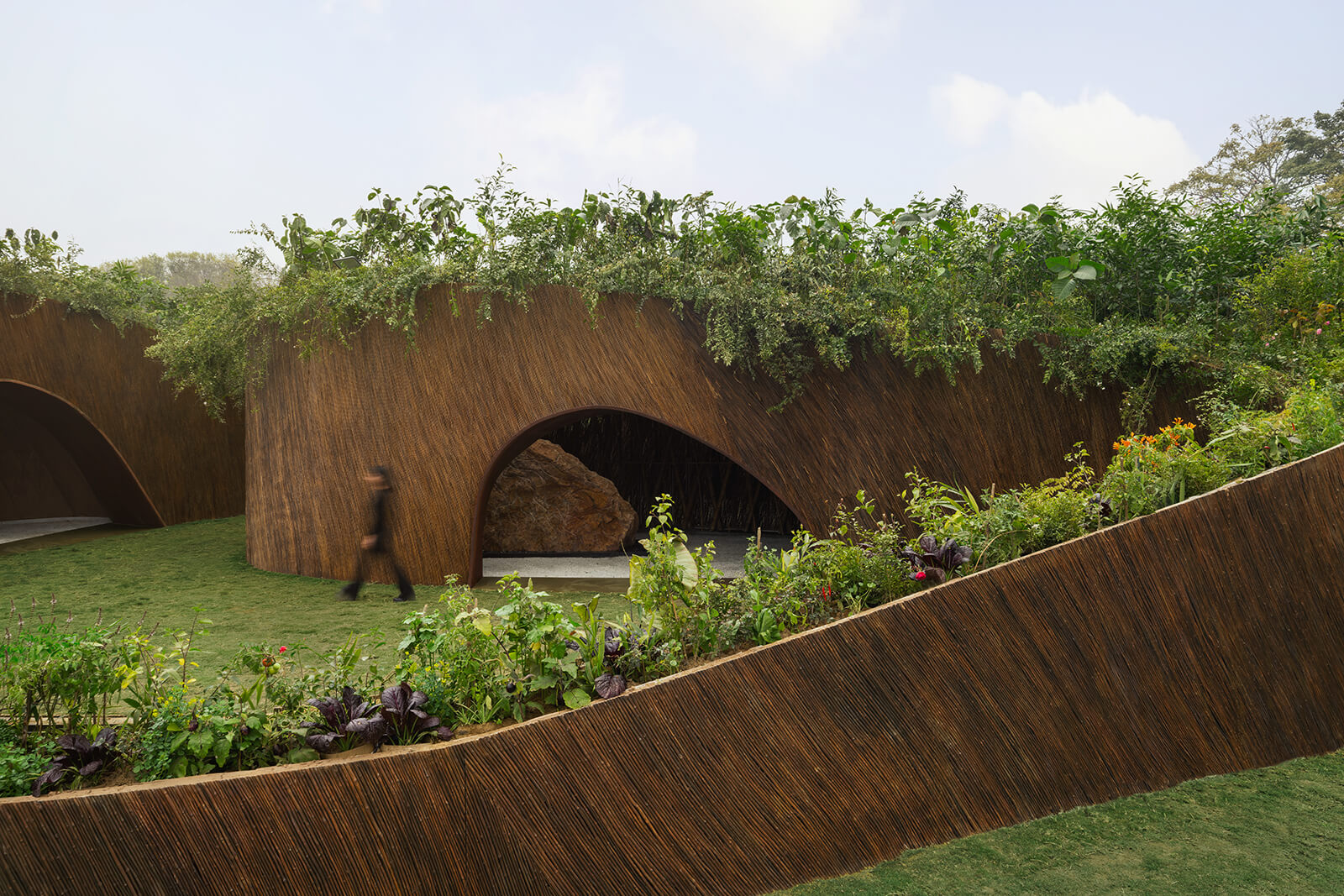
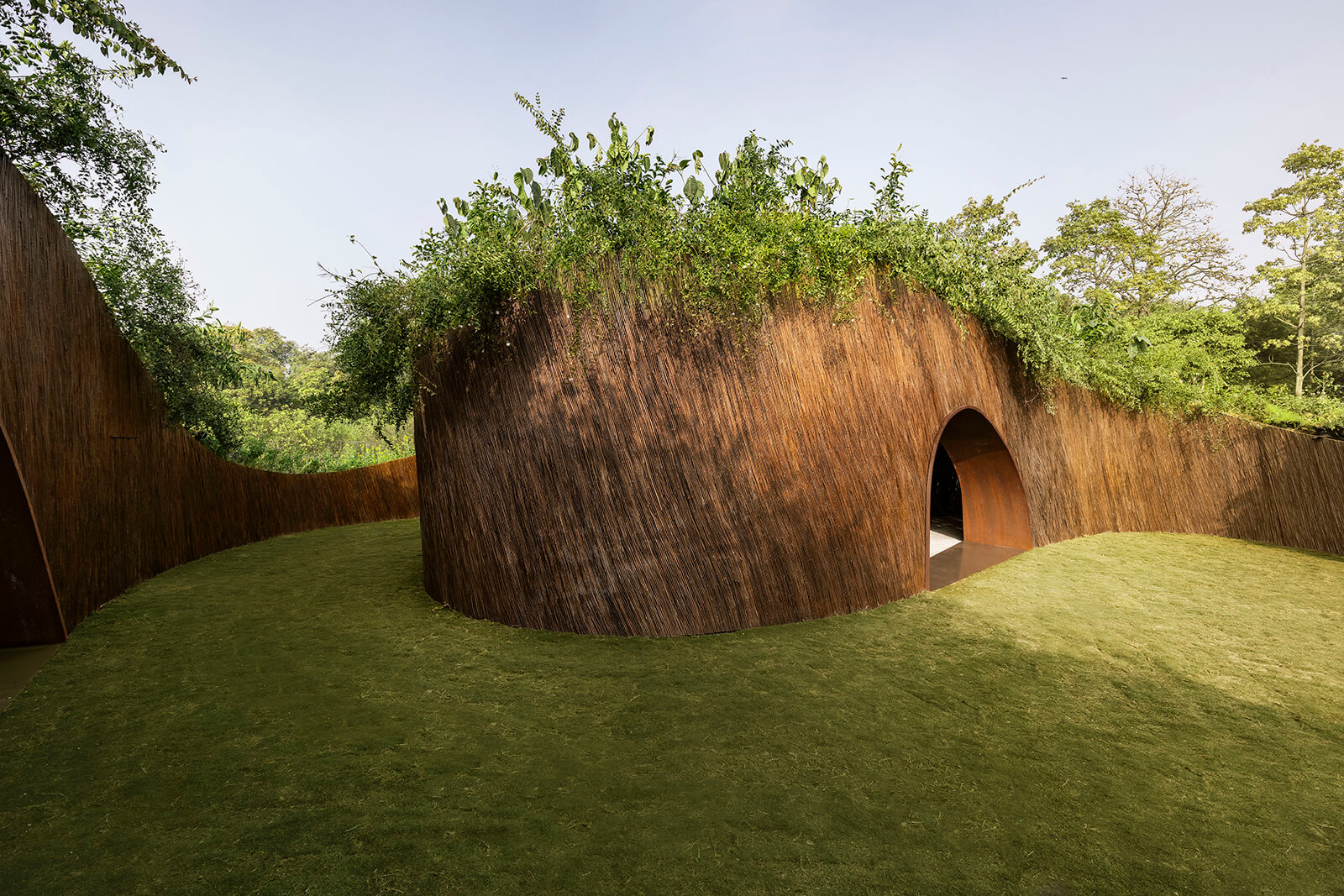
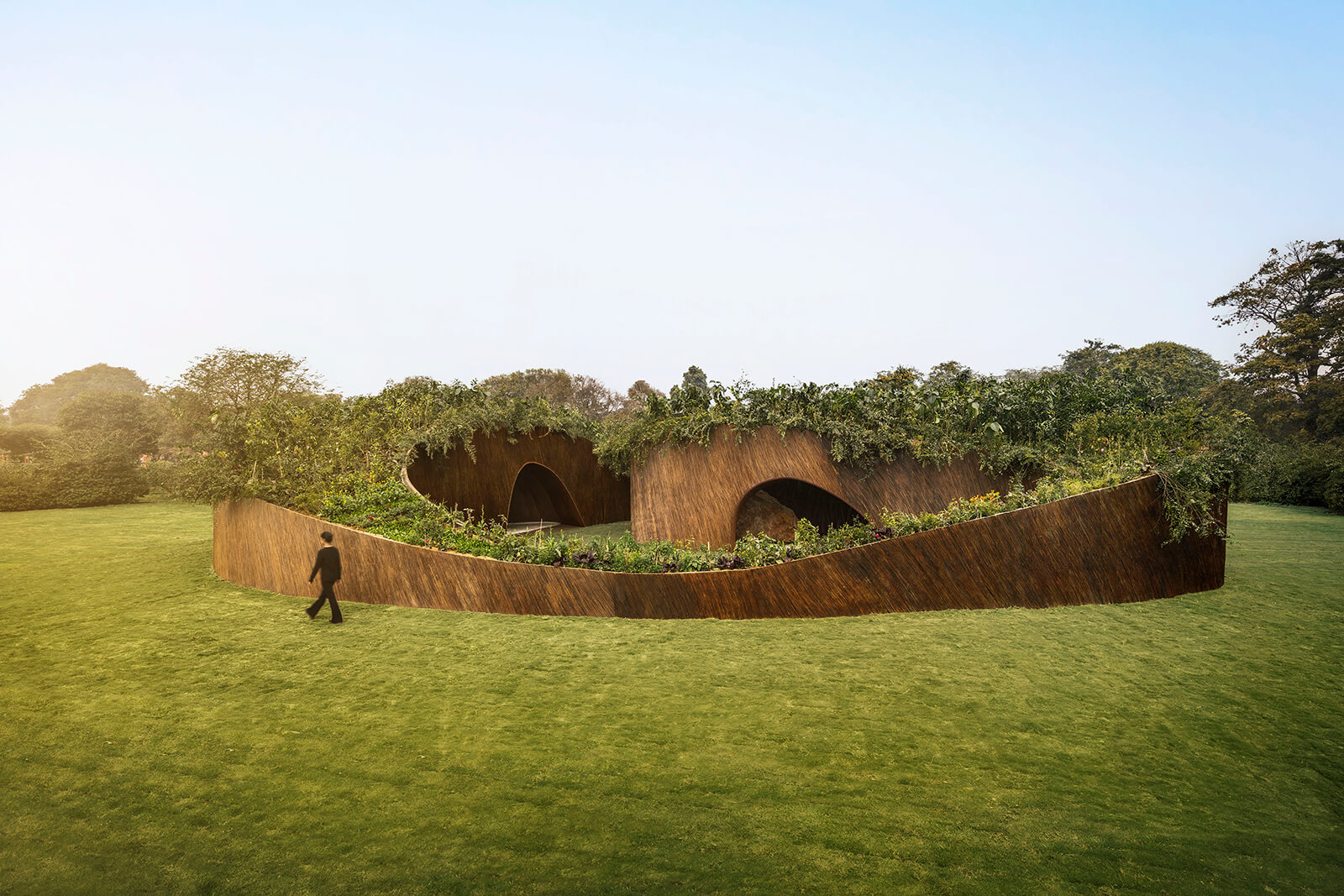
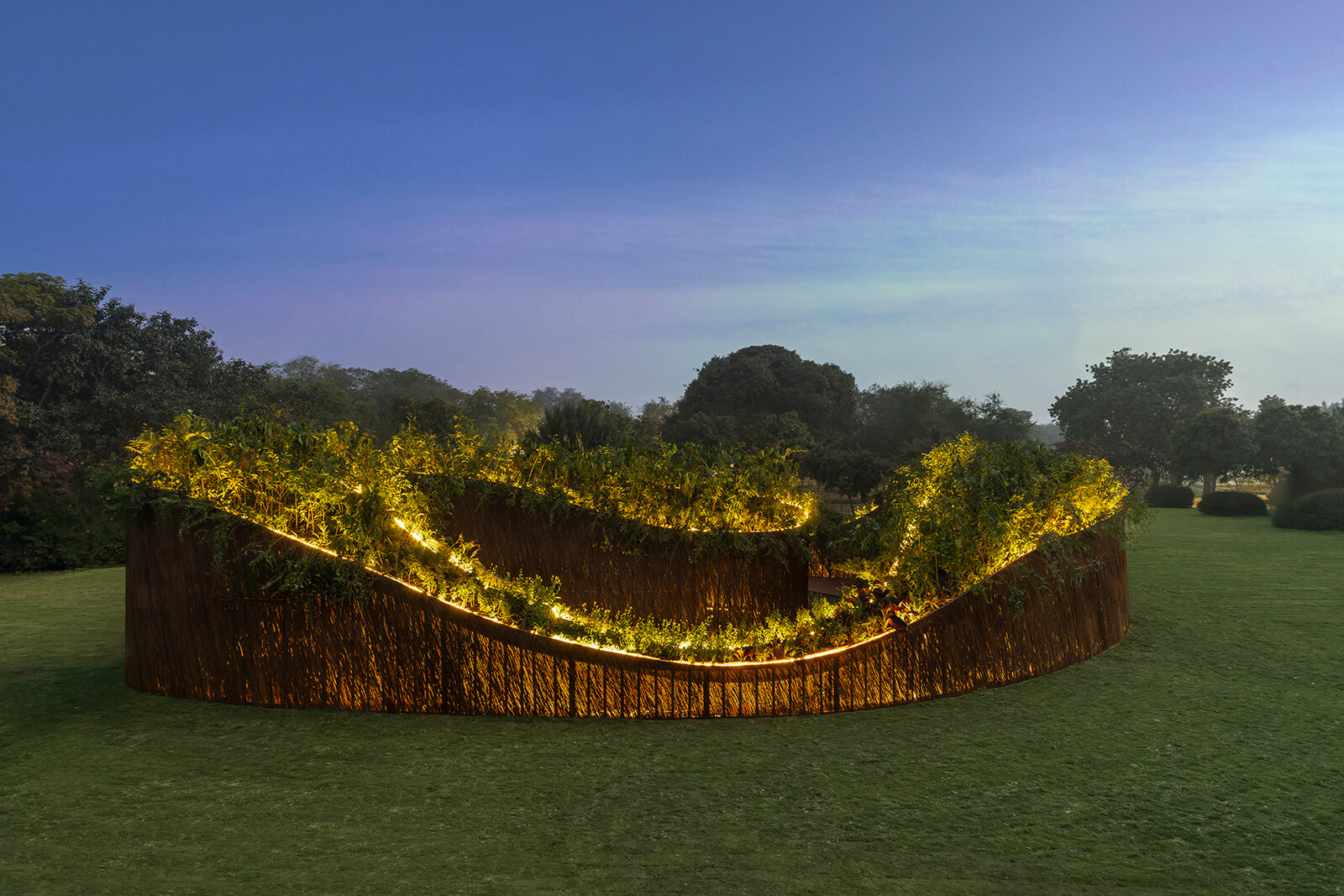
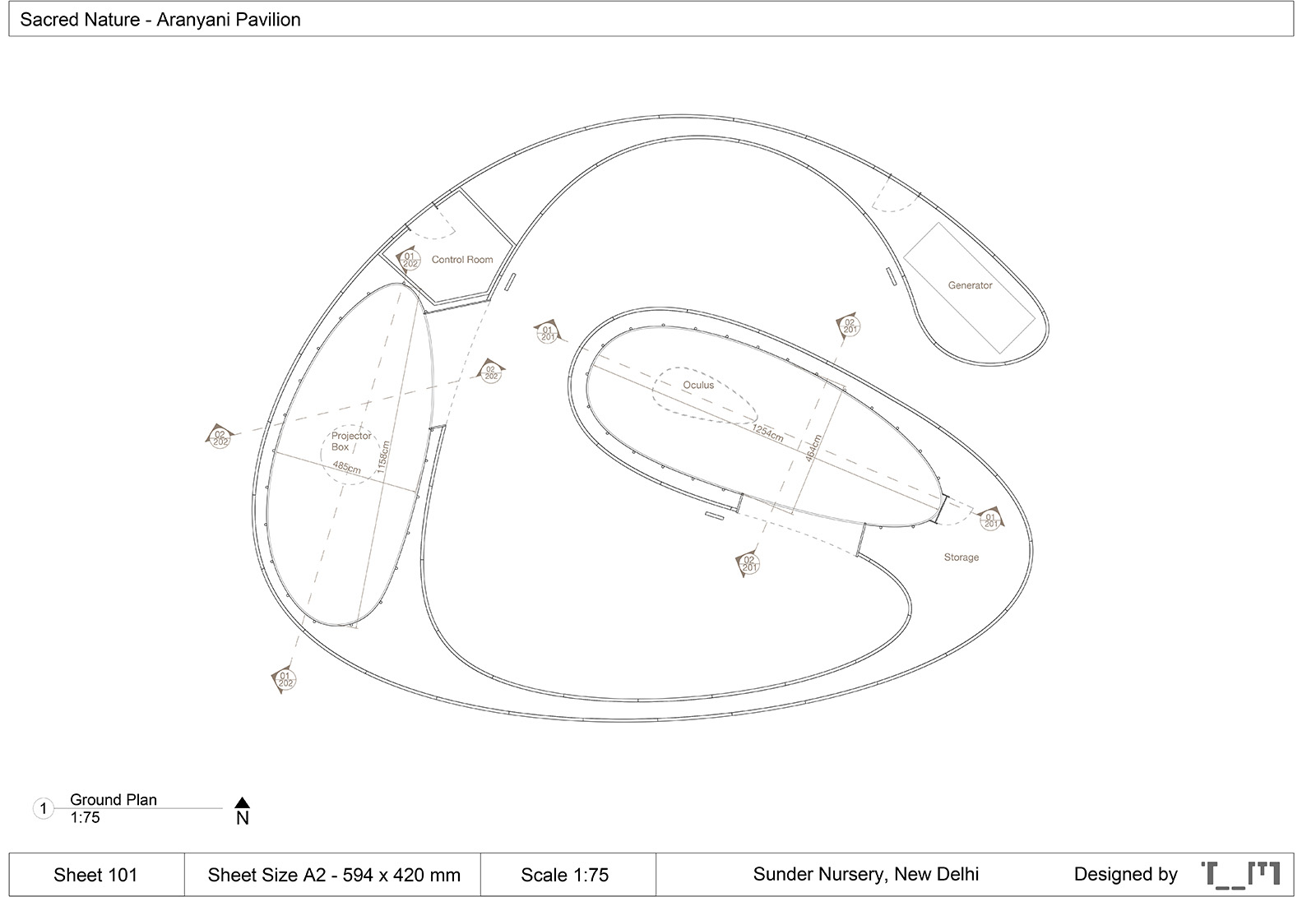
Principles of sacred geometry and movement inform the layout of the pavilion, taking the form of a continuous spiral path that choreographs a play of texture, sound, light and shadow, almost akin to a living, breathing forest through openings and skylights. The experiential design encourages visitors to look inwards as they ritualistically traverse through the pathways, experiencing a mix of open and semi-open spaces, alluding to canopies and the open floor of a forest. A large stone monolith sits at the centre of the pavilion, conceived as a shrine, symbolically marking the meeting of the earth and the sky through a precisely placed cut in the canopy above. The intended effect is further pronounced by markings engraved along the surface of the nearly 4-tonne monolith—made from stone offcuts sustainably sourced from Rajasthan—rounding out a rather peacefully set out 'sanctum' within the pavilion.
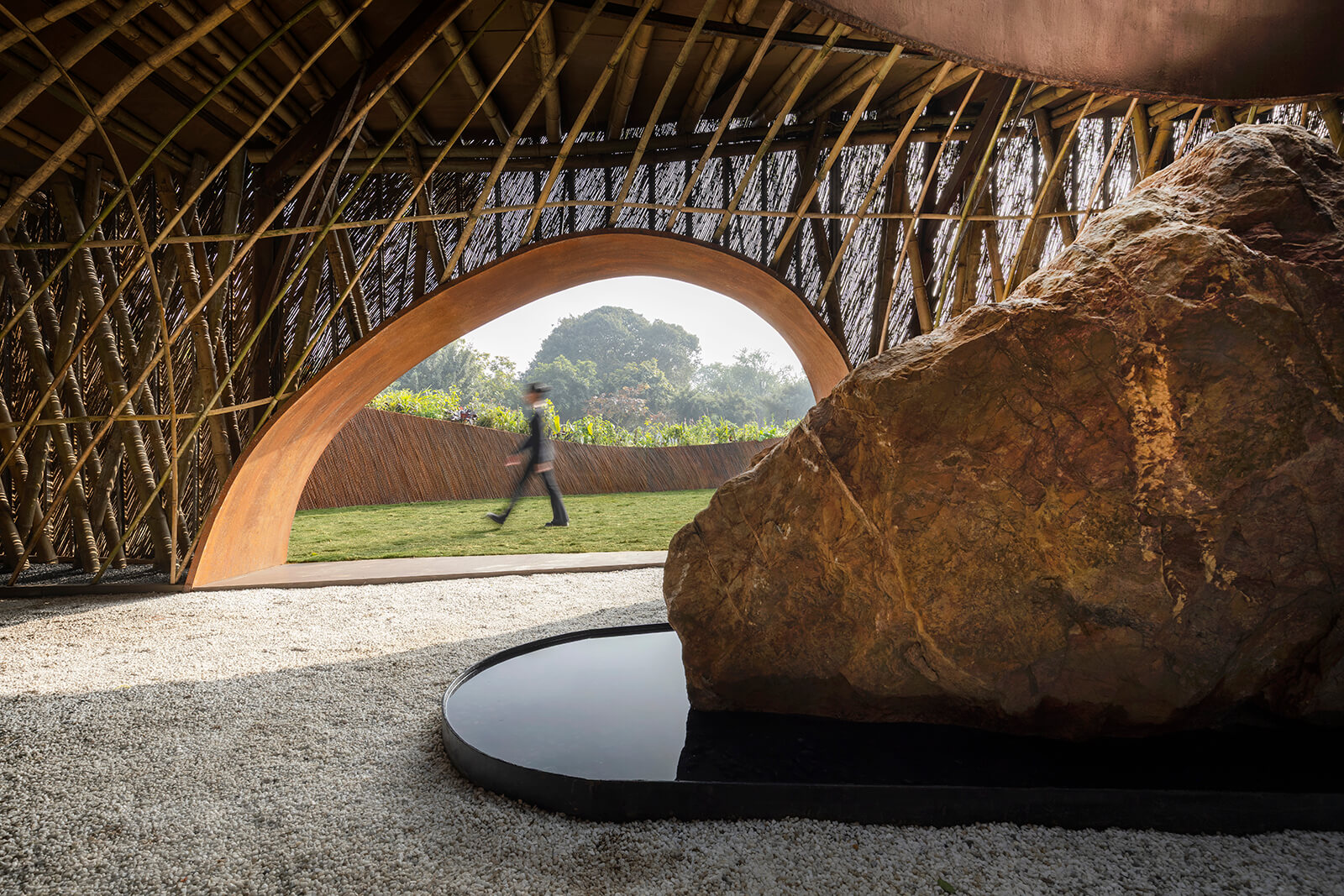
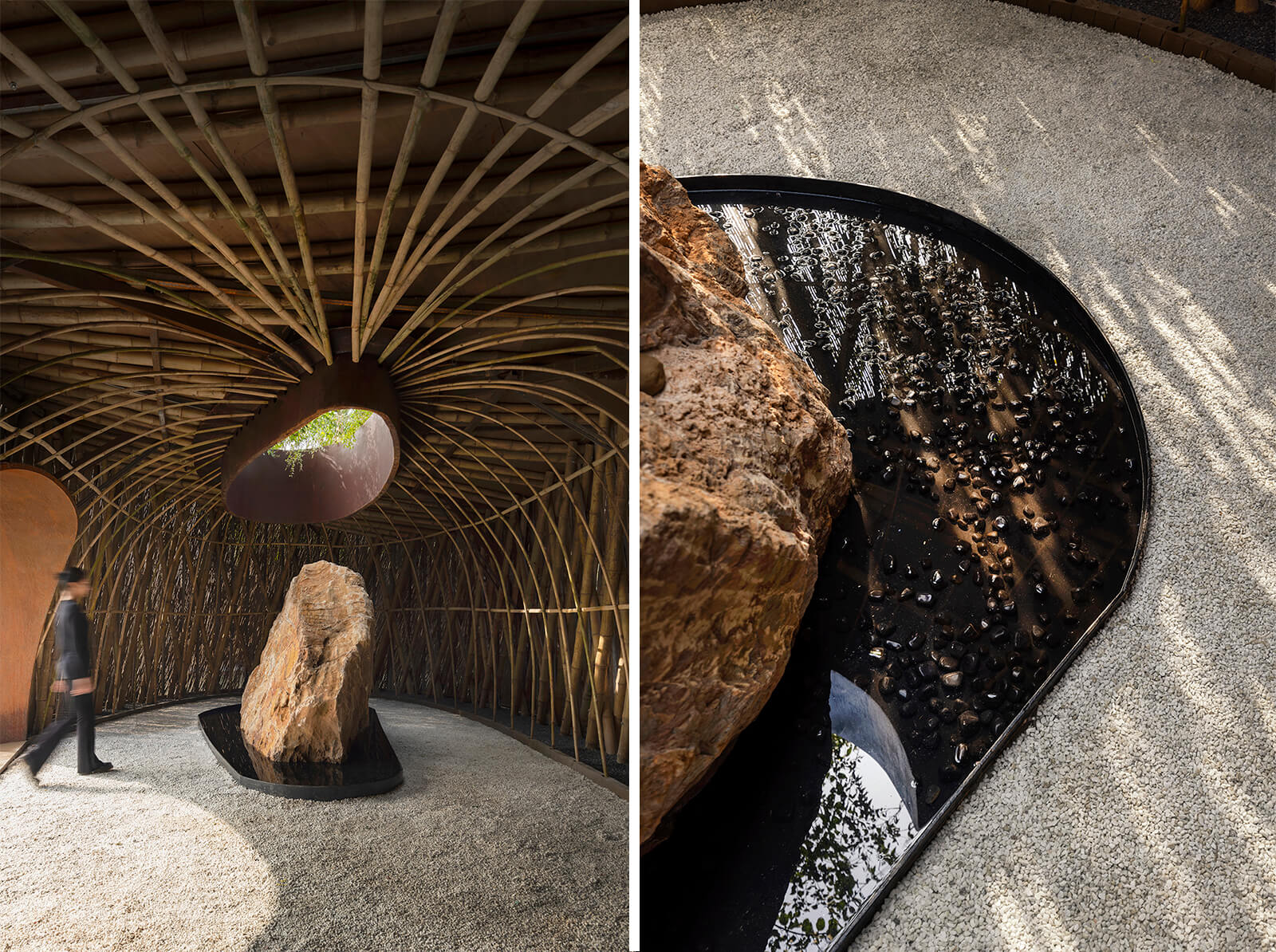
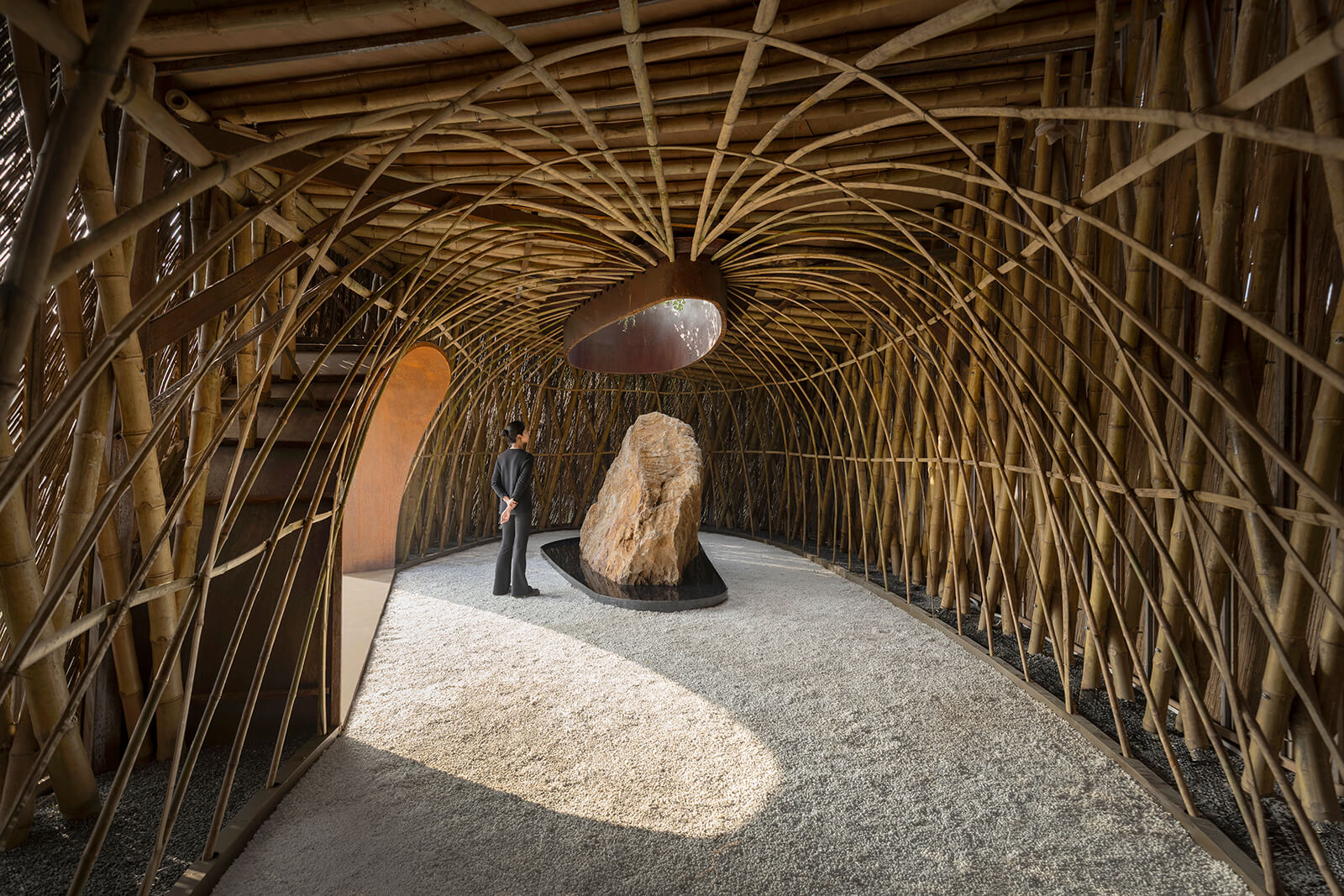
Several skilled hands yield the realisation of the pavilion as a refuge within a green refuge—a dire need considering the density of Delhi. While Guillaume Lecacheux, director of The Works, was responsible for the project's technical realisation, Gaurav Raina and Komorebi's sound design backs the more experiential aspects of the pavilion, with their natural soundscapes mimicking a city we all knew within a space we all desire.
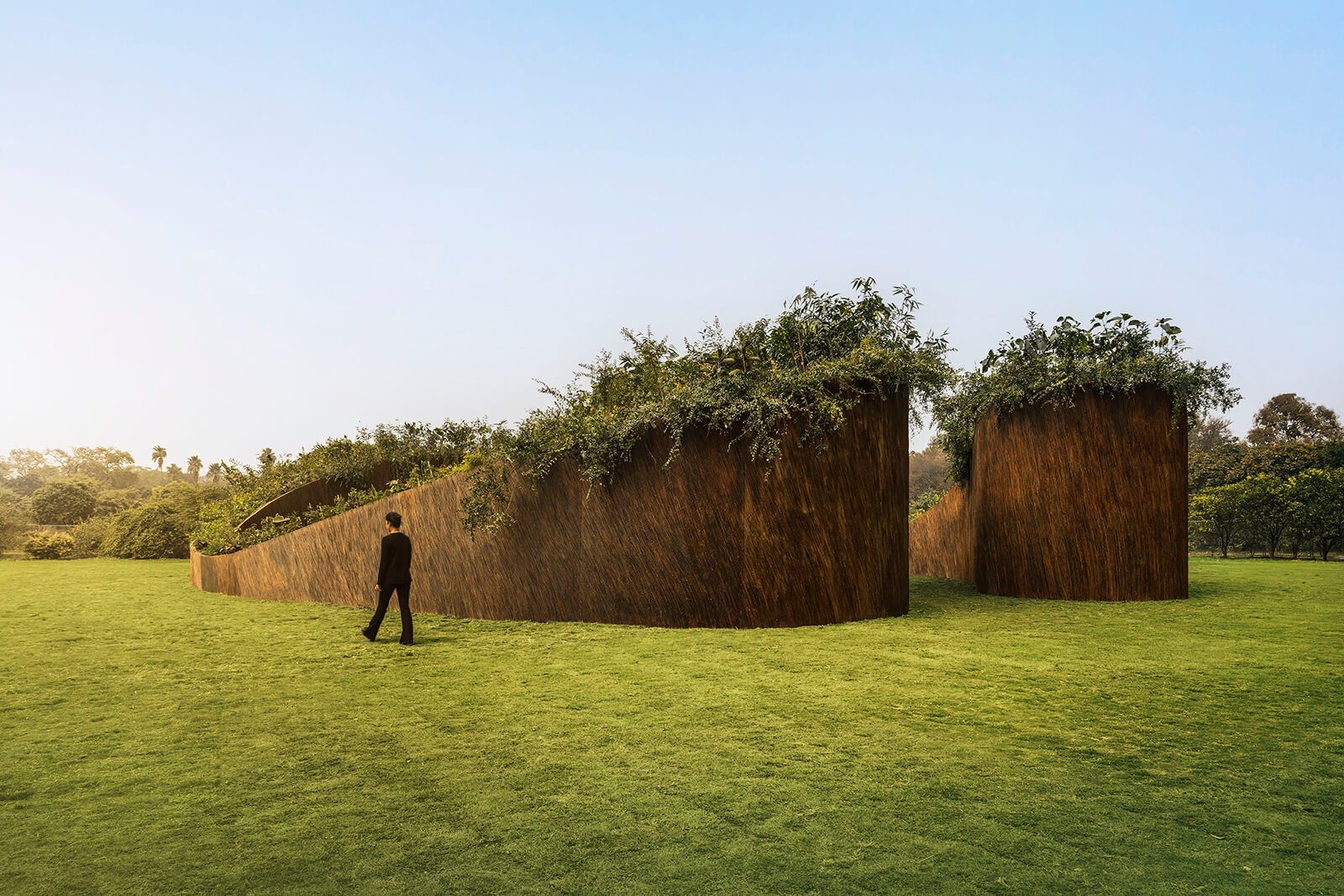
The pavilion, through T_ M.space's design scheme and Lecacheux's deft hand, places special emphasis on the materiality of the structure to embody the ecological heart with which it is conceived. The foundation is made from mild steel frames, on top of which a bamboo structure is erected with jute and plyboard elements for texture and warmth. The outer shell, clad in lantana wood, features irregular grains and tones to reflect the organic nature of forest groves. Using lantana wood, the pavilion seeks to contribute to forest restoration and biodiversity conservation, turning an invasive plant species into a building material, recast in a lattice form by Ekarth Studio. A wave of over 40 indigenous flora forms the pavilion and its boundary's covers, including edible, medicinal and culturally significant species such as jasmine, neem, tulsi, tomatoes and some small root vegetables. This contrast of lantana—which was brought by the British and the Portuguese in India in the 1800s and now reportedly threatens 44 per cent of India’s forest cover—with indigenous species is intentional. It foregrounds the belief that what has been damaged or overtaken can eventually be reclaimed by thoughtful restoration of ecosystems.
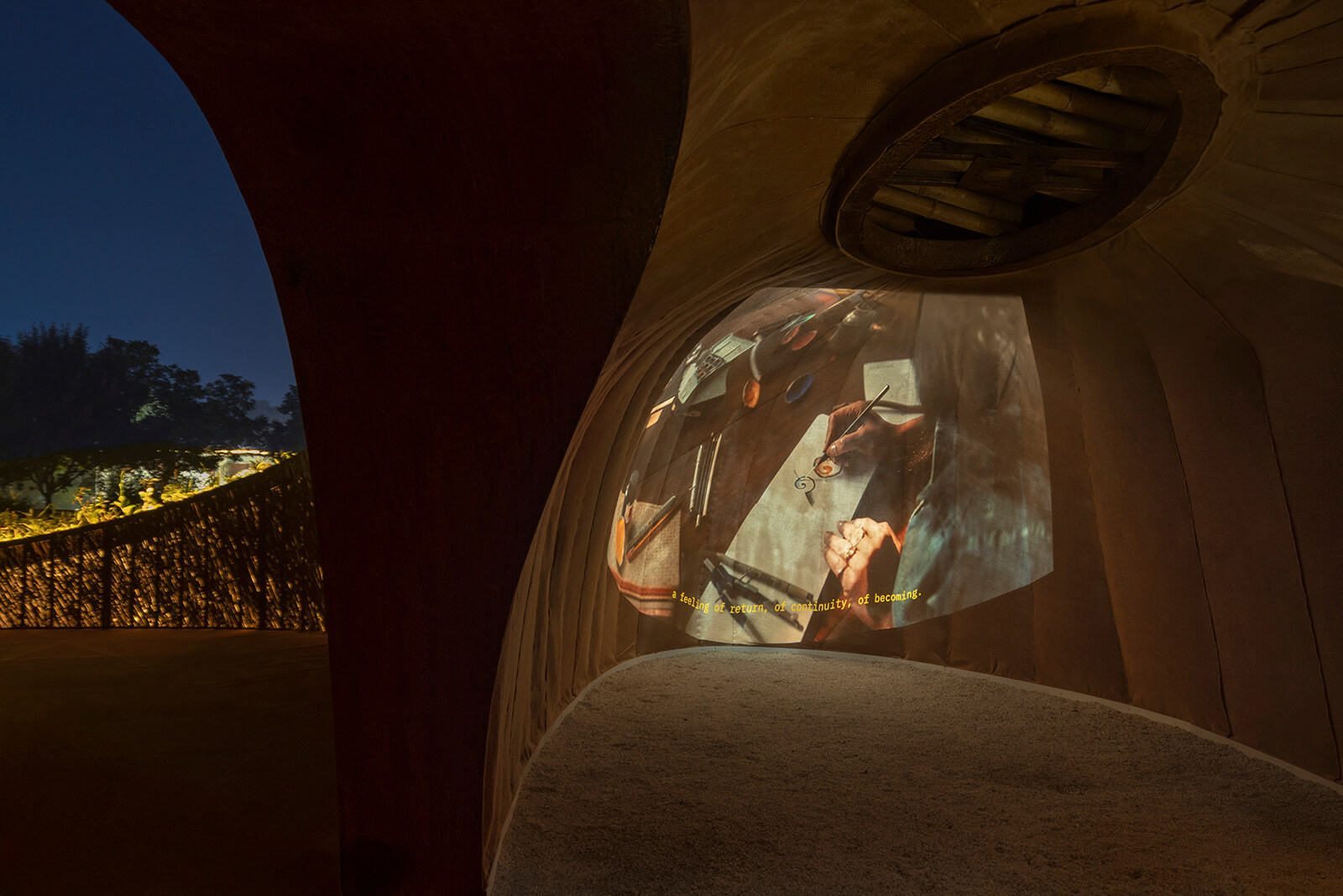
Upon opening, the pavilion will host a public programme, including performances, talks, workshops and guided tours aligned with its decolonial and ecological themes. Highlights include lectures on biodiversity and food sovereignty by renowned environmental activist Vandana Shiva and historian Sathnam Sanghera. HCLTech’s chairperson, Roshni Nadar Malhotra; Nicobar co-founder, Simran Lal; and Godrej & Boyce’s executive director, Nyrika Holkar, will come together to discuss women in business and ecology. Good Earth founder Anita Lal and Kama Ayurveda founder Vivek Sahni will engage in a conversation on natural fragrances and landscape memory, while T__M.space and The Works will discuss the making of the pavilion itself. Life Yoga, Nabanita Bajaj and Booker Prize-nominated author Avni Doshi will organise workshops on sound healing and pranayama, building home gardens and poetry and worldbuilding, respectively, adding concurrent life to the structure through thoughtful public programming. All along, the pavilion remains open to the public in the Nursery and beyond.

After its presentation at the Sunder Nursery between February 3 – 13, 2026 and in keeping with its sustainable-ecological principles, Sacred Nature will find a home at the Rajkumari Ratnavati Girls’ School in Jaisalmer, Rajasthan. The rather stunning example of ecological architecture designed by New York-based Diana Kellogg Architects is entirely informed by local building materials and the harsh climate conditions the school faces. Becoming a dynamic classroom for studies in conjunction with the school, the pavilion will serve students, researchers and emerging naturalists. Moreover, its edible and medicinal plants will be a part of ongoing community-led environmental projects in Delhi, such as the Basti Gardens of Hope and Swechha’s urban forest restoration projects.
The pavilion’s careful consideration for a thriving afterlife and an extension of its purpose beyond the fanfare then reinforces Aranyani’s commitment to ecological renewal and sustainability initiatives. Backed by these principles, the materiality of the pavilion is absolutely central to the pavilion’s ethos, with hints at decolonising our ecosystems through not just design, but by a reclaimed focus on the indigenous and vernacular, along with a co-existence centred on local knowledge systems. The Aranyani Pavilion weaves effective storytelling into the mix, lending it a spatial manifestation.
Name: Sacred Nature
Location: New Delhi, India
Client: Aranyani
Architects: T__M.space
Site area: 600 sq m
Built area: 200 sq m
Year of Completion: 2026

by Pranjal Maheshwari Oct 24, 2026
A consortium of Copenhagen’s 3XN, Toronto’s B+H Architects and Shenzhen’s Zhubo Design has designed the museum to mimic the surrounding riverscape, topped with a public park.
by Pranjal Maheshwari Oct 19, 2026
The Mumbai-based architects integrate courtyards, mesh screens and north light trusses to create a dining space that doubles up as a community hub at SR University, Warangal.
by Mrinmayee Bhoot Oct 17, 2026
The Rotterdam-based institute centres the Indian Ocean as a network for exploring material histories and transnational links shaping coastal cultures, positing them as future models.
by Pranjal Maheshwari Oct 16, 2026
At the 2026 Stirling Prize ceremony, Mary Duggan with RUFF Architects, MAKER Architecten and Nakshabid Architects were felicitated for proffering quality housing and social equity.

make your fridays matter with a well-read weekend
Enter your details to sign in
Don’t have an account?
Sign upOr you can sign in with
a single account for all
STIR platforms
All your bookmarks will be available across all your devices.
Stay STIRred
Already have an account?
Sign inOr you can sign up with
Verification link sent to check your inbox or spam folder to complete sign up process
Tap on things that interests you.
Select the Conversation Category you would like to watch
Please enter your details and click submit.
Enter the 6-digit code sent at


The Aranyani Pavilion gestures at ecological renewal building on a colonial past
by Bansari Paghdar | Published on : Feb 07, 2026


 Sign in with Google
 Sign in with email
What do you think?