Architecture05 mins. read
LIVinSET at ADFF:STIR Mumbai 2026 turns daily rituals into a cinematic experience
by Aarthi MohanJan 08, 2026



by Chahna TankPublished on : Jan 05, 2026
Mumbai is always in motion—truly a city that never sleeps. Across it, an unceasing sequence of quotidian acts unfolds day and night—commuting and waiting, selling and eating, working and worshipping, sidestepping and celebrating. To move through this unreal city is to be perpetually in the middle of things. Philosopher Martin Heidegger described this condition as ‘being-in-the-world’, or what he called ‘average everydayness’: the idea that human existence is lived through the performance of habitual, ordinary acts. In Mumbai, however, this average everydayness is anything but average.
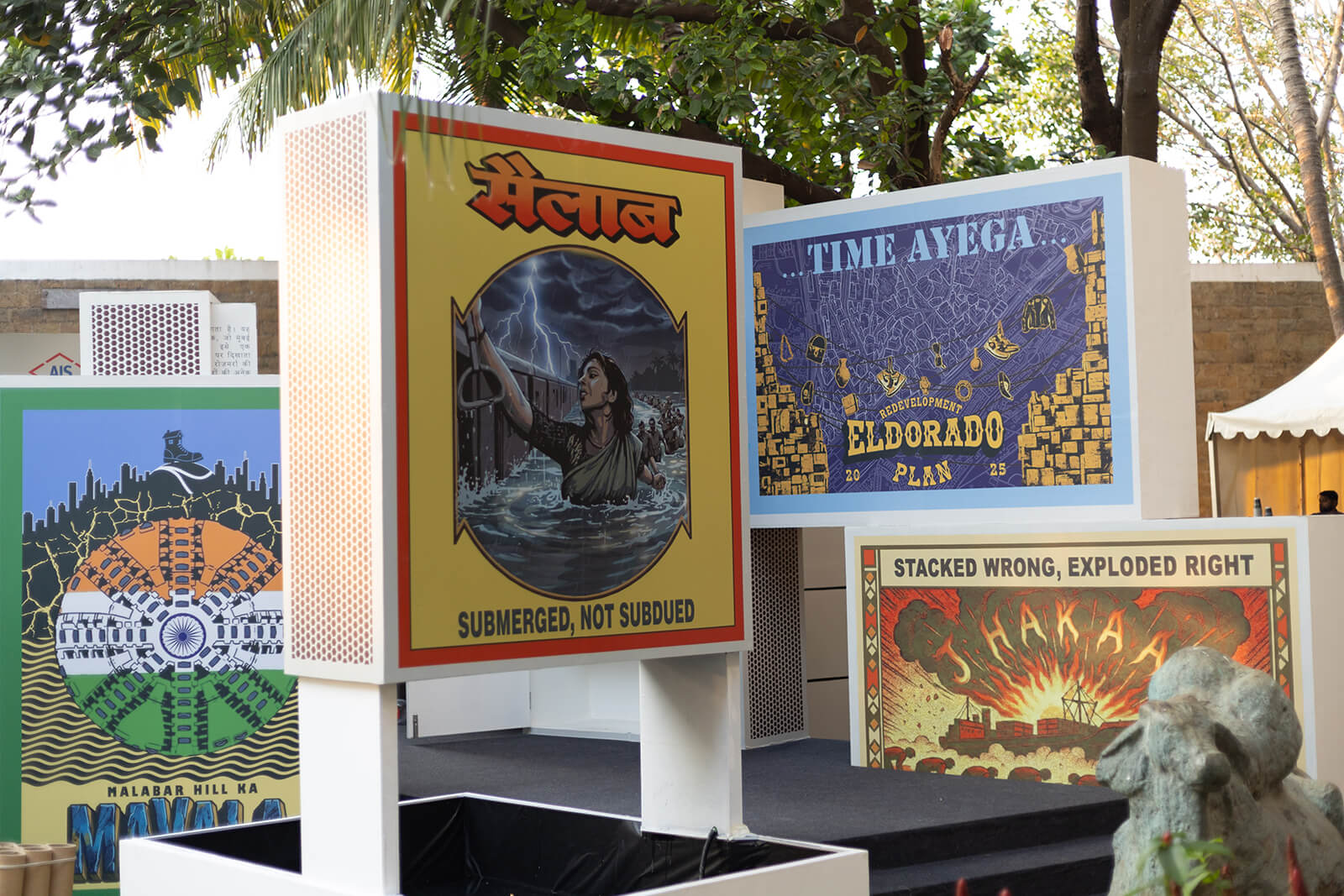
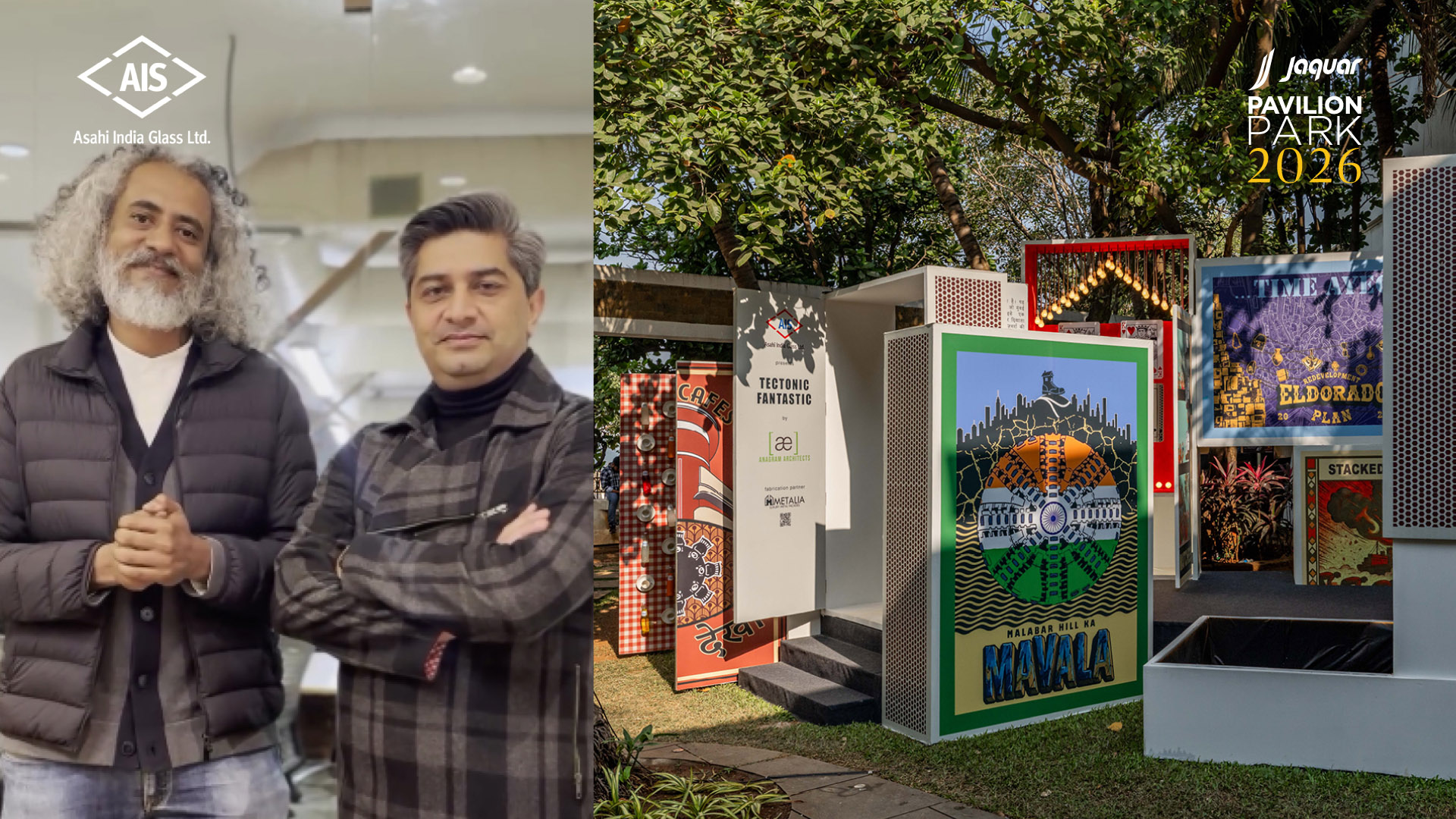
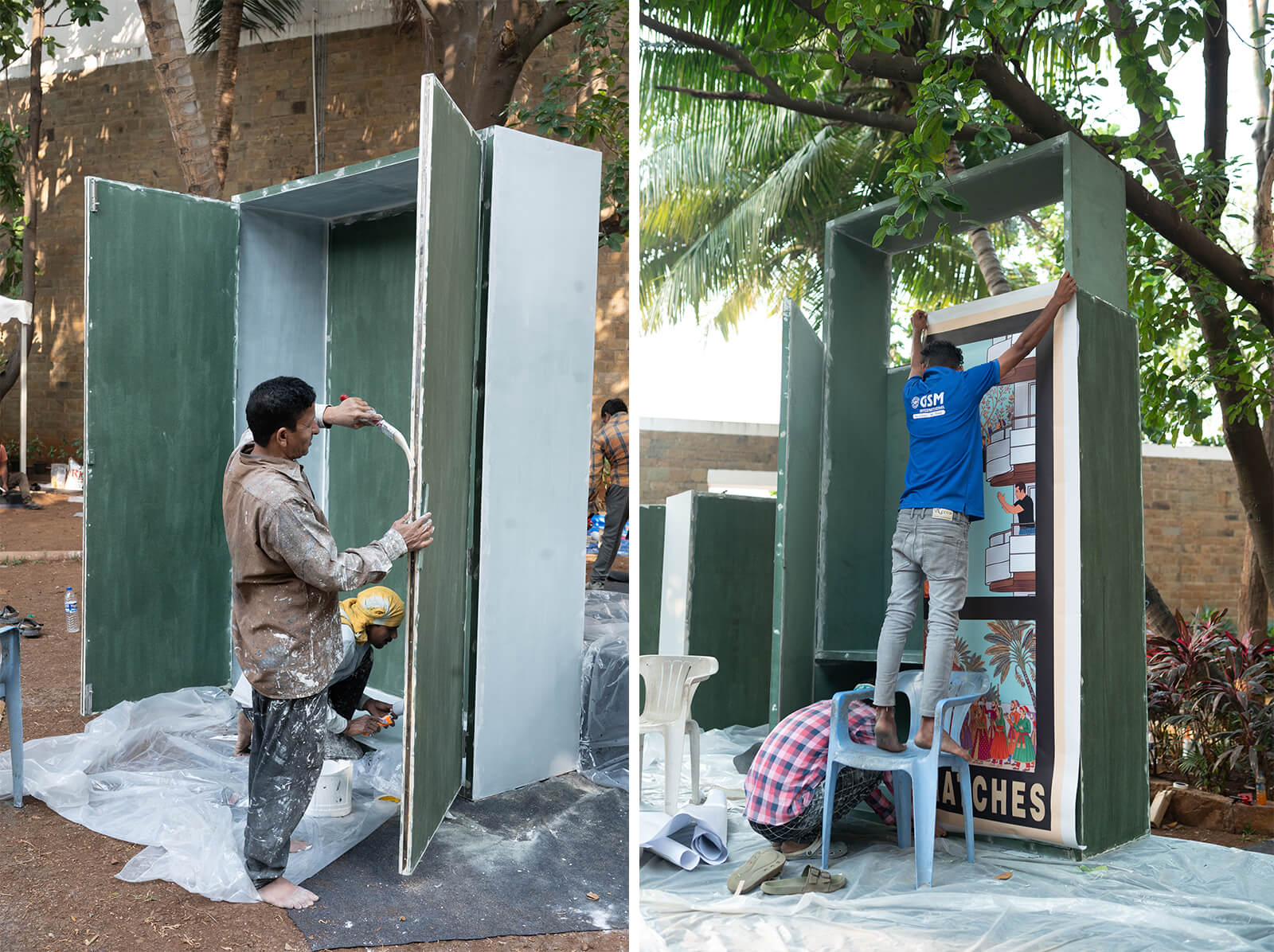
Madhav Raman and Vaibhav Dimri of New Delhi-based firm Anagram Architects translate this idea into a pavilion titled Tectonic Fantastic, conceived as part of the Jaquar Pavilion Park for ADFF:STIR Mumbai 2026. Responding to curator Aric Chen’s theme for the Pavilion Park, Mumbai Transcripts, the project is informed by Bernard Tschumi’s assertion that “there is no architecture without event.” The immersive installation is composed of a constellation of human-scaled matchboxes, ‘arranged in a shifting, tectonic tessellation,’ as per the studio. Each matchbox can be slid, swung or pulled open to reveal a dioramic world inside—a scene, a fragment of a story, a ritual, an urban myth or a hyperlocal moment drawn from Mumbai’s everyday life. “We treated architecture as a performative machine rather than a static container. In Mumbai, the 'everyday' is a series of constant physical negotiations—sliding past a commuter, swinging open a shop shutter or pulling oneself into a crowded train. We mirrored these actions in the pavilion’s mechanics,” the Indian architects tell STIR.
Tectonic Fantastic is supported by Asahi India Glass Ltd. “We are proud to support ADFF:STIR 2026 at NCPA, Mumbai, as sponsors for Anagram Architects. The platform brings together visionary ideas and creative voices that challenge conventions and inspire meaningful dialogue. At AIS, we see glass and windows as a powerful medium for design expression—shaping light, space, and sustainability—and we believe such exchanges are vital to reimagining how material innovation can influence the future of architecture and design,” says Aditya Bhutani, director & COO, AIS Glasxperts.
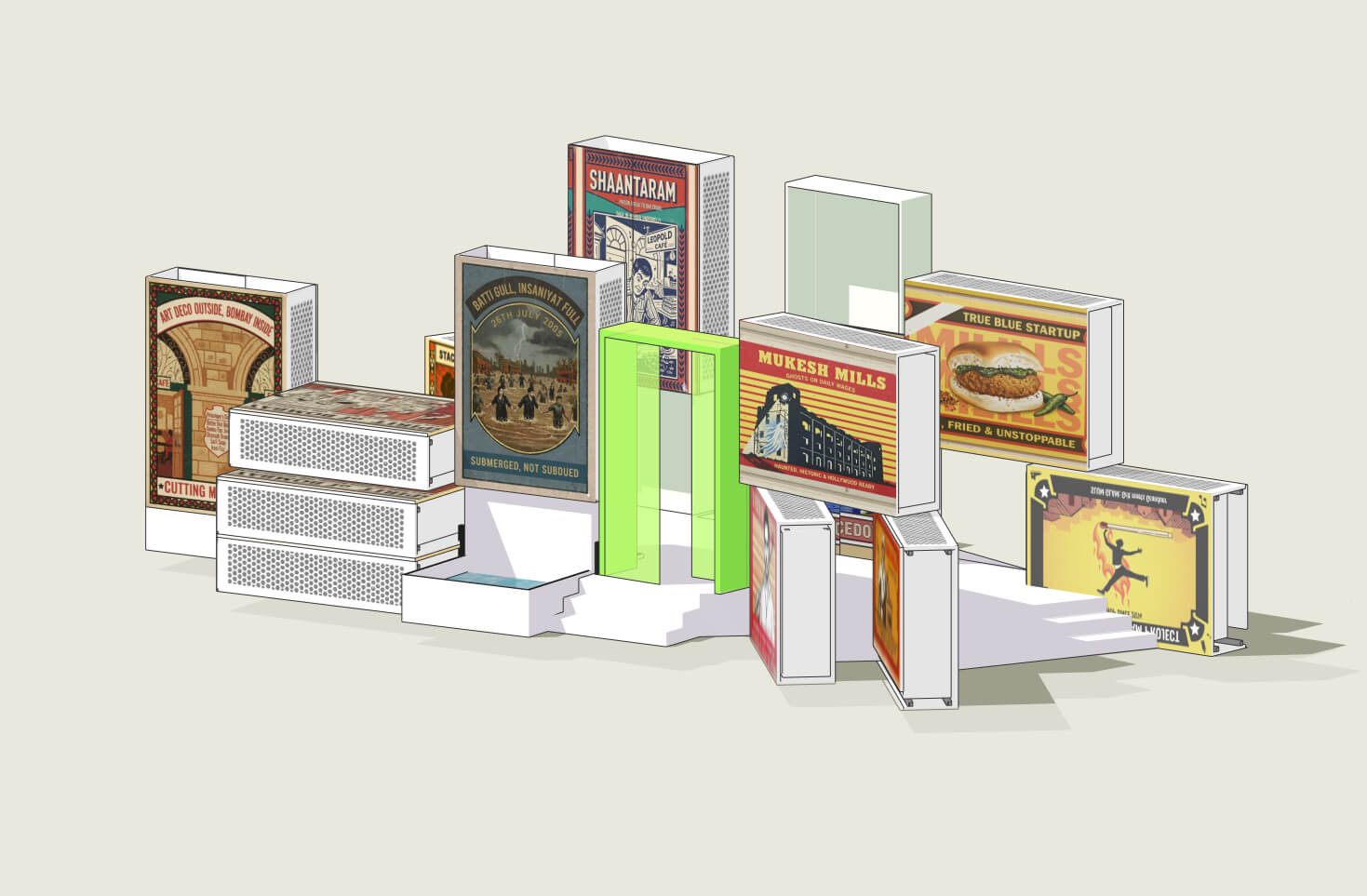
The pavilion architecture is informed by the narrative logic of Bollywood cinema, where stories often unfold through a series of moments, both monumental and mundane. Rather than telling a single, linear story, Tectonic Fantastic unfolds as a montage of fragments, drawing on the principles of the Soviet Montage Theory, which proposes that meaning is created through the juxtaposition of separate scenes. “We view each matchbox as a 'cell' of film. Just as montage suggests that meaning emerges from the 'collision' of independent shots, our pavilion creates an urban narrative through the spatial collision of these boxes. By scaling the humble matchbox to human proportions, we have turned fragments of daily life into a montage that monumentalises the mundane,” the architects explain.
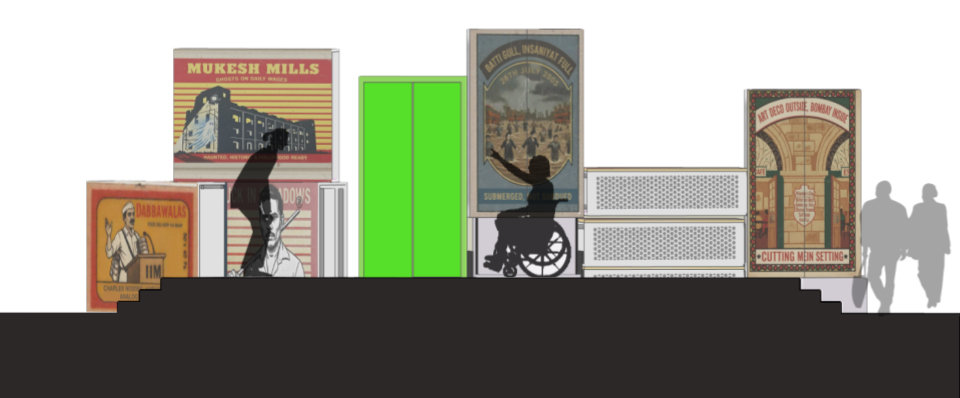
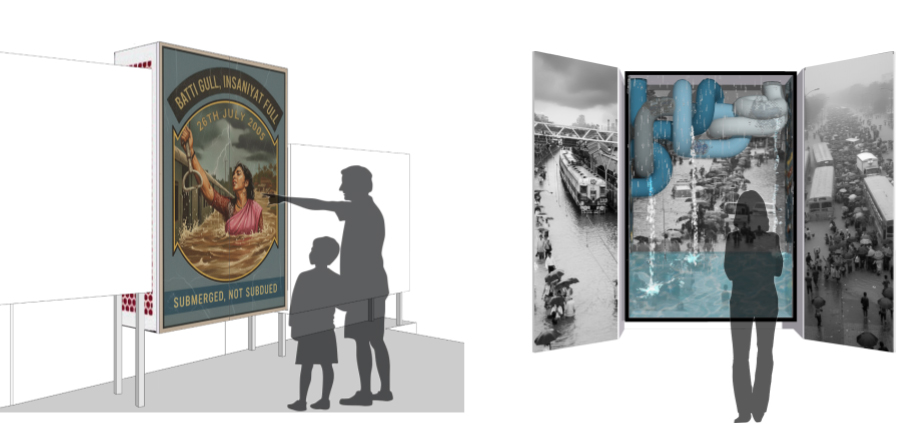
The pavilion’s visual language draws from the graphic design of vintage Indian matchbox designs, Bollywood poster art and pop art aesthetics. Bold colours, compressed imagery and heightened symbolism are used to communicate narrative within a single frame. In the pavilion design, these visual strategies are used to frame everyday moments drawn from Mumbai’s streets and neighbourhoods, inviting visitors to engage with the city’s lived realities through familiar, widely shared cultural references.
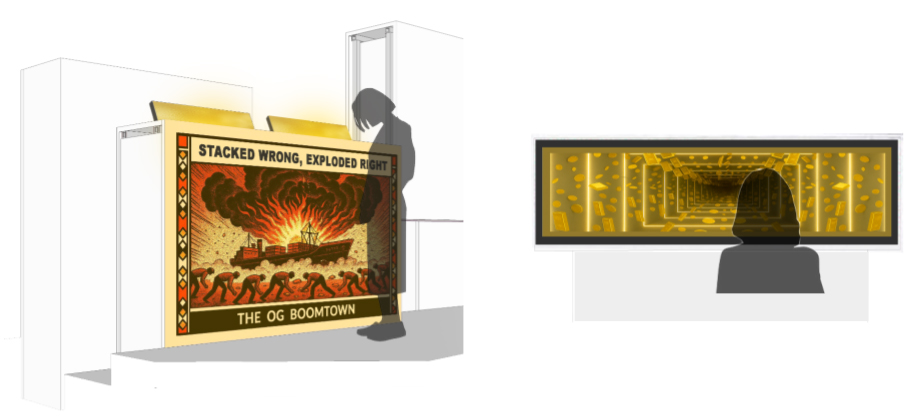
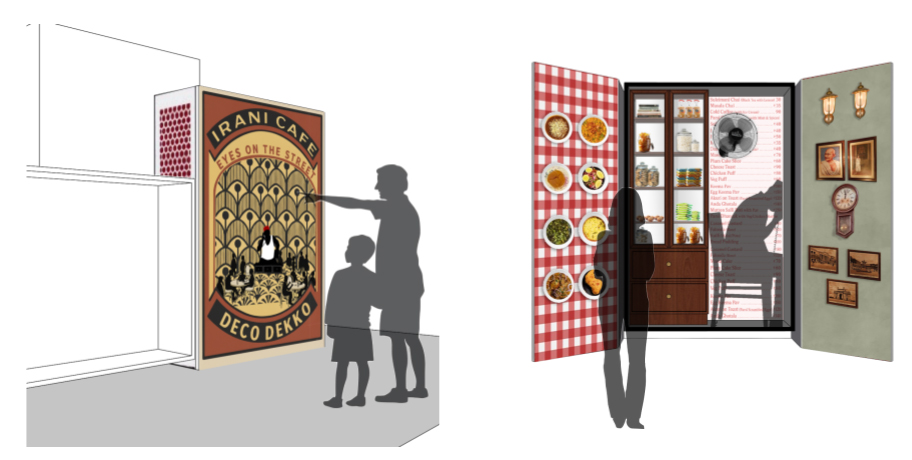
“The stories of each of the matchboxes were shaped by the specific frictions and entanglements where Mumbai’s street-level routines rupture into the extraordinary,” the architects share. Some vignettes draw from spaces of stillness, such as the Irani cafés of South Mumbai, framed as places of observation where lingering over chai turns into a ritual of watching the city unfold. Others revisit moments of rupture, like the 2005 floods, reimagined through the visual language of popular cinema to reflect collective resilience. Additional narratives trace the city’s urban mythologies—from underground infrastructure projects turned into feats of engineering folklore, to the lingering legend of the 1944 Fort Stikine explosion, which scattered gold bullion across Bombay’s docks and fuelled decades of speculation and treasure hunting. “Tectonic Fantastic shows that in Mumbai, the line between a mundane routine and epic moments is very blurred, and the city itself is an incredible collective cinematic act,” they add.
The installation’s life is designed to extend well beyond the exhibition period. Built as a modular, fully demountable structure, the pavilion can be dismantled after the Architecture and Design Film Festival, allowing its components to be reconfigured or dispersed in new contexts. The project prioritises a low-impact approach, ensuring that its afterlife generates minimal waste while remaining materially robust. Individual matchboxes are conceived to stand on their own as sculptural works, while in groups they can be reassembled to preserve specific spatial or narrative relationships. In this way, the pavilion’s elements can circulate beyond the festival—finding new homes in galleries, public spaces, private collections or cultural institutions— while continuing to carry fragments of Mumbai’s everyday life into new settings, extending the pavilion’s role as an evolving archive of the city’s ordinary, improvised and often overlooked stories.
The 2026 edition of the Pavilion Park at ADFF:STIR Mumbai 2026 is presented by Jaquar.
Tectonic Fantastic by Anagram Architects is supported by Asahi India Glass Ltd.
You can now book your passes for the festival here. Full schedule for the festival is available here.
by Pranjal Maheshwari Oct 19, 2026
The Mumbai-based architects integrate courtyards, mesh screens and north light trusses to create a dining space that doubles up as a community hub at SR University, Warangal.
by Mrinmayee Bhoot Oct 17, 2026
The Rotterdam-based institute centres the Indian Ocean as a network for exploring material histories and transnational links shaping coastal cultures, positing them as future models.
by Pranjal Maheshwari Oct 16, 2026
At the 2026 Stirling Prize ceremony, Mary Duggan with RUFF Architects, MAKER Architecten and Nakshabid Architects were felicitated for proffering quality housing and social equity.
by Mrinmayee Bhoot Oct 12, 2026
The new Centre for Contemporary Arts, fostering public engagement with art in Uzbekistan, is housed in a tram depot refurbished by the French studio, emulating local craftsmanship.

make your fridays matter with a well-read weekend
Enter your details to sign in
Don’t have an account?
Sign upOr you can sign in with
a single account for all
STIR platforms
All your bookmarks will be available across all your devices.
Stay STIRred
Already have an account?
Sign inOr you can sign up with
Verification link sent to check your inbox or spam folder to complete sign up process
Tap on things that interests you.
Select the Conversation Category you would like to watch
Please enter your details and click submit.
Enter the 6-digit code sent at


The city as collective cinema with Tectonic Fantastic at ADFF:STIR Mumbai 2026
by Chahna Tank | Published on : Jan 05, 2026


 Sign in with Google
 Sign in with email
What do you think?